Enabling Teams Meeting add-in breaks Outlook Classic

0

Outlook

Microsoft is working to address a known issue that renders the classic Outlook email client unusable for users who have enabled the Microsoft Teams Meeting Add-in.

“Some users may be unable to use Microsoft Outlook Classic while the Microsoft Teams Meeting Add-in is enabled,” Microsoft said in an admin center update under EX1254044.

While it didn’t share more details about the root cause, Microsoft says the issue is due to a previous Outlook build.

To temporarily fix this bug, affected users are advised to update Outlook or to perform an Online Repair for click-to-run installs (which will reinstall all Office applications).

“Users attempting to use Microsoft Outlook Classic while the Microsoft Teams Meeting Add-in and previous Outlook build version is enabled may be impacted,” Microsoft added.

“We’ve identified that a previous Outlook build version is causing impact to occur. We’re working with your representatives to ensure that the latest Outlook version is enabled, to mitigate impact.”

Microsoft is also investigating several issues that cause email connection problems in the classic Outlook desktop client and trigger 0x800CCC0F and 0x80070057 errors during synchronization with Gmail and Yahoo accounts.

In January, it addressed another classic Outlook issue caused by the December 2025 updates that prevented Microsoft 365 customers from opening encrypted emails.

On Monday, Redmond also mitigated a widespread Exchange Online outage (EX1253275) that prevented customers from accessing their mailboxes and calendars via Outlook on the web, Outlook desktop, Exchange ActiveSync, and other Exchange Online connection protocols.

This is a developing story…

Malware is getting smarter. The Red Report 2026 reveals how new threats use math to detect sandboxes and hide in plain sight.

Download our analysis of 1.1 million malicious samples to uncover the top 10 techniques and see if your security stack is blinded.


Source link

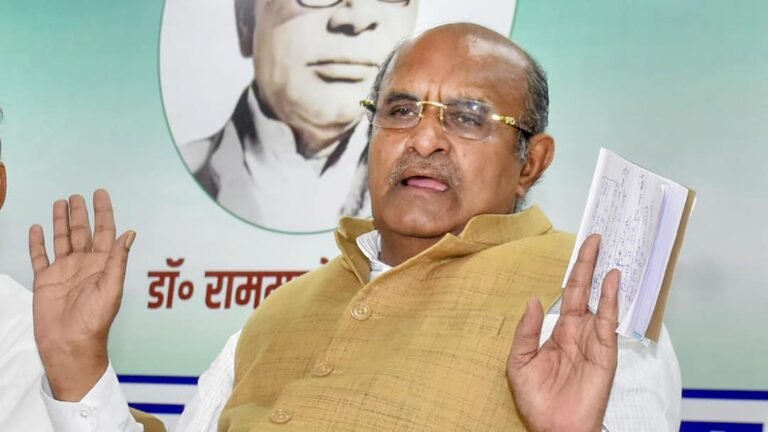
KC Tyagi’s first reaction after separating from JDU, why did he distance himself from Nitish Kumar?

0

KC Tyagi, a senior JDU leader, has distanced himself from the party. He himself gave this information by issuing a letter on Tuesday (March 17, 2026). Now his first reaction has come out. He has told why he is separating from JDU.

Speaking to PTI, KC Tyagi said, “We have been together for 50 years… This time when the party’s membership campaign was held, I did not renew my membership… but the relations are as they are.”

KC Tyagi, in response to a question, said that on March 22, I am going to meet with my colleagues and well-wishers at Mavalankar Hall in Delhi. Will make further announcement on the same day. KC Tyagi said, “The relationship has not deteriorated at all… Actually, Nitish Kumar, the last leader of the socialist movement, was left. Now he is coming to Delhi from Bihar politics. Then the number of old friends has reduced… I have less of that kind of positive and active role left there (JDU). Now I want to make myself active in UP also.”

Tyagi said, “We did politics together in Jai Prakash ji’s movement, then in Janata Party, Lok Dal and then under the leadership of Karpuri ji. I have not resigned, I have not taken part in the campaign for membership of the party…”

Have demanded Bharat Ratna for Nitish Kumar

Let us tell you that KC Tyagi had been in JDU for a long time. Just a few months ago, he had demanded to give Bharat Ratna to Bihar Chief Minister Nitish Kumar. The party’s national spokesperson Rajeev Ranjan had clearly said at that time that even the party leaders and workers do not know whether KC Tyagi is in JDU or not. Now in a way, KC Tyagi has taken a different path.

Also read- Nitish Kumar, who is going to Rajya Sabha, will not get the support of Casey Tyagi in Delhi! made this big announcement

What we know about deadly strike on Kabul medical centre | Taliban

0

NewsFeed

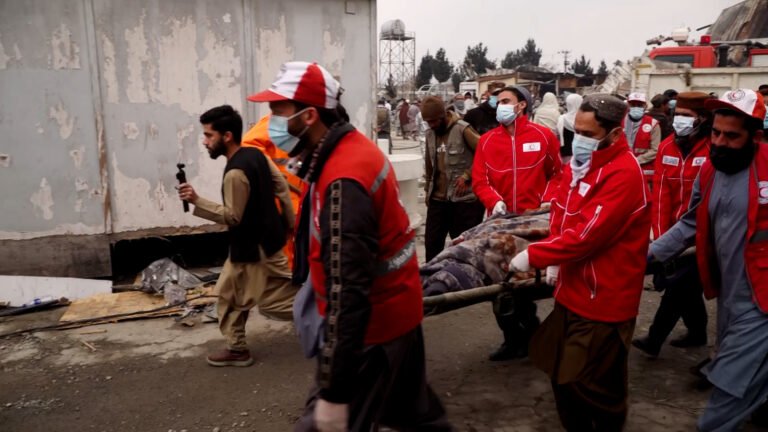
Afghan officials say a suspected Pakistani air strike hit a drug rehabilitation centre in Kabul, killing hundreds of patients and staff and leaving the facility in ruins. Pakistan denies targeting civilians, as tensions escalate between Islamabad and Afghanistan’s Taliban-led government.


Source link

Venezuelan illegal immigrant sentenced for biting ICE officer during arrest

0

NEWYou can now listen to Fox News articles!

An illegal immigrant from Venezuela was sentenced to eight months and two days in custody for biting a U.S. Immigration and Customs Enforcement officer on the forearm during a 2015 arrest, prosecutors said. 

The United States Attorney’s Office for the Southern District of California said the sentence was given to Robert Antonio Bastardo Llovera on Monday after he pleaded guilty on March 3 to a charge of assault on a federal officer. The charge carried a maximum penalty of 20 years in prison and a $250,000 fine. 

“Our office will continue to prioritize the protection of federal officers engaged in their lawful duties,” U.S. Attorney Adam Gordon said in a statement.  

“Assaulting a federal law enforcement officer is a serious offense and any actions that put agents and officers at risk will not be tolerated,” added Kevin Murphy, acting Special Agent in Charge of Homeland Security Investigations in San Diego. “We will continue to hold all individuals who assault law enforcement or interfere with investigations and operations fully accountable.”

ILLEGAL IMMIGRANT BITES ICE OFFICER IN ‘GROSS ATTACK’ WHILE RESISTING ARREST: DHS

U.S. Immigration and Customs Enforcement officer's uniform

A U.S. Immigration and Customs Enforcement officer’s badge and gear.  (Michael Siluk/UCG/Universal Images Group via Getty Images)

The Attorney’s Office released an image purportedly showing the ICE agent’s injury following the bite. Bastardo, 32, was living in San Diego at the time of the incident, which unfolded near the city’s Mission Bay neighborhood, authorities said. 

ILLEGAL IMMIGRANT HELD ON ICE DETAINER IN CHARLOTTE MURDER AS DETAILS SURFACE

Bite marks on person's forearm

The forearm bite suffered by the ICE agent during Robert Antonio Bastardo Llovera’s arrest on July 15, 2025, near the Mission Bay neighborhood of San Diego, Calif., prosecutors said. (United States Attorney’s Office for the Southern District of California)

“Bastardo pleaded guilty March 3, 2026, admitting that on July 15, 2025, he assaulted an Immigration and Customs Enforcement deportation officer by biting him on the forearm,” according to the Attorney’s Office.

Person with "POLICE ICE" sign on their vest

A federal law enforcement agent outside a home during a raid in south Minneapolis, Minnesota, on Tuesday, Jan. 13, 2026.  (Victor J. Blue/Bloomberg via Getty Images)

CLICK HERE TO DOWNLOAD THE FOX NEWS APP

“During his arrest for an immigration violation, Bastardo engaged in a five-minute struggle with federal officers culminating in the bite. Bastardo was living in the United States without legal immigration status and was ordered removed by an Immigration Judge on June 10, 2025, after failing to appear for court,” it added. 

Fox News Digital has reached out to the Department of Homeland Security for further comment.


Source link

Macron prepares France for ‘an age of nuclear weapons’ as Iran war rages | US-Israel war on Iran News

0

Paris, France – A couple of days after the United States and Israel launched their assault on Iran, French President Emmanuel Macron announced on March 2 that France would bolster its nuclear arsenal and strengthen ties with fellow European Union countries.

He called the policy “forward deterrence”.

Recommended Stories

list of 4 itemsend of list

With the speech, Macron demonstrated a show of strength in a rapidly changing world, where European allies are hesitant to rely on the US’s nuclear protection.

France currently has the fourth biggest nuclear arsenal in the world.

“What I want more than anything, as you will have understood, is for Europeans to regain control of their own destiny,” Macron said.

The declaration raises questions about Europe’s strategic future.

Some have described a watershed moment for European security, but the rhetoric is mainly a strong confirmation of France’s longstanding nuclear policy, according to geopolitical analyst Gregoire Roos.

“Ever since the French acquired nuclear weapons in the sixties, the French have a definition of the concept of vital interest that projects way beyond national borders,” Roos said. “The French have never thought of nuclear deterrence in an exclusively national context, at least from a geographical perspective … There’s always been a strong European dimension.”

France tends to be vague about the precise geographical extent of its “vital interests”, but its focus extends beyond the country’s borders.

“Macron heightened the fact that for France, the scope of vital interest was much larger than what many would think,” Roos said. “It also matters to remain ambiguous when it comes to the exact geographical scope of your vital interests.”

France’s ‘balancing act’

Macron’s policy reaffirms the doctrine of French nuclear strategy adopted by General Charles de Gaulle, the first president of the country’s Fifth Republic.

The Gaullist policy considered nuclear deterrence a protection for France’s territory and an assurance of political independence, Roos noted.

“This is a balancing act. The president reminded everyone that nuclear deterrence remained sovereign. There is no such thing as sharing nuclear codes or decisions on nuclear weapons,” Roos said.

Reaffirming ambiguity, France will stop communicating the number of their nuclear warheads. Currently, the country has approximately 290 warheads.

France also plans to collaborate more closely with the United Kingdom, the only neighbouring country with nuclear weapons, along with Germany, Poland, the Netherlands, Belgium, Greece, Sweden and Denmark.

“There’s a clear keenness and ability to project nuclear force outside of the national territory by positioning, for instance, French jet fighters carrying nuclear weapons on the territory of other European countries,” Roos said.

Nuclear programme decisions as Iran war rages

With escalating conflict in the Middle East, Iran’s nuclear programme is at the forefront of discussions.

While France opposes Iran acquiring nuclear weapons, Macron has condemned the US and Israel’s assault on the country, calling the strikes illegal and outside of international law.

“The French are very clear on the issue of Iran’s nuclear programme. But the threats emanating from the country can’t be solved militarily, let alone with regime change,” Laure Foucher, a researcher at the French think tank Foundation for Strategic Research, or FRS, told Al Jazeera.

“The [French] have always favoured a diplomatic solution to the nuclear issue in Iran,” Foucher added.

France has a tangled history with Iran.

In 1974, Iran expressed interest in France’s nuclear technology and signed an agreement where Iran became a 10 percent shareholder in Eurodif, a French uranium enrichment company. The uranium was intended to be used in Iran’s civilian nuclear energy development.

“The goal of Iran’s nuclear programme was not military. But it’s clear that when you develop civilian nuclear technology, inevitably, the military possibility becomes accessible,” Ardeshir Zahedi, Iran’s late former foreign minister, said in an interview with French radio station RFI.

In 1979, Ayatollah Ruhollah Khomeini rose to power in the Islamic revolution, and tensions escalated. Tehran demanded repayment of the loan it had given to Eurodif for production. But because of the revolution, the French government refused, saying Iran did not meet its shareholder obligations.

Relations worsened, and members of the Islamic Jihad in Lebanon kidnapped several French journalists and diplomats. They demanded that France repay its debt to Iran and stop supplying weapons to Saddam Hussein in Iraq. The French government refused.

In this period, Iran was accused of indirectly sponsoring several attacks in France. In 1986, a bomb exploded in Paris, killing seven people and injuring 55.

Finally, the French government agreed to pay the majority of the Eurodif debt in exchange for the hostages in Lebanon in 1988. Three years later, the remaining debt was settled with a $1bn payment to Iran.

‘An age of geopolitical acceleration’

France signed the Joint Comprehensive Plan of Action, also known as the Iran nuclear deal, in 2015, which significantly limited Tehran’s nuclear programme in exchange for easing some of the sanctions on the country. But in 2018, Trump withdrew the US from the deal, and Iran resumed operations.

“France was involved in diplomatic efforts, even though the Europeans were marginalised in the negotiations between the United States and Iran,” Foucher noted.

Macron’s announcement comes at a time when Europe is working to stand strong, independent of the US and its nuclear umbrella.

“We live in an age of geopolitical acceleration, in which conventional threats and war are coming back very quickly,” Roos said. “So there is this feeling that the nuclear option has to be visible on the table.”

In his speech, Macron said, “We are in another strategic universe.”

“The next half century … will be an age of nuclear weapons.”

Despite the strong rhetoric, France faces an uphill battle to bolster its capabilities.

“You need a greater budget. That means at least an additional 100 billion euros per year [$115bn], and that will not come with more debt. It will come with reduced spending in other areas,” Roos said. “To make it sustainable, the French will need to significantly increase their defence spending.”

Macron’s presidency ends in about a year, with elections slated for April 2027.

“He is so weak domestically,” Roos said. “Macron is left with only the world stage, because constitutionally, he is the master, if I may say so, of foreign and defence policy. He knows he has one year left to really cement his legacy as someone who woke Europe up after decades of sleepwalking.”

To succeed, Macron needs to strengthen European alliances, including coordination for the EU’s nuclear umbrella.

“He knows that there is no legacy in global affairs and foreign policy if his legacy in Europe is not clear,” Roos said.



Source link

Access Denied

0

Access Denied You don’t have permission to access “http://hindi.news18.com/cricket/in-a-blunt-assessment-batting-legend-ab-de-villiers-stated-that-ms-dhoni-must-bat-no-lower-than-number-six-in-the-upcoming-ipl-10282269.html” on this server.

Reference #18.49200117.1773753597.54ae00d

https://errors.edgesuite.net/18.49200117.1773753597.54ae00d

One unavoidable household bill is poised to shape the midterm debate

0

NEWYou can now listen to Fox News articles!

A routine monthly expense Americans can’t avoid is emerging as a potent midterm issue, as rising electricity bills sharpen voter frustration and hand candidates a new economic line of attack.

As candidates fan out across the country ahead of the midterms, power bills are becoming a tangible symbol of household stress. Unlike other expenses that can be postponed or pared back, electricity costs hit every month with little room for consumers to opt out.

The issue is giving both parties fresh campaign ammunition, with Republicans casting higher bills as evidence of failed energy policies and Democrats pointing to bill assistance and other measures aimed at easing pressure on household budgets.

The fight is unfolding amid sharp regional divides in electricity prices. Federal energy data shows residential power costs vary widely across the country, illustrating how affordability pressures differ by region.

The latest figures from the U.S. Energy Information Administration put the national average at 17.24 cents per kilowatt-hour, up 6% from a year earlier.

THE STATES WHERE AMERICANS PAY THE MOST — AND LEAST — FOR ELECTRICITY

North Dakota has the lowest average residential electricity rate in the country at 11.02 cents per kilowatt-hour, while Hawaii — an outlier shaped in part by geographic isolation — has the highest, at 41.62 cents per kWh.

Nebraska, Idaho, Oklahoma and Arkansas also rank among the cheapest states, while California, Rhode Island, Massachusetts and New York join Hawaii among the most expensive.

Several of the cheapest states are deep-red, a pattern Republicans are likely to seize on even though power prices are shaped as much by geography, fuel mix, regulation and usage as by politics.

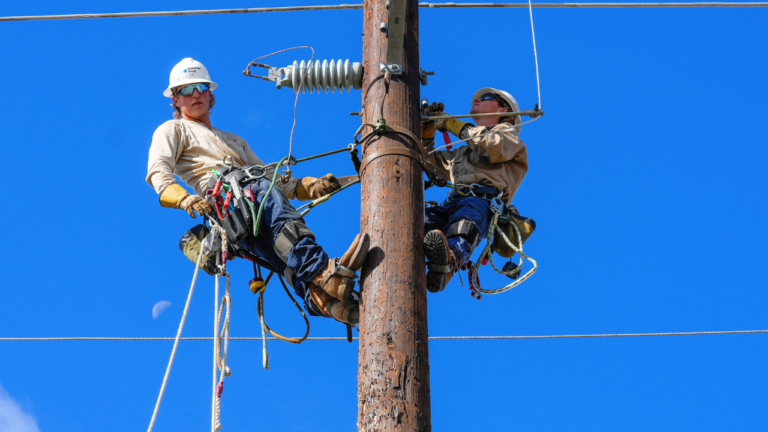
Men are seen working on a power line in Houston, Texas.

Unlike other expenses that can be postponed or pared back, power bills hit every month with little room for consumers to opt out. (Raquel Natalicchio/Houston Chronicle/Getty Images)

Cheap electricity does not always mean affordable energy. Weather, household consumption, housing quality, grid upgrades and state utility decisions all affect what families ultimately pay, meaning lower rates do not always translate into lower monthly bills.

Even so, the partisan pattern may prove politically useful in a campaign season shaped by anxiety over household expenses.

AMERICANS HIT WITH SOARING ELECTRICITY BILLS AS PRICE HIKES OUTPACE INFLATION NATIONWIDE

Republicans have already begun making that case, arguing that states with lower power costs have benefited from broader domestic energy production and fewer restrictions on conventional fuels.

“Affordability varies by your ZIP code,” Interior Secretary Doug Burgum told an audience at BlackRock’s infrastructure summit in Washington, D.C., pointing to lower-cost states such as North Dakota as evidence that oil and gas should remain part of the country’s energy mix. “That’s just a fact,” he added.

Secretary Chris Wright added, “High electricity prices are a political choice. They’re not required.”

“If you look back 15 years, electricity prices in California were only slightly higher than in Florida by about 15%. Since then, the two states have gone in entirely different directions. Today, electricity in Florida costs less than half as much as it does in California, even though Florida produces about 20% more electricity.”

“Florida has lower costs and higher reliability, despite being in the middle of Hurricane Alley. It is an outstanding example of what smart decisions, strong operations and thoughtful technology deployment can achieve. Even as much of the world has gone off track over the last 20 years, Florida did not,” Wright added.

CLICK HERE TO DOWNLOAD THE FOX NEWS APP

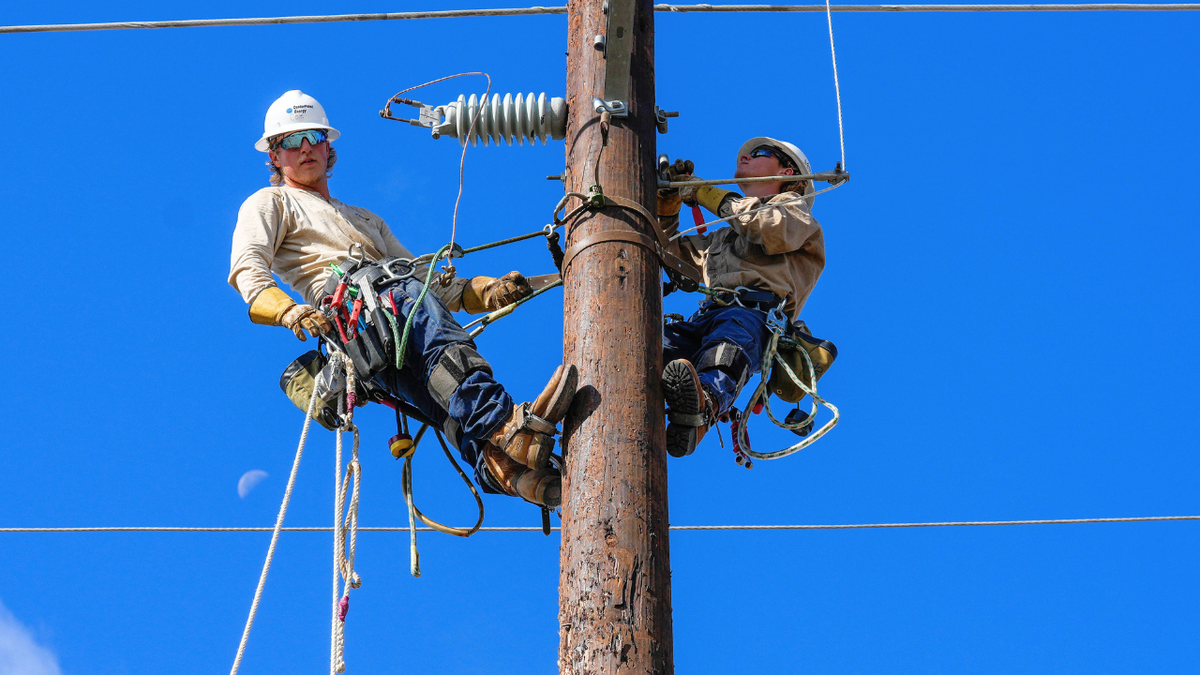
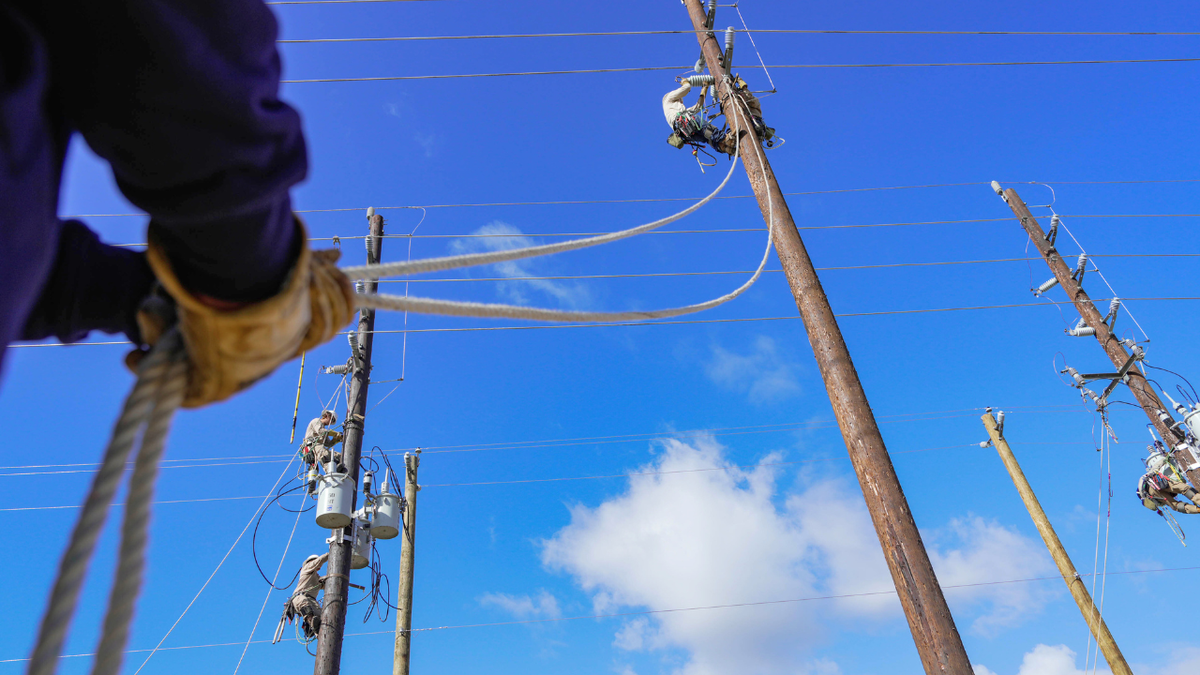
Men are seen working on power lines in Houston, Texas.

Both Republican and Democratic candidates are expected to discuss rising electricity costs on the campaign trail this midterm season. (Raquel Natalicchio/Houston Chronicle via Getty Images)

Democrats counter that federal bill-assistance programs, weatherization funding and grid investments can reduce outages and household energy waste over time, even if they do not bring immediate relief in monthly statements.

Gas prices may grab more headlines, but electricity bills can be more politically durable: they arrive every month, are harder to cut quickly and are often tied to local utilities and regulators, giving candidates a direct way to connect national energy rhetoric to household frustration.


Source link

Ofcom sees no need for change in next phase of fiber rollout • The Register

0

Ofcom is laying out its pathway for fiber broadband almost everywhere across the UK in five years, but concedes that BT still dominates the market.

Britain’s communications regulator today published its Telecoms Access Review for 2026-31, following on from the last review in 2021. That put in place a regulatory framework aimed at boosting investment and competition in the wholesale market for consumer broadband services.

The updated document basically tinkers around the edges, tweaking a few things here and there while largely keeping the existing regulations unchanged.

Ofcom says that it recognizes that BT, the former state-owned telco, still has “significant market power” (SMP) in a number of markets, and so will continue to impose regulations on Openreach, its infrastructure arm, to address its monopoly-like influence.

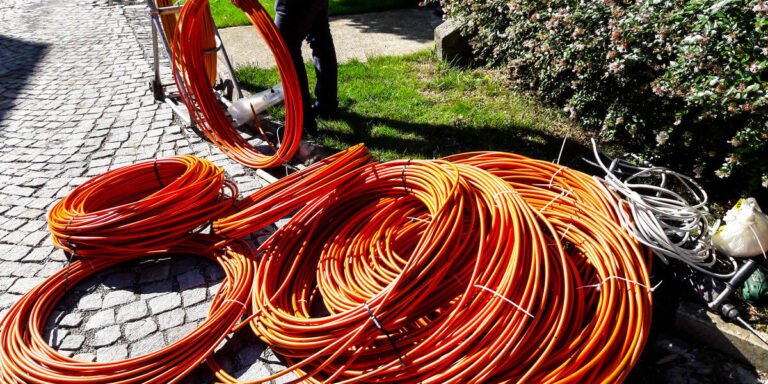
This means keeping rules that require Openreach to let other network firms access its utility poles and underground ducts to deploy new fiber via its Physical Infrastructure Access (PIA) scheme.

Ofcom is also keen to see investment by and competition from alternative network providers (altnets). But it also wants to protect consumers by setting flat, inflation-adjusted prices for a basic superfast broadband product, while allowing flexibility on pricing for other speed bands. This applies to so-called “Area 2” regions, where there is at least one alternative provider to BT, which it reckons now covers 86 percent of UK premises.

For “Area 3,” typically rural locations where there is unlikely to be any other provider, the regulator will let Openreach “recover the reasonable costs of its investments” in rolling out fiber.

In both areas, the price cap on what Openreach can charge retail internet service providers (ISPs) like Vodafone or Sky for using its network is being raised to cover download speeds up to 80 Mbps rather than the 40 Mbps at present. Higher-speed products remain unregulated to incentivize investment in networks that can deliver greater speeds.

Ofcom says that it expects that, by the end of this review period (i.e. 2031), effective competition will exist for wholesale services, and there will be no need to regulate at this point. But recognizing that pigs may also fly, it will continue with the current rules if this doesn’t happen.

If there should be a need to move to cost-based regulation of Openreach in the future, it will ensure that price controls are set at a level that allows BT to earn a return above the cost of its investments.

Ofcom is patting itself on the back over what it sees as the success of its existing rules, which it says have aided significant network build-out by Openreach and other companies, and set the country on a course to having widespread availability of gigabit-capable networks.

Since 2021, the number of premises that can access full-fiber broadband has increased from 6.9 million premises (24 percent) to 23.7 million (78 percent) by July 2025, it claims.

But even where full-fiber is available, take-up has only risen to 42 percent of premises, compared to 24 percent in 2021. The regulator concedes that further investment is needed to deliver fiber services to more of the UK, and that competition has not yet developed to the point where it could remove all wholesale regulation.

The UK government previously earmarked £5 billion ($6.7 billion) for the Project Gigabit scheme to subsidize broadband rollout in hard-to-reach areas, and has so far awarded over 30 contracts. Ofcom says that it expects technologies such as fixed wireless access (FWA) and new satellite services to play an increasingly important role here.

FWA typically uses 5G networks, while satellite is available from providers such as Starlink and Brdy, which uses OneWeb.

Openreach rivals appear sanguine about the situation, with a spokesperson for altnet CityFibre telling The Register that “the Telecoms Access Review provides CityFibre with a stable regulatory framework as we scale our network and bring the benefits of genuine infrastructure competition – lower prices, faster speeds and better services – to consumers and businesses nationwide.”

“With scaled wholesale competition not yet established in the UK, Ofcom is right to hold its nerve, provide certainty, and avoid a rush to deregulation. It must now remain vigilant and ensure compliance with the rules it has set out,” a spokesperson for Virgin Media O2 told us.

On a LinkedIn post, PP Foresight analyst and founder Paolo Pescatore said the move “looks more like evolution than revolution.”

“It is sticking with its core strategy: encourage fiber investment, support infrastructure competition and keep Openreach in check where it still holds too much market power. In short, Ofcom believes the approach is working, but competition remains fragile.”

“We should still expect some jostling, but attention will turn to how Ofcom applies these rules in practice when future Openreach offers land, and whether altnets can convert network build into sustained take-up fast enough to justify the policy bet,” he added.

For its part, Openreach appeared less enthusiastic. In remarks sent to The Register, managing director for Regulatory Affairs Mark Shurmer said: “This is a complex document that we need to review in full. We’ll continue to work with Ofcom to make sure the regulation set today will allow fair competition to get the best results for consumers.”

“No one is going further or faster than us to build the UK’s best network(s). Our investments help customers – and the country – do brilliant things, but they only happen when the environment is stable and supportive. That’s why Ofcom’s review is critical to the future of digital connectivity across the UK.” ®


Source link

The US-Israel war on Iran is shaped by religion as much as strategy | Opinions

0

The United States–Israeli war on Iran is as much a collision of competing religious ideologies as it is a clash of strategic interests. To understand it purely through a secular realist lens is to miss half the story.

After the March 2 Pentagon press briefing, US Secretary of War Pete Hegseth declared that “crazy regimes like Iran hell-bent on prophetic Islamist delusions cannot have nuclear weapons”. Separately, Secretary of State Marco Rubio described Iran’s rulers as “religious fanatic lunatics”.

To understand why these remarks matter and why this war cannot be understood through a purely strategic lens, one must first understand what has been happening inside Western Christian societies.

For decades, Western systems have operated on a secular premise: religion belongs strictly in private life; the state is neutral. While Muslims have mostly maintained religion as the organising principle of family, law and public affairs, large parts of the Christian West either abandoned religious practice altogether or confined it to the margins of private devotion.

The consequences, in the view of conservative Christians, have been severe: the erosion of the traditional family, declining birth rates, the advance of ultra-liberal sexual politics and the general retreat of faith from public and moral life. These, notably, are precisely the areas where conservative Christians and Muslims are likely to find common ground.

But within the conservative coalition there is a harder, more troubling current. Christian nationalism, as distinct from mainstream religious conservatism, seeks the subordination of all other religions and cultural systems to Christian supremacy across every domain of political, legal and social existence. This ideology correlates strongly with white nationalism, racism, anti-Semitism and Islamophobia.

Pete Hegseth exemplifies this hard-right current. Associated with Christian Reconstructionism, a movement that rejects the secular separation of church and state, he treats the Pentagon as an instrument of holy war. He has described his tattoos, the Jerusalem Cross and Deus Vult (“God wills it”), as emblems of the “modern-day American Christian crusade”. He also bears the Arabic word kafir (“infidel”) — a deliberate anti-Muslim provocation.

Thanks to him, this Crusader framing has migrated from the fringe voices into operational military culture.

The Military Religious Freedom Foundation reports being inundated with more than 110 complaints from US service members stationed across the Middle East, including one non-commissioned officer who reported that his commander told troops this war was “all part of God’s divine plan,” citing the Book of Revelation and declaring that “President Trump has been anointed by Jesus to light the signal fire in Iran to cause Armageddon”.

Robert P Jones, president of the Public Religion Research Institute, captured the logic of this worldview plainly, saying: “It’s not just a glorification of violence but a glorification of violence in the name of Christianity and civilisation … It takes it out of the realm of politics and casts it as a holy war of a supposedly Christian nation against a Muslim nation.”

Among the most influential elements within this tendency are Christian Zionists and evangelical dispensationalists who believe that rebuilding the Third Temple on the site of Al-Aqsa Mosque in Jerusalem is a theological prerequisite for the Second Coming of Christ.

US ambassador to Israel Mike Huckabee – a self-described unapologetic Christian Zionist who denies the existence of a Palestinian people and supports their expulsion through Israeli colonial settlement in the West Bank – recently stated in an interview that “it would be fine if they took it all,” referring to Israel potentially controlling much of the Middle East under a biblical interpretation of its borders.

To such extreme Zionist ideologues, Iran represents a spiritual barrier to the conditions required for the Third Temple’s creation and therefore must be militarily neutered to fulfil biblical prophecy.

How does Iran have “Islamist prophetic delusions,” according to Hegseth and co?

Iran’s state ideology — Welayat al-Faqih, the Guardianship of the Islamic Jurist — holds that in the absence of the Twelfth Imam (leader), who is in occultation (ghaybah, or in hiding), supreme authority must rest with a qualified Islamic jurist governing on his behalf.

Moreover, factions within Iran’s clerical and military establishment went further, transforming the theological expectation of the Mahdi’s return into an operational political doctrine.

 The Iranian leadership has institutionalised the idea that unrelenting struggle against oppressive powers is a sacred obligation. Under this framework, strategic retreat or diplomatic accommodation would be tantamount to prophetic betrayal.

During the Iran-Iraq War in the 1980s, Tehran galvanised the masses by transforming Shi’ism into a “sacred defense,” casting the struggle as a modern-day stand at Karbala. This theological framing later justified “forward defence“—a strategy of exporting the revolution to forge proxy networks throughout the region. By engaging adversaries in Iraq, Syria, Lebanon, or Gaza, the Islamic Republic aimed to confront threats at their source, keeping military confrontation far from Iranian soil.

The US-Israel war against Iran can therefore be interpreted as religious just as much as strategic.

In religious terms, two civilisational ideologies are in direct structural conflict, each regarding the other’s existence in its maximalist form as an obstacle to a divinely sanctioned outcome.

Israeli Prime Minister Benjamin Netanyahu and other officials have explicitly invoked this framing, referring to Hamas and Iran as the biblical Amalekites, drawing on passages in Exodus, Deuteronomy and 1 Samuel that mandate the complete eradication of Amalek, commanding the killing of all men, women, infants and livestock.

The conflict has, in this sense, mutated into a zero-sum collision of competing messianic frameworks, one in which conventional diplomacy is structurally difficult because both sides believe, in their maximalist iterations, that they are executing a divine mandate.

Finally, Washington’s shifting justifications for the war — moving between regime change, military disarmament and nuclear enrichment prevention — actually reflect the constituencies its campaign is serving.

Among those constituencies, one whose objectives look a lot less ambiguous is Netanyahu and his Zionist and evangelical allies in the US. Their only favourable war outcome would be a regime change or a dismembered and fragmented Iran stripped of all its military, security and policing capabilities so that it becomes structurally too weakened to challenge Israeli hegemony.

This is a conflict that Netanyahu said he has been waiting 40 years for. Israel will do all it can to utilise this moment and destroy Iran’s economic, policing, and military infrastructure, even if it can’t change the regime.

Likewise, Iran has also prepared for exactly this moment and understands Israeli ambitions. It has been strategically expanding and escalating the war, targeting American military bases and installations in the region as well as Arab countries’ economic infrastructure: to highlight how the American military presence in Arab countries is a source of insecurity, not deterrence; to expose dependence on a power whose primary interest is to protect its favourite ally; and, if this disillusionment works, to ultimately drive the US out of the Gulf region.

The views expressed in this article are the author’s own and do not necessarily reflect Al Jazeera’s editorial stance.


Source link

NRCC launches MAGA Majority program for 2026 midterms

0

NEWYou can now listen to Fox News articles!

EXCLUSIVE — As Republicans aim to hold and expand their congressional majority in this year’s midterm elections, the House GOP campaign arm is launching a new program to elevate what it says is the next wave of America First candidates.

The National Republican Congressional Committee (NRCC) on Tuesday unveiled its initial list of GOP contenders in the MAGA Majority, which identifies candidates running in key battleground districts across the country. The announcement was shared first with Fox News Digital.

The unveiling of the MAGA Majority, which in past election cycles was known as the Young Guns program, comes as Republicans build resources to defend their fragile majority in the midterm elections. The GOP currently holds a razor-thin 218-214 control of the chamber, and Democrats need a net gain of just three seats in the midterms to flip the majority.

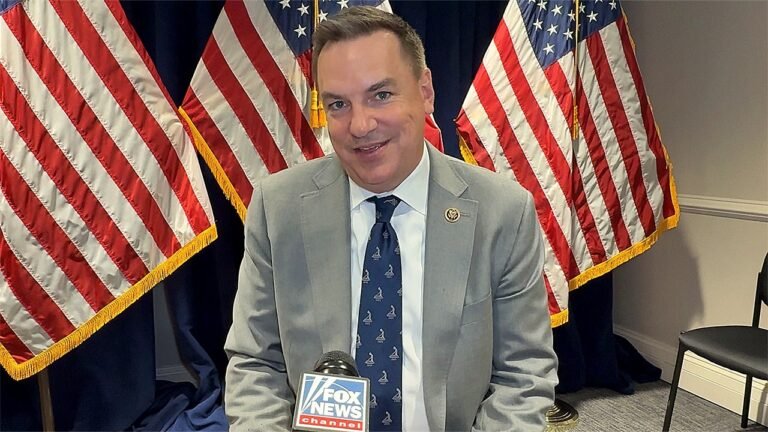
“House Republicans are on offense, and the MAGA Majority is the next wave of leaders who will help us expand our majority in 2026,” the NRCC chair, Rep. Richard Hudson of North Carolina, said in a statement.

‘FICTION’ – HOUSE GOP CAMPAIGN CHAIR DISMISSES DEMOCRATS MOVE TO EXPAND THEIR REPUBLICAN TARGET LIST

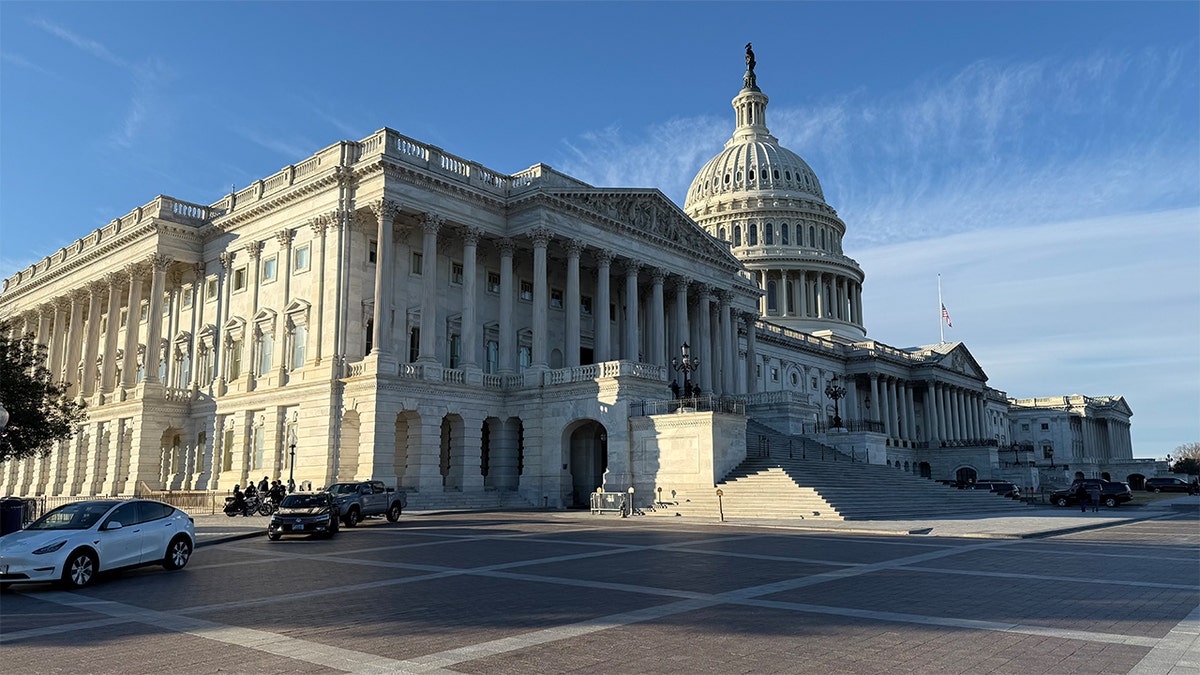
House side of U.S. Capitol

An exterior view of the House side of the U.S. Capitol, on Jan. 12, 2026 in Washington D.C. (Paul Steinhauser/Fox News)

Hudson emphasized, “From veterans and job creators to proven conservative fighters and local leaders, these candidates are stepping up to secure the border, lower costs, and deliver on President Trump’s America First agenda.”

The NRCC says it will provide MAGA Majority candidates with early support, strategic resources, and visibility as Republicans aim to expand the map and go on offense in districts where it sees Democrats as vulnerable.

HOUSE DEMOCRATS ON OFFENSE: EXPAND GOP TARGET LIST

Republicans are battling stiff political headwinds as the party in power in the nation’s capital traditionally loses seats in the midterms. The GOP is also facing a rough political climate fueled by economic concerns amid persistent inflation and Trump’s underwater approval ratings.

But Republicans highlight that Democrats in the midterms will be defending over a dozen districts that Trump won in the 2024 elections, and that “the MAGA Majority is designed to capitalize on that opportunity.”

The initial list of MAGA Majority candidates includes:

Mike LiPetri, New York’s 3rd District – LiPetri, a former state lawmaker, is an attorney and businessman running to flip a key Long Island battleground seat.

Peter Oberacker, New York’s 19th District – Oberacker is a state senator, farmer and small business owner with deep roots in upstate New York.

Tano Tijerina, Texas’ 28th District – Tijerina, a lifelong South Texan, is a Webb County judge whom the NRCC touts as a border security champion.

Eric Flores, Texas’ 34th District – Flores, a decorated Army veteran, is a Rio Grande Valley native and former prosecutor.

FOX NEWS POLL: AN EARLY LOOK AT THE 2026 MIDTERMS

Kevin Lincoln, California’s 13th District – Lincoln is a former Stockton mayor, former Marine and what the NRCC calls a rising Republican star in California’s Central Valley.

Paul LePage, Maine’s 2nd District – LePage, a former two-term governor in blue-leaning Maine, is running for Congress in a district Trump carried in all three of his presidential campaigns.

Jay Feely, Arizona’s 1st District – Feely is a former professional football player who played for the Arizona Cardinals, an NFL analyst and humanitarian.

Laurie Buckhout, North Carolina’s 1st District – Buckhout served 26 years in the Army, and is a decorated veteran of the Gulf War.

Joe Mitchell, Iowa’s 2nd District – MItchell is a former state representative, a veteran of the Trump administration, and grassroots conservative organizer.

The rival Democratic Congressional Campaign Committee (DCCC) is currently targeting 44 Republican-controlled districts in the midterms.

Democrats are energized, despite the party’s continued polling woes. Democrats, thanks to their laser focus on affordability amid persistent inflation, scored decisive victories in the 2025 elections and have won or over performed in a slew of scheduled and special ballot box contests in the 14 months since Trump returned to the White House.

CLICK HERE TO DOWNLOAD THE FOX NEWS APP

“Democrats are on offense, and our map reflects the fact that everyday Americans are tired of Republicans’ broken promises and ready for change in Congress,” DCCC Chair Suzan DelBene emphasized in a statement. “Healthcare, housing, groceries, energy bills — they are all going up, and it’s directly because of Republican policies that favor the wealthiest few while leaving hardworking families behind.”

And DelBene predicted, “Going into the midterms, Democrats have the winning message, top-tier candidates, and the public on our side, paving the way for a new Democratic House Majority under the leadership of a Speaker Hakeem Jeffries.”


Source link