FIRST ON FOX: A Senate Republican is expanding his child care fraud investigation, going beyond Minnesota and into several other blue states.
Senate Health, Education, Labor and Pensions (HELP) Chair Bill Cassidy, R-La., is widening the net of his crackdown on fraud to include New York, Michigan and Oregon.
Cassidy initially launched his fraud hunt to target Minnesota Gov. Tim Walz and demanded the former vice presidential candidate provide receipts for a litany of child care-related grants and federal funding that were at the heart of the Minnesota fraud scandal.
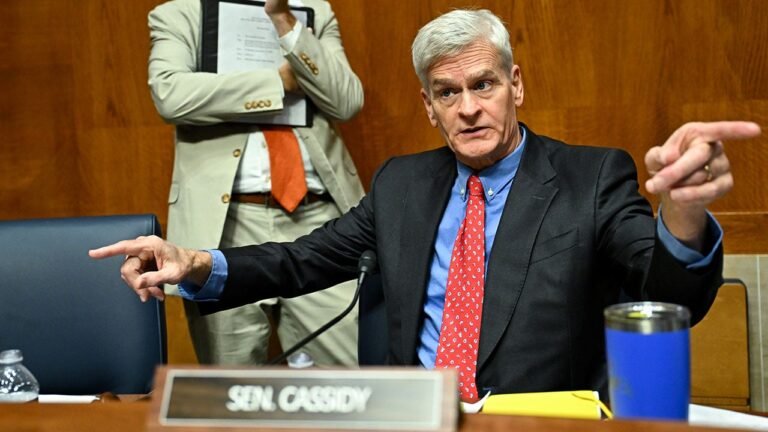
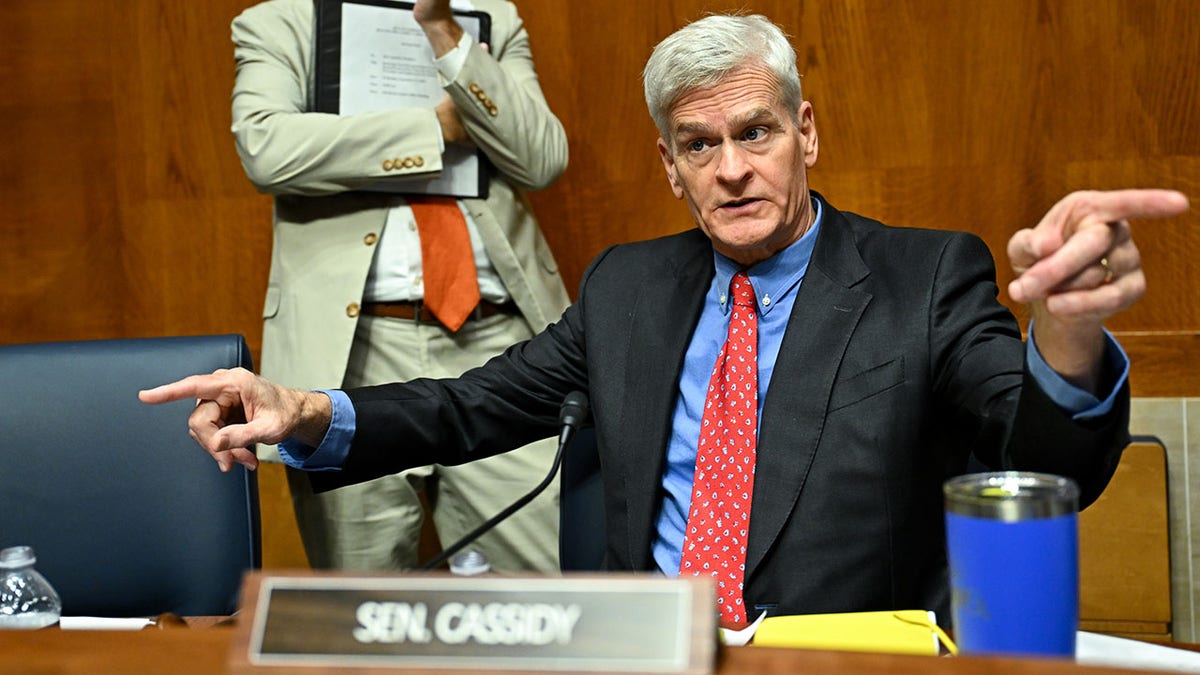
Sen. Bill Cassidy, R-La., is expanding his child care fraud investigation into several more blue states after targeting Minnesota earlier this year. (Graeme Sloan/Bloomberg via Getty Images)
Now, in letters to Democratic Govs. Kathy Hochul, Gretchen Whitmer and Tina Kotek, first obtained by Fox News Digital, Cassidy charged that their respective states lead or have led the nation in improper payments in state-administered child care assistance programs.
“Error rates of this magnitude raise significant concerns about both fraud prevention and access to child care for the families these programs are intended to serve and highlight the need for strengthened program monitoring, improved internal controls, and greater transparency in how these programs are administered,” Cassidy wrote to each governor.
Citing Department of Health and Human Services data, Cassidy noted that New York had a payment error rate of over 17% in fiscal year 2024, Michigan’s rate was over 12% in fiscal year 2025, and Oregon had an error rate of over 35% in fiscal year 2024.
Minnesota Gov. Tim Walz speaks in Minnesota.(Alex Kormann/Getty Images)
Cassidy demanded similar receipts from each governor as he did from Walz, such as how often the state conducted on-site monitoring, inspections, or investigative visits to child care facilities that received federal dollars. He gave each governor until March 30 to respond.
Among his demands were a history of each state’s improper payment rates between fiscal years 2016 and 2025 and explanations for any significant changes.
He asked what kind of anti-fraud measures have been enacted since 2016, as well as action plans to prevent fraud, verify eligibility, and ensure payments align with actual services provided.
The lawmaker also requested information on how federal funding is being used, how the states are verifying child care providers and monitoring those that receive subsidies, and details on audits and investigations conducted since 2016, including whether fraud or improper payments were found.
“Ensuring the integrity of child care assistance programs is critical not only for protecting taxpayer dollars, but also for maintaining public confidence in programs designed to support children and families,” Cassidy wrote.
Alex Miller is a writer for Fox News Digital covering the U.S. Senate.
Access Denied
You don’t have permission to access “http://hindi.gadgets360.com/mobiles/oppo-k14-5g-launch-india-price-under-20k-specifications-7000mah-battery-phone-features-availability-details-news-11228240” on this server.
Equity benchmarks closed higher for the second consecutive session on Tuesday, with the Nifty 50 gaining 172.35 points or 0.74 per cent to settle at 23,581.15 and the BSE Sensex advancing 567.99 points or 0.75 per cent to close at 76,070.84. Despite the headline gains, market breadth told a more cautious story — 440 stocks on the BSE hit fresh 52-week lows against only 56 at 52-week highs, even as advances outnumbered declines 2,332 to 1,930 out of 4,411 stocks traded.
The Nifty opened at 23,493.20, dipped to an intraday low of 23,346.60 in the first half before buyers emerged, driving the index to a high of 23,656.80. The Sensex opened at 75,826.68 and climbed steadily through the session. Weekly derivatives expiry triggered short covering, adding momentum to the move.
Eternal led Nifty gainers, surging 5.59 per cent to close at ₹234.45, followed by Tata Steel, which rose 4.42 per cent to ₹195.20. Mahindra & Mahindra gained 2.85 per cent to ₹3,122.50, HDFC Life advanced 2.70 per cent to ₹642.90, and BEL added 2.67 per cent to ₹440.95. On the losing side, Wipro fell 2.06 per cent to ₹191.10, Cipla declined 1.51 per cent to ₹1,280.40, Tata Consumer Products dropped 1.39 per cent to ₹1,077.50, Infosys shed 1.26 per cent to ₹1,234.00, and ITC lost 1.23 per cent to ₹304.45.
Sectorally, Metal, Auto, and Realty led gains, each rising 1–2 per cent, while Nifty IT fell over 2 per cent, hovering near multi-year lows, and Nifty FMCG ended down 0.7 per cent. The Nifty Midcap 100 rose 1 per cent and the Nifty Smallcap 100 gained 0.65 per cent. The BSE advance-decline ratio improved to 1.25, turning positive after four sessions.
A key positive on the day was India VIX, the volatility index, which dropped 8.39 per cent to close at 19.79 — a move that reduced risk premium in options and helped stabilize markets. “The sharp decline in India VIX…accelerated theta decay and reduced the risk premium in options, allowing markets to stabilize after recent turbulence,” said Hariprasad K, SEBI-registered Research Analyst and Founder, Livelong Wealth.
Reliance Industries drew stock-specific attention after it signed a 15-year green ammonia supply agreement with Samsung C&T, providing long-term revenue visibility to its clean energy business. Fino Payments Bank also remained in focus after reporting record deposits of around ₹2,900 crore, though investor caution persisted over ongoing legal issues involving its managing director.
The Indian rupee appreciated 5 paise to close at 92.37 against the US dollar, supported by equity market recovery and strength in Asian currencies. However, a firm dollar index near 100 and crude oil prices hovering close to $100 per barrel continue to strain India’s import bill. “The overall bias remains weak as long as crude sustains at higher levels,” said Jateen Trivedi, VP Research Analyst at LKP Securities, adding that the US Fed policy decision due Wednesday evening would be “a key trigger for the next directional move.”
Analysts remained divided on whether the two-day recovery signals a sustained reversal. “It is premature to conclude that this reversal is sustainable in the short term, as war-related uncertainties persist,” cautioned Vinod Nair, Head of Research, Geojit Investments Limited, though he noted that “from a long-term perspective, deploying funds appears reasonable, given the correction in India’s premium valuations.” Ajit Mishra of Religare Broking described the move as “a mean-reversion move following the sharp decline,” citing elevated crude and persistent FII outflows as overhangs.
Looking ahead, the FOMC rate decision on Wednesday and its commentary on inflation will be closely watched. Technically, analysts place immediate Nifty resistance at 23,700–23,740, with a breakout potentially opening the path to 23,900. On the downside, 23,350–23,400 remains the key support band. For Bank Nifty, which closed at 54,876 — up 462.60 points or 0.85 per cent — resistance is pegged at 55,250–55,300, with support at 54,300–54,400. “Index needs to start forming higher high and higher low on a sustained basis to signal a pause in the current downtrend,” noted analysts at Bajaj Broking.
Iran’s internet blackout is entering day 18, according to monitoring outfit NetBlocks, which says the vast majority of the country has been offline for more than 400 consecutive hours.
The Iranian government imposed domestic internet restrictions hours after the first US-Israel missile strikes against the country on February 28.
NetBlocks reported close to 100 percent internet uptime in the days preceding the strikes, but said it fell to just above 0 percent thereafter.
It said that “chosen users are granted privileged access,” but the vast majority are left without any internet connectivity.
Alp Toker, director at NetBlocks, told The Register that some users can, in theory, gain access to the web, but only through channels not under state control, which are few and highly expensive. They are not available to the average person.
“Those who can pay have been more able to get online because they can buy contraband services that are risky to provide,” he said. “That can be a VPN which distributes internet connectivity from a Starlink terminal, or a user at the border with another country running a bridge network between the two, which are both banned and not great to be caught operating.
“But most of those who have retained access aren’t the contraband users, or even the rich and famous, but rather the communications experts and state-aligned media who have been selected to deliver on-message framing to the outside world. That also includes visiting foreign journalists who are there by permission and unlikely to deviate too far from permitted narratives.”
Iran has a history of revoking internet access to citizens in times of crisis. It does so to both prevent information from leaving the country and to stop people from learning more about the situation than what the state is willing to share.
Toker added: “The risk of metadata and geolocation leaks will definitely have been a factor, and other countries in the region are struggling with the same challenge of geo leaks, but the selective mechanisms we’re seeing in Iran point to the blackout foremost as a mechanism to shape narratives abroad and keep dissent in check at home.”
Weeks before the US-Israel strikes, Iran implemented a lengthy internet and mobile connectivity blackout in January following civil unrest that broke out a month earlier, related to the collapse of the country’s official currency, the rial.
The rial’s value had roughly halved over the preceding six months, but its decline had been observed for years, owing to a range of factors, mainly inflation, which had risen to over 40 percent.
“What began as protests over currency inflation quickly evolved into an outcry against decades of repression, corruption, and systemic injustice, echoing previous waves of nationwide unrest,” said digital rights organization Access Now at the time.
Most of those who have retained access aren’t the contraband users, or even the rich and famous, but rather the communications experts and state-aligned media who have been selected to deliver on-message framing to the outside world
Of the latest blackout, the group stated: “Millions of people in Iran have been cut off from the global internet at a moment when access to communications and reliable information is most critical.
“The reported death toll in Iran has surpassed 1,000 people, and the military escalations continue to affect civilians across the Middle East, including the Gulf States and in Lebanon, where the ongoing Israeli attacks have reportedly killed over 500 people and displaced more than 500,000.”
Civilians inside the country are not able to communicate via traditional VPNs since there is no access to the internet via telecoms operators, and Mahsa Alimardani, associate director at Witness, told AFP that while phone lines are operational, no one dares to discuss political matters due to surveillance fears.
Organizations like Amsterdam-based Radio Zamaneh are sending broadcasts to Iran over shortwave radio, which is difficult for the state to jam, but access to outside information beyond channels like these is rare.
Iran’s cyber attackers are still online
Nathaniel Jones, vice president of security and AI strategy and field CISO at Darktrace, said that the blackout does not appear to be affecting Iran’s offensive cyber groups.
“Seedworm, Homeland Justice, and Handala continue operating from external infrastructure with pre‑positioned access.”
All three groups have suspected ties to the Iranian state and its intelligence service (MOIS), although Handala has arguably been the most talked about following its wiper attack on Stryker, which the medical device company said affected its Microsoft corporate environment.
Jones said he expects a continuation of Iran’s destructive cyberattacks over the coming days, particularly against critical infrastructure organizations, followed in a few weeks by more sophisticated attacks on supply chains.
Security shop Akamai recently reported a 245 percent increase in cybercrime activity since the US and Israel started the war on Iran, although much of this stemmed from Russia and China rather than Iran itself. ®
Tehran has sounded an alarm about extensive damage to its cultural and historic sites as a result of the United States-Israel war on Iran.
The Ministry of Cultural Heritage, Tourism and Handicrafts said on Saturday that at least 56 museums, historical monuments and cultural sites in Iran have been damaged over the course of the war, which began on February 28, state-run news media reported.
The heritage sites damaged include the Qajar-era Golestan Palace in Tehran.
Which of Iran’s heritage sites have been damaged?
The Islamic Republic News Agency (IRNA) quoted the Cultural Heritage Ministry as saying the most damage has been sustained in Tehran, where 19 locations were affected. These included Golestan Palace, the Grand Bazaar and the former Senate building.
The ministry’s statement added that historic sites were impacted in Isfahan, Kurdistan, Lorestan, Kermanshah, Bushehr and Ilam provinces. They included parts of Naqsh-e Jahan Square in Isfahan, which like Golestan Palace is a UNESCO World Heritage Site.
The ministry added that museums and historic complexes in the cities of Sanandaj, Khorramabad and Siraf were also impacted.
Golestan Palace dates to the Qajar era. This 1789-1925 era is marked by the rule of a Turkic dynasty that unified Iran after decades of civil unrest. The Qajar family made Tehran the capital of Iran.
Golestan is a walled palace built by combining Persian craft and architecture with European motifs and styles. It features gardens, pools and ornaments. In Persian, “golestan” means “flower garden”.
A video taken by The Associated Press news agency on March 3 showed shattered glass from the mirrored ceilings of the palace covering its floors, broken archways, blown-out windows and damaged mouldings scattered below its glass-mosaic walls.
Tehran’s Grand Bazaar is a historic marketplace. Parts of it date back to the Qajar dynasty.
Naqsh-e Jahan Square houses key landmarks, such as mosques and palaces. It was built between 1598 and 1629.
The Falak-ol-Aflak Castle in Khorramabad in Lorestan province was also damaged, according to the head of Lorestan’s heritage department, Ata Hassanpour, who added that the main structure of the castle remained intact.
What does international law say about targeting heritage sites?
The Cultural Heritage Ministry’s statement cited international law, including the 1954 Hague Convention and United Nations Security Council Resolution 2347, which call attacks on heritage sites violations of international law.
The Hague Convention, which the US, Israel and Iran are all parties to, aims to protect cultural property, such as art, architecture and historical sites.
Security Council Resolution 2347, which passed in 2017, condemns the unlawful destruction of cultural heritage, including religious sites. The US voted in favour of this resolution.
Israel and the US have insisted they are precisely targeting military targets in Iran.
However, they have been accused of targeting civilian infrastructure in Iran along with heritage sites.
Global rights group Amnesty International said on Monday that a US-manufactured Tomahawk missile was likely used in an attack on an Iranian primary school that killed at least 170 people, most of them children, on February 28. In all, more than 1,400 people have been killed in the US-Israel attacks on Iran so far.
What has UNESCO said?
UNESCO, or the United Nations Educational, Scientific and Cultural Organization, has confirmed that it has verified damage to historic sites in Iran.
They include Golestan Palace and two sites in Isfahan, the 17th century Chehel Sotoun Palace and the Masjed-e Jame, Iran’s oldest Friday mosque.
The UN agency has additionally verified damage to buildings near the Khorramabad Valley, an area that contains five prehistoric caves and a rock shelter with evidence of human occupation dating back to 63,000 BC.
UNESCO said that before the war, it had provided all parties with the geographical coordinates of heritage sites so they could “take all feasible precautions to avoid damage”, AP reported.
Nearly 30 sites are designated as under special protection as part of UNESCO’s World Heritage list.
Iranian Foreign Minister Abbas Araghchi has criticised UNESCO’s response.
In an X post on Thursday, Araghchi wrote: “It’s natural that a regime that won’t last a century hates nations with ancient pasts. But where’s UNESCO? Its silence is unacceptable.”
How have past Middle East wars ravaged cultural heritage?
Past conflicts in the Middle East have also destroyed cultural heritage sites.
The 2003 US‑led invasion of Iraq set the stage for the looting of the Iraq National Museum in Baghdad, where thousands of artefacts were stolen or destroyed.
In 2015, ISIL (ISIS) fighters released a video showing the destruction of the Temple of Baalshamin, an ancient place of worship in Palmyra, Syria. It was one of the best preserved ruins in the city.
They also bulldozed parts of the Mosul Museum in Iraq in the same year. They released a video, showing the destruction of statues and ancient artefacts, some dating back to the seventh century BC.
Over the course of Israel’s genocidal war in Gaza, which began in October 2023, nearly 200 sites of historical importance have been destroyed or damaged as of February this year, according to UNESCO.
In December 2024, Israel struck Gaza’s Great Omari Mosque, the city’s largest and oldest mosque, which was established in the seventh century.
Access Denied
You don’t have permission to access “http://hindi.gadgets360.com/internet/fake-traffic-challan-scam-india-how-it-works-cases-increasing-cyber-fraud-alert-parivahan-safety-tips-news-11228174” on this server.
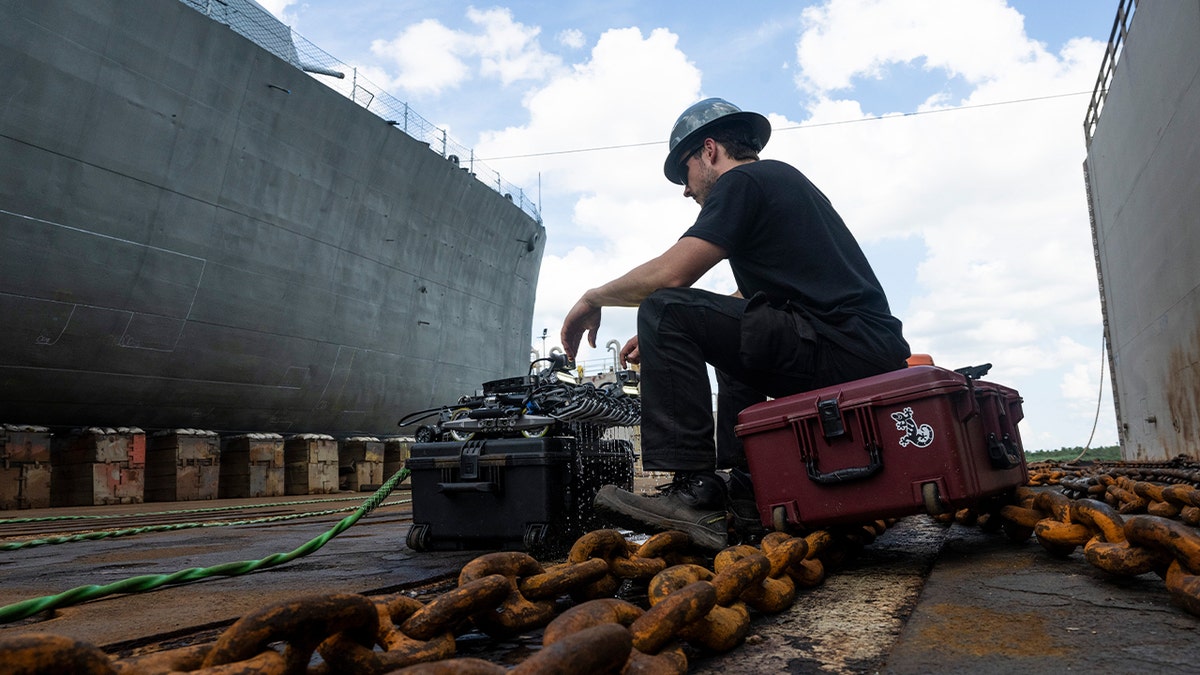
FIRST ON FOX: Swarms of wall-climbing robots will soon be crawling across U.S. Navy warships in a $71 million effort to slash repair delays and boost fleet readiness as China continues expanding its naval power.
Under the five-year contract, Gecko will begin work on 18 ships in the U.S. Pacific Fleet, with the initial award valued at up to $54 million. The contract vehicle is structured to allow other military services to access the technology as well.
The push comes at a critical moment. Only about 60% of U.S. Navy ships are operational at any given time as maintenance backlogs sideline a significant share of the fleet, according to industry estimates.
Meanwhile, China now fields roughly 370 to 390 warships and submarines compared with about 300 in the U.S. Navy — and its state-backed shipbuilding industry can produce vessels at a dramatically faster pace. Some independent analyses estimate China’s shipbuilding capacity exceeds America’s by more than 200 times when measured by tonnage output.
Against that backdrop, the Navy is turning to artificial intelligence and robotics not for weapons — but for repairs.
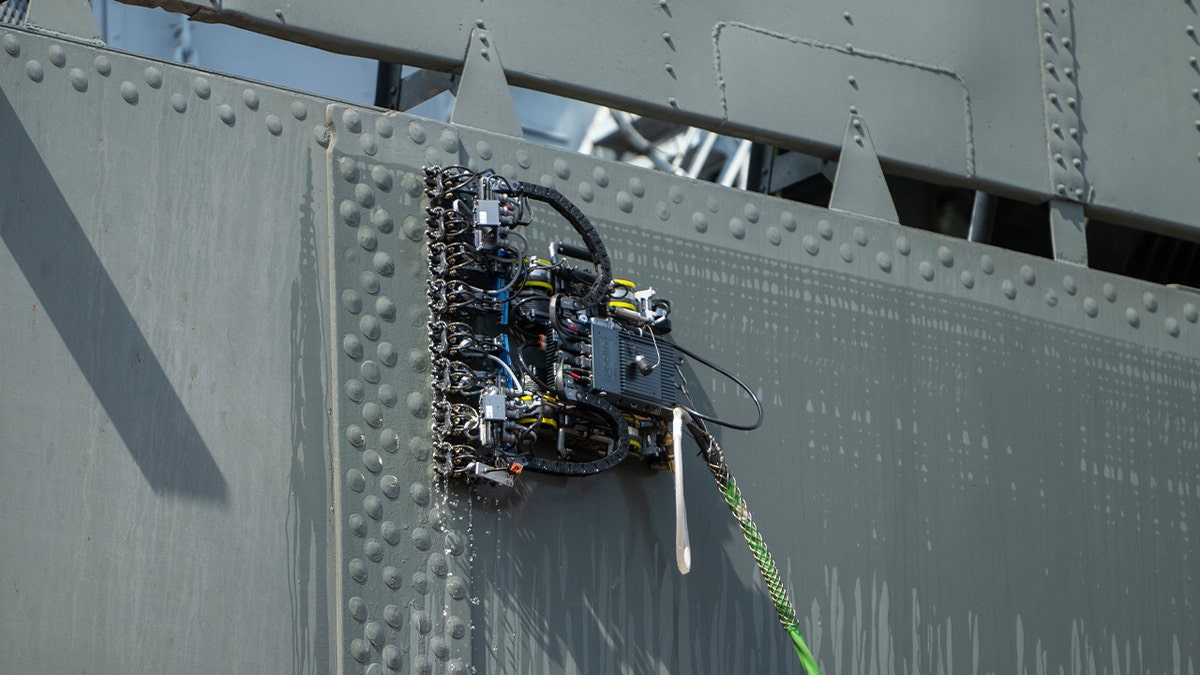
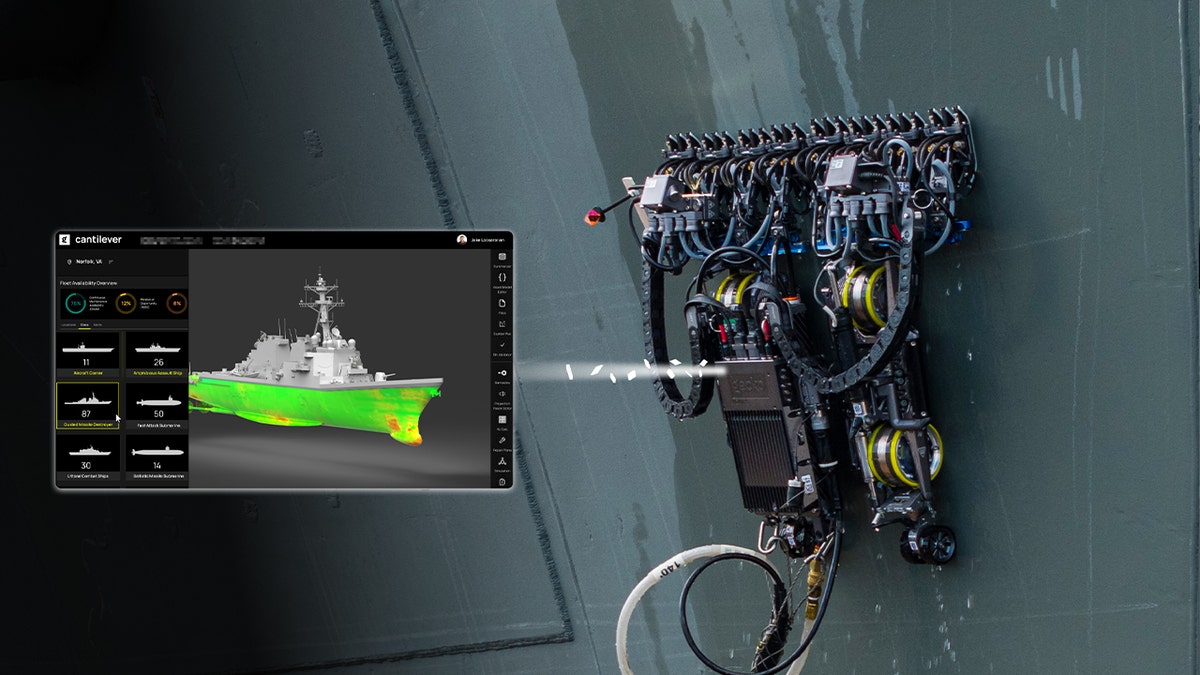
The AI-powered machines, developed by Pittsburgh-based Gecko Robotics, scale hulls, flight decks and other hard-to-reach steel surfaces, scanning for corrosion, metal fatigue and weld defects.
Instead of relying on sailors or shipyard workers suspended on ropes or scaffolding to inspect ships point by point, the robots collect millions of data points and feed them into a digital platform designed to flag structural problems early.
“It’s no good having 300 vessels if 40% of them are in a dry dock somewhere,” Gecko Robotics CEO Jake Loosararian told Fox News Digital.
Swarms of wall-climbing robots will soon be crawling across U.S. Navy warships in a $71 million effort to slash repair delays and boost fleet readiness as China continues expanding its naval power.(Gecko Robotics )
The inspections will focus on destroyers, amphibious warships and littoral combat ships — vessels that form a core part of U.S. naval operations in the Indo-Pacific.
The chief of naval operations has set a goal of reaching 80% fleet readiness by 2027, a benchmark Navy leaders say is critical as competition with China intensifies.
Gecko says its robotic systems can identify structural issues far faster than traditional manual inspections, helping planners reduce maintenance delays and return ships to sea more quickly.
Maintenance delays have long plagued the fleet.
Ships often sit in drydock for months as unexpected structural issues are discovered after work has already begun — reducing the number of vessels available for deployment while Navy leaders push to raise readiness toward 80% in the coming years.
Compounding the problem is a shortage of trained shipyard personnel. U.S. shipbuilders have struggled to recruit and retain enough skilled welders, electricians and technicians to keep pace with demand, contributing to both construction delays and maintenance backlogs. Industry reports show many new hires leave within their first year, slowing workforce growth even as shipbuilding needs rise.
Under the five-year contract, Gecko will begin work on 18 ships in the U.S. Pacific Fleet, with the initial award valued at up to $54 million. The contract vehicle is structured to allow other military services to access the technology as well.(Gecko Robotics )
Automation and AI are increasingly viewed as part of the solution. By reducing the amount of dangerous, labor-intensive inspection work required and accelerating defect detection during both maintenance and construction, robotic systems can help yards do more with a constrained workforce.
Loosararian said the technology is designed to identify structural problems before ships enter major repair cycles, helping planners prioritize repairs and reduce delays.
“First destroyers we were on, we saved about three months worth of time to create a plan of action and execute on it,” he said. “It reduces the amounts of dangerous and hazardous work hours that humans have to have, it also increases speed.”
The inspections will focus on destroyers, amphibious warships and littoral combat ships — vessels that form a core part of U.S. naval operations in the Indo-Pacific.(Gecko Robotics )
The company says similar technology is being deployed during ship construction, scanning welds and structural components early in the build process to prevent costly rework later — an effort aimed at easing strain across a shipbuilding enterprise already under pressure.
While the United States cannot easily match ChinaChina ship-for-ship in raw production speed, improving the availability of the fleet already in service may be one way to narrow the operational gap.
In an era of intensifying maritime competition, the battle may hinge not only on how many ships are built — but how many are ready to sail.
Government scientists have identified the type of meningitis behind a fatal outbreak in Kent as a strain that most people have not be vaccinated against.
Gayatri Amirthalingam, the deputy director of immunisation and vaccine preventable diseases at the UK Health Security Agency (UKHSA), said tests showed it was the bacterial strain B of the disease, as pharmacies warned that vaccines against this strain are running low.
Speaking to BBC Radio 5 Live, Amirthalingam said: “We are able to say this morning that we have now identified from some of the testing that it seems to be the group B meningococcal strain that is causing outbreak in Kent.”
Amirthalingam confirmed this was a strain that all those born before 2015 have not vaccinated against. She said: “We have a meningococcal vaccine covering four different strains in teenagers. Usually it is given at the age of 13 or 14 years of age. It covers four main groups A, C, W and Y.”
Amirthalingam urged young people in Kent to take up the offer of antibiotics. Asked if it was safe for students to return home, she said: “If you are a university student and you’ve been offered antibiotics, or anyone else who’s been offered antibiotics, please take that immediately and it will be absolutely fine for you to return home. It’s an effective measure for protecting yourself, but also as to your loved ones, your family and your friends.”
People born before 2015 are not protected against meningitis B unless they have had the jab privately. The vaccine was introduced on the NHS for babies in 2015.
Pharmacies called for an NHS catch-up vaccine programme to protect all those born before 2015, amid dwindling private supplies.
Dr Leyla Hannbeck, chief executive of the Independent Pharmacies Association, said the NHS should “urgently commission pharmacies to deliver a nationwide catch-up vaccination programme targeted at university students and teenagers born before 2015.
“Pharmacies, especially in Kent, are seeing a surge in demand for private Meningitis B vaccinations. But supplies are running low with some pharmacies already out of stock.
“Worried families must not be left to a lottery. The NHS needs to step in and commission a national pharmacy led catch-up programme now.”
Private meningitis B vaccinations cost between £100 and £120 a dose in the UK, with a full two-dose course costing about £200-£240. Boots offers two doses for £220.
A year 13 pupil in Faversham, named only as Juliette at the request of her parents, and an unnamed student at the University of Kent have died in the outbreak, and others are being treated in hospital.
A year 13 pupil in Faversham named only as Juliette at the request of her parents is one of the people to have died in the outbreak. Photograph: Twitter/X
The archbishop of Canterbury, Sarah Mullally, said: “My prayers are with the families of the two young people who have tragically died in the meningitis outbreak in Kent. My heart goes out to them in their devastating loss.
“I’m praying too for all those who’ve been affected by the outbreak, and for everyone working so hard to care for them and protect local communities.”
The UKHSA is advising anyone who visited Club Chemistry in Canterbury on 5, 6 or 7 March to come forward for preventive antibiotic treatment as a “precautionary measure”.
Amirthalingam also confirmed that the disease could be spread by sharing vapes, after a mother of one of those in hospital with the disease said she suspected her daughter caught it from a vape.
Amirthalingam said: “Meningococcal disease is be spread through a number of different routes. Vaping is just one. It is very much linked to close contact. There are plenty of other activities that can also promote the spread of this infection. Not specifically vaping.”
Eliza Gil, a clinical lecturer specialising in infectious disease at the London School of Hygiene & Tropical Medicine, said: “These students won’t have any immunity to meningitis B.”
She told 5 Live: “Currently students aren’t offered it because the risk has historically been low and also because the protection is imperfect and not very long lived. So it was felt on balance of risk, that it wouldn’t be of benefit to students to routinely offer men B vaccination.”
On vaping, Gil said: “Sharing anything that goes in your mouth is a potential risk factor for transmitting a mouth-living bacteria. So for definite I would be not recommending vape sharing in general from a hygiene point of view. But also in this context it seems an easy enough thing to stop doing, even if we’re not sure if it was causative in this case.”
Helen Whately, the Conservative MP for Faversham and Mid Kent, backed calls for “catch-up” vaccination campaign for young people.
Speaking to Times Radio, Whately, a former health minister, said vaccinations against meningitis B had been given to babies since 2015,
She said: “One of the things the UKHSA will need to look at is if there is now a greater risk around this outbreak – and in future – should there be some kind of vaccination catch-up for that group.”
The UKHSA denied there had been a delay in the response to the outbreak.
Speaking to Radio 4’s Today programme, Amirthalingam said: “I don’t believe there’s been any delay in terms of the public health response. With these individuals, some of whom are extremely unwell in hospital, it can be difficult to try and ascertain detailed follow-up information, but that was done very rapidly over the weekend to be able to give that information out and identify the links within 24 hours.”
Prof Paul Hunter, an expert in infectious diseases at the University of East Anglia, said doctors could have been informed earlier of the outbreak.
He said: “It’s not just about informing the public. The symptoms of the disease can be very mild. If they [doctors] know that there is a problem with meningococcal disease in the area, then they’re more likely to take those early symptoms seriously.
“The problem with meningococcal disease is that you can go from being relatively mild to on death’s door within a matter of a few hours. It is critically important that you make that information very clear very soon.”
He added: “When I used to do this work some years back, I think we would have gone public at the point that we informed local GPs that there was such a problem, which might well have been quicker.”
Two sites in Kent have been open for the public to collect antibiotics and a further two are planned to open on Tuesday morning.
Louise Jones-Roberts, the owner of Club Chemistry, told the Press Association that more than 2,000 people would have visited the venue over the three dates.