Teacher-Student Jokes: When the teacher asked who is elder between husband and wife, Moni’s answer made her the class monitor, read funny teacher-student jokes

0

The relationship between teacher and student is not limited to studies only, it also includes fun, bickering and funny moments. Many times such funny stories and conversations happen in the classroom, which lighten the atmosphere with laughter. Teacher-student jokes are also born from these small incidents, which bring a smile on everyone’s face.

Joke-1
The teacher says to the student – You are alone in a forest and a fierce lion comes there, what will you do?
The student said- Sir, I will run and climb the tree.
Teacher to student: If he comes there also
Child student- Sir, this time I will jump into the water.
Teacher to student: And if he comes into the water too
Student is angry – Sir, you tell me this first
Sher, does anyone seem to be a relative of yours?
You are taking the same side every time…

Joke-2
Teacher: What’s the matter with you today?
Are you talking in class for the first time?
You always keep your eyes on me
She used to listen to things very attentively!
What has happened to you today?
Pinky- Sir, today my net pack is finished!

Joke-3
The teacher was explaining the mistakes to the students.
Asked a student in the class,
Pappu, if by mistake one of your legs
What will you do if the old lady hits you?
The student said- I will say sorry madam.
Teacher: If he is happy then you
Give me a chocolate, then what will you do?
To the student teacher – what to do then?
I will quickly climb on the other foot
So that I can get another chocolate…

Joke-4
Teacher: (To Moni) Tell me, who is elder between husband and wife?
Moni- Madam, wife is elder!
Teacher: Okay, tell me how?
Moni- Madam, there is quantity of “e” in husband and quantity of big “e” in wife.
Madam has made Moni the class monitor.

Joke-5
Teacher to student- Tell me, whom do you hate the most among history men?
Child- From Raja Ram Mohan Roy
Teacher- Why?
Child: It was he who stopped child marriage, otherwise today we too would have a wife and children!

Joke-6
Teacher: Do you know everything about birds?
Pappu – Yes
Teacher: Okay, tell me which bird cannot fly?
Pappu – dead bird
run away crazy somewhere

Why the Iranian regime did not collapse after Khamenei’s assassination | US-Israel war on Iran

0

It is not true that the killing of Iran’s Supreme Leader Ali Khamenei necessarily means the immediate collapse of the regime.

This is a hasty reading, reflecting more wishful thinking than sober analysis. Yes, we are witnessing a seismic blow, the most dangerous to hit the Islamic Republic since its establishment in 1979. But the more important political question is no: “is the blow bad?” but rather: “was the system built in a way that allows it to absorb a blow of this magnitude?”

The available evidence so far indicates that the system was designed from the outset not to be merely the shadow of a single man, no matter how elevated his position.

The Islamic Republic is not an autocratic regime like in the familiar Arab context, where the entire structure collapses when its head disappears. It is a complex ideological and securitised system, with a religious head, beneath whom there is a network of solid institutions—some constitutional, some security-related, some bureaucratic and economic—all working to preserve the entity itself, not merely to serve the individual.

For this reason, the killing of the supreme leader does not automatically erase the state, nor topple the regime simply by virtue of the event; rather, it shifts the crisis from the question of “the survival of the head” to the question of “internal cohesion”. The struggle to maintain it is where the real danger lies.

The Iranian constitution itself was drafted with the spectre of a power vacuum in mind. Article 111 stipulates that a temporary council assumes the powers of leadership when the position becomes vacant, until the Assembly of Experts chooses a new leader as soon as possible.

After the announcement of the Leader’s killing, powers were transferred temporarily to a three-man council comprising President Masoud Pezeshkian, the head of the judiciary Gholam-Hossein Mohseni-Eje’i, and Guardian Council member Alireza Arafi.

Meanwhile, the choice of the new supreme leader was in the hands of the Assembly of Experts, which is made up of 88 members.

We can describe this clarity in how to deal with the vacancy of the Leader’s position as a “survival protocol” designed to give the system the capacity to continue even at a moment of maximum shock.

But the bigger mistake would be to be deceived by the constitutional form alone. Yes, the text matters, but the balance of power matters more. Here we must distinguish between three layers from which the system draws its strength.

The first layer is religious legitimacy, represented by the office of the Supreme Leader, the Assembly of Experts, and the Guardian Council. This layer grants the system its doctrinal legitimacy and determines who holds the “seal of legitimacy”. Therefore, the battle over succession is not merely administrative but theological and political at the same time.

The second layer is the security-military sector, headed by the Islamic Revolutionary Guard Corps (IRGC), which is in fact the backbone of the system, not just one of its institutions.

The third layer is the political bureaucracy, meaning the government, the presidency, the judiciary, and the administrative and economic apparatuses that keep the state’s daily functions running and prevent a scene of general collapse.

Among all these layers, the truly decisive one is the IRGC.

Recent reports indicate that, after Khamenei’s killing, the main question is no longer: “Is there a constitutional mechanism?” but rather: “Will the IRGC remain cohesive?” This is because this body is not subordinate to the president, nor is it a conventional army. It is the actual guardian of the revolution, possessing the upper hand in internal security, in regional decision-making, and in economic and influence networks.

Because of the war and the killing of senior commanders, the IRGC has tightened its grip on decision-making in the country, and has come to rely on a degree of operational decentralisation that allows mid-level leadership to continue working quickly.

This means that the blow may have struck the head, but it has not paralysed the limbs.

Based on current indications, it is difficult to assert that the Iranian regime will fall as a result of this war alone. Some signs in fact point to the opposite: ideological regimes, when faced with an external existential threat, may harden rather than collapse, and the targeting of the supreme leader may in the short-term lead to greater hard-line stances and defensive cohesion, not rapid disintegration.

Even some elements of the Iranian opposition abroad have said explicitly that bombing alone does not topple the regime, and that any real change, if it happens, requires an internal dynamic broader than mere military strikes.

However, the absence of immediate collapse does not mean safety. The regime may not fall, but it could emerge from this war exhausted, wary, and more closed in on itself—especially after the selection of Mojtaba Khamenei, the late supreme leader’s son. This, in my view, is the most likely scenario so far: the regime remains, but in a harsher, less self-confident form.

War tests not only deterrent capacity, but also reveals the extent of internal frailty and reshapes centres of power. When a regime emerges from such a war bloodied by losses and with its very head under threat, it tends to choose the security option: it turns inward, expands suspicion, narrows the political sphere, and treats opponents and dissidents as “potential breaches” in the wall of survival.

This tendency has already begun to appear. Reports has spoken of internal fissures that surfaced under the pressure of war—between hardliners close to the IRGC and a relatively less hardline current associated with President Pezeshkian’s positions, especially after the controversy following his remarks about halting attacks on Gulf states.

Some hardline clerics within the system pushed for expediting the choice of a new supreme leader, suggesting unease with having actual power temporarily distributed among a three-man council in the midst of an open war. These are not yet signs of collapse, but they are signs of anxiety within the structure itself.

The dilemma, then, is not the absence of a mechanism, but the environment in which this mechanism is being tested: war, assassination, external pressure, military losses, divisions within the elite, and fear of defection.

In sum, the Iranian regime, up to this moment, does not appear headed for a rapid fall, but it also does not seem capable of emerging from this war unscathed, as it was before. The most likely outcome is that it will endure, but at a high price: greater reliance on the IRGC, less space for politics, heightened sensitivity toward opposition, and a stronger inclination toward internal security contraction.

To put it more plainly: this war may not end the regime, but it may end what remains of its flexibility. When regimes lose flexibility, they may prolong their life by force, but at the same time they begin a slow internal drain. That is the current Iranian paradox: a regime that has not fallen, but is entering a new phase of anxious rigidity—rigidity that may protect it today, and weaken it tomorrow.

The Arabic version of this article was first published by Al Jazeera Arabic.

The views expressed in this article are the author’s own and do not necessarily reflect Al Jazeera’s editorial stance. 



Source link

Illinois primaries test Pritzker’s political clout in Senate race Tuesday

0

NEWYou can now listen to Fox News articles!

Gov. JB Pritzker of Illinois is unopposed for his party’s nomination as he seeks a third term steering the nation’s sixth-most populous state.

But the billionaire governor and potential 2028 White House contender has plenty on the line as Illinois on Tuesday holds a slew of competitive primaries that are grabbing national attention.

The contest at the top of the list is the race in the blue-leaning state to succeed 81-year-old Democratic Sen. Dick Durbin, who is retiring after nearly three decades in the Senate.

HEAD HERE FOR THE LATEST FOX NEWS REPORTING FROM THE 2026 CAMPAIGN TRAIL

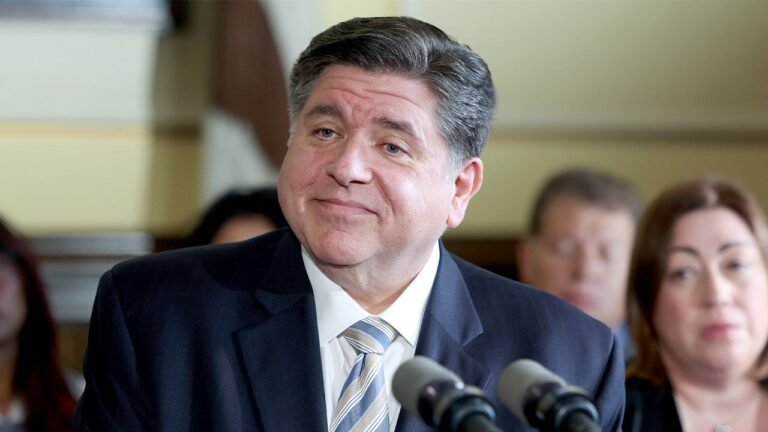
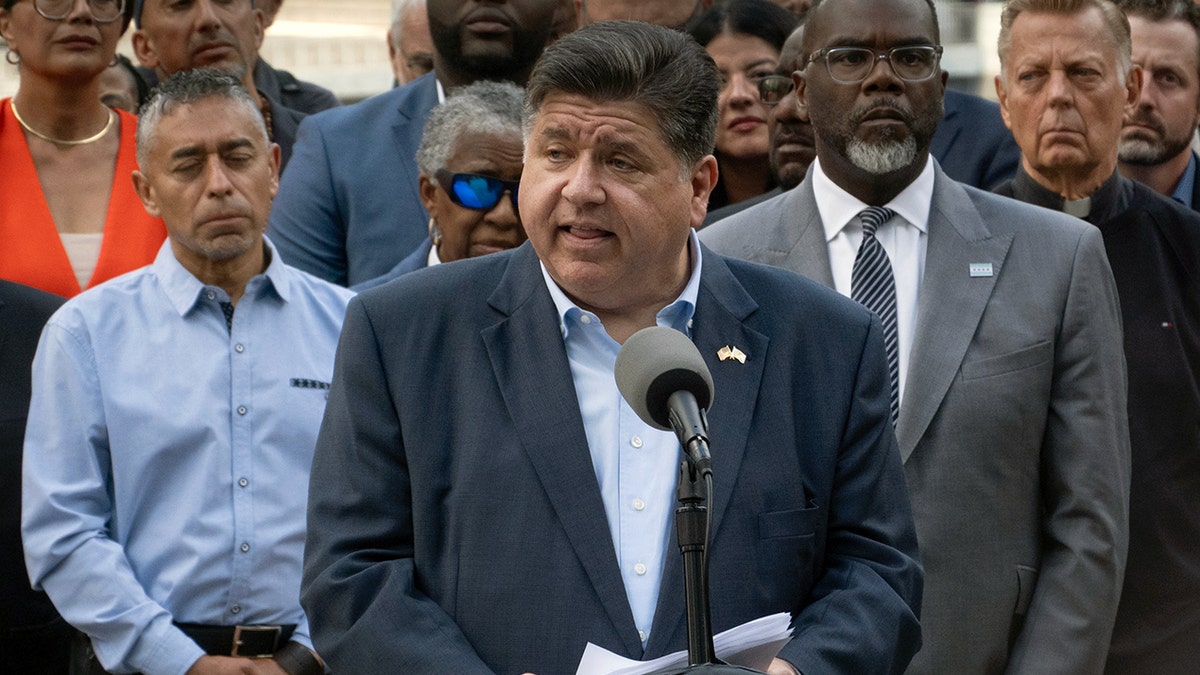
Pritzker at a press conference

Illinois Gov. JB Pritzker faces no opposition in the Democratic gubernatorial primary as he seeks a third term steering the blue-leaning Midwestern state. (Scott Olson/Getty Images)

Pritzker is backing Lt. Gov. Juliana Stratton, who is facing off against two other major candidates, Reps. Robin Kelly and Raja Krishnamoorthi, among a crowded field of contenders in the contentious and extremely expensive showdown.

If Kelly or Stratton were to win the primary and then the general election in November, they would become the second Black woman elected to the Senate in Illinois. And Krishnamoorthi, who was born in India and immigrated to the U.S. with his family as a child, would make history as the nation’s second Indian American in the Senate.

ILLINOIS DEM SENATE CANDIDATES SPLIT ON BACKING SCHUMER AS LEADER

Krishnamoorthi is the clear fundraising frontrunner in the race, and has spent big bucks to run ads. And a super PAC funded by crypto titans has shelled out nearly $10 million to back Krishnamoorthi.

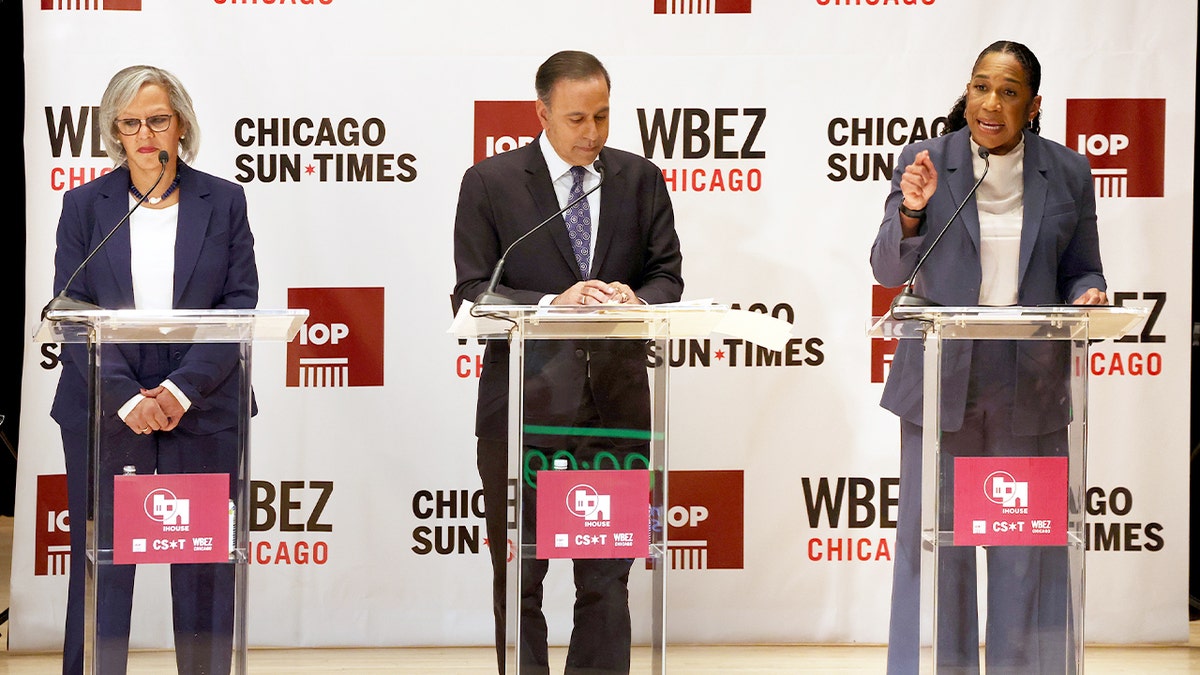
Three Democratic candidates stand on a debate stage at a university auditorium before an audience.

Democratic U.S. Senate primary contenders Reps. Robin Kelly, left, and Raja Krishnamoorthi, center, and Lt. Gov. Juliana Stratton take the stage for a debate on Jan. 26, 2026, at the University of Chicago. (Terrence Antonio James/Chicago Tribune/Tribune News Service via Getty Images)

The governor, a member of the Pritzker family that owns the Hyatt hotel chain and who has launched several venture capital and investment startups, has dipped into his large war chest to dish out millions to fund a super PAC supporting Stratton.

Pritzker’s support for Stratton is drawing pushback. Rep. Yvette Clarke of New York, chair of the Congressional Black Caucus, accused the governor of trying “to tip the scales” in the primary.

“A sitting governor shouldn’t be heavy-handing the race. Quite frankly, his behavior in this race won’t soon be forgotten by any of us,” Clarke emphasized in a statement.

Whoever wins the Democratic nomination will be considered the clear front-runner in the general election in a state where no GOP contender has won statewide in a dozen years.

Former GOP state party chair Don Tracy and attorney Jeannie Evans are among four Republicans seeking their party’s nomination.

2028 LOOMS LARGE: HARRIS, NEWSOM, PRITZKER CONVERGE AT HIGH-STAKES DEMOCRATIC PARTY SUMMIT

But for Pritzker, the Senate primary is viewed as a test of his political clout in his home state as he likely gears up for a 2028 presidential run. The governor has seen his national profile skyrocket over the past year as he’s become a top Democrat leading the resistance to President Donald Trump‘s second-term agenda.

Darren Bailey speaks to a crowd

Former Illinois state Sen. Darren Bailey, the Republican nominee who lost to Democratic Gov. JB Pritzker by more than 12 points in the 2022 gubernatorial election, is running a second straight time for governor. (Photo by Michael B. Thomas/Getty Images)

Four Republicans are seeking their party’s gubernatorial nomination, in hopes of facing off against Pritzker in the general election. Among the GOP challengers is former state Sen. Darren Bailey, who lost to Pritzker by more than 12 points in the 2022 governor’s race.

Also grabbing attention in Tuesday’s primaries are the Democratic showdowns in four blue-leaning House districts.

There are crowded and competitive races for Kelly and Krishnamoorthi’s seats, as well as for retiring longtime Democratic Reps. Danny Davis and Jan Schakowsky.

CLICK HERE TO DOWNLOAD THE FOX NEWS APP

Polls in Illinois close at 7 p.m. Central time.

More than half a million ballots had been cast in early voting as of Friday.


Source link

Jasprit Bumrah eyes double century, 17 steps away from 200 mark, 2 more players on the threshold of record

0

homegameCricket

Jasprit Bumrah eyes double century, 17 steps away from 200 mark

Last Updated:

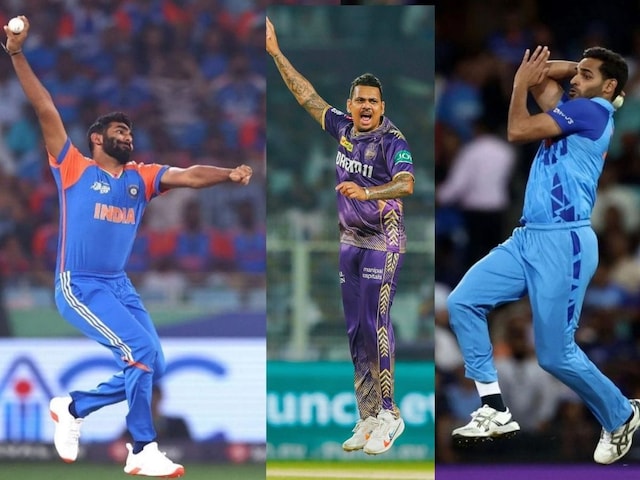
This season, three greats Bhuvneshwar Kumar, Sunil Narine and Jasprit Bumrah are very close to this historic milestone. The bowling style of all three is different, but the aim is to register their name in history by touching the figure of 200 wickets.

Jasprit Bumrah eyes double century, 17 steps away from 200 markZoom
In IPL 2026, 3 bowlers Bumrah, Sunil Narine and Bhuvneshwar Kumar can enter the 200 club.

New Delhi. The stage of the Indian Premier League has always been known for the fours, sixes and big scores of the batsmen, but every season some bowlers also emerge who create a distinct identity among this glitter and glamor with their art. Before the start of the 19th season of the Indian Premier League (IPL 2026), this time the discussion is not only about the run scorers but also about those bowlers who are standing very close to history. In the 18-year journey of IPL, till now only Yuzvendra Chahal has been able to cross the magical figure of 200 wickets, but now this exclusive club is ready to grow bigger.

This season, three greats Bhuvneshwar Kumar, Sunil Narine and Jasprit Bumrah are very close to this historic milestone. The bowling style of all three is different, but the aim is to register their name in history by touching the figure of 200 wickets.

17 steps away from 200 wickets

Mumbai Indians’ star fast bowler Jasprit Bumrah is at third place in this list. They have 183 wickets in their name and they need 17 wickets. This target definitely looks a bit challenging, but considering Bumrah’s ability, it cannot be called impossible. Bumrah, known as the Yorker King, has been taking 15 or more wickets continuously for the last 9 seasons. In IPL 2025, he took 18 wickets in 12 matches and recently played an important role in India’s victory by taking 14 wickets in the T20 World Cup 2026. Aakash Chopra believes that Bumrah can be a strong contender for the Purple Cap this season, if this happens then it will be almost certain that he will reach 200 wickets.

Sunil has a chance

Kolkata Knight Riders’ mystery spinner Sunil Narine is also not far away from this achievement. With 192 wickets they need only 8 wickets. Narine’s specialty is his economical bowling and ability to take wickets under pressure. By taking 17 wickets last season, he proved that he is still equally dangerous. If everything goes according to plan, he can become the first foreign bowler to take 200 wickets in IPL.

Bhuvi’s Bhokal

Bhuvneshwar Kumar seems to be at the forefront of this race, he has 198 wickets in his name and he needs only 2 wickets. While playing for different franchises, his swing bowling has always been difficult for the batsmen. Looking at his ability to take wickets with the new ball, it is almost certain that he will reach this milestone in the initial matches of the season itself. If this happens, he will become the second bowler and the first Indian fast bowler to take 200 wickets in IPL history.

Overall, IPL 2026 is going to be a season of not only entertainment but also records. While Bhuvneshwar Kumar is standing at the door of this historic club, Sunil Narine and Jasprit Bumrah are also fast moving towards it. Now it will be very interesting to see which bowler first achieves this special milestone of 200 wickets and registers his name in golden letters in the history of IPL.

Sanjay Raut’s big statement on Eknath Shinde’s Delhi visit, ‘Shiv Sena and Ajit Pawar’s NCP…’

0

Shiv Sena UBT MP Sanjay Raut reacted to Maharashtra Deputy CM and Shiv Sena President Eknath Shinde’s visit to Delhi. Taking aim he said that Eknath Shinde The party’s high command is not in Mumbai. Even though he may be using the name Shiv Sena, his party was founded by Amit Shah. Amit Shah is his boss. He is the founder of his party, sits in Delhi and is also the Home Minister. What is surprising if the Deputy CM has come to meet him?

‘He meets Amit Shah to take orders’

Ajit Pawar Amit Shah is the founder of both Nationalist Congress Party and Shinde’s Shiv Sena. What is happening in Maharashtra, what do we have to do, come to Delhi to take orders. Amit Shah See you from. It is an internal matter of his party. Have you come to meet your party chief?

LPG Crisis: ‘Queues for cylinders, yet CM says…’, Uddhav group cornered BJP government

What did you say on the results of Rajya Sabha elections?

On Rajya Sabha elections, he said that cross voting always happens. It happened in Bihar. There were sufficient numbers in Bihar. Opposition’s AD Singh could have won. Later it happened in Odisha and went to Haryana. BJP should be ashamed that by giving money you buy votes in the highest house of the country and win the elections. How long will this game of cross voting continue? But the country is being punished. Sanjay Raut further said that the opposition is together. Be it Odisha, Bihar or Haryana.

Government cornered on LPG crisis

On LPG crisis he said do not trust the government. The government is not the old Pandit Nehru government. There is no government of Lal Bahadur Shastri, Indira Gandhi and Rajiv Gandhi which can talk anything to the public in confidence. People are standing in queues of several kilometers in Delhi and Mumbai. Doesn’t the government see this? Prasad is not available in big temples. Canteens in schools and colleges have been closed.

Nagpur News: ‘I am going to give the exam…’, the student committed suicide by jumping from the fourth floor of the mall

Gulf economies suffer brunt of Iran war as recession risk looms | US-Israel war on Iran News

0

As the economic fallout of the United States and Israel’s war with Iran reverberates across the globe, the economies of the Gulf are suffering some of the worst damage.

Iran has launched continuous attacks on Gulf states since the onset of the conflict on February 28, arguing that it is attacking military bases used by the US for the war. Gulf nations have rejected Tehran’s claims, insisting that that attacks on them are unjustified.

Recommended Stories

list of 4 itemsend of list

These Iranian strikes have upended energy production and inflicted major disruption to tourism and travel, putting the region at risk of some of the most severe economic harm since the 1990-91 Gulf War.

“Disruptions to aviation, tourism, shipping routes, and energy exports – combined with higher insurance premiums and freight costs – mean the region is likely losing hundreds of millions of dollars per day in economic activity,” said Khaled AlMezaini, an associate professor of politics and international relations at Zayed University in Dubai, the United Arab Emirates.

“The exact scale will depend largely on how long disruptions to trade routes, ports, and airspace continue.”

After more than two weeks of war, the economic impact on the region has already been substantial.

Middle Eastern oil producers’ daily output declined from 21 million barrels to 14 million barrels after a little more than a week of conflict, amid the closure of the Strait of Hormuz, according to Rystad Energy.

Output is expected to drop substantially further if commercial shipping continues to avoid the strait amid Tehran’s threats, with Rystad Energy predicting a decline to 6 million daily barrels in a worst-case scenario.

While US President Donald Trump has said “numerous” countries stand ready to help Washington secure the waterway with their navies, no government has yet confirmed its involvement, while several have ruled out deploying warships for the effort.

Strait of Hormuz
A cargo ship sails in the Gulf towards the Strait of Hormuz in the UAE, on March 15, 2026 [Altaf Qadri/AP]

Despite significant economic diversification in recent decades, the members of the Gulf Cooperation Council – Qatar, Kuwait, Bahrain, Saudi Arabia, the UAE and Oman – still rely on oil production for nearly one-quarter of gross domestic product (GDP).

Qatar, Kuwait and Bahrain are especially exposed to the disruption due to their limited access to export routes that bypass the strait, said Yesar Al-Maleki, a Gulf analyst at the Middle East Economic Survey (MEES).

“Saudi Arabia and the UAE are somewhat better positioned because both have invested in infrastructure that allows them to partially bypass the strait,” Al-Maleki added, pointing to Saudi Arabia’s East-West pipeline and the UAE’s pipeline to Fujairah, which can transport roughly 5 million barrels and 1.8 million barrels per day, respectively.

Goldman Sachs has estimated that Qatar and Kuwait could see GDP plunge 14 percent if the war lasts until the end of April, with the UAE and Saudi Arabia facing contractions of 5 percent and 3 percent, respectively.

At the same time, however, S&P Global Ratings, a leading ratings agency, has affirmed a “stable outlook” for Qatar, adding that the country’s “large financial buffers should enable sufficient fiscal and external space to offset the impacts of adverse geopolitical developments, including temporary disruptions to the production and export of LNG”.

Meanwhile, Capital Economics has suggested that GDPs in the region could fall 10-15 percent if the conflict lasts at least three months and causes lasting damage to energy infrastructure.

Iraq, which borders the Gulf but is not a member of the GCC, has also been hit hard by the energy crisis.

Peter Martin, head of economics at Wood Mackenzie, said the Iraqi government has been losing some $3bn in daily revenues based on an estimated 70 percent decline in output.

“The duration of production constraint is key to the economic impact, but highly uncertain,” Martin said.

“Assuming Iraq were to suffer a 10 percent year-on-year decline in oil production in 2026, we estimate that GDP could contract by 3.5 percent this year.”

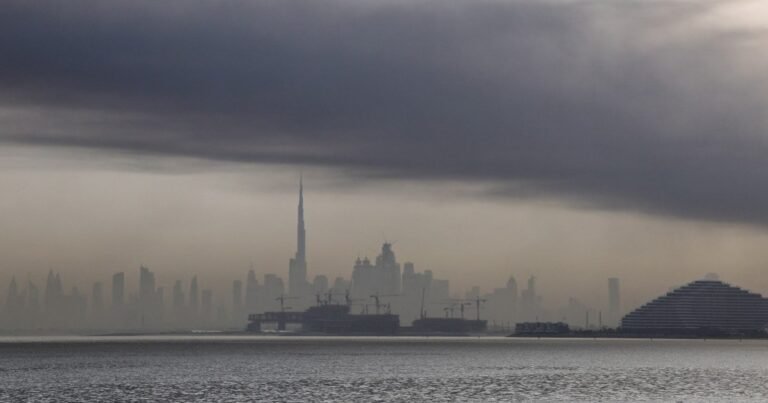
Dubai
A FlyDubai plane is parked at Dubai International Airport in Dubai, United Arab Emirates, on March 16, 2026 [AP]

While energy remains the economic lifeblood of the Gulf, the war has spilled over into other critical sectors, particularly tourism and travel, a growing sector that accounts for about 11 percent of the GCC’s GDP.

Airspace closures and restrictions led to 37,000 flight cancellations between February 28 and March 8 alone, according to aviation analytics firm Cirium.

On Tuesday, UAE authorities briefly instituted a total closure of the country’s airspace, citing “rapidly evolving regional security developments”.

The announcement came a day after Dubai International Airport, normally the world’s busiest international gateway, was forced to suspend flights after a drone attack on a nearby fuel depot. Qatar Airways, meanwhile, has slowly started special flights, ramping up their frequency — though none of the Gulf carriers has reached pre-war levels of aviation traffic.

In an analysis published last week, the World Travel & Tourism Council estimated that the conflict was costing the region $600m in daily spending by international visitors.

“The fact that for now over a fortnight most tourist bookings, conferences, sporting events etc have had to be cancelled will concretely represent massive costs to the region’s travel sectors and hotels and hospitality sectors,” said Emilie Rutledge, an economics lecturer at The Open University in the UK.

“How many tens of thousands of Europeans and Asians would have come through Doha, Dubai and Abu Dhabi in the past 15 days had it not been for America and Israel’s war on Iran?” Rutledge said.

Doha
Motorists drive past a plume of smoke rising from a reported Iranian strike in the industrial district of Doha, Qatar, on March 1, 2026 [Mahmud Hams/AFP]

Al-Maleki, the analyst at MEES, said the economic fallout could be comparable to historic regional crises if the war drags on.

“In the near term, the scale of disruption may resemble the economic shock experienced during the pandemic, while a sustained closure could approach the magnitude of the economic fallout seen during the 1991 Gulf War,” he said.

AlMezaini at Zayed University said he sees a Gulf-wide recession as still being unlikely, pointing to the extensive fiscal reserves that many countries can turn to to withstand short-term shocks.

While the risk of a downturn will rise if the war goes on for weeks, “the more likely base case is weaker growth and a delayed recovery rather than a broad, deep contraction – especially for larger economies such as the UAE and Saudi Arabia,” AlMezaini said.

“If tensions de-escalate relatively quickly, the region is well placed for activity to normalise faster than many expect,” he said.


Source link

Archaeologists uncover 2,000-year-old temple at Denmark Iron Age settlement

0

NEWYou can now listen to Fox News articles!

Archaeologists have uncovered a 2,000-year-old temple in Denmark — offering a glimpse into the mysterious, once-powerful society that built it.

The Museum of Central Jutland (Museum Midtjylland) unveiled the discovery of the temple at Hedegård, an ancient site that contains Scandinavia’s “largest and richest burial site,” according to its website. The latest excavation began last August.

Hedegård, located near Ejstrupholm north of the Skjern River, has been identified as Denmark’s largest settlement from the time “around the birth of Christ,” the museum said.

ARCHAEOLOGISTS UNCOVER GOLD-LADEN TOMB FILLED WITH ELITE BURIAL TREASURES FROM OVER 1,000 YEARS AGO

Working with researchers from Museum Horsens and Moesgaard Museum, archaeologists found evidence of a vast fortified settlement that once served as a regional power center during the Iron Age.

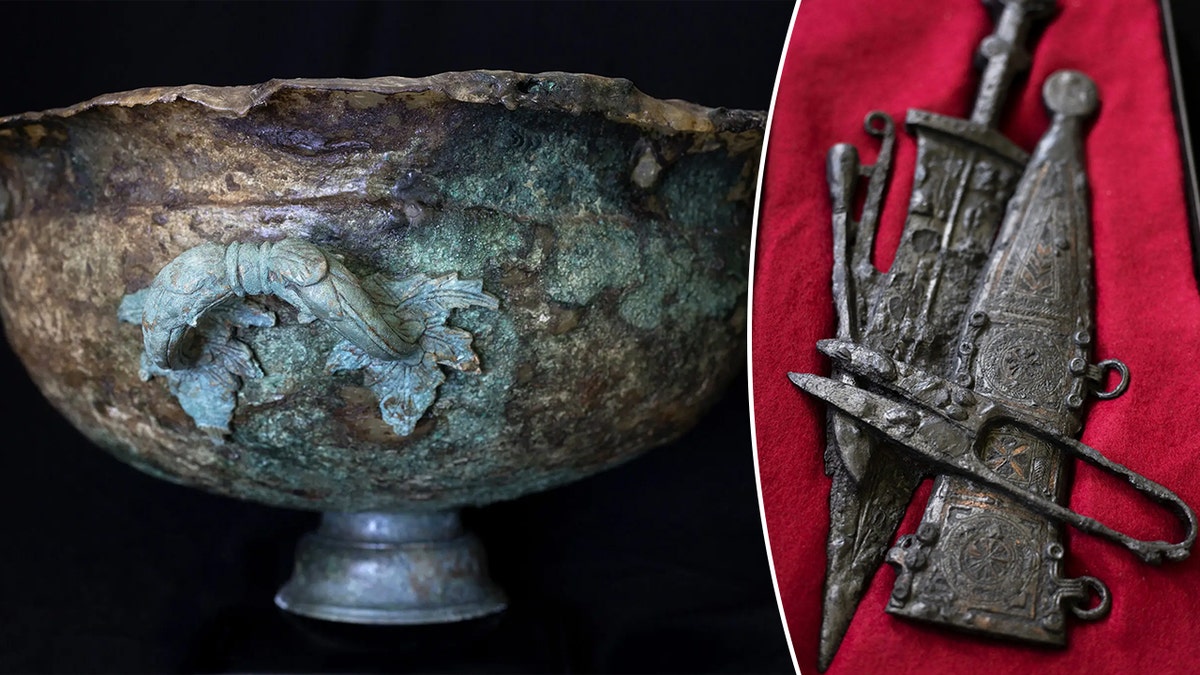
The settlement has yielded luxury goods, weapons from Celtic tribes and “prestige” items from Roman workshops.

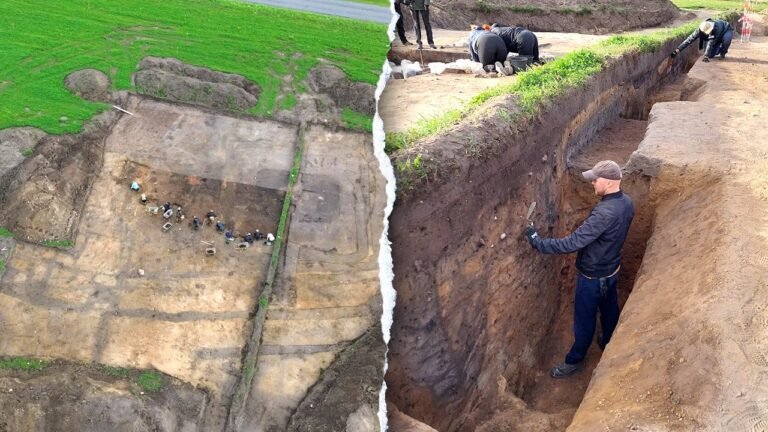
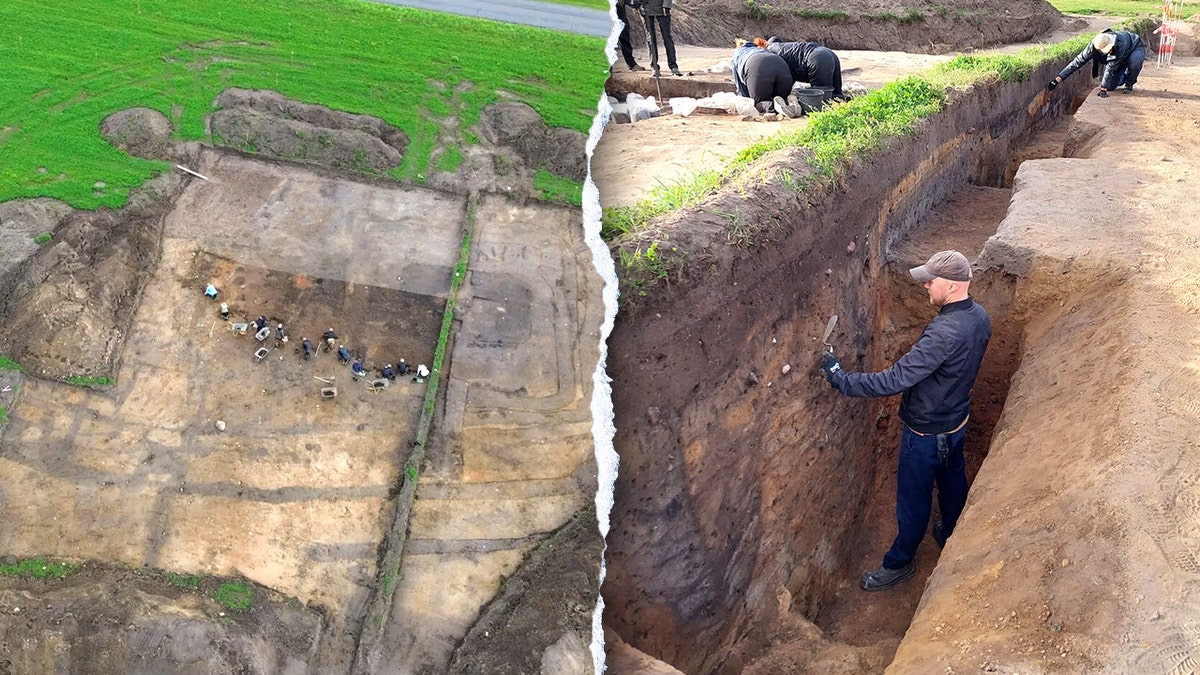
Split image of excavation site, archaeologist digging

Archaeologists in Denmark have uncovered a 2,000-year-old temple at Hedegård, a site identified as a major Iron Age power center. (Museum Midtjylland)

Evidence shows the settlement “flourished in the period leading up to the birth of Christ.”

The museum said that “this is when we see the rich graves and numerous weapon graves in the cemetery north of the village.”

DOG WALKERS TRIGGER ARCHAEOLOGICAL RACE TO PRESERVE 2,000-YEAR-OLD FOOTPRINTS IN SHIFTING SANDS

But the crown jewel of the excavation was the temple — which measured roughly 49 by 53 feet. 

“The structure likely appeared as a tall, almost square, tower-like building with an outer colonnade.”

The structure had once burned down. Beneath the burn layer, excavators found traces of “two temple phases” that offer insight into its history.

“At the exact center was a [6 x 6 foot] raised clay platform,” officials said. 

POLICE STUMBLE UPON ANCIENT SHIPWRECK AMID ROUTINE PATROL, KEEP LOCATION SECRET TO DETER LOOTERS

“In the younger phase, an ornamented hearth was built here, partially covering the earlier hearth. The younger temple was shifted about [30 inches] north compared to the older one, but was otherwise nearly identical. The older hearth remained untouched — the new one was simply built over it.”

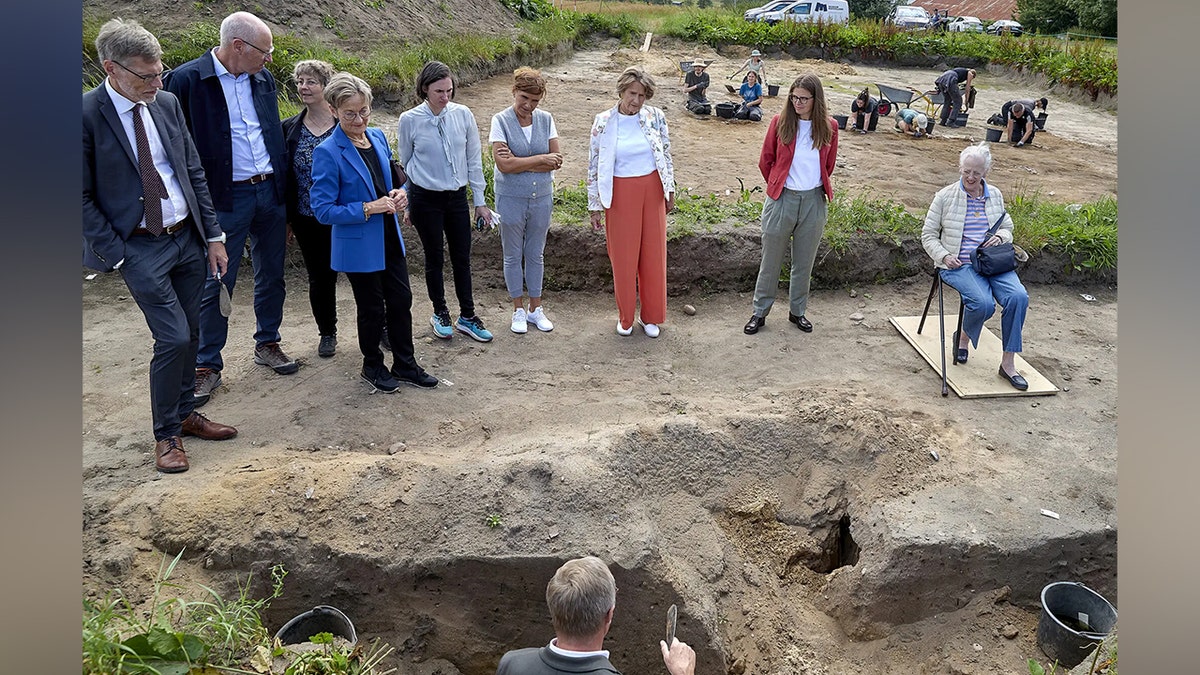
Officials standing near temple site

The pagan structure was built between 50 B.C. and 50 A.D., according to the archaeology curator.  (Museum Midtjylland)

Archaeologists also found plaster fragments that suggest the temple’s walls were once painted white.

“Preliminary results suggest the temple functioned in the decades around the birth of Christ,” the site stated.

“The structure likely appeared as a tall, almost square, tower-like building with an outer colonnade. The hearth dominated the interior space.”

TEST YOURSELF WITH OUR LATEST LIFESTYLE QUIZ

The museum also said, “The temple was carefully cleared before being deliberately burned, leaving few finds. However, two exceptional glass beads were discovered — likely produced in the Middle East or Egypt.”

The site has been the subject of scholarly interest since Danish archaeologists found an unusual number of richly-adorned graves in the late 1980s.

“Christianity did not reach Scandinavia until almost 1,000 years later.”

“It remains unique in Northern European archaeology — an early and unparalleled display of military, economic, and religious power,” the museum’s statement said.

Since the site was discovered over three decades ago, archaeologists have known that the site was “something completely different,” said Martin Winther Olesen, an archaeology curator.

CLICK HERE TO SIGN UP FOR OUR LIFESTYLE NEWSLETTER

“When our geophysical surveys revealed a fortification in the village it was clear that this was something out of the ordinary,” he noted.

Olesen identified the temple as a pagan structure, which was built between 50 B.C. and 50 A.D.

Luxury goods from graves

Richly adorned graves and numerous weapon burials north of the settlement first drew scholarly attention in the late 1980s. (Museum Midtjylland)

“Christianity did not reach Scandinavia until almost 1,000 years later,” he said — adding that Hedegård had “extensive foreign relations” including knowledge of Celtic and Roman architectural traditions.

Evidence appears to suggest that Hedegård was only in use for three generations before it disappeared.

CLICK HERE FOR MORE LIFESTYLE STORIES

All the evidence proves Hedegård had “everything it takes to be an early Iron Age power center,” said Olesen — and he said that he could talk about the site “for two hours straight.”

“The site is strategically located and controls the most important road up through Jutland,” the expert said. “There is clear militarization in the form of weapons, but also in the construction of the fortification.”

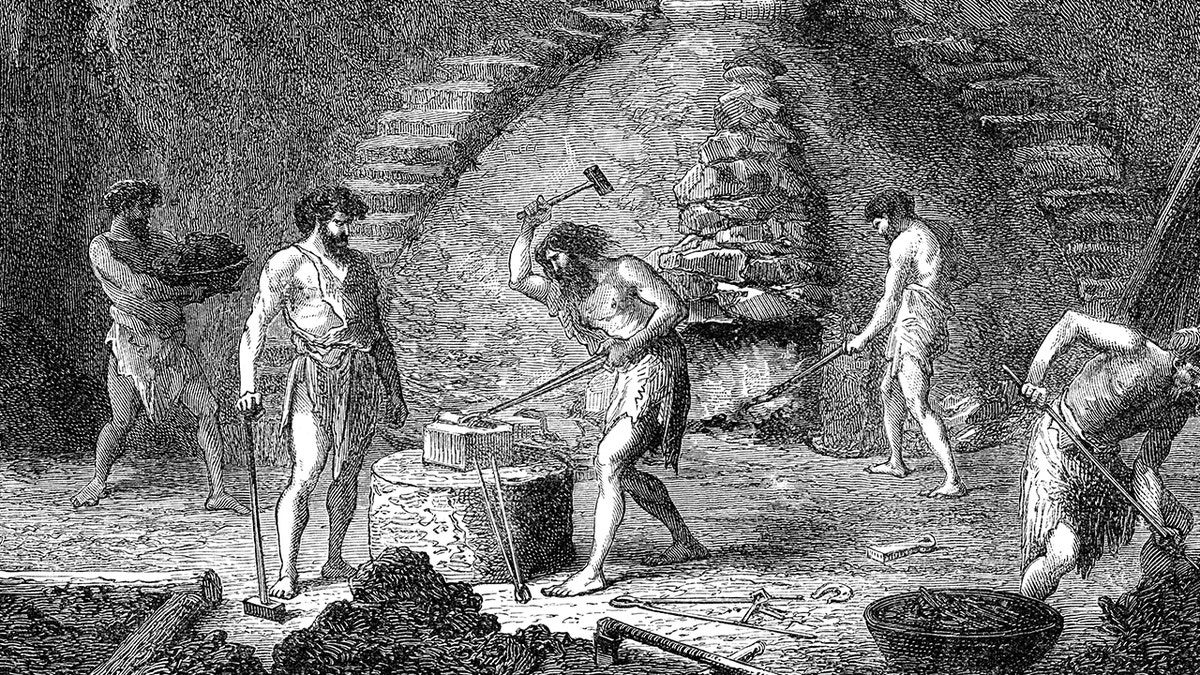
Iron Age smelting depiction

The Iron Age, depicted above, was often marked by military strength, expanding trade networks and religious ritual, all of which archaeologists say were on full display at Denmark’s Hedegård settlement. (Museum Midtjylland)

He added, “There is a political elite, monumental construction, there are crafts and trade and — of course — it is also a center for the practice of the cult.”

The official noted the discovery was only made possible thanks to “super talented archaeologists and researchers from Denmark and abroad.”

CLICK HERE TO GET THE FOX NEWS APP

“It is an exquisite privilege to be allowed to work with a find that has an international dimension,” said Olesen.


Source link

Minister Hardeep Singh Puri’s daughter takes strict action on rumors of Epstein link, moves Delhi HC

0

Himayani Puri, daughter of Union Petroleum and Natural Gas Minister Hardeep Singh Puri, has approached the Delhi High Court against the controversial news regarding her name. He has filed a defamation suit of Rs 10 crore. Himayani says that wrong and misleading information is being spread about him on social media and internet, which is damaging his image.

Objection expressed on being linked to Epstein

In the petition, Himayani Puri has specifically objected to the fact that her name is being linked to American sex offender Jeffrey Epstein. He says that in some posts and videos it was falsely claimed that he had any connection with Epstein or any of his activities. He clarified that he did not have any kind of financial, business or personal relationship with Epstein.

Allegations of edited video and fake content

Himayani has said in her petition that since February 22, 2026, posts are being continuously posted against her on social media. Edited videos, misleading captions and manipulated thumbnails have been used in these. According to him, all this is being done deliberately to create confusion and anger among the people.

The petition also states that some posts claimed that the company where Himayani had previously worked had received funding from Epstein or his associates.

Apart from this, it was also alleged in some posts that he had conspired with businessman Robert Millard for the downfall of Lehman Brothers. Himayani has called all these allegations completely false and fabricated.

Demand to give instructions to social media companies

Himayani Puri has demanded from the court that all the defamatory posts, videos and content present on platforms like Google, Meta and X should be removed immediately. He has also requested that if similar material comes to light in future, strict instructions should be given to remove it too.

On behalf of Himayani, senior lawyer Mahesh Jethmalani has argued in the court that she is being targeted only because she is the daughter of a Union Minister. He says that this matter is not just about personal reputation but is a necessary legal step against misinformation.

The hearing of this case is likely to be held in Delhi High Court on Tuesday (17 March). Now it remains to be seen what stand the court takes on this and what instructions it issues on such news spreading on social media.

Israel claims to have assassinated commander of Iran’s Basij militia unit | US-Israel war on Iran News

0

The Israeli military has claimed in a post on X Tuesday that it has killed the commander of the Basij unit, the internal security paramilitary militia of Iran’s Islamic Revolutionary Guard Corps (IRGC).

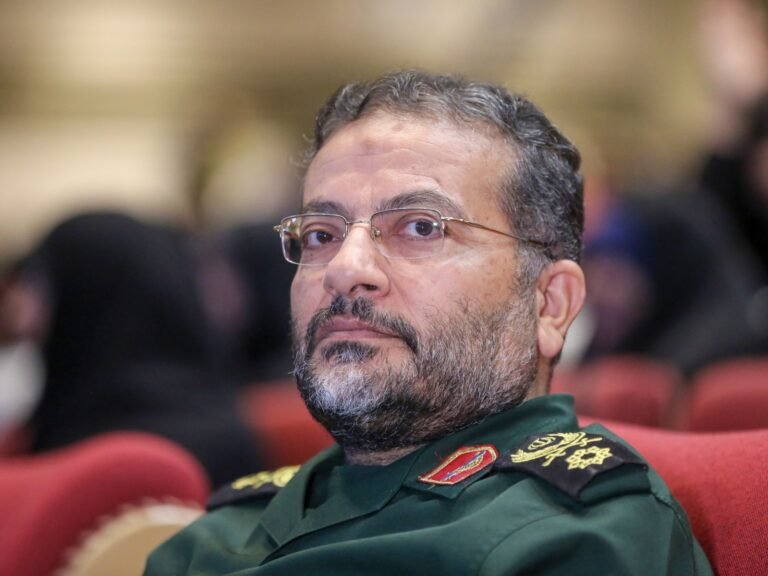
“Guided by precise intelligence from Military Intelligence, the Air Force conducted a targeted strike yesterday in the heart of Tehran, eliminating Gholam Reza Soleimani, commander of the Basij unit over the past six years,” it said on Tuesday.

Iran has not confirmed this claim.

If confirmed, Soleimani would be the highest level assassination in the war since United States-Israeli strikes killed the former Supreme Leader Ali Khamenei, and several members of his family on the first day of the war they launched on February 28.

More to come…


Source link

The RBA has made one of its most controversial calls in recent years – and this rate rise may not age well | Reserve Bank of Australia

0

The Reserve Bank has made some controversial calls over recent years, but hiking interest rates in the middle of a historic global energy shock is right up there.

If this Middle East conflict lasts for months, not weeks, and drags the world and our economy down, then Tuesday’s decision to increase households’ borrowing costs will not age well.

A large minority of the nine-member rate-setting board would have preferred to wait and see how the war developed over coming weeks before delivering what they still thought was likely to be a hike at the next meeting in May.

But they were overruled.

“We had a very robust conversation over the past two days about whether we should hold until May,” the Reserve Bank governor, Michele Bullock, told reporters at her post-meeting press conference.

“The issue wasn’t the direction, the issue was really the timing,” she said.

The dissenting members “put more weight on the uncertainty and wanting a little bit more information”.

Sign up for the Breaking News Australia email

The fact that the vote was split – five in favour of a hike and four in favour of a hold – suggests that the decision was as controversial inside the board room as it will be outside on the streets, although Bullock played down any internal division.

“Reasonable people can differ,” she said.

Bullock argued the overwhelming risk from higher petrol prices was that, without a quick response from the central bank, they would accelerate a broadening inflationary pulse and make it even harder to bring price rises under control.

The context is inflation is already elevated at 3.8%, which is way above the central bank’s target of 2.5%.

“High inflation hurts absolutely everyone, and so that is why we need to focus on that,” she said.

But there still seems to be an extraordinary level of complacency about the potential fallout from the US-Israel war on Iran.

While Bullock was talking up the undeniable inflation risks, she flagged that the country’s best and brightest economic minds had not turned their mind seriously to what would happen if we got to May or June and the Middle East conflict had not died down.

“We’ve done some modelling on just very first-round pass-throughs of petrol price rises to inflation, but we haven’t done any modelling on potential impacts if the war goes on,” she said.

“So that’s something obviously we’re looking at – I think Treasury is looking at [it] as well – but we haven’t done anything on that yet.”

In truth, responding to energy shocks with interest rate policy is devilishly difficult, because the shocks simultaneously hurt growth and add to inflation – a stagflationary effect.

Westpac economists, for example, estimate that were the strait of Hormuz to stay closed for three months, it would slash 0.5% off Australia’s economic growth while leaving inflation 1.3 percentage points higher.

For now, Bullock says the board is focused on the inflationary risks, and economists still see a third straight rate hike in May.

But, as ever, the governor is ready to change her mind.

“There could be some really bad outcomes for the world economy if the current conflict gets worse. So those are the sorts of things we’re going to have to consider,” she said.

“And if circumstances change, and if it does look like the world economy is in big trouble, then that will have different implications for inflation, and we will be looking very hard at what we need to do in those circumstances.

“That’s all by way of saying that the board is going to be monitoring this stuff very closely. And if we have to change tack, we will.”


Source link