Storm hit Christchurch 24 years ago, made an unstoppable record in 217 minutes
Last Updated:
The New Zealand team had lost 9 wickets for 333 runs and defeat was almost certain but what happened after that changed the definition of Test cricket. On March 16, 2002, a record was made which till date no batsman has been able to break.
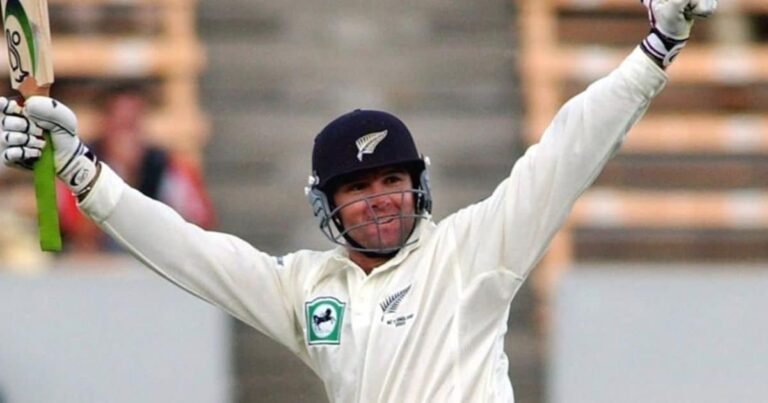
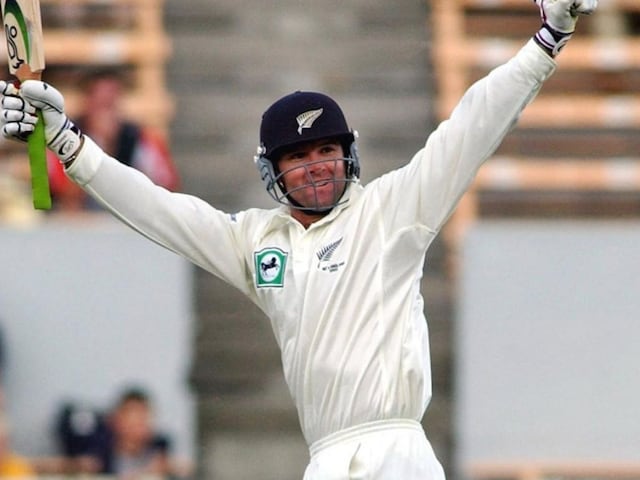
New Zealand batsman Nathan Astle scored the fastest double century in 2002, the record still stands.
New Delhi. There are some innings in the history of cricket, which go beyond the scorecard and become a story, a story of passion, emotion and making the impossible possible. That explosive innings of Nathan Astle was also something like this, when he single-handedly created a storm in the midst of a team that was on the verge of defeat. Such a miracle happened on the grounds of Christchurch that the world was left wide-eyed.
England had set a lofty target of 550 runs for New Zealand to win in the fourth innings. The target was so big that the match started looking like a formality. The New Zealand team had lost 9 wickets for 333 runs and defeat was almost certain but what happened after that changed the definition of Test cricket. On March 16, 2002, a record was made which till date no batsman has been able to break.
Astle shines in Jade Stadium
Coming to bat at number 5, Astle showed aggressive attitude from the very beginning. He completed his century in just 114 balls, which was very fast in terms of Test cricket of that time, but the real explosion happened after that. After completing the century, he changed gears and scored the next 100 runs in just 39 balls. It was a nightmare for any bowling attack. During this time, the injured Chris Crayons who came to support him and was batting at number 10, together made a partnership of 118 runs in just 65 balls. This partnership not only got recorded in the record books, but also shows that in cricket, hope remains alive till the last wicket.
Bowlers washed and world record made
Astle thrashed England’s leading bowlers Andy Caddick, Matthew Hoggard and Flintoff. Especially by hitting three consecutive sixes in one over of Caddick, he made it clear that he has come not just to survive but to create history. Astle hit 28 fours and 11 sixes during his record-breaking innings. The biggest attraction of this inning was not just the runs, but its speed. Astle completed his double century in 153 balls, which is still the fastest double century in Test cricket. He broke Adam Gilchrist’s record, and later even explosive batsmen like Ben Stokes and Virender Sehwag could not cross this figure. Ultimately Astle was out on Hoggard’s bowling after scoring 222 runs and New Zealand’s innings was reduced to 451 runs. The team definitely lost the match, but Astle’s innings proved to be bigger than the victory. It was not just a double century, but a new definition of aggression in Test cricket where no matter how difficult the conditions, a player can change the story on his own.
Scientists at the Cern nuclear physics laboratory near Geneva have discovered a heavier version of the proton, the subatomic particle that sits at the heart of every known atom in the universe.
They spotted the particle in a shower of debris that lit up a detector at the Large Hadron Collider (LHC), located deep beneath the ground at Cern, which smashes protons together at close to the speed of light. The collisions recreate in microcosm conditions that prevailed just after the big bang, with the energy converting to particles that spray in all directions.
The newfound particle, which is four times heavier than the regular proton, should help physicists refine their understanding of the strong nuclear force that glues together the innards of all atomic nuclei. The force is unusual because it behaves like a rubber band, getting stronger as the distance between subatomic particles increases.
Physicists working on the LHCb experiment found the heavy proton after the detector was upgraded to make it more powerful.
“This is just the first of many expected insights that can be gained with the new LHCb detector,” said Prof Tim Gershon at the University of Warwick, who takes over as the LHCb international lead in July. “The improved detection capability allowed us to find the particle after only one year, while we could not see it in a decade of data collected with the original LHCb.”
Atoms of hydrogen, the simplest and most abundant element in the observable universe, contain only a proton and an electron. Protons, along with neutrons in heavier atoms, consist of elementary subatomic particles called quarks. A proton contains two up quarks and one down quark, but there are heavier, unstable versions of quarks known as charm, strange, top and bottom.
In the heavy proton detected at Cern, both up quarks are replaced with charm quarks. The particle, snappily named Xi-cc-plus, was revealed by its signature decay into other particles. After popping into existence, it does not hang around: scientists suspect it survives for less than a millionth of a millionth of a second before breaking down.
“The more we learn about these particles, the more we can learn about the strong force, and that is the same strong force that binds our protons and neutrons together,” said Prof Chris Parkes, a physicist at the University of Manchester.
The discovery comes as UK Research and Innovation(UKRI), the nation’s science funder, faces fierce criticism for its plans to pull £50m funding for the LHCb’s final upgrade in the 2030s. The revamp would ensure the detector made the most of a major transformation to the LHC that could substantially improve its discovery potential.
UK scientists working in particle physics, astronomy and nuclear physics have been told their grants will be slashed following cost overruns at major science facilities. Projects have also been hit, including the next LHCb upgrade and an electron-ion collider under development with researchers in the US.
Last week, Chi Onwurah, chair of the Commons science committee, sent a scathing letter to Prof Ian Chapman, chief executive of the UKRI, and Patrick Vallance, the science minister, calling the cuts “wholly unacceptable” and “a failure” by UKRI, the Science and Technology Facilities Council and the Department for Science, Innovation and Technology.
The letter demands “swift and decisive action” and asks whether the decision on the LHCb upgrade is final.
“It is so important that we can overcome the problems caused by the UKRI decision to deprioritise the funding for this project,” Gershon said. “No other experiment either running or planned will be able to do this physics.”
Access Denied
You don’t have permission to access “http://hindi.gadgets360.com/wearable/apple-watch-burn-case-user-claim-india-apple-support-issue-6-months-no-responsibility-reddit-complaint-news-11226814” on this server.
Labor has given one of its strongest signals yet the capital gains tax discount will be reworked in the May budget, with a parliamentary inquiry finding the Howard-era settings are helping fuel intergenerational inequality in Australia’s housing market.
A Greens-led parliamentary inquiry said the 50% discount “skewed the ownership of housing away from owner-occupiers and towards investors”.
“The benefits of the capital gains tax discount are also unequally distributed, with implications for income and wealth inequality and intergenerational inequality,” the report released on Tuesday found.
The treasurer, Jim Chalmers, has signalled a willingness to make changes to the discount, introduced in 1999 for assets held for more than a year.
Along with negative gearing rules, the discount has been blamed for promoting housing as an investment mechanism for wealthier Australians over the rights of would-be first time buyers.
Labor members on the committee linked possible changes to government work already under way ahead of the 12 May budget and last year’s economic reform roundtable, which promised to address intergenerational inequality in the tax system.
Treasury is modelling changes that could see the discount reduced to 33% for housing investors, while retaining the current 50% rate for shares and other investments.
The Greens Treasury spokesperson, Nick McKim, used the report to argue Labor’s majority and the Greens balance of power in the Senate represented an opportunity for the government to pass ambitious tax reform in the current parliament. In the report, he noted when the discount was established, 57% of 30 to 34-year-olds owned property. That figure has since dropped to 50%.
“The [discount] means that if you go to work as a teacher, a bartender or software developer you pay double the amount of tax than someone who received the same amount of money taking advantage of soaring property prices by buying and selling investment properties,” McKim said.
“It means that someone who speculates on housing pays a lower rate of tax than the carpenters, plumbers and electricians who actually build the houses.”
Chalmers said he would be briefed on the report’s findings in coming days, stressing budget decisions would be made by cabinet.
“It will no doubt identify some issues which are familiar to us,” he said.
“But I’ll read it, of course, I will. I’ve said that the government’s policies haven’t changed in this area. Any further steps will be a matter for the cabinet.”
Coalition senators strongly rejected calls for change however.
“If Labor pursues changes to the CGT discount, it will be another simplistic and one-dimensional response that sidesteps the central problem in housing, that not enough homes are being built,” Liberals Andrew Bragg and Dave Sharma said in a statement.
“The real answer to housing affordability is more supply, not another Labor housing gimmick.”
Independent senator David Pocock used the report to suggest Labor had “overlearned” the lessons of its 2016 and 2019 election defeats, when changes to CGT and negative gearing were rejected by voters.
Pocock recommended removing the discount for properties bought after 1 July this year, with a new 25% discount introduced for new homes. He called for negative gearing arrangements to be limited to a single investment property.
Research released last week by the Australian Council of Social Services found the five highest earning electorates nationally capture 22% of all CGT discount expenditure, against just 1.6% for the bottom 10 electorates.
A tax white paper released by the Sydney independent Allegra Spender this month argued for reducing the CGT discount to 30% as part of wider reform package that would allow major cuts to income taxes.
A losing battle with potholes has now seen the backlog of repairs across England and Wales reach a record £18.6bn, according to an annual industry estimate, despite councils filling in about 1.9m holes last year.
The “national disgrace” of dangerously pockmarked local roads has been exacerbated by a notably wet winter, with only half of the network now reported to be in good condition.
The report, published by the Asphalt Industry Alliance (AIA), suggests that new holes may have expensively sprung up faster than additional government money can be sunk into the tarmac.
The estimated cost of a one-off repair of all potholes has risen by £1.8bn since 2025, despite the government allocating £1.6bn last year, an additional £500m, to help local authorities fix their roads.
David Giles, the chair of the AIA, said: “I think all road users would agree that the condition of our local roads has become a national disgrace.”
He said its reports over the past decade showed the money needed to fully repair local roads had increased dramatically, adding: “The impact of frequent adverse weather events on a consistently underfunded – and increasingly fragile – network [is] coming home to roost.”
He warned that it would be “some time before the impact of increased funding levels, if fully delivered, will be noticed by the public”.
The AA president, Edmund King, said the report “starkly warns us how much more needs to be done to eradicate this plague of potholes”.
“We have been seeing with our own eyes, and feeling with our wheels, how record wet weather linked to substandard roads has led to many local roads becoming patchwork obstacle courses,” he said.
The RAC head of policy, Simon Williams, said roads were “in a woeful state of disrepair – something that’s been even more noticeable since the beginning of the year with our teams receiving hundreds of breakdown reports every day mentioning potholes”.
The safety charity IAM RoadSmart’s director of policy, Nicholas Lyes, said: “About one in six local roads are effectively on life support with less than five years of structural integrity remaining. We need a long-term approach that invests in proper surface maintenance, rather than the all too often ‘patch and dash’ repairs that crumble at the first sign of bad weather.”
A Department for Transport spokesperson said the report “rightly highlights the need to improve our roads. That’s why, after years of underinvestment, we’re providing a record £7.3bn in long-term funding, to help councils resurface roads and fix the pothole plague.”
They said there were signs of progress, with 15% more pothole-prevention works carried out in 2025 compared with 2024, as well as a new ratings system monitoring how money was spent. They added: “We will hold councils to account, ensuring they use this money to plan ahead and deliver safer, smoother journeys.”
Spring can frequently reveal potholes in full bloom, with the holes habitually formed over winter as rain enters cracks in road surfaces before freezing when temperatures drop, expanding and creating bigger cracks.
A separate survey by KwikFit said the cost of pothole damage to UK drivers had also peaked at a record £1.8bn over the past 12 months. It also found that the condition of the roads had prompted 2.5 million drivers to buy a bigger car or SUV, more able to cope with bumps but also more likely to intensify the damage to road surfaces.
Morning everyone, I’m Patrick Greenfield – you may recognise the name from my environment reporting over the years (or perhaps you read my piece about the possible rebirth of a long-extinct 12ft bird). I’ll be joining you on First Edition for the next few months, where I will inevitably be turning my attention to some rather more worrisome news than the Jurassic Park-adjacent ambitions of a US startup.
On that note: no Gulf state wanted war with Iran. But, as fighting in the Middle East enters its third week, the region finds itself on the frontline of an increasingly intractable conflict. After the US-Israeli attack on Iran in late February, drones and missiles have showered the UAE, Qatar, Kuwait, Bahrain and Saudi Arabia – bringing the region’s oil and gas industries to a near standstill, and prompting an exodus of tourists and expats.
The metropolis of Dubai, less than 100 miles from Iran, has settled into a strange rhythm amid theconflict: withfighter jets in the sky and water skis below, whileluxury hotels have become surprising targets for Iranian projectiles. It all raises the question of how parts of the Gulf will be able to maintain the image of quiet luxury and peace – and to what extent that image has been a mirage.For today’s newsletter, I spoke with Hannah Ellis Peterson, the Guardian’s south Asia correspondent, who is covering the war from Dubai.
But first, the headlines.
Five big stories
UK news | Keir Starmer has said the UK will not be drawn into the wider war in the Middle East, after Donald Trump called for allies to send warships to the strait of Hormuz to help unblock global oil supplies from the region. Starmer also announced that households reliant on heating oil to warm their homes would receive £53m of government support to help with their bills.
Health | A sixth-form student at Queen Elizabeth’s grammar school in Faversham has been confirmed as the second person to have died after an outbreak of meningitis in Kent.
Environment | Realtime pollution alerts are urgently needed across Windermere, campaigners have said, as the mother of a seven-year-old boy who kayaked on the lake described how he nearly died after contracting a dangerous strain of E coli from contaminated water.
Media | The BBC has asked a US court to throw out Donald Trump’s $10bn (£7.5bn) lawsuit over the way a documentary edited one of his speeches, warning that proceeding with the case would have a “chilling effect” on its reporting on the president.
Energy | Belgium’s prime minister, Bart De Wever, has been criticised for calling for the normalisation of relations with Russia to re-establish cheap energy supplies.
In depth: ‘The UAE never expected to be on the frontline of this war’
Smoke rises over buildings in Doha, Qatar. Photograph: Mahmud Hams/AFP/Getty Images
In the days after the conflict began, there was a rush to leave the city after a wave of Iranian attacks. Dubai’s pet shelters became overwhelmed with dogs and cats left behind by expats, while those that remain have been caught up in a crackdown from authorities for sharing videos of the conflict.
A 60-year-old British man was among 20 people charged in connection with filming and posting material related to Iranian attacks, alleged to have broken the UAE’s strict cybercrime laws that prohibits sharing material that could disturb public security.
Tehran,meanwhile, continues to insist that it is not targeting the UAE.
“That is clearly ridiculous”, Hannah Ellis Peterson tells me.
“The UAE never expected to be on the frontline of this war – particularly Dubai, a place that has worked very hard to build itself up as a safe haven of tourism. Like other Gulf states, the UAE was pushing very hard for this war not to happen. I don’t think they thought they would be the ones that Iran would hit as hard as they have,” Hannah says.
The longer the conflict extends, the worse things will be
It’s not just the mirage of quiet luxury that’s been perforated by drone strikes. Over decades, Gulf states have built strong security alliances with the US, hosting a network of military bases across the Persian gulf that house roughly 40,000 American troops.
In Qatar, a state that has perhaps gone further than any other to cozy up to president Trump by handing his administration a $200m jet that could become the new Air Force One, all liquefied natural gas production remains suspended. The strait of Hormuz, a crucial bottleneck through which the Gulf’s oil, gas and fertiliser must pass to reach markets in the rest of the world, remains almost entirely impassible for fear of Iranian attack.
As Gulf states spend billions intercepting Iranian missiles and drones, there are growing questions about wisdom of the partnerships that have made them targets for Iranian attacks – and thrown their countries into crisis. With many Gulf countries reliant on the export of oil, they also find themselves bleeding cash at a very expensive time.
“They can sustain it for another week or two. But the worst case scenario is that it keeps dragging on,” saysHannah. The longer the conflict extends, the more questions will arise about relations between the gulf states and Iran once it ends.
“In the longer term, the Iranian regime remaining in place is part of the worst casescenario: weakened, angry, volatile – it would be a far more difficult country for Gulf states to deal with than before this war,” says Hannah.
Hard questions
The fighting has also raised hard questions for the region about its security partnerships with America and the clear danger that hosting a US base can bring.
Gulf states need the protection of a superpower like the US and cannot afford to publicly criticise them, says Hannah, pointing out that many will soon need more weapons from the US to defend themselves.
“There is no alternative for these countries in terms of a replacement big super power defender. They are small states with hostile enemies around them,” she says. And yet, the widening conflict is starting to show the cracks in the armour of this arrangement.
“The idea is that if they have these US bases, the US will come to the defence of Gulf states if they are attacked by Iran or anyone else. But that is increasingly coming into question. Look at Qatar. It was bombed by Israel in September, actually attacked by a hostile state. Similarly, Saudi has come under attack. America has done nothing. So, the idea that these bases operated as a form of protection for Gulf states is increasingly becoming undermined,” she says.
A safe haven, disrupted
In the midst all of this, Hannah warns that media coverage has depicted a one dimensional image of the type of people affected across the UAE.
The initial flurry of coverage focusing on influencers leaving Dubai has given a distorted image of those who call the city home, says Hannah. Hundreds of thousands of migrant workers from India and Nepal cannot leave, regardless of what happens with the fighting, as they cannot afford tickets home or often have coercive work contracts. Dubai has also become home for refugees from Syria and Afghanistan that were not welcome in the West.
“Lots of rich people come to have a nice life and not pay any taxes and make lots of videos about it, but they are not the only people that live in Dubai,” she says. “The city is also seen as a safe haven for those driven from other places in the Middle East – this conflict is not going to send them away.”
What else we’ve been reading
Bibby Stockholm. Photograph: Theo McInnes
For a few blissful minutes, Diane Taylor’s piece about the Dorset community that rallied around asylum seekers living on the Bibby Stockholm barge, restored my faith in humanity. Lucinda Everett, newsletters team
Rich Pelley writes expertly about how developments in the world of gaming have sparked new fears over lab-grown humans, driven by US scientists uploading a copy of the brain of a living fly into a simulation. Patrick
Ashifa Kassam writes about a brilliantly absurdist video, released by the Norwegian Consumer Council as part of a global campaign to fight back against the “enshittification”, or gradual deterioration, of digital products and services. Lucinda
Finally, as a whale-lover, I was moved by the oldest known recording of a humpback whale. It was made in 1949. Take a listen for yourself and read about how scientists are using it. Patrick
Gwilym Mumford is on typically entertaining form as he unpacks how Timothée Chalamet blew his chance at an Oscar with a campaign that led some to feel he was “more like his smirking, fame-hungry character than they first imagined”. Lucinda
Sport
Wolverhampton Wanderers’ Tolu Arokodare celebrates scoring their second goal. Photograph: Ian Walton/Reuters
Football | Brentford took a 2-0 first-half lead but Adam Armstrong and Tolu Arokodare led Wolves’ fightback to earn a 2-2 draw.
Football | Chelsea have been handed a record £10.75m fine, given a suspended ban from signing first-team players and an immediate nine-month academy transfer ban by the Premier League over breaches of financial rules during Roman Abramovich’s ownership, however they avoided a points deduction for their offences.
Formula One | Toto Wolff has dismissed criticism of the new Formula One regulations from Max Verstappen as a result of the “horror show” Red Bull car the four-time champion is having to drive. “From an entertainment perspective, I believe what we’ve seen between Ferrari and Mercedes was good racing, many overtakes,” said Wolff, whose Mercedes team have secured first and second in the first two races of the season.
The front pages
Guardian front page 17 March Photograph: Guardian
“PM vows UK will resist US pressure to join Iran war,” is the splash on the Guardian today. “Trump turns fire back on Starmer,” says the Times. “UK in talks on Royal Navy role in Gulf to end oil blockade,” says the i. “Donald’s Trumped,” quips the Metro. “Rayner charm offensive seeks to lay investor worries to rest,” has the FT.
“Race to stop meningitis spreading nationwide,” says the Telegraph. “Thousands told: Get help now for meningitis risk,” is the lead story at the Mail. “Terror on Campus,” has the Mirror. “Vapes ‘spread killer bug’” has the Sun. “We are beyond devastated,” says the Star. Finally the Express with: “Stop ‘pointing the finger at Brexit’ and fix economy.”
Today in Focus
Tankers sail in the Gulf, near the Strait of Hormuz, as seen from northern Ras al-Khaimah, near the border with Oman’s Musandam governance, amid the US-Israeli conflict with Iran, in United Arab Emirates, 11 March, 2026. Photograph: Reuters
Will the strait of Hormuz torpedo Trump’s war?
The strait of Hormuz, a narrow stretch of water at the mouth of the Gulf, is the world’s petrol pump, a geographical bottleneck through which 20% of the world’s oil normally flows. With war in Iran, events in the narrow waterway are causing chaos around the globe. Jillian Ambrose explains why.
Cartoon of the day | Ben Jennings
Ben Jennings on Donald Trump’s plea for European support for his war on Iran Illustration: Ben Jennings/The Guardian
The Upside
A bit of good news to remind you that the world’s not all bad
Mel Bradman, who has written a piece about learning to stop worrying daily at 6.30pm. Photograph: Sarah Lee/The Guardian
In 2011, Mel Bradman was “living in a state of high anxiety” thanks to stresses at work and in her personal life.
“My regular coping tools […] weren’t helping,” she says. Then her therapist suggested she ban herself from worrying from 6.30pm every evening until the following morning.
Initially, Mel only managed to avoid her worries until 8pm but eventually she extended ‘No Worry Time’ until the next morning, and something clicked. “I was feeling lighter, no longer bobbing up and down in a sea of anxiety,” she says. 18 months later she felt ready to leave therapy.
“Last year, I saw a sign in a bar that read ‘No worry zone,” says Mel. “I loved it. It was a reminder that […] you don’t have to be held hostage by anxiety.”
Sign up here for a weekly roundup of The Upside, sent to you every Sunday
Bored at work?
And finally, the Guardian’s puzzles are here to keep you entertained throughout the day. Until tomorrow.
‘I have also drank your mother’s milk!’ The girl challenged the baby buffalo, won his heart!
These days, a funny village video is going viral on social media, which has forced people to laugh. In this video, a little girl is seen talking to a baby buffalo with great confidence. During this, she speaks in a desi style – “I have also drunk your mother’s milk”, hearing which everyone gets surprised and cannot stop laughing. In the video, the baby buffalo stands quietly, while the girl keeps speaking with full confidence. This innocent but funny moment has won the hearts of people. Social media users are calling this video a great example of village simplicity, desi humor and innocence of children. Some people are considering this video very funny, while some are praising the girl’s self-confidence and carefree style. Overall, this short video has become a big viral moment on the internet, which people like to watch again and again. Video Credit: Instagram-@avinash_choudhary94
To add News18 as your favorite news source on Google click here Do it.
The initial public offering (IPO) of manpower and toll plaza management services provider Innovision Ltd was subscribed 2.44 times as of 12.51 pm on the final day of bidding, supported largely by strong institutional demand.
According to exchange data, the qualified institutional buyers (QIB) portion led the subscription, booked 12.78 times, while the non-institutional investors (NIIs) category saw a healthy 6 times subscription. In contrast, the retail segment remained subdued, subscribed only 0.43 times, reflecting cautious sentiment among individual investors.
The IPO had received a lukewarm response in its initial days, prompting the company to take corrective steps. Innovision Ltd extended the issue closing date to March 17 from the earlier March 12 deadline and revised its price band downward to attract investors.
The price band has been cut to ₹494–519 per share, compared with the earlier range of ₹521–548 per share, as per an update filed with the stock exchanges.
The Haryana-based company’s IPO comprises a mix of fresh issue and offer for sale, aggregating to ₹322.84 crore.
Proceeds from the fresh issue are slated to be used for repayment of debt, funding working capital requirements, and general corporate purposes.
The extension and price revision appear to have improved institutional participation, although muted retail interest suggests lingering caution in the broader market.
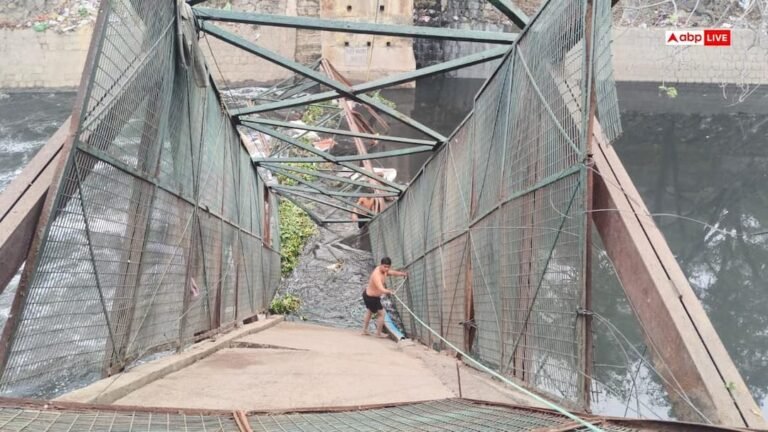
A very old iron foot bridge built over a drain in block number three near Mother Dairy in Rupnagar, Delhi, collapsed. According to Delhi Police, a woman fell into the drain and died. Fire vehicles are present on the spot.
A woman fell into the drain below when a ‘foot overbridge’ collapsed in North Delhi’s Roop Nagar area on Tuesday morning. The officers provided this information. The rescue team was present on the spot to search for the woman. However, the woman’s body has been recovered.
Fire brigade gave this information
Delhi Fire Service (DFS) said that it received information about the collapse of the ‘overbridge’ at around 9:30 am, after which several fire tenders were sent to the spot. DFS officials said that at the time of the incident, a woman was on the ‘foot overbridge’, who fell into the drain below. After this the woman’s death was confirmed.
Rescue teams, including personnel from the National Disaster Response Force (NDRF), Delhi Police and other emergency agencies, were immediately deployed to search for him. Authorities have cordoned off the area to prevent any further incident and facilitate rescue operations. The reason for the collapse of the ‘foot overbridge’ is not yet known and a detailed investigation will be conducted after the rescue operation is completed.
Rescue team started operation
Efforts to find the woman were started by the rescue team of Bot Club. Who has now been found dead. The team is also investigating whether other people are trapped due to the collapse of this bridge. Delhiites are in panic due to the continuous deaths due to potholes in Delhi.
In such a situation, once again this incident has created a stir. If we look at Roop Nagar bridge, it appears to be in a completely dilapidated condition. However, the reasons behind this are also being investigated by the administration.
The US and Israel continue to attack across Iranian cities as the conflict spreads to the region and causes a global energy crisis.
Published On 17 Mar 202617 Mar 2026
Share
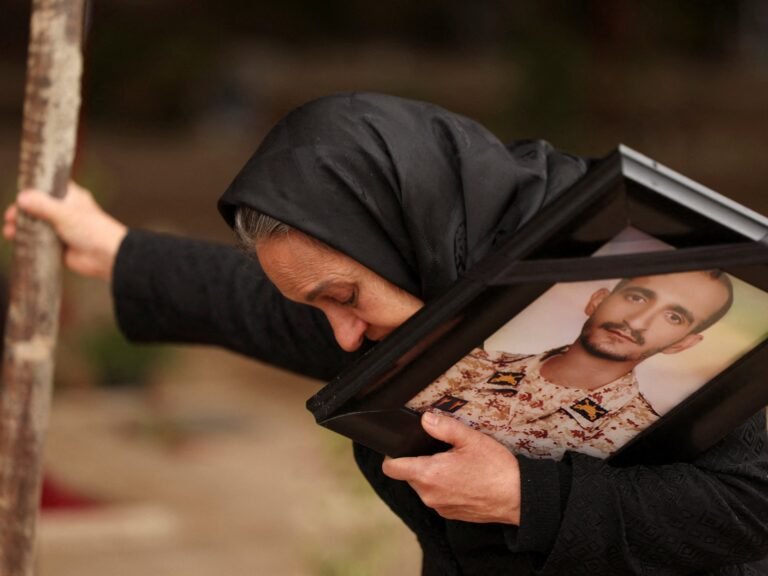
The United States-Israel war on Iran continues to intensify as attacks on multiple cities kill civilians, including a newborn baby and his two-year-old sister in Arak city.
The conflict has spread as Iran has retaliated against US assets in neighbouring countries, while Israel has carried out bombing in southern Lebanon against the Iran-backed Hezbollah armed group.
Recommended Stories
list of 1 itemend of list
The war has pushed oil prices sharply higher, disrupted shipping through the Strait of Hormuz and displaced millions of civilians across the region.
An Amnesty International investigation found that the US is responsible for the attack that killed at least 170 people, including more than 160 girls, at a primary school in Minab, Iran.
Here is what we know:
In Iran
Attacks on Iranian cities: A series of large explosions were reported in northern Tehran near the Saadabad Palace complex, following earlier attacks on central Tehran, Karaj, Shahriar and Shiraz.
A three-day-old infant and his two-year-old sister were among those killed in a US-Israeli attack that hit their home in the city of Arak, according to Iran’s Islamic Revolutionary Guard Corps (IRGC). The children’s mother and grandmother were also killed in the attack, Iran’s English-language news channel Press TV cited the IRGC as saying.
Iranian retaliation and stance: Iranian President Masoud Pezeshkian has defended Tehran’s right to self-defence, saying Iran did not start the war and will not surrender to “bullies”.
Iranian primary school: An Amnesty International investigation confirmed that a US attack on an Iranian primary school killed at least 170 people, most of whom were schoolgirls.
Rising casualties: At least 1,444 people have been killed and 18,551 injured by US-Israeli attacks on Iran since February 28.
In the Gulf
UAE oil field: The government of the UAE’s Fujairah says a fire broke out at its oil industry zone after being attacked by drones. Falling debris from a missile intercepted by air defences has killed a person in the Bani Yas area of Abu Dhabi, the emirate’s media office says. The victim was a Pakistani national, the office said in a post on X.
UAE airspace closure: The UAE also announced a temporary closure of its airspace as its defence forces responded to incoming missiles and drones.
Qatar: Qatar’s Ministry of Defence says a missile was intercepted, and civil defence workers were later reported to be dealing with a “limited fire” in an industrial zone caused by falling missile debris. Earlier, the country’s Defence Ministry reported successfully intercepting and destroying 13 out of 14 ballistic missiles launched from Iran.
Kuwait: A spokesman for Kuwait’s National Guard says a drone was taken down in line with “ongoing efforts to enhance security” and “protect vital sites”. Earlier, the country’s Ministry of Interior arrested 14 Kuwaitis and two Lebanese nationals affiliated with Hezbollah, who were allegedly planning a “sabotage plot” within the Gulf nation.
Bahrain: The country announced it has neutralised 129 missiles and 221 drones since the war began more than two weeks ago.
Saudi Arabia: A Saudi Ministry of Defense spokesperson says 12 drones were intercepted in the Eastern region of the kingdom.
In Israel
Netanyahu sends Nowruz wishes: Israeli Prime Minister Benjamin Netanyahu sent wishes to Iranians for the coming Nowruz holidays, marking the Persian new year.
Hezbollah targets Israeli city: Hezbollah said it launched an attack on Monday against the northern Israeli city of Nahariya, where Israeli first responders reported a man was wounded.
Shrapnel falls on Jerusalem holy sites: Israeli police said they found missile and interceptor fragments at holy sites in Jerusalem’s Old City, including areas near the Al-Aqsa Mosque and the Church of the Holy Sepulchre.
Israeli Defense Minister Israel Katz on Monday said displaced Lebanese will not be allowed to return home until the north of Israel is safe. More than a million Lebanese have been displaced since Israel launched attacks on the country. His comments came after the Israeli military announced “limited ground operations” in Lebanon.
In the US
Trump wants Hormuz ‘enthusiasm’: US President Donald Trump stepped up pressure on the United Kingdom and France, in particular, to help secure shipping in the Strait of Hormuz, which Iran has shut down, sending global oil prices soaring.
European leaders reject Trump’s demands: Germany said it has no intention of joining the US-Israeli war, and the European Union foreign policy chief noted that European nations have “no appetite” to send troops.
Trump calls Iran ‘paper tiger’: “This is a paper tiger we’re dealing with,” he said. Iran has closed access to the Strait of Hormuz “to our enemies”.
Vance backs Trump: Vice President JD Vance said he supported Trump’s action despite his reluctance towards previous US military interventions.“We have a smart president, whereas in the past, we’ve had dumb presidents, and I trust President Trump to get the job done, to do a good job for the American people,” Vance said.
Trip to China: Trump announced that he has asked to delay his upcoming trip to China by a month. The trip was originally scheduled for the end of March, but Trump explained that he needs to remain in the US while the conflict is ongoing, telling reporters, “We’ve got a war going on.”
In Lebanon
Hezbollah attacks Israel in Lebanon: Hezbollah said it attacked Israeli troops and vehicles in at least three Lebanese border towns, after the Israeli army announced it had begun limited ground operations in Lebanon.
Residents in the Lebanese village of Arab al-Jal in southern Lebanon have been ordered by Israel’s military to flee in advance of an imminent attack.
One million displaced in Lebanon: Lebanese authorities said more than one million people had registered as displaced since Israel launched its attack on Hezbollah.
Israel’s Lebanon ground offensive an ‘error’: German Chancellor Friedrich Merz warned that an Israeli ground offensive in Lebanon was an “error” which would “further exacerbate the already highly tense humanitarian situation” in the country.
Smoke rises from a village in Lebanon following an Israeli attack, amid escalation between Hezbollah and Israel and amid the US-Israeli conflict with Iran, as seen from northern Israel [Shir Torem/Reuters]
In Iraq
An air attack on a house in Baghdad’s Jadriya district killed four people and left several wounded, a security source told Al Jazeera.
Baghdad hotel attack: A drone sparked a fire Monday at a luxury hotel frequented by foreign diplomats in Baghdad’s fortified Green Zone, shortly before air defences foiled a rocket attack at the US Embassy.
Iraq’s Kataib Hezbollah commander killed: Iraq’s powerful armed group Kataib Hezbollah said its senior security commander Abu Ali al-Askari had been killed, without providing details on the circumstances of his death.
Iraqi government response: The Iraqi government strongly condemned the attacks on the US Embassy, the Baghdad hotel, and a major oilfield in the country’s south, labelling them “terrorist attacks”.
Global economic effect
Financial and energy markets: The war has severely disrupted global financial and energy markets, with crude oil prices surging by about 50 percent since the US-Israeli joint attacks began. Brent crude recently hit $106 per barrel.
Japan starts releasing oil stocks: Japan said it was beginning the release of its strategic oil reserves after the International Energy Agency indicated earlier that the release would begin in Asia and Oceania before other regions.