Reference #18.6e560e17.1777703520.340511ed
https://errors.edgesuite.net/18.6e560e17.1777703520.340511ed
Reference #18.6e560e17.1777703520.340511ed
https://errors.edgesuite.net/18.6e560e17.1777703520.340511ed
The first malaria treatment for babies has been approved by the World Health Organization, opening the door to widespread use around the globe.
In parts of Africa, up to 18% of children under six months will be infected with malaria, but there has historically been no safe treatment for the smallest of them. There were 610,000 deaths from malaria in 2024, about three quarters of which were under-fives in Africa.
The WHO said infants with malaria had until now been treated with formulations designed for older children “which increase the risk of dosing errors, side effects and toxicity”.
Medical leaders hope that Coartem Baby, which can be used to treat infants as small as 2kg (4.4lb), will fill the treatment gap. The drug comes as sweet cherry-flavoured tablets that can be dissolved into liquids, including breast milk.
“For centuries, malaria has stolen children from their parents, and health, wealth and hope from communities,” said Dr Tedros Adhanom Ghebreyesus, the WHO director general. “But today, the story is changing.”
Coartem Baby now has WHO prequalification, which indicates it meets international standards of quality, safety and efficacy, and will enable public-sector procurement for many countries with high rates of malaria, particularly in sub-Saharan Africa.
Ghebreyesus said new vaccines and diagnostic tests, alongside next-generation mosquito nets, were helping to turn the tide against the mosquito-borne disease.
Coartem Baby contains two antimalarial drugs, artemether and lumefantrine, and was developed by the multinational pharmaceutical company Novartis and the Medicines for Malaria Venture (MMV).
The development follows increasing research challenging the historical misconception that young babies cannot be infected with malaria because they retain immunity passed on by their mothers during pregnancy and breastfeeding.
Dr Martin Fitchet, chief executive of MMV, said: “For too long, newborns and young infants with malaria have fallen through the cracks because existing treatments were not designed with them in mind.” He said the WHO ruling was “a major public-health milestone”.
The treatment has already been introduced in Ghana. Baby Wonder, now eight months old, was among the first patients to receive the drug, when he was 12 weeks old. He had been taken to hospital with a high fever, and tests confirmed elevated levels of the malaria parasite in his blood.
“I was very scared when my son got malaria because he was born underweight,” said his mother, Naomi.
Doctors at the hospital managed to coordinate access to Coartem Baby, and today Wonder is healthy and thriving.
“As doctors we have tended to look for malaria in older children, but when newborn babies got sick nobody seemed to know what to do,” said Dr Emmanuel Aidoo, a paediatrician at Methodist hospital in Ankaase, Ghana. “Having a new treatment tailor-made for infants that is well tolerated gives us confidence.”
Novartis said it would make the treatment available “on a largely not-for-profit basis in malaria-endemic regions”.
The Gates Foundation, which contributes funding towards the independent journalism produced on the Guardian’s Global development site, is also among the donors to the Medicines for Malaria Venture
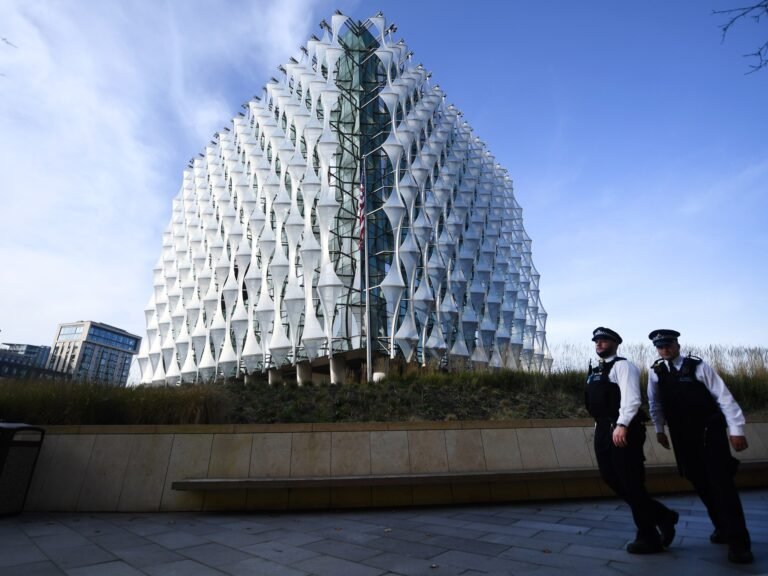
US embassy in UK has advised citizens to avoids schools, churches, tourist locations and vary their travel routes.
Published On 2 May 2026
The United States embassy in London has issued a security alert telling its citizens in the United Kingdom to be cautious after the British government raised the national threat level to “severe”.
The embassy advised citizens on Friday to remain “alert in public places” and to stay away from schools, churches, tourist locations and transportation hubs.
It also said that US nationals should vary their “travel routes and times” to reduce predictability and to keep a low profile.
The UK’s domestic intelligence agency, MI5, said on Friday that the Joint Terrorism Analysis Centre had raised the threat level from “substantial” to “severe”.
This is the second-highest level, signalling that an attack within the next six months is “highly likely”, MI5 said in a statement.
“The UK has been experiencing a gradual increase in terrorist threats for some time,” the agency said, adding the changed threat level also followed after the stabbing of two Jewish men in the Golders Green area of London on Wednesday, “although it is not solely a result of that attack”.
The increased danger has been “driven by a rise in both Islamist and Extreme Right-Wing terrorist threat from individuals and small groups in the UK,” MI5 said, noting threats in particular to “Jewish and Israeli individuals and institutions, in the context of the conflict in the Middle East”.
This is the second security notice from the US embassy in the UK in the last few weeks.
Recently, it posted a statement noting the recent attacks and threats “targeting Jewish and American institutions”, and advising citizens to be cautious.
Last week, the Finchley Reform Synagogue in north London was targeted. Other incidents have occurred, including an attack on the Kenton United Synagogue in Harrow.
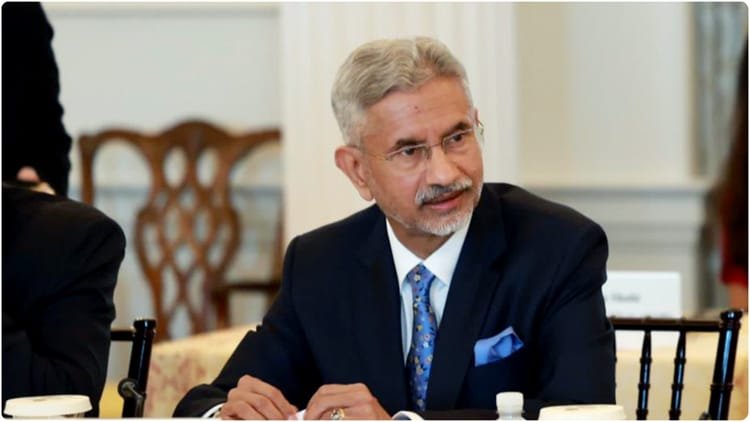
India’s External Affairs Minister Dr S Jaishankar will be on an important official visit to three Caribbean countries. During his visit he will visit Jamaica, Suriname and Trinidad and Tobago. This journey will start from May 2. The main objective of this visit is to take India’s bilateral relations with the Caribbean region to a new level.
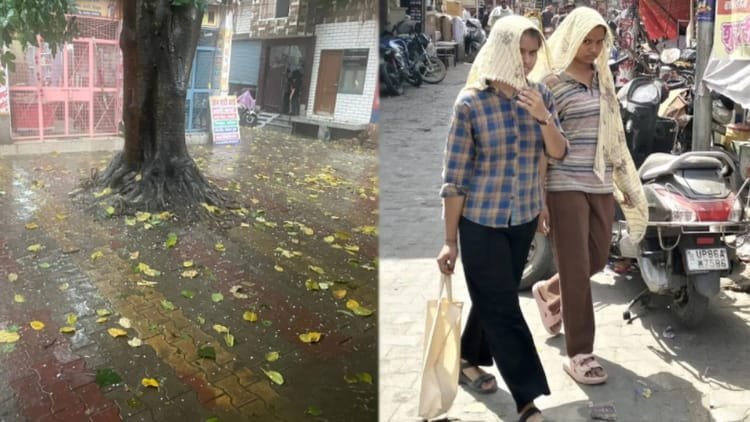
The residents of the national capital are currently getting a lot of respite from the scorching heat that engulfed them in April. For Saturday also, the Indian Meteorological Department (IMD) has predicted partly cloudy sky throughout the day, due to which the rise in temperature is expected to remain under control. At the same time, the air quality in the capital remains in the moderate category.
The weather is likely to remain similar on Saturday also. The weather department has predicted partly cloudy sky. The maximum temperature is expected to range between 38 to 41 degrees Celsius. Although the intensity of the heat wave has reduced, people may face some inconvenience due to humidity. However, there is a possibility of some relief due to light breeze in the evening.
Meanwhile, air quality in the city remained in the moderate category and the air quality index (AQI) was recorded at 119 at 9 am, according to Central Pollution Control Board (CPCB) data. The 24-hour average AQI recorded till 4 pm on Friday was 120.
The Air Quality Early Warning System for Delhi has predicted that the AQI will remain in the moderate category for the next few days.
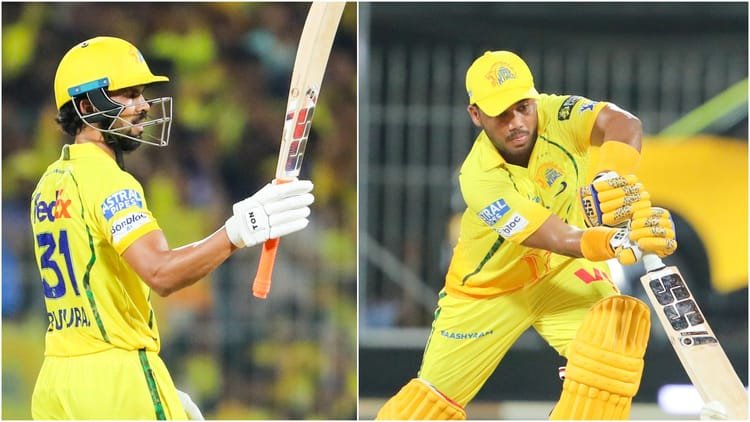

Rituraj Gaikwad-Karthik Sharma – Photo: IANS
Reference #18.50200117.1777702623.a5e0676b
https://errors.edgesuite.net/18.50200117.1777702623.a5e0676b
The BBC’s news operation is to cut costs by a steeper-than-expected 15%, with staff told to expect heavy redundancies.
The division, home to about a quarter of all BBC staff, is being saddled with one of the highest cost-cutting targets as the corporation attempts to cut as many as 2,000 jobs in the biggest downsizing of the public service broadcaster in 15 years.
Last month, staff were informed that, on average across the BBC, about 10% of the corporation’s 21,500 employees would be affected as part of a £600m cost-cutting plan, but it was not clear at the time that news operations would see even deeper cuts.
The development comes as Matt Brittin, the former top Google executive, takes over as the corporation’s new director general from 18 May.
His appointment came after the resignation of Tim Davie in November after highly contested claims of bias were made by a former adviser to the corporation.
It also followed the BBC’s apology for the way it had edited a speech by Donald Trump, which led the US president to sue the corporation.
Staff at divisions across the BBC are being informed of the level of cuts, with details to be announced in June, and those affected to be told in September.
During a video meeting held with BBC News staff, understood to have been attended by about 300 employees, staff were told to expect significantly deeper cuts than the 10% pan-BBC target.
BBC News has been heavily hit by rounds of cuts in recent years.
Richard Burgess, the director of news and content, who is responsible for more than 800 journalists, said on the video call that the entire news division can expect to have to make cost cuts of “around 15%”, with job cuts a major focus.
The corporation spent £324m on news and current affairs in the year to the end of March 2025, with a significant proportion of that accounted for by wages, according to the BBC’s latest annual report.
“Most of our savings are people, frankly,” he told staff. “[The cuts will be] 15% of our income. Our income is not entirely salary bill as we have other things as well, although it is the majority. Ultimately, [10% is] a figure across the whole of the BBC, but that doesn’t take into account that there are areas it’s just not possible to make cuts in.
“And so, as a consequence, in the areas where it is possible to make cuts in it ends up being a slightly higher figure. Across news, that 15% figure is fairly consistent in most areas of news.”
In another briefing, Kerris Bright, the BBC’s chief customer officer, was also asked which departments may be targeted more heavily.
Bright, who is responsible for leading the marketing and audiences team and the licence fee unit, told staff that those teams bring in significantly more in revenue than they cost to run, when thinking about where cuts could hit the hardest.
By contrast, she said in an operation such as BBC News “the vast majority of that [cost] pie chart would be staff costs”.
Burgess said that, beyond the question of staff cuts, management was “going to look very carefully at where we can make savings”.
Among employees, especially those involved in broadcasts away from studios, there is speculation there may be a push to introduce mobile journalism kits to reduce the use of relatively expensive satellite vehicles and dedicated crews.
In radio, staff fear local services, especially those in parts of the day with small audiences, will be consolidated into a network-wide broadcast, as has been seen in commercial radio.
Last year, Global ended all local shows across its Heart, Smooth and Capital radio brands in England, as part of a cost-cutting plan to move to a “nations strategy”, with all output broadcast from London.
The BBC has already implemented cost-saving measures, including reducing travel by 40% and significantly tightening spend on consultants, conferences, events and awards.
A repeated theme in staff briefings has been the question of higher-paid staff sharing the expected cost through restructuring and pay cuts.
Last year, the public service arm of the BBC employed 237 executives classified as UK senior leadership, who were paid from £100,000 to more than £350,000, according to the corporation’s latest annual report.
In addition, the BBC spent £140m on employees with on-air roles, deemed to be staff where 80% or more of their time is spent on TV or radio.
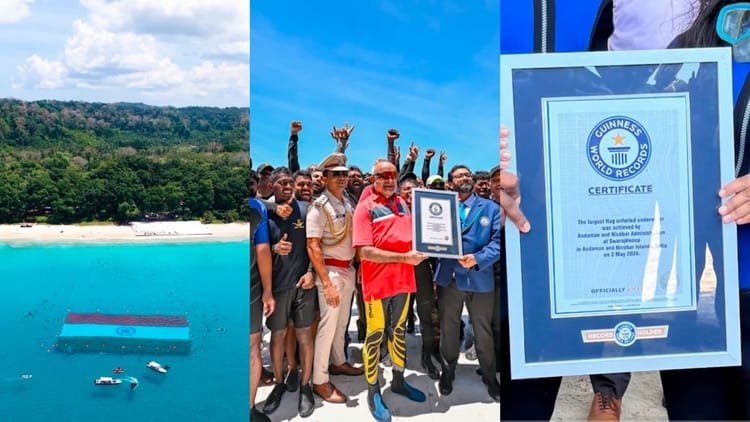
India created history by hoisting the largest national flag underwater at Radhanagar Beach in Andaman and Nicobar Islands. For this the country’s name has been registered in the Guinness Book of World Records. A team of 223 divers, including personnel from the Indian Navy, police and other agencies, successfully executed the mission.
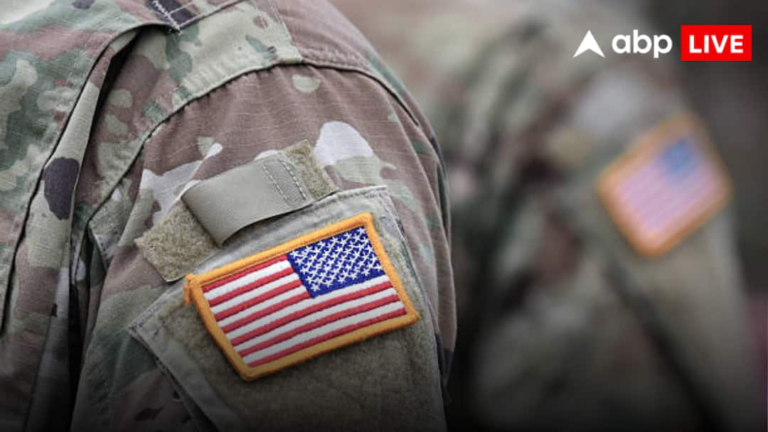
America is planning to withdraw about 5,000 of its soldiers from Germany. A senior defense officer has given this information, although he spoke on the condition of anonymity. According to American media reports, America has termed the recent statement of German Chancellor Friedrich Merz as useless.
In fact, Marz, while commenting on the ongoing military tension between America and Iran this week, said that America’s strategy seems to be without a plan and it looks weak in front of the Iranian leadership. US President Donald Trump reacted strongly to this statement. He said that Merz does not have a proper understanding of the issue and is not taking Iran’s nuclear intentions seriously.
Number of US troops deployed in Spain and Italy
Trump also said on social media that America is considering reducing its military presence in Germany and a decision on this can be taken soon. He indicated that the number of American troops deployed in Spain and Italy could also be reduced. Expressing displeasure at some European countries, Trump said that they did not cooperate enough in the ongoing tension between America, Israel and Iran. Taking the names of Italy and Spain, he said that these countries did not help and their attitude was not right. He raised the question that when cooperation was not received then why should soldiers be kept there.
More than 36,000 American soldiers were deployed in Germany
German Foreign Minister Johann Wedeful has said that his country is prepared for this situation and preparations are being made to deal with it if the number of American troops decreases. Trump has already said that consideration can be given to withdrawing troops from countries which do not support America in times of need. He has expressed this displeasure many times through his social media platform.
According to statistics, by the end of last year, more than 36,000 American soldiers were deployed in Germany. Apart from this, about 1,500 reserve soldiers and 11,500 civilian employees are also present there. America also has military headquarters related to Europe and Africa in Germany and Ramstein Air Base is considered an important center there. If this decision is implemented, it may affect the relations between America and Europe and changes may also be seen in the security system.

