Shares of InterGlobe Aviation were trading 1.17 per cent higher at ₹4,207 around 12.15 pm on Monday on the NSE, recovering from an intraday low of ₹4,093.90, as the market reacts two key developments from the airline over the past two trading days.
The stock opened weak at ₹4,105 against a previous close of ₹4,158.20, before climbing to a high of ₹4,270. Traded volume stood at 11.16 lakh shares, with a traded value of ₹469.76 crore. Buy orders accounted for 52.73 per cent of total market depth. The stock’s total market capitalization stood at approximately ₹1.63 lakh crore.
Despite today’s recovery, the stock remains under pressure on a broader timeframe — down 14.63 per cent over the past month and 17.46 per cent year-to-date, significantly underperforming the Nifty 50’s 9.82 per cent and 11.42 per cent respective declines. The stock is also trading well below its 52-week high of ₹6,232.50 touched in August 2025, though it has recovered from its 52-week low of ₹4,035 hit on March 9, 2026.
On the corporate front, IndiGo announced the introduction of a fuel surcharge on both domestic and international routes effective March 14, a move analysts broadly view as neutral in the near term.
Separately, the airline issued a press release on March 14 outlining adjustments to its West Asia operations. IndiGo said it will operate 252 weekly flights to and from the West Asia between March 16 and March 28, 2026, citing geopolitical risks, airspace restrictions, airport constraints, and rising fuel and insurance costs. Flights to Doha, Kuwait, Bahrain, Dammam, Fujairah, Ras Al Khaimah and Sharjah remain suspended until March 28.
The airline said it is aligning capacity with current conditions while maintaining essential connectivity and will operate ad-hoc flights for stranded passengers if required.
Tokyo’s move comes as oil prices remain elevated amid the effective closure of the Strait of Hormuz.
Published On 16 Mar 202616 Mar 2026
Share
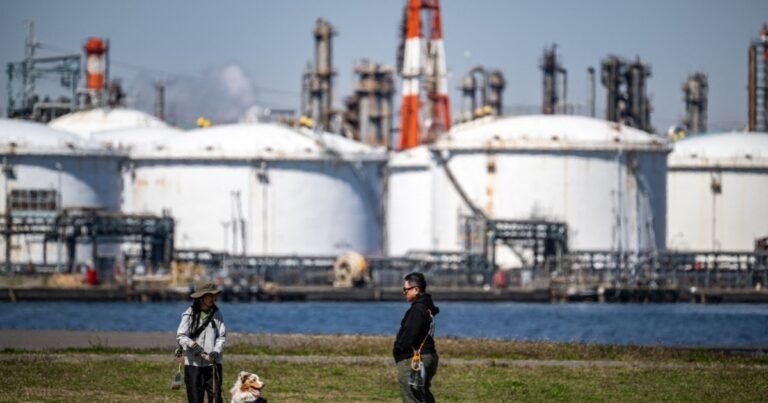
Japan has begun releasing oil from its emergency reserves amid the global energy crisis sparked by the effective closure of the Strait of Hormuz by Iran in response to US-Israeli attacks.
The release was announced on Monday in a notice published in the Japanese government’s official gazette.
Recommended Stories
list of 4 itemsend of list
Japanese Prime Minister Sanae Takaichi last week announced plans to unilaterally release 80 million barrels of oil from stockpiles amid supply concerns due to Iran’s threats against shipping in the strait.
Takaichi announced the move shortly before the International Energy Agency (IEA) said it would coordinate the release of a record 400 million barrels to help cushion the market from the widening fallout of the United States and Israel’s war with Iran.
Despite the announcement by the Paris-based IEA, oil prices have repeatedly jumped above $100 a barrel during the past week as traders weigh the prospect of prolonged disruption to the critical waterway.
Analysts say prices are likely to continue to rise as long as shipping through the strait, which normally transports about one-fifth of the global oil supply, remains effectively halted.
Tokyo said on Monday that it had no plans to deploy its navy to the strait after US President Donald Trump called on other countries to help unblock the waterway.
Brent crude, the most important benchmark for global prices, rose as much as 3 percent on Sunday, before easing slightly on Monday.
Brent stood at $104.85 a barrel as of 05:45 GMT, up more than 40 percent since the start of the war on February 28.
Japan is one of the world’s largest oil importers, relying on fossil fuels from overseas for about 80 percent of its energy needs.
The East Asian country also has one of the world’s largest oil reserves, with enough supply to meet 254 days of domestic consumption.
Due to the ongoing conflict in West Asia and blockage of the Strait of Hormuz, US President Donald Trump is under pressure from all sides. On one hand, Iranian attacks on American and Israeli targets in West Asia are continuing. On the other hand, Trump is also getting surrounded on the domestic front. A large section of America is against this conflict. The surprising thing is that even in this difficult time, Trump is not getting help from his allied NATO countries. This is why Trump has warned the allied countries that the future of the NATO group is not good.
Trump’s warning to NATO countries
During an interview, US President Trump gave a clear message to NATO allies. He said that the countries that benefit from the Strait of Hormuz should also take responsibility for its security.
Trump said, ‘It is absolutely right that the countries that benefit from Hormuz make sure that nothing wrong happens there.’ “If nobody does anything or doesn’t help, I think it will be very bad for the future of NATO,” Trump warned.
Trump said, ‘We did not need their help in the Ukraine matter. Now let’s see whether they help us or not, because I have been saying for a long time that we will stand with them, but they will not stand with us.
Trump stuck in trouble in West Asia
It is noteworthy that Trump is demanding deployment of warships to clear landmines in the Strait of Hormuz area. Recently, while talking to the media, Trump had said, ‘We are always ready for NATO. It will be interesting to see which country will help us in keeping the Strait of Hormuz open.
America seems to be trapped in the West Asia crisis. Even after the death of Supreme Leader Ayatollah Ali Khamenei and many other top leaders, Iran is not ready to bow down and is continuously attacking American bases and Israel in West Asia. America and Israel’s efforts to bring about regime change in Iran also do not seem to be successful. Iran’s blockage of the Strait of Hormuz has put pressure on global oil supplies. American oil companies have also expressed concern about this and have appealed to Trump that if a solution is not found soon, the situation may get worse.
US President Donald Trump has asked about seven countries to deploy their warships in the Strait of Hormuz. However, countries like America’s close allies Australia and Japan have refused this.
Husband and wife did a romantic dance on the song ‘Mera Pehla Pyaar’, the pair stole the show!
Viral Video: These days, a cute dance video is going viral on social media, in which a husband-wife pair is seen dancing in a romantic style on the famous song Mera Pehla Pyar. The wonderful coordination and emotional expression of both of them in the video is winning people’s hearts. As soon as the tune of the song starts, the couple dances with beautiful steps and the people present there also start clapping after seeing their performance. As soon as the video surfaced, social media users are praising the couple a lot. Many people wrote in the comments that the chemistry and love of husband and wife is clearly visible in this dance. This is the reason why this video is becoming increasingly viral on the internet and people are getting entertained by watching it again and again.
To add News18 as your favorite news source on Google click here Do it.
Access Denied
You don’t have permission to access “http://hindi.gadgets360.com/internet/xiaomi-mijia-ih-rice-cooker-2-launched-know-price-features-news-11221421” on this server.
The wholesale inflation rate in the country has increased to 2.13 percent in February 2026. This is the fourth consecutive month when wholesale price index (WPI) based inflation has registered an increase. Earlier in January this rate was 1.81 percent, whereas in February 2025 it was 2.45 percent. According to the data released by the government on Monday, the main reason for this was the increase in prices of food and non-food items.
reason for rising inflation
The Industry Ministry said in its statement that the positive rate of inflation in February 2026 was mainly due to the increase in prices of other manufacturing, basic metals, non-food items, food items and textiles. That is, there was pressure on prices in many important categories in the wholesale market, due to which the inflation rate went up.
What do the figures say?
According to the data, inflation in food items increased from 1.55 percent in January to 2.19 percent in February. However, there was some relief in the inflation of vegetables. Inflation of vegetables was 4.73 percent in February, which was 6.78 percent in January. Despite this, prices of commodities like pulses, potatoes, eggs, meat and fish increased more than last month.
There was a slight increase in inflation on the manufactured products front also. In February, wholesale inflation of this category was 2.92 percent, which was 2.86 percent in January. At the same time, inflation of non-food items increased from 7.58 percent to 8.80 percent, which indicates that there is pressure on the prices of raw materials and other essential industrial goods.
On the other hand, the decline in fuel and electricity category i.e. deflation continued. In February, the inflation rate in this category was minus 3.78 percent, whereas in January it was minus 4.01 percent. This means that prices in the region still remain below last year’s levels, although the pace of decline has slowed slightly.
Retail inflation also increased to 3.2%
Meanwhile, retail inflation also increased to 3.2 percent in February, from 2.75 percent in January. These retail inflation figures were released last week. The Reserve Bank of India mainly considers retail inflation as the basis while deciding on interest rates. With inflation remaining at a relatively low level in the current financial year, RBI has so far cut the rate by 1.25 percentage points.
The rise in wholesale inflation for the fourth consecutive month indicates that the price pressure in the market has not completely ended. Although there has been relief in vegetables, rising prices in both food and non-food categories may impact the inflation trend in the coming times.
Britain is rapidly losing the charity habit, with public donations to good causes plummeting by more than £1.4bn last year and millions of people saying they can no longer afford – or do not want – to give, according to an analysis.
The Charities Aid Foundation (Caf) said in its annual report that, while the British remained generous at heart, society was witnessing a big transformation in attitudes towards charitable giving. Just half of people gave to charity in 2025, down from 61% a decade earlier.
Charity giving was no longer a “deeply embedded cultural norm” amid rising living cost pressures, and a more sceptical society, said the Caf managing director, Mark Greer: “Charities can no longer depend solely on habitual generosity or goodwill from the public,” he said.
The latest annual figures marked a striking downward shift after years in which the number of donors declined but overall donation levels stayed stable, propped up by what Caf calls “a group of dedicated donors” who gave bigger donations. Last year, however, donor numbers flatlined, and donations fell.
The collapse in overall donations from £15.4bn to £14bn in 2025 was driven by a fall in the average size of charitable gifts from £72 to £65. Nearly half of people (49%) who did not give to charity in 2025 said it was because they could not afford to, up from 44% in 2024.
Cost of living pressures have exacerbated a longer-term contraction in the size of the UK’s donor base over the past decade, a trend that accelerated during the Covid pandemic. Caf estimates 6 million fewer people gave to charity last year compared with 2016, potentially shrinking total voluntary sector income by about £12bn.
“The decline in charitable donors over the past decade is stark. Giving is no longer a habit in this country,” said Caf’s client relations director, Philippa Cornish.
Lack of affordability was cited as the main reason for not donating across income demographics, even those earning more than £125,000 a year. But there were also signs that non-donors did not see charity giving as something they would do: 49% of higher-rate taxpayers said they were “not interested in charities”.
Overseas aid charities have collectively been hit badly by these trends. While 20% of donors gave to this cause in 2016, the figure had fallen to 11% last year, triggering a £250m a year drop in donations in absolute cash terms. Caf said this mirrored wider donor attitude shifts towards giving to causes “closer to home”.
By contrast, UK food banks – which barely existed 15 years ago – have accounted for a larger share of public donations in recent years. In 2025, food banks received £610m, surpassing the amount given to arts, culture and science (£575m), education (£508m) and homelessness (£442m).
However, food banks report they are also struggling to attract regular donations. Caf’s report cites Swansea Foodbank, which said supporters were “putting their own families first during the cost of living crisis, which is perfectly understandable”.
Peter Grant, an expert in philanthropy at Bayes Business School, said the decline in giving also reflected a more polarised society. “Culture war” attacks mounted by rightwing politicians and media on voluntary organisations such as RNLI and the National Trust had undermined the wider legitimacy of charities among some donors.
The fall in public donations had been accompanied by years of cuts to government grant funding of charities, said Grant. While many charities would survive the crisis, it would directly affect the amount of help they could provide. “It means reduced services and more hardship for charities’ beneficiaries,” he said.
Caf’s annual report on the state of the nation’s giving has been carried out in its current form since 2016. It is based on a nationally representative survey of just under 13,000 UK adults.
Kate Lee, the chief executive of the National Council for Voluntary Organisations, said: “The drop in giving is a worrying sign for the sector. At a time when demand for charitable support is rising, a decline on this scale could present serious challenges for many organisations if the trend continues.”
Gold prices started the week on a negative note, declining by Rs 2,225 to Rs 1.56 lakh per 10 grams in the futures trade on Monday amid a bearish sentiment in the overseas markets and a strong US dollar.
On the Multi Commodity Exchange, gold futures for April delivery depreciated by ₹2,225, or 1.4 per cent, to ₹1,56,241 per 10 grams in a business turnover of 7,881 lots.
“Gold prices declined as rising energy prices strengthened the US dollar and heightened concerns that the Federal Reserve may delay interest rate cuts,” Manav Modi, Analyst – Commodities, Motilal Oswal Financial Services Ltd, said.
Traders had earlier expected a rate cut at the March meeting, but such expectations have largely faded, while the probability of cuts later this year has dropped to 80 per cent.
Market positioning also reflected increasing caution, with holdings in gold-backed exchange-traded funds declining by nearly 31 tonnes so far this month as participants trimmed exposure amid rising uncertainty, Modi said.
In the international market, gold futures for the April contract slipped $54.31, or 1.07 per cent, to $5,007.39 per ounce on the Comex.
“Gold held near $5,000 per ounce after falling for two straight weeks, as oil remained volatile after the US attacked Iran’s main oil-export hub of Kharg Island over the weekend, heightening global supply risks,” Jigar Trivedi, Senior Research Analyst at IndusInd Securities, said.
Meanwhile, the US-Israeli war on Iran has now entered its third week with no clear resolution in sight, rattling financial markets.
“Higher energy prices and mounting inflationary pressures have lowered expectations that the US Federal Reserve and other major central banks will cut interest rates, posing a headwind for non-yielding precious metals,” Trivedi said.
The Fed is widely expected to hold its policy rate steady this week, while central banks in the Eurozone, the UK, Japan, Switzerland, Australia, Canada, China, Brazil, and Russia are also set to decide on monetary policy, he added.
The sell-off is rooted in the escalating US-Israel-Iran conflict, which has disrupted the Strait of Hormuz — a 33-km waterway handling approximately 20-25% of global seaborne oil trade.
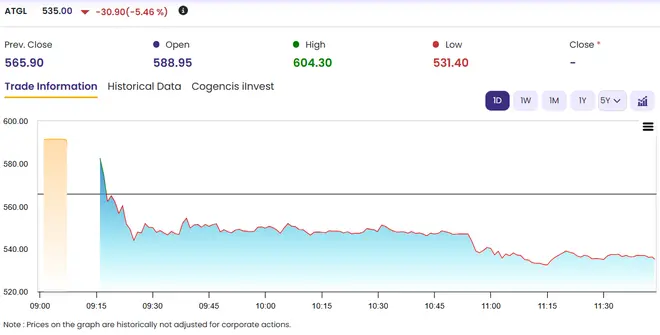
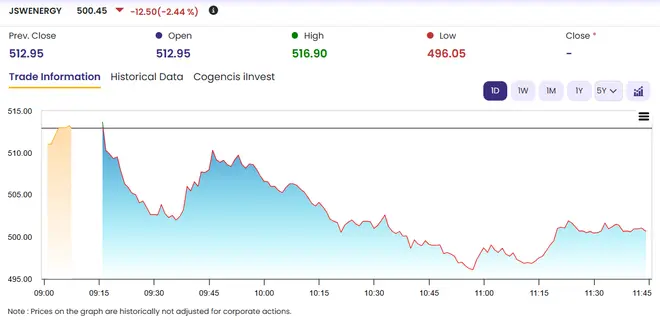
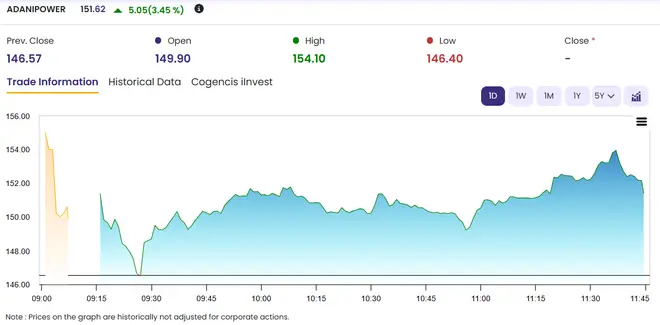
Nifty Energy fell 451 points or 1.25 per cent to 35,620.50 on the National Stock Exchange in Monday morning trade, with 32 of 40 constituents in the red as surging crude oil prices hammered downstream energy companies. Only eight stocks advanced, with Adani Power leading gains at 3.98 per cent and Thermomax rising 2.70 per cent at around 11.25 am.
The sell-off is rooted in the escalating US-Israel-Iran conflict, which has disrupted the Strait of Hormuz — a 33-km waterway handling approximately 20-25 per cent of global seaborne oil trade. According to the Shriram Wealth report, ship traffic through the strait has unofficially halted, with ocean carriers holding back as the geopolitical standoff continues. Production cuts in Iraq, UAE, and Kuwait have compounded supply concerns. Brent crude has surged nearly 20 per cent in the week to above $100 per barrel, its highest level since June 2022, while India’s crude oil basket — a mix of sour and sweet grades — has risen 46 per cent month-on-month in March to $101.25 per barrel as of March 13.
Shriram Wealth notes that the RBI’s baseline assumption for H2FY26 was crude at $70 per barrel and spot INR at 88 to the dollar. A 10 per cent rise from that baseline could push inflation up by 30 basis points and shave 15 basis points off GDP growth. The rupee has already weakened towards 92.30, though the report expects RBI foreign exchange intervention to cap sharp further depreciation. India’s import dependency on crude oil stands at 88-89 per cent, making the economy particularly exposed to sustained supply disruptions.
Shriram Wealth COO Naval Kagalwala advised investors to maintain asset allocation discipline, favor large-cap, flexi-cap and multi-cap strategies, and approach mid and small-caps in a staggered manner given valuations remain marginally above 10-year averages. Within fixed income, he recommended shorter-duration corporate bonds or mutual funds of up to three years to ride higher yields with lower volatility.
Nepali girl did traditional dance, showed moves with fireballs
A Nepali girl shared the traditional dance of her country with the Maruni people on social media. In this dance, the artists dance holding a burning ball of fire in their hands. The girl also held burning balls of fire inside the plate in both her hands and danced while smiling in a very charming manner. This traditional dance is performed in Darjeeling and many places in North East India. This dance is performed with great enthusiasm during festivals.
To add News18 as your favorite news source on Google click here Do it.