Reference #18.50200117.1774525587.2e8562c9
https://errors.edgesuite.net/18.50200117.1774525587.2e8562c9
Reference #18.50200117.1774525587.2e8562c9
https://errors.edgesuite.net/18.50200117.1774525587.2e8562c9
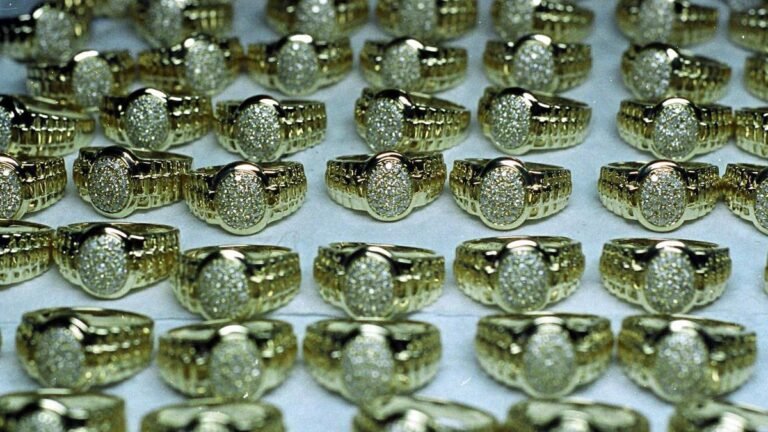

The Union Budget 2026 allows Special Economic Zone (SEZ) units to sell gems and jewelery in the domestic market at concessional duties, helping manufacturers utilize idle capacity amid falling exports. Photo Credit: SHASHI ASHIWAL/businessline
The Budget’s move to allow units in Special Economic Zones to sell in the domestic markets will help jewelers who have been hit by falling exports due to geopolitical issues. They will also be able to utilize idle capacity.
While overall gem and jewelery exports between April and December were flat year-on-year at $20.75 billion, exports to the US plunged 44 per cent to $3.86 billion ($6.95 billion) during the same period, due to punitive tariffs.
To address concerns about the utilization of capacities by manufacturing units in SEZs due to global trade disruptions, the Budget has proposed a special one-time measure to facilitate sales by eligible manufacturing units in SEZs to the Domestic Tariff Area (DTA) at concessional rates of duty.
The quantity of such sales will be limited to a prescribed proportion of manufacturers’ exports. Necessary regulatory changes will be undertaken to operationalize these measures while ensuring a level playing field for the units working in the DTA, it added.
Kirit Bhansali, Chairman of the Gem and Jewelery Export Promotion Council, said limited sales from SEZs to the Domestic Tariff Area at concessional duties will enable factories to use idle capacity, safeguard jobs, and strengthen trade amid US tariffs and global demand volatility.
He pointed out that the removal of the ₹10 lakh cap on courier exports is a big boost for e-commerce, enabling MSMEs, artisans, and small jewelery brands to reach global buyers directly, with smoother returns handling and quicker turnaround times.
Extending the duty-free import of lab-grown diamond seeds and Sawn Diamonds till March 2028 is a timely and practical step. It keeps input costs low, supports production and exports. It also safeguards a fast-growing segment where India already leads globally, helping secure the future of our industry, said Bhansali.
Colin Shah, MD, Kama Jewelry said the introduction of a special one-time facility for SEZ units to supply to the DTA at a concessional rate of duty will enhance capacity utilization.
The support for SEZ units selling into the domestic market, along with continued backing for diamonds and lab-grown diamonds, gives a real boost to manufacturing and trade, he said.
Keeping import duties on gold and silver unchanged will give the sector a much-needed stability and drive sustainable growth, said Shah.
Published on February 2, 2026
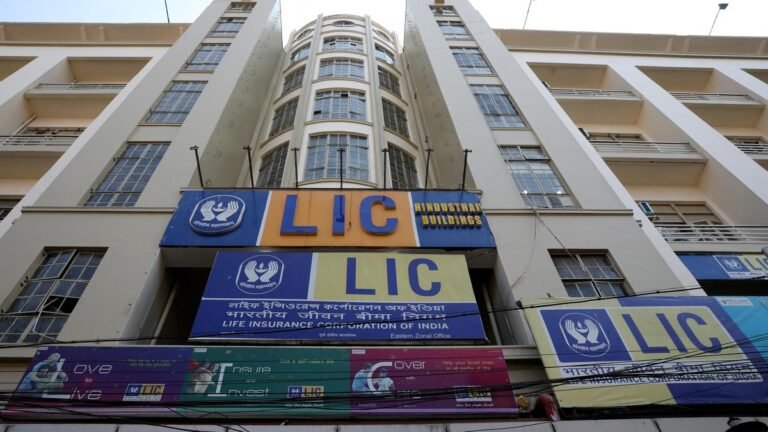

LIC’s market capitalization stands at Rs 5.08 lakh crore, with shares at around Rs 804. | Photo Credit: RUPAK DE CHOWDHURI/Reuters
The government is actively considering further reducing its stake in insurance behemoth LIC through a public offering in the next financial year, Financial Services Secretary M Nagaraju said on Monday.
Currently, the government holds a 96.5 percent stake in Life Insurance Corporation (LIC). It had sold 3.5 per cent through an initial public offering (IPO) in May 2022 at a price band of Rs 902-949 per share. The share sale fetched the government around Rs 21,000 crore.
Talking to reporters, Nagaraju said, “LIC public offer has to be done slowly. We have asked DIPAM (Department of Investment and Public Asset Management) to look at government stake dilution in LIC.”
“LIC FPO may come in the next financial year if all approvals are in place and market conditions are conducive,” he added.
The government is required to offload another 6.5 per cent stake in the public sector life insurer to meet the mandated 10 per cent public shareholding requirement by May 2027.
The quantum of stake sale, price and timing would be decided in due course.
The country’s biggest insurer, LIC, has a market capitalization of Rs 5.08 lakh crore, with shares settling at around Rs 804 on the BSE on Monday.
On the financial front, the state-owned insurer reported a 32 per cent year-on-year jump in net profit to Rs 10,053 crore in the three months ended September 2025 from Rs 7,621 crore in the corresponding period last fiscal. The increase in profit was driven by a lower commission outgo.
The total income improved to Rs 2,39,614 crore in the three months ended September 2025 compared to Rs 2,29,620 crore in the year-ago period.
Published on February 2, 2026

US futures and world shares skidded on Monday as worries over President Donald Trump’s nominee to be the next Federal Reserve chair amplified jitters over a possible bubble in the artificial intelligence boom.
South Korea’s exchange, which is heavily influenced by tech-related developments, briefly suspended trading as its benchmark Kospi bounced, closing 5.3 per cent lower at 4,949.67. Samsung Electronics gave up 6.3 per cent, while chip maker SK Hynix sank 8.7 per cent.
The Kospi has been forging records for weeks as big tech companies piggybacked on the AI craze with deals with major players like chip maker Nvidia and OpenAI.
In early European trading, Germany’s DAX edged less than 0.1 per cent lower to 24,528.57. The CAC 40 in Paris shed 0.2 per cent to 8,108.56, while Britain’s FTSE 100 declined 0.3 per cent to 10,195.88.
The future for the S&P 500 sank 0.7 per cent, while that for the Dow Jones Industrial Average fell 0.4 per cent.
Markets took a hit as investors considered how Kevin Warsh, Trump’s nominee to lead the Federal Reserve after Fed Chair Jerome Powell’s term ends in May, might handle interest rates.
Warsh’s nomination requires Senate approval. But financial markets fear the Fed may lose some of its independence because of Trump, who has pushed hard for more and faster rate cuts. That fear has helped catapult skyward the price of gold and weaken the US dollar’s value over the last year.
“People do not get handed the keys to the most powerful central bank on earth because they plan to drive in the opposite direction of the people who gave them the keys,” Stephen Innes of SPI Asset Management said in a commentary.
Early Monday, the price of gold fell 1.9 per cent, while silver bounced back slightly, gaining 0.2 per cent. Both plunged Friday as record runs in precious metals markets ground to a halt.
On Friday, the price of gold dropped 11.4 per cent, suddenly losing momentum after a tremendous rally where it roughly doubled over 12 months. It topped USD 5,000 for the first time on Jan. 26 and was around USD 5,600 at one point on Thursday.
Silver, which had been on a similar, jaw-dropping tear, plunged 31.4 per cent.
US benchmark crude oil lost USD 3.46 to USD 61.75 per barrel, while Brent crude, the international standard, fell USD 3.47 to USD 65.85 per barrel.
Speaking to reporters during the weekend, Trump said Iran should negotiate a “satisfactory” deal to prevent the Middle Eastern country from getting any nuclear weapons.
“I don’t know that they will. But they are talking to us. Seriously talking to us,” he said.
That comment apparently assured some worries over potential disruptions to oil supplies that had pushed prices higher, analysts said.
In Tokyo, the Nikkei 225 gave up early gains, sinking 1.3 per cent to 52,655.18.
Hong Kong’s Hang Seng dropped 2.2 per cent to 26,775.57, while the Shanghai Composite index sank 2.5 per cent to 4,015.75.
In Australia, the S&P/ASX 200 fell 1 per cent to 8,778.60.
Taiwan’s Taiex lost 1.4 per cent.
On Friday, the S&P 500 dropped 0.4 per cent and the Dow lost 0.4 per cent. The Nasdaq composite lost 0.9 per cent.
The Fed chair has a big influence on the economy and markets worldwide by helping to dictate where the US central bank moves interest rates. That affects prices for all kinds of investments, as the Fed tries to keep the US job market humming without letting inflation get out of control.
A report released Friday showed US inflation at the wholesale level was hotter last month than economists expected. That could put pressure on the Fed to keep interest rates steady for a while instead of cutting them, as it did late last year.
The longtime assumption has been that the Fed should operate separately from the rest of Washington so that it can make moves that are painful in the short term but necessary for the long term. To get inflation down to the Fed’s goal of 2 percent, for example, may require the unpopular choice to keep interest rates high and grind down on the economy for a while.
In other action early Monday, the dollar fell to 154.88 Japanese yen from 154.94 yen. The euro was unchanged at USD 1.1853.
Published on February 2, 2026
Shares of major tobacco companies remained under pressure for a second straight session on Monday, with ITC, Godfrey Phillips India, VST Industries and Golden Tobacco are in focus after the implementation of a higher excise duty from February 1.
Godfrey Phillips India led the losses, falling as much as 6 per cent in early trade to ₹1,877.30 compared with its previous close of ₹1,995.20. By 11.51 am, the stock had recovered marginally to trade at ₹1,898.70.
ITC shares slipped nearly 2 per cent in early deals to ₹302, marking their second consecutive day of decline. At 11.49 am, the stock was trading at ₹306.70 on the NSE versus its prior close of ₹309.45. VST Industries also came under selling pressure, dropping around 3 per cent to ₹223.80 from ₹230.03.
The weakness in ITC followed its December-quarter resultswhere the company reported a 6.13 per cent year-on-year decline in standalone net profit for Q3 FY26 at ₹5,088.83 crore. Several brokerages struck a cautious tone despite pointing to resilience in its core cigarette and FMCG businesses, particularly amid recent tax hikes on cigarettes.
Bonanza remains cautious on ITC, VST Industries and Godfrey Phillips, as cigarette price hikes of 22–50 per cent—especially in the 75 mm-plus segment—are likely to weigh on volumes in India’s price-sensitive market.
Nitant Darekar, Research Analyst at Bonanza, said the February 1, 2026 taxation framework poses significant near-term challenges for tobacco stocks, with excise duties set at ₹2,050–8,500 per 1,000 sticks along with 40 per cent GST, replacing the earlier compensation cess regime.
Abhinav Tiwari, Research Analyst at Bonanza, said ITC shares have been under strain since the government announced the replacement of the GST compensation cess with excise duties on cigarettes based on stick length, along with 40 per cent GST, in line with public health goals and revenue needs after cess repayment.
According to him, the effective tax hike of more than 40 per cent could translate into cigarette price increases of over 25 per cent, potentially leading to a 15–17 per cent drop volumes in based on channel checks. This, he noted, could result in revenue declining by 13–15 per cent and EBIT by 15–17 per cent as the industry heads into FY27, keeping earnings per share under pressure.
Tiwari added that the risk of illicit cigarette sales could rise further, posing another challenge to future growth. He also highlighted that the latest Budget announcement by the Finance Minister has raised the National Calamity Contingent Duty on jarda scented tobacco and chewing tobacco from 25 per cent to 60 per cent starting May 2026, which he believes will remain an overhang for cigarette manufacturers.
These combined changes are expected to impact the operational performance for cigarette companies unless they are passed on to customers, and if that happens, volume share will be a key monitorable, Tiwari said.
In its Q3 FY26 commentary, ITC itself acknowledged that recent changes in GST and excise duty rates have led to an unprecedented rise in the tax burden on cigarettes, warning that such a steep increase could further encourage illicit trade and weigh on medium-term operational performance. The company, however, maintained that its long-term growth trajectory remains intact, supported by steady progress in its non-cigarette businesses.
Published on February 2, 2026
Reference #18.4d560e17.1774537132.1a0409c2
https://errors.edgesuite.net/18.4d560e17.1774537132.1a0409c2
Reference #18.4d560e17.1774538697.1a12b24d
https://errors.edgesuite.net/18.4d560e17.1774538697.1a12b24d
Reference #18.50200117.1774543609.301d78e3
https://errors.edgesuite.net/18.50200117.1774543609.301d78e3
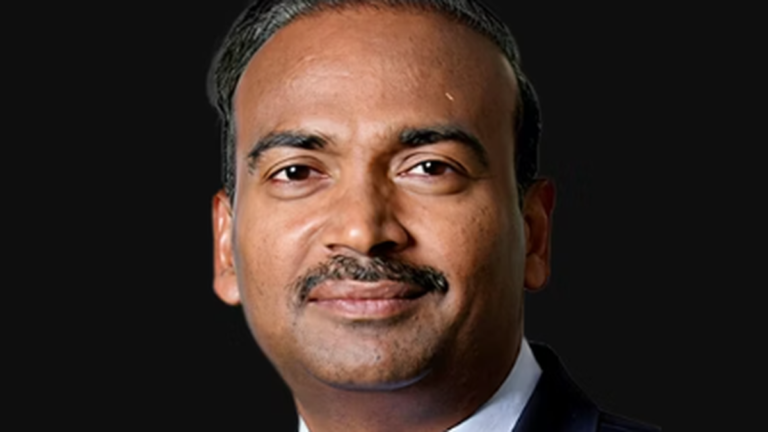

Srinivas Rao Ravuri, Chief Investment Officer, Bajaj Life Insurance
Bajaj Life Insurance has announced the launch of its new fund offer (NFO), the Bajaj Life BSE 500 Quality 50 Index Fund, aimed at providing exposure to Indian companies with strong financial fundamentals and earnings quality.
The fund will be available under the insurer’s unit-linked insurance plans (ULIPs) Bajaj Life Smart Wealth Goal, Bajaj Life Supreme and Bajaj Life Gain allowing policyholders to combine life cover with long-term wealth creation.
Designed for volatile market conditions, the fund focuses on the quality investment factor, which emphasizes profitability, balance-sheet strength and earnings discipline. It tracks the BSE 500 Quality 50 Index, comprising 50 companies selected from the broader BSE 500 universe based on parameters such as return on equity, accruals ratio and financial leverage.
Stocks are weighted using a mix of float-adjusted market capitalization and quality scores, with sector- and stock-level caps to manage concentration risk. The index is rebalanced quarterly.
Srinivas Rao Ravuri, Chief Investment Officer, Bajaj Life Insurance, said, “Over long investment horizons, outcomes are shaped as much by the quality of businesses investors own as by the market cycles they experience. Companies that allocate capital wisely, maintain balance sheet discipline and deliver consistent earnings tend to navigate uncertainty far better than the broader market.”
“At Bajaj Life, our approach to portfolio construction is centered on offering investors access to such enduring businesses through structured, transparent solutions. The Bajaj Life BSE 500 Quality 50 Index Fund reflects our effort to combine disciplined investing with long-term financial planning, allowing policyholders to participate in equity growth with greater consistency and resilience” he added.
Published on February 2, 2026
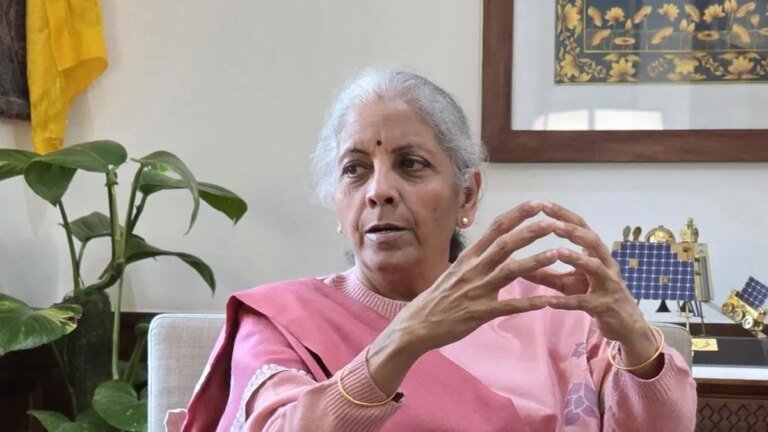

Nirmala Sitharaman, Union Finance Minister, at an interaction with businessline in New Delhi. | Photo Credit: By special arrangement
Finance Minister Nirmala Sitharaman firmly defended the new taxation regime for Sovereign Gold Bonds and the increased Securities Transaction Tax on Futures & Options (F&O) on Tuesday.
In her first post-budget interview with business linethe Finance Minister explained that Sovereign Gold Bonds (SGBs) were designed for long-term investors. She said those who hold them until maturity, as originally intended, will continue to enjoy the promised tax-free benefits. “But you went through a secondary market and then you are making a killing. Why shouldn’t I get something? And you’re not even holding it for maturity. Even if you hold it for maturity, you pick it up from somewhere else (Secondary Market). So I’m placing a bit of a premium on it,” she said.
As proposed in the Finance Bill, there would be four scenarios for taxation of SGB. If one is subscribed at the time of the launch of any tranche and redeemed at maturity (8 years), there will be no tax. Second, if one buys SGB units in the secondary market and holds them till maturity, the capital gain will be taxable. Third, if someone buys from and sells in the secondary market, capital gains will be taxed. Fourth, if someone enters at the time of launch and redeems after five years but before maturity, the capital gain will be taxed.
SGB was launched in 2015 to provide an option for shifting from physical gold to paper gold. Between 2015 and 2024, a total of 67 tranches were launched, and units worth 147 tonnes of gold were bought. With gold prices rising, it became unviable for the government to bring in any tranche after 2024. However, it has become very attractive in the secondary market.
Meanwhile, on the issue of higher STT for F&O, Sitharaman said: “We are not touching STT in general. We are touching only futures and options. And that is where we are getting continuously, people calling us to say people are losing money. And who are the ones losing money who normally don’t have that kind of a spare cash to speculate? So is the government supposed to sit and watch? We want to do what can help in deterring people from getting there,” she said, justifying the move.
She said the government wants to deter people from losing money. “Of course, the market regulators will take care of other things which they have to do. We have not touched every cash transaction. I think the market will understand our intent and as to why we have done it. And it is not some sweeping brush across the board,” she said.
The Finance Minister had proposed, in the Union Budget, to raise STT on both futures and options by up to 150 per cent. STT on Futures has been raised to 0.05 per cent from 0.02 per cent earlier, and for options has been raised to 0.15 per cent from the previous 0.1 per cent. The STT hike on futures is 150 per cent, and on options, it is 50 per cent.
Published on February 2, 2026