Lawmakers demand answers from FFA over Chinese Communist Party ties

0

NEWYou can now listen to Fox News articles!

Federal lawmakers are demanding answers from the National Future Farmers of America (FFA) over its partnership with a Chinese Communist Party-controlled agribusiness and its push for DEI initiatives, citing national security concerns and questions about its tax-exempt status.

The inquiry is being led by the House Ways and Means Committee and the Congressional FFA Caucus, which say the organization’s relationship with Syngenta Group raises concerns about foreign influence and whether FFA is operating in line with its stated mission as a tax-exempt nonprofit.

House Ways and Means Committee Chairman Jason Smith and Congressional FFA Caucus co-chair Tracey Mann sent a letter to National FFA CEO Scott Stump demanding documents and answers related to the partnership, Syngenta’s role in shaping internal policies and the organization’s compliance with federal tax law.

“Working with our nation’s foreign adversaries and prioritizing woke policies over your mission raises serious concerns regarding whether the National FFA is complying with the requirements to maintain tax-exempt status,” the lawmakers wrote.
MOST SHOCKING EXAMPLES OF CHINESE ESPIONAGE UNCOVERED BY THE US THIS YEAR: ‘JUST THE TIP OF THE ICEBERG’

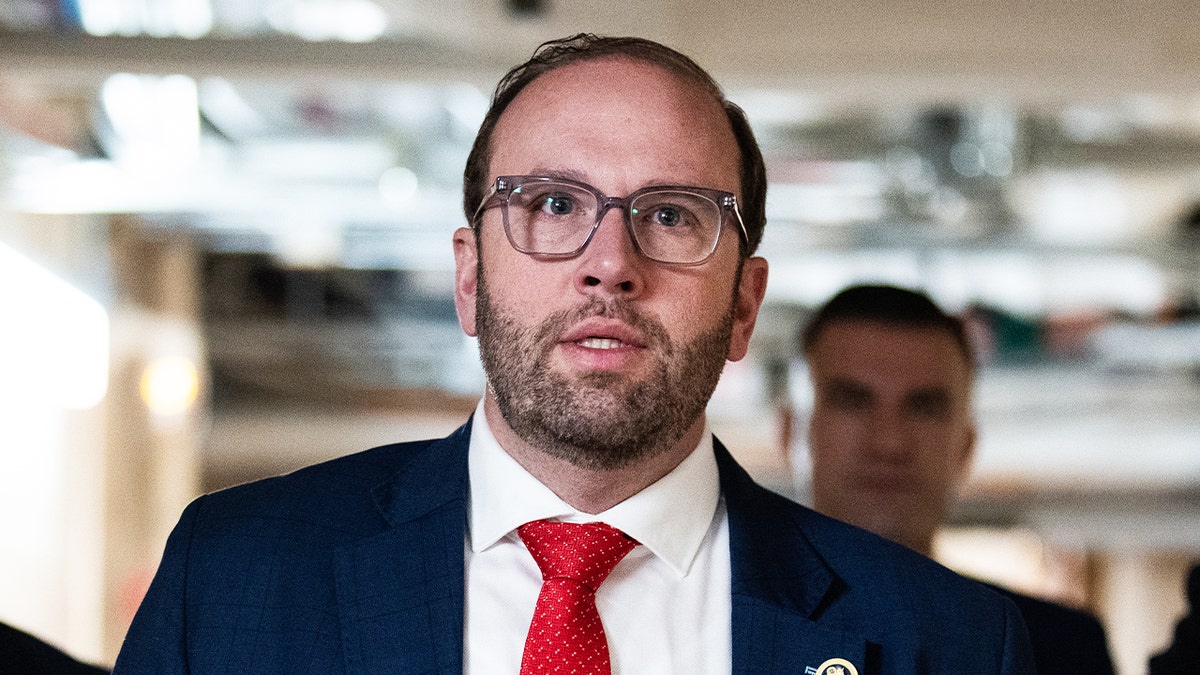
Jason Smith of Missouri wearing a suit and tie.

Rep. Jason Smith, R-Mo., is demanding answers from the National FFA over its partnership with a CCP-linked agribusiness citing national security tax status and foreign influence concerns. (Tom Williams)

In the letter, the committee emphasized FFA’s role in educating future agricultural leaders, noting the organization serves more than one million students through thousands of chapters across the country.

The lawmakers devoted a significant portion of the letter to detailing Syngenta Group’s ownership structure and its ties to the Chinese government, arguing the relationship raises red flags for a U.S.-based, tax-exempt youth organization tied to agriculture.

Syngenta has been wholly owned since 2017 by China National Chemical Corp., or ChemChina, a Chinese state-owned enterprise that later merged into Sinochem Holdings.

AMERICA HAS TO RESPOND WITH A UNITED FRONT TO CHINA’S MASSIVE ECONOMIC WARFARE

Syngenta Display At Expo.

Lawmakers dedicated a significant portion of the letter to outlining the Syngenta Group’s ties to the Chinese government. (Li He/Xinhua via Getty Images)

Both ChemChina and Sinochem were designated during the first Trump administration as Communist Chinese military companies, a classification used to identify firms linked to Beijing’s military-civil fusion strategy and restrict their access to U.S. government funding.

Lawmakers noted that while those designations were removed in 2021 under the Biden administration, Syngenta was later redesignated as a Chinese military company, underscoring ongoing concerns about its ties to the Chinese state.

The letter also pointed to actions by U.S. states and federal agencies to limit Chinese ownership and influence in American agriculture. It included efforts to force Syngenta subsidiaries to divest farmland and initiatives aimed at preventing the sale of U.S. agricultural land to Chinese entities on national security grounds.

MORE THAN 160 HOUSE DEMS VOTE AGAINST CRACKDOWN ON FOREIGN INFLUENCE IN US SCHOOLS
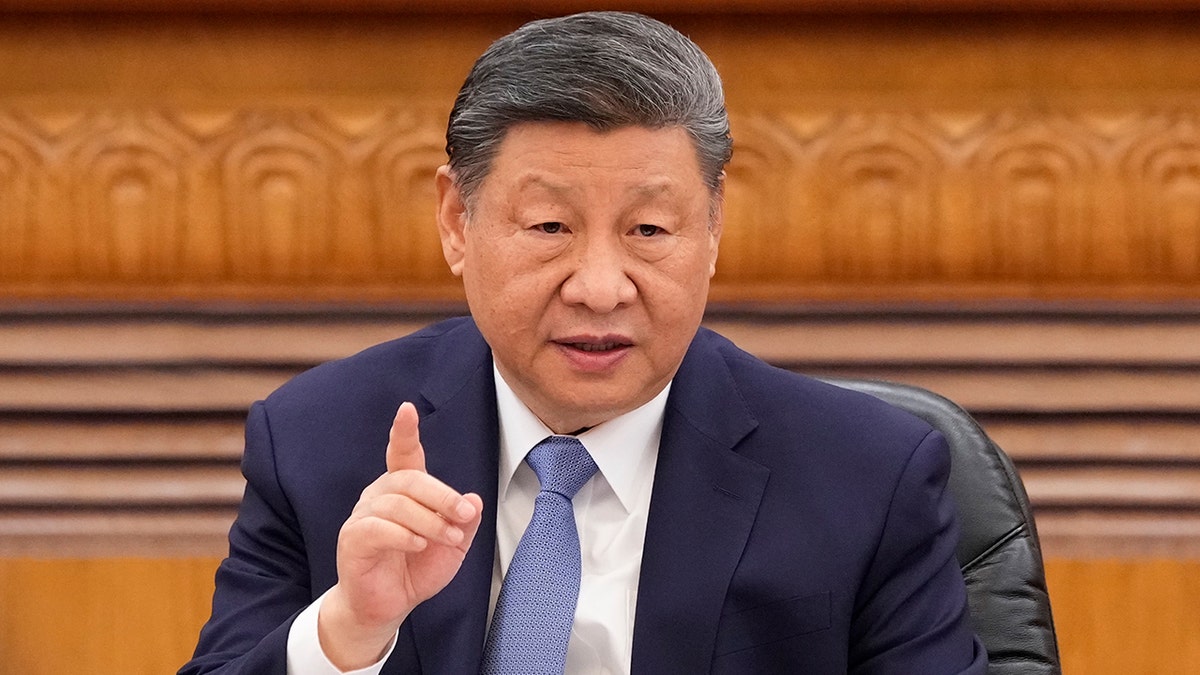
Chinese President Xi Jinping.

Lawmakers also expressed concern over the influence a Chinese state-owned company could exert over future agricultural leadership. (Ken Ishii – Pool/Getty Images)

Against that backdrop, lawmakers said Syngenta’s access to FFA leadership, programming and students raises concerns about the influence a Chinese state-owned company could exert over future American agricultural leaders.

“The CCP has a well-documented history of economic espionage to steal biotechnology and agriculture-related intellectual property, and the fact that the National FFA has provided one of their state-owned companies direct access to the future leaders of America’s farming industry is alarming,” the letter states.

The lawmakers also criticized FFA’s embrace of DEI initiatives, arguing the programs risk shifting the organization away from agricultural education and toward identity-based priorities that could divide students.

HOUSE GOP LAUNCHES BLITZ OF BILLS TO SHUT DOWN CCP INFILTRATION OF US SCHOOLS: ‘COMMONSENSE’

They questioned whether Syngenta’s role in DEI-related efforts gave the company undue influence over FFA’s strategic direction.

“The goal of the National FFA should be to bring student members together as a community — not force them into specific categories,” the lawmakers wrote.

Smith and Mann said the inquiry is part of broader congressional oversight of tax-exempt organizations and their exposure to foreign influence, particularly as farm and food security are increasingly viewed as matters of national security.

FCC, STATE AGS TO JOIN FORCES IN CRACKDOWN ON CHINA-LINKED COMMUNICATIONS TECHNOLOGY
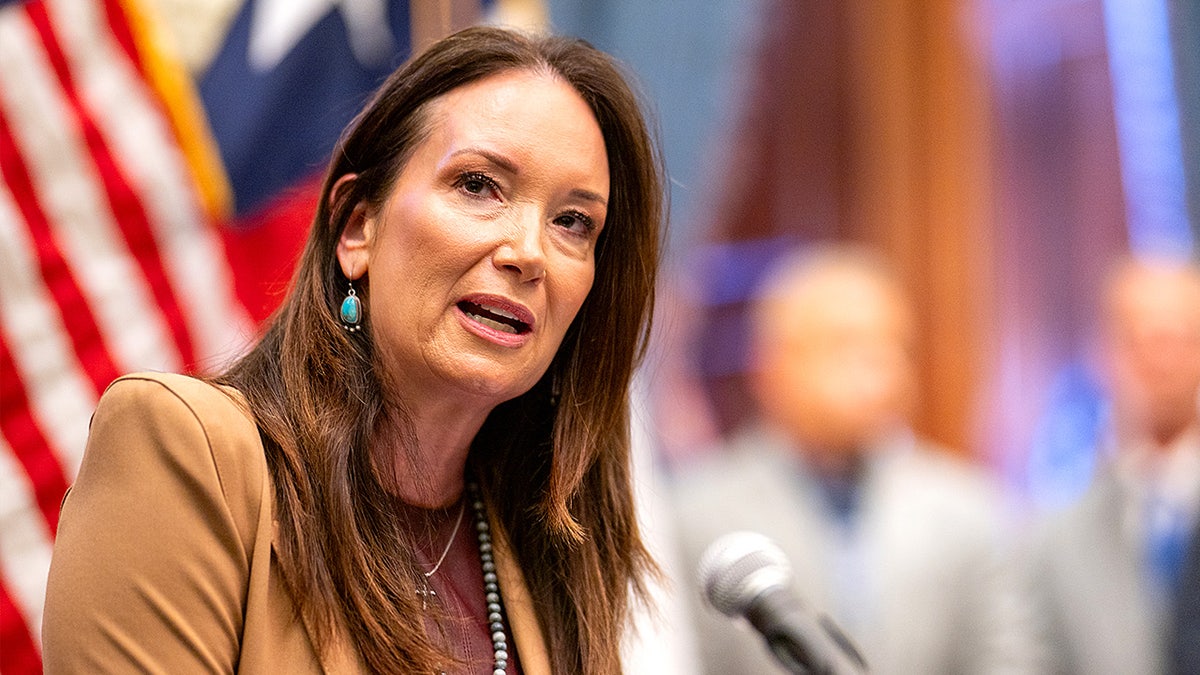
U.S. Secretary of Agriculture Brooke Rollins speaks alongside Texas Gov. Greg Abbott during a news conference at the Texas State Capitol.

House Ways and Means Committee Chairman Jason Smith and Rep. Tracey Mann cited remarks by USDA Secretary Brooke Rollins that “farm security is national security.” (Brandon Bell/Getty Images)

Smith and Mann cited a statement from USDA Secretary Brooke Rollins that “farm security is national security.”

Ultimately, the letter directs National FFA to turn over documents and provide detailed answers about its partnership with Syngenta Group, including contracts and financial contributions, the role Syngenta employees play in leadership or advisory positions, and the company’s involvement in shaping FFA’s diversity and strategic programs.

In a statement provided to Fox News Digital, Smith said the committee is expanding its investigation to include the FFA over concerns about foreign influence and its impact on the organization’s mission.

CLICK HERE TO DOWNLOAD THE FOX NEWS APP

“The Ways and Means Committee is expanding our investigation into the malign foreign influence in the U.S. tax-exempt sector to include the FFA in light of deeply concerning reports that the organization has maintained ties to an entity controlled by the Chinese Communist Party — a relationship that appears to have influenced its decision-making,” Smith said. “The FFA plays a vital role in educating the next generation of farmers, strengthening American agriculture, and safeguarding our nation’s food supply and national security. That important mission must not be compromised.”

Fox News Digital reached out to the National FFA for comment on the matter.


Source link
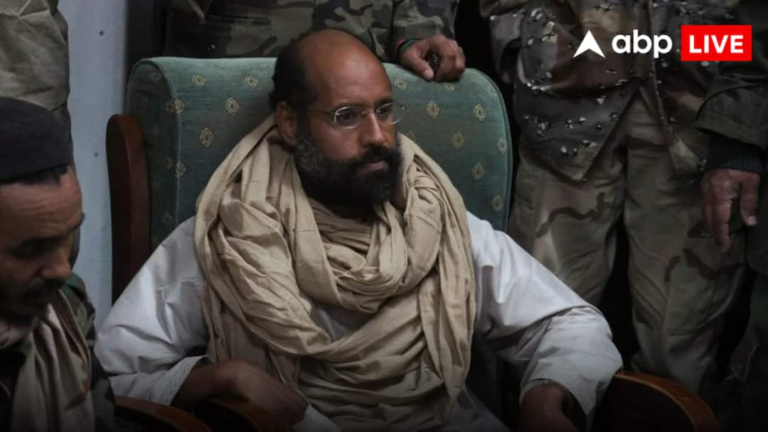
Gaddafi Son Dead: Saif al-Islam, son of former Libyan dictator Gaddafi, shot dead, unknown people carried out the incident.

0

Saif al-Islam Gaddafi, son of former Libyan dictator Colonel Muammar Gaddafi, has been shot dead. According to Libyan media, his death was confirmed on Tuesday (3 February 2026). Saif al-Islam was 53 years old. His lawyer told that this incident happened in Zintan city of Libya, where his house was attacked by four armed men. The attackers have been described as a commando unit. At present it is not clear who carried out the attack and why.

According to AFP report, Saif al-Islam was once considered the successor of his father. He was an important face in Libyan politics. His father Muammar Gaddafi ruled Libya from 1969 to 2011. The Gaddafi government came to an end after the rebellion in 2011.

Played a role in improving relations with western countries

Saif al-Islam, born in 1972, played an important role in improving relations between Libya and Western countries after 2000. He led many international negotiations. Due to these efforts, Libya gave up its nuclear program, after which many international sanctions imposed on the country were lifted. This increased Saif’s political power and identity, although he did not hold any government post.

Jail, death penalty and controversy

After the fall of the Gaddafi government in 2011, Saif al-Islam was accused of suppressing anti-government protests. He was kept in prison by a militia from Zintan for about six years. In 2015, a Libyan court also sentenced him to death in his absence.

Announcement to contest presidential elections

Saif al-Islam had announced to contest the Libyan presidential elections in 2021, but the elections were postponed due to the unstable situation in the country. He always said that he was not in favor of inheriting power. He said that power is not a land which can be inherited. Saif al-Islam’s assassination is expected to increase instability in Libyan politics once again.

Also read: Khawaja Asif On BLA: Pakistani Army is weak! PAK Defense Minister Khawaja Asif’s confession – ‘We are not capable, their weapons…’

Why AMD’s Q1 outlook is giving Wall Street jitters • The Register

0

Usually diversity is a sign of a healthy and resilient business. But for the folks on Wall Street, the breadth of AMD’s portfolio is a bug, not a feature – one that sent the House of Zen’s share price down by more than eight percent in after hours trading on Tuesday.

AMD’s scrip slipped despite the company delivering solid Q4 results, with net income surging 213 percent to $1.5 billion on revenues that grew 34 percent year-over-year to reach $10.27 billion. Datacenter and client products both delivered revenue growth, at 39 and 37 percent to $5.4 billion and $3.9 billion respectively. By comparison, the company’s embedded gains were far more modest, with FPGA sales up about three percent for the quarter.

The company forecast revenue will dip to $9.8 billion for Q1 of FY 2026. That figure will represent 32 percent growth, and reflect seasonal weakness in its PC, gaming, and embedded divisions that will offset growing datacenter and AI revenue.

The result is a bit of a catch-22 for AMD. On one hand, the seasonal decline means its datacenter division is doing most of the heavy lifting at a time when fears of an AI bubble are at an all-time high. On the other, AMD’s Q1 growth trajectory could have been even stronger if the rest of the company weren’t weighing it down.

Yet a seasonal dip is nothing nasty for AMD, because PC sales tend to dry up following the holiday season. Meanwhile, demand for AMD’s semi-custom chips used in Microsoft’s Xbox and Sony’s PlayStation have all but dried up because it’s been years since the gaming giants released new consoles.

One phenomenon that could complicate things for AMD headed into the 2026 fiscal year is the ongoing memory shortage. Over the past few months memory prices have more than tripled, with analysts this week warning prices could double again in the first quarter.

Despite this, CEO Lisa Su remains confident AMD can grow its PC business in 2025 by prioritizing the enterprise and high-end PC segments. “Our focus areas are enterprise. That’s a place where we’re making very nice progress in 2025 and we expect that into 2026,” she said.

High-end systems tend to sell in smaller volumes but at higher margins than mainstream PC platforms.

Su is less concerned about a shortage of memory impacting the company’s growing GPU business. “Given the lead times for things like HBM and wafers… we’re working closely with our suppliers over a multi-year timeframe in terms of what we see in demand,” she told analysts.

Much like Nvidia’s Blackwell and Rubin GPUs, AMD’s Instinct accelerators make use of high-bandwidth memory (HBM) which has to be co-packaged alongside the compute logic.

“Independent of the current market conditions, we’ve been planning for a significant ramp in both our CPU as well as our GPU business over the past, you know, couple of years,” Su added. ®


Source link

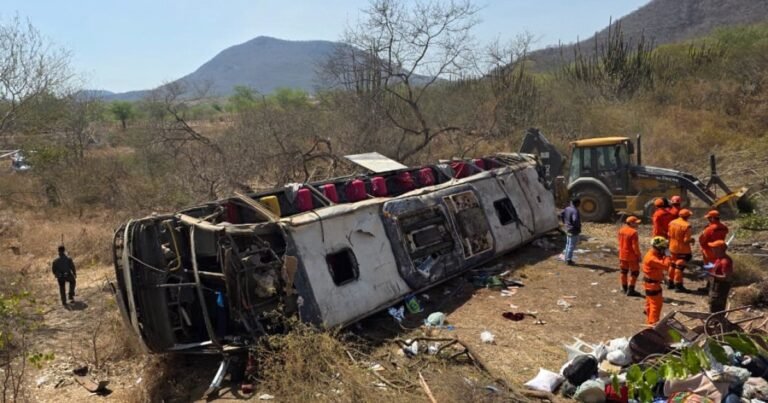
Bus crashes in Brazil’s Alagoas state, killing at least 16 people | Transport News

0

Survivors, including a seriously injured child, taken to hospital as state governor declares three days of mourning.

A bus returning from a religious festival in northeast Brazil has veered off the road on a curve and overturned, killing at least 16 people, including four children, officials said.

The bus had been carrying about 60 people when it tipped over in the rural interior of Alagoas state on Tuesday, ejecting some passengers while others were trapped beneath the wreckage.

Recommended Stories

list of 3 itemsend of list

The Alagoas regional government said in a statement that seven women, five men and four children were among those killed. The accident remains under investigation and was described as “highly complex”.

Brazilian media reported that the bus had been returning from celebrations for Our Lady of Candelaria, a religious festival in the state of Ceara that attracts thousands of devotees every February 2.

“The bus went off the road on a curve, overturned, and some people were thrown out,” said Colonel Andre Madeiro, director of the Alagoas Aviation Department, which took part in the rescue operation.

“Some were trapped under the vehicle. It was a very bad accident, even atypical,” he told a news conference.

Images posted on the X social media platform of the reported crash site featured a severely-mangled bus lying on its side as injured passengers sat nearby waiting for help.

Survivors of the crash, including a seriously injured child, were taken to hospital, where they remain under medical care.

This handout photo provided by the Alagoas State government shows rescue officers working at the site of a deadly bus accident on state highway AL-220 in the city of Sao Jose da Tapera, Alagoas state, Brazil, on February 3, 2026.A bus accident in northeastern Brazil killed at least 15 people on February 3, including three children, state officials said in a statement. The bus had been carrying about 60 people taking part in a pilgrimage when it overturned in the rural interior of Alagoas state.
Brazilian media reported that the bus had been returning from a religious festival when the accident occurred on Tuesday [Handout/Alagoas State government via AFP]

“I express my solidarity with the families and friends at this time of such great pain,” Governor Paulo Dantas wrote on social media. Three days of mourning will be observed in the state, he said.

Deadly road accidents are common in Brazil.

In October, 17 people died in the northeastern state of Pernambuco when a driver lost control of a bus.

More than 10,000 people died in traffic accidents in Brazil in 2024, according to the Ministry of Transportation, including in December 2024, when at least 32 people were killed when a passenger bus and a truck collided on a highway in southeastern Brazil’s state of Minas Gerais.

Also in 2024, a bus carrying a football team flipped on a road, killing three people.


Source link

Category A prison has ‘ceded’ airspace to specialist gangs trying to fly in contraband by drone | UK News

0

Specialised gangs piloting drones to fly drugs and weapons into prisons are working up and down the country to “beat” the system, the governor of HMP Manchester has told Sky News.

The Category A prison, formerly known as Strangeways, has been described as having “ceded” its airspace to illegal drone operators, who are using increasingly sophisticated technology to deliver contraband to inmates.

“We’ve got prisoners that we’re catching with Rambo-style knives,” governor Rob Knight told Sky News.

“We’ve had a machete in the prison. We’ve had all sorts of manufactured lock knives.”

Sky News has obtained footage filmed by an inmate from inside his cell at HMP Manchester, showing a drone dangling a package at the end, attempting to smuggle in contraband.

HMP Manchester says it has 'ceded' its airspace to criminal gangs trying to get contraband inside the prison
Image: HMP Manchester says it has ‘ceded’ its airspace to criminal gangs trying to get contraband inside the prison

It was later intercepted by staff, and the prisoner who filmed the footage in 2023 was sentenced to nine months for having a phone in jail.

There were 1,712 drone incidents in prisons in England and Wales between April 2024 and March 2025 – a new peak.

Drone incidents at prisons were up 1,140% in the five years to April 2025.

In a new report, the government’s independent spending watchdog, the National Audit Office (NAO), has said the prison service and the government have been “too slow” to respond to “urgent threats”, with maintenance backlogs and significant budget underspends on security measures like anti-drone equipment leaving prisons “vulnerable”.

Rob Knight, HMP Manchester governor, says knives and machetes have been smuggled in by drone
Image: Rob Knight, HMP Manchester governor, says knives and machetes have been smuggled in by drone

Mr Knight describes the issue as having “moved into a new era”, with improvements in technology and advancing criminality.

“It’s moved from a position of haphazard youngsters or disorganised local criminals to now being gangs that are specialised in this, focused on this, and making a lot of money from doing it, so they are working up and down the country to beat our systems,” he said.

‘We don’t police the airspace’

Sky News spent a Friday evening with Greater Manchester Police in an unmarked car, as they showed us an illustration of the types of drones they have recovered on previous operations.

“People round here will just put the drone out with a package attached on to it, fly it over to the prison… the package will go in and the drone will just come back. And then they’re gone,” one officer told us.

“It’s as easy as that, and as quick as that,” she said.

“We don’t police the airspace,” Detective Chief Superintendent Lewis Hughes, of Greater Manchester Police, told Sky News.

“Organised criminals have cottoned on to the fact that it’s very difficult to target and intercept drones,” he said, describing how “technically complicated” it is to stop a drone mid-flight, “especially when you don’t know where that pilot is”.

He added: “It’s a growing and evolving problem. Whilst drones have been around for a while now, they’ve never been more readily available.”

Last autumn, Sky News cameras captured drones flying packages of drugs into HMP Wandsworth in the middle of the night.

One delivery went directly to an inmate’s window, though it was later intercepted by staff.

“A lot of prisons, particularly the older prisons, weren’t built with the need to protect against drones in mind,” Jenny George, from the National Audit Office, told Sky News.

“So things like window security need to be improved in order for the prison to be safer.”

Prisons have “not responded with enough urgency to security weaknesses,” Ms George said.

The maintenance backlog for repairs across the prison estate doubled from £0.9bn to £1.8bn between 2020 and 2024.

“There are sometimes frustrating delays,” Mr Knight told Sky News, referring to the procurement process.

“We’re going to be introducing windows here which will be, I think, the first of their kind in this country, which will be drone-proof – we hope.

“I don’t think anything is indestructible but we’re trying to design a window that is as indestructible as possible.

“That has to go through a testing process, it then has to go through planning permission,” he said.

Drugs fuelling ‘violent cycle’ in prisons

The prison service has faced “financial constraints” and “competing priorities” of where to spend funding, Ms George said.

However, it is also in an unusual position of leaving large sums unspent, despite staff frustrations with the slow pace of repairs and improvements.

The NAO report found that the prison service failed to spend £30m (31%) of its drugs strategy funding and £25m (25%) of wider security investment, between March 2019 and March 2025.

There were underspends across several major programmes, including £9.5m which had been earmarked for drug security measures, such as anti-drone kits.

Another £11.2m, which was meant to be spent on physical security measures, including gates, was not used.

Among the reasons the money could not be spent were late approvals from government ministers, which “severely” limited spending.

Meanwhile, funding has fallen for addiction treatment services despite the increase in drug use by prisoners.

And there are large regional differences in spending, which NHS England has not investigated.

In 2024-25, the London region spent around 72% more per prisoner than the eastern region on substance misuse treatment.

The NAO says better co-ordination between healthcare and prison services is essential to give prisoners access to the support they need.

They highlight that 160,000 substance misuse appointments were missed in 2024-25 – amounting to just over a third of the total.

That is despite almost half of the prison population in England and Wales, 40,000 people, having an identified problem in April last year, with 136 drug-related deaths investigated by the Prisons and Probation Ombudsman between 2022 and 2024 – 16% of all deaths investigated.

October: Sky News films drones dropping drugs into prison

The government has said it is boosting support for offenders to help overcome their addictions, by funding substance-free units in prisons and employing specialist staff.

Drugs contribute to “a violent cycle” in prisons, where violent and unstable prison conditions fuel further demand for drugs, Ms George explained.

The report recommends that the prison service address security as a matter of urgency.

Lord Timpson, the prisons minister, said the NAO report exposes the “failings” that the government “inherited with underinvestment in security contributing to the unacceptable levels of drugs behind bars”.

He added: “We are taking decisive action to grip this crisis, investing £40m to bolster security including anti-drone measures like reinforced windows and specialist netting to keep contraband out.”


Source link

Flattish opening seen on Nifty, Sensex

0

Domestic markets are likely to open on a flattish note on Wednesday despite weak global cues. Gift Nifty at 25,806 indicates a flattish opening. According to market experts, sentiment has turned from “sell on rally” to “buy on dips”, post the US-India deal. According to them, consolidation phase is likely to continue.

Ponmudi R, CEO of Enrich Money, said: Indian equity markets continue to draw support from positive progress in India–US trade discussions, which remains the key sentiment driver. Improved visibility on external trade risks has revived confidence and renewed interest in export-oriented sectors. “After the strong multi-day rally, some profit-booking and range-bound action cannot be ruled out. That said, easing global uncertainties, sustained domestic capex momentum, and a stable macro backdrop keep the near to medium-term outlook constructive. Early signs of renewed FII participation following trade-related optimism are further adding to the positive undertone. Market direction today will largely depend on whether fresh follow-through buying emerges or indices pause to consolidate at higher. levels,” he said.

Nachiketa Sawrikar, Fund Manager, Artha Bharat Global Multiplier Fund, said: The India–US relationship, which many expected to strengthen during President Trump’s second term, reached a new low in June. For the world at large, strained ties between the two largest democracies was hardly good news. “Against this backdrop, the new India-US trade deal, lowering the average tariff rate to about 18% from the earlier punitive 50%, marks a meaningful reset in bilateral economic relations.

For India, lower tariffs improve access to the US market for labor-intensive exports such as textiles, engineering goods, and pharmaceuticals, supporting jobs and manufacturing scale. The 18% rate brings India broadly in line with its ASEAN peers and represents the best outcome realistically achievable. For the US, the agreement creates opportunities to expand exports of energy, agricultural products, and advanced technologies, while strengthening supply-chain diversification away from over-concentrated geographies,” he said.

Rajeev Sharan, Head – Criteria, Model Development & Research, said: India’s trade agreement with the US materially reduces external uncertainty and reinforces a favorable growth outlook by boosting exports alongside rising domestic capex. “The deal should ease FPI equity selling as sectoral earnings visibility improves. By anchoring the rupee, it modestly pressures gold and silver prices in local terms, even as global safe haven demand persists,” he added.

According to Sawrikar, beyond tariffs, the deal signals renewed strategic trust. “With the rupee having weakened nearly 5% over the past six months, improved trade flows and renewed foreign investor interest could support a partial currency recovery. As relative attractiveness shifts back toward India from ASEAN markets, a reversal of recent FII outflows could further strengthen Indian equity markets,” he added.

Meanwhile, the majority of equities across the Asia-Pacific region are down in early deals on Wednesday.

Published on February 4, 2026

Kota Rajasthan caught 50 kg of silver amid skyrocketing prices! were loaded into the car without any papers

0

Under the Operation Clean Sweep being run against illegal smuggling in Kota Rural, Kanwas police station has got a big success. Police have seized 49.43 kg of raw silver ingots during the blockade.

According to the information, the price of silver ingots in the international market has been estimated at around Rs 1 crore 40 lakh. Taking the matter seriously, the police have started investigation.

Campaign being run to prevent smuggling of metals

Superintendent of Police Kota Rural Sujit Shankar said that a special campaign is being run to prevent smuggling of illegal drugs, illicit liquor and untaxed precious metals. A special team led by Police Officer Anup Singh under the direction of Additional Superintendent of Police Ramkalyan Meena stopped a Creta car during the blockade at Kanwas Tiraha Morukala on Tuesday, February 3.

Police took action and seized silver

According to the information, during the search, a huge quantity of raw silver ingots were recovered from the vehicle. When valid documents were not found in relation to the silver and there was suspicion of it being related to theft or any other crime, the silver was seized by taking action under Section 106 of the Indian Civil Security Code 2023.

Income Tax and GST Department launched a campaign

In this case, silver has been seized from the possession of Ashish son of Prakashchand Jain, resident of Mandsaur district of Madhya Pradesh, Nileshwari Colony, Garauth and Pirulal son of Motilal Mali, resident of Mali Mohalla, Garauth. According to the information, information about the seizure has been given to the Income Tax Department and GST Department. such a large amount of raw Silver Investigation is going on regarding the purchase, sale and transportation.

Read this also- RJD MP’s big statement in Parliament amid Supreme Court’s decision on UGC, asked these questions to the government

Mamdani opposes prosecuting knife-wielding man shot by police in Queens

0

NEWYou can now listen to Fox News articles!

New York City Mayor Zohran Mamdani said on Tuesday that he does not believe the Queens district attorney should prosecute a mentally ill man who was shot by police as he ran toward officers with a knife, arguing that the individual needs mental health treatment instead.

Jabez Chakraborty, 22, was holding a large kitchen knife and charged at the officers who responded to the emergency call from the family on Jan. 26, NYPD officials said. The officers repeatedly told him to drop it as they attempted to de-escalate the situation before one officer fired several times, striking Chakraborty, who was then taken to a hospital in critical condition.

The family had called 911 to report that Chakraborty was throwing glass at his home on Parsons Blvd. in Briarwood, NYPD officials said, according to the New York Daily News.

After the officers responded to the home, Chakraborty charged them with the knife, according to the NYPD. The officers repeatedly instructed him to drop the weapon and attempted to isolate him in the home’s living room by closing a glass door between them and Chakraborty. But police said he managed to open the door and overwhelm the officers with the knife extended.

KNIFE-WIELDING MAN SLASHES NYPD OFFICER IN FACE WITH 14-INCH BLADE, POLICE SHOOT HIM DEAD IN PURSUIT

New York City Mayor Zohran Mamdani discusses cutting down on 'junk fees'

Mayor Zohran Mamdani said he does not believe the Queens district attorney should prosecute a mentally ill man who was shot by police as he ran toward officers with a knife. (Adam Gray/Bloomberg via Getty Images)

The officers did not draw their guns until Chakraborty pulled the knife, NYPD officials said.

The officers provided first aid and attempted to stop the bleeding following the shooting, according to the agency. He was then rushed to the hospital, where he is in critical but stable condition.

The family had asked for emergency medical workers to respond to the incident rather than police, the family said in a statement. The family said Chakraborty was shot at least four times.

“We called for help,” the family said. “We called 911 for an ambulance to provide medical attention for our son, who was in emotional distress. We did not call the police. Instead of medical responders, the NYPD arrived and shot our son multiple times right in front of us.”

Knife used by mentally ill suspect in NYC

Jabez Chakraborty, 22, was holding a large kitchen knife and charged at the officers who responded to the emergency call from the family. (NYPD)

The Queens district attorney’s office is investigating the incident, with preliminary reports suggesting prosecutors were looking at potentially seeking an indictment for attempted murder.

But Mamdani, who has viewed the body camera footage, said the man needs mental health treatment instead of facing criminal charges.

“In viewing this footage, it is clear to me that what Jabez needs is mental health treatment, not criminal prosecution from a district attorney, and we are talking about a family that is enduring the kind of pain that no family should and an individual that has lived with schizophrenia for many years,” the mayor said at a news conference on Tuesday.

“A person experiencing a mental health episode does not always have to be served first or exclusively by a police officer. It is important for us to have all of the options available,” he added.

WASHINGTON MAN ALLEGEDLY LURES POLICE WITH BOGUS 911 CALL, SLASHES OFFICER IN FACE

A police officers NYPD badge

The officers repeatedly told the man to drop the weapon as they attempted to de-escalate the situation before one officer fired several times. (Susan Watts/New York Daily News/Tribune News Service via Getty Images)

CLICK HERE TO DOWNLOAD THE FOX NEWS APP

The mayor also said he had met with Chakraborty’s family, who had criticized him for his initial response to the shooting. Mamdani said hours after the shooting that police had “encountered an individual wielding a knife,” and that he was “grateful to the first responders who put themselves on the line each day to keep our communities safe.”

“After all this, we saw Mayor Mamdani’s statement applauding the NYPD officers that shot our son, threatened and lied to us, and kept us from seeing our son for over 24 hours,” the family’s statement read. “Why is the mayor applauding officers who recklessly almost killed our son in front of us?”


Source link

We moved fast and broke things. It’s time for a change.

0

The phrase “Move fast and break things” is a guiding philosophy in the technology industry. The phrase was coined by Meta CEO and founder Mark Zuckerberg more than two decades ago: an operational directive for Facebook developers to prioritize speed and innovation even at the cost of stability. “Unless you are breaking stuff,” Zuckerberg told Business Insider in a 2009 interview, “you are not moving fast enough.” 

But Zuckerberg’s call was heard well beyond Facebook’s offices. The tech industry has embraced the philosophy for close to two decades, with benefits that are visible all around us: from Tik-Tok influencers, to contactless mobile payments, self-driving taxis, and AI-powered glasses. 

Practically, however, the culture of “move fast and break things” produced firms that prioritize fast release cycles and feature development over software security and resilience. They move fast and make broken things: vulnerable and poorly designed applications, services and devices that are preyed on by cybercriminal groups and hostile nations. Consider the China-backed APT groups targeting both known and “zero-day” flaws in on-premises Microsoft Sharepoint instances in 2025 and Ivanti VPN devices in 2023. Those campaigns led to the compromise of hundreds of organizations globally, including U.S. federal agencies and critical infrastructure operators. 

Then there was the campaign by the China-backed threat actor UNC6395 who targeted customers of Salesforce using OAuth tokens stolen from the third party application Salesloft Drift to exfiltrate large volumes of data from hundreds of Salesforce instances

These incidents highlight two key features of today’s cyberthreat landscape. First, attackers exploit older applications with legacy code that contains high-severity security vulnerabilities. Second, they target large, complex cloud platforms like Salesforce by compromising vulnerable third-party integrations, software dependencies, and poorly managed APIs. 

This problem is compounded by a dangerous assumption: that software suppliers are trustworthy and secure. This mindset is outdated. In the past, supply chain attacks were rare, development cycles took months or years, and applying patches quickly was the gold standard. Today, in the “move fast” era, code can go from development to production in days, hours, or even seconds.”

Consider the recent Trust Wallet breach. In December, the cryptocurrency application vendor disclosed that hackers stole approximately $8.5 million in crypto assets through a compromised Google Chrome extension. The root cause was a November outbreak of the Shai Hulud registry-native worm, which leaked Trust Wallet developers’ GitHub credentials. With these credentials, attackers accessed Trust Wallet’s browser extension source code and the Chrome Web Store (CWS) API key, the company said in a blog post. This allowed them to upload malicious extension builds directly to the store, bypassing Trust Wallet’s standard security reviews. Within days, Trust Wallet users awoke to find their wallets emptied

By compromising “pre-blessed” channels like software updates from trusted suppliers or open source projects, criminal and nation-state attackers can extend their reach into sensitive IT environments.

The solution to problems like this starts with recognizing that the “move fast and break things” era must end. As software powers everything from database servers to dishwashers and tractors, vendors must prioritize security to meet market demands and regulatory requirements. This means proving their software is secure. Traditional application security testing tools—like software composition analysis (SCA), static application security testing (SAST), and dynamic application security testing (DAST)—are part of the solution.

However, today’s threat landscape requires software publishers to look beyond appsec’s “usual suspects.” They must test compiled binaries before release to detect tampering or malicious code that typically evades traditional application security tools. After all, that’s what we saw with incidents like the hacks of Solarwinds’ Orion or VoIP provider 3CX’s Desktop App

Software publishers also need to prioritize code quality, security and transparency. They can do that by establishing ambitious “zero vulnerability” goals that incentivize them to address problems like “code rot” (reliance on old and vulnerable software modules). They must also embrace transparency by publishing bills of materials for their products—including SBOMs (software bills of materials), MLBOMs (machine learning bills of materials), and SaaSBOMs. Knowing what is in the software your organization consumes can be critical to heading off attacks that exploit vulnerable software dependencies or other supply chain weaknesses. 

Should tech firms still move fast and innovate? Absolutely. But in 2026, innovation and rapid releases must be balanced with an even greater priority: building secure, resilient technology that protects both vendors and customers from attacks. Instead of “move fast and break things,” we need a new rallying cry: “Make Smart and Safe Things.”  

Saša Zdjelar is the Chief Trust Officer (CTrO) at ReversingLabs and Operating Partner at Crosspoint Capital with nearly 20 years of Fortune 10 global executive leadership experience. His CTrO scope includes leadership, oversight and governance of the CISO/CSO function, including product security, as well as partnering with other leaders on corporate and product strategy, strategic partnerships and research, and customer and technology advisory boards, including sponsoring the ReversingLabs CISO Council.

Saša Zdjelar

Written by Saša Zdjelar

Saša Zdjelar is the chief trust officer of ReversingLabs.


Source link

Palestinian women recount ‘journey of horror’ at Gaza’s Rafah crossing | Gaza News

0

Palestinian women tell of harrowing experience at hands of Israeli military at reopened Rafah border crossing in Gaza.

Palestinian women have described a “journey of horror” as they passed through the Rafah border crossing on their way home to Gaza from Egypt, with the few allowed to enter the war-torn territory being separated from their children, handcuffed, blindfolded, and interrogated “under threat” for hours.

For the 12 Palestinian women and children allowed to enter Gaza through the Rafah crossing on Monday, the journey back home was “long and exhausting, marked by waiting, fear and uncertainty”, Al Jazeera’s Ibrahim Al Khalili said, reporting from Khan Younis in southern Gaza.

Recommended Stories

list of 4 itemsend of list

The small group of returnees was subjected to harsh security procedures by Israeli forces who hold the power at the Rafah crossing to determine “when and if” people will be allowed to return to their homes in the Palestinian territory, Al Khalili said.

“They took everything from us. Food, drinks, everything. Allowing us to keep only one bag,” said one of the returnees, speaking to Al Jazeera about her ordeal at the hands of the Israeli military on Monday.

“The Israeli army called my mother first and took her. Then they called me, and took me,” the woman said.

“They blindfolded me and covered my eyes. They interrogated me in the first tent, asking why I wanted to enter Gaza. I told them I wanted to see my children and return to my country. They tried to pressure me psychologically, wanted to separate me from my children and force me into exile,” she said.

“After questioning me there, they took me to a second tent and asked political questions, which had nothing to do with [the journey]… They told me I could be detained if I didn’t answer. After three hours of interrogation under threat, we finally went on the bus. The UN received us; then we headed to Nasser Hospital. Thank God we were reunited with our loved ones,” she added.

Another member of the group, Huda Abu Abed, 56, told the Reuters news agency that passing through the Rafah border “was a journey of horror, humiliation and oppression”.

Accounts of being blindfolded, handcuffed and interrogated for hours by Israeli forces were given to reporters by three women, Reuters said.

Some 50 Palestinians had been expected to enter the enclave on Monday, but by nightfall, only 12 – three women and nine children – had been allowed through the reopened crossing by Israeli authorities, Reuters said, citing Palestinian and Egyptian sources.

Worse still, of the 50 people waiting to leave Gaza on Monday, mostly for critical medical treatment, only five patients with seven relatives escorting them managed to clear the Israeli inspections and cross into Egypt.

On Tuesday, just 16 more Palestinian patients were allowed to cross into Egypt via Rafah, Al Jazeera’s Hind Khoudary said, reporting from Khan Younis.

The numbers being allowed to cross at Rafah are far below the 50 Palestinians who Israeli officials said would be allowed to travel in each direction via the crossing every day, Khoudary said.

“There is no explanation as to why crossings are being delayed at Rafah,” Khoudary said. “The process is taking an extremely long time.”

“There are about 20,000 people waiting [in Gaza] for urgent medical attention abroad,” she added.


Source link