Sen Josh Hawley calls for federal mifepristone crackdown and oversight

0

NEWYou can now listen to Fox News articles!

Sen. Josh Hawley, R-Mo., is calling for a crackdown on the abortion pill Mifepristone, saying it is time for Congress to increase oversight of the drug and reinstate what he describes as basic safety guardrails.

“The issue is that there are more abortions in the United States now than there were when Roe was still… law,” Hawley told Fox News Digital Tuesday in an interview. 

“I mean, think about it, it is extraordinary,” Hawley said. “Abortions are going up every single year. What’s driving that is Mifepristone. You know, it’s the chemical abortion drug that is getting mailed into every state in the country. Doesn’t matter what the state laws are. It doesn’t matter if your state restricts abortion, bans abortion, or bans Mifepristone, it doesn’t matter.” 

“It’s getting mailed into every single state without a doctor visit, many times, really without even a doctor’s prescription,” he continued. “No follow-up. It’s unbelievable.”

REPUBLICAN SENATORS BLAST FDA FOR EXPANDING ABORTION PILL ACCESS
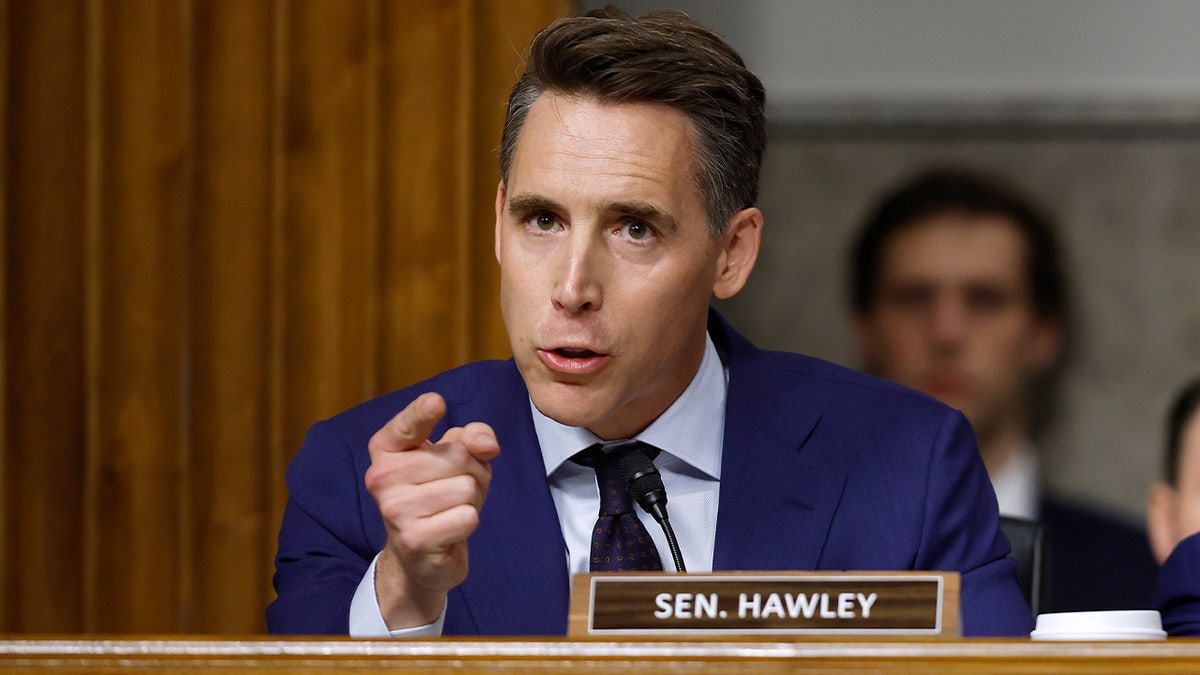
Sen. Hawley in Senate hearing

Sen. Josh Hawley, R-Mo., speaking. (Chip Somodevilla/Getty Images)

Mifepristone, the abortion pill originally made by Danco Laboratories, blocks progesterone, a hormone needed to sustain pregnancy, and is followed by Misoprostol to complete the process.

A study of 875,000 insurance claims on Mifepristone is that it has an 11% adverse health event rate,” Hawley said. “This means 11% of women who use it end up in the emergency room or with a very serious health condition. And yet, that’s not what’s on the label of the drug.”

The study, conducted by the Ethics and Public Policy Center, was authored by Ryan T. Anderson, president of the Ethics and Public Policy Center, and Jamie Bryan Hall, its director of data analysis.

It reviewed a claims’ database that included 865,727 prescribed Mifepristone abortions from 2017 to 2023.

PRO-LIFE GROUP FINDS BIDEN-ERA FDA POLICY IS DRIVING 500 ABORTIONS PER DAY, SAYS TRUMP HAS POWER TO END IT

Closeup of a mifepristone tablets box

Mifepristone tablets are seen in a Planned Parenthood clinic, July 18, 2024, in Ames, Iowa. (Charlie Neibergall/AP)

The report found that 10.93% of women, nearly 11%, “experience sepsis, infection, hemorrhaging, or another serious adverse event within 45 days following a Mifepristone abortion.” 

In October, Hawley accused the Food and Drug Administration (FDA) of endangering women’s health, saying the agency approved the chemical abortion drug Mifepristone without the thorough safety review it had promised.

“The FDA, the commissioner, Marty Makary, promised me he would do a study,” Hawley told Fox News Digital. “And I just think that that study is nowhere close to being done. I don’t know if it’ll ever be done. So I just, I have concluded that that’s a dead end, but I think Congress is gonna have to approach this in a different way.”

FDA CHIEF HAS NO ‘PLANS’ FOR ABORTION PILL POLICY CHANGES BUT CONTINUES SAFETY REVIEW

Boxes of Mifepristone

A container holding boxes of Mifepristone, the first medication in a medical abortion, is prepared for patients at Alamo Women’s Clinic in Carbondale, Ill., April 20, 2023. (Evelyn Hockstein/Reuters)

The Missouri senator said he would at least like to see what he called “minimal” safeguards, including in-person doctor visits before prescriptions are issued and screening for ectopic pregnancies.

I mean, we’re talking about really minimal things,” Hawley said. “I mean number one, a in-person doctor visit with a doctor actually making the prescription. There needs to be the screening for ectopic pregnancies as part of that because if you take Mifoprestone with an ectopic pregnancy, it could lead to fatal hemorrhaging. There needs to be a follow-up doctor visit.”

“And I believe there needs to be in-person administration of the drug,” he continued. “You know, a doctor actually needs to be there to administer the drug in case there are any side effects. And these are very minor regulations that were in place in President Trump’s first term. President Biden removed them. But really – that’s just the very, that’s the bare, bare minimum.” 

Hawley said that he thinks Congress must “do more” in its oversight of the drug. 

“I think we’re gonna have to do more,” he said. “And, you know, I hope to have more to say about that in the coming weeks. It’s becoming clear to me that this safety review that I hoped would catalyze action at the FDA is just not happening.”

“I mean, it doesn’t look to me like it has any timeframe on it,” Hawley said. “You know, listen, the FDA made a commitment to do that study a year ago, and they are nowhere on it, as near as I could tell. Just nowhere at all. So that to me looks like a complete dead end. And I just think Congress is going to have to step in.”
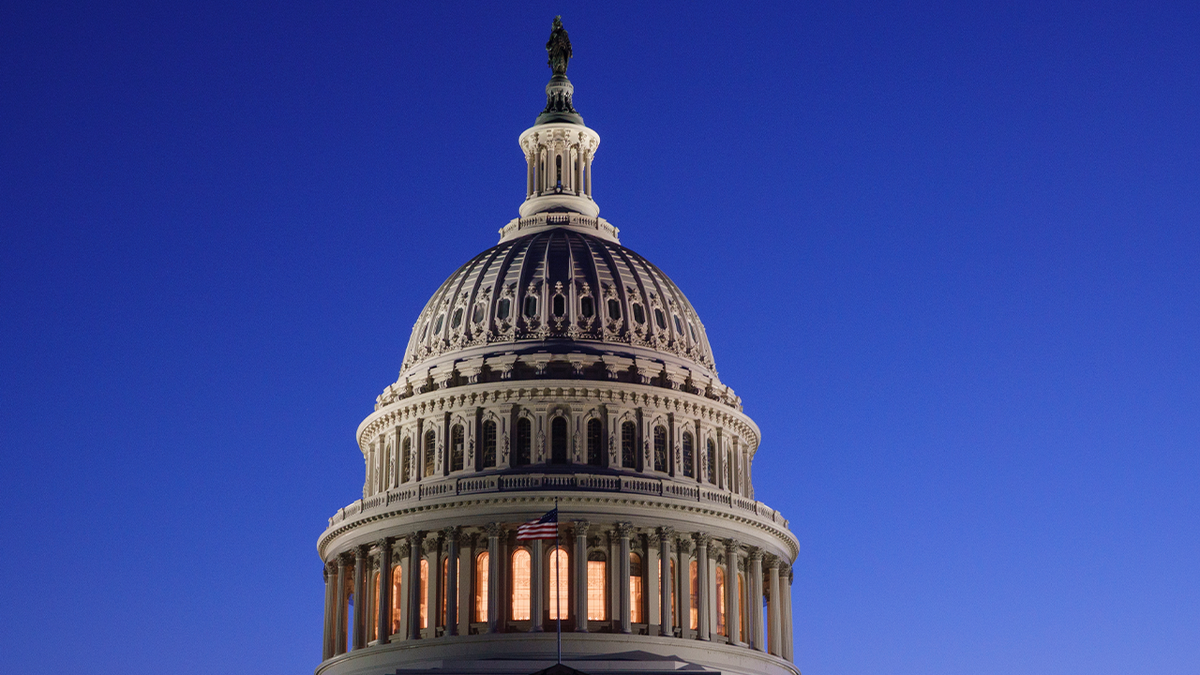
capitol at dusk

Congress must “do more” in its oversight of the drug, Sen. Hawley said. (Kevin Carter/Getty Images)

Makary and the FDA did not immediately respond to requests for comment from Fox News Digital.

CLICK HERE TO DOWNLOAD THE FOX NEWS APP

Fox News’ Greg Wehner contributed to this report. 


Source link

Sensex tumbles 558 points on sell-off in IT shares

0

Benchmark BSE Sensex fell 558 points on Thursday amid heavy selling in IT shares, as concerns over AI-led disruptions and waning hopes of a Fed rate cut after firm US economic data weighed on investor sentiment.

The 30-share BSE Sensex declined 558.72 points, or 0.66 per cent, to settle at 83,674.92. During the day, it tanked 716.97 points, or 0.85 per cent, to hit an intraday low of 83,516.67.

The 50-share NSE Nifty declined 146.65 points, or 0.57 per cent, to end at 25,807.20.

Technology stocks led the slide, with Tech Mahindra, Infosys and Tata Consultancy Services (TCS) tumbling nearly 6 per cent each to emerge as major laggards on the Sensex.

HCL Technologies, Mahindra & Mahindra, Hindustan Unilever, Reliance Industries, Eternal, HDFC Bank, IndiGo, Kotak Mahindra Bank, and Adani Ports also ended in the red.

On the other hand, Bajaj Finance, ICICI Bank, Trent, Bharat Electronics Ltd, State Bank of India, Asian Paints, Bajaj Finserv, Titan, Larsen & Toubro, Bharti Airtel and Tata Steel were among the gainers.

BSE MidCap Select Index fell 0.48 per cent, while SmallCap Select Index slipped 0.28 per cent.

Among sectoral indices, Focussed IT slumped the most by 5.40 per cent, followed by IT by 5.29 per cent.

“A nosedive correction in the IT index triggered by mounting concerns over AI-led disruptions, along with low expectations of a US Fed rate cut due to strong US job data and unemployment rates, dampened investor sentiment,” Vinod Nair, Head of Research, Geojit Investments Ltd, said.

He added that in the global markets, AI is reshaping markets by compressing margins in service-intensive sectors and increasing concentration-led volatility.

“In India, this technology shift is likely to structurally transform IT services by accelerating delivery timelines and automating volume-driven tasks, thereby challenging the traditional headcount-based outsourcing model.

“A weak sentiment in the IT sector, along with lingering geopolitical tensions between the US and Iran, may influence investors to take a cautious approach in the near term,” Nair said.

In Asian markets, South Korea’s Kospi closed over 3 percent higher. Japan’s Nikkei 225 index, Shanghai’s SSE Composite index also ended on a positive note, while Hong Kong’s Hang Seng benchmark finished in the negative territory.

European markets are trading higher in mid-session deals. US equities ended lower on Wednesday.

Meanwhile, Foreign institutional investors bought equities worth Rs 943.81 crore on Wednesday, while domestic institutional investors were the net sellers of stocks worth Rs 125.36 crore, according to exchange data.

Brent crude, the global oil benchmark, fell 0.27 per cent to USD 69.21 per barrel.

On Wednesday, the 30-share BSE Sensex slipped 40.28 points to close at 84,233.64, while the NSE Nifty inched up 18.70 points to settle at 25,953.85.

Published on February 12, 2026

UK unveils telecoms charter to curb mid-contract bill shocks • The Register

0

The UK government claims a new Telecoms Consumer Charter will stop customers being hit by unexpected bill increases and offer clearer pricing when signing up to deals.

Britain’s Department for Science, Innovation and Technology (DSIT) says major telco providers – BT, Virgin Media O2 (VMO2), the newly conjoined VodafoneThree, Sky, and TalkTalk – have signed up to new commitments under the charter.

The charter, however, appears to be nothing more than a voluntary code of conduct with no legal enforcement.

The providers attended a Wednesday roundtable hosted by Chancellor Rachel Reeves and Technology Secretary Liz Kendall. The move follows a November letter from the pair asking telcos to confirm “customers under contract will not face price rises beyond those that they signed up to.”

The government claims customers will know exactly what they’ll be paying when they sign up for mobile or broadband deal, with no unexpected price hikes midway through a contract. Note: not no price rises – just no unexpected ones. The charter requires providers give clear upfront information about future price changes.

The text of the Telecoms Consumer Charter is available here, so Reg readers can see what it says for themselves, but we’ve included a taster.

Crucially, customers should always receive clear and easily understandable information about their telecoms services and prices, and any changes, so they know exactly what they are paying for and why.

All providers commit that “where a contract includes a mid‑contract price increase, the core subscription price (monthly payment) for their service that customers sign up to is the price that they will pay. Any exception to this is limited strictly to unforeseeable and externally driven events that materially affect the cost of providing services.”

This follows O2’s decision last year to lift prices beyond original contract expectations, which prompted scrutiny from Ofcom. The regulator previously banned mid-contract price rises unless providers let customers leave penalty-free – O2 simply told customers they knew where the door was if they didn’t like it.

The charter states that for customers still on legacy inflation-linked T&Cs, April 2026 will be the final increase expressed this way, after which all contracts are to move to the clearer pounds-and-pence system.

Signatories also commit to easier switching by through One Touch Switching, Text‑to‑Switch, and related processes remain “quick, simple, and seamless.”

However, the relatively short text in the charter doesn’t appear to carry any legal weight, making it simply a voluntary code with no penalties for breaking its terms.

“We remain skeptical about how the Telecoms Consumer Charter will protect customers who have been hit by mid-contract price rises. This appears to be a belated and weak response to providers testing how far they can push price increases during fixed-term deals,” said Alex Tofts, broadband expert at comparison site Broadband Genie.

Paddy Paddison, CEO of the Independent Networks Cooperative Association, took the opposite stance: “INCA welcomes this engagement between government, Ofcom and industry through the Telecoms Consumer Charter.”

“Customers should be able to understand, in plain pounds and pence, what they are signing up to and what they can expect to pay. It is important these commitments are practical and maintain the conditions for continued investment and network competition, because that is what delivers better coverage, service quality and value over time.” ®


Source link

At least 21 dead in ferry sinking in northern Sudan’s River Nile State | Sudan war News

0

At least six people have been rescued, while efforts are ongoing to locate about a dozen people still missing, officials say.

At least 21 people have drowned, while others remain missing, after a passenger ferry sank on the Nile in northern Sudan’s River Nile State, civil defence officials have said, in the war-ravaged nation.

The Sudanese Sovereignty Council issued a press statement mourning the deaths of 21 people, including women and children.

Police Major General Qurashi Hussein, Sudan’s assistant director general of civil defence, told Al Jazeera on Thursday that six or seven people had been rescued, while efforts were continuing to recover about a dozen people believed missing.

The wooden passenger ferry had been carrying 30-35 passengers, including women, elderly people and children, when it sank on Wednesday evening while travelling between the villages of Tayba al-Khawad and Deim al-Qarai in River Nile State, Hussein said.

Teams sent from capital

Hussein added that teams had been sent from Khartoum, the Sudanese capital, to assist with the operation, with all civil defence teams in River Nile State being mobilised to search for the missing.

“Our teams are still searching for bodies of those who drowned in the Nile,” he said.

The Sudan Doctors Network, an association of Sudanese medical professionals, said in a post on X that the tragedy highlighted “the fragility of river transport” in the country and “the absence of basic safety requirements”.

It also claimed that a slow response from local authorities and civil defence teams in the critical initial hours following the sinking had “exacerbated the scale of the disaster”.

The group said it demanded that authorities respond with “immediate measures to ensure the safety of river transport and prevent the recurrence of such disasters that claim the lives of the innocent”.

Wednesday’s sinking is not the first tragedy on the river in the northern Sudanese state. In 2018, at least 23 people, most of them children, drowned when their boat sank in the Nile while they were being taken to school.


Source link

An era-defining election for Bangladesh, where Gen Z toppled an autocrat | World News

0

After years of authoritarian rule, there is hope that this election in Bangladesh will put the country on a path to democracy.

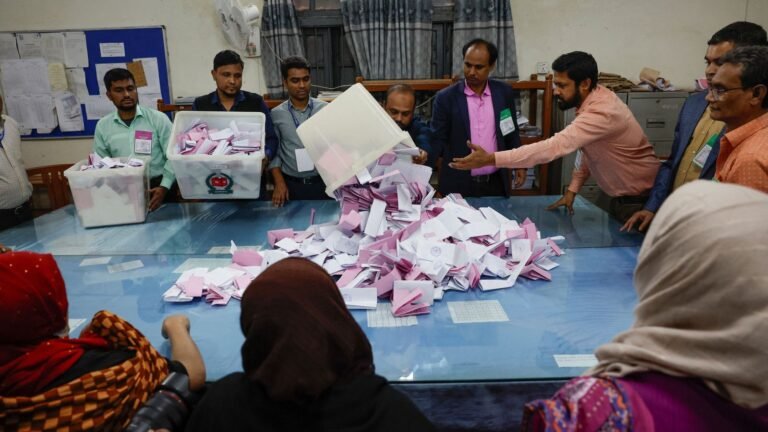
It is the first time people will be able to have their say since a mass student uprising in 2024 led to the ouster of the country’s longest-serving prime minister, Sheikh Hasina.

Read more: Bangladesh votes in first general election since bloody ousting of Sheikh Hasina

It was a day the world saw Gen Z topple an autocrat.

Sheikh Hasina speaks during a press conference in Dhaka in 2014. Pic: AP
Image: Sheikh Hasina speaks during a press conference in Dhaka in 2014. Pic: AP

Once an icon of democracy and economic progress, Hasina is now in self-imposed exile in India, convicted and sentenced to death for ordering a brutal crackdown against protestors.

The UN estimates 1,400 people were killed in less than two months.

Her party, the once-dominant Awami League, is banned from this election, challenging claims from the caretaker government that this will be an entirely free and fair election.

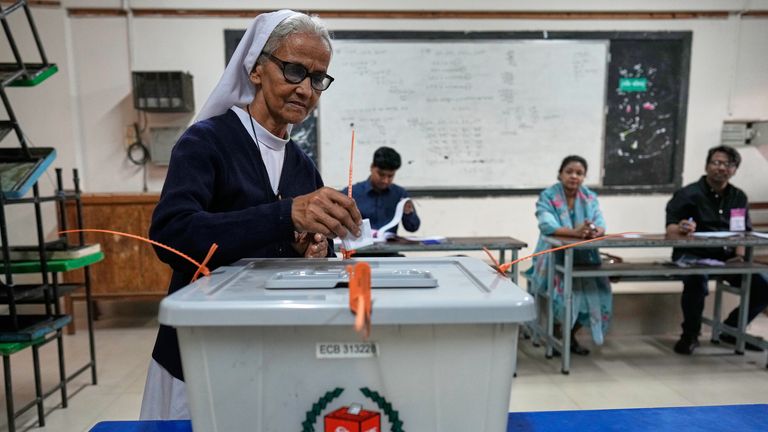
A nun casts her vote in Dhaka, Bangladesh. Pic: AP
Image: A nun casts her vote in Dhaka, Bangladesh. Pic: AP

But it is, at very least and for the first time in a very long time, an election where it’s hard to predict the outcome.

Many will be seeing it as a test to assess the strength and impact of the youth vote and student movements in other parts of the world, like Nepal.

A woman shows her thumb with an ink mark after casting a vote during Bangladesh's general election. Pic: Reuters
Image: A woman shows her thumb with an ink mark after casting a vote during Bangladesh’s general election. Pic: Reuters

In both countries, frustration over a lack of jobs and endemic corruption exploded, unseating long-established leaderships.

But the truth is, it’s the old guard looming large in this vote on the surface.

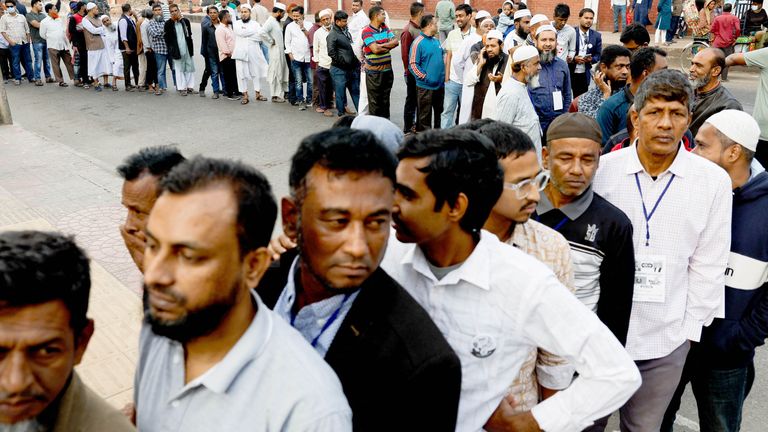
Voters stand in the queue to cast their vote at a polling station in Dhaka. Pic: Reuters
Image: Voters stand in the queue to cast their vote at a polling station in Dhaka. Pic: Reuters

The Bangladesh Nationalist Party is the frontrunner, the largest party, led by Tarique Rahman, son of the former PM Khaleda Zia.

He is part of a well-established dynasty.

Read more:
Bangladesh’s first female prime minister dies
India walks tightrope harbouring deposed Bangladeshi PM

Then there’s Jamaat-e-Islami, banned under Hasina and dedicated to running the country under Islamic law.

In December, the student-led National Citizens Party (NCP) made the controversial choice to ally with the much older party.

A woman shows her thumb with an ink mark after casting a vote during Bangladesh's general election. Pic: Reuters
Image: A woman shows her thumb with an ink mark after casting a vote during Bangladesh’s general election. Pic: Reuters

The split within the youth vote could limit the political impact and influence of young voters.

But there are a lot of them, about 45% of the 128 million registered voters are between the ages of 18 and 33, according to the Election Commission.

Nobody yet knows what they will do, or the many Awami League voters unable to back their party. So far, there are some early indications of low voter turnout in Awami strongholds.

In full: Wednesday’s The World

But more broadly, there is also a lot of hope and optimism in the air in Bangladesh.

There’s a sense of excitement, people speaking freely about their hopes and that openness hasn’t been on show in previous elections.

Many believe this could be an era-defining vote after years of autocracy and a chance to experience a real contest that doesn’t feel fixed.

One trend to watch for is the role of rising anti-India sentiment.

After years of good neighbourly relations, many voters, particularly young people, accuse Delhi of being overbearing and of supporting Hasina’s regime at the expense of democracy.


Source link

Princess Diana’s butler Paul Burrell reveals palace secrets in new book

0

NEWYou can now listen to Fox News articles!

King Charles and Princess Diana’s fights could get messy — and Paul Burrell was often left to clean up what was left behind.

The former butler to the late Princess of Wales and footman to Queen Elizabeth II has written a new book, “The Royal Insider.” Behind palace doors, the now 67-year-old was a witness to what was once dubbed “The War of the Waleses” and became a trusted confidant to the princess as her marriage publicly unraveled.

Fox News Digital reached out to Buckingham Palace for comment. A spokesperson for the palace previously told Fox News Digital, “We don’t comment on such books.”

QUEEN ELIZABETH CAUGHT ON CAMERA HURLING SHOES AT PRINCE PHILIP IN RARE ROYAL TANTRUM: BOOK

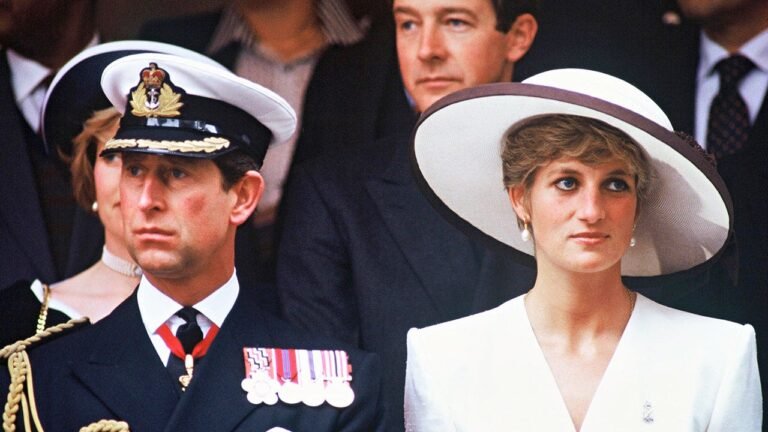
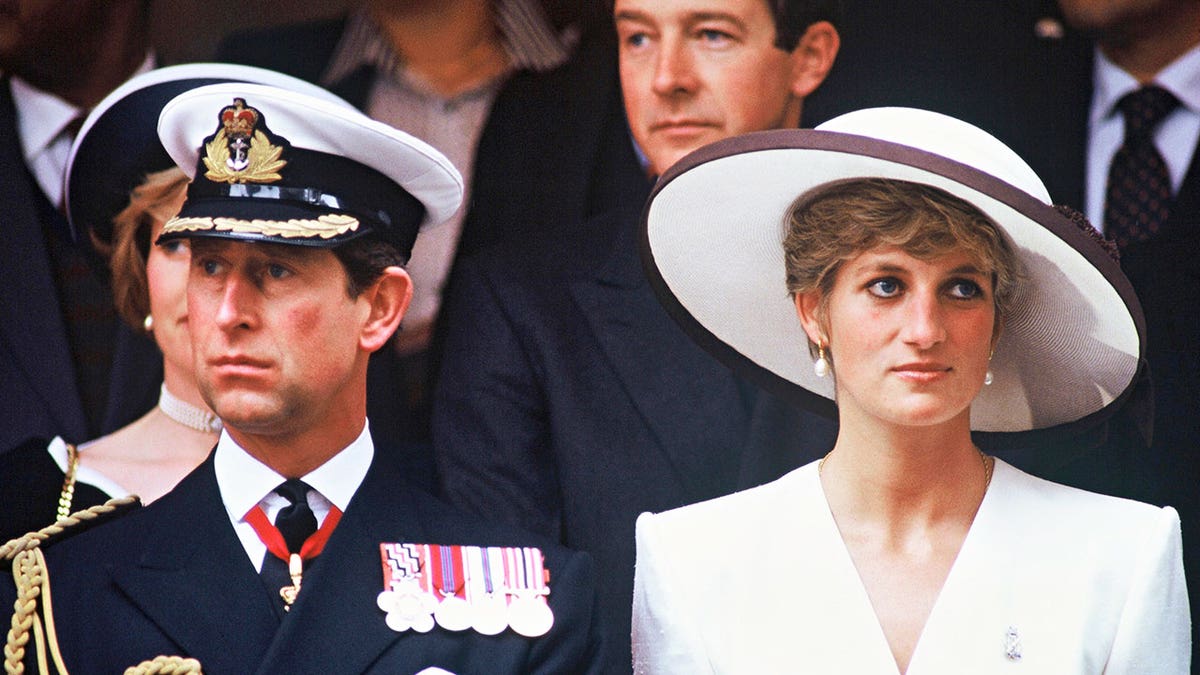
King Charles in uniform and Princess Diana standing together shoulder to shoulder appearing serious in public.

The former Prince Charles, Prince of Wales and Diana, Princess of Wales, attend the Gulf War Victory Parade at Mansion House on June 21, 1991, in London. The couple announced their separation in 1992. (Anwar Hussein/Getty Images)

According to Burrell, tensions between Charles and Diana didn’t just simmer — they boiled over behind palace walls. In his book, Burrell claimed he once found the then-Prince of Wales wearing a silk dressing gown “covered in salad dressing.” Burrell had earlier helped set up what was meant to be a candlelit dinner for Charles and Diana.

“One evening, he rang the bell, and I went through after hearing this almighty row from the other side of the door, knowing I shouldn’t intrude until it went quiet,” Burrell told Fox News Digital.

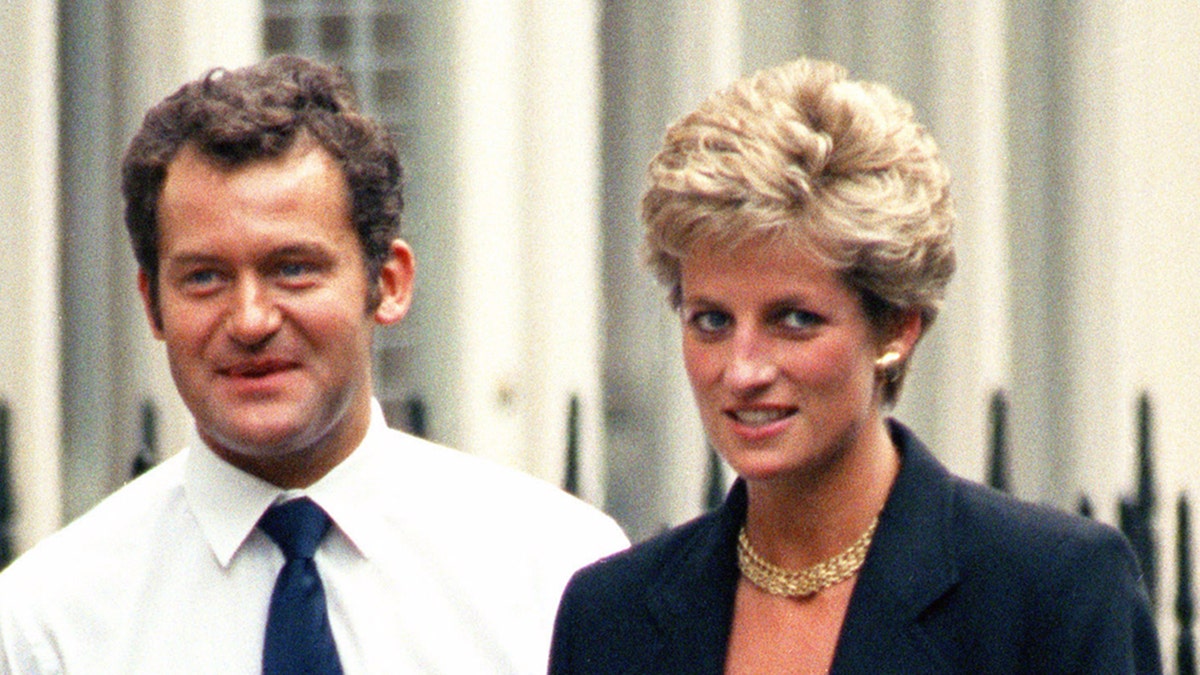
Paul Burrell in a white shirt and blue tie walking next to Princess Diana in a dark blue blazer.

Princess Diana is seen here with her butler Paul Burrell, circa 1994. (Antony Jones/UK Press via Getty Images)

“The dinner table was upside down, broken china everywhere, food everywhere. And he was covered in salad dressing. He looked up at me in a rather sheepish way and said, ‘Oh, I’m terribly sorry. I seemed to have caught my sleeve on the edge of the table, and everything just tipped up.’ ‘Of course.’ He knew, and I knew the real reason was that there’d been an almighty row and Diana had fled upstairs in tears.”

WATCH: KING CHARLES, PRINCESS DIANA’S HEATED FIGHTS DETAILED BY ROYAL BUTLER

It was one of many arguments between the couple, Burrell said, that didn’t end neatly.

“Of course, they would argue, and I was there,” he recalled. “I stood there and watched them shouting and screaming, and I cleaned up the messes. I brushed up the broken china.”

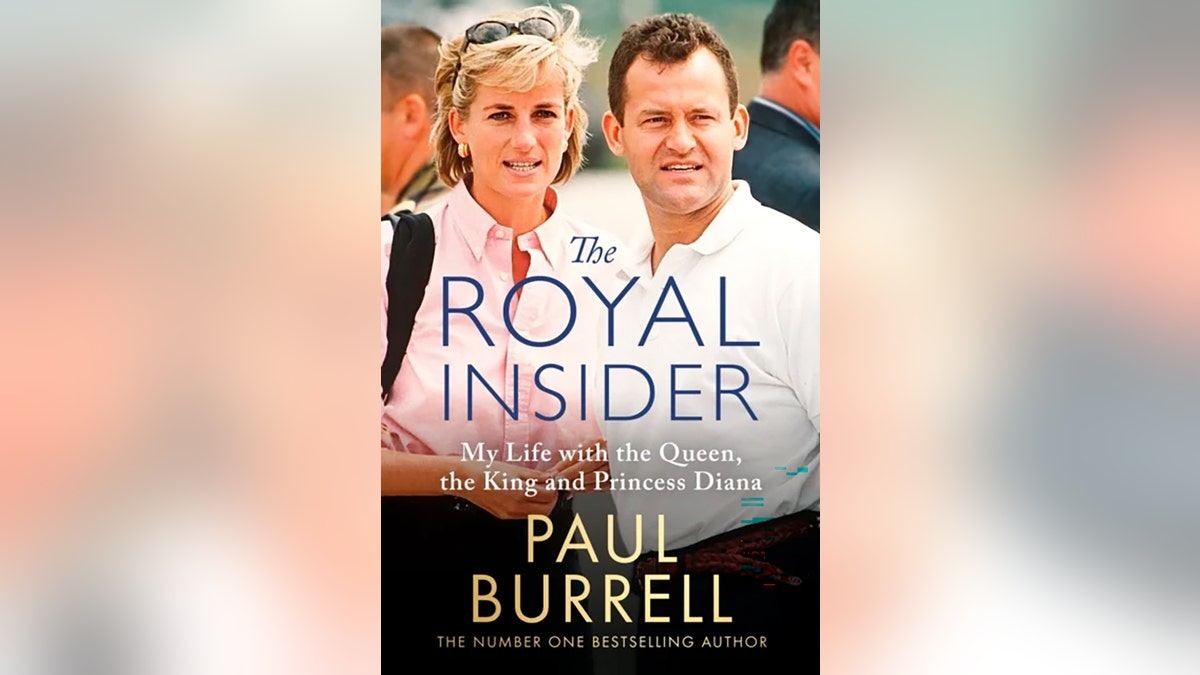
Book cover for Paul Burrell's The Royal Insider.

“The Royal Insider: My Life with the Queen, the King and Princess Diana” by Paul Burrell is out now. (Hachette Mobius)

“Charles never hurt Diana physically,” Burrell stressed. He did note that Diana was “mentally tortured” by the breakdown of what should have been her happily ever after.

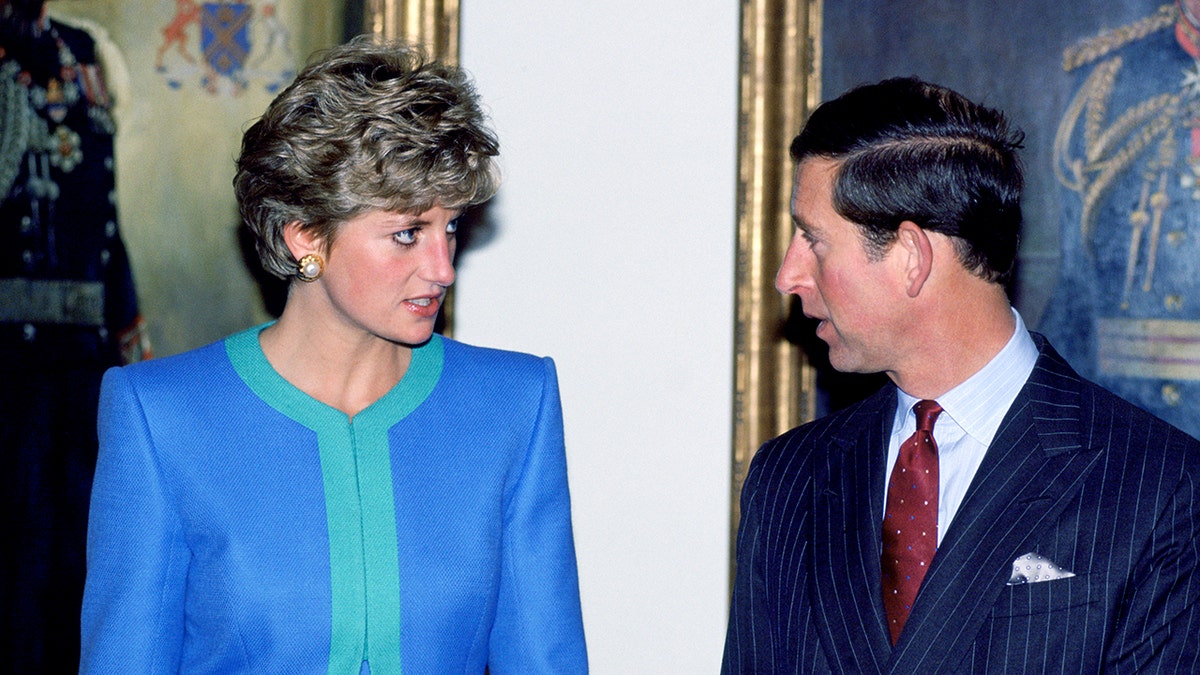
Princess Diana in a blue and green suit in a serious conversation with Prince Charles in a dark blue suit.

Former royal butler Paul Burrell claimed to Fox News Digital that Prince Charles and Princess Diana’s arguments would get messy behind palace doors. (Tim Graham Photo Library via Getty Images)

“The king is not a conciliatory man,” Burrell wrote. “He certainly wasn’t in the Diana years. I witnessed many arguments and fights between Charles and Diana behind closed doors. At times, they were more than a shouting match. Plates were smashed, tempers raised and even tables overturned. … When the prince lost his temper, which he often regretted, he was contrite and apologetic.”

Prince Charles walking outside Highgrove House.

Prince Charles is seen here at his country home, Highgrove House, date unknown. (Tim Graham Photo Library via Getty Images)

An exhausted Charles would often retreat to Highgrove House, a home he purchased in 1980, shortly before his engagement to Diana. Burrell noted that the property was relatively close to Ray Mill House, where his longtime love, Camilla Parker Bowles, lived.

A close-up of Charles and Camilla walking outdoors wearing jackets.

Prince Charles and Camilla Parker Bowles are seen here in 1979. (Tim Graham/Getty Images)

“On weekends, Diana would come and spend family time with her husband,” Burrell told Fox News Digital.

CLICK HERE TO SIGN UP FOR THE ENTERTAINMENT NEWSLETTER

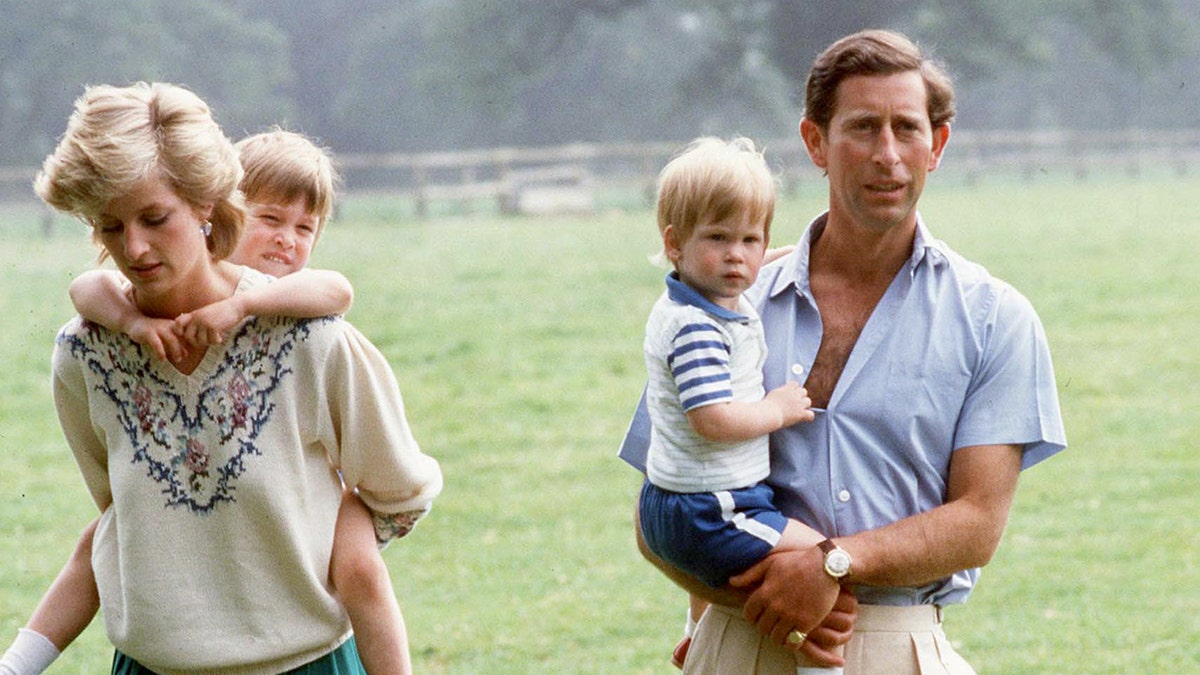
Prince Charles and Princess Diana holding their sons outside of Highgrove.

Prince Charles and Princess Diana with Prince William and Prince Harry at home in the gardens of Highgrove House. (Tim Graham Photo Library via Getty Images)

“She tried so hard to make it work, but during the week Charles was a free agent. Then he could go and see Camilla, who lived close by. I think the reason he bought Highgrove in the first place was because it was very close to Ray Mill House, where Camilla lived with her husband, Andrew Parker Bowles. On weekends, Diana would come with their boys, and they would be a family — not always a happy one.”

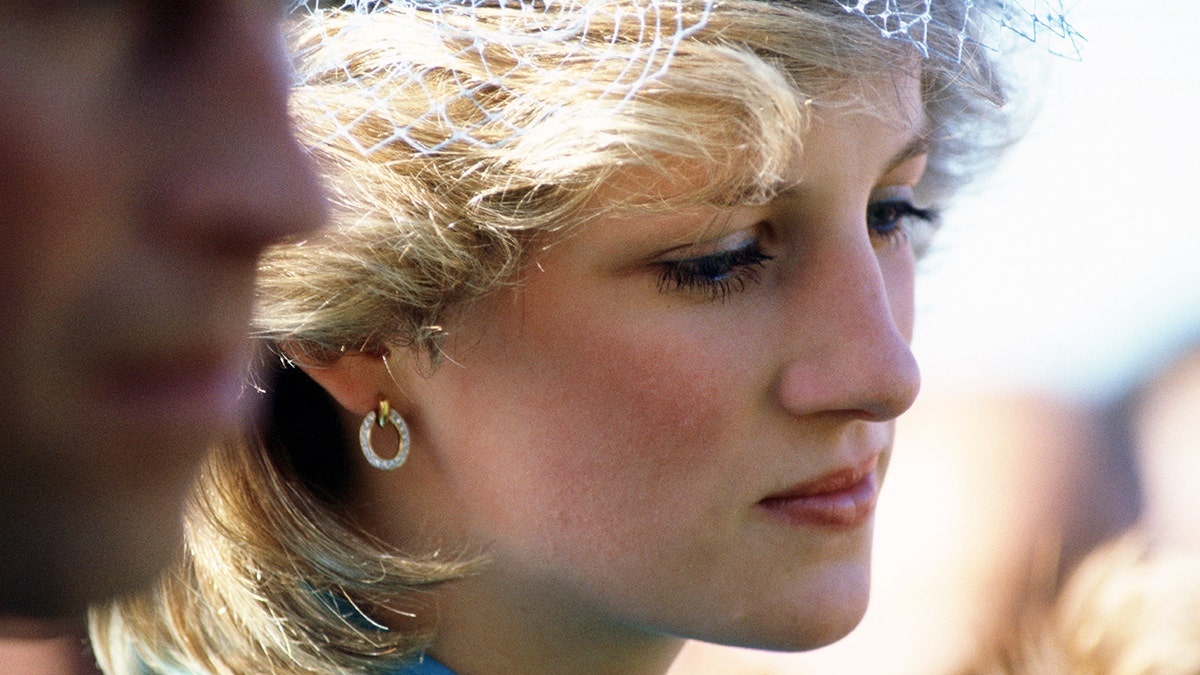
A close-up of Princess Diana looking somber in a lace fascinator.

Paul Burrell said that to Princess Diana’s dismay, the now King Charles couldn’t give up his longtime love, Camilla Parker Bowles. (Tim Graham Photo Library via Getty Images)

“I think that in the very early days, Prince Charles, now our king, tried his hardest to make this marriage work,” said Burrell.

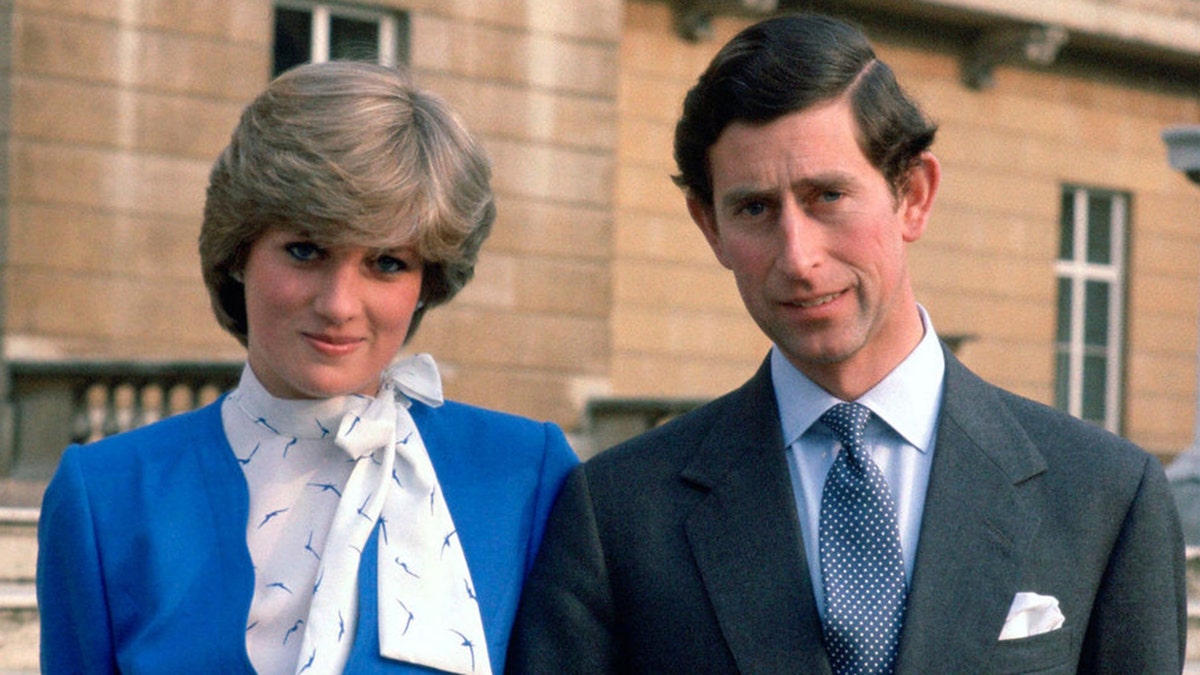
A close-up of a young Diana wearing a blue dress with a white printed blouse next to Prince Charles in a suit.

Prince Charles and Lady Diana Spencer announced their engagement on Feb. 24, 1981. Charles was 32 and Diana was 19. (Tim Graham Photo Library via Getty Images   )

“And although Diana was only 19 years old, he was much older than her. He tried to help her along the way, but the gap was far too wide. There were too many years separating them. And also, Charles had never let go of his true love, Camilla.”

“But he tried,” Burrell continued. “He tried with the help of his family to make this family survive. But what’s interesting is, when I stood there all those years ago, I saw how hard our dear late queen and Prince Philip supported Princess Diana in her hard times, not necessarily their son, Prince Charles, who would be king.

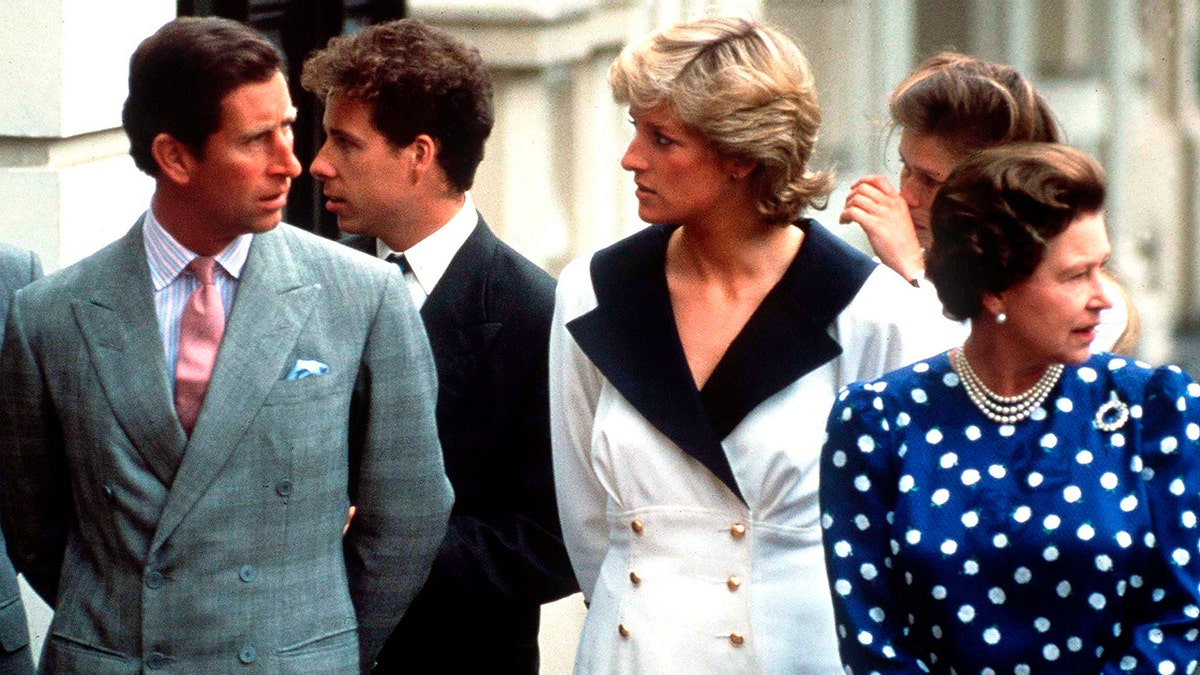
Prince Charles and Princess Diana having a serious conversation as they walk next to Queen Elizabeth who is wearing a bright blue polka dot dress.

Prince Charles and Princess Diana are seen here accompanying Queen Elizabeth II at Clarence House, date unknown. (Tim Graham Photo Library via Getty Images)

“The queen said to me when I left her service in 1987, ‘Paul, one day you’ll be back here at Buckingham Palace looking after a king and queen, Charles and Diana.’ She had every hope that Charles would make the marriage work. But of course, it couldn’t.”

LIKE WHAT YOU’RE READING? CLICK HERE FOR MORE ENTERTAINMENT NEWS

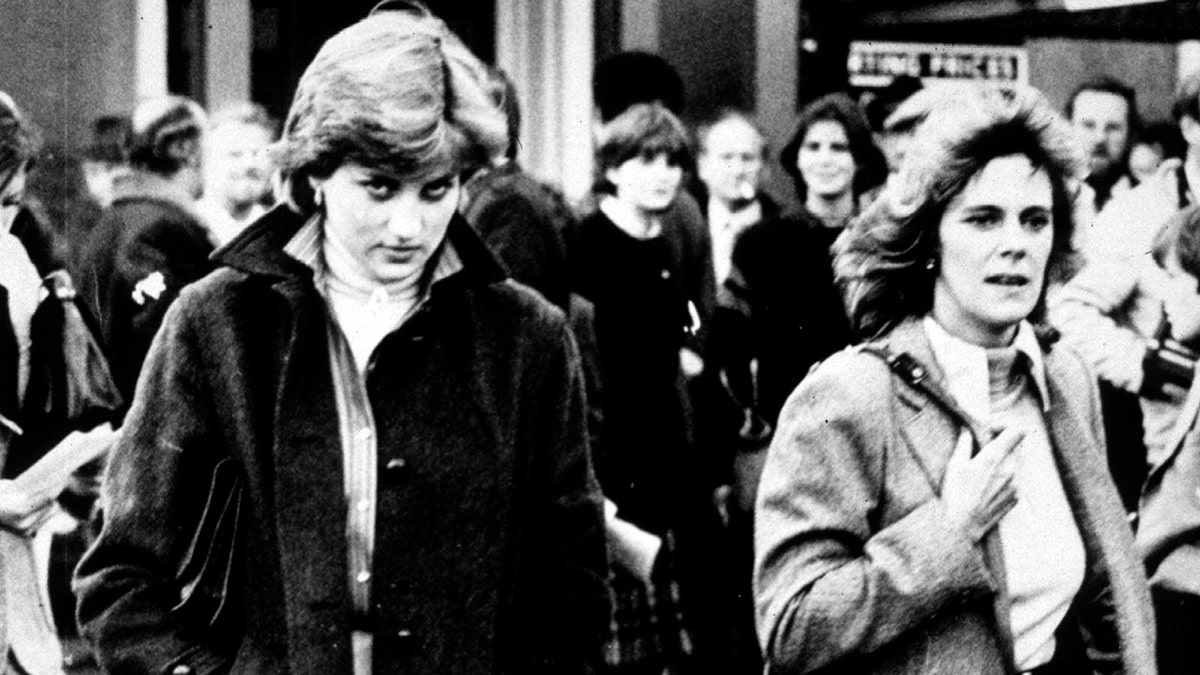
Lady Diana Spencer and Camilla Parker-Bowles at Ludlow Races

Lady Diana Spencer and Camilla Parker Bowles are seen here at Ludlow Races where Prince Charles was competing, circa 1980. (Express Newspapers/Archive Photos)

“We all know that Charles’s great love was Camilla, and he never really let go of that,” he added.

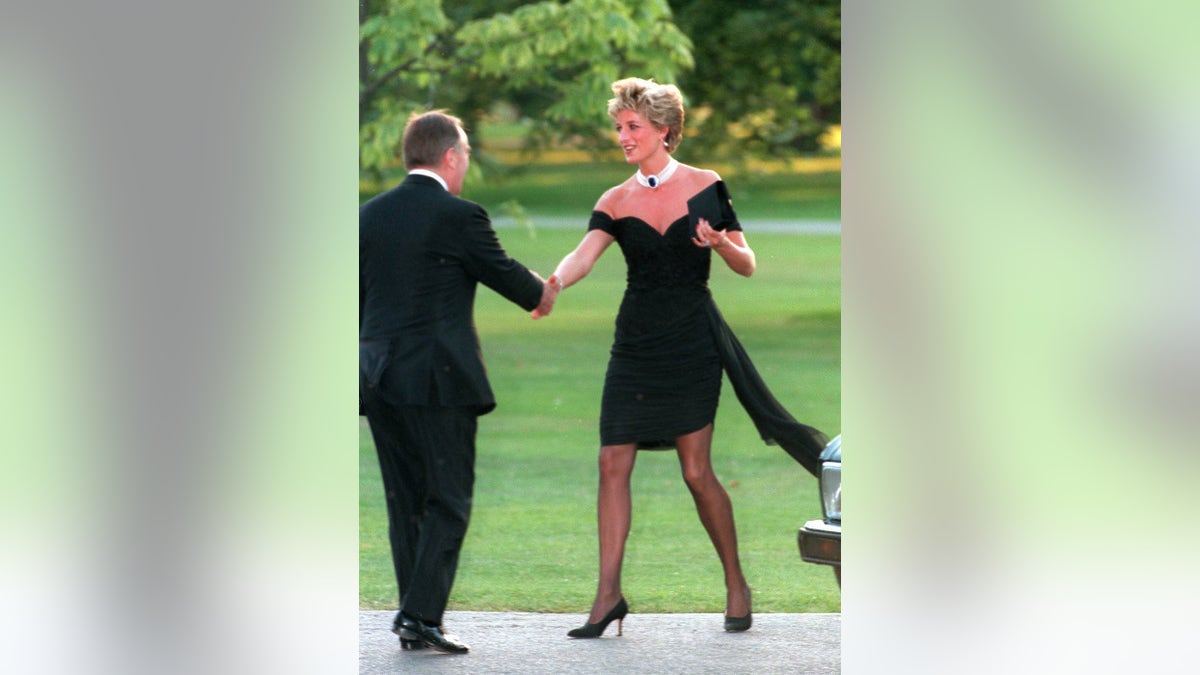
Princess Diana stepping out of the car in her revenge little black dress shaking hands with a man in a suit.

Princess Diana arrives at the Serpentine Gallery in London in June 1994 wearing the now-famous “revenge dress.” She chose to wear the striking ensemble the same night Prince Charles publicly admitted to infidelity. (Anwar Hussein/WireImage/Getty Images)

Diana was determined to be a devoted royal wife and mother, Burrell said. But by the time Charles and Diana’s separation was announced in 1992, the marriage was widely seen as beyond repair.

“She couldn’t always reach him,” Burrell reflected. 

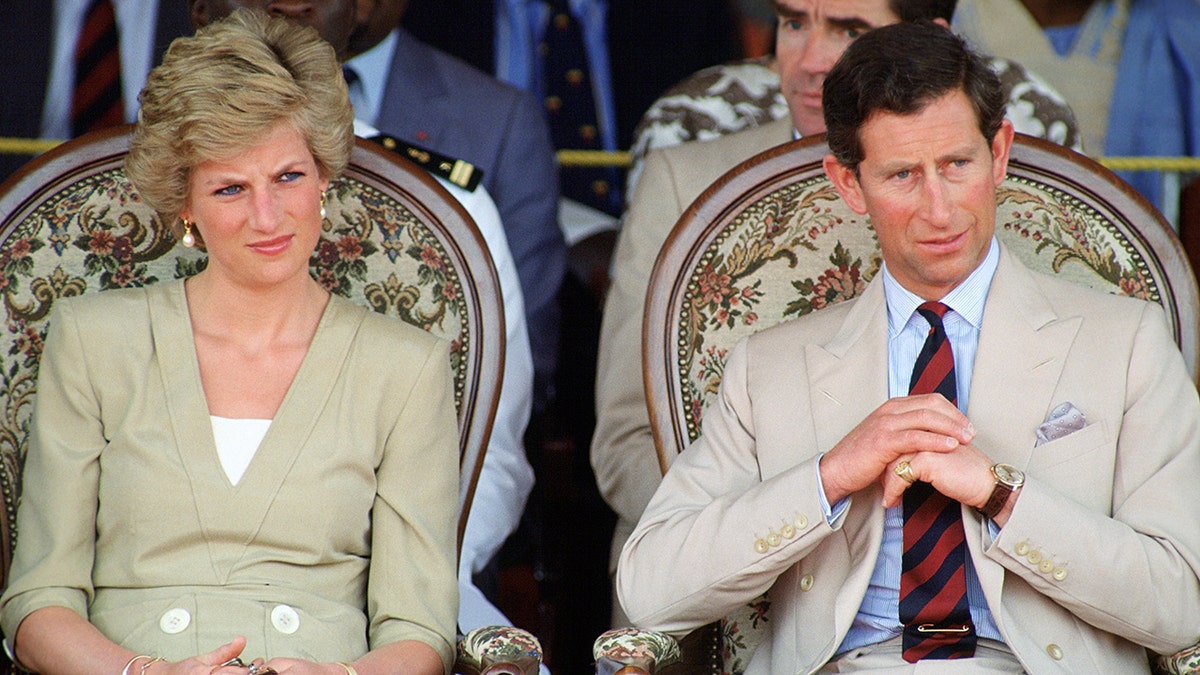
King Charles and Princess Diana wearing matching tanned suits outdoors.

Former royal butler Paul Burrell told Fox News Digital that the significant age gap between Prince Charles and Princess Diana was one of the reasons the marriage ultimately collapsed. (Tim Graham Photo Library via Getty Images)

“She couldn’t always understand the way he lived his life because his life was one of a prince and would be, one day, one of a king. She didn’t fit into that world where a prince could have everything he wanted, and a king could make the rules and make everything happen. She realized that she didn’t have the power. He did.”

Burrell isn’t the first to describe how Charles and Diana’s seemingly storybook romance became a nightmare.

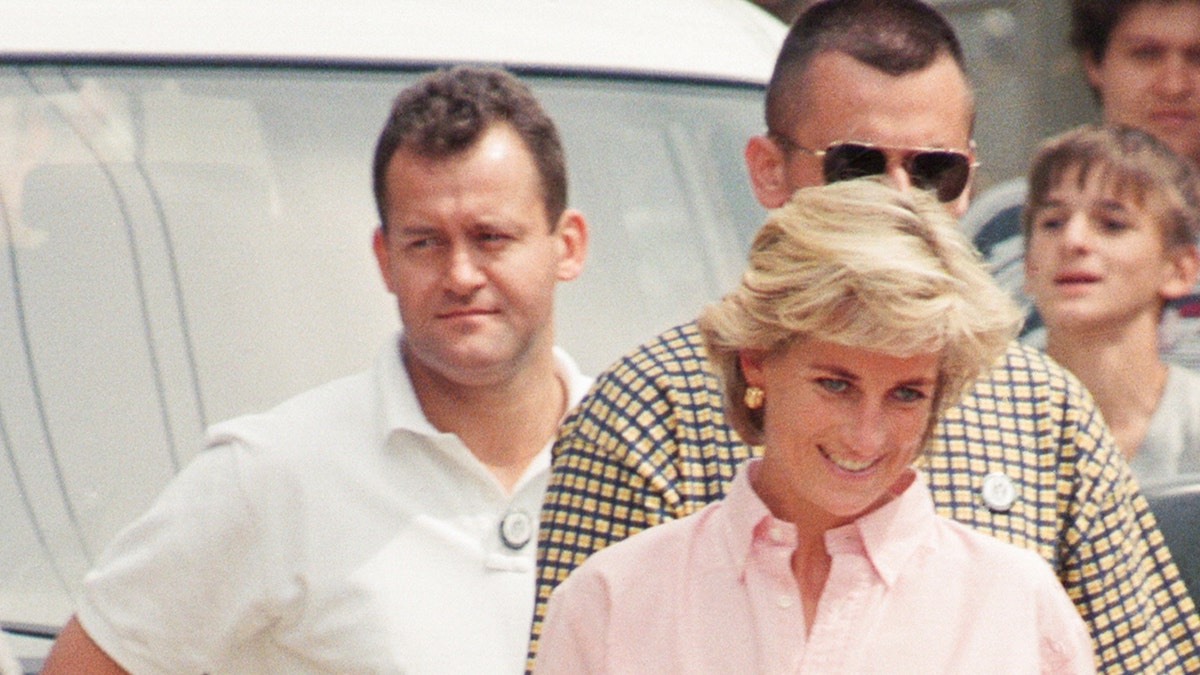
Paul Burrell walking behind a smiling Princess Diana.

Paul Burrell is seen here accompanying Princess Diana in Bosnia just weeks before her death in 1997. (Kent Gavin/Mirrorpix/Getty Images)

In 2022, author Christopher Andersen’s book, “The King: The Life of Charles III,” was published. He spoke with numerous palace insiders, as well as those who knew or worked closely with the former Prince of Wales.

CLICK HERE TO GET THE FOX NEWS APP

Princess Diana and King Charles looking glum in black.

Prince Charles and Princess Diana’s divorce was finalized in 1996. (Jayne Fincher/Princess Diana Archive/Getty Images)

Andersen wrote that during the marriage, Charles “had sunk into a deep depression” and believed he “was on the verge of a nervous breakdown.” He turned to one of his confidants, Arnold Goodman, and reportedly said, “I have nothing to live for.” Goodman, Andersen noted, believed Charles was “showing the classic signs of depression.”

Charles not only felt trapped in a loveless marriage, Goodman believed, but he also feared that a divorce — if it could even be granted by the queen — “would have grave repercussions for his children, the royal family and the monarchy itself.”

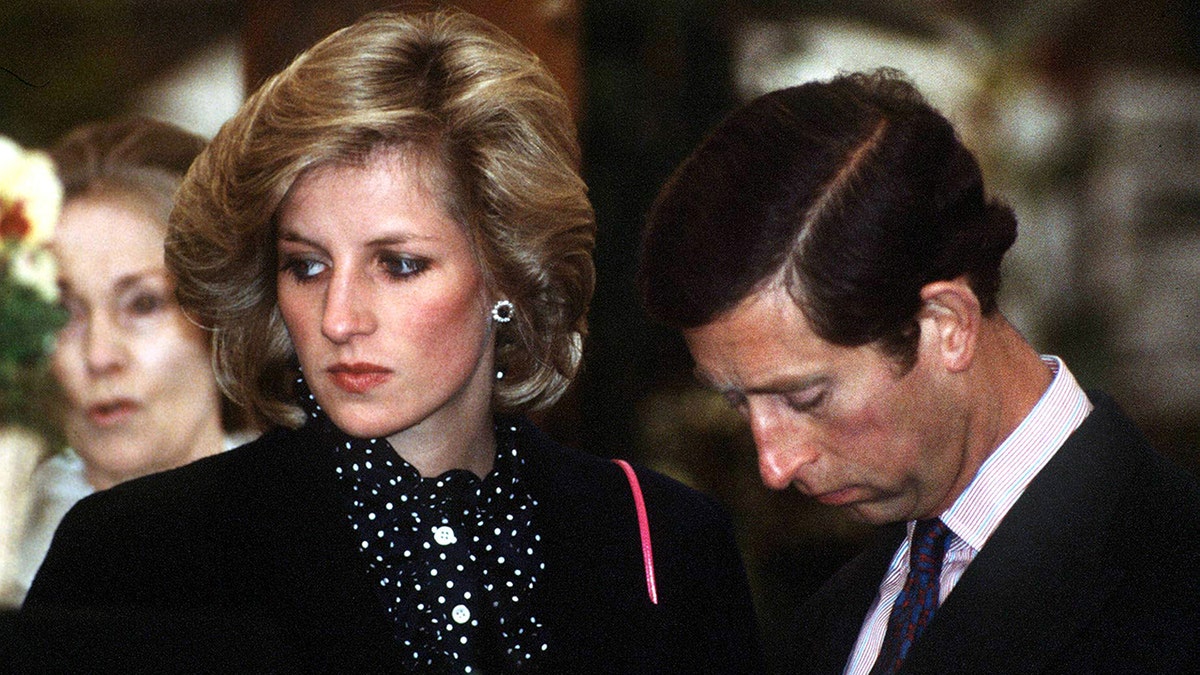
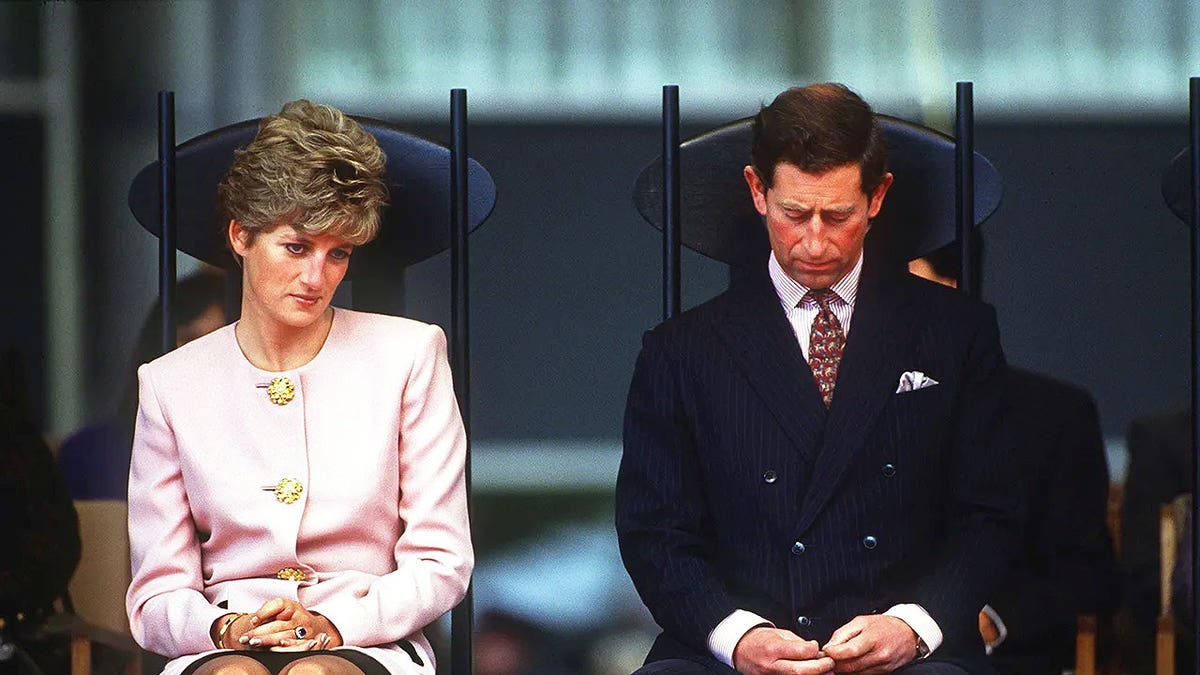
Princess Diana looks downcast as Prince Charles keeps his head down during a royal outing.

The Prince and Princess of Wales attend a welcome ceremony in Toronto at the beginning of their Canadian tour, circa Oct. 1991. (Jayne Fincher/Princess Diana Archive/Getty Images)

According to Andersen, Goodman shared his concerns with royal protection officers. Ken Wharfe, Diana’s former protection officer, described the atmosphere as “highly combustible.” Housekeeper Wendy Berry recalled witnessing “slammed doors and pitched battles” that became “the hallmarks of day-to-day life.”

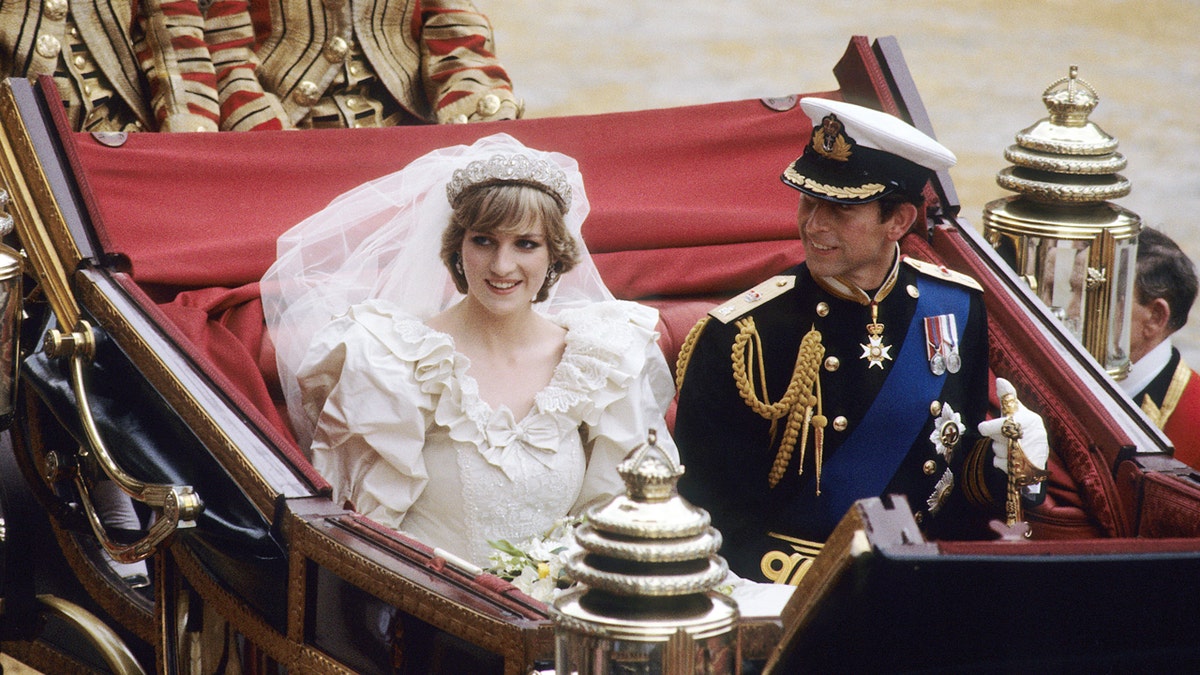
Princess Diana and Prince Charles on their wedding day

Prince Charles and Princess Diana were married on July 29, 1981. (Anwar Hussein/WireImage/Getty Images)

The trouble between Diana and Charles began long before their so-called fairy-tale wedding.

Charles, as heir to the British throne, was reportedly urged to either end his relationship with then-Lady Diana Spencer or propose. 

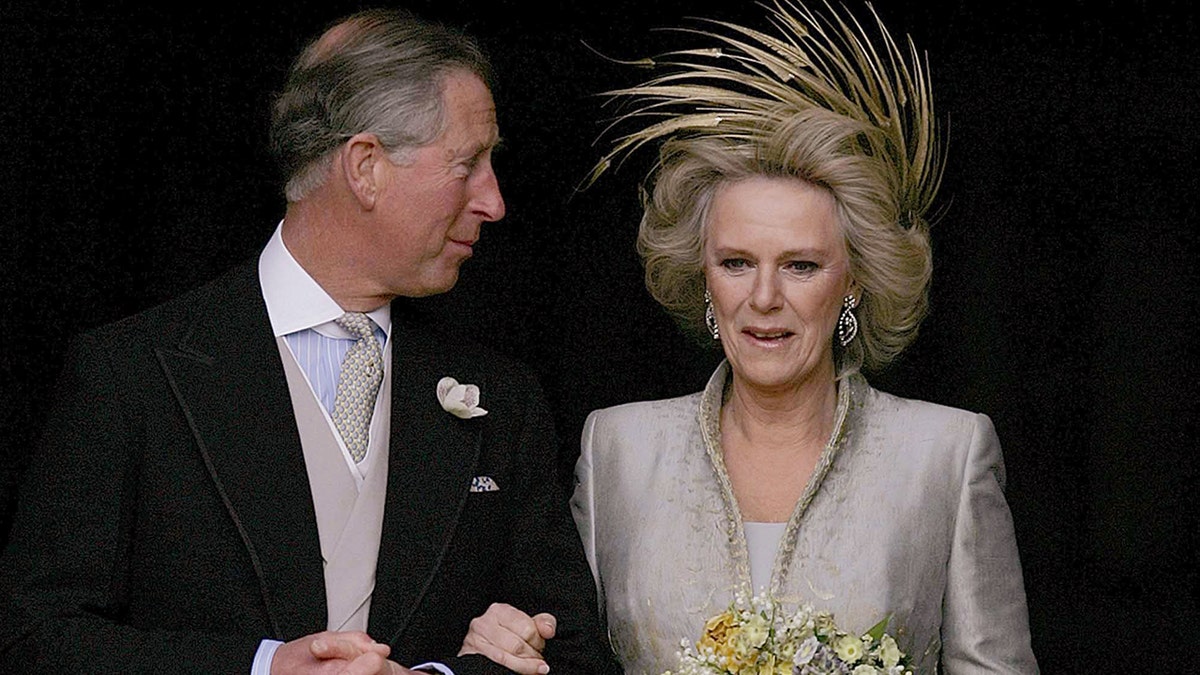
Charles in a black tux and Camilla in a beige dress and a gold fascinator holding a bouquet of flowers.

Prince Charles and Camilla Parker Bowles were married on April 9, 2005. (Alastair Grant/AFP via Getty Images)

Before the wedding, Diana expressed doubts about going through with it — especially after discovering a bracelet Charles made for Camilla. The marriage grew tumultuous, and both later engaged in extramarital affairs.

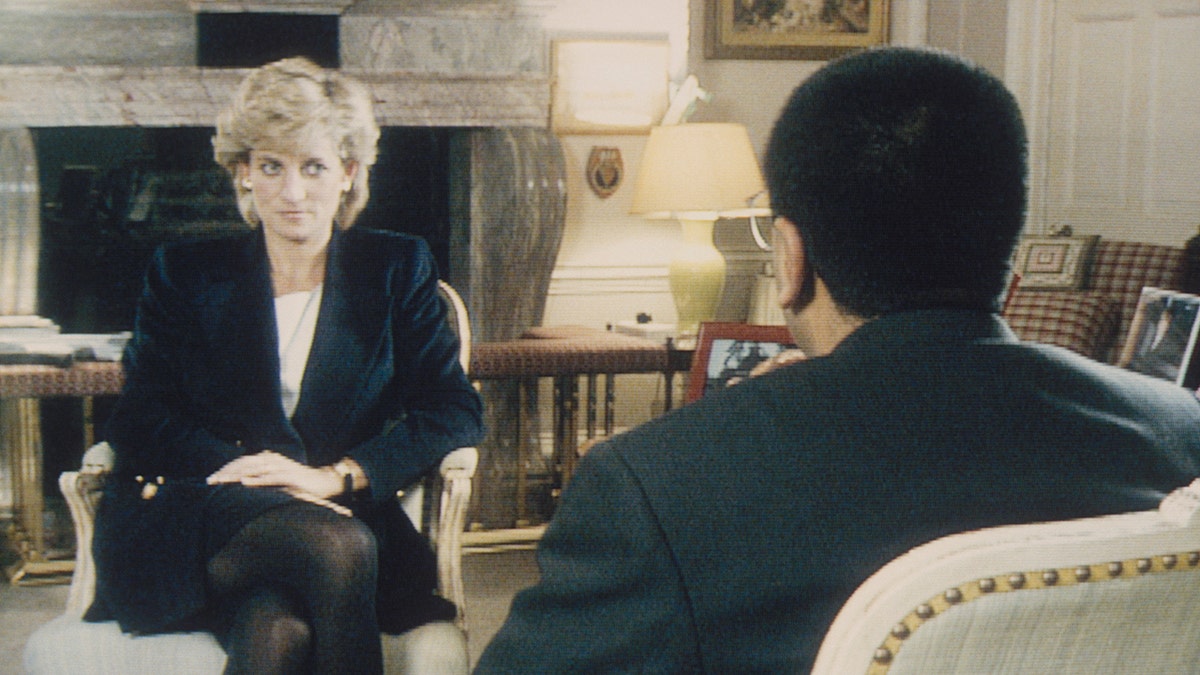
Princess Diana's Panorama interview

Martin Bashir is seen here interviewing Princess Diana in Kensington Palace for the television program “Panorama.” (© Pool Photograph/Corbis/Corbis via Getty Images)

During her headline-making 1995 interview on the BBC program “Panorama,” Diana famously told journalist Martin Bashir, “There were three of us in this marriage, so it was a bit crowded.”

PRINCESS DIANA FOUND UNEXPECTED POLITICAL ALLY DURING MARRIAGE CRISIS: BOOK

Charles and Camilla waving to the crowd after being crowned the King and Queen of England in 2023.

King Charles and Queen Camilla were crowned in 2023. (Samir Hussein/WireImage/Getty Images)

Their divorce was finalized in 1996. A year later, Diana died from injuries she sustained in a Paris car crash. She was 36.

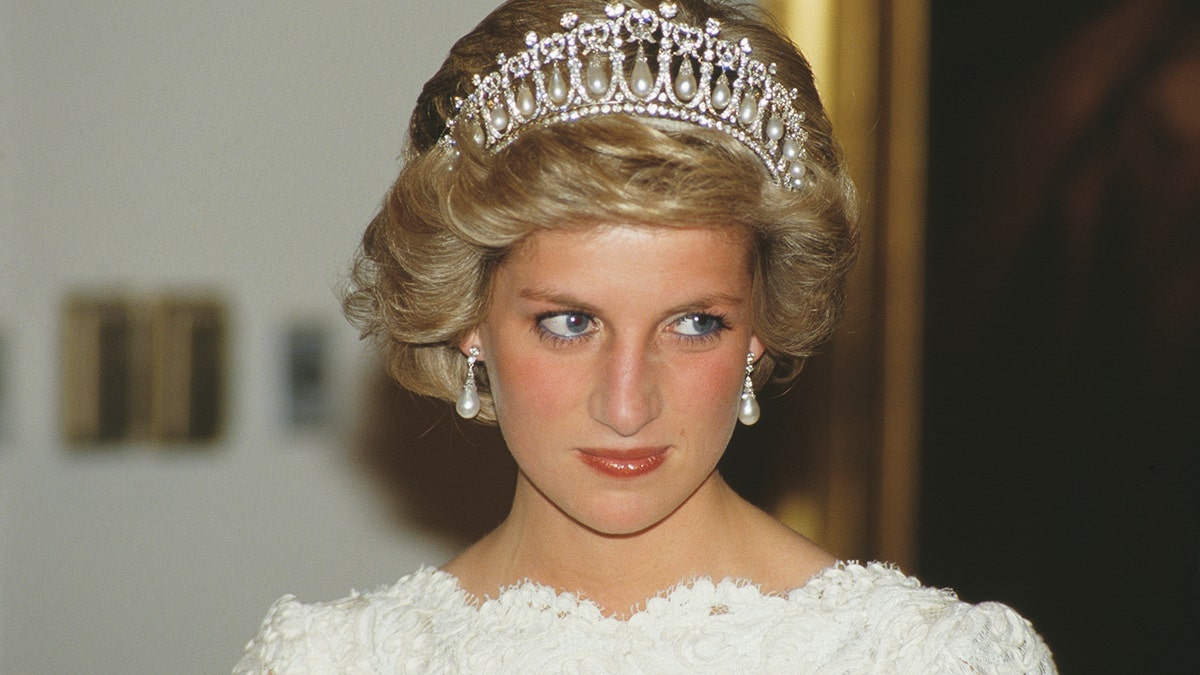
Princess Diana wearing the lover's knot tiara in a white dress looks off camera

Princess Diana died in 1997. She was 36. (Terry Fincher/Princess Diana Archive)

Charles and Camilla married in 2005. After the queen’s death in 2022, Charles ascended the throne, and in 2023 he was crowned king with Camilla at his side.

“Charles certainly hasn’t always been popular with the public, but I think they have warmed to him since he became king,” Burrell wrote. “I would credit his mother’s legacy for that to a certain extent — but there are people who will never forget Diana.”


Source link

Africa must boycott the 2026 World Cup | World Cup 2026

0

On January 6, a group of 25 British members of parliament tabled a motion urging global sporting authorities to consider excluding the United States from hosting the 2026 FIFA World Cup until it demonstrates compliance with international law. It followed weeks of mounting pressure across Europe over the political climate surrounding a tournament expected to draw millions of viewers and symbolising international cooperation.

Dutch broadcaster Teun van de Keuken has backed a public petition urging withdrawal from the competition while French parliamentarian Eric Coquerel has warned that participation risks legitimising policies he argued undermine international human rights standards.

Much of the scrutiny has focused on US President Donald Trump’s immigration crackdown and broad assaults on civil liberties. The deaths of Minneapolis residents Renee Nicole Good and Alex Pretti during immigration enforcement operations in January triggered nationwide outrage and protests. In 2026, at least eight people have been shot by federal immigration agents or died in immigration detention.

These developments are serious, but they point to a broader question about power and accountability – one that extends beyond domestic repression and into the consequences of US policy abroad. The war in Gaza represents a far deeper emergency.

For decades, Washington has served as Israel’s most influential international ally, providing diplomatic protection, political backing and roughly $3.8bn in annual military assistance. That partnership finances and shapes the destruction now unfolding across Palestinian territory.

Since the day the war began on October 7, 2023, Israel’s military has killed more than 72,032 Palestinians, wounded 171,661 and destroyed or severely damaged the vast majority of Gaza’s housing, schools, hospitals, water systems and other basic civilian infrastructure. Nearly 90 percent of Gaza’s population – about 1.9 million people – has been displaced, many repeatedly, as bombardments move across the enclave. Meanwhile, Israeli forces and armed settlers have intensified raids, farmland seizures and sweeping movement restrictions across Palestinian communities in Jenin, Nablus, Hebron and the Jordan Valley in the occupied West Bank.

By many accounts, Israel is carrying out a genocide.

Across the African continent, this grave assault carries profound historical resonance because organised sports competitions have often been inseparable from liberation struggles.

On June 16, 1976, 15-year-old Hastings Ndlovu joined thousands of schoolchildren in Soweto protesting against the imposition of Afrikaans language education. By the end of the day, he was dead, shot by police as officers opened fire on unarmed pupils marching through their own neighbourhoods.

Hastings was murdered by a regime that viewed African children as political threats rather than students or even human beings. Police killed 575 youths and injured thousands more that day, yet the bloodshed failed to disrupt diplomatic and sporting relations between the apartheid state and several Western allies.

Weeks later, as families buried their children in solemn funerals, New Zealand’s national rugby team, the All Blacks, landed at Jan Smuts Airport in Johannesburg on June 25, ready to play competitive matches inside the segregated republic.

The tour provoked fury among many young African governments. Within weeks, the backlash reached the 1976 Montreal Olympic Games in Canada. Twenty-two African countries withdrew after President Michael Morris and the International Olympic Committee chose not to act against New Zealand.

Athletes who had trained for years packed their bags and left the Olympic Village in Montreal, some after already competing. Morocco, Cameroon, Tunisia and Egypt began the Games before withdrawing as their delegations were urgently recalled by their governments.

Nigeria, Ghana and Zambia pulled out of the men’s football tournament, collapsing first-round fixtures at Montreal’s Olympic Stadium and Varsity Stadium mid-competition. Television viewers worldwide watched empty lanes and abandoned tracks replace what had been promoted as a global event. More than 700 athletes forfeited Olympic participation, including world-record holders Filbert Bayi (1,500 metres) of Tanzania and Uganda’s John Akii-Bua (400-metre hurdles).

African leaders recognised the scale of the decision. Nonetheless, they concluded that their countries’ Olympic participation would give “comfort and respectability to the South African racist regime and encourage it to continue to defy world opinion”.

That moment offers a defining lesson for 2026: Boycotts come at a cost. They demand sacrifice, coordination and political courage. History shows that collective refusal can redirect global attention and force both institutions and spectators to confront injustices they might otherwise overlook.

Nearly five decades later, Gaza presents a similar test amid a deepening and seemingly endless catastrophe.

Take what happened to Sidra Hassouna, a seven-year-old Palestinian girl from Rafah.

She was killed along with members of her family during an Israeli air strike on February 23, 2024, when the home they had sought shelter in was struck amid intense shelling in southern Gaza.

Sidra’s story mirrors thousands of others and reveals the same truth: childhoods erased by bombardment.

These killings have unfolded before a global audience. Unlike apartheid South Africa, Israel’s destruction of Gaza is being transmitted in real time, largely through Palestinian journalists and citizen reporters, nearly 300 of whom have been killed by Israeli air and artillery strikes.

At the same time, the US continues supplying Israel with weapons, diplomatic cover and veto protection at the United Nations. While Trump’s civil liberties abuses are serious, they are not comparable in scale to the devastation endured by Palestinians in Gaza.

The humanitarian toll is measured in destroyed hospitals, displaced families, enforced hunger and children buried beneath collapsed apartment blocks.

The central question now is whether football can present itself as a weeks-long celebration of sporting prowess across 16 host cities in the United States, Canada and Mexico from June to July while the United States continues to sustain large-scale civilian destruction abroad.

African political memory understands these stakes. The continent has witnessed how stadiums and international competitions can project political approval and how withdrawal can destroy that image.

A coordinated boycott would require joint decisions by governments representing the qualified teams – Morocco, Senegal, Algeria, Tunisia, Egypt, Ivory Coast, Ghana, Cape Verde and South Africa – supported by the African Union, regional institutions and the Confederation of African Football.

The consequences would be immediate.

The tournament would lose its claim to global inclusivity, and corporate sponsors would be compelled to confront questions they have long avoided.

Most importantly, international attention would shift.

Boycotts do not end conflicts overnight. They accomplish something different: They remove the comfort of pretending injustice does not exist. The 1976 Olympic withdrawal did not dismantle apartheid instantly, but it accelerated isolation and broadened the universal coalition opposing it.

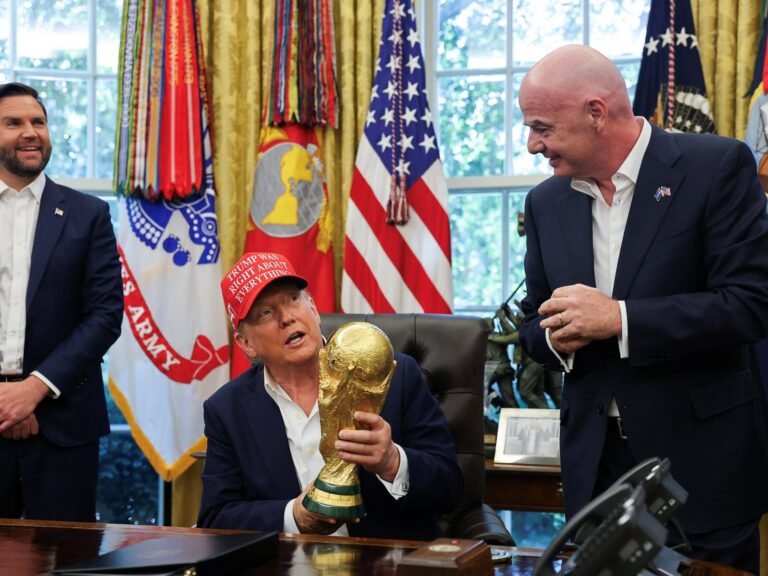
At present, FIFA’s longstanding political contradictions intensify the need for external pressure. At the World Cup draw in Washington, DC, on December 5, its president, Gianni Infantino, awarded Trump a “peace prize” for his efforts to “promote peace and unity around the world”.

The organisation cannot portray itself as a neutral body while extending symbolic legitimacy to a leader overseeing mass civilian death.

In that context, nonparticipation becomes a critical moral position.

It would not immediately end Gaza’s calamity, but it would challenge US support for the sustained military onslaught and honour children like Hastings and Sidra.

Although separated by decades and continents, their lives reveal a shared historical pattern: Children suffer first when imperial systems determine that Black and Brown lives hold absolutely no value.

Africa’s stand in 1976 reshaped international resistance to apartheid. A comparable decision in 2026 could strengthen opposition to contemporary systems of domination and signal to families in Gaza that their suffering is recognised across the continent.

History remembers those who reject injustice – and who choose comfort while children die under relentless air strikes and occupation.

If African teams compete in the 2026 World Cup as if nothing is happening in Gaza City, Rafah, Khan Younis, Jenin and Hebron, their involvement risks legitimising colonial power structures.

While European critics urge authorities to exclude the US, our history demands a complete withdrawal.

Football cannot be played on the graves of Palestinian martyrs.

Africa must boycott the 2026 World Cup.

The views expressed in this article are the author’s own and do not necessarily reflect Al Jazeera’s editorial stance.


Source link

Lover showed stunt in the fair, set his jeans on fire, did father-father in 10 seconds!

0

homeVideostrange and wonderful

Lover showed stunt in the fair, set his jeans on fire, did father-father in 10 seconds!

X
title=

Lover showed stunt in the fair, set his jeans on fire, did father-father in 10 seconds!

arw img

Many people post videos on social media showing examples of their stupidity. Now the video of one of the leaders of these idiots is going viral. The video was recorded at a fair, where a young man set his jeans on fire to film a moving camera. After this he started making videos in the burning fire. But the fire broke out in no time and reached the young man’s shirt. His friends immediately ran to help the screaming young man and saved his life. The video is a perfect example of how even a little carelessness can turn fatal.

To add News18 as your favorite news source on Google click here Do it.

Conservative mom poised to flip critical swing district for GOP

0

NEWYou can now listen to Fox News articles!

EXCLUSIVE: Carrie Buck, a Nevada state senator, mother and former school principal, is gaining massive momentum in a critical race to oust Democratic Rep. Dina Titus from what the GOP considers a top target seat in the upcoming midterm elections.  

Titus’ district, Nevada Congressional District 1, has been trending hard towards the GOP for the last several election cycles. Now, with the future of the party’s House majority on the line, and the remainder of President Donald Trump’s tenure with it, Buck believes she is just the political outsider Republicans need to seal the deal.  

In an interview with Fox News Digital, Buck said the shift in Nevada has been palpable.

“You can feel the tides changing,” she said. “Dina Titus has done nothing for the last seven terms that she’s been in there. She has done nothing for us, nothing tangible. And so, I want to go and deliver results for Nevadans.”

TRUMP MAKES ENDORSEMENT IN CONTEST TO FILL HOUSE SEAT VACATED BY EX-ALLY MARJORIE TAYLOR GREENE

Dina Titus and Carrie Buck

Left: Rep. Dina Titus, D-Nev. Right: Nevada state Sen. Carrie Buck, who is running for Congress. (Ethan Miller/Getty Images; Campaign for Carrie Buck)

Since announcing her candidacy in August, Buck has garnered impressive fundraising numbers. She was the only Republican to outraise a Democratic incumbent without self-funding. In the last quarter of 2025, Buck outraised Titus, $352,400 to $298,800. Buck also prides herself on running a “truly grassroots” campaign in which she has raised a total of $497,929.59 from 7,852 unique donors, with an average contribution of just $59.

The wife of a retired police chief, mother of four sons, two of whom have served in the U.S. Army, Buck credits her grassroots appeal to simply being an “everyday person.”

“I still drive a minivan, that’s my campaign van,” she laughed. “I want to be a voice for Nevadans, for people that are in my neighborhood, in my community.”

Meanwhile, Buck accused Titus of “voting against Nevadans time and time again,” especially with her recent votes against No Tax on Tips and a childcare tax credit policy, both of which were included in the President Donald Trump-backed big, beautiful bill.

In response, Lindsay Reilly, a spokesperson for the Democratic Congressional Campaign Committee, told Fox News Digital that “Buck could learn a thing or two from Titus’ track record of delivering.”

HOUSE REPUBLICANS SUE TO BLOCK UTAH CONGRESSIONAL MAP THAT FAVORS DEMOCRATS

Las Vegas strip

Las Vegas, Nevada, skyline. (iStock)

“Dina Titus is consistently ranked one of the most effective members of Congress,” Reilly continued. “She’s fighting to lower costs for families, strengthen no taxes on tips, and reverse Republicans’ reckless new tax on gambling.”  

She has framed herself as someone who gets results. Before entering politics, she worked for eight years as principal of a low-income elementary school in Henderson, Nevada, which was teetering on the edge of failure. When she started, reading and math proficiency were both languishing at around 35% each, but under her leadership, they shot up to 83 and 90%, respectively. The rapid transformation earned her the Milken Educator Award, often referred to as the “Oscars for education.”

If successful in November, this would not be the first time Buck has flipped a Nevada seat red. In 2020, she won her state Senate seat by a razor-thin margin that was the result of a five-percentage point swing. In 2024, despite the district previously being a Democratic stronghold, Buck significantly widened that margin, winning by seven percentage points.

NEVADA JUDGE FREES CONVICTED MS-13 KILLER DESPITE GOVERNMENT WARNINGS ABOUT PUBLIC SAFETY

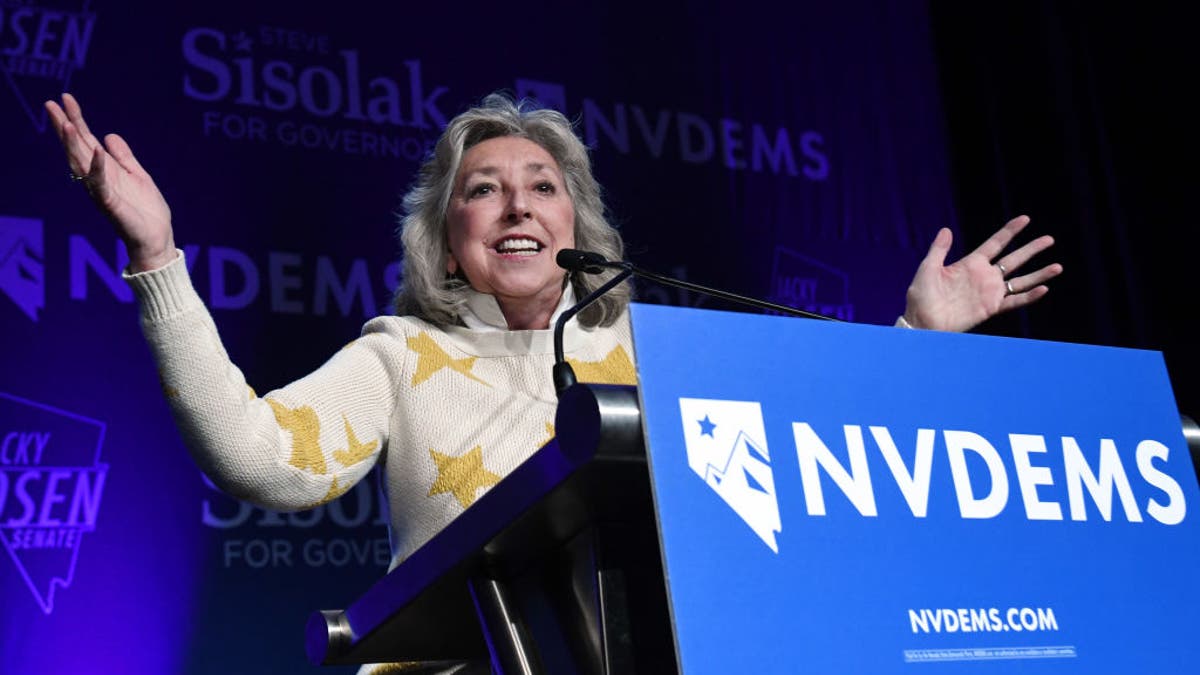
Democratic Nevada Congresswoman Dina Titus

Rep. Dina Titus, D-Nev., speaks at the Nevada Democratic Party’s election results watch party after winning her race against Republican challenger Joyce Bentley at Caesars Palace on Nov. 6, 2018 in Las Vegas, Nevada. (Ethan Miller/Getty Images)

The National Republican Congressional Committee is confident Buck can do something similar for Nevada District 1.

CLICK HERE TO DOWNLOAD THE FOX NEWS APP

NRCC spokesman Christian Martinez remarked to Fox News Digital that Buck’s fundraising numbers prove that “career politician Dina Titus is out of touch with Nevadans and running on fumes, scrambling for campaign transfers from Hollywood liberals, D.C. swamp leeches, and New York elites as her support with hardworking Nevadans collapses.” 

In conclusion, Buck said, “The nuts and bolts of this campaign are kitchen table issues.”

“I want to bring truth to light, and I think oftentimes the Democrats and Dina Titus have lied to us,” she said. “They told us the border is closed; they told us that they’ve made things more affordable. But yet, we all know the American people are smart. They know that is absolutely the opposite of what they’ve done.”

Titus did not immediately respond to Fox News Digital’s request for comment.


Source link
UN begins clearing massive wartime waste dump in Gaza City | Gaza

0

NewsFeed

The UN Development Programme has begun clearing a massive wartime waste dump in Gaza City, created after access to the main landfill was cut off during Israel’s genocide on Gaza. The effort aims to reduce serious health and environmental risks facing nearly two million Palestinians.


Source link