The UK’s new cancer strategy is bold and ambitious – it can’t afford to be anything else | UK News

0

A National Cancer Plan for England “that will revolutionise the way we treat cancer”. It is a bold and ambitious claim to make, but this strategy cannot afford to be anything else.

Cancer destroys far too many lives. According to the charity Macmillan, someone in the UK is diagnosed with the disease at least every 75 seconds. That is a grim statistic.

Tomorrow, the government will publish a new 10-year plan to tackle it, pledging that more people will survive a diagnosis in the coming years.

This cancer plan says it puts “patients at the very heart of it”. Eleven thousand people responded to the call for evidence: stories of resilience against the odds, personal battles against a healthcare system buckling under the cancer burden.

The metrics are quantifiable. In around 10 years time, three out of four people diagnosed with cancer will be living well or cured from cancer within five years of their diagnosis.

👉 Listen to Sky News Daily on your podcast app 👈

According to the Department of Health, this would represent the fastest rate of improvement in cancer outcomes this century, and would translate to 320,000 more lives saved over the lifetime of the plan.

The document will also pledge that the NHS will meet all its cancer waiting time targets by 2029, and is set to be joined with other announcements, including a big expansion in robot-assisted surgery and faster diagnostic tests to cut down delays in cancer diagnosis and treatment.

This is achievable. But it will take commitment and investment.

The Danes have done it. They have had five successive national cancer plans.

Our health ministers have been studying their blueprint very carefully to apply the most successful interventions into our own plan.

Smaller organisations working at a local level will be empowered and financed to support their own communities. This is practical and sensible.

Some £6bn has been earmarked for capital investment to invest in the latest technology, AI and robotic surgery to identify and treat cancer quickly.

The cancer ‘ticking time bomb’ explained

Cancer is indiscriminate. So children and young people will, for the first time, be given a dedicated chapter in this plan to meet their own special needs.

According to the latest data from the World Health Organization, four in 10 cancer cases are preventable.

It has examined 30 preventable causes, including tobacco, alcohol, high body mass index, physical inactivity, air pollution, ultraviolet radiation, and, for the first time, nine cancer-causing infections.

This area will come under renewed focus after the government’s success in introducing the Tobacco and Vapes Bill to ensure an entirely smoke-free generation.

Read more from Ashish Joshi:
Denmark is a cancer pioneer – this is why UK is behind

Critical report raises pressure on NHS maternity services

Community Diagnostic Centres easily accessible with a high street presence, and open for days and hours that suit ordinary people, will speed up diagnoses.

And importantly, as science makes great strides in extending life, survivors must not be left alone to face the “cancer cliff edge”, the feeling of abandonment after their cancer treatment has finished.

Survivorship is as important as early diagnosis.

All of this is to be welcomed and applauded, but to move to this level will need a big step change.

Many hospitals still cannot share imaging or pathology results in a timely way due to old technology holding them back.

And some estates are not fit for purpose, let alone to house a specialist cancer ward.

I have stood under gaping ceiling holes where rain pours through into overflowing buckets, feet away from patients undergoing chemotherapy.

Cancer patients have been failed for far too long.


Source link

Comedian reacts after Minnesota shows canceled over Renee Good joke

0

NEWYou can now listen to Fox News articles!

A Minnesota comedy club abruptly canceled six sold-out shows by comedian Ben Bankas after a viral clip of his stand-up routine — in which he mocked a woman who was shot and killed by an Immigration and Customs Enforcement agent — ignited outrage.

Laugh Camp Comedy Club in St. Paul pulled the plug on Bankas’ scheduled January 30–February 1 performances after backlash erupted over jokes he made about Renee Nicole Good, a 37-year-old Minneapolis mother of three who was killed during an encounter with federal immigration authorities earlier this month. 

DEAN CAIN FIRES BACK AT ETHAN HAWKE’S CLAIM AMERICA IS NO LONGER A FREE COUNTRY FOR CELEBRITIES

Split photo of comedian Ben Bankas and Renee Good.

Comedian Ben Bankas’ six sold-out Minnesota shows canceled after viral clip mocking the ICE shooting victim, Renee Good, sparked massive outrage and protest threats. (Ben Bankas/Instagram/ODU English Department/Facebook)

Bankas replied bluntly to the cancellations in a recent video posted to Instagram.

He told an audience, “I just found out that my shows were canceled in Minnesota,” prompting loud boos.

“F— ’em,” he added, appearing to refer to the venue.

In the caption, Bankas wrote that he is “working on a new venue and dates for the fine people of Minnesota.” 

His response comes after he posted an Instagram video on January 13, filmed during a show in Poughkeepsie, N.Y., just days after Good’s death.

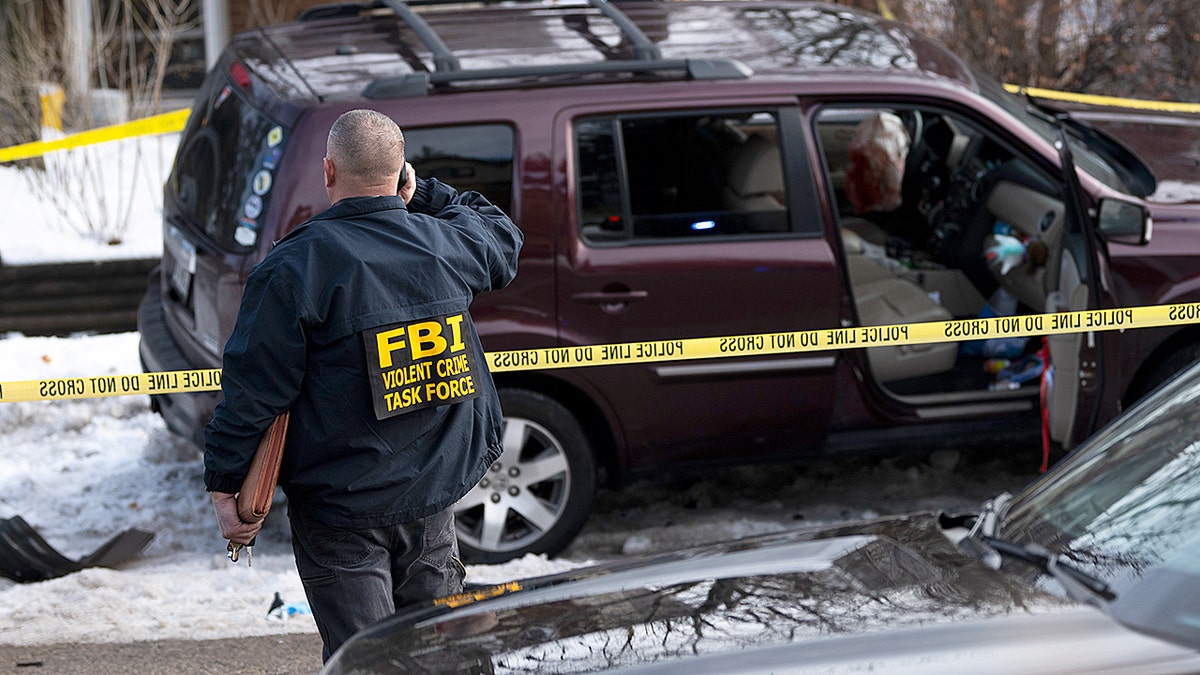
A crashed car at the scene where an ICE agent shot Renee Good.

A crashed car at the scene where an ICE agent shot Renee Good. (Stephen Maturen/Getty Images)

In the clip, which has racked up more than 8.9 million views as of February 3, Bankas said, “Her last name was Good. That’s what I said after they shot her,” and also referred to Good’s wife as a “dog.” He also called Good “r—–ded.”

Good was shot and killed on January 7 after authorities said she swerved her vehicle toward an ICE officer. Her death sparked protests in Minneapolis and beyond, intensifying scrutiny of federal agents’ use of force. 

Tensions escalated further after another Minneapolis agitator, Alex Pretti, was shot and killed by federal agents on January 24. Minneapolis Mayor Jacob Frey and other local leaders have publicly criticized ICE’s actions.
LIKE WHAT YOU’RE READING? CLICK HERE FOR MORE ENTERTAINMENT NEWS

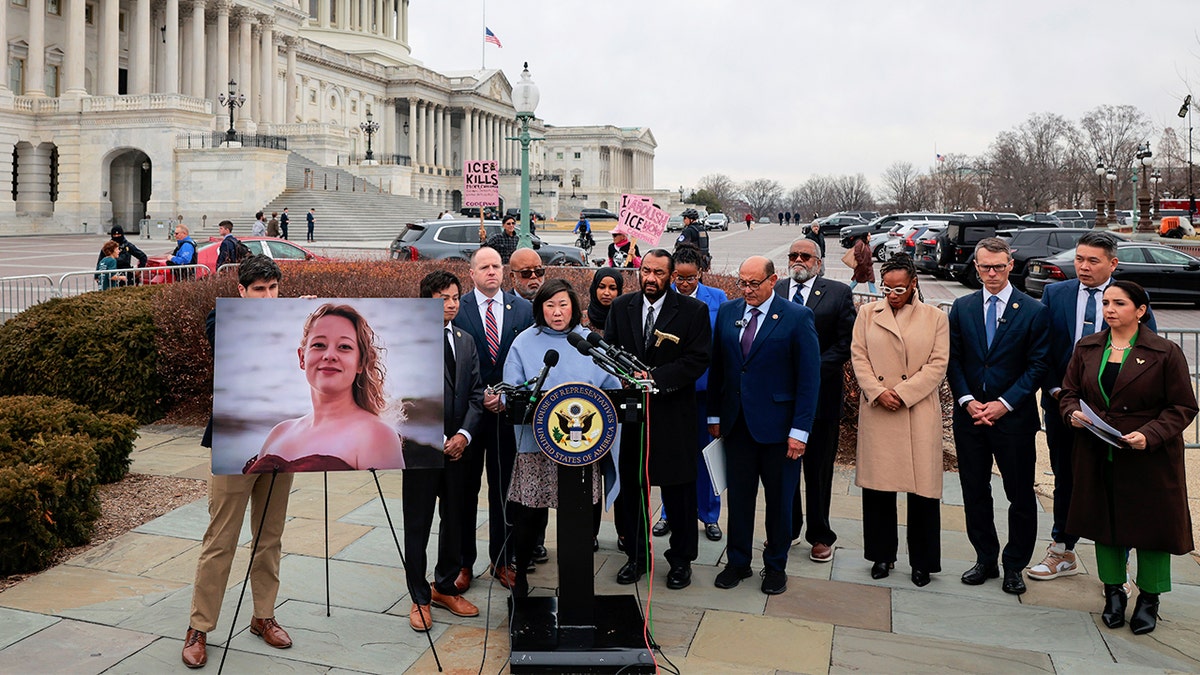
Democrats speak at a news conference

U.S. Rep. Grace Meng (D-NY) speaks as fellow House Homeland Security Committee members look on during a news conference to discuss the killing of Renee Nicole Good outside the U.S. Capitol on Jan. 14, 2026, in Washington, D.C. (Chip Somodevilla/Getty Images)

As Bankas’ clip gained traction, St. Paul residents began signaling plans to protest outside his upcoming shows, according to the Minnesota Star Tribune — a development that pushed the comedy venue to cancel. 

In a statement shared with PEOPLE, club owner Bill Collins said the decision came after weighing escalating risks.

CELEBRITY ANTI-ICE PINS AT GOLDEN GLOBES SPARK MIXED REACTIONS ONLINE AFTER RENEE GOOD FATAL SHOOTING

“After discussions with, and concern from, public authorities, legal counsel and staff, combined with heightened threats, increasing media attention and civil disorder, we have determined the risks and related liabilities cannot be overcome,” Collins said in an email.

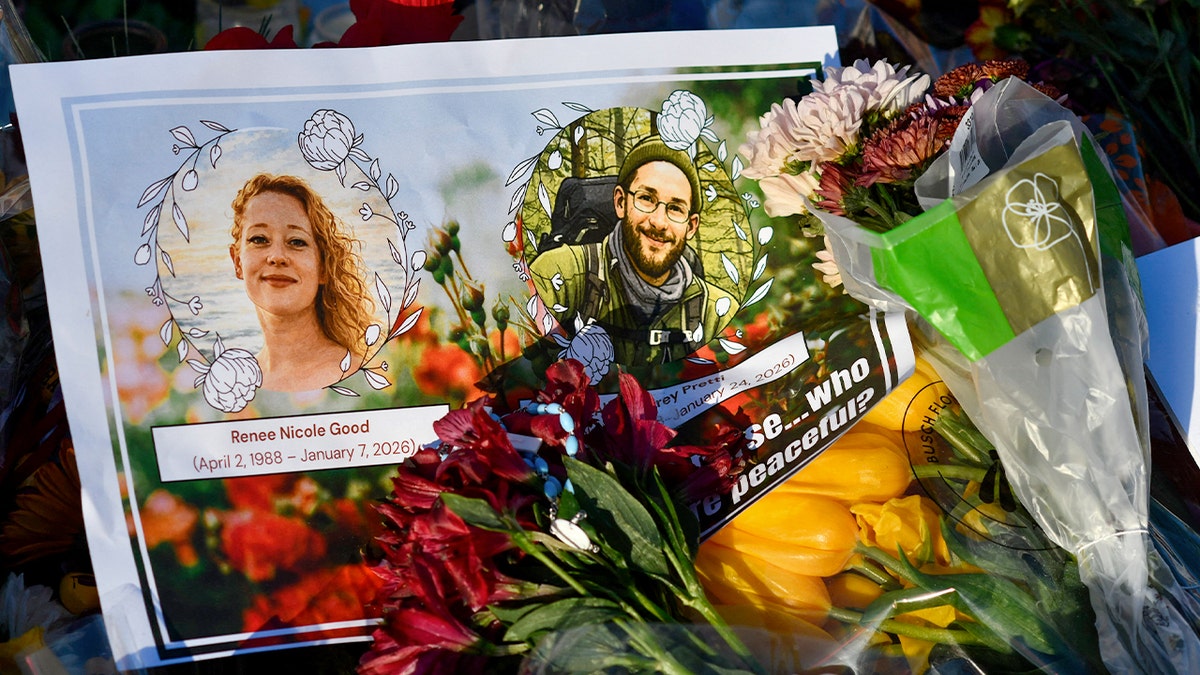
A memorial for Renee Good and Alex Pretti

A card with images of Renée Good and Alex Pretti lies among flowers and other mementos at a memorial in Minneapolis, Minn., on Jan. 27, 2026. (Octavio Jones/AFP via Getty Images)

“A small club like ours does not have the needed resources to mitigate current risks,” he added. “We are obligated to place the highest priority on the safety of our guests, staff and talent, and we are left with no option but to cancel.”

Fox News Digital has reached out to Bankas and Collins for comment.

CLICK HERE TO SIGN UP FOR THE ENTERTAINMENT NEWSLETTER

Collins, who has operated the club since 2007, told the Tribune the cancellations could cost him roughly $17,000. He also said Creative Artists Agency (CAA), which represents Bankas, is demanding full compensation for the canceled shows because the comedian was prepared to perform.

According to Collins, CAA has also barred its other clients from booking the club until the dispute is resolved.

Bankas was born in Toronto and is now based in Austin, Texas

CLICK HERE TO DOWNLOAD THE FOX NEWS APP

He hosts YouTube’s “The Tanakas Show,” which his website says reaches more than 10,000 monthly listeners.


Source link
Step Finance says compromised execs’ devices led to $40M crypto theft

0

Step Finance says compromised execs' devices led to $40M crypto theft

Step Finance announced that it lost $40 million worth of digital assets after hackers compromised devices belonging to the company’s team of executives.

The platform detected the breach on January 31 and engaged cybersecurity researchers who helped it recover some of the stolen assets.

Step Finance is a decentralized finance (DeFi) platform and analytics tool built on the Solana blockchain that allows users to visualize, track, analyze, and manage their crypto assets and positions.

Wiz

The platform, considered one of the most active and widely used Solana dashboards, also supports executing transactions, swaps, staking, and other DeFi actions through its interface. It also has a native token, $STEP, with relatively modest trading volume.

On January 31, Step announced that several of its treasury wallets were breached and that the threat actor leveraged “a well-known attack vector.”

“Earlier today, several of our treasury wallets were compromised by a sophisticated actor during APAC hours,” Step said in its initial statement.

tweet

The platform also notified the authorities and worked closely with cybersecurity professionals to quickly establish remediation measures.

Blockchain analytics firm CertiK reported at the time that the stolen amount equated to 261,854 SOL, which was around $28.9 million, but Step Finance determined during the investigation that the losses were approximately $40 million.

 About $3.7 million in Remora assets and $1 million in other positions have been recovered so far, thanks to Token22 protections and partner coordination.

As a result of the incident, some operations have been halted to allow security reinforcement. The platform noted that Remora Markets, which it owns, is isolated from the incident and that all rTokens remain fully backed 1:1.

Users are advised not to engage with the STEP token until the investigation concludes. A snapshot of the pre-exploit state will be taken, as a solution for STEP holders is currently being processed.

Step Finance did not share the details of the attack or the perpetrators, which generated suspicions of a potential “rug pull” or “insider job,” claims that have not been appropriately addressed yet.

The company’s $40 million loss is significant but represents only about a tenth of the funds lost to crypto-theft attacks in January. Statistics from CertiK earlier this week show losses of $398 million in the first month of the year, of which around $4.366 million were recovered.

In 2025, 147 confirmed hacks amounted to losses of nearly $2.87 billion, while the record year remains 2022, with $3.71 billion lost in 179 successful attacks.

Modern IT infrastructure moves faster than manual workflows can handle.

In this new Tines guide, learn how your team can reduce hidden manual delays, improve reliability through automated response, and build and scale intelligent workflows on top of tools you already use.


Source link

Who was Libya’s Saif al-Islam Gaddafi? | Muammar Gaddafi News

0

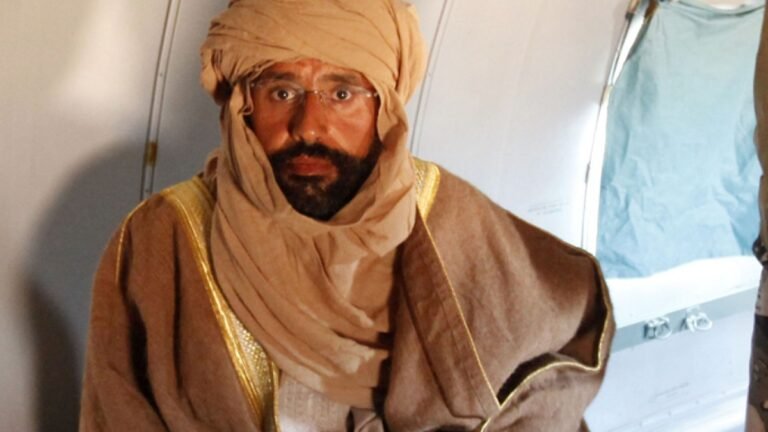
Saif al-Islam Gaddafi, the most prominent son of slain Libyan leader Muammar Gaddafi has himself been killed in the country’s western city of Zintan.

Saif al-Islam, who was 53 when he was killed, was Gaddafi’s second son, and had been based in Zintan since 2011 – first in prison, and then, after 2017, as a free man plotting a return to politics.

Recommended Stories

list of 3 itemsend of list

But figures close to him, including his political adviser Abdullah Othman and his lawyer Khaled el-Zaydi confirmed his death on Tuesday, although the exact circumstances are still unclear.

Saif al-Islam had been seen by many before the 2011 uprising as his father’s heir apparent and the second-most powerful man in Libya.

He remained prominent throughout the violence that gripped Libya in the wake of the Arab Spring. There were numerous allegations against him of torture and extreme violence against opponents of his father’s rule. By February 2011, he was on a United Nations sanctions list and was banned from travelling.

Saif al-Islam Gaddafi
Saif al-Islam Gaddafi (L), son of the former Libyan leader Muammar Gaddafi, registered to run in presidential elections in 2021 [File: Libyan Electoral Commission Handout via EPA-EFE]

In June 2011, he announced that his father was willing to hold elections and to step down if he did not win them. However, NATO rejected the offer and the bombardment of Libya continued.

As an internationally prominent negotiator and influencer, Saif al-Islam could claim a number of victories and prominent roles.

By the end of June 2011, the International Criminal Court (ICC) issued an arrest warrant against him, but he remained at large until after the death of his father Muammar and his brother Mutassim in Sirte, on October 20, 2011.

Prison

Following long negotiations with the ICC, which had been calling for his extradition, Libyan officials were granted authority to try Saif al-Islam in Libya for war crimes committed during the 2011 uprising.

At the time, Saif al-Islam’s defence lawyers feared that a trial in Libya would not be motivated by justice, but would be motivated by a desire for revenge. The UN had estimated that up to 15,000 people were killed in the conflict, while Libya’s National Transitional Council placed the figure as high as 30,000.

In 2014, Saif al-Islam appeared via video link in the Tripoli courtroom where his trial was held, as he was incarcerated in Zintan at the time. In July 2015, the Tripoli court sentenced him to death in absentia.

However, in 2017 he was released by the Abu Bakr al-Siddiq Battalion – a militia that controls Zintan – as part of an amnesty issued by Libya’s eastern authorities, which are not recognised internationally.

But he did not reemerge publically for years, and continued to be wanted by the ICC. In July 2021 he gave a rare interview to the New York Times, in which he accused authorities in Libya of being “afraid of … elections”.

Explaining his underground persona at the time, he said that he had “been away from the Libyan people for 10 years.

“You need to come back slowly, slowly. Like a striptease,” he added.

He went on to make his first public appearance in years in November 2021 in the city of Sebha, where he filed to run for the Libyan presidency, in an attempt to resurrect the ambitions of his father’s former supporters.

Initially banned from taking part, he was later reinstated, but the election did not take place as a result of Libya’s tumultuous political situation, with two rival administrations vying for power.

‘Progressive’ face

A Western-educated and well-spoken man, Saif al-Islam presented a progressive face to the oppressive Libyan regime and was extremely visible and active in the drive to repair Libya’s relations with the West between the year 2000 and the start of the 2011 uprising.

He received a PhD from the London School of Economics (LSE) in 2008. His dissertation dealt with the role of civil society in reforming global governance and was prominent in his calls for political reform.

LSE was later condemned for having sought a relationship with the Libyan regime, namely for accepting Saif al-Islam as a student, who had signed an agreement for a $2.4m gift from the Gaddafi International Charity and Development Foundation on the day of his doctorate ceremony.

As an internationally prominent negotiator and influencer, Saif al-Islam could claim a number of victories and prominent roles. He played a pivotal role in the nuclear negotiations with Western powers including the United States and the UK.

He was also prominent when negotiating compensation for families of victims of the Lockerbie bombing, the Berlin nightclub attack, and the UTA Flight 772, which detonated over the Sahara desert.

And he mediated the release of six medics – five of whom were Bulgarian – who were accused of infecting children with HIV in Libya in the late 1990s. The medics were imprisoned for eight years in 1999 and, upon their release, announced that they had been tortured while in detention.

He had a number of other proposals including “Isratine”, a proposal for a permanent resolution of the Palestinian-Israeli conflict through a secular one-state solution. He also hosted peace talks between the Philippines government and leaders of the Moro Islamic Liberation Front, which resulted in a peace agreement that was signed in 2001.


Source link

Baby in serious condition and boy, 13, arrested after e-bike hits pregnant woman in Poole | UK News

0


A 13-year-old has been arrested over an e-bike crash involving a pregnant woman whose baby was born afterwards in hospital and remains in a serious condition.

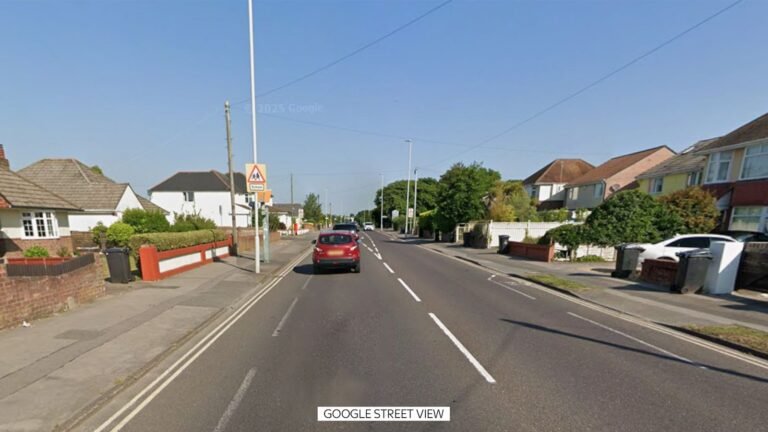
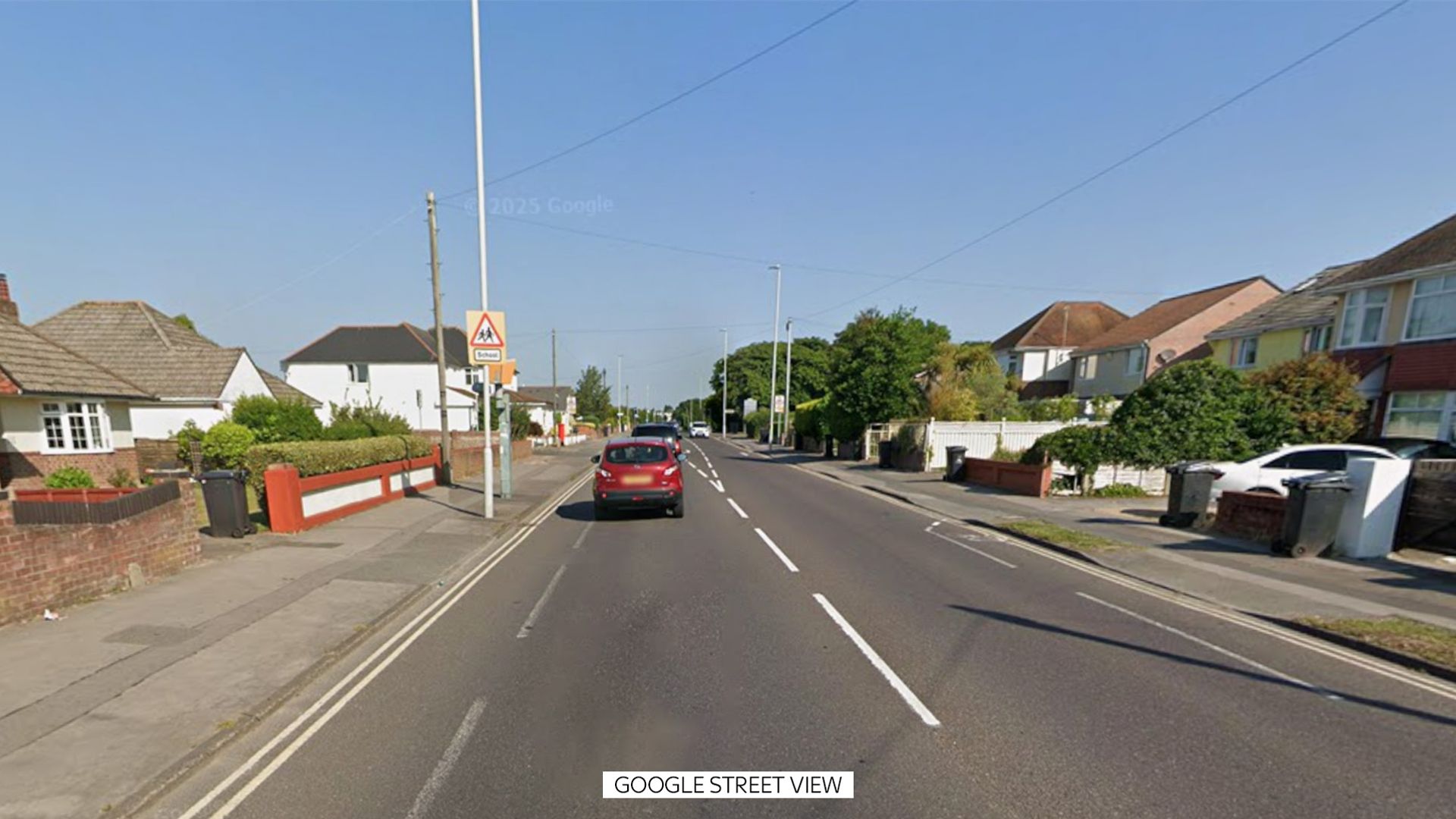
It happened on 26 January in Herbert Avenue, Poole, and police said the rider reportedly failed to stop at the scene.

The female pedestrian, in her 30s, went to hospital after the collision – which happened around 3.50pm.

Officers said a 13-year-old boy from Poole had now been arrested on suspicion of a driving offence and remained in custody.

Police Sergeant Dan Yates, from Dorset Police, said: “Our investigation is continuing and we have now made an arrest as part of our enquiries.

“I would like to thank the public who came forward and provided information to help with our investigation.

“We are still appealing for anyone with information in relation to this incident, who has not already spoken to police, to please get in touch.”

Anyone with information is asked to contact Dorset Police or – to stay anonymous – the Crimestoppers charity.

Read more from Sky News:
Sarah Ferguson’s charity to close after Epstein revelations
School failed to probe ‘130 violent incidents’ involving teen’s killer


Source link

Trump unveils new rendering of planned White House ballroom addition

0

NEWYou can now listen to Fox News articles!

President Donald Trump on Tuesday shared a new rendering of the planned White House ballroom, touting the project as a historic addition he said would “serve our Country well” for “Centuries into the future.”

“This is the first rendering shown to the Public,” Trump wrote in a Truth Social post.

Trump said the rendering, shown from the perspective of the Treasury Building, depicts a plan to replace the existing East Wing with a new East Wing anchored by the White House’s first formal ballroom. 

He added that the structure would match the White House in height and scale.

SPRAWLING NEW $200M WHITE HOUSE BALLROOM TO BE PAID FOR BY TRUMP AND DONORS

A rendering of the proposed White House ballroom shared by President Donald Trump on Truth Social.

A rendering of the proposed White House ballroom shared by President Donald Trump on Truth Social on Feb. 3, 2026. (Donald Trump/Truth Social)

The 90,000-square-foot space, designed to seat roughly 650 guests, is already under construction and is expected to cost more than $200 million, with funding coming from Trump and private donors, the administration previously said.

“If you notice, the North Wall is a replica of the North Facade of the White House, shown at the right hand side of the picture,” Trump added in his post about the new rendering.

FROM THE OVAL OFFICE TO THE TRUMP KENNEDY CENTER, THE GILDED MAKEOVER EXPANDS

A rendering of the new White House ballroom.

The White House has never had a formal ballroom. (White House)

On July 31, White House press secretary Karoline Leavitt announced the planned construction of the sprawling ballroom

“The White House is currently unable to host major functions honoring world leaders in other countries without having to install a large and unsightly tent approximately 100 yards away from the main building’s entrance,” Leavitt said during a press briefing, adding the new ballroom will be “a much-needed and exquisite addition.”

A rendering of the new White House ballroom.

The new space is expected to seat around 650 guests. (White House)

Since returning to office, Trump, a former real estate developer, has embarked on a series of projects aimed at altering the look and feel of the White House and other iconic Washington landmarks. Over the weekend, the president announced in a Truth Social post that the Trump Kennedy Center will close later this year for a two-year renovation.

CLICK HERE TO DOWNLOAD THE FOX NEWS APP

In October, Trump unveiled a new monument planned to commemorate the nation’s 250th anniversary next year. The monument, a near twin of Paris’s iconic Arc de Triomphe, is meant to welcome visitors crossing the Memorial Bridge from Arlington National Cemetery into the heart of the nation’s capital.

Trump has also added golden accents to the Oval Office, added a “walk of fame” to the colonnade outside the Oval Office, renovated the Lincoln bathroom, paved part of the Rose Garden and installed two large American flags on the White House grounds.


Source link

When Cloud Outages Ripple Across the Internet

0

Recent major cloud service outages have been hard to miss. High-profile incidents affecting providers such as AWS, Azure, and Cloudflare have disrupted large parts of the internet, taking down websites and services that many other systems depend on. The resulting ripple effects have halted applications and workflows that many organizations rely on every day.

For consumers, these outages are often experienced as an inconvenience, such as being unable to order food, stream content, or access online services. For businesses, however, the impact is far more severe. When an airline’s booking system goes offline, lost availability translates directly into lost revenue, reputational damage, and operational disruption.

These incidents highlight that cloud outages affect far more than compute or networking. One of the most critical and impactful areas is identity. When authentication and authorization are disrupted, the result is not just downtime; it is a core operational and security incident.

Cloud Infrastructure, a Shared Point of Failure

Cloud providers are not identity systems. But modern identity architectures are deeply dependent on cloud-hosted infrastructure and shared services. Even when an authentication service itself remains functional, failures elsewhere in the dependency chain can render identity flows unusable.

Most organizations rely on cloud infrastructure for critical identity-related components, such as:

  • Datastores holding identity attributes and directory information
  • Policy and authorization data
  • Load balancers, control planes, and DNS

These shared dependencies introduce risk in the system. A failure in any one of them can block authentication or authorization entirely, even if the identity provider is technically still running. The result is a hidden single point of failure that many organizations, unfortunately, only discover during an outage.

Identity, the Gatekeeper for Everything

Authentication and authorization aren’t isolated functions used only during login – they are continuous gatekeepers for every system, API, and service. Modern security models, specifically Zero Trust, are built on the principle of “never trust, always verify”. That verification depends entirely on the availability of identity systems.

This applies equally to human users and machine identities. Applications authenticate constantly. APIs authorize every request. Services obtain tokens to call other services. When identity systems are unavailable, nothing works.

Because of this, identity outages directly threaten business continuity. They should trigger the highest level of incident response, with proactive monitoring and alerting across all dependent services. Treating identity downtime as a secondary or purely technical issue significantly underestimates its impact.

The Hidden Complexity of Authentication Flows

Authentication involves far more than verifying a username and password, or a passkey, as organizations increasingly move toward passwordless models. A single authentication event typically triggers a complex chain of operations behind the scenes.

Identity systems are commonly:

  • Resolve user attributes from directories or databases
  • Store session state
  • Issue access tokens containing scopes, claims, and attributes
  • Perform fine-grained authorization decisions using policy engines

Authorization checks may occur both during token issuance and at runtime when APIs are accessed. In many cases, APIs must authenticate themselves and obtain tokens before calling other services.

Each of these steps depends on the underlying infrastructure. Datastores, policy engines, token stores, and external services all become part of the authentication flow. A failure in any one of these components can fully block access, impacting users, applications, and business processes.

Why Traditional High Availability Isn’t Enough

High availability is widely implemented and absolutely necessary, but it is often insufficient for identity systems. Most high-availability designs focus on regional failover: a primary deployment in one region with a secondary in another. If one region fails, traffic shifts to the backup.

This approach breaks down when failures affect shared or global services. If identity systems in multiple regions depend on the same cloud control plane, DNS provider, or managed database service, regional failover provides little protection. In these scenarios, the backup system fails for the same reasons as the primary.

The result is an identity architecture that appears resilient on paper but collapses under large-scale cloud or platform-wide outages.

Designing Resilience for Identity Systems

True resilience must be deliberately designed. For identity systems, this often means reducing dependency on a single provider or failure domain. Approaches may include multi-cloud strategies or controlled on-premises alternatives that remain accessible even when cloud services are degraded.

Equally important is planning for degraded operation. Fully denying access during an outage has the highest possible business impact. Allowing limited access, based on cached attributes, precomputed authorization decisions, or reduced functionality, can dramatically reduce operational and reputational damage.

Not all identity-related data needs the same level of availability. Some attributes or authorization sources may be less fault-tolerant than others, and that may be acceptable. What matters is making these trade-offs deliberately, based on business risk rather than architectural convenience.

Identity systems must be engineered to fail gracefully. When infrastructure outages are inevitable, access control should degrade predictably, not completely collapse.

Ready to get started with a robust identity management solution? Try the Curity Identity Server for free.

Found this article interesting? This article is a contributed piece from one of our valued partners. Follow us on Google News, Twitter and LinkedIn to read more exclusive content we post.


Source link

Will Iran and Israel go to war? | Conflict News

0

US special envoy Steve Witkoff is yet again in Israel to discuss growing tensions with Iran.

Renewed threats to strike Iran have once again raised the stakes across the Middle East.

The United States and Israel have toughened their stance against Tehran in recent weeks as the country was gripped by nationwide protests. Iran accused Israel of interference in those demonstrations.

Recommended Stories

list of 3 itemsend of list

As the war rhetoric ramps up, Iran is threatening to inflict heavy damage on Israel, if it is attacked.

The tension between the two sides follows decades of mutual hostility that have shaped the geopolitics of the region.

So, does diplomacy stand a chance in this long-running conflict?

Presenter: Rishaad Salamat

Guests:

Thomas Warrick – Non-resident fellow at the Atlantic Council

Marzie Khalilian – Political analyst focusing on US-Middle East relations and an academic Researcher at Carleton University

Alon Pinkas – Former Israeli diplomat


Source link

Air India flight from Heathrow grounded after ‘possible defect’ with fuel control switch | World News

0

A Boeing 787-8 Dreamliner, operated by Air India, has been grounded after reports of a “possible defect” with a fuel control switch on the same model of aircraft which crashed in Ahmedabad last June.

Air India said it was getting “the pilot’s concerns checked on a priority basis” after the incident reported on the flight – AI132 – from Heathrow to Bengaluru on Monday.

It added the airline had previously examined the fuel control switches on its entire Boeing 787 fleet and “had found no issues”.

In a statement to Sky News, Boeing said: “We are in contact with Air India and are supporting their review of this matter.”

Last June, Air India Flight 171 to Gatwick struck a building shortly after take-off in Ahmedabad, killing 260 people. Briton Viswashkumar Ramesh was the only passenger who walked away from the wreckage.

According to a preliminary report, published by India’s Aircraft Accident Investigation Bureau (AAIB) in July, switches in the cockpit that controlled fuel were moved to a “CUTOFF” position.

Paperwork has been seen by Sky News, reportedly showing a potential fault with a fuel control switch, which was logged by one of the pilots on Flight 132 after the plane landed early on Tuesday morning.

The entry reads: “LEFT FUEL CONTROL SWITCH SLIPS FROM RUN TO CUT OFF WHEN PUSHED DOWN SLIGHTLY. IT DOES NOT LOCK IN ITS POSITION.”

It is unclear why the crew decided to proceed with the flight if, as reported, the switch failed to remain locked in the “RUN” position and moved towards “CUTOFF” during engine start-up.

A log entry reports a defect on an Air India flight from London
Image: A log entry reports a defect on an Air India flight from London

Sky News understands this happened on two consecutive attempts during the engine start-up procedure.

A malfunction such as this, under specific conditions, could lead to an inadvertent engine shutdown in flight.

Captain Amit Singh, founder of the aviation safety group Safety Matters Foundation, said: “The incident is especially alarming as it mirrors a known risk previously identified by the US Federal Aviation Administration (FAA).

“In 2018, the FAA issued Safety Alert For Operators SAIB NM-18-33, explicitly warning that certain fuel control switches, including those on Boeing 787s, could malfunction in this exact manner, increasing the risk of accidental engine shutdown.”

A statement from Air India said: “We are aware that one of our pilots has reported a possible defect on the fuel control switch of a Boeing 787-8 aircraft.

“After receiving this initial information, we have grounded the aircraft and are involving the OEM [Original Equipment Manufacturer] to get the pilot’s concerns checked on a priority basis. The matter has been communicated to the aviation regulator, DGCA [Directorate General of Civil Aviation].

“Air India had checked the fuel control switches on all Boeing 787 aircraft in its fleet after a directive from the DGCA and had found no issues. At Air India, the safety of our passengers and crew remains top priority.”

👉Listen to The World with Richard Engel and Yalda Hakim on your podcast app👈

Captain Singh told Sky News: “The fuel switches are relevant to AI171 because it points to a possible hazard: unintended switch movement.

“Investigators can confirm or dismiss this using recorded data, switch inspection and maintenance records. It does not prove the cause, but it’s a sensible line to check.”

Air India crash survivor speaks to Sophy Ridge

In July, Air India said it had “completed precautionary inspections on the locking mechanism of Fuel Control Switch (FCS) on all Boeing 787 and Boeing 737 aircraft in its fleet” and “no issues were found”.

Captain Singh described the most recent report of an apparent fuel control switch issue as “deeply troubling” after the airline’s checks found no issues. “This discrepancy raises urgent questions,” he added.

Read more from Sky News:
Ukraine hits out at ‘infantile’ FIFA boss
Epstein: Mandelson urged to testify
ICE agents issued body-worn cameras

Sumeet Sabharwal was the captain on Flight 171, which crashed in June, and was in charge as the pilot-in-command, while Clive Kunder was the first officer flying the plane.

The initial report from investigators stated that, in an audio recording from the cockpit, one of the pilots is heard asking the other why he “cut off”, an apparent reference to the fuel control switches. The other pilot responds that he did not do so.

The 15-page report did not identify which comments were made by the flight’s captain and which were made by the first officer.


Source link

Washington Post editorial board argues raising taxes on rich would be fruitless

0

NEWYou can now listen to Fox News articles!

The Washington Post editorial board argued on Monday that raising taxes on top earners in the United States, a solution lauded by many prominent progressives, would be a fruitless endeavor based on new research.

The Post published an editorial titled “Little to gain by raising taxes on the rich,” citing a paper by three members of the “scrupulously nonpartisan” Joint Committee on Taxation which concluded, “Large changes in top tax rates around the revenue-maximizing rate yield small changes to revenue.”

“Politicians who want to raise taxes on the rich will be disappointed to learn they wouldn’t get much additional money to spend by doing so, though it would slow economic growth,” the outlet claimed.

WASHINGTON POST CITES U-HAUL DATA IN CALIFORNIA EXODUS TO ‘PRO-GROWTH’ STATES, SAYS ‘DECLINE IS A CHOICE’

Washington Post building

The Washington Post argued in a Monday editorial that there’s “little to gain by raising taxes on the rich.” (Kevin Carter/Getty Images)

The research paper referenced by the Post, titled “Laffer Curves Are Flat,” was written by economists Rachel Moore, Brandon Pecoraro and David Splinter, and used the “Laffer Curve” as a means to measure the trade-off between the top tax rate and revenue.

“Holding the rest of the tax system constant, they found the top federal rate to maximize total government revenue would be 39%, and that would only raise long-run revenue by 0.21%. Any top rate in the range of 30% to 45% raises roughly the same amount of total revenue over the long run. Go higher, and revenue falls,” the Post wrote.

Aside from pinpointing the optimal top rate, the Post highlighted the importance of considering how federal tax rates interact with state and local taxes.

NY POST, WSJ, NY TIMES AND WASHINGTON POST ALIGN AGAINST TRUMP ADMIN OVER ICE OPERATION IN MINNEAPOLIS

“If raising more federal revenue corresponds with reductions in state or local revenue, then there’s not much point in raising it, since those other jurisdictions are likely to beg Washington for funds,” the editorial board contended.

As noted by the Post, Moore, Pecoraro and Splinter concluded that determining the exact revenue-maximizing top rate isn’t very important.

A sign being held up at a protest

The Washington Post editorial board highlighted a report from economists Rachel Moore, Brandon Pecoraro and David Splinte that looked at how increasing the top tax rates would affect economic growth and revenue.  (DAMIEN MEYER/AFP via Getty Images)

“The relevant policy choice is between tax progressivity and growth: the equity-efficiency trade-off,” the economists wrote.

Referencing the economists’ findings, the Post contended that “small changes in revenue from raising the top rate” typically resulted in “significant reductions in economic growth from doing so.”

CLICK HERE FOR MORE COVERAGE OF MEDIA AND CULTURE

The editorial board argued that “a more progressive tax code means a smaller economy,” and that even modest increases to the top tax rate would result in “millions fewer jobs and an economy that’s worth trillions less, all with less revenue to show for it.”

Reflecting a broader trend for the historically liberal newspaper, the Post highlighted an argument long emphasized by conservative economists — that further redistribution of income through higher taxes and increased government transfers is counterproductive.

protests against tax cuts

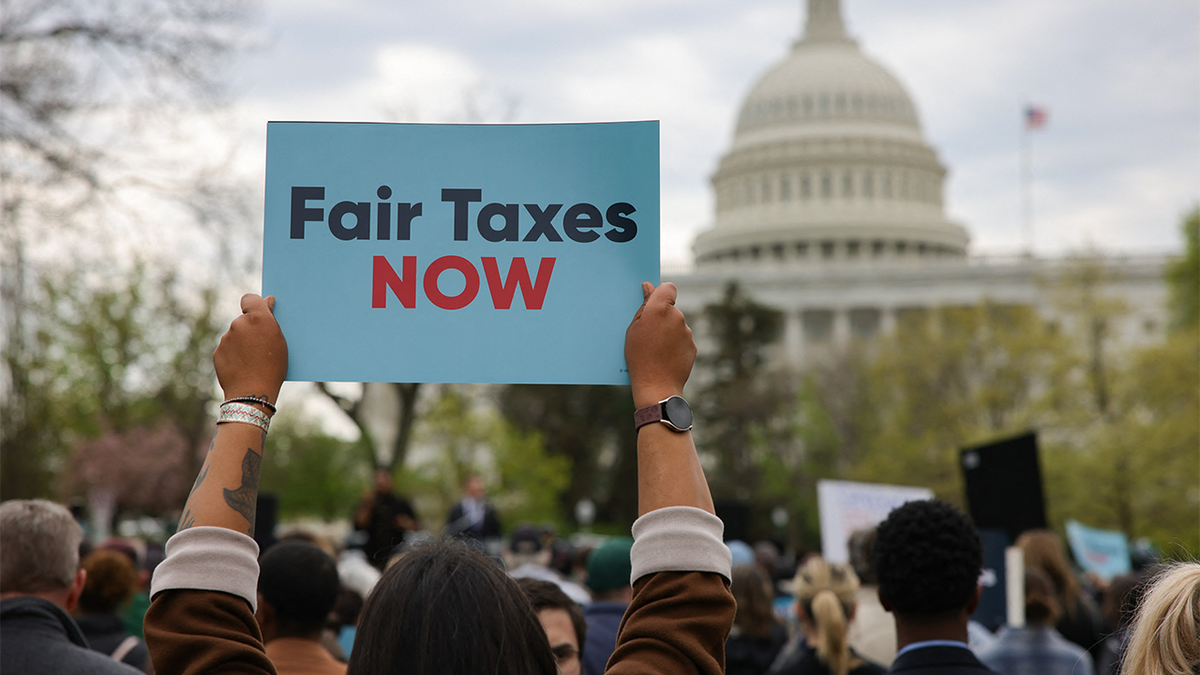
People attend a press conference and rally in support of fair taxation near the U.S. Capitol in Washington, D.C,. on April 10, 2025.  (Bryan Dozier / Middle East Images / Middle East Images via AFP)

“A recent report from the Congressional Budget Office [CBO] found that the federal tax and transfer system significantly reduces income inequality,” the outlet noted. “While it’s true that the top 1 percent of income earners have gradually gained a larger share of pretax income over time, their share of the federal income tax burden has increased faster.”

Pointing to the CBO’s findings, the editorial board noted that “social insurance, taxes and transfers lower the most common measure of income inequality, something called the Gini coefficient, by 28 percent.”

CLICK HERE TO DOWNLOAD THE FOX NEWS APP

“Other rich countries have much less progressive tax systems, not because they tax the rich less, but because they tax the middle class more,” the Post added.

Wrapping up its thoughts, the editorial board concluded that making “an already progressive income tax a little more progressive isn’t worth the trouble.”


Source link