Reference #18.2d4adc17.1779017885.447799d
https://errors.edgesuite.net/18.2d4adc17.1779017885.447799d
Reference #18.2d4adc17.1779017885.447799d
https://errors.edgesuite.net/18.2d4adc17.1779017885.447799d
It is 2pm and Ana, 47, has just started the afternoon shift at the Suez recycling plant near Birmingham city centre, standing beneath a sign reading “Non-ferrous sorting station” with a bucket of vapes in front of her. Sorting and dismantling them is part of her job as a site operative.
Recycling them is not simple. Each bucket holds between 40 and 50 devices, and over the course of a shift, she gets through about half a bucket. Using a hammer, she has to smash each vape open, pry out the batteries and separate each component into a different container.
Single-use vapes were banned in June last year, but more than 6m vapes and vape pods are still being discarded every week in the UK. Waste management companies say the sheer volume is straining recycling systems, while hidden lithium-ion batteries inside the devices are causing fires.
As Ana works, a burst of sugary scent fills the air; she doesn’t worry about the vapes exploding, she says, it’s never happened to her yet. But while vapes may not be hazardous at this stage of the sorting, they can become dangerous when crushed or damaged, such as during waste collection and storage.
In 2025, there were 670 fires at Suez’s UK sites. Of those, 368 were confirmed to be caused by batteries or vapes, with a further 176 suspected to be linked. Those working at the sites say people simply do not understand that vapes cannot be thrown away, or think – wrongly – that they can be recycled alongside household products. Instead, they need to be taken to dedicated electrical recycling points.
“Vapes were suspected as the cause of over 80% of the reported fires across our sites last year, with the numbers and trend continuing so far in 2026,” says Dr Adam Read, the chief sustainability and external affairs officer at Suez.
“This is despite the ban on disposable vapes coming into effect halfway through 2025. With more than 6m vapes still thrown away every week, it is clear that the perception on these items remains that they are a throwaway item. The problem is that people often don’t realise the danger that batteries cause when not disposed of correctly, and think they are doing the right thing by putting them in with their recycling.”
Read adds: “Across the sector, we estimate around £1bn a year is being spent, or needs to be spent, dealing with this issue … Waste sites are now seen by insurers as some of the highest-risk facilities because fire is so prevalent.”
He recalls a major blaze at a site in Aberdeen four years ago that destroyed the facility. “It was £20m of investment gone … These are serious risks,” he says.
The root cause, Read says, is simple: frequency. “Other battery-powered items, like electric toothbrushes, don’t appear as often in the waste stream because people keep them for years. But vapes are used and thrown away constantly. It’s the sheer volume.”
Every fire investigation now starts the same way. “We’re almost always looking for lithium-ion batteries as the starting point, and then asking: was it a vape?”
While the disposable vape ban aimed to tackle the problem, industry figures say it has simply shifted it.
On the floor of the Birmingham recycling site, since operations began at 6am, about 150 vapes have already been found in just six hours. Staff say the devices have changed: instead of the once-ubiquitous disposable brands such as Elfbar, larger rechargeable vapes, such as Hayati, are now more common in the waste stream.
An Elfbar spokesperson said: “Depleted devices and refills should always be disposed of responsibly. Vapers are encouraged to use takeback services provided by retailers selling vapes, which have a statutory duty to accept them. Thousands of recycling points can also be found across the UK on Material Focus’s Recycle Your Electricals website.”
Hayati did not respond to attempts to contact it for a comment.
As these devices are often not much more expensive that disposables, critics argue there is little incentive for users to change their behaviour.
Steve Daniels, the operations manager at Suez, says: “We are seeing a change in the size of the vapes being thrown away, because they’re the ones that require charging. We used to see smaller vapes, like the 600-puff ones, but now, as you’ll see on the production floor, it’s the larger, rechargeable types – and they have bigger batteries.”
When recycling material enters the plant, it is first sorted by size. Larger non-conforming items (such as nitrous oxide canisters) are often removed. However, larger vape devices, which are becoming more common, are increasingly slipping through this stage and are instead identified later during aluminium separation, where they often appear among crushed cans.
Read says producers should bear more responsibility for the products they make. “We’ve argued that if a vape costs £10, there should be a £5 handling cost built in. That reflects the real cost of dealing with it safely,” he says. “That financial driver could change behaviour.”
Another proposed solution is a deposit return scheme for vapes, similar to those planned for drinks containers.
“If people could return vapes and get £1 or £2 back, you’d dramatically reduce the number ending up in general waste,” he says. “That could cut the fire risk by 70-90%.”
For now, the burden remains on workers such as Ana, carefully dismantling devices by hand, one bucket at a time.
A government spokesperson said: “We are determined for more vapes to be recycled correctly and safely, and have made it compulsory for all vape retailers to provide recycling bins. We will continue to work with Trading Standards and local authorities to build on the 10,500 takeback bins already on our high streets.”
A North Korean women’s football club has arrived in South Korea for an AFC Women’s Champions League semi-final, marking the first visit by athletes from the isolated state to the South in eight years.
The delegation of 27 players and 12 staff entered the country on Sunday before Wednesday’s match between Naegohyang FC and South Korea’s Suwon FC Women in Suwon.
The visit has been approved under the inter-Korean exchange law and covers the players’ stay until next weekend, though the team could leave earlier if eliminated, according to Seoul’s unification ministry.
Public interest has been strong, with all 7,087 tickets made available to the general public selling out within a day, according to Yonhap news agency, citing South Korea’s football federation.
North Korea has in recent years labelled South Korea its “most hostile state”, and ruled out reuniting the nation split by the 1950-1953 Korean war. By contrast, the South Korean president, Lee Jae Myung, has called for improved ties.
“It may be difficult to hope for a complete thaw in strained relations by this one-time visit,” said a spokesperson for South Korea’s ruling Democratic party, vowing to make efforts to open the door for exchanges and dialogue.
“We hope it will serve as an opportunity to tear down high barriers between the South and the North,” the spokesperson said.
South Korea’s government has said it will keep its role limited, given the fixture is an international club competition, but will provide logistical support for the visiting team.
The unification ministry said it has set aside 300m won ($200,000) from an inter-Korean cooperation fund to support a cheering squad for both sides, citing the event’s potential to promote mutual understanding between the two Koreas.
As the match is between clubs and not national teams, it will not feature national anthems or political symbols, including the Korean Unification flag, in line with Asian Football Confederation rules.
The white flag bearing a blue silhouette of the peninsula has often been used in international sports fixtures involving both sides to represent unity.
Seoul’s unification minister, Chung Dong-young, is considering attending the match, according to South Korean media.
The semi-final is scheduled to kick off at 7pm local time (10am GMT) on Wednesday in Suwon. The winner will face either Melbourne City or Tokyo Verdy in the final on Saturday.
If Naegohyang lost, the North Korean team was expected to return home the following day, the ministry said.
Reference #18.490dde17.1779019617.4a88a134
https://errors.edgesuite.net/18.490dde17.1779019617.4a88a134
The hantavirus outbreak, while unlikely to spark the next big pandemic, is shining a spotlight on the ways public health has deteriorated in the US: its ability to test for rare diseases, its expertise on outbreak prevention and response, its ability to battle misinformation and restore trust.
“Assuming everything goes well in containing this outbreak, which I hope it does, the takeaway from that should not be ‘we’re fine,’” said Stephanie Psaki, former White House global health security coordinator. “We’re not ready for this type of threat.”
Many of the people at health agencies who plan for a quick response to outbreaks, and the systems supporting them, are gone now, Psaki noted. Yet “this is just one of many, many pathogens. These types of things will continue happening.” And, she pointed out, there’s a 50/50 chance of another pandemic at least as bad as Covid in the next 25 years, according to scientific models.
Examining the mistakes – and the progress – made during the Covid pandemic can help us prepare for the next big one, Psaki and other former top US officials said at a recent event in Washington DC.
Misinformation is one of the greatest challenges facing public health. Conspiracy theories and rumors aren’t new; even the Milan plague around 1630 had its share.
But “the only difference between hundreds of years ago is social media”, said Anthony Fauci, former chief medical adviser to the president and former director of the National Institute of Allergy and Infectious Diseases. “We’re just being overwhelmed” with misinformation online, he said, calling it “a real problem which I don’t see any easy solution to”.
People don’t often relate to rigorous studies with methods sections, statistical analyses, and 17 supplementary figures in the New England Journal of Medicine, but they frequently relate to social media influencers pushing fake cures, Fauci said.
“It’s stunning. It’s painful, but it’s true that somebody on social media who’s a trusted influencer will outflank any scientist who’s trying to show you data, so you can’t fight misinformation with data,” Fauci said. “You have to fight misinformation with figuring out a better way to communicate to people on a level that they understand.”
That means releasing accurate information quickly – and it should involve pre-bunking myths before they have a chance to spread, Fauci said. “Otherwise you’re always playing catch-up. And when you’re playing catch-up, you’re losing.”
Officials also need to get better at communicating uncertainty, said Nina Schwalbe, a senior scholar at Georgetown University’s Center for Global Health Policy and Politics and former director of Covid-19 Vaccine Access and Delivery Initiative at the US Agency for International Development (USAID).
“We say things too simply, and then people lose their trust.” But people can handle uncertainty “because the world is an uncertain place”, she said.
The very advances to come out of the pandemic – such as mRNA vaccines, widely viewed as one of the greatest technological advances of this generation – are now at risk, with slashed funding and growing misinformation.
The science conducted during the pandemic was “extraordinary”, but it frequently “gets lost in the somewhat muddled public health response”, said Fauci. Vaccine development began six days after publication of the Sars-CoV-2 genome, and a vaccine that was about 95% effective was going into arms 11 months later.
“That didn’t happen by accident – that happened because of the years of investment in basic and clinical research,” Fauci said. That work itself built on the response to a different epidemic, HIV. The Covid vaccine is “one of the best vaccines that was ever developed”, Fauci said, particularly because of its ability to be changed overnight as the virus evolves – and it can be produced quickly in enormous quantities.
“It saved us,” he said. “Could you imagine how many more people would have died?”
Yet now that work is being pulled back.
The US also failed to slow the pandemic in its flawed efforts to vaccinate the world, Fauci said, adding: “We got in our own way. We didn’t make equity our driving force.”
When the US later offered vaccines to other countries, a lack of planning – including basic supplies like having enough syringes – stymied the effort. “Tens of millions of doses of vaccine is meaningless if there’s no way of distributing them in the country that needs it,” Fauci said.
This delay in global access to Covid vaccines did “deep” and “long-lasting” damage to the alliances between the United States and other countries, Psaki said. “It’s being reinforced by the positions of this administration, but the damage was deep, and it’s very, very difficult to rebuild trust after that kind of betrayal.” The mpox outbreak response in 2024 was better, in part because there were already vaccines on hand – but “we were still not able to get those vaccines in arms”, Psaki said.
It’s also important to develop and distribute tests quickly, Fauci said. “The South Koreans were putting out 20,000 tests per day, and we were playing around with five tests that didn’t work.” But the “catastrophe” extended beyond bad tests to a “refusal to believe that there are other ways of doing it”, he said.
Pandemic preparedness is not just a domestic issue, Fauci said; it must involve working closely with international partners, and “that’s something that, unfortunately, we seem to be steering away from right now, which is very troublesome to me”.
Donald Trump has moved to leave the World Health Organization (WHO), which Psaki calls “an absolutely essential institution.” The US contribution to WHO is $130m – roughly equivalent to the Pentagon’s recent spending on lobster and steak, she noted.
In the absence of federal guidance, states are taking the lead by forming health alliances and working with WHO directly.
“From where I sit, the federal government is not going to play the role that is needed in the next pandemic, and so we are watching states step up,” said Matthew Kavanaugh, director of the Georgetown global health policy center.
The basics of outbreak response and pandemic preparation haven’t changed, Psaki said: “Stop a threat from emerging, identify the threat quickly, contain the threat, have a way to respond to the threat and keep people alive and keep hospitals from getting overwhelmed.”
Experts worry that the public, divided by politics and overwhelmed by misinformation, won’t have an appetite for public health measures. But it’s important to have “a little more space for hope and trust”, Psaki said. “Most families want to keep their family members safe” – which is different from the motivations of political leaders and others who may benefit from misinformation, she noted.
Schwalbe’s father was one of the first victims of Covid in New York. He got sick in March 2020 as the entire system was falling apart, Schwalbe said. “It was just me and my dad in his apartment on Lexington Avenue as he died.”
They didn’t have any oxygen or palliative care, but they did have refrigerator trucks for bodies and sirens wailing constantly in the street. She knew six people who died of Covid. The experience made her more determined to strengthen public health before the next crisis hits.
“We can’t just leave public health as the unseen thing that people complain about when it’s not working,” Schwalbe said. “We have to invest in it.”
The launch of limited-edition Swatch watches descended into chaos in several European cities and New York, with French police firing teargas to restore order at a store near Paris.
Hundreds of people waited through the night from Friday into Saturday – and in some cases for several days – hoping to buy the Royal Pop timepieces, made in collaboration with the luxury watchmaker Audemars Piguet.
In France, queues of hundreds of people formed overnight in several cities and a police source said officers had fired teargas to control a 300-strong crowd outside a Swatch shop in the Paris region.
A metal shutter and two security gates were damaged in the incident. The police added the stores had underestimated the need for security.
A fight also broke out in front of a Swatch store in Milan at opening time on Saturday, according to footage broadcast by local media.
In the Netherlands, police had to intervene at a shopping centre near The Hague after hundreds flocked to the store.
The police said there had been a tense atmosphere and some quarrelling. When the store decided not to open, people had been sent home. Swatch stores in Amsterdam and Utrecht also remained closed. It is not clear when they will reopen.
On its website, the Westfield Mall of the Netherlands announced: “The introduction of Swatch in collaboration with Audemars Piguet will NOT go ahead. The store will remain closed this weekend.”
In New York, the opening of the Swatch store in Times Square saw pushing and shoving in the waiting crowd according to John McIntosh, who had been in the queue since Wednesday. “It was like a mosh pit,” he added.
Like many others, McIntosh said he had hoped to get his hands on the brightly coloured watch – sold in store for about $400 (£300) – to resell immediately at a huge mark-up.
Another buyer, who gave his name as Mac, said he had managed to get one after five days of queueing.
“It was pretty hectic … it’s nasty, but I was able to get in,” he said. “Retail for them is about $400 – I sold one just now for $4,000.”
Benny, 30, said he had decided to pay rather than to wait, and had spent $2,400 for one of the watches.
“It’s basically $2,000 over retail, but you can’t get an AP (Audemars Piguet) for less than $2,000, so I think it was a steal,” he said. “I’d rather pay a premium than come out and get it.”
Swatch was also forced to close its stores in London and six other UK cities for “safety considerations” after huge crowds gathered outside.
Swatch has declined to comment.
NEWYou can now listen to Fox News articles!
An impostor phoned Alight Solutions, the recordkeeper for Colgate-Palmolive’s 401(k) plan, and identified herself as a Colgate employee. She asked to update the contact information on an account. Months later, the entire $751,430 balance had been sent in a single lump sum to a Las Vegas address and bank account. The real account holder, Paula Disberry, was living in South Africa.
Disberry sued Alight, Colgate’s benefits committee and BNY Mellon, the plan’s custodian, to recover the money. The case was later settled on undisclosed terms. The court never ruled on whether Alight had to restore the funds.
In February 2026, the Government Accountability Office told the U.S. Department of Labor to issue new guidance on retirement plan participant data. The GAO cited eleven separate lawsuits filed between 2009 and 2024 under the Employee Retirement Income Security Act, the federal law governing private retirement plans.
When account takeover hits a 401(k), the consumer protections that govern credit card fraud do not apply.
Sign up for my FREE CyberGuy Report
REMOVE YOUR DATA TO PROTECT YOUR RETIREMENT FROM SCAMMERS

A stolen 401(k) shows how one phone call, exposed personal details and weak account-change safeguards can drain retirement savings. (Kurt “CyberGuy” Knutsson)
The Disberry case began when an impostor called Alight’s Benefits Information Center. She gave Disberry’s name, the last four digits of her Social Security number, her date of birth and the mailing address Alight had on file. That was enough to clear the call center’s security check.
She then asked Alight to update the contact information on Disberry’s account. Alight did not send an alert to Disberry’s existing email address or phone number, both of which it had on file. Instead, the company issued a temporary password through the mail.
Disberry’s plan had a 14-day waiting period between an address change and any distribution. Her lawsuit alleged that Alight skipped it. Within weeks, the impostor logged in, requested a full payout, and BNY Mellon mailed a check to a Las Vegas address.
Heide Bartnett, a former Abbott Laboratories employee, sued Alight over a $245,000 401(k) distribution. She alleged that a hacker used the plan portal’s “forgot password” feature to reset her credentials and trigger the payout. Other retirement plan recordkeepers have faced similar cybertheft lawsuits.
The problem extends beyond 401(k) accounts. The FBI’s April 2026 Internet Crime Report found that Americans 60 and older lost $7.7 billion to internet crime in 2025, a 59% jump from the year before. Investment fraud accounted for $3.5 billion of those losses, making retirement-age savers a major target for online criminals.
INSIDE A SCAMMER’S DAY AND HOW THEY TARGET YOU
Retirement account takeovers can start with leaked names, birth dates, partial Social Security numbers and reused passwords from past data breaches. (Kurt “CyberGuy” Knutsson)
Account takeovers begin with information someone already has. Names, dates of birth, partial SSNs and email addresses appear in dark web breach dumps, often combined with leaked passwords from unrelated services. When the account holder reuses a password across accounts, hackers can test that breach data directly against the recordkeeper’s login portal.
Disberry’s takeover bypassed the login portal entirely. The impostor never logged in to Disberry’s account directly. She called Alight’s call center, used what she already knew about Disberry to clear identity verification and had the contact information changed. After that, the temporary password Alight mailed went somewhere only the impostor could intercept.
Some thieves skip the recordkeeper and go straight for the account holder. The New York Times documented the case of Barry Heitin, a 76-year-old retired lawyer, who lost $740,000 in 2024 after receiving a call from someone claiming to be a federal fraud investigator. The caller convinced Heitin that his retirement accounts were under attack and walked him through transferring the money out himself. He believed he was helping a federal investigation.
Federal protections for retirement account theft are limited, but several account-level controls cost nothing and may make takeovers harder.
HOW TO STOP IMPOSTOR BANK SCAMS BEFORE THEY DRAIN YOUR WALLET

Multi-factor authentication, account-change alerts, credit freezes and regular statement reviews can help protect your 401(k) before thieves strike. (Kurt “CyberGuy” Knutsson)
Account-change alerts on the recordkeeper portal only work if the recordkeeper sends them. The Disberry case showed what can happen when those alerts go unsent.
A strong identity theft monitoring service can add another layer of protection by watching for suspicious activity beyond the retirement plan portal. Some services let you link bank, credit card and investment accounts so you can receive alerts when unfamiliar transactions appear. In a retirement account takeover, that could help flag suspicious money movement even if the recordkeeper misses the outgoing transfer.
Many identity theft monitoring services also watch for changes across your credit reports, scan the dark web for exposed personal information and search data broker or people-search sites for your details. Some plans also include fraud resolution support and identity theft insurance for eligible recovery costs.
If you are unsure whether criminals have already exposed your information, take action now. Start with a free identity breach scan to see whether your data appears in known leaks. Early detection gives you more control and helps you respond before fraud spreads. You can also check whether your personal information is already being used for identity theft, fraud or appearing on the dark web.
See my tips and best picks on Best Identity Theft Protection at CyberGuy.com
Retirement accounts can feel separate from the everyday fraud risks we hear about with credit cards, email accounts and bank logins. But this case shows how quickly a 401(k) can become a target when someone has enough personal information to fool a call center or reset account access. The scary part is that a stolen retirement account may not come with the same consumer protections people expect from credit card fraud. That makes prevention and early warning signs even more important. Turn on multi-factor authentication, enable every account alert your plan offers and ask your employer or plan administrator what happens after an address, phone number or bank account change. No one should have to find out months later that their life savings disappeared. The earlier you spot suspicious activity, the better your chances of stopping the damage before it becomes a financial nightmare.
CLICK HERE TO DOWNLOAD THE FOX NEWS APP
Should retirement plans be required to send stronger alerts before any major account change or distribution, especially when someone’s life savings are on the line? Let us know by writing to us at CyberGuy.comCyberguy.com
Sign up for my FREE CyberGuy Report
Copyright 2026 CyberGuy.com. All rights reserved.

Ebola Virus: The World Health Organization (WHO) has declared the rapidly spreading Ebola virus in the Democratic Republic of Congo (DRC) and Uganda an international public health emergency. This infection is spreading due to Bundibugyo virus, which is considered a dangerous strain of Ebola virus.
This strain is different from the previously spread Zaire strain. The Bundibugyo strain first appeared in the Bundibugyo district of Uganda in 2007-2008. At that time this virus had infected more than 116 people and about 34 to 40 percent of the patients died. Now, for the 17th time, Ebola outbreak has occurred in Ituri province of DRC, but this time the concern has increased due to the different type of virus. The biggest challenge is that no specific vaccine or medicine is yet available for this strain.
Different strains of Ebola, but threat remains
According to experts, there are many types of Ebola virus, but large-scale infection in humans spreads mainly through Zaire, Sudan and Bundibugyo strains. The Zaire strain is considered to be the most deadly, with a mortality rate of 60 to 90 percent. Whereas Bundibugyo strain is considered relatively less fatal, but in this also 32 to 40 percent deaths have been recorded. In some cases this figure has reached 50 percent. Health experts say that the death rate can change depending on the patient’s age, health condition, availability of treatment and severity of the infection.
Virus spreads through forests
According to the report, this virus is naturally present in the dense tropical forests of DRC. Scientists believe that wild animals like bats can be the main source of this virus. This virus can spread very fast and can kill many people if timely treatment is not received.
flu like initial symptoms
The symptoms of all strains of Ebola are almost similar. Initially the patient feels high fever, headache, body and joint pain, weakness and fatigue. After a few days, problems like vomiting, diarrhea, stomach ache and sore throat start. As the disease progresses, bleeding starts from the eyes, gums and other parts of the body. In many cases, injury-like marks appear on the body and the patient starts having difficulty in breathing. In serious conditions, organs may stop functioning. Symptoms of infection may appear within 2 to 21 days.
Ebola virus spreads through direct contact with an infected person’s body fluids such as blood, vomit, diarrhea and saliva. The risk of infection remains high even when touching the dead body of a dead person or during rituals related to the last rites. However, this virus does not spread through air, water or insects.
No treatment, only care, support
There is currently no specific antiviral drug or vaccine available for the Bundibugyo strain. Treatment is mainly based on patient care. Doctors compensate for the deficiency of water and electrolytes in the patient’s body. Medicines for fever and pain are given. Antibiotics, oxygen support and blood transfusion are also done if needed. Experts say that if the patient is kept in isolation in the hospital and treatment is started at the initial stage, then his chances of survival increase significantly.
WHO increased monitoring
WHO and local health agencies are emphasizing on identifying people who came in contact with infected people, isolating patients and ensuring safe funerals. The organization has said that instead of banning international travel, there is a need to increase screening, border monitoring and awareness. People coming from infected areas have been advised to be monitored for 21 days.
Increased concern in border areas
Experts say that security challenges exist in the areas bordering DRC and Uganda, which may affect investigation and control operations. Concern has increased due to some cases being reported in big cities like Kinshasa and Kampala. WHO has instructed all neighboring countries to remain alert. Although it is not considered a global epidemic at present, health agencies have appealed to people to exercise caution.
Reference #18.94adc17.1779043579.3830484
https://errors.edgesuite.net/18.94adc17.1779043579.3830484
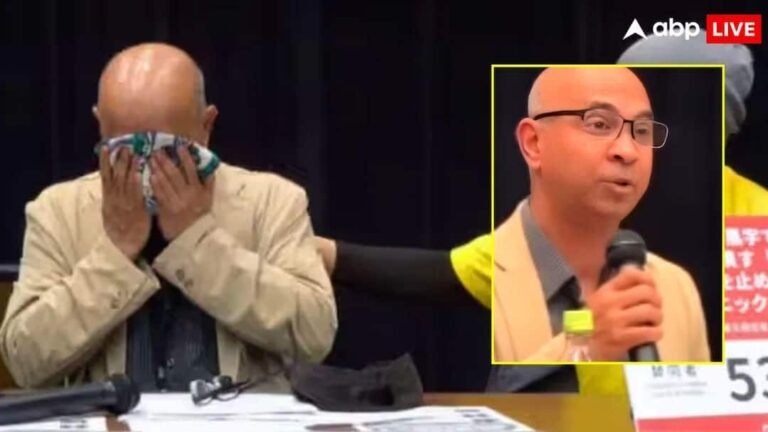
Japan New Immigration Law: Japan has refused to renew the business visa of Indian-origin Manish Kumar after expanding his business for three decades. Japan has recently tightened its immigration rules. Manish Kumar who became emotional during a program gave information about this. His emotional video is viral on social media.
The Japanese government has ordered him to close the restaurant. Also ordered to return to India. Manish runs a restaurant in Saitama Prefecture of Japan. Recently, under the change in immigration rules in Japan, the Immigration Services Agency has rejected Manish’s application.
My children were born here, they can only speak Japanese: Manish Kumar
During a program on May 13, Manish said emotionally during a speech that my children speak only Japanese. We are being told to go back to India. Now this video is viral on social media. Manish said in his speech that my children were born here. Now in high school. They can only speak Japanese. His friends are also only Japanese. I worked hard. Also bought a house. To unilaterally ask me to go back to India. How is this humane?
According to the Japan Times, he said he has spent decades building his life with the support of local officials, customers and the community. I worked hard to reach this far because of the support from fellow chefs and customers. I haven’t done anything wrong. It is cruel to ask people to go back to their country just because. These rules have suddenly changed. Manish is also seen holding back tears during his emotional speech. At present it is not clear whether Manish’s restaurant is still running or not.
Also read:
Japan amended manager visa rules last year
Japan has amended the rules for business manager visa last year. With this, the minimum capital requirement for applicants has been increased from Rs 5 million to Rs 30 million. This change was made because this visa system was being misused for migration purposes. These decisions were taken after the investigation in which alleged shell companies were exposed.
According to the KPMG report, applicants or full-time employees are now required to have proficiency in the Japanese language. It should be around JLPT N2 level. Recently, there has been a huge decline of 96 percent in business manager visa applications in Japan. Also, about 60 thousand people have appealed to review this new rule. Kimi Onoda said that the purpose of this new rule is to reduce the misuse of migration. This has gone away to a great extent.
read this also