Reference #18.490dde17.1779018200.4a859c5b
https://errors.edgesuite.net/18.490dde17.1779018200.4a859c5b
Reference #18.490dde17.1779018200.4a859c5b
https://errors.edgesuite.net/18.490dde17.1779018200.4a859c5b

On September 9, 2025, Israel struck Qatar. There was no battlefield, no front line. Instead, the target was a sovereign state hosting negotiations that Israel itself was involved in. When the missile hit Doha, it set a dangerous precedent.
That same strike architecture reappeared on February 28, at the start of the US-Israel war on Iran, when the compound of Supreme Leader Ayatollah Ali Khamenei was targeted in Tehran.
In both cases, Israeli aircraft remained outside the target state’s airspace and released a missile that completed the strike independently. That single operational choice removes the defining constraint of air warfare: penetration.
The Doha strike was a strategic error because it exposed this capability unnecessarily. The target — a meeting of Hamas leadership convened to review a ceasefire proposal from the Trump administration — was political, not strategic. Israel later had to apologise for the strike, but the fact remained that its new capability had been exposed.
Israel did not employ a conventional bombing model. Instead, it executed an integrated operational sequence built upon a mature fused C7ISR (Command, Control, Communications, Computers, Combat Systems, Cyber, Cognition, Intelligence, Surveillance, and Reconnaissance) architecture — a system integrating cyber and cognitive warfare with intelligence and command networks to accelerate decision-making and maintain superiority in the modern battlespace. This construct enabled precise timing, persistent situational awareness, and overwhelming operational accuracy. The aircraft itself was not the decisive element. The system was.
An Israeli F-15I aircraft flew over international waters in the Red Sea and aligned roughly with the latitude of the Saudi port of Yanbu, but remained outside Saudi sovereign airspace. This was deliberate. Any direct route across the Arabian Peninsula would have required overflight of Saudi territory and would have carried a high probability of engagement by Saudi Arabia’s sophisticated, multilayered air-defence architecture.
From that corridor, the F-15I released an air-launched ballistic missile (ALBM) from the Israeli Sparrow family, likely the Silver Sparrow variant. This is a missile which is carried by an aircraft, but once released, it behaves like a heavier medium-range ballistic missile (MRBM). After separation, a rocket booster ignites, accelerating the missile into a suborbital trajectory that carries it beyond the dense layers of the atmosphere into near space.
Midcourse, the missile follows a ballistic arc entirely outside the conventional air defence envelope. The strike concludes in the terminal phase. The missile re-enters the atmosphere steeply at hypersonic speed, committing to a near-vertical descent onto the target.
Atmospheric friction generates extreme thermal loading and forms a plasma sheath around the missile, degrading radar stability and complicating fire control solutions. Velocity remains firmly in the hypersonic regime, while the engagement geometry collapses. The threat is not traversing defended airspace. It is piercing it.
At this speed, the missile covers several kilometres per second. The interval between reliable track formation and impact is measured in seconds. Within that window, an integrated air defence system must complete detection, classification, trajectory computation, interceptor launch and terminal intercept.
Even advanced systems, such as THAAD, Patriot, and emerging higher-tier interceptors, cannot overcome this constraint. They can extend detection and improve engagement probability. They cannot create the time or engagement depth that the physics of the trajectory eliminates.
This is the limitation. It is not merely technological; it is defined by velocity, friction and geometry.
The Tehran strike followed the same logic, likely using the Blue Sparrow, a variant from the same missile family, and an alternative launch corridor. The F-15I is assessed to have operated over eastern Syrian or western Iraqi airspace, creating a northern vector into Iran. This reduced distance and simplified the trajectory, but the underlying architecture remained unchanged.
Different geography, same system.
The technology behind these strikes introduces a second layer of consequence. The launch system has been integrated onto the F-15I — an older variant — through deep structural and software modification. That level of integration implies access to source code, mission system architecture, and the aircraft’s onboard mission data library.
The Sparrow lineage is also significant: it was originally developed as a ballistic target missile for missile defence testing and has been adapted into a standoff strike weapon, marking a clear doctrinal shift from testing architecture to operational use.
That is critical. Source code governs the launching platform’s logic. The onboard library governs how it processes sensor inputs, identifies targets, integrates weapons, and executes strike logic. Together, they define operational sovereignty.
This raises a direct question.
Saudi Arabia is the world’s largest purchaser of US weapons and operates the largest F-15 fleet outside the United States. Yet the F-15SA — despite being more advanced — does not operate with this level of sovereign integration. Qatar’s F-15QA is similarly constrained.
Why was this level of access permitted in one case and not in others?
This is not a minor technical issue. It goes to the core of arms transfers, source-code control, onboard library autonomy, and the real independence of advanced air forces.
But the deeper consequence lies beyond procurement.
By demonstrating this capability — first against Qatar, then against Iran — Israel has shown that this model works. Once demonstrated, it becomes replicable.
The components already exist across multiple states: aircraft capable of carrying heavy payloads, ballistic missile technology, guidance systems, and integration pathways. The US, Russia, China, France, Pakistan and a few others possess the industrial base to develop comparable architectures.
This pushes the concept towards the practical edge of space weaponisation — not orbital, but suborbital. The system operates beyond traditional atmospheric engagement zones before re-entry. Once normalised, that boundary will erode.
And once eroded, there is no return.
The result is a structural shift in vulnerability. The same physics applies to all actors. No defence system can exempt itself from it.
Israel extended its reach. It also demonstrated the conditions under which others can do the same. It is now just a matter of time before others can replicate this system.
The implications for world leaders are profound. As these capabilities proliferate, warfare will become more unpredictable, more dangerous, and more vulnerable to miscalculation, compressing decision-making timelines and forcing leaders to make consequential choices in minutes rather than days. They can become instruments not only of deterrence and war, but also of coercion, regional competition, and the settling of strategic rivalries.
Geography, distance and strategic depth are losing their traditional value as buffers of warning and protection. The sense of safety is increasingly disappearing.
The views expressed in this article are the author’s own and do not necessarily reflect Al Jazeera’s editorial stance.
Reference #18.490dde17.1779015789.4a8108da
https://errors.edgesuite.net/18.490dde17.1779015789.4a8108da
Reference #18.530dde17.1779015417.43a1332a
https://errors.edgesuite.net/18.530dde17.1779015417.43a1332a
Reference #18.490dde17.1779045661.4bd14b86
https://errors.edgesuite.net/18.490dde17.1779045661.4bd14b86
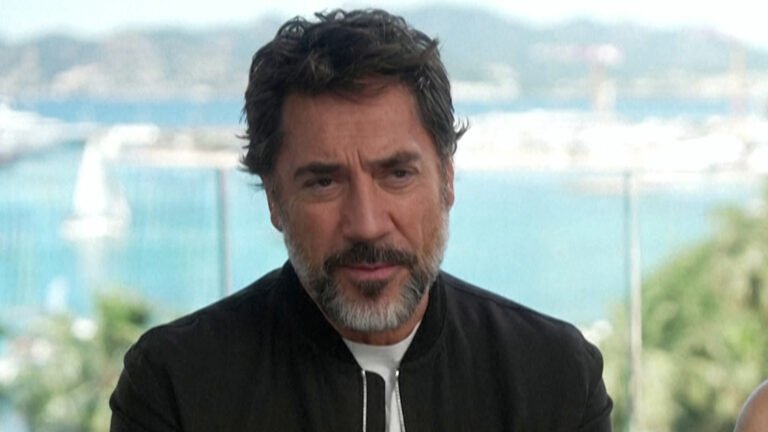
Spanish actor Javier Bardem says speaking out against Israel’s genocide on Gaza has actually landed him more offers for work. Speaking at the Cannes Film Festival, he said he believes the global narrative about Gaza has changed.
Published On 17 May 2026
Reference #18.6e560e17.1779014379.162c577c
https://errors.edgesuite.net/18.6e560e17.1779014379.162c577c
Workers renovating one of Washington DC’s most historically symbolic sites in a project ordered by Donald Trump may be risking their safety as they race to finish on time for the US’s 250th anniversary celebrations, a union monitoring the site has warned.
Trade union scrutiny has focused on the reflecting pool on the US capital’s National Mall – scene of Martin Luther King’s 1963 “I have a dream speech” – after it was drained of water and fenced off from the public to allow contractors the chance to upgrade it by 4 July.
The pool, a Washington landmark since it was dug in 1922, is currently the site of frenetic repair activity, its usual watery surface occupied instead by vehicle and work equipment. Tourists visiting the area have found their view obscured by black tarpaulin.
Leaks and algae blooms have for decades dogged the 2,000ft pool, which sits between the Lincoln and George Washington memorial monuments, turning its water green and confounding previous expensive government-commissioned repair schemes, including one commissioned by Barack Obama’s administration.
Last month, the Trump administration – vowing to solve the problem once and for all – awarded a no-bid contract to waterproof and repaint the pool to a Virginia-based company, Atlantic Industrial Coatings.
The president told journalists the company had successfully carried out work on a swimming pool at his golf club in Sterling, Virginia. In a patriotic flourish, he ordered the firm to repaint the pool’s floor “American flag blue”.
Other companies that do similar work have expressed indignation over being denied the chance to compete for the contract, according to Herbert Zaldivar, the business development director of the International Union of Painters and Allied Trades, who has visited the site as an observer.
Now the award is threatening to boomerang amid disclosures that Trump drastically understated the contract’s cost, and reports that officials at the Department of the Interior – which has responsibility for the site – are dissatisfied with the company’s work.
The New York Times reported that interior department staff members had complained of bubbles and small holes appearing in one of the layers meant to waterproof the pool. Documents also revealed concerns over varying shades of blue mottling the pool’s flooring, resulting from an uneven application of tinted waterproofing and fears that a 22 May deadline for completion of the work may be missed.
Meanwhile, the contract’s true cost – which Trump initially told journalists would be $1.8m – has been revealed to be $13.1m. Amid the controversy, Trump has distanced himself from the company, contradicting previous statements by denying that he had ever used it, and insisting he was not involved in awarding the contract.
Visiting the site on a blustery day last week, Zaldivar said he had been contacted by union-affiliated companies anxious to know why the usual bidding process had been circumvented.
“I’m here to verify if the company is in compliance and following the right guidelines,” the union representative said. “It’s very rare that a job like this, which is a publicly funded contract, doesn’t go to a competitive bid.
“This didn’t go through the right processes, so we lost the chance for a union-affiliated contractor to be part of the competition.”
The federal government has powers to award contracts on a non-competitive basis, but only when there is a risk of competition causing “serious injury” to the government.
Atlantic Industrial Coatings, which is described on its website as a “woman-owned advanced coatings application company”, has never previously been awarded a federal government contract, according to official databases.
Zaldivar said he was concerned for the safety of the workers on the project, none of whom had been willing to talk to him. “They are afraid to touch the subject, although I will continue to come and try to have conversations with workers,” he said. “With this project, they are trying to rush on a timescale that is most likely to leave some liability with the contractor.
“The chemicals are hazardous. My concern is usually the level of risk when it’s rushed. Are workers taking the rightful steps to protect themselves?”
Richard Jones, a company supervisor working on the site, answered “no comment” to a series of questions posed by the Guardian and referred all inquires to the National Park Service. “That’s who we have a contract with,” he said.
A spokesperson for the Department of the Interior – the park service’s parent agency – said: “There is no merit to these accusations. Like every federal agency, we follow all laws and regulations designed to ensure fair treatment and safety in the workplace.
“Unlike Barack Obama’s over $35m, 18-month long failed effort to fix the reflecting pool – which failed immediately, President Trump is an expert builder and will get this job done for many generations to come.”
Surveying the cordoned-off scene from near the Lincoln Memorial, Al Havinga, a retired civil servant with the US Environmental Protection Agency on a cycle ride with two friends, voiced fears about air pollution arising from the coating materials being used.
“All this stuff is volatile,” he said. “People are breathing in poisonous chemicals. There’s no consideration to the risk to the public in applying this stuff. I would guess they are using volatile organic chemicals. There’s no information on that. It’s opaque.”
Tourists visiting from afar voiced a mixture of disappointment and bewilderment at the sight. “It’s hugely disappointing and ruining the historical integrity,” said Michelle Criswell, a federal government worker from Oklahoma City touring the site with her husband, Michael, referring to the site’s importance in the campaign for Black civil rights.
Criswell, who is African American, added: “I came here for the history and had been looking forward to seeing this site for a while and that’s what I see – a row of black tarp. I feel that everything that’s being done is being done intentionally.”

Orfi, 18, beats compatriot Nour El-Sherbini in a five-set thriller to win the PSA World Championship title in Giza.
Egypt’s Amina Orfi has rewritten squash history in her sensational title-winning run at the Professional Squash Association (PSA) World Championships 2026, beating world number two Nour El-Sherbini in a thrilling five-game final to become the youngest women’s world champion.
Eighteen-year-old Orfi defeated compatriot El-Sherbini 6-11, 11-6, 11-9, 7-11, 14-12 in Saturday’s final in Giza, Egypt.
At 18 years and 10 months, Orfi is not only the youngest women’s champion but also the first player to hold both world junior and senior PSA championship titles at the same time. The PSA is the global governing body for men’s and women’s professional squash circuits.
“I’m speechless,” Orfi said after bagging her 12th PSA title. “I worked so hard to get here and had so many tough losses this season.”
Orfi denied the 31-year-old El-Sherbini her ninth world title, the first of which she won at the age of 20.
The final produced the eighth-longest women’s match of all time and the second-longest women’s PSA World Championships final, behind only Rhonda Thorne and Vicki Hoffman’s 118-minute marathon in 1981.
El-Sherbini took the first game with ease as Orfi struggled to gather her rhythm on court. However, the opening loss didn’t seem to affect the teenager, who took control of the next two games to inch closer to her debut world championship title.
The eight-time champion found a second win in the fourth game after dominating Orfi to set up a historic fifth game.
Repeated tie-breaks signalled that the match could go either way, but a powerful backhand from Orfi that El-Sherbini failed to pick up saw the teenager claim victory.
Orfi, number three in the PSA’s world rankings, overcame another tough challenge in the semifinals when she defeated top-ranked Hania El-Hammamy in a four-game match.
The teenage squash sensation lost the opening game 10-12 but went on to win the next three games (11-7, 11-8, 11-9) against the 26-year-old El-Hammamy.
“I knew there was going to be pressure on both of them – Hania being world number one and Nour being a title away from breaking the record [for most world titles],” Orfi said.
“I knew I had the least pressure, and I went for it. I’m just so happy.”
Meanwhile, reigning champion Mostafa Asal lifted the men’s trophy and claimed the second world championship title of his career after thrashing seventh-seeded Youssef Ibrahim 11-4, 11-1, 12-10.
Ibrahim made his maiden world championship final after defeating second-seeded Paul Coll and fourth-seeded former world champion Karim Abdel Gawad in the quarterfinals and semifinals. However, Asal remained in control of the 57-minute final.
“It feels amazing to win the world championships in front of your family and friends,” the 25-year-old Egyptian said.
“Credit to Youssef Ibrahim. To even be playing here with his shoulder injury, he’s superhuman. He’s a good friend of mine, and we grew up together.
“It’s so hard. I got edgy in the third game. The pressure was on for sure. It’s never easy playing in Egypt to defend a world title. There’s so much pressure playing in front of everyone here.”

Kami Rita Sherpa breaks his own record with a 32nd climb while Lhakpa Sherpa breaks her own women’s record with an 11th summit of Mount Everest.
Published On 17 May 2026
Two renowned Nepali guides have scaled Mount Everest with one called the “Everest Man” breaking his own record set last year with a 32nd climb and the other, known as the “Mountain Queen”, breaking her own women’s record with an 11th summit.
“This is another milestone in Nepal’s mountaineering history,” Himal Gautam, spokesperson for Nepal’s Tourism Department, told the AFP news agency on Sunday.
Kami Rita Sherpa, 56, first stood on top of the world’s highest mountain in 1994 while working for a commercial expedition. Since then, he has continued to guide clients climbing Mount Everest almost every year, reaching the summit twice in some years.
Lhakpa Sherpa, 52, first stood on top of Everest in 2000, becoming the first Nepali woman to successfully summit and descend the Himalayan peak.
“Their record gives greater excitement to other climbers,” Gautam said. “By breaking records through healthy competition on Everest will help make climbing safer, more dignified and better managed.”
In 2024, after another ascent of the 8,849-metre (29,032ft) peak, Kami Rita said he was “just working” and did not plan on setting records.
Kami Rita was born in the same Thame village in Solukhumbu district as Tenzing Norgay, who with Edmund Hillary was the first to climb Everest in 1953.
Since then, a climbing boom has made mountaineering a lucrative business.
Nepal has issued a record 492 Everest permits this year for the March-May climbing season. More than 8,000 people have climbed the mountain since Hillary and Norgay’s expedition, many of them several times.
Among non-Sherpa climbers, the record is held by British guide Kenton Cool, who has accomplished the feat 19 times, followed by American climbers Dave Hahn and Garrett Madison with 15 climbs each. Cool and Madison are currently on Everest to improve their records.
The high numbers of climbers along with their Sherpa guides who are expected to head for the summit in the next few days have rekindled concerns about overcrowding on the mountain, especially if poor weather shortens the climbing window.