Denver International Airport is asking travelers to donate grocery and gas gift cards to help unpaid TSA workers during the government shutdown in an effort to ‘ease the burden’ as Congress faces pressure to act.
NEWYou can now listen to Fox News articles!
Airline industry leaders blasted lawmakers Sunday over the effects of the latest government shutdown, warning that federal aviation workers are being left unpaid as air travel demand surges.
In an open letter, airline CEOs said air travel has once again become “the political football” in a shutdown fight, urging Congress to immediately fund the Department of Homeland Security (DHS) and permanently protect key aviation employees from future pay disruptions.
The DHS shutdown, which began Feb. 14, has now stretched on for a month.
The latest revelation comes as war in the Middle East drags on, heightening concerns over domestic sleeper cell threats and threatening to further disrupt global energy flows, driving up jet fuel prices and increasing costs for airlines.
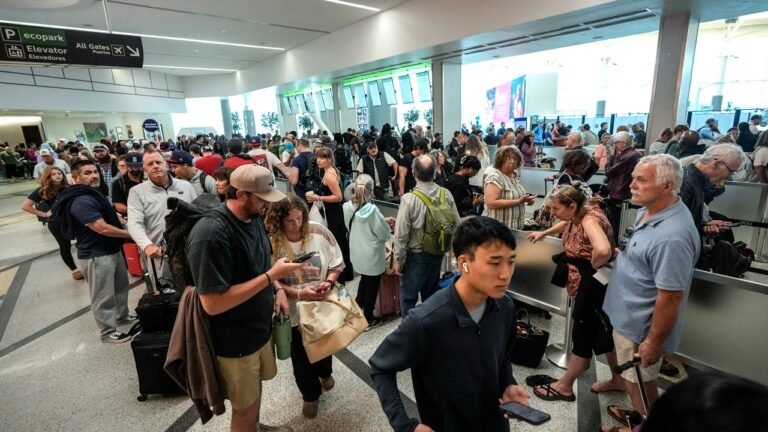
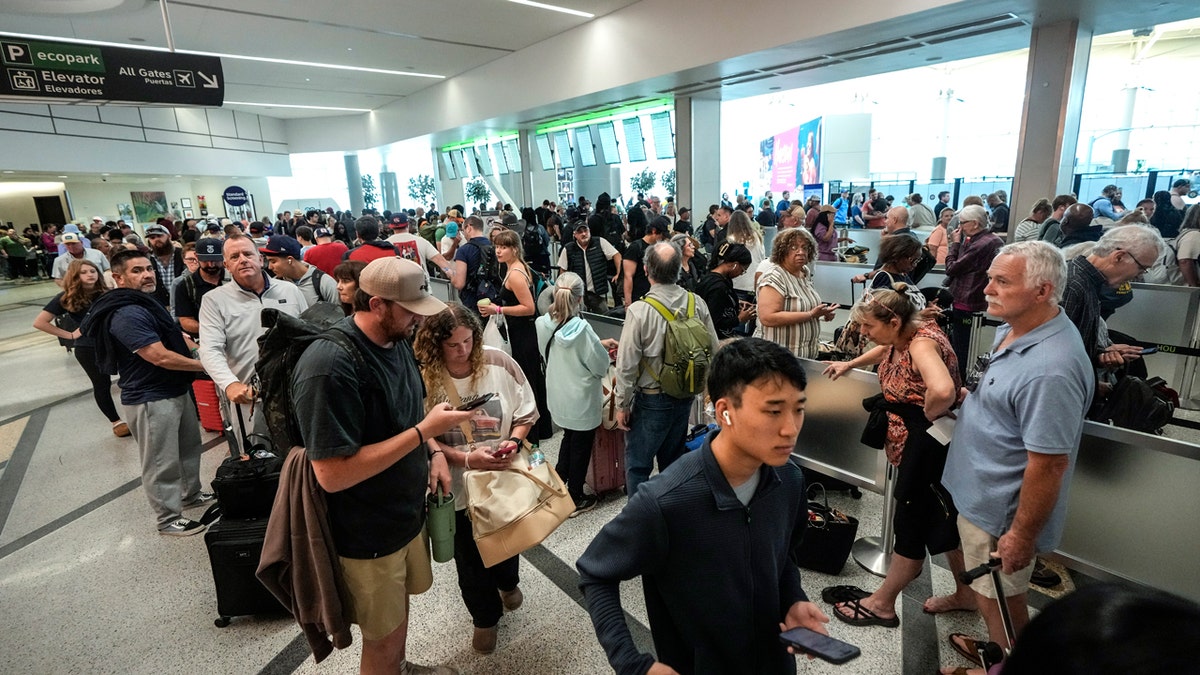
Airports in the U.S. are reporting longer-than-normal wait times in security lines, as Transportation Security Administration agents miss their first full paycheck.(Mark Felix/Bloomberg/Getty Images)
“This problem is solvable, and there are solutions on the table. Now it’s up to you, Congress, to move forward on bipartisan proposals that will get federal aviation workers—including TSA officers, U.S. Customs clearance officers at airports and air traffic controllers—paid during shutdowns,” wrote executives from American Airlines, United, Delta, JetBlue, Southwest, Alaska Air Group as well as airfreight titans Atlas Air Worldwide, UPS and FedEx.
The group called on lawmakers to pass several pending measures, including the Aviation Funding Solvency Act, the Aviation Funding Stability Act and the Keep America Flying Act, which would ensure that air traffic controllers and TSA officers continue to be paid regardless of the government’s funding status.
They pointed to the immediate toll on frontline workers, noting that TSA officers “just received $0 paychecks” and arguing that it is “simply unacceptable” for employees responsible for national travel security to go without pay.
The letter also underscored the broader consequences for travelers and the economy.
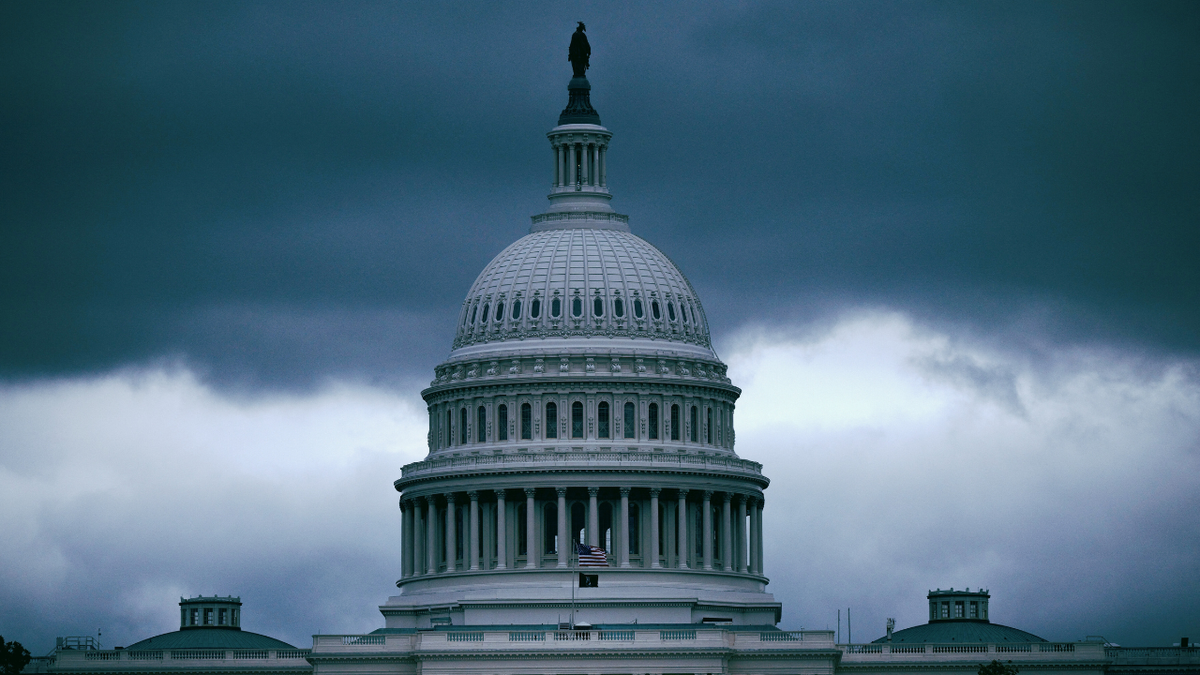
Lawmakers have yet to agree on a proposal to fund the Department of Homeland Security.(Brendan Smialowski/AFP/Getty Images)
“With spring break travel in full swing, FIFA World Cup 2026 right around the corner and celebrations for America’s 250th birthday throughout the year, the stakes are especially high,” the executives wrote, adding that the pressure on the aviation system is mounting.
Airlines are expecting a record 171 million passengers this spring, they said, but travelers are already facing checkpoint delays of two, three and even four hours.
The TSA line at William P. Hobby Airport in Houston stretched from the security checkpoint into the lower level parking garage.(Brett Coomer/Houston Chronicle via Getty Images)
Airlines said they are trying to reduce the disruption by holding flights for delayed passengers and rebooking others, but warned that Congress must act to keep the aviation system functioning smoothly and safely.
“It’s past time for the government to make sure that TSA officers, U.S. Customs clearance officers at airports and air traffic controllers are paid for the job they do.”
Amanda covers the intersection of business and politics for Fox News Digital.
Countries including the UK, Japan, China and South Korea have said they are still considering their options after the US president, Donald Trump, urged them to send warships to the strait of Hormuz to secure the vital shipping route.
In a post on his Truth Social platform, Trump called on the UK, China, France, Japan, South Korea and other countries to send ships to the waterway, the world’s busiest shipping route which is being violently blockaded by Iran.
In his post, Trump alleged that “many countries, especially those who are affected by Iran’s attempted closure of the Hormuz strait, will be sending war ships, in conjunction with the United States of America, to keep the strait open and safe”.
In a later post, Trump extended his callout to all “the countries of the world that receive oil through the Hormuz strait” to send military support.
However, the international response to Trump’s callout for the ready dispatch of warships to the strait has so far proved vague and reluctant, with countries unwilling to commit to a military response that could prove treacherous for their navies.
Tehran has said any oil tanker heading for the US, Israel or its allies was a legitimate target in the war and would be “immediately destroyed”. Sixteen tankers have been attacked in the strait of Hormuz since the war started in late February and Iran has threatened to lay explosive mines in the critical waterway. So far, the US has not sent its own navy ships to escort tankers through the strait.
A statement by the UK Ministry of Defence said they were in discussions with allies over “a range of options to ensure the security of shipping in the region”.
Speaking on the BBC, the energy secretary, Ed Miliband, said the UK had been in discussion with the US and other allies on how to keep the strait open and were considering sending mine-hunting drones. “Any options that can help to get the strait reopened are being looked at,” said Miliband.
The energy secretary, Ed Miliband, told the BBC on Sunday that the UK was considering deploying ships to the strait. Photograph: Jeff Overs/BBC/PA
A senior Japanese politician told the news channel NHK TV that Japan would not rule out sending warships to the region to secure the shipping lane but said the obstacles were very high.
“From a legal standpoint, the possibility cannot be ruled out, but given that the dispute is continuing, this is something we should judge cautiously. I think the hurdle is very high,” said Takayuki Kobayashi, the chair of the ruling Liberal Democratic party’s policy research council.
South Korea, heavily dependent on energy flows through the strait, said they had taken note of Trump’s comments but would communicate closely with the US and review the situation before making any decisions on how to help secure the shipping route.
“Our government is closely monitoring developments related to the Middle East situation,” said South Korea’s foreign ministry in a statement, adding that they were “exploring various measures from multiple angles to protect our citizens and secure the safety of energy transport routes”.
France had already made its position clear prior to Trump’s comments. Speaking on Thursday, the French defence minister, Catherine Vautrin, said France would not be sending warships to the strait of Hormuz while the conflict continued to escalate.
“I’m very clear and firm on this topic, at this point there is no question of sending any vessels to the strait of Hormuz,” said Vautrin. She said that France maintained a “purely defensive position” and there were no current plans to move the French navy’s flagship vessel, the Charles de Gaulle aircraft carrier, out of the eastern Mediterranean.
Speaking in Cyprus earlier in the week, the French president, Emmanuel Macron, had said that France and its allies were preparing a “purely defensive” mission to escort vessels through the strait of Hormuz, but only once the “most intense phase” of the US-Israeli war on Iran ends. Macron described it as a “purely escort mission” with involvement by both European and non-European countries.
Emmanuel Macron talks with the president of Cyprus, Nikos Christodoulides, at Paphos military base. Photograph: Alex Mita/PIO/Getty Images
According to the Financial Times, EU foreign affairs ministers are also considering widening the scope of the EU’s Aspides naval mission, which currently provides protection to ships in Yemen from attacks by Houthi rebels, to extend to the strait of Hormuz. The Aspides naval mission currently consists of three ships from France, Italy and Greece.
China’s response made no mention of military intervention. As an ally of Iran that is also highly dependent on crude oil imports from the strait, China is reportedly in talks with the Iranian regime about allowing oil tankers to pass through from the Gulf, but no definitive outcome has been agreed.
In a statement given to CNN by the Chinese embassy in Washington over the weekend, they said China would work to strengthen “communication with relevant parties” in the Middle East and “play a constructive role for deescalation and restoration of peace”.
Chicago Sky star Angel Reese called out a fake quote that was posted on social media and attributed to her on Saturday.
The post on X attributed a quote to Reese that talked about how much money she earns in a week compared to those who earn in seven days. It appeared to be a slight toward Reese’s intelligence.
Chicago Sky forward Angel Reese (5) warms up before a WNBA game against the Connecticut Sun at Wintrust Arena on Sept. 3, 2025.(Kamil Krzaczynski/Imagn Images)
“Here we go again. Rent must be due,” she wrote in response.
Reese is set to enter the WNBA for her third season, though it’s unclear when the year will tip off as the players union and the league have yet to come to a deal on a new collective bargaining agreement.
For now, Reese is competing with Team USA as they compete in FIBA Women’s World Cup qualifying games. The Americans defeated Italy, 93-59, on Saturday. Reese had five points and seven rebounds in the victory.
She’s averaging 7 points, 9.3 rebounds and 1 steal per game over the course of three qualifying games. She had six points against Senegal and 10 points against Puerto Rico.
Chicago Sky forward Angel Reese (5) stands on the sidelines before a WNBA game against the New York Liberty at Wintrust Arena on Sept. 11, 2025.(Kamil Krzaczynski/Imagn Images)
Reese entered the WNBA in 2024 as the Sky selected her with the No. 7 overall pick of the draft. She’s been an All-Star in each of her first two seasons. She’s averaging 14.1 points and 12.9 rebounds in 64 career games.
The clock is ticking on a new CBA deal to get done or the start of the 2026 season could be postponed.
WNBA Commissioner Cathy Engelbert said that progress in negotiations and a deal is needed by Monday to avoid any possible disruptions.
Chicago Sky forward Angel Reese watches a NBA game between the Chicago Bulls and Orlando Magic during the first half at United Center on Jan. 2, 2026. (Kamil Krzaczynski/Imagn Images)
“I’ve never been a betting woman in my life and I’m not going to start now. But we have to get a deal done by Monday,” Engelbert said Friday. “We have to get it done without disrupting some part of the fact that we’ve got to run this two team expansion (draft). We have to get expansion going. We got to get free agency going. We gotta get the college draft.”
United States President Donald Trump has called for a naval coalition to deploy warships to secure the Strait of Hormuz, through which one-fifth of world oil shipments transit, as oil markets reel from supply disruptions caused by the US-Israeli war with Iran.
What is essentially the closure of the Strait of Hormuz by Iran in response to the attacks by the US and Israel has sent oil prices soaring to more than $100 per barrel.
Iran’s new supreme leader, Mojtaba Khamenei, has promised to keep the maritime artery closed while another top official in Tehran warned that oil prices could shoot up beyond $200 per barrel.
Trump said he hoped a naval coalition could secure the vital waterway, which connects the Gulf to the Gulf of Oman and the Arabian Sea. Iran has struck more than a dozen ships trying to sail through the narrow waterway since the hostilities started two weeks ago.
But will Trump’s solution work?
A tanker sits at anchor in Port Sultan Qaboos in Muscat, Oman, as oil shipments through the Strait of Hormuz have plummeted [File: Benoit Tessier/Reuters]
What has Trump said?
The US president has been facing domestic pressure over starting the war alongside Israel with no endgame or off-ramps in sight.
“On the strait of Hormuz, they had NO PLAN,” US Democratic Senator Chris Murphy wrote in a post on X. “I can’t go into more detail about how Iran gums up the Strait, but suffice it [to] say, right now, they don’t know how to get it safely back open.”
After threatening to bomb Iran more, Trump called on China, France, Japan, South Korea and the United Kingdom to send warships to secure the strait.
Trump claimed “100% of Iran’s military capability” had already been destroyed but added that Tehran could still “send a drone or two, drop a mine, or deliver a close-range missile somewhere along, or in, this waterway”.
“Hopefully China, France, Japan, South Korea, the UK, and others, that are affected by this artificial constraint will send ships to the area so that the Hormuz Strait will no longer be a threat by a nation that has been totally decapitated,” Trump wrote in a post on his Truth Social platform.
“In the meantime, the United States will be bombing the hell out of the shoreline, and continually shooting Iranian Boats and Ships out of the water. One way or the other, we will soon get the Hormuz Strait OPEN, SAFE, and FREE!”
Not long after, Trump returned to the keyboard, extending the invitation to all “the Countries of the World that receive Oil through the Hormuz Strait” to send warships, adding that the US would provide “a lot” of support to those who participated.
Israeli soldiers walk by a billboard commissioned by the evangelical Christian group Friends of Zion during the US-Israel war on Iran in Tel Aviv, Israel [File: Nir Elias/Reuters]
What has Iran said?
Alireza Tangsiri, commander of the Islamic Revolutionary Guard Corps Navy, said in a statement that claims by the US about destroying Iran’s navy or providing safe escort for oil tankers were false.
“The Strait of Hormuz has not been militarily blocked and is merely under control,” he said in a statement.
Iranian Foreign Minister Abbas Araghchi later doubled down on this, saying the strait remained open to international shipping except for vessels belonging to the US and its allies.
“The Strait of Hormuz is open. It is only closed to the tankers and ships belonging to our enemies, to those who are attacking us and their allies. Others are free to pass,” Araghchi said.
Khamenei – son of the late Supreme Leader Ali Khamenei, who was killed on the first day of the US-Israeli strikes – suggested in his first statement since taking power that the Strait of Hormuz would remain closed to provide leverage for Iran during the conflict.
F-18 combat aircraft are parked on the deck of the USS Abraham Lincoln aircraft carrier in the Gulf of Oman near the Strait of Hormuz during a 2019 deployment [File: Ahmed Jadallah/Reuters]
What are the challenges in the Strait of Hormuz?
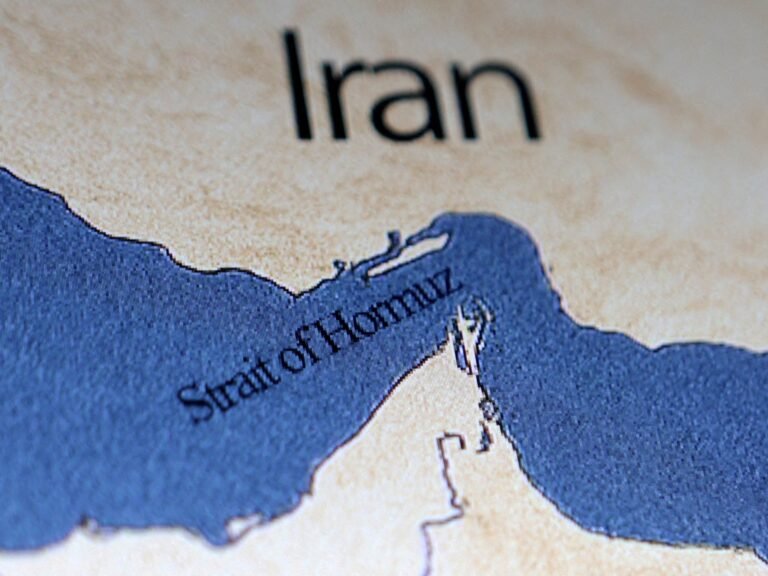
The strait, which is just 21 nautical miles (39km) wide at its narrowest point, is the only maritime passage into the Arabian Gulf (known as the Persian Gulf in Iran). Shipping lanes in the waterway are even narrower and more vulnerable to attacks.
It separates Iran on one side from Oman and the United Arab Emirates on the other.
In brief, there is no way in or out by sea when the Strait of Hormuz is closed.
Alexandru Hudisteanu, a maritime security expert who served 13 years in the Romanian navy, told Al Jazeera that in the type of coalition that Trump is hinting at, “interoperability is the biggest hurdle.”
“That’s the ability of cruises to work together or with different units and different doctrine when basic communication would be an issue,” he said.
Then, there is the geography of the Strait of Hormuz: “a very unforgiving environment to sail with this type of wartime threats”, Hudisteanu said. “Especially difficult under missile threats and these asymmetric potential mines or unmanned systems that could damage or destroy ships.”
Providing escorts to ships would be a costly option, and it would pose risks to participating foreign warships from possible Iranian attacks, which would likely further drag more countries into the ongoing war.
From Iran’s point of view, “the fact that the shoreline is so close and the actual maritime passage is highly congested and confined is an advantage by default,” Hudisteanu added. Geographically, Iran keeps it as a gauntlet, with no way out for the ships unless Tehran allows it.
Another major challenge for any naval coalition trying to secure the passage would be the timeline of any operation. ”The security of the strait could be achieved. It’s just a matter of how much time you need and how many assets you need,” the analyst said. Rushing through it “could have negative implications for the security of the mission and the region”.
Smoke rises from the Thai bulk carrier Mayuree Naree near the Strait of Hormuz after an attack on March 11, 2026 [Handout/Royal Thai Navy via AFP]
How have countries responded?
No country has so far publicly agreed to Trump’s call to send warships to secure the Strait of Hormuz.
London said it is “intensively looking” at what it can do to help reopen the maritime passage. British Energy Secretary Ed Miliband said: “We are intensively looking with our allies at what can be done because it’s so important that we get the strait reopened.”
Chinese Ministry of Foreign Affairs officials said Beijing is calling for hostilities to stop and “all parties have the responsibility to ensure stable and unimpeded energy supply.”
Japan said the threshold is “extremely high” to send its warships on such a mission. “Legally speaking, we do not rule out the possibility, but given the current situation in which this conflict is ongoing, I believe this is something that must be considered with great caution,” said Takayuki Kobayashi, policy chief of Japan’s ruling Liberal Democratic Party.
France also confirmed that it will not send ships. The Ministry for Europe and Foreign Affairs said in a statement on Saturday: “Posture has not changed: defensive it is,” in reference to President Emanuel Macron’s assertion that France will not join the war against Iran.
South Korea, which imports 70 percent of its oil from the Gulf, said it was “closely monitoring” Trump’s statements and “comprehensively considering and exploring various measures … to ensure the safety of energy transport routes”.
(Al Jazeera)
Are countries negotiating with Iran?
Some countries have been negotiating with Iran to secure passage for their petroleum shipments.
Two Indian-flagged tankers carrying liquefied petroleum gas (LPG) have sailed through the Strait of Hormuz. New Delhi depends on this passage for 80 percent of its LPG imports.
The war on Iran has caused a critical shortage of cooking gas for India’s 333 million households. New Delhi has long had ties with Iran, but the government of Prime Minister Narendra Modi has not condemned the killing of Ali Khamenei. It has condemned Iran’s retaliatory attacks on Gulf countries, where millions of Indian citizens work and send $51bn in remittances home every year.
Iran’s ambassador to India, Mohammad Fathali, said Tehran had allowed some Indian vessels to pass through the Strait of Hormuz in a rare exception to the blockade but did not confirm the number of vessels.
A Turkish-owned vessel was similarly granted permission last week after Ankara negotiated passage directly with Tehran. Fourteen more Turkish vessels are awaiting clearance.
France and Italy also reportedly opened talks with Iranian officials to negotiate a deal to allow their vessels through the strait, but there has been no official confirmation yet.
“Iran is affecting maritime supply,” Hudisteanu said. “It’s affecting the maritime security of the region and the entire ecosystem and bringing the entire world to the table as the global price for oil and gas increases.”
Airspace closed and flights cancelled! How did West Indies players leave India?
Last Updated:
Cricket West Indies statement: The players of the West Indies cricket team, who came to participate in the ICC T20 World Cup 2026, stayed in India for more than a week. The reason for his stay was the ongoing war conflict between Iran and America. In such a situation, now Cricket West Indies has given an official statement that all the players and support staff have reached their respective homes safely.
West Indies cricket team reached home safely
New Delhi: Cricket West Indies said that the West Indies players and support staff members stranded in India after the ICC T20 World Cup have now returned home safely. He had to stay in India due to travel restrictions caused by the ongoing conflict in West Asia. The ongoing war between America, Israel and Iran had completely spoiled the travel plans due to which the West Indies and South Africa teams were stuck in Kolkata.
This happened because the airfields and airports in Dubai were closed. West Indies played its last match in the T20 World Cup on March 1 in Kolkata. ICC had announced on Thursday that the last group of players has also left. In a statement issued on Saturday, CWI confirmed that all the players and members of the team management who were part of the West Indies team in the tournament have completed their journey and reached their respective destinations.
Charter plane for players was canceled
CWI said, “The last group of players and support staff have now reached their respective destinations safely, having completed their journey in the last few days.” Nine West Indies players had left earlier this week while commercial flights were booked for the remaining 16 players. CWI expressed its gratitude to the International Cricket Board, Regional Cricket Boards and other relevant parties for facilitating and coordinating the return of players and staff.
He said, “We also thank the West Indies fans and the entire cricket world for their concern and well wishes.” CWI said, “The well-being and safety of our players and staff is of the utmost importance to us and we are grateful that this matter has now been resolved safely and satisfactorily.” The chaos of the trip was also criticized by some players. West Indies head coach Darren Sammy had expressed his displeasure at not receiving any information from the ICC.
Working as Chief Sub Editor in Network 18 Group since October 2025. 9 years experience in journalism. Started career with sports beat in ABP News Digital. Reputable institutions like India TV and Navbharat Times Group…read more
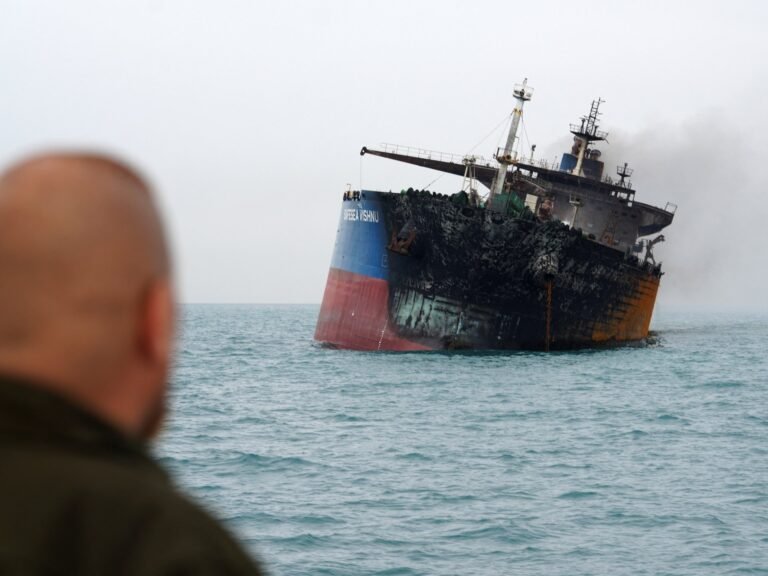
Hundreds of tankers sit idle on both sides of the Strait of Hormuz as Iran has effectively closed the waterway, pushing oil prices above $100 – the highest since 2022, after the start of the Russia-Ukraine war.
Oil tanker traffic in the strait, through which one-fifth of global oil passes, has plunged after Israel and the United States launched attacks on Tehran on February 28. Asian countries, including India, China and Japan, as well as some European countries, source large portions of their energy needs from the Gulf. A disruption in supply will rattle the global economy.
With an aim to cushion from the shock, the International Energy Agency (IEA) has decided to release 400 million barrels of oil from emergency reserves, the largest coordinated drawdown in the agency’s history. But it has failed to push the prices down.
The agency had released about 182 million barrels after Russia’s invasion of Ukraine to stablise the oil prices.
According to the agency, oil shipments through the strategic waterway have fallen to less than 10 percent of pre-war levels, threatening one of the most critical arteries in the global energy system.
IEA members collectively hold about 1.25 billion barrels in government-controlled emergency reserves, alongside roughly 600 million barrels in industry stocks tied to government obligations.
A large number in a massive market
The figure may appear vast, but it shrinks quickly against the scale of global energy demand.
“This feels like a small bandage on a large wound,” energy strategist Naif Aldandeni said, describing the world’s largest coordinated emergency oil release as governments scramble to steady markets shaken by war.
The US Energy Information Administration (EIA) estimates world consumption of petroleum and other liquids will average 105.17 million barrels per day in 2026. At that rate, 400 million barrels would theoretically cover just four days of global consumption.
Even when compared with normal traffic through the Strait of Hormuz – around 20 million barrels per day – the released oil equals only about 20 days of typical flows.
Aldandeni told Al Jazeera that emergency reserves can calm panic in markets but cannot replace the lost function of a disrupted shipping corridor.
“The release may soften the shock and calm nerves temporarily,” he said, “but it will remain limited as long as the fundamental problem — the freedom of supply and tanker movement through Hormuz – remains unresolved.”
Oil prices reflect those anxieties. Brent crude ended trading on Friday at $103.14 per barrel, after surging to nearly $120 earlier as fears of disrupted production and shipping intensified.
Geopolitical risk premium
Oil expert Nabil al-Marsoumi said the price surge cannot be explained by supply fundamentals alone.
“The closure of the Strait of Hormuz added roughly $40 per barrel as a geopolitical risk premium above what market fundamentals would normally dictate,” he told Al Jazeera.
From that perspective, releasing strategic reserves serves primarily as a temporary tool to dampen that premium rather than fundamentally rebalance the market.
Prices above $100 per barrel are uncomfortable for major consuming economies already struggling to curb inflation and protect economic growth.
Recent EIA projections suggest global demand has not yet declined significantly because of the war, remaining close to 105 million barrels per day. The market pressure, therefore, stems less from falling consumption and more from fears of supply shortages and delays in deliveries to refineries and consumers.
Threats to oil infrastructure
The latest escalation could deepen those fears.
United States President Donald Trump said on Friday that the US Central Command (CENTCOM) had “executed one of the most powerful bombing raids in the History of the Middle East and totally obliterated every MILITARY target in Iran’s crown jewel, Kharg Island”.
He added that “for reasons of decency” he had “chosen NOT to wipe out the Oil Infrastructure on the Island”, but warned Washington could reconsider that restraint if Iran continues to disrupt shipping through the Strait of Hormuz.
CENTCOM confirmed the operation, stating US forces had struck “more than 90 Iranian military targets on Kharg Island, while preserving the oil infrastructure”.
Iranian officials have meanwhile warned they would target energy facilities linked to the US across the region if Iranian oil infrastructure comes under direct attack.
Kharg Island is not simply a military location. It serves as the primary export terminal for Iranian crude, making it a critical node in the country’s oil supply network.
If attacks move from obstructing shipping to targeting export infrastructure itself, the crisis could shift from a chokepoint disruption scenario to one involving direct losses of production and export capacity.
In such circumstances, the oil released from emergency reserves would act only as a temporary bridge rather than a lasting solution to lost supply.
Major oil companies such as QatarEnergy, the world’s largest producer of liquefied natural gas (LNG), Kuwait Petroleum Corporation and Bahrain state oil company Bapco have shut production and declared force majeure, while Saudi Aramco, the world’s largest oil producer, and UAE state oil company ADNOC have shut down their refineries.
Limits of emergency reserves
Even under a less severe scenario – where maritime disruption persists but infrastructure remains intact — the ability of strategic reserves to stabilise markets remains constrained by logistics.
The US Department of Energy said the US Strategic Petroleum Reserve held 415.4 million barrels as of 18 February 2026. Its maximum drawdown capacity is 4.4 million barrels per day, and oil requires about 13 days to reach US markets after a presidential release order.
That means even the world’s largest emergency stockpile cannot flood the market with crude immediately. The release must move through pipelines, shipping networks and refining capacity before reaching consumers.
Aldandeni said the current intervention would likely produce only a temporary stabilising effect, while al-Marsoumi warned that prolonged disruption in the Strait of Hormuz – or the spread of threats to other chokepoints such as the Bab al-Mandeb Strait in the Red Sea could quickly send prices further higher.
Britain is in a standoff with Brussels over a demand to cut university tuition fees for European students, in a row that threatens to scupper Keir Starmer’s planned EU reset.
EU officials say European students should pay “home” fees of about £9,500 a year as part of the negotiations over a youth mobility scheme, rather than the higher international rate, which can rise above £60,000.
However, British negotiators say they have been blindsided by the demand, which they say was not mentioned in the framework agreement signed last year and would cost British universities an estimated £140m a year.
Sources say the disagreement has brought talks to a near standstill with just three months left before a summit in Brussels in late June or early July.
The prime minister is planning to use that summit to announce a series of agreements on trade and travel designed to bolster his argument that closer ties with the EU are needed to boost the UK’s economic growth.
One said: “It is true that talks have stalled and that this is now the main issue on which both sides cannot agree.”
A British government spokesperson said: “Any final [youth mobility] scheme must be time-limited, capped and will be based on our existing youth mobility schemes, which do not include access to home tuition fee status.”
One British source described the idea of a reduction in tuition fees as a “non-starter”.
The European Commission would not comment on negotiations, though a spokesperson said: “The United Kingdom and the EU have underlined and reaffirmed their commitment to implementing the outcomes of the May 2025 summit in a timely manner. We will work together on our continued discussions in areas of shared interest.”
Starmer kicked off talks on a range of subjects last year as part of what ministers said was a “historic” agreement to improve the terms of the Brexit deal 10 years after the UK first voted to leave the EU.
The prime minister has put closer EU relations at the heart of his economic plan, something the chancellor, Rachel Reeves, will further emphasise in a lecture on Tuesday spelling out the government’s growth strategy.
Nick Thomas-Symonds, the Cabinet Office minister, who is in charge of the negotiations, is due in Brussels on Monday to underline the government’s position in front of a joint meeting of members from the British and European parliaments.
But in the negotiating room, agreement is proving hard to come by, with officials toiling over three potential deals: one covering trade in food and agricultural products; one covering carbon emissions; and one expanding visa freedoms for young people.
Sources briefed on the talks say the agricultural trade deal is close to completion after European officials accepted that Britain could keep its higher animal welfare standards as part of any agreement.
Discussions on the carbon emissions deal, which would link the carbon emission trading schemes in the UK and EU and avoid Britain having to pay a cross-border carbon tax, are also thought to be well advanced. However, the youth mobility scheme, which ministers have rebadged as a youth experience scheme to dispel fears about higher levels of migration, is causing a major stumbling block.
EU leaders have instructed Brussels officials to negotiate over reducing the fees for all European students in return for accepting British demands of a two-year time limit on the scheme and a limit on numbers of fewer than 100,000 a year. The instruction was handed over as part of the formal negotiating mandate given earlier this year by the European Council to the European Commission, which carries out the talks.
Sources in Brussels say that since Brexit, the proportion of European students in the UK has fallen from 27% to 5%, and they argue that the European middle-class is being priced out of a British university education.
But UK officials say that while a cap and a time limit were explicitly referenced in last year’s agreement, a reduction in fees was not. They say that if the government accepted Brussels’ demand it would require a “really big” concession in return beyond the requirements the government had already set out.
UK officials are keen to make the scheme more flexible than the EU is proposing, for example by allowing participants to change between work, study or simply travelling as they wish.
Mark Corver, an analyst of university funding and director at Campus Numerics, said setting fees for EU students at the same level as British students’ would cost the sector £140m in the first year, and £400m across the three-year period of a typical course.
Jamie Arrowsmith, the director of Universities UK International, said: “We fully support the government’s position on home fee status. This would carry a very significant cost and risks undermining the financial sustainability of universities, which would not be in the best interests of the UK or the EU, or prospective students.”
EXCLUSIVE — One of the most consistent messages in the new movie “Reminders of Him” is that prisons are home to some victims, too.
The film, based on Colleen Hoover’s novel of the same name, follows a young woman, Kenna, whose tragic mistake behind the wheel leads to the death of her boyfriend, Scotty. Unbeknownst to her, Kenna was pregnant. Kenna gave birth while in custody and was kept from her daughter while serving her sentence. Now, she returns to the same town to seek forgiveness from Scotty’s parents in hopes of reuniting with her now 5-year-old daughter, Diem.
Director Vanessa Caswill hopes to remind audiences that one mistake shouldn’t condemn a person for a lifetime.
“It’s just having a human understanding that people in prison aren’t necessarily there because they’re a bad person,” Caswill told Fox News Digital in a recent interview. “Things happen and things lead to actions and, many times, actions are mistakes or misguided or misjudgments. I think that judgment’s a very tricky thing because we’re all flawed, and we all make mistakes, and we all need a moment in our life where we personally want redemption. So I think it’s important to be willing to give it as well.”
A still from the new movie, “Reminders of Him.” (Photo courtesy of Universal Pictures)
Although Kenna has high hopes of making amends when she leaves prison, she finds that Scotty’s parents aren’t warm or welcoming. They even file a restraining order against her after a couple of too-close-for-comfort incidents.
Caswill said she’s learned the power of forgiveness through a series of her own challenges.
“You know, I think that I’m acutely aware of how, in our personal lives, we really have a choice about looking at anything that comes up, any challenge, through the lens of love or fear, and obviously fear can take many forms,” she said. “And it’s very easy to fall into that, but to just try to keep pivoting and try to keep looking at anything that comes up, with an open heart, is one that I certainly, having gone through many challenges in my life, started to sort of move towards and feel like there’s something so much more uplifting about looking at the world through that lens.”
“So yes, and I think that’s what I loved about this story, the way it sort of transmits something dark into something lighter,” she continued. “And you can’t rid yourself of grief or pain, but you can definitely transform the way you look at it.”
“Reminders of Him” behind the scenes. (Photo courtesy of Universal Pictures)
Caswill has previously directed acclaimed TV series like the BBC’s “Thirteen” and “Little Women,” as well as the 2023 Netflix film “Love at First Sight.” Her star-heavy cast of “Reminders of Him” includes Lauren Graham and Bradley Whitford as Scotty’s grieving parents, country artist Lainey Wilson, and Tyriq Withers as a brooding bartender and Scotty’s best friend who eventually becomes Kenna’s champion and love interest. Zoe Kosovic makes an impressive turn as the young Diem.
Two of the most moving scenes — which feature a couple of satisfying hugs — come at the tail end of the film, when Kenna starts to make inroads with the people she hurt.
“And both of them were really late in our schedule, so I was kind of carrying those scenes in my heart throughout the entirety of the filming process, knowing that if we didn’t land those scenes, the film wasn’t going to work,” Caswill said. “So, it was partly emotional because there was relief in the fact that they were so brilliant — Micah and Lauren and Zoe were so brilliant in those scenes. And also emotional, because I think we were all carrying the intensity of the story and the pain of these characters the whole way through.”
In “Reminders of Him,” Kenna’s tragic mistake sends her to prison for five years.(iStock)
“And then, when you get these moments of connection and heart, it was really very emotional on set,” she added. “And I remember, you know, I was in tears, but I remember — I’m so intense at the monitor. I don’t look away from it. I stepped away when we called ‘cut’ and looked at the people around me and my DP [director of photography] turned around, and he just had his eyes just streaming, and it touched everybody, everybody was so invested in what those actors were doing.”
“Reminders of Him,” from Universal Pictures, is in theaters now.
Cortney O’Brien is an Editor at Fox News. Twitter: @obrienc2
Jewish and Arab American leaders across Detroit and the US strongly condemned the 12 March terrorist attack on a Michigan synagogue and largely aimed to lower tensions against the backdrop of the US and Israel’s ongoing military campaign in Iran.
But in Michigan, where large populations of Arab Americans and Jews live near one another, the complexities of the situation can be difficult to grapple with – and few people had easy or quick answers on how to move forward.
In some cases, emotions continue to run high: a pro-Israel state representative on Friday afternoon assailed on social media a Muslim politician who had expressed sadness over the incident.
The Lebanese American suspect, Ayman Ghazali, a 41-year-old shawarma restaurant employee, appears to have carried out the attack in retribution for the Israel Defense Forces (IDF) killing of four of his relatives, including two small children, in an airstrike on their home during its ongoing invasion of Lebanon.
Ghazali reportedly drove his truck through the doors of the Temple Israel synagogue and into a hallway, where he allegedly shot himself fatally after he was confronted by security. Explosives were found inside the truck, which caught fire. Community leaders expressed relief that there was only a minor injury beyond Ghazali’s own death.
Temple Israel is in West Bloomfield Township, a wealthy community a few miles north of Dearborn, the center of the region’s Lebanese American population.
Congregation T’chiyah Rabbi Alana Alpert said that everyone “deserves to walk safely down the streets of our neighborhoods and through the doors of our holy spaces”.
“Anytime someone blames or conflates all Jewish people – including kids at their school – with the state or government of Israel, that is dangerous and antisemitic, and it leads directly to violence against us,” she said. “And that includes when Trump or [Israeli prime minister Benjamin] Netanyahu do it.”
The Jewish Federation of Detroit did not respond to a request for comment, but in a media statement the group said: “We remain steadfast in our commitment to vigilance and security, even as we continue to live proud, vibrant Jewish lives – at our temples and synagogues, in our schools, and throughout our Jewish organizations.”
But some voices have linked the attack on the synagogue to the conflict in the Middle East and Israel’s actions.
Jewish Voice for Peace Detroit’s Lex Eisenberg said they are “broken-hearted in the wake of a horrible attack”.
“It is increasingly clear that the Israeli government’s atrocities make all people, including Jews, less safe,” they added in an email. “The Israeli government carries out wars and genocide against families and children, and then [it] falsely claims these war crimes are done in the name of Jews. This leads to still more anti-semitism.”
Much of the Lebanese American diaspora in south-east Michigan has its roots in southern Lebanon, where the IDF has forcibly displaced more than 800,000 people in southern Lebanon in recent weeks as it seeks to eliminate Hezbollah. Hezbollah operates outside the Lebanese government in the region and carries out attacks on Israel.
Among other support for the Israeli military, the Temple Israel synagogue has hosted IDF soldiers, hosted an IDF recruiter (though he wasn’t recruiting at the synagogue), has held prayers for the IDF and has partnered with the Friends of the IDF, which fundraises to support the military.
Rabbis for Peace founder Alissa Wise said such an attack on Jews stemming from Middle East violence was her “worst fear”.
“On one hand, you want to say it’s a synagogue so it’s an antisemitic attack, but at the same time you understand that Israel deliberately conflates Jewishness with support for Israel’s actions, and you also have a synagogue that supports that project,” Wise said.
Wise added: “How do we hold this complexity in a world like this and in a time like this?”
The response in Dearborn
In Dearborn and adjacent Dearborn Heights, many are shocked that a well-known community member from a popular sandwich shop, Hamido, carried out the attack. The area has been subjected to regular Islamophobic attacks and vitriol from rightwing groups in recent decades. It knows the pain of being targeted; Arab American mayors, imams and other leaders from across the region expressed support for Jewish residents.
“Jewish and Arab communities have always co-existed here in [south-east] Michigan, and the emphatic statements of solidarity I’m seeing from Arab American leaders of all faiths do not surprise me, given greater Detroit’s strong interfaith tradition,” Bilal Baydoun, a former city of Dearborn spokesperson, said.
A Dearborn community leader who declined to use their name said the attacks were “terrible” but added “so are the attacks that are killing our families and friends in Lebanon.
“Where is the sympathy and outrage over that?”
It is that layer that makes the situation so difficult for many, though they and other community leaders stressed that there is little animosity among Arab American and Jewish residents in Michigan; nor are Israel’s actions justification for violence here.
“The unjustified Israeli attack on civilians in Iran and Lebanon gives no blank check to anyone attacking synagogues, civilians and peaceful communities,” Dearborn imam Hassan Qazwini told the Detroit Free Press on Friday.
One notable exception to the calls for civility in the terrorist attack’s wake was pro-Israel Michigan state representative Noah Arbit’s taking rhetorical aim at Abdul El-Sayed, a former Detroit health official who is running for the US Senate. El-Sayed has long been critical of Israel’s attacks in Gaza – which have been roundly condemned internationally – and called for a halt to all foreign military aid, including to Israel.
El-Sayed wrote on X that he was “horrified and heartbroken” in the hours after the Temple Israel attack. Later, in a video, El-Sayed said Ghazali’s actions, Israeli strikes on Lebanon and the Iran war are part of a cycle of violence that must come to an end.
He added that conflating the Temple Israel congregation with the Israeli government amounts to antisemitism.
“One can have righteous anger with the state of Israel while expressing solidarity with the Jewish people, including Jewish people in Israel,” El-Sayed said in the video.
“Amazed by the crocodile tears from someone who’s done more than most to stoke & inflame hatred against Jews,” Arbit wrote. Invoking an acronym for the American Israel Public Affairs Committee, he added: “It’s a very small logical leap from ‘AIPAC controls the US government,’ ‘Israel is committing genocide,’ ‘Zionists kill Arab babies’ to ‘kill Jews in West Bloomfield.’”
El-Sayed did not respond to the comment.
However, more broadly, many hope that the tragedy can be an impetus for change. Wise said many pro-Israel, mainstream synagogues have “strong red lines” against speaking with antiwar or pro-Palestinian Jewish groups such as Rabbis for Peace. Wise said she is hopeful the tragedy can bring groups together.
“Sometimes fear and grief and pain can open our hearts,” Wise said. “And I hope that can be the case if it will force people who have been unwilling to sit at the same table to do so.”
Suryavanshi spoils the show, U-19 WC hero now sets his sights on IPL trophy
Last Updated:
Vaibhav suryavanshi eyes on wins ipl trophy: Under-19 World Cup star Vaibhav Suryavanshi was the center of attraction at the BCCI Naman Awards 2026. This 15-year-old batsman, who played a historic innings of 175 runs on 80 balls in the final against England, spoke openly about IPL and future plans. Rajasthan Royals’ youngest player Vaibhav told how Rahul Dravid’s guidance changed his game. Now their next target is to capture the IPL 2026 trophy.
Vaibhav Suryavanshi wants to win the IPL trophy for Rajasthan Royals.
New Delhi. Among the senior stalwarts of Team India, a 15-year-old teenager attracted everyone’s attention. It was none other than India’s Under-19 World Cup hero and the youngest player of IPL, Vaibhav Suryavanshi. The joy of meeting his teammates and coaches again after winning the World Cup trophy was clearly visible on Vaibhav’s face. At the BCCI Naman Awards 2026 ceremony in Delhi on Sunday evening, Vaibhav said that his eyes are on winning the IPL trophy for Rajasthan Royals.
Cricket history will always remember what Vaibhav Suryavanshi did against England in the final of the recently concluded 2026 ICC Under-19 Cricket World Cup. Opening for the Indian team captained by Ayush Mhatre, Vaibhav played an incredible inning of 175 runs in just 80 balls. In this innings, he destroyed England’s bowling attack by hitting 15 fours and 15 sixes. Thanks to his explosive innings, India once again won the title of world champion.
Vaibhav Suryavanshi wants to win the IPL trophy for Rajasthan Royals.
‘I don’t have any specific plan’ While talking to Star Sports about his batting approach, Vaibhav Suryavanshi said, ‘I do not have any special plan. I just play according to the situation and do what the team needs at that time. I believe in my strength and natural game’ Vaibhav Suryavanshi holds the record of being the youngest player in IPL history. Rajasthan Royals (RR) bought him for Rs 1.1 crore at the age of just 13. Vaibhav revealed that the scouting team of Royals was keeping an eye on him since he was just 11 years old.
‘Since then the RR team was keeping an eye on me’ Vaibhav recalled, ‘When I made my domestic debut, the RR team was keeping an eye on me. My trial with them also went very well, so I was hopeful that I would be a part of this franchise. My game and life have improved a lot after joining RR. Recalling his first IPL camp, Vaibhav made special mention of great batsman Rahul Dravid. He said that he got a lot to learn in the presence of Dravid sir. The time spent with senior players has been a great learning experience for him.
Vaibhav’s eyes are set on the upcoming IPL Now Vaibhav’s eyes are fixed on the upcoming IPL. Making his vision clear for the team, he said, ‘My only goal for this IPL season is to win the trophy for Rajasthan Royals. I want to perform in a way that helps the entire team. Winning the title for the franchise is paramount for me.
Active in journalism for about 15 years. Studied from Delhi University. Interested in sports especially cricket, badminton, boxing and wrestling. Covered IPL, Commonwealth Games and Pro Wrestling League events. From February 2022…read more