House committee report says Walz enabled billions in Minnesota fraud


NEWYou can now listen to Fox News articles!

A comprehensive final report released Tuesday by the Minnesota House Fraud Prevention and State Agency Oversight Committee concluding its work for the current session takes aim at a “culture of tolerance” under Gov. Tim Walz that it says allowed serial fraudsters to fleece taxpayers for billions of dollars. 

The 84-page final report, which follows two dozen hearings and hundreds of whistleblower tips, paints a grim picture of state government malfeasance, incompetence and the active suppression of internal warnings. 

The committee concluded that the scale of fraud in Minnesota is “massive and unprecedented,” costing taxpayers an estimated $300 million in federal meal program fraud and up to $9 billion in Medicaid fraud. The report asserts that the total amount stolen across multiple programs, including childcare and SNAP, is significantly higher than previously believed. 

The report cited several examples of what it characterizes as Walz failing to act on fraud, including a situation, reported by Fox News Digital, where he “tried to blame a court order” for failing to stop payments to the Feeding Our Future fraudsters. However, the presiding judge later issued a public statement clarifying that he never ordered the state to resume payments, asserting that the Walz administration did so voluntarily.

MINNESOTA FRAUD COMMITTEE CHAIR CLAIMS WALZ ‘TURNED A BLIND EYE’ TO FRAUD WARNINGS FOR YEARS
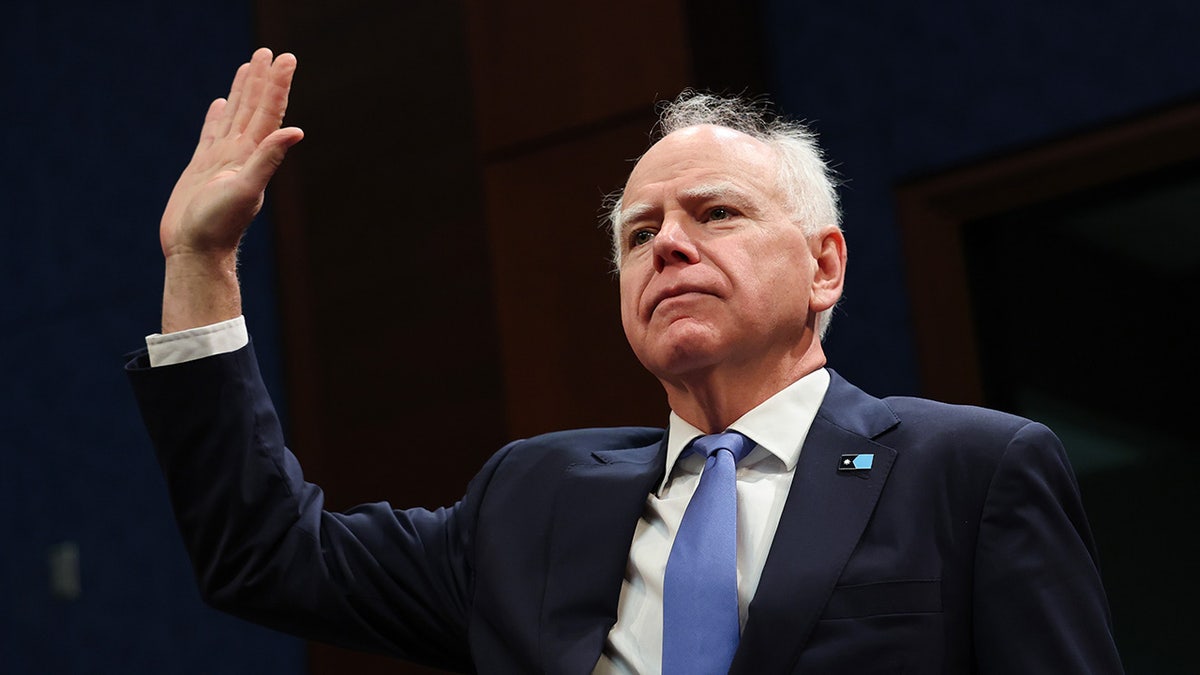
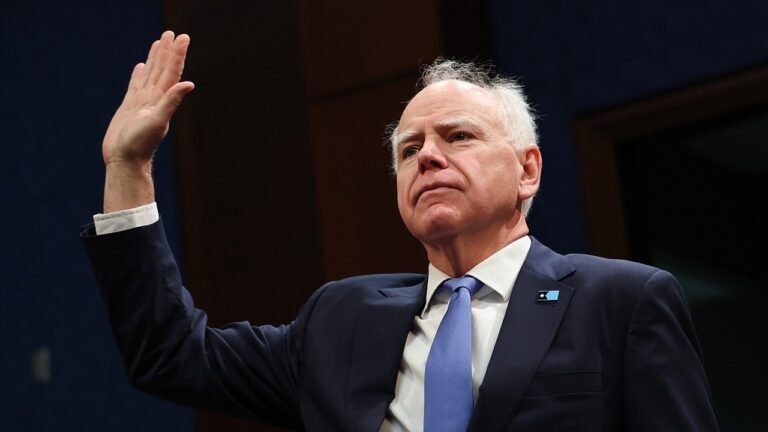
Minnesota Gov. Tim Walz testifying during a House Oversight Committee hearing in the U.S. Capitol Building

Minnesota Gov. Tim Walz is sworn in as he testifies during a House Oversight and Government Reform Committee hearing in the U.S. Capitol Building in Washington, D.C., on March 4, 2026. The committee examined alleged misuse of federal funds for Minnesota social services and Medicaid programs. (Anna Moneymaker/Getty Images)

Investigators identified a recurring “business model” used by criminals to fleece taxpayers, which involved low barriers to entry, the use of shell companies and the payment of kickbacks to enroll recipients. The report specifically links the Feeding Our Future scandal to earlier unaddressed fraud in the Child Care Assistance Program (CCAP), suggesting that the failure to stop one led directly to the explosion of the other. 

The report alleges that Governor Walz created a culture that enabled fraud by failing to hold officials accountable despite years of credible whistleblower reports and audits. It claims the administration “ignored and consciously downplayed” shocking levels of fraud across more than a dozen Medicaid waiver programs and prioritized “compassion over compliance.” 

While the committee uncovered numerous findings highlighting the severity of the fraud, they found themselves consistently facing opposition from Democrats, including earlier this month when Democrats on the committee blocked an effort to subpoena Democratic Rep. Ilhan Omar for information on her alleged ties to the convicted fraudsters in the Somali community.

COMER SAYS WALZ ‘RETALIATED’ AGAINST WHISTLEBLOWERS WHO WARNED OF MINNESOTA FRAUD FOR YEARS

The report offered a strong critique of Omar, asserting that her MEALS Act “took the guardrails off” federal nutrition programs by allowing for-profit restaurants to participate and permitting “grab-and-go” flexibilities that made it nearly impossible to verify if children were actually being fed by the Feeding Our Future program.

Ultimately, the report concludes that the unprecedented level of fraud was facilitated by poor program design and the active suppression of whistleblower reports, which created a “permission structure” for future wrongdoers.

“The problem all along has been people were afraid to call out the fraud because they were afraid of being called racist, because they were afraid of being called Islamophobic, and now because they’re afraid of going against their political patrons or benefactors,” House Fraud Prevention and State Agency Oversight Committee, told Fox News Digital about the reasons why the fraud was allowed to linger for so long.

Robbins says that she reflects back on the committee’s work with pride but acknowledges there is more work to be done.

“I’m proud of the work that the committee has done,” Robbins said.

“We’ve fulfilled our mission of exposing fraud and strengthening internal controls and trying to hold the executive branch officials, the Governor and his agencies, accountable. I think the accountability piece — there’s still a lot to do — but I hope the report contributes to that.”

U.S. Rep. Ilhan Omar speaking at Karmel Mall in Minneapolis

Rep. Ilhan Omar speaks at Karmel Mall in Minneapolis, Minn., on Jan. 28, 2026. (Eric Thayer / Los Angeles Times via Getty Images)

While the committee’s work for this session is complete, Robbins says she hopes that the committee will be renewed for the next legislative session.

“I hope that the next legislature, which gets elected in November, reconstitutes the fraud committee,” Robbins said. “I don’t want this to be a historic anomaly. We never had a fraud and oversight committee prior to this session, and I hope there will be one in all future sessions. I think no matter who’s in power, it’s an important institutional check.”

Despite the Democratic opposition, Robbins says the “work is still there” and she hopes that federal partners, including Vice President JD Vance’s fraud task force, step in.

CLICK HERE TO DOWNLOAD THE FOX NEWS APP

 “We have a lot of active investigations based on whistleblower reports that we will continue in this intervening period and I’ll continue to turn things over to our federal partners at the U.S. Attorney’s office and the FBI,” Robbins said. “And I’ll continue to work with our federal partners at the Department of Treasury, CMS, the new J.D. Vance group, we’re still doing the work, it just, won’t be recorded in a committee meeting anymore.”

Fox News Digital reached out to Walz’s office for comment.


Source link

To gain root access, intruder just had to ask

0


Security

Human IT managers thought they were being nice to the boss, but were assisting a threat actor

PWNED Welcome once again to PWNED, the column where we help you prepare for security success by studying others’ embarrassing failures. Today’s terrible tale involves individuals trying to do right by a company executive by letting their guard down, never a smart move. 

Have a story about someone leaving a gaping hole in their network? Share it with us at pwned@sitpub.com. Anonymity is available upon request.

Our sad story comes from Brandon Dixon, who currently serves as CTO and co-founder of AI security firm Ent. In a prior life, however, Dixon was a penetration tester for hire and he saw some things that made all my remaining hairs stand on end just hearing about them.

During one pentesting assignment, Dixon tried to find out how easy it would be to steal someone’s account using social engineering. The answer: barely an inconvenience. 

Dixon telephoned IT security and pretended that he was the head of security who had lost his password. When they asked him challenge questions, he said he had forgotten the answers to those also. 

Then he gave them the password he wanted to use over the phone and they did a reset for him. After that, he was able to get into the network and do whatever he wanted there. 

There’s so much that’s obviously wrong here that it’s hard to know where to begin with our lesson-taking. The IT support agents should not have taken Dixon’s word that he was the security manager, especially after he failed challenge questions, and should have denied his request to reset the password. They were probably thinking “this guy is an executive and we don’t want to piss him off” rather than “we have procedures that everyone must follow.”

The other problem here is that the IT department entered Dixon’s suggested password for him over the phone. First of all, the IT department should have sent a password reset to the real employee’s email or phone number. Second of all, it’s piss-poor security for anyone to know a user’s password other than the user themselves. And I say this as someone who used to work for a company where, if you had a problem, the IT support people would ask for your password via chat. 

Dixon also shared another story about social engineering from a time when he consulted for a pharmaceutical company. Members of the competition would call sales and marketing reps, pretend they were coworkers, and then extract information about upcoming drugs. This would allow competitors to know what was coming and how to respond to it.

To help solve the problem, Dixon instituted a system where real employees had to give a secret password at the beginning of a conversation. 

“I built a system called ‘Chal-Resp,’ short for ‘challenge-response,’ that generated work pairings so a user could validate they were speaking with an actual employee,” he told The Register. “The caller would need to say the word and the end-user would need to respond with the proper challenge; only employees had access.”

What both of Dixon’s stories have in common is the proof that humans are eager to please and be helpful. But suspicion is the whole root of infosec, so it behooves us all to be a little less helpful to strangers in the workplace. ®


Source link

For anxious Taiwan, Trump’s silence after Xi talks is best possible outcome | Taiwan

0

Before this week’s summit between the Chinese and US presidents, Taiwan had been cast as the anxious bystander.

Observers suggested that Taipei feared the unpredictable and transactional Donald Trump might overturn Washington’s longstanding support for the island democracy, which Beijing claims as a breakaway province, during Thursday and Friday’s talks.

But while the US president hailed his “great” meeting with his Chinese counterpart, Xi Jinping, when the leaders emerged on Thursday afternoon, he took an uncustomarily muted approach as he sidestepped questions on Taiwan. A White House readout of the meeting published later also omitted mention of the country.

Trump may have been reading the room. Shortly before the meeting, Xi took a firm tone, declaring that “Taiwan independence” and peace in the Taiwan strait were “incompatible”.

“If it is handled properly, the relationship between the two countries [China and the US] will remain generally stable,” Xi said. “If it is not handled well, the two countries will collide or even conflict, pushing the entire Sino-US relationship into a very dangerous situation.”

Wen-Ti Sung, a non-resident fellow with the Atlantic Council’s Global China Hub, said Xi’s tone was “surprisingly firm for summit diplomacy”. That was intended to signal to Trump that the “Taiwan issue remains the reddest of red lines” for Beijing. Xi’s message was “get Taiwan right and we are friends; get Taiwan wrong and we might become foes before you know it,” Sung said.

Taiwan’s ministry of foreign affairs issued a swift and firm retort to Xi, saying that: “The Republic of China and the People’s Republic of China are not subordinate to one another.”

But beyond this customary sparring, Taipei will be quietly pleased at the meeting’s outcome, not least the silence from Washington, according to William Yang, a senior analyst focusing on China for the Crisis Group.

While Trump and Xi are to meet again on Friday, Yang believes that will be focused on trade and investment deals, and Taipei may have already breathed a “sigh of relief”.

“[Taipei] would welcome Taiwan being mentioned as little as possible,” he said. “They’d rather have Taiwan not mentioned than Taiwan mentioned in a way that marks a departure from longstanding US policy.”

Before Trump’s arrival in Beijing on Wednesday evening Xi had been expected to press him on arms sales to Taipei. Beijing regards Taiwan as a breakaway province, despite never having ruled it, and refuses to renounce the right to use of force to take it. Washington acknowledges China’s claim without endorsing it, and maintains a policy of strategic ambiguity in which it says it could – but may not – intervene to protect Taiwan should it be invaded.

The US also supplies Taiwan with the means to defend itself, through arms sales.

Before the meeting, China’s Taiwan affairs office reiterated its “consistent and unequivocal” opposition to these arms sales, condemning Washington’s “military ties with China’s Taiwan region”.

In December, the Trump administration angered Beijing when it announced an $11bn weapons package for Taiwan. Another package worth about $14bn has reportedly been awaiting Trump’s sign-off for months, with a bipartisan group of US last week senators urging him to move forward with it.

The president now faces added impetus to do so, after Taiwan’s parliament ended a 16-month impasse on Friday when opposition groups backed the ruling Democratic Progressive party’s much-reduced $25bn defence budget financing those purchases.

Before Trump’s meeting with Xi, commentators speculated the US president’s need for Beijing’s support to end his intractable war with Iran could set the stage for some kind of “grand bargain”, in which he made concessions on US support for Taiwan.

But the tenor of Xi’s statement suggests the Chinese leader “may not want to place Taiwan within that framework”, said Alexander Huang, chair of the Taiwan-based thinktank the Council on Strategic and Wargaming Studies.

“Xi did not openly ask Trump to say or commit something on Taiwan. This is because Xi believes the Taiwan question should be handled strictly between [Taipei and Beijing],” he said. “Openly asking Trump for specific words or actions would give the impression that Taiwan is a bargaining chip up for trade.”


Source link

Access Denied


Access Denied You don’t have permission to access “http://news.sky.com/story/student-stabbed-to-death-with-extremely-large-knife-after-night-out-with-football-team-in-southampton-court-told-13543982” on this server.

Reference #18.c5d07868.1778773006.5ddcd37b

https://errors.edgesuite.net/18.c5d07868.1778773006.5ddcd37b


Source link

NFL’s Thanksgiving holiday schedule that features five games is definitely no turkey


The old joke is that the NFL is so popular (and brazen) that it stole Sundays from the church. Well, the league’s 2026 schedule, which will be unveiled Thursday evening, is trying to snatch the Thanksgiving holiday from the turkey.

The NFL is playing five games over the Thanksgiving holiday, and for the first time this year the league is going a step further by playing a game on Thanksgiving eve.

So, for those keeping score, the week of Thanksgiving will look like this on the NFL calendar: The league will play its regular slate of Sunday games on Nov. 22, then a Monday night game on Nov. 23, then the new Thanksgiving eve game on Nov. 25, three Thanksgiving Day games on Nov. 26, a Black Friday game on Nov. 27, then come back with a regular slate on Sunday, Nov. 29.

That’s NFL games on six of eight days in late November.

NFL ANNOUNCES THAT INAUGURAL THANKSGIVING EVE GAME BETWEEN PACKERS AND RAMS WILL BE STREAMED ON NETFLIX

The league will kick off the holiday with its first-ever Thanksgiving Eve game featuring the Green Bay Packers at Los Angeles Rams on Netflix. That promises to be a good matchup of two playoff teams from a season ago.

Then on Thanksgiving Day, the league will come with its usual feast of three matchups at 1 p.m., 4:30 p.m. — both on Fox — and then the 8:20 nightcap. And those matchups are also fire.

It begins with the Chicago Bears visiting the Detroit Lions.

This is where we should acknowledge that in past years, the first game on Thanksgiving Day was something less than an appetizer to major action because the Lions were not often good and the NFC North was not often strong top to bottom.

Well, the Lions have been much better in recent years and the division was the only one in which all its teams were above .500 in 2025. This season, the Lions, Bears, Minnesota Vikings and Packers are all playoff contenders.

So it stands to reason that a Lions versus Bears matchup to start Thanksgiving Day will be a game with playoff implications.

Then the NFL is going for the gusto — or, as the league defines gusto, viewers.

The late-afternoon game will match the Philadelphia Eagles at the Dallas Cowboys. The Thanksgiving night game will have the Buffalo Bills at the Kansas City Chiefs.

Dallas Cowboys wide receiver George Pickens eating turkey in celebration at AT&T Stadium

Dallas Cowboys wide receiver George Pickens celebrates a Thanksgiving Day win by eating turkey after the game against the Kansas City Chiefs at AT&T Stadium on Nov. 27, 2025. (Kevin Jairaj/Imagn Images)

And the league’s goal for those two games is to try to attract the biggest audience to view a regular-season game in NFL history. The Cowboys and Eagles are expected to compete for the NFC East title, while the Bills and Chiefs will continue a rivalry born out of multiple memorable regular-season and playoff meetings that pitted quarterbacks Josh Allen and Patrick Mahomes against one another.

So, both these games have the makings of providing big viewership numbers on a holiday when most people are home.

The only problem with these two games back to back is they provide little opportunity for a post-meal nap on Thanksgiving.

The current record-holder for the most-watched NFL regular-season game is the Kansas City Chiefs vs. Dallas Cowboys Thanksgiving Day game on Nov. 27, 2025. It averaged 57.23 million viewers.

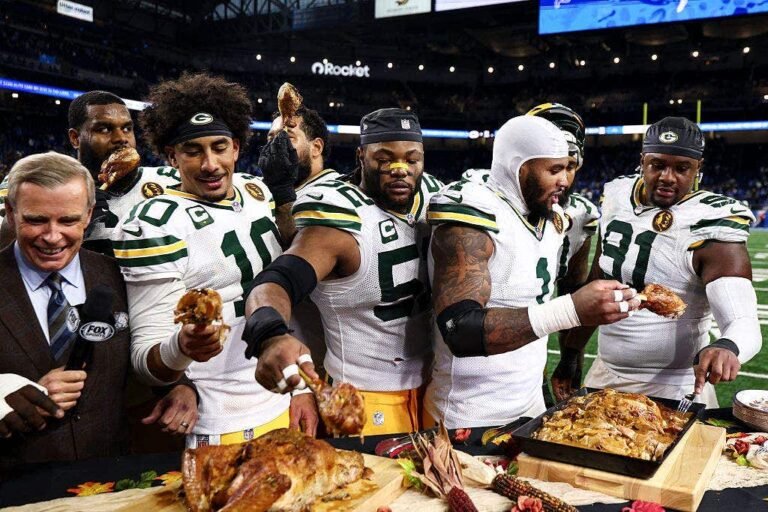
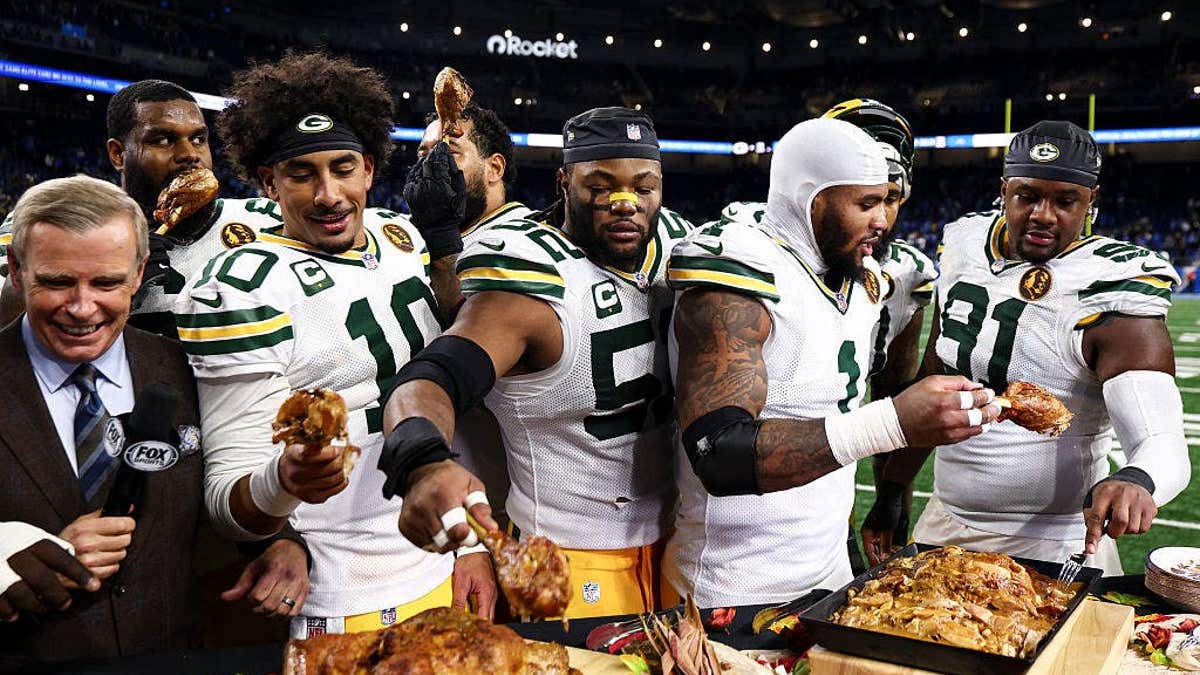
Jordan Love, Rashan Gary, and Micah Parsons eating turkey after NFL game at Ford Field

Jordan Love, Rashan Gary, and Micah Parsons of the Green Bay Packers eat turkey after an NFL game against the Detroit Lions at Ford Field in Detroit, Mich., on Nov. 27, 2025. (Kevin Sabitus/Getty Images)

All the NFL’s Thanksgiving Day games have been confirmed by the league. The Black Friday game has not, but multiple reports have the Pittsburgh Steelers hosting the Denver Broncos at 3 p.m. (ET) on Amazon Prime.

OUTKICK IS NOW ON THE FOX APP: CLICK HERE TO DOWNLOAD

And, again, the Steelers and the Broncos were both playoff teams in 2025.

So, that’s five games around the Thanksgiving holiday featuring 10 teams with playoff expectations this season, and seven of which reached the postseason last season.

That’s quite the menu.

FOLLOW ARMANDO SALGUERO ON X: @ARMANDOSALGUERO


Source link

Access Denied

0

Access Denied You don’t have permission to access “http://hindi.news18.com/cricket/prabhsimran-singh-smashes-fifty-after-included-india-a-squad-for-sri-lanka-tour-tri-series-ws-n-10477658.html” on this server.

Reference #18.6e560e17.1778773489.115a8f94

https://errors.edgesuite.net/18.6e560e17.1778773489.115a8f94

What to expect from the 48-team format at the World Cup 2026 | Football News

0

The FIFA World Cup 2026 will be one like never before.

Featuring 48 teams from across six confederations, the tournament will be the biggest in the competition’s 96-year history.

Recommended Stories

list of 4 itemsend of list

What once started as a mere 13-team World Cup has now expanded by nearly four times.

From minnows to giants, there is a place for one and all in the new expanded format, but how does it benefit the global game, and what are the potential drawbacks of opening the door to more teams?

All to know about the new format before the tournament start on June 11:

How the 48-team format works

The participating nations are divided into 12 groups of four teams each, replacing the previous 32-team, eight-group format.

The top two teams in each of the 12 groups, plus the eight best third-placed teams, will advance to the round of 32.

From there on, it’s a straightforward knockout format, followed by the last-16, quarterfinals, semifinals and the final.

Former Arsenal manager Arsene Wenger, now FIFA’s chief of global football development, thinks expanding the tournament is a step towards making football “truly global” and raising the standards.

Nearly a quarter of the 211 FIFA national member associations worldwide will be represented at the 2026 World Cup.

INTERACTIVE-Football FIFA Teams that have qualified for the World Cup 2026-1776671102
[Al Jazeera]

“It’s a natural evolution. I think we want to make football global all over the world. And if you look at the evolution (from) 1930, in 2030, the next World Cup will be 100 years since the World Cup [existed],” Wenger told a media conference in December.

“We started with 13 teams, after [that], 16… 1982 was the first time with 24 teams. 1998 was the first time with 32 teams. So, the evolution is (that) always more teams want to participate. And now I believe that 48 teams is the right number,” added the Frenchman.

According to a FIFA release in mid-April, the World Trade Organization (WTO) estimated that the expanded tournament will produce $80.1bn in gross output, including $30.5bn to the cohost, the United States.

While that impact is spread across the US economy, the $11bn in FIFA World Cup revenue that the international football body expects to generate this year will be ploughed back into the game, FIFA President Gianni Infantino said.

FIFA President Gianni Infantino holds the FIFA World Cup trophy as he attends the 56th annual World Economic Forum (WEF) meeting in Davos, Switzerland, January 22, 2026. REUTERS/Denis Balibouse
FIFA President Gianni Infantino holds the FIFA World Cup trophy as he attends the 56th annual World Economic Forum (WEF) meeting in Davos, Switzerland, January 22, 2026 [Denis Balibouse/Reuters]

“That goes in 211 countries all over the world, to allow football projects, academies, stadiums, pitches, competitions for girls, for boys, in 211 countries – more than the UN – to be played and organised,” he said at the CNBC Invest in America Forum in Washington, DC, on April 15.

“Three quarters of them would probably not be able to have organised sport without the advance that they receive from a competition like the World Cup,” Infantino added.

Expansion offers more opportunities for smaller nations

The expanded format has opened new doors for nations that had little to no chance of qualification under the old 32-team format.

Among those are four nations that will be making their debut in North America: Curacao, the smallest nation ever to qualify for a World Cup, fellow minnows Cape Verde, and Asian newcomers Jordan and Uzbekistan.

The four debutants’ entry falls just short of the record of six set at the inaugural edition in 1930 and in 2006 – but as many as nine potential newcomers were in contention for World Cup qualification heading into the March playoffs.

Soccer Football - AFC Asian Cup - Round of 16 - Uzbekistan v Thailand - Al Janoub Stadium, Al Wakrah, Qatar - January 30, 2024 Uzbekistan players celebrate after the match REUTERS/Rula Rouhana
After near-misses, Uzbekistan will finally make their World Cup debut in North America [File: Rula Rouhana/Reuters]

While the men’s World Cup underwent expansion this year, the women’s equivalent was also stretched from 24 to 32 nations three years ago. The idea to expand the Women’s World Cup was initially met with scepticism, but as eight newcomers took part in the 2023 World Cup in Australia, many of the minnows pulled off upsets.

Tokyo 2020 Olympic champions Canada, former world champions Germany and heavyweights Brazil all crashed out in the group stage while Jamaica, South Africa and Morocco made history by advancing to the knockout stage for the first time.

That tournament also reminded fans how the accuracy of the FIFA rankings could be skewed because some of the low-ranked teams do not play as many international matches as their more illustrious opponents.

Risk of low-stakes, one-sided fixtures

While the expanded 2026 tournament has gifted opportunities to more teams, many of whom would not have qualified under the previous format, it could also lead to a new problem: A rise in low-stakes, potentially one-sided match-ups.

It doesn’t take long to glance at the group stage fixtures to identify some potentially lopsided matches. Iran, one of Asia’s strongest sides, will face New Zealand, the lowest-ranked team in the tournament, raising the likelihood of a mismatch that offers little competitive intrigue for the average football fan.

Elsewhere, group-stage meetings between micro nation Curacao and tournament heavyweights Germany as well as Cape Verde taking on the might of UEFA Euro 2024 champions Spain risks turning those fixtures into a route for the European nations.

TOPSHOT - Curaçao players and fans celebrate World Cup 2026 qualification after a 0-0 draw with Jamaica at the National Stadium in Kingston, Jamaica on November 18, 2025.
Curacao are one of the four teams making their World Cup debut this year [AFP File]

In the big picture, these potentially uneven contests could dilute the intensity and quality of group stage fixtures that have traditionally defined the World Cup, and risk turning them into predictable, low-engagement affairs for the opening half of the 39-day tournament.

Additionally, expanding the format could lead to easier, boring routes to the knockouts.

For example, a team could draw all three of its group games and still make the cut to the next round. At the very least, expansion from 32 to 48 teams risks altering the competitive dynamics of the group stage.

Short post-World Cup recovery window for players

With 56 days, FIFA has said the total combined number of rest, release and tournament days remains identical to the 2010, 2014 and 2018 FIFA World Cup editions. But what about the post-tournament recovery period?

Most of the top European leagues will begin their 2026-27 season just a month after the World Cup final, leaving players with a short offseason to relax and recover from injuries.

A report by the Football Benchmark group, which used data from the FIFPRO Men’s Player Workload Monitoring (PWM) platform, further highlighted this issue.

Soccer Football - UEFA Champions League - Semi Final - First Leg - Paris St Germain v Bayern Munich - Parc des Princes, Paris, France - April 28, 2026 Paris St Germain's Achraf Hakimi reacts after sustaining an injury REUTERS/Sarah Meyssonnier
Morocco’s Achraf Hakimi reacts after sustaining an injury while playing for his club PSG [Sarah Meyssonnier/Reuters]

“The move from 32 to 48 teams increases the total number of matches from 64 to 104, with the finalists required to play up to eight matches across a 38-day period. Positioned shortly after the European club season and following consecutive summers of major international and club competitions, it also brings additional logistical demands, including long-distance travel, multiple time zones, and varied climatic conditions across host cities,” the analysis read.

“In addition, the window between the World Cup final and the start of the following domestic season is limited, with 34 days separating the final and the start of the Premier League season, leaving reduced time for rest and preseason preparation.”


Source link

DGFT tightens regulations for import of gold inputs by jewelers for exports

0

Stack of gold bars.

Stack of gold bars. | Photo Credit: DigitalVision

A day after the Finance Ministry increased import duty on gold to 15 per cent from 6 per cent to discourage inflows, the Directorate General of Foreign Trade (DGFT) has tightened the regulatory framework for duty-free gold imports used by the gems and jewelery sector as inputs for exports. It introduced five new restrictive notes under the Standard Input Output Norms (SION).

“Five notes are inserted under SIONs…prescribing conditions for the issuance and monitoring of Advance Authorizations for import of gold,” per the DGFT public notice issued on Thursday.

AA scheme

The Advance Authorization (AA) scheme for the gems and jewelry sector allows exporters to import gold duty-free, provided it is used specifically to manufacture jewelery for export. The SIONs define how much gold is required to produce a specific amount of jewellery.

Under the revised guidelines, a strict ceiling has been placed, with gold import authorizations capped at a maximum of 100 kilograms.

The DGFT has mandated a physical inspection of manufacturing facilities for all first-time applicants to verify their operational status and capacity. The issuance of subsequent licenses will now be considered only when exporters fulfill at least 50 per cent of the export obligations from their preceding authorizations before new ones are granted, the notice added.

Authorization holders will have to submit fortnightly performance reports certified by an independent Chartered Accountant to improve compliance.

monthly report

Regional authorities concerned shall submit a monthly consolidated report to DGFT headquarters containing details regarding the issuance of Advance Authorizations and corresponding import/export transactions of gold to enable centralized monitoring and policy oversight, it added.

The increase in import duty for gold is aimed at discouraging its imports to curb a widening trade deficit and stabilize the Rupee amid the escalating West Asia crisis. The government is moving to preserve foreign exchange for essential energy and defense needs.

Published on May 14, 2026

No Democrats show up as CIA whistleblower testifies on COVID origins


NEWYou can now listen to Fox News articles!

It was an amazing sight in the Senate on Wednesday, as the Homeland Security and Governmental Affairs Committee, led by its chairman, Sen. Rand Paul, R-Ky., held an explosive hearing featuring a CIA whistleblower testifying on COVID origins, and not a single Democrat bothered to even show up.

Every chair on the left of the dais sat empty as high-ranking CIA official James Erdman outlined the duplicity and lies, not just of the government during COVID, but especially of disgraced former National Institute of Allergy and Infectious Diseases Director Dr. Anthony Fauci, which is precisely why the cowardly Democrats took the morning off.

According to Erdman, suppression of the lab leak theory, now widely accepted as how the COVID pandemic began, “was significantly influenced by Anthony Fauci, injecting himself into the IC [intelligence community].”

What followed was a detailed description of how, at every turn, Fauci put scientists in oversight positions in place who not only backed up his wet-market theory, but in some cases were arguably complicit in the creation of COVID and the subsequent coverup.

WHO IS JAMES ERDMAN III? CIA WHISTLEBLOWER WHO WENT FROM COVID MANDATE FIGHTS TO SENATE SPOTLIGHT

Sen. Josh Hawley, R-Mo., pulled no punches, saying the reason Fauci lied was “because he helped fund the Wuhan lab. He supported and funded gain-of-function research, and then he tried to cover it up, and then he worked to cover it up from the American people, ” adding, “I hope he’s indicted.”

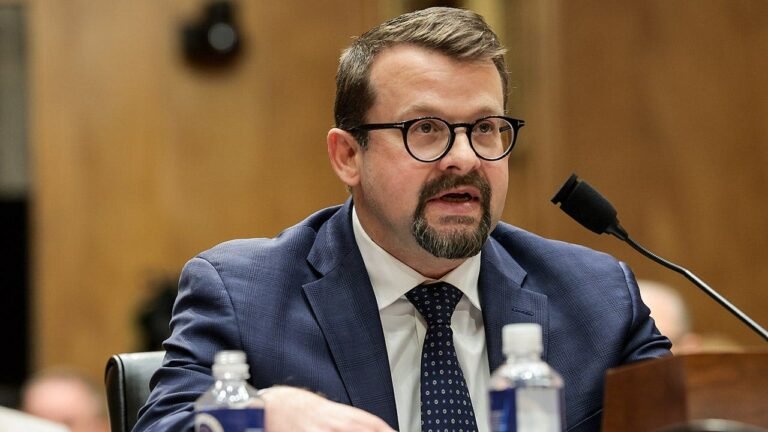
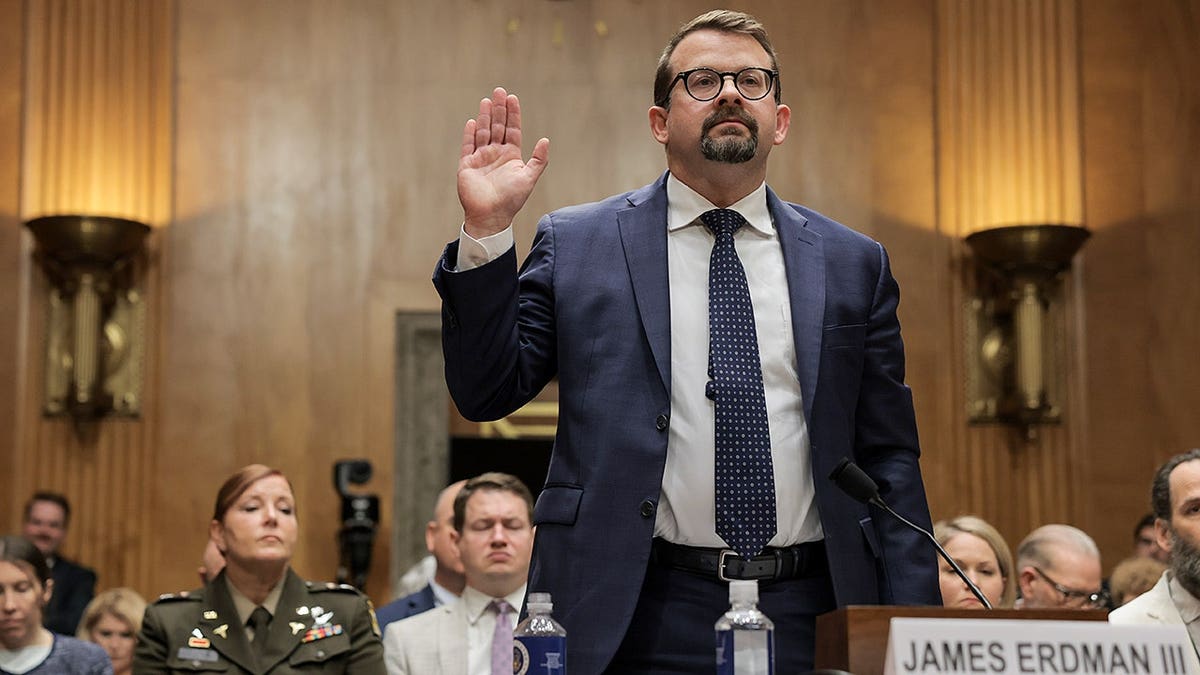
James Erdman III testifies in Senate hearing

CIA whistleblower James Erdman III, a senior operations officer, is sworn in during a Senate Homeland Security Committee hearing on Capitol Hill in Washington, D.C., May 13, 2026. The hearing examined his claims that intelligence officials downplayed the possibility that COVID-19 originated from a lab leak. (Photo by Anna Moneymaker/Getty Images)

I asked Rutgers professor and molecular biologist Richard Ebright, a longtime Fauci critic, about why he thought the true story of COVID’s origins is taking so long for the public to hear. His answer was troubling.

“Misfeasance and malfeasant science administrators,” Ebright told me. “Notably, [former National Institutes of Health Director] Francis Collins and Fauci, deliberately misinformed the public about the origin of COVID, and many scientists, science journalists and general journalists joined them in deliberately misinforming the public about the origin of COVID.”

EX-CNN PUNDIT ADMITS TRUMP WAS LIKELY ‘RIGHT’ ABOUT COVID-19 LIKELY LEAKING FROM A LAB

Ebright is not some conspiracy theory podcaster. He is, in fact, the very type of world-class expert that Fauci deliberately banned from the official scientific conversation about COVID. Any voice opposed to the wet-market theory and the immiserating public policy of lockdown was labeled a kook.

Ebright believes all of us were intentionally misled.

Dr. Anthony Fauci on CBS

Dr. Anthony Fauci,  (CBS)

“All informed persons, without exception, understood by January-February 2020 that COVID likely entered humans through a research-related incident, involving reckless gain-of-function research performed in Wuhan and enabled by with U.S. government funding approved by Collins and Fauci in violation of U.S. government policies prohibiting funding for such research.”

FORMER WASHINGTON POST FACT-CHECKER ADMITS HE ‘SCREWED UP’ ON COVID-19 LAB LEAK THEORY

Given all of this, and the fact that COVID impacted, in generally harmful ways, every single American citizen, it is not just shocking, but utterly unacceptable that not one Democratic senator could be bothered to even show up to Wednesday’s hearing.

A cynic might suggest that this avoidance by Democrats owed to the fact that they would have been expected to hopelessly defend Fauci, who they helped to turn into a cross between a folk hero and a religious icon, and who clearly was not straight with us.

If Fauci was just honestly wrong about the lab leak theory, that would be one thing and deserving of reputational damage. But if he was knowingly wrong, and hiding his own role in gain-of-function research, then we are in crime of the century territory.

DAVID MARCUS: DEM SENATORS’ SHAMELESS ANTICS SHOW WHY PARTY IS IN SHAMBLES

The absent Democratic senators are doing the only thing they can do, indeed the only thing that any of the mad authoritarians who authored our COVID response can; they are ignoring it now and pretending it didn’t happen.

Trillions of dollars lost, millions of hours of kids’ education lost, family members dying alone in empty hospitals, and we are not even being offered an “Oops,” much less an apology. Instead, Democrats want us to shut up about it.

Sen. Josh Hawley

Hawley described the idea of federally funding child sex changes “unconscionable.” (Tom Williams/CQ-Roll Call, Inc via Getty Images)

I asked Ebright what the worst case scenario is if we fail to fully understand what went wrong and how to avoid it in the future. He was blunt.

DR. MARC SIEGEL: TRUMP IS RIGHT TO BLOCK ‘DANGEROUS’ GAIN-OF-FUNCTION RESEARCH

“Reckless gain-of-function research continues, and continues to receive U.S. government funding,” he said. “This sets the stage for a next, possibly even worse, lab-generated pandemic.”

In the end, that is what all of this is really about and why the Democratic senators who played hookey should be ashamed of themselves. They would rather put America at grave risk than admit they were wrong about COVID.

CLICK HERE TO DOWNLOAD THE FOX NEWS APP

So long as the Democrats remain deaf, dumb and blind as to the ever-growing allegations and evidence of Fauci’s malfeasance, the American people will never get the full story. But that doesn’t mean Republicans can’t keep discovering pieces of it.

According to Hawley there are already enough pieces for an indictment of Fauci. And who knows what remains to be discovered?

CLICK HERE TO READ MORE FROM DAVID MARCUS


Source link

How Cybercrime Tradecraft is Used to Steal Freight

0

Cyber trucking header image

Written by Ben Wilkens, director of cybersecurity, NMFTA

Working in cybersecurity, you are well aware of the playbook that ransomware operators use. Stolen credentials, established persistence, network recon, pivoting to a high-value target cash out. These techniques are well documented; we have attack frameworks and well-documented kill chains for their techniques. What you may not have been exposed to is that same playbook being used to steal freight.

Entire truckloads of goods are re-routed, disappearing from the legitimate logistics ecosystem and reappearing on the black market. Bottled water, eggs, crab legs, energy drinks, Legos, sneakers, pharmaceuticals, pistachios, you name it, it’s been stolen by organized criminals taking the ransomware playbook and applying it to the transportation industry for different purposes.

In 2025, Verisk CargoNet reported approximately $725 million in cargo crime losses across North America. The FBI internet Crime Complaint Center (IC3) reported roughly 21 billion in cybercrime losses for the same period. While these two numbers are each staggering in their own right, they only represent reported losses.

Too often stolen freight and cyberattacks both go unreported, especially when suffered by private companies on the smaller end of the size spectrum. These two numbers also are increasingly part of the same conversation.

The cargo losses we are seeing in the transportation sector are not the result of movie-style hijackings by armed marauders. They are the result of a successful phishing email that results in a fraudulent pickup of a load of pharmaceuticals by a truck destined for a criminal warehouse. Industry estimates indicate that the majority of cargo crime in the United States now involves a cyber-enabled component.

For a security community that is used to thinking of stolen goods and cargo crime as a physical security issue, this issue is forcing a paradigm shift. These threat actors are sophisticated. Many of them are in fact international organized crime groups operating from outside the United States.

Their techniques are immediately recognizable to anyone who has been involved in incident response related to traditional cybercrime.

A Familiar Kill Chain

A walk through of a typical cyber-enabled cargo crime starts the same way as many other cybercrimes; Reconnaissance.  Public sources such as United States Department of Transportation (USDOT) numbers, Federal Motor Carrier Safety Administration (FMCSA) registry information, motor carrier (MC) numbers, insurance details and employees are all researched.

Phishing emails go out to members of the operation’s staff in dispatch, or in customer service or accounting; those with access to sensitive information. Credentials are stolen, and email compromise results. Sounds familiar so far.

This is where the two playbooks diverge. This is where the attack migrates from the cybersecurity world and into the operations space. Instead of using the compromised credentials to pivot into a corporate system and drop a ransomware payload, the attacker uses a compromised email account to listen in no shipment notification, new load tenders, bill of lading for shipments underway.

They will then inject themselves into these communications, from this trusted email account, and make subtle changes. A pallet count here, a destination there, sending falsified information to alter a planned route and redirect a legitimate load of freight to a different delivery location; one they control.

Alternatively, they may register a new, fraudulent carrier with the FMCSA using stolen but valid identification details from a legitimate fleet. The attacker then books real loads from real load boards under that false identity. These loads are often picked up by professional truck drivers who have no idea that they are being used as pawns in this crime, they think they are hauling freight for legitimate companies.

Once the load is delivered to the criminal warehouse, it is immediately broken down into other shipments or cross-docked to another truck under more falsified paperwork and laundered directly back into the supply chain. Many of the consumables stolen this way will be sold within hours and consumed within days due to shelf life limits, making the process of investigating these crimes and recovering freight an uphill battle at best.

By the time that the legitimate shipper, broker, or motor carrier figures out what happened, their freight is gone, the fraudulent carrier has disappeared, and they are left holding the bag for what can amount to catastrophic financial liability; a single tractor trailer loaded with pharmaceuticals can carry a price tag in the millions. A single load of pistachios? Hundreds of thousands of dollars. These are not losses that the average small to midsized fleet is equipped to handle.

Join your peers for the NMFTA 2026 Cybersecurity Conference to learn about real-world threat intelligence, research, and practical strategies focused on securing connected freight systems, combating cyber-enabled cargo crime, and strengthening transportation security across the supply chains.

Learn More

An Industry-Wide Problem

The defensive playbook here is not one that is unfamiliar to most cybersecurity professionals. Phishing-resistant multi-factor authentication, out-of-band verification before any critical changes to banking information, routing details or shipping documents. Strong vendor management processes, email security. None of this is novel. Why then is this problem so widespread? Unfortunately, these types of controls are under deployed in the transportation industry, particularly among the small and midsized fleets that a massive percentage of the freight in this country.

A trucking company with only a hundred or two trucks generates as much cyber risk as a much larger professional services firm, but they typically operated on very thin margins and a fraction of the security budget that is found in many other industries. Many of these fleets simply don’t have the headcount or the budget to roll out a sophisticated cybersecurity program. Integrations are put in place for speed and efficiency, vendors offer new tools that promise gains operationally but when not implemented in a secure environment, leave gaps that the threat actors exploit.

This is why these numbers are where they are today. The attackers have figured out that the transportation sector represents a soft target with high-value, low risk, perishable and easy to launder payouts. They have figured out that the legal and regulatory consequences of stealing cargo are much less severe than attacking the financial sector or a hospital.

They have figured out that many fleets don’t report attacks because the reputational damage of being known as “one of those fleets that lost freight” feels like more of an impact than absorbing significant losses in silence.

The result?  The same schemes work week after week against fleet after fleet.

Where the Industry is Making Gains

Last year, the National Motor Freight Traffic Association (NMFTA) published a Cybersecurity Cargo Crime Reduction Framework that specifically mapped cybersecurity controls to the cargo crime threat vectors that they can address.

This guidebook is built around six categories that will be familiar to any threat analyst: Organized crime, insider threats and collusion, social engineering and deception, identity theft and fraud, and technical exploitation. The framework is free to download. So is NMFTA’s Road to Resilience series of guidebooks for fleets ranging from individual owner operators to midsized fleets.

These guides adapt traditional cybersecurity standards like NIST CSF, CIS Controls, etc. for an audience that lacks cybersecurity expertise and resources, providing clear, digestible guidance on how to secure a transportation operation.

NMFTA also oversees and manages the Freight Fraud Prevention Hub, a central resource where motor carriers, third-party logistics providers (3PLs), brokers, and shippers, and professional truck drivers can find educational materials, resources, and guidebooks on how to prevent freight fraud and cyber-enabled cargo crime.

For security practitioners who operated outside of the transportation sector, there is an invitation worth considering. A critical infrastructure vertical needs your skills. Join your peers from the transportation sector at the NMFTA 2026 Cybersecurity Conference, September 29-October 2 in Long Beach, CA. This is the only event in North America dedicated to cybersecurity in the transportation sector. With both executive and technical content and even hands-on experience and tabletop exercises and topics ranging from cyber enabled cargo crime to heavy vehicle OT security there is no other conference like this.

If you are looking for a place to put on your cybersecurity super-hero cape and take up a worthy cause, fighting cyber-enabled cargo crime in the transportation sector may just be where you belong!

Learn more at nmftacyber.com.

Sponsored and written by NMFTA.


Source link