‘Unprecedented’: Israel, US carry out extensive strikes across Iran | US-Israel war on Iran News

0

Israel and the United States have launched a new wave of attacks against Iran as Tehran renewed retaliatory strikes on its Gulf neighbours, and pledged to hit power plants in Israel as well as other regional countries if its power plants were targeted.

The Israeli military said on Monday it had “begun a wide-scale wave of strikes” on infrastructure targets in Tehran, without immediately elaborating.

Recommended Stories

list of 3 itemsend of list

US Central Command (CENTCOM) chief Admiral Brad Cooper claimed in an interview that Iran was launching missiles and drones from populated areas, suggesting those areas would be targeted. Israel provided no proof for its claims. It made similar claims to target civilian areas in Gaza, which have been turned to ruins by more than two years of genocidal war.

The US military said it targeted a turbine engine production site in north-central Iran’s Qom province used for drone and aircraft components linked to the Islamic Revolutionary Guard Corps (IRGC).

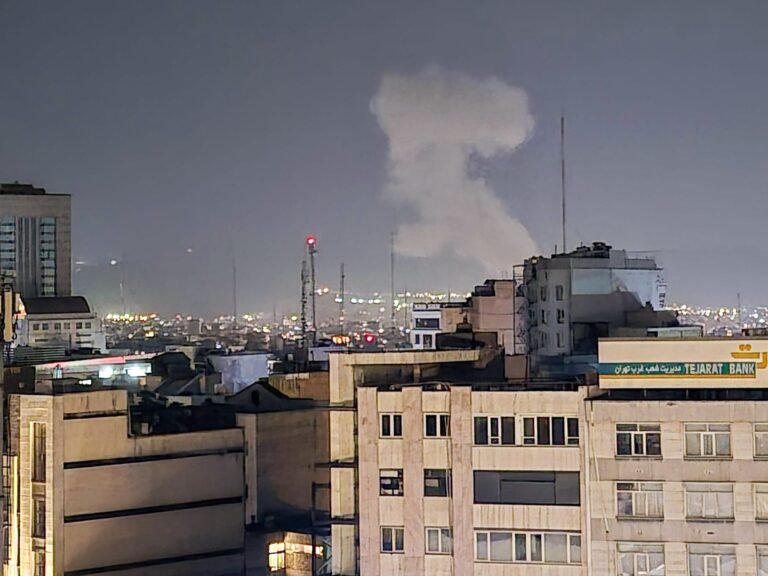
Al Jazeera Arabic’s correspondent in Tehran, Suhaib al-Asa, reported that the size and volume of the explosions in the Iranian capital were “unprecedented”, especially in the eastern side of the city.

The Iranian air defence systems were activated in the eastern part of the city, al-Asa said, which indicated Iran was responding to US-Israeli drones hovering over that part of the city.

Iran’s Fars news agency reported that a strike on a residential building in the city of Khorramabad, located west of Tehran, killed one child and wounded several people. At least six people were killed in strikes on homes in Tabriz city, according to Fars. Majid Farshi, the director general of crisis management for Iran’s East Azerbaijan province, said there were two deadly attacks in Tabriz.

Al Jazeera’s Tohid Asadi said there were reports of explosions in many other cities.

“One person was killed after a radio station was targeted in Bandar Abbas. In Isfahan, Karaj and Ahvaz, too, sounds of massive explosions were heard. In Ahvaz, we are hearing that one hospital was impacted as a result of the explosions,” he said, reporting from Tehran.

“All in all, the Iranian Red Crescent Society has said more than 80,000 civilian units have been hit, with some of them fully demolished. Of course, that number includes hospitals, schools, academic institutions and Red Crescent facilities.”

Meanwhile in Israel, Iranian missile strikes continued overnight, with reports of falling shrapnel across several locations in southern and central Israel.

“In the past hour, sirens have blasted in northern Israel in what Israeli authorities believe to be a joint attack from Hezbollah and Iran targeting northern Israel at the same time,” said Al Jazeera’s Nida Ibrahim.

“The concern in Israel is that the US might stop the war prematurely, reason why Israeli officials continue to send messages that they will continue to crack down more on Iran and that the fighting with Hezbollah is just at the start,” Ibrahim, reporting from the occupied West Bank, said.

Iran vows to retaliate

The latest wave of strikes came after US President Donald Trump gave a 48-hour ultimatum on Saturday for Tehran to open the Strait of Hormuz to all ships, threatening otherwise to “obliterate” Iran’s power plants. Tehran has said it would completely close the Strait, through which one-fifth of global oil passes, in retaliation.

The IRGC on Monday responded that if the US did that, it would hit power plants in all areas that supply electricity to US bases, “as well as the economic, industrial and energy infrastructures in which Americans have shares”.

“Do not doubt that we will do this,” the IRGC said in a statement read on Iranian state television. They stressed their determination to respond to any threat at the same level and noted that the US underestimates their capabilities.

Iran’s death toll in the war has surpassed 1,500, its Ministry of Health has said. In Israel, 15 people have been killed by Iranian attacks.

The prospect of tit-for-tat attacks on civilian infrastructure further unsettled oil markets, with prices opening choppy in Asian trading. Fatih Birol, the head of the International Energy Agency, on Monday warned that the situation in the Middle East is “very severe” and is worse than the two energy crises of the 1970s put together.

Meanwhile, an Indian national living in the United Arab Emirates was injured by falling shrapnel after the interception of a ballistic missile over an industrial area near al-Dhafra airbase in Abu Dhabi, authorities said on Monday.

A spokesperson for the IRGC’s Khatam al-Anbiya headquarters said its forces attacked Prince Sultan airbase in Saudi Arabia and the US Fifth Fleet in Bahrain, using missiles and drones.

Warning sirens sounded in Bahrain and Kuwait, while Saudi Arabia’s Ministry of Defence said it had intercepted a missile targeting Riyadh and destroyed drones over the kingdom’s oil-rich Eastern province.


Source link
Pentagon awards contracts to rebuild US munitions arsenal against China

0

NEWYou can now listen to Fox News articles!

For decades, Washington has talked about the threat the Chinese Communist Party poses to the American people. Analysts and politicians have written countless white papers, held congressional hearings and delivered speeches warning that Beijing’s military modernization, economic coercion and technological ambitions pose an existential challenge to America’s military primacy. Yet for all that talk, policymakers have failed to do the one thing that matters most: rebuild our industrial capacity to produce the weapons systems necessary to deter — and if necessary, defeat — Chinese aggression.

That’s finally changing.

Under President Donald Trump‘s leadership, the Department of War is executing the kind of reform that Republicans have promised for a generation but never delivered. Secretary Pete Hegseth and Deputy Secretary Steve Feinberg aren’t just reorganizing Pentagon charts — they’re forging a genuine partnership between government and industry to rebuild munitions production at a scale approaching Cold War levels, with output of key systems like Tomahawk cruise missiles increasing more than tenfold under new long-term Pentagon contracts. 

This is the strategic imperative of our time. China has spent two decades building the world’s largest navy, modernizing its nuclear arsenal, and stockpiling precision munitions while we debated and delayed. Beijing understands that wars are won by nations that can produce weapons faster than their adversaries can destroy them. We’re in a race to rebuild the arsenal of freedom — and we’ve been losing.

TRUMP OVERHAULS US ARMS SALES TO FAVOR KEY ALLIES, PROTECT AMERICAN WEAPONS PRODUCTION

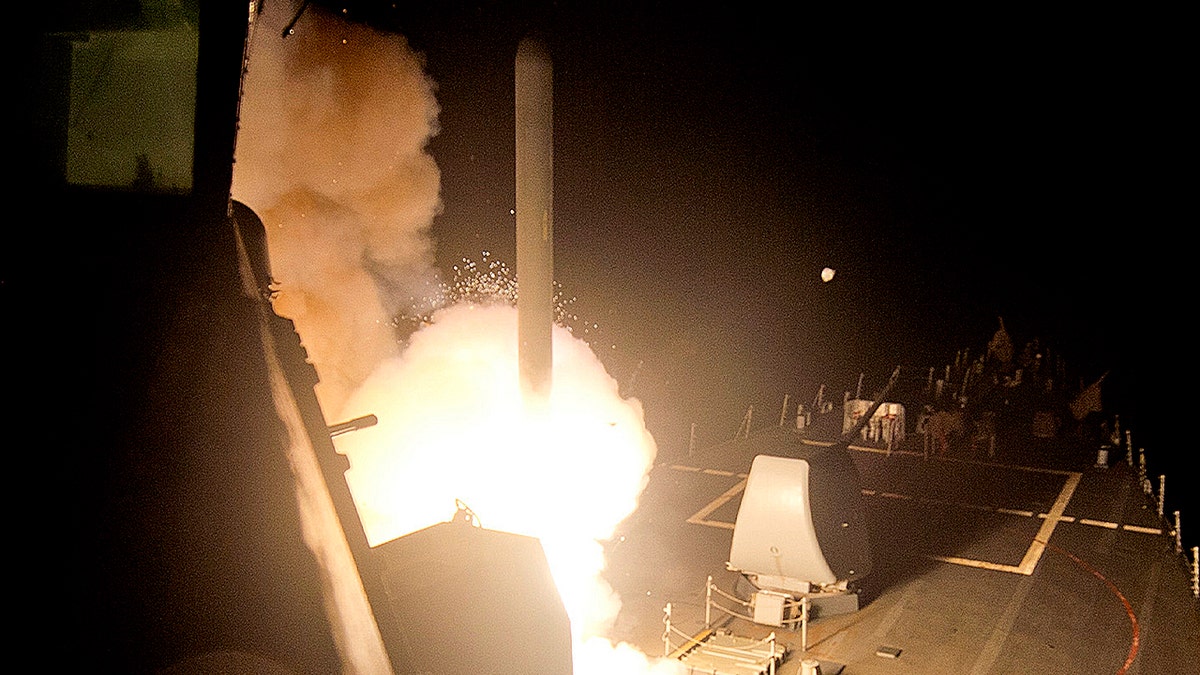
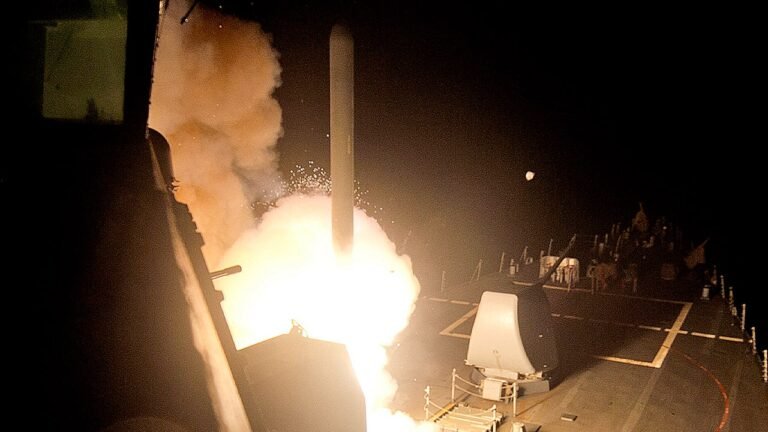
A Tomahawk cruise missile is launched against ISIL targets from the US Navy guided-missile destroyer USS Arleigh Burke, in the Red Sea

Inside the Tomahawk cruise missile, and how it might change the tides of the Ukraine war. (U.S. Navy/Mass Communication Specialist 2nd Class Carlos M. Vazquez Ii/handout via Reuters)

For years, the defense industry faced conflicting requirements, protracted negotiations and a procurement bureaucracy that made long-term planning nearly impossible. The result was predictable: companies couldn’t justify major capital investments when they had no confidence in future orders.

That’s all changing. The Department of War understands what’s at stake. Recently, they have awarded five landmark contracts that will surge production of Tomahawk cruise missiles, advanced medium range air-to-air missiles (AMRAAMs), and standard missiles, giving industry up to seven years of demand signal. That kind of certainty allows companies to invest billions in new production lines right here in the United States, expand their workforce and strengthen domestic supply chains.

The Department of War is committing to eliminating red tape and providing the long-term contracts necessary for industry to invest at scale. In turn, contractors are responding by committing to faster timelines, additional U.S. investment and reinforced supply chains. The result: tens of billions of dollars in agreements that will flood our arsenal with the precision munitions essential to our current conflict in Iran, but more importantly, to any future Pacific conflict.

This matters because China is watching. Beijing’s strategists know that America’s greatest advantage has always been our industrial might — our ability to outproduce any adversary when the stakes are high enough. But they also know that advantage has atrophied. Our defense industrial base has consolidated, offshored critical components and operated under a just-in-time model incompatible with wartime surge requirements.

CLICK HERE FOR MORE FOX NEWS OPINION

Previous administrations treated defense contractors as vendors in a transactional relationship, squeezing costs while offering little long-term certainty. Industry responded rationally: consolidating, reducing capacity and optimizing for peacetime margins. Meanwhile, China built 248 warships while we built 100, and stockpiled missiles while we debated acquisition reform.

The threats we face demand meaningful action. Venezuela, Ukraine, Iran — each conflict drains our munitions stockpiles and exposes the fragility of global supply chains. But the primary threat remains China. Every Tomahawk missile we don’t produce, every AMRAAM we can’t deliver, every delay in expanding production capacity is a gift to Beijing’s military planners.

CLICK HERE TO DOWNLOAD THE FOX NEWS APP

The arsenal of freedom isn’t a metaphor. It’s the factories in Texas building F-35s, the production lines in Arizona surging missile production and the supply chains across America’s heartland that turn raw materials into the weapons systems that preserve peace through strength. Rebuilding that arsenal is how we deter Chinese aggression, reassure our allies and ensure that if conflict comes, America has the industrial might to prevail.

The Trump administration understands this. Now it is executing. And that makes all the difference.

CLICK HERE TO READ MORE FROM CHAD WOLF


Source link

Israeli settlers rampage through West Bank towns for second night in a row | Israel-Palestine conflict News

0

The violence comes as Israel continues its push to expand control over Palestinian territories in violation of international law.

At least nine Palestinians have been injured as Israeli settlers rampaged through towns and villages in the occupied West Bank for a second night in a row.

A 45-year-old man was shot in the foot late on Sunday during a confrontation with Israeli settlers in Deir al-Hatab, east of Nablus, the Wafa news agency reported.

Recommended Stories

list of 3 itemsend of list

The Palestinian Red Crescent reported that a 47-year-old Palestinian man was attacked by settlers in Jabal al-Arma in Beita, while others were beaten.

Earlier, Israeli settlers set fire to homes and cars in two areas south of Jenin and vandalised property across the occupied West Bank.

Simultaneous attacks took place on Saturday night in at least six communities, including the villages of Silat al Dahr and Fandaqumiya, both near Jenin; in Jalud and Salfit, both south of Nablus; and in the agricultural regions Masafer Yatta and the Jordan Valley.

The Palestinian news agency reported that homes and cars were set ablaze, Palestinians were pepper-sprayed and at least five people were wounded in the assaults, which took place during the Eid al-Fitr holiday marking the end of Ramadan.

Sunday night’s attacks came after Israeli settlers in the settlement of Elon Moreh held a funeral for 18-year-old Yehuda Sherman, who was killed in a collision with a Palestinian vehicle in an area north of the villages attacked.

Israeli police said they were investigating the settlers’ claims that the collision was deliberate.

Israel’s government is pressing ahead with new settlements in the occupied West Bank as attention shifts to the Iran war.

According to the United Nations Office for the Coordination of Humanitarian Affairs, 25 Palestinians have been killed by Israeli settlers and soldiers so far this year.

Israel’s security cabinet last month ratified a series of decisions pushed by Finance Minister Bezalel Smotrich and Defence Minister Israel Katz, enabling Israel to claim large areas of the occupied West Bank as “state property” if Palestinians cannot prove ownership.

The Palestinian presidency condemned the decision in a statement, calling it a “grave escalation and a flagrant violation of international law” that amounts to “de facto annexation”.

Amnesty International said the expansion of illegal settlements and state-backed settler violence in the occupied Palestinian territories were “a direct indictment of the international community’s catastrophic failure to take decisive action.”

The International Court of Justice (ICJ) ruled in 2024 that Israel’s continued presence in the occupied Palestinian territory is unlawful and should come to an end “as rapidly as possible”.

The judges pointed to a wide list of policies – including the building and expansion of Israeli settlements in the West Bank and East Jerusalem, use of the area’s natural resources, the annexation and imposition of permanent control over lands and discriminatory policies against Palestinians – all of which it said violated international law.


Source link

Iran admitted stockpiling uranium for 11 nukes before Trump struck

0

NEWYou can now listen to Fox News articles!

President Donald Trump didn’t start this war. The Islamic Republic did — on Nov. 4, 1979, when it invaded the U.S. Embassy in Tehran and held 52 Americans hostage for 444 days. For nearly half a century, the world’s leading state sponsor of terrorism has killed and maimed more Americans than any other terrorist regime on Earth. It even plotted twice to assassinate Trump himself.

The regime’s attacks against the United States and our allies are not a series of isolated incidents, but a single, continuous war waged by the mullahs for 47 years. From the 1983 Beirut barracks bombing to the Iranian IEDs that killed 603 Americans in Iraq — roughly one out of every six American combat fatalities — the regime operated on the assumption that Washington lacked the stomach to respond. For years, that bet paid off. Tehran interpreted restraint not as prudence but as permission.

From the October 7 Hamas massacre of roughly 1,200 people, including 46 Americans to 180-plus attacks on U.S. forces last year, the regime has always told us what it wants: death to America.

To confront this looming threat, every American president since Jimmy Carter chose to kick the can down the road, calling it diplomacy. That changed in 2020 when Trump ordered the strike against Qassim Soleimani, the regime’s chief terrorist and IED mastermind. Washington’s foreign-policy class criticized it, but the Iranian people celebrated it.

MICHAEL OREN: IRAN HAS WAGED WAR ON AMERICA FOR 47 YEARS — TIME TO END IT

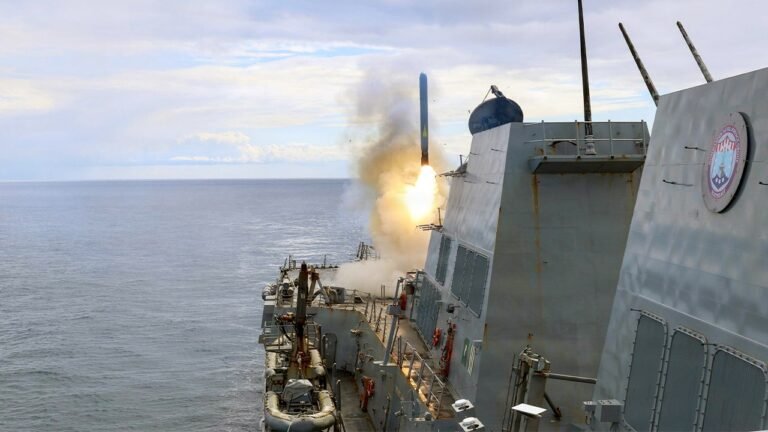
A U.S. Navy destroyer launches a missile from its deck while underway at sea.

In this U.S. Navy handout, the USS Thomas Hudner fires a Tomahawk land attack missile in support of Operation Epic Fury on March 1, 2026, at sea. (U.S. Navy/via Getty Images)

When the regime massacred more than 40,000 protesters in January 2026 and attempted to hide the atrocity from the world by shutting down the internet, the people again looked to Trump for help. He answered their call by doing what his predecessors never dared, moving to “end this long-running danger once and for all.”

The case for action was strong. Beyond humanitarian grounds, Steve Witkoff, the U.S. special envoy to the Middle East, revealed the details of his and Special Peace Envoy Jared Kushner’s negotiations leading up to the conflict. Their Iranian counterparts proudly admitted they stockpiled enough uranium for 11 nuclear bombs, attainable in weeks. When the U.S. offered to supply Iran’s nuclear fuel for free in exchange for a halt to enrichment, Tehran refused. Witkoff concluded that Iran had no intention of doing anything other than weaponizing its stockpile.

This nuclear threat was built on decades of deception. The regime hid tubes from IAEA inspectors so it could secretly restore the Arak reactor. It concealed an entire nuclear weapons archive from negotiators (subsequently acquired by Israel), then stonewalled international investigators probing undeclared nuclear materials and activities at multiple sites.

THE WAR HITS HOME: WHY FINANCIAL PAIN AND ECONOMIC UNCERTAINTY THREATEN TRUMP’S DRIVE TO TOPPLE IRAN’S REGIME

The Obama Administration’s deeply flawed Joint Comprehensive Plan of Action (JCPOA) did not constrain the Islamic Republic. Instead, it legitimized and funded Iran’s gradual pursuit of nuclear weapons. Trump accurately called the JCPOA “the worst deal ever negotiated.” He walked away from the agreement in 2018, instituting a maximum pressure campaign, denying the regime more than $200 billion in oil revenue that would otherwise have financed terror operations.

President Joe Biden inexplicably abandoned the strategy, handing Iran the breathing room to accelerate enrichment — until Trump struck the regime’s nuclear facilities at Fordow, Natanz, and Isfahan last June during Operation Midnight Hammer. When Iran’s negotiators bragged about their bomb-ready stockpile, telling Witkoff, “We’re not going to give you diplomatically what you couldn’t take militarily,” Trump launched Operation Epic Fury.

The operation’s objectives—the embodiment of Trump’s “peace through strength” doctrine — were laid out by the Department of War: destroy Iran’s offensive ballistic missiles and production facilities, annihilate its navy and naval infrastructure, sever terrorist proxy networks, prevent nuclear-weapons development by targeting related sites and degrade the regime’s security apparatus — including Islamic Revolutionary Guard Corps (IRGC) command centers, air defenses, missile and drone launchers and airfields.

LIZ PEEK: IRAN WAR COULD BECOME THE ACHIEVEMENT THAT ENSURES TRUMP’S LEGACY

So far, the results are ahead of schedule. In a joint operation with Israel, Ali Khamenei, the regime’s leader, was killed alongside much of his inner circle and the senior military command — including the heads of the IRGC and Basij, as well as senior power broker Ali Larijani.

More than 80% of Iran’s ballistic missile stockpile and production capacity has been destroyed, along with the bulk of its naval fleet and port infrastructure. Iran’s proxy financing networks — the pipelines that kept Hezbollah, the Houthis and Hamas armed and operational — have been severed. Nuclear-related sites across the country have been obliterated. At least 49 senior regime officials have been killed or removed from the battlefield.

Their Iranian counterparts proudly admitted they stockpiled enough uranium for 11 nuclear bombs, attainable in weeks. 

This unprecedented degradation of the regime’s repressive forces is leveling the battlefield and creating unprecedented conditions on the streets for the Iranian people to rise up and challenge the mullahs directly.

CLICK HERE FOR MORE FOX NEWS OPINION

The job is not finished. But it is on track. Staying the course will finish it.

President Trump spoke directly to the Iranian people in his address launching the operation: “[T]he hour of your freedom is at hand…When we are finished, take over your government. It will be yours to take.” That moment is now within reach.

CLICK HERE TO DOWNLOAD THE FOX NEWS APP

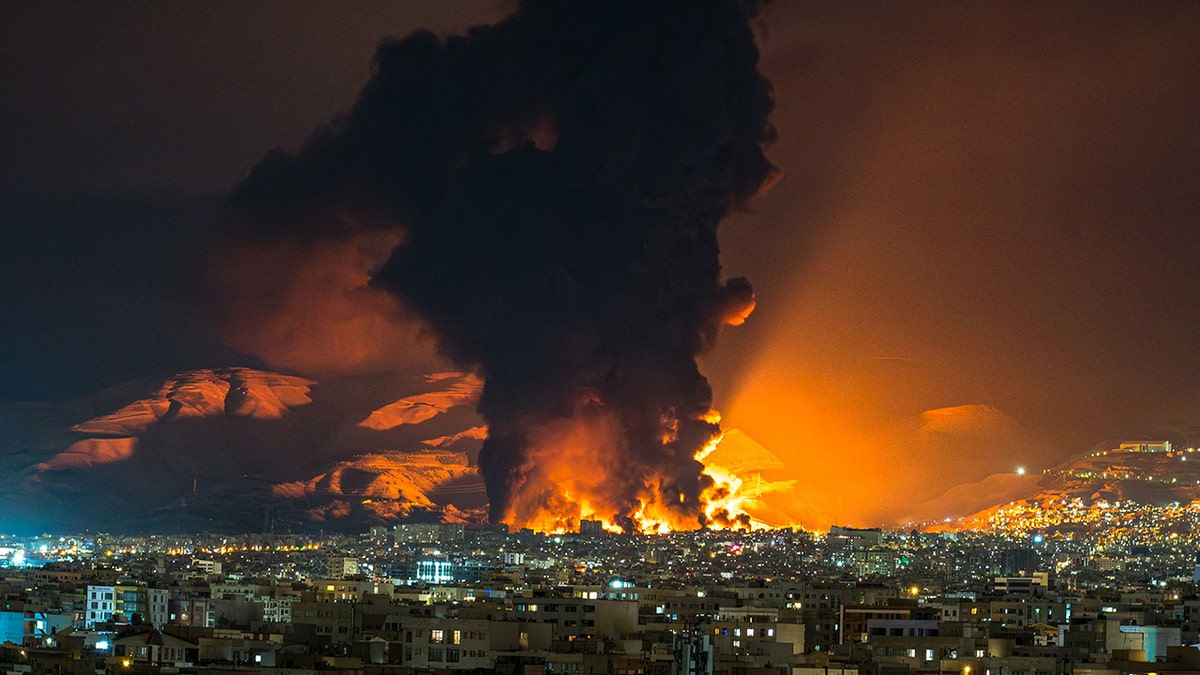
Smoke and flames billow in Iran

Smoke and flames rise at the site of airstrikes on an oil depot in Tehran on March 7, 2026. (Sasan / Middle East Images / AFP via Getty Images)

Trump’s strategy is working. His legs are not wobbly and his commitment unshaken: “We don’t want to leave early, do we? … We don’t want to come back every two years.” Half-measures against this regime have a 47-year track record of failure. History will vindicate Trump’s resolve to end it.

As Crown Prince Reza Pahlavi, the leader of Iran’s democratic opposition, put it: Donald Trump will be remembered as the leader who stood with the Iranian people when it mattered most — alongside history’s greatest liberators.


Source link

Calling out corporate BS? There’s a steaming pile to aim for • The Register

0

Opinion Science is at its best when it makes manifest radical ideas that change our worldview. This is the flag all sane people salute, under which we march to war. Yet in our hearts, we know that the very tastiest science is that which confirms our prejudices and validates what we’ve known all along. Cornell University has just served up a plate of the finest yet. Tuck in.

In an inventive, incisive study into the anthropology of business linguistics, researchers at that institution have proven the old adage, “bullshit baffles brains.” Those most impressed by the use of corporate jargon are those least well-equipped for analytical thinking. They ranked nonsensical statements more highly when composed of the finest business bovine byproduct, as ranked on the Corporate Bullshit Receptivity Scale or CBRS. This new learning is doubly delightful, not only confirming what so many of us have noted in our own studies of management and the managed, but also inferring superior analytical awesomeness on those who instinctively loathe the stuff.

Jargon is not inherently bad. It has many essential functions, especially in tech with its vast appetite for new inventions and novel reuse of older ideas. There is no crime in using butteriness instead of low latency touch enabled graphical user interface responsiveness. Four syllables beat twenty. The use of jargon can also be a good thing in itself. When geeks first meet, their initial conversation often resembles modem talking to modem, a training and negotiation sequence when the highest level of communication is established. The use of the right jargon is a strong guide to the depth of interest in a knowledge domain, and the right use of the right jargon marks concomitant expertise.

Management jargon misappropriates these uses, because the business of business is not technical but desperately wants to be. It is primarily people dealing with people in that wonderful game of encouraging cooperation through status, something that hasn’t really changed since we picked lice off each other. But it must seem to progress, so it needs new words for old ideas. Architecting instead of designing. Drilling down instead of exploring. Granularity instead of detail. Bio-break instead of taking a leak.

Those who use such words mark their higher status within the business environment and the superior nature of their ideas. Those who lap this up understand the dangers of over-analyzing the boss, and the importance of accepting tribal signifiers. There’s a reason this stuff exists, and resists whatever criticism and mockery rightly arise. It is in the fields of academe, technology, and business journalism in which criticism and mockery blossom most brightly.

These places prioritize analytic thinking and creativity, producing output of clarity and efficiency, among people who management finds hard to control. It’s not that other places lack widespread recognition of and cynicism about business jargon – these are ubiquitous – but tech and journalism are well placed to mock it publicly.

Take bullshit bingo, the game of quietly ticking off obnoxious jargon during meetings on bingo cards. You can’t actually yell “Bingo!” if you win, but the right sort of cough works just as well. This can be traced back to Turkey Bingo in colleges in the early ’90s, thence to Buzzword Bingo in business schools. It finally broke out under its current name and form by being hosted on the earliest web through Silicon Graphics employees. The Register knows from first-hand reports that the game quickly established itself across Silicon Valley. Intel and Microsoft employees also claimed an advanced variant where the challenge was to introduce new jargon and get it taken up by management at the meeting. Business jargon does have genuine uses after all.

Despite the long tradition of business bullshit and its critics, the Cornell study comes at an apposite time. Tech and consultancy marketing has always had a peculiarly strong love for bad jargon, given the industry’s habit of relaunching old ideas in new guises, and of disguising mediocre ideas in glamorous clothes. There’s been more than one major new business methodology launched in a cavalcade of infographics, white papers, and shiny graphics that boils down to “have more meetings, we can show you how.” Such tendencies have now been hyper-accelerated by the need to sell us all AI, and sell it hard.

The term “AI” is itself prime slime, often used as a synonym for software but never for the actual sentience it coyly implies. That over-promotion soaks all the way down with LLMs, with promised efficiency benefits poisoned by the need to check it for the mistakes it continues to make. Or by the consequences of not checking for those mistakes, which happens when you believe the claims and are too tired, too overworked, or too lazy to disbelieve the jargon. Forget the fog of war, it’s the miasma of bullshit that needs to be dispelled.

This is where we call upon the team at Cornell to expand and extend their science beyond the general skewering of business jargon and those who create and consume it, welcome and valuable as it is. The use of the stuff as a diagnostic is great – now use that as the basis for identifying and dissecting the stuff itself, and the mechanisms by which it affects choices and actions.

The Corporate Bullshit Receptivity Scale is a great start. Now we need the ABRC, the AI Bullshit Receptivity Scale. Heroes of Cornell, you know your allies in technology and journalism are standing by to applaud and amplify your efforts. Doubtless there are entire Nobel Prize awarding committees anxiously awaiting your future endeavors here, such is their potential importance. Existential threat may be just another piece of corporate jargon, but just because something’s a cliché doesn’t mean it’s not true. ®


Source link

CISA orders feds to patch DarkSword iOS flaws exploited attacks

0

Apple

CISA ordered U.S. government agencies to patch three iOS vulnerabilities targeted in cryptocurrency theft and cyberespionage attacks using the DarkSword exploit kit.

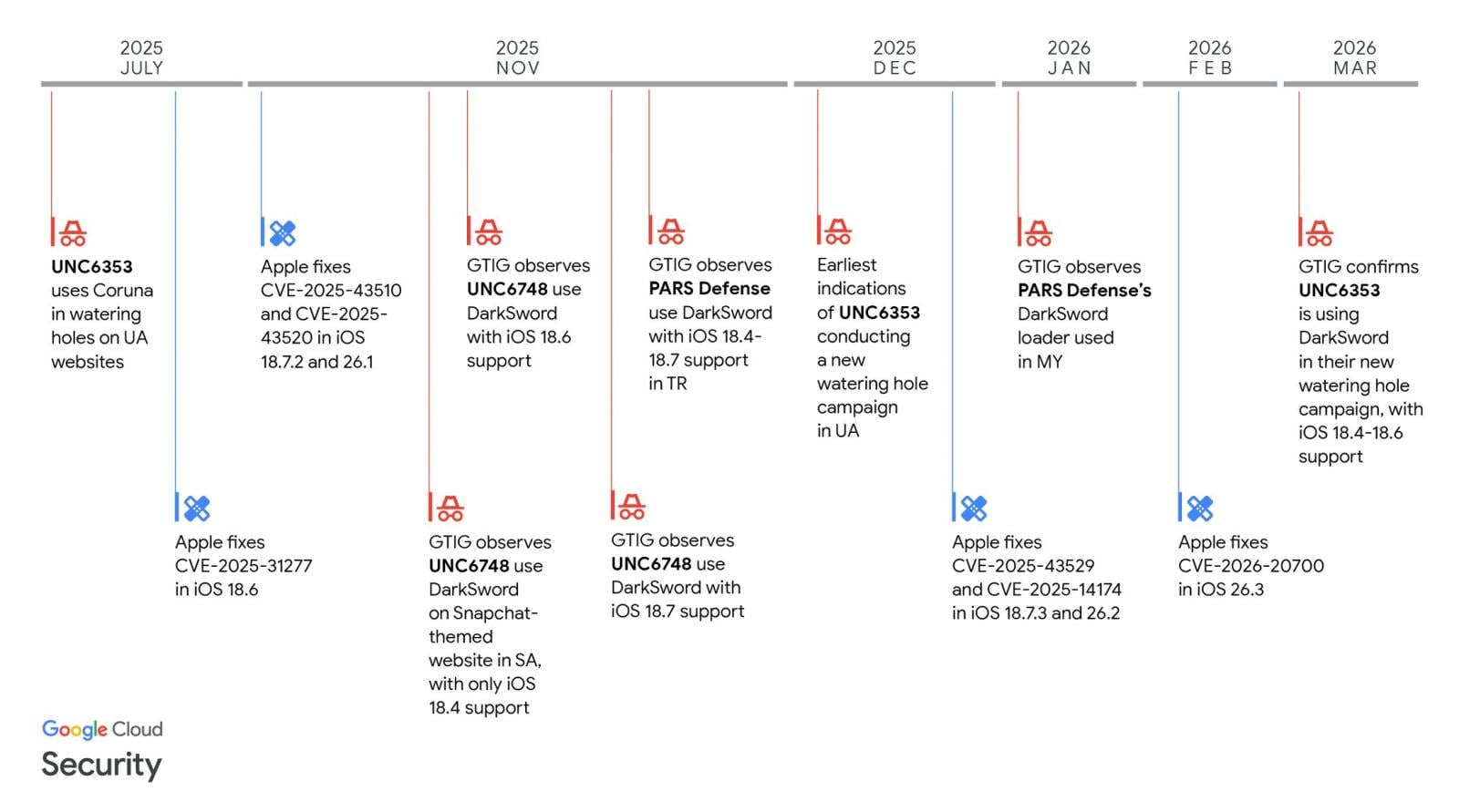
As Google Threat Intelligence Group (GTIG) and iVerify researchers revealed last week, the DarkSword delivery framework abuses a chain of six vulnerabilities tracked as CVE-2025-31277, CVE-2025-43529, CVE-2026-20700, CVE-2025-14174, CVE-2025-43510, and CVE-2025-43520.

These flaws enable attackers to escape sandboxes, escalate privileges, and gain remote code execution on unpatched iPhones, but have all been patched by Apple in the latest iOS releases and now only affect iPhones running iOS 18.4 through 18.7.

DarkSword was also linked by security researchers to multiple threat groups, including UNC6748, a customer of Turkish commercial surveillance vendor PARS Defense, and a suspected Russian espionage group tracked as UNC6353.

In these attacks, GTIG observed three separate information-theft malware families dropped on victims’ devices: a very aggressive JavaScript infostealer named GhostBlade, the GhostKnife backdoor that can exfiltrate large swaths of data, and the GhostSaber JavaScript that executes code and also steals victims’ data.

Of the three, UNC6353 deployed both the DarkSword and Coruna iOS exploit kits in watering-hole attacks targeting iPhone users visiting compromised Ukrainian websites of e-commerce, industrial equipment, and local services organizations.

Threat groups using the DarkSword iOS exploit kit
Threat groups using the DarkSword exploit kit (GTIG)

​Notably, DarkSword wipes temporary files and exits after stealing data from infected devices, indicating that it was designed for short-term surveillance operations designed to evade detection.

Mobile security company Lookout, which discovered DarkSword while investigating infrastructure used in the Coruna attacks, believes that DarkSword is used in cyber-espionage campaigns aligned with Russian intelligence requirements and by a Russian threat actor with financial objectives.

On Friday, CISA added three of the 6 DarkSword vulnerabilities (CVE-2025-31277, CVE-2025-43510, and CVE-2025-43520) to its catalog of actively exploited security flaws, ordering Federal Civilian Executive Branch (FCEB) agencies to secure their devices within two weeks by April 3, as mandated by Binding Operational Directive (BOD) 22-01.

“Apply mitigations per vendor instructions, follow applicable BOD 22-01 guidance for cloud services, or discontinue use of the product if mitigations are unavailable,” CISA warned.

“These types of vulnerabilities are frequent attack vectors for malicious cyber actors and pose significant risks to the federal enterprise.”

Although BOD 22-01 applies only to federal agencies, CISA urged all defenders, including those working for private sector companies, to prioritize securing their organizations’ devices against these flaws as soon as possible.

Malware is getting smarter. The Red Report 2026 reveals how new threats use math to detect sandboxes and hide in plain sight.

Download our analysis of 1.1 million malicious samples to uncover the top 10 techniques and see if your security stack is blinded.


Source link

‘Pentagon requesting $200bn signals that war will stretch a long time’ | Al Jazeera

0

Inkstick Media Founder Laicie Heeley explains what Pentagon’s request for $200bn from US Congress could mean for the US-Israeli war on Iran.


Source link

Access Denied

0

Access Denied You don’t have permission to access “http://hindi.news18.com/cricket/r-ashwin-snubbed-tushar-deshpande-naming-rajasthan-royals-probable-playing-xi-for-ipl-2026-10299887.html” on this server.

Reference #18.4a200117.1774256294.9d52998

https://errors.edgesuite.net/18.4a200117.1774256294.9d52998

Access Denied

0

Access Denied You don’t have permission to access “http://hindi.news18.com/news/ajab-gajab/viral-man-jumps-to-catch-fish-in-sea-did-biggest-mistake-of-life-shark-attack-video-10299624.html” on this server.

Reference #18.49200117.1774256822.86eb00a

https://errors.edgesuite.net/18.49200117.1774256822.86eb00a

ABD’s ICONiQ White Whiskey hits 10 million cases in FY26

0

Allied Blenders and Distillers Limited (ABD) on Monday said its flagship brand ICONiQ White International Grain Whiskey has crossed 10 million cases in FY26, becoming what the company claims is the world’s fastest growing millionaire spirits brand for the second consecutive year.

The milestone, achieved just 43 months after the brand’s September 2022 launch, marks one of the steepest volume ramp-ups in the global spirits industry. ICONiQ White had sold 0.32 million cases in FY23 during its initial rollout in East and North India, before scaling to 2.27 million cases in FY24 and 5.7 million cases in FY25. Drinks International’s Millionaires’ Club Reports for 2024 and 2025 recognized the brand as the fastest growing millionaire spirits brand in the world for calendar years 2023 and 2024, respectively.

“The journey from zero to 10 million cases in such a short period is a landmark achievement that redefines the growth playbook in the spirits industry,” said Alok Gupta, Managing Director, ABD. “As we scale across domestic markets and 9 countries, this milestone reinforces our commitment to leading the high-margin Prestige & Above segment.”

The brand has also expanded into Canteen Stores Department (CSD) channels and is present in multiple overseas markets. On the quality front, ICONiQ White holds Gold Medals from the International Spirits Challenge, International Whiskey Competition, and India Wine & Spirits Awards, all in 2024, along with a Gold Quality Award at Monde Selection 2024.

ABD, is one of India’s largest domestic spirits companies by volume. Its shares were trading at ₹386.45 on NSE on Monday afternoon, down 5.39 per cent from the previous close of ₹408.45, against an open of ₹408.65.

Published on March 23, 2026