Chuck wagon cook Kent Rollins shares 6 tips for cooking in extreme weather

0

NEWYou can now listen to Fox News articles!

As much of the country shifts from winter storms to warmer temperatures with the arrival of spring, a veteran cowboy cook says decades of experience have taught him how to prepare meals in some of the harshest conditions on Earth.

Kent Rollins, a longtime chuck wagon cook and Outdoor Channel host, has spent decades cooking for ranchers in extreme weather conditions across the country.

“If they can cowboy in it and get horseback, I can cook in it,” Rollins told Fox News Digital.

AMERICA’S ‘CAST IRON COWBOY’ REVEALS WHY TRADITIONAL SKILLETS REMAIN THE ULTIMATE COOKING TOOL

From minus-30 wind chills to 117-degree heat, Rollins, based in New Mexico, has learned how to adapt while preparing simple meals outdoors year-round.

“Life is simple,” he said. “Don’t complicate it with cooking.”

Cowboy chef Kent Rollins holds spoonfull of stew at campsite.

Kent Rollins has spent decades cooking for ranchers in some of the harshest conditions in the country. (Outdoor Channel)

Rollins has built a following of millions across social media and hosts “Cast Iron Cowboy” on the Outdoor Channel. 

He also recently launched the “Cowboy Coffee Hour” podcast with his wife, Shannon, with the two sharing stories from the trail and lessons on grit, faith and the cowboy code. 

COWBOY CHEF SAYS AMERICANS ARE TURNING TO ONE OF THE ‘HEALTHIEST MEATS,’ AND IT’S AT MOST GROCERY STORES

Here are six tips Rollins revealed to Fox News Digital that are essential for cooking in extreme conditions, he said. 

1. Stay hydrated in extreme heat and watch for warning signs

In high temperatures, Rollins, who was raised in Oklahoma, said hydration is critical — but water alone isn’t enough.

Kent Rollins stands next to a cast-iron grill and a tent.

Kent Rollins is a rancher and host of the popular Outdoor Channel show “Cast Iron Cowboy.” (Shannon Rollins)

“You’ve got to have something that’s going to put some of the good stuff back in you,” he said, noting he often turns to electrolytes, bananas and even coconut water.

FRIED BOLOGNA SANDWICH IS BOTH COWBOY ‘COMFORT FOOD’ AND ‘FIVE-STAR DINING’

He also warned people to pay attention to their bodies.

“If you ever reach up there to wipe your brow and there ain’t no sweat no more, you might have done went too far,” he said.

2. Dress in layers in the cold to prevent frostbite

Cold weather presents its own dangers, especially for those cooking outdoors for long stretches.

Rollins recommended dressing in layers and wearing moisture-wicking clothing.

Kent Rollins, an Oklahoma-born chuck wagon cook, has spent decades preserving traditional cowboy cooking methods.

Rollins says cooking outdoors requires both adaptability and common sense. (Shannon Rollins)

“Try to wear something that’s going to wick away that moisture in the wintertime if you do get sweating because water and cold make ice,” he warned.

CLICK HERE TO SIGN UP FOR OUR LIFESTYLE NEWSLETTER

Rollins also stressed the importance of covering exposed areas — noting that frostbite can set in quickly in extreme wind and snow. 

3. Plan your meals based on the weather

What’s on the menu should change with the weather, Rollins said.

In colder months, he focuses on high-calorie, hearty meals. 

“We make a lot of one-pot meals,” he said, including stews, chili and homemade sloppy Joes with ground beef, onions, jalapeños, chipotle peppers, adobe sauce and grated cheese to thicken it.

Cowboy chef Kent Rollins holding chicken-fried steak with tongs at campsite on the frontier.

In hotter temperatures, Rollins says ranch hands may still enjoy steak. (Outdoor Channel)

For breakfast, he keeps things straightforward with a biscuit recipe that only calls for self-rising flour and heavy whipping cream.

In extreme heat, however, appetites shrink and meals get lighter. 

CLICK HERE FOR MORE LIFESTYLE STORIES

“Cowboys ain’t going to eat as much, especially at a noon meal,” he said. 

4. Protect your fire — and always have a backup plan

Cooking outdoors means everything depends on your fire, Rollins said, especially in bad weather.

That means shielding it from wind, snow or rain and having a plan to keep it going. 

Cowboys on horseback riding toward tents with mountains in background.

A well-placed shelter and dry firewood are essential, says Rollins. (Shannon Rollins)

“Make sure you have some kind of shelter … that the water is not going to put it out,” he said.

5. Pre-warm the cast iron in cold weather to avoid cracking

Extreme temperatures can impact cookware, too, Rollins said.

Cast iron should never be taken from very cold to very hot too quickly, he said. 

TEST YOURSELF WITH OUR LATEST LIFESTYLE QUIZ

“If you shock cast iron from really being too cold to too hot in a hurry, you might crack it in half,” he said. 

Instead, he recommended gradually warming it near a fire or stove before cooking and letting it cool down slowly afterward.

Cowboys eating meal on frontier, seen behind pots on burners.

Proper care of cast iron is key in extreme conditions, Rollins says. (Shannon Rollins)

6. Use coolers for more than just keeping food cold

One of Rollins’ most versatile tools isn’t a pan or a pot. It’s a cooler, which he uses in multiple ways, depending on the weather. 

In winter, an ice chest can keep ingredients like potatoes from freezing. It can also help thaw meat or hold heat with hot water in it.

CLICK HERE TO DOWNLOAD THE FOX NEWS APP

Overall, mindset is the most important ingredient, according to Rollins. 

“If it doesn’t challenge you, it will never change you,” he said.


Source link

Access Denied

0

Access Denied You don’t have permission to access “http://hindi.gadgets360.com/apps/india-government-aadhaar-app-preinstall-smartphones-apple-samsung-google-mait-oppose-proposal-news-11243081” on this server.

Reference #18.4d560e17.1774005701.76557d7

https://errors.edgesuite.net/18.4d560e17.1774005701.76557d7

Oral insulin pill shows promise in lowering blood sugar in early study

0

NEWYou can now listen to Fox News articles!

Oral insulin could one day replace injections for people with diabetes, new scientific discoveries suggest.

Researchers from Kumamoto University in Japan have announced the development of an insulin pill to help lower blood sugar.

For diabetics, insulin is typically administered via injection, but the pill would offer a non-invasive treatment option.

CLICK HERE FOR MORE HEALTH STORIES

“Insulin injections remain a daily burden for many patients,” said Associate Professor Shingo Ito, a researcher in the study’s press release. “Our peptide-based platform offers a new route to deliver insulin orally, and may be applicable to long-acting insulin formulations and other injectable biologics.”

girl puts pill to mouth while holding water glass

Oral insulin could one day replace injections for people with diabetes, new scientific discoveries suggest. (iStock)

The study, published in the journal Molecular Pharmaceutics, tested the delivery of oral insulin by building a carrier peptide called DNP-V. This peptide helps to transport insulin through the small intestine, where protein drug absorption is usually poor.

In diabetic mice models, the researchers administered the peptide by mouth with zinc-stabilized insulin, which was formulated with zinc ions to make it more stable, according to the study.

“Insulin injections remain a daily burden for many patients.”

The result was a rapid and significant drop in blood glucose, as well as a sustained (longer-term) decrease. The mice’s blood sugar was reduced to near-normal levels.

CLICK HERE TO DOWNLOAD THE FOX NEWS APP

When DNP-V was attached directly to insulin, the results showed enhanced absorption in the intestines and a similar glucose-lowering effect, the researchers noted.

The treatment was effective in different diabetes models, significantly reducing blood sugar spikes after meals with just one dose per day.

white mouse held by gloved hand in lab

The study was done in mice, which leaves uncertainty if the treatment will translate to humans. (iStock)

The findings suggest that DNP peptides could serve as flexible, adaptable platforms for delivering large-molecule drugs by mouth, the authors concluded in the study abstract.

TEST YOURSELF WITH OUR LATEST LIFESTYLE QUIZ

“This technology can simply and effectively convert injectable biopharmaceuticals into orally administrable forms, offering a promising path to practical, patient-friendly oral therapies,” they wrote.

Although the researchers are optimistic about the findings translating to larger therapeutic models, they noted that the results in mice do not guarantee the same outcome in humans, and that more research is needed.

child gets finger pricked for diabetes

For diabetics, insulin is typically administered via injection to regulate blood sugar levels. (iStock)

Dr. Marc Siegel commented on this development, noting that oral insulin could make a big difference in healthcare.

“Insulin use, especially in type 1 diabetes, is sometimes difficult to regulate by injection,” Siegel, who was not involved in the study, told Fox News Digital. “Oral use would have major advantages.”

CLICK HERE TO SIGN UP FOR OUR HEALTH NEWSLETTER

He added, “This is very promising provided that it works in humans, which is a big ‘if.'”

Fox News Digital reached out to the study authors for comment.


Source link

Access Denied

0

Access Denied You don’t have permission to access “http://hindi.news18.com/photogallery/sports/cricket-harshit-rana-to-mitchell-starc-these-players-from-ipl-2026-were-ruled-out-or-not-play-early-games-10291994.html” on this server.

Reference #18.4a200117.1774006090.3a58a8

https://errors.edgesuite.net/18.4a200117.1774006090.3a58a8

The Importance of Behavioral Analytics in AI-Enabled Cyber Attacks

0

The Hacker NewsMar 20, 2026Artificial Intelligence / Data Protection

Artificial Intelligence (AI) is changing how individuals and organizations conduct many activities, including how cybercriminals carry out phishing attacks and iterate on malware. Now, cybercriminals are using AI to generate personalized phishing emails, deepfakes and malware that evade traditional detection by impersonating normal user activity and bypassing legacy security models. As a result, rule-based models alone are often insufficient for identity security against AI-enabled threats. Behavioral analytics must evolve beyond monitoring suspicious activity patterns over time into dynamic, identity-based risk modeling capable of identifying inconsistencies in real time.

Common risks introduced by AI-enabled attacks

AI-enabled cyber attacks introduce very different security risks compared to traditional cyber threats. By relying on automation and mimicking legitimate behavior, AI allows cybercriminals to scale their attacks while reducing obvious signals to remain undetected.

AI-powered phishing and social engineering

Unlike traditional phishing attacks that use generic messaging, AI enables personalized phishing messages at scale using public data, impersonating the writing styles of executives or creating context-aware messages referencing real events. These AI-powered attacks can reduce obvious red flags, slip past some filtering approaches and rely on psychological manipulation instead of malware delivery, significantly increasing the risk of credential theft and financial fraud.

Automated credential abuse and account takeovers

AI-enhanced credential abuse can optimize login attempts while avoiding triggering lockout thresholds, mimicking human-like timing between authentication attempts and targeting privileged accounts based on context. Since these attacks use compromised credentials, they often appear valid and blend into normal login activity, making identity security a crucial component of modern security strategies.

AI-assisted malware

Before cybercriminals could use AI to accelerate malware development and deployment, they had to manually modify code signatures and spend copious time creating new variants. AI can further speed up variation, scripting and adaptation. With modern adaptive malware, cybercriminals can automatically modify code to avoid detection, change behavior based on the environment and generate new exploit variants with little to no manual effort. Since traditional signature-based detection models struggle against continuously evolving code, organizations must start relying on behavioral patterns rather than static indicators.

How traditional behavioral monitoring can fail against AI-based attacks

Traditional monitoring was designed to detect cyber threats driven by malware, known security vulnerabilities and visible behavioral anomalies. Here are some of the ways traditional behavioral monitoring falls short against AI-enabled attacks:

  • Signature-based detection can’t identify modern threats: Signature-based tools rely on known signs of compromise. AI-assisted malware constantly rewrites its own code and automatically generates new variants, making static code signatures obsolete.
  • Rule-based systems rely on predefined thresholds: Many behavioral monitoring systems depend on rules, such as login frequency or geographic location. AI-assisted cybercriminals adjust their behavior to remain within set limits, conducting malicious activity over a longer period of time and mimicking human behavior to avoid detection.
  • Perimeter-based models fail when compromised credentials are involved: Traditional perimeter-based security models assume trust once a user or device is authenticated. When cybercriminals authenticate with legitimate credentials, these outdated models treat them as valid users, allowing them to carry out malicious actions.
  • AI-based attacks are designed to appear normal: AI-based cyber threats intentionally blend in by operating within assigned permissions, following anticipated workflows and executing their activities gradually. While isolated activity may seem legitimate, the main risk is when activity is regarded in tandem with behavioral context over time.

Why behavioral analytics must shift for AI-based attacks

The shift to modern behavioral analytics requires an evolution from simple threat detection into dynamic, context-aware risk modeling capable of identifying subtle privilege misuse.

Identity-based attacks require context

To appear normal, AI-driven cybercriminals often use credentials compromised through phishing or credential abuse, work from known devices or networks and conduct malicious activity over time to avoid detection. Modern behavioral analytics must evaluate whether even the slightest change in behavior is consistent with a user’s typical behavioral patterns. Advanced behavioral models establish baselines, assess real-time activity and combine identity, device and session context.

Monitoring must extend across the entire stack

Once cybercriminals gain access to systems through compromised, weak or reused credentials, they focus on gradually expanding their access. Behavioral visibility needs to cover the full security stack, including privileged access, cloud infrastructure, endpoints, applications and administrative accounts. For behavioral analytics to be more effective against AI-based cyber attacks, organizations must enforce zero-trust security and assume that no user or device should have implicit trust or automatic authentication based on network location.

Malicious insiders may use AI tools

AI tools not only empower external cybercriminals but also make it easier for malicious insiders to act within an organization’s network. Malicious insiders can use AI to automate credential harvesting, identify sensitive information or generate believable phishing content. Since insiders often operate with legitimate permissions, detecting privilege misuse requires identifying behavioral anomalies like access beyond defined responsibilities, activity outside normal business hours and repeated activity within critical systems. Eliminating standing access by enforcing Just-in-Time (JIT) access, session monitoring and session recording helps organizations limit exposure and reduce the impact of compromised accounts and insider misuse.

Secure identities against autonomous AI-based cyber attacks

At a time when AI agents can create convincing social engineering campaigns, test credentials at scale and reduce the hands-on effort required to run attacks, AI-enabled cyber attacks are becoming increasingly automated. Protecting both human and Non-Human Identities (NHIs) now requires more than authentication; organizations must implement continuous, context-aware behavioral analysis and granular access controls. Modern Privileged Access Management (PAM) solutions like Keeper consolidate behavioral analytics, real-time session monitoring and JIT access to secure identities across hybrid and multi-cloud environments.

Note: This article was thoughtfully written and contributed for our audience by Ashley D’Andrea, Content Writer at Keeper Security.

Found this article interesting? This article is a contributed piece from one of our valued partners. Follow us on Google News, Twitter and LinkedIn to read more exclusive content we post.


Source link

Test your weekly news knowledge with the Fox News Quiz covering top stories

0


Test your news knowledge with this week’s Fox News Digital News Quiz, featuring a Department of Homeland Security nomination vote in a Senate committee and a teen athlete’s inspiring championship victory.

Looking for another challenge?

Sports analyst Stephen A. Smith ruled out a White House bid and discussed GOP support, while Iranian women’s soccer players gained asylum in last week’s News Quiz.

Test your knowledge of tipping turmoil, burger buzz and more in this week’s American Culture Quiz.

CLICK HERE TO DOWNLOAD THE FOX NEWS APP

If you’re looking to play even more, you can find all of our quizzes by clicking here.

Check back next week for the latest News Quiz from Fox News Digital. Thanks for playing!


Source link

Share Market Highlights March 20, 2026: Sensex, Nifty climb on IT rebound; rupee slips to 93.71/USD

0

Bitcoin traded in the $70,200-$70,400 range on March 20 and posted a mild 1-1.5% pullback over 24 hours. The intraday band remained relatively contained between ~$68,800 and $71,500. This pointed to a consolidation rather than directional conviction.

From a trading standpoint, immediate support lies near the $69,000-$70,000 zone, which the market has repeatedly defended in recent sessions. A break below this exposes $65,000-$66,000 and it remains the more structurally relevant downside cushion from the late-February correction. On the upside, $72,000-$73,000 continues to cap rallies. The ~$74,400 price point has been acting as a stronger resistance barrier. A decisive move above this band is required to reopen the path towards $80,000, where overhead supply is relatively thin.

On-chain indicators remain constructive but not euphoric. Glassnode data shows the MVRV ratio around ~1.28. This means Bitcoin is trading above its realized cost basis but still below historically overheated levels. The realized cap near $1.08 trillion underscores the depth of capital embedded in the network and suggests resilience despite recent volatility.

Institutional flows have turned mixed. After a strong $199 million net inflow on March 17, US spot Bitcoin ETFs saw $163 million in outflows on March 18 and $52 million on March 19. The shift indicates some short-term profit-taking. This has been particularly from large vehicles such as BlackRock’s IBIT and Fidelity’s FBTC.

Among major altcoins, Ethereum (~2140, -3%), BNB (~640, -1.7%), and Solana (~89, -1.4%) traded weaker on the day, while XRP (~144) and TRON (~0.30) showed relative resilience on a weekly basis. The broader trend suggests altcoins continue to move largely in tandem with Bitcoin.

Macro remains the decisive driver and the signal has turned incrementally restrictive. The US Federal Reserve held rates in the 3.5%-3.75% range on March 18. But the forward guidance has shifted toward a ‘higher-for-longer’ stance, with markets now pricing little to no rate cuts in 2026. This is a sharp reversal from earlier expectations.

The pressure point is inflation persistence, particularly from energy. Brent crude has surged above $110-$115 amid Middle East tensions and raised the risk of a second-round inflation effect. This matters directly for crypto as higher oil feeds into headline inflation, which, in turn, delays Fed easing and tightens dollar liquidity. This combination historically caps upside in risk assets like Bitcoin.

Technically, this macro setup explains Bitcoin’s current range behavior. BTC is reacting less to isolated data prints and more to rate-path uncertainty and real yields. As long as inflation remains sticky and oil elevated, the $68K-$72K consolidation band is likely to persist.

In effect, the market is caught between the opposing forces of structural demand (ETFs, supply scarcity) and cyclical macro tightening (rates, oil, dollar strength). And, until one clearly dominates, Bitcoin is likely to remain a macro-sensitive, range-bound asset.

Broker’s call: Aequs (Buy) – The HinduBusinessLine

0

Target: ₹145

CMP: ₹123.30

Aequs (Latin for equal) was incorporated in 2000 by promoter Mr Aravind Melligeri, an engineering technocrat who is the key driving force behind the company. Aequs has in over a decade transitioned into a tier I supplier for many aerospace majors (Airbus, Boeing, Safran). Its wins in key component programs of majors has increased parts supplied by it to nearly 5,200+. Given that Airbus aims to increase sourcing from India to $2.1 billion (FY30) versus $1.4 billion (FY25) we see significant scope for growth. Aequs, with its unique end-to-end manufacturing/forging capabilities and its status as a D2P (Detailed to Parts) supplier for Airbus, stands to gain a higher program share.

Aequs is a combination of a well-established aerospace segment and the optionality of a potentially rapidly expanding consumer segment (off a low base). We value it at FY30E EBITDA as that is when we expect key benefits of the intensive-capex phase to start showing up, and discount back to FY28 to derive our TP of ₹145.

Given the current listing, the risk reward is favorable and we initiate at Buy. In our valuation framework, 75 per cent of the value accrues from the established aerospace business underpinned by decades-old customer connections, while 25 per cent of the EV is from consumer, which is at a smaller, suboptimal scale currently (FY26) but has significant scale-up potential.

Published on March 20, 2026

Australian Prime Minister Anthony ‌Albanese booed at Sydney mosque during Eid prayers | World News

0

The Australian prime minister was booed by protesters during a visit to the country’s largest mosque.

Anthony ‌Albanese and Australia’s Home Affairs Minister Tony Burke joined worshippers at Lakemba Mosque in Sydney for Eid prayers on Friday.

Video of the event showed several protesters making lengthy interruptions, including telling them to “get out!” and calling them “genocide supporters”.

Iran war latest – Israel’s war goals

A protester shouts at Mr Albanese. Pic: Reuters
Image: A protester shouts at Mr Albanese. Pic: Reuters
Australia's Prime Minister Anthony Albanese (C) at Lakemba Mosque in Sydney. Pic: Reuters
Image: Australia’s Prime Minister Anthony Albanese (C) at Lakemba Mosque in Sydney. Pic: Reuters

A security guard was seen tackling one ‌heckler to the ground before escorting him away.

At one point during the disturbances, an organiser told the crowd to sit down and stop filming, saying, “dear brothers and sisters, keep calm a little bit”, and “It is ⁠Eid. It is a joyful day”.

But the animosity continued, with some shouting “shame on you” as the politicians left.

Australia’s Prime Minister Anthony Albanese leaves Lakemba Mosque. Pic: Reuters
Image: Australia’s Prime Minister Anthony Albanese leaves Lakemba Mosque. Pic: Reuters

Read more:
British couple drown in Australia
Footballer changes mind on asylum
Alleged Bondi gunman seeks gag order

Some in Australia’s Muslim and Jewish communities are angry over the government’s stance on Israel’s offensive in Gaza.

The prime minister described the event as “incredibly positive”, adding that “if you got a couple of people heckling in a crowd of 30,000, that should be put in that perspective”.

He said some were frustrated at his government’s decision, earlier this month, to list Islamist organisation Hizb ut-Tahrir as a prohibited hate group under laws brought in after December’s mass shooting at Sydney’s Bondi Beach.


Source link

Boulder officer hurt in creek struggle, suspect released on $100 bond

0

NEWYou can now listen to Fox News articles!

A Colorado police officer suffered a serious head injury during a violent struggle with a suspected drug dealer, but the suspect was released on just $100 bond despite prosecutors pushing for a much higher amount.

The incident happened Tuesday evening in downtown Boulder, where officers were responding to ongoing complaints about open drug use and overdoses in a public park.

According to police, officers were speaking with a woman seen smoking suspected methamphetamine when she pointed them to a man nearby who she said had sold her the drugs. When officers approached the suspect, later identified as Kai Brown, he attempted to flee.

An officer gave chase, and during the struggle, both the officer and Brown fell into Boulder Creek. Police said the suspect landed on top of the officer, who struck his head on a rock.

HOUSTON THUG CHARGED WITH MURDER AFTER 8 ARRESTS SHOWS ‘REVOLVING DOOR’ FAILURES: GOP LAWMAKER

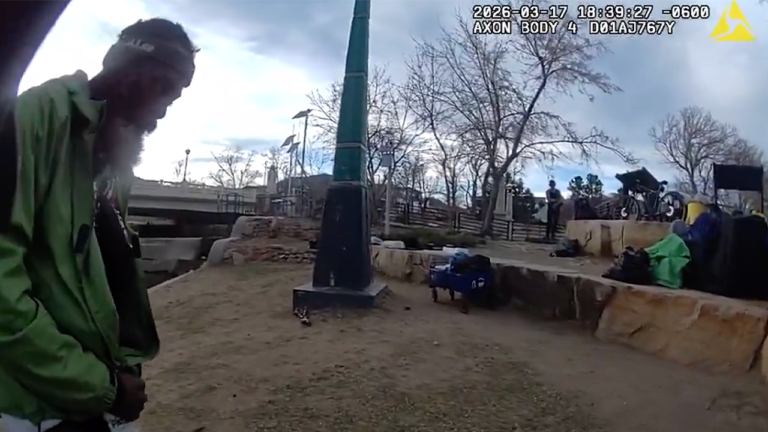
Suspect in Boulder drug case seen in bodycam video before fleeing police.

Bodycam video captures the suspect moments before fleeing from officers in a downtown Boulder park, leading to a dangerous confrontation that injured a police officer. (X/@boulderpolice)

Despite suffering a serious concussion along with cuts and bruises, the officer was able to help take Brown into custody before collapsing. He was transported to a hospital and has since been released and is recovering at home, police said.

“This incident is deeply troubling—not only because one of our officers was injured as a direct result of a suspect fleeing, but because it highlights the very real dangers that drug trafficking poses to our entire community,” Boulder Police Chief Steve Redfearn said.

Brown was found with multiple individually packaged baggies of suspected methamphetamine and is facing several charges, including a felony drug offense, assault, resisting arrest and obstruction, according to authorities.

FUGITIVE REPEAT OFFENDER KEEPS WALKING FREE AS COURTS LET HIM LOOSE TO HURT PEOPLE, EXPERTS WARN

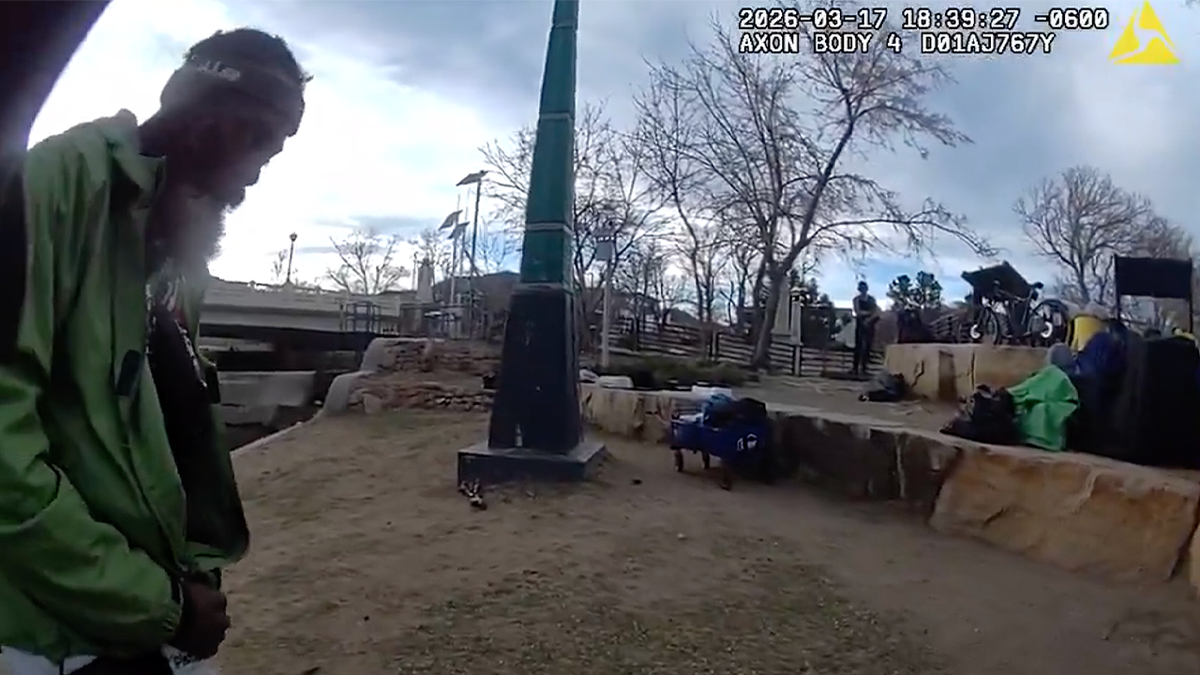
Boulder police officer approaching suspected meth dealer near creek before struggle

Bodycam video shows a Boulder police officer approaching a suspected drug dealer in a downtown park moments before a chase and violent struggle near Boulder Creek. (X/@boulderpolice)

The bond decision, however, is drawing scrutiny.

The Boulder County District Attorney’s Office said it requested a $20,000 secured bond, citing the suspect’s criminal history, the seriousness of the charges and the injuries to the officer.

Instead, a judge set bond at $1,000, with the option for Brown to post just $100 for release.

“This defendant is charged with a serious drug felony… [and] caused significant and scary injuries to the police officer who attempted to enforce the law,” District Attorney Michael Dougherty said. “Given the defendant’s criminal history, his actions here, and the injuries suffered by the officer, our prosecutor asked for a high, secured bond. That was definitely the right thing to do.”

GOT A TIP?

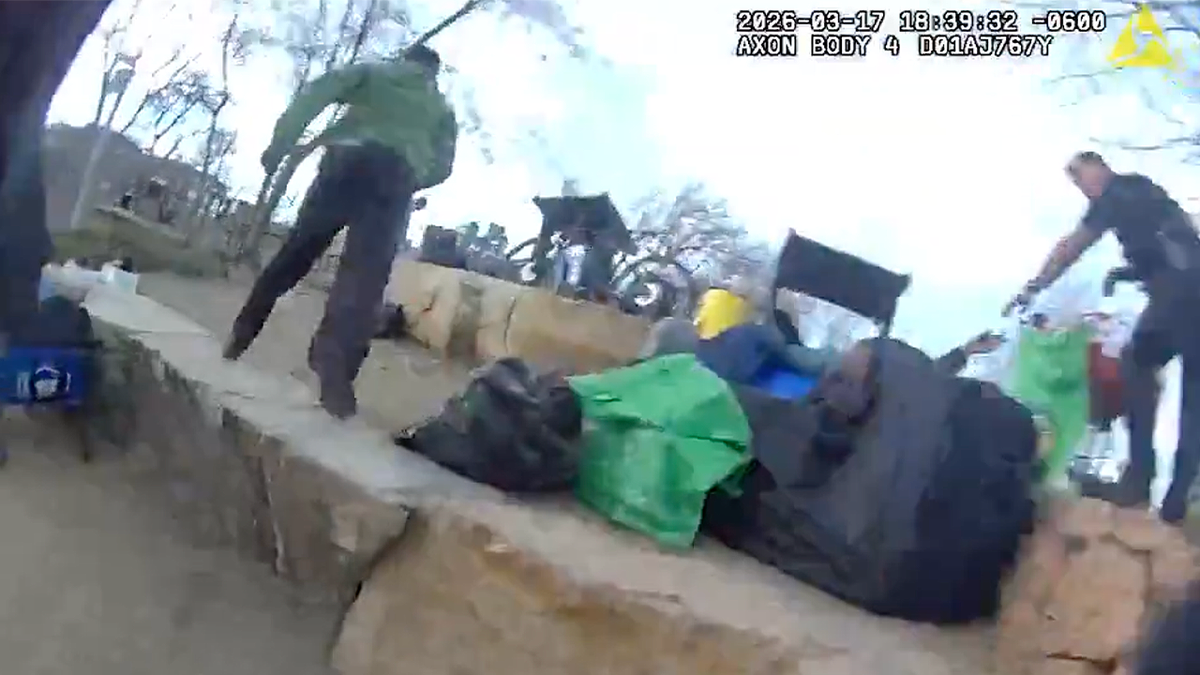
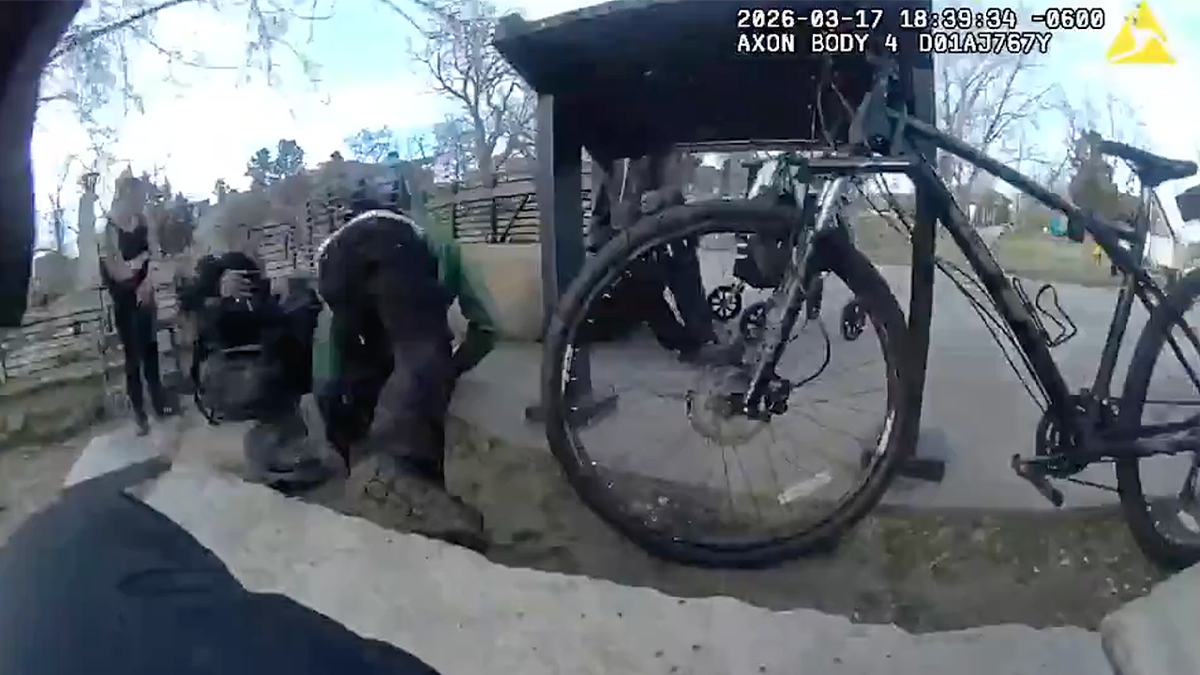
Police struggle with suspect near Boulder Creek captured on bodycam video

Police bodycam video shows the chaotic moments during a struggle between an officer and a suspected drug dealer near Boulder Creek, where the officer suffered a serious head injury. (X/@boulderpolice)

Chief Redfearn also raised concerns about the broader implications.

FOLLOW US ON X

“I also have serious concerns about whether the full risk to our community, the severity of this incident, and risk to and impact on our officers was reflected in the bond decision,” he said. “This is a pattern that is frustrating because these bond decisions directly impact community safety.”

Police noted the arrest came amid ongoing concerns about drug activity in Boulder. According to the Boulder County Coroner’s Office, there were 26 fatal drug overdoses in the city in 2025, many occurring in public spaces.

GET BREAKING NEWS BY EMAIL

Officers were patrolling the area proactively in response to those concerns when the incident occurred.

CLICK HERE FOR MORE US NEWS

“If the water levels in the creek were lower, or higher, this situation could have easily resulted in a life-altering or even fatal outcome,” Redfearn said.

CLICK HERE TO DOWNLOAD THE FOX NEWS APP

Stepheny Price covers crime, including missing persons, homicides and migrant crime. Send story tips to stepheny.price@fox.com.


Source link