Globally, silver futures for the May contract on the Comex extended losses for the seventh consecutive session, declining by $4.89, or 6.31%, to $72.69 per ounce.
Silver futures tumbled by ₹9,031 to ₹2.39 lakh per kilogram on Thursday, marking the seventh straight session of losses, as rising crude oil prices and a hawkish US Federal Reserve outlook dampened investors’ sentiment.
On the Multi Commodity Exchange, the white metal for the May delivery slumped by ₹9,031, or 3.64 per cent, to ₹2,39,163 per kilogram in a business turnover of 6,372 lots.
Analysts said persistent inflation concerns, driven by elevated crude oil prices, have reduced safe-haven demand for precious metals by lowering expectations of near-term interest rate cuts by the Federal Reserve.
Globally, silver futures for the May contract on the Comex extended losses for the seventh consecutive session, declining by $4.89, or 6.31 per cent, to $72.69 per ounce.
Silver hovered around $75 per ounce after a steep fall of 5 per cent in the previous session, as hawkish signals from the US Federal Reserve and surging oil prices weighed on bullion, Jigar Trivedi, Senior Research Analyst at IndusInd Securities, said.
Echoing similar views, Renisha Chainani, Head of Research at Augmont, said silver prices remained under pressure as a firm US dollar outweighed safe-haven demand from tensions in West Asia. On Wednesday, the US Fed kept its benchmark interest rate unchanged but flagged upside risks to inflation stemming from the ongoing conflict in West Asia, signaling a cautious approach towards monetary policy easing.
The US central bank indicated that it will not cut rates until inflation shows signs of easing, even as it continues to project one rate reduction later this year.
Meanwhile, crude oil prices rallied sharply, with Brent futures exceeding $110 per barrel in the international markets following fresh attacks on energy infrastructure in the region.
Geopolitical tensions intensified after Iran launched missile strikes on key energy sites, including a Qatari facility housing the world’s largest LNG export plant, in retaliation for earlier strikes on its South Pars gas field.
“This marks a significant widening of the conflict, raising energy security concerns and inflation risks, while increasing uncertainty across global markets,” Chainani said.
According to analysts, the combined impact of geopolitical risks, rising energy costs, and a cautious monetary policy outlook is likely to put pressure on silver prices in the near term.
Mokama MLA Anant Singh has got a big relief from Patna High Court. He has been granted bail in the famous Dularchand Yadav murder case. The court gave this decision considering the facts and evidence presented during the hearing.
After the completion of the legal process, it is expected that Anant Singh may be released from jail by Friday or Saturday. As soon as the news of the bail spread, there was a wave of happiness among his supporters in Mokama and surrounding areas.
Supporters celebrated, saying that they had faith in Anant Singh from the beginning and the court’s decision has further strengthened their faith. It is noteworthy that the Dularchand Yadav murder case has been in discussion for a long time and after the arrest of Anant Singh in this case, there was a stir in the political circles also. Now after getting bail, this matter has once again come into limelight.
Full story of Dularchand murder case
Dularchand was murdered in Mokama Tall on 30 October. The allegation was leveled against Anant Singh and his supporters. Late night of 1 November, Patna SSP Kartikeya Sharma himself reached Anant Singh’s residence Mokama and arrested him. According to the postmortem report, deep wounds and marks of blood clotting were found at many places on the body. The lungs were found burst, causing excessive internal bleeding. Several chest ribs were found broken. Marks of injuries were found especially near the spinal cord (vertebra) on the right side. Deep wounds and injuries were found on the head, knees, ankles and back. Along with this, there is mention of firearm (gunshot) injury near the right leg, i.e. there are marks of bullet injury.
Access Denied
You don’t have permission to access “http://hindi.news18.com/cricket/ab-de-villiers-calls-virat-kohli-heartbeat-of-rcb-explains-why-royal-challengers-benagluru-can-won-ipl-2026-too-10287734.html” on this server.
The UN reports more than one million displaced in Lebanon as Israeli attacks escalate, with children making up one-third.
Published On 19 Mar 202619 Mar 2026
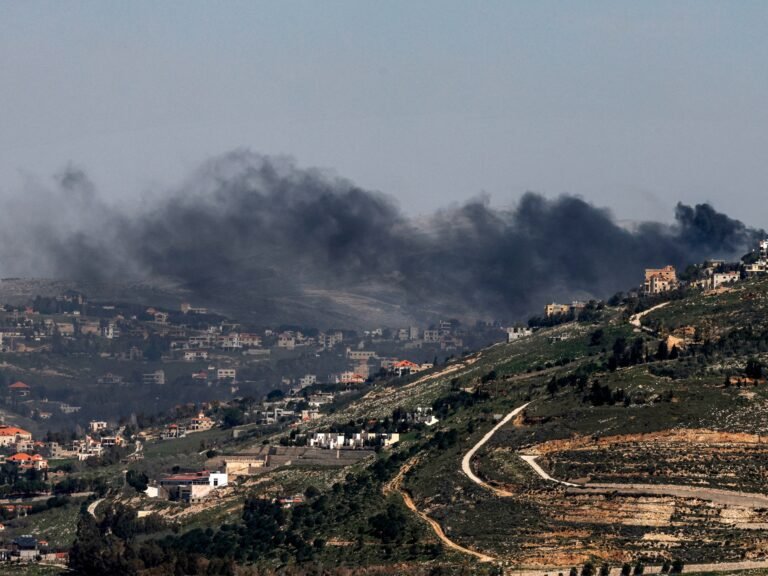
Israeli air raids targeted a house in the town of Burj Shemali in southern Lebanon as dozens were reported killed across the war-battered country over the past two days on this punishing front of the wider conflict launched by the United States and Israel against Iran, embroiling the Middle East.
Further south, Israel shelled the entrances to the towns of Chihine and Marwahin, near the border with Israel, the official National News Agency (NNA) reported on Thursday.
Recommended Stories
list of 3 itemsend of list
Israeli warplanes also launched two air strikes overnight near homes in al-Sarira in Jezzine district, also in the south, “causing cracks in houses and shattered windows”, NNA said.
At least 45 people have been killed in Israeli strikes on Lebanon over the past two days, and more than 100 injured, including children, Lebanon’s Ministry of Public Health said on Thursday.
Aftermath of destruction is seen in the Islamic Health Society, in Burj Qalawiya, Lebanon, on March 15, 2026 [Adri Salido/Getty Images]
The Israeli assaults took place across the country, including the capital, Beirut, Baalbek in the east, and Sidon in the south.
Israeli strikes hit central Beirut multiple times on Wednesday as fighting with Hezbollah intensified.
The Lebanese-armed group announced that their troops destroyed six Israeli Merkava tanks in southern Lebanon.
The attack took place during an attempt by Israeli forces to advance into the town of Taybeh towards the Deir Siryan area, Hezbollah said.
At least 968 people have been killed in Israeli strikes since March 2, according to Lebanese authorities. The World Health Organization said more than 100 of those killed were children.
The United Nations warned on Wednesday that more than one million people have been displaced in Lebanon as Israeli attacks escalated across the country, with nearly one-third of those uprooted being children.
Top French diplomat to visit Lebanon
Foreign Minister Jean-Noel Barrot will arrive in Lebanon on Thursday to show “France’s support and solidarity with the Lebanese people”, according to his office.
Barrot will meet with Lebanon’s President Joseph Aoun, Prime Minister Nawaf Salam, and Parliament Speaker Nabih Berri, NNA reported, citing a statement from the French Ministry for Europe and Foreign Affairs.
It cited the ministry as saying that the people of Lebanon have been “dragged into a war they didn’t choose”. Barrot spoke by phone with his Israeli and US counterparts earlier on Wednesday.
Meanwhile, the European Union has called on Israel to halt its attacks on Lebanon.
“The EU is deeply concerned about the ongoing Israeli offensive in Lebanon, which already has devastating humanitarian consequences and risks triggering a prolonged conflict,” a spokesperson said in a statement, adding that “Israel should cease its operations in Lebanon”.
More than a million people in Lebanon have been displaced and over 900 killed as Israel intensifies its offensive against the militant group Hezbollah.
Israel says those displaced from southern Lebanon will not be allowed back to their homes until the IDF has dismantled Hezbollah’s infrastructure in the region.
The latest round of violence erupted on 2 March when the group launched missiles into northern Israel in support of its ally, Iran, which had come under US-Israeli attack four days earlier.
Israel responded with full force, launching hundreds of strikes across Lebanon, mostly concentrated in southern Lebanon.
But there have also been many strikes on the Lebanese capital, Beirut, including the southern suburb of Dahiya – a Hezbollah stronghold, but also densely packed with civilian residents.
These strikes have coincided with a sweeping evacuation order covering almost half of the capital.
Datawrapper
This content is provided by Datawrapper, which may be using cookies and other technologies.
To show you this content, we need your permission to use cookies.
You can use the buttons below to amend your preferences to enable Datawrapper cookies or to allow those cookies just once.
You can change your settings at any time via the Privacy Options.
Unfortunately we have been unable to verify if you have consented to Datawrapper cookies.
To view this content you can use the button below to allow Datawrapper cookies for this session only.
And in southern Lebanon, the IDF has ordered the evacuation of everyone living south of the Zahrani river – the largest evacuation order issued by the Israeli military in recent history.
Datawrapper
This content is provided by Datawrapper, which may be using cookies and other technologies.
To show you this content, we need your permission to use cookies.
You can use the buttons below to amend your preferences to enable Datawrapper cookies or to allow those cookies just once.
You can change your settings at any time via the Privacy Options.
Unfortunately we have been unable to verify if you have consented to Datawrapper cookies.
To view this content you can use the button below to allow Datawrapper cookies for this session only.
Sky News estimates that the area covered by the evacuation orders was previously home to two million people – or a third of Lebanon’s population.
At least two bridges across the Litani river have been destroyed in recent weeks, despite the need for civilians to cross it to comply with the IDF’s evacuation orders.
On 18 March, the IDF announced that it would begin striking the remaining bridges, which it alleged were being used by Hezbollah to transport soldiers and combat equipment.
“The orders have come with terrifying force, and there is panic,” says international human rights lawyer Geoffrey Nice KC.
“The panic is your responsibility if you’re the one that’s ordering them to leave.”
“It seems to me there’s quite a lot of evidence to say this is unlawful,” he adds.
“We are following international law and doing everything we can to avoid harm to civilians,” an IDF official told Sky News.
Israel may be planning to stay
Israeli defence secretary Israel Katz said on 18 March that those fleeing southern Lebanon will not be allowed to return to the area south of the Litani river “until the safety of the residents of the north [of Israel] is guaranteed”.
Under a 2006 UN resolution, the only armed groups allowed to operate south of the Litani river are the Lebanese armed forces and UN peacekeepers.
Datawrapper
This content is provided by Datawrapper, which may be using cookies and other technologies.
To show you this content, we need your permission to use cookies.
You can use the buttons below to amend your preferences to enable Datawrapper cookies or to allow those cookies just once.
You can change your settings at any time via the Privacy Options.
Unfortunately we have been unable to verify if you have consented to Datawrapper cookies.
To view this content you can use the button below to allow Datawrapper cookies for this session only.
Israel says that by removing Hezbollah from this region, it is seeking to enforce the UN resolution.
Last year, Mr Katz said Israel would also maintain a “security zone” inside Lebanon for the foreseeable future.
Since 2024, the IDF has maintained at least five bases on the Lebanese territory.
Candice Ardiel, spokesperson for the UN’s peacekeeping mission in Lebanon (UNIFIL), told Sky News that the existence of these bases is a “clear violation” of the 2006 resolution.
An IDF official told Sky News that “Israel kept to that agreement until Hezbollah started attacking our civilians”.
Satellite imagery shared with Sky News by the London-based Centre for Information Resilience suggests three additional bases may have been constructed in recent months.
Datawrapper
This content is provided by Datawrapper, which may be using cookies and other technologies.
To show you this content, we need your permission to use cookies.
You can use the buttons below to amend your preferences to enable Datawrapper cookies or to allow those cookies just once.
You can change your settings at any time via the Privacy Options.
Unfortunately we have been unable to verify if you have consented to Datawrapper cookies.
To view this content you can use the button below to allow Datawrapper cookies for this session only.
Mr Katz has said that the IDF’s goal in the current war is to “take control of additional strategic positions in Lebanon”.
In early March, the country’s opposition leader, Yair Lapid, called for this expanded security zone to be “an area with no Lebanese villages in it”.
“It might be unaesthetic perhaps, or unpleasant, to scrape away two or three Lebanese villages, but they brought it upon themselves,” he told i24 News.
Many are experiencing displacement for the second time
When Sky News visited Beirut on 12 March, our team found people sleeping in tents and cars near the port.
Beachfront hit as Israel bombards Beirut
“People are leaving very fast when evacuation orders are announced,” says Carolina Lindholm Billing, Lebanon representative for the UN’s refugee agency (UNHCR).
“They just get in their car without even collecting some extra clothes or belongings, out of fear of being there when aerial strikes begin. And one reason, many say, is that they experienced the same in 2024.”
Before the latest round of hostilities, more than 64,000 people were still displaced from the last major escalation in 2024, according to the International Migration Observatory.
Despite a ceasefire signed in November 2024, many have been unable to return to their homes due to frequent Israeli strikes.
Others have had no homes to return to, with some border towns like Aita Al Chaab almost destroyed.
The video below, shared on 17 March, shows the IDF demolishing several houses in the town, much of which is already in ruins.
Satellite imagery taken in November shows that 91% of buildings in the town centre had already been destroyed by that point.
An Israeli military official acknowledged to Sky News that the IDF was responsible for widespread destruction in the area, but insisted it only targeted buildings used by Hezbollah.
When Sky visited Aita Al Chaab in December, the few remaining residents told us they wanted to rebuild – but IDF strikes on construction equipment made it impossible.
Human Rights Watch, a US-based international rights group, described the strikes on reconstruction equipment as “systematic”.
“They don’t allow anyone who’s building or wants to settle back in Aita Al Chaab,” said cafe owner Nehmeh Mahmoud Al Zein.
“If you have a problem with Hezbollah, go sort it with Hezbollah. It’s not our problem – we’re civilians here and we’ve got nothing to hide.”
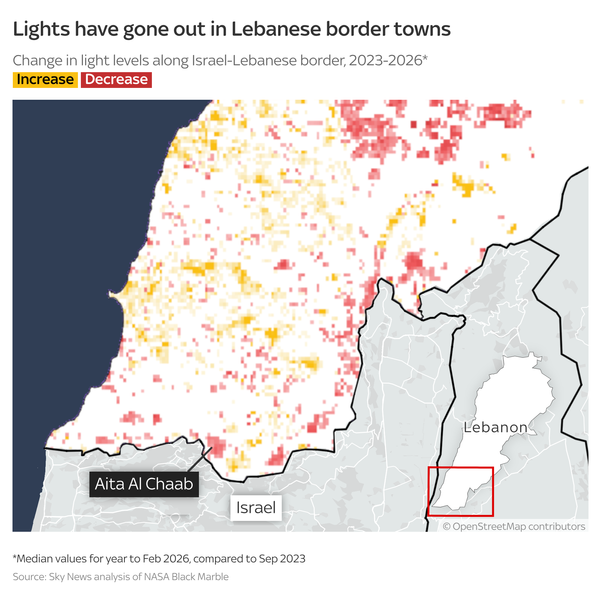
The scale of the depopulation along the border can be seen from space, with a marked decrease in light levels visible in night-time satellite imagery.
The map below shows the change, with decreases highlighted in red. Right along the border with Israel, the lights in Lebanese towns have dimmed.
Concerns about the use of white phosphorus
Since October 2023, Sky News has interviewed dozens of residents of southern Lebanon who say they have seen white phosphorus being sprayed on their crops, farmland and houses.
The video below, first shared on 15 March and verified by Sky News, shows an IDF operation in southern Lebanon.
Amael Kotlarsk, a weapons expert at defence intelligence company Janes, told Sky News that the substance is white phosphorus.
The chemical is used by militaries to create smokescreens or for illumination, as above, but can also start fires, damage crops and cause severe burns.
Its indiscriminate use in populated areas is illegal under international law.
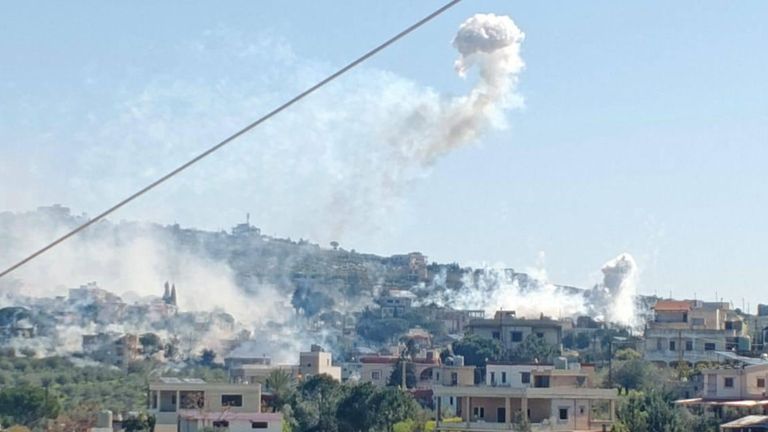
The photograph below, verified by Sky News, shows a white cloud enveloping buildings in the town of Yohmor on 3 March. Human Rights Watch says it has confirmed that the substance is white phosphorus.
Image:A white cloud rising over the town of Yohmor, Lebanon on 3 March, 2026. Human Rights Watch says the substance is white phosphorus. Pic: Islamic Health Committee
Human Rights Watch previously documented widespread use of white phosphorus by the IDF in Lebanese border towns in late 2023 and early 2024.
When asked by Sky News, the IDF did not deny using white phosphorus during recent operations in Lebanon but said it always does so in a way that “complies with and exceeds the requirements of international law”.
Ramzi Kaiss, Lebanon researcher at Human Rights Watch, tells Sky News the use of white phosphorus in populated areas risks damage to homes and agricultural lands.
“I think the use of white phosphorus now is another tactic that is pushing people out of those towns or making it much harder for them to return,” he says.
The Data and Forensics team is a multi-skilled unit dedicated to providing transparent journalism from Sky News. We gather, analyse and visualise data to tell data-driven stories. We combine traditional reporting skills with advanced analysis of satellite images, social media and other open source information. Through multimedia storytelling we aim to better explain the world while also showing how our journalism is done.
A New York City Police Department officer assigned to security at Mayor Zohran Mamdani’s residence and City Hall has been suspended after officials said he shot a man in the head while off duty.
The shooting occurred Monday at around 9 p.m. in the Bronx after the officer interacted with several men regarding a stolen car, according to the NYPD.
The officer, who has not been publicly identified, has not been arrested or charged with a crime as of Thursday morning, police said. He has been suspended without pay.
A New York City Police Department officer who works security at Mayor Zohran Mamdani’s residence was suspended after he shot a man while off duty.(Yuki Iwamura/AP Photo)
A spokesperson for the NYPD told The Associated Press that the department’s Force Investigation Division is investigating the shooting.
Fox News Digital has reached out to the NYPD.
The victim, identified only as a 30-year-old man, was hospitalized in critical condition, authorities said.
Questions raised over US knowledge of Israeli plans to strike key Iranian gasfield as Gulf region’s energy infrastructure becomes target for attack.
Published On 19 Mar 202619 Mar 2026
United States President Donald Trump has tried to distance the US from Israel’s attack on Iran’s South Pars gasfield, describing his Israeli allies as having “violently lashed out” at the facility and promising that it would not reoccur if Tehran refrains from attacking Qatar.
Trump said the US had “nothing to do” with the strike on the offshore gasfield facilities in Iran’s Bushehr province on Wednesday, which was followed by Iran pledging to strike energy facilities in Qatar, Saudi Arabia and the United Arab Emirates.
Recommended Stories
list of 4 itemsend of list
Qatar’s liquefied natural gas (LNG) export facility at Ras Laffan Industrial City later sustained “significant damage” in an Iranian missile strike, while the UAE suspended operations of the Habshan gas facility and the Bab oilfield amid missile attacks.
“NO MORE ATTACKS WILL BE MADE BY ISRAEL pertaining to this extremely important and valuable South Pars Field,” Trump said on his TruthSocial platform late on Wednesday.
“Unless Iran unwisely decides to attack a very innocent, in this case, Qatar – in which instance the United States of America, with or without the help or consent of Israel, will massively blow up the entirety of the South Pars Gas Field at an amount of strength and power that Iran has never seen or witnessed before,” he said.
“The United States knew nothing about this particular attack, and the country of Qatar was in no way, shape, or form, involved with it, nor did it have any idea that it was going to happen,” Trump said.
Earlier on Wednesday, The Wall Street Journal reported that Trump had approved of Israel’s plan to attack South Pars, which is the Iranian sector of the world’s largest natural gas deposit, and which Iran shares with Qatar.
“Trump, who knew about the Israeli strike on South Pars in advance, supported it as a message to Tehran over its block of the Strait of Hormuz,” the Journal said, citing US officials.
“The president believes Iran got the message and is now against attacks on Iranian energy infrastructure,” it said.
Al Jazeera’s Rosiland Jordan, reporting from Washington, DC, said the strike on the gasfield – one of Iran’s key economic engines – raises serious questions.
“This raises some questions about whether the Israelis did tell the US that they were planning to attack South Pars before the attack on Wednesday,” Jordan said.
The strike on South Pars marked the first time in the current conflict that a site directly linked to fossil fuel production had been targeted, rather than broader oil and gas infrastructure.
Analysts had suggested such facilities had been spared attack up to now to limit the risk of retaliatory strikes on such facilities across the region.
The latest escalation has fuelled concerns that the conflict is expanding into the energy sector, with potentially far-reaching economic consequences globally.
There is a small fraction of the population for whom the release of the government’s new Steel Strategy represents an extraordinarily fascinating, not to mention important, moment. The chances are you are not one of those people.
However, allow me to make the case that this document published by the government today represents something very important for all of us. And the reason, surprising as this might sound, has nothing to do with steel.
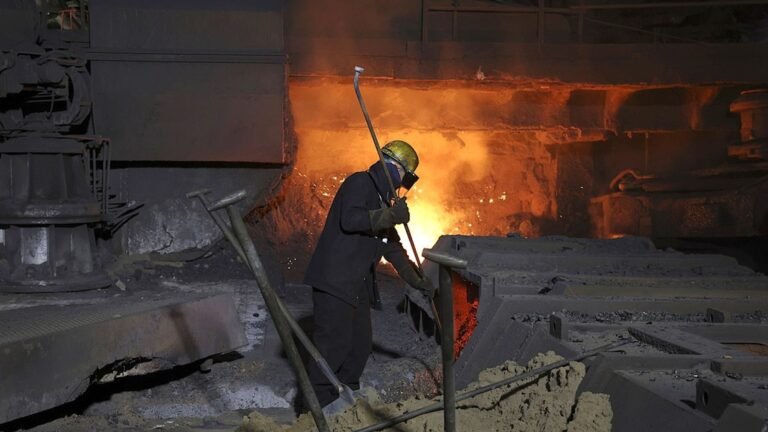
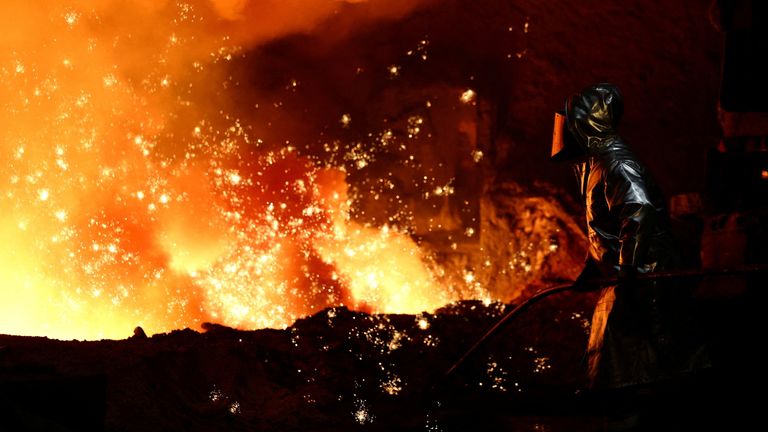
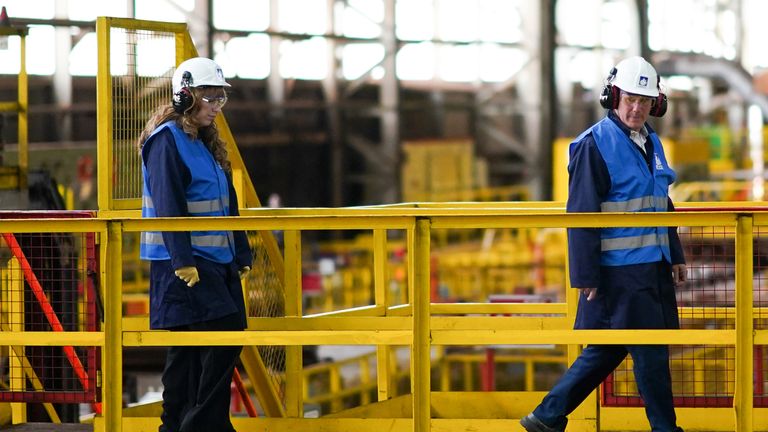
The strategy itself is, for those of us interested in such things, a big moment for the steel sector. There will be more money given out to steel producers – about £2.5bn – some of it going to the British Steel works in Scunthorpe that have been effectively nationalised, some going to support private steel makers around the UK in their efforts to produce lower carbon metal.
Perhaps the most interesting of all the ambitions contained within it is a pledge to try to raise the proportion of steel we use in this country that is also made in this country. Right now that proportion is running at a record low of 30%, which, when you think about it, is rather depressing.
Think of all those wind turbines dotting the countryside and offshore, or for that matter much of the infrastructure surrounding us. Most of that still is not made – indeed cannot be made – in the steelworks and with the steel equipment we have in this country.
The ambition of the strategy is to raise the proportion of domestically produced steel to 50%, which is certainly better than the current level but is basically back to the level that used to prevail before COVID.
However, a far more significant element of the Steel Strategy – the bit that matters to all of us – concerns trade rules.
The background here is important. For some years British steel producers have struggled to compete with their overseas counterparts. Take something like galvanised steel: right now the country is facing an influx of very cheap galvanised steel from countries like Vietnam and Turkey. Most of those producers enjoy subsidies and tax breaks their British competitors do not.
Trump’s tariff turmoil: What’s going on?
The upshot is it is fiendishly difficult, if not impossible, for British producers to compete. This is fast becoming an existential crisis for the industry. There have been some trade barriers on this kind of steel, but they were due to expire this June, and anyway, were not particularly prohibitive. In fact, anyone who wanted to import cheap galvanised steel from Turkey or Vietnam was able to do so without paying any tariff whatsoever.
The centrepiece of the steel strategy is a brand new tariff of 50% on many of these steel imports and (just as, if not more important) new, lower quotas on those steel imports.
Now, in some senses this is not particularly surprising. At some point the regime needed to be updated – it was due to expire soon, after all. And Europe already has tariffs coming in that look very similar to these new British ones.
Image:Sir Keir Starmer and Angela Rayner visit the Liberty Steel Mill in Hartlepool in 2021. File pic: PA
However, there is something more significant about this moment. It is the first time since the beginning of the most recent trade war – indeed the first time since Britain took back control of its trade policy post-Brexit – that it has raised tariffs to these kinds of levels.
It’s very hard to make life-for-like comparisons given the convoluted detail of trade barriers, but the long and short of it is that these are probably the biggest increases in trade barriers imposed by a British government in at least a generation.
While other countries, most glaringly America under President Donald Trump, had raised many of their tariff barriers, up until this moment Britain had held firm. For many ministers this was a matter of national pride. This after all, after all, is the country that “invented” free trade, the country that abolished the Corn Laws in the 19th century and brought the worlds the notion of “comparative advantage”. Many felt that to raise tariffs, even in an environment where everyone else was, would be an abomination.
However, it is a sign of the times but now that is precisely what this government has done. Britain will now have some of the highest steel tariffs it has imposed in its entire history, in an effort to protect its domestic industry.
Britain, in short, is dipping its toes into the waters of protectionism.
Many, including the government itself, will point out that the way these new tariffs are structured is far more sophisticated and far less brutal than the tariffs imposed in America. They will point out that they are mostly just mirroring what’s happening in Europe.
Even so, it’s hard not to conclude that this represents a watershed moment. This new Steel Strategy may look, on the face of it, like a boring, arcane document for a relatively small sector of the economy. But, an economic and historical terms, it is dynamite.
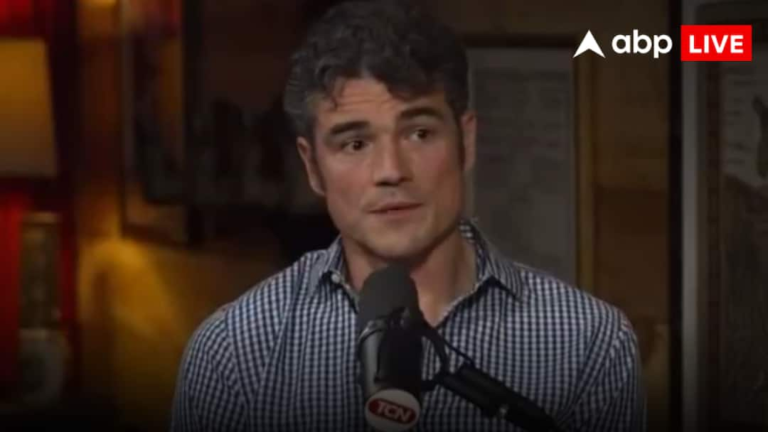
America Joe Kent, a former U.S. official, a day after his resignation middle east A big statement has been given regarding the war. He said that Israel played a role in escalating this conflict and Iran was not close to making nuclear weapons at that time. Joe Kent, who has been the director of the National Counterterrorism Center. He said in an interview that Israel took such steps which worsened the situation and retaliatory action from Iran was certain. He also said that Israel was confident that America would have to support it in the end.
Speaking on Iran’s nuclear program, Kent refuted Donald Trump’s claim that Iran could make nuclear weapons within a few weeks. Kent clearly said that there was no such threat. He also told that a religious order (Fatwa) has been in force in Iran since 2004, in which there is a ban on making nuclear weapons. According to him, American agencies had no evidence that Iran was violating this order.
🚨🇺🇸 BREAKING: Joe Kent on Why He Believes Iran Was Not an ‘Imminent Threat’
“The Israelis drove the decision to take this action, which we knew would set off a series of events because the Iranians would retaliate.”pic.twitter.com/rtgpnhDtnJ
Kent also said that America did not benefit from the death of Iran’s Supreme Leader Ali Khamenei, but it gave more strength to Iran’s hard-line people. At the same time, the White House has rejected these allegations. On behalf of the Trump administration, it was said that the President takes his own decisions and does not work under the pressure of any other country. This statement has come at a time when the war in the Middle East is increasing rapidly and there is concern around the world about its impact.