Reference #18.50200117.1773855535.1236bdf3
https://errors.edgesuite.net/18.50200117.1773855535.1236bdf3
Reference #18.50200117.1773855535.1236bdf3
https://errors.edgesuite.net/18.50200117.1773855535.1236bdf3

A crowd celebrating Chaharshanbe Suri in Tehran were forced to flee after gunshots disrupted their event. Iranian security forces have reportedly been breaking up gatherings marking the Persian festival this week.
Published On 18 Mar 2026
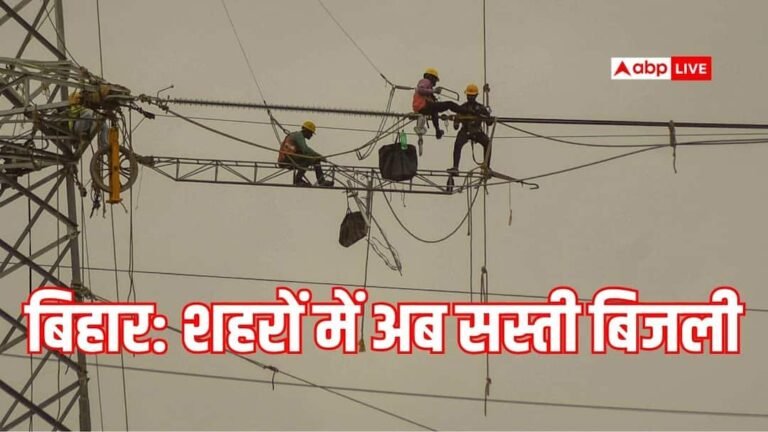
Bihar Electricity Regulatory Commission has announced new electricity rates for 2026-27. According to this, there is relief news for the consumers living in urban areas. Electricity rates for consumers in urban areas have been reduced. Consumers in urban areas of the state will now get cheap electricity. The new rates will be applicable from April 1, 2026. According to the tariff, it has been decided to provide electricity to domestic consumers of urban areas at the same rate on the lines of villages from April 1.
The Electricity Regulatory Commission has removed one of the two slabs. With this, urban domestic consumers will get a benefit of Rs 1.53 per unit. Consumers who consume more than the free limit of 125 units will get the benefit.
Bihar Electricity Regulatory Commission Chairman Aamir Subhani, members Arun Kumar Sinha and Parshuram Singh Yadav announced the decision on non-subsidized electricity rate on Wednesday (March 18). During the hearing of the petition for increase in electricity rates, the Commission found that the company is in profit, hence there will be no increase in electricity rates. Subhani said, “The power company had proposed an increase of 35 paise per unit for the upcoming financial year 2026-27, which has been rejected by the Commission.”
The Commission has also decided to provide electricity at the same rate to domestic consumers in urban areas. Along with this, 42 paise cheaper electricity will be given to commercial consumers in rural areas and Rs 1.20 per unit to urban commercial consumers. This will benefit 27 lakh consumers across the state. Actually, earlier the electricity consumption fee was charged from urban domestic consumers in two slabs. In the earlier slab, Rs 4.12 per unit was charged along with subsidy on consumption from 1 to 100 units. In the second slab, electricity bill was at the rate of Rs 5.52 per unit with subsidy on expenditure of more than 100 units.
Let us tell you that in Bihar, 125 units of free electricity is being given to domestic consumers from July 2025. Consumers in all rural and urban areas are getting its benefits. However, electricity is consumed more in cities than in villages. In urban areas, a family consumes a minimum of 200 to 225 units of electricity. From April 1, urban consumers will get cheaper electricity by Rs 1.53 per unit.
For example, if a family living in Patna consumes 225 units of electricity in the month of April, then not only will it have to pay for 125 units, it will also have to pay Rs 153 less for the consumption of 100 units above that. Similarly, if a house consumes 300 units of electricity then it will save Rs 268 per month.
Commission Chairman Aamir Subhani said that this decision has been taken keeping in mind the power company. Care has also been taken to ensure that the company does not incur losses. Apart from this, special attention has also been given to farmers. Mushroom cultivation used to consume a lot of electricity and it was kept commercial. Now farmers cultivating mushrooms will have to provide electricity at agricultural rates.

NEWYou can now listen to Fox News articles!
An unearthed 2022 clip of Texas Senate candidate James Talarico urging voters to scale back “meat consumption” went viral on Tuesday with many lampooning the rising Democratic star.
Talarico, who has already taken heat for controversial 2020 tweets referring to the “virus of racism” and how White people are guilty of spreading it, was a hot topic on social media again when a GOP communications strategist posted old footage of the masked Senate hopeful criticizing meat consumption in the state famous for its barbecue.
“We have heard, I think heard more and more, issues of animal welfare. I think, not just because it’s the right thing to do, and it’s the moral thing to do, but also… necessary to fight climate change. It is now existential that we try to reduce our meat consumption, and that we try to respect animals,” Talarico said during a fundraiser for laws against animal abuse.
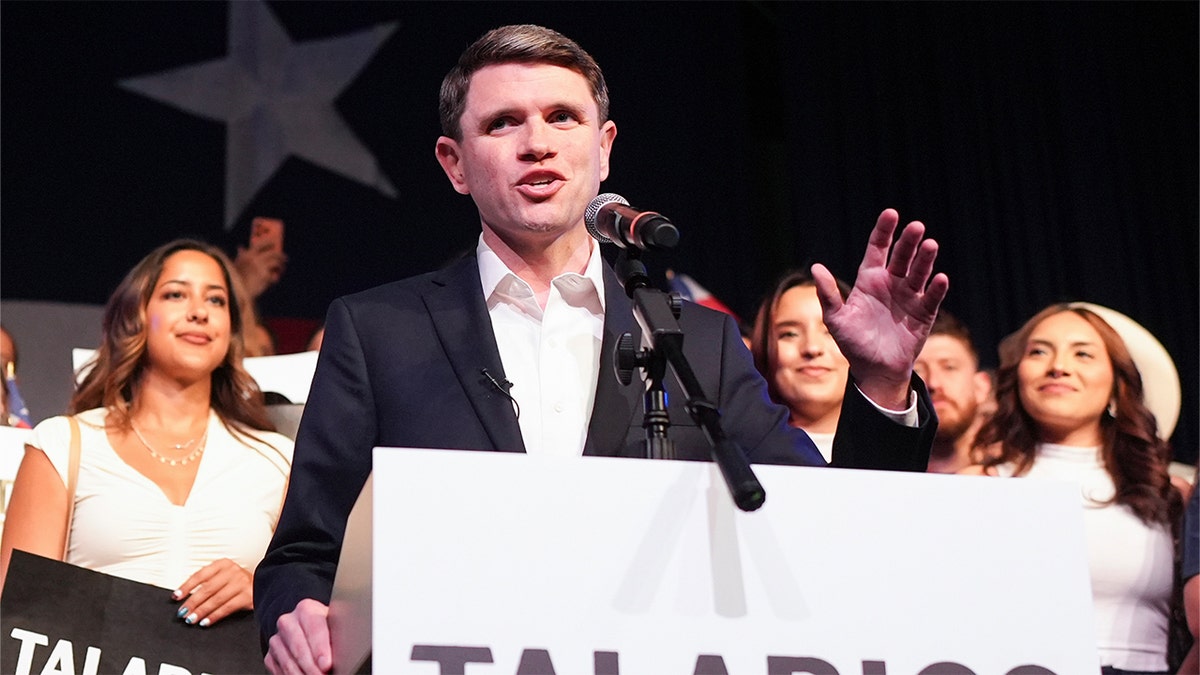
Texas state Rep. James Talarico, D-Austin, a Democratic candidate for the U.S. Senate, was mocked over a 2022 clip calling for a reduction of meat consumption. (Eric Gay/AP Photo)
“I am proud to say that our campaign has officially become a non-meat campaign,” Talarico continued. “We are only buying vegan products from our local vegan businesses.”
Talarico, who is trying to become the first Democrat since 1988 to win a Senate election in Texas, will face the winner of a May Republican primary runoff between Sen. John Cornyn and Attorney General Ken Paxton.
Cornyn was among Texas lovers of brisket, ribs, and sausage who quickly roasted the liberal politician.
“Vote Republican this November. The steaks couldn’t be higher,” Cornyn wrote cheekily in response to the clip that was viewed one million times in the past day.
“Talarico wants to represent Texas but is anti-meat, anti-gun, anti-oil, thinks white people are inherently racist, that God is ‘non-binary,’ and that the Bible justifies abortion,” Rep. Brandon Gill, R-Texas, responded.
TALARICO REPORTEDLY KNEW COLBERT INTERVIEW WOULDN’T AIR ON TV BEFORE HE LEFT TO FILM IT

An unearthed 2022 clip of Texas Senate candidate James Talarico urging voters to scale back “meat consumption” went viral on Tuesday. (Mark Felix/Getty Images)
Sen. Ted Cruz, R-Texas, reacted, “This freak wants to BAN BBQ. That’s not Texas.”
Turning Point USA spokesperson Andrew Kolvet predicted the clip would “haunt” Talarico in the general election.
“Democrats are trying to fool Texans into believing James Talarico isn’t some whacked out lib, but the clips keep coming,” Kolvet wrote.
Fox News political analyst Guy Benson added, “The fact that he made his ‘existential’ meat-free, vegan-only announcement while still masked up in 2022 is just a perfect touch.”
Many others took to social media to mock Talarico:
The Talarico campaign did not immediately respond to a request for comment.
In a series of 2020 tweets, Talarico referred to racism as a “virus” spread by all White people, regardless of whether they exhibit its “symptoms.”
Confronted on the posts on a podcast, Talarico remarked that while he would have used different words in hindsight, he was ultimately talking about the “responsibility to combat racism.”
“[W]ould I word it differently? Would I use a different metaphor? Maybe, but I still believe that racism is wrong and I still believe that we all have a responsibility to combat it,” he said.
CLICK HERE TO DOWNLOAD THE FOX NEWS APP
Fox News Digital’s Peter Pinedo and Lindsay Kornick contributed to this report.
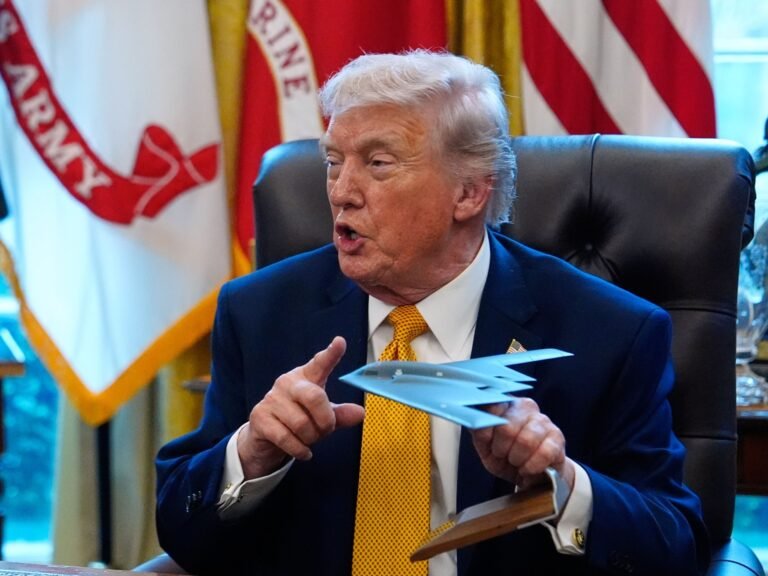
As United States President Donald Trump faces mounting global criticism for starting the war on Iran with Israel, he is also facing a battle at home with opposition lawmakers who have challenged his authority to conduct the conflict.
Democrats argue that Trump, a Republican, wrongly sidelined Congress to start the war on Iran and has failed to explain the reasons for it – or what the US’s endgame is. Trump’s cabinet says he has the right to order emergency measures in “self-defence” against an “imminent threat” posed by Iran.
On February 28, the day the US and Israel launched their strikes on Iran, Trump described the actions as “major combat operations”, not a war. Indeed, the two allies code-named the strikes, in which Iranian Supreme Leader Ali Khamenei and several other senior officials were killed in Tehran, Operation Epic Fury.
In early March, Republican senators and one Democrat rejected a Democratic-led war powers resolution by a vote of 53-47. It sought to halt further US action in Iran and essentially end the war. Supporters of the resolution argued that Trump had exceeded his constitutional authority by launching the war. Under Article II of the US Constitution, presidents are permitted to launch such attacks only in self-defence – in response to an immediate threat. Otherwise, Congress has the sole power to declare war.
Trump has justified the attacks by arguing that despite holding talks with Iran, he believed Tehran was planning to strike first – thus invoking the “self-defence” justification.
Since then, however, the director of the US National Counterterrorism Center, which advises both the president and the director of national intelligence on “terror” threats, has resigned over the war with Iran.
In a resignation letter posted on X, Joe Kent said he could not “in good conscience” support the war. “Iran posed no imminent threat to our nation, and it is clear that we started this war due to pressure from Israel and its powerful American lobby,” he said.
So who in the US ultimately has the power to declare war on another country?
Here’s what we know about what the US Constitution says:

The US Constitution lays out a sharing of war powers between the president and Congress through a system of checks and balances.
But Congress ultimately holds the upper hand, a move calculated to rest decisions about war in the hands of the people’s representatives rather than in one person.
Under Article I, US lawmakers have sole power to:
Those powers were on display when the US Congress issued an Authorization for Use of Military Force (AUMF) three days after the al-Qaeda attacks on New York and the Pentagon on September 11, 2001.
Lawmakers also passed a similar resolution before the 2003 invasion of Iraq.
However, under Article II, the president has powers as commander in chief of the military and can decide how a war is fought. Additionally, the US president, in cases of a sudden attack on the US or an impending attack, may give directives for a military response in self-defence without first receiving congressional approval.
![An Iranian woman reacts as she takes part in the Al-Quds (Jerusalem) Day rally, a commemoration in support of the Palestinian people on the last Friday of the Islamic holy month of Ramadan, in Tehran on March 13, 2026. [AFP]](https://www.aljazeera.com/wp-content/uploads/2026/03/AFP__20260313__A3486FD__v6__HighRes__TopshotIranIsraelUsWarQudsDayRally-1773760815.jpg?w=770&resize=770%2C513&quality=80)
Not really. US presidents have a long tradition of working around the legal guardrails in the constitution to push on with military action abroad while bypassing Congress.
In 1973, Congress passed the War Powers Resolution during the Vietnam War with broad bipartisan support after news leaked that President Richard Nixon had approved military action to expand the conflict into Cambodia without seeking permission from lawmakers. Like now, debates broke out over who had the power to approve military action abroad, leading to the vote.
The successful resolution mandated that a president may deploy the US military only after a congressional green light or in the case of an emergency, such as an attack on the US or its assets.
Even then, the president must notify Congress within 48 hours of commencing military action, and if there is no legislative approval for it, forces may not remain deployed for more than 60 days.
A recent example of a president who did not seek approval from Congress on war-related matters is former President Joe Biden. Observers argued that he in effect joined Israel’s genocidal war on Gaza without approval from lawmakers by fast-tracking arms shipments to Israel after the war broke out in October 2023.
In a 2024 report, Brian Finucane, a former war powers adviser at the US Department of State and an analyst at the International Crisis Group, argued that Congress had not done much to stop Biden from doing this due to broad support for Israel across party lines. However, the report warned that Biden’s government was setting precedents for future wars that could have negative consequences.
When Trump bombed Iran’s nuclear facilities on June 22 during the 12-day war between Iran and Israel, he did notify Congress of the strikes the following day. Classified briefings to explain the decision to Congress were postponed from June 24 to June 26, drawing widespread criticism from Democratic lawmakers.
Many analysts do not believe he is. Finucane’s predictions appear to be bearing out as Trump’s war on Iran amounts to a “dramatic usurpation of Congress’s war powers” not seen in recent decades, he noted in a report this month, just days after the first US-Israeli strikes on Iran.
Trump administration officials have also released conflicting statements about the aim of the attacks, ranging from “regime change” to ending Iran’s ability to continue a nuclear programme and manufacture ballistic missiles. Trump has also claimed he wants to “free” the Iranian people from a government he called brutal. Tehran is accused of massacring thousands of antigovernment protesters in January.
In a February 28 address after ordering the launch of the war, Trump stated that the US had decided to strike because Washington knew Israel was going to hit Iran and Tehran would retaliate against the two allies. This has since been called into question by the director of the US National Counterterrorism Center, Joe Kent, who has resigned from his post, stating, “Iran posed no imminent threat to our nation.”
United Nations Secretary-General Antonio Guterres condemned the US-Israeli move. On February 28, Guterres warned that the attacks and Iran’s retaliation across the region would “undermine international peace and security” and called for an immediate end to the hostilities.
Analysts said the US also had no justification for striking Iran.
“The administration has not articulated any plausible claim for how the attack on Iran might be reconciled with Article 2(4) as an exercise in lawful self-defense in response to an armed attack or even a threat of an imminent armed attack,” Finucane wrote recently on The Contrarian website.
“Trump’s attack on Iran thus conflicts with and undermines not just the US constitutional order and its allocation of war powers but also the international legal order the United States helped establish in the wake of two world wars and the Holocaust.”
Rights experts said Washington has violated international law in striking Iran.
For one, the US and Israel have been accused of targeting civilian infrastructure, resulting in the deaths of hundreds of civilians. The bombing of a girls primary school located near an army base in the southern city of Minab at the start of the war caused global outrage. The US said it is investigating the incident, but a preliminary US military investigation has confirmed what independent experts have said: A US Tomahawk missile appears to have hit the school, killing more than 160 people, most of them children.
On March 7, one week into the war, US air strikes targeted a desalination plant on Qeshm Island in the Strait of Hormuz. The strike, which Tehran branded a “flagrant crime” against civilians, cut off freshwater supplies to 30 surrounding villages.
Similarly, the US has come under fire for torpedoeing an Iranian warship filled with sailors while it was in the Indian Ocean near Sri Lanka. At least 87 people were killed, and scores were injured. Critics said the US submarine that fired on the ship ignored the Geneva Conventions, which state survivors from such an attack should be given assistance, something the submarine failed to do.
While some experts argued that the US was justified in hitting an enemy ship, others said targeting the vessel in international waters far from Iran potentially violated the UN Charter on prohibiting aggression.
Iran has also been accused of violating international law in its retaliatory strikes on infrastructure and US military assets in neighbouring Gulf countries.
Several opinion polls have shown that most Americans do not support the US war with Iran. Estimates put the mounting cost of the war at about $11bn for the first six days alone. Overall, it is expected to be costing the US about $1bn per day since then. Globally, the economic blowback could be huge with the price of oil already surging past $100 a barrel.
After the Democratic-led resolution to curb Trump’s war powers was voted down last week in the Senate, however, opposition lawmakers will have to find other ways to counter Trump, analysts said, as the White House refuses to provide a clear timeline for the conflict.
One suggestion is that lawmakers wield the “power of the purse” by stalling approval for any additional funding for the war.
Democratic Representative Ro Khanna, who has been at the centre of the war resolution efforts, told the US news site The Lever that blocking funds is the only way to end the war.
“This war is costing taxpayers nearly $1 billion per day and burning through critical munitions,” Khanna said in a statement this week. “This kind of spending is unsustainable, and Americans are already feeling the consequences as gas prices soar and economic uncertainty mounts.”
Republicans currently hold narrow majorities in both chambers of Congress. Their 53-47 majority in the Senate means, however, that they are unlikely to attain the 60-vote threshold required to pass many types of legislation in the upper chamber. To do so, they would need at least seven Democratic votes, and Democrats could use these rules to block supplemental war funding.
This approach has had success in the past, including during the Vietnam War. Along with the War Powers Resolution, a Democratic-led Congress passed two pieces of legislation in 1970 and 1973 that banned the use of federal funds for US combat operations in Vietnam, Cambodia and Laos, hindering Nixon, a Republican, in his war efforts. Congress also limited the number of US personnel permitted to be deployed in Vietnam.
Similar funding cuts were also passed in 1982 when Congress used the tactic to stop the overthrow of the Nicaraguan government as well as in 1993 when it ended the US military presence in Somalia.

There was a huge panic in the Head Post Office and Postal Passport Seva Kendra of Civil Lines located in Prayagraj, Uttar Pradesh, when an email threatening to blow up the premises with a bomb surfaced. As soon as the information was received, the police and bomb disposal squad evacuated the premises and conducted an intensive checking operation for hours. However, this information turned out to be just a rumor and after hours of investigation no suspicious object was recovered. Both the offices were reopened to the general public after 3 pm.
Giving information, Postmaster General Rajiv Umrao said that this threat was given through an email. At around 7:45 am, a mail was sent to the Regional Passport Office (RPO), Lucknow, through Hotmail in the name of ‘Saurabh Vishwas’. In this email, a direct threat was given to blow up the passport office with a bomb. This mail from Lucknow was forwarded to the Circle Office and from there the information reached Prayagraj Postmaster General Rajiv Umrao through WhatsApp.
As soon as the threatening message was received, the postal department immediately alerted the Prayagraj Police Commissionerate. As soon as the information was received, teams of Civil Lines Police Station, Dog Squad and Bomb Disposal Squad (BDS) reached the spot within just 10 minutes. As a precautionary measure, the Postal Passport Seva Kendra and the Head Post Office were immediately evacuated. With the help of dog squad, metal detectors and other equipment, every nook and corner was thoroughly searched for several hours.
After hours of intensive investigation, when no explosive or suspicious object was found in the premises, the officers and employees heaved a sigh of relief. Postmaster General Rajiv Umrao clarified that this was completely a hoax threat.
He appealed not to be misled by rumors and expressed his gratitude to the police, BDS and dog squad team for quick action. He said that the work has not been much affected by this incident and after a thorough investigation, the offices have been completely reopened for the general public from 3 pm onwards.
Reference #18.4a200117.1773853140.989f5ba
https://errors.edgesuite.net/18.4a200117.1773853140.989f5ba

NEWYou can now listen to Fox News articles!
The United States fell in the World Baseball Classic in a thriller on Tuesday night in Miami, while their All-Star closer kept a seat warm in the bullpen.
Mason Miller did not enter the championship game against Venezuela after getting saves against Canada and the Dominican Republic in the quarterfinals and semifinals on Friday and Sunday, respectively.
After Bryce Harper homered in the bottom of the eighth to tie the game at two, it prompted a perfect scenario for a closer to enter the game in the ninth, as typically, closers pitch in tie games as the home team in the top of the ninth.
CLICK HERE FOR MORE SPORTS COVERAGE ON FOXNEWS.COM
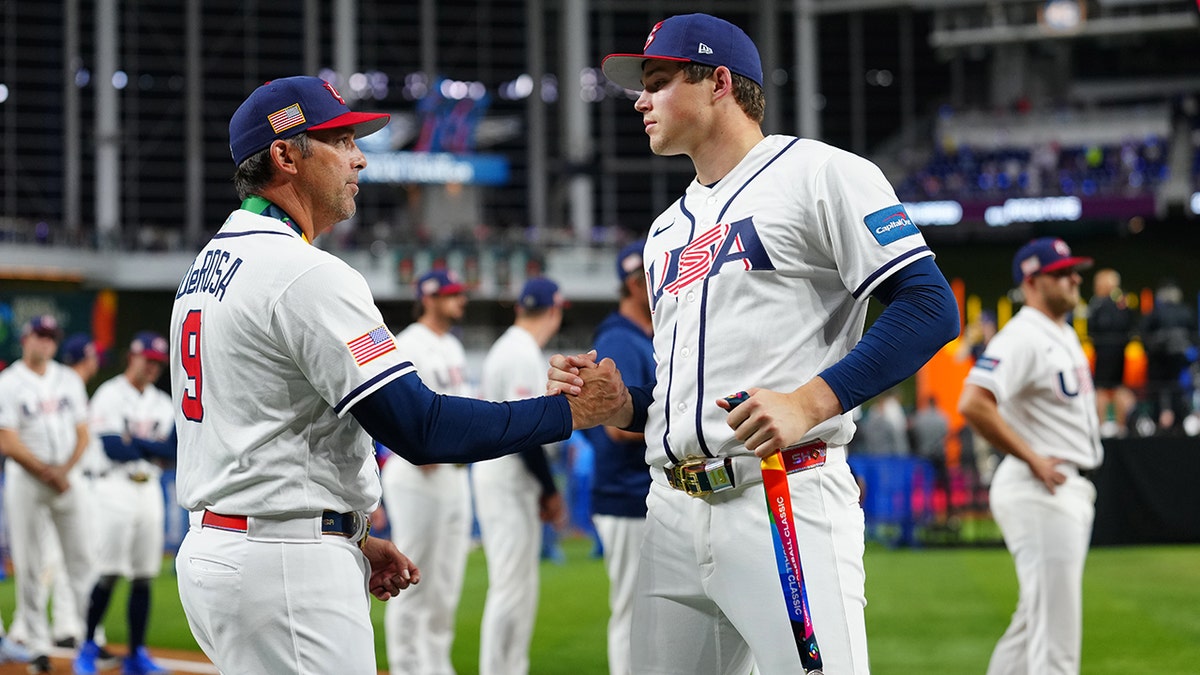
Mason Miller of Team USA shakes hands with Manager Mark DeRosa after receiving this silver medal after the 2026 World Baseball Classic Championship game presented by Capital One between Team Venezuela and Team USA at loanDepot Park on Tuesday, March 17, 2026, in Miami, Florida. (Daniel Shirey/WBCI/MLB Photos via Getty Images)
Instead, Mark DeRosa opted for Boston Red Sox reliever Garrett Whitlock, who gave up the winning run.
DeRosa, who said before the game Miller was available, revealed that Miller’s availability was only under one condition.
“Honoring the [San Diego] Padres,” DeRosa said, hinting that the Padres told DeRosa that Miller could only be used in a save situation. “Had we taken the lead, he was coming in, but I wasn’t going to bring him in into a tie game.”

Mason Miller of Team United States pitches in the ninth inning against Team Dominican Republic during the ninth inning at loanDepot park on March 15, 2026, in Miami, Florida. (Gene Wang/Capture At Media/Getty Images)
Of course, a save situation was never going to happen once the United States entered the ninth inning without a lead. Thus, Miller ultimately was never made available.
Contrary to apparently popular belief, the United States was not the only team in the WBC to abide by restrictions set out by MLB clubs. The FOX broadcast mentioned how Venezuela manager Omar Lopez was on the phone with MLB team officials the morning of the championship about regulations for specific pitchers.
For example, the Detroit Tigers would not allow reliever Enmanuel De Jesus to pitch under any circumstances on Tuesday, while the Chicago Cubs said closer Daniel Palencia, like Miller, was only allowed to pitch in a save situation.

The Venezuela team celebrates after defeating Italy at a World Baseball Classic semifinal game in Miami, Florida, on March 16, 2026. (AP Photo/Lynne Sladky)
CLICK HERE TO GET THE FOX NEWS APP
There was pregame speculation that New York Yankees closer David Bednar was entirely unavailable for Team USA on Tuesday after also pitching Friday and Sunday.
Eugenio Suarez’s RBI double gave Venezuela its first World Baseball Classic title in the short history of the event, which began in 2006. For the U.S., it was its second consecutive loss in the title game after winning it all in 2017.
Follow Fox News Digital’s sports coverage on X, and subscribe to the Fox News Sports Huddle newsletter


A new exploit kit for iOS devices and delivery framework dubbed “DarkSword” has been used to steal a wide range of personal information, including data from cryptocurrency wallet apps.
DarkSword targets iPhones running iOS 18.4 through 18.7 and is linked to multiple actors, including UNC6353, suspected to be Russian, who used the Coruna exploit chain disclosed earlier this month.
Researchers at mobile security company Lookout discovered DarkSword while investigating the infrastructure used for the Coruna attacks. Google’s Threat Intelligence Group and iVerify also collaborated for a more comprehensive analysis of this previously unknown threat and the adversaries leveraging it.
iVerify’s findings indicate that all flaws (sandbox escape, privilege escalation, remote code execution) exploited in this exploit chain are known or documented, and Apple has already addressed them in the latest iOS releases.
The DarkSword exploit kit uses six vulnerabilities tracked as CVE-2025-31277, CVE-2025-43529, CVE-2026-20700, CVE-2025-14174, CVE-2025-43510, and CVE-2025-43520.

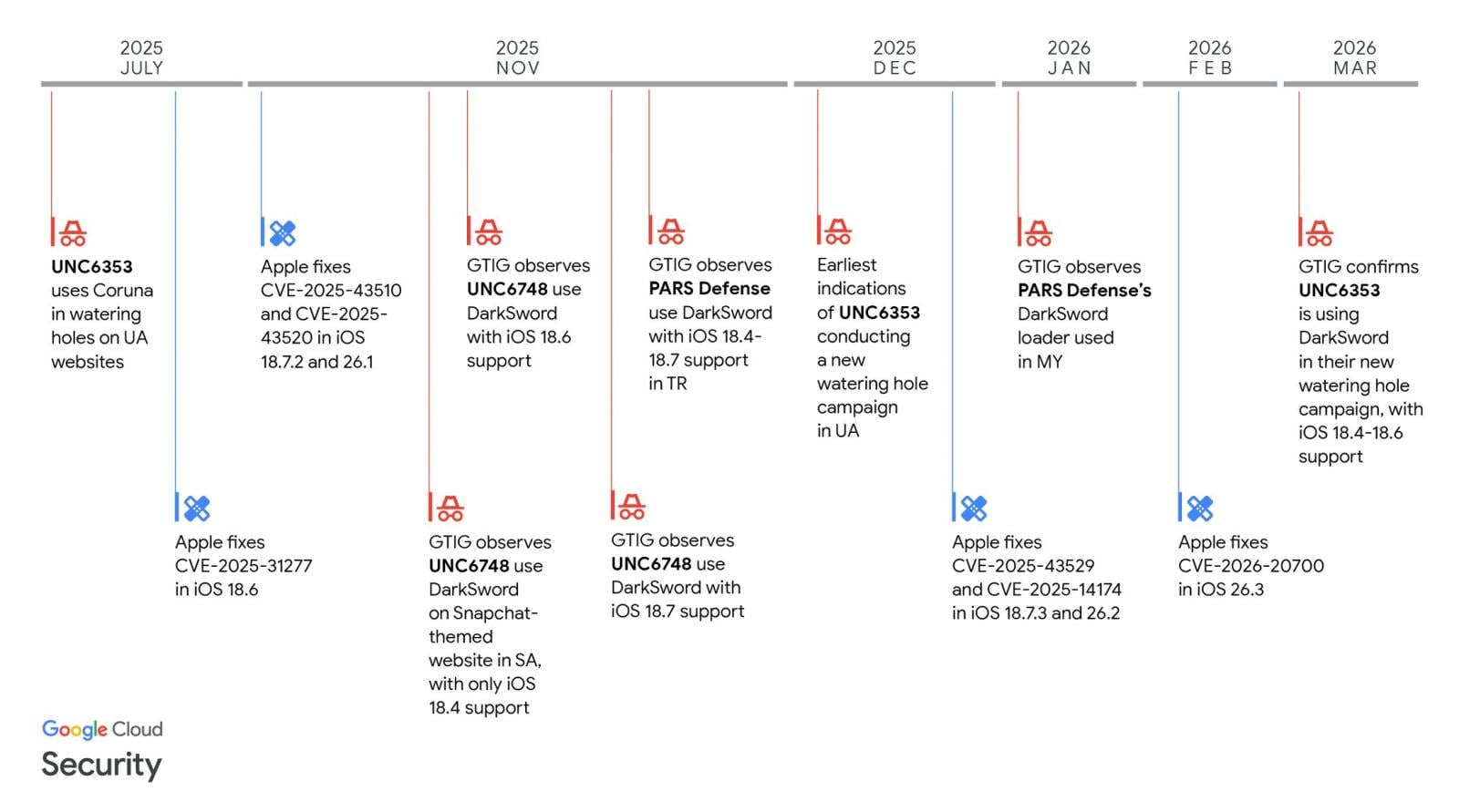
In a report today, Google Threat Intelligence Group (GTIG) says that DarkSword has been used since at least November 2025 by several threat actors, who deployed three separate malware families:
The first adversary observed using the exploit chain is UNC6748, in attacks targeting Saudi Arabian users via a website impersonating Snapchat.
GTIG says that in late November 2025, DarkSword was used in Turkey, in activity associated with PARS Defense, a Turkish commercial surveillance vendor, on devices running iOS 18.4-18.7.
“Unlike the UNC6748 activity, this campaign was carried out with more attention to OPSEC, with obfuscation applied to the exploit loader and some of the exploit stages, and the use of ECDH and AES to encrypt exploits between the server and the victim,” GTIG notes.
Earlier this year, Google researchers noticed DarkSword being used in Malaysia by another PARS Defense customer delivering the GHOSTSABER backdoor.
UNC6353, a suspected Russian espionage actor, has been using the Coruna exploit kit since last summer, and in December 2025 started leveraging DarkSword exploits against Ukrainian targets.
The activity continued through March 2026 in watering hole attacks with compromised websites that deploy the GHOSTBLADE malware to exfitrate data from compromised targets.
An observation from Google researchers is that although “earlier DarkSword use attributed to UNC6748 and PARS Defense also supported iOS 18.7, we did not observe that from UNC6353, despite their later operational timeline.”
According to Lookout researchers, both Coruna and DarkSword exhibit signs of codebase expansion using large language model (LLM) assistance. This is particularly visible in the case of DarkSword, which has multiple comments that explain the code functionality.
“This malware is highly sophisticated and appears to be a professionally designed platform enabling rapid development of modules through access to a high level programming language,” Lookout says.
“This extra step shows a significant effort put into the development of this malware with thoughts about maintainability, long-term development and extensibility.”
Apart from the 1-click DarkSword exploit kit, iVerify also found a Safari exploit with “sandbox escape, privilege escalation, and in-memory implants” that stole sensitive data from devices.
DarkSword attacks begin in the Safari browser, where multiple exploits are used to obtain kernel read/write access, and then execute code through a main orchestrator component (pe_main.js).
It is unknown how the websites that launched these attacks were compromised in the first place, but the threat actors had sufficient rights to infect malicious iframes in the HTML code of these sites.

The orchestrator injects a JavaScript engine into privileged iOS services such as App Access, Wi-Fi, Springboard, Keychain, and iCloud, and then activates data-stealing modules (e.g., GHOSTBLADE) that collect the following information:
Notably, DarkSword wipes temporary files and exits when the above is exfiltrated to the threat actors, indicating that it was not designed for long-term surveillance operations.
Lookout estimates that DarkSword is used by a Russian threat actor with financial objectives, while also conducting espionage aligned with Russian intelligence requirements.
iPhone users are recommended to upgrade to iOS 26.3.1 (latest), released earlier this month, and enable Lockdown Mode if at high risk of being targeted by malware.
For those using older devices that don’t qualify for an update to the latest iOS version, Apple may backport fixes as it did with the Coruna exploits, but this hasn’t been confirmed yet.
Update [March 18, 11:39]: Article updated with information from the Google Threat Intelligence Group about the DarkSide exploit kit, available to BleepingComputer after publishing time.

Malware is getting smarter. The Red Report 2026 reveals how new threats use math to detect sandboxes and hide in plain sight.
Download our analysis of 1.1 million malicious samples to uncover the top 10 techniques and see if your security stack is blinded.

If you are also thinking of booking a holiday after seeing advertisements of cheap foreign tour packages on social media, then be careful. Noida’s Cyber Crime Police has arrested a vicious swindler who used to give attractive advertisements on Facebook and Instagram to people dreaming of visiting places like Singapore and Vietnam and then defrauded them of lakhs of rupees.
DCP (Cyber) Shaivya Goyal said that the arrested accused has been identified as 33-year-old Aditya Raj. He is originally from Lakhisarai (Bihar) and Noida He was running a black business by living in ‘Amrapali Golf Homes Society’. Police have arrested this mastermind with the help of electronic surveillance.
According to DCP Cyber, the accused’s method of cheating was very vicious. He used to run advertisements on Facebook, Instagram and Google for cheap ‘complete tour packages’ to Singapore, Nepal, Vietnam and Europe. When people contacted him after seeing the advertisement, he used to send them fake booking confirmations to trick them. By winning the trust of the people, he used to get the entire money transferred to his bank accounts. As soon as he received the money, he would get the booked tickets canceled and embezzle the refund money himself.
Initial investigation by the police has revealed that the accused Aditya Raj has till now made dozens of people his victims and committed fraud of around Rs 12 lakh. Police have recovered 3 mobile phones and a laptop from him, which contains data of many victims. At present, the police is deeply investigating the bank accounts and social media advertisements of the accused so that other cases of fraud can also be exposed.