Anderson juices up the vibes for Dior with spotlight on Hollywood | Dior

0

Like Christian Dior, the founder of the house he now leads, fashion designer Jonathan Anderson’s ambition is to be not just a Parisian couturier but a Hollywood power player. “We think of Dior as this romantic character, but he was also a very savvy businessman,” said Anderson before a blockbuster catwalk show in Los Angeles. Stage Fright, the Hitchcock caper-noir for which Dior dressed Marlene Dietrich, was the show’s origin story. “There is all this amazing correspondence between Dior, Dietrich and Hitchcock, which shows how he navigated the money that it cost to make that film. I think we underestimate how much negotiation Dior did with studio executives. He was very smart in that way.”

Models on the runway on the Dior Cruise collection in Los Angeles. Photograph: Guerin Charles/Abaca/Shutterstock

Anderson, 41, who was born in Northern Ireland but since being appointed to Dior splits his time between London and Paris, has his own Hollywood side hustle as the costume designer for Luca Guadagnino’s films, and is set on reinvigorating Dior’s relationship with the film industry.

The catwalk snaked through a boxfresh $724m (£535m) brutalist LA landmark, the concrete and glass David Geffen Galleries at Los Angeles County Museum of Art (LACMA). The scene setting was somewhere between an all-American gas station and a Hollywood back lot. Vintage Cadillacs and glowing Edward Hopper street lamps dotted the catwalk. Al Pacino wore shades in the front row as the Californian sunset glowed pink behind tall palms.

Al Pacino with fellow actor Anya Taylor-Joy at the Dior show in LA. Photograph: Gilbert Flores/WWD/Getty Images

Star of the show was the bar jacket, a Dior classic, given a Hollywood makeover and moonlighting as a curving white tuxedo. There were fluffy boudoir mules in soft rose pink, and silk scarves wound tight around the throat. That Californian classic, the blue jean, was dramatically dishevelled with rips lashed with glittering silver threads. Anderson’s brief at Dior is to add cultural relevance and eye-catching edge, but without sacrificing the scale and reach of the luxury giant. To juice up the vibes, without sacrificing the bottom line. Box office glamour came with a few plot twists: pastel cocktail dresses were paired with quirky jewelled snail clutch bags.

White tuxedo jackets at the Dior Cruise collection. Composite: Gilbert Flores/WWD/Getty Images/Daniel Cole/Reuters

Anderson hinted that the decision to stage a show in LA was the launch of a new strategy to deepen Dior’s involvement in cinema. “This is part of a bigger picture that will unfold throughout the year, from films that I will do costumes for, or franchises that we will do costume for … it’s a starting point of how the bridge between fashion, commerce, and film could be reimagined,” he said.

Men’s shirts were a collaboration with the artist Ed Ruscha. “Ed is LA. He’s such a style icon, and so charismatic,” said Anderson. Words and numbers printed across the shirts nodded to the gas station iconography of Ruscha’s paintings, while headpieces spelling out “Dior” and “Star”, by milliner Philip Treacy (“a fellow Irishman”, Anderson pointed out) echoed Ruscha’s use of typography.

Men’s shirts with headpieces spelling our Dior. Photograph: Daniel Cole/Reuters

The show follows a Chanel near-takeover of Biarritz a fortnight ago. May’s “Cruise” shows, according to Rose Coffey, senior foresight analyst at The Future Laboratory “evolved from escapist collections designed for ultra wealthy clients who travel between climates, into a form of experiential marketing …

“Fashion no longer moves in the clearly defined seasonal rhythms it once did, and the traditional boundaries of spring/summer and autumn/winter are not as culturally dominant. Cruise is an opportunity for brands to keep themselves top of mind in the cultural conversation. They are about visibility and storytelling and entertainment.”

Many of this year’s Cruise shows are taking place in the US, with Gucci, Louis Vuitton and Hermes following Dior in the coming weeks. This reflects luxury’s focus on the US market, where demand is currently stronger than in Europe and China. High net worth potential clients, who place a high value on invitations to brand events, make up a significant portion of the audience at Cruise shows.

The lavish aesthetic of Cruise season also chimes with the flashy tone set by the current White House. “The elephant in the room is the Trump presidency, which is an influence in the sense that America dominates global media right now, so brands want to be there” said Coffey.


Source link
Trump arrives in Beijing for first China summit with Xi since 2017


NEWYou can now listen to Fox News articles!

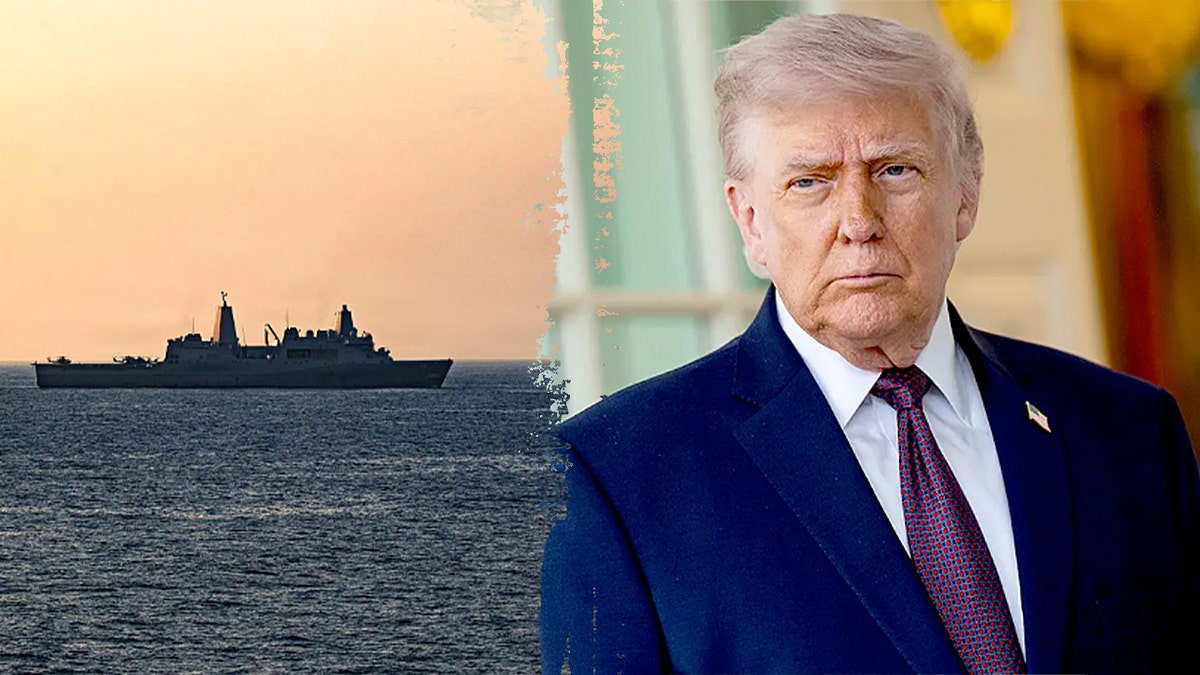
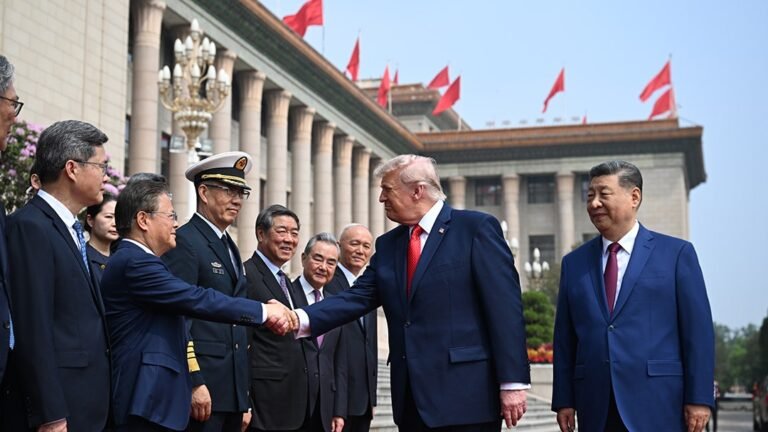
President Donald Trump arrived in Beijing for a high-stakes summit with Chinese President Xi Jinping at a moment when both Washington and Beijing are trying to stabilize one of the world’s most consequential rivalries without giving ground on deeper strategic disputes.

The two-day visit marks Trump’s first trip to China since 2017 and comes amid mounting tensions over trade, artificial intelligence, Taiwan and the fallout from the war with Iran. While the White House is framing the summit as an opportunity for new economic agreements and “rebalancing” the U.S.–China relationship, analysts say Beijing’s priorities are far broader and more long-term.

“Trump arrives seeking headline deals and visible momentum ahead of the midterms,” wrote Zongyuan Zoe Liu, senior fellow for China studies at the Council on Foreign Relations. “Xi is playing a longer game, focused on strategic patience rather than substantive compromise.”

TRUMP HEADS TO BEIJING FOR HIGH-STAKES XI TALKS AS TAIWAN TENSIONS, TRADE DISPUTES TEST US STRENGTH

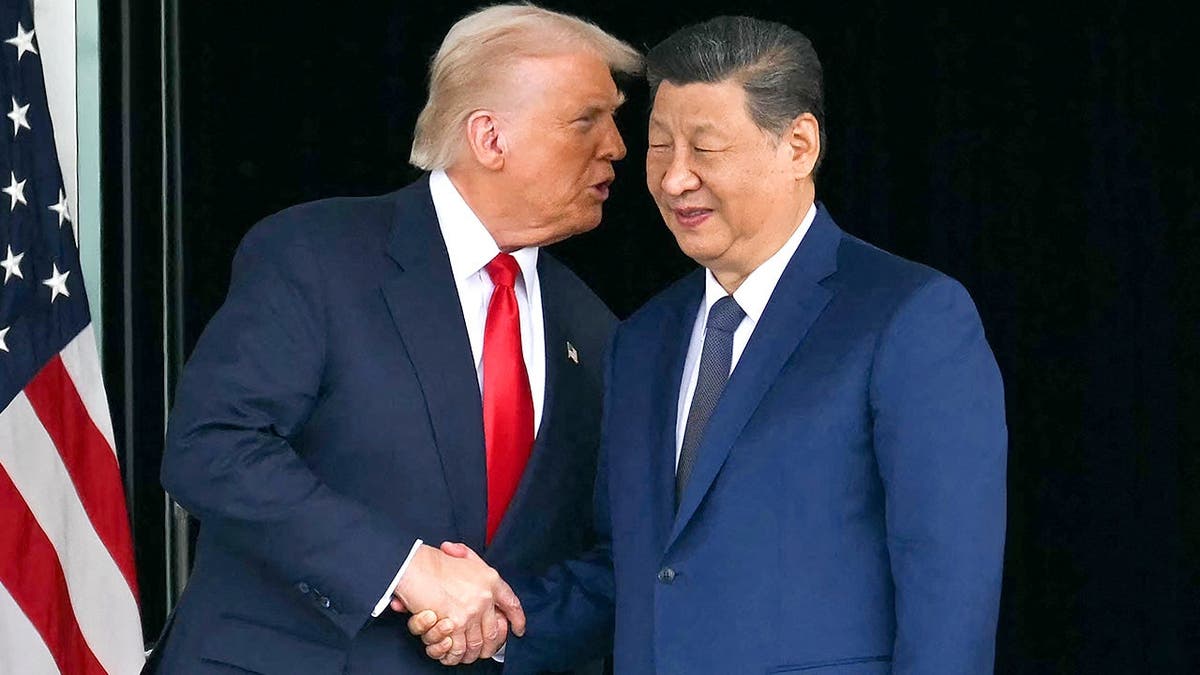
Trump and Xi Jinping shake hands after meeting in South Korea.

President Donald Trump is expected to press Chinese President Xi Jinping on China’s economic and strategic support for both Iran and Russia, including oil revenue, dual-use components and potential weapons transfers, according to senior administration officials. (Andrew Caballero-Reynolds/AFP via Getty Images)

Topics expected to be discussed during the summit include trade, aerospace, agriculture and energy agreements, and the creation of a U.S.–China Board of Trade and Board of Investment, according to the White House. 

White House spokeswoman Anna Kelly said Trump’s goal is to “deliver more good deals on behalf of our country” while safeguarding U.S. national security.

Trump participated in a welcome ceremony and bilateral meeting with Xi Thursday morning local time in Beijing, followed by a tour of the Temple of Heaven alongside the Chinese leader and a state banquet later. 

Chinese Embassy spokesperson Liu Pengyu said Beijing views the summit as an opportunity to stabilize ties between the world’s two largest economies. 

“Heads-of-state diplomacy plays an irreplaceable role in providing strategic guidance for China–U.S. relations,” Liu said in a statement to Fox News Digital. “We welcome President Trump’s state visit to China. China stands ready to work with the U.S. to expand cooperation and manage differences in the spirit of equality, respect and mutual benefit, and provide more stability and certainty for a transforming and volatile world.”

For Xi, analysts say, the top priority likely is avoiding further escalation with Washington while buying time for China’s slowing economy, as it continues to struggle with weak domestic demand, deflationary pressure and industrial overcapacity. 

A recent report by the U.S.–China Economic and Security Review Commission warned that Beijing is doubling down on state-led industrial policy despite mounting structural weaknesses in the Chinese economy.

The commission said China is increasingly operating a “two-speed” economy, where much of the broader economy stagnates while sectors prioritized by the Chinese Communist Party receive massive state support and continue expanding beyond market demand.

The report also warned of a new “China Shock 2.0,” arguing Beijing’s excess industrial capacity and record trade surplus are disrupting global markets while increasing foreign dependence on Chinese-controlled supply chains in sectors ranging from batteries and pharmaceuticals to semiconductors and artificial intelligence.

“Chinese policy seeks simultaneously to reduce China’s reliance on foreign technology while increasing the world’s dependence on China,” the commission noted in its findings.

TRUMP TO CONFRONT XI AT HIGH-STAKES SUMMIT OVER CHINA BACKING FOR IRAN, RUSSIA

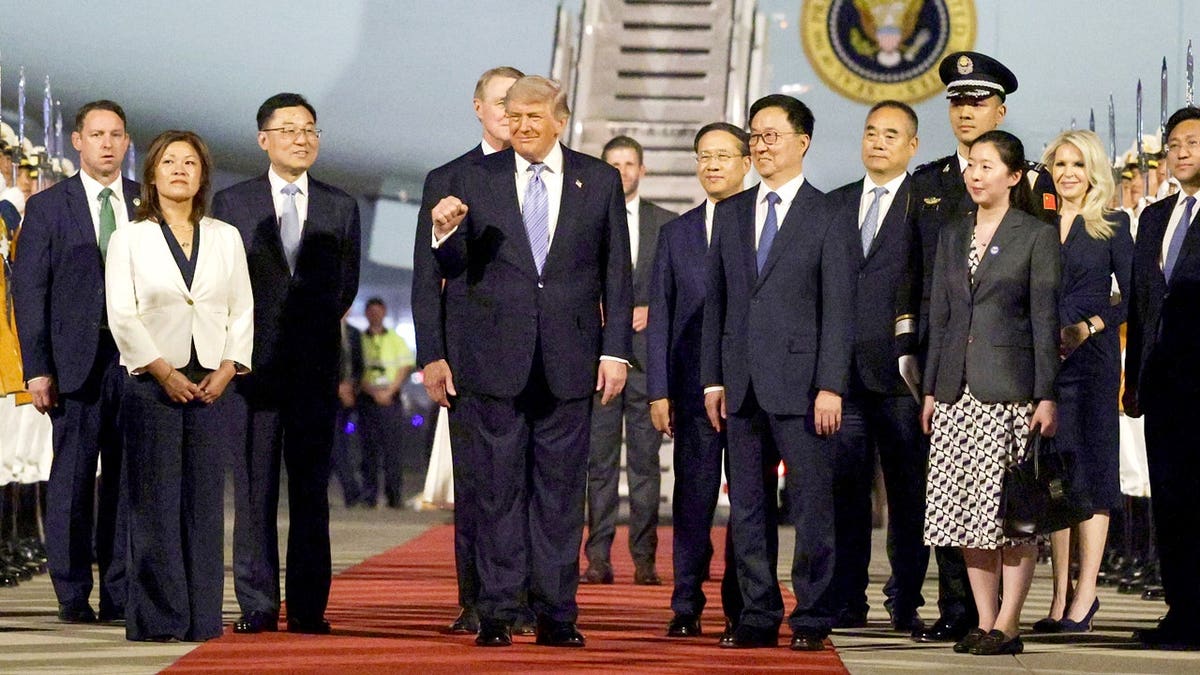
trump arrives in china greeted off air force 2

President Trump was greeted by a formal state welcome when he touched down in Beijing ahead of high-stakes talks with Chinese President Xi Jinping. (Alex Wong/Getty Images)

At the same time, Xi is entering the talks with leverage stemming from the ongoing Iran crisis and global energy disruptions.

Trump has faced growing domestic pressure over rising energy prices tied to instability in the Middle East and shipping threats near the Strait of Hormuz. Beijing, meanwhile, remains one of Iran’s largest oil customers and maintains political ties with Tehran.

Susan Thornton, former acting assistant secretary of state for East Asian and Pacific affairs during Trump’s first term, said during a recent Stanford University Asia-Pacific Research Center interview that expectations for major breakthroughs should remain low despite the summit’s symbolism.

“The primary value lies in the act of meeting itself,” Thornton said.

She suggested Beijing may see a strategic advantage in America’s renewed focus on the Middle East. While China has made nominal peace proposals, it has not stepped up as a mediator.

“It seems like they are kind of hanging back and waiting to see what will happen,” Thornton said, arguing that from Beijing’s perspective, a U.S. entanglement in the Middle East may serve as a useful distraction, diverting Washington’s attention and pressure away from China.

One area where the two sides could announce tangible progress is agriculture. 

The White House is pushing Beijing for expanded purchases of U.S. farm products ahead of the summit, according to a Reuters report published Tuesday, particularly soybeans and grains. 

But traders and analysts told Reuters that China’s appetite for major new soybean commitments may be limited due to weak domestic demand and cheaper alternatives from Brazil. Instead, markets are watching for potential agreements involving corn, sorghum, wheat, beef and poultry, sectors viewed as less politically contentious in the broader U.S.–China relationship. 

More than a dozen U.S. business executives, including leaders from agricultural giant Cargill, are accompanying Trump during the visit.

PRESIDENT TRUMP MUST PUT AMERICAN HOSTAGES FIRST IN HIGH-STAKES BEIJING SUMMIT

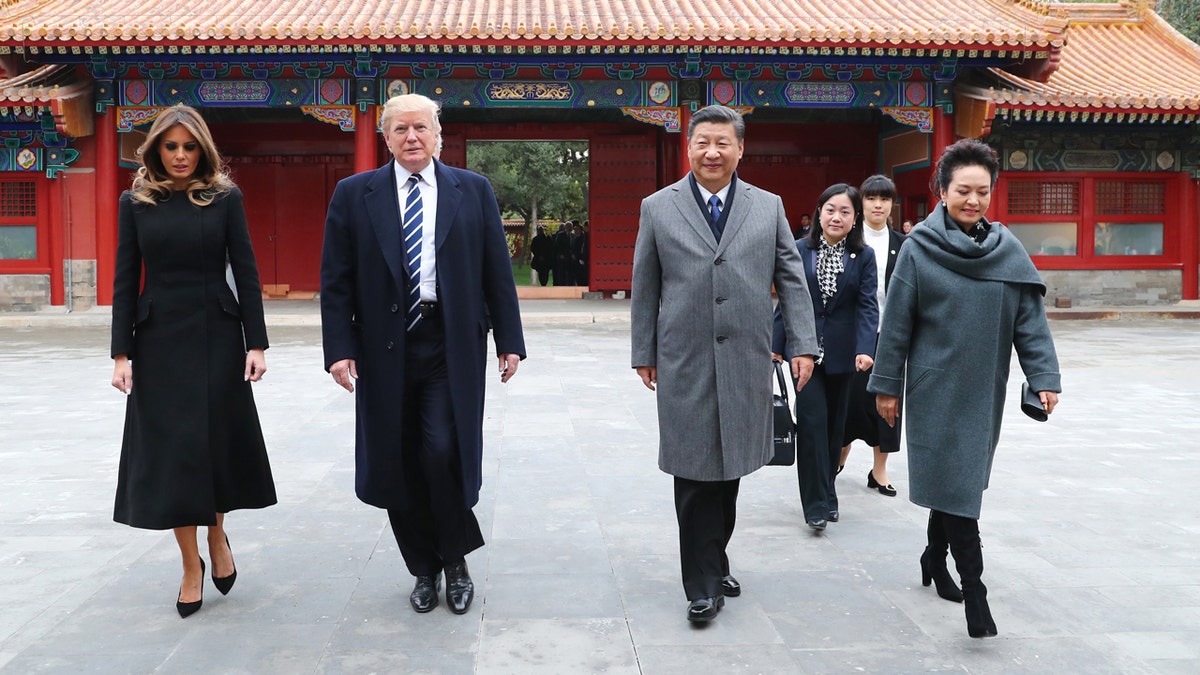
Chinese President Xi Jinping and wife Peng Liyuan welcome U.S. President Donald Trump and wife Melania Trump at the Forbidden City in Beijing

Chinese President Xi Jinping and his wife Peng Liyuan welcome U.S. President Donald Trump and his wife Melania Trump at the Palace Museum, also known as the Forbidden City, in Beijing, Nov. 8, 2017.  (Xinhua/Xie Huanchi via Getty Images)

Despite the focus on trade and geopolitical tensions, survivors of China’s religious persecution are urging the administration not to sideline Beijing’s crackdown on religious groups and dissidents.

Ahead of the summit, Trump publicly pledged to raise the case of imprisoned Chinese pastor Ezra Jin following advocacy efforts by his daughter, Grace Jin Drexel, who has accused Beijing of persecuting Christians.

Former U.S. officials told Fox News Digital they are skeptical human rights concerns will play a central role during a summit primarily focused on lowering tensions and stabilizing economic ties between the two powers.

Taiwan and technology restrictions are also expected to loom over the talks. Beijing continues to oppose U.S. arms sales and support for Taiwan, while Washington has tightened export controls targeting China’s advanced semiconductor and AI sectors.

CLICK HERE TO DOWNLOAD THE FOX NEWS APP

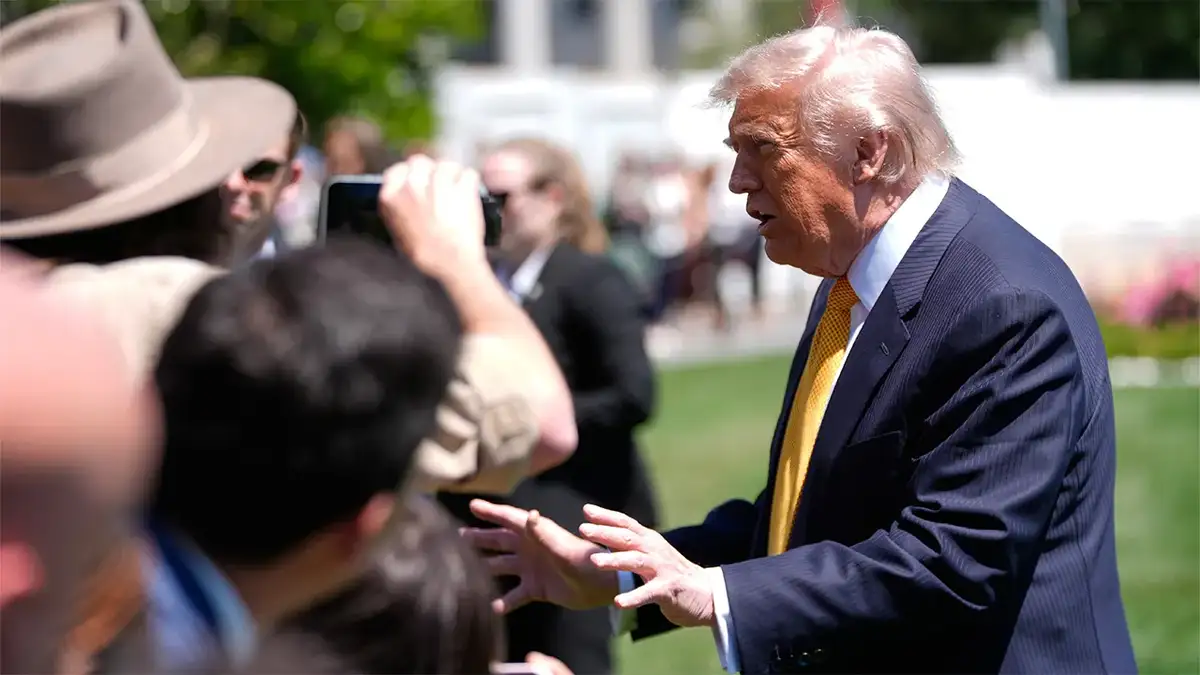
President Donald Trump takes questions from reporters on White House lawn

For President Donald Trump, the summit offers an opportunity to showcase economic wins and diplomatic engagement ahead of the 2026 midterms (Manuel Balce Ceneta/AP Photo)

Still, despite the escalating rivalry, neither Washington nor Beijing appears eager for a direct confrontation.

For Trump, the summit offers an opportunity to showcase economic wins and diplomatic engagement ahead of the 2026 midterms. 

For Xi, analysts say, the goal is far more measured: preserve stability, avoid confrontation and continue positioning China for a prolonged strategic competition with the United States.


Source link

Japanese snacks go black-and-white: Why Iran war is driving up ink prices | Business and Economy News

0

The US-Israeli war on Iran is draining the colour from Japan’s supermarket shelves, with the biggest crisp makers swapping once-vibrant packaging for monochrome as a result of a shortage of ink.

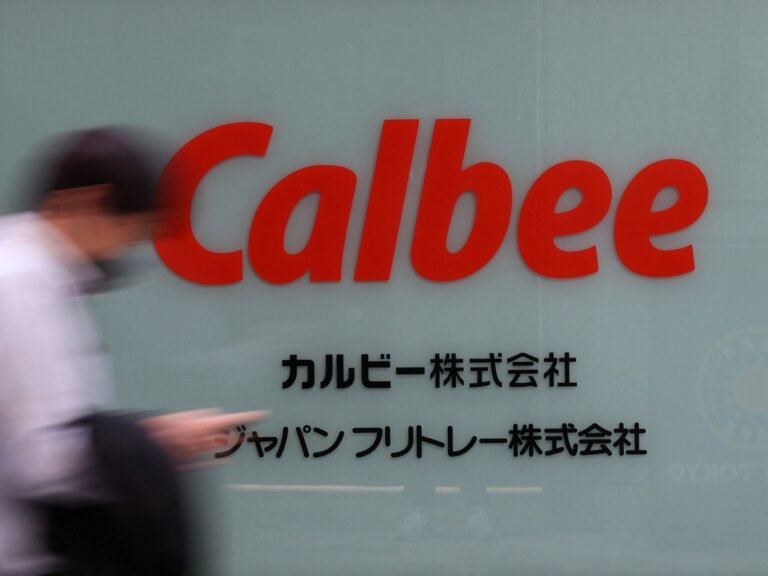
Tokyo-based Calbee, one of the most popular brands in the snack market, has said it will – at least temporarily – switch to using black and white on the packaging of 14 of its products, including its Calbee Potato Chips.

Recommended Stories

list of 3 itemsend of list

Calbee is just one of many Japanese companies attempting to minimise the fallout from the faraway war in Iran, which has triggered a global supply shock. Since the end of February, when the war began, the Strait of Hormuz, through which one-fifth of the world’s oil is shipped during peacetime, has been effectively shut.

The closure of the strait has affected Japan, which imports 40 percent of its naphtha, an oil derivative needed to make printing ink, from the Middle East.

So, why is the Iran war driving up ink prices? And will crisp packets be colourful again?

What have Japanese companies said?

In a statement, Calbee said its decision to switch to black-and-white packaging was a response to “supply instability affecting certain raw materials amid ongoing tensions in the Middle East”.

“This measure is intended to help maintain a stable supply of products,” the company stated, adding that the new products would roll out on May 25.

Asked about Calbee’s move to simplify packaging to conserve materials, a government spokesperson said it was working to plug supply gaps and that imports ⁠⁠from countries outside the Middle East were three times higher this month compared with before the war broke out at the end of February.

“We have ⁠⁠not received any reports of immediate supply disruption for printing ink ⁠⁠or naphtha and recognise that Japan as a whole has secured the quantities required,” Deputy Chief Cabinet Secretary Kei Sato said.

“Relevant ministries are working together and making efforts to communicate closely with impacted companies to grasp the situation,” he said, ‌‌adding that a fact-finding hearing would take place on Tuesday.

However, major ink and chemical producers have raised prices due to the volatility in oil and gas supplies from the Middle East.

US-based Sun Chemical, a major global producer of ink and related products, said rising raw-material, logistics and energy costs were forcing broad increases across product lines.

Another leading specialist in printing inks, Germany-based Hubergroup, also announced a hike in prices due to key components experiencing “substantial cost increases” because of supply constraints.

“The scale and persistence of the current cost pressures make price adjustments unavoidable,” it said.

Potato chips packages of Calbee Inc., are seen at a convenience store in Tokyo, Wednesday, May 13, 2026. (AP Photo/Eugene Hoshiko)
Potato crisp packages of Calbee Inc are seen at a convenience store in Tokyo, Wednesday, May 13, 2026 [Eugene Hoshiko/AP Photo]

Why have ink supplies dried up?

The shortages and price increases caused by the war have affected supplies of key ingredients used in coloured inks, prompting companies such as Calbee to simplify packaging to conserve materials. However, the knock-on effects extend beyond snacks.

Printing inks rely heavily on petrochemical feedstocks, including solvents and resins derived from naphtha, a crude oil by-product.

Naphtha is also used to produce plastics and synthetic rubber. It is essential for manufacturing high-octane petrol, and is an important industrial solvent used in paints and adhesives.

The US-Israeli war on Iran has severely disrupted shipping and energy flows through the Strait of Hormuz, through which one-fifth of the world’s oil and gas flow – and hence squeezing supplies of oil-derived materials used in manufacturing, such as naphtha.

The substantial volume of naphtha Japan imports from the Middle East makes Japanese manufacturers highly vulnerable to the security situation there.

Iran effectively blocked the strait after US-Israeli attacks began. The waterway remains blocked, despite a fragile ceasefire agreed to on April 8.

Since April 13, the US has enforced a widespread naval blockade of Iranian ports and ships in a bid to pressure Tehran to open the strait, after talks between Washington and Iran collapsed in Pakistan, with US forces ordered to stop or divert vessels entering or leaving Iranian ports.

What else is driving up ink prices?

Another key ingredient used in printing inks and coatings is nitrocellulose.

However, it is also used in military propellants and explosives, meaning defence demand can affect availability for commercial manufacturing.

Demand for nitrocellulose has intensified, especially in Europe, following increased NATO spending and Russia’s invasion of Ukraine, further tightening availability for civilian industries such as printing inks and packaging.


Source link

Turley argues AOC’s Founding Fathers anti-billionaire claim is a myth


NEWYou can now listen to Fox News articles!

Rep. Alexandria Ocasio-Cortez, D-N.Y., is fast becoming the greatest fabulist since Aesop.

Recently, Ocasio-Cortez insisted that true billionaires are a capitalist myth since “you can’t earn a billion dollars.” However, her greatest work of fiction may be her insistence that the Framers fought against billionaires and would have joined her and other socialists in seeking to eradicate them today.

Bertrand Russell once noted that “there is something feeble and a little contemptible” about those “who cannot face the perils of life without the help of comfortable myths.”

The American left has long peddled such “comfortable myths” as the wealthy “not paying their fair share” of taxes. The top 1% of income earners pay over 40% of federal taxes, and that percentage goes up to 70% for the top 10%.

AOC DOUBLES DOWN ON ‘MYTH’ OF EARNING A BILLION DOLLARS, CLAIMS FORTUNES ARE BUILT ON ‘ABUSE’

However, Ocasio-Cortez has become a liberal Homer for her reputation for spinning collectivist tales. What is impressive is her myth-within-a-myth signature style: “You can’t earn that, right? And so you have to create a myth … you have to create a myth of earning it.”

In a discussion at the University of Chicago Institute of Politics, Ocasio-Cortez gave her revisionist account of the Founders as, surprise, budding anti-capitalists:

“I want to talk about how this is in the heritage of our country, because America was founded … you look at Thomas Jefferson writing to Madison in revolt of British aristocracy. The American Revolution was against the billionaires of their time. And we are declaring independence from such an extreme marriage of wealth and power and the state that the voices of everyday people did not exist.”

AOC TRIPLES DOWN, CLAIMS AMERICAN REVOLUTION WAS AGAINST ‘THE BILLIONAIRES OF THEIR TIME’

In my recent book, “Rage and the Republic,” I discuss the economic philosophy of the Founders in exploring the history and future of this unique republic.

While Ocasio-Cortez references our 250th anniversary, she ignores that it is also the 250th anniversary of Adam Smith’s “The Wealth of Nations.” Smith’s free-market theory was an instant hit with the founding generation. These men had just created the first major Enlightenment Revolution based on a belief in natural rights that came from God, not governments.

Yet, they knew that true individual liberty could not be achieved without economic freedom. Smith’s economic theory was the perfect companion for their political theory.

PROTECTING THE DECLARATION OF INDEPENDENCE IN OUR 250TH YEAR

The combination of American democratic theories and free-market theories produced the world’s most successful and oldest democracy in history. In “Rage and the Republic,” I discuss the threats to this republic, including from figures like Ocasio-Cortez, who spread socialist myths. The book calls for a recommitment to what I call a “liberty-enhancing economy.”

That is why this particular myth told by Ocasio-Cortez was so jarring. The Founders were great believers in capitalism and the free market. They were not fighting “the billionaires of their time” over their wealth. Many of the Founders were themselves quite wealthy, including banker Robert Morris Jr., who was known as the “Financier of the Revolution.”

Adjusting for inflation and current rates, Morris would be a billionaire today.

DAVID MARCUS: DON’T BE SO SURE SOCIALISTS CAN’T WIN IN THE HEARTLAND

The Founders believed in unleashing everyone’s ability to become a Morris. They fought against the taking or occupation of property by the government. At the very top of their stated purpose for the American Revolution was “Life, Liberty and the pursuit of Happiness.”

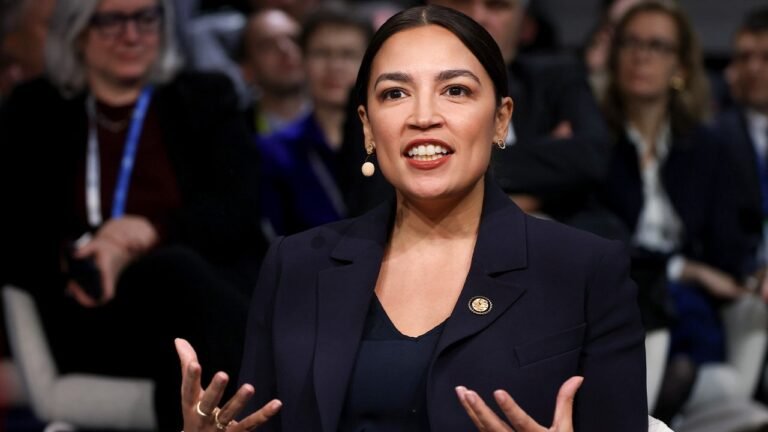
Rep. Alexandria Ocasio-Cortez speaking at the Munich Security Conference in Munich, Germany

Rep. Alexandria Ocasio-Cortez speaks at the Munich Security Conference in Munich, Germany, on Feb. 13, 2026. (Alex Kraus/Bloomberg via Getty Images)

The phrase was virtually ripped from the page of John Locke’s “life, liberty, and property.” Locke believed that there was a natural right to property created by what God left “in common” for humanity. Preceding any government, it was a right that belonged to human beings by divine grant. Hardly a roaring endorsement of socialist ideals or, as Zohran Mamdani put it, the “warmth of collectivism.”

George Mason relied on Locke for his draft of the Virginia Declaration of Rights, which Jefferson relied on heavily. Mason wrote of “the enjoyment of life and liberty, with the means of acquiring and possessing property, and pursuing and obtaining happiness and safety.”

THE UNWINNABLE WAR AMERICA’S FOUNDING FATHERS FOUGHT AND WON CHANGED HUMAN HISTORY FOREVER

Of course, the property reference was changed to happiness in the Declaration, which reflected the more transcendent values of these Enlightenment devotees.

While reduced to “Life, Liberty, and the pursuit of Happiness,” the original language appeared in the Fifth Amendment and, later, in the Fourteenth Amendment, protecting citizens from being “deprived of life, liberty, or property.”

In his 1792 essay “Property,” Madison echoed Lockean values in declaring that good government “secures to every man whatever is his own.”

WASHINGTON DEMS PASSED AN INCOME TAX THEY KNOW IS UNCONSTITUTIONAL. THAT WAS THE POINT

Other early figures, like Chief Justice John Marshall, wrote, “The power to tax is the power to destroy.”

The greatest irony is that Ocasio-Cortez personifies what the Founders truly wanted to combat. They feared mobocracy and the tyranny of the majority, the arbitrary power that can come from majoritarian abuse.

The new myth-making on the left is meant to revive what I previously described as “economic factionalism,” seeking political power with this type of “eat-the-rich” rhetoric. It is working, as it has throughout history. In California, many are pushing a “billionaires’ tax,” while far-left figures like Bernie Sanders and Ocasio-Cortez are pushing for a federal variation.

In states from Washington to Virginia, Democrats are virtually chasing wealthy taxpayers out of blue states with planned millionaire taxes.

CLICK HERE FOR MORE FOX NEWS OPINION

To achieve such radical change, you must first destroy the values upon which this republic was born, convincing people that their fundamental ties to capitalism are as ephemeral as true billionaires.

The greatest irony is that Ocasio-Cortez personifies what the Founders truly wanted to combat. They feared mobocracy and the tyranny of the majority, the arbitrary power that can come from majoritarian abuse.

CLICK HERE TO DOWNLOAD THE FOX NEWS APP

Ocasio-Cortez, Sanders, and others are truly not new or particularly interesting additions to the political dialogue. They are the same voices of democratic despotism that Madison and others sought to quell.

CLICK HERE TO READ MORE FROM JONATHAN TURLEY


Source link

Access Denied

0

Access Denied You don’t have permission to access “http://hindi.gadgets360.com/internet/makemytrip-launched-myra-2-0-ai-travel-booking-assistant-can-do-whole-booking-process-in-a-single-voice-command-news-11494311” on this server.

Reference #18.4d560e17.1778750983.19d4c416

https://errors.edgesuite.net/18.4d560e17.1778750983.19d4c416

Lionel Messi scores two goals as Inter Miami rally to beat Cincinnati | Football News

0

Argentinian star forward’s brace and an assist steer Miami to their fifth consecutive away victory in the MLS in the US.

Lionel Messi scored his 10th and ‌11th goals and had an assist, while German Berterame scored the go-ahead goal in the ⁠84th minute, as Inter ⁠Miami took advantage of two defensive blunders in a 5-3 victory over host Cincinnati.

Mateo Silvetti pulled Miami level at 3-3 in the 79th ⁠minute, the start of a late rally that saw the Herons (7-2-4, 25 points) win their fifth straight on the road in Major League Soccer (MLS) on Wednesday night, and their seventh consecutive away win across all competitions.

Recommended Stories

list of 4 itemsend of list

Messi and Silvetti contributed assists during the rally, and Rodrigo ⁠de Paul had two assists on the night as Miami again finished victorious in a rematch of their 4-0 win in Cincinnati in the 2025 Eastern Conference semifinals.

Kevin Denkey scored his eighth goal and had two assists for Cincinnati (4-5-4, 16 points). Evander added his seventh on an excellent 64th-minute ‌strike for a 3-2 lead.

Pavel Bucha also scored for the hosts, who saw a six-match unbeaten run snapped as they conceded three or more goals for the fifth time in nine games.

Messi provided the pass on Silvetti’s equaliser following a Cincinnati turnover in its own end, playing the ball to the 20-year-old on the left side of the penalty area. Silvetti had plenty to do, cutting back inside and guiding a low finish through traffic ⁠into the bottom right corner.

Berterame’s fourth goal of the season ⁠put the Herons in front five minutes later.

Messi was again involved, sending in a diagonal free kick towards the top of the 6-yard box that appeared to be a comfortable catch for Cincinnati goalkeeper Roman Celentano. But centre back ⁠Andrei Chirila collided with his own keeper, who spilled the ball and allowed Berterame an easy finish into an open net.

Messi nearly completed ⁠his third MLS hat-trick in the 89th minute, ⁠running on to Silvetti’s cross from the left and driving a sliding finish off the inside of the right post. But because the ball bounced off Celentano and over the line, it was eventually ruled an own goal.

Messi opened the scoring on ‌Cincy’s first big error in the 24th minute, pressuring centre back Matt Miazga and deflecting his ill-advised pass into an open goal when Miazga should have simply cleared the ball for ‌a ‌Miami corner.

His second levelled the game at 2-2 in the 55th minute from a more conventional strike, running on to de Paul’s cross at the penalty spot after combination play that also involved Luis Suarez.

Lionel Messi in action.
Messi, centre, almost recorded a hat-trick a minute from full time, but it was later ruled an own goal by Cincinnati goalkeeper, Roman Celentano, left [Jeff Dean/Getty Images via AFP]


Source link

HUGH HEWITT: Iran’s dictatorial regime was hit hard, but nod hard enough now


NEWYou can now listen to Fox News articles!

My mornings begin with coffee — how did I ever get through high school without coffee? — and the “News Items” newsletter from John Ellis, longtime NBC News poobah whose reputation for fairness and seriousness led his hobby of collecting key stories and circulating a summary of them to friends and family to become an influential summary of the key stories from overnight as well as the obscure and the incredible (but always true and very well sourced).

John’s missive had been my 6 AM companion for so many years that when he decided to expand the shop, I was one of scores of recipients who said “Hey, I’ll invest a few bucks to grow that project — the country needs one newsletter that does not spin and can’t be spun,” and over the next many years it’s grown into a replacement for the long march through the legacy outlets for an AM update on the world’s news.

“News Items” doesn’t have a slant, so when it opens with a “Well that really matters!” moment, I paused and considered its vast implications. Wednesday’s “News Items” began this way:

MORNING GLORY: PRESIDENT TRUMP MUST REJECT A SECOND MUNICH AND HOLD FIRM AGAIN IRAN

“1. The Trump administration’s public portrayal of a shattered Iranian military is sharply at odds with what U.S. intelligence agencies are telling policymakers behind closed doors, according to classified assessments from early this month that show Iran has regained access to most of its missile sites, launchers and underground facilities. Most alarming to some senior officials is evidence that Iran has restored operational access to 30 of the 33 missile sites it maintains along the Strait of Hormuz, which could threaten American warships and oil tankers transiting the narrow waterway. People with knowledge of the assessments said they show — to varying degrees, depending on the level of damage incurred at the different sites — that the Iranians can use mobile launchers that are inside the sites to move missiles to other locations. In some cases they can launch missiles directly from launchpads that are part of the facilities. Only three of the missile sites along the strait remain totally inaccessible, according to the assessments.”

Having given up on the New York Times years ago — and the already infamous “rape-trained dogs” column from Nicholas Kristof must have sent more subscribers who relied on the platform for actual news as opposed to recipes and puzzles or The Athletic to the exits — I would not have known about that report early yesterday but for “News Items.”

The newsletter can certainly be trusted to provide a faithful summary of a story from a platform that is not trusted by the center-right, but a story of consequence nonetheless.

The CIA — presumably the lead agency for the assessment that was leaked — is currently led by the very competent John Ratcliffe. But the CIA has a checkered record on Iran from 1979 when they didn’t see the Islamic Republic coming (much less what it portended) to 2007 when its “assessment” of Iran’s nuclear ambitions wholly missed the mark. That 2007 debacle should haunt consumers of this report:

“We judge with high confidence that in fall 2003, Tehran halted its nuclear weapons program.”

So declared the opening words of the key judgments of the November 2007 National Intelligence Estimate (NIE) on “Iran’s Nuclear Intentions and Capabilities.” The CIA might have had collaborators in the broader Intelligence Community in that enormous “swing and a miss” of an NIE 19 years ago, but the damage it did in handcuffing President George W Bush regarding Iran in his closing months was vast.

Of course President Obama spent eight years trying to find ways to welcome Iran into the community of nations —including the now infamous pallets of cash Obama sent the IRGC as part of the JCPOW—perhaps not realizing because of that 2007 NIE that the Islamic Republic was and would always remain a rogue and dangerous theocracy run by a two lunatic dictators in succession since 1979, fanatics whose whole plan was to build and use nuclear weapons to end first Israel and then any other opponent of its end-times apocalyptic vision including the U.S. if it could build the missile capable of reaching the homeland. No update and improved NIE was ever leaked even after Israel pilfered the entire Iranian nuclear file. But we know Team Obama was ideologicallly predisposed to play and lose the three-card monte Iran has been playing with the world for half a century.

That’s a longer way of saying that (1) the new assessment could be as wrong as 2007’s, but (2) hope isn’t a strategy especially when it comes to the battle with Iran. This time, as with 2007, the president ought to again go with the Intelligence Community’s assessment.

Which should mean that the next wave of planning for massive strikes on Iran’s arsenal should already be far advanced.

CLICK HERE FOR MORE FOX NEWS OPINION

Iran’s immediate response the to the February 28 attacks was to lash out not just at Israel and U.S. bases, but at a dozen other countries and their militaries and infrastructure. Like the proverbial wounded beast, the lunatic regime went wild. Noted. Iran wasn’t chastened or changed by the massive blows that rained down on it. Rather, the lunatics that remained regrouped and doubled and tripled down on vengeance.

It is relatively calm now with President Trump in China, but the “News Items” summary of the New York Times’ summary of the intelligence leak should mean the resumption of strikes when President Trump returns.

CLICK HERE TO DOWNLOAD THE FOX NEWS APP

There is no point to negotiation with the third string fanatics in Tehran. There is only the path of sustained degradation of their capabilities and strangulation of their economy. Perhaps the Artesh will tire of not getting paid. Perhaps some colonel in the IRGC figures out how to gather enough other colonels to pull off a coup. There are paths forward, but hard to see how internal resistance to the crazies atop the regime congeals absent military means combined with an economic vise.

None of the paths forward should include leaving Iran as it is. Lunatics in the neighborhood shouldn’t have hand guns or rifles. Lunatics on the world stage shouldn’t have missiles, mines, drones and enriched uranium. It really is that simple. Alone or with Israel and our Gulf Allies, President Trump has to finish the job.

Hugh Hewitt is a Fox News contributor and host of “The Hugh Hewitt Show” heard weekday afternoons from 3 PM to 6 PM ET on the Salem Radio Network, and simulcast on Salem News Channel. Hugh drives Americans home on the East Coast and to lunch on the West Coast on over 400 affiliates nationwide, and on all the streaming platforms where SNC can be seen. He is a frequent guest on the Fox News Channel’s news roundtable, hosted by Bret Baier weekdays at 6pm ET. A son of Ohio and a graduate of Harvard College and the University of Michigan Law School, Hewitt has been a Professor of Law at Chapman University’s Fowler School of Law since 1996 where he teaches Constitutional Law. Hewitt launched his eponymous radio show from Los Angeles in 1990. Hewitt has frequently appeared on every major national news television network, hosted television shows for PBS and MSNBC, written for every major American paper, has authored a dozen books and moderated a score of Republican candidate debates, most recently the November 2023 Republican presidential debate in Miami and four Republican presidential debates in the 2015-16 cycle. Hewitt focuses his radio show and his column on the Constitution, national security, American politics and the Cleveland Browns and Guardians. Hewitt has interviewed tens of thousands of guests from Democrats Hillary Clinton and John Kerry to Republican Presidents George W. Bush and Donald Trump over his 40 years in broadcasting. This column previews the lead story that will drive his radio/ TV show today.

CLICK HERE TO READ MORE FROM HUGH HEWITT


Source link

Gold Rate Today May 14, 2026: Check latest Gold prices in Mumbai, Ahmedabad, Chennai Delhi, Bengaluru, Hyderabad, Kolkata & Other Cities

0

Gold prices down across India on May 14

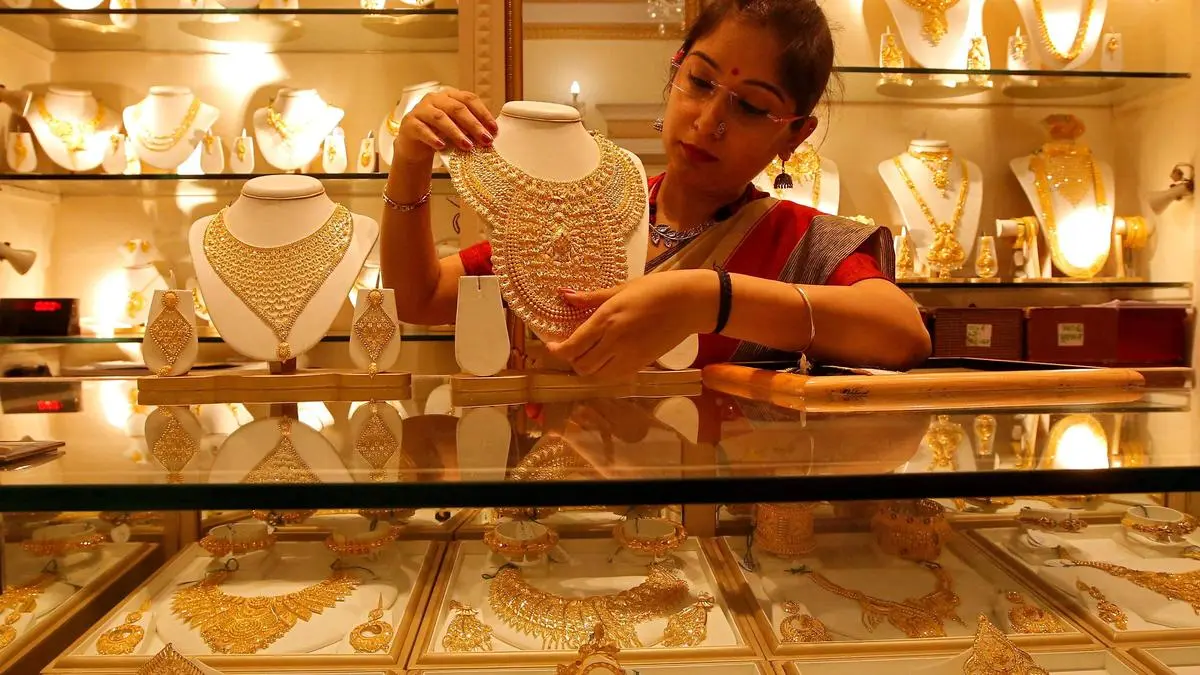
Gold prices down across India on May 14 | Photo Credit: RUPAK DE CHOWDHURI

Gold prices in India saw decrease today across all cities. The price for 8 grams of 24-carat gold also dropped in all cities compared to yesterday. Below is a detailed breakdown of gold prices in key cities.

Gold rates in India:

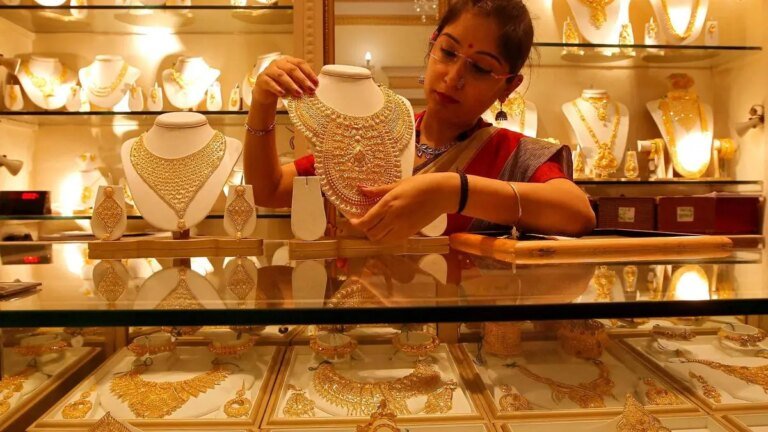
Gold prices in India today were ₹ 14,850 for 1 gram of 22-carat gold (down by ₹890) and ₹ 1,18,800 for 8 grams of 22-carat gold (down by ₹4720).

Gold Rate in Mumbai:

22 Carat: gold price in mumbai today were ₹ 14,850 for 1 gram of 22-carat gold (down by ₹590) and ₹ 1,18,800 for 8 grams of 22-carat gold (down by ₹4720)..

24 Carat: gold price in mumbai today were ₹ 15,593 for 1 gram of 24-carat gold (down by ₹619) and ₹ 1,24,744 for 8 grams of 24-carat gold (down by ₹4952).

Gold Rate in Chennai:

22 Carat: gold price in chennai today were ₹8,710 for 1 gram of 22-carat gold (down by ₹45) and ₹69,680 for 8 grams of 22-carat gold (down by ₹360).

24 Carat: gold price in chennai today were ₹9,146 for 1 gram of 24-carat gold (down by ₹47) and ₹73,168 for 8 grams of 24-carat gold (down by ₹376).

Gold Rate in Hyderabad:

22 Carat: gold price in Hyderabad today were ₹ 15,050 for 1 gram of 22-carat gold (down by ₹350) and ₹ 1,20,400 for 8 grams of 22-carat gold (down by ₹2800).

24 Carat: gold price in Hyderabad today were ₹ 15,803 for 1 gram of 24-carat gold (down by ₹367) and ₹ 1,26,424 for 8 grams of 24-carat gold (down by ₹2936).

Gold Rate in Delhi:

22 Carat: gold price in delhi today were ₹ 14,900 for 1 gram of 22-carat gold (down by ₹590) and ₹ 1,19,200 for 8 grams of 22-carat gold (down by ₹4720).

The gold price in delhi today were ₹ 15,645 for 1 gram of 24-carat gold (down by ₹620) and ₹ 1,25,160 for 8 grams of 24-carat gold (down by ₹4960).

Gold Rate in Ahmedabad:

22 Carat: gold price in Ahmedabad today were ₹ 14,904 for 1 gram of 22-carat gold (down by ₹590) and ₹ 1,19,232 for 8 grams of 22-carat gold (down by ₹4720).

24 Carat: gold price in Ahmedabad today were ₹ 15,649 for 1 gram of 24-carat gold (down by ₹620) and ₹ 1,25,192 for 8 grams of 24-carat gold (down by ₹4960).

Gold Rate in Bengaluru:

22 Carat: gold price in Bengaluru today were ₹ 14,910 for 1 gram of 22-carat gold (down by ₹590) and ₹ 1,19,280 for 8 grams of 22-carat gold (down by ₹4720).

24 Carat: gold price in Bengaluru today were ₹ 15,656 for 1 gram of 24-carat gold (down by ₹619) and ₹ 1,25,248 for 8 grams of 24-carat gold (down by ₹4952).

Gold Rate in Kolkata:

22 Carat: gold price in kolkataa today were ₹ 14,950 for 1 gram of 22-carat gold (down by ₹590) and ₹ 1,19,600 for 8 grams of 22-carat gold (down by ₹4720).

24 Carat: gold price in Kolkata today were ₹ 15,698 for 1 gram of 24-carat gold (down by ₹619) and ₹ 1,25,584 for 8 grams of 24-carat gold (down by ₹4952).

Gold Rates Courtesy: bankbazaar.com

More Like This

Published on May 14, 2026

Calling the cops just got extra AI as police seek to add tech to contact systems

0


Public sector

AI already listening in to call handlers in real time, conducting live database searches

Police forces across England, Wales and Northern Ireland will add personalization and artificial intelligence (AI) to their jointly run digital contact systems through a £72 million contract to manage and develop these.

Almost all police forces in the three nations use the Digital Public Contact’s Single Online Home web platform for their own websites, with the platform also running Police.uk, a national information site, and Data.police.uk, which provides information on police-recorded crime.

The Metropolitan Police Service (MPS), which hosts Digital Public Contact services on behalf of the National Police Chiefs Council, hopes to find a single supplier for these under a new contract running from July 2027 to December 2029, with a possible three-year extension, according to a market engagement procurement notice published on 12 May. 

Existing Digital Public Contact services include the Single Online Home websites, linked services that pass information on crimes and incidents from the public to relevant officers; and the National My Police Portal, a new service using GOV.UK’s One Login to links victims with officers in charge of cases, which South Yorkshire Police started using in January. 

The new contract will also cover use of AI. In March West Yorkshire Police and Digital Public Contact started using AI to extract material from old control room calls, which at present are normally recorded but not transcribed

In the procurement notice, the MPS said that AI could also be used in reporting, analysis, conversational interactions and staff assistance. In a speech on the development of Digital Public Contact last October, Cambridgeshire’s chief constable Simon Megicks said that the work also includes developing a natural language switchboard that can help direct incoming calls and live services to assist operators, which is being piloted by Humberside Police.

“It supports call handlers in real time, and as they converse, the AI listens in and conducts live database searches, surfacing relevant information instantly,” he said of the assistance service at a National Police Chiefs Council innovation event. “Operators are empowered to make better decisions, quicker: reducing risk and improving outcomes for the public.”

In the King’s Speech on 13 May the government confirmed plans to merge forces in England and Wales and establish a National Police Service. The procurement notice says that the new contract will provide “a robust foundation” supporting these structural changes, although they are likely to take place beyond the end of the contract.

Following a market engagement event on 9 June, the MPS plans to publish a tender notice for the work around the end of July. ®


Source link

In the UK, Muslim votes are treated as a problem to be managed | Elections

0

Britain’s politics is in turmoil. The Labour government is consumed by an open leadership crisis, with the Prime Minister facing demands from more than ninety of his own MPs to resign and a likely challenge from within his own cabinet. All of this was triggered by Labour’s hammering in the local and devolved elections of May 7.

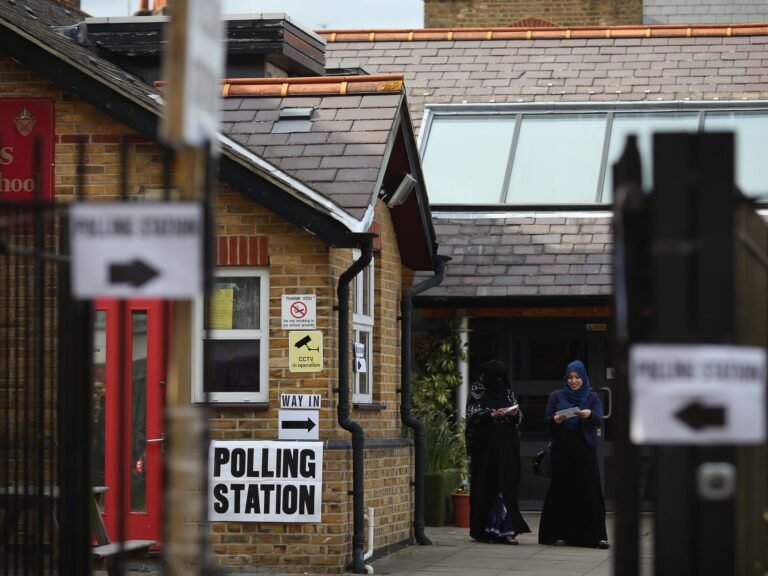
Westminster is absorbed in the spectacle, and understandably so. But for British Muslim communities, the lasting significance of those elections lies elsewhere. The May vote brought a real surge in Muslim civic engagement, with initiatives like the Muslim Council of Britain’s “Get Out The Vote” campaign helping to drive registration and turnout. Yet that engagement was too often met with suspicion rather than welcome.

During the campaign, too many political actors and media outlets fell back on lazy, divisive narratives about Muslims, spreading misinformation and misrepresenting how our communities actually engage politically. Commentators repeatedly raised the spectre of “family voting”, claiming that Muslims, particularly Muslim women, were pushed or directed to vote in certain ways, as though they had no agency of their own. Others spoke of “sectarian voting,” portraying Muslims as a single bloc voting on the basis of religion alone, rather than as a diverse community with a multiplicity of political views. These terms were used to cast suspicion on Muslim voters, particularly in areas where Muslim electoral participation is more visible.

Reform UK, which campaigned heavily on an anti-immigration platform, made significant gains in local council elections in England, largely at the expense of both the Conservative Party and the Labour Party, the two dominant forces in British politics for over a century. In the devolved elections, Labour’s vote also declined, but the picture was more complex. In Wales, Plaid Cymru emerged as the largest party for the first time since devolution, with Reform UK Wales finishing a strong second. In Scotland, the SNP remained the largest party but lost seats, while the Greens had their best-ever result and Reform UK won its first MSPs. Voters in different parts of the UK clearly reached for different alternatives.

Frustration with the mainstream parties accounts for some of Reform’s success, but the party also gained substantial support for its hardline positions. These include proposals for large-scale immigration detention centres capable of holding tens of thousands of people, the abolition of “indefinite leave to remain”, and a combative framing of integration and national identity.

Elements of Reform’s rhetoric have at times overlapped with anti-Muslim and Islamophobic narratives also promoted by more extreme figures such as Tommy Robinson and Rupert Lowe, the MP who leads the far-right populist Restore Britain party. This rhetoric has included stoking fear around “political Islam,” calling for mass deportations, and advancing a more restrictive vision of British cultural identity. Such language grew louder over the course of the campaign, with some supporters and individual Reform candidates posting content on social media that was openly Islamophobic, racist or anti-Semitic. Phil Tierney, elected for Chelmsley Wood in Solihull and pictured with Reform’s deputy leader Richard Tice during the campaign, had publicly posted, “I am Islamophobic” on X, called Islam a “plague,” and shared material arguing that no Muslim should be allowed to hold public office. Ben Rowe, elected in Plymouth, was reported to have urged an anti-Muslim mob during the 2024 Southport riots to “get rid of that filthy building” as they threw bricks at police protecting a mosque. While such posts do not always reflect official Reform party policy, they contribute to a wider environment in which such rhetoric is highly visible and normalised.

Muslims, like anyone else, are not a monolith. We vote on a wide range of issues shaped by personal experience, local priorities, and wider concerns. Housing, the cost of living, education, safety, local services, and infrastructure matter to us just as they do to everyone else. And on national and international issues, including humanitarian crises, the genocide in Gaza, and human rights, we stand alongside neighbours of all faiths and none.

For British Muslims, as with all communities, taking part in the democratic process is essential to ensuring fair representation and a meaningful voice in public life. We are a diverse community, and people will rightly vote for different parties and candidates. Recent shifts in voting patterns, away from traditional support for Labour and towards the Greens and independents in particular, show clearly that no community’s support can be taken for granted. When voters feel overlooked or dismissed, they will look elsewhere. Representation has to be earned through genuine engagement, respect, and accountability, not historical expectations.

What concerns us most is not any single party or politician, but the speed at which the Overton window has shifted. Calls for the mass deportation of Muslims, for increased securitisation of our communities, and for limitations on our freedom of expression and protest were once confined to the political fringe. They are now made openly, by elected representatives, and meet silence rather than condemnation from much of the mainstream. As that fringe becomes mainstream, other parties feel pressure to move with it, and the space for a confident, plural British politics narrows.

Countering this requires more than calling it out. It means building confidence, strengthening civic literacy, and making sure people feel empowered rather than alienated. The more we engage politically and constructively, contacting our local councillors and MPs, responding to consultations, attending community meetings, and working with others on shared local issues, the less our communities can be sidelined, spoken for or spoken over.

There is also space for optimism. Across the country, messages rooted in hope, fairness, accountability, and community-focused politics resonated strongly. Many voters backed candidates who centred humanitarian and ethical concerns and worked to build unity across our diverse communities rather than exploit division. Independent councillor Mansoor Ahmed, one of the youngest councillors elected, stood in the highly diverse ward of Nechells in Birmingham on a locally rooted, community-focused platform, reflecting concerns about housing, local services, youth provision, and representation rather than national identity politics. That appetite for constructive change is something to build on.

The political landscape has shifted, but nothing is set in stone. Both the Conservatives and Labour may yet recover, and the Liberal Democrats also made gains in several areas, a reminder of how fluid and competitive British politics remains. A future Reform-led government, or even a Reform prime minister, is possible, but it is far from guaranteed. Political momentum can shift quickly, and the UK’s electoral system means translating local gains into national power remains a significant challenge for any party.

With the next Westminster general election to be held by August 15, 2029, we cannot afford to be complacent. We need to be more organised, more informed, and more ready than ever. That means making sure everyone in our communities, especially young people and first-time voters, is registered to vote, knows where and when to cast their ballot, and understands what each party is offering them. It means challenging misinformation when we see it, in our WhatsApp groups and our local press as much as in the national media. It means working with neighbours of all faiths and none on the issues we share. And it means refusing to let those who would reduce Muslim political engagement to a culture war define the terms of our participation. That participation is, and always has been, a legitimate expression of democratic responsibility and civic duty.

The views expressed in this article are the author’s own and do not necessarily reflect Al Jazeera’s editorial stance.


Source link