War enters new phase as Israel attack on Iran gasfield sparks Gulf response | US-Israel war on Iran News

0

Iran has ratcheted up the pressure on several Gulf nations by attacking their energy facilities in retaliation for am Israeli strike on its South Pars gasfield, as the war threatens to further ignite the entire region into an even more ominous phase, all-out conflagration.

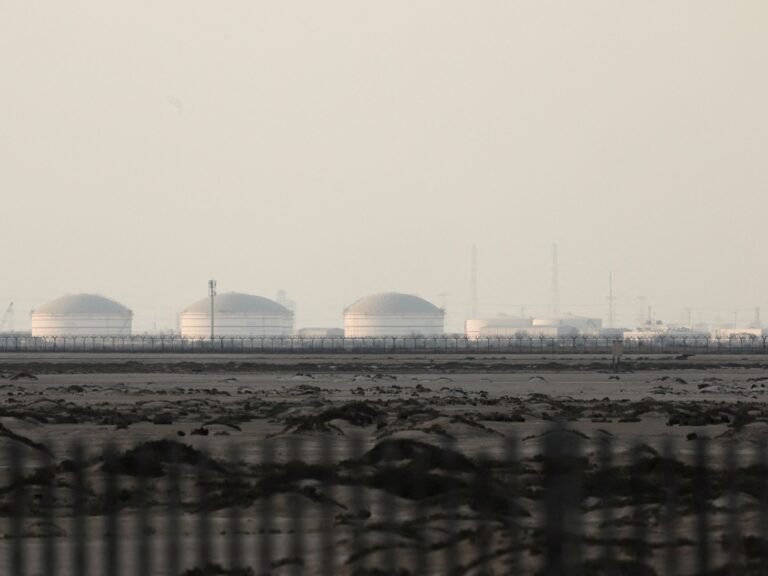
The dangerous new developments in the war saw Iran hit Qatar’s Ras Laffan liquefied natural gas (LNG) facility early on Thursday amid a broader campaign that also included attacks on energy infrastructure in the United Arab Emirates and Saudi Arabia, raising serious concerns about global energy supply.

Recommended Stories

list of 3 itemsend of list

The attacks amid the United States-Israel war on Iran, launched by the two countries on February 28, followed Israel’s killing of Iranian Intelligence Minister Esmail Khatib and its strike on the South Pars LNG facility on Wednesday.

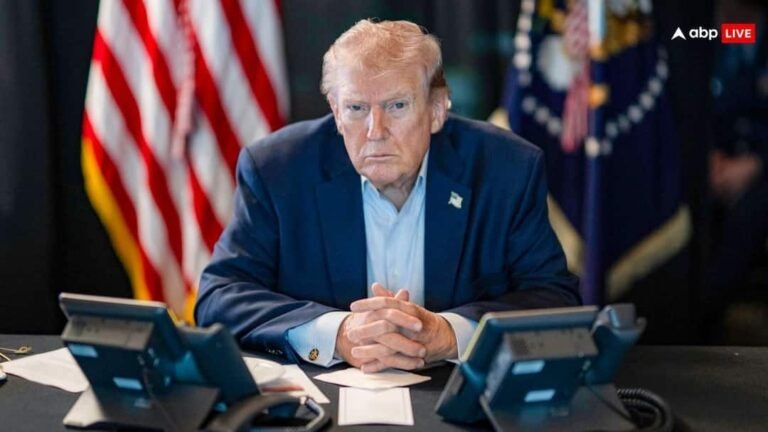
As Iran lashed out at its Gulf neighbours, which it has targeted relentlessly since the start of the conflict because of the presence of US facilities and assets on their soil, US President Donald Trump upped the ante further by threatening in a social media post to “massively blow up the entirety” of South Pars if Iran continued targeting Qatar.

“I do not want to authorise this level of violence and destruction because of the long-term implications that it will have on the future of Iran, but if Qatar’s LNG is again attacked, I will not hesitate to do so,” said Trump.

At the same time, Trump tried to distance the US from Israel’s attack on South Pars, describing his strongest Middle East ally as having “violently lashed out” at the facility and promising that it would not occur again if Tehran refrains from attacking Qatar.

Trump said the US had “nothing to do” with the strike on the offshore gasfield facilities in Iran’s Bushehr province.

Qatar, the world’s second-largest LNG exporter, said on Thursday that the Iranian ballistic missile attack on its Ras Laffan gas complex caused three fires and extensive damage, with the Ministry of the Interior later reporting fires had been contained, with no injuries recorded.

Qatar’s Ministry of Foreign Affairs told Iran’s security and military attaches to leave the country within 24 hours and declared them “persona non grata”, condemning the attack on Ras Laffan as a “direct threat” to the country’s national security and accusing Iran of taking an “irresponsible approach”.

Separately, UAE authorities said they were responding to incidents at the Habshan gas facilities and at the Bab oilfield caused by falling debris from intercepted missiles. The Abu Dhabi Media Office said the facilities were shut down and no injuries were reported.

Saudi Arabia said it intercepted and destroyed four ballistic missiles launched towards Riyadh on Wednesday and an attempted drone attack on a gas facility in its east. On Thursday, Iran targeted the Saudi capital, Riyadh.

Attacks on Kuwait and Bahrain were also reported.

Will the Gulf countries strike back?

The question is now whether the Gulf countries will launch retaliatory attacks on Iran, a potential development that would open a new phase of the war.

Attending a meeting of foreign ministers from 12 Muslim-majority countries in Riyadh on Wednesday, Saudi Foreign Minister Prince Faisal bin Farhan Al Saud said, “We reserve the right to take military actions, if deemed necessary”, warning Iran that pressure could “backfire politically and morally”.

On Thursday, he warned Iran that tolerance of its attacks on his country and those of neighbouring Gulf states is limited, calling on Tehran to immediately “recalculate” its strategy.

Qatar’s Emir Sheikh Tamim bin Hamad Al Thani spoke on Thursday with French President Emmanuel Macron, with the former’s office later saying the leaders deemed Iran’s attack “a dangerous escalation that threatens the security and stability of the region and undermines the security of global energy supplies”.

Reporting from Dubai in the UAE, Al Jazeera’s Zein Basravi said Iran’s attacks had “shattered any sense of diplomacy” among Gulf neighbours.

“Qatar’s government has said over and over again that no matter what happens, they will continue to press the idea of diplomacy, of dialogue as a way to resolve this and any other conflict,” he said. “But this is really testing their mettle.”

Political scientist Mehran Kamrava told Al Jazeera that Iran’s escalating attacks on Gulf countries had placed their governments “in a real bind diplomatically”.

“On the one hand, there’s this palpable desire to somehow respond to what is openly being called Iranian aggression,” said the professor of government at Georgetown University in Qatar.

“On the other hand, the states are keenly aware that if they do enter the war with Iran, what is there to stop Donald Trump leaving tomorrow and declaring American victory – and then these states are left fighting a neighbour?” he said.

While Israel did not claim the South Pars gasfield attack, Defence Minister Israel Katz has promised more “surprises” as his country seeks to “decapitate” the leadership of Tehran’s government.

Among other developments on Thursday, the United Kingdom Maritime Trade Operations (UKMTO) Centre reported that a vessel had been hit by an “unknown projectile”, 4 nautical miles (about 7km) east of Ras Laffan in Qatar.


Source link
Access Denied

0

Access Denied You don’t have permission to access “http://hindi.gadgets360.com/internet/whatsapp-is-working-on-noise-cancellation-feature-for-audio-and-video-calls-on-android-news-11237223” on this server.

Reference #18.4d560e17.1773966225.614d800

https://errors.edgesuite.net/18.4d560e17.1773966225.614d800

Access Denied

0

Access Denied You don’t have permission to access “http://hindi.news18.com/videos/ajab-gajab/little-girl-dances-with-dupatta-on-haryanvi-song-in-front-of-mother-viral-video-10287993.html” on this server.

Reference #18.bdf9dead.1773909106.864badf

https://errors.edgesuite.net/18.bdf9dead.1773909106.864badf

Iran-Israel War: Amidst the war, diesel and petrol became expensive in 85 countries, where is the highest, here is the list

0

Iran-Israel The ongoing war in and America The active role of has put the world oil market in deep crisis. This war has had the biggest impact on the prices of petrol and diesel. According to international reports, fuel prices have increased in at least 85 countries and in many countries this increase has reached 15 percent to 50 percent.

This turmoil in the oil market has come at a time when the world was already struggling with economic slowdown and inflationary pressure. The Middle East is an important center of global oil supply and any military tension here impacts the entire world’s energy market. This is the reason why this war has further increased global inflation and economic uncertainty.

Which countries are most affected?

The sharpest rise in fuel prices has been recorded in those countries which are more dependent on imports or where economic imbalance already existed. Due to increase in transportation costs in many countries, the prices of food and essential goods have also seen a rise.

Impact on petrol and diesel prices in major countries (estimated range)

Country Price increase (%) Main reasons
Cambodia 68% (highest) post-war import costs surge, limited energy buffer
Vietnam 50% oil supply uncertainty, regional market pressure
Mishra 35% – 50% energy import bill more than doubled
Nigeria 35% import dependence and currency pressure
Laos 33% weak energy reserves and supply constraints
Canada 28% Global market fluctuations and refining costs
Australia 15% – 25% inflation and possibility of negative impact on GDP
Many countries in Europe face 20% – 40% energy supply uncertainty, rise in gas-oil costs.
Africa’s importing countries face 25% – 45% currency pressure and increase in import costs.
Some markets in Asia face 15% – 30% transportation costs and impact of global oil prices

The biggest economic pressure on Egypt

The most obvious impact of the rise in global prices has been seen on Egypt. According to reports, the country’s energy import bill has more than doubled. This means that additional pressure on the government’s budget, currency and foreign exchange reserves may increase. The impact of increase in energy costs is not limited to fuel only. Electricity rates, industrial production costs and public transport expenses are also affected by this. This has a direct impact on the livelihood of common people.

Concern even in developed economies

This crisis is not limited only to developing countries. Developed countries like Australia are also worried about its impact. The Treasury analysis there has indicated that the war may increase inflation and have a more negative impact on economic growth than expected. Volatility in oil prices has also increased concern in global markets. There are fluctuations in stock markets and pressure in currency exchange rates. Many central banks are now adopting a cautious stance regarding their policies.

managed shock strategy

The biggest impact of rising prices of petrol and diesel falls on common consumers. With increasing transportation costs, prices of food items and things used every day also increase. This leads to a sharp rise in the cost of living, which has a greater impact on the middle and lower income groups. This situation can be challenging even for a big importing country like India. If the rise in global prices continues for a long time, pressure on domestic inflation may increase. Although governments can try to provide relief by taking steps like tax cuts or subsidies, it is not easy to completely avoid the influence of the international market. India is also not untouched by the rise in global oil prices after the Iran-Israel war, because the country imports about 85 percent of its total crude oil requirement. However, till now India has adopted the strategy of handling this shock as a managed shock. That is, instead of putting the entire burden directly on consumers, the impact is being controlled through policy balancing.

Relationship between global tension and oil market

There is a deep connection between the Middle East conflict and the global energy market. It has been seen many times in history that increasing tension in this region has affected oil prices. The current war has once again made it clear to what extent the global economy is dependent on energy supply. If the conflict prolongs, oil prices may rise further. This is likely to slow down global economic growth, increase inflation and have a negative impact on trade. At present, the eyes of the world are fixed on the developments in the Middle East, because its impact is not limited only to diplomacy or military strategy, but has reached the lives of common citizens of every country.

‘Nuclear war can happen between India and Pakistan’, shocking report came amid war in Iran, Trump lost his senses?

0

According to the annual report on threat assessment of the ‘US Intelligence Community’ presented in the US Senate on Wednesday (March 18, 2026), there remains a risk of nuclear conflict due to relations between India and Pakistan.

According to this 34-page report, India and Pakistan do not want to start a direct conflict, yet conditions exist to promote crisis for terrorist elements. The document says, ‘There is a risk of nuclear conflict due to India-Pakistan relations because there have been conflicts between these two nuclear power countries in the past, which has created a risk of increasing tension. Last year in the Union Territory of Jammu and Kashmir Pahalgam The terrorist attack near has made clear the dangers of terrorist attacks provoking conflict.

The document said, ‘President Donald Trump’s intervention has reduced recent nuclear tensions and our assessment is that no country wants to return to open conflict, but conditions exist that encourage terrorist actors to face threats.’ “Relations between Pakistan and the Taliban remain tense and cross-border clashes continue to occur, as Islamabad continues to be frustrated by the presence of anti-Pakistan terrorist groups in Afghanistan, while Islamabad faces increasing terrorist violence,” the document said.

America US intelligence chief Tulsi Gabbard told lawmakers on Wednesday that Pakistan’s long-range ballistic missiles may include missiles capable of targeting the US. Director of National Intelligence Tulsi Gabbard also said before the Senate Intelligence Committee that the threat posed to the US is expected to increase from less than 3,000 missiles currently to more than 16,000 missiles by 2035.

Tulsi Gabbard said that America A secure nuclear deterrent ensures the country’s security from strategic threats. He said, ‘However, Russia, China, North Korea, Iran and Pakistan are researching and developing several innovative, advanced or conventional missile delivery systems equipped with nuclear and conventional payloads, which could put our country at risk.’

Also read:-
America trapped in debt trap, borrowed 39 trillion dollars, how much money has Trump spent on war so far?

Access Denied

0

Access Denied You don’t have permission to access “http://hindi.gadgets360.com/mobiles/vivo-x300-ultra-x300s-camera-features-revealed-ahead-30-march-launch-expected-specifications-news-11237155” on this server.

Reference #18.4c560e17.1773907897.30e4ba2

https://errors.edgesuite.net/18.4c560e17.1773907897.30e4ba2

Access Denied

0

Access Denied You don’t have permission to access “http://hindi.news18.com/cricket/john-mooney-the-new-fielding-coach-of-delhi-capitals-added-to-axar-patel-lead-side-before-ipl-2026-10287924.html” on this server.

Reference #18.49200117.1774217170.74c7b77

https://errors.edgesuite.net/18.49200117.1774217170.74c7b77

Gold falls to over one-month low on firm dollar, hawkish Fed

0

Gold prices fell to a more-than-one-month low on Thursday, weighed down by a firm dollar and a hawkish Federal Reserve, which limited hopes for near-term interest rate cuts.

Spot gold fell 1.1% to $4,764.27 per ounce as of 0649 GMT, its lowest since February 6.

US gold futures for April delivery fell 2.6% to $4,770.

Spot gold has fallen more than 9% ⁠since the US-Israeli strike on Iran on February ⁠28, pressured by a stronger dollar, which has emerged as one of the clearest “safe-haven” winners.

As the dollar firms, greenback-priced bullion becomes more expensive for holders of other currencies.

“Gold continues to struggle in this high dollar and high oil environment despite ongoing heightened geopolitical risks. Increased market volatility is also leading to some gold positions being closed to cover margin calls in other assets,” said Tim Waterer, KCM Trade chief market analyst. Global equities slid, and oil prices rose above $110 a barrel after ⁠a major escalation in the Middle East war rattled investors.

The Fed and Bank of Canada both struck hawkish tones on Wednesday after they held rates steady as surging energy prices rising from the Iran conflict clouded the inflation outlook.

Both central banks warned of risks that rising energy costs could fan a more persistent inflation spike.

“Expectations for incoming US rate cuts have been a cornerstone of gold’s ascent, but spiking oil prices have dampened hopes for monetary easing, which has somewhat pulled the rug out from under the gold price,” said Waterer.

While a rising inflation backdrop ⁠typically boosts gold’s appeal as a hedge, high interest rates reduce ⁠demand for the non-yielding metal. Meanwhile, US President Donald Trump’s administration is considering deploying thousands of US troops to reinforce operations in the West Asia.

Spot silver fell 4.3% to $72.14 per ounce. Spot platinum fell 2.1% to $1,981.48, and palladium lost 1% to $1,461.

Published on March 19, 2026

Struggling to describe your AI aversion? Here’s a glossary • The Register

0

Opinion Are you an AI hater, an AI vegan, or a slightly more moderate AI vegetarian? Or are you on the side of the clankers? A bot-licker, a prompt-fondler, a ChatNPC?

LLM bots are everywhere, from your phone to your browser, and increasingly so is their output, which is widely termed “slop” – a term documented two years ago by AI writer and advocate Simon Willison. The Reg FOSS desk was horrified to receive, among his Christmas gifts, a set of drinks coasters printed to vaguely resemble vinyl LPs with illegible slop labels. As well as endless torrents of slop, there are also endless waves of bot promoters.

Some of us remain unconvinced. We thought that if you too are a skeptic who has not been persuaded that there’s any form of intelligence in these text-prediction machines, there might be reassurance in knowing that you’re not alone – and that there are some useful terms for how staunch your resistance is.

Sean Boots recently offered a new term: “Generative AI vegetarianism.” He describes a moderate position:

Even so, he continues:

His list of reasons is sound, and there is much to recommend in a non-confrontational approach. However, it is not this vulture’s. Boots also links to several other, more strident statements, and we enjoyed all of them. Jenny Zhang wrote in “choosing friction“:

It’s just over 2,000 words long, and we can’t really fault one of them. We also liked Rusty Foster’s recent “A.I. Isn’t People,” which carefully and methodically deconstructs the claims that large language models can “think” or “reason” or “learn” or are “intelligent” for any possible definition of the term.

The one we sympathized with most is from Anthony Moser. His statement is plain – “I Am An AI Hater“:

There is some mileage in the concept of being an AI vegan, but the thing that many vegans will find is that if they travel far enough, they’ll find themselves in a country where they don’t speak the language and can’t explain their restrictions.

The Reg FOSS desk is not vegan, but has been strictly vegetarian for about 45 years now. Some of the vegans that we know personally become vegetarians when traveling far from home, because it’s more practical. One way that you can sometimes get through to people whose culture doesn’t have the notion of being vegetarian is to explain that it is a religious prohibition.

Here, we feel that Cate Sawers has nailed it. We suggest memorizing it, and as a fallback, print it out, laminate it, and keep it in your wallet:

Bravo! ®


Source link

Access Denied

0

Access Denied You don’t have permission to access “http://hindi.news18.com/videos/ajab-gajab/navratri-special-aunty-ji-took-amazing-hack-from-kitchen-know-how-to-make-unique-quick-dish-recipe-10287837.html” on this server.

Reference #18.4a200117.1773905868.c9a40bc

https://errors.edgesuite.net/18.4a200117.1773905868.c9a40bc