Five problems the Iran war could solve for Israel’s Netanyahu | US-Israel war on Iran News

0

Prime Minister Benjamin Netanyahu has succeeded where countless previous Israeli leaders have failed: persuading the United States to join Israel in launching open-ended strikes against its regional nemesis, Iran.

So far, those attacks have killed more than 1,400 people in Iran, while 1,000 have been killed in Israeli strikes on Lebanon, as well as dozens of others in regional countries hit by the overspill that many had predicted.

Recommended Stories

list of 3 itemsend of list

Oil prices, a critical factor for the world economy, have been pushed to new highs, drawing the prospect of shortages and potential rationing even closer.

In the US, Democrat lawmakers, as well as some prominent members of President Donald Trump’s usually loyal support base, such as media personality Tucker Carlson and leading podcast host Joe Rogan, have broken into open revolt, with no clear agreement on what a potential resolution to the war might look like, or how the diplomatic rift it has opened between the US and its European and Western allies might be healed.

But little of that might matter for Netanyahu, compared with the gains he will feel he has already achieved from the conflict. Here’s a look at how the Iran war may solve some of the problems Netanyahu has faced for years.

The Iranian threat

Netanyahu has long warned about the threat from Iran to Israel, and the wider world, for years. He has infamously taken posters with him to the United Nations to claim that Iran was close to a nuclear weapon, and the dangers that would lead to.

Israel had long felt unable to emerge victorious from any conflict fought against Iran if it did not have US backing. And yet that support never came – until Trump came along.

Last year, Trump agreed to join in on Israel’s June war against Iran, but quickly moved to end the conflict after Iranian nuclear sites were hit. However, this time, Trump was in on the conflict from the start.

The conclusion of the conflict is unknown, but Netanyahu will feel a measure of success in finally convincing the US to join Israel in launching a war against Iran, and the image of the two countries as direct partners in a conflict.

And even if the war doesn’t lead to the fall of the Iranian government, the Islamic Republic has been weakened, and may pose less of a threat to Israel in the long term.

Coupled with the depletion of the power of Iran’s regional “Axis of Resistance” – including the heavy attacks on the Lebanese group Hezbollah and the fall of Syria’s Bashar al-Assad – Netanyahu can argue that Israel has no one to be afraid of in the region, and is the undisputed hegemon.

Netanyahu’s corruption trials

Netanyahu currently faces trial on three corruption charges dating back to 2019. Accusations that he has been manipulating events to delay and sideline the criminal proceedings against him have run the length of his genocidal war on Gaza, with postponements and interruptions to the trial often linked to events in the conflict, and Netanyahu using them as justification to avoid attending hearings.

Earlier this month, Netanyahu repeated President Donald Trump’s previous appeal to Israel’s President Isaac Herzog to pardon the prime minister, allowing him to avoid the trials and the potential 10-year sentence he faces if found guilty.

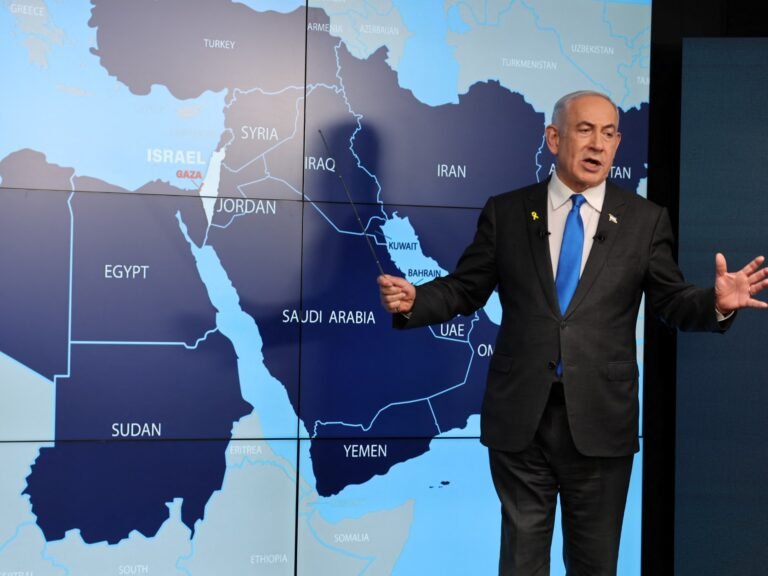
Netanyahu hasn’t let go of the topic, even with war raging against Iran. In his first news conference since the war started – a full 12 days into the conflict – he labelled the legal proceedings against him an “absurd circus”, and said that Herzog needed to do “the right thing” and wrap up the case, allowing him to devote his full attention to the war and regional diplomacy.

“He [Herzog] needs to give the State of Israel the time, and me the time, to do what is necessary – not only to defeat our enemies but also to create tremendous opportunities for peace, prosperity and alliances in our region,” Netanyahu told reporters on March 12. “Tremendous things lie ahead, and I am working on them right now. I would like to be completely unencumbered.”

But earlier in the same week, Israel’s Ministry of Justice said it would be inappropriate to issue a pardon while Netanyahu’s trial is ongoing.

The roadblocks to overhauling the judiciary

Efforts by Netanyahu and his right-wing allies to overhaul the judiciary, essentially removing it as a check on the government, have for years been roundly rejected by the prime minister’s opponents.

The matter dominated the first few months of Netanyahu’s election victory at the end of 2022, with tens of thousands of Israelis taking to the streets to denounce what they said was a “coup”. But that protest movement weakened after the October 7 attack, and the genocidal war on Gaza began in October 2023.

However, Netanyahu, even as the war against Iran rages, has not dropped the issue, and instead has been accused of using the war as cover to advance controversial legislation. In mid-March, Netanyahu’s coalition began attempting to push through legislation in parliament that would split and divide the attorney general’s powers, weakening the authority of the position, as well as giving the government greater control over the country’s media.

The proposed legislation would also establish a politically appointed panel to probe government failures in the run-up to the October 7 attack.

Responding to the government’s move, opposition leader Yair Lapid, who has gone to pains to support the war on Iran and was vocal in his backing of the genocide on Gaza, nevertheless accused the Parliament Speaker Amir Ohana, and “all the extremists” in the coalition, of not caring that Israel was at war.

“While the entire country is standing together, the coalition is promoting its extremist agenda and stealing money for political purposes,” he said in a statement.

Criticism of the treatment of Palestinians

Israeli violence against Palestinians has surged across the occupied West Bank, while in Gaza Israeli has imposed further restrictions on those still trapped in the enclave since the war with Iran began.

On March 11, both the European Union and the United Kingdom demanded that the Israeli government take action to halt the violence in the occupied West Bank which, at that time, had killed six Palestinians since Israel attacked Iran.

But violence against West Bank Palestinians – including by Israeli soldiers – has continued, and the death toll now stands at 11 since the war began. More than 1,000 Palestinians have been killed in the West Bank since October 7, 2023.

Among those killed there since the war against Iran began were members of the Bani Odeh family – a mother and father, Waad and Ali, and two of their children, five-year-old Mohammad and seven-year-old Othman. They were shot and killed by Israeli soldiers while they travelled in the village of Tammun on March 15, in a case that has attracted international condemnation, but few repercussions.

In Gaza, already decimated after two years of near-total war, the situation remains desperate. On Wednesday, the United Nations again urged Israel to relax wartime restrictions and allow aid into the enclave. UNRWA chief Philippe Lazzarini warned that disproportionate action on the part of Israeli troops, carried out with absolute impunity, was being normalised. Despite that, with attention focused on Iran, there is little pressure for Israel to fulfil the commitments it made as part of the October ceasefire agreement to allow large amounts of humanitarian aid to enter Gaza.

Netanyahu’s election fears

Dogged by scandal and widely blamed by much of the Israeli public for his and his government’s failings before the October 7 attack, Netanyahu was at risk of losing elections slated for later this year, and the consequences that would potentially have for his legal troubles.

According to a poll carried out by the Hebrew-language newspaper Maariv shortly before the Iran war began, Netanyahu was tied in a virtual dead heat with former Prime Minister Naftali Bennett.

Netanyahu still has a lot of work ahead of him. However, according to a more recent poll by the same title, confidence in Netanyahu’s ability to oversee the war had increased from an already overwhelming 60 percent at the start of the war to 62 percent.

Moreover, with widespread public support for a war that many in Israel credit Netanyahu for convincing the US to join, both government ministers and analysts are even suggesting that Netanyahu may declare early elections during the middle of the year, in the hope that a boost from being seen as a strong wartime leader will push him over the edge.


Source link
Biden slump to Trump bump: Economic freedom fuels America’s rapid rebound

0


NEWYou can now listen to Fox News articles!

Around the world, nations stand at a crossroads. Whether they choose the path of economic freedom — as President Donald Trump is doing in the United States — or socialism will determine not only their material prosperity, but the security and flourishing of their people.

That’s the core finding of the Heritage Foundation’s just-released “2026 Index of Economic Freedom.” Pro-growth policies are an investment in the people who make nations strong, resilient and prosperous.

That is certainly the approach President Trump took in 2025. Setting the stage for America’s comeback and paving the way for greater economic dynamism, his policy choices arrested the precipitous decline of America’s economic freedom. America’s Index score for President Joe Biden’s final year in office was its lowest ever.

One critical, unambiguous lesson of the Index over the past decades is that what really matters is the direction and orientation of policy — that is, the change at the margin.

TRUMP SPEECH SPARKS OPTIMISM AS ‘GANGBUSTER’ ECONOMY FORECASTED FOR 2026

Driving our post-Bidenomics surge were lower inflation, fiscal reforms and investment freedom, all of which spurred private-sector growth. Contrary to elite handwringers inside the Beltway, no one should be surprised. Lower taxes and fewer, fairer regulations have always boosted dynamism, incentivized entrepreneurship, and sharpened America’s competitive edge.

Everywhere people are free to compete, innovate, save and invest, nations thrive. Everywhere they’re not, they don’t.

This has been the consistent finding of the Index for the U.S. and the world for decades. Once again in the 2026 Index, nations with greater economic freedom, like Singapore, Switzerland and Ireland, enjoyed high incomes, innovation and institutional strength.

And yet, the world remains mired in narrow-minded, short-sighted Marxist superstitions about political elites’ ability to spend their countrymen’s hard-earned money better than they can spend it themselves. 

As the Index reports, socialism’s Washington Generals–esque losing streak continues to span ever-growing chasms of time, geography and culture. Everywhere people are free to compete, innovate, save and invest, nations thrive. Everywhere they’re not, they don’t.

TRUMP HAS SET THE STAGE FOR AN AMERICAN COMEBACK AFTER BIDEN’S DISMAL ECONOMY

The Index shows the affluence and ingenuity of free Taiwan versus the backwardness of China’s “repressed” economy. It documents why Israel — despite its permanent security risks — prospers while its resource-rich regional neighbors fall further behind.

Leftist shrieking about the cruelty of markets and the rapacity of capitalism masks the truth that the wealth of nations is mostly a matter of policy, not privilege.

Indeed, the most inspiring story of this year’s Index may be the economic renaissance underway in Central and South America that have embraced economic freedom. Chile has long outperformed its neighbors, both in freedom and prosperity. Now, conservative leaders in Paraguay, El Salvador and especially Argentina are following its lead, transforming nations long strangled by socialism and its attendant corruption.

SEC TURNER: HOMEOWNERSHIP IS MAKING A COMEBACK THANKS TO TRUMP, BUT THERE’S MORE TO COME

Argentina had the best performance in 2025 of any economy measured, climbing from 145th to 106th freest in the world. President Javier Milei famously rescued his nation’s foundering economy by cutting taxes, spending and regulations. In Argentina today, growth is up and inflation is down. Milei’s party’s victory in last fall’s midterm elections vindicated his agenda and the time-tested effectiveness of economic freedom.

Moreover, the Index understands what the Left does not — that economic freedom is true social justice:

“Economic freedom must always serve families, communities and the permanent things… [it] strengthens national security, nourishes civil society and improves the quality of life for all citizens.”

National economic growth is the most inclusive upward-mobility policy in the world. It enables the formation of families, not just businesses. Its surplus supports far more volunteerism than hedge funds. Its innovations make our environment cleaner, our streets safer and our world more cooperative.

CLICK HERE FOR MORE FOX NEWS OPINION

Anyone doubting how much we could use more of that right now needs only to turn on a television. Goodness knows we need as much of it as we can get in America. And all we need for that is for President Trump to stay on his present course. More regulatory reform, spending cuts, domestic energy development, law enforcement — including deportations — and fair trade will keep our economy dynamic, drive prices down and drive wages up.

The world needs America’s economy to grow so that we can continue to generate new investment, protect our interests and serve as a beacon to struggling people everywhere. As ruinous as socialism can be, America is a permanent reminder that there is always hope.

CLICK HERE TO DOWNLOAD THE FOX NEWS APP

Our nation is made up mostly of people whose ancestors came here with nothing — and built the great economic engine of the world. 

The lesson of the latest “Index of Economic Freedom” is that freedom still works and always will for nations with the wisdom and courage to trust their people with it.

CLICK HERE TO READ MORE FROM KEVIN ROBERTS


Source link

Baloch leaders raised their voice in UNHRC, accused Pakistan of repression and enforced disappearances.

0

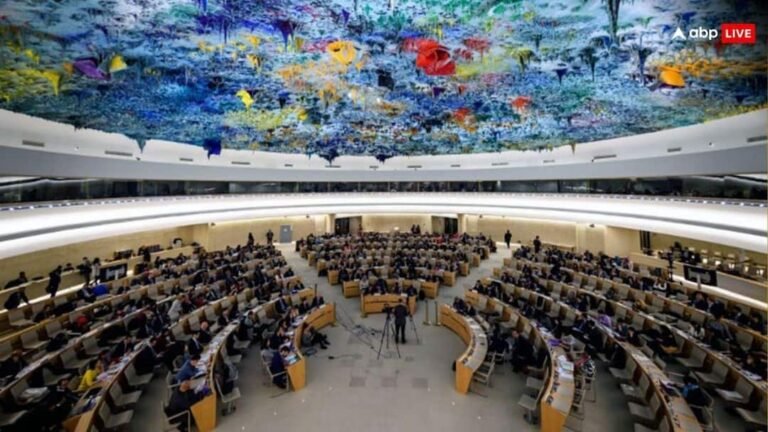
Baloch National Movement (BNM) organization has appealed to the international community to take immediate action against the widespread human rights violations taking place in Balochistan. The organization alleges that Pakistan The US government and its security apparatus are using the law to suppress dissent, target civilians and silence the voices of entire regions.

Addressing the 61st session of the United Nations Human Rights Council in Geneva, BNM representatives said that cases of enforced disappearances, fake encounters or killings without judicial process and restrictions on freedom of expression are continuously increasing in Balochistan.

According to him, all this is part of a planned effort to suppress the voice of the Baloch people. BNM member Mahra Baloch said that common people in Balochistan are being given collective punishment just because they live there and exist with their identity. An entire population in Balochistan is being punished just for its existence. In the name of anti-terrorism action against them, Pakistan has weaponised the law.

Those who disagree are being criminalized, people’s lives are being destroyed and the voice of an entire community is being suppressed. Mahra Baloch alleged that Pakistan’s anti-terrorism law is being misused to mark Baloch students, social activists and human rights defenders as banned or suspicious persons. According to them, this takes away their freedom. The right to travel is affected and they are forced to live in constant danger.

He claimed that in the year 2025 itself, BNM’s human rights department ‘PANK’ registered 1,355 cases of enforced disappearances and 225 extrajudicial killings in Balochistan. Mahara said that these are not just figures, but behind them are the people who were picked up from their homes, the students who were abducted from the campus and the bodies which were returned to scare others.

He also raised the issue of action being taken against the leadership of Baloch Yakjahti Committee (BVC). Mahrang Baloch, who was nominated for the Nobel Peace Prize, was arbitrarily arrested, denied medical treatment and targeted simply for raising her voice peacefully, Mahara said. He also said that internet shutdown, mass surveillance and mass punishment have become a common practice there, so that the world cannot know the real situation of Balochistan.

Mahra Baloch called on the international community to put pressure on Pakistan to immediately stop these human rights violations, release arbitrarily detained Baloch activists, and conduct an independent and transparent investigation into the enforced disappearances and extrajudicial killings.

Earlier in the same session on Wednesday (March 18, 2026), PANK’s media coordinator Jamal Baloch had also said that atrocities have intensified amid projects related to China-Pakistan Economic Corridor (CPEC). He said, “I have come to present before this Council the systematic human rights violations being carried out by Pakistan in Balochistan, which are being strengthened by China’s strategic and economic involvement.

Enforced disappearances are working like a state policy in Balochistan. Pakistan The army behaves like it is above the law and abducts students, teachers, journalists and political activists.

Jamal Baloch alleged that peaceful protest is being presented as terrorism. She said that women-led civil rights movements are being suppressed and the internet is being shut down in many districts of Balochistan, so that the military operations and the voices of the victims cannot reach the world. He also claimed that repression has increased along with CPEC-related projects, as the lives of civilians are being militarized to protect these projects and control resources.

Also read:-
Iraq scared of Iran amid war! Told America – will not give military base for attack

Access Denied

0

Access Denied You don’t have permission to access “http://hindi.news18.com/videos/ajab-gajab/dadi-swag-on-road-showed-off-her-skills-driving-created-stir-on-internet-viral-video-10291889.html” on this server.

Reference #18.49200117.1773998445.12988e4

https://errors.edgesuite.net/18.49200117.1773998445.12988e4

Access Denied

0

Access Denied You don’t have permission to access “http://hindi.gadgets360.com/mobiles/realme-p4-lite-5g-vs-poco-c85x-5g-vs-samsung-galaxy-f70e-5g-know-which-is-best-phone-under-15k-news-11242560” on this server.

Reference #18.50200117.1774027395.27e8dcb

https://errors.edgesuite.net/18.50200117.1774027395.27e8dcb

Foreign nations exploited US innovation for years — Trump is quietly hitting back

0


NEWYou can now listen to Fox News articles!

The Trump administration is determined to fight back against foreign governments that have been “screwing” American workers, companies, and investors for decades, as the president colorfully put it during his recent speech to global elites at the World Economic Forum.

So far, pundits have fixated on the administration’s most visible counteroffensive — its tariffs imposed over the last year. The president and his top advisors have consistently cast those tariffs as a tool to reshore supply chains and create more domestic sales and job opportunities for American companies and workers.

But behind the scenes, the administration is also quietly pressuring foreign countries to stop ignoring and weakening American firms’ intellectual property protections and depriving them of overseas sales opportunities.

TRUMP TRIMS SOME TARIFFS AFTER SUPREME COURT LOSS BUT KEEPS TRADE FIGHT ALIVE

America’s economy increasingly depends on companies pouring enormous amounts of time and capital into the risky research that’s required to bring new technologies to market. Strong IP protections incentivize and protect those investments — and all Americans benefit from the ensuing economic growth and technological progress. IP-intensive industries support nearly half of U.S. GDP and more than 62 million jobs.

And that’s why, in the long run, the administration’s lower-profile efforts to strengthen IP protections may actually prove even more beneficial for American companies, workers and consumers than its much-touted tariff policy.

Foreign governments’ abusive trade practices are especially damaging in the pharmaceutical industry. American firms dominate global drug development, yet foreign governments undervalue those treatments through direct price controls, mandatory rebates, deliberate regulatory delays, and other tactics designed to artificially suppress spending on medicines invented and made in America. This freeriding on American innovation shifts the cost burden for that innovation disproportionately onto American patients.

The European Union, for instance, recently adopted extensive changes under its “General Pharmaceutical Legislation,” which cuts the market exclusivity period for new drugs and forces companies to navigate burdensome regulatory hurdles to regain that exclusivity. On top of that, the EU is considering new rules that would make it easier for governments to compel companies to hand over their patented technologies.

TRUMP PROMISES CHEAPER DRUGS UNDER TRUMPRX, BUT ECONOMISTS SAY THE LONG-TERM COSTS MAY BE HIDDEN

Mexico, meanwhile, has failed to uphold key IP commitments it made during the USMCA trade deal inked during the first Trump administration. Our southern neighbor allows generic and biosimilar manufacturers to prematurely launch their products without a dependable system to verify existing patents. As a result, American biotech innovators often don’t receive the timely notice and opportunity they need to defend their patent rights before competitors launch products. The United States should therefore keep Mexico on the Priority Watch List of the Special 301 report and continue applying pressure to ensure Mexico fulfills its USMCA obligations ahead of the agreement’s upcoming review.

The administration has already started pushing back on countries not upholding their end of the bargain in other ways. It recently cut a deal with the United Kingdom that, in exchange for exempting British-made drugs from tariffs, requires the UK to limit the amount of revenue that it claws back from biotech companies and ultimately double spending on medicines as a share of GDP. The administration’s trade negotiators are pressuring other countries for similar concessions.

Likewise, the administration has taken steps to block companies from importing products — from drugs to computer chips — into the United States if they infringe American intellectual property.

Last summer, the Department of Justice and the Patent and Trademark Office (PTO) filed a statement of interest in an ongoing lawsuit between Samsung and Radian Memory Systems, a startup that has accused the Korean tech giant of stealing its patented storage technology. The DOJ and PTO warned that patent infringement can cause irreparable harm to American startups and suggested that courts ought to impose “injunctions” — legal orders that block companies like Samsung from selling stolen technologies — both to protect American innovation and to deter other “potential infringers.”

CLICK HERE FOR MORE FOX NEWS OPINION

In late February, the DOJ and PTO doubled down on this stance — by filing another statement of interest in Collision Communications v. Samsung to reaffirm the right to seek injunctive relief.

Even more could be done, of course. The White House could push its allies in Congress to pass the bipartisan RESTORE Patent Rights Act, which would make it easier for courts to grant injunctions when patents are infringed. That’d give American companies a significant advantage in their battle against foreign infringers.

CLICK HERE TO DOWNLOAD THE FOX NEWS APP

And the Office of the U.S. Trade Representative could consider placing the European Union on its Special 301 watchlist, which names and shames trading partners that systemically violate American firms’ IP rights. That’d ramp up the pressure on the EU to reconsider its current practices. Similarly, the White House can use the upcoming review of the USMCA trade deal to pressure Mexico to uphold its previous commitments.

The administration’s tariffs might dominate the news cycle. But its quiet, whole-of-government effort to strengthen and defend American firms’ intellectual property rights from foreign abusers may prove just as important in the effort to reshape the global trading system — and make it work better for American innovators, workers, and investors.

Andrei Iancu served as the undersecretary of Commerce for intellectual property and director of the U.S. Patent and Trademark Office from 2018 to 2021. He is co-founder and co-chairman of the Council for Innovation Promotion.


Source link

Asset managers dump government bonds at record pace on oil shock

0

Mutual funds have sold government bonds at a record pace in March so far, as the Iran war drove up oil prices, heightening inflation risks, pushing the rupee to record lows and prompting a broad selloff across the debt market.

This has led ⁠some asset managers to shift to short-duration corporate debt where they see greater value.

Mutual funds have net sold government bonds worth ₹35,600 crore so far this month, a record for any month, clearing house data showed.

Brent crude’s surge to near $120 per barrel has intensified inflation concerns and pushed the rupee to a record low beyond 93 per dollar, prompting investors to demand higher yields on both government and corporate bonds.

Corporate bonds have come under greater pressure than sovereign bonds, in line with broader risk-off sentiment. LSEG AAA-rated corporate bond yield with 2-5 year maturity has jumped 20-25 basis points, while its government bond counterpart is up less than 10 bps.

As corporate-government bond spreads widen, some investors see value in the former.

Corporate bonds have become “more attractive from a risk-reward perspective”, said Basant Bafna, head of fixed income at Mirae Asset Investment Managers (India).

Mutual funds’ selling of government ⁠bonds reflect heightened caution due to the Iran war, alongside improving relative value in corporate bonds, Bafna said.

Fund managers are adjusting strategies to take advantage of current market conditions.

“The strategy is largely to shift towards segments offering better carry and relative value,” said Anurag Mittal, senior executive vice president and head of fixed income at UTI AMC.

Moderate-duration funds were favoring 1–3 year accrual, while duration active strategies are selectively investing in longer-end state debt and money market securities, Mittal added.

Mutual fund managers said wider corporate bond spreads were creating an opportunity to rebalance portfolios before the financial year-end.

Rajeev Radhakrishnan, CIO-fixed income at SBI ⁠Mutual Fund, the nation’s largest fund manager in terms of assets under management, ⁠said some investors may opt to switch to other asset categories in hybrid schemes.

“Apart from tactical positioning to potentially benefit from market dislocations and supply pressures (on government bonds) in the current stage of the cycle, moderate duration and credit risks strategies are preferred.”

Published on March 20, 2026

Access Denied

0

Access Denied You don’t have permission to access “http://hindi.news18.com/cricket/ipl-2026-virat-kohli-ask-royal-challengers-bengluru-to-provide-a-chartered-plane-to-fly-london-when-their-is-gap-of-more-then-3-day-between-match-10291338.html” on this server.

Reference #18.49200117.1773998087.128c588

https://errors.edgesuite.net/18.49200117.1773998087.128c588

Thune says talking filibuster has never passed a bill in Senate history

0

NEWYou can now listen to Fox News articles!

FIRST ON FOX: Senate Republicans launched a test of Senate Democrats’ resolve against voter ID legislation, and while it may not look like what many wanted, Senate Majority Leader John Thune, R-S.D., argued it was the only path forward.

Thune has been pressured by President Donald Trump, a cohort in the Senate GOP, and a fervent online network of conservatives demanding that he activate the talking filibuster to pass the Safeguarding American Voter Eligibility (SAVE) America Act.

But it’s a floor tactic that Thune argued has never proven successful in passing legislation.

REPUBLICANS SIGNAL NO RETREAT ON SAVE ACT AS MARATHON SENATE DEBATE KICKS OFF

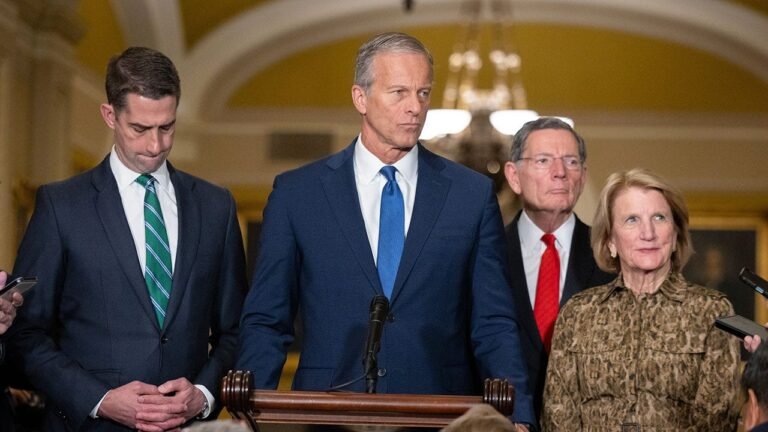
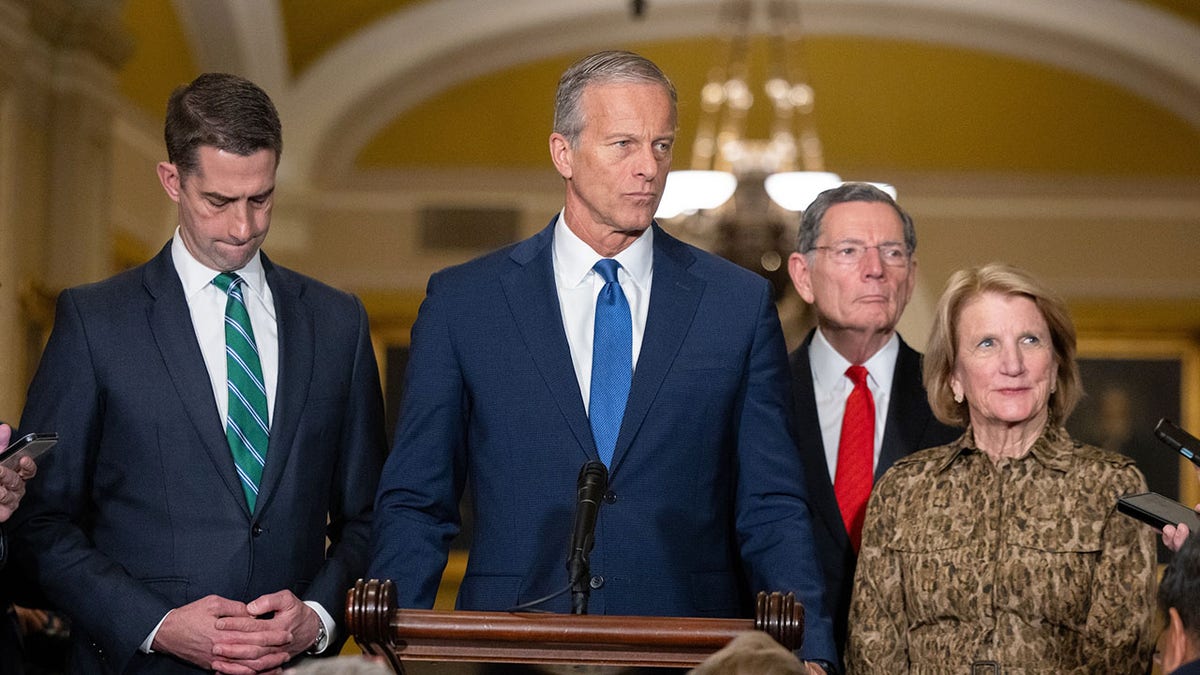
Senate Majority Leader John Thune, R-S.D.

Senate Majority Leader John Thune, R-S.D., pushed back against the external pressure for him and Republicans to launch the talking filibuster, and told Fox News Digital “Nobody really knows how this ends, and the people who are out there saying they do, don’t.”  (Nathan Posner/Anadolu via Getty Images)

“Nobody really knows how this ends, and the people who are out there saying they do, don’t,” Thune told Fox News Digital in an interview. “Because it’s never been done, or at least hasn’t been done in modern history.”

Proponents of the talking filibuster view it as a method to blow through the Senate’s 60-vote filibuster threshold and ensure that the SAVE America Act is passed. But it comes at the steep price of the upper chamber’s most valuable currency — floor time — which, during an ongoing shutdown, is not something lawmakers would want to give up.

Thune added that Senate Democrats have also considered the move in the past under former Senate Majority Leader Harry Reid, D-Nev., and Senate Minority Leader Chuck Schumer, D-N.Y., and noted that they “opted against it in both cases because I think they felt like the price that we would make them pay wasn’t worth whatever it was they were trying to get done.”

GOP TRIGGERS MARATHON SENATE FIGHT TO EXPOSE DEMS’ OPPOSITION TO TRUMP-BACKED VOTER ID BILL

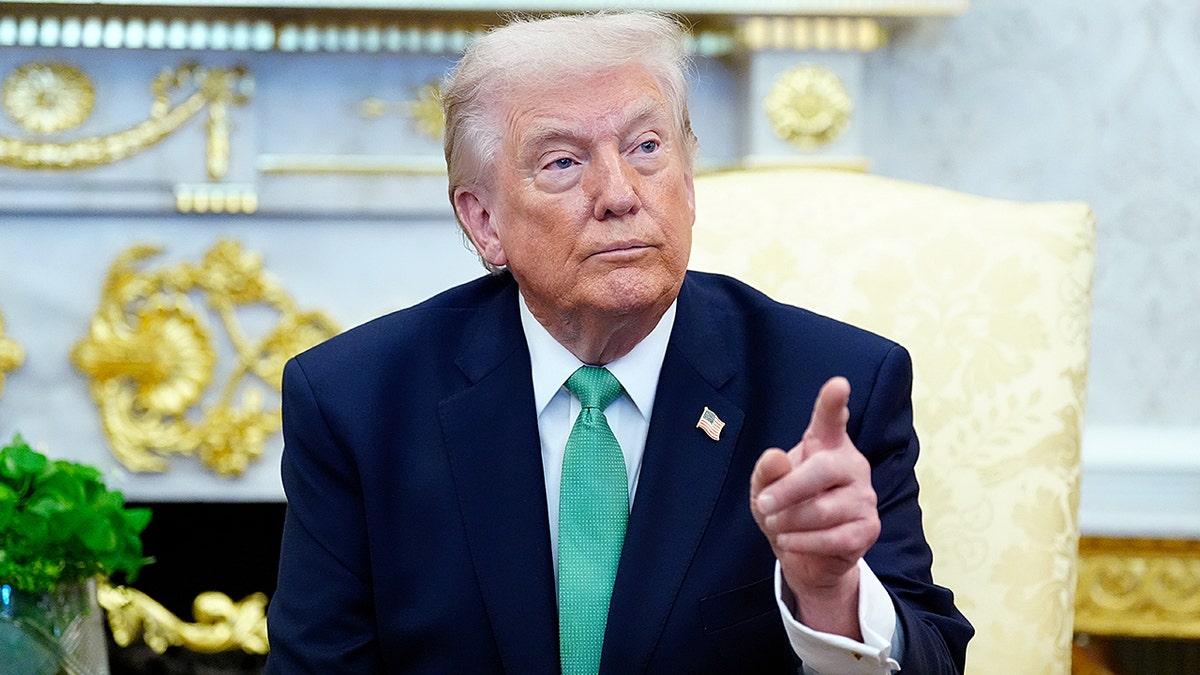
President Trump points to a reporter in the Oval Office

President Donald Trump takes questions from reporters during a meeting with Irish Prime Minister Micheál Martin in the Oval Office of the White House, on St. Patrick’s Day, Tuesday, March 17, 2026, in Washington.  (AP Photo/Alex Brandon)

“If I saw a pathway, even if it was a small-percentage pathway of getting an outcome, I’d be more inclined to do it,” Thune said. “But we looked at it, ran all the contingencies, gamed it out, mapped it out, what it would look like on the floor, did the research, studied the history, and couldn’t find a single example in modern Senate history where a talking filibuster actually led to a piece of legislation passing.”

Instead, Thune and Senate Republicans are doing a version of the talking filibuster that does allow for unlimited debate but prevents an unlimited number of amendments from Senate Democrats that would drastically alter the bill and that Republicans know they don’t have the votes to kill.

It’s not a move he made on his own, either. The nature of Thune’s leadership style, which helped secure him the top spot in the Senate GOP, is to avoid unilateral decision-making and instead allow Republicans to come to an agreement on a plan.

SENATE GOP EYES BLAME GAME AS TRUMP-BACKED SAVE ACT HEADS FOR DEFEAT

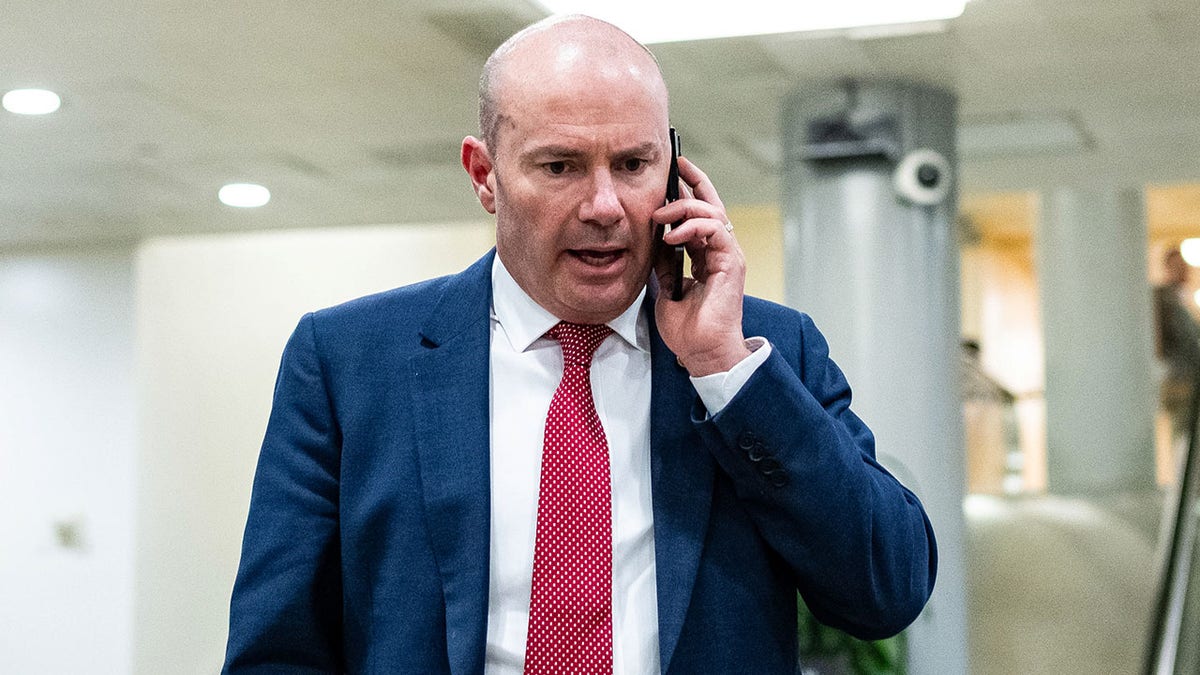
Sen. Mike Lee, R-Utah

Sen. Mike Lee, R-Utah, was determined to make sure the Senate continued to debate his voter ID bill until it “damn well passes.”  (Graeme Sloan/Bloomberg via Getty Images)

Still, there are critics who are unhappy with the plan Republicans landed on given that it doesn’t lower the threshold to pass the bill. But the pressure Thune felt from all sides wasn’t enough to make him cave and pull the trigger on the talking filibuster.

“I think there’s a sort of a leadership guru who, one of his main points is, the first responsibility of a leader is to define reality, and so I try and figure out what’s achievable,” he said. “And there are a lot of folks out there who are over-promising and creating false expectations about what we can get done here.”

Republicans’ plan has seen the Senate engage in three straight days of debate on the SAVE America Act in a bid to force Senate Democrats to argue against the legislation. When that debate comes to an end is still in the air.

CLICK HERE TO DOWNLOAD THE FOX NEWS APP

Some, like Sen. Mike Lee, R-Utah, who is the lead sponsor of the bill, want the Senate to spend time on the bill for “as long as it takes” to wear down Senate Democrats.

“And if we’re not there yet, we need to continue debating it,” Lee said.


Source link

Access Denied

0

Access Denied You don’t have permission to access “http://hindi.news18.com/cricket/rashid-latif-blunt-take-on-shaheen-afridi-said-keep-aside-playing-aa-he-even-not-deserve-a-place-in-t20i-team-10291814.html” on this server.

Reference #18.4a200117.1774000047.177528

https://errors.edgesuite.net/18.4a200117.1774000047.177528