Reference #18.530dde17.1778741933.34dba44c
https://errors.edgesuite.net/18.530dde17.1778741933.34dba44c
Reference #18.530dde17.1778741933.34dba44c
https://errors.edgesuite.net/18.530dde17.1778741933.34dba44c

He further said that 16 candidates across the state have secured the first three positions, in which Deepika, a student of Adarsh Senior High School, Miran, Bhiwani, has secured the first position by scoring 499 marks. Four candidates have secured second place with 498 marks, these include student Ronak, BSM M.V., Bigova, Charkhi-Dadri, Khushi, NCVM High School, Puthi Samain, Hisar, Antu, Swami Vivekananda M.V., Khedi Jalab, Hisar and student Deepanshu, Bala Ji V.M.V., Bhungarka, Mahendragarh.
With 497 marks, 11 candidates have secured third position, including Kavyansh, student of R.V.M.V., Shahpur Turk, Sonipat, Diksha, student of Tagore V.M.V., Rawat Kheda Road, Mangali, Hisar, Sakshi, student of Shri Balveer Singh V.M.V., Madha, Hisar, Arju, student of Pink City High School, Bisla, Fatehabad. Manshi, student of Aryavart VVV, Devban, Kaithal, Ashu, student of Holi VVV, Siwani Mandi, Bhiwani, Manuraj, student of Modern Shiksha Sadan, Dehra, Panipat, Sakomal, student of Balveer Singh VV, Madha, Hisar, Geeta, student of RVVV, Sundana, Rohtak, Arya High School, Mandholi Kalan, Bhiwani Student Mehak and student Vansh Dev of Maharishi Dayanand Public School, Narwana, Jind are included.
A rise in borrowing costs and warnings to avoid a “Liz Truss moment”. As Keir Starmer faces a potential leadership challenge, the spectre of the bond market looms large.
Amid febrile conditions in Westminster, the prospect of Britain switching prime ministers for a sixth time in seven years has fuelled a sharp sell-off in the market for UK government debt.
As Starmer’s grip on power appeared to be slipping away, the yield – in effect the interest rate – on 30-year government bonds, or gilts, briefly reached 5.8% on Tuesday, the highest level since 1998, before slipping back after a challenge failed to immediately materialise.
However, selling pressure has been maintained on the UK government’s bonds relative to its G7 peers, with investors fearing a return to political instability in Britain and a leftwing shift by Labour involving higher levels of borrowing.
“The markets hate uncertainty, but they hate a political vacuum even more,” said Nigel Green, the chief executive of deVere Group. “A cabinet resignation followed by a leadership fight would signal that the government is losing control of itself while investors are already questioning the country’s fiscal direction.
“Markets can cope with ideology of any stripe if it is disciplined and coherent. They recoil from programmes that imply materially higher borrowing without a credible growth engine.”
Within Labour ranks many MPs are sanguine, reflecting frustration at a tight approach to tax and spending under Starmer, despite the party’s plunging poll ratings and dire showing in elections across Britain last week.
The prime minister’s allies have sought to argue that avoiding bond market provocation should be reason enough to save him. Others appear willing to put the City’s warnings to the test.
The Merseyside MP Paula Barker, an ally of Andy Burnham, has suggested financial markets would “have to fall into line” should the Greater Manchester mayor find a route to Downing Street.
Meanwhile, the leftwing grandee Diane Abbott suggested that MPs “might as well go home” if bond market considerations trumped other priorities.
Investors, however, warn that a contest ignoring the fragile state of the public finances and realpolitik of the markets could prove fatal for any candidate to be prime minister – highlighting Liz Truss’s short-lived premiership.
“If the political leadership [were to] change or if the current leaders [were to] opt to call for substantially more fiscal loosening, the risk is high that we would see another Liz Truss moment,” said Reto Cueni, chief economist at Syz Group.
Ahead of any contest, the backdrop is precarious. Government borrowing costs worldwide have risen amid the mounting economic damage from the Iran war. But investors have also singled Britain out, amid the latest political instability following Truss’s market meltdown and the psychodrama of Brexit.
Britain has elevated levels of borrowing and debt. After a succession of economic shocks, years of lacklustre growth, and rising pressure to repair battered public services and to support an ageing population, the UK’s national debt stands at almost 100% of GDP – the highest level since the 1960s.
Meanwhile, with the rise in interest rates worldwide amid the inflation pressures unleashed after the Covid pandemic, the Russian invasion of Ukraine, and now the Iran war, the cost of servicing the country’s debts has also risen.
If someone were to replace Starmer, they would face the same challenges, analysts at Goldman Sachs wrote in a note to clients. “Policy choices will remain constrained by the challenging backdrop of rising spending pressures and an already elevated tax burden irrespective of any changes in leadership.”
Still, investors say further borrowing – on top of planned bond sales worth £252bn to fund the government’s activities this year – would risk driving gilt yields higher. This would add to Britain’s already £100bn-a-year debt interest bill – a sum representing about £1 out of every £10 spent by the Treasury.
Mark Dowding, the chief investment officer at the hedge fund RBC BlueBay, said: “It starts to become a very material element of your overall tax revenues. It becomes a bigger element of government spending; and as that moves higher it starts looking unsustainable.
“As it starts looking unsustainable, you enter a vicious spiral where the fear of it going higher drives borrowing costs even higher. There is almost a tipping point you fear might exist.”
Ahead of any leadership race, most City investors, however, expect those vying to replace Starmer will attempt to strike a balance between shifting direction and keeping the bond market onside.
This week, Louise Haigh, the powerful co-chair of the soft-left Tribune group of Labour MPs, set out a plan for the economy that would involve allowing higher levels of borrowing by overhauling the chancellor Rachel Reeves’s current fiscal rules.
However, the former cabinet minister – viewed as a key leadership race powerbroker – warned any changes would have to wait until after Labour has met Reeves’s main target of balancing day-to-day spending with tax receipts.
“This is not to say we should disregard the bond markets or pursue reckless borrowing – far from it,” Haigh wrote in an essay on how Labour should overhaul its plan for the economy.
Some analysts expect Labour to seek a balance between a “fresh start” and the avoidance of a Truss-style provocation – potentially involving the retention of Reeves as chancellor to benefit from her reputation with City investors.
Jordan Rochester, an analyst at the Japanese bank Mizuho, said: “I suspect the new leadership will attempt to calm down markets with a few words. But the party is shifting to the left and the market will price that in first.”
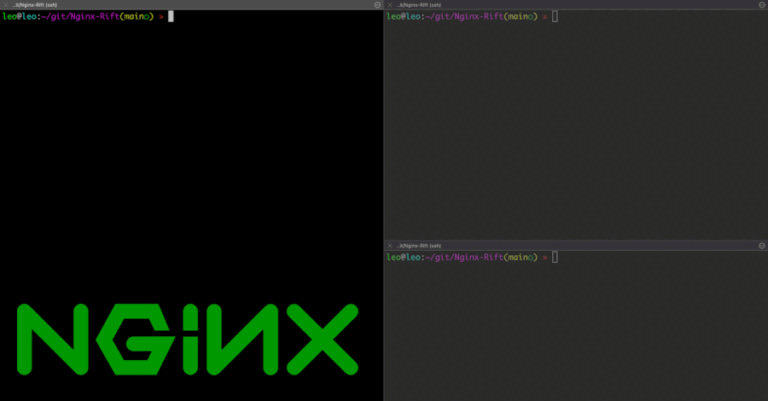

Cybersecurity researchers have disclosed multiple security vulnerabilities impacting NGINX Plus and NGINX Open, including a critical flaw that remained undetected for 18 years.
The vulnerability, discovered by depthfirst, is a heap buffer overflow issue impacting ngx_http_rewrite_module (CVE-2026-42945, CVSS v4 score: 9.2) that could allow an attacker to achieve remote code execution or cause a denial-of-service (DoS) with crafted requests. It has been codenamed NGINX Rift.
“NGINX Plus and NGINX Open Source have a vulnerability in the ngx_http_rewrite_module module,” F5 said in an advisory released Wednesday. “This vulnerability exists when the rewrite directive is followed by a rewrite, if, or set directive and an unnamed Perl-Compatible Regular Expression (PCRE) capture (for example, $1, $2) with a replacement string that includes a question mark (?).”
“An unauthenticated attacker, along with conditions beyond its control, can exploit this vulnerability by sending crafted HTTP requests. This may cause a heap buffer overflow in the NGINX worker process, leading to a restart. Additionally, for systems with Address Space Layout Randomization (ASLR ) disabled, code execution is possible.”
The issue has been addressed in the following versions after responsible disclosure on April 21, 2026 –
In its own advisory, depthfirst said the vulnerability could allow a remote, unauthenticated attacker to corrupt the heap of an NGINX worker process by sending a crafted URI. What makes the vulnerability severe is that it’s reachable without authentication, can be reliably used to trigger the heap overflow, and can lead to remote code execution in the NGINX worker process.
“An attacker who can reach a vulnerable NGINX server over HTTP can send a single request that overflows the heap in the worker process and achieves remote code execution,” depthfirst said. “There is no authentication step, no prior access requirement, and no need for an existing session.”
“The bytes written past the allocation are derived from the attacker’s URI, so the corruption is shaped by the attacker rather than random. Repeated requests can also be used to keep workers in a crash loop and degrade availability for every site served by the instance.”
Also patched in NGINX Plus and NGINX Open Source are three other flaws –
Users are advised to apply the latest versions for optimal protection. If immediate patching is not an option for CVE-2026-42945, users are advised to change the rewrite configuration by replacing unnamed captures with named captures in every affected rewrite directive.
Nigel Farage has been criticised for giving his full support to a Christian church leader who preached that homosexuality was an “abomination” and would lead to eternity in hell.
The Reform UK leader recorded a video with Stephen Clayden after Colchester council applied for a banning order to limit his street preaching.
In the clip posted on his YouTube channel, Farage assured Clayden that he was “fully on your side” in the dispute and offered to enlist the help of contacts at the Free Speech Union campaign group.
Clayden told Farage the council was objecting to the volume and some of the content of his preaching, including his references to hell and judgment. However, he has since acknowledged that the council raised concerns not just about the volume of his preaching but also his church’s warnings against homosexuality.
Footage of Clayden preaching last month, available on social media, shows him saying: “All adulterers, all fornicators, all sodomites, all drunkards, all thieves, all blasphemers, all liars, all mockers. Their home shall be in the lake of fire … we are here telling you what the word of God says.”
In the same session, he told passersby: “They hear about words in the Bible like judgment and sin and repentance. They don’t like hearing the holy words of God … they are offended by what the Bible says when the Bible says homosexuality is an abomination.”
His Bread of Life church also preached at Pride Week events in Essex last year and Clayden told a meeting the Bible described homosexuality as “vile, disgusting and wicked”, “a sin so wicked and detestable it was worthy of death”, and the “filthy conduct of the wicked”.
A Labour party spokesperson criticised Farage for promoting Clayden’s cause, saying: “Time and time again, Nigel Farage finds himself in the company of extreme voices. Farage should have called out these grim homophobic remarks and condemned them. Instead, he is throwing his support behind the individual peddling them, so that he has a bigger platform to spew them some more.
“This is just the latest in a string of examples that show Farage and Reform stand for division and are not on the side of working people.”
Farage did not respond to a request for comment and the video – Farage talks Christianity in Clacton – is still available on his YouTube channel. It shows him discussing the banning order with Clayden and whether Christianity was having a revival.
Asked about his preaching on homosexuality, Clayden said all his quotes came from the Bible and he had mentioned “several types of sin which are all portrayed with the utmost seriousness in scripture”.
Of Farage’s support, he said: “As our local MP here in Clacton-on-Sea, Farage is giving his support to a local church which has been issued with a notice restricting their freedom of speech.
“While Nigel has expressed his belief in Christian values and the biblical roots of the United Kingdom, his personal religious beliefs are irrelevant to his support for us. He should not be coming under criticism for supporting freedom of speech and lawful religious expression for a church within his constituency.”
A spokesperson for Christian Concern, a religious freedom campaign group that is supporting Clayden and Bread of Life, said: “Bread of Life church has been out on the streets of Colchester preaching the Christian gospel for more than six years.
“Only recently have council wardens begun to object, with the community protection notice raising complaints about their amplification – which is not prohibited – and that they mention hell and judgment. It was at the preliminary hearing last week that the council added concerns about what the church says about homosexuality.
“The church mentions hell, directly quoting the Bible, because they do not want people to go there. They mention many different sins, including adultery, drunkenness, lying and stealing – not singling out any single group. They freely offer the gospel, seeking to persuade people to believe in Jesus and find forgiveness.
“These are longheld beliefs of Christians, who should be free to proclaim the Christian message of hope and forgiveness from sin on the streets without interference.”
The spokesperson said the church was grateful for support from people such as Farage and suggested the national interest in the case would help to show the council it was “wrong to try to criminalise Christian ministry”.
The hardest part of the parachute jump, according to Capt George Lacey, is falling backwards through the air. It is Saturday and Lacey, and his squad of six plus two medics, have just leapt out of an RAF transport, 2,500 metres over the south Atlantic.
“The parachute can only go forward so quickly,” he says, meaning that it has to be pulled at precisely the right moment. “So you have to turn into the wind and basically fly backwards, which is a very weird sensation, as you can imagine.”
Below, with only its volcanic peak visible above the prevailing cloud cover, was Tristan da Cunha, the most remote of the British overseas territories, population 221, normally accessible only by boat, six days’ sail from Cape Town or the Falklands.
A resident suspected of having coming down with hantavirus after disembarking from the ill-fated MV Hondius cruise ship last month needed urgent treatment, including oxygen. It had been deemed there was only one way to get supplies over quickly enough.
Lacey and the other five, Pathfinders from the British army’s 16 Air Assault Brigade, learned they would be needed “in the afternoon of Thursday last week”, flying first to Brize Norton, then to Ascension Island, 2,000 miles to the north of Tristan da Cunha, to get ready for the drop.

The six are experienced parachutists – Lacey says he has done nearly 200 jumps – but with them were a doctor and an intensive care nurse, who would be strapped to two of the jumpers, an extra but necessary complication. The nurse had done a civilian tandem jump before, Lacey says, but for the doctor apparently it was the first time.
Together they took a four-and-a-half-hour flight from Ascension in an A400M transport, and when the plane refuelled midway, Lacey knew for sure the weather was good enough and the mission was on.
Calculations to allow for the wind meant Lacey and the others were lined up for the drop “about 5km off the north-east side of the island”. Once the back of the aircraft opened to the vast brightness below and the order was given, there was little time – a few dozen heartbeats – for the team to think.
“You’re very focused leaving the aircraft,” Lacey says, arguing that his training meant he was not afraid. “You’re just thinking of exactly what you need to do next, because there’s almost an overload of information and sensation.”
A near three-minute film taken from the helmet cam of another of the jumpers shows the moment of no return and what came next. Eight thousand feet is not the highest from which the parachutists can jump but the descent was hardly trivial, taking “somewhere between five and 10 minutes”, in Lacey’s memory.
Two thousand feet of the drop was through clouds – “you’ve basically just got to follow each other for that period of time” – until finally the ground became visible. “When you came out of the bottom of the clouds, you saw the island. You knew we were going to make the land, even if it wasn’t necessarily where we wanted to be. We knew we’re definitely going to be safe,” the soldier says, adding for emphasis: “That’s always nice to know.”
Once on the ground, the medical team went off to deal with the patient while the soldiers coordinated drops of equipment from the A400, including oxygen canisters and protective gear, so medical staff could deal with “worst-case, working with the patient continuously for a couple of weeks”.
According to the last official update from the government of St Helena, of which Tristan da Cunha forms part, the suspected case “remains in a stable condition and continues to be monitored closely”, while Lacey and his fellow paratroopers from Colchester have been helping out on the island, talking to schoolchildren and the media.
Despite the film and television mythology, airdrops in combat are very rare – the last mass drop by British forces was at Suez in 1956 – though there was a Russian drop into Hostomel airport, north-west of Kyiv, on the first day of the invasion of Ukraine, and there is speculation of a US airdrop into Iran if fighting restarts.
“Parachuting is something that, as has been proven, doesn’t get used that often,” Lacey reflects. But the skill is trained and developed by the army just in case, for military and humanitarian emergencies around the world. “Sometimes it’s the only way to get somewhere,” he concludes.
As for getting off Tristan da Cunha, that has to wait. Exit plans are in place and, while Lacey does not say, one possibility is that the emergency military team will be able to board HMS Medway, an offshore patrol vessel now on its way from the Falklands. Sadly, Lacey agrees, there is no way to parachute off the island.
Reference #18.6e560e17.1778740904.110192bb
https://errors.edgesuite.net/18.6e560e17.1778740904.110192bb

Bangladesh’s Jamaat-e-Islami and Bangladesh Khilafat Majlis have accused Muslims of atrocities in Assam and West Bengal. However, Tariq Sarkar has rejected all these allegations. Within a few days of BJP coming to power in West Bengal, political parties of Bangladesh are accusing Muslims of atrocities in India, especially in the border states like Bengal and Assam. However, the Tariq government of Bangladesh has rejected these claims outright and said that there is no evidence for such allegations.
According to a report in The Times of India (May 14), Dhaka has said that it has not received any official report of any kind of harassment or atrocities against Muslims in India. The Bangladesh government rejected the allegations made by the country’s largest Islamic political party, Jamaat-e-Islami (JEI) and its allies. These groups had claimed that after BJP’s victory in Assam and West Bengal, Muslims are facing persecution in India.
Dhaka officials said there was no evidence to corroborate the allegations. Bangladeshi officials have also said that they have not received any reports about such incidents through diplomatic or official channels.
What did the Home Minister of Bangladesh say?
Bangladesh Home Minister Salahuddin Ahmed directly raised questions on the basis of the claims. He said on Tuesday, “What evidence or data do you have that such tortures have started against Muslims? Many old incidents are being circulated on social media. Our diplomatic mission is there. Our Foreign Ministry is there. You can ask them. We have not received any report of any such incident of torture.”
What allegations did Jamaat-e-Islami make?
The minister’s comments came when some sections of the media sought a response from the government on Jamaat-e-Islami’s demand to summon the Indian ambassador from Bangladesh over alleged atrocities on Muslims in India. The opposition Jamaat-e-Islami and its allies alleged that Muslims across the border were facing continuous harassment. He also claimed that anti-Bangladesh forces will continue to spread incitement, communalism and propaganda.
Iran-US War: Big loss to America in Iran war? 39 aircraft and many air defense systems destroyed
What did Bangladesh Khilafat Majlis say?
Bangladesh Khilafat Majlis (BKM) also said similar things. BKM on Sunday accused Muslims of repression in Assam and West Bengal and demanded summoning of the Indian ambassador from Dhaka. Speaking to TOI, senior BKM leader Anwar Hossain Razi criticized the Bangladesh government’s inaction, saying, “We call upon the media to bring out the truth of what is happening in India as the government is maintaining silence. It is time for the media to play an effective role.”
read this also
5 Indians who had gone to visit Thailand, mysteriously fainted in a cafe, 1 dead, 3 serious
Reference #18.4d560e17.1778740583.19afa9aa
https://errors.edgesuite.net/18.4d560e17.1778740583.19afa9aa
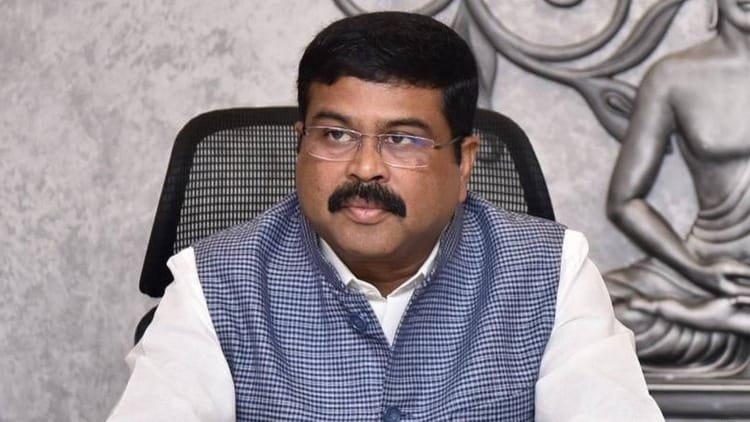
Preparations for re-conducting the NEET examination for admission in medical colleges have intensified. The government has come into action to conduct the examination in a completely clean and proper manner. In this connection, a very important and high level meeting was called in the country’s capital New Delhi. This important meeting took place at the residence of Union Education Minister Dharmendra Pradhan, in which all the senior officers of the Education Department participated.