Michigan Senate candidate El-Sayed set to host event with radical far-left streamer

0

NEWYou can now listen to Fox News articles!

A far-left online streamer who has made several controversial statements, including saying, “America deserved 9/11,” has been making several appearances with Democratic lawmakers in recent years, including a top Democratic Senate candidate in Michigan, who is set to team up with him next month.

Amid a heated Democratic primary, progressive Senate candidate Abdul El-Sayed is aligning himself with far-left Democrat figures, hosting an event with controversial streamer and political commentator Hasan Piker at Michigan State University on April 7, according to a press release.

“Get ready. We’re coming,” Piker said in a post to social media, highlighting that the pair would also be joined by Rep. Summer Lee, D-Pa., another progressive.

The event will also feature unnamed “special guests,” according to the release.

TLAIB-BACKED SENATE CANDIDATE IN THE HOT SEAT AFTER DELETING ‘DEFUND THE POLICE’ SOCIAL MEDIA POSTS
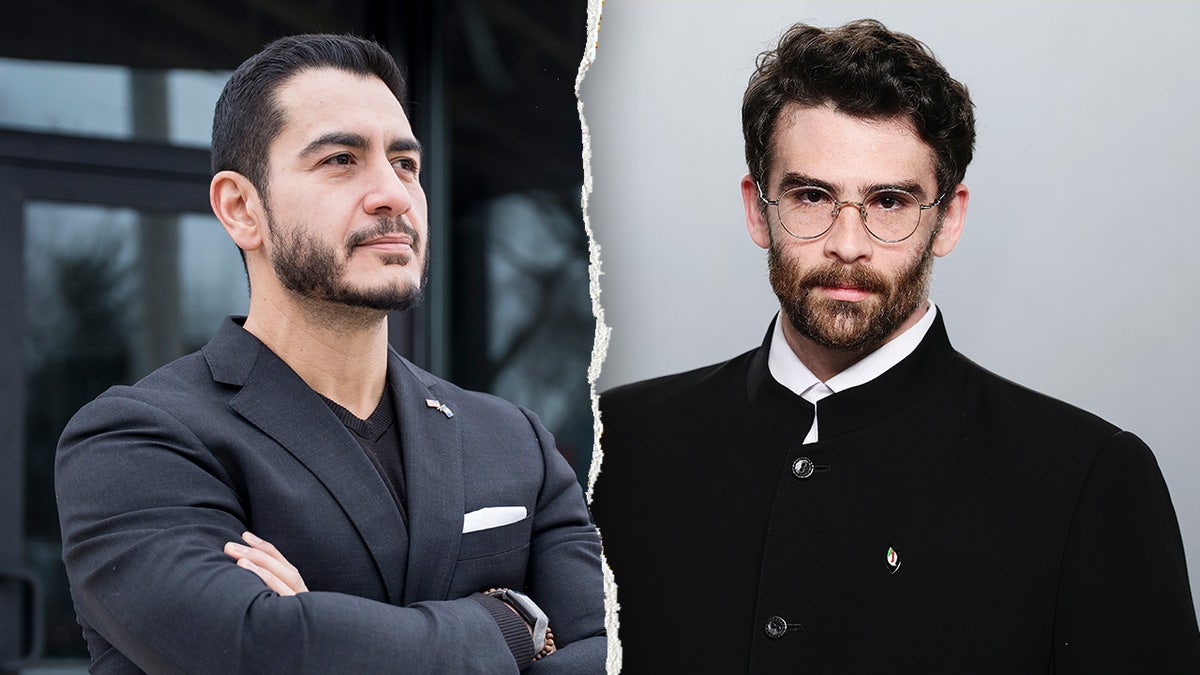
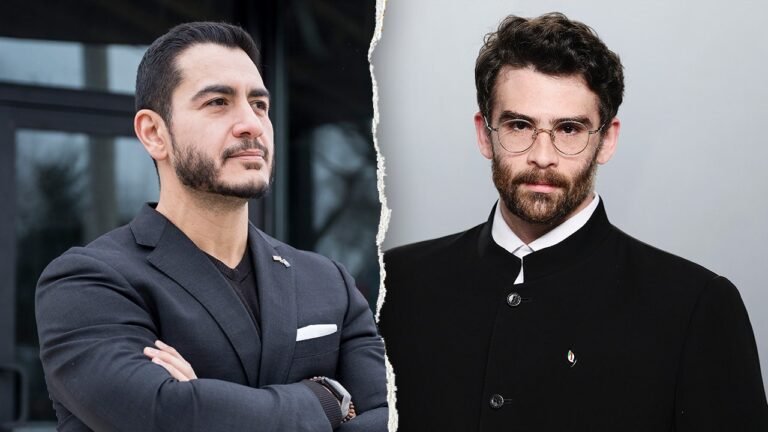
Abdul El Seyed, left, pictured alongside Hasan Piker, right.

Abdul El Sayed, left, pictured alongside Hasan Piker, right. ( Evan Cobb for The Washington Post via Getty Images; Dia Dipasupil/FilmMagic)

Like other progressive candidates, El-Sayed has made affordability — and the role of government — key pieces of his campaign. In addition to calling for lowering housing costs, he’s advocated for Medicare for all, opposes corporate tax carve-outs, and supports tuition-free access to higher education, according to his website. His policies have been championed by other progressives he’s appeared with, including Sen. Bernie Sanders, I-Vt., Alexandria Ocasio Cortez, D-N.Y., and Rashida Talib, D-Mich.

“You are part of a revolution in media today, which is talking to millions of people who are tuning out of legacy media, and thanks for what you are doing,” Sanders said about Piker last year.

Although El-Sayed has said he rejects political labels like “right” and “left,” his appearances with figures like Piker have crystallized his position among the deep-blue portions of the Democratic Party.

When asked why the campaign had organized the appearance with Piker, the El-Sayed campaign declined to comment.

Piker, a streamer who rose to popularity in 2018 for his political commentary and gaming channel, has drawn attention for a series of incendiary comments and his support for left-wing figures.
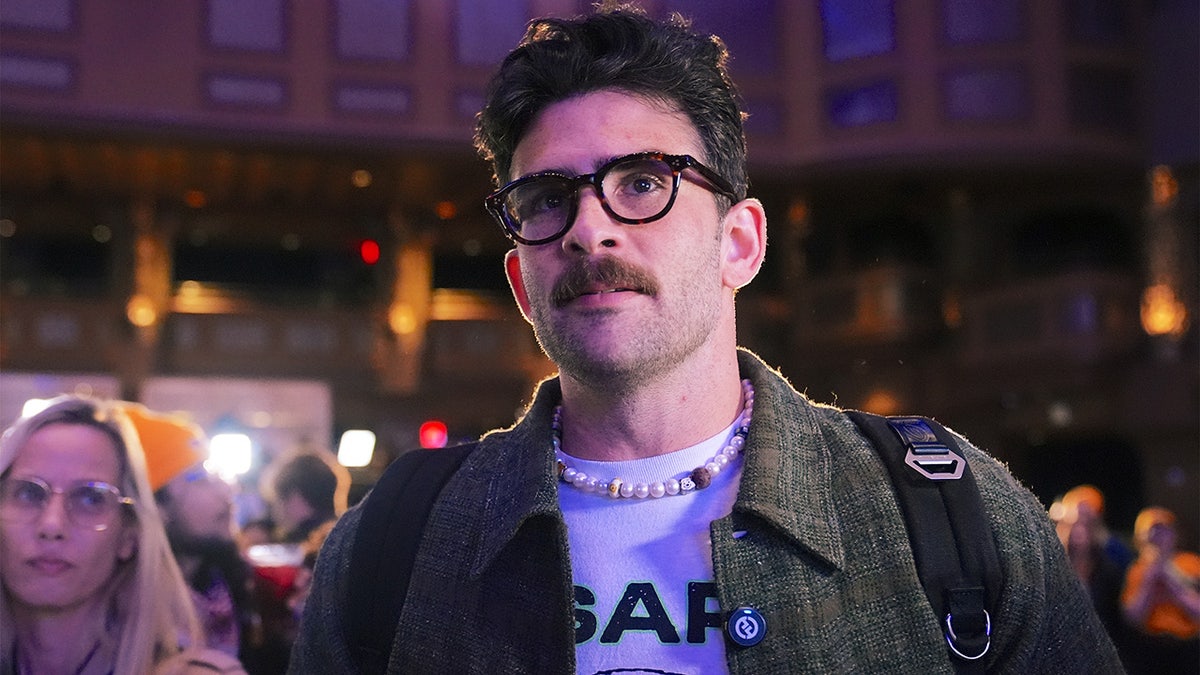
Hasan Piker

Zohran Mamdani, the mayor-elect of New York City, addressed his supporters after the historic mayoral election victory on Tuesday night, November 4, 2025, in New York City, United States. Famous online streamer Hasan Piker attends Mamdani’s election watch party. (Selcuk Acar/Anadolu via Getty Images)

In 2019, Piker famously said that “America deserved 9/11,” arguing later that the U.S. had “brought it on itself.” He would later walk it back and call it “inappropriate” after massive backlash online.

In the wake of the deadly Oct. 7, 2023, attack that incited Israel’s war with Gaza, Piker described Hamas, a terrorist organization, as the “lesser of two evils” in the conflict.

Once, when asked if he supported terrorism, Piker answered by saying, “No, I don’t. I don’t support the state of Israel, and I don’t support the state of the United States of America.”

He also faced backlash for praising the “brave” “mujahideen” who injured Rep. Dan Crenshaw, R-Texas, who lost an eye in Afghanistan.

“What the f— is wrong with this dude? Didn’t he go to war and like literally lose his eye because some mujahideena brave f—ing soldierfu–ed his eye hole with their di–?” Piker said.

Despite his many controversies, Piker has found a home among far-left figures in the Democratic Party, overlapping with some of El-Sayed’s fellow progressives. Piker has appeared with Ocasio-Cortez in a video urging voters to participate in elections in 2020, interviewed Sanders as a part of the senator’s “Fight Oligarchy Tour” and has appeared in streaming videos with Rep. Ro Khanna, D-Calif., on a number of occasions.

SQUAD STYLE PROGRESSIVES HIT WITH ‘COLD SHOWER’ AS CANDIDATES FALL TO MODERATES IN BLUE STATE CIVIL WAR

US Representative Alexandria Ocasio-Cortez (R) chats with supporters of New York City Mayoral candidate Zohran Mamdani

Rep. Alexandria Ocasio-Cortez, D-N.Y., chats with supporters of New York City Mayoral candidate Zohran Mamdani during an election night event at the Brooklyn Paramount Theater in Brooklyn, New York on Nov. 4, 2025. (Angela Weiss/AFP via Getty Images)

CLICK HERE TO DOWNLOAD THE FOX NEWS APP

Most recently, Piker advocated fiercely for the election of New York Mayor Zohran Mamdani, the self-proclaimed socialist who took Democratic politics by storm in 2025. Like El-Sayed, the two appeared together in New York.

According to the press release for the upcoming event at Michigan state, the pair’s appearance hopes to “re-energize voters, young and old, ahead of the 2026 midterms in Michigan university towns.”

“The rallies will highlight the campaign’s commitment to economic justice, student debt relief, workers rights and more,” the press release reads.

Michigan will hold its Senate primaries on Aug. 4, according to its secretary of state website.

Fox News Digital reached out Piker and Summer Lee.


Source link
Our national debt hit a huge milestone and paying it could be more painful than you think

0


NEWYou can now listen to Fox News articles!

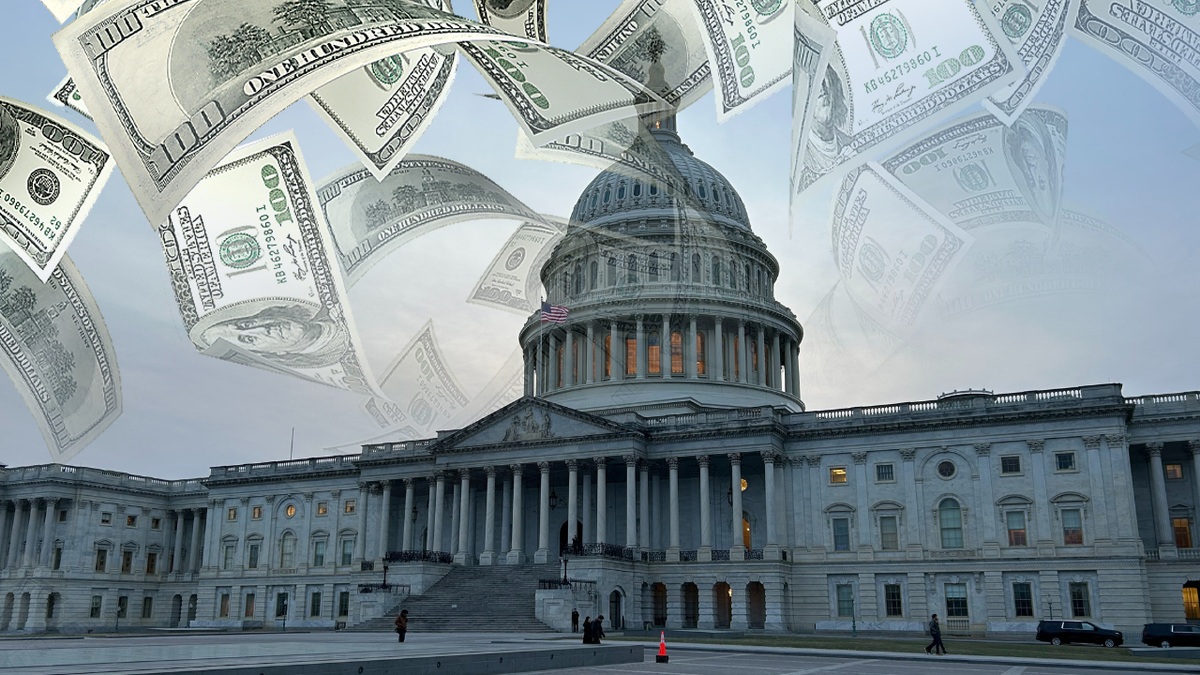
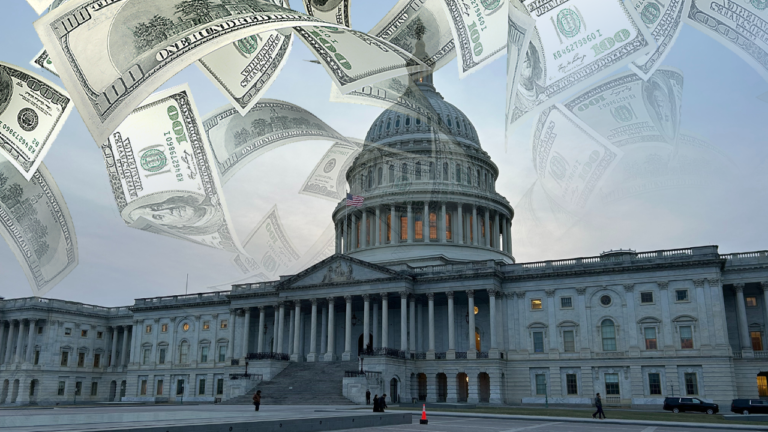
The United States just crossed a staggering milestone: $39 trillion in national debt.

Let that sink in. That’s not a typo. That’s not a projection. That’s the real number. And here’s the headline. My prediction is that we hit $50 trillion before the year 2030.

And yet, if you turn on the television or listen to politicians on either side of the aisle, you’d think we’re debating policy preferences. Tax this. Cut that. Stimulate here. Invest there.

FETTERMAN JOINS FISCAL HAWKS TO SOUND ALARM AS NATIONAL DEBT NEARS STAGGERING $37T

We’re not debating policy anymore.

We’re debating math. And math doesn’t care about your politics.  America has a serious promises problem and is writing checks that it won’t be able to cash.

The $1 Trillion Line Item Nobody Wants to Talk About

There is one number that should terrify every American household.

Over $1 trillion a year in interest payments on the national debt.

  • Not defense.
  • Not Social Security.
  • Not Medicare.

Interest. 

We are now at the point where America is effectively putting its future on a credit card and barely covering the minimum payment.  We are risking investing for the future to pay for the promises of the past.

MAGA COUNTRY VOTERS SOUND ALARM OVER ‘RIDICULOUS’ NATIONAL DEBT AMID DEBATE OVER TRUMP-BACKED BILL

If you ran your household this way, I wouldn’t recommend a new strategy. I’d recommend a reality check that you’ve just suffered a financial heart attack and need to change right now or face irreparable consequences.

Is It Possible The United States Will Default?

Some worry that the United States could default on its debt if the national debt gets too large.  Default is the wrong question.

The real question is: Does the U.S. have a debt sustainability problem?

  • And the answer is: Yes, but over time.
  • Debt-to-GDP already above 100%
  • Interest costs rising fast

No credible long-term plan to reduce deficits

That’s how countries get into trouble.  It doesn’t happen overnight, but gradually, as we’ve seen with countries like Argentina and Greece. However, there is significant risk Americans don’t see coming if our credit rating gets downgraded again. We’re already approaching $1 trillion/year in interest and soon the yearly line items could exceed defense, Medicare and Social Security.

The US Dollar has been the gold standard as the world’s reserve currency, and we are beginning to see real risk of the loss of global confidence. This means that if the debt spirals out of control, foreign buyers may reduce Treasury purchases, and the U.S. will have to offer higher yields to attract buyers.

In the end, math always wins. To stabilize our debt, taxes will go up, some deductions will go away, and other forms of taxation will emerge, like Social Security becoming an unlimited payroll tax like Medicare. This has a virtual trickle-down effect on high earners first, then small business owners, and eventually middle-class America.

The real risk isn’t the debt hitting $50 trillion.  It’s what happens when interest costs crowd out everything else and America starts borrowing to stay afloat.

FLASHBACK: TRUMP RAN ON BEING ‘KING OF DEBT’ IN 2016, BRAGGED HE COULD ELIMINATE NATIONAL DEBT IN 8 YEARS

Our Politicians Three Favorite Myths

Let’s call it like it is. Both parties are selling us narratives that don’t add up.

Myth #1: “We can grow our way out of this”

Economic growth helps, but it doesn’t close a structural deficit that’s running north of $2 trillion annually. You would need historic, sustained, wartime-level growth to even dent this problem. That’s not a strategy. That’s wishful thinking.

Myth #2: “Just tax the wealthy”

Even if you confiscated a massive portion of high earners’ income, it still wouldn’t bridge the gap. You can’t plug a multi-trillion-dollar hole with a politically convenient talking point like taxing billionaires will solve our woes.

Myth #3: “We can cut waste and fix it”

Of course there’s waste. DOGE has already tried to fix it.  But eliminating it doesn’t come close to solving the problem. The real money sits in entitlements and interest and those are the third rails of American politics.

The Real Problem: America Has a Promises Addiction

Here’s the uncomfortable truth: We’ve promised Americans the following.

  • Retirement benefits we haven’t fully funded
  • Healthcare benefits with no cost controls
  • Defense commitments across the globe
  • Subsidies, programs, and incentives layered on top of each other for decades

And here’s the kicker to boot. Nobody wants to give anything up.

Not the voters. Not the politicians. And not the markets.

CLICK HERE FOR MORE FOX NEWS OPINION

Why This Should Matter To You Right Now

This isn’t some abstract macroeconomic debate with a 39 trillion-dollar punctuation point.

It should be personal. If you’re personally saving for retirement, running a business, investing in markets, or planning your family’s financial future, then you are directly exposed to the consequences of this debt trajectory.

Because here’s the bottom line. When governments get into trouble, they don’t default. They dilute. They dilute your dollar. They dilute your returns. They dilute your purchasing power.

CLICK HERE TO DOWNLOAD THE FOX NEWS APP

Crossing $39 trillion should have been a wake-up call. Instead, it’s just today’s news headline until we hit $40 trillion. To me, this is the most dangerous part of all. Because the longer we pretend this isn’t urgent, the fewer options we have left when it becomes unavoidable.

Houston, we have a problem, and when can we get an adult in the room to fix it?

CLICK HERE TO READ MORE FROM TED JENKIN


Source link

US seeks Hamas ‘political surrender’ in new Gaza plan | Armed Groups News

0

United States envoys have presented a written demand for the complete disarmament of Hamas and all its allied Palestinian armed factions in the Gaza Strip, as part of a plan to ensure what experts say is the complete “political surrender” of the group.

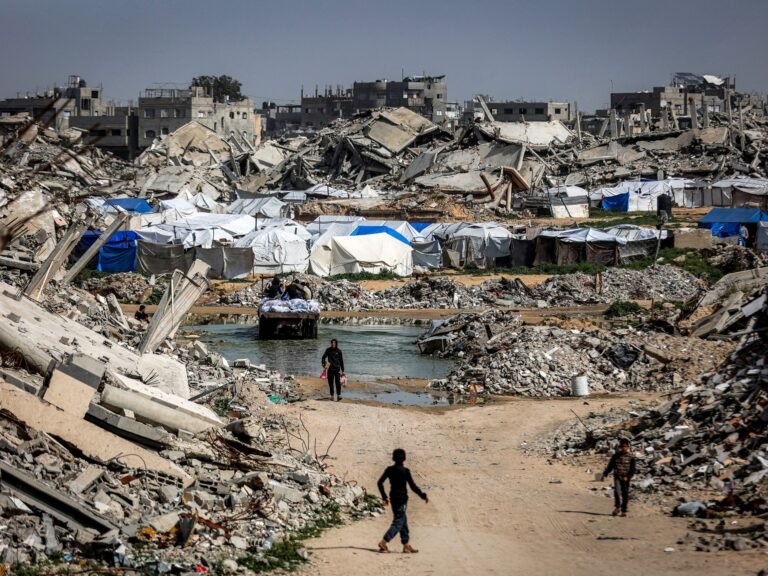
The document, presented by US President Donald Trump’s “Board of Peace” during meetings in Cairo in mid-March, advances a controversial US vision for the enclave, as Israel’s ongoing war and military occupation continue to ravage the territory and its two million residents, in the aftermath of its two-year genocidal campaign that killed more than 72,000 people, mostly children and women. Thousands more are missing, lost under the rubble, and believed dead.

According to media reports, the proposal pushes forward Trump’s 20-point plan, centred on the second phase of the US-brokered October “ceasefire” agreement for Gaza. Under the US framework, Israeli troops – which currently occupy more than half of the enclave – will withdraw, and reconstruction will begin only once Hamas and other armed groups surrender their weapons.

Appearing before the United Nations Security Council on Tuesday, Nickolay Mladenov, the Trump-appointed Board of Peace envoy to Gaza, urged Palestinian factions to accept the framework “without delay”. He claimed the disarmament process rests on “reciprocity”, stating that “decommissioning proceeds in parallel with staged withdrawal”.

However, rather than a genuine diplomatic proposal, Palestinian factions and political observers view the US plan as a coercive ultimatum designed to bypass previous agreements and enforce a one-sided reality.

Wesam Afifa, a Gaza-based political analyst who has closely followed the Cairo meetings, noted that the proposed document has been presented as more of a “threat message” than a negotiating initiative.

Afifa pointed out that the new US approach abandons Israel’s and the US’s obligations laid out under previous agreements in favour of a sweeping demand for the surrender of all weapons, including personal firearms, and links the enclave’s desperately needed reconstruction directly to this condition.

He identified three main shifts in US strategy for Gaza, which are now being pushed by Trump’s special envoy Steve Witkoff and mediators, and which seek to enforce new realities on the ground:

  • ‘Militarising’ the NCAG: Established under UN Security Council Resolution 2803 to oversee the day-to-day civilian rebuilding of the enclave, the National Committee for the Administration of Gaza (NCAG) has had a shift in its mandate. At the UN, Mladenov confirmed the committee has begun “vetting thousands of civilian police candidates”. Afifa said this is a clear attempt to saddle the body with an early security role before addressing the humanitarian disaster, turning it into an enforcement tool rather than a purely civilian administration.
  • A ‘one-sided security doctrine’: Despite Mladenov’s claims of reciprocity, Afifa warned that mediators have reduced the diplomatic process to the single condition of Palestinian disarmament. “Israel is to be granted a free hand to conduct security operations against any perceived threats,” Afifa said. He noted that, at the same time, Palestinians are being asked to surrender their weapons without receiving any concrete guarantees for reconstruction, a halt to military operations or an Israeli withdrawal.
  • ‘Piecemeal’ reconstruction: The plan seeks to deal with Palestinian areas “in instalments”. Reconstruction would be linked to disarmament: areas deemed to have surrendered their weapons would receive aid, while those suspected of retaining arms would be isolated and treated as “rogue zones”.

Ultimately, Afifa argued, these conditions bypass the phased framework previously agreed upon. “Gaza is being forced to pay a political bill for the ongoing war on Iran and Lebanon,” Afifa said. “The aim is to strike this regional axis, and now it is time to make Gaza pay part of that price.”

Rival armed groups and international forces

US officials have indicated that Hamas could be offered amnesty and targeted investments if it and allied factions surrender their weaponry. At the UN, Mladenov announced that a decommissioning framework had been developed with guarantors including the US, Egypt, Turkiye and Qatar, while countries like Indonesia, Morocco and Kazakhstan have committed troops to a temporary International Stabilization Force (ISF).

But Hamas and its allied resistance factions remain deeply suspicious of both the security and financial promises.

According to sources close to Hamas, quoted by Reuters, the group is highly unlikely to relinquish its rifles, fearing vulnerability to rival armed factions operating in Gaza, some of which reportedly receive backing from Israel.

While the US plan demands all groups disarm, Hamas fears Israel will turn a blind eye to, or even actively arm, rival clan-based armed groups to police the Strip.

Furthermore, Palestinian analysts and faction leaders argue that the financial incentives promised by Washington are simply not there. While Trump has attracted approximately $7bn in reconstruction pledges in February, primarily from Gulf nations, only a fraction has materialised in the US-backed NCAG funds.

The widening regional conflict sparked by US-Israeli strikes on Iran on February 28 has also severely complicated the financial logistics, as donor mechanisms have stalled.

For all these reasons, Afifa said, the chances of success for the US-led diplomatic track demanding disarmament for reconstruction are limited, and Hamas and its allied factions are demanding that the first phase of the October ceasefire agreement – which entails an Israeli withdrawal and the entry of unconditional aid – be implemented before the subject of weapons is addressed.

As Washington and Tel Aviv attempt to engineer Hamas’s political capitulation, roughly 1.4 million Palestinians remain displaced across the Strip. For them, these diplomatic manoeuvres offer no relief, leaving their daily survival entirely dependent on the arrival of aid amid an ongoing Israeli military occupation.


Source link

Access Denied

0

Access Denied You don’t have permission to access “http://hindi.news18.com/news/ajab-gajab/viral-viral-russian-girl-making-bhojpuri-reels-real-or-ai-generated-shocking-truth-10310591.html” on this server.

Reference #18.4a200117.1774518784.16cadb73

https://errors.edgesuite.net/18.4a200117.1774518784.16cadb73

I left New York for Florida — Gov. Hochul’s desperate plea won’t bring me home

0

NEWYou can now listen to Fox News articles!

New York Gov. Kathy Hochul made a surprising admission two weeks ago. Speaking at Politico’s “New York Agenda: Albany Summit” on March 11, the governor said her state now lacks the “high-net-worth” residents needed to pay for “the generous social programs we want to have.” Hochul said some “patriotic” rich people have stepped up to help fill the state’s budget gap, and that, sure, it’s OK to write her a check. But if you really want to help, Hochul implored her wealthy supporters, “visit Palm Beach and see who you can bring back home, because our tax base has been eroded.”

Hochul sounded annoyed as she delivered that last line, as if it is the fault of her supporters — who are writing her checks to sustain her struggling state — that their wealthy friends have left for sunnier pastures.

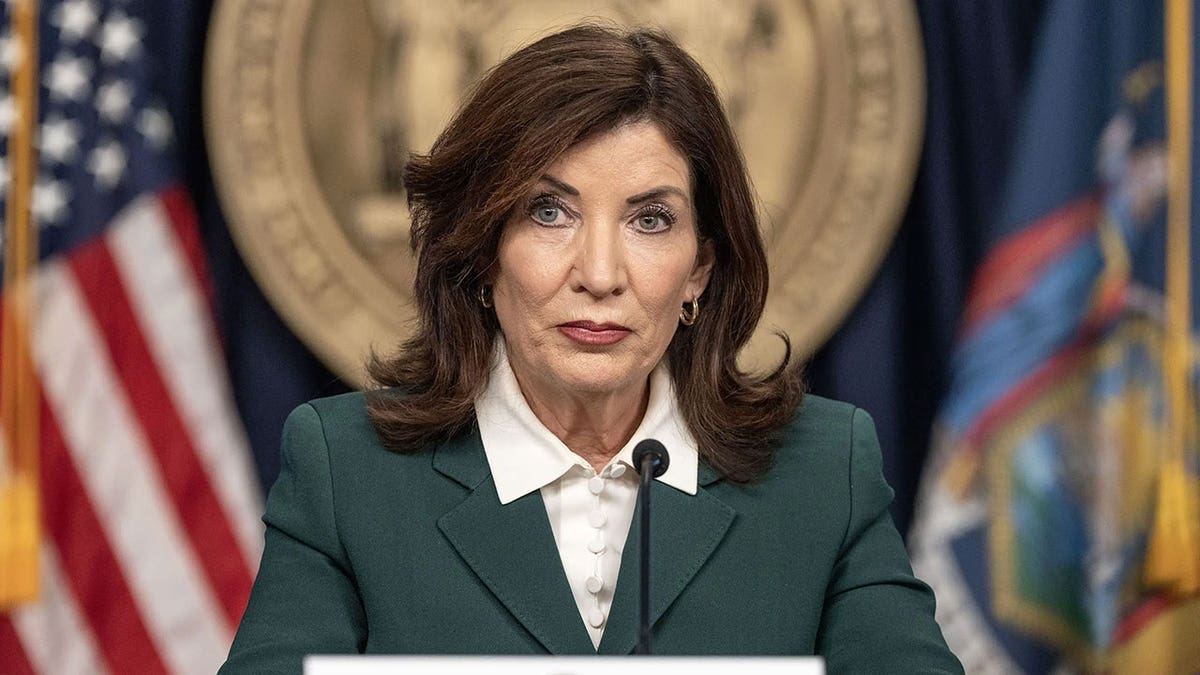
New York Gov. Kathy Hochul at press conference

New York Gov. Kathy Hochul said recently, “There were people who could only work in an office in Manhattan, and they were captives to our state.” They are captives no more. (Lev Radin/Pacific Press/LightRocket )

Her comments were surprising because, well, Hochul played a large role in forcing those Palm Beachers out in the first place. In 2022, Hochul said, “Just jump on a bus and head down to Florida, where you belong, okay? Get out of town because you don’t represent our values.”

STEVE FORBES: DRIVE OUT WEALTH, THEN BEG — HOCHUL’S NEW YORK IN A NUTSHELL

She was talking to Republicans, and they heard her loud and clear. And she wasn’t alone in making comments like these. In 2014, her predecessor, Andrew Cuomo, struck a similar note. “Extreme conservatives,” he said, citing policy positions like abortion and gun rights, “have no place in the state of New York, because that’s not who New Yorkers are.”

And these are the “moderate” Democrats in the state!

Those who could leave did. The deluge began under Cuomo and continued apace under Hochul.

I AM LEAVING NEW YORK CITY FOR FLORIDA. I NEVER THOUGHT I WOULD

Did they really not consider that they were cratering their own tax base? Who did they imagine was paying for the wonderful, exorbitantly expensive social services? The blue-haired protesters who elected Mayor Mamdani?

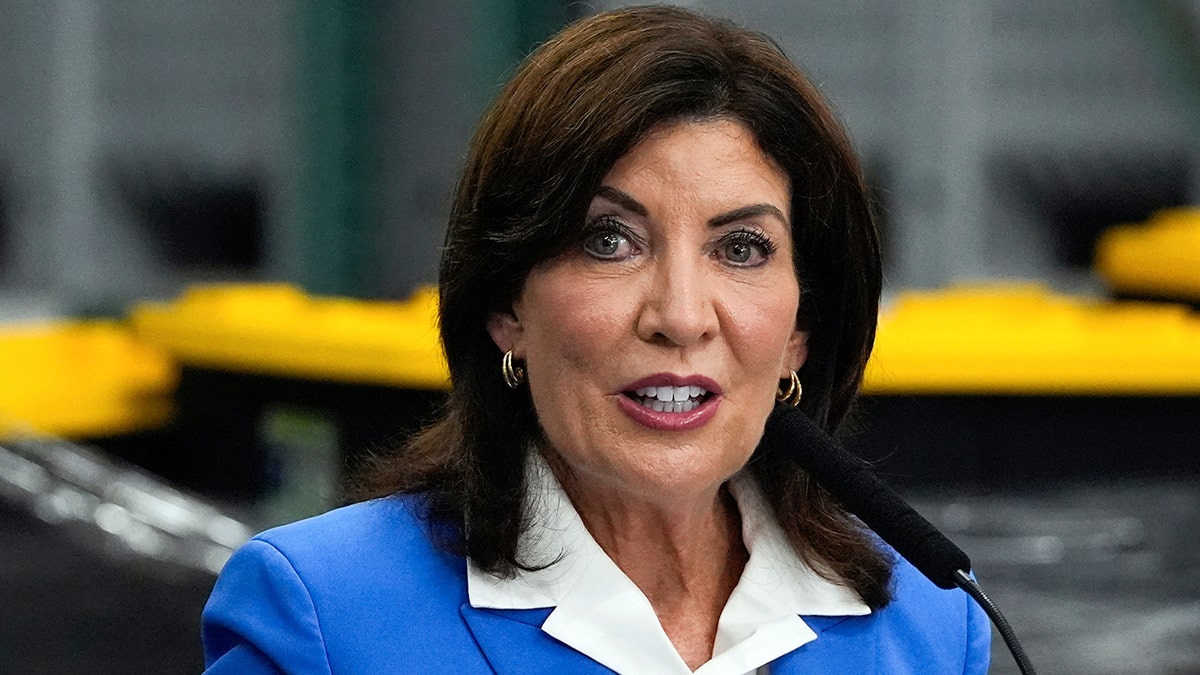
New York Gov. Kathy Hochul

New York Gov. Kathy Hochul’s rhetoric played a large role in forcing New Yorkers to flee to Palm Beach, Fla. in the first place over the last several years. (Julia Nikhinson/AP Photo)

Cuomo could be forgiven for not realizing, back in 2014, that he needed the tax base far more than they needed him. But Hochul’s comments came two years into the pandemic, after people like me were already long gone, and it was clear that remote work had already altered the jobs landscape. Hochul said as much in the recent clip: “There were people who could only work in an office in Manhattan, and they were captives to our state.” They are captives no more.

MAMDANI’S ‘PAINFUL’ TAX HIKE THREAT MOCKED BY WASHINGTON POST FOR PROVING ‘SOCIALIST UTOPIA IS EXPENSIVE’

My family left New York City because Hochul catered to the teachers’ unions and refused to open public schools that had been needlessly closed while private schools were open. When schools finally did open full-time — a year after states like Florida — the kids were kept masked well into 2022, even outdoors, sitting on the ground for lunch and masking between bites, despite being at extremely low risk for COVID. Meanwhile, Hochul, in her 60s and therefore at a much higher risk from COVID, could be seen traipsing around the state maskless.

CLICK HERE FOR MORE FOX NEWS OPINION

Other New Yorkers left because the disarray on city streets was getting worse, and we were discouraged from talking about it. The migrant problem had spiraled, and New Yorkers were told they had to keep paying for hotel rooms or debit cards for people who had come in illegally, lest they be seen as aligned with Donald Trump. Homelessness had also worsened, with children begging in the street — a feature of third-world countries — appearing in what was once America’s jewel of a city. We left because everything was fraying, and the New York state government just didn’t care.

It wasn’t the taxes — or not just the taxes, anyway. It’s not exactly like the Onion headline from 2010: “8.4 Million New Yorkers Suddenly Realize New York City Is a Horrible Place to Live.” New York was always a tough place to live, and it was always expensive. What changed in the last decade is that it became impossible to trust that the people in charge were working to make it better.

CLICK HERE TO DOWNLOAD THE FOX NEWS APP

Did Hochul mean it when she said Republicans should leave New York? Did she mean it when she endorsed socialist mayor Zohran Mamdani? Who knows? It became impossible to have faith that the governor was working for anyone other than the special interest groups who support her.

It wasn’t just extremely wealthy New Yorkers who took a look around and realized their taxes weren’t being used properly. Plenty of non-billionaires and multimillionaires left, too. The fabric of the city changed. No, Gov. Hochul can no longer keep New Yorkers “captive.” It’s too late now to bring them “home.” They are home — it’s just not New York anymore.

CLICK HERE TO READ MORE FROM KAROL MARKOWICZ


Source link

Helium hitch: Why US-Israel war on Iran could cause MRI scan delays | US-Israel war on Iran News

0

The United States-Israel war on Iran, and Tehran’s response, have disrupted about one-third of global supplies of helium, which is critical for medical uses such as MRI scans, as well as in high-tech industries such as the semiconductor sector.

This is largely due to shipping restrictions and the halt of production by a chief helium producer, Qatar.

How much helium is produced in the Gulf?

In 2025, Qatar produced about 63 million cubic metres of helium, constituting a third of the roughly 190 million cubic metres of helium produced globally, according to the US Geological Survey.

While other Gulf countries are not chief producers of helium, they are critical to the global supply chain because exports from Qatar and elsewhere depend on shipping lanes and chokepoints in their coastal waters, especially the Strait of Hormuz.

On March 2, Ebrahim Jabari, a senior adviser to the commander-in-chief of Iran’s Islamic Revolutionary Guard Corps (IRGC), announced that the strait was “closed” and if any vessels tried to cross it, the IRGC and the navy would “set those ships ablaze”. Since then, shipping through the strait has been significantly reduced.

Iranian officials have insisted that the strait is not completely closed – except to ships belonging to the US, Israel and those who collaborate with them – but have also laid down new ground rules: Any vessel must secure Tehran’s approval to transit through the narrow waterway. As a result, traffic through the strait has ground almost to a halt, barring a few Indian, Pakistani and Chinese ships.

QatarEnergy, the world’s largest LNG producer whose plants also generate liquid helium, said annual exports of the cooling element would drop by 14 percent each year.

How is it transported to buyers?

A very low-density gas, helium takes up a lot of space in gas form. Hence, it is typically cooled to liquid form and stored in specialised cryogenic containers. This saves space and is more cost-effective.

Helium typically has to be transported within 45 days of being liquified, because even well‑insulated tanks gradually warm up, causing the helium to boil off, build pressure and revert to gas that escapes containers and into the atmosphere.

In Qatar, these helium containers are shipped to buyers in containers by sea.

Virtually all of Qatar’s exported helium normally leaves the country by ship through the Strait of Hormuz, because Qatar’s production is on the Gulf and there is no alternative maritime outlet.

Why has helium production been disrupted in the Gulf?

Helium is extracted as a by-product during the production of LNG. Hence, any disruptions to the production of LNG inadvertently cut helium supply.

LNG production has been affected in Qatar due to attacks on its energy infrastructure.

Qatar’s state-run energy firm QatarEnergy announced on March 2 that it had halted LNG production following Iranian attacks on its operational facilities in Ras Laffan and Mesaieed in Qatar. Iranian officials publicly denied targeting QatarEnergy.

Last week, Iranian state media reported that natural gas facilities associated with the South Pars gasfield had been attacked.

Hours later, Iranian missiles struck an LNG facility at Ras Laffan Industrial City, which processes approximately 20 percent of the global supplies of LNG, in northern Qatar.

The attack caused three fires and wiped out about ⁠17 percent of Qatar’s LNG export capacity, causing an estimated $20bn in lost annual revenue for the next five years, QatarEnergy’s CEO, Saad Sherida Al-Kaabi, told the Reuters news agency.

Repairs will sideline 12.8 million tonnes of LNG production per year for three to five years, he said.

That decline in LNG production is why QatarEnergy has announced a 14 percent cut in exports of liquid helium.

Which countries depend the most on helium supplies from the Gulf?

South Korea, Japan, Taiwan and China are the biggest consumers of helium from Qatar.

Most supply is sold through long-term contracts rather than a transparent spot market, meaning price changes may not be felt immediately.

But supplies will still tighten, as exports from Qatar drop.

Aleksandr Romanenko, CEO of market research firm IndexBox, told Reuters that a 30-day disruption could lift delivered spot helium prices by 10 percent to 20 percent, while a 60-to-90-day outage could push prices higher by 25 percent to 50 percent, particularly for buyers without long-term supply contracts.

Last week, South Korea’s governing party lawmaker Kim Young-bae warned the US-Israel war on Iran could disrupt supplies of key semiconductor manufacturing materials, giving helium as one example.

Why is helium so important?

No other element can be cooled to temperatures as low as helium, down to just a fraction below absolute zero or 0 Kelvin, the lowest temperature possible.

That quality makes helium unique for a range of purposes in high-tech industries. It remains in liquid form at extremely low temperatures and so serves as a warning system against leaks.

Helium is also chemically inert – it does not react with other chemicals. That makes it perfect as a cooling agent because it does not contaminate chips or other materials with which it comes in contact.

These qualities also make it ideal for cooling superconducting magnets, reducing their electrical resistance to near zero.

What is it used for?

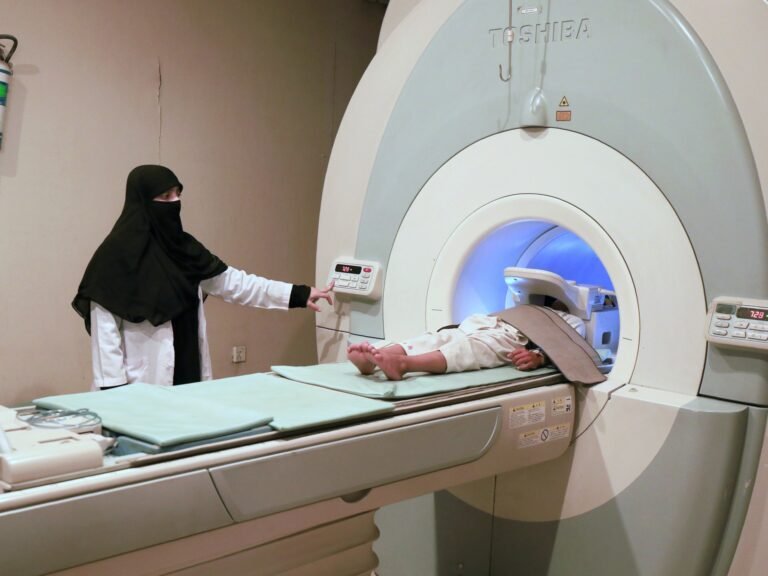
These properties mean that liquid helium has long been an essential component in running Magnetic Resonance Imaging (MRI) machines.

MRI machines use superconducting magnets that heat up and need to be cooled. Helium cooling allows the magnets to generate magnetic fields powerful enough to create clear images of the inside of the human body.

About a quarter of the helium used worldwide is used for the cooling of superconducting magnets, and demand is on the rise, according to the German engineering group Siemens.

Additionally, helium is used in the production of semiconductor chips. Semiconductors are special materials, usually silicon-based, used to make the chips that power almost all modern electronics, from smartphones and cars to data centres and military systems.

Helium is also used to fill party balloons, weather balloons, and some airships because it’s lighter than air and nonflammable.

What will happen if countries cannot get helium?

Helium does not have an artificial substitute. Hence, a helium shortage would create a gap in technological advancement.

But this isn’t a new threat.

The crisis started by the war on Iran and the closure of the Strait of Hormuz is the fifth occasion since 2006 when the world has grappled with a helium supply shortage.

The medical industry, in particular, has been attempting to adapt. In 2002, Chinese researchers announced that they had developed a new technology that could allow for helium-free MRI scanners, using a new, super-cold material.

Separately, researchers have developed MRI machines that can recycle helium, thereby reducing their consumption of it.

Still, for now, most MRI machines around the world rely on liquid helium.

Who else produces helium, and can they increase production easily?

The US is the largest producer of helium worldwide, producing 81 million cubic metres – more than 40 percent of global supplies.

Texas-headquartered Exxon Mobil is the largest helium producer outside Qatar, while Canada-based North American Helium and smaller developers such as Helix Exploration and Blue Star Helium could see stronger demand, Anish Kapadia, CEO of market research firm AKAP Energy, told Reuters.

But despite this production, North American consumers also depend on Gulf helium.

Airgas, a subsidiary of French industrial gases group Air Liquide that is among the largest distributors of helium in the US, declared force majeure last week, announcing that it was cutting its shipments of the gas by half.

Air Liquide, its parent company, announced last week that it was planning to reallocate its helium supply chain to access the gas from other regions. The announcement was made during the opening of a new advanced materials factory in Taichung, Taiwan. Air Liquide said it relied on multiple sources in different continents and on its storage cavern in Europe.


Source link

‘He will call me Mama’: The Gaza ‘grandmother’ raising an orphaned baby | Women

0

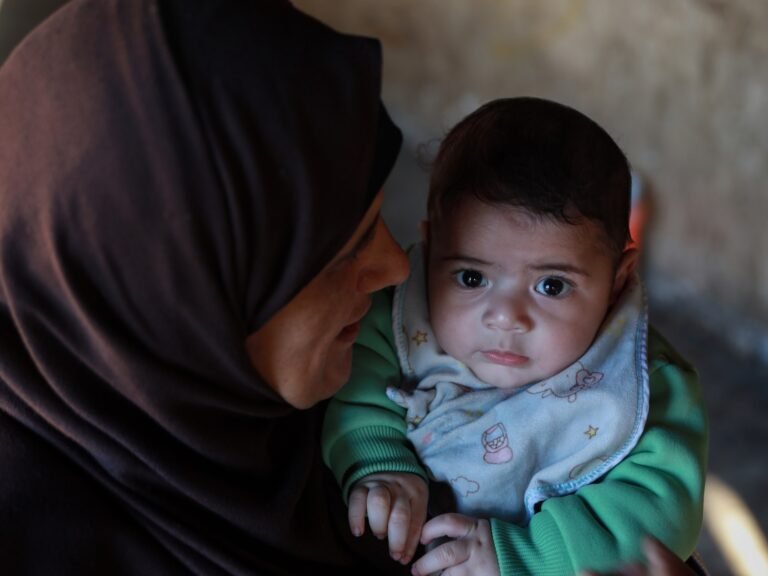
Maha is the paternal aunt of Hamza’s father, Omar al-Rubaie. She and her sister, Huriya, raised Omar beginning when he was 15 along with his two brothers after their father was killed in the 2008 Gaza war and their mother remarried.

“I raised the father when he was orphaned as a child, and now I am raising the son after he too became an orphan,” Maha explains, looking sorrowfully at the baby.

Hamza’s entire immediate family was killed in Israel’s more than two-year genocidal war on Gaza.

On March 18, 2024, as Maha prepared food with Hamza’s mother, Diana, to break their Ramadan fast, an Israeli bomb struck their five-storey home in Gaza City.

“Black dust, rubble and shrapnel filled the air,” Maha recounts.

She, Diana and Omar ran upstairs to where the couple’s three children had been playing with their cousins.

“They were buried under the rubble, … no sound, no movement,” she recalls, her voice bitter.

Diana and Omar lost their children, eight-year-old Dima, six-year-old Anas and three-year-old Mohammed in the strike along with Omar’s brother, his wife and two children.

“Hamza’s mother was completely shattered,” Maha says.

After their children were killed, Diana fell into a severe depression while intense grief left Omar unable to eat. Months later, they tried to conceive again. The day Diana’s pregnancy was confirmed, “Omar and Diana cried hysterically, caught between bitter grief for their murdered children and happiness for the baby to come,” Maha recalls.

Amid starvation inflicted by Israel, the couple anticipated the arrival of their baby, buying clothes when they could. They spoke of having more children.

“They did not know they would be killed and would never see their child at all,” Maha says, her eyes filling with tears.

On September 4, 2025, Diana was nine months pregnant when her and Omar’s tent was bombed beside the school where Maha and the rest of their family live. Diana’s mother was killed, and the dying couple was rushed to the hospital. Diana’s sister begged the doctors to save the baby, and an emergency caesarean section was performed in a hospital corridor moments after Diana died.

“Imagine that – his date of birth is the same as the date of death of his parents, … his dearest people,” Maha says, her voice breaking. “We received a birth certificate and two death certificates at the same time.”

Immediately after his birth, the newborn was transferred to another hospital for neonatal intensive care as he struggled to breathe.

Maha saw the baby inside the incubator for the first time as doctors fitted him with a breathing tube.

“After five days, his face improved, and we named him Hamza,” Maha says, explaining how Omar had wanted a name that was different from those of his dead children, so they chose Hamza, a name he loved.

Maha remembers the first time she held him.

“[His] face was beautiful, radiant. … Seeing him lifted some of the sorrow and grief from our hearts amid all the misery surrounding us.”


Source link

Access Denied

0

Access Denied You don’t have permission to access “http://hindi.news18.com/cricket/inside-the-ipl-passion-rituals-and-ruthless-competition-on-the-field-loyalty-gives-way-to-ruthless-pursuit-of-victory-10310474.html” on this server.

Reference #18.49200117.1774553396.12441609

https://errors.edgesuite.net/18.49200117.1774553396.12441609

Israeli push for more force ‘not working out very well’ | Newsfeed

0

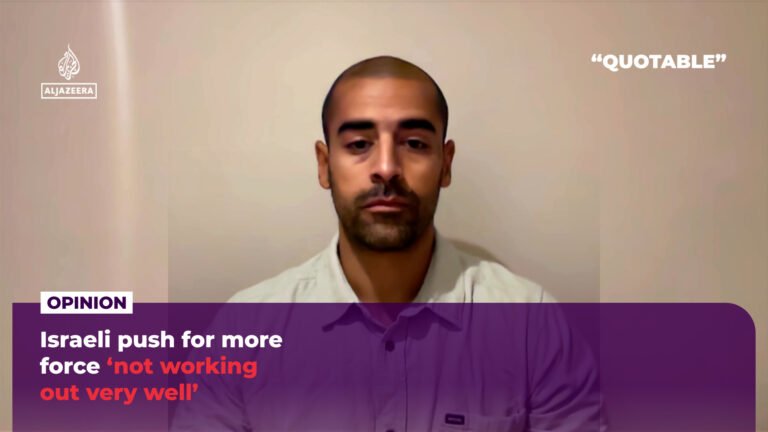
Political commentator Abed Abou Shhadeh says Israeli public opinion is increasingly calling for more force, particularly since October 7, but warns the strategy is ‘not working out very well’.


Source link

German minister calls Iran war an ‘economic catastrophe’ | US-Israel war on Iran

0

Germany’s defence minister, Boris Pistorius, says the economic impact of the war is “absolutely evident”.

Germany’s defence minister says the Iran war is a “catastrophe for the world’s economies”. Boris Pistorius also called for a ceasefire and insisted Germany won’t be “sucked into” the conflict.


Source link