Reference #18.2d4adc17.1774638293.13013dee
https://errors.edgesuite.net/18.2d4adc17.1774638293.13013dee
Reference #18.2d4adc17.1774638293.13013dee
https://errors.edgesuite.net/18.2d4adc17.1774638293.13013dee
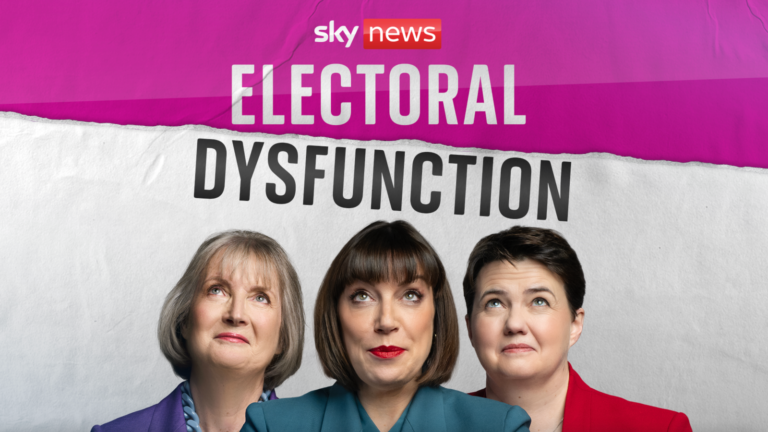
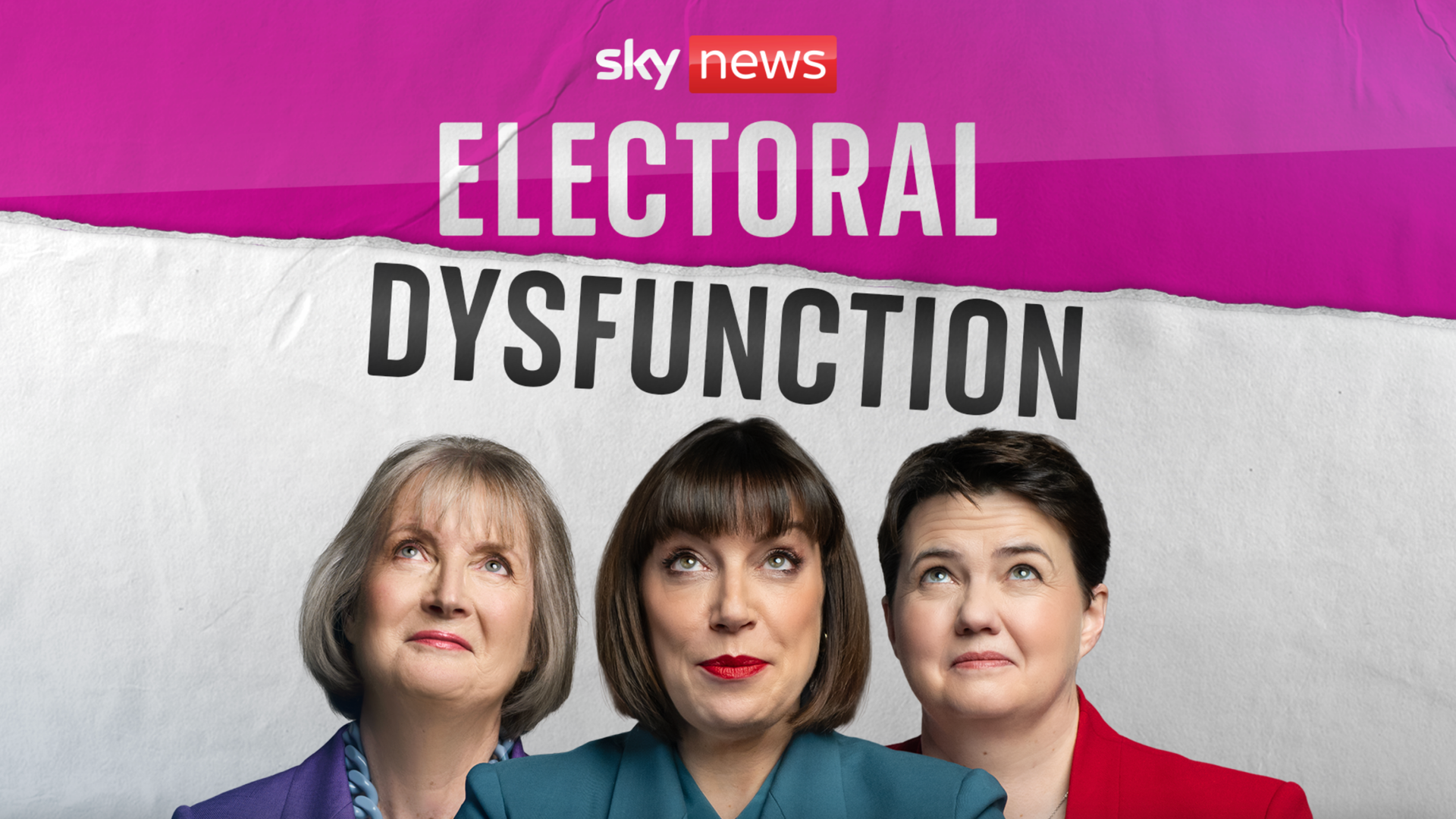
👉 Click here to listen to Electoral Dysfunction on your podcast app 👈
Beth is in Helsinki with the prime minister for an exclusive interview for the podcast.
Sir Keir Starmer has said he “hates the fact” that he made a “mistake” over the appointment of Peter Mandelson.
“I dwell on it. I beat myself up about it,” he told Beth, who is accompanying him on a visit to Finland, where he is taking part in a leaders’ summit.
Beth also questions him about his relationship with Donald Trump following disparaging comments the US president made about Sir Keir’s response to the Iran war.
Plus, Beth, Harriet and Ruth react to the full interview.
Got a question for the burner phone? WhatsApp 07934 200 444 or email electoraldysfunction@sky.uk.
And if you didn’t know, you can also watch Beth, Ruth and Harriet on YouTube.
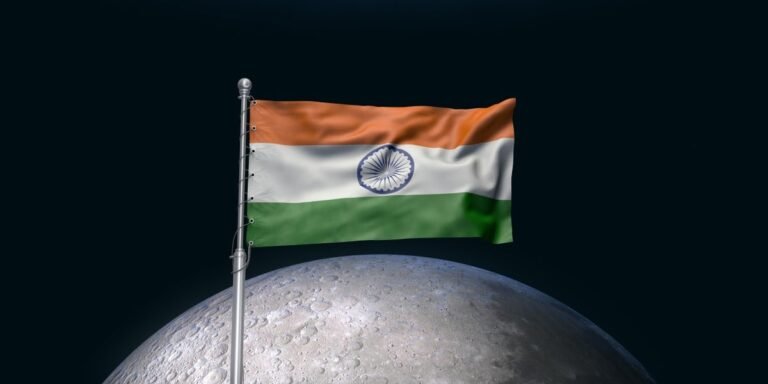
India’s space program has thousands of vacant roles it’s struggled to fill, isn’t spending money fast enough to meet its mission timelines, and may be undervaluing intellectual property it sells to the private sector.
Those are just some of the findings of India’s Parliamentary Standing Committee on Science and Technology, which this week published reports on grants it’s been asked to approve for India’s space program.
The committee noted both budget cuts for India’s space program and “significant underutilization” of allocated funds.
One reason for problems is poor procurement processes that make it hard for India’s Space Research Organization (ISRO) to buy the stuff it needs. Another is a “significant shortage of human resources” that has left India’s space program with 2,383 open positions.
The problems it found left the Committee’s members worried that major missions ISRO plans may run late. The space agency is close to uncrewed test flights for the Gaganyaan human spaceflight project, but won’t hit the March 2026 target for the first mission. India also plans two robotic moon landings in 2027 and 2028 under the Chandrayaan program, plus the launch of a Venus orbiter in 2028.
The committee expressed concern that unless India’s space program can hurry up and spend its budget, those missions won’t fly on time.
The report notes that India’s space program has both scientific and strategic significance, so delays aren’t merely inconvenient – they can also impair India’s drive for self-reliance in advanced technologies.
One product of that ambition is India’s NavIC constellation of 12 navigation satellites.
The Committee noted that only eight are functional, but some are unable to provide positioning, navigation and timing services due to malfunctioning of onboard atomic clocks.
India acquired those atomic clocks from overseas, and has since developed its own alternatives. The committee’s report urges replacement of the satellites.
The report also notes that India tried to accelerate its space program by opening it to private participants, and fostering startups. That effort appears not to have gone brilliantly because the committee found IP developed by the national space program was sold at “disproportionately low prices relative to their commercial potential.”
“It has been observed that technologies are often transferred to private players at undervalued rates, allowing these partners to earn significant profits while the originating institutes receive only a marginal share of the value created,” the Committee observed. “Furthermore, there is no credible mechanism to verify whether the benefits of low-cost technology transfers are being passed on to the intended target users for whom the technologies were developed.”
The Committee wants ISRO to “consider adopting a more competitive and market-aligned pricing framework for technology transfer” that charges license fees that “appropriately reflect the true commercial value, uniqueness, and societal impact of technologies developed through public funding.”
Space is hard, and missions often blow deadlines and budgets. India’s space program, however, is famed for delivering complex and successful space missions on shoestring budgets. May that long continue … perhaps after ISRO heeds the Committee’s advice. ®
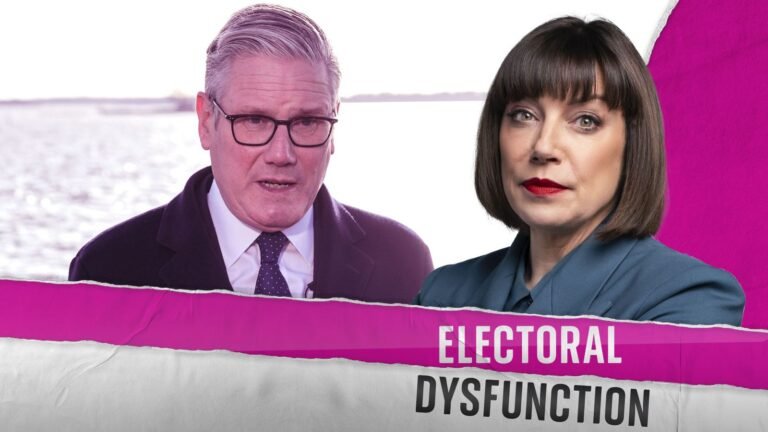
A month into the Iran war and the prime minister, on a visit to Finland with allies in the Joint Expeditionary Forces military coalition this week, left me in no doubt that he believes our lives, our country and the way we do things, is about to profoundly change.
This is a “once in a generation moment” that is going to shape the next decades of our lives, Keir Starmer told me as part of a longer-than-normal interview for our Electoral Dysfunction podcast, as he reflected on the global turbulence and how the outlook for Britain’s economy had changed so massively in such a short period of time.
👉 Click here to listen to Electoral Dysfunction on your podcast app 👈
We also touched on the turbulent times he has faced in recent weeks, be that around the prospect of a leadership challenge or the Peter Mandelson crisis that he told me he “beats himself up about it” in a genuinely emotional moment of our conversation.
What I took from this interview is a prime minister rolling the pitch for another difficult stretch for a country already ground down by crises with very long tales: the 2008 financial crash that ushered in austerity and a step down in living standards; the COVID-19 pandemic that saw the government borrow over £300bn in 2021/2 and leaving the Treasury to spend £100bn a year on debt interest alone.
“I think in my life, I remember profoundly the Berlin Wall coming down. And I remember that feeling, that there was going to be peace and freedom and that the values that I held dear… and that I didn’t think – I have to say – I would ever see Russian tanks going across a European border again in my lifetime. I didn’t think I would see that. And yet we saw that four years ago,” he said.
“In the Middle East, Iran is a threat to all of its neighbours, a threat to the world and therefore, how this ends will determine what that threat is as we go forward. So this is a defining period. It’s a testing period for the whole world.”
There are political parallels too, with say 2008. Back then the prime minister Gordon Brown was grappling with a financial crisis and a potential leadership challenge as MPs looked down the barrel of defeat at the next general election.
At the time, Mr Brown warned his would-be challenger David Miliband, and his restive party, that “now is not a time for a novice”. Does Keir Starmer feel the same?
“That’s not for me to say, in the sense of whether it’s the right time for a novice, I’ll be judged by what I do,” he said.
What he is more forthright on is that this crisis, this war on two fronts, will bring serious consequences for the UK. He acknowledged in our interview that the spring statement, in which the chancellor spoke about stability, failing inflation and interest rates, seems now like a fever dream. That the outlook for the economy has been so battered by Trump’s war is, of course, a frustration.
But the prime minister is pragmatic about the place he’s in: “There’s no point me sort of complaining about it. That’s the world we live in. You’ve got to face the world as it is. I have to lead us through this war too on two fronts.”
Read more:
McSweeney phone theft linked to Mandelson files ‘far-fetched’
Trump says he’s disappointed in Starmer
His immediate task as prime minister is to decide on support for energy bills. The current price cap runs out in June, after which bills could rise by an eye-watering £500 a year, according to the Resolution Foundation.
The prime minister told me in our interview that “any support is likely to be targeted”. This will come with controversy.
Liz Truss’s administration poured £40bn into capping energy prices for all households at the start of the Ukraine war in 2022, and one in two people think the government can afford to subsidise bills, according to a recent YouGov poll.
But this prime minister is clear he won’t do that. “We will have to tailor support. Exactly how we do that is obviously a number of options we’re looking at. But I’ll be clear with you, it will be tailored,” he said.
With the Organisation for Economic Co-operation and Development (OECD) on Thursday saying the UK will be the worse hit from the Iran war, predicting a 0.5 per cent contraction in GDP, it is an awful position for the prime minister to be in. But he seems up for the fight.
When I asked him about Trump’s treatment of him, he simply said that Trump might apply pressure, but he is “not going to back down” or “buckle under pressure”, and when it comes to this predicament at home and the upcoming May elections, there is no way he is going to stand down.
When I asked him about Angela Rayner and Andy Burnham semi-declaring on a leadership race, he doesn’t bristle, he simply says he expects to see Angela “playing a leading role in this Labour government”.
It is when we come to Mandelson that some of the pressure of the past few weeks and months perhaps comes more to bear.
I genuinely can not understand, looking at the vetting document, how the prime minister got to the place of appointing Mandelson, when it was clear he kept a relationship with Epstein post conviction of prostitution of a minor and was sacked twice by previous Labour governments.
When I asked him if he was angry at himself, he told me that “nobody has been harder on me in relation to the mistake I made”.
“I hate the fact I made that mistake, I dwell on it. I beat myself up about it. It’s certainly not a mistake I’d ever repeat.”
But as for being beaten by it, Starmer is doing the opposite, he is digging in. He promised the country this would be the year he would cut the cost of living, but the war in Iran looks almost certain to derail that, unless resolution is swift.
Despite the growing complications and challenges, he seems to believe he is the leader for the moment – despite what Trump, his critics, and even some in his cabinet might say.
Trump says Starmer is no Churchill, but these wars, if they become more prolonged, will put him in the unenviable position of being a wartime prime minister.
He tells me he has “great determination” to “steer our country through this” even as the outlook worsens for the economy. In the coming weeks, the consequences of that will be laid bare. Starmer, despite the ferocious criticism he’s faced, clearly thinks he is the right man for this moment.
He told me that his prime minister’s advice to his younger self would be to rise to the challenge and accept the bumpy road – and he’s betting that the worse this crisis gets, the more his party will agree with him.
He is applying the rule of “never waste a crisis”, but where this war, our economy and our prime minister lands is anyone’s guess right now.
You can catch the full interview on the podcast, which is available now. Listen wherever you get your podcasts, just search for Electoral Dysfunction and hit follow.
You can also watch the full interview on Sky News’s YouTube channel.


Gold prices are down about 16% since the US-Israeli war on Iran began on February 28, pressured by a stronger US dollar, which has gained more than 2% over the same period.
Gold rose over 1 per cent on Friday, buoyed by a weaker dollar and bargain hunting, but was on track for a fourth straight weekly decline as surging energy prices fueled inflation concerns and raised expectations of higher global interest rates.
Spot gold rose 1.3 per cent to $4,433.69 per ounce as of 0427 GMT. The commodity has fallen about 1.2 per cent so far this week.
US gold futures for April delivery gained 1.2 per cent to $4,428.40.
The dollar eased, making greenback-priced bullion cheaper for holders of other currencies.
Gold prices are down about 16 per cent since the US-Israeli war on Iran began on February 28, pressured by a stronger US dollar, which has gained more than 2 per cent over the same period.
“For weeks, gold has been treated as a liquidity asset sold to cover volatility and margin calls elsewhere, but at current levels, it is now looking more like a value proposition for investors, which is why it’s back in favor today,” said Tim Waterer, chief market analyst, KCM Trade.
“However, hawkish central banks wary of persistent oil-driven inflation, continue to act as a heavy lid on gold’s ambitions to the upside, keeping any rally firmly in check.”
Brent crude held above $105 a barrel, stoking inflation fears, as the Middle East conflict has all but halted shipments through the Strait of Hormuz, a major conduit for roughly one-fifth of global crude and LNG flows.
Higher oil prices threaten to push up transport and manufacturing costs, adding to inflationary pressures. While inflation typically boosts gold’s appeal as a hedge, high interest rates weigh on demand for the non-yielding asset.
Traders do not expect any US rate cuts in 2026 and see a 35 percent chance of a rate hike by year end, per the CME Group’s FedWatch Tool. That compares with expectations for two cuts before the conflict erupted.
US President Donald Trump said he would extend a pause on strikes against Iran’s energy facilities into April and that talks with Iran were going “very well,” but an Iranian official dismissed the US proposal to end the war as “one-sided and unfair.”
Spot silver rose 1.8 per cent to $69.25 per ounce. Spot platinum gained 2.9 per cent to $1,880.04, while palladium rose 3.5 per cent to $1,400.74.
Published on March 27, 2026

The Iranian Red Crescent Society released video showing rescuers in Tehran lowering a man strapped to a stretcher from the wreckage of a building severely damaged in an airstrike.
Published On 27 Mar 2026
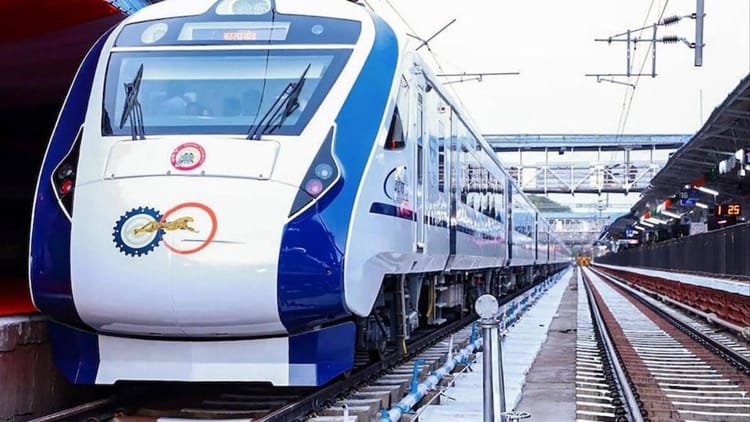
IRCTC on Friday summoned leading dairy brand Amul and sought its reply. The step was taken after live insects were reportedly found in Amul’s packaged curd served to a passenger on the Patna-Tatanagar Vande Bharat Express.
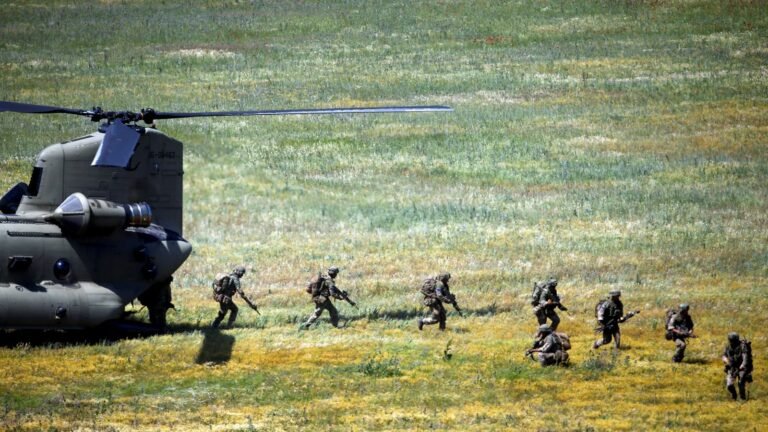
The UK and its NATO allies in Europe must prepare for a “worst case scenario” of the US not defending them in a crisis, an influential committee of peers and MPs has warned.
Tensions between Donald Trump‘s administration and Sir Keir Starmer‘s government could also compromise the reliability of critical pillars of UK national security, including the maintenance of Trident missiles used in the navy’s nuclear deterrent submarines, intelligence sharing and access to programmes such as the F-35 jet, it said in a report.
The Joint Committee on the National Security Strategy urged London to “plan to move away from a bilateral relationship with the United States that is so dependent on the latter for nuclear and intelligence operations, and conventional defence”.
Follow latest on Middle East war
It also advised the UK, Europe and Canada to develop a plan “for a transition towards greater European leadership of NATO“.
The intervention, published on Friday, came as President Trump again lambasted his allies – and the UK in particular – for choosing not to join his war against Iran.
He mocked the Royal Navy’s two aircraft carriers as “toys”, while accusing fellow NATO countries of having “done absolutely nothing” to help combat the Iranian regime.
Posting on social media, the president added: “The USA needs nothing from NATO, but ‘never forget’ this very important point in time.”
The comment is a further signal that Washington’s support to the transatlantic alliance under Article 5 of its founding treaty on collective defence – where an attack on one ally is deemed to be an attack on all – cannot be guaranteed.
Mr Trump has already repeatedly dismissed Mr Starmer as not being like Winston Churchill.
Read more:
British public’s fears of war revealed
Putin’s ‘hidden hand likely helping Iran against Trump’
The increased unpredictability of the White House’s security priorities is upending NATO assumptions on the defence of Europe – which has always been built around a belief that the US armed forces would be the dominant power on the side of the allies in a war.
The Supreme Allied Commander Europe – the top operational commander in the alliance – has only ever been an American, while the US military provides critical elements to any fight such as satellite feeds, electronic warfare jammers and overwhelming mass.
It means a European-only force would be a lot less capable.
The committee – which was assessing the UK’s National Security Strategy, published last June – said it was important for the government to continue to collaborate with the US where practical.
But it must also “develop a clear plan, along with other European allies, for a transition towards greater European leadership of NATO”.
“Preparing for a ‘worst-case scenario’ whereby Europe can no longer rely on US support in the event of a crisis, the Government must work with European partners to invest in its own capabilities to offset this potential withdrawal,” the committee added.
Britain is uniquely exposed to any weakening in this transatlantic bond because of its close security and defence partnership with the US, developed over decades and based on the “special relationship”.
The committee listed areas of particular importance, including the UK’s dependence on the US for maintenance of its Trident missiles, intelligence sharing arrangements, delivery of the F-35 fast jet programme, and a new plan to build attack submarines.
But it warned of the potential for Mr Trump to use any leverage he has against allies if they do something he does not like.
Referring to Britain’s reliance on the US in various defence and security domains, the report said: “There are demonstrable areas of tension in the UK-US relationship that may compromise the reliability of these dependencies in the near future.”
Reference #18.9ee70b17.1774640702.2ca33ece
https://errors.edgesuite.net/18.9ee70b17.1774640702.2ca33ece
Reference #18.4a200117.1774588230.1ae49585
https://errors.edgesuite.net/18.4a200117.1774588230.1ae49585