Rep Sheila Cherfilus-McCormick found guilty by House Ethics panel, faces expulsion

0

NEWYou can now listen to Fox News articles!

A bipartisan panel of House lawmakers voted to kickstart a process that could lead to the expulsion of a congressional Democrat accused of laundering millions of disaster relief funds into her campaign account.

A House Ethics investigative subcommittee approved a motion for summary judgment, effectively finding Rep. Sheila Cherfilus-McCormick, D-Fla., guilty of nearly all alleged violations outlined by the committee earlier this year. 

The verdict came after a rare public ethics hearing on Thursday — the first since 2010 — that lasted more than six hours as lawmakers from both parties grilled Cherfilus-McCormick’s counsel. The eight-member adjudicatory subcommittee, helmed by Rep. Michael Guest, R-Miss., announced its decision in a written statement Friday morning. 

“After careful deliberation that lasted until well past midnight, the adjudicatory subcommittee found that Counts 1-15 and 17-26 of the SAV [statement of alleged violations] had been proven,” committee leaders said in a statement.

Rep. Sheila Cherfilus-McCormick wearing a green suit

Rep. Sheila Cherfilus-McCormick was indicted by a Miami grand jury for allegedly stealing $5 million in FEMA funds on Nov. 18, 2025, according to the Department of Justice. (Tom Williams/CQ-Roll Call via Getty Images)

EX-‘SQUAD’ DEM APPEARS TO BE LEANING ON RADICAL ACTIVIST AT CENTER OF DAMNING TLAIB REPORT IN COMEBACK BID

The panel’s myriad charges against Cherfilus-McCormick, who is facing a separate federal criminal indictment, ranged from using ineligible funds to finance her campaign to repeatedly filing false financial disclosure forms and seeking “special favors” with recipients of earmark funding requests.

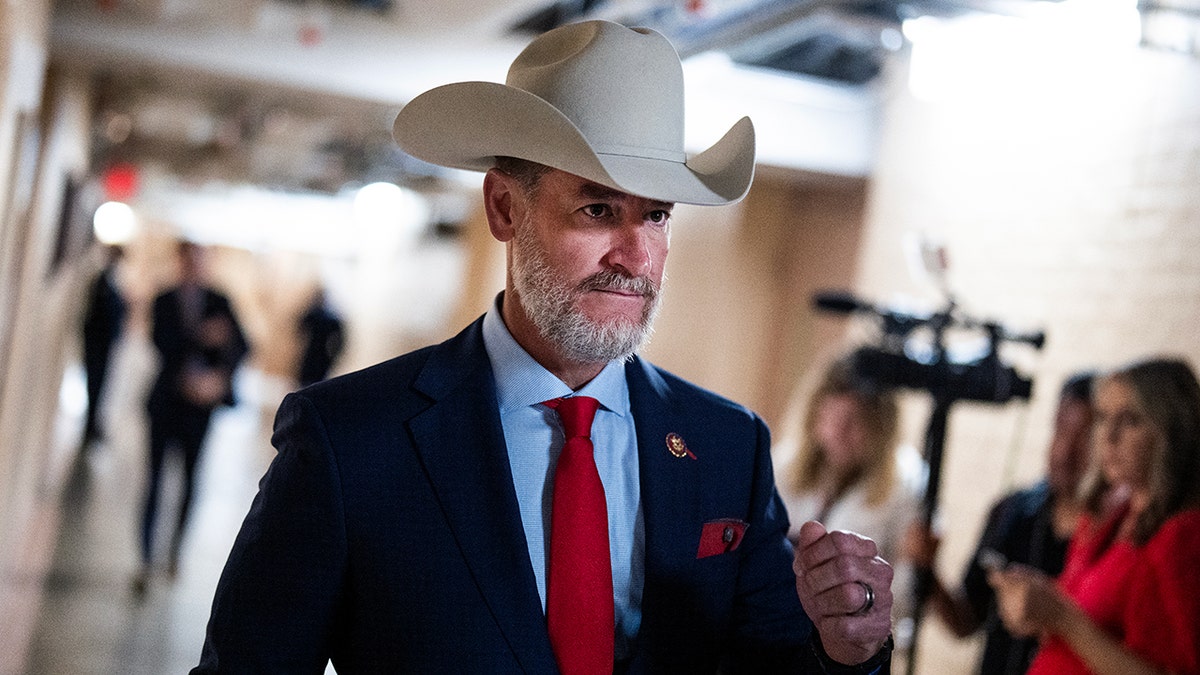
The panel will meet after the Easter recess to determine its recommended punishment, which could be as severe as expulsion. Rep. Greg Steube, R-Fla., has vowed to move forward with his resolution that would expel Cherfilus-McCormick regardless of the outcome. 

Under House rules, two-thirds of lawmakers have to agree to expel a member, meaning Steube’s resolution would need the support of some Democrats. 

House Democratic leadership has largely stood by Cherfilus-McCormick so far, though some congressional Democrats are signaling their discomfort with the allegations against their indicted colleague.

“The allegations before us are extremely serious,” Rep. Mark Desaulnier, D-Calif., said at the start of the hearing Thursday. “They not only concern an individual member’s conduct, they also implicate the public’s confidence in the House’s integrity as an institution.”

Cherfilus-McCormick, who first won election to Congress in 2021, is accused of stealing more than $5 million in disaster relief funds that were improperly paid to her family’s healthcare company, among other criminal allegations. She and her siblings allegedly used the illicit funds to jumpstart her congressional campaign and for personal use, including the purchase of a large diamond ring that Cherfilus-McCormick appeared to have worn in her official congressional portrait. 

Cherfilus-McCormick has pleaded not guilty to the stunning federal charges brought in 2025. If convicted in federal court, Cherfilus-McCormick, 47, faces up to 53 years in prison.
Rep. Greg Steube

Rep. Greg Steube, R-Fla., is vowing to move forward with his resolution that would expel Rep. Sheila Cherfilus-McCormick. (Tom Williams/CQ-Roll Call, Inc. via Getty Images)

WATCHDOG RELEASES SCATHING REPORT ON TLAIB’S ALLEGED TIES TO TERRORIST GROUPS WARNING OF ‘POTENTIAL RISKS’

The House ethics panel’s investigation into Cherfilus-McCormick preceded the 2025 federal criminal indictment by more than two years. During that time, Cherfilus-McCormick shifted between four different attorneys while largely refusing to cooperate with the bipartisan panel.

On Thursday, Cherfilus-McCormick sought to use the fact of her new legal representation to further delay the committee’s proceedings until June — a request the eight-member panel promptly denied in a closed-door session. Her new attorney, William Barzee, repeatedly claimed a violation of Cherfilus-McCormick’s due process rights while maintaining her innocence.

“For you to sit here and make the claim that we, the committee, is trying to trample upon the rights of your client. I take offense to that,” Guest told Barzee in a combative exchange. “For two years we’ve tried to get documents from your client. Not only have we requested documents, but we have subpoenaed those documents. Those documents were not provided for two years.”

“I’m personally offended because I know the work that this committee goes to protect all members and to make sure that we go above and beyond,” Guest continued.

Members of both parties appeared unconvinced by Barzee’s argument, attempting to claim that Cherfilus-McCormick was entitled to the millions of dollars she accepted from her family’s company that stemmed from the FEMA overpayments.

When he claimed that an undated chart was evidence of a “profit-sharing agreement” showing her legal title to the money, the bipartisan panel appeared visibly perturbed. 
Michael Guest of Mississippi

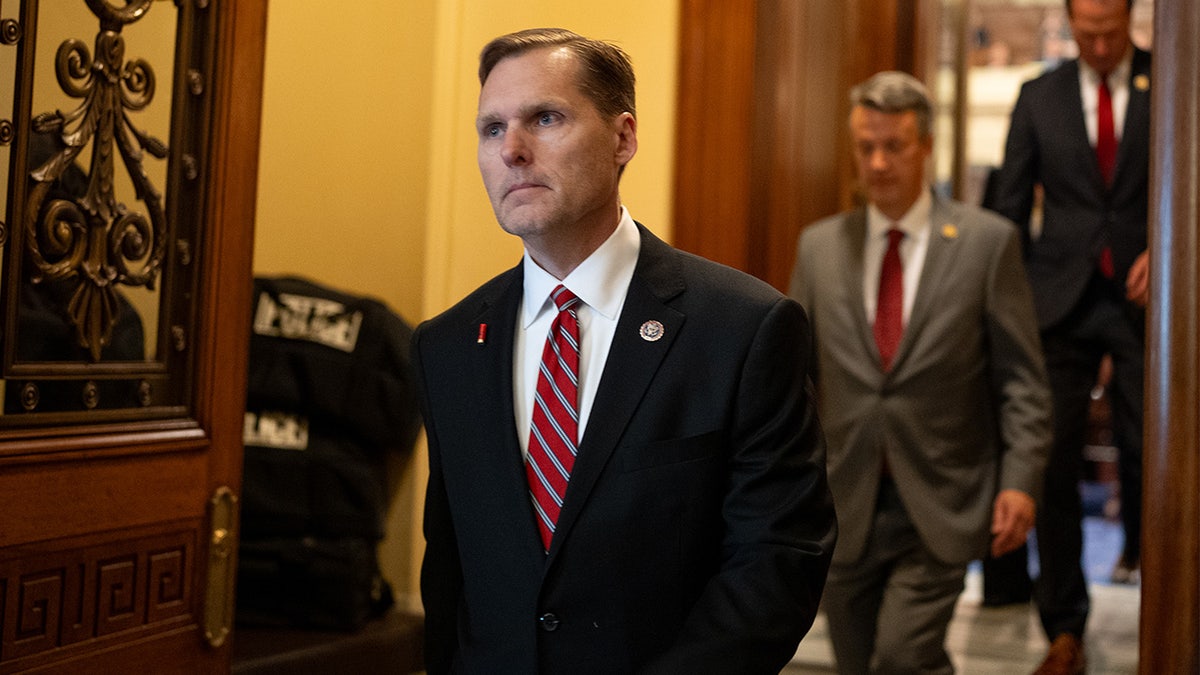
Rep. Michael Guest, R-Miss., chaired the adjudicatory subcommittee that grilled William Barzee, Rep. Sheila Cherfilus-McCormick’s attorney, on the raft of ethics violations against the congresswoman. (Andrew Harnik/Getty Images)

CLICK HERE TO DOWNLOAD THE FOX NEWS APP

“I did a lot of business transaction law for a number of years before I came to Congress. I drafted a lot of profit-sharing agreements. Never saw one that was just a chart that was unsigned,” Rep. Nathaniel Moran, R-Texas, told Barzee.

Later in the hearing, Barzee argued that because Cherfilus-McCormick is of Haitian descent, it was not atypical to have a “handshake agreement” to divvy up millions of dollars between her and her family instead of a formal legal document.

Cherfilus-McCormick faces an upcoming federal criminal trial this summer. 


Source link

Ex-SNP council leader Jordan Linden guilty of multiple sex offences against young men and boys | UK News

0


A former SNP council leader has been found guilty of preying on young men and boys.

Jordan Linden, 30, was convicted of 10 offences – including five sexual assaults, stalking and sexual communication – following a trial at Falkirk Sheriff Court.

Linden, who stood down as leader of North Lanarkshire Council in 2022 after the allegations came to light, was placed on the sex offenders’ register ahead of his sentencing in May.

The offences took place over a 10-year period between 2011 and 2021.

Police Scotland said all of the victims were either boys or young men, with the youngest aged just 14.

The force said Linden, who also chaired the Scottish Youth Parliament (SYP) between 2015 and 2016, sexually assaulted two victims at a house party following a Dundee Pride parade in 2019.

Linden was charged in February 2024.

Detective Chief Inspector Diane Barr said: “This was a protracted investigation which involved speaking with a broad range of people, many of whom regarded Linden as being in a position of trust.

“He abused this position to befriend young males who were seeking his support and the opportunity to learn from his work, however his conduct toward them was far from professional.

“I’d like to thank the victims who came forward to report their experiences to police. Their testimony and support ensured that we were able to bring Linden before the courts.

“No one should be subjected to sexual offending, and we will always investigate reports, regardless of when they occurred or who the perpetrator is.”

Read more from Sky News:
Man jailed for assaulting woman after Barron Trump alerted UK police
Police appeal over woman murdered more than 30 years ago

Linden stepped down as North Lanarkshire Council leader in July 2022.

He later quit the council and the SNP in March 2023.

During his trial, some witnesses testified their complaints were downplayed or ignored by adults in the SYP and SNP.

Following Linden’s conviction, the Scottish Conservatives said John Swinney must be “completely transparent” about how the SNP leadership handled the complaints.

The SNP and SYP were contacted for comment.


Source link

Retail yet to fully arrive, leverage demand won’t fade: Dinesh Thakkar, Chairman, Angel One

0

Retail participation in India remains at a very early stage, with shallow investment depth despite a rise in investor accounts, says Dinesh Thakkar, Chairman, founder and CEO of Angel One, pointing to a long runway for deeper market participation. In an interaction with business linehe said regulatory tightening in derivatives is part of a broader cycle and that “trading is a zero-sum game,” with technology expected to play a key role in moving investors towards long-term wealth creation.

How do you see retail participation evolving in India?

Retail participation in India is still at a very early stage, both in terms of the number of investors and the depth of investment. There is potential for 30–40 crore new investors to enter the market over time, but even among those who have already entered, participation remains shallow. The opportunity is not just about bringing more people into the market, but about enabling deeper participation. The real question is how we position ourselves for the next 10–20 years and move investors from being first-time participants to becoming knowledgeable, long-term investors. Over the last decade, mutual fund AUM has grown from about ₹11 lakh crore to ₹82 lakh crore. Retail ownership of market capitalization is now around 19 per cent, higher than FII ownership. That reflects a clear shift towards long-term investing.

Where do you see the biggest opportunity for technology and AI to deepen participation?

Despite equities delivering 14–15 per cent CAGR over the long run, a large part of India is still not investing in equities. The issue is not just affordability — it is trust, awareness and behaviour. Household equity exposure in India is around 7–8 per cent, compared with about 60 per cent in developed markets like the US. That gap represents the real opportunity. Getting people into the market is one challenge; getting them to allocate meaningfully over time is another. Technology and AI can help bridge this by improving awareness, building trust and guiding behaviour.

How do you see the recent tightening in derivatives impacting retail?

Trading is a zero-sum game — some people will win and some will lose, and typically those who are newer to the market are more vulnerable. Policy decisions should be based on long-term investor outcomes, not short-term participation cycles. You have to look at the investor’s overall balance sheet over 5–10 years, not just one product or one phase. Regulation has always stepped in when excesses build up. The market has moved from badla to futures, then options and now weekly expiries. Whenever speculation becomes excessive, regulation responds. That is part of keeping the market healthy.

How do you see the surge in options trading among retail investors?

A large part of this activity is driven by younger participants taking directional bets. These are not sophisticated investors running hedging strategies. They are looking for leverage, and options are the most accessible regulated product. Earlier, leverage was more available in the cash market through intraday trading. As that reduced, activity shifted to options. This shows that the segment is fundamentally seeking leverage. If the market offers a properly designed alternative, such as a leveraged ETF, some of this activity could migrate there. The demand for leverage itself is unlikely to disappear. A customer often starts as a trader and gradually evolves into a long-term investor. SIP inflows have grown from about ₹3,000 crore in 2015 to over ₹30,000 crore now, and that growth has been consistent. If you shut the gateway product entirely, some investors may not take the next step. Even if they begin with trading, many will, over time, shift towards mutual funds and cash market investing. That is the journey the industry should support.

What role does your platform play in this transition?

Our platform is built to understand the customer by tracking risk appetite, earning patterns and behaviour, and using those insights to support better allocation decisions. Our role is not just to enable transactions, but to improve investor outcomes over time. Once trust is established, we can guide customers towards the right products and help their journey evolve. We are building capabilities across wealth and long-term investment solutions so that customers can move beyond smaller investments as they mature. We also see strong demand in this segment, with Ionic Wealth crossing $1 billion in AUM. AI is a key part of this strategy. By matching solutions to an individual’s profile, tracking behavior and offering timely guidance, the platform can help investors become more informed and move towards long-term wealth creation.

Do you see tighter regulations having an impact on the broking industry?

Tightening is necessary and is healthy for long-term growth. The industry has adapted to regulatory changes across cycles. Retail participation is still underpenetrated, and investment depth remains low. As long as this underpenetration exists, the growth runway remains strong. What matters is ensuring minimal scope for manipulation and timely regulatory action. That is what builds trust. India also needs a healthy derivatives market. For foreign investment to remain strong, there has to be sufficient participation on both sides. Regulators understand this and have strong surveillance systems. Over time, such interventions strengthen the market.

What is your outlook on markets and FPI participation?

Current market levels offer a reasonable entry point, and volatility should be seen as an opportunity. Geopolitical events create short-term uncertainty, but the broader economy and corporate earnings remain resilient. Over the coming quarters, earnings growth should improve and reflect in stock prices.

Foreign investors may move in and out tactically, but they cannot remain structurally overweight on India for long. Over the past couple of years, flows have fluctuated, but India’s long-term growth story remains strong.

Access Denied

0

Access Denied You don’t have permission to access “http://hindi.news18.com/news/ajab-gajab/soni-family-kuldevi-puja-rituals-local18-10314764.html” on this server.

Reference #18.6e560e17.1774620766.139061fb

https://errors.edgesuite.net/18.6e560e17.1774620766.139061fb

Saudi, UAE, Iraq: Can three pipelines help oil escape Strait of Hormuz? | US-Israel war on Iran News

0

As the United States-Israeli war on Iran enters its fourth week this weekend, pressure on oil and gas markets continues to mount due to severe disruption to shipping traffic through the Strait of Hormuz as well as attacks on and around key energy facilities in the Gulf.

In peacetime, 20 percent of the world’s oil and gas is shipped from producers in the Gulf through the Strait of Hormuz – the only route to the open ocean – including 20 million barrels of oil per day.

To bridge the shortage its closure has caused, countries in the Middle East are exploring alternative routes to get energy exports out.

In this explainer, we look at three major pipelines in the Middle East that producers may be pinning their hopes on, and whether they can fill the gap.

What has happened in the Strait of Hormuz?

On March 2 – two days after the US and Israel began strikes on Iran – Ebrahim Jabari, a senior adviser to the commander-in-chief of Iran’s Islamic Revolutionary Guard Corps (IRGC), announced that the strait was “closed”. If any vessels tried to pass through, he said, the IRGC and the navy would “set those ships ablaze”. Since then, traffic through the strait has plunged by more than 95 percent.

Iranian officials have most recently stated that the strait is not completely closed – except to ships belonging to the US, Israel and those who collaborate with them – but have also laid down new ground rules. Any vessel must secure Tehran’s approval to transit through the narrow waterway.

As a result, over the past fortnight, countries have been scrambling to do deals with Iran to secure safe passage and a few, mostly Indian, Pakistani and Chinese-flagged tankers have been allowed to pass.

On Thursday, Malaysian Prime Minister Anwar Ibrahim thanked Tehran for granting Malaysian vessels “early clearance” through the strait.

Meanwhile, about 2,000 ships flying the flags of other nations are stuck on either side of the strait.

INTERACTIVE - Strait of Hormuz - March 2, 2026-1772714221
(Al Jazeera)

Which oil pipelines could serve as alternate routes?

The only alternative to shipping oil is piping it across land or under the sea. Three oil pipelines could work as ways around the Strait of Hormuz, including:

Saudi Arabia’s East-West Pipeline

The East-West pipeline is also known as the Petroline and is operated by Saudi oil giant Aramco. Aramco is one of the world’s largest companies, with a market capitalisation exceeding $1.7 trillion and annual revenues of $480bn. The oil giant controls 12 percent of global oil production, with a capacity of more than 12 million bpd.

It is a 1,200km (745-mile) pipeline which runs from the Abqaiq oil processing centre close to the Gulf in Saudi Arabia to the Yanbu port on the Red Sea, on the other side of the country.

However, the pipeline does not have the capacity to fully make up for the Hormuz closure.

In 2024, about 20 million barrels per day (bpd) passed through the Strait of Hormuz, according to data from the United Nations. Crude oil and condensate made up 14 million bpd of this, while petroleum was the remaining 6 million bpd.

The East-West pipeline has the capacity of transporting up to 7 million bpd. On March 10, Aramco said about 5 million bpd could be made available for exports, while the rest could supply local refineries.

Since the US-Israeli war on Iran began at the end of February, Saudi Arabia has ramped up its oil flow through this pipeline. In January and February, an average of 770,000 bpd flowed through the pipeline, according to data from Kpler, a data and analytics company. By Tuesday this week, this had increased to an average of 2.9 million bpd.

However, using the Saudi pipeline still carries a risk.

The Houthis, an Iran-backed Yemeni armed group whose attacks on ships in the Red Sea caused global shipping chaos during Israel’s genocidal war in Gaza from 2023 to 2025, could target the Bab al-Mandeb Strait, which connects the Red Sea to the Gulf of Aden, and the Indian Ocean beyond.

An unnamed Houthi leader told the Reuters news agency that the Houthis remain ready to attack the Red Sea again in solidarity with Tehran, the agency reported on Thursday.

“We stand fully militarily ready with all options. As for other details having to do with determining zero hour they are left to leadership and we are monitoring and following up with the developments and will know when is the suitable time to move,” the Houthi leader said.

The Bab al-Mandeb is the southern outlet of the Red Sea, situated between Yemen on the Arabian Peninsula and Djibouti and Eritrea on the African coast.

It is one of the world’s most important routes for global seaborne commodity shipments, particularly crude oil and fuel from the Gulf bound for the Mediterranean via the Suez Canal or the SUMED pipeline on Egypt’s Red Sea coast, as well as commodities bound for Asia, including Russian oil.

The Bab al-Mandeb is 29km (18 miles) wide at its narrowest point, limiting traffic to two channels for inbound and outbound shipments.

Iran could open a new front in the Bab al-Mandeb Strait if attacks are carried out on Iranian territory or its islands, Iran’s semiofficial Tasnim cited an unnamed Iranian military source as saying on Wednesday.

INTERACTIVE - MIDDLE EAST OIL - MARCH 27, 2026-1774616473
(Al Jazeera)

UAE’s Abu Dhabi Crude Oil Pipeline

The Abu Dhabi Crude Oil Pipeline is also called the ADCOP or the Habshan-Fujairah pipeline.

The 380km pipeline runs from Habshan, an oil and gasfield in the southwestern area of Abu Dhabi, United Arab Emirates, to the port of Fujairah on the Gulf of Oman.

The pipeline, which became operational in 2012, has a capacity of about 1.5 million barrels per day (bpd). It is unclear how much is now being transported through the pipeline.

However, oil exports from Fujairah do appear to have risen in the past month despite the closure of the strait, averaging 1.62 million bpd in March compared with 1.17 million bpd in February, according to Kpler analyst Johannes Rauball, who spoke to Reuters.

Iraq-Turkiye Crude Oil Pipeline

The Iraq-Turkiye Crude Oil Pipeline, also called the Kirkuk-Ceyhan Pipeline, links Iraq to the Mediterranean coast of Turkiye.

The pipeline, which has the capacity of 1.6 million bpd, currently carries about 200,000bpd.

Iraq is among the top five global producers of oil and is the second largest within the Organization of the Petroleum Exporting Countries (OPEC), exceeding 4 million bpd.

Can these pipelines replace the Strait of Hormuz?

No. While these pipelines can take on some of the capacity of Hormuz, their combined capacity is only about 9 million bpd, compared with about 20 million bpd for the strait.

Additionally, these pipelines are land-based and within the range of Iranian missiles and drones, which makes them just as vulnerable to attacks and damage in the ongoing conflict as ships travelling through the strait. Throughout the war, energy infrastructure all over the Gulf has suffered strikes.

Are there other options?

Theoretically, oil can be transported on trucks, but this is costly, slow and inefficient.

A standard truck can carry anywhere between 100 to 700 barrels per day, depending on the number of trips. Hundreds of thousands of barrels would be needed to meet needs, requiring thousands of trucks, which could also be targeted in strikes.


Source link

Study links higher meat intake to slower dementia risk in group with genetic variant

0

NEWYou can now listen to Fox News articles!

Eating more meat may help your memory, a new study suggests.

While some experts suggest adopting plant-focused diets for better health, recent research indicates that a higher intake of unprocessed meat may protect against dementia in older people who have a variant of the APOE gene, which is linked to increasing Alzheimer’s risk.

Researchers tracked over 2,100 older participants – all of whom were dementia-free at the start of the study – for up to 15 years as part of the Swedish National Study on Aging and Care.

DEMENTIA RISK SIGNALS COULD LIE IN SIMPLE BLOOD PRESSURE READINGS, RESEARCHERS SAY

Participants self-reported their diets, while researchers periodically evaluated their cognitive performance through extensive testing and a structured dementia diagnostic process.

The study then compared the cognitive health of participants who had a higher genetic risk for Alzheimer’s disease (those with the variant genotypes APOE 3/4 and 4/4) with those who did not have the genotypes.

Man cutting steak dinner at table

Eating more meat may help your memory, a new study suggests. (iStock)

Previous studies have shown that individuals with the APOE 3/4 genotype face a three- to four-time higher risk of developing Alzheimer’s compared to the general population, while those with the 4/4 genotype have an eight- to 12-time higher risk, according to Mayo Clinic.

Everyone has the APOE gene — one copy from each parent — but about one in four Americans carries a version (like APOE 3/4) that can raise their risk of Alzheimer’s, according to the National Institutes of Health.

‘DEMENTIA VILLAGE’ COULD PUSH AMERICANS TO RETHINK HOW WE TREAT MEMORY LOSS

The participants with a higher genetic risk who consumed less meat had more than twice the risk of dementia than those without the gene variants, the researchers found.

Those with the gene variants who ate the largest amount of meat had significantly slower cognitive decline and a lower risk of dementia.

CLICK HERE FOR MORE HEALTH STORIES

The study also found that eating less processed meat was associated with a lower risk of dementia, regardless of APOE genotype.

“When standardized to a 2,000 calorie-per-day diet, median weekly consumption ranged from approximately 250 grams in the lowest quintile to 870 grams in the highest,” first author Jakob Norgren, a researcher at the Department of Neurobiology, Care Sciences and Society at the Karolinska Institutet, told Fox News Digital.

Mediterranean diet whole foods like legumes and non-red meat.

“While this study suggests a specific benefit for certain genotypes, a larger body of evidence points to the MIND diet for long-term brain health,”  a medical expert noted. (iStock)

The researchers did not investigate a “carnivore diet,” as the participants who consumed the most meat still ate moderate amounts of cereal and dairy, Norgren added.

The study findings were published in JAMA Network Open.

CLICK HERE TO DOWNLOAD THE FOX NEWS APP

Su-Nui Escobar, a registered dietitian based in Miami, urged caution when interpreting the results, as the study reports grams of meat, not grams of protein.

“When you translate that, it comes out to about 30 grams of protein per day from meat, something many people already eat,” Escobar, who was not involved in the study, told Fox News Digital.

The 2020-2025 Dietary Guidelines recommend including lean meats and poultry as part of a healthy protein intake, limiting red meat, and minimizing processed meats.

Study limitations

As the study is observational, it doesn’t prove that eating more meat directly leads to a decrease in Alzheimer’s disease and slower cognitive decline – only that there’s an association between the two, the researchers noted.

CLICK HERE TO SIGN UP FOR OUR HEALTH NEWSLETTER

“While this study suggests a specific benefit for certain genotypes, a larger body of evidence points to the MIND diet for long-term brain health,” Jamie Mok, registered dietitian nutritionist and national media spokesperson for the Academy of Nutrition and Dietetics, told Fox News Digital.

The Los Angeles-based expert recommends a diet consisting of nutrient-dense foods as one of the most promising and practical strategies for delaying cognitive decline and supporting overall healthy aging.

Dementia village coming to Madison, Wisconsin

Approximately one in 10 Americans over 65 is living with dementia, while another 22% have cognitive impairment, according to a recent national study. (iStock)

“By emphasizing leafy greens, berries, nuts, legumes and lean proteins, this eating pattern has been shown to reduce Alzheimer’s risk by half and slow brain aging by several years,” Mok added.

Approximately one in 10 Americans over 65 is living with dementia, while another 22% have cognitive impairment, according to a recent national study.

TEST YOURSELF WITH OUR LATEST LIFESTYLE QUIZ

The number of new Alzheimer’s cases is expected to double in the coming decades as the population ages – from about 514,000 in 2020 to over one million by 2060.

Last year, dementia cost the U.S. an estimated $781 billion and led to more than 100,000 deaths, per the NIH.


Source link

Nepal’s new PM gives message to nation in rap, ahead of swearing in | Music

0

NewsFeed

Nepali rapper-turned-politician Balendra Shah has been sworn in as prime minister after his party’s landslide election win this month. Ahead of the ceremony Shah shared a video message to the nation, in the form of a rap.


Source link

Savannah Guthrie opens up about return to TV

0

NEWYou can now listen to Fox News articles!

Savannah Guthrie will return to “Today” on Monday, April 6, NBC News announced on Friday. 

Guthrie, who has been away from NBC’s flagship morning show since her mother, Nancy, went missing on Feb. 1, opened up about the decision during a multipart interview that has aired throughout the week. 

“It’s hard to imagine doing it because it’s such a place of joy and lightness, I can’t come back and try to be something that I’m not. But I can’t not come back, because it’s my family. I think it’s part of my purpose right now. I want to smile, and when I do, it will be real. And my joy will be my protest. My joy will be my answer, and being there is joyful, and when it’s not, I’ll say so,” Guthrie told colleague Hoda Kotb.

“I consider this my family, and when times are hard you want to be with your family,” she continued. “And so I don’t know if I can do it. I don’t know if I’ll belong anymore, but I would like to try. I would like to try.”

SAVANNAH GUTHRIE BREAKS DOWN OVER POSSIBILITY HER MOM WAS TARGETED BECAUSE OF HER FAME, APOLOGIZES TO FAMILY

Savannah Guthrie

Savannah Guthrie is returning to “Today” on April 6. (Photo by NDZ/Star Max/GC Images)

Guthrie said she will not “be the same,” but suggested “maybe it’s like that old poem: ‘More beautiful in the broken places.’”

Before talking about her own future, Guthrie said her family can’t move forward without knowing what happened to her mother. 

“How can someone vanish without a trace? Someone knows something,” Guthrie said. 

SAVANNAH GUTHRIE SAYS FAMILY IN ‘AGONY’ IN FIRST INTERVIEW SINCE MOTHER NANCY’S DISAPPEARANCE

Savannah Guthrie speaks out

Savannah Guthrie sat down for an interview with fellow “Today” show host Hoda Kotb to discuss her mother’s disappearance. (NBC/Today)

The NBC News anchor also opened up about her faith during the emotional interview. 

“God doesn’t tell us not to wrestle with it, this isn’t some cheap faith, and my mom taught me that. God only requires our authentic presence,” Guthrie told Kotb.

“Faith is how I stay connected to my mom,” she continued. “She taught me… I saw her grieve. I saw her world shatter, and I saw her get up.” 

Nancy Guthrie is believed to have been taken from her home against her will. Her son-in-law dropped her off at home around 10 p.m. the night before she went missing from the same home the “Today” co-anchor grew up in. In the early morning hours, a masked man appeared on her doorstep. He appeared to be armed with a handgun.

At around 2:30 a.m., her pacemaker made its last sync with her Apple devices, indicating a potential timeframe for when she was taken out of the home. Her watch and iPhone were recovered inside. She called the home her mom’s “safe haven,” and said it was “really hard to see that violated” when she visited the crime scene. 

SAVANNAH GUTHRIE TELLS ‘TODAY’ THAT MOTHER NANCY’S BACK DOOR WAS ‘PROPPED OPEN’ IN NEW INTERVIEW

Savannah Guthrie sits with Hoda Kotb

“Today” anchor Savannah Guthrie said her family is in “agony” while sitting down with Hoda Kotb. (NBC/ TODAY)

A series of unverified ransom notes were sent to media outlets, including TMZ and a local Tucson station, leading many to believe the disappearance is somehow financially motivated. No suspects have been publicly identified. 

Savannah Guthrie vowed to be strong for her own children. 

“I will not fall apart. I will not let whoever did this take my children’s mother from them,” she said through tears. 

“Our anguish is real, we need help, we need someone to tell the truth,” she added. “I have no anger in my heart. I have hope in my heart. I have love. But this family needs peace.”

The tragic ordeal has captivated the nation and has put the “Today” co-anchor at the center of a major news story. Kotb has been anchoring alongside Craig Melvin while Guthrie is away from the show. Guthrie visited Rockefeller Center on March 5 to meet with colleagues.

reward of more than $1 million is being offered for information leading to Nancy Guthrie’s recovery. Anyone with information is urged to contact the FBI at 1-800-CALL-FBI.

CLICK HERE TO DOWNLOAD THE FOX NEWS APP

Fox News Digital’s Michael Ruiz and Adam Sabes contributed to this report.


Source link

Stop moving the goalposts in orbit • The Register

0

NASA’s new Moon plan isn’t the only policy shift causing concern. Parts of the commercial space industry are also uneasy about the agency’s latest change of direction.

During a hearing of the United States House Committee on Science, Space, and Technology, Dave Cavossa, President of the Commercial Space Federation compared NASA’s changing goals to “Lucy and Charlie Brown with the football.”

The issue is the International Space Station (ISS) and what will replace it once the outpost is deorbited. The plan is for commercial entities to take up the mantle, with NASA as a paying customer.

A multitude of plans have come and gone over the years, causing the fiscal equivalent of whiplash for businesses grappling with the agency’s changing requirements. Cavossa alluded to NASA’s latest plan, given during its Ignition presentation: “NASA may now build its own core station module that would compete with industry and require already designed stations to now dock with the ISS to meet other unknown requirements.”

Cavossa went on to talk about the “ripple” effects that NASA’s shifting timeline and signals were having across the industry and investment community.

NASA’s perspective is that the previous plans for commercial low Earth orbit development had not gone as hoped, and the agency needed to shake things up to deal with a potential gap between the end of ISS operations and what comes next.

Joel Montalbano, NASA Acting Associate Administrator for Space Operations, was also on hand to flesh out the agency’s latest approach. “Today, we’re releasing an RFI on this new concept,” he said. “The plan is to get input from industry.” NASA would procure a core module to be attached to the ISS. That core module would have docking ports for commercial providers to attach their modules. Eventually, the new element would become a free-flyer.

The plans received an abrupt reality check from George Whitesides (D-CA), who said: “My challenge is that normally, my experience with new pieces of the ISS is that it takes ten years to build. I don’t get how… where are we going to get this new thing? And doesn’t that go beyond the lifetime of the ISS substantially?”

Montalbano replied: “Industry’s been telling us they’re ready to go to work. They’re ready to move faster… we’re ready to shortcut wherever we can in order to get a module up there.”

The ISS is scheduled to be deorbited by 2032 at the latest. Having a new module ready in advance will take more than a simple shortcut. It will also require laser focus from NASA and its commercial partners. Based on Cavossa’s comments [PDF], NASA could start by not yanking away the LEO football just as commercial partners prepare to kick it. ®


Source link

Iran expert says US ground invasion could cause a global economic meltdown | US-Israel war on Iran

0

Quotable

‘I’m afraid we are in a situation of a stalemate that is more likely to result in further escalation than in any kind of settlement.’ Ali Vaez, director of the Iran Project at the International Crisis Group, says the US and Iran have reached a stalemate where further escalation would likely lead to catastrophe for the global economy.


Source link