Archaeologists may have uncovered the remains of Charles de Batz de Castelmore d’Artagnan, the legendary French musketeer who inspired Alexandre Dumas’ “The Three Musketeers.”
The skeleton was found in front of an altar at St. Peter and Paul Church in Maastricht, the Netherlands, local officials said Wednesday.
Workers found the human remains in February after the floor caved in, Reuters reported.
Researchers are now testing DNA from the jawbone to see if it lines up with d’Artagnan’s descendants.
The church has long been considered a possible burial site for d’Artagnan, according to officials.
Archaeologists in the Netherlands are investigating whether newly discovered remains could belong to d’Artagnan, the famed musketeer linked to Alexandre Dumas’ novel.(John Thys/AFP via Getty Images; Hulton Archive/Getty Images)
Speaking to Reuters, archaeologist Wim Dijkman said the excavation has become a “top-level investigation.”
He added, “We want to be absolutely certain — or as certain as possible — whether it is the famous musketeer, who was killed here near Maastricht.”
Fox News Digital reached out to Dijkman for further comment.
Born in 1611, d’Artagnan served under King Louis XIV — known as the “Sun King” — and rose to captain of the Musketeers of the Guard, an elite military unit.
He was killed on June 25, 1673, near Maastricht, after being shot in the throat during a French siege.
The remains were discovered after the church floor collapsed, opening a hole that led archaeologists to a burial possibly tied to d’Artagnan.(De Agostini via Getty Images; REUTERS/Piroschka van de Wouw)
It’s believed that d’Artagnan was buried nearby, as it would have been impractical to transport his body back to France in the summer heat.
Jos Valke, a deacon of the church, told Reuters that additional clues also pointed to d’Artagnan.
Dumas published “The Three Musketeers” in serial form beginning in May 1844, immortalizing d’Artagnan in fiction.
Published in book form later that year, it has since been widely read and adapted into films, plays and TV shows.
“We want to be absolutely certain — or as certain as possible — whether it is the famous musketeer, who was killed here near Maastricht,” said an archaeologist.(John Thys/AFP via Getty Images)
The discovery is one of many significant archaeological finds in the Netherlands in recent years.
Last summer, officials showcased a medieval sword with rare symbols that was found in a river by Dutch construction workers.
Access Denied
You don’t have permission to access “http://hindi.gadgets360.com/pc-laptop/samsung-galaxy-book-6-series-launched-in-india-know-price-specifications-news-11276486” on this server.
After the meeting with G7 countries, America’s Secretary of State Marco Rubio has given a big statement regarding the end of the ongoing American operations against Iran. He said that America hopes that its military operation in Iran will be completed not in months but in a few weeks.
This statement of Marco Rubia has come after the meeting of foreign ministers of G7 countries in France, in which the foreign ministers of G7 countries have demanded to immediately stop the attacks on civilians.
After the meeting of the foreign ministers of the G7 countries, the US Secretary of State said that he had very good meetings with the G7 countries, in which he especially shared America’s strategy and vision regarding Iran. Rubio also said that Iran may decide to implement a toll system in the Strait of Hormuz, which will not be tolerated.
French Foreign Minister speaks on US military operations in Iran
French Foreign Minister Jean-Noel Barrot said that the G7 countries have adopted a joint declaration on Iran, in which an appeal has been made to immediately stop attacks on civilians and infrastructure.
“Deliberately targeting civilians or attacking diplomatic complexes during an armed conflict cannot be justified in any way,” Barot said at a press conference after meeting with his G7 counterparts outside Paris. He said, ‘It is extremely important to permanently restore the free and safe movement of ships in the Strait of Hormuz.’
Barot said, ‘All participants of the meeting, including Rubio, agreed that when the US achieves its military objectives, maritime security and free navigation of ships should be ensured in the Strait of Hormuz and other international waters of the world.’
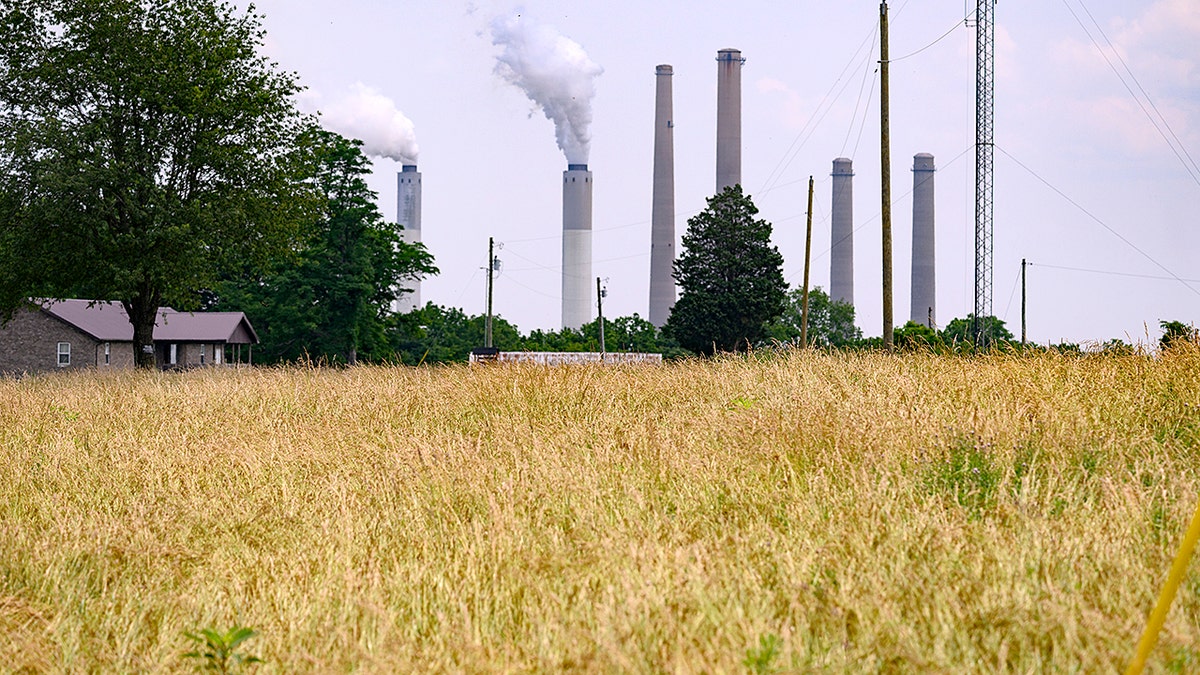
Stacks from the Hugh L. Spurlock Generating Station are seen on June 12, 2025, in Maysville, Kentucky. (Jeff Swensen/Getty Images)
NEWYou can now listen to Fox News articles!
Welcome to Fox News’ Artificial Intelligence newsletter with the latest AI technology advancements.
IN TODAY’S NEWSLETTER:
– Kentucky family turns down $26M from AI giant to keep farmland that ‘fed a nation’
– Trump names David Sacks co-chair of tech advisory council, expanding AI, crypto role
– Hollywood union praises Trump’s AI policy as ‘protections for human creativity’
MOOVE ALONG: A Kentucky family reportedly rejected a massive $26 million offer from a major artificial intelligence company. The family chose instead to preserve their historic farmland, citing its legacy of helping feed the nation over corporate tech expansion.
A train sits in front of houses on the banks of the Ohio River in Maysville, Kentucky, Sept. 13, 2017.(REUTERS/Brian Snyder)
GROWING INFLUENCE:President Donald Trump has appointed David Sacks as the co-chair of his technology advisory council. This strategic move signals an expanded focus on shaping both artificial intelligence and cryptocurrency policies under the current administration’s economic and political agenda.
‘STRONGLY SUPPORT’:A major Hollywood union is offering praise for President Trump’s approach to artificial intelligence policy. The union specifically highlighted the administration’s efforts to implement protections for human creativity in the face of rapidly evolving generative AI tools in the entertainment industry.
First lady Melania Trump arrives, accompanied by a robot, to attend the “Fostering the Future Together Global Coalition Summit,” with other first spouses, at the White House, Wednesday, March 25, 2026, in Washington.(Jacquelyn Martin/AP Photo)
FUTURE FORWARD:First lady Melania Trump welcomed a humanoid robot during a historic artificial intelligence summit hosted at the White House. The event underscores the administration’s active engagement with rapidly advancing emerging technologies.
WASTE WATCH:Vice President JD Vance’s anti-fraud task force intensifies its efforts to identify and root out fraudulent activities nationwide. The ramped-up initiative follows a major enforcement action that resulted in the suspension of 70 providers in Los Angeles.
TECH SHOWDOWN:House Speaker Mike Johnson outlined two specific conditions that he argues must be met for the United States to successfully win the highly competitive global artificial intelligence race.
SIDELINING PROGRESS:Sen. John Fetterman sharply criticized a proposed moratorium on the construction of AI data centers. Fetterman argues that pausing infrastructure development would place the United States at a severe disadvantage, characterizing the proposal as a “China first” policy.
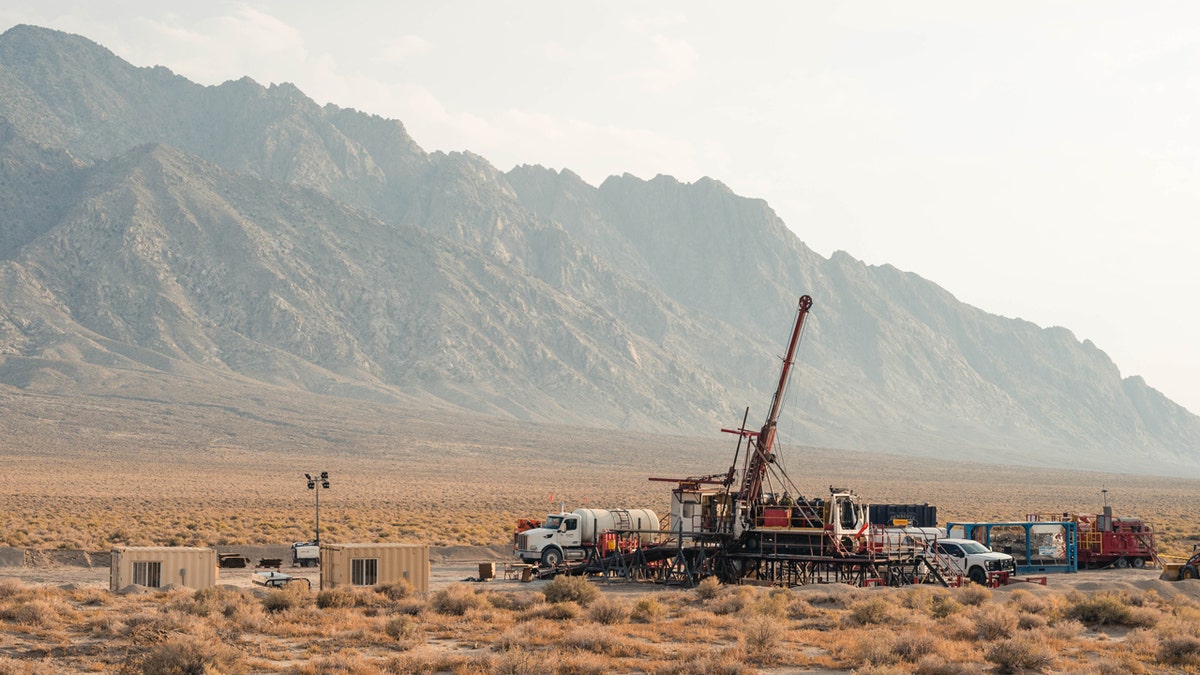
Nevada Big Blind center.(Zanskar)
EARTH’S EDGE: Fox News’ Bret Baier explores the intersection of political energy strategy and next-generation technology, reporting on how artificial intelligence is playing a crucial role in unlocking new potential for geothermal energy development across the country.
POWER PLAY:Palantir CTO Shyam Sankar addresses what he calls America’s “undeclared emergency.” The sweeping cultural and geopolitical conversation covers the threat posed by Iran, the development of deadly new U.S. weapons systems and strategic maneuvers required to avoid World War III.
CAUTION ADVISED:Apple co-founder Steve Wozniak expressed skepticism about the current state of artificial intelligence. Weighing in on the tech industry’s latest obsession, Wozniak stated plainly that he is not a fan of the technology’s current trajectory.
MONEY MATTERS:BlackRock CEO Larry Fink warned about the financial disparities potentially exacerbated by technological advancements. Fink emphasized that expanding market participation is absolutely necessary to address the growing wealth gap amid the current artificial intelligence boom.
Stay up to date on the latest AI technology advancements, and learn about the challenges and opportunities AI presents now and for the future with Fox News here.
Artemis II is NASA’s next big mission to the moon – the first in over 50 years. It’s part of the space agency’s long-term plans to build a space station called Lunar Gateway, where astronauts will be able to live and work.
It is also America’s best effort to beat the likes of China in the space race to return to the moon.
Niall speaks to Tom Clarke, our science and technology editor, and Thomas Moore, our science and medical correspondent about what NASA hopes to achieve with the lunar flyby.
Have you got a question for the podcast? Email us: why@sky.uk
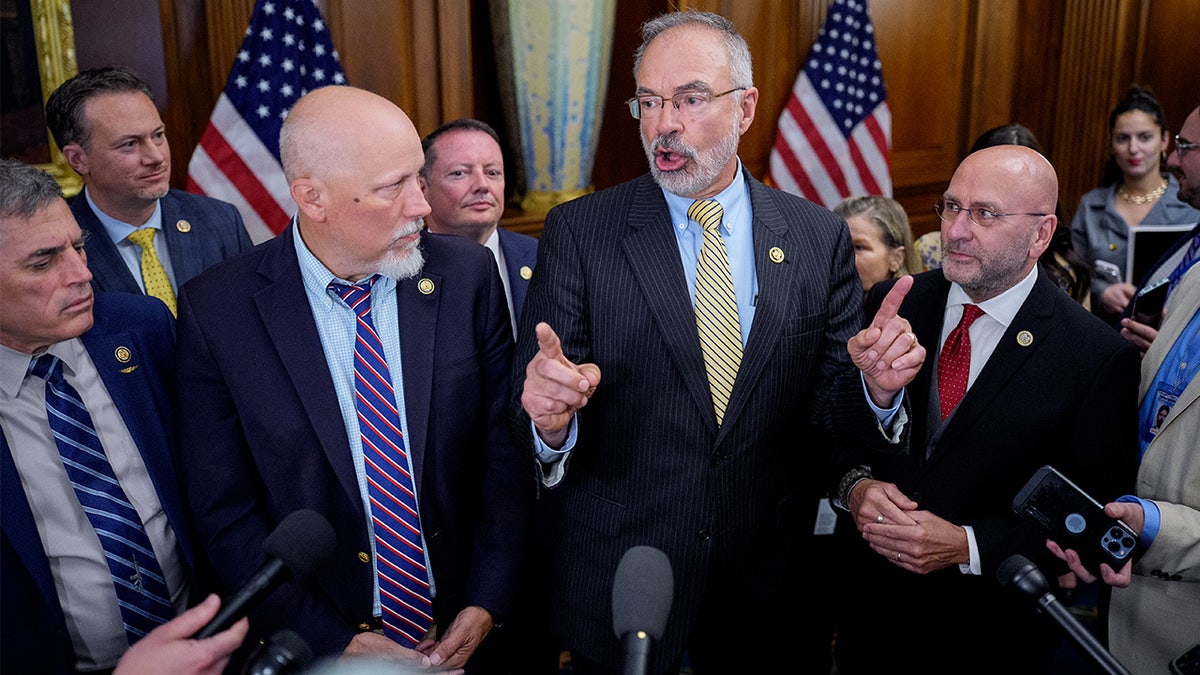
House conservatives are ripping into a Senate-passed deal that would end the 42-day Department of Homeland Security (DHS) shutdown, citing concerns that the bill fails to fund President Donald Trump’s immigration crackdown.
The House Freedom Caucus said Friday it will withhold its support for the DHS funding measure until Immigration and Customs Enforcement (ICE) and Customs and Border Protection (CBP) are given full-year appropriations. The conservative group also wants voter ID requirements added to the bill.
“We can’t believe that the Senate abdicated its responsibility this morning of not funding the child sex trafficking investigation division of ICE, that they didn’t fund the Border Patrol,” HFC chairman Rep. Andy Harris, R-Md., told reporters. “The only thing we’re going to support is adding that funding into the bill, adding voter ID, sending it back to the Senate, make them come back in and do their work.”
“The bottom line is … this deal is bad for America,” Harris continued.
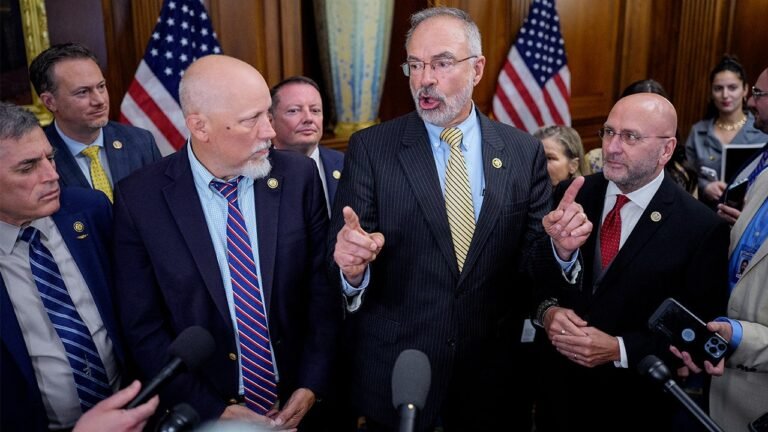
The House Freedom Caucus speaks at the U.S. Capitol Building on May 21, 2025.(Andrew Harnik/Getty Images)
The Senate-passed product provided funding for all of DHS minus ICE and parts of the Border Patrol, enraging some conservatives who viewed the agreement as a capitulation to Democrats.
“Republicans must also make sure this never happens again,” Sen. Rick Scott, R-Fla., told Fox News Digital, adding that he opposed the funding deal.
The measure, however, did not include a bevy of immigration reforms demanded by Democrats — a notable win for Republicans. Scott and other Senate Republicans have teased a forthcoming budget package that would give an infusion to Trump’s immigration agenda.
Amid the conservative backlash, House GOP leadership will pitch a short-term stopgap measure funding all sub-agencies of DHS, including ICE and the Border Patrol, Fox News confirmed.
House Republicans’ rejection of the Senate deal could force the upper chamber to return to Washington mid-recess as early as next week. A 60-day DHS continuing resolution (CR) is expected to face an uphill battle in the Senate due to Democrats’ continued opposition to funding Trump’s immigration efforts absent reforms.
The disagreement between both chambers will almost certainly make the partial government shutdown the longest in history.
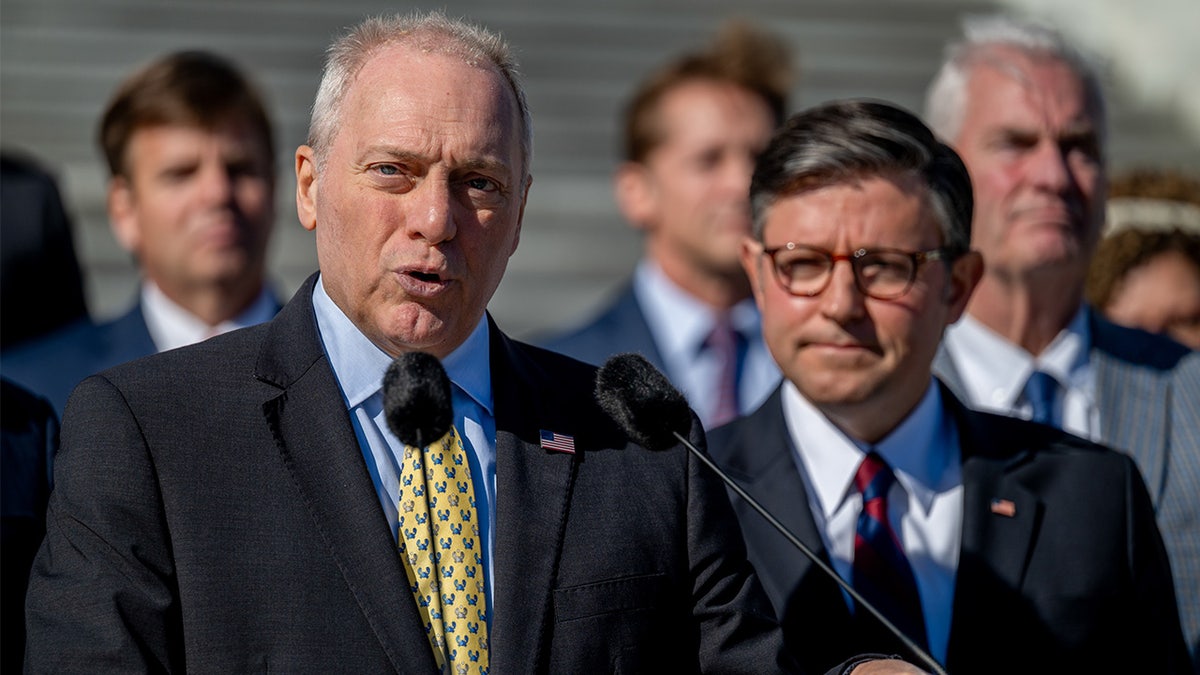
“We just have the number one main objective to see that we can get the entire Department of Homeland Security properly funded,” House Majority Leader Steve Scalise, R-La., told Fox News on Friday. “There’s a lot of threats out there.”
House Democrats, who indicated support for the Senate deal, will also likely balk at a short-term funding package for DHS that includes ICE funding.
House Majority Leader Steve Scalise, left, and House Speaker Mike Johnson, during a news conference at the U.S. Capitol in Washington, D.C., on Wednesday, Nov. 5, 2025.(Daniel Heuer/Bloomberg via Getty Images)
The pivot from House GOP leadership came after House conservatives’ opposition to the Senate deal complicated its passage through the chamber.
A traditionally partisan “rule” vote teeing up the legislation for a vote on final passage would almost certainly fail if Democrats withhold their support and there is more than one GOP defection. Meanwhile, House rules prohibit Speaker Mike Johnson, R-La., from advancing the measure through a suspension vote — requiring a two-thirds majority — between Thursday and Sunday.
House conservatives are also voicing frustration that the SAVE America Act has stalled in the Senate due to bipartisan opposition from all Senate Democrats and a handful of moderate Republicans.
The Senate left Washington on Friday for the Easter recess rather than continue to debate the Trump-backed election integrity bill.
“We the House should AMEND the Senate bill, ADD VOTER ID AND FORCE A VOTE in the SENATE,” Rep. Andy Ogles, R-Tenn., wrote on social media Friday morning.
Senate Democrats notably filibustered a voter ID measure sponsored by Sen. Jon Husted, R-Ohio, on Thursday.
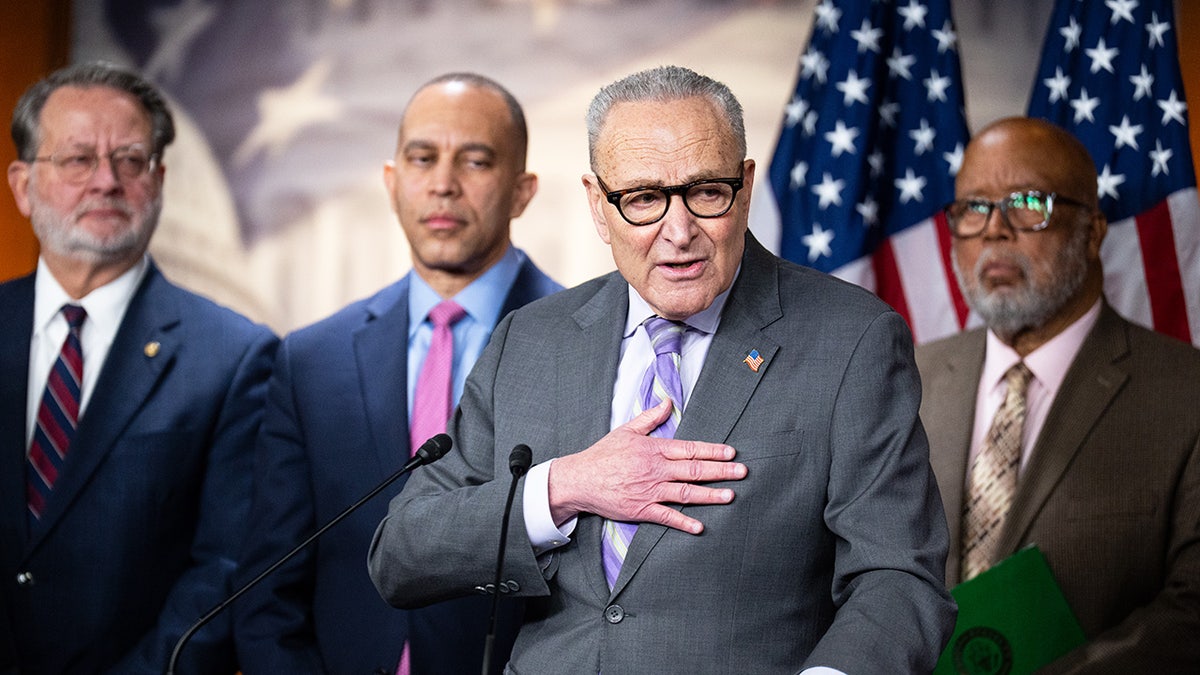
Senate Minority Leader Chuck Schumer, D-N.Y., speaks during the House and Senate Democrats’ joint news conference on DHS funding negotiations in the U.S. Capitol on Wednesday, Feb. 4, 2026.(Bill Clark/CQ-Roll Call, Inc. via Getty Images)
Conservative GOP lawmakers have also argued that because Trump took executive action to fund beleaguered Transportation Security Administration (TSA) agents on Thursday, delaying the passage of a DHS funding measure would not worsen air travel disruptions.
“The president has already said he’s going to fund TSA out of funds he has,” Harris said Friday. “It’s not going to affect the airports if we don’t do this today.
Apple has discontinued the Mac Pro – but it’s just the first of the tower computers to go. The rest will follow soon.
Fruit-sniffers extraordaire 9-to-5 Mac got the news yesterday, complete with official confirmation from Apple itself. It’s official and it’s happened, but there have been warning signs for months – in November 2025, Bloomberg’s Matt Gurman said “The Mac Pro is on the back burner.”
The phantom fruit-flingers of Silicon Valley launched the seven-thousand-buck Apple Silicon-based Mac Pro in June 2023, with an M2 Ultra SoC. It sported seven PCIe slots – but the problem was that cash-rich customers couldn’t add the sorts of expansion that normally go into a PCIe slot… to the extent that Apple publishes a page about PCIe cards you can install in your Mac Pro (2023). Notably, the machine did not support add-on GPUs: only the GPU that’s integrated into the CPU complex along with the machine’s RAM and primary flash storage. The machine also had no RAM expansion whatsoever.
Presumably, this limited its appeal for many traditional buyers, and the machine never saw an M3 or M4 model, let alone the M5 SoC that The Register covered shortly before Bloomberg called the Arm64 cheesegrater’s fate.
This machine is a high-profile example, but the trend is inexorable. This is how the rest of the industry is going to go. The path to performance is increasing integration. The original 1981 IBM PC had very little on the motherboard. A 16-bit CPU on an eight-bit bus, 16 kB of RAM, a keyboard port and cassette interface. Everything else was on expansion cards: graphics, serial and parallel ports, an optional-extra floppy disk controller. Over the 45 years since then, most of the PC’s possible expansions and peripherals and addons gradually migrated onto the motherboard, then into the chipset, then into the processor. Processors went from 8-bit to 16-bit, then to 32-bit bringing a memory controller onto the CPU die. Then the next generation absorbed the math co-processor and a tiny amount of static RAM as a cache, so the cache on the motherboard was demoted to “level 2” cache… then that migrated onto the CPU die as well. This was not just some Intel thing: for instance, Motorola’s 680×0 family went through much the same evolution.
Graphics followed: by the end of the 1990s, the Intel 810 chipset included a GPU. To this day, the Linux kernel driver for Intel integrated GPUs is named after the Intel 915 chipset for the Core 2 Duo in 2005. The next year, AMD bought ATI. By 2008 it was talking about on-chip GPUs, although it took a while to happen: it announced the “Llano” APU chips in 2010, and they launched the next year – the same time as Intel’s GPUs moved onto the CPU die, with the second generation of Core i-series chips, codenamed Sandy Bridge. The x86 market was finally catching up with where Arm had been with the ARM250 SoC in 1992 – nearly 20 years later.
In 2020, Apple moved the bar on desktop and laptop processors with the M1 generation Apple Silicon, integrating the computer’s RAM and nonvolatile storage onto the SoC as well. For laptops, this wasn’t such a huge shift – ever since the “Retina” MacBook Pro in 2012, Apple’s laptops had soldered-in, non-upgradable RAM, just like every MacBook Air since the first one in 2008.
In August last year, we mentioned the new Reg FOSS desk testbed, a Dell XPS 13 made in 2018. It has no DIMM slots: the RAM it came with is all it will ever have.
Who’s next? Everyone
The trend is inexorable. Thanks to Moore’s Law, for 60 years buyers and users have expected computers to keep getting faster. The effects of Dennard scaling started to put the brakes on that, leading to its successor Koomey’s Law, which fewer people remember: that they take ever less electricity to do it. Most of us don’t know Moore’s Second Law: that as chips get ever-more integrated, the fabs to make them cost more and more.
The writing on the wall is large and clear. You can still have high-end kit, but you don’t get to put it together from discrete bits. The fastest parts – the CPU, GPU, volatile and non-volatile storage – all get assembled as a single, highly integrated, non-upgradable component.
The fabrication failure rates will be horrendous at first, but that’s OK: so long as the duff region can be turned off, you can sell the working remainder as a lower-end part. This is how Sinclair made the original ZX Spectrum so affordable: it bought known faulty RAM chips cheaply, and turned off the bad half of each chip.
If you want faster x86 kit, it is heading in the same direction: huge, highly-integrated SoCs with all the core of the system in one package. AMD is well set for this: it already has very capable on-chip GPUs and the lead in chiplet-based manufacturing. The FOSS folks favor them, too, as AMD’s GPU drivers are all open source. They’re good enough for gaming, as Valve’s Steam hardware shows.
Nvidia didn’t get to buy Arm, so it can’t offer a combined package. Meanwhile, Apple’s respectable graphics performance demonstrates that a smaller, simpler integrated GPU, accessing the same RAM on the same die as the CPU shows, can rival a more capable GPU that is bigger, hotter, but further away and has its own local RAM.
This, we reckon, is what’s behind the “AI” boom. Nvidia is so gung ho for vast LLM clusters that it’s taking its vast market capitalization and investing money in its own customers. Its GPGPU line – graphics chips that don’t even have graphics outputs – are the last gasp of the discrete GPU market. When this bubble pops, Nvidia has nowhere else to go.
Aside from them, discrete graphics cards are history, just as disk controllers were a few decades earlier. DIMM slots are going too. The primary storage will be built in. (The industry missed a great deal there.)
What’s the point in a tower Mac Pro which despite lots of slots can’t take more memory, or newer GPUs, or even a bigger primary SSD? Well, not much, and so it’s gone. But as was the case with GUI desktops, and laptops with built-in pointing devices, and USB ports replacing everything else, and indeed with fondleslabs in general, the rest of the computer industry is going to follow where Apple goes first. There’s no point in tower or big desktop cases any more, when the board can’t have any expansion slots. You may as well build it all into a neat little closed box at the factory – you get better cooling that way, and it’s quieter as well as cuter.
The first microcomputer expansion bus was the Altair 8800’s S-100 bus, although DEC’s UNIBUS predated it, just as minicomputers predated micros. The late great Gordon Bell invented UNIBUS in 1969, but 57 years later, the idea of the expansion bus has reached the end of its route. We predict much resistance to the idea, but the expandable desktop (and laptop, and server) computer is obsolete. ®
The cases of lift stoppage in Greater Noida West are not showing any signs of stopping. once again greater Noida The lift in Tower A of West’s Himalaya Pride Society suddenly got stuck midway. In which many small children and women were also present. It is being told that all these children were going to another tower to participate in Kanya Puja. Then the lift would suddenly stop and everyone got trapped in it. As soon as the lift stopped, small children and women got scared and started shouting loudly for help, but no security personnel or maintenance staff heard their voices and came.
People trapped in the lift allege that even after pressing the alarm button, no help was received for a long time. Due to which people trapped in the lift started having trouble breathing, small children started crying loudly due to fear.
Women and children remained stuck in the lift for a long time
The residents of the society allege that the lift remained stuck for a long time, due to which the condition of the people trapped inside started deteriorating. Small children started crying loudly due to fear. A continuous noise started coming from inside the lift, when other people present in the tower heard this noise, a crowd gathered at the spot. Everyone started trying to somehow rescue the trapped people, but the lift was completely jammed. After a lot of effort, the maintenance workers and lift staff opened the lift and took out all the people safely. As soon as they came out of the lift, the condition of many children deteriorated due to crying, while the women were taken out and made to sit on one side and were given water to drink. After a while everyone heaved a sigh of relief.
Such incidents have happened before in the society – Seema Bhandari
Society’s AOA President Seema Bhandari said that this is not the first incident, even before this there have been many incidents of sudden closure and getting stuck of the lift. On March 7, an elevator in Tower A suddenly fell down. The next day on March 8, people got stuck in lifts several times. Even after these incidents, neither the builder improved maintenance nor made adequate security arrangements.
More than 1100 families live in Himalaya Pride Society, which includes children, elderly and sick people. Frequent breakdown of lifts has become a serious threat to their safety. In this incident, everyone came out safely, but it has become clear that the lift system of the society is a victim of complete negligence. Despite repeated incidents and complaints, lack of action raises a big question. If improvements are not made in time, a major accident may occur in the future.
Mumbai Sessions Court has acquitted all the 8 accused in the famous fake encounter case of 2016. These accused also included 5 policemen of Haryana Police involved in the alleged encounter of Sandeep Gadoli. All were facing serious charges like murder and criminal conspiracy.
What is the whole matter?
This case is of the year 2016, when notorious gangster Sandeep Gadoli of Gurugram, Haryana had come to Mumbai. On 7 February 2016, he was shot by a Haryana Police team in a hotel in Mumbai. Police claimed that Gadoli had several serious criminal cases registered against him and he was killed during the encounter. But questions started being raised on this encounter from the very beginning. It was alleged that this was not a real encounter but a pre-planned conspiracy. It was said that Gadoli was called to the hotel and then he was murdered as part of planning.
Divya Pahuja’s role
In this entire matter, the name of a woman named Divya Pahuja, who was present in the hotel with Gadoli at that time, also came to light. During investigation, it was alleged that Divya had played an important role in calling Gadoli to Mumbai and making him stay in the hotel. According to the police, Divya Pahuja and Gadoli had a close relationship, and taking advantage of that trust, she was lured into a trap. For this reason, he was considered a part of the conspiracy in this case and was made an accused.
Later murder of Divya Pahuja
Another sensational episode related to this case came to light later, when Divya Pahuja was murdered. In the year 2024, his dead body was found in a hotel in Gurugram. Investigation revealed that he was shot dead and later an attempt was made to dispose of the body. This murder case once again brought the Gadoli encounter case into limelight, because Divya was considered an important link in this entire case.
Mumbai court’s decision
In this decision, which came after almost 10 years, the Mumbai Sessions Court acquitted all the 8 accused due to lack of evidence. The court admitted that the prosecution could not prove the allegations beyond doubt.
Access Denied
You don’t have permission to access “http://hindi.news18.com/cricket/ravichandran-ashwin-returns-to-ipl-after-retirement-set-for-commentary-debut-in-richest-cricket-league-of-the-world-10315189.html” on this server.