For V-Mart Retail, the summer offtake remains healthy and winter merchandise spillover was limited to Q4. While core V-Mart is expected to remain steady, Unlimited’s new stores performance (higher sales/sq ft) coupled with the renewed expansion vigor keeps V-MART’s odds of maintaining a baseline rate of 15-16 per cent revenue CAGR over FY26-28 high.
A step-up in Unlimited’s network expansion (added 18 stores in the past six quarters vs a muted FY23-24) along with steady improvement in unit economics (format is now estimated to be at 4-5 per cent pre-INDAS EBITDAM vs 1-2 per cent for legacy stores) is noted.
However, what gives us more comfort on V-Mart is not just the healthy KPIs but its risk management and relative insulation from potential macro shocks vs peers. Most value retailers benefited from a buoyant macro environment over FY23-25, with sales productivity gains coming alongside rising inventory needs (higher inventory/sq ft). However, V-Mart continued to gain sales/EBITDA productivity, while keeping inventory needs in check. This makes it more resilient to inventory cycle shocks in an unfavorable macro environment.
Against this backdrop, 30 per cent stock price correction seems overdone (stock now available at <13x FY28 EV/EBITDA/<18x FY28 P/E). The demand from growth and profitability remains modest. We bake in about 16 per cent revenue CAGR and about 40-bp margin expansion over FY26-28E. We maintain BUY with a DCF-based TP of ₹850 (implying 21x FY28 EV/EBITDA).
Mark Cuban is known for his bold business moves. But his go-to lunch — which he says helps boost protein and supports his strategy for living long — might be his most surprising choice yet.
The billionaire entrepreneur shared what he called a “disgusting” but effective meal during a recent appearance on Robin Arzón’s “Project Swagger” podcast at South by Southwest earlier this month.
“I know this is going to sound so gross … and it is disgusting,” Cuban, 67, admitted in the interview.
The meal, he said, even sends his 16-year-old son fleeing the kitchen.
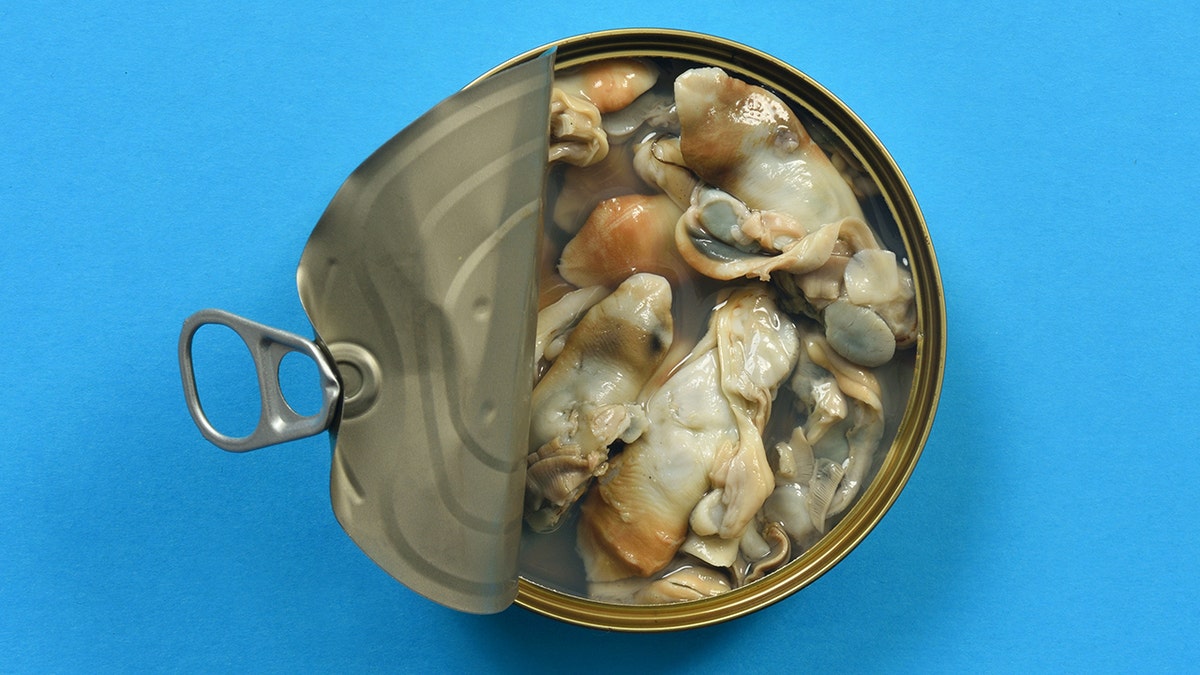
The longtime “Shark Tank” investor said that, when making lunch at home, he fills egg white wraps with canned baby clams and tops them with honey.
Head Peloton instructor Robin Arzón, at left, interviewed Mark Cuban at South by Southwest and asked what fuels his daily routine and workouts.(Rick Kern/Getty Images for Vox Media)
The Texas-based father of three said he’s shifted from a vegetarian to a pescatarian diet to boost his iron levels — and said the unusual combination is all about efficiency and nutrition.
Cuban said the egg white wraps contain about 50 calories and 11 grams of protein.
A serving of baby clams, meanwhile, adds roughly 80 calories and 14 grams of protein, plus iron.
The honey, he said, makes the meal more palatable and provides a quick source of carbohydrates for energy.
He also drizzles honey on his go-to breakfast, which is a simple bowl of cornflakes, he told Arzón.
Cuban said the meal is part of his broader focus on nutrition and longevity as he gets older.(Amanda Stronza/SXSW Conference & Festivals via Getty Images)
Cuban has a simple rule he applies to his meals, he added.
“My kids are 16, 19 and 22, and their whole lives growing up, I used to tell them the food rule,” he said, laughing. “If you like one thing, and you like another thing, and you put them together, you’re going to like it a lot more.”
A shocked Arzón responded, “I’m not sure many of us are convinced.”
Online users agreed. “I’m tempted to try the clam thing even [though] it sounds terrible,” one woman said in a YouTube comment following a video of the interview.
Another suggested that Cuban try the clams the Italian way, with pasta, olive oil, garlic and lemon.
Cuban said he shifted to a pescatarian diet to help improve his iron levels.(iStock)
The bizarre lunch, however, apparently fits with Cuban’s broader longevity philosophy.
In the interview, he said aging has forced him to get more precise about how food, workouts and supplements affect his body, and he specifically described the wrap as a post-workout protein boost.
While Cuban’s combination may sound strange, it’s not entirely off-base, a nutrition expert told Fox News Digital.
“Is it disgusting? Yes. Is there anything nutritionally wrong with it? No,” said Robin DeCicco, a New York-based certified holistic nutritionist. “He’s right. Canned shellfish like clams, mussels and oysters are some of the highest in absorbable iron and are also high in protein.”
The billionaire entrepreneur admitted his lunch combination “sounds gross,” but he said it helps boost protein and iron.(Nicola Gell/Getty Images)
She also pointed out that the low-calorie, low-fat lean protein egg white wraps are a “solid choice.”
Caveats to note
But DeCicco noted there are a few caveats.
“The one thing to watch with clams is sodium. If you’re eating them frequently, look for low-sodium or no-salt-added options,” she said.
Access Denied
You don’t have permission to access “http://hindi.news18.com/cricket/mahieka-sharma-protect-hardik-pandya-son-agastya-and-staretd-fight-with-paps-after-ipl-2026-match-watch-video-10322968.html” on this server.
It is Land Day today in Palestine, a day when we commemorate our special bond with the Palestinian land. And I cannot help but think about my grandfather, his dispossession, and the repetition of that trauma in my own life.
My grandfather, Hamdan, was 12 years old when Zionist forces began the campaign of ethnic cleansing that we now call the Nakba. He lived with his family in the village of al-Faluja. They were peasants who got by working their land, raising farm animals, and selling their seasonal crops at local markets.
Starting in early 1948, al-Faluja came under attack from Zionist militias. It was a strategic target due to its location at the centre of a network of roads leading north to Jerusalem and Jaffa and south to Gaza. As the brutal Zionist assaults intensified, my grandfather fled with his family to nearby villages.
They did not take anything with them, thinking they would return soon. The only thing they carried was the key to the door of their home. An Egyptian brigade held on to al-Faluja, besieged by Zionist forces well into 1949. The armistice between Egypt and the newly established Israel forced them to abandon their positions.
The Green Line was drawn, leaving 78 percent of historic Palestine in Zionist control and cutting off my grandfather from his ancestral village for the rest of his life.
It is in the nature of colonisers to fear anything that reminds them of the land’s rightful owners, because it exposes the fact that they have taken what does not belong to them. Israeli militias therefore set out to destroy what remained of al-Faluja, along with other Palestinian villages, and in the 1950s established several settlements on its land, including Kiryat Gat, Shahar and Nir Hen.
In Gaza, my grandfather’s family struggled to build a new life. Although the idea of return never left their imagination, the harsh reality forced them to adapt. They settled in an area east of Khan Younis, where they planted olive and citrus trees and built a home.
My grandfather made it a point to teach his children and grandchildren about agriculture. But he did not just tell us how to plant and grow; he taught us how to root ourselves in a land that is our historical right. He always told us that if it was taken from us by force, it would not be returned as a gift. It would come at a heavy price, because Israel knows it has taken something it has no right to, and will therefore respond with brutality when we demand it back.
I was just eight years old when I got a taste of what my grandfather had lived through. During the 2008-09 Israeli war on Gaza, I was displaced with my family for the first time.
Five and a half years later, when I was 13, the Israeli war machine attacked again. This time, it destroyed my home and the homes of all eight of my uncles. That experience was the final blow for my grandfather, who had carried the burden of almost 70 years of displacement and destruction in his heart. He passed away just days after seeing our olive trees and homes destroyed.
But we had learned the lesson well from my grandfather. We stayed on the land. We rebuilt our homes. We replanted our trees and put our roots deep into the soil once more.
In October 2023, the occupation launched its genocide against the people of Gaza. Amid death and destruction everywhere, we were forced to flee our homes once again.
Once again, Israeli forces destroyed our homes and uprooted the trees, killing many of our relatives and neighbours.
Last year, Israel drew the so-called Yellow Line, swallowing nearly 60 percent of the Gaza Strip. This line now stands between me and my home, just like the Green Line stood between my grandfather and al-Faluja
When I think about it, my heart feels heavy with the weight of all the years of occupation, even those I did not live through. I feel the suffering of those who came before me, of my ancestors longing to go back to their homes.
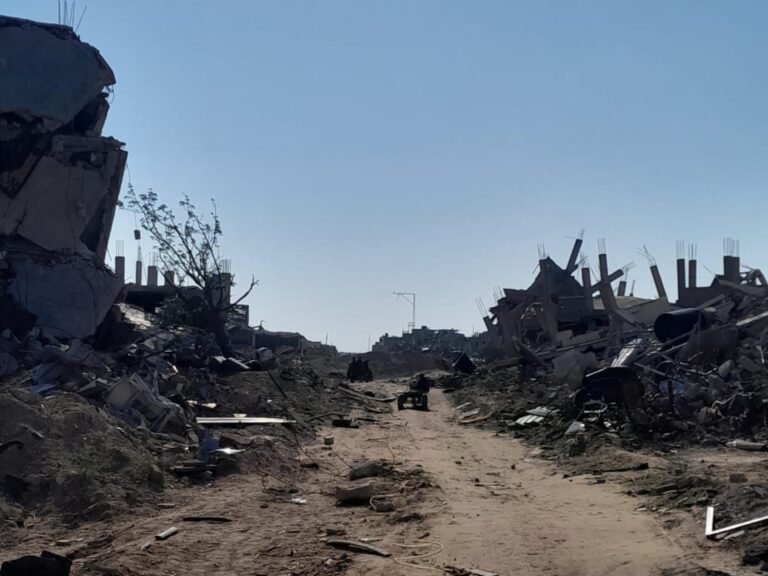
Today, I carry the key to my house, just like my grandfather did. I carry it even though I know my home has been completely destroyed. I have seen it myself reduced to rubble, its remains taken away by the machinery of destruction. Still, I keep the key.
Despite all this loss and suffering, we have no intention of leaving. For 77 years, Palestinians have been given various incentives to abandon their homeland. Israel has offered money, tickets and promises of a better life in exile. When that failed, it resorted to terror, imprisonment, home demolitions and economic siege in an attempt to break the Palestinian will.
Yet the Palestinians have stood firm. Their relationship to the land goes beyond ownership. It is an existential belonging.
Perhaps the clearest response to this colonial project lies in the demographic reality. Palestinians in Gaza numbered about 80,000 in 1948; they received nearly 200,000 refugees, including my grandfather’s family. Today, even after two years of genocide, we are two million people, holding on to our land, resisting expulsion and feeling more attached than ever.
No matter the lines drawn by the occupier, whether green, yellow, or any other colour, they will fade in the face of our deeply rooted existence. No matter how long it takes, no matter how violent the colonial war machine becomes, we will remain here. Palestine is us, and we are it.
The views expressed in this article are the author’s own and do not necessarily reflect Al Jazeera’s editorial stance.
Tributes have been paid to a girl, named locally as Chloe Watson, who died after she was found seriously injured in a Leeds street.
West Yorkshire Police were called to Kennerleigh Avenue, in the Austhorpe area of the city, at 5.55am on Saturday following reports of a young woman found unconscious.
Four people remain in police custody on Monday after they were arrested on suspicion of murder.
The 16-year-old was found to have suffered serious injuries and was taken to hospital, but was pronounced dead shortly afterwards.
Image:Pic: PA
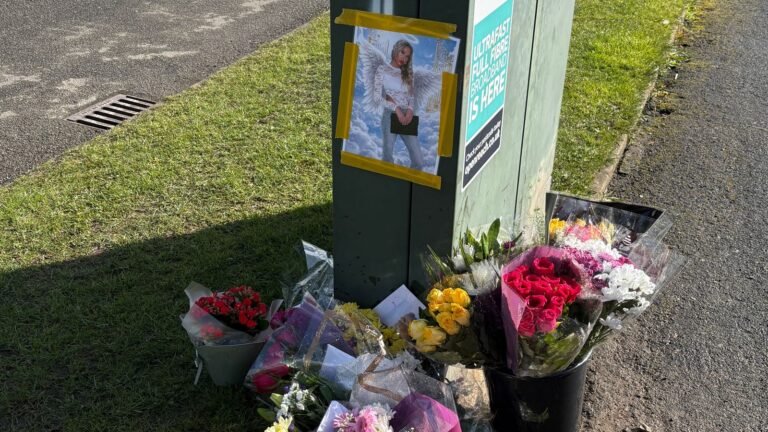
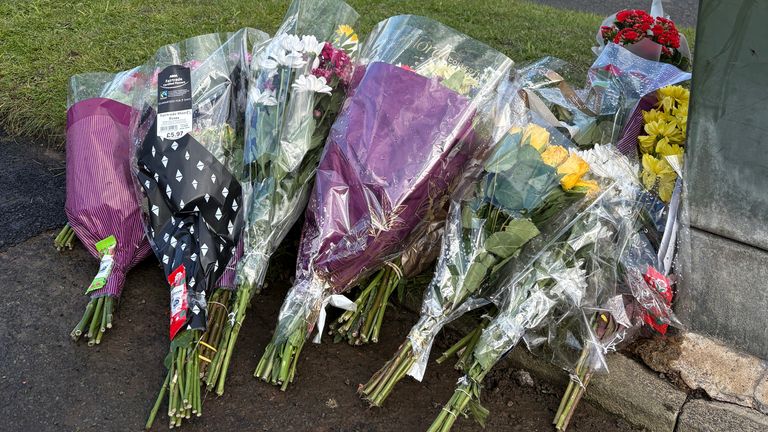
Flowers were left on Monday for the teenager.
One of the messages said it was for “my beautiful girl” and “rest easy my Chloe. Love you forever my crazy girl”.
Two women taped a photo of Chloe to a box on the roadside next to bouquets of flowers.
A relative, who set up an online fundraising page, said on the site her “life was sadly taken in tragedy, 16 years young, didn’t even make it to her 18th”.
‘Innocent beautiful soul’
They said: “I wanted to create a GoFundMe to help give her the best send-off possible. She didn’t deserve this.
“She was so full of life. Such an innocent beautiful soul taken too soon.”
The four arrested include two women aged 18, a man aged 19 and a 17-year-old boy, who were all arrested at a nearby address.
Chloe was from Cleckheaton, around 12 miles from where she was found.
Senior investigating officer, Detective Chief Superintendent Marc Bowes, said on Sunday: “Following our appeal for further information yesterday, we have now identified the deceased as a 16-year-old girl from the Cleckheaton area.
“Her family have been informed and we are supporting them as they try to come to terms with what has happened.
“Our inquiries into the incident which led to her death are continuing, and I would appeal again to anyone who was in the Kennerleigh Avenue area in the early hours of yesterday morning to come forward if they have any information which could assist our investigation.”
Access Denied
You don’t have permission to access “http://hindi.news18.com/cricket/ipl-2026-vaibhav-suryavanshi-statement-joining-rajasthan-royals-my-aim-to-take-advantage-of-powerplay-10323067.html” on this server.
Basketball Hall of Famer Charles Barkley used a segment about UConn Huskies star Alex Karaban to go on a political rant during CBS’ broadcast of March Madness on Sunday.
CBS featured Karaban in a piece about his family. His mother, Olga, came to Massachusetts from Ukraine with her parents and grandparents in 1996. His father, Alexei, immigrated to the U.S. from Belarus on a work visa in 2001.
UConn forward Alex Karaban (11) speaks during a press conference ahead of a game against Duke in the Elite Eight of the NCAA college basketball tournament Saturday, March 28, 2026, in Washington.(AP Photo/Abbie Parr)
After the segment aired, Barkley lamented the alleged treatment of legal immigrants.
“I want to be careful with my words right now because this is a really touchy subject for me,” he said. “I love that kid and his family, but the way some of these other immigrants are getting treated in our country right now is a travesty and a disgrace. I think there’s a difference between amazing immigrants and criminal immigrants. I think what’s going on in our country, what we’re doing to some of these amazing immigrants, is really unfortunate and it’s really sad.
“And that’s a great immigrant story. We have a lot of great immigrant stories out there that their stories need to be told but some of the stuff that’s happening to immigrants in our country right now is really unfortunate and it’s really unfair. But immigrants built this country and we should admire them and respect them.”
Former NBA player Charles Barkley during a pro-am prior to Arnold Palmer Invitational presented by Mastercard at Arnold Palmer’s Bay Hill Club & Lodge on March 4, 2026 in Orlando, Florida.(Tracy Wilcox/PGA TOUR via Getty Images)
Barkley didn’t cite any example of legal immigrants being treated poorly in the U.S.
The Department of Homeland Security (DHS) has routinely announces arrests of criminal illegal immigrants who have been accused of heinous crimes in the U.S.
Still, DHS and agencies like Immigration and Customs Enforcement (ICE) routinely come under fire for their tactics in arresting illegal immigrants.
New York City Mayor Zohran Mamdani offered fresh criticism of ICE ahead of a “No Kings” rally.
“We’re making clear that no one is above the law in this city, that everyone has to follow the rule of law,” Mamdani said. “I have made clear to the president, both in our private conversations and our public conversations, about the fact that I believe that ICE is a rogue agency.”
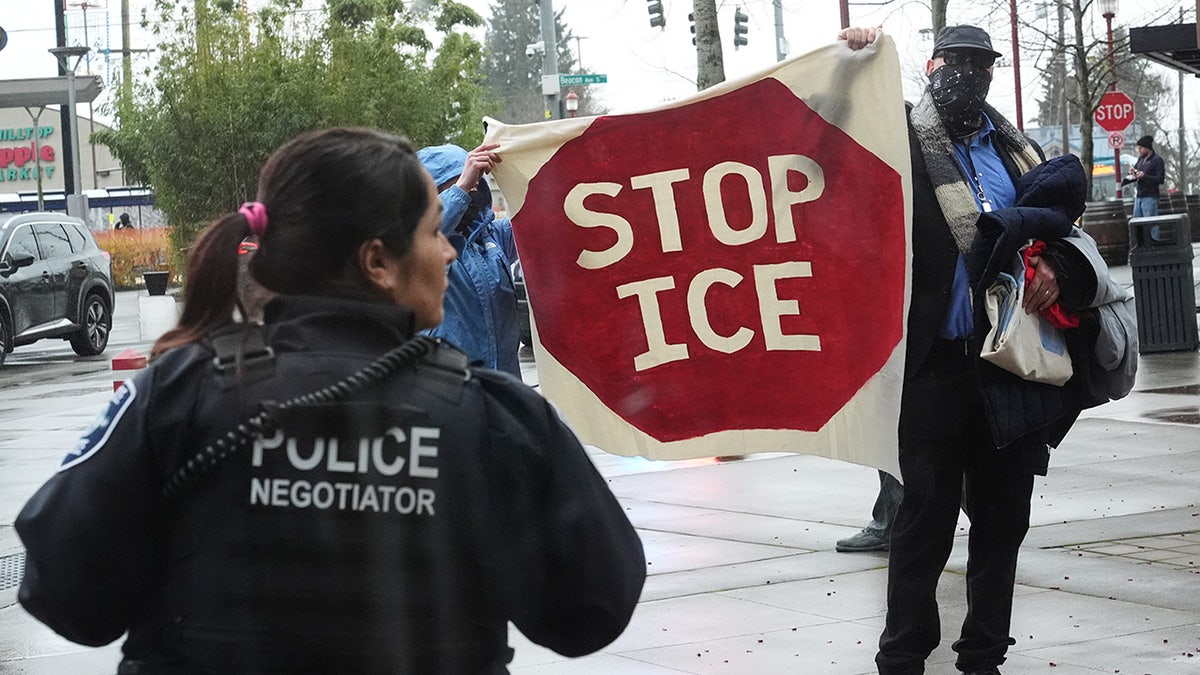
Protesters hold up a “Stop ICE” sign after being removed from the building by Seattle Police during a bill-signing event with Washington Gov. Bob Ferguson regarding limiting facial coverings on law enforcement officers and making it a crime to impersonate a peace officer, Thursday, March 19, 2026, in Seattle.(AP Photo/Lindsey Wasson)
Since launching their military offensive on Iran on February 28, the United States and Israel have carried out thousands of strikes across the Middle East nation of about 90 million people, targeting military as well as civilian infrastructure, including hospitals, schools and residential buildings.
Iran says more than 2,000 people have been killed in US-Israeli strikes on roughly 90,000 civilian sites, including the attack on a school in the city of Minab on the first day of the war, which has spread to Lebanon, where Israel has been accused of extending its “Gaza playbook”. Israeli forces have killed more than 72,000 Palestinians in the Gaza Strip, including hundreds of medics and aid workers, during their genocidal war.
Recommended Stories
list of 3 itemsend of list
Iran has also carried out retaliatory strikes on military, industrial, civilian and energy facilities in Israel, killing at least 19 people and wounding thousands. Tehran has also carried out attacks on Gulf nations that host the US bases, where at least 25 people have been killed. At least 13 US soldiers have also been killed in Iranian attacks.
Israeli and US strikes have expanded to include civilian facilities such as power and water desalination plants, drawing an Iranian response. On Sunday, Iran also targeted a desalination plant in Kuwait, raising concerns in the Gulf nations, which overwhelmingly depend on desalinated water.
We break down some of the key civilian targets the US, Israel and Iran have hit so far:
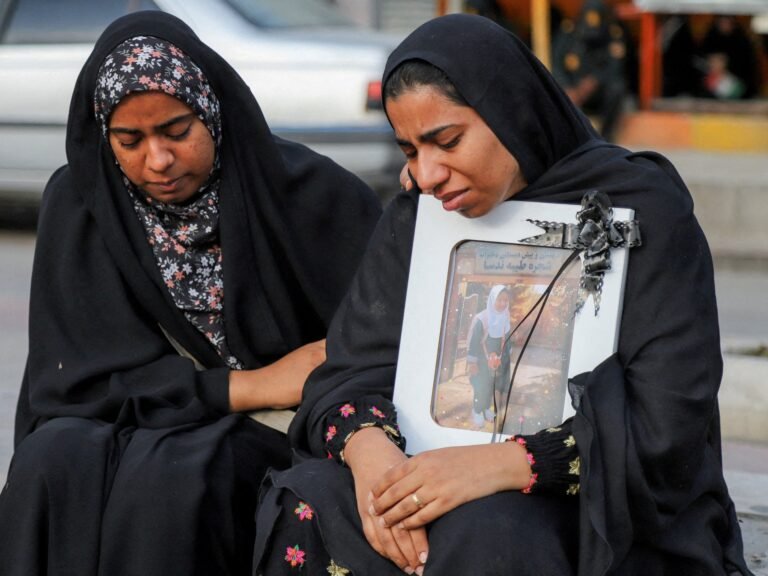
In this aerial handout picture released by the Iranian Press Center, mourners dig graves during the funeral for children killed in a reported US strike on a primary school in the city of Minab in Hormozgan province on March 3, 2026 [Handout/Iranian Press Center via AFP]
Education
School in Iran
The war on Iran began on February 28 with a strike on an elementary girls’ school, Shajareh Tayyebeh (The Good Tree), in the city of Minab in southern Iran. At least 170 people, most of them girls aged between seven and 12 years, were killed when the missiles struck the school.
President Donald Trump denied that the US had attacked the school.
However, several independent investigations by media organisations, including Al Jazeera, and rights groups, including Amnesty International, have said the attack was likely deliberate and that a US-manufactured Tomahawk missile was likely used in the attack.
In retaliation, on March 1, Iran struck Israel, killing at least nine people in the Israeli town of Beit Shemesh.
Universities in Iran
On March 28, the Iran University of Science and Technology was hit by what Iranian media said were targeted Israeli-US strikes. It remains unclear what the damage and casualties from the strike look like.
A day later, a university in Iran’s central city of Isfahan said it was hit by US-Israeli air strikes for the second time since the war erupted, leaving four university staff members wounded.
After these strikes, according to Iranian state media, the Islamic Revolutionary Guard Corps (IRGC) said it would attack universities tied to the US and Israel across the Middle East in retaliation.
On Sunday, in a post on X, the US Embassy in Baghdad warned that Iran and its proxies “may intend to target US universities in Baghdad, Sulaymaniyah, and Dohuk, as well as other universities perceived as connected to the United States” and advised US citizens to leave Iraq immediately.
Energy facilities
In retaliation for the US and Israel’s strikes, Iran has blocked the Strait of Hormuz, which has led to a disruption in global oil and gas supplies, and many countries have begun tapping into their strategic oil reserves to avoid an economic crisis.
While the world’s focus has been on this strait, and negotiations on how to reopen it are ongoing, attacks on energy infrastructure in Iran and across the Gulf region are also continuing, further upending global energy supply.
Iran
On March 8, Israel hit Iran’s oil facilities for the first time since the war started, killing at least four people. The Aghdasieh oil warehouse in northeast Tehran, Tehran oil refinery in the south, Shahran oil depot in the west of Tehran, and an oil depot in Karaj city were the key facilities targeted. Witnesses said oil from the Shahran depot also leaked into the streets. Reporting from Tehran, Al Jazeera’s Tohid Asadi also described seeing black raindrops on his windows early the next day.
Israel said it had struck “a number of fuel storage facilities in Tehran” that were used “to operate military infrastructure” in the March 8 attack. It provided no proof for its claims. Israel adopted similar tactics in Gaza, targeting schools and hospitals after accusing the facilities of being used by Hamas fighters. Most of their accusations later turned out to be false.
On March 18, Israel struck Iran’s critical South Pars gasfield. South Pars is part of the world’s largest natural gasfield, which spans 9,700sq km (3,745sq miles), and is shared by Iran and Qatar.
Trump has said neither the US nor Qatar had any involvement in or prior knowledge of Israel’s initial strike on the South Pars field.
Iran retaliated by launching missiles and drones at targets across the Middle East, including energy infrastructure in nearby Arab Gulf states.
Qatar
On March 2, Iranian drones struck an energy facility in Ras Laffan belonging to QatarEnergy, the world’s largest liquefied natural gas (LNG) producer.
QatarEnergy immediately announced that it had halted LNG production following the attacks. Qatar’s LNG exports represent 20 percent of the global market.
Iranian officials have, however, publicly denied targeting QatarEnergy.
On March 19, Iranian missiles again struck an LNG facility in Ras Laffan Industrial City in northern Qatar, hours after Israel had struck the South Pars gasfield. Doha reported that the attack caused “extensive damage”.
The attack wiped out about 17 percent of Qatar’s LNG export capacity, causing an estimated $20bn in lost annual revenue, QatarEnergy CEO Saad Sherida al-Kaabi told the Reuters news agency.
Saudi Arabia
On March 2, Saudi Arabia shut down operations at the Ras Tanura plant, its biggest domestic oil refinery operated by Saudi Aramco, after a fire broke out at the facility that officials said was caused by debris from the interception of two drones.
Iranian officials have publicly denied targeting Saudi Aramco.
United Arab Emirates
On March 2, a fire broke out at Mussafah fuel terminal in southwest Abu Dhabi after it was struck by a drone.
A day later, falling debris from a drone interception caused a fire at the Fujairah oil terminal along the eastern coast of the UAE. No injuries were reported.
On March 17, oil loading at the port of Fujairah was halted partly after an Iranian drone attack caused a fire at the export terminal, while operations at the Shah gasfield remained suspended after an earlier attack, officials said. Fujairah, which lies just outside the strait and is typically the outlet for more than 1 million barrels per day of the state company’s Murban crude, is still operating but at reduced capacity, according to Kpler, a data and analytics firm.
Oman
On March 3, multiple Iranian drones struck fuel tanks and a tanker at the port of Duqm, with at least one direct hit on a fuel storage tank, causing an explosion. On the same day, a drone strike was recorded at Salalah port, which handles fuel and industrial minerals.
Kuwait
On March 20, Iranian drones struck Kuwait’s largest oil refinery, Mina al-Ahmadi, for the second time. In the second attack, fires broke out across multiple units at the refinery, which processes about 730,000bpd oil.
Kuwait’s national oil company said several units had been shut down, though there were no casualties.
Israel
The owner of Israel’s Oil Refineries Limited said Iranian missiles struck its Haifa complex on March 19, and essential infrastructure was damaged. Energy Minister Eli Cohen said the Iranian strike had caused damage to a power grid.
Smoke rises from Kuwait international airport after a drone strike on fuel storage in Kuwait City on March 25, 2026 [AP Photo]
Water resources – desalination plants
Iran
On March 7, Iranian Foreign Minister Abbas Araghchi said a desalination plant on Qeshm Island in southern Iran was attacked by the US.
“Water supply in 30 villages has been impacted. Attacking Iran’s infrastructure is a dangerous move with grave consequences. The US set this precedent, not Iran,” he said on X after the attack.
Iran has since targeted desalination plants in the Gulf region.
Bahrain
On March 8, Manama said an Iranian drone attack caused material damage to a water desalination plant.
Water is scarce across the Gulf region, and groundwater, together with desalinated water, accounts for about 90 percent of the region’s water resources, according to a 2020 report by the Gulf Research Center.
The attack exposed the vulnerability of the Gulf countries, which depend on desalination plants for the majority of their water supply.
Kuwait
On March 30, an Iranian attack on a water desalination plant killed one Indian worker and damaged a building at the site, according to Kuwaiti authorities.
“A service building at a power and water desalination plant was attacked as part of the Iranian aggression against the State of Kuwait, resulting in the death of an Indian worker and significant material damage to the building,” Kuwait’s Ministry of Electricity and Water & Renewable Energy said in a statement on Monday.
Iran has yet to comment on the incident.
About 90 percent of Kuwait’s drinking water comes from desalination plants.
Smoke rises after an explosion in the industrial zone, caused by debris after interception of a drone by air defence, according to the Fujairah media office on March 05, 2026, in Fujairah, United Arab Emirates [Christopher Pike/Getty Images]
Power and industries
Power plants in Iran
On March 27, US and Israeli strikes hit the Bushehr Nuclear Power Plant, the Atomic Energy Organization of Iran said, adding that it was the third attack on the facility since the war began. The plant is Iran’s only operational nuclear power facility and plays a vital role in its civilian energy programme.
Power plants in Israel
On March 19, debris from intercepted missiles fell on a power generation station in the northern city of Haifa and caused electricity outages in several areas, according to Israeli media reports. Iranian media reported that Tehran struck the power plant in retaliation for the attack on the South Pars gasfield.
Steel plants in Iran
On March 27, the Israeli air force said it struck two Iranian steel plants linked to the IRGC. It provided no proof linking the plants to the IRGC.
Iran’s Fars news agency reported that the Israeli strikes hit Khuzestan Steel near Ahvaz and Mobarakeh Steel in Isfahan. A day later, according to Iranian media, the Khuzestan Steel Company had to halt production after its steelmaking units were struck.
In a post on X on March 27, Iran’s Foreign Minister Abbas Araghchi declared that Tehran would exact a “HEAVY price”.
Aluminium facilities in Bahrain, UAE
On March 29, the IRGC said it carried out missile and drone attacks on aluminium facilities in Bahrain and the UAE.
Aluminium Bahrain (Alba) said in a statement that two employees were injured in the attack on its facility, while the UAE’s Emirates Global Aluminium (EGA) said one of its sites in Abu Dhabi suffered significant damage, and six people were injured.
Finance and technology companies
Iranian bank hit
On March 11, Iran’s state broadcaster said an Israeli attack overnight had struck a state-owned Bank Sepah branch in Tehran and called it an “illegitimate and unusual act in war”. It reported that several employees were killed in the incident.
The IRGC has since threatened to attack “economic centres and banks” related to US and Israeli entities in the region.
The IRGC-affiliated Tasnim news agency also released a list of offices and infrastructure run by top US companies with Israeli links whose technology has been used for military applications, describing them as “Iran’s new targets”, said Al Jazeera’s Maziar Motamedi, reporting from Tehran.
The companies include Google, Microsoft, Palantir, IBM, Nvidia and Oracle, and the listed offices and infrastructure for cloud-based services are located in multiple Israeli cities, as well as in some Gulf countries, said Motamedi.
Gulf banks threatened
Following Iran’s threats, several banks across the Gulf region have evacuated their offices.
According to a March 11 report by The New York Times, Citibank asked its employees to immediately vacate its regional headquarters in the Dubai International Financial Centre. Standard Chartered told its employees to work from home.
In Qatar, HSBC temporarily shut down all three of its branches.
Data centres in the Gulf
On March 1, an Amazon data centre was struck in an Iranian drone attack on the UAE. On the same day, debris from a drone strike damaged a third Amazon data centre in Bahrain.
On March 24, an apparent Iranian drone attack disrupted Amazon Web Services (AWS) in Bahrain. Amazon did not immediately comment on whether its Bahrain facility was directly hit or if the disruption was due to nearby attacks.
The company said it was helping to migrate customers to alternate AWS regions while it recovers, though it did not provide additional details, such as the extent of the damage or how long it anticipates the disruption to last.
“As this situation evolves and, as we have advised before, we request those with workloads in the affected regions continue to migrate to other locations,” Amazon told Reuters in a statement.
AWS is Amazon’s cloud computing unit and is critical for the operation of many well-known websites and government operations. It is also the company’s main driver of profits.
Property Share Investment Trust, the country’s first registered Small and Medium Real Estate Investment Trust (SM REIT), on Monday announced that the ₹244.65 crore IPO of PropShare Celestia will open on April 10.
The issue, with a price band of ₹10-10.50 lakh per unit, will conclude on April 16, according to a statement.
PropShare Celestia is the third SM REIT launched by Property Share Investment Trust.
The public issue will comprise only a fresh issue of units, with no offer for sale component. The IPO proceeds will be used to acquire seven floors in Venus Stratum, a Grade A+ mixed-use commercial building, located in Nehru Nagar, Ahmedabad.
The minimum bid size is ₹10 lakh which is also the minimum investment amount for SM REITs. Bids can be made for a minimum of 1 unit and in multiples of 1 unit thereafter.
The underlying asset, Project Celestia, has a super built-up area of 2,07,838 square feet and is fully occupied.
The property has four primary tenants, including three managed-office operators — Smartworks Coworking Spaces, EFC Ltd (both listed), and Paragraph Khajanchi Business Center LLP. The fourth anchor tenant is a listed Swedish telecommunications multinational.
Ambit is the sole lead manager to the issue, while KFin Technologies is the registrar. The units are proposed to be listed on BSE.
Microsoft has halted the rollout of a Windows update after some users encountered installation errors.
The update, KB5079391, was released last week as a preview rather than a security update. Installation on some devices failed with a 0x80073712 error, and Microsoft temporarily pulled the plug on Friday night.
The Windows giant has not disclosed the exact nature of the problem, although the message shown to affected users said: “Some update files are missing or have problems. We’ll try to download the update again later.”
Microsoft said: “To prevent additional impact while the issue is investigated, Microsoft has temporarily limited the availability of this update.”
The problem affects Windows 11 24H2 and 25H2, and closely follows an out-of-band update to fix Microsoft account problems introduced in the March 2026 update.
The update isn’t mandatory, although it includes many new features, including fixes for Settings. Monitors can also now report refresh rates higher than 1,000 Hz. The update does not appear to have broken any devices because it failed at the installation stage.
Microsoft did not indicate when the rollout would resume. April’s Patch Tuesday is approaching, and failing to manage an installation, let alone allow interested users to check out the preview, is unfortunate. Microsoft said: “These production-quality updates are released ahead of the planned security update release for the following month.”
Production quality?
Microsoft recently committed to improving the reliability of Windows. This latest issue highlights just how much work the company has to do to regain users’ trust, though at least this error didn’t render their devices inoperable.
Windows boss Pavan Davuluri recently wrote to users: “Thank you for holding us to a high standard,” in response to concerns about the state of the operating system. If only Microsoft would hold itself to the same standard before releasing another problematic Windows update. ®