
Reference #18.f3680117.1778644748.d90c6ab
https://errors.edgesuite.net/18.f3680117.1778644748.d90c6ab
Source link

Reference #18.f3680117.1778644748.d90c6ab
https://errors.edgesuite.net/18.f3680117.1778644748.d90c6ab
Reference #18.530dde17.1778650839.2fa20ddc
https://errors.edgesuite.net/18.530dde17.1778650839.2fa20ddc


Reference #18.c5d07868.1778644439.511e32dd
https://errors.edgesuite.net/18.c5d07868.1778644439.511e32dd
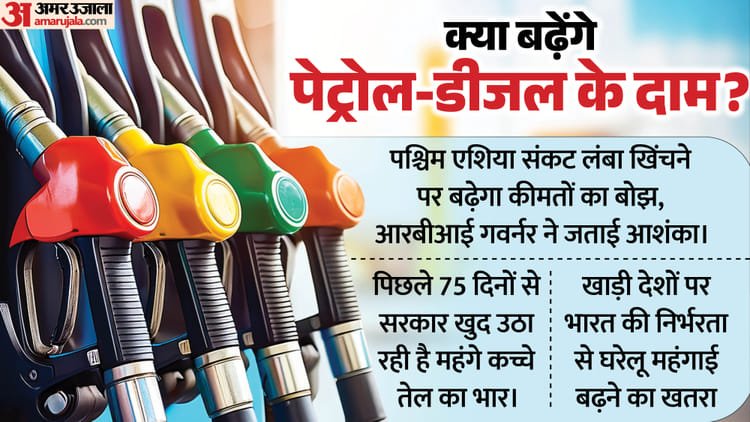
The impact of ongoing geopolitical tensions at the global level is now clearly visible on the Indian economy. Reserve Bank of India (RBI) Governor Sanjay Malhotra has given an important statement in the 12th high-level conference organized by the International Monetary Fund (IMF) and the Swiss National Bank in Zurich. He has clarified that the government is still bearing the burden of the huge rise in international crude oil prices due to the ongoing crisis in West Asia. But, if this global disruption drags on for a long time, common consumers may have to face increased fuel prices.
Despite the huge rise in crude oil prices in the international market, the Indian government has so far kept the retail prices of petrol and diesel stable. For this, the government has taken steps like reducing duty and marginally increasing some controlled prices like gas. According to the RBI Governor, it will not be possible to maintain the current situation indefinitely due to this crisis that has continued for more than 75 days. He clarified that if this situation continues for a long time, it is only a matter of time that the government will pass on some part of these increased prices to consumers. However, he also appreciated that the government has successfully reduced the fiscal deficit, which had reached 9.2 percent during the pandemic, to about 4.3 percent by following fiscal prudence.
The region of West Asia is extremely important strategically and economically for the Indian economy. Citing figures, the RBI Governor said that one-sixth of India’s total imports and exports are related to this sector. Apart from this, 40 percent of the total remittances (money sent by emigrants) received by India, 40 percent of fertilizer imports and about 60 percent of gas supply are dependent on this sector. Due to this high dependency, any tension or geopolitical instability in the Middle East poses a direct risk to India’s supply chain and economy.
These shocks in the supply chain have a direct impact on domestic inflation. This risk is even greater for India because the share of food items in the Consumer Price Index (CPI) basket is still around 40 percent. The Governor acknowledged that monetary policy alone may not be sufficient to deal with large supply-side shocks. However, he stressed that policy makers should adopt a strong and cautious approach. If the impact of supply disruptions begins to spread to other sectors of the economy and inflation becomes widespread, policymakers will inevitably have to intervene.
This statement of the RBI Governor is an indication that India cannot remain completely untouched by global crises. The government has so far tried to protect the general public from the direct blow of inflation, but if the uncertainty in West Asia continues for a long time, an increase in fuel prices in the domestic market may become an inevitable step. In such a complex environment, the RBI will need to remain extremely flexible and agile in its monetary policy as per domestic and global circumstances.
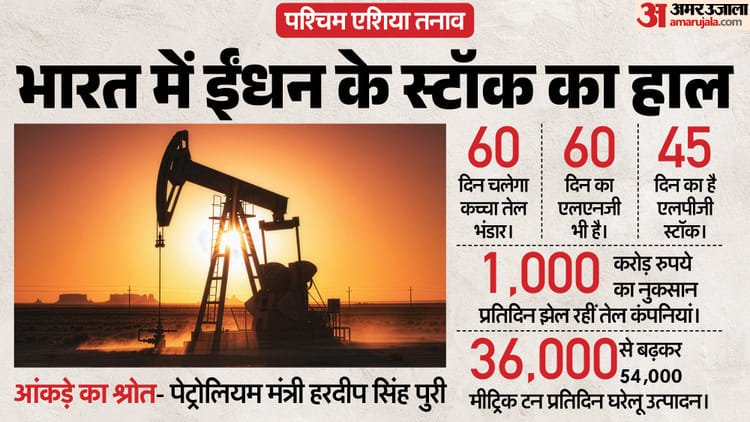
The conflict between Iran and America has been going on in West Asia for about 76 days. Israel is also taking part in the fighting. Due to this, concerns regarding oil and gas have started deepening. Prime Minister Narendra Modi himself has appealed to the countrymen to adopt options like work from home, car pooling in view of the crisis. Meanwhile, Union Petroleum and Natural Gas Minister Hardeep Singh Puri also urged the public to follow PM Modi’s suggestions so that import expenses can be reduced. He also enumerated the measures being taken by the government regarding crude oil reserves and fuel supply.
Reference #18.2d4adc17.1778644251.c69fe00
https://errors.edgesuite.net/18.2d4adc17.1778644251.c69fe00
Reference #18.2d4adc17.1778651514.c8734c0
https://errors.edgesuite.net/18.2d4adc17.1778651514.c8734c0
Prateek Yadav, younger brother of Samajwadi Party national president Akhilesh Yadav, died on Wednesday, May 13. capital of uttar pradesh Lucknow He breathed his last in the Civil Hospital.
After Pratik’s health deteriorated, a person who came to his house gave important information. While talking to ABP News, he told that yes, I was at home. I reached home at five o’clock and went straight to the civil hospital from there. I was unwell and that’s why I reached there. Here the doctors tried to save him but could not save him. On the other hand, according to sources, about 20 boys had brought Prateek to the hospital.
After his death, preparations for the post-mortem of Prateek’s body have been started. Under the supervision of the Chief Medical Officer, a panel of doctors has been formed which consists of 3-4 doctors. There will be videography of Prateek’s post mortem.
A doctor at the hospital said that Prateek did not receive any treatment. He was brought here dead. Prateek was brought here at 6.55 in the morning. He had died at that time. Doctors checked his vitals and declared him dead. His health was very bad. When seen here, he was in a dead state.
On the other hand, the Chief Minister of Uttar Pradesh Yogi Adityanath On Wednesday, he expressed grief over the demise of Prateek Yadav, younger son of Samajwadi Party (SP) founder Mulayam Singh Yadav. In his condolence message on the social media platform ‘X’, the Chief Minister said, “The sudden demise of Prateek Yadav ji, son of former Chief Minister of Uttar Pradesh, late Mulayam Singh Yadav and husband of Aparna Yadav, Vice President of Uttar Pradesh State Women’s Commission, is extremely sad. Humble tribute.” He said, “My condolences are with the bereaved family. It is a prayer to Lord Shri Ram to grant salvation to the departed soul and strength to the bereaved family to bear this immense sorrow. Om Shanti.
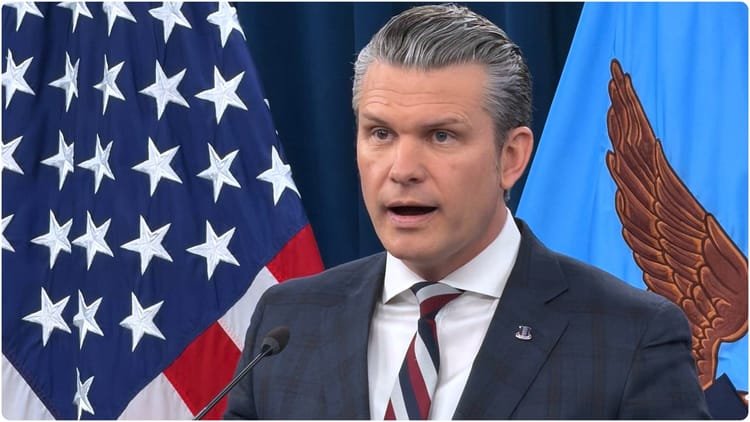
US Defense Secretary Pete Hegseth strongly defended the ongoing military campaign against Iran. He said that despite all the tensions and the ongoing crisis in the Strait of Hormuz, America still holds all the cards in its hand.
Reference #18.530dde17.1778643569.2f5d2a54
https://errors.edgesuite.net/18.530dde17.1778643569.2f5d2a54