Bihar Teacher Vacancy: Nitish government ends the wait for TRE-4! There will be bumper reinstatement of 44 thousand teachers in Bihar

0

Under Bihar Public Service Commission (BPSC), teachers have been recruited in three phases in the state. Now restoration is to be done under TRE-4. Candidates were waiting for this for many months. Now this wait is about to end. BPSC will issue an advertisement for the reinstatement of teachers next month (March). Its preparations have been completed. This information was given from JDU’s X handle on Thursday (February 05, 2026).

More than 2,27,000 recruited in three phases

It was informed through the post that giving further impetus to the expansion of education in the state, 44,000 teachers will soon be reinstated in government schools. Advertisement will be released from BPSC next month. It was also said that Nitish government is fully committed to empowering quality education in Bihar. More than 2,27,000 teachers have been appointed in three phases in the last two years.

TRE-4 not mentioned in BPSC calendar

Let us tell you that last Wednesday (February 04, 2026) teacher candidates had created a ruckus in Patna. They said that there is no mention of TRE-4 in BPSC’s calendar 2026 whereas Education Minister Sunil Kumar had said that the advertisement will be released by the end of January. Amidst this protest, teacher recruitment has been announced today (Thursday).

On the other hand, under the Right to Education Act (RTE), the last date for online registration for enrollment in Class-1 in private schools has now been extended to 15th February. Earlier this date was fixed as 31 January. Parents will now be able to apply on Gyandeep portal till 15th February.

According to the newly determined schedule, verification of the applications received will be done by 18th February, while online school allotment of the verified students will be done on 23rd February. Enrollment of selected students will be done in the respective schools from 24th February to 10th March. The Education Department has appealed to all the parents to register within the stipulated period and provide their children with the benefit of this opportunity of free and compulsory education.

Also read- What is the new rule for running girls hostels and lodges in Bihar? Take note otherwise your license will be cancelled.

Education Loan Information:
Calculate Education Loan EMI

Cloud sovereignty is no longer just a public sector concern • The Register

0

Interview Sovereignty remains a hot topic in the tech industry, but interpretations of what it actually means – and how much it matters – vary widely between organizations and sectors. While public bodies are often driven by regulation and national policy, the private sector tends to take a more pragmatic, cost-focused view.

That tension has pushed cloud and virtualization platforms that position themselves as alternatives to US hyperscalers into sharper focus. One such company is OpenNebula, a cloud and virtualization management platform designed to run across a wide range of infrastructures, from on-premises environments to public clouds including Amazon Web Services and European providers like Scaleway.

Founded in 2008, OpenNebula will turn 18 in 2026, but recent geopolitical shifts and regulatory pressure have pulled it squarely into debates around cloud sovereignty – particularly in Europe, where questions of control, jurisdiction, and vendor dependence have become increasingly urgent.

The Register spoke with OpenNebula managing director Ignacio Llorente about how definitions of sovereignty differ between the private and public sectors, and why demand for “sovereign” cloud solutions is rising – even among organizations that have traditionally prioritized cost and convenience over control.

With regard to the pragmatic approach historically taken by the private sector, Llorente says: “They are more cost-driven, they don’t consider sovereignty as a key thing… it’s more about ‘this is my RFP, you have to fulfill these requirements.'” One of those requirements could increasingly be a sovereign solution.

“But if you go into the public [sector],” he says, “it is completely different. For example, they are giving priority for defense. They are giving priority to sovereignty.

“And they say, ‘OK, that’s good. We have to start comparing solutions. But my first step, I’m going to keep only those solutions that are sovereign.'”

Which brings us to what “sovereign” means. “I think one of the problems we have right now,” says Llorente, “is that there is not a common definition for sovereignty.”

Differing definitions don’t occur only company by company, but also at the geographical level. “It’s in the EU, it is open,” he says. “In other cases, it’s not.” He cites the example of the US. “We have customers in the US, and they discuss sovereignty. In the US, the sovereignty concept is more about on-prem and open source. It’s about a sovereignty that I [the customer] can control.

“You go to the EU… ‘OK, this is the thing, plus technology that is developed in the EU.'”

Calls for EU firms to move away from US hyperscalers and opt for an EU-native approach continue to increase in volume and are also the subject of regulations. While businesses will lean toward what makes the most sense from a bottom-line perspective, many are increasingly thinking local when it comes to cloud computing.

Having noted the pragmatic nature of business, Llorente echoes sentiments expressed by Nextcloud and the UK cloud provider CIVO. “We have been receiving an exponential number of requests,” he says, before cautioning: “This will take three, four, five years because of the multi-year term of the subscription licenses in different companies.”

Llorente reckons that, given the geopolitical environment, interest will accelerate further. “Probably, in 2027, we’ll have the peak.”

Of OpenNebula’s definition, he says: “Ours is not only about where the servers are located. Sovereignty is about who controls the platform, who owns the technology stack, who can make decisions about the infrastructure, and even who controls the energy.”

In a January blog post, Llorente said 2025 had been a year “shaped by major market shifts” and “rapid adoption.” Having an open, sovereign, enterprise-ready virtualization and cloud platform hasn’t hurt when it comes to scooping up customers looking for an alternative to VMware, as well as organizations looking for something a little more vendor-neutral.

Most recently, OpenNebula became available on OVHcloud as production-ready environments. Other companies, such as SUSE, are also banging the sovereignty drum with increasing volume, recently launching a tool to assess how an organization stands against the objectives defined by the EU Cloud Sovereignty Framework.

Llorente says he is frequently asked to recommend platforms. For entities eyeing EU regulations, SUSE (which operates out of Germany) may be attractive.

“If you go to the public cloud, the priority for the European Commission is to reduce the dependence on a small number of foreign platforms. If you go private, the big issue is the VMware acquisition by Broadcom.”

An open solution that addresses a potential sudden increase in licensing costs resulting from the acquisition could also be a sovereign one.

“In private cloud, it’s mostly driven by VMware’s acquisition by Broadcom,” says Llorente. “They have one year to manage the migration, and they are now starting to evaluate different alternatives, and they don’t want to make the same mistake… they want to adopt something that is open.”

The pragmatism of the private sector should not be overlooked in debates about sovereignty. It could be that Broadcom’s antics have as much effect on how an organization deals with its cloud needs as the reaction to other antics in certain political offices. ®


Source link

Pakistan army says it killed 216 fighters in weeklong Balochistan campaign | Military News

0

The military says operations that began on January 29 degraded leadership and operational capabilities of ‘terrorist’ networks.

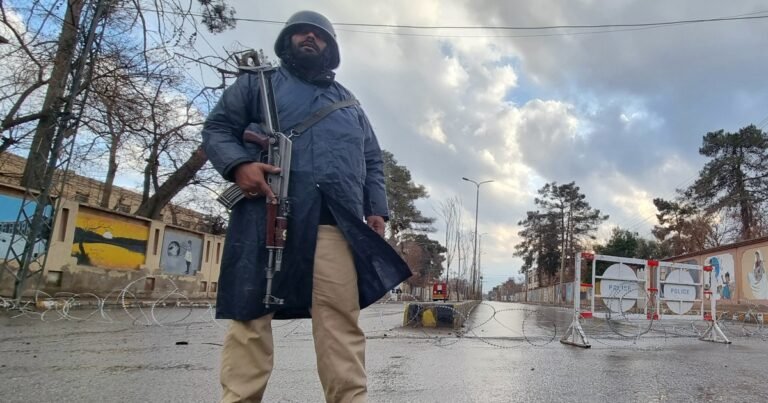
Pakistan’s military has concluded a weeklong security operation in the restive southwestern Balochistan province, claiming the deaths of 216 fighters in targeted offensives.

A military statement on Thursday said following the province-wide attacks by the separatist Balochistan Liberation Army (BLA), carried out to “destabilise the peace of Balochistan”, security forces launched Operation Radd-ul-Fitna-1 (countering chaos) to “dismantle terrorist sleeper cells through sustained combing and sanitisation operations” through “meticulous planning” and “actionable intelligence”.

Recommended Stories

list of 3 itemsend of list

The operation commenced on January 29 in response to a series of coordinated attacks by the BLA, which said it stormed schools, banks, markets and military installations across the region in one of its largest operations to date.

The military claimed that 216 fighters were killed during the operations, “significantly degrading the leadership, command-and-control structures and operational capabilities of terrorist networks”.

A “substantial cache of foreign-origin weapons, ammunition, explosives and equipment” was also recovered, the statement added. It further claimed that a preliminary analysis shows the fighters benefitted from “systematic external facilitation and logistical support”.

The military added that during the operations, 36 civilians, including women and children, and 22 security and law enforcement personnel lost their lives.

Pakistan has dealt with a separatist movement in Balochistan for decades. Violence has surged in recent years, with armed groups stating they are resisting exploitation in the resource-rich province. The area is rich in coal, gold, copper, and gas, which generates revenue for the federal government.

The region’s armed groups regularly target security forces and have also attacked civilians, including Chinese nationals working on regional projects, according to the Pakistani government.

In 2025, separatists attacked a train with hundreds of passengers on board, leading to a two-day siege in which dozens were killed.

“Over the past 12 months, security forces in Balochistan have sent more than 700 terrorists to hell, with around 70 terrorists eliminated in just the last two days alone,” Balochistan’s Chief Minister Sarfraz Bugti told reporters on Sunday. “These attacks cannot weaken our resolve against terrorism.”

He accused neighbours India and Afghanistan of backing the fighters, allegations which New Delhi and Kabul deny.


Source link

Roman industrial complex is unearthed in northern England with 800 whetstones

0

NEWYou can now listen to Fox News articles!

Archaeologists recently found a large Roman industrial complex in northern England — along with hundreds of tools, offering rare insight into how Romans lived and worked.

The excavation was conducted by archaeologists at Durham University and centered around a site at Offerton, near Sunderland.

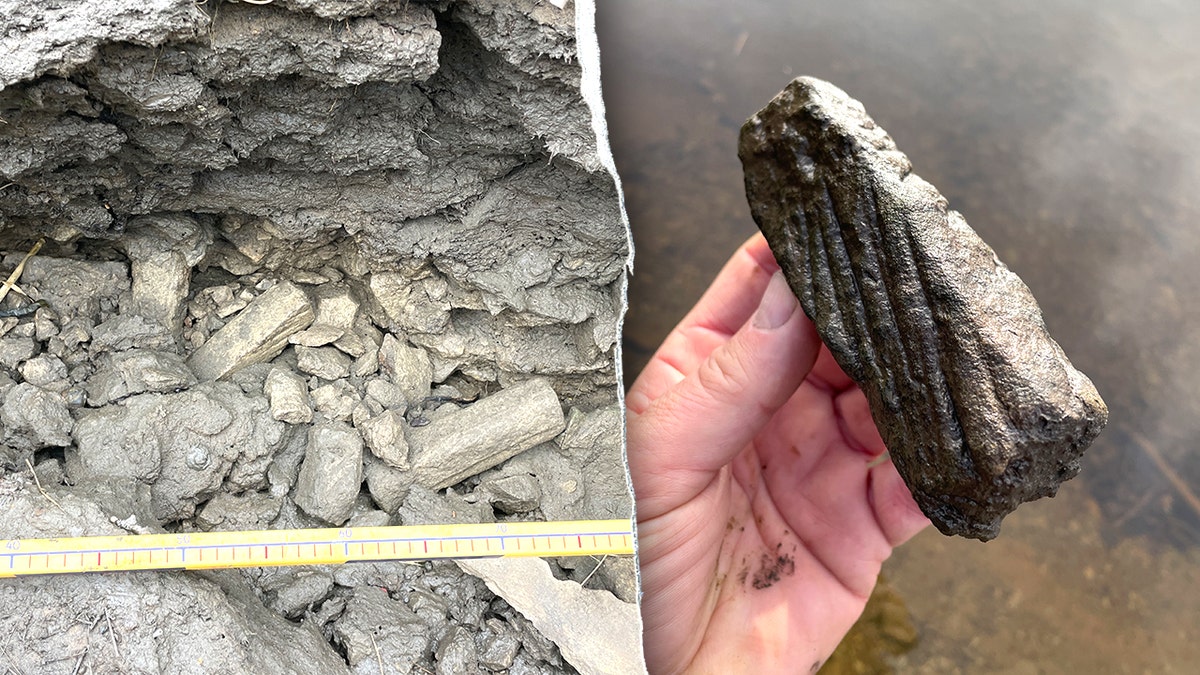
While excavating the River Wear, archaeologists uncovered more than 800 whetstones — stone tools that were used to sharpen weapons and other tools — as well as 11 stone anchors believed to be linked to river transport.

SELF-HEALING CONCRETE? BURIED POMPEII SITE REVEALS SECRET BEHIND ROME’S ENDURING STRUCTURES

In a press release, Durham University described the cache as “the largest known whetstone find of the period in North West Europe.”

It went on, “It places North East England firmly within Roman Britain’s sophisticated manufacturing and trade network.”

Lead shot from English Civil War next to excavators at site

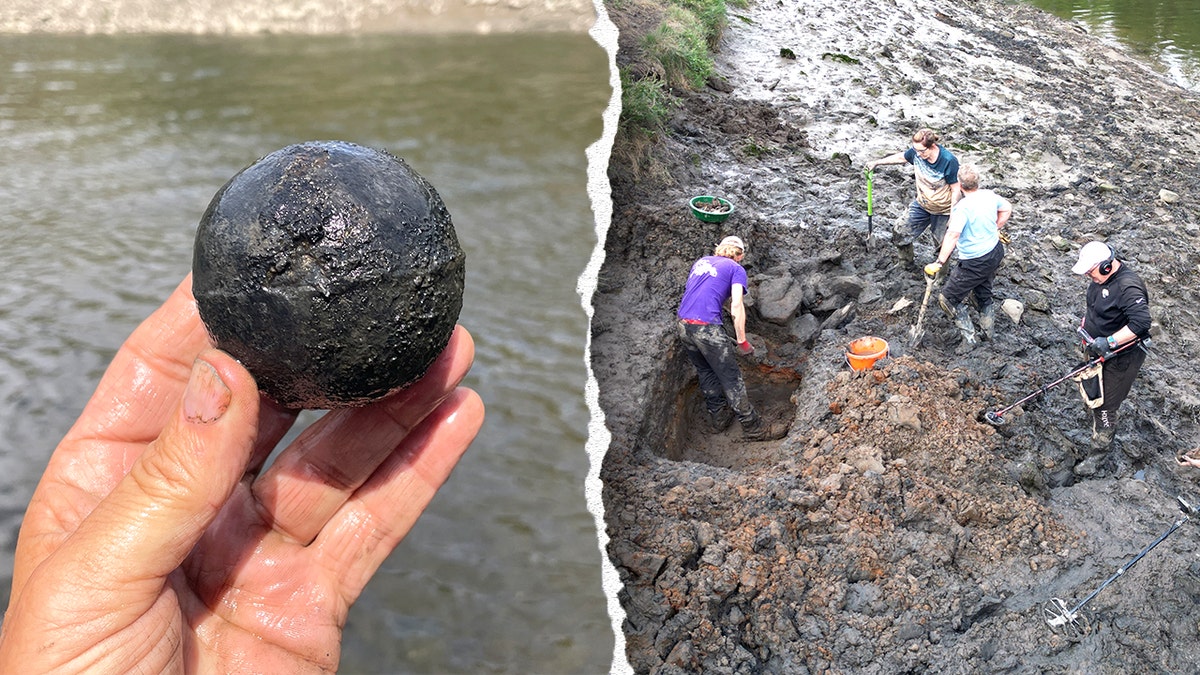
The excavation also uncovered later artifacts, including iron and stone cannonballs and lead shot dating to the English Civil War, according to Durham University. (Gary Bankhead, Durham University)

The finds date between 42 and 238 A.D., which researchers determined through sediment analysis confirming Roman-era activity.

The excavation also uncovered later artifacts, including iron and stone cannonballs and lead shot dating to the English Civil War, according to the university.

“Without whetstones, Roman tools simply wouldn’t function properly. They were as fundamental to daily life as chargers or batteries are today.”

The site has been described as “a major production hub in Roman Britain.”

Officials believe there may be hundreds — even thousands — more whetstones beneath the riverbank. 

MAJOR ROMAN TREASURE HOARD RECOVERED AFTER DETECTORIST KEPT IT SECRET FOR YEARS

Many of the ones that were found appear to have been purposely discarded.

“Collectively, these discoveries could extend the known timeline of human activity along this part of the River Wear by over 1,800 years,” the release stated.

Split image of whetstones near water, under moss

Roman-era whetstones recovered from the River Wear were essential tools used in nearly every craft and trade. (Gary Bankhead, Durham University; Keith Cockerill, Durham University)

Whetstones weren’t just industrial tools — they were essential in every aspect of Roman life, said Gary Bankhead, an archaeologist at Durham University who was involved in the excavation.

“Every craft — metalworking, carpentry, leatherworking, agriculture, shipbuilding, and even domestic food preparation — relied on sharp tools,” Bankhead told Fox News Digital.

ANCIENT ROMAN FORT YIELDS 2,000-YEAR-OLD FRUIT THAT SURVIVED THE CENTURIES, PLUS OTHER TREASURES

“Without whetstones, Roman tools simply wouldn’t function properly,” he said. 

“They were as fundamental to daily life as chargers or batteries are today.”

Split images of whetstones at site

Archaeologists uncovered hundreds of Roman-era whetstones along the River Wear, pointing to large-scale industrial activity in northern England. (Gary Bankhead, Durham University)

The tools that were made here were probably exported to far wider parts of Roman Britain, Bankhead said — describing the discarded whetstones as the “most revealing” aspects of the site.

“Crucially, the position of the whetstones in one of the trenches shows that they were being dumped directly into the river from the bank side, mixed with the shatter and flakes created during the manufacturing process,” he said.

TEST YOURSELF WITH OUR LATEST LIFESTYLE QUIZ

“This pattern of deposition strongly suggests that waste material was routinely tipped into the river as part of day-to-day industrial activity.”

“The site holds “enormous research potential.”

Bankhead said that Romans were very particular about quality, and whetstones “had to be uniform, durable and typically cut to a standard length of one Roman foot.”

He added, “If a stone didn’t meet that standard, it was discarded.”

CLICK HERE TO SIGN UP FOR OUR LIFESTYLE NEWSLETTER

“Almost all the stones we’ve recovered are production rejects — pieces that broke during shaping, contained natural flaws or failed to meet the precise dimensions required for a finished Roman whetstone.”

Archaeologists talking with each other at site

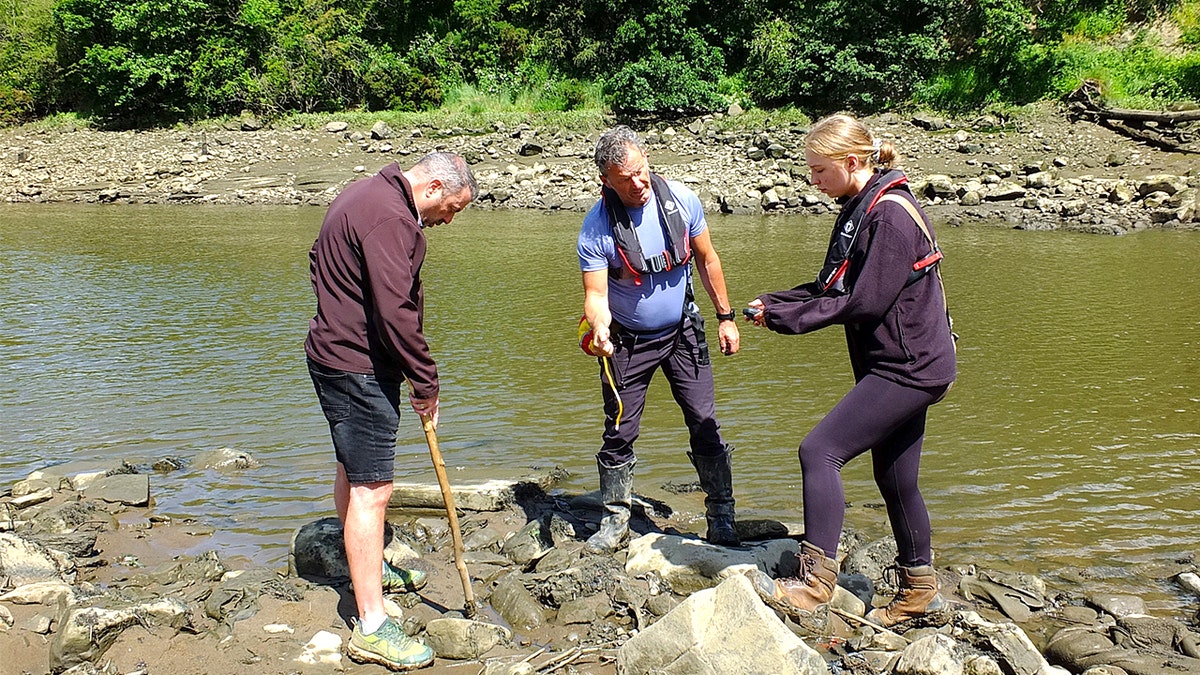
The discovery extends the known timeline of human industrial activity along the River Wear by more than 1,800 years. (Gary Bankhead, Durham University)

He added that Sunderland was already well known for its rich industrial and maritime heritage, but the recent discoveries push its industrial heritage back centuries.

“The academic consensus held that the Romans had never reached this part of the River Wear,” he said. 

CLICK HERE FOR MORE LIFESTYLE STORIES

“Instead, the evidence pointed to a large-scale Roman manufacturing center, producing whetstones on an industrial scale… In truth, almost every stage of the investigation has revealed something unexpected.”

Depiction of ancient Romans in England

A depiction of Ancient Romans in England, circa 77 A.D. (iStock)

Bankhead said that future excavations in the area are being considered, and that the site holds “enormous research potential.”

“The industrial activity we’ve uncovered is so substantial that it almost certainly formed part of a wider system — one that may still be waiting to be discovered,” he said.

CLICK HERE TO GET THE FOX NEWS APP

“What Offerton already demonstrates is that our understanding of Roman Britain is far from complete.”


Source link

Why boards should be obsessed with their most ‘boring’ systems

0

Following a series of high-profile cyberattacks, boards of directors are now requiring their organizations to take greater responsibility for the risks posed by enterprise resource planning (ERP) systems pose after a series of high-profile cyberattacks. The Jaguar Land Rover (JLR), incident in Sept. 2025 illustrates the severe consequences of such attacks. The cyberattack forced JLR to halt production for six weeks, making it the costliest cyberattack in Britain’s history. The company’s revenue declined 24 percent that quarter, accounting for potentially over a  $1.2 billion drop in earnings, and subsequently reported a 43.3% wholesale sales volume drop the following quarter.

For decades, organizations have treated ERP systems like SAP as back-office workhorses. However, the JLR incident—carried out by executed by the cybercrime group ShinyHunters —has thrust ERP systems into the spotlight. That shift in attention is critical: today, 90% of the Fortune 500 use SAP, making these systems “crown jewel” assets that require the highest level of protection.

The threat is escalating. A recent Google Cloud Security report forecasts that ransomware operations specifically designed to target critical enterprise applications such as ERP systems will emerge in 2026, forcing organizations to make quick ransom payments and sacrifice business resilience. 

In our roles as board members, advisers, and cybersecurity CEOs, we’re witnessing a fundamental shift in how organizations approach ERP security: the conversation has moved from compliance to survival. Organizations are grappling with critical question: Who owns the risk? What is our recovery time? Can we patch critical ERP vulnerabilities within 72 hours? Do we have visibility inside the application?

ERP risks are an existential threat

To understand the severity of ERP security risks, the C-suite must first recognize how critical these sytems are. ERP systems are the operating system of modern businesses: They process  invoices, manage supply chains, record revenue, pay employees, ship products, and more. The scale is staggering: SAP’s customers alone are responsible for 84% of the world’s commerce. – Given this ubiquity, if your organization’s leadership can’t confirm whether you’re using SAP, you almost certainly are.

In 2025, more than 500 companies fell victim to the SAP NetWeaver zero-day vulnerability. This attack underscores what many security practitioners have warned: ERP application security has evolved from a ‘nice to have’ to a business-critical necessity.

When Stoli Group’s US subsidiaries filed for bankruptcy in 2024 following a ransomware attack on its ERP system, it demonstrated a stark reality: losing these system can lead to a company shutting its doors. When an organization’s central nervous system goes offline, the entire business stops functioning.

Unfortunately, the adversaries understand this inherent leverage better than we do. According to Onapsis research, SAP vulnerabilities grew by 39 percent in 2025. The cybercriminal marketplace price for SAP exploits has grown 400% (to more than $250,000) since 2020, which reflects the immense ROI of holding a Fortune 500 company’s operational capacity hostage.

The timeline for defense has become critically compressed. In 2025, threat actors are exploiting SAP security vulnerabilities within 72 hours of patch releases. Unprotected ERP systems deployed in the cloud are discovered and compromised in less than 3 hours. Meanwhile, the average enterprise patch cycle takes weeks or even months due to the rigorous testing required for complex, customized ERP environments. This mismatch creates a dangerous window of vulnerability.

The regulatory compliance vise

Boards face mounting pressure from an increasingly stringent global regulatory environment focused on securing critical data and infrastructure. ERP systems house multiple types of highly regulated data simultaneously—including financial records, personal employee information, customer data, and supply chain details—making them a focal point for regulatory scrutiny.

For public companies in the United States, Sarbanes-Oxley (SOX) requires attestation of financial reporting. The security of ERP systems is a SOX control issue because a breach could cause the efficacy of these systems to be compromised.

In the European Union (EU), GDPR regulations penalize companies that fail to protect personally identifiable information (PII). ERP systems house the vast majority of employee and customer data.

SEC disclosure rules in the United States and two other EU regulations, NIS2 and DORA, have introduced personal liability for board members and executives who fail to oversee their cybersecurity risks. A director can no longer say, “I didn’t understand the technical details.” Ignorance is now a legal liability.

A boardroom playbook for ERP resilience

As board members and advisors to multiple companies and audit committees, we have three key expectations for how organizations should approach ERP security.

First, boards need risk presented in dollar terms. Instead of asking for money to “patch technical vulnerabilities,” CISOs should tell the board exactly how much revenue is at risk. When requesting budget to secure SAP, frame it as an investment to protect specific revenue streams. This helps boards understand what they stand to lose, not just what they need to spend.

Second, stop treating security and productivity as opposing forces. Yes, patching systems might cause a brief disruption. But that minor inconvenience is nothing compared to the catastrophic impact of a total system lockout like the one ShinyHunters executed against JLR. CISOs should partner with CIOs to deploy automated monitoring tools that can detect potential exploits and prioritize patches for the most critical ERP vulnerabilities.

Third, someone must own responsibility for protecting these “crown jewel” systems. Too often, there’s a gray area between the CISO (who sets security policy), the CIO (who manages the technology infrastructure), and the ERP vendor. Boards must demand a clear shared responsibility model that defines who is accountable for what. It’s important to note that ERP vendors are not responsible for securing the application and data once deployed—which makes clear internal ownership even more critical.

Board members should be demanding answers to these questions: Do we have visibility into our ERP risk? Would we have visibility into an active attack?

We must assume a breach will happen. The only way to validate resilience is to test it. Boards should mandate tabletop exercises specifically designed around an ERP ransomware scenario, asking further questions like, “How do we communicate with suppliers?,” “How do we build and ship our products?,” “How do we make payroll?,” and “How do we restore from immutable backups if the primary data is compromised?”  Organizations must test their resilience before a crisis strikes, not during one.

A license to operate

The Jaguar Land Rover compromise was a watershed moment because it stripped away the illusion that our core systems are safe behind firewalls. Attackers have shifted their focus to critical business systems. They’ve professionalized their operations and dramatically increased the speed of their attacks.

For the C-suite and boards, the era of plausible deniability is over. Security is no longer just an IT expense; it’s what keeps your doors open. If you cannot protect the integrity of your financial data and the continuity of your supply chain, you do not have a viable business.

Just as boards have visibility into risk, CISOs should have visibility into all ERP instances. Organizations require four critical capabilities: discovery (identifying all ERP systems), assessment (finding vulnerabilities such as missing patches, weak configurations, and insecure custom code), real-time monitoring (detecting suspicious activity that may indicate an attack), and incident response (being able to quickly investigate and contain an ERP incident).

The decisions made in the boardroom today will affect the outcomes tomorrow. The next JLR-like event is most likely already unfolding. The only variable is whether your organization will be the next cautionary tale or the defender that held the line.

Written by Dave DeWalt and Mariano Nunez


Source link

In Pakistan, gold price rollercoaster pushes buyers to silver | Business and Economy News

0

Lahore, Pakistan – Over the past two weeks, as the global prices of gold and silver have fluctuated wildly, Waqas Siddiqi has received a flurry of calls from customers to his jewellery store, inquiring about purchases.

As in other countries, the recent rise, decline and rise again in the the global bullion market has piqued interest, particularly for those who view gold and silver as an investment.

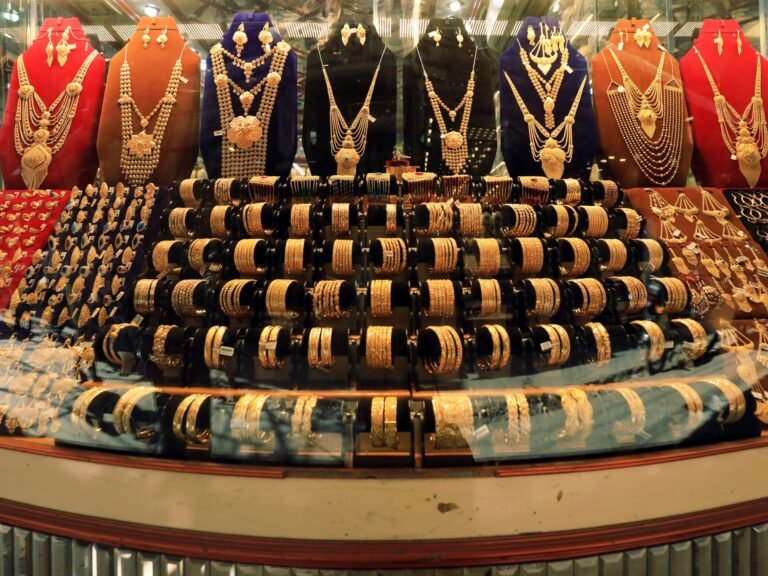
While gold – and to a lesser extent, silver – has long been a favourite among jewellery buyers in Pakistan, it is a safe place to keep their money that many buyers are seeking these days. And silver appears to be overtaking gold.

“We are primarily in the jewellery business, which is in decline anyway, as people are using precious metals for investment. So, when the rallying started, a few customers came to our shop showing interest to buy silver bars, or sell gold,” he told Al Jazeera.

This trend was confirmed by Omer Ehsan, another jeweller who has been running his family business in Lahore for decades. Increasingly, he says, the trend in gold investments – and, moreso in silver – is increasing.

“My customers called to inquire whether they should invest in and join the rally, but [I] advised them caution,” he told Al Jazeera, pointing to a decline in prices last week, before a sudden rally in the past two days.

In the domestic market, the price for 10-gram gold increased by more than 20,000 rupees ($71) to reach 440,000 ($1,577) on Wednesday. A similar rise was seen in the price of silver, with 10-gram silver reaching 7,800 rupees ($28).

The initial dip, followed by the bounce back, reflect broader movements in the international market, where a bullish run on the precious metals ended the previous weekend and prices fell drastically – an unusual phenomenon as the metals are considered “safe havens” which hold their value in turbulent times.

The Trump effect

Hanif Chand, a 56-year-old jeweller in Karachi and also the former vice president of city’s jewellery association, told Al Jazeera that the recent upheaval in the bullion market has been driven primarily by fears that an attack on Iran by the the United States was imminent, leading to panic in the market.

“Once the news came that Trump is going to take more time to make his decision, markets have calmed down slightly. However, it could also once again skyrocket in case the situation in the Middle East region again flares up,” Chand said.

Ali Aftab Saeed, an independent investment analyst in Lahore, said another factor driving up gold prices since that downturn has been a surge in gold buying in China.

The last year has seen China reduce its holdings of US Treasury securities, which have now fallen below $700bn – a decline of nearly one-half since the November 2013 peak of $1.32 trillion – and replacing these with large-scale purchases of the precious metal.

“The minor fluctuations that you see are due to the market fixing its course, where investors stop buying once a commodity hits a certain price, and then the price corrects itself before next round starts,” he told Al Jazeera. He expects the metals to rally upwards again, he said.

The switch to silver

Razzak Ahmed, a jewellery shop owner in Islamabad, said that due to the high cost of gold, silver is now seen as the metal of choice for many people – and they buy it for both investment purposes and jewellery.

“On an individual level, a small buyer is more interested in purchasing items in silver, be it a silver bar or silver jewellery because they have enough capital to at least buy something, and the returns on it are significant with the increase in prices,” he told Al Jazeera.

Ahmed recalled that the price of per ten grams of silver was close to 4000 rupees ($14) in April last year to its current peak of 15,000 rupees ($53).

Chand agreed, saying that the high price of gold combined with changing social habits has contributed to a declining interest in investing in gold jewellery.

Historically, families bought gold or gold jewellery as an investment but also as something that could be passed down to their children when they got married. That is now changing with families opting for high-quality artificial jewellery, instead, Chand said.

Now, much of the gold in the country is recycled, he added, while silver is becoming more popular as a commodity to invest simply because of the skyrocketing prices of gold.

Instead of spending on gold jewellery, “people now prefer investing their money in silver bars if they don’t have enough capital. But even if they do, the day of investing in gold jewellery sets [that are handed down in families] is certainly waning now,” he said.

In 2024, Pakistan imported gold worth $27m, making it a considerably smaller player in the international gold buying market, and ranking it as only the 84th largest gold importer, according to the Observatory of Economic Complexity.

And, back to the Trump effect

In Lahore, Saeed said many small investors now make their purchases depending on their capital availability. That hardly impacts the market which is more swayed by the activities of big players.

“And the future prices and their volatility, or lack thereof, depends on the upcoming meeting of US president Donald Trump and his Chinese counterpart Xi Jinping. That will set the future course of action for the price of these metals,” he said, referring to the scheduled meeting between the two leaders in April in China.

Ehsan added that the bullion may continue to fluctuate depending on Trump’s mood. “The market is going up or down solely due to his behaviour and decisions. One morning he can promise not to attack Iran, and by evening he will launch missile. All of this makes the market unpredictable.”


Source link

Nykaa profit surges 156% in Q3 on record sales

0

Nykaa's beauty segment, which accounts for the bulk of its business, posted 27% GMV growth to ₹4,302 crore.

Nykaa’s beauty segment, which accounts for the bulk of its business, posted 27% GMV growth to ₹4,302 crore. | Photo Credit: ANUSHREE FADNAVIS

FSN E-Commerce Ventureswhich operates beauty and fashion retailer Nykaa, reported a 156 per cent year-on-year increase in net profit to ₹68 crore for the quarter ended December 31, 2025, driven by strong sales growth and margin expansion.

The company’s consolidated revenue from operations rose 27 per cent to ₹2,873 crore, while gross merchandise value (GMV) grew 28 per cent to ₹5,795 crore—the highest quarterly GMV in its history. EBITDA increased 63 per cent to ₹230 crore, with margins expanding to 8 per cent from 6.2 per cent in the same quarter last year.

Nykaa’s beauty segment, which accounts for the bulk of its business, posted 27 per cent GMV growth to ₹4,302 crore. The company added 11 new beauty stores during the quarter, taking its total to 276 stores across 94 cities. The cumulative beauty customer base reached 42 million, up 30 per cent year-on-year, while the overall One Nykaa platform crossed 52 million customers.

The fashion vertical showed improved performance with GMV growing 31 per cent to ₹1,476 crore. EBITDA margin as a percentage of net sales value improved from negative 5.4 per cent to negative 2 per cent in the quarter.

House of Nykaa, the company’s portfolio of owned brands, recorded 48 per cent GMV growth to ₹872 crore. Key brands include Dot & Key, which achieved an annualized GMV run rate of ₹1,900 crore with 111 per cent year-on-year growth.

Shares of FSN E-Commerce Ventures Limited ended on the NSE today at ₹261.45 up by ₹10.42 or 4.15 per cent.

More Like This

A file photo of Pirojsha Godrej, Executive Chairperson, Godrej Properties. Mumbai Metropolitan Region led quarterly bookings, supported by strong collections growth and new project additions, keeping the company on track to exceed its annual guidance.
Subhrakant Panda, Managing Director, Indian Metals & Ferro Alloys Ltd (IMFA)

Published on February 5, 2026

Access Denied

0

Access Denied You don’t have permission to access “http://hindi.gadgets360.com/mobiles/oneplus-nord-6-launch-date-tipped-to-delay-by-april-2026-specifications-12gb-ram-9000mah-battery-leaked-news-10950368” on this server.

Reference #18.50200117.1774088444.8103702

https://errors.edgesuite.net/18.50200117.1774088444.8103702

Blake Miguez scores Trump endorsement for House run after ditching Senate bid

0

NEWYou can now listen to Fox News articles!

President Donald Trump has endorsed Louisiana state Sen. Blake Miguez, who recently dropped a U.S. Senate bid to run for the U.S. House of Representatives instead.

“It is my Great Honor to endorse MAGA Warrior, Blake Miguez, who is running to represent the tremendous people of Louisiana’s 5th Congressional District,” the president declared in a Truth Social post on Wednesday. “Blake Miguez has my Complete and Total Endorsement to be the next Representative from Louisiana’s 5th Congressional District — HE WILL NOT LET YOU DOWN!”

Miguez thanked the president for his support.

BLAKE MIGUEZ, WHO SAID SEN CASSIDY ‘SUCKS,’ DROPS SENATE BID FOR HOUSE RUN

President Donald Trump

U.S. President Donald Trump speaks to reporters and members of the media at Mar-a-Lago on Feb. 1, 2026 in Palm Beach, Fla. (Al Drago/Getty Images)

“THANK YOU, President Trump for your ENDORSEMENT! Louisiana deserves true, America First representation in Washington to back the MAGA agenda. President Trump is the greatest president in our nation’s history. I’m honored to have the endorsement and look forward to delivering for Louisiana’s 5th and our country,” he declared in a post on X.

Last year, Miguez mounted a U.S. Senate bid, declaring in a campaign video that he was running for the position because GOP Sen. Bill Cassidy of Louisiana “sucks.”

After the House impeached Trump in 2021, Cassidy was one of the Republican senators who voted in favor of convicting, but the Senate vote occurred after the president had already departed from office and the vote ultimately failed to meet the threshold for conviction.

GOP LOUISIANA STATE SENATOR SAYS HE’S RUNNING FOR US SENATE BECAUSE INCUMBENT REPUBLICAN ‘SUCKS’

Left: Louisiana state Sen. Blake Miguez; Right: U.S. Sen. Bill Cassidy

Louisiana state Sen. Blake Miguez, left, and U.S. Sen. Bill Cassidy.  (senate.la.gov | SAUL LOEB/AFP via Getty Images)

Last month, Trump threw his support behind Rep. Julia Letlow, pledging to back her for U.S. Senate.

“I am hearing that Julia is considering launching her Campaign for the United States Senate in Louisiana, a place I love and WON BIG, six times, including Primaries, in 2016, 2020, and 2024!” the president declared in a Truth Social post. “Should she decide to enter this Race, Julia Letlow has my Complete and Total Endorsement. RUN, JULIA, RUN!!!” 

Letlow, who currently represents Louisiana’s 5th Congressional District, launched a Senate bid days later.

TRUMP ENDORSEMENT ROCKS LOUISIANA SENATE RACE AS LETLOW JUMPS IN

President Donald Trump and Rep. Julia Letlow

U.S. President Donald Trump stands with U.S. Rep. Julia Letlow, R-La., during the Congressional Ball at the Grand Foyer of the White House on Dec. 11, 2025 in Washington, D.C. (Alex Wong/Getty Images)

CLICK HERE TO GET THE FOX NEWS APP

A press release this week declared that Miguez is now running for the U.S. House seat.

“When I announced my campaign for the U.S. Senate last year, I promised Louisianians I would stand with President Trump and fight for an America First agenda that puts Louisiana families first,” Miguez said, according to a press release. “I remain committed to that promise, and I’m ready to deliver the kind of representation that will support President Trump and help advance the mission to Make America Great Again.”


Source link

Access Denied

0

Access Denied You don’t have permission to access “http://hindi.gadgets360.com/telecom/vodafone-idea-discontinue-rs-299-entry-level-unlimited-5g-plan-in-multiple-circles-news-10951879” on this server.

Reference #18.4d560e17.1774096135.acb0af1

https://errors.edgesuite.net/18.4d560e17.1774096135.acb0af1