Budget makes leveraged investments turn less attractive

0

Investors reduced their taxable dividend income by claiming interest cost, up to 20 percent of the dividend received.

Investors reduced their taxable dividend income by claiming interest cost, up to 20 percent of the dividend received.

The Budget proposal to scrap setting off interest expenditure incurred for earning dividend income or income from units of mutual funds will make leveraged investments less attractive and impact investors returns.

Dividend income and income from units of mutual funds constitute passive investment receipts taxable under the head “Income from other sources” under the Income Tax Act, 2025. Section 93 of the Act provides for allowing certain deductions against such income. This includes interest expenditure incurred for earning such income, subject to a ceiling of 20 per cent of the gross dividend or income from units of mutual funds.

The Budget has proposed amending the relevant section so that the deduction, allowed on interest expenditure incurred for earning dividend income or income from units of mutual funds, has been removed.

What this means is that if an individual has taken a loan to invest in stocks and mutual funds then the interest paid on that loan can no longer be offset against the dividend income from the stocks or MF units. “Its going to get taxed on a gross basis,” said Rajeshree Sabnavis, Senior Advisor, Grant Thornton Bharat.

The amendment will take effect from April 1.

Aditya Bhattacharya, Partner, King Stubb & Kasiva, Advocates and Attorneys said the change aligns with the broader intent to rationalize tax benefits and curb mismatch claims, signaling a stricter approach towards leveraging interest deductions against passive investment income.

Any sum previously allowed as a deduction, or excluded from total income under the repealed Income-tax Act, 1961, will now be deemed income under the Income-tax Act, 2025, even if no conditions were violated, he said.

tax leakage

Another reason for not allowing the deduction is to plug tax leakage. “People would take loans and use that interest as a deduction. To that extent, the dividend income which was offered for tax was on the lower side,” said Sabnavis.

Investors reduced their taxable dividend income by claiming interest cost, up to 20 percent of the dividend received. With this benefit removed, an investor in the highest tax bracket will now pay extra tax equal to about 6 percent of the dividend amount.

However, this interest cost is not completely lost. The same interest can be added to the purchase cost of the investment to lower the capital gains tax payable when the investment is sold, said Chintak Shah, Vice President, Anand Rathi Wealth.

While the rule change increases tax on dividends today, a part of this can be recovered through lower capital gains tax later, he said, adding that the proposal would affect only those who borrow money to invest in stocks and MFs.

From a legal standpoint, this retroactive deeming ensures continuity and removes potential disputes arising from the shift between statutes, providing taxpayers and practitioners a clear framework for compliance and assessment under the new Act, said Bhattacharya.

Dividend income is taxed at the investor’s slab rate, which can go up to 30 per cent. Capital gains on listed equities continue to be taxed at 12.5 per cent for long-term gains and 20 per cent for short-term gains.

Published on February 2, 2026
Broker body to seek rollback of sharp STT hike, cut in cash market levy

0

The total cost of buying and selling one lot of options rises by about 3 per cent, with STT accounting for roughly 10 per cent of overall trading cost.

The total cost of buying and selling one lot of options rises by about 3 per cent, with STT accounting for roughly 10 per cent of overall trading cost.

The brokerage industry is set to formally approach the government seeking a rollback of the steep increase in Securities Transaction Tax (STT) on derivatives proposed in the Budget, along with a reduction in STT in the cash equity segment, amid concerns that higher trading costs could hurt trading volumes, broker revenues and overall market liquidity.

The Association of National Exchanges Members of India (ANMI) will be submitting two representations to the Finance Minister by Tuesday – one asking for a reversal of the STT hike on futures and options, and another seeking lower STT in the cash market to encourage long-term investing.

“When you want to deepen the market and bring more investors, increasing transaction costs only hurts participants and the ecosystem,” K Suresh, National President, ANMI, told. business line. “The cost of trading is already high in India compared to other markets, making it necessary to lower the tax. At the very least, maintaining the earlier structure will bring some stability back into the market,” he said.

On Sunday, the government proposed the STT on futures contracts to be raised from 0.02 per cent to 0.05 per cent, which doubles STT to around 84 percent of the total cost of trading. Meanwhile, the tax on options premium and exercise has been increased to 0.15 per cent from 0.1 per cent and 0.125 per cent respectively.

Futures hit

The cost impact is expected to be far heavier on futures trading than on options. The total cost of buying and selling one lot of options rises by about 3 per cent, with STT accounting for roughly 10 per cent of overall trading cost. In contrast, the total cost of trading futures nearly doubles, as STT now makes up about 84 per cent of the total transaction cost.

Nithin Kamath, Founder and CEO of Zerodha, said in a social media post that if the aim is to reduce speculation in futures and options, higher STT may not achieve that goal, as the cost impact falls more heavily on futures even though options tend to be more speculative.

“If the government wants to reduce speculation, then establishing product suitability criteria is the way to go. It’s a much better approach than a death by a thousand STT hikes,” Kamath said on

Any sustained fall in futures volumes is expected to directly affect revenues, particularly for broking firms dependent on high derivatives turnover. With futures trading on BSE being negligible, the hit is expected to be minimal there. However, NSE, which earns over 10 per cent of its revenue from futures trading, could face pressure if volumes decline.

Lower transaction costs in the past had helped fuel the explosive growth of India’s derivatives market, with strong retail participation and algorithmic trading pushing volumes to record highs across exchanges.

Published on February 2, 2026
Access Denied

0

Access Denied You don’t have permission to access “http://hindi.gadgets360.com/pc-laptop/firefox-thunderbird-vulnerability-warning-issued-cert-in-advised-to-update-browsers-to-latest-versions-news-10933073” on this server.

Reference #18.50200117.1774525587.2e8562c9

https://errors.edgesuite.net/18.50200117.1774525587.2e8562c9

SEZ jewelery units get relief with Budget allowing domestic market sales

0

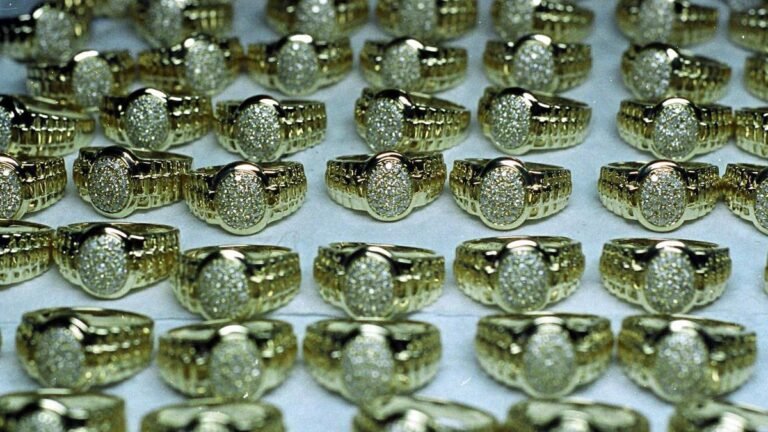
    The Union Budget 2026 allows Special Economic Zone (SEZ) units to sell gems and jewelery in the domestic market at concessional duties, helping manufacturers utilize idle capacity amid falling exports.

The Union Budget 2026 allows Special Economic Zone (SEZ) units to sell gems and jewelery in the domestic market at concessional duties, helping manufacturers utilize idle capacity amid falling exports. Photo Credit: SHASHI ASHIWAL/businessline

The Budget’s move to allow units in Special Economic Zones to sell in the domestic markets will help jewelers who have been hit by falling exports due to geopolitical issues. They will also be able to utilize idle capacity.

While overall gem and jewelery exports between April and December were flat year-on-year at $20.75 billion, exports to the US plunged 44 per cent to $3.86 billion ($6.95 billion) during the same period, due to punitive tariffs.

One-Time SEZ Measure

To address concerns about the utilization of capacities by manufacturing units in SEZs due to global trade disruptions, the Budget has proposed a special one-time measure to facilitate sales by eligible manufacturing units in SEZs to the Domestic Tariff Area (DTA) at concessional rates of duty.

The quantity of such sales will be limited to a prescribed proportion of manufacturers’ exports. Necessary regulatory changes will be undertaken to operationalize these measures while ensuring a level playing field for the units working in the DTA, it added.

Industry Reaction

Kirit Bhansali, Chairman of the Gem and Jewelery Export Promotion Council, said limited sales from SEZs to the Domestic Tariff Area at concessional duties will enable factories to use idle capacity, safeguard jobs, and strengthen trade amid US tariffs and global demand volatility.

E-Commerce Boost

He pointed out that the removal of the ₹10 lakh cap on courier exports is a big boost for e-commerce, enabling MSMEs, artisans, and small jewelery brands to reach global buyers directly, with smoother returns handling and quicker turnaround times.

Lab-Grown Diamond Support

Extending the duty-free import of lab-grown diamond seeds and Sawn Diamonds till March 2028 is a timely and practical step. It keeps input costs low, supports production and exports. It also safeguards a fast-growing segment where India already leads globally, helping secure the future of our industry, said Bhansali.

Enhanced Capacity Utilization

Colin Shah, MD, Kama Jewelry said the introduction of a special one-time facility for SEZ units to supply to the DTA at a concessional rate of duty will enhance capacity utilization.

The support for SEZ units selling into the domestic market, along with continued backing for diamonds and lab-grown diamonds, gives a real boost to manufacturing and trade, he said.

Keeping import duties on gold and silver unchanged will give the sector a much-needed stability and drive sustainable growth, said Shah.

Published on February 2, 2026

Government may reduce LIC stake via public offer in next financial year

0

    LIC's market capitalization stands at Rs 5.08 lakh crore, with shares at around Rs 804.

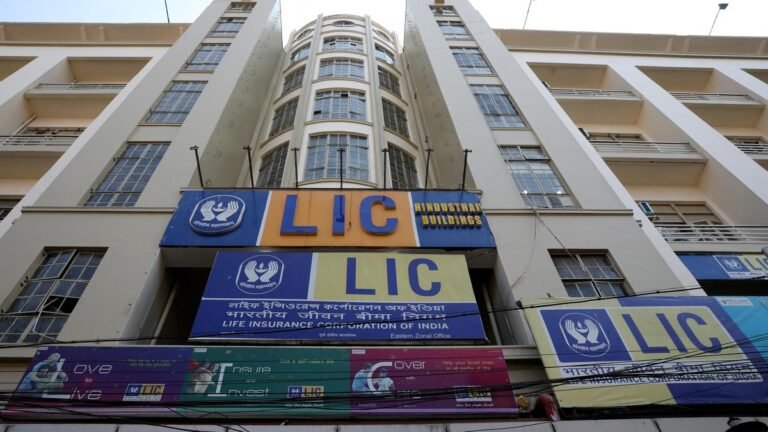
LIC’s market capitalization stands at Rs 5.08 lakh crore, with shares at around Rs 804. | Photo Credit: RUPAK DE CHOWDHURI/Reuters

The government is actively considering further reducing its stake in insurance behemoth LIC through a public offering in the next financial year, Financial Services Secretary M Nagaraju said on Monday.

Currently, the government holds a 96.5 percent stake in Life Insurance Corporation (LIC). It had sold 3.5 per cent through an initial public offering (IPO) in May 2022 at a price band of Rs 902-949 per share. The share sale fetched the government around Rs 21,000 crore.

FPO timeline

Talking to reporters, Nagaraju said, “LIC public offer has to be done slowly. We have asked DIPAM (Department of Investment and Public Asset Management) to look at government stake dilution in LIC.”

“LIC FPO may come in the next financial year if all approvals are in place and market conditions are conducive,” he added.

Public holding mandate

The government is required to offload another 6.5 per cent stake in the public sector life insurer to meet the mandated 10 per cent public shareholding requirement by May 2027.

The quantum of stake sale, price and timing would be decided in due course.

financial performance

The country’s biggest insurer, LIC, has a market capitalization of Rs 5.08 lakh crore, with shares settling at around Rs 804 on the BSE on Monday.

On the financial front, the state-owned insurer reported a 32 per cent year-on-year jump in net profit to Rs 10,053 crore in the three months ended September 2025 from Rs 7,621 crore in the corresponding period last fiscal. The increase in profit was driven by a lower commission outgo.

The total income improved to Rs 2,39,614 crore in the three months ended September 2025 compared to Rs 2,29,620 crore in the year-ago period.

Published on February 2, 2026

US futures, world shares slip as worries over Trump’s Fed chief pick and AI weigh on markets

0

US futures and world shares skidded on Monday as worries over President Donald Trump’s nominee to be the next Federal Reserve chair amplified jitters over a possible bubble in the artificial intelligence boom.

South Korea’s exchange, which is heavily influenced by tech-related developments, briefly suspended trading as its benchmark Kospi bounced, closing 5.3 per cent lower at 4,949.67. Samsung Electronics gave up 6.3 per cent, while chip maker SK Hynix sank 8.7 per cent.

The Kospi has been forging records for weeks as big tech companies piggybacked on the AI ​​craze with deals with major players like chip maker Nvidia and OpenAI.

In early European trading, Germany’s DAX edged less than 0.1 per cent lower to 24,528.57. The CAC 40 in Paris shed 0.2 per cent to 8,108.56, while Britain’s FTSE 100 declined 0.3 per cent to 10,195.88.

The future for the S&P 500 sank 0.7 per cent, while that for the Dow Jones Industrial Average fell 0.4 per cent.

Markets took a hit as investors considered how Kevin Warsh, Trump’s nominee to lead the Federal Reserve after Fed Chair Jerome Powell’s term ends in May, might handle interest rates.

Warsh’s nomination requires Senate approval. But financial markets fear the Fed may lose some of its independence because of Trump, who has pushed hard for more and faster rate cuts. That fear has helped catapult skyward the price of gold and weaken the US dollar’s value over the last year.

“People do not get handed the keys to the most powerful central bank on earth because they plan to drive in the opposite direction of the people who gave them the keys,” Stephen Innes of SPI Asset Management said in a commentary.

Early Monday, the price of gold fell 1.9 per cent, while silver bounced back slightly, gaining 0.2 per cent. Both plunged Friday as record runs in precious metals markets ground to a halt.

On Friday, the price of gold dropped 11.4 per cent, suddenly losing momentum after a tremendous rally where it roughly doubled over 12 months. It topped USD 5,000 for the first time on Jan. 26 and was around USD 5,600 at one point on Thursday.

Silver, which had been on a similar, jaw-dropping tear, plunged 31.4 per cent.

US benchmark crude oil lost USD 3.46 to USD 61.75 per barrel, while Brent crude, the international standard, fell USD 3.47 to USD 65.85 per barrel.

Speaking to reporters during the weekend, Trump said Iran should negotiate a “satisfactory” deal to prevent the Middle Eastern country from getting any nuclear weapons.

“I don’t know that they will. But they are talking to us. Seriously talking to us,” he said.

That comment apparently assured some worries over potential disruptions to oil supplies that had pushed prices higher, analysts said.

In Tokyo, the Nikkei 225 gave up early gains, sinking 1.3 per cent to 52,655.18.

Hong Kong’s Hang Seng dropped 2.2 per cent to 26,775.57, while the Shanghai Composite index sank 2.5 per cent to 4,015.75.

In Australia, the S&P/ASX 200 fell 1 per cent to 8,778.60.

Taiwan’s Taiex lost 1.4 per cent.

On Friday, the S&P 500 dropped 0.4 per cent and the Dow lost 0.4 per cent. The Nasdaq composite lost 0.9 per cent.

The Fed chair has a big influence on the economy and markets worldwide by helping to dictate where the US central bank moves interest rates. That affects prices for all kinds of investments, as the Fed tries to keep the US job market humming without letting inflation get out of control.

A report released Friday showed US inflation at the wholesale level was hotter last month than economists expected. That could put pressure on the Fed to keep interest rates steady for a while instead of cutting them, as it did late last year.

The longtime assumption has been that the Fed should operate separately from the rest of Washington so that it can make moves that are painful in the short term but necessary for the long term. To get inflation down to the Fed’s goal of 2 percent, for example, may require the unpopular choice to keep interest rates high and grind down on the economy for a while.

In other action early Monday, the dollar fell to 154.88 Japanese yen from 154.94 yen. The euro was unchanged at USD 1.1853.

Published on February 2, 2026

Tobacco stocks Godfrey Phillips, ITC, VST Industries extend slide as higher excise duty spurs fresh selling

0

Shares of major tobacco companies remained under pressure for a second straight session on Monday, with ITC, Godfrey Phillips India, VST Industries and Golden Tobacco are in focus after the implementation of a higher excise duty from February 1.

Godfrey Phillips India led the losses, falling as much as 6 per cent in early trade to ₹1,877.30 compared with its previous close of ₹1,995.20. By 11.51 am, the stock had recovered marginally to trade at ₹1,898.70.

ITC shares slipped nearly 2 per cent in early deals to ₹302, marking their second consecutive day of decline. At 11.49 am, the stock was trading at ₹306.70 on the NSE versus its prior close of ₹309.45. VST Industries also came under selling pressure, dropping around 3 per cent to ₹223.80 from ₹230.03.

The weakness in ITC followed its December-quarter resultswhere the company reported a 6.13 per cent year-on-year decline in standalone net profit for Q3 FY26 at ₹5,088.83 crore. Several brokerages struck a cautious tone despite pointing to resilience in its core cigarette and FMCG businesses, particularly amid recent tax hikes on cigarettes.

Bonanza remains cautious on ITC, VST Industries and Godfrey Phillips, as cigarette price hikes of 22–50 per cent—especially in the 75 mm-plus segment—are likely to weigh on volumes in India’s price-sensitive market.

Nitant Darekar, Research Analyst at Bonanza, said the February 1, 2026 taxation framework poses significant near-term challenges for tobacco stocks, with excise duties set at ₹2,050–8,500 per 1,000 sticks along with 40 per cent GST, replacing the earlier compensation cess regime.

Abhinav Tiwari, Research Analyst at Bonanza, said ITC shares have been under strain since the government announced the replacement of the GST compensation cess with excise duties on cigarettes based on stick length, along with 40 per cent GST, in line with public health goals and revenue needs after cess repayment.

According to him, the effective tax hike of more than 40 per cent could translate into cigarette price increases of over 25 per cent, potentially leading to a 15–17 per cent drop volumes in based on channel checks. This, he noted, could result in revenue declining by 13–15 per cent and EBIT by 15–17 per cent as the industry heads into FY27, keeping earnings per share under pressure.

Tiwari added that the risk of illicit cigarette sales could rise further, posing another challenge to future growth. He also highlighted that the latest Budget announcement by the Finance Minister has raised the National Calamity Contingent Duty on jarda scented tobacco and chewing tobacco from 25 per cent to 60 per cent starting May 2026, which he believes will remain an overhang for cigarette manufacturers.

These combined changes are expected to impact the operational performance for cigarette companies unless they are passed on to customers, and if that happens, volume share will be a key monitorable, Tiwari said.

In its Q3 FY26 commentary, ITC itself acknowledged that recent changes in GST and excise duty rates have led to an unprecedented rise in the tax burden on cigarettes, warning that such a steep increase could further encourage illicit trade and weigh on medium-term operational performance. The company, however, maintained that its long-term growth trajectory remains intact, supported by steady progress in its non-cigarette businesses.

Published on February 2, 2026

Access Denied

0

Access Denied You don’t have permission to access “http://hindi.gadgets360.com/mobiles/oppo-a6i-plus-a6v-5g-launched-7000mah-battery-256gb-storage-specifications-features-availability-details-inside-news-10932188” on this server.

Reference #18.4d560e17.1774537132.1a0409c2

https://errors.edgesuite.net/18.4d560e17.1774537132.1a0409c2

Access Denied

0

Access Denied You don’t have permission to access “http://hindi.gadgets360.com/mobiles/iqoo-15r-big-7600mah-battery-slim-design-price-under-rs-50000-revealed-amazon-listing-expected-specs-details-news-10932049” on this server.

Reference #18.4d560e17.1774538697.1a12b24d

https://errors.edgesuite.net/18.4d560e17.1774538697.1a12b24d

Access Denied

0

Access Denied You don’t have permission to access “http://hindi.gadgets360.com/mobiles/oppo-k14x-to-launch-soon-in-india-will-get-6500mah-battery-samsung-redmi-vivo-news-10932047” on this server.

Reference #18.50200117.1774543609.301d78e3

https://errors.edgesuite.net/18.50200117.1774543609.301d78e3