Reference #18.4d560e17.1774187770.dfc41fc
https://errors.edgesuite.net/18.4d560e17.1774187770.dfc41fc
Reference #18.4d560e17.1774187770.dfc41fc
https://errors.edgesuite.net/18.4d560e17.1774187770.dfc41fc


US President Donald Trump announced the agreement on Monday after a phone call with Prime Minister Narendra Modi. | Photo Credit: istock.com
Equity benchmarks continued its upward rally in the afternoon session on Tuesday after India and the US struck a trade deal that will see Washington cut reciprocal tariffs on Indian goods to 18 per cent from 25 per cent.
US President Donald Trump announced the agreement on Monday after a phone call with Prime Minister Narendra Modi. Market participants said the tariff reduction removes a major hurdle for exporters who had been grappling with steep duties in recent months.
The 30-share BSE Sensex jumped nearly 4205 points to 85,871.73 in early trade against the previous close of 81,666.46, while the NSE Nifty 50 climbed 1,253 points to an intraday high 26,341.20 from the previous close of 25,088.40, led by sharp buying in export-oriented stocks.
Sensex traded higher by 2289.86 points or 2.80 per cent at 83,956.32, and Nifty 50 climbed 698.90 points or 2.79 per cent to 25,787.30 at 12.57 pm.
Bank Nifty also jumped over 3,145 points in early trade to a high of 61,764.85.
Both midcap and smallcap indices soared nearly 3 per cent each. All sectoral indices traded in the positive territory, led by realty, cgemicals, consumer durables and pharma.
Among the Nifty 50 constituents, Adani Enterprises, Jio Financial, Adani Ports, Bajaj Finance, IndiGo and Sun Pharma lead the gainers with 5-12 per cent rally, while Nestle India, Coal India and ONGC slipped to trade in red.
Market breadth was strongly positive, with 3,186 stocks traded on the National Stock Exchange at the time of writing, of which 2,696 advanced, while only 416 declined and 74 remained unchanged. The rally was further reflected in momentum indicators, as 56 stocks touched fresh 52-week highs compared with 48 hitting new lows.
Buying interest was evident in many counters, with as many as 170 stocks locked in their upper circuits, whereas only 33 stocks were in the lower circuit.
Under the midcap segment, Waaree Energies, Premier Energies, Godrej Properties, Tube Investments, Dixon Tech and Bharat Forge zoomed 7-13 per cent, while PB Fintech dragged 5 per cent.
Among the smallcap segment, PCBL, Aarti Industries, Trident, IGIL, Jyoti CNC and Angel One rallied 9-18 per cent, while Aegis Vopak, Narayana Hrudayala and Signature Global declined 1-4 per cent.
Textile and leather companies were among the biggest gainers, with KPR Mill, Garware Technical Fibers and Avanti Feeds hitting their upper circuits. Welspun Living, Vardhman Textiles, Trident and Raymond Lifestyle also posted strong gains.
Footwear and leather stocks such as Bhartiya International, Mayur Uniquoters, Bata India and Metro Brands advanced sharply, while seafood exporters including Avanti Feeds and Apex Frozen Foods soared as optimism grew over a revival in shipments to the US. Specialty chemical makers such as Aarti Industries, Atul, Neogen Chemicals and Gujarat Fluorochemicals also rallied, with several stocks touching 52-week highs.
Published on February 3, 2026

File photo: Silver rate today. | Photo Credit: Leonhard Foeger
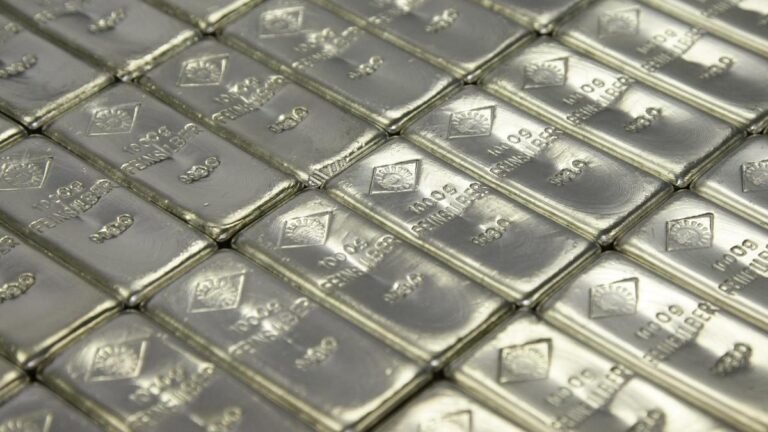
Silver Prices in India dipped sharply on February 3 across all major cities. The price of one gram silver and one kg silver dipped ₹20 and ₹20,000, respectively compared with the previous session’s closing price. This report provides a detailed, city-by-city breakdown of the latest silver prices.
Silver Rate in India
Silver prices declined with the average rate settling at ₹280 per gram, down ₹20, while one kilogramme now costs ₹2,80,000, cheaper by ₹20,000.
Silver Rate in Mumbai
Silver prices in mumbai declined to ₹280 per gram, down from ₹300, while one kilogram now costs about ₹2,80,000, cheaper by ₹20,000.
Silver Rate in Chennai
Chennai’s silver rates have also seen a decrease to ₹2,80,000 per kg, while 1 gm of silver is available at ₹280, or ₹20 cheaper.
Silver Rate in Delhi
In Delhi, the prices moved similarly lower, tracking losses seen across major cities. The price of one kilogram of silver dipped to ₹2,80,000 compared with ₹3,00,000 in the previous session, marking a steep ₹20,000 slide in a single day.
Silver Rate in Ahmedabad
Silver prices in Ahmedabad decreased, mirroring the downtrend seen across other parts of the country. The cost of one kilogram fell sharply by ₹20,000 to ₹2,80,000, down from ₹3,00,000 in the previous session. In turn, 1 gm of silver was available for ₹280, cheaper by ₹20 compared with the previous session’s price of ₹300.
Silver Rate in Kolkata
In Kolkata, the white metal saw an equally strong dip, as a kilogramme became cheaper by ₹20,000 at ₹2,80,000 compared with ₹3,00,000 for which it was available yesterday.
Silver Rate in Bengaluru
In Bengaluru too, silver prices declined by ₹20 and by ₹20,000 to ₹280 per gram and to ₹2,80,000 per kg, respectively.
Silver Rates Courtesy: bankbazaar.com

Published on February 2, 2026
Reference #18.50200117.1774191679.1076b10c
https://errors.edgesuite.net/18.50200117.1774191679.1076b10c
Reference #18.50200117.1774200687.116574f4
https://errors.edgesuite.net/18.50200117.1774200687.116574f4
Reference #18.50200117.1774216531.13210e18
https://errors.edgesuite.net/18.50200117.1774216531.13210e18

While welcoming measures supporting MSMEs and lab-grown diamond (LGD), stakeholders from gems and jewelery sector said some of their requests for a cut in import duty on gold and GST rationalization did not materialize in the Union Budget 2026-27.
Kirit Bhansali, Chairman, Gem and Jewelery Export Promotion Council (GJEPC), said: “We thank the government for a positive, growth-focused Budget that addresses key bottlenecks and gives fresh momentum to India’s gems and jewelery sector. It improves liquidity, supports manufacturing and strengthens exports across the value chain.”
The removal of the ₹10 lakh cap on courier exports is a big boost for e-commerce, enabling MSMEs, artisans and small jewelery brands to reach global buyers directly, with smoother handling of returns and quicker turnaround.
Extending duty-free import of LGD seeds and sawn diamonds till March 2028 is a timely and practical step. It keeps input costs low, supports production and exports, and safeguards a fast-growing segment where India already leads globally, helping secure the future of our industry.
Setting up a new National Institute of Design (NID) will strengthen design talent and innovation in the country. For the gems and jewelery sector, this means better product development, contemporary styling and stronger branding, helping Indian manufacturers move up the value chain and compete more effectively in global markets.
“Overall, this budget gives the right push for growth towards Viksit Bharat and moves us closer to our goal of scaling exports to $100 billion by 2047,” Bhansali said.
Prithviraj Kothari, Managing Director at RiddiSiddhi Bullions Ltd and President of India Bullion and Jewelers Association Ltd, said the bullion industry had expected a cut in import duty on gold, GST rationalization, export incentives and extended credit support. The Budget announced capital gains tax exemption on RBI Sovereign Gold Bonds, applicable only to original subscribers, not to secondary market buyers, while there were no announcements of any meaningful reduction in gold import duty or GST reforms.
Colin Shah, MD, Kama Jewelry, said the proposal to slash reciprocal tariffs to 18 per cent comes as a great relief to the Indian gems & jewelery sector and is well-received. The US has been a prominent consumer market of Indian Gems & Jewellery, and the sentiment had taken a hit due to the tariff implications. This partial relaxation will reinstate confidence in Indian jewelery manufacturers and exporters as well as the buyers in the American market.
The government has struck a fine balance and the industry looks forward to further relaxation in tariff, in the best interest of India’s economic growth., he said.
Shruti Jain, Chief Strategy officer, Arihant Capital Markets, said the precious metals markets reacted sharply after the budget, with gold prices falling to around ₹1.36 lakh per 10 grams and silver plunging as much as 19 per cent on MCX, reflecting heightened volatility and cautious sentiment around fiscal policy outcomes. This sharp sell-off in gold and silver shows how Budget day expectations can impact commodities trading, especially in a market already jittery about policy direction and macro uncertainty.
Tapan Patel, Fund Manager, Commodities, Tata Asset Management, said commodity prices may follow broad global geo-economic factors focusing more on US FOMC stance, upcoming economic data and shift in geopolitical factors. Investors may re-assess asset allocation and look for relative stability and consolidation in commodities to invest after recent volatile move and sharp selloff in gold, silver and copper prices.
Ricky Vasandani, CEO & Co-Founder, Solitario, said Budget 2026 sends a strong signal for sectors driven by advanced manufacturing, ethical sourcing and consumer-led growth. Measures such as the continued focus on retail-led demand, the ₹1.4 lakh crore allocation towards growth-oriented priorities and the ₹10,000 crore SME Growth Fund under the ‘Champion SMEs’ initiative are expected to improve access to capital for innovation-driven businesses.
Equally impactful are the export-focused reforms, including faster and low-intervention customs processes, duty rationalization and exemptions on capital goods linked to critical mineral processing. Besides the sustained emphasis on research and development and responsible adoption of advanced technologies, these steps create a more enabling environment for lab-grown diamond and ethical luxury manufacturers to scale responsibly, strengthen global competitiveness and contribute meaningfully to India’s vision of Viksit Bharat.
Chetan Thadeshwar, Chairman and MD, Shringar House of Mangalsutra Ltd (Gold & Jewellery), said the Union Budget 2026 reinforces the importance of macro-economic stability and disciplined fiscal management at a time when domestic consumption remains the primary growth driver for the jewelery industry. The Government’s emphasis on realistic budgeting, tighter monitoring of expenditure and improved execution efficiency provides a more predictable operating environment for consumer-facing sectors that are sensitive to inflation and income security.
“As economic stability supports household confidence and formal employment generation, discretionary demand for jewelery is likely to strengthen across both wedding-led and daily-wear categories. For the industry, this predictability enables better long-term planning across manufacturing, retail and exports, while at a broader level it supports consumption-led growth, employment generation and India’s position as a trusted global jewelery manufacturing hub,” he said.
Arthi Ramalingam, Founder and CEO, Eternz, said the Union Budget 2026 marks a decisive shift from enabling women’s livelihoods to enabling women’s ownership. Initiatives like She MARTS and the continued success of the Lakhpati Didi program recognize that true economic empowerment comes when women are given market access, brand visibility and the ability to scale, not just credit. For sectors like jewelery and design-led consumer brands, this is a powerful signal. “At Eternz, we work closely with small, independent and women-led jewelery brands, and policies that strengthen community-owned retail, skilling and innovative financing directly accelerate their growth journeys,” she said.
Namita Kothari, Founder, Akoirah by Augmont, said the Union Budget 2026-27 reinforces productivity-led growth and stable fiscal management, which supports long-term confidence in discretionary categories like jewellery. While there are no direct consumption incentives for the sector, the broader focus on trade facilitation, process simplification and competitiveness is constructive for organized, compliance-driven players.
For emerging categories like lab-grown diamonds, a more sustainable, innovation-led segment, long-term competitiveness will be shaped by stronger manufacturing capabilities, skilling depth and export readiness, along with building deeper consumer trust through transparency, clear quality standards and consistent value communication.
Renisha Chainani, Head of Research, Augmont, said the bullion industry expected support to ease cost pressures from high gold and silver prices, including import duty reductions on gold, cut and polished diamonds, colored gemstones, and GST rationalization. It also sought simplified customs procedures, duty-drawback reform and policy steps to help position India as a global diamond trading hub and boost exports and competitiveness. “In the actual budget announced, there were no major sector-specific tax cuts or import duty reductions announced specifically for the gems and jewelery sector,” Chainani said.
Mangesh Chauhan, Managing Director of Sky Gold & Diamonds, said the Union Budget reinforces economic stability and long term growth, creating a positive environment for the jewelery industry that is driven by consumer trust and aspirations. Its focus on fiscal discipline, employment generation and ease of doing business will strengthen domestic demand and support the organized sector. For manufacturers like Sky Gold and Diamonds, this direction encourages innovation, expansion and technology adoption, enabling India to further strengthen its position as a global jewelery hub. “We remain committed to delivering superior craftsmanship, transparency and value while contributing to the growth of the industry and the nation,” Chauhan said.
Published on February 2, 2026


Brokerages broadly highlighted strong disbursement momentum and margin improvement, while flagging elevated credit costs as a key monitorable. | Photo Credit: iStockphoto
Shares of Cholamandalam Investment and Finance Company rallied 9 per cent in early trade after the lender reported a steady set of December-quarter numbers and announced an interim dividend.
The stock jumped as much as 9 per cent to ₹1,740 on the NSE before paring gains. At 10 am, it was trading 5.5 per cent higher at ₹1,681.10.
The company posted a standalone net profit of ₹1,287.66 crore for the quarter ended December 2025, up 18 per cent year on year from ₹1,086.53 crore. Revenue from operations rose 17 per cent to ₹7,874.94 crore compared with ₹6,709.21 crore in the corresponding period last year.
The board also approved an interim dividend of ₹1.30 per share, with February 5 set as the record date.
Brokerages broadly highlighted strong disbursement momentum and margin improvement, while flagging elevated credit costs as a key monitorable.
Motilal Oswal said Cholamandalam Investment delivered a mixed operating performance, noting that a healthy pickup in disbursements during the festive season and following GST cuts drove assets under management growth of 21 per cent year on year. The brokerage pointed out that credit costs remained high because of write-offs and slippages, though an improvement in Stage-2 assets could translate into better Stage-3 trends in the March quarter. It added that margins expanded around 10 basis points quarter on quarter on better yields and a decline in cost of funds.
Motilal Oswal reiterated its buy rating with a target price of ₹2,000, saying the stock trades at 3.7 times FY27 estimated book value and needs sustained AUM growth and improving asset quality to justify the premium valuation.
PL Capital upgraded the stock to buy from accumulate, citing improved growth visibility and a better credit-cost outlook into Q4FY26 and FY27. The brokerage highlighted 16 per cent year-on-year growth in Q3 disbursements across segments and retained its AUM growth estimates of 22 per cent and 21 per cent for FY26 and FY27 respectively. While credit cost stayed elevated at 1.8 per cent, PL Capital said management expects moderation ahead and kept its target price unchanged at ₹1,850, noting the stock had corrected 12 per cent over the past month.
JM Financial described the quarter as broadly in line, with AUM rising 21 per cent year on year and net interest income up 24 per cent, helped by a modest expansion in margins. It noted operating profit was impacted by a one-off labour-code related expense, while credit cost improved marginally to 1.78 per cent.
Although it trimmed its FY27 and FY28 earnings estimates by around 3 per cent due to potential pressure on margins from yield hardening, JM Financial upgraded the stock to add from reduce, saying downside looked limited at current valuations. It revised its target price to ₹1,720.
HDFC Securities also pointed to the strong business momentum and reflation in margins but persistently high credit costs. The brokerage said disbursement growth of 16 per cent year on year and 23 per cent quarter on quarter is likely to strengthen further in Q4 on the back of GST cuts and a better macro environment. However, it cautioned that valuations at around 3.8 times September-27 adjusted book value offer limited margin of safety and maintained an add rating with a revised target price of ₹1,730.
Nuvama Institutional Equities struck a more cautious tone, acknowledging strong growth in disbursals led by a revival in commercial vehicles and healthy pre-provision operating profit growth, but flagged sticky non-performing loans and rising credit costs. The brokerage said improvement in asset quality remains a key monitorable and maintained a hold call at ₹1,650 target price.
Published on February 3, 2026