Nifty50 marks the worst Budget Day fall since 2020

0

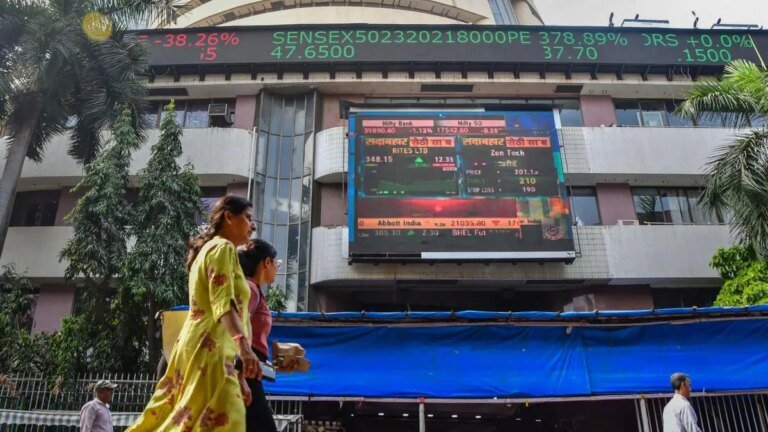
Nifty50 and Sensex were beaten down badly on the Budget Day. The benchmark indices were down 1.96 per cent and 1.88 per cent respectively for the day. Indeed, both the indices fell almost 3 per cent in their intraday trades and then managed to recover some losses from their lows.

The trigger for this sharp intraday fall came after the Finance Minister Nirmala Sitaraman announced the increase in the Security Transaction Tax (STT) for F&O transactions. The STT in Futures transaction is increased from 0.02 per cent to 0.05 per cent. In Options, the STT on both the option premium and exercise of options will now be 0.15 per cent. Previously, the STT rates were at 0.1 per cent (for Option Premium) and 0.125 per cent (exercise of options).

Sectoral performance

Barring the IT/Technology sectors, all others ended the Budget Day in red. The BSE Information Technology index rose 0.66 per cent for the day.

The BSE PSU Bank and the BSE PSU index fell the most. The indices were down 5.6 per cent and 4.17 per cent respectively. The BSE Metals, BSE Commodities, BSE Energy and BSE Capital Goods indices were also down over 3 per cent each.

What’s in store for these sectors after this fall? Here, we give two sectors that are still looking good in the charts despite the sharp fall on this Budget Day. Also, we give two sectors in which investors have to take a cautious stance following today’s fall.

Please note that the view given below is based purely on the historical price movement using technical analysis. No fundamental study is involved.

still good

BSE PSU(20,588.76): Strong support for the index is at 19,950 and 18,900. On the chart, there is a bullish inverted head and shoulders pattern visible, which strengthens the bullish case. So, as long as the above-mentioned supports hold, the bias will remain bullish. The BSE PSU index has the potential to rise to 23,000 and even 24,500 in the coming months.

Any further fall from here can be considered as a good buying opportunity.

BSE Energy (11,544): The index is currently hovering above a key long-term trendline support level of 11,280. Below that, the next support is available immediately at 11,150. The chances for the index to bounce back from either of these two supports are good. That leg of rise can take the BSE Energy index up to 12,700 initially. A decisive break above 12,700 will then clear the way for a rally to 14,000 over the long term.

This bullish view will go wrong only if the index breaks below 11,150. If that happens, a fall to 10,500 can be seen.

be cautious

BSE Metals (37,349): The index made a high of 41,045.73 last week and has come down sharply from there. This reversal is very important. Because it is happening from just below a strong long-term resistance level of 41,500. It indicates that a top is already in place. So, there is not much room left for an upside even if the index recovers from current levels.

The index can fall to 36,000 or even 35,200-34,700 from here. Failure to bounce thereafter and a fall below 34,700 will be very bearish. In that case, there is a danger of seeing 33,000-32,800 on the downside.

BSE Capital Goods (64,655): The index is hovering around a key trendline support level of 64,000. The bias is looking negative to break this support. Such a break can drag the index down to 56,000.

Short-term resistance is in the 67,000-68,000 region. Higher resistance is around 72,000. Ideally, the BSE Capital Goods index has to rise above 72,000 to turn the outlook convincingly bullish. That looks less likely at the moment.

Published on February 1, 2026
Sensex crashes 1,547 points as STT hike on derivatives triggers massive selloff

0

Markets witnessed a brutal selloff on Sunday, with the Sensex plunging 1,546.84 points to close at 80,722.94 and the Nifty tumbling 495.20 points to end at 24,825.45 as the Union Budget 2026-27’s proposal to increase Securities Transaction Tax (STT) on futures and options blindsided investors and triggered panic selling across sectors.

The special Budget Day session saw the Sensex fall 1.88 per cent while the Nifty dropped 1.96 per cent, marking its sharpest percentage decline since April 7, 2025, and closing at a four-month low. The carnage was widespread, with the Nifty Midcap 100 plummeting 2.24 per cent to 57,120.80, while the Nifty Smallcap 100 crashed 2.73 per cent.

The proposed STT increase from 0.02 per cent to 0.05 per cent on futures emerged as the primary catalyst for the route. “For every ₹1 lakh worth of futures sold, traders now pay ₹20 in STT instead of the previous ₹12.50,” said Ashish Singhal, Co-founder at Lemonn. “The proposed taxation on F&O is expected to raise transaction costs across the derivatives market, affecting individual investors as well as institutional participants.”

Trading turned violent after Finance Minister Nirmala Sitharaman began her budget speech at 11.00 am. “The index witnessed heightened volatility, recording an intraday swing of 869 points, which was its widest trading range since June 04, 2024,” said Sudeep Shah, Head – Technical and Derivatives Research at SBI Securities.

Sectoral damage was extensive, with capital market, defence, and PSU bank indices bleeding over 5 per cent. Among Nifty constituents, Bharat Electronics Limited (BEL) emerged as the worst casualty, crashing 6.02 per cent to close at ₹421.95. Hindalco followed with a 5.78 per cent fall to ₹907, while ONGC dropped 5.50 per cent to ₹254.20. State Bank of India (SBI) tumbled 5.31 per cent to ₹1,020, and Adani Ports declined 5.06 per cent to ₹1,347.90.

Technology and healthcare stocks provided limited cushion. Wipro emerged as the top gainer, rising 2.12 per cent to ₹241.93, followed by Max Healthcare, which gained 1.82 per cent to ₹974.25. TCS added 1.74 per cent to close at ₹3,178.20, while Cipla climbed 1.44 per cent to ₹1,343 and Sun Pharma advanced 0.86 per cent to ₹1,609.

Market breadth remained decisively negative with 2,375 stocks declining against 1,759 advances on BSE. A total of 253 stocks hit 52-week lows compared to just 68 touching 52-week highs. The Nifty Bank index crashed 2.00 per cent to 58,417.20, while Nifty Financial Services fell 2.31 per cent to 26,699.10.

PSU banks bore the brunt of selling as the government announced gross borrowings of ₹17.20 trillion through dated securities, higher than market expectations. “The gross borrowing program is higher than anticipated and may weigh on bond market sentiment in the near term,” said Deepak Agrawal, CIO-Debt at Kotak Mahindra AMC. “Government bond yields are likely to edge higher, with the 10-year benchmark expected to trade in the 6.65–6.75 per cent range.”

Metals witnessed heavy selling as copper futures on MCX plummeted over 5 per cent while gold and silver futures crashed more than 5 per cent and 9 per cent respectively.

“On daily charts, it has formed a long bearish candle, and it is currently trading below the 200-day SMA, which is largely negative,” said Shrikant Chouhan, Head Equity Research at Kotak Securities. “Technically, after a sharp intraday dip in the second half of the day, the market trimmed some losses.”

Looking ahead, analysts expect continued volatility with the zone of 24,700–24,650 acting as immediate support for the Nifty. “A sustained move below 24,650 may accelerate the downside momentum towards 24,500, followed by 24,350 in the short term,” said Shah, while resistance is pegged at 25,000-25,200 levels.

Published on February 1, 2026

Sun Pharma shares end nearly 1% higher post earnings announcement

0

Shares of Sun Pharmaceutical Industries on Sunday ended nearly 1 per cent higher after the firm posted a 16 per cent increase in its consolidated net profit for the third quarter ended December 31, 2025.

The stock ended at ₹1,610.20, up 0.95 per cent on the BSE. During the day, it climbed 3.81 per cent to ₹1,655.80.

At the NSE, the stock advanced 0.92 per cent to end at ₹1,610.10. During the day, it edged higher by 3.78 per cent to ₹1,655.70.

Sun Pharmaceutical Industries on Saturday posted a 16 per cent increase in its consolidated net profit to ₹3,369 crore for the third quarter ended December 31, 2025, led by growth across business segments.

The Mumbai-based drug major reported a net profit of ₹2,903 crore for the October-December quarter of last fiscal.

Total revenue from operations rose to ₹15,520 crore for the third quarter as against ₹13,675 crore in the year-ago period.

The company said its board has approved an interim dividend of ₹11 per equity share of Re 1 for the financial year 2025-26.

“Our results this quarter demonstrate well-rounded growth across all businesses, prominently led by our branded businesses in India, emerging markets and global innovative medicines,” Sun Pharma MD Kirti Ganorkar said in a statement.

Published on February 1, 2026

Budget 2026: NRIs allowed higher direct investment in Indian listed companies

0

    The individual investment cap rises from 5% to 10%, while the aggregate limit for all such investors jumps from 10% to 24%. The move aims to broaden India's equity capital base, improve market depth, and attract stable, long-term capital.

The individual investment cap rises from 5% to 10%, while the aggregate limit for all such investors jumps from 10% to 24%. The move aims to broaden India’s equity capital base, improve market depth, and attract stable, long-term capital. | Photo Credit:

In a bid to allow non-resident individuals (NRIs) and overseas investors to take larger direct stakes in Indian listed companies, the Union Budget has sharply increased the investment limits under the Portfolio Investment Scheme (PIS).

Under the proposed framework, the individual investment cap has been raised from 5 per cent to 10 per cent, while the aggregate limit for all such investors has been increased from 10 per cent to 24 per cent.

Previous Restrictions

Earlier, the relatively low ceilings on participation by overseas individuals restricted the scale of participation, forcing most foreign equity flows to come through the registered Foreign Portfolio Investor (FPI) route rather than through direct shareholding.

The government’s move is aimed at broadening the equity capital base, improving market depth and attracting longer-term, more stable pools of capital, particularly from the Indian diaspora.

“This represents a structural shift, not a marginal tweak. Until now, foreign capital largely flowed through institutional channels—FPIs, offshore funds, the usual suspects. By opening direct access to individuals, India is diversifying its capital base, which should, over time, reduce volatility, improve liquidity and bring longer-duration money into the market,” said Mitesh Shah, CEO at Equirus Family Office.

Overseas inflows

Enhanced flexibility in this framework is expected to also support market liquidity and more efficient price discovery, said Moin Ladha, Partner at Khaitan & Co. “It is likely to facilitate greater participation of NRI capital and improve access to stable, long-term overseas funds. Going forward, continued clarity and calibrated liberalization in this space would be welcome, as they can play a meaningful role in strengthening foreign investment inflows into India,” Ladha said.

Tanvi Kanchan, Associate Director and Head of NRI Business at Anand Rathi Share and Stock Brokers, said, “These increases enable foreign investors to build more substantial positions in Indian companies, which could enhance market efficiency, broaden the shareholder base, and foster stronger long-term investment in Indian capital markets.”

Greater participation

Analysts expect the change to encourage greater participation from NRIs in fundamentally strong companies and reduce reliance on short-term foreign flows. The actual impact, however, will depend on ease of execution, regulatory clarity and overall market sentiment. Over time, greater direct overseas ownership could improve price discovery, enhance corporate governance by broadening the investor base, and make Indian markets more resilient to volatile global capital flows.

Published on February 1, 2026

BSE, Angel One, Groww, Nuvama, IIFL shares fall as STT hike sparks volume worries

0

Derivatives segment accounts for a significant share of revenues for brokerage platforms.

Derivatives segment accounts for a significant share of revenues for brokerage platforms.

Shares of listed broking firms such as BSE Ltd, Angel OneGroww, nuvma and IIFL Capital Services came under sharp selling pressure after the increase in Securities Transaction Tax (STT) on futures and options, sparking concerns over trading volumes and near-term profitability for capital market intermediaries.

BSE shares closed 8 per cent lower at ₹2,578.10, after plunging 15 per cent to ₹2,377.40 against the previous close of ₹2,797. CDSL traded 7 per cent lower at ₹1,229.30.

Angel One shares tanked 9 per cent to end at ₹2,313. The stock dragged over 13 per cent to ₹2,199.50 during the session from the previous close of ₹2,540.90.

Billionbrains Garage Ventures (Groww) shares fell 14 per cent to ₹152.52 before settling with 5 per cent loss at ₹168.10.

IIFL Capital Services stock plunged over 17 per cent to ₹272.60 in early trade.

In addition, Nuvama Wealth Management and 360 ONE WAM also witnessed significant sell-off.

The increased STT on futures contracts and on options premium could cool participation in the derivatives segment, which accounts for a significant share of revenues for brokerage platforms, according to analysts.

Jateen Trivedi, VP – Research Analyst (Commodity and Currency) at LKP Securities, said markets were already uneasy about the fiscal deficit target of 4.3 per cent for FY27, but the sharper reaction stemmed from the higher transaction levies. He noted that the STT hike is likely to dent participation in futures and options and could also reduce speculative volumes in commodities.

Dhiraj Relli, Managing Director and CEO of HDFC Securities, described the market’s initial reaction as largely knee-jerk, driven by the revised tax framework for derivatives. While acknowledging that the enhanced STT regime may create near-term headwinds for capital market participants, Relli said the Budget reflects a pragmatic and calibrated policy approach. He added that investors should remain focused on sectors with strong earnings visibility rather than capital-intensive plays, and argued that the government’s long-term vision for market stability and maturity could ultimately benefit the broader financial ecosystem through FY27.

Echoing concerns around trading activity, Shripal Shah, Managing Director and CEO of Kotak Securities, said the steep increase in STT on futures and options, coming on top of last year’s hike, is likely to raise impact costs for traders, hedgers and arbitrageurs. According to him, this could cool derivative activity and lead to lower volumes, with the intent appearing to be moderation rather than revenue maximization, as any tax gains may be offset by reduced turnover.

Aakash Shah, Technical Research Analyst at Choice Equity Broking, warned that the STT increase could act as a marginal negative for foreign portfolio investor flows in the near term, particularly for high-frequency and derivative-focused global funds. He pointed out that higher transaction costs meaningfully reduce post-tax returns for active strategies at a time when overseas investors have already been cautious due to global risk-off sentiment, elevated US bond yields and currency pressures.

Shah added that while long-only, fundamentally driven FPIs are unlikely to be deterred solely by the STT hike, the higher costs could marginally shift tactical allocations toward other Asian markets. Overall, he said the move risks dampening trading volumes and slowing short-term foreign participation, even as broader inflows will continue to hinge on macro stability, rupee movement and consistency in tax policy.

Amit Majumdar, Group Chief Strategy Officer, Angel One Ltd, has said that F&O brokerage contributed about 44 per cent of gross revenue, while interest income from client funding and our broader platform accounted for around 33 per cent in Q3FY26, with the rest coming from cash and commodity broking, depository, distribution, and other income streams. “This diversified mix reinforces the resilience of our model and gives us confidence that the broader trajectory of our business remains firmly intact.”

More Like This

fadfebrian

Published on February 1, 2026

India Budget 2026-27: STT hike hits markets, capex and foreign investment get boost

0

Experts called it a continuation budget, balancing near-term market concerns with structural positives.

Experts called it a continuation budget, balancing near-term market concerns with structural positives. | Photo Credit: PTI

The Union Budget 2026-27 has drawn mixed reactions from market participants, with experts highlighting the government’s focus on fiscal discipline and infrastructure spending while expressing disappointment over the increased securities transaction tax and the lack of capital gains tax relief.

STT Hike

The budget increased STT on futures from 0.02 per cent to 0.05 per cent and raised STT on options premiums to 0.15 per cent from 0.1 per cent, a move that dominated immediate market sentiment. “The only real negative in the Budget is the increase in STT on derivatives, and that’s what the market is reacting to in the short term,” said Amisha Vora, Chairperson and Managing Director of PL Capital – Prabhudas Lilladher.

Tushar Badjate, Director of Badjate Stock & Shares, said the STT increase “came as an unwelcome move for market participants at a time when equity markets have been under pressure and foreign institutional flows have remained volatile.” He noted that expectations were high for rationalization of capital gains taxation, but “the Budget largely maintained the status quo on taxation.”

Structural Positives

Several experts emphasized the budget’s structural positives despite the near-term negatives. The government maintained capital expenditure at ₹12.2 lakh crore for FY27, representing a 9 per cent increase. “Capital markets play a crucial role in economic growth, currency stability, and capital formation,” Badjate added, calling the absence of targeted incentives for foreign institutional participation “a missed opportunity.”

On fiscal discipline, Anirudh Garg, Partner and Fund Manager at INVasset PMS, said the government’s adherence to “a fiscal deficit path of 4.4 per cent in FY26 and 4.3 per cent in FY27, alongside a gradual reduction in the debt-to-GDP ratio toward the mid-50 per cent range, signals continuity and discipline.”

Foreign Investment

The budget proposed measures to attract foreign investment, including allowing non-resident individuals wider access to invest in listed equities and raising PMS investment limits for NRIs to 24 per cent from 5-10 per cent. “This is a strong positive for capital flows,” Vora said. Manoj Purohit, Partner at BDO India, described the amendment as “much-awaited” and said it would “not only increase inflows but also help stabilize the currency and capital markets.”

Financial Reforms

Financial sector reforms featured prominently. Gayathri Parthasarathy, Partner and Leader – Financial Services at PwC India, highlighted “the strong emphasis on financial sector reforms”, including a proposed high-level committee on banking to “align the sector with India’s next growth phase and help in achieving Viksit Bharat goals.”

Market Innovations

The budget introduced market-making framework and total return swaps on corporate bonds. Mahavir Lunawat, Chairman and Managing Director of Pantomath Capital, called this “a game-changer” that “ensures that investors can buy and sell with much greater ease and lower costs.”

Strategic Investments

Infrastructure and manufacturing received significant attention. Darshan Rathod, COO of MULTYFI, said the rare earth corridors across four states represent “India’s calculated move to capture supply chain fragmentation away from China.” The Bio Pharma Shakti allocation of ₹10,000 crore and Semiconductor Mission 2.0 were described as “strategic investments in sectors where India possesses latent comparative advantages.”

Data Center Boost

N. ArunaGiri, CEO of TrustLine Holdings, said “the tax exemption for foreign investments in data centers is a welcome step and reinforces India’s positioning as a global investment destination.” He added that “safe harbor clarifications and related provisions introduced in the Budget are likely to meaningfully boost investments by Global Capability Centres.”

Stable Outlook

Sonam Srivastava, Founder and Fund Manager at Wright Research PMS, described the budget as “a continuation budget rather than a disruptive one, which in itself is a positive at this stage of the cycle.” She noted that “stable tax policy, predictable capex, and bond market deepening together improve India’s relative attractiveness versus other EMs.”

Published on February 1, 2026

Access Denied

0

Access Denied You don’t have permission to access “http://hindi.gadgets360.com/mobiles/union-budget-2026-main-highlights-indicate-price-cut-in-smartphones-ev-as-components-duty-reduced-more-details-news-10925293” on this server.

Reference #18.b3560e17.1774580578.eb3eb1cf

https://errors.edgesuite.net/18.b3560e17.1774580578.eb3eb1cf

Silver Price Today: Latest Rates in Delhi, Mumbai, Kolkata, Chennai & Bengaluru

0

Silver Prices in India dipped sharply as reported on February 1 across all major cities. The price of one gram silver and one kg silver dipped ₹30 and ₹30,000, respectively compared with the previous session’s closing price. This report provides a detailed, city-by-city breakdown of the latest silver prices.

Market experts remain constructive on silver but urge investors to balance optimism with caution.

Silver Rate in India

Silver prices declined with the average rate settling at ₹320 per gram, down ₹30, while one kilogramme now costs about ₹3,20,000, cheaper by ₹30,000.

Silver Rate in Mumbai

Silver prices in mumbai declined to ₹320 per gram, down ₹30, while one kilogram now costs about ₹3,20,000, cheaper by ₹30,000.

Silver Rate in Chennai

Chennai’s silver rates have also seen a decrease to ₹3,20,000 per kg, while 1 gm of silver is available at ₹320, or ₹30 cheaper.

Silver Rate in Delhi

In Delhi, the prices moved similarly lower, tracking losses seen across major cities. The price of one kilogram of silver dipped to ₹3,20,000 compared with ₹3,50,000 in the previous session, marking a steep ₹30,000 slide in a single day.

Silver Rate in Ahmedabad

Silver prices in Ahmedabad decreased, mirroring the downtrend seen across other parts of the country. The cost of one kilogram fell sharply by ₹30,000 to ₹3,20,000, down from ₹3,50,000 in the previous session. In turn, 1 gm of silver was available for ₹320, cheaper by ₹30 compared with the previous session’s price of ₹350.

Silver Rate in Kolkata

In Kolkata, the white metal saw an equally strong dip, as a kilogramme became cheaper by ₹30,000 at ₹3,20,000 compared with ₹3,50,000 for which it was available yesterday.

Silver Rate in Bengaluru

In Bengaluru too, silver prices declined by ₹30 and by ₹30,000 to ₹320 per gram and to ₹3,20,000 per kg, respectively.

Silver Rates Courtesy: bankbazaar.com

More Like This

The probability of a Fed rate cut next month inched down to 69 per cent on Monday, after jumping to 74 per cent in the previous session, according to the CME FedWatch Tool.

Published on February 1, 2026

Budget 2026: How Gold, Silver price moved post Budget?

0

gold and silver prices remained under pressure on Sunday afternoon following the Union Budget presentation, with traders attributing the decline primarily to global macro factors rather than Budget announcements, as both metals recovered partially from morning lows after hitting lower circuits.

mcx gold Futures traded 5 per cent lower after a modest intraday recovery, having slid 9 per cent earlier in the session. MCX silver held declines as traders approached the budget cautiously, wary of potential changes to import duties on precious metals, according to market observers.

“Selling pressure intensified on the MCX today, with both metals hitting lower circuits, sliding 9 per cent earlier amid a brutal session, compounding Friday’s steep losses of 17 per cent in gold and 27 per cent in silver. Currently, gold trades 5 per cent lower after a modest intraday recovery, while silver holds declines as traders now approach the Union Budget cautiously, wary of potential changes to import duties on precious metals,” said Kaynat. Chainwala, AVP – Commodity Research, Kotak Securities.

The selloff followed Friday’s crash when gold and silver suffered their steepest single-day fall since 1980, settling at $4,864 per ounce and $84.66 per ounce respectively. “The sell-off was triggered by a sharp rebound in the US dollar, broad-based global market weakness, and the Trump administration’s nomination of Kevin Warsh, widely regarded as an inflation hawk, as the next Federal Reserve chair,” Chainwala added.

Market participants noted the correction came after an unprecedented rally. “Data shows that until 29th January, silver had surged 319 per cent year-on-year in rupee terms, while gold had risen 118 per cent. Even after a correction of around 11 per cent in silver and 4.3 per cent in gold on 30th January, silver remains up 268 per cent YoY and gold 108 per cent YoY,” said Sriram BKR, Senior Investment Strategist, Geojit Financial Services.

Domestic gold had retreated from highs near ₹1,80,000 per 10 grams to stabilize around ₹1,49,500-₹1,49,653, while silver corrected from peaks near ₹4,20,048 per kg to around ₹2,91,925-₹2,91,000.

“The ETF prices have turned volatile on the downside, also on the back of expectation around changes in customs duty on Gold & Silver, in the Union Budget,” Sriram added.

Analysts maintained that the decline was driven by global factors rather than Budget-related concerns. “Today’s sharp fall in gold and silver ETFs looks scary on the screen, but it’s more of a sentiment shock than a story-breaker. Precious metals had run up sharply over the last year, and what we’re seeing now is a mix of profit-booking, global volatility and reaction to macro cues,” said Akshat Garg, Head Research & Product, Choice Wealth.

Further pressure may emerge as higher CME margins take effect on Monday, February 2. “Gold margins will rise to 8 per cent from 6 per cent for non-heightened risk profiles, and to 8.8 per cent from 6.6 per cent for heightened risk profiles. Silver margins will increase to 15 per cent from 11 per cent for non-heightened risk profiles, and to 16.5 per cent from 12.1 per cent for heightened risk. profiles,” according to a CME exchange statement released Friday.

“Given elevated prices, a buy-on-dips strategy is preferable. Gold is expected to find support in the 5,000-5,100 zone, while silver has strong support in the 95-102 range. The medium-term outlook for both metals remains constructive amid persistent geopolitical and policy uncertainty,” Chainwala said.

“For investors, this isn’t a moment for panic. Gold and silver are portfolio hedges, not trading bets. If your allocation is sensible, staying put makes sense,” Garg advised.

Published on February 1, 2026

Budget Reaction: Nifty 500 Down 1%; 354 stocks declined the most Hyperlink: union budget, bse, nifty,

0

Finance Minister Nirmala Sitharaman presented her ninth Union Budget in Parliament on February 1, 2026. In the immediate aftermath, the Nifty 500 slipped about 1 per cent from the previous close to around 22,819. By 1:20 PM, market Breadth was weak, with 354 stocks declining, against 146 advancing.

The sharpest early losses were concentrated in a handful of pockets. Metals and mining names such as Hindustan Copper Ltd, Hindustan Zinc, National Aluminum Co Came under pressure. Capital market and broking counters, including Multi Commodity Exchange of India, BSE, Angel OneNuvama Wealth Management, also corrected sharply. Financials — Bank of India, Bank of Baroda, Union Bank of India, Karur Vysya Bank, Muthoot Finance, IIFL Finance — featured prominently among the losers. Overall, cyclicals and market-linked plays bore the brunt of the sell-off.

More Like This

Finance Minister Nirmala Sitharaman presents the 'Union Budget 2026-27' in the Lok Sabha, in New Delhi

Published on February 1, 2026