Free Iguana News: Florida of America is known as ‘Sunshine State’. That is, a place where the sun is always shining. But, this year’s weather has brought a different kind of disaster. This remains a strange puzzle and problem for meteorologists and common people. Actually, it is extremely cold in the eastern part of America. The worst effect of this harsh winter was on the Green Iguanas living there. Due to the severe cold, these ‘cold blooded’ reptiles have frozen and are dripping heavily from the trees.
The situation has become such that these giant lizard species, frozen due to cold, have started falling down from the trees like fruits. During this time, Florida wildlife officials took a big step and collected a total of 5,195 frozen iguanas and euthanized them. Let us understand from the viewpoint of science why this happened and why it became necessary to kill these creatures.
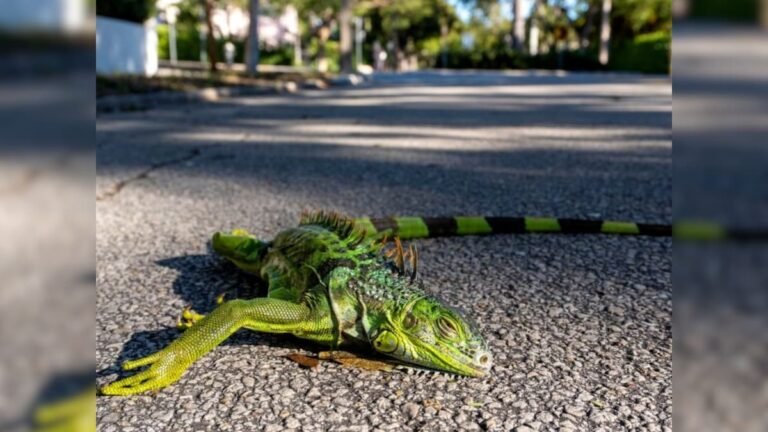
Frozen iguanas are being killed due to extreme cold. (Photo-Social Media)
Why do iguanas ‘freeze’?
To understand this phenomenon, we have to understand the physical structure of these organisms. Humans and other mammals are ‘warm-blooded’, which means our bodies can produce their own heat. Can control temperature. But, reptiles like iguana and snakes are ‘cold-blooded’ (sheet-blooded) creatures. In simple language, their body cannot produce its own heat. They depend on the external environment to keep their body warm. When the temperature drops below 50 degrees Fahrenheit (about 10 degrees Celsius), their body starts becoming sluggish.
Florida is struggling with severe cold
This time the cold has increased so much in Florida that the temperature in Miami has dropped to 35 degrees Fahrenheit. In such cold, all the processes of the iguana’s body slowed down. He became ‘cold-stunned’. This means that they could neither move nor maintain their grip on the branches of the trees. The result was that they started falling from the trees to the ground in an unconscious state. Scientists say that after falling from the tree they look dead, but in reality they are alive. Their heart is still beating, but their body becomes completely paralyzed. As soon as they get warm, they can get back to health.
Iguana lying unconscious on the road. (Photo-Social Media)
Florida’s ‘unwanted guests’
Now the question arises that if they could have been alive, then why are they being killed? Actually, green iguanas are not native to Florida. They were brought here from outside in the 1960s. These are called ‘Invasive Species’. According to the Florida Fish and Wildlife Conservation Commission (FWC), these creatures have become a major threat to the local environment.
Losses caused by these-
environmental damage: They eat local plants and threaten the survival of native species (such as butterflies and other small creatures).
Damage to infrastructure: Iguanas create tunnels in the ground, which weaken roads, footpaths and canal banks.
diseases: They can spread bacteria like Salmonella, which is dangerous for humans.
Government and public are killing together
In view of the severe cold, FWC issued an order (Executive Order 26-03) that common citizens can collect these ‘cold-stunned’ (unconscious) iguanas without any permit. The condition was that they would have to be delivered alive to wildlife officials. The people of Florida participated enthusiastically in it. Between 1 and 2 February, people collected thousands of fallen iguanas from parks, streets and their gardens. A total of 5,195 iguanas were handed over to the authorities.
Why is euthanasia being given?
The government believes that releasing these creatures back into the wild would be a big mistake for the environment. Under Florida law, these invasive species are allowed to be humanely eliminated in order to protect the state’s original wildlife. Therefore, all these more than 5,000 iguanas were humanely euthanized.
The millions of Jeffrey Epstein files dumped last Friday by the US Department of Justice will provide journalists, conspiracy theorists and interested members of the public with months of reading. And what they will read is enraging.
What makes these files so infuriating, however, is not just Epstein’s horrific predatory behavior, which is well-known, but the more mundane examples of elite conduct that the documents continue to expose. They vividly illustrate a world whose existence many everyday people, whether fevered with visions of the Illuminati or just jaundiced by banal anti-establishment cynicism, already suspected exists: an informal global club of powerful, ultra-rich people who all seemingly know each other, help one another out, and protect each other from the consequences of their depravity.
The new files will probably not provide satisfying answers to questions about, say, whether any of Epstein’s famous friends participated in his sex trafficking, or if his death in custody in 2019 was truly a suicide, as authorities have said. But conspiracy theorists may still feel vindicated – and to some extent they should, Matthew Dallek, a political historian at George Washington University, said.
Melania Trump, Prince Andrew, Gwendolyn Beck and Jeffrey Epstein at a party at Mar-a-Lago, Palm Beach, Florida, on 12 February 2000. Photograph: Davidoff Studios Photography/Getty Images
Although the documents may not expose an actual criminal conspiracy, he said, they confirm the belief behind most conspiracy theories: that elites “get special treatment, that they’re shielded from the rules that are supposed to apply to everyone equally, and that there is a kind of corruption in the broadest sense of the word”.
The fact that someone is mentioned in the files does not automatically implicate that person in wrongdoing, of course, or mean that they were aware of Epstein’s wrongdoing. The documents include uncorroborated allegations collected by the Department of Justice. Epstein was also a shameless wheeler-dealer who made it his mission to make the acquaintance, however tenuous, of every powerful person he could.
Yet the files, especially Epstein’s typo-filled email and text-message correspondences, are fascinating – and ultimately grim – in what they show of how elites act in private, among themselves. At the least, many of Epstein’s powerful acquaintances remained friendly with him years after the notoriously lenient sweetheart bargain, in 2008, in which he pleaded guilty to soliciting an underage girl for prostitution, and as survivors continued to accuse Epstein of further crimes.
Donald Trump’s own decades-long friendship with Epstein is already well known, and seems to have ended in a falling-out sometime around 2004; the new files do not appear so far to implicate him in wrongdoing. But they do highlight Epstein’s social ties with other members of the US president’s coterie, including the current US secretary of commerce, Howard Lutnick. According to the files, Lutnick may have visited Epstein’s private island in 2012. (Lutnick disputes this, and recently told the New York Times: “I spent zero time with him.”)
The files are an unflattering glimpse into the real ways that wealth is accumulated and power is brokered. Epstein, a private individual accountable to no voters, government authorities, or shareholders, was engaged in a near-constant stream of back-channel interventions in the political or business spheres: advising former Israeli prime minister Ehud Barak on how to make money post-premiership; helping an Indian businessman try to get a meeting with Jared Kushner; communicating with high-ranking Kremlin officials in an effort (apparently unsuccessful) to meet Vladimir Putin; and generally conducting the sort of “diplomacy” that does not require an ambassadorial appointment or a foreign-service exam.
Certain surnames favored by conspiracy theorists – Rothschild, Rockefeller, Soros – also pop up occasionally in the files, in contexts that are banal but would certainly buttress a conspiracist’s belief that powerful people all know each other.
If anything, the files make a mockery of public political commitments of all kinds; above a certain stratosphere of wealth or fame, it would seem, ideological and other differences are subsumed by far more motivating forms of elite self-interest. To read the files is to realize that class solidarity is real – just not within the class where Marxists might hope to find it.
Epstein may have been a convicted sex criminal and a Democratic donor, but that did not stop Steve Bannon, a self-described crusader against a decadent liberal elite, from offering Epstein “media training” to help rehabilitate his public image. Epstein may have been a convicted sex criminal and a lavishly hedonistic financier, but that did not stop the leftwing academic Noam Chomsky, beloved critic of capitalism, from joining Epstein on a private plane or trading friendly advice. It turns out that some of society’s most famous populist outsiders are, in fact, very much inside.
(Neither Chomsky nor Bannon have so far publicly commented on the new files; Chomsky suffered a debilitating stroke in 2023.)
The vast international conspiracy does sort of exist, it turns out, but far more prosaically than conspiracy theorists have fantasized. Epstein was actually a member of an elite nongovernmental organization that has been the center of countless conspiracy theories – the Trilateral Commission, founded by David Rockefeller in 1973 to promote international cooperation. Yet his induction involved no rituals of blood sacrifice: he was invited to join in the 1990s in appreciation, it appears, of some generous donations.
Jeffrey Epstein and Donald Trump at Mar-a-Lago, Palm Beach, Florida, on 22 February 1997. Photograph: Davidoff Studios Photography/Getty Images
In fact, money – plus intra-elite social trust – were usually more than enough to gain Epstein entry into whichever room he desired to be in next. Tech companies happily accepted investments from a convicted sex criminal, and investment banks gladly moved his funds around. Peter Thiel gave him advice on potentially investing in Palantir. (Thiel did not respond to a recent request from the New York Times for comment; Palantir told the newspaper that the company “was not aware of Epstein ever investing in or being a shareholder in Palantir”.)
Epstein was an investment manager by profession, and his expertise was tax avoidance. In other words, he helped rich people hide – albeit sometimes legally – their money, making them even richer, and they repaid him by making him rich as well.
That itself is a rather on-the-nose encapsulation of the world that these files depict, but has not completely satisfied the many Americans who remain understandably skeptical of how a college dropout and failed math teacher from Coney Island somehow achieved the kind of wealth that is accompanied by butlers and private helipads. Not unreasonably, many of those same Americans have wondered, in message boards, social media posts and article comment sections, if his wealth was actually made by sexual blackmail of other elites.
The hypothesis remains possible but ignores the simpler, and in some ways more outrageous, explanation: blackmail might not have been necessary. As detailed in a meticulous, 8,000-word New York Times investigation, Epstein was a charismatic operator who was adept at identifying and seducing useful elites and manipulating their insecurities. He thrived on the largesse of wealthy patrons, and sometimes outright stole from them. In other words, he was a conman like any other, just on an unusually ambitious scale. He knew how to manipulate a world set up for people like him to manipulate.
The American right’s reaction to the latest developments has been muted – ironically so, given that it was the right that helped to keep the story alive in the public eye for so long. After Epstein’s death, rightwing influencers stoked anger about the government’s lack of transparency and speculated about which Democratic elites might have partaken of Epstein’s harem of exploited women and girls. Trump himself, running for president in 2024, repeatedly vowed to open the files to the public.
After he took office and did not do so – and as it became apparent that Trump and many people in his orbit might be named in the files or face conflicts of interest – the rightwing ecosystem became confused and angry. Now, however, interest seems to be fading, except to the extent that the files concern Bill and Hillary Clinton, who recently agreed to testify to Congress about Epstein. On the most powerful conspiracy theory of all, and the one that they actually turned out to be partly correct about, the pundits of the rightwing conspiracy universe have fallen largely silent.
“The way that rightwing media functions today is creating conditions under which it’s very hard for these folks to even comment on the Epstein files,” Matthew D Taylor, a scholar of contemporary Christian nationalism, said.
This is partly for fear of antagonizing the administration, he believes, but also because of audience capture: “The audience just doesn’t want bad news about Trump Republicans.”
It is a shame that the Maga movement’s anger has moved on from the Epstein files. Whatever the motivations of that ire, it focused briefly on a world that deserves more scrutiny. Yet the men at its center turned out not to be cunning New World Order ideologues but elite gladhanders, con artists, back-scratchers, and hedonists, in a world whose special rules they assumed, quite rationally, that they would never need to explain to the outside.
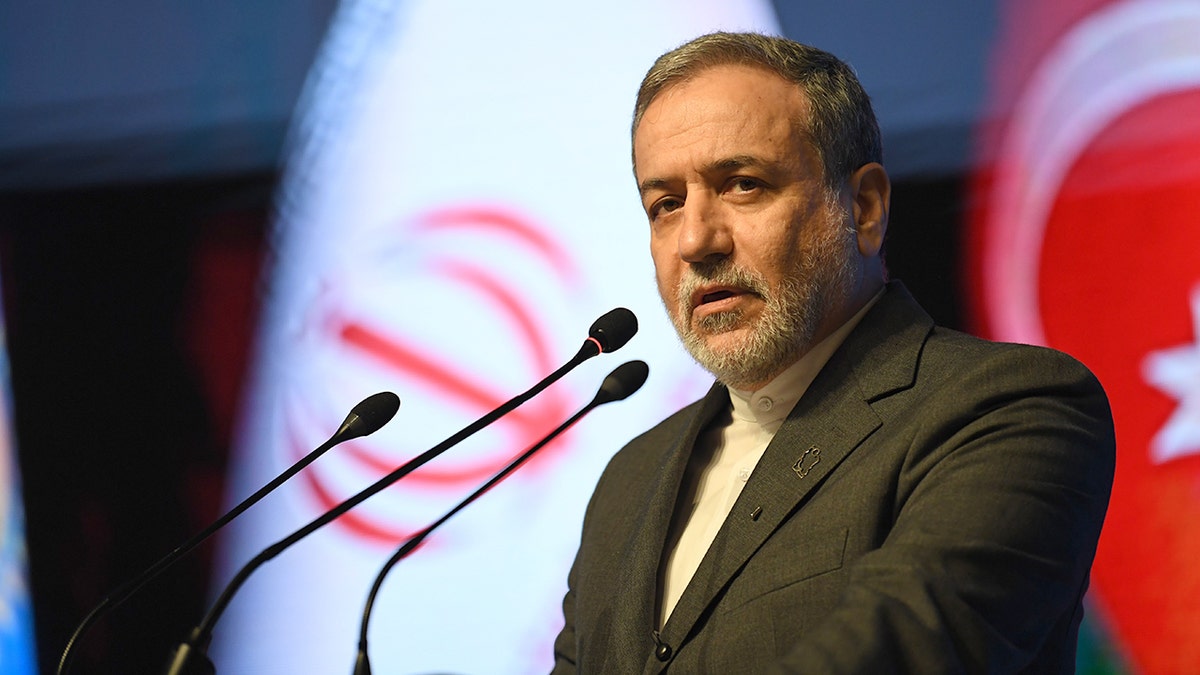
Iranian Foreign Minister Abbas Araghchi warned Saturday that Tehran will “target U.S. bases” in the region if American forces launch an attack, a report said.
The remark came after Araghchi said Friday that indirect nuclear talks with the U.S. in Oman were “a good start” and that there was a “consensus” that the negotiations would continue.
“It would not be possible to attack American soil, but we will target their bases in the region” if Iran is attacked by U.S. forces, Araghchi told Al Jazeera on Saturday, according to Reuters.
“We will not attack neighboring countries; rather, we will target U.S. bases stationed in them. There is a big difference between the two,” he reportedly added.
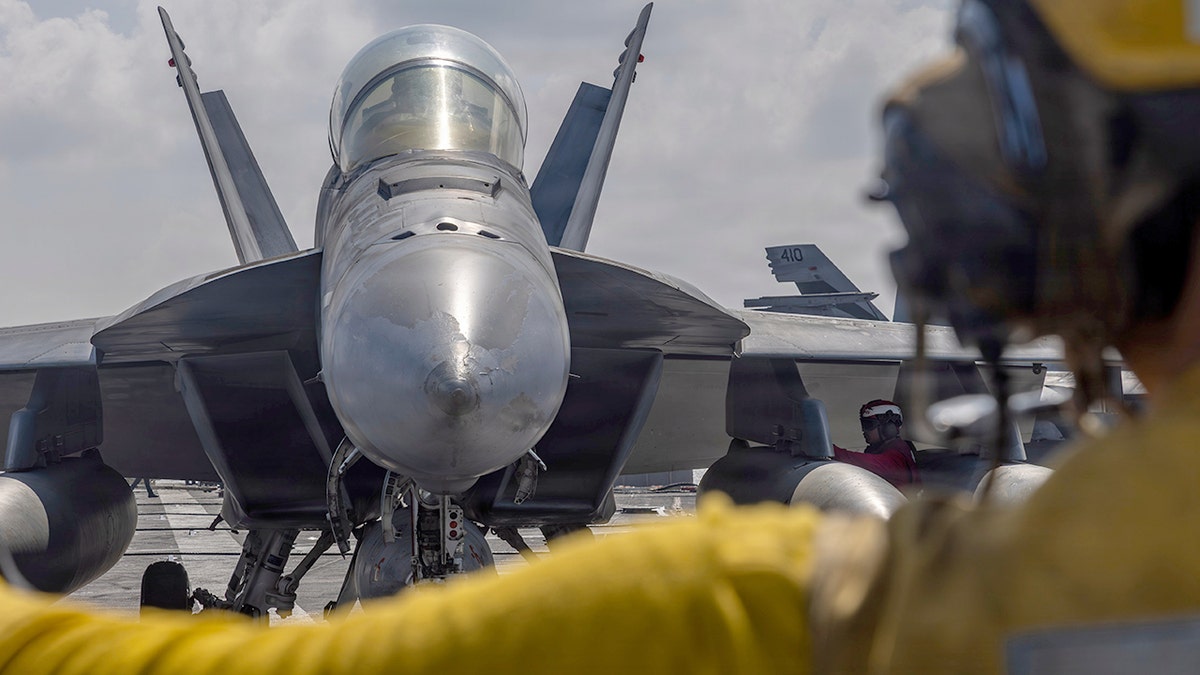
This handout photograph from the U.S. Navy shows Aviation Boatswain’s Mate 2nd Class Michael Cordova directing an F/A-18F Super Hornet on the flight deck of the Nimitz-class aircraft carrier USS Abraham Lincoln in the Indian Ocean on Jan. 23, 2026. The aircraft carrier is currently in the Middle East, and it shot down an Iranian drone earlier this week.(Mass Communication Specialist Seaman Daniel Kimmelman/U.S. Navy via AP)
In response, Iran launched a retaliatory attack on Al-Udeid, the American airbase in Qatar, which President Donald Trump characterized at the time as a “very weak response.”
“Iran has officially responded to our Obliteration of their Nuclear Facilities with a very weak response, which we expected, and have very effectively countered. There have been 14 missiles fired — 13 were knocked down, and 1 was ‘set free,’ because it was headed in a nonthreatening direction,” the president wrote on Truth Social.
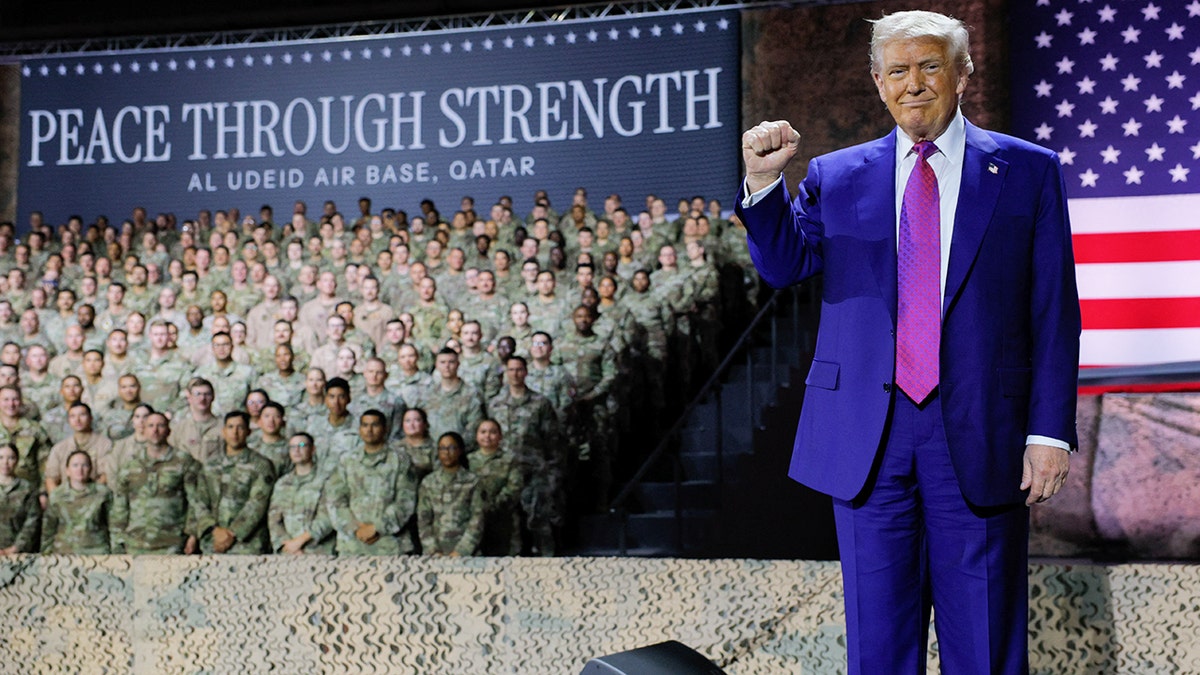
President Donald Trump gestures while delivering remarks to U.S. troops during a visit to Al Udeid Air Base in Doha, Qatar, on May 15, 2025. (Brian Snyder/Reuters)
Regarding Friday’s nuclear talks, Araghchi said, “It was a good start, but its continuation depends on consultations in our respective capitals and deciding on how to proceed.”
Omani Foreign Minister Badr al-Busaidi met with both Iranian and American officials on Friday, the Foreign Ministry of Oman said on X. The ministry said that al-Busaidi held separate meetings with Araghchi and U.S. special envoy Steve Witkoff and Jared Kushner.
Iranian foreign minister Seyed Abbas Araghchi speaks in the northern city of Rasht, Iran, on Nov. 18, 2025.(Shadati/Xinhua via Getty Images)
“The consultations focused on preparing the appropriate conditions for resuming diplomatic and technical negotiations, while emphasizing their importance, in light of the parties’ determination to ensure their success in achieving sustainable security and stability,” the Foreign Ministry of Oman said.
Last spring, the National Security Agency (NSA) detected evidence of an unusual phone call between an individual associated with foreign intelligence and a person close to Donald Trump,according to a whistleblower’s attorney briefed on the existence of the call.
The highly sensitive communique, which has roiled Washington over the past week, was brought to the attention of the director of national intelligence (DNI), Tulsi Gabbard – but rather than allowing NSA officials to distribute the information further, she took a paper copy of the intelligence directly to the president’s chief of staff, Susie Wiles, the attorney, Andrew Bakaj, said.
One day after meeting Wiles, Gabbard told the NSA not to publish the intelligence report. Instead, she instructed NSA officials to transmit the highly classified details directly to her office.
Details of this exchange between Gabbard and the NSA were shared directly with the Guardian andhave not been previously reported. Nor has Wiles receipt of the intelligence report.
The office of the director of national intelligence (ODNI) did not immediately respond to questions about the unusual call detected by the NSA, or Gabbard’s handling of the intelligence.
On 17 April, a whistleblower contacted the office of the inspector general alleging that Gabbard had blocked highly classified intelligence from routine dispatch, according toBakaj, who has been briefed on details surrounding the highly sensitive phone call flagged by the NSA. The whistleblower filed a formal complaint about Gabbard’s actions on 21 May, Bakaj said.
For eight months, the intelligence report has been kept under lock and key, even after the whistleblower pushed to disclose details to congressional intelligence committees.
Acting inspector general Tamara A Johnson dismissed the complaint at the end of a 14-day review period, writing in a 6 June letter addressed to the whistleblower that “the Inspector General could not determine if the allegations appear credible”.
The letter stipulated that the whistleblower could take their concerns to Congress, only after receiving DNI guidance on how to proceed, given the highly sensitive nature of the complaint.
The independence of the watchdog’s office may be compromised, lawmakers have said, ever since Gabbard assigned one of her top advisers, Dennis Kirk, to work there on 9 May, two weeks after the whistleblower first made contact with the inspector general’s hotline.
Gabbard’s office issued its first public acknowledgment of the highly sensitive complaint in a letter addressed to lawmakers on Tuesday, one day after the Wall Street Journal reported on the classified brief. It was posted to the ODNI’s X account, including claims that the inspector general had not informed Gabbard of her obligations to transmit the complaint to Congress.
Bakaj said that the ODNI’s office cited various reasons for the delay in intelligence sharing, including the complaints’ top secret classification, the fall government shutdown and the intelligence community inspector general’s failure to notify Gabbard of her reporting requirements.
Two attorneys and two former intelligence professionals who reviewed details of the incident and ensuing complaint shared with the Guardian have identified what they believe are a series of procedural anomalies that raise questions about Gabbard’s handling of national intelligence and the whistleblower disclosure, which was reported to the inspector general as a matter of “urgent concern”.
Members of the “gang of eight”, a group of Senate and House leaders privy to classified information from the executive branch, received a heavily redacted version for review on Tuesday night. They have disagreed about the legality of Gabbard’s conduct, as well as the credibility of the whistleblower complaint.
Two Republican lawmakers dismissed its credibility and backed Gabbard’s conduct, including the Arkansas senator Tom Cotton, who said in a statement on X that “the DNI took the necessary steps to ensure the material has handled and transmitted appropriately in accordance with law”.
But Democrats have raised questions about the delay. “The law is clear: when a whistleblower makes a complaint and wants to get it before Congress the agency has 21 days to relay it,” said the senator Mark Warner of Virginia, the senior Democrat on the Senate intelligence committee, in a Thursday press conference. “This whistleblower complaint was issued in May. We didn’t receive it until February.”
Warner said that the months-long delay reflected an effort to “bury the complaint”.
The contents of the whistleblower complaint are still largely unknown. Bakaj, the whistleblower’s attorney, said that Gabbard’s office had redacted much of the complaint that was released to intelligence committee members on Tuesday, citing executive privilege.
“I don’t know the contents of the complaint, but by exercising executive privilege they are flagging that it involves presidential action,” he said.
On 3 February, Bakaj again requested guidance from Gabbard’s office about how to share the whistleblower’s full report while taking appropriate precautions.
“As you are well aware, our client’s disclosure directly impacts our national security and the American people,” Bakaj wrote. “This means that our client’s complete whistleblower disclosure must be transmitted to Congress, and that we, as their counsel, speak with members and cleared staff.”
Bakaj said that the DNI’s office did not respond to his letter by its Friday deadline.He plans to contact members of the Senate and House intelligence committees on Monday to schedule an unclassified briefing on Gabbard’s conduct and the “underlying intelligence concerns”.
Members of the gang of eight have contacted the NSA to request the underlying intelligence that the whistleblower says Gabbard blocked, according to staff in Warner’s office.
Lawmakers can make routine requests for classified information directly from intelligence agencies such as the NSA. The request circumvents the ODNI’s involvement, as well as the office of the inspector general.
The leading Democrat on the House oversight committee, Stephen F Lynch, wrote a letter to acting inspector general Johnson to warn her that the integrity of the watchdog office could be compromised by Kirk’s May appointment to the group.
Kirk served in the first Trump administration and was a co-author of Project 2025, a policy roadmap for restructuring the federal government.
“The appointment of a highly partisan advocate for prioritizing personal loyalty to President Trump above independence and professionalism in the federal government – and one who apparently answers to DNI Gabbard rather than to you – in a senior role within [the intelligence community inspector general’s office] raises troubling questions about the independence of the IC IG,” Lynch wrote.
Johnson did not respond to a request for comment related to this story. She was replaced as the intelligence community inspector general in October by Christopher Fox.
Japanese politics is politer and more understated than most.
It’s perhaps the reason that Western audiences do not always pay a huge amount of attention.
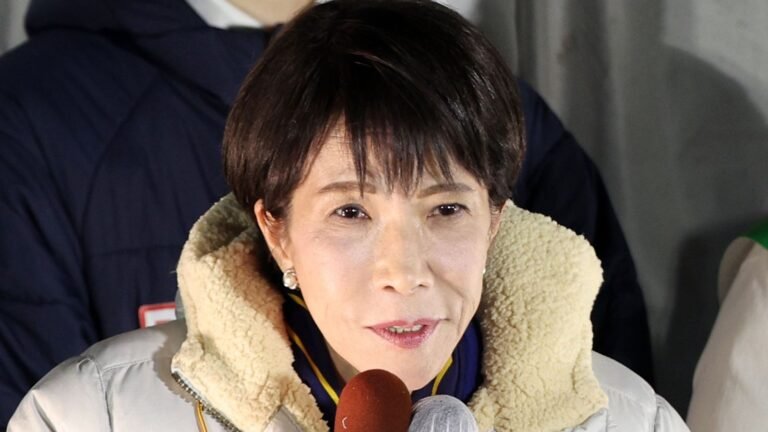
But something feels different this time, and that’s largely down to the woman at the centre of this story; the drum-playing, Trump-hugging, China-provoking prime minister who has raised the stakes for both Japan and the region.
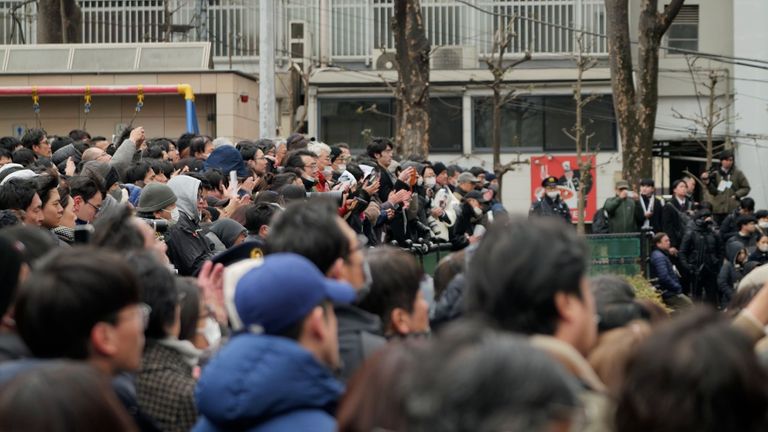
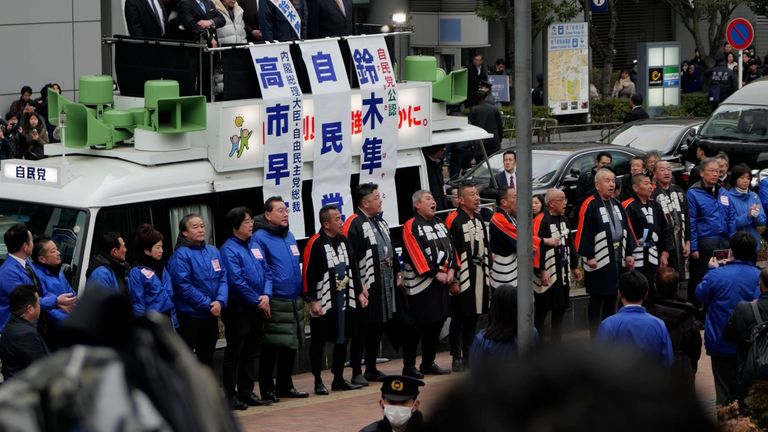
In central Tokyo, just a few hours before polls open in the snap election she called, hundreds of people crowded into a small local park to see Sanae Takaichi.
Image:Supporters at a rally
Despite the bitterly cold temperatures and the fact that many struggled to see her over the sea of heads, there was a sense that something significant was unfolding.
“I was just passing,” one woman told me, “but I couldn’t not stop to see her!”
There is no disputing the fact that Takaichi is just different to those who have gone before her.
She’s a former heavy metal drummer and motorbike rider, and she is happy to jump around the stage at rallies and sing to visiting foreign leaders (Italy’s Giorgia Meloni was greeted with a rousing happy birthday).
K-Pop jam session with South Korea and Japan leaders
Her outsized character in a scene historically so male and so dry has led to soaring personal approval ratings, 2.6 million followers on X and a one-year wait to buy her signature black handbag.
Not to mention the reversal of fortunes seen by her struggling Liberal Democratic Party (LDP): it now looks set to take a majority in Japan’s Lower House, just four months after she assumed the leadership in the wake of her unpopular predecessor’s resignation.
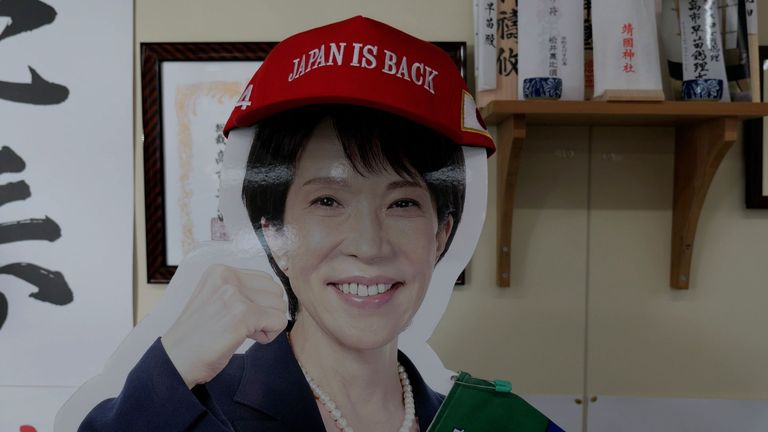
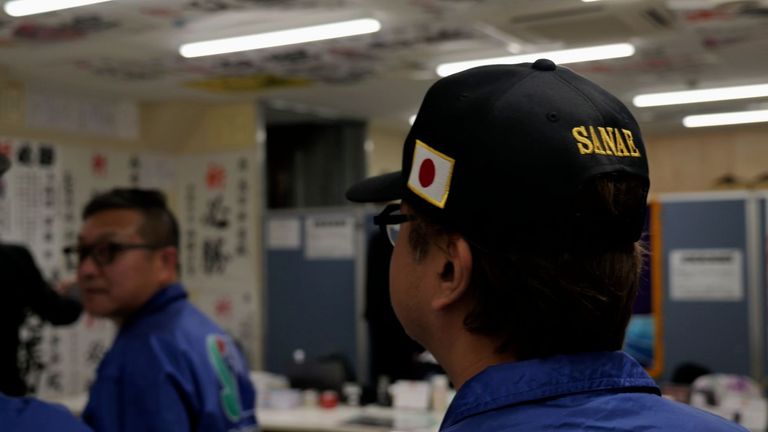
Image:A hat worn by supporters has ‘Sanai’, Takaichi’s first name, written on the back and ‘Japan is back’ on the front
Japan’s ‘Iron Lady’ will pursue conservative vision if she wins
But she’s also far from the liberal champion many might have hoped for in the country’s first female leader; she is, in fact, ultra conservative.
She’s anti gay marriage and a vocal defender of traditional gender roles; she sees Margaret Thatcher as a role model and has leant into a rising feeling of “foreigner fatigue” in Japan, directed both at immigrants and tourists.
If she secures her own mandate at Sunday’s election, it is this conservative vision that she will be pursuing.
Image:The ‘battle bus’ drumming up support for Takaichi
‘She’s like a friendly neighbour or sister’
In her hometown of Nara, they think that is a good thing.
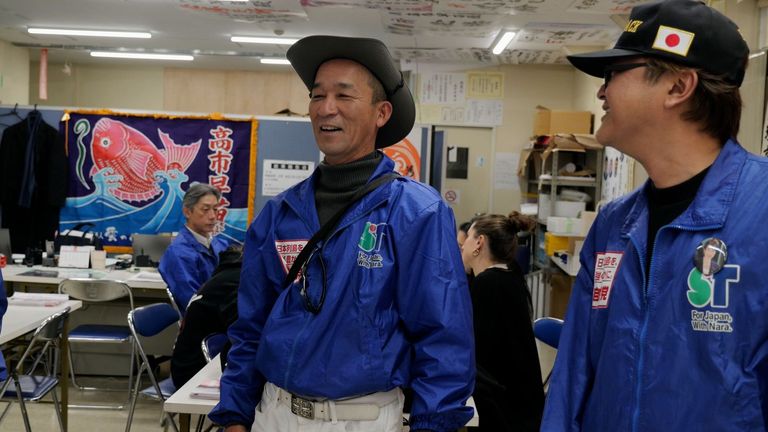
Here, a small minivan has been converted into a “battle bus” of sorts, and her dedicated team of supporters are driving it around the traditional streets, asking locals to sign it, calling her name through the megaphones and asking for their votes.
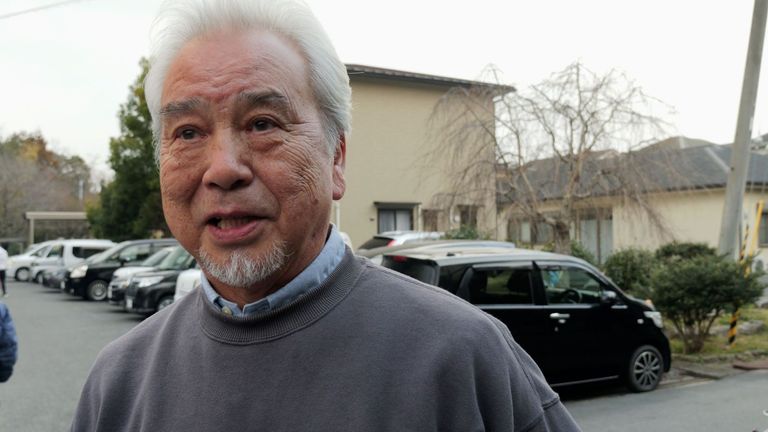
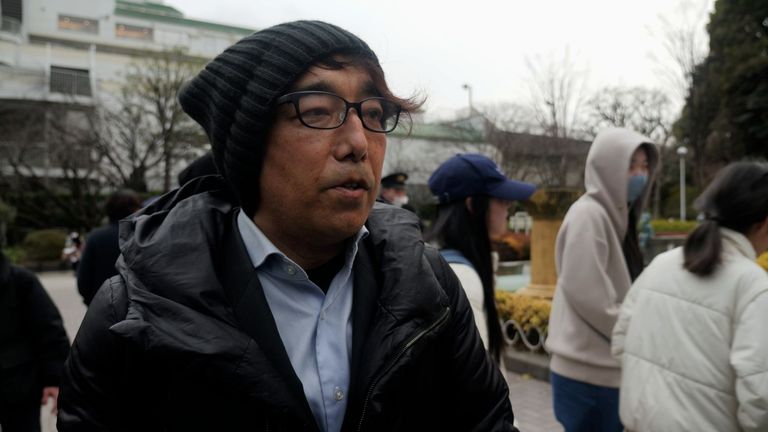
“She’s like a friendly neighbour or sister,” one old man tells us as he remembers her starting out in politics.
Image:This man describes Takaichi as a ‘friendly neighbour’
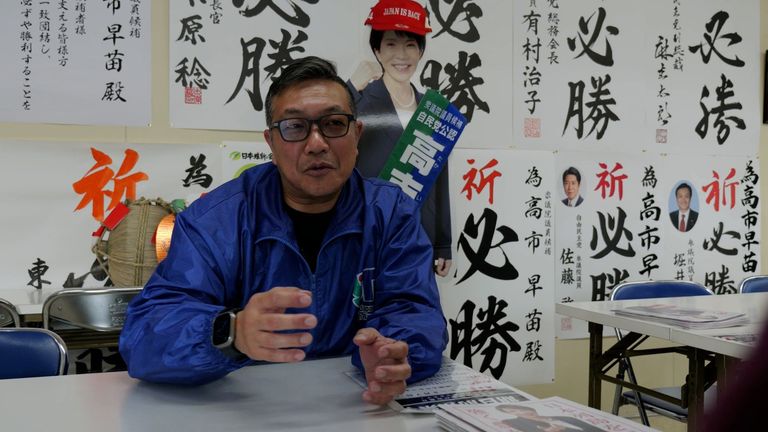
‘She is simply doing what is necessary to protect Japan’
When I ask one of her team what he makes of her conservative views, he simply responds: “Rather than labelling it conservatism, I think she is simply doing what is necessary to protect Japan.”
Of course, in any election, domestic policy is a focus; she favours tax cuts and increased public spending to boost a sluggish economy.
But the area of her policy that has brought the most attention and the most ire has been her approach to foreign policy and, particularly, her approach to China.
Image:A member of her team says Takaichi was ‘doing what is necessary to protect Japan’
Image:This voter in Nara says he has been supporting Takaichi for 20 years
Support from Trump
According to its constitution, Japan is still a pacifist country, and it has thus long relied on the US for its security.
Takaichi has made a particular point of cosying up to Donald Trump’s America; his visit to Japan last year was notable for the excess of its warmth, and Trump has actively endorsed her campaign.
Trump hails ‘golden age’ of Japan relations
But she has also been highly hawkish in her attitudes to Japan’s largest and most powerful neighbour.
The two were already set to be at odds; Takaichi’s plan to spend more on and build up Japan’s military is a deeply sore point in China, which suffered enormously at its hands during the Second World War.
But things plunged to a new low in November when she said that a Chinese attack on the island of Taiwan (a self-governing democracy that China sees as a breakaway province) would amount to an “existential threat” to Japan, and it would have the right to intervene militarily.
The comments have caused outrage in China, drawing a raft of damaging retaliations, from the banning of the imports of Japanese seafood to restrictions on its access to crucial rare metals and a pointed suggestion that Chinese travellers should avoid it.
Relations are at their lowest ebb for over a decade, and while some Japanese are happy to see their leader stand up to China, others are anxious.
“Seeing China imposing economic sanctions, it proves how thoughtless her remarks were,” one man at her rally tells me. “It’s definitely more dangerous.”
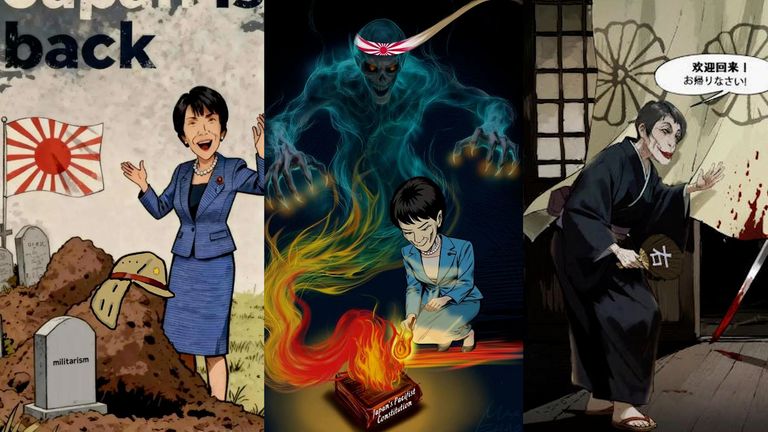
Image:Takaichi has been targeted by Chinese state media
Image:A man addressed Takaichi’s Taiwan remarks at her rally
The reality is that for all the Instagrammable moments, Takaichi’s stance on China might well be the key issue that plagues and potentially even defines her leadership; it is not a disagreement that the Chinese will just let go.
Japan’s lean to the right under a Takaichi-style nationalism might well bring a renewed sense of pride to some, but it could also bring a new jeopardy to all.
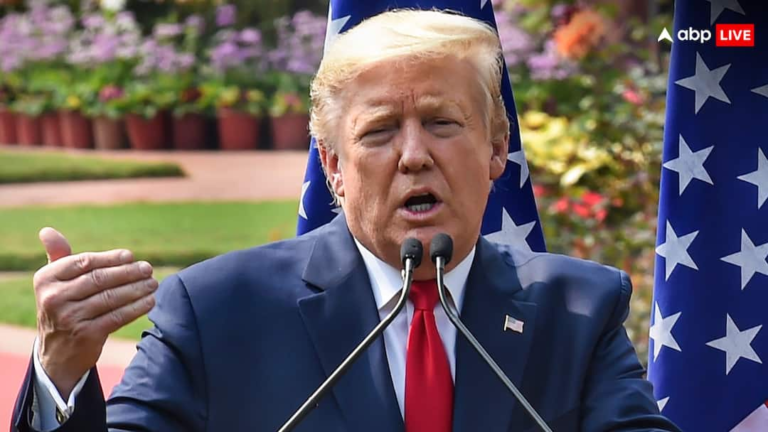
Trade deal has been announced between America and India. Donald Trump has also removed the 25 percent tariff imposed on India as a penalty for purchasing Russian oil. However, he has said that if India buys Russian oil directly or through any other channel, then this penalty will be imposed again. Experts are calling this attitude of Donald Trump as double standard.
Soft attitude towards PAK and China is a threat to India: Sibal
Former Foreign Secretary of India Kanwal Sibal commented on this development. donald trump Said to be double standard. He said that this is clearly an attempt to create pressure because our oil purchase from Russia has no connection with any bilateral trade deal with America. This is a political issue, which should be resolved at the political level and not through tariffs.
He posted on At the same time, China, which is importing large quantities of crude oil and gas from Russia, but America’s soft attitude towards it is also a matter of concern for India’s security and foreign policy, especially when China’s attitude has always been hostile towards India.
This is plain arm twisting.
Our oil purchases from Russia have nothing to do with a bilateral trade deal with the US.
This is a political issue, to be negotiated politically and not through tariffs.
Our purchases of Russian oil is not a threat to US security and foreign… https://t.co/CLeFD9KxJz
Former Foreign Secretary said, ‘Why is it that China is purchasing oil and gas from Russia? America Is not considered a threat to India’s security and foreign policy? America’s statement that if India again buys Russian oil directly or through a third country, it will be monitored and 25 percent tariff and other possible actions can be reimposed as punishment. This is an insult to India and shows that this relationship is not being seen as a relationship of equals.
Trump’s message is clear, India should buy oil only from US: Chellani
Strategic expert Dr. Brahma Chellani said, ‘The most important and sensitive aspect of Trump’s executive order regarding Russian oil is its monitoring system. Under this order, the US Commerce Secretary has been formally given the responsibility of monitoring India’s oil imports. Along with this, a clear provision has also been made that if it is found that India has resumed importing Russian oil, then the 25 percent tariff can be immediately reimposed.
The real sting in Trump’s executive order on Russian oil lies in its monitoring mandate. It formally tasks the commerce secretary with tracking Indian oil imports and creates a clear trigger: a finding that India has resumed “directly or indirectly” importing Russian oil could…
He said that the indirect use of the word in Trump’s executive order is particularly important and has a broad meaning. This could mean that if Washington believes that diesel, jet fuel or other refined petroleum products exported from India to Europe or the US are made from Russian crude, then action could be taken against them. He said that the message from Washington is very clear that India’s energy security should be linked to a supplier which is geographically far away and whose supplies are very expensive, i.e. America.
On Sunday, football fans tuning in for the Super Bowl matchup between the Seattle Seahawks and New England Patriots will also get a first look at an ad featuring a well-known professional boxer.
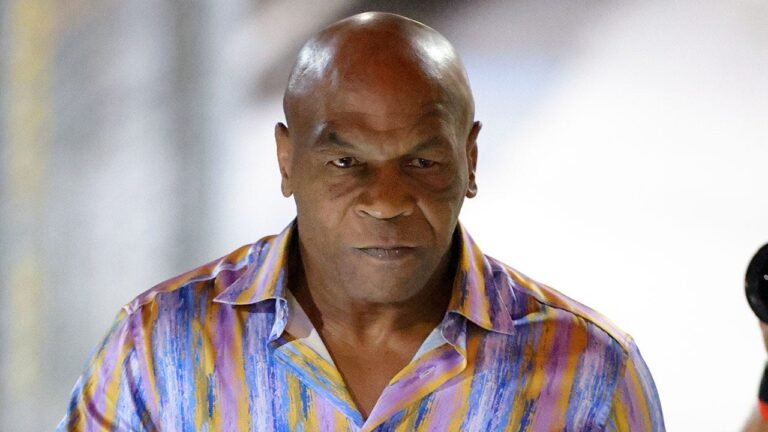
Legendary boxer Mike Tyson, long known as “the baddest man on the planet,” joined Fox News Channel’s “Jesse Watters Primetime” Friday night to discuss his personal health journey.
“I would get up in the morning and I would eat a lot of nothing, Captain Crunch cereal … probably two giant bowls of that for breakfast. And then later on that day, I may go get some ice cream. I would just eat a bunch of junk food when I’m at my worst. Just junk food, drinking … disastrous. It wasn’t good back then for me. A lot of my friends … my wife didn’t think I would make it to 60.”
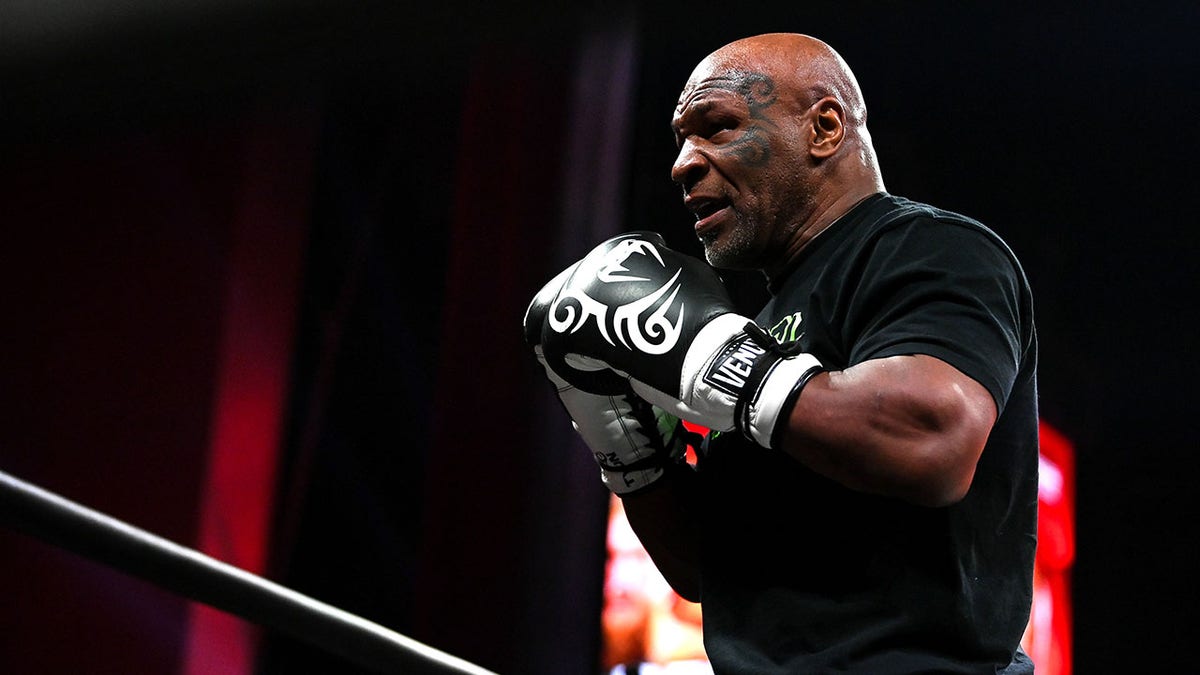
Mike Tyson during an open workout session, held at Toyota Music Factory in Irving, Texas, ahead of his heavyweight bout with Jake Paul, on Nov. 15, 2024 at AT&T Stadium.(Stephen McCarthy/Sportsfile via Getty Images)
When asked what steps he took to get his health on track, Tyson replied: “I first started walking 10 minutes a day… I started walking 10 mins up to an hour. Then I stopped eating everything. (The) only thing I started eating was tomato soup and rice and water.”
The former undisputed heavyweight world champion highlighted the importance of taking care of the physical body. “We’ve only got one body. And we have one chance to really indulge in it. So I wanted to be in the best shape possible.”
Tyson has experienced health issues in the past. Shortly before landing on a flight to Los Angeles in summer 2024 ahead of his high-profile bout with YouTuber-turned-boxer Jake Paul, he received medical attention. However, medical personnel recommended that Tyson only engage in “minimal to light training over the next few weeks” at the time.
“During a follow-up consultation on Thursday with medical professionals regarding his recent ulcer flare-up, the recommendation is for Mike Tyson to do minimal to light training over the next few weeks and then return to full training with no limitations,” a statement released in late May 2024 read.
The event was originally scheduled for July but was postponed to November 2024. Paul ultimately defeated Tyson by unanimous decision. While the bout reportedly drew a record audience, the stream was marred by widespread technical issues.
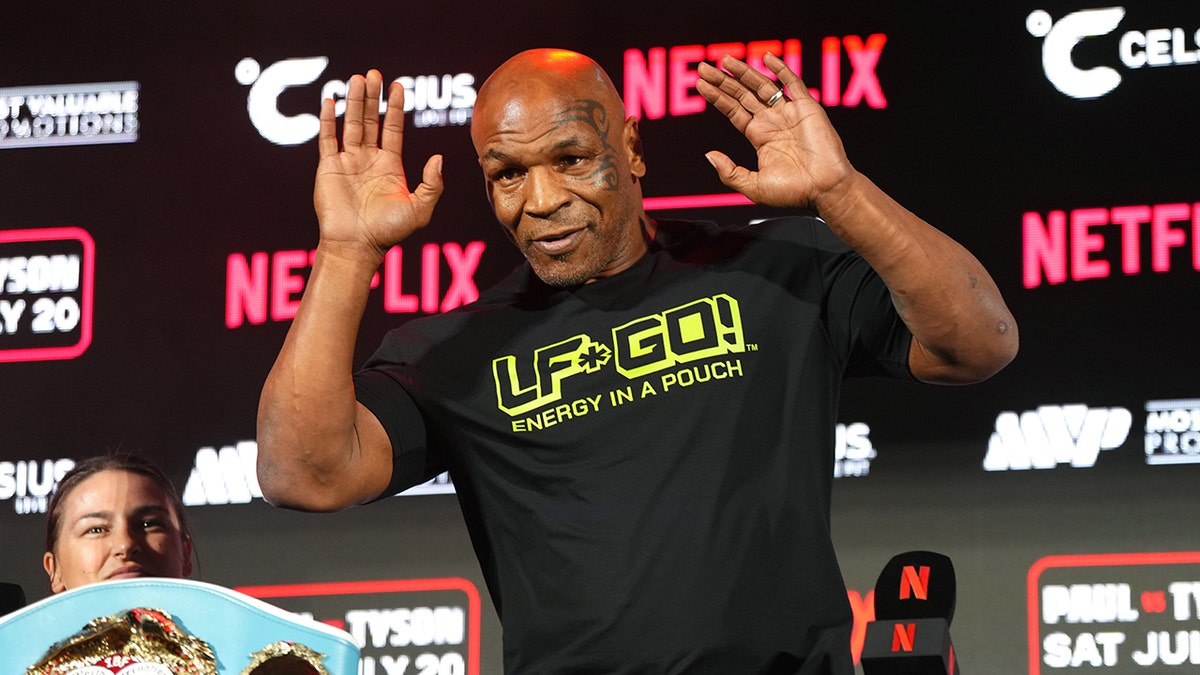
Mike Tyson speaks onstage during the Jake Paul vs. Mike Tyson Boxing match Arlington press conference at Texas Live! on May 16, 2024, in Arlington, Texas. (Cooper Neill/Getty Images for Netflix)
Before the 2024 bout, Tyson had not fought competitively since his 2005 TKO loss to Kevin McBride. He returned briefly in an exhibition match against Roy Jones Jr. in July 2020.
Tyson said he looks forward to getting back in the ring, adding he wants to go head-to-head with Floyd Mayweather Jr. “We’re going to make it happen on April 25th … around that time somewhere.”
While Tyson competed in the heavyweight category and Mayweather won titles in multiple weight classes, none exceeded the 154-pound junior middleweight limit. Mayweather’s last official victory in a sanctioned bout came in 2017 against MMA star Conor McGregor.
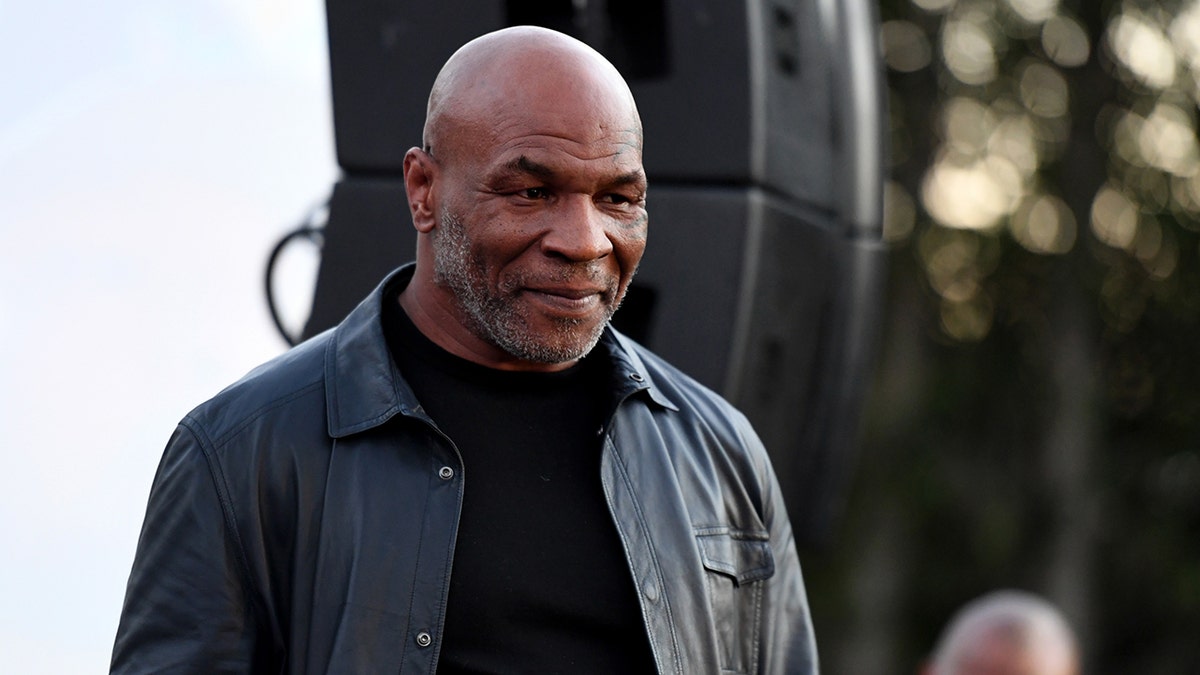
Former professional boxer Mike Tyson attends Celebration of Smiles Event hosted by Dionne Warwick on her 81st Birthday to benefit medical charity organization, Operation Smile and The Kind Music Academy on Dec. 12, 2021 in Malibu, California. (Photo by JC Olivera/Getty Images)
Tyson’s relationship with President Donald Trump dates back decades. Tyson credited Trump for pushing him to compete in Atlantic City, New Jersey.
“That was just a great idea when he decided to have me fight in Atlantic City … I just didn’t like Atlantic City back then. I just wasn’t an Atlantic City person, and he made me an Atlantic City person … I even moved there one time. I lived there for a few years.”
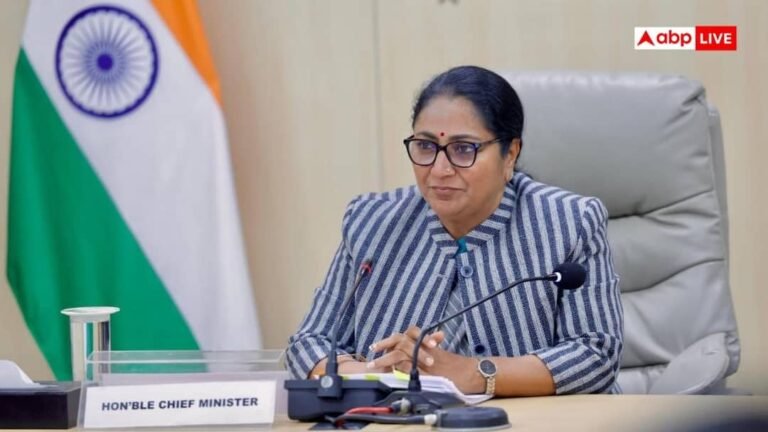
The tragic accident that occurred on Friday in Janakpuri area of West Delhi has shaken the Delhi government. Taking a tough stand on this incident, Chief Minister Rekha Gupta has made it clear that any negligence that compromises public safety will not be tolerated in the capital. The Chief Minister’s Office (CMO) has issued strict guidelines in this regard for all concerned departments and construction agencies with immediate effect.
The Chief Minister has termed the Janakpuri incident as a ‘serious lapse’ in security. He bluntly said that if negligence of any officer or contractor is proved, not only disciplinary but also strict legal action will be taken against them. The government has ordered all departments to submit detailed reports to the government within three days wherever excavation work is going on on roads or footpaths in Delhi.
8 new security protocols: now these will be the rules
Following the instructions of the Chief Minister, the Chief Secretary has issued an official order, which will be applicable to all agencies including PWD, Delhi Jal Board, MCD, NDMC and power distribution companies. It will be mandatory to install clear and large warning boards at every excavation site.
Night vision safety: Reflector lights, blinkers and bright tape have to be used at night so that danger can be seen even in the dark.
Strong Barricading: It is necessary to cover the excavation site with high and strong barricading on all sides.
Debris management: There should not be soil or construction material scattered on the road.
Dust Control: To prevent pollution, measures have to be taken to control dust.
Alternative route: Safe routes have to be ensured for pedestrians and traffic.
Daily Inspection: The concerned engineers will have to visit the site daily to check the safety standards.
Traffic Management: To ensure that traffic is not disrupted due to excavation, proper diversion arrangements will have to be made.
Safety of citizens is paramount
Chief Minister Rekha Gupta has assured that the Delhi government is developing a strict monitoring system to prevent such incidents in future. He clearly said that the lives of citizens are paramount and no department or contractor will be allowed to break the rules. After this order, now safety audit of all the projects running on the roads of Delhi has been started.
The Windrush commissioner has warned of a “hurry for justice” as more victims of the scandal die without redress, while stakeholders call for a public inquiry and legislative changes amid fears that a Reform government could stall progress toward justice.
Speaking on the sidelines of a people’s inquiry symposium for those affected by the Windrush scandal, Rev Clive Foster said action was needed “now” to deliver justice for those British residents whose lives were upended after being wrongly classified as illegal immigrants.
“Whether the political landscape as we see it or not, I think the duration is long enough and that of itself is the motivation that we should be moving forward for justice,” said Foster, a pastor from Nottingham whose parents came to the UK from Jamaica in 1959, and who was appointed to oversee the government’s response to the scandal.
“We are sadly losing many of that generation who suffered and time is not on our side,” he added. “I am a man in a hurry for justice.”
The second people’s inquiry symposium, held in north London on Saturday, brought together survivors, campaigners and advocates intent on establishing pathways to justice with victims’ voices at the forefront, while continuing to press the government to launch a statutory public inquiry into the scandal.
The Windrush scandal was brought to public attention through investigative reporting by the Guardian in 2017, which revealed thousands of legal UK residents to be mistakenly labelled as immigration offenders. Government schemes providing immigration status and compensation to those affected have since granted 17,000 people documentation and 2,600 of 8,800 claims have received compensation payments, as of July 2024.
Six months into Foster’s appointment, the Labour party, which has pledged to improve the government’s response, has adopted many of his recommendations for reforming the Windrush compensation scheme. But, years into the scandal, many are still struggling to navigate the process described as inefficient, bureaucratic, and retraumatising.
Among those still affected is Deborah, who has been supporting her brother in Barbados for decades since he has been unable to return to the UK after arriving as a Commonwealth citizen in 1966. “He didn’t leave with the intention of not coming back,” said Deborah, who asked to withhold her surname.
Last year she was instructed by the Home Office to apply for the Windrush scheme, unknown to the family as her mother did not arrive on the Windrush boat, which carried thousands from the Caribbean to the UK in 1948 and has become shorthand for the scandal. Deborah said the claim was rejected, not having known the extent of evidence needed. In recent months, she travelled Barbados to gather documents in support of her brother’s case.
“There’s so much negligence,” said Deborah. “There’s got to be a public inquiry and the voices of the victims heard and listened to and tangible things, not just apologies.”
While some expressed concern on Saturday over a shift in Labour’s immigration policy they fear will create the “next generation of Windrush”, others such as campaigner Garrick Prayogg said the only solution is legislative change.
“If we don’t get legislation before the next general election in place, what will happen if Reform come in?” said Prayogg, calling for changes to the existing hostile environment policy that led to the scandal.
While the founder of Windrush Day, Patrick Vernon, doesn’t see the current Labour government moving toward easing existing immigration policy, he said there are other changes as well as legislation, including a public inquiry and moving the compensation scheme from the Home Office.
“Why is it black people are given less money, no legal aid, less support?” said Vernon, who cited the Post Office and infected blood scandals. “Why are we being treated differently?”
He added: “You get a better service with Ryanair than the Home Office.”
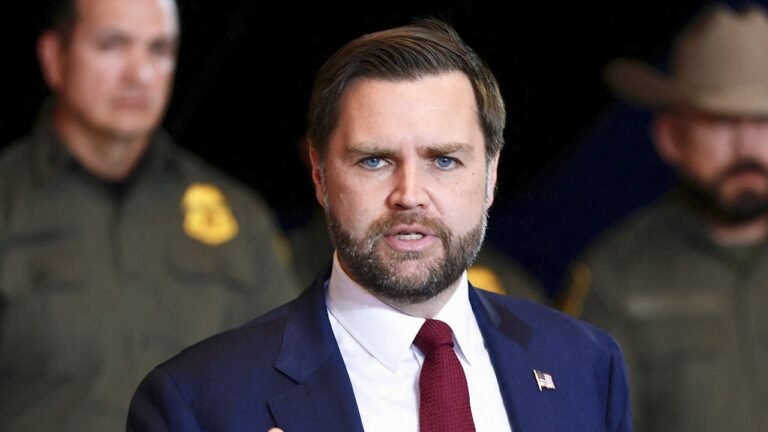
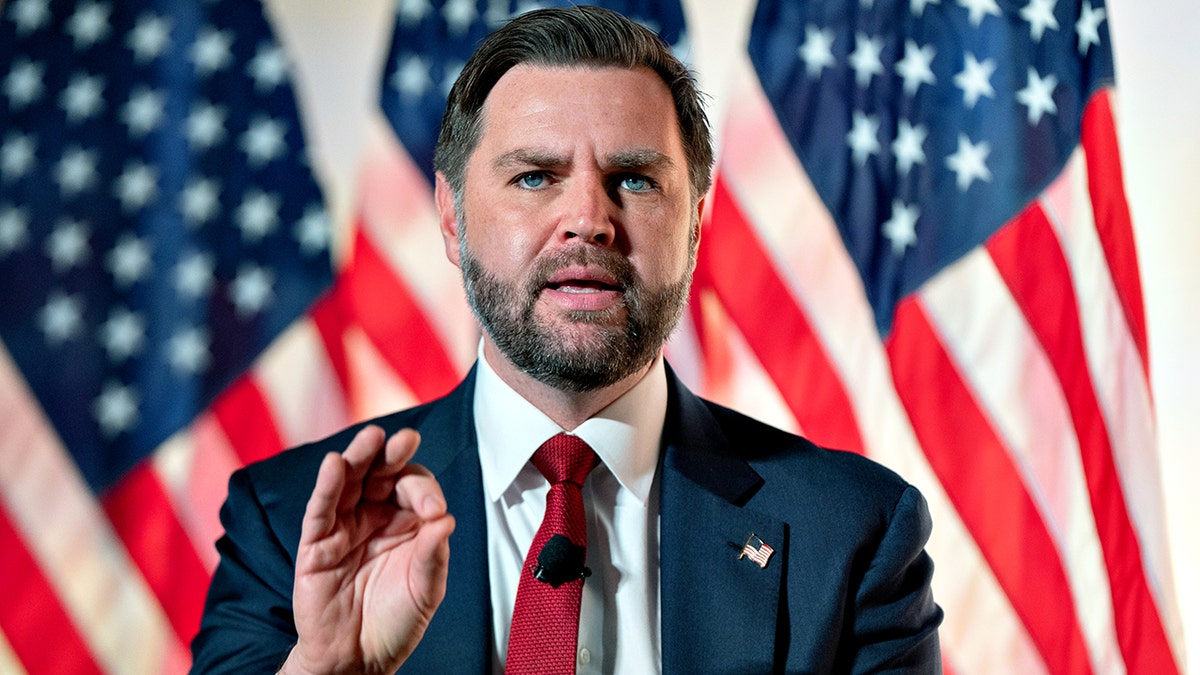
A man who was arrested for allegedly threatening to kill Vice President JD Vance was also found with child sexual abuse materials, according to the Justice Department (DOJ).
Shannon Mathre, 33, of Toledo, Ohio, was arrested on Friday on suspicion of threatening to kill Vance during the vice president’s visit to Northwest Ohio in January, the DOJ said.
Mathre is accused of saying, “I am going to find out where he (the vice president) is going to be and use my M14 automatic gun and kill him.” The DOJ did not give specific details about when or where the threat was made. However, Attorney General Pam Bondi said in a news release that, “You can hide behind a screen, but you cannot hide from this Department of Justice,” suggesting the threat could have been made online.
“Our attorneys are vigorously prosecuting this disgusting threat against Vice President Vance,” Bondi said.
Vice President JD Vance delivers remarks at Royalston Square in Minneapolis, Minn., Jan. 22, 2026.(Evelyn Hockstein/Reuters)
The U.S. Secret Service arrested Mathre on Feb. 6. A federal grand jury has since returned an indictment charging Mathre with making the threat against Vance.
While investigating the threats, federal agents found “multiple digital files of child sexual abuse materials (CSAM)” in Mathre’s possession, according to prosecutors. Subsequently, the grand jury also charged that “from about Dec. 31, 2025, to Jan. 21, 2026,” Mathre engaged in the receipt and distribution of CSAM.
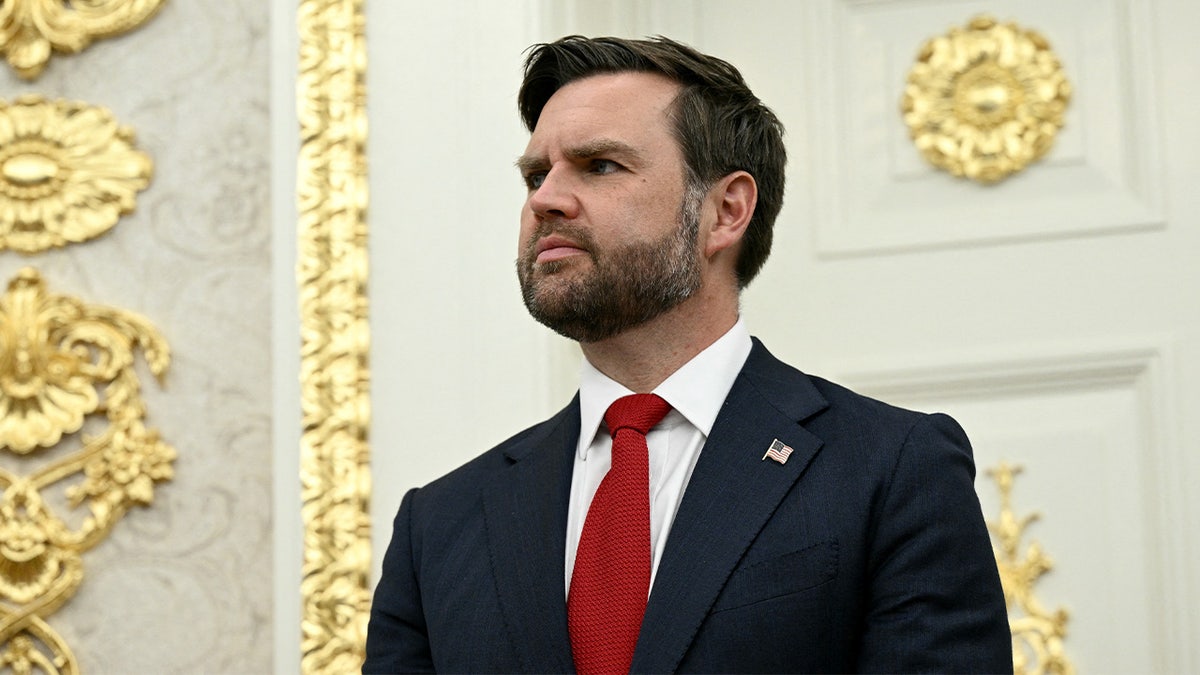
Vice President JD Vance speaks with Breitbart News Washington bureau chief Matthew Boyle at Andrew W. Mellon Auditorium, Nov. 20, 2025, in Washington. (Julia Demaree Nikhinson/AP Photo)
“While arresting this man for allegedly threatening to murder the Vice President of the United States, a serious crime in and of itself, federal law enforcement discovered that he was also in possession of child sexual abuse materials,” said Deputy Attorney General Todd Blanche. “Thank you to federal, state and local partners in working together to bring justice twofold to this depraved individual.”
David Toepfer, the U.S. Attorney for the Northern District of Ohio, said “violent threats” such as the one made against Vance would “not be tolerated.” He vowed that those who make these threats “will face swift justice and prosecution.”
Mathre made his initial court appearance on Feb. 6, before a U.S. Magistrate Judge for the Northern District of Ohio, the DOJ said, adding that he remains in custody until his detention hearing, which is set to take place on Feb. 11.
If found guilty, Mathre faces up to five years in prison and a maximum statutory fine of $250,000 for the threat against Vance, according to the DOJ. Additionally, if found guilty on the CSAM charge, Mathre could be sentenced to a maximum of 20 years in prison and given a statutory fine of up to $250,000.
Vice President JD Vance will attend the 2025 G20 Summit in President Donald Trump’s place.(BRENDAN SMIALOWSKI/AFP via Getty Images)
Vance faced multiple death threats and had his Ohio home vandalized last month.
William DeFoor, 26, was arrested in early January in connection with the vandalism of Vance’s home. DeFoor was booked on charges of vandalism, obstruction of official business, criminal damaging or endangering, and criminal trespass.
“I appreciate everyone’s well wishes about the attack at our home. As far as I can tell, a crazy person tried to break in by hammering the windows. I’m grateful to the secret service and the Cincinnati police for responding quickly. We weren’t even home as we had returned already to D.C.,” Vance wrote on X.
In another January incident, Marco Antonio Aguayo, 22, of Anaheim, was also arrested after allegedly making multiple threatening comments on Disney’s official Instagram account referencing pipe bombs, imminent bloodshed and violent action against “corrupt politicians” on July 12, the same day Vance and his family were visiting and staying at the resort.
William DeFoor, 26, appears in court on Tuesday, Jan. 6, 2026, for non-federal charges in connection with the vandalism of Vice President JD Vance’s Cincinnati home.(WXIX)
Additionally, Fox News Digital reported exclusively that a volunteer radio show host resigned after authorities confirmed they are aware of a post threatening Vance on left-wing-dominated social media app Bluesky. The person identified themselves as a host of a radio show on WUML, which is funded by the University of Massachusetts at Lowell.
The university told Fox News Digital that it alerted authorities once it became aware of the post. Secret Service confirmed to Fox News Digital that it was aware of the post. The Haverhill Police Department directed Fox News Digital to the FBI, which declined to comment.
Fox News Digital’s Stephen Sorace, Alexandra Koch and Peter D’Abrosca and Fox News’ Matt Finn contributed to this report.
Rachel Wolf is a breaking news writer for Fox News Digital and FOX Business.