AI agents can’t pull off fully autonomous cyberattacks

0

AI agents and other systems can’t yet conduct cyberattacks fully on their own – but they can help criminals in many stages of the attack chain, according to the International AI Safety report.

The second annual report, chaired by the Canadian computer scientist Yoshua Bengio and authored by more than 100 experts across 30 countries, found that over the past year, developers of AI systems have vastly improved their ability to help automate and perpetrate cyberattacks.

Perhaps the best, and scariest, evidence of that finding appeared in Anthropic’s November 2025 report about Chinese cyberspies abusing its Claude Code AI tool to automate most elements of attacks directed at around 30 high-profile companies and government organizations. Those attacks succeeded in “a small number of cases.”

“At least one real-world incident has involved the use of semi-autonomous cyber capabilities, with humans intervening only at critical decision points,” according to the AI safety report. “Fully autonomous end-to-end attacks, however, have not been reported.”

Two areas where AI is especially useful to criminals are scanning for software vulnerabilities and writing malicious code.

During DARPA’s AI Cyber Challenge (AIxCC) – a two-year competition in which teams built AI models to find vulnerabilities in open source software that undergirds critical infrastructure – finalist systems autonomously identified 77 percent of the synthetic vulnerabilities used in the final scoring round, according to competition organizers.

And while that is an example of defenders using AI to find and fix vulnerabilities, rather than attackers using AI to find and exploit them, criminals are using models in similar ways. Last northern summer, we saw attackers on underground forums claiming to use HexStrike AI, an open-source red-teaming tool, to target critical vulnerabilities in Citrix NetScaler appliances within hours of the vendor disclosing the problems.

Additionally, AI systems are getting much better at malware writing, and criminals can trade weaponized models that write ransomware and data-stealing code for as little as $50 a month.

The good news for now, according to the report’s authors, is that AI systems still aren’t great at carrying out multi-stage attacks without human help.

“Research suggests that autonomous attacks remain limited because AI systems cannot reliably execute long, multi-stage attack sequences,” according to the report. “For example, failures they exhibit include executing irrelevant commands, losing track of operational state, and failing to recover from simple errors without human intervention.”

Keep in mind, however, that this all was written before the security dumpster fire that is OpenClaw – the AI agent previously known as Moltbot and Clawdbot – and Moltbook, the vibe-coded social media platform for AI agents.

So it’s also entirely plausible that the world won’t end with a sophisticated, autonomous multi-stage cyberattack dreamed up by a nation-state crew or criminal mastermind, but rather a single agent that goes off the rails. ®


Source link

Amnesty demands Israel drop death penalty bills ‘entrenching apartheid’ | Human Rights News

0

Amnesty International says legislation would mean ‘punishment is being reserved for, and weaponised against, Palestinians’.

Amnesty International has called on Israel to abandon legislation that would expand the use of the death penalty, warning that the measures would violate international law and “further entrench Israel’s apartheid system” against Palestinians.

In a statement on Tuesday, the human rights group said two bills under discussion in the Knesset would mark a major reversal of Israel’s longstanding opposition to capital punishment and would disproportionately target Palestinians.

Recommended Stories

list of 4 itemsend of list

The proposals, championed by government figures, including far-right National Security Minister Itamar Ben-Gvir, would make the death penalty “another discriminatory tool in Israel’s system of apartheid”, Amnesty International said.

“These amendments mean that the most extreme and irrevocable punishment is being reserved for, and weaponised against, Palestinians,” it said.

“If adopted, these bills would distance Israel from the vast majority of states which have rejected the death penalty in law or in practice, while further entrenching its cruel system of apartheid against all Palestinians whose rights Israel controls.”

Israeli authorities have defended the measures, which are moving to committee stages for debate, as a necessary deterrent against deadly attacks.

But legal experts said their scope and application would violate international legal norms and result in the unjust treatment of Palestinians.

The legislation is being considered during Israel’s genocidal war against Palestinians in the Gaza Strip and a surge in Israeli military and settler violence against Palestinians in the occupied West Bank.

‘Reviving’ capital punishment

Israel abolished the death penalty for “ordinary crimes”, including murder, in 1954 and has not carried out an execution since 1962.

While it retains the death penalty for exceptional offences, such as genocide and treason, Amnesty International said the proposed legislation would “revive its implementation in Israel and the occupied Palestinian Territory” while weakening safeguards designed to prevent miscarriages of justice.

The bills include one that would allow for the application of the death penalty by amending the Israeli Penal Law and the Defence Regulations that Israel applies to the West Bank, the group said.

A second would introduce special provisions and an ad hoc military court to prosecute those accused of involvement in the Hamas-led attacks on southern Israel on October 7, 2023.

The rights group said proposed amendments to military laws applicable in the West Bank that would allow the death penalty would in effect apply only to Palestinians because they would explicitly exclude residents of Israeli settlements, which are illegal under international law.

Other changes, such as an amendment applying to those accused of intentionally causing “the death of a person with the purpose of harming an Israeli citizen or resident” or relating to violations connected with the October 7 attacks, were also likely to only impact Palestinians, it said.


Source link

French investigators raid Paris offices of Elon Musk’s X | World News

0


Investigators have raided the Paris offices of Elon Musk’s social media site X, formerly known as Twitter.

French prosecutors said they were widening their probe into the platform and had summoned its billionaire owner for questioning.

Present and past employees, including former chief executive Linda Yaccarino, who left the company last year, were also summoned as witnesses.

The investigation, originally launched last month, will now cover the site’s alleged complicity in the possession and distribution of child abuse images.

It also relates to allegations of sexual deepfakes, Holocaust denial, fraudulent data extraction and abuse of algorithms on the site.

The move follows complaints that Grok, the platform’s AI chatbot, was being used to generate sexual photos of real women and children.

In a statement, the Paris prosecutor’s office confirmed it had conducted a joint raid with the cybercrime unit of the French police and Europol.

Authorities were taking a “constructive approach”, the statement said, “with the objective of ultimately ensuring the compliance of the X platform with French law”.

It added that witnesses were being summoned voluntarily “to allow them to explain their position” and “the compliance measures they plan to implement”.

The prosecutor’s office also posted on X to confirm the raid, and added that it would be leaving the platform.

Last year, a Sky News investigation into algorithmic bias on X found that the platform was boosting right-wing and extreme content to users in the UK, regardless of the users’ political leaning.

Read more:
The X Effect: How Elon Musk is boosting the British right

An X spokesperson told Sky News at the time of publication that eventually users will be able to adjust their feeds “dynamically”, by asking X’s AI tool Grok, which now powers the algorithm driving the platform’s “For You” feed.

British regulatory watchdog Ofcom also opened a formal investigation into X last month under the UK’s Online Safety Act to determine whether the firm was complying with its duties to protect people from illegal content.

A spokesperson for X did not immediately respond to a request for comment.

But Musk has previously accused French prosecutors of launching a “politically-motivated criminal investigation”.


Source link

Campaign finance expert blasts Swalwell over $100K in childcare reimbursements

0

NEWYou can now listen to Fox News articles!

FIRST ON FOX: A campaign finance expert is slamming progressive Rep. Eric Swalwell, D-Calif., for spending over $200,000 of his congressional campaign cash on an “inherently personal” expense: childcare.

Swalwell, who has been in Congress since 2013 and ran a brief and unsuccessful presidential bid in 2019, is currently running for California governor.

A Fox News Digital review of Federal Election Commission filings dating from 2019 to 2025 found that Swalwell’s congressional campaign has reimbursed himself over $200,000 for childcare-related costs. 

A significant portion of those expenses, over $22,000, from his most recent House and gubernatorial campaign filings were for just three months of childcare from October to December 2025. The three payments on his gubernatorial campaign filing for “childcare” are made out to his wife, Brittany Swalwell, and total over $6,000.

ERIC SWALWELL BOASTS ‘AVENGERS’ ROSTER OF DEMOCRATIC LEADERS, FORGETS GAVIN NEWSOM

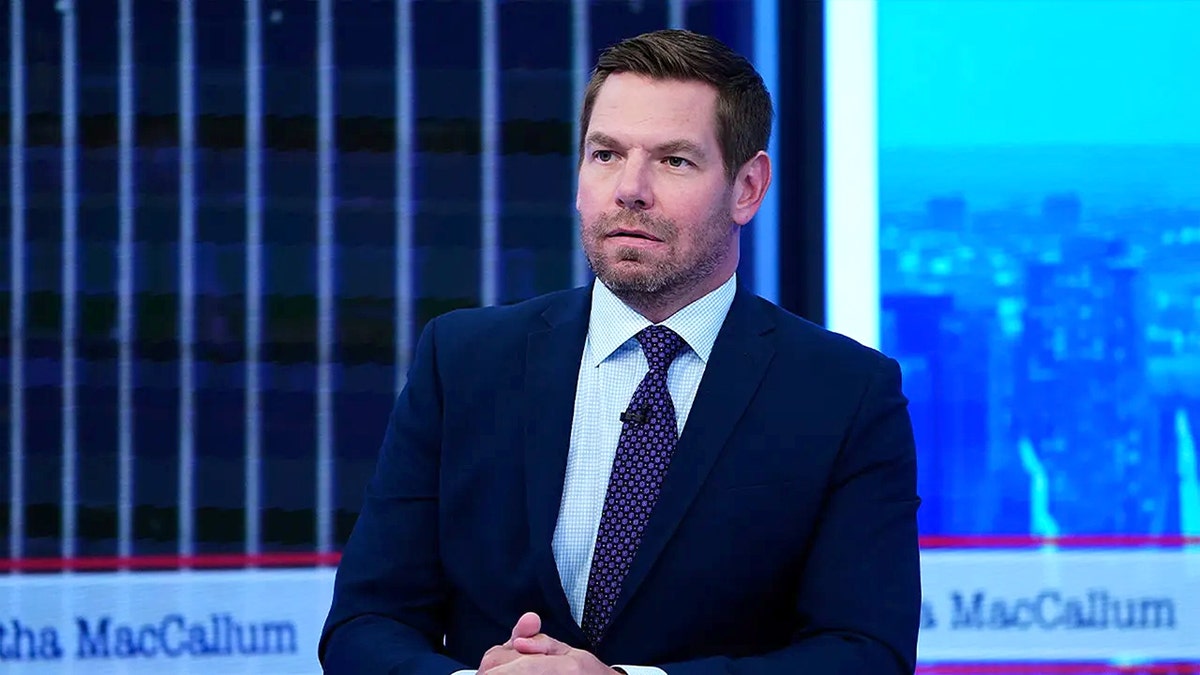
Representative Eric Swalwell at Fox News Studio

Representative Eric Swalwell, D-Calif., is currently running for California governor. (John Lamparski/Getty Images)

The FEC filings show that the campaign dished out over $102,000 to an individual named Amanda Barbosa in Dublin, California, between 2021 and 2025. Her LinkedIn profile says she has been a “childcare provider” at a “private practice” since September 2021, one month before her first Swalwell campaign payment, and is an “aspiring occupational therapist.” Her Facebook says she is Washington, D.C.-based and is pictured with the Swalwell family in a few of the photos, including at Disney World last June.

$57,324.40 was paid to Bambini Play & Learn Child Development Center, a Spanish immersion daycare and preschool in Washington, D.C., between 2023 and 2025. The monthly tuition for the child development center is between $2,520 and $3,280, according to Bambini’s website. 

Childcare reimbursement is the reason listed for the vast majority of these costs. The filings also list $9,713.42 for reimbursement for payroll tax for campaign childcare, $1,943.35 for “childcare for campaign event,” $1,124.11 for travel expenses, food, beverage and childcare reimbursement and $625.91 for childcare, food & beverages reimbursement, among other payments.

Federal law prohibits the use of campaign finances for personal expenses. However, in 2018, the FEC issued an opinion that deemed childcare expenses caused by campaign activity to be not personal use. 

In 2022, Swalwell, who has three children ages 8, 7 and 4, appealed to the FEC to clarify whether he could use campaign funds to pay for overnight childcare. The FEC approved the request, issuing another opinion allowing Swalwell to use campaign funds to pay for overnight childcare when he incurs those costs due to his own campaign travel.

CALIFORNIA GOVERNOR CANDIDATE ERIC SWALWELL WANTS PEOPLE TO BE ABLE TO ‘VOTE BY PHONE’

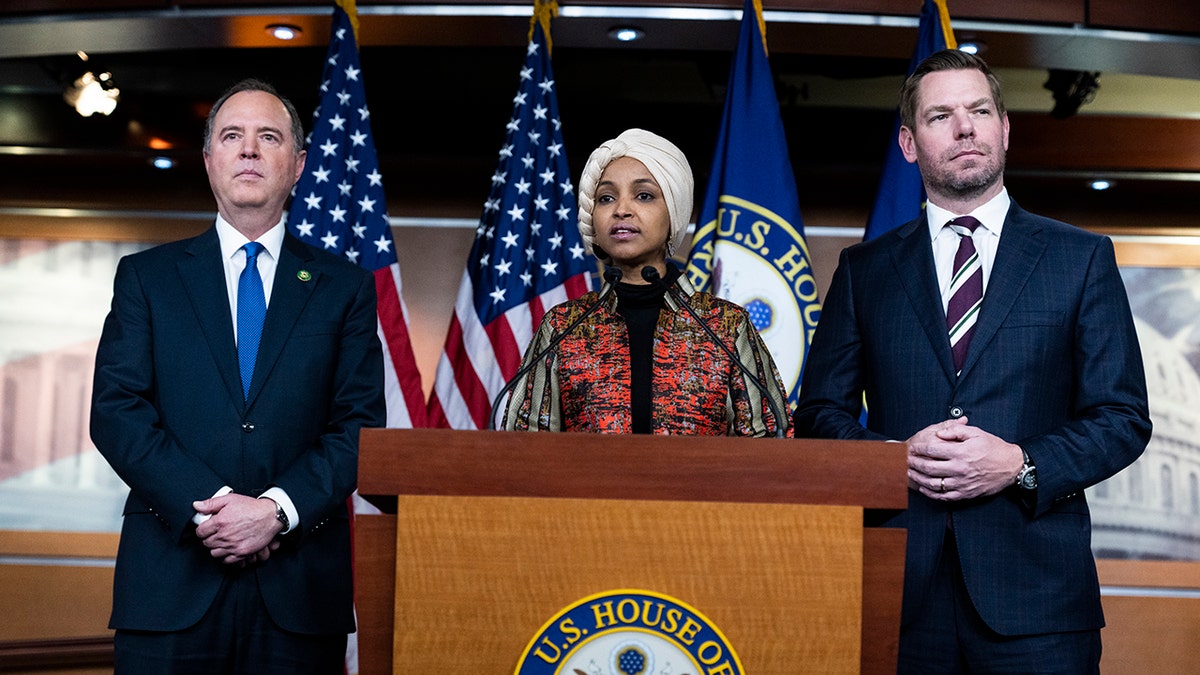
Adam Schiff, Ilhan Omar, Eric Swalwell at the Capitol

Reps. Adam Schiff, D-Calif., Ilhan Omar, D-Minn., and Eric Swalwell, D-Calif., conduct a news conference in the Capitol Visitor Center on Wednesday, January 25, 2023.  (Tom Williams/CQ-Roll Call, Inc via Getty Images)

In an interview with Fox News Digital, Allen Mendenhall, a research fellow at the Heritage Foundation’s Thomas A. Roe Institute for Economic Policy Studies and a senior advisor at Capital Markets Initiative, said the FEC’s decision is problematic because childcare is an “inherently personal” expense.

“It’s an expense that candidates with young children will incur regardless of whether they’re in a campaign,” he said. “I have childcare costs. Many people have childcare costs, and we can’t just use this other money to subsidize our things.”

He said that this FEC decision risks setting a new precedent that allows candidates to pass off their childcare costs to donors. He believes this “opens the slippery slope” for a whole set of costs that could be conceivably justified as campaign expenses, such as clothing, grooming and beyond.

“The danger here,” Mendenhall explained, “is creating a special class of politicians who are insulated from normal constraints, ordinary constraints that everybody else has to deal with.”

WASHINGTON POST CITES U-HAUL DATA IN CALIFORNIA EXODUS TO ‘PRO-GROWTH’ STATES, SAYS ‘DECLINE IS A CHOICE’

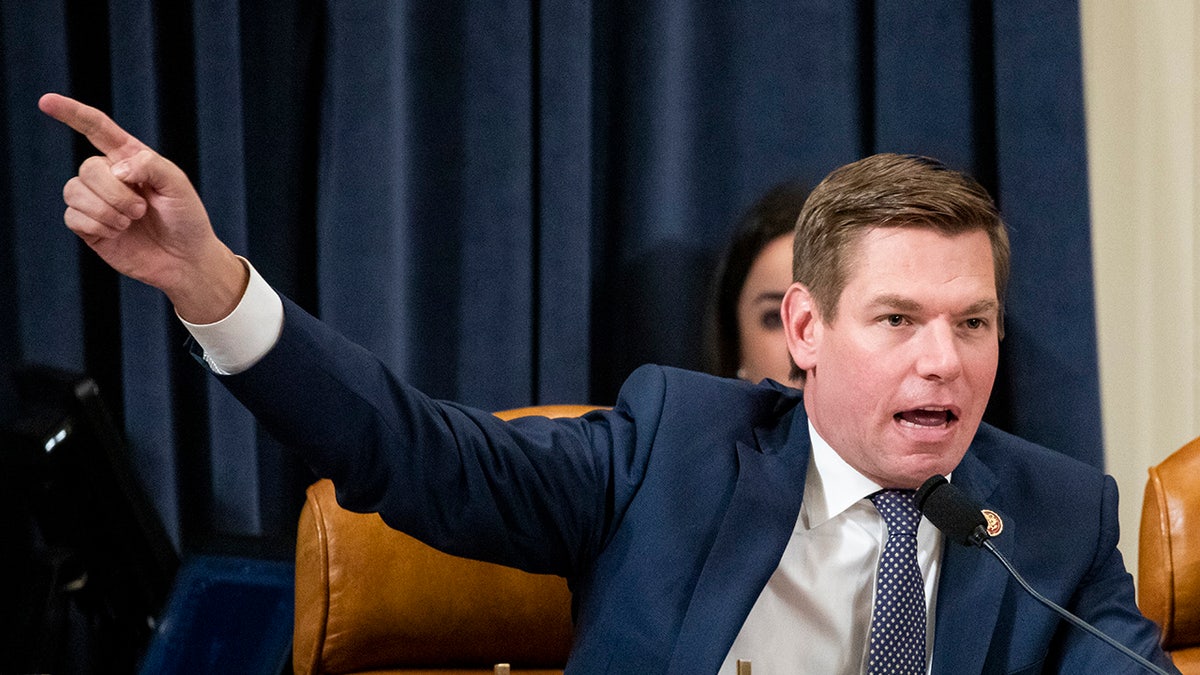
Eric Swalwell

Rep. Eric Swalwell, D-Calif., during a hearing of the House Intelligence Committee in the Longworth House Office Building on Capitol Hill November 20, 2019 in Washington, DC.  (Samuel Corum – Pool/Getty Images)

“Campaign law exists not to underwrite the private lives of politicians, but to ensure that political speech is protected and that public advocacy occurs, that we have electoral competition,” he said. “Election laws are in place to try to maintain the integrity of our electoral system, and that decision, I think, undermines the integrity of the system.”

CLICK HE⁠⁠RE TO DOWNLOAD THE FOX NEWS APP

Swalwell’s office did not respond to Fox News Digital’s request for comment.


Source link

Cantwell claims telecoms blocked release of Salt Typhoon report 

0

More than a year after national security officials revealed that Chinese hackers had systematically infiltrated U.S. telecommunications networks, the top Senate Democrat on the committee overseeing the industry is calling for hearings with executives from the nation’s biggest telecom companies.

In a public letter released Tuesday, Sen. Maria Cantwell, D-Wash., called for the CEOs of Verizon and AT&T to appear before Congress and explain how the hacking group known as Salt Typhoon breached their networks, as well as what steps they’ve taken to prevent another intrusion.

“For months, I have sought specific documentation from AT&T and Verizon that would purportedly corroborate their claims that their networks are now secure from this attack,” Cantwell wrote to Sen. Ted Cruz, R-Texas, who is the Chair of the Senate Commerce, Science and Transportation Committee. “Unfortunately, both AT&T and Verizon have chosen not to cooperate, which raises serious questions about the extent to which Americans who use these networks remain exposed to unacceptable risk.”

Salt Typhoon’s intrusion into telecom networks exposed major security weaknesses and put sensitive communications and data belonging to U.S. politicians and policymakers at risk. The federal government has done little since to hold the industry publicly accountable.

Congress has neither  proposed or passed meaningful legislation to address the issue.  While a handful of federal departments and agencies began public regulatory and oversight reviews, most of those efforts have been shut down or rolled back.

An investigation by the Cyber Safety Review Board at the Department of Homeland Security into the intrusions was abruptly stopped when the Trump administration eliminated the advisory body. One former member remarked recently that the failure to finish the investigation ranked among her biggest career regrets.

Weeks before President Joe Biden left office, his Federal Communications Commission issued emergency regulations aimed at holding telecom companies legally responsible – under federal wiretapping laws – for securing their communications. The rules would have also required carriers to file annual certifications with the FCC confirming they have cyber risk management plans in place. That certification would include addressing common security gaps, like lack of multifactor authentication, that are widely believed to have been exploited by Salt Typhoon.

While outgoing Chair Jessica Rosenworcel told CyberScoop the rules were badly needed to hold telecoms accountable for their cybersecurity, Brendan Carr— an FCC commissioner and Rosenworcel’s successor as chair—rescinded those rules, arguing they were unnecessary because the FCC and telecoms could work together voluntarily on cybersecurity. Another commissioner, Anna Gomez, told CyberScoop she had seen no evidence her agency had been meeting with telecoms on the issue.

At a hearing in December, Cruz endorsed the FCC’s elimination of the rules, arguing that improving the nation’s telecom cybersecurity “doesn’t come from imposing outdated checklists and top down regulations, it arises from a strong partnership between the private sector and government, working together to detect and deter attacks in real time.”

Cantwell, citing reporting from CyberScoop and other sources, argued that  “telecommunications providers have taken few protective actions thus far due to the costs involved” and said the committee “must hear directly from the CEOs of AT&T and Verizon so Americans have clarity and confidence about the security of their communications.”

According to Cantwell, she has already requested documentation from AT&T CEO John Stankey and then-Verizon CEO Hans Vestberg on how they’ve responded to the breaches. Both confirmed that Mandiant, Google Cloud’s incident response and threat-intelligence division wrote a report, one that Cantwell said “would presumably document the vulnerabilities identified and detail what corrective actions” telecoms took to improve their privacy and security.

She claimed after requesting the report from Mandiant, AT&T and Verizon “apparently intervened to block Mandiant from cooperating with my requests.”

AT&T and Verizon representatives did not immediately respond to a request for comment.

Derek B. Johnson

Written by Derek B. Johnson

Derek B. Johnson is a reporter at CyberScoop, where his beat includes cybersecurity, elections and the federal government. Prior to that, he has provided award-winning coverage of cybersecurity news across the public and private sectors for various publications since 2017. Derek has a bachelor’s degree in print journalism from Hofstra University in New York and a master’s degree in public policy from George Mason University in Virginia.


Source link

Epstein audio with former Israeli PM sheds new light on relationship | Investigation

0

NewsFeed

Recordings released in the Epstein files of a conversation the billionaire had with former Israeli Prime Minister Ehud Barak has shed new light on their relationship, which observers say blurred professional and personal boundaries.


Source link

‘I still would like to meet Putin’: Epstein’s unrequited love for Russian leader | World News

0

What has Vladimir Putin got to do with Jeffrey Epstein?

The Russian president’s name appears more than 1,000 times in the latest files.

His inclusion does not imply any wrongdoing, and there’s no evidence the two ever met, but boy, it sounds like Epstein wanted to.

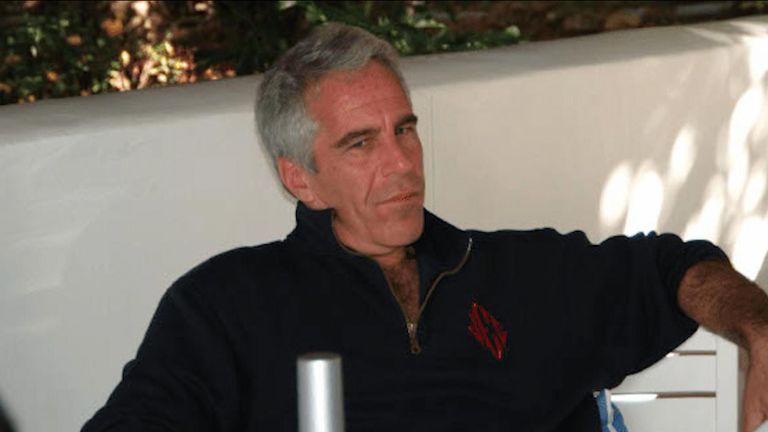
Jeffrey Epstein
Image: Jeffrey Epstein

The emails appear to reveal repeated attempts by the convicted sex offender to court the Kremlin leader.

And there’s even an audio file in which Epstein can be heard coaching someone on how to approach Putin.

Follow live – Epstein files latest

“I would send a note to Putin, saying ‘I’m going to leave government on March 14th. I’m going to be in Scandinavia, or I plan to be in western, northern Europe. We should have dinner’. That’s it, no more. It has to be very short,” he says in the recording.

The first substantive mention of Vladimir Putin in the latest files, unearthed by Sky’s Data and Forensics team, is from September 2011.

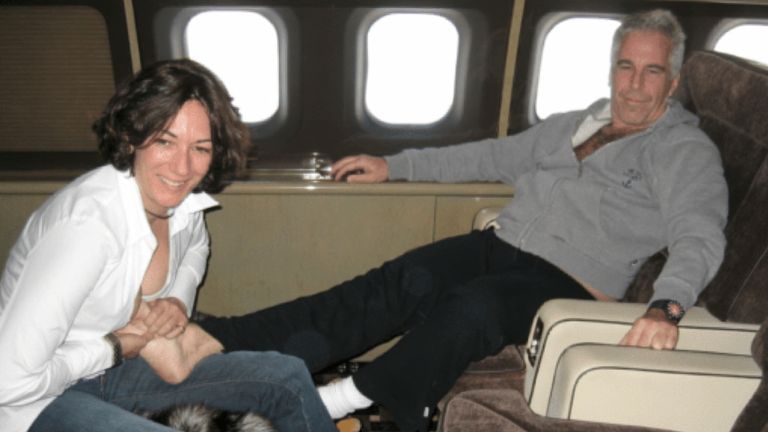
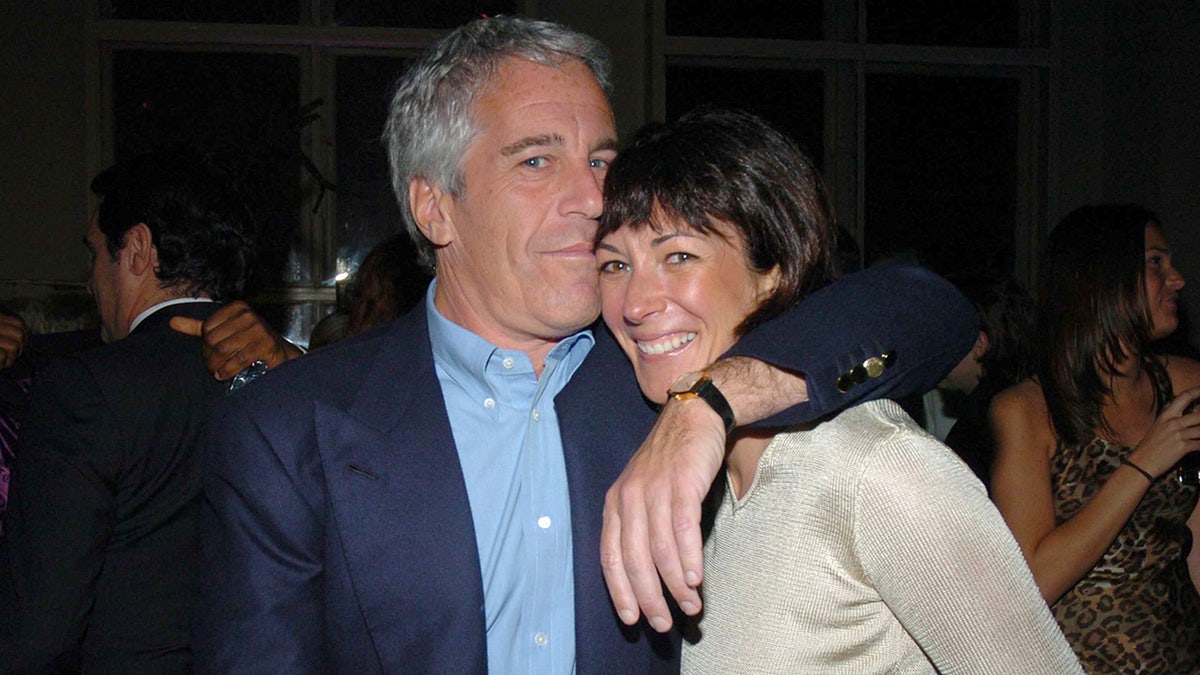
Jeffrey Epstein with Ghislaine Maxwell. Pic: U.S. Department of Justice via AP
Image: Jeffrey Epstein with Ghislaine Maxwell. Pic: U.S. Department of Justice via AP

An unnamed contact refers to a meeting Epstein said he had arranged with Putin later that month, while Putin was Russia’s prime minister. There’s no evidence it took place, and there are no other details.

From 2013 onwards, by which time Putin had returned to the presidency, the emails show Epstein made several bids to meet him through the former Norwegian PM Thorbjorn Jagland.

From Epstein with love

In May that year, Epstein emailed Jagland, who was then serving as secretary-general of the Council of Europe, saying: “I know you are going to meet putin [sic] on the 20th, He is desperate to engage western investment in his country…I have his solution.”

He adds: “I recoginize [sic] that there are human rights issues that are at the forefront of your trip howver [sic], if it is helpful to you, I would be happy to meet with him sometime in june [sic] and explain the solution to his top prioirty [sic], I think this would be good for your goals.”

But it appears it never happened. After pestering Jagland to follow up within Putin’s team, Epstein complains that he has heard nothing back.

In January 2014, Jagland told Epstein he was going to meet Putin in Sochi. “Why don’t you come?” he asks. We don’t know what happened next.

But in July that year, Epstein still sounds desperate to meet the Russian president. In an email, a contact tells him: “I wasn’t able to convince Reid to change his schedule to go meet Putin with you.”

“Bad idea now after plane crash,” Epstein replies – a reference to Malaysian Airlines flight MH17, which was shot down over eastern Ukraine three days prior, killing all 298 people on board.

But it seems it did not put Epstein off for long.

Epstein files: Royal family faces more scrutiny

Read more:
Prince Edward forced to address Epstein scandal
Epstein files: Key findings so far

A year later, in July 2015, he tells Jagland: “I still would like to meet putin [sic] and talk economy, i would really appreciate your assistance.”

There are more attempts in 2016, 2017 and finally in June 2018 – just one line in an email to Jagland once again: “Would love to meet with putin [sic].”

It’s certainly no smoking gun – it appears to be more a case of unrequited love.

Silence in Moscow

When asked about files, the Kremlin said on Tuesday it did not receive any offers from Epstein about a meeting with Vladimir Putin.

Still, it’s interesting to see how the Russian media is covering this story because, well, they are not.

There’s very little mention of it at all, and where there is, the focus is elsewhere – on Bill Clinton, Peter Mandelson and the crown princess of Norway.

So even though there’s no evidence or implication that he ever actually met with Epstein, Vladimir Putin’s appearance in the files is still not something Moscow wants to highlight.


Source link

Melinda Gates says Bill Gates Epstein claims bring her unbelievable sadness

0

NEWYou can now listen to Fox News articles!

Microsoft co-founder Bill Gates’ ex-wife Melinda French Gates distanced herself from him during a Tuesday appearance on NPR’s “Wild Card” podcast, saying that society is in for a “reckoning.”

The Justice Department released more than 3 million Jeffrey Epstein records, including his personal emails, last week. While many of the allegations are about some of the world’s most powerful figures, one of the most viral scandals is of a purportedly unknowing victim. 

The Department of Justice (DOJ) released more than 3 million Jeffrey Epstein investigative records, including Epstein’s personal emails, on Friday. Some of the emails allege that Bill Gates had additional affairs and tried to get medication to treat a sexually transmitted infection. He also allegedly wanted to give the medication to his wife at the time, Melinda, the medication without her knowing.

A spokesperson for Bill Gates denied the claims, telling Fox News Digital, “These claims are absolutely absurd and completely false. The only thing these documents demonstrate is Epstein’s frustration that he did not have an ongoing relationship with Gates and the lengths he would go to entrap and defame.”

NPR “Wild Card” podcast host Rachel Martin asked Melinda Gates about the claims. 

CLINTONS CAVE: COMER SAYS BILL AND HILLARY TO TESTIFY IN EPSTEIN PROBE

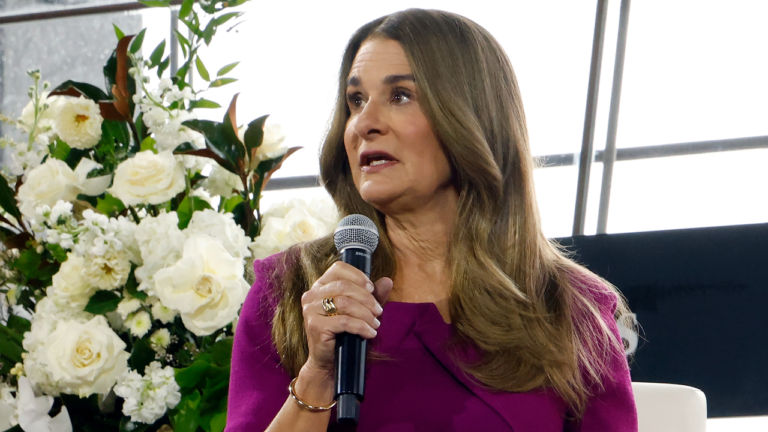
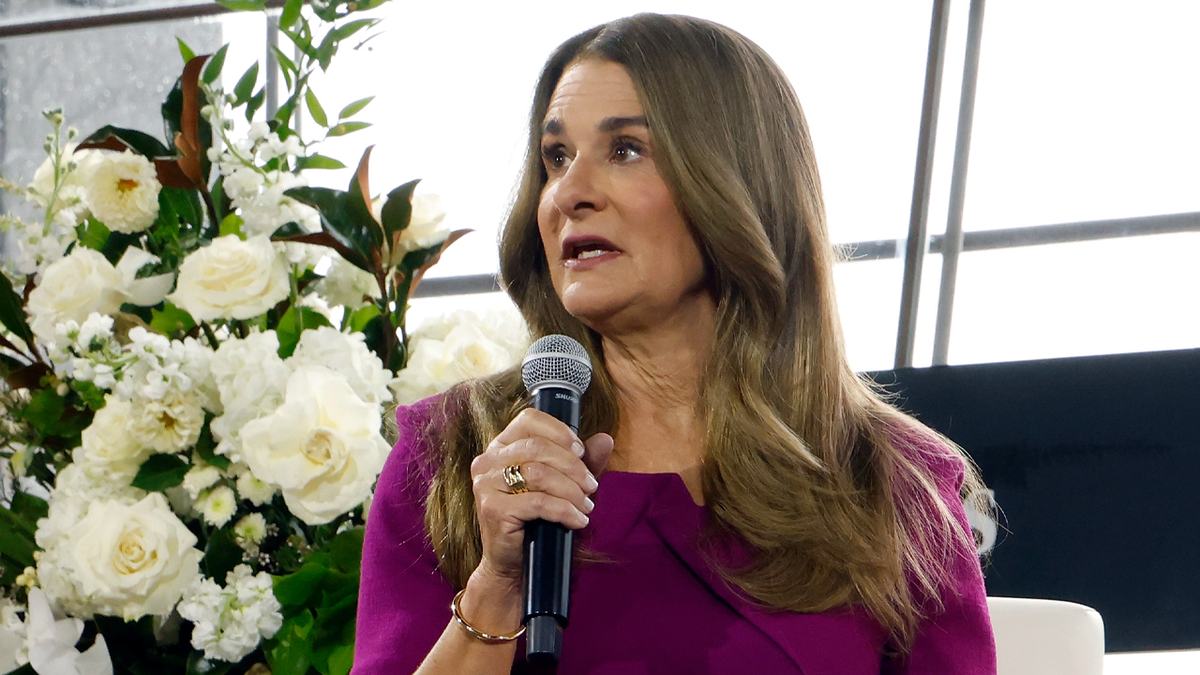
Melinda Gates speaks

Melinda Gates told NPR how she distanced herself from her ex-husband Bill Gates as his relationship with Jeffrey Epstein was revealed.  (Taylor Hill/Getty Images)

“Well, let me say this. I think we’re having a reckoning as a society, right? No girl, no girl should ever be put in the situation that they were put in by Epstein and whatever was going on with all of the various people around him. No girl, I mean, it’s just it’s beyond heartbreaking, right?,” Melinda Gates said. “I remember being those ages those girls were. I remember my daughters being those ages, right? So, um for me it’s personally hard whenever those details come up, right? Because, um, brings back memories of some very, very painful times in my marriage.”

While saddened, she emphasized that these allegations are for people like her husband to deal with. 

“But I have moved on from that. I purposely pushed it away and I moved on. I’m in a really unexpected, beautiful place in my life. So whatever questions remain there of what I don’t – can’t even begin to know all of it. Those questions are for those people and for even my ex-husband. They need the answer to those things, not me! Well, and I am so happy to be away from all the muck.”

Martin later asked Melinda Gates what her dominant emotion is when she reads news coverage about the crimes and scandals surrounding Jeffrey Epstein. 

CBS NEWS SCRAMBLES AS NEW CONTRIBUTOR’S EPSTEIN EMAIL CONNECTIONS SURFACE IN LATEST DOJ FILES

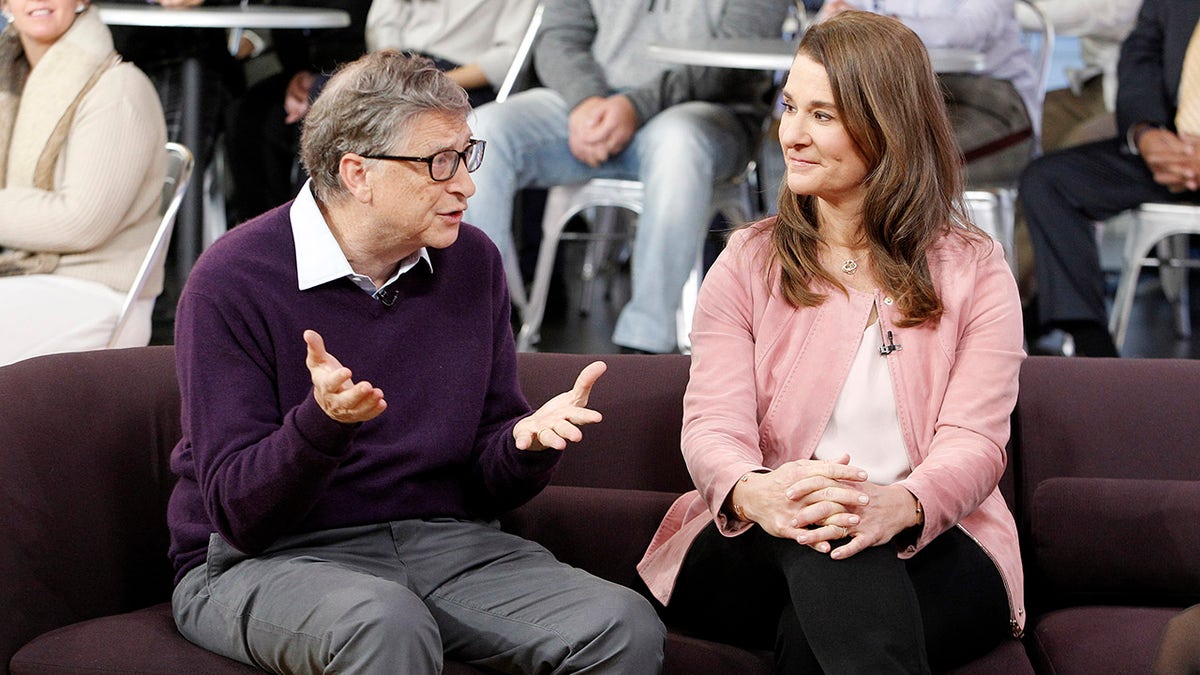
Bill and Melinda Gates

Melinda Gates said she had to get away from her marriage to Bill Gates and move on.  (Lou Rocco/Walt Disney Television via Getty Images)

“Sad. Just unbelievable sadness. Unbelievable sadness. Right?” she said. “Again, I’m able to take my own sadness and look at those young girls and say, ‘My god, how did they – how did that happen to those girls?”

“And so for me, it’s just sadness,” she continued. “I left my marriage. I had to leave my marriage. I wanted to leave my marriage. I had to leave the – I felt I needed to eventually leave the foundation. So, it’s just sad. That’s the truth, right? And it’s kind of like, at least for me, I’ve been able to move on in life. And I hope there’s some justice for those now-women, right? We see them standing up in front of microphones in D.C. Um, what they went through is just unimaginable,.”

CLICK HERE FOR MORE COVERAGE OF MEDIA AND CULTURE

Epstein and Maxwell

The Department of Justice released a trove of Epstein documents this past week, leading to scandalous allegations about numerous powerful figures. (Joe Schildhorn/Patrick McMullan via Getty Images)

CLICK HERE TO GET THE FOX NEWS APP


Source link

A New Security Control Plane for CISOs

0

AI Agents

By Ido Shlomo, CTO and Co-Founder, Token Security

Security leaders have spent years hardening identity controls for employees and service accounts. That model is now showing its limits.

A new class of identity is rapidly spreading across enterprise environments, autonomous AI agents. Custom GPTs, copilots, coding agents running MCP servers, and purpose-built AI agents are no longer confined to experimentation. They are running and expanding in production, interacting with sensitive systems and infrastructure, invoking other agents, and making decisions and changes without direct human oversight.

Yet in most organizations, these agents exist almost entirely outside established identity governance. Traditional IAM, PAM, and IGA platforms were not designed for agents that are autonomous, decentralized, and adaptive. The result is a growing identity gap that introduces real security and compliance risk together with efficiency and effectiveness challenges.

Why AI Agents Break Existing Identity Models

Historically, enterprises managed two identity types: humans and machines. Identities whose goal is to serve human access are centrally governed, role-based, and relatively predictable. Machine and workload identities operate at scale but tend to be deterministic, repetitive, performing narrowly defined tasks.

AI agents fit neither and both categories at once.

They are goal-driven,and role-based, capable of adapting behavior based on intent and context, and able to chain actions across multiple systems. At the same time, they operate continuously and at machine speed and scale. This hybrid nature fundamentally alters the risk profile. AI agents inherit the intent-driven actions of human users while retaining the reach and persistence of machine identities.

Treating them as conventional non-human identities creates blind spots. Over-privileging becomes the default. Ownership becomes unclear. Behavior drifts from original intent. These are not theoretical concerns. They are the same conditions that have driven many identity-related breaches in the past, now amplified by autonomy and scale.

AI agents create, use, and rotate identities at machine speed—outpacing traditional IAM controls.

This guide shows CISOs how to manage the full lifecycle of AI agent identities, reduce risk, and maintain governance and audit readiness.

Download it free

Adoption Velocity without Security Is the Real Accelerator of Risk

What makes this challenge urgent is not just what AI agents are, but how quickly they are spreading.

Enterprises that believe they have just a few AI agents often discover hundreds or thousands once they look closely. Employees build custom GPTs. Developers spin up MCP servers locally. Business units integrate AI tools directly into workflows. Cleanup rarely happens.

Security teams are left unable to answer basic questions:

  • How many AI agents exist?
  • Who owns them?
  • What systems, services, and data do they access?
  • Which ones are still active?

This lack of visibility creates identity sprawl at machine speed. And as attackers have demonstrated repeatedly, abusing unmanaged credentials is often easier than exploiting software vulnerabilities.

The Case for AI Agent Identity Lifecycle Management

Identity risk accumulates over time. This is why organizations use joiner, mover, and leaver processes for its workforce and lifecycle controls for service accounts. AI agents experience the same dynamics, but compressed into minutes, hours or days.

AI Agents are created quickly, modified frequently, and often abandoned silently. Access persists. Ownership disappears. Quarterly access reviews and periodic certifications cannot keep pace.

AI Agent identity lifecycle management addresses this gap by treating AI agents as first-class identities governed continuously and near-real-time from creation through usage, ending up in decommissioning.

The goal is not to slow adoption, but to apply familiar identity principles, such as visibility, accountability, least privilege, and auditability, in a way that works for autonomous systems.

Download Token Security’s latest asset, an eBook designed to help you shape Lifecycle Management for your AI Agent identities from end to end.

Visibility Comes First: Discovering Shadow AI

Every identity control framework begins with discovery. Yet most AI agents never pass through formal provisioning or registration workflows. They run across cloud platforms, SaaS tools, developer environments, and local machines, making them invisible to traditional IAM systems.

From a Zero Trust perspective, this is a fundamental failure. An identity that cannot be seen cannot be governed, monitored, or audited. Shadow AI agents become unmonitored entry points into sensitive systems, often with broad permissions.

Effective discovery must be continuous and behavior-based. Quarterly scans and static inventories are insufficient when new agents can appear and disappear in a matter of minutes.

Ownership and Accountability Matters

One of the oldest identity risks is the orphaned account. AI agents dramatically increase both its frequency and impact.

AI agents are often created for narrow use cases or short-lived projects. When employees change roles or leave, or just grow tired of a certain AI product that hasn’t evolved, the agents they built frequently persist. Their credentials remain valid. Their permissions remain unchanged. No one remains accountable.

An autonomous agent without an owner can be perceived as a compromised identity. Lifecycle governance must enforce ownership and maintenance as a core requirement, flagging agents tied to departed users or inactive projects before they become liabilities.

Least Privilege Must Become Dynamic

AI agents are almost always over-privileged, not out of negligence, but uncertainty and the will to explore. Since their behavior can adapt, teams often grant broad access to avoid breaking workflows.

This approach is risky. An over-privileged agent can traverse systems faster than any human. In interconnected environments, a single agent can become the pivot point for widespread compromise or lateral movement.

Least privilege for AI agents cannot be static. It must be continuously adjusted based on observed behavior. Permissions that are unused should be revoked. Elevated access should be temporary and purpose-bound. Without this, least privilege remains a policy statement rather than an enforced control.

Traceability Is the Foundation of Trust

As enterprises move toward multi-agent systems, traditional logging models break down. Actions span agents, APIs, and platforms. Without correlated identity context, investigations and forensics or even compliance evidence become slow and incomplete.

Traceability is not just a forensic requirement. Regulators increasingly expect organizations to explain how automated systems make decisions, especially when those decisions affect customers or regulated data. Without identity-centric audit trails, that expectation cannot be met.

Identity Is Becoming the Control Plane for AI Security

AI agents are no longer emerging technology. They are becoming part of the enterprise operating model. As their autonomy grows, unmanaged identity becomes one of the largest sources of systemic risk.

AI Agent identity lifecycle management provides a pragmatic path forward. By treating AI agents as a distinct identity class and governing them continuously, organizations can regain control without stifling innovation.

In an agent-driven enterprise, identity is no longer just an access mechanism. It is becoming the control plane for AI security.

If you’d like more information on how Token Security is tackling AI security within the identity control pane, book a demo and we’ll show you how our platform operates.

Sponsored and written by Token Security.



Source link

Ollie Robinson suspended in next match after his debut: England fast bowler Ollie Robinson was suspended from the team after his debut match.

0

Last Updated:

Ollie Robinson controversy: England fast bowler Ollie Robinson’s debut in cricket started with a big controversy. This controversy took place regarding his social media post. The impact of this controversy was that Robinson was suspended from all formats by the England Cricket Board after the debut match. Let us know what is the case of Ollie Robinson.

When this player got suspended as soon as he made his debut! The whole team felt embarrassedZoom
Ollie Robinson was suspended in the next match of his debut

New Delhi: Every cricketer has a dream to make his dream debut for the national team, but what happens when a player is suspended from all formats after the debut match itself. A similar story is that of England’s fast bowler Ollie Robinson, when he was dropped from the team despite a strong performance on debut due to his social media posts. However, later when the matter was resolved and the controversy ended, he returned to the England team.

Actually, the whole matter is that in the year 2021, Ollie Robinson got a chance to debut in the Lord’s Test against New Zealand. Everything was fine till the start of the match, but as soon as Robinson entered the field, there was an uproar on social media. The controversy was arising over some of his social media posts which he had made in 2012-13. Robbins probably didn’t even remember about that social media post.

Is Robinson’s social media post

Let us tell you that when Robinson was playing his first test match against New Zealand at Lord’s, his 8-9 year old old posts (tweets) started going viral. When Robinson posted this, he was about 18-19 years old. These tweets of Robinson were racist and sexist, in which he wrote objectionable things about women, Asian people and Muslims.

After Robinson’s social media post went viral, the England and Wales Cricket Board immediately started an investigation. After this, as soon as the first Test was over, Robinson was suspended until the investigation was completed. As punishment, after investigation, he was banned for 8 matches. Not only this, he also had to pay 3200 pounds as fine.

Robinson had apologized

Ollie Robinson apologized unconditionally after the social media post controversy. He said that he was foolish and irresponsible at that time and he is deeply ashamed of his actions. He clarified that he is not that person anymore. The matter did not end here, the then British Prime Minister Boris Johnson and Sports Minister Oliver Dowden defended Robinson and said that suspending him now for tweets made a decade ago was an excessive action.

How is Robinson’s career?

Robinson’s career was deeply affected after he got involved in controversy in his debut match. This is the reason why in the last five years, he has got a chance to play only 20 Tests for England. In this he has taken 76 wickets. Robinson last played for England in the Ranchi Test against India in February 2024.

About the Author

Jitendra Kumar

Working as Chief Sub Editor in Network 18 Group since October 2025. 9 years experience in journalism. Started career with sports beat in ABP News Digital. Reputable institutions like India TV and Navbharat Times Group…read more

homecricket

When this player got suspended as soon as he made his debut! The whole team felt embarrassed