Reference #18.4d560e17.1774537132.1a0409c2
https://errors.edgesuite.net/18.4d560e17.1774537132.1a0409c2
Reference #18.4d560e17.1774537132.1a0409c2
https://errors.edgesuite.net/18.4d560e17.1774537132.1a0409c2
Reference #18.4d560e17.1774538697.1a12b24d
https://errors.edgesuite.net/18.4d560e17.1774538697.1a12b24d
Reference #18.50200117.1774543609.301d78e3
https://errors.edgesuite.net/18.50200117.1774543609.301d78e3
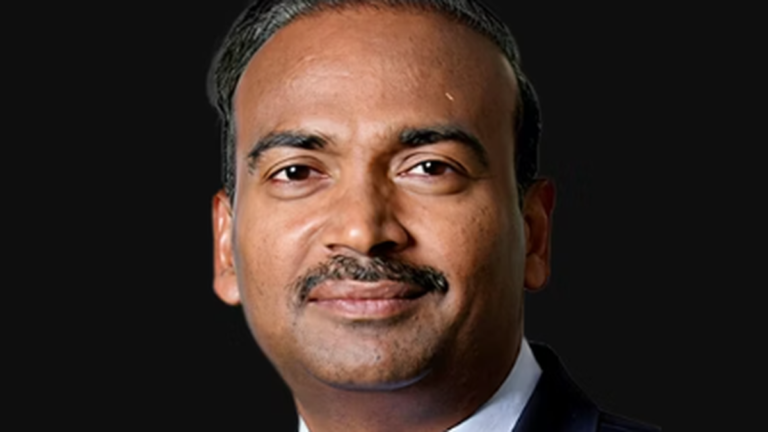

Srinivas Rao Ravuri, Chief Investment Officer, Bajaj Life Insurance
Bajaj Life Insurance has announced the launch of its new fund offer (NFO), the Bajaj Life BSE 500 Quality 50 Index Fund, aimed at providing exposure to Indian companies with strong financial fundamentals and earnings quality.
The fund will be available under the insurer’s unit-linked insurance plans (ULIPs) Bajaj Life Smart Wealth Goal, Bajaj Life Supreme and Bajaj Life Gain allowing policyholders to combine life cover with long-term wealth creation.
Designed for volatile market conditions, the fund focuses on the quality investment factor, which emphasizes profitability, balance-sheet strength and earnings discipline. It tracks the BSE 500 Quality 50 Index, comprising 50 companies selected from the broader BSE 500 universe based on parameters such as return on equity, accruals ratio and financial leverage.
Stocks are weighted using a mix of float-adjusted market capitalization and quality scores, with sector- and stock-level caps to manage concentration risk. The index is rebalanced quarterly.
Srinivas Rao Ravuri, Chief Investment Officer, Bajaj Life Insurance, said, “Over long investment horizons, outcomes are shaped as much by the quality of businesses investors own as by the market cycles they experience. Companies that allocate capital wisely, maintain balance sheet discipline and deliver consistent earnings tend to navigate uncertainty far better than the broader market.”
“At Bajaj Life, our approach to portfolio construction is centered on offering investors access to such enduring businesses through structured, transparent solutions. The Bajaj Life BSE 500 Quality 50 Index Fund reflects our effort to combine disciplined investing with long-term financial planning, allowing policyholders to participate in equity growth with greater consistency and resilience” he added.
Published on February 2, 2026
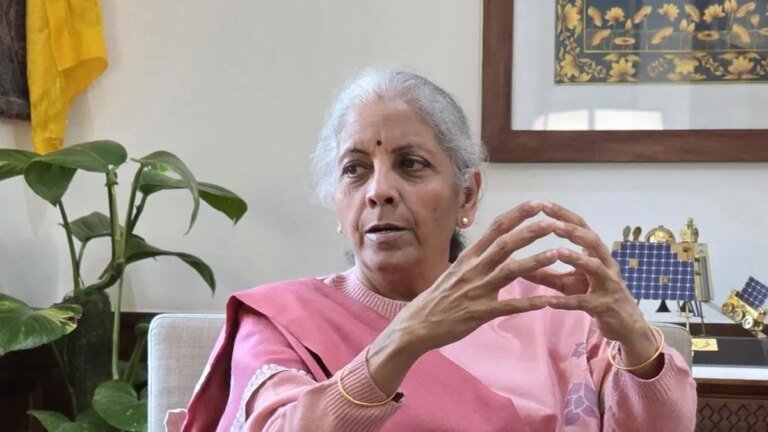

Nirmala Sitharaman, Union Finance Minister, at an interaction with businessline in New Delhi. | Photo Credit: By special arrangement
Finance Minister Nirmala Sitharaman firmly defended the new taxation regime for Sovereign Gold Bonds and the increased Securities Transaction Tax on Futures & Options (F&O) on Tuesday.
In her first post-budget interview with business linethe Finance Minister explained that Sovereign Gold Bonds (SGBs) were designed for long-term investors. She said those who hold them until maturity, as originally intended, will continue to enjoy the promised tax-free benefits. “But you went through a secondary market and then you are making a killing. Why shouldn’t I get something? And you’re not even holding it for maturity. Even if you hold it for maturity, you pick it up from somewhere else (Secondary Market). So I’m placing a bit of a premium on it,” she said.
As proposed in the Finance Bill, there would be four scenarios for taxation of SGB. If one is subscribed at the time of the launch of any tranche and redeemed at maturity (8 years), there will be no tax. Second, if one buys SGB units in the secondary market and holds them till maturity, the capital gain will be taxable. Third, if someone buys from and sells in the secondary market, capital gains will be taxed. Fourth, if someone enters at the time of launch and redeems after five years but before maturity, the capital gain will be taxed.
SGB was launched in 2015 to provide an option for shifting from physical gold to paper gold. Between 2015 and 2024, a total of 67 tranches were launched, and units worth 147 tonnes of gold were bought. With gold prices rising, it became unviable for the government to bring in any tranche after 2024. However, it has become very attractive in the secondary market.
Meanwhile, on the issue of higher STT for F&O, Sitharaman said: “We are not touching STT in general. We are touching only futures and options. And that is where we are getting continuously, people calling us to say people are losing money. And who are the ones losing money who normally don’t have that kind of a spare cash to speculate? So is the government supposed to sit and watch? We want to do what can help in deterring people from getting there,” she said, justifying the move.
She said the government wants to deter people from losing money. “Of course, the market regulators will take care of other things which they have to do. We have not touched every cash transaction. I think the market will understand our intent and as to why we have done it. And it is not some sweeping brush across the board,” she said.
The Finance Minister had proposed, in the Union Budget, to raise STT on both futures and options by up to 150 per cent. STT on Futures has been raised to 0.05 per cent from 0.02 per cent earlier, and for options has been raised to 0.15 per cent from the previous 0.1 per cent. The STT hike on futures is 150 per cent, and on options, it is 50 per cent.
Published on February 2, 2026
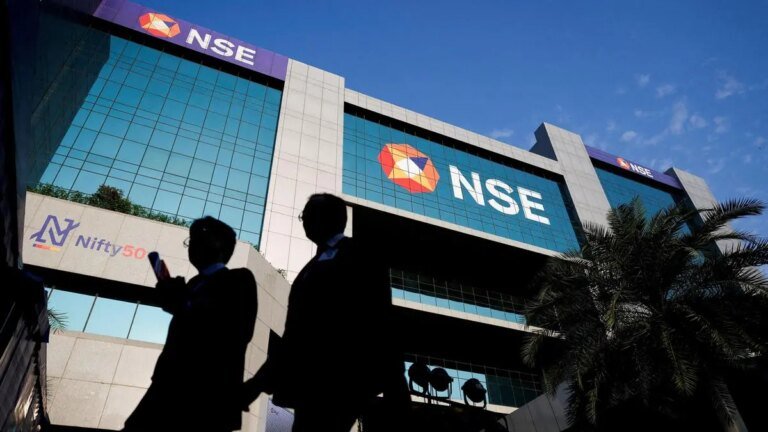

LIC holds a 10.72 per cent stake in NSE and Temasek has about 4.5 per cent, according to data published on the exchange’s website. | Photo Credit: Reuters
Temasek Holdings Pte. and Life Insurance Corporation of India Ltd. are likely to be key sellers in the potential $2.5 billion initial public offering of India’s top bourse, the National Stock Exchange of India Ltd., according to a person familiar with the matter.
State Bank of India Ltd. and SBI Capital Markets Ltd. are also likely to participate as sellers in the long-awaited IPO, which is expected to consist solely of existing shareholders offering between 4 per cent and 4.5 per cent of the company’s equity, according to the person, who asked not to be identified because the information is private.
All 190,000 shareholders of the exchange will be given the option to participate in the secondary sale as part of the IPO, the person said.
LIC holds a 10.72 per cent stake in NSE and Temasek has about 4.5 per cent, according to data published on the exchange’s website. SBI Capital also held roughly 4.5 per cent as of Dec. 31, 2025, while SBI’s stake is about 3.2 per cent, the data show.
NSE’s board is likely to form a committee comprising its top executives and the representatives of major shareholders including LIC and SBI in a few days to oversee the IPO process, the person said. The board is scheduled to meet on Feb. 6 to approve the financial results for the quarter ended December 2025 and is also likely to decide on the formation of the committee.
Shares of NSE are trading at about 2,150 rupees in the unlisted market, according to Incredmoney.com, implying a valuation of about 5.3 trillion rupees ($58 billion), making it the world’s fourth-most valuable exchange among listed peers, according to data compiled by Bloomberg.
NSE shares climbed to a peak of about 2,420 rupees on the unlisted market in June before sliding nearly 20 per cent to about 1,920 rupees by November, according to data from Incredmoney.com. The decline was largely attributed to a drop in futures and options volumes following a regulatory ban on New York–based quantitative trading firm Jane Street over alleged market manipulation. The shares have since stabilized, tracking a recovery in derivatives activity and improving sentiment around the exchange’s long-awaited initial public offering.
The committee’s mandate is expected to include assisting the board in appointing investment bankers, negotiating fees, determining the amount of shares to be sold by existing investors, and filing the draft prospectus. The exchange is targeting a timeline of about three months for the filing, the person added.
Deliberations are ongoing and key details could still change, the person said. Spokespeople for NSE, LIC, SBI, and SBI Capital Market didn’t respond to requests for comment. Temasek declined to comment.
NSE, which commands more than 75 per cent of India’s derivatives market, reported a 15 per cent increase in revenue to 17,100 crore for the fiscal year ended March 2025. Profit surged 44 per cent to 12,188 crore, delivering a net margin of about 71 per cent and underscoring the exchange’s strong pricing power and operating leverage.
On Friday, NSE said it had received regulatory clearance to begin preparations for an IPO. The approval comes nearly a decade after it first filed for a listing in 2016, a plan that stalled following allegations of corporate governance lapses and unfair market access raised by the Securities and Exchange Board of India. NSE subsequently filed two settlement applications related to the case, proposing to pay close to 13 billion rupees.
More stories like this are available on bloomberg.com
Published on February 2, 2026


Sectoral performance remained largely positive, with all indices ending in the green except Nifty IT, which declined 0.50 per cent. | Photo Credit: iStockphoto
Benchmarks staged a sharp recovery on Monday, with the Sensex surging 943.52 points or 1.17 per cent to close at 81,666.46, recouping a significant portion of the previous session’s steep Budget-day losses. The Nifty rose 262.95 points or 1.06 per cent to settle at 25,088.40, recovering a remarkable 429 points from its intraday low of 24,679.
The rally was led by power gridwhich surged 7.42 per cent to ₹270.00, emerging as the top gainer on the Nifty50. Tata Motors (Passenger Vehicles) jumped 5.61 per cent to ₹364.00, while Adani Ports climbed 4.28 per cent to ₹1,402.50. Bharat Electronics Limited advanced 3.63 per cent to ₹440.80, and Tata Consumer Products gained 3.11 per cent to ₹1,121.10.
However, selling pressure was visible in select financial and healthcare stocks. Shriram Finance led the decliners, falling 3.17 per cent to ₹966.00, followed by Axis Bankwhich dropped 2.33 per cent to ₹1,309.20. Max Healthcare declined 1.82 per cent to ₹958.95, Infosys slipped 1.66 per cent to ₹1,627.00, and Cipla shed 1.08 per cent to ₹1,314.50.
“The market witnessed a smart recovery following yesterday’s volatile session due to the impact of the STT hike on F&O and the government’s higher borrowing plan for FY27,” said Vinod Nair, Head of Research at Geojit Investments Limited. “At the same time, the Budget’s policy continuity with a clear emphasis on growth and fiscal prudence has helped reinforce confidence in the medium to long-term earnings outlook.”
Sectoral performance remained largely positive, with all indices ending in the green except Nifty IT, which declined 0.50 per cent. The Capital Market Index outperformed, rallying over 3 per cent, while Nifty Auto surged 2.1 per cent backed by strong monthly sales numbers. Nifty Oil & Gas gained 2 per cent, supported by lower crude oil prices. Nifty FMCG, metals, energy, infrastructure and realty stocks rose 1–2 per cent.
Broader markets mirrored the recovery, with the Nifty Midcap 100 rising 0.96 per cent to 57,667.60 and the Nifty Smallcap 100 gaining 0.64 per cent to 16,523.35. The Nifty Next 50 advanced 1.07 per cent to 67,073.20. Market breadth remained slightly weak, with 2,039 stocks advancing against 2,220 declines on the BSE, where 4,428 stocks were traded. The advance-decline ratio stood at 0.93. Seventy-six stocks hit 52-week highs, while 360 touched 52-week lows.
The Indian rupee strengthened sharply, gaining 47 paise to close at 91.51 against the US dollar, supported by easing commodity prices and robust foreign exchange reserves. “A combination of cooling commodity prices, enhanced fiscal control, large forex reserves and suspected corporate dollar selling has provided a tailwind for the local currency,” said Dilip Parmar, Research Analyst at HDFC Securities. “In the near term, the USDINR spot is likely to consolidate within a tight range, finding support at 91.10 and facing resistance near 91.85.”
Brent crude oil prices fell sharply, down over 4 per cent to $66.45 per barrel. “A sharp decline in global crude oil prices has also offered some relief, reflecting signs of easing geopolitical tensions between the US and Iran,” Nair added.
“Nifty has now retraced 61.8 per cent of the entire decline seen in the 1st February 2026 Budget session,” said Nandish Shah, Deputy Vice President at HDFC Securities. “14 Days RSI is moving higher with a positive divergence on the Nifty daily chart, which is an early sign of emerging strength.”
Looking ahead, markets are expected to remain volatile as investors digest third-quarter earnings and await the Reserve Bank of India’s monetary policy decision this week. “Stock-specific action is likely to remain prominent as the Q3 earnings season gathers pace,” said Siddhartha Khemka, Head of Research, Wealth Management at Motilal Oswal Financial Services.
Published on February 2, 2026
Reference #18.4d560e17.1774548355.1a6c467b
https://errors.edgesuite.net/18.4d560e17.1774548355.1a6c467b
Reference #18.50200117.1774550676.30bc2242
https://errors.edgesuite.net/18.50200117.1774550676.30bc2242

Defense stocks staged a sharp rebound on Monday after the sectoral index clawed back losses following an intraday fall of nearly 4 per cent, following the Union Budget presentation on Sunday. The government’s push to bolster the armed forces following Operation Sindoor and ongoing global geopolitical tensions was evident in the Budget, which has earmarked a record 15 per cent increase for the Ministry of Defense to ₹7.84 lakh crore for FY27, up from ₹6.81 lakh crore in FY26.
Shares of Bharat Forge, Data Patterns, Bharat Electronics (BEL), BEML and Garden Reach Shipbuilders & Engineers (GRSE) led the recovery, while Bharat Dynamics and Cochin Shipyard remained under pressure. Hindustan Aeronautics (HAL) also pared early losses to trade firmer as the session progressed.
Brokerage Goldman Sachs struck a constructive tone on the sector, highlighting that the overall defense budget has been raised 7 per cent year-on-year to ₹7.85 lakh crore, above its estimate of ₹7.75 lakh crore. The firm said the sharp 62 per cent jump in spending on other equipment—such as missiles, ammunition, radar systems and electronics—to ₹82,200 crore was a key positive surprise in the Budget.
According to Goldman Sachs, companies positioned as direct beneficiaries of higher equipment outlays include Solar Industries, BEL and Bharat Dynamics, as procurement momentum in these segments remains strong.
Published on February 2, 2026