Reference #18.4d560e17.1778495480.123dd7a8
https://errors.edgesuite.net/18.4d560e17.1778495480.123dd7a8
Reference #18.4d560e17.1778495480.123dd7a8
https://errors.edgesuite.net/18.4d560e17.1778495480.123dd7a8


In late December, US Secretary of State Marco Rubio sanctioned former European Commission tech chief Thierry Breton for his role in leading “organized efforts to coerce American platforms to censor, demonetize, and suppress American viewpoints they oppose.”
The architect of the EU’s Digital Services Act (DSA) – a pet hate of the Trump administration – has yet to be deterred. Last month, he joined a chorus of calls for Europe to end its reliance on dominant US tech companies. “The time for an apologetic Europe is over,” the former Atos CEO said in a rallying cry that points out we now live in a world “where digital sovereignty has become one of the central arenas of power politics.”
But what to do about it? US companies hold overwhelming positions in markets including cloud infrastructure and personal productivity tools, to say the least. Breton says Europe has a “constellation of [tech] players that, together, form a considerable base,” but offers little explanation of how it might extract itself from the incumbent providers and what the new world might look like.
One of his compatriots has, though. Nicolas Roux, systems engineer at French aerospace research lab ONERA, has put together a comprehensive analysis in an attempt to understand which systems might fail first under the kind of pressure the US has already exercised on European institutions and individuals. It also looks at how long they would take to recover and how Europe can reduce its exposure, and which levers – organizational, sectoral, or political – it should pull to ensure better digital sovereignty.
The 137-page report is designed for Europe’s decision-makers on tech and policy. The details are too numerous to summarize, but it offers a glimpse of some worst-case scenarios as well as cause for optimism.
As the report points out, a sense of urgency has gripped European institutions following US sanctions on International Criminal Court (ICC) prosecutor Karim Khan, which led to his Microsoft services being suspended. Microsoft denied responsibility, saying it was the ICC’s decision. The Dutch press later reported that the decision was made under duress after Microsoft pointed out that its obligations under the sanctions meant it would have to cut off service to the entire organization unless the ICC removed Khan’s access.
In March, Henna Virkkunen, Executive Vice-President of the European Commission with responsibility for technological sovereignty, said that Europe’s dependence on American technology had become a security concern visible beyond specialist circles.
There are so many layers of technology in which the US dominates, with so many interdependencies, any effective move toward digital sovereignty should be based on an understanding of which are the most vulnerable and which are hardest to replace.
Roux zeros in on Identity and Access Management (IAM). The US dominates enterprise deployments with few exceptions. “Microsoft, Ping Identity, and IBM as the market’s leading operators, with Okta, Oracle Identity Governance, and CyberArk accounting for the majority of remaining enterprise contracts,” the report says.
“No European vendor appears in any tier of the competitive landscape. For European public administrations, this means that the layer of infrastructure responsible for authenticating every user and authorising every access decision is, in most cases, operated by a vendor incorporated in the United States and subject to American law.”
Roux points out that Microsoft 365, the service for productivity apps on which nearly all organizations rely, runs the Redmond vendor’s Entra ID as its identity provider by default.
The report says: “The strategic sensitivity of this layer is compounded by a property it shares with no other: IAM dependency is invisible in normal operations and total in failure. An organization discovers its IAM dependency not when costs increase or performance degrades, but when access is denied it represents an actionable ‘kill switch.'”
There is a European alternative in Keycloak, but even if a European organization chose to self-host the service on a European cloud, it would not be free from dependencies on US companies, which could be compelled to turn off services under US legislation, the report argues.
“What does not hold is inter-organizational authentication. As long as partner organisations (ministries, contractors, other public bodies) operate Entra ID as their identity provider, external authentication chains pass through Microsoft infrastructure by default. Under pressure, the first thing that breaks is the ability to collaborate securely with anyone outside the organisation’s own perimeter.”
There is a gap in the market for a European IAM provider as a fully managed service with the SLA guarantees and support model that public sector organizations can buy through existing procurement vehicles. But to counter the problem with inter-organizational authentication, Europe needs not a product, but a standard – “a shared European public sector identity federation framework, mandatory for public administrations, built on open protocols, and interoperable by design,” Roux says.
The market for cloud infrastructure and services is overwhelmingly dominated by US providers, which often interlock infrastructure and platform services with other technologies. “The lock-in is architectural: organizations have built dependencies on platform-specific services (Lambda functions, BigQuery pipelines, Azure Cognitive integrations) that have no direct drop-in replacement. Infrastructure can be migrated but application architecture cannot be switched without rethinking,” the report says.
Nonetheless, there are a bunch of European alternatives on the market. France’s OVHcloud and Scaleway are among them, as are German providers Hetzner, IONOS, and STACKIT, owned by retail group Schwarz.
It may seem impossible for European providers to replace AWS, with its mammoth scale and buying power, but for Roux, replacing AWS is the answer to the wrong question.
“No European provider will replicate the full AWS service catalogue. That catalogue was built over twenty years by a company with access to essentially unlimited capital, operating in a continental domestic market with no regulatory friction. The conditions that produced it do not exist in Europe and will not be manufactured by policy. Asking for a European AWS is asking for a different history. The right question is different: for each layer, what does a given organization actually need, and is a credible European alternative available for that specific need?”
The report points out that the most serious gaps are in three areas of cloud services. The first is advanced workloads, such as managed AI/ML pipelines and high-concurrency serverless functions. But the constraint only affects a small minority of public sector organizations and is “an irrelevance for the majority.”
Secondly, there is scale. OVHcloud’s total 2024 revenue is approximately 0.9 percent of the figure AWS publishes. But a coordinated policy of investment at both EU and state level can help close that gap.
Lastly, Europe struggles to coordinate services between providers that “operate excellent but largely siloed platforms.” Roux says this problem might be solvable “through open standards and interoperability frameworks, but it requires deliberate architectural choices that organizations accustomed to single-vendor convenience are not always prepared to make.”
Although starting from a low base, the European cloud market is set for rapid growth as investment mirrors geopolitical concerns.
European spending on sovereign cloud infrastructure services is forecast to more than triple from 2025 to 2027, from $6.9 billion to $23.1 billion, Gartner reported in February, well ahead of any established region. Speaking to The Register, Rene Buest, Gartner senior director analyst, said European businesses are considering local and regional sovereign cloud providers for new cloud workloads, while they work to understand the complexities of migrating established workloads.
This is just a glimpse of the problems – and practical measures – the report outlines. Some of the solutions lie at a policy level by driving demand through public procurement and by creating standards. Breton also sees Europe gaining the upper hand through policy, the single market, and by imposing EU rules on data, competition, algorithmic transparency, and taxation.
But continuing to create rules that allow for digital sovereignty can be an uphill struggle in the face of US industry lobbying. Roux quotes the NGOs Corporate Europe Observatory and LobbyControl, which studied the EU Transparency Register. They concluded that the tech industry spent a record €151 million on EU lobbying, a figure that has increased by a third in two years. “Big Tech” employs more full-time lobbyists in Brussels than there are Members of the European Parliament.
The European Commission is expected to address parts of the issue through a technological sovereignty package set to arrive at the end of May. It is likely to draw on a €234 billion European competitiveness fund, including a €20 billion package for AI infrastructure, supply chain cybersecurity liability provisions for digital infrastructure, and a strong orientation toward sovereign cloud and open source principles.
The hope is that through policy and investment, Europe can get CIOs and tech buyers to overcome the barriers to collective action – that is, “each individual sourcing decision is locally rational, while the aggregate outcome (a continued and deepening operational and economic dependency, in the terms defined above) is collectively irrational.”
Europe may have been slow to address weaknesses in its digital sovereignty, but it has already proved it has the staying power to take on US might. It took 50 years for a consortium of European aerospace businesses from the UK, France, Germany, and Spain to take on dominant aircraft manufacturer Boeing. In 2023, the number of Airbus aircraft in service surpassed Boeing for the first time.
Catherine Jestin, executive vice president of digital at Airbus, told The Register last year that the same could be possible in tech. “It’s a long game. And if you look at the way China is approaching it, it takes time. It takes political will and the alignment of the industry,” she said.
Europe doesn’t need to dominate the tech market to ensure its digital sovereignty. It only needs viable alternatives to US providers at each layer of the stack, rather than direct replacements for the biggest suppliers. It will take time, but it will never get there unless it makes a start.
As Roux shows, there are those willing to provide a map. ®
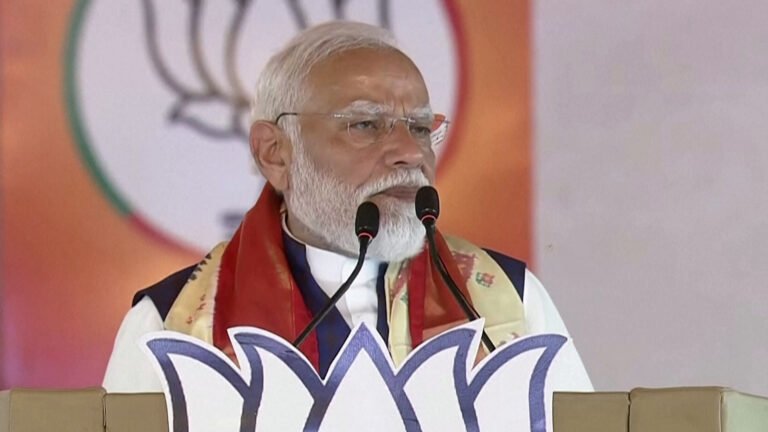
India’s Prime Minister Narendra Modi is urging people to re-adopt the same measures used during COVID-19. He is calling for a reduction in the use of petrol and diesel as fallout from the US-Israeli war on Iran drives steep price increases.
Published On 11 May 2026

NEWYou can now listen to Fox News articles!
San Antonio Spurs head coach Mitch Johnson spoke out about Victor Wembanyama’s ejection from the team’s Game 4 loss to the Minnesota Timberwolves on Sunday night.
Wembanyama was tossed after he swung his elbow and hit Timberwolves center Naz Reid in the face in the second quarter. It was the first ejection of his career.
ZERO BS. JUST DAKICH. TAKE THE DON’T @ ME PODCAST ON THE ROAD. DOWNLOAD NOW!

San Antonio Spurs forward Victor Wembanyama reacts after being ejected for a flagrant foul during the first half of Game 4 in the second-round NBA playoffs against the Minnesota Timberwolves in Minneapolis on May 10, 2026. (Abbie Parr/AP)
Johnson said he was “glad” that Wembanyama “took matters into his own hands,” but added that he was concerned about the level of physicality that Wembanyama gets during games.
“Just the amount of physicality that people play with him, at some level, you have to protect yourself,” he continued, via ESPN. “Every single play on every single part of the floor, people are trying to impose their physicality on you. He’s gotten pushed down in transition, running freely. We don’t complain because we’re just going to play. We don’t really give a s—. But at some stage, he should be protected. If not, he’s going to have to protect himself, and unfortunately, stuff like that happens.
“It’s starting to get disgusting in terms of when he tries to fight through things, be professional and mature and deal with some of that stuff. I’m glad he took matters into his own hands. Not in terms of hitting Naz Reid, but he’s going to have to protect himself if they’re not. And I think it’s disgusting.”

Minnesota Timberwolves center Naz Reid reacts after an injury during the second half of Game 4 of the NBA second-round playoffs against the San Antonio Spurs in Minneapolis on May 10, 2026. (Abbie Parr/AP)
CLICK HERE FOR MORE SPORTS COVERAGE ON FOXNEWS.COM
The incident occurred as Wembanyama was swarmed by Reid and Jaden McDaniels after he grabbed an offensive rebound. Both T’Wolves players tried to jar the ball loose.
McDaniels tugged on Wembanyama’s left arm. The 7-foot-4 phenom then flailed his right arm back and struck Reid in the neck.
Wembanyama was assessed a Flagrant 2 foul, triggering an automatic ejection.
Johnson dismissed any notion that Wembanyama would be suspended for Game 5.

San Antonio Spurs forward Victor Wembanyama walks across the court after committing a flagrant foul that led to his ejection during the first half of Game 4 against the Minnesota Timberwolves in Minneapolis on May 10, 2026. (Abbie Parr/AP)
“There was zero intent,” he said. “I think it would be ridiculous.”
CLICK HERE TO DOWNLOAD THE FOX NEWS APP
Minnesota’s win tied the series at 2-2.
The Associated Press contributed to this report.

The average cyberattack costs for a small- or medium-size business is more than $250,000. The salary for a chief information security officer (CISO) is about the same, pulling in between $250,000 and $400,000, according to the annual 2026 CISO Report from Sophos and Cybersecurity Ventures. Small- and medium-size businesses (SMBs) know they cannot afford the salary, so they roll the dice, hoping they will not be attacked. This is a dangerous gamble that these businesses, which make up the backbone of the American economy, should not have to take. A virtual (vCISO) or fractional CISO (fCISO) can provide a practical solution.
As the American economy goes digital, SMBs now rely on the same building blocks as big enterprises — cloud services, payment systems, remote access, customer data, and other third-party vendors. But without senior cyber leadership, cybersecurity often becomes a patchwork of tools, checklists, insurance paperwork, and whatever guidance a vendor offers. That may get these companies through a questionnaire; it will not build real resilience. Nearly half, all reported cyber incidents, which is projected to cost the global economy $12.2 trillion annually by 2031, involve smaller firms.
The threat is growing in both size and sophistication. Adversaries are deploying AI to automate reconnaissance, develop malware, and run phishing campaigns at scale. This reduces the cost and skill needed to target smaller firms at volume. Adversaries are also collecting encrypted data with the intent to decrypt it later when they have access to large enough quantum computers. SMBs in defense, healthcare, and financial supply chains often hold sensitive credentials that provide access into larger enterprise environments, but most are not prepared to adopt quantum-resistant encryption.
SMBs generally understand they face cyber risk. The real gap is leadership: someone who can turn technical vulnerabilities into business decisions, set priorities, brief executives, prepare for audits, and hold vendors accountable. For more SMBs, hiring a full-time CISO is financially unrealistic.
A Virtual CISO provides remote, on-demand cybersecurity leadership and advice, typically supporting several organizations at the same time. A fractional CISO is a dedicated, part-time executive who is more deeply integrated into one organization’s governance, security planning, and day-to-day operations. Both models give smaller organizations access to senior-level cybersecurity expertise in a flexible, more affordable way than hiring a full-time CISO.
Washington should make it easier for SMBs to hire fractional cybersecurity leaders, because the private market is not closing this gap on its own. The Cybersecurity and Infrastructure Security Agency (CISA) and the Small Business Administration (SBA) could help by publishing buyer guidance: vetted criteria for evaluating providers, example scopes of work and deliverables, and real-world case studies that show SMB owners what a high-quality vCISO or fCISO engagement should look like.
Clear guidance matters because many smaller firms cannot easily tell the difference between true cybersecurity leadership and a tool reseller, compliance-only consultant, or a generic managed services contract. Any vetted provider criteria should emphasize proven experience building and running security programs, independence from vendor incentives and product quotas, and the ability to tie security investment to real business risk, not just a list of certifications. Model scopes of work should also spell out the basics every engagement should deliver: an initial risk assessment, a prioritized remediation roadmap, and simple metrics that show whether security is improving over time. Without clear buyer criteria, federal efforts could end up funding low-quality services that add cost and paperwork without making companies safer.
The National Institute for Standards and Technology (NIST) should recognize these CISO models in its SMB-focused Cybersecurity Framework guidance. That would help smaller firms turn the framework’s Govern, Identify, Protect, Detect, Respond, and Recover functions into a clear, accountable leadership structure. This would make these roles less abstract: the point is not merely providing advice, but taking executive-level ownership of risk priorities, vendor oversight, incident readiness, and communication with the owner or board.
Congress and the Treasury Department should consider targeted tax incentives or credits for qualified cybersecurity leadership services, tied to measurable risk-reduction outcomes. Eligible activities could include completing a risk assessment, building a incident response plan, conducting vendor security reviews, running employee training, and producing a remediation roadmap. SMBs often defer cybersecurity because every dollar competes with payroll, inventory, and growth. A targeted incentive would make security leadership easier to justify as a business investment rather than an optional add-on.
Federal acquisition officials should require contractors that handle sensitive government data to show it has executive-level cybersecurity oversight, whether it is full-time, virtual, or fractional, and should extend that expectation down to relevant subcontractors and suppliers. This is necessary because SMBs serve as entry points into defense, healthcare, financial, and critical infrastructure supply chains.
Finally, CISA and the SBA should support vCISO- and fractional-CISO-led workforce training. Employees improve security when training comes with leadership, regular reinforcement, and clear accountability, not just annual awareness training. The aim is not to turn every SMB into a Fortune 500 security shop. It should be to give smaller firms access to the leadership they need before the next incident forces the issue.
Georgianna Shea, who is a Doctor of Computer Science, is chief technologist at the Foundation for Defense of Democracies’ Center on Cyber and Technology Innovation and its Transformative Cyber Innovation Lab, where Cason Smith served as a summer 2025 intern. Cason is studying integrated information technology at the University of South Carolina.

One French passenger and one from the US test positive after being evacuated from the vessel in the Canary Islands.
Published On 11 May 2026
A French woman and an American man have tested positive for hantavirus infections as countries around the world repatriate passengers from a cruise ship hit by a deadly outbreak.
French Health Minister Stephanie Rist said on Monday that a French passenger who was on the MV Hondius cruise ship tested positive for the virus and her condition was deteriorating, the Reuters news agency reported.
“What is key is to act at the start and break the virus transmission chains,” Rist told France Inter radio, pointing to the “decree that came out today that will allow us to strengthen isolation measures for contact cases and to protect the population”.
Another four French passengers have so far tested negative, and authorities have identified 22 contact cases.
The US Department of Health and Human Services said on Sunday that an American on a repatriation flight had tested “mildly positive” for the virus and another had mild symptoms. Both were travelling “in the plane’s biocontainment units out of an abundance of caution” and all 17 MV Hondius passengers on board would undergo clinical assessment upon arrival in the US.

The two new cases bring the total number of confirmed cases to 10. The World Health Organization (WHO) has so far confirmed two deaths and one probable death, and as of Friday, four people were hospitalised with one in intensive care in South Africa.
The MV Hondius was anchored near the Canary Island of Tenerife after being stranded for weeks following an outbreak of the hantavirus on the luxury cruise ship. Health authorities have been locating and monitoring passengers who disembarked from the ship before the outbreak was identified.
Investigations into the source of the outbreak are ongoing.
The evacuation of passengers from the cruise ship will be completed on Monday with flights to Australia and the Netherlands, Spain’s health minister said.
One flight to Australia will evacuate six passengers from Tenerife and another to the Netherlands will take 18 passengers. Both flights are to also carry passengers from other countries that did not send their own repatriation flights, officials said.
Hantaviruses can cause severe respiratory illness and are usually spread by rodents but can also, in more rare cases, be transmitted between people. Symptoms can begin between one and eight weeks after exposure and include headaches, fever, chills, gastrointestinal issues and respiratory distress.
The fatality rate of the Andes strain of the hantavirus, identified in the ship’s outbreak, can reach 40 to 50 percent, particularly among elderly people.
The WHO has recommended a quarantine of 42 days for the cruise passengers. Experts are stressing the need for calm, noting that the virus is far less contagious than COVID-19.
Robin May, chief scientific officer at the United Kingdom Health Security Agency, said the risk to the public was “extremely low”, the Press Association news agency reported.
Reference #18.490dde17.1778493700.31ef13cd
https://errors.edgesuite.net/18.490dde17.1778493700.31ef13cd

India has no plans to raise duties on gold and silver imports, a government source said on Monday, a day after Prime Minister Narendra Modi urged people to avoid buying gold for a year due to the impact of the Iran war.
India is the world’s second-largest consumer of gold and the largest consumer of silver.
Published on May 11, 2026
Reference #18.4d560e17.1778493387.12322975
https://errors.edgesuite.net/18.4d560e17.1778493387.12322975
Australia’s peak Islamic body has condemned growing “anti-Muslim sentiment”, after a man allegedly threatened worshippers at a Brisbane mosque on Sunday, falsely claiming to have a gun.
The man is alleged to have attended the Masjid Taqwa in Bald Hills, Brisbane at about 10.46am on Sunday and threatened worshippers who were praying in the mosque.
According to the Australian National Imams Council, the man entered the mosque and made threats, claiming to have an AK-47 in his vehicle outside.
The Guardian understands the man was not armed and was alerted to the presence of worshippers by a large amount of shoes outside the building.
On Monday, Queensland police charged a 33-year-old man for disturbing a place of worship and creating a public nuisance.
“No one was physically injured, and the man fled the scene prior to police arrival,” a Queensland police spokesperson said.
A man is due to appear before Brisbane magistrates court on 22 May.
The council described the alleged incident as “deeply disturbing” and “a grave violation of the sanctity, safety, and security of a place of worship”.
“Places of worship must remain sanctuaries of peace, reflection, and safety. Any act of intimidation, threats, or hatred directed towards worshippers is utterly unacceptable, unequivocally condemned, and must be treated with the utmost seriousness,” council president Imam Shadi Alsuleiman said.
The mosque has separately been the target of anti-Muslim graffiti, Nazi symbols and Islamophobic abuse, according to the council.
In two separate and unrelated incidents last September, the Islamic College of Brisbane allegedly received a threatening email, and the Arundel mosque on the Gold Coast received an alleged bomb hoax.
Imam Shadi said the repeated incidents raise serious concerns about escalating hostility faced by Muslim communities across the country.
He said Islamophobia had been fuelled by “divisive narratives and rhetoric promoted by sections of the media and certain political figures, contributing to fear, hostility, and the marginalisation of Muslim communities across Australia”.
“The safety and sense of security of the Muslim community have been undermined, and there is growing concern about the increasing normalisation of anti-Muslim sentiment, threats, intimidation, and acts of hatred directed towards Australian Muslims and their places of worship,” Imam Shadi said.
A police spokesperson said there was no ongoing threat to public safety.