Reference #18.49200117.1778477132.114e706b
https://errors.edgesuite.net/18.49200117.1778477132.114e706b
Reference #18.49200117.1778477132.114e706b
https://errors.edgesuite.net/18.49200117.1778477132.114e706b
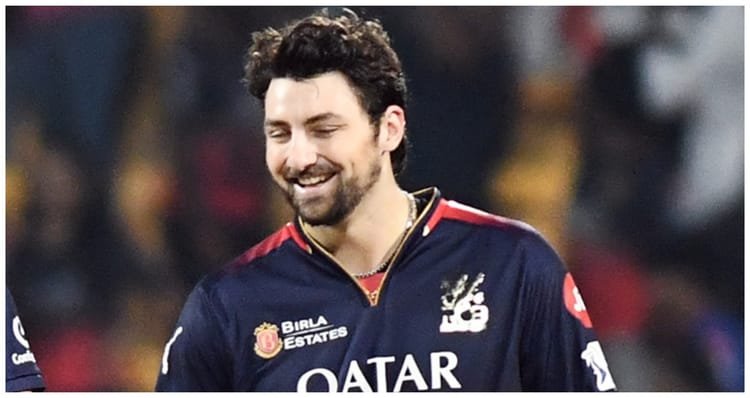
Tim David was fined 30% of his match fee and given two demerit points by the IPL for making an obscene gesture during the match against Mumbai Indians.
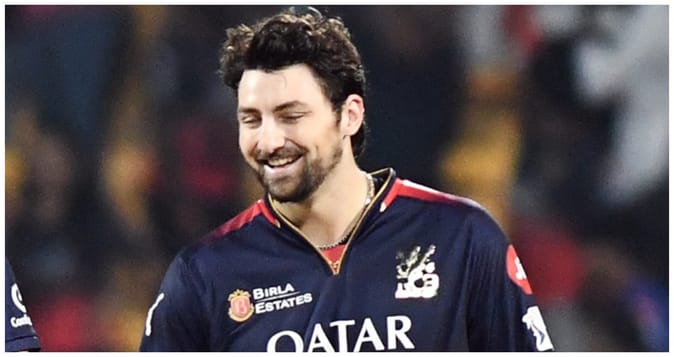
tim david – Photo: ANI
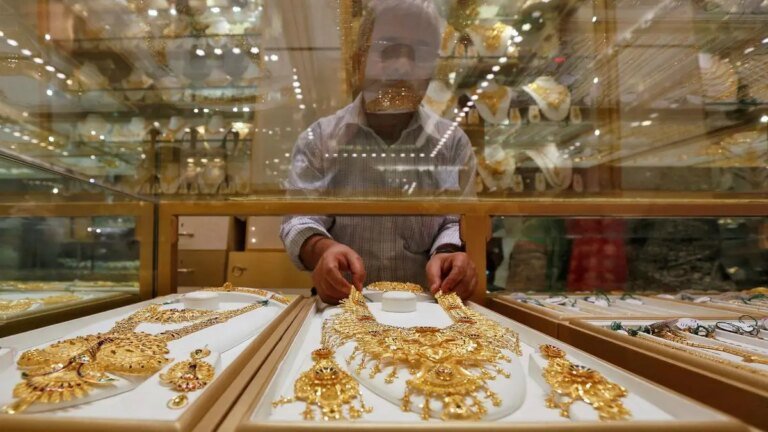
Jewelery stocks witnessed sharp selling pressure on Monday after Prime Minister Narendra Modi urged citizens to postpone non-essential gold purchases as part of measures aimed at conserving foreign exchange amid the ongoing crisis, triggering concerns over near-term demand for the sector.
Titan Company shares tumbled as much as 8 per cent to ₹4,150.10 in early trade before recovering slightly to trade at ₹4,167.90 around 10.26 am. The stock came under pressure despite the company reporting strong Q4 earnings last week.
Kalyan Jewelers India shares tanked nearly 10 per cent to ₹382.10 from the previous close of ₹424.55. The company had also announced its March quarter results last week.
Senco Gold shares plunged around 11 per cent to ₹325.05 on the NSE from the previous close of ₹365.40. Thangamayil Jewelery fell nearly 10 per cent to ₹3,832.10 against the previous close of ₹4,246.70.
Sky Gold and Diamonds shares tumbled more than 12 per cent to ₹475 during the session. Shares of PN Gadgil Jewelers and Bluestone Jewelery also declined up to 9 per cent amid broad-based weakness across the jewelery segment.
The sharp correction in jewelery stocks reflects investor concerns that any prolonged slowdown in discretionary gold purchases could impact demand momentum, particularly at a time when gold prices remain elevated and consumer buying patterns are already showing signs of moderation.
Published on May 11, 2026
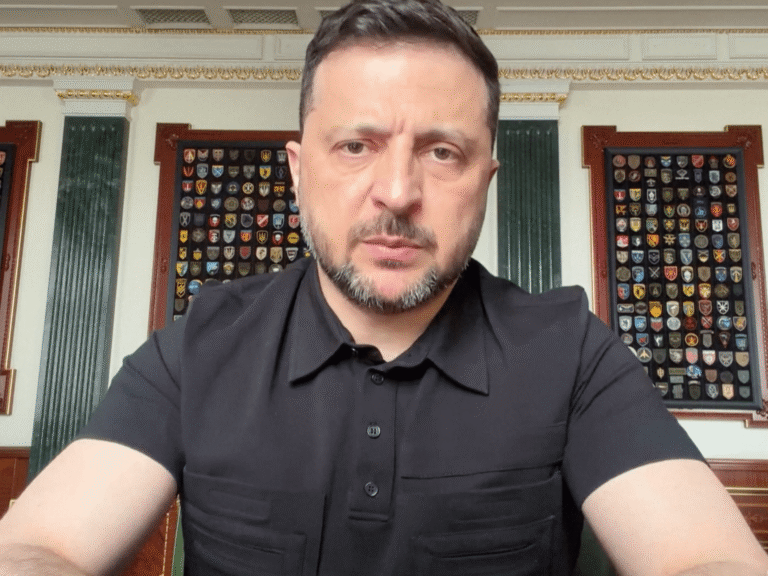
Ukrainian president Zelenskyy says Russia has stopped air attacks on Ukrainian cities since a short ceasefire went into effect on Saturday, but continues fighting on the frontlines. Russia says it has recorded more than 1,000 Ukrainian ceasefire violations.
Published On 11 May 2026


India’s overnight index swap rates jumped as rising oil and escalating war risks added to inflation worries and raised rate-hike bets. | Photo Credit: istock.com
Government bonds stumbled early on Monday, tracking US Treasuries, as traders trimmed positions on concerns over broader economic risks after recent US-Iran peace talks faltered and pushed up oil prices.
The benchmark 6.48% 2035 bond yield was up 6.2 basis points at 7.0437% at 10:15 am, compared with Friday’s close. The yield on the new 10-year 6.94% 2036 bond was up 5.2 bps at 6.9920%.
President Donald Trump’s swift rejection of Iran’s counter to a US peace proposal lifted oil on Monday, raising concerns that the 10-week-old conflict will drag on and keep shipping through the Strait of Hormuz paralyzed.
Brent crude futures rose 3.21% to $104.54 a barrel in Asian trading and have stayed above $100 for the last three weeks.
India’s heavy crude import dependence — about a fourth of its total import bill — could stoke inflation, hurt growth and widen the current-account deficit.
India’s state-dominated refining sector has so far kept fuel prices steady despite surging crude costs, losing about 100 Indian rupees ($1.05) a liter on diesel and 20 rupees on gasoline.
“If oil sustains at these levels, it is likely that the government will have to allow oil companies to raise prices,” a trader at an asset manager said.
Traders have also grown cautious after Prime Minister Narendra Modi said people should return to work from home and online meetings, saying it would help India use less fuel.
Separately, the market awaits April inflation print due Tuesday, which likely moved closer to the central bank’s 4% target from 3.40% in March, a Reuters poll of economists showed.
Economists said a hike in LPG prices likely percolated into April’s consumer prices.
India’s overnight index swap rates jumped as rising oil and escalating war risks added to inflation worries and raised rate-hike bets.
The one-year swap rate was up 8 bps at 5.9750%, while the two-year swap rate rose 10 bps to 6.23%. The most liquid five-year OIS rate was at 6.6475%, higher by 9 bps.
Published on May 11, 2026
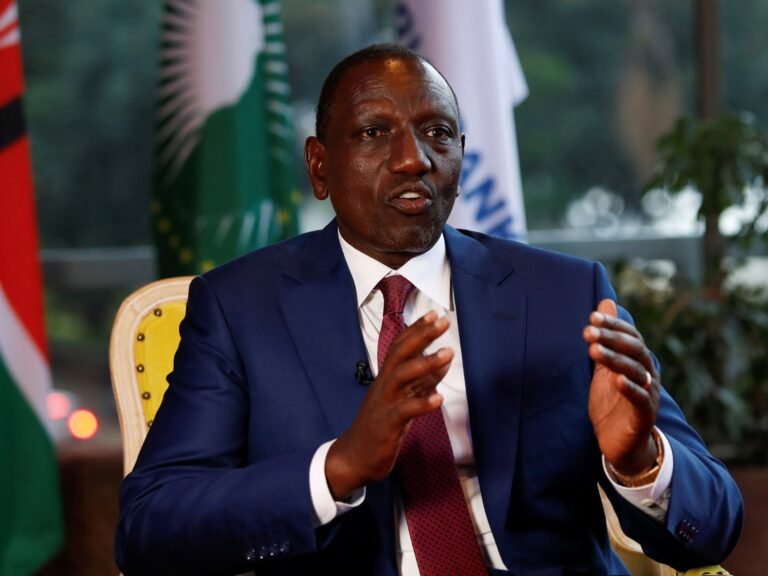
Kenya is hosting the Africa Forward 2026 summit in partnership with France, the first of its kind held outside a Francophone country.
The summit, which brings together African leaders and business executives from across the continent and beyond, has sparked criticism at home and abroad.
Since President William Ruto took office, Kenya has opened itself up to partnerships with Western countries, positioning itself as the most stable and accessible country in the region.
However, France’s colonial past continues to haunt Paris as it has lost influence in several former colonies in West Africa.
In response, French President Emmanuel Macron turned to Kenya, a country known for its openness to European investment.
So, what are the benefits and losses for either side of the Kenya-France partnership?
France and Kenya signed a defence cooperation agreement in April 2026. It was preceded by the arrival of 800 French troops in Kenya’s coastal city of Mombasa for a joint training exercise with the Kenya Defence Forces (KDF).
After the agreement’s signing, critics warned that Kenya could risk falling under the influence of a neo-colonial power, citing France’s history of unequal partnerships in West Africa.
The automatic five-year renewable deal includes partnerships in maritime security, intelligence, peacekeeping and humanitarian assistance and disaster response. France has already deployed 600 military personnel to Kenya, with officials saying they will provide training for KDF personnel.
The agreement grants French forces diplomatic-style immunity in Kenya and requires disputes to be resolved through diplomatic channels rather than Kenyan courts.
It also allows convicted French personnel to serve sentences in France and gives Paris primary jurisdiction over offences committed by its soldiers on Kenyan soil.
Critics say the agreement favours France over Kenya and secures Paris’s strategic interests in the Western Indian Ocean, a key region for global shipping lanes, military positioning, and counterterrorism operations.
They have also warned that while Kenya has quickly ratified defence cooperation agreements with five countries, China, Zimbabwe, the Czech Republic, Ethiopia, and France, it could risk coming under the influence of neo-colonial powers, which may interfere in its economic and political affairs and significantly undermine the country’s sovereignty.
France has also been accused of undermining African leaders, with Macron facing condemnation after saying African leaders in the Sahel forgot to say thank you to France.
“None of them [Sahel countries] would be a sovereign country today if the French army had not deployed in the region,” Macron told French ambassadors in Paris in January 2025.
Speaking to Al Jazeera, Kenyan politician Nelson Koech, who is also the chair of the National Assembly Departmental Committee on Defence, Intelligence, and Foreign Relations, denied that France has been granted immunity.
“It is completely untrue… we have said crimes like murder must be tried in Kenya,” he stated.
“It doesn’t mean that because the French have had a bad relationship with West Africa, we cannot have a partnership with them. France has continued to support Kenya, not only in this agreement but also in different projects in this country,” Koech added.
Koech also said that a defence cooperation agreement does not mean that French forces deployed to Kenya will be in the country permanently. However, sources in parliament told Al Jazeera that France has been pushing to add a permanent troop presence in Kenya.
For France, Kenya offers political stability, economic opportunities, and strategic access to the Western Indian Ocean. For Kenya, the partnership promises investment, infrastructure development, security cooperation, and increased international influence.
France is currently Kenya’s fourth-largest foreign direct investment partner. According to Kenyan government data, Kenya is the largest consumer of French products in East Africa. Today, France ranks among the largest investors in Kenya, having invested 1.8 billion euros ($2.1bn) over the past decade.
As of 2026, at least 140 French companies operate in Kenya, up from 40 in 2013, showing growing interest in the Kenyan economy. In March 2026, Business France East Africa, the French agency promoting business ventures between French companies and East Africa, in partnership with the French Chamber of Commerce in Kenya, launched a business guide to help French investors navigate opportunities in Kenya.
France is also the fifth-largest provider of foreign direct investment in Kenya, supporting about 46,000 direct jobs.
For Kenya, military and defence engagement with France complements existing security agreements with countries like the UK and the US, who both maintain bases in Kenya. It is seen as advantageous for Kenya’s counterterrorism efforts against threats such as al-Shabab
Critics argue that while French businesses have easy access to the Kenyan market and French nationals have visa-free entry to Kenya, Kenyan citizens are not afforded the same privileges, casting doubt on whether the partnership is truly equal.
Patricia Rodrigues, the Africa director at the Control Risks consulting firm, told Al Jazeera that both African and European authorities increasingly seek equal and mutually beneficial bilateral partnerships.
“Neither side is looking to be free from the influence of the other,” she explained. “The goal is to deepen strategic economic ties in a turbulent trade and geopolitical context. Both sides want to move away from models that prioritise the export of raw materials from Africa for processing abroad and away from aid-based relationships that create dependency.”
Rodrigues added that France, under Macron, is eager to strengthen ties with East and Southern Africa after facing rising anti-French sentiment in West Africa, particularly in the Sahel. Kenya’s position as a hub for Eastern Africa makes it a strategic entry point for France in the region, she said.
“For Kenya, military and defence engagement with France complements existing security agreements with countries like the UK and the US, who both maintain bases in Kenya. It is seen as advantageous for Kenya’s counterterrorism efforts against threats such as al-Shabab,” Rodrigues said, referring to the Somalia-based armed group.
The France-Kenya summit is expected to mark a significant turning point in relations between the two countries and, potentially, in France’s engagement with Anglophone Africa.
With growing French investment, expanding military cooperation, and deepening diplomatic engagement, both countries seem determined to strengthen ties at a time when global powers are competing for influence in Africa.
However, the summit is likely to intensify debate over sovereignty, accountability, and whether the relationship is truly balanced. Since 2024, Kenya has faced deadly waves of political unrest, with citizens protesting against President Ruto’s unpopular policies, including crackdowns on demonstrations and restrictions on press freedom.

If Kenya were to allow French forces permanent residence in the country, this could further inflame tensions, as the government braces for potential protests ahead of the country’s budget season.
Kenyan politician Caleb Hamisi told Al Jazeera that the defence agreement leaves Kenya vulnerable as a proxy in international disputes, and has become highly unpopular among Kenyans.
He pointed to the risk that foreign forces stationed in the country could involve Kenya in military operations or disputes that serve the strategic interests of other powers, rather than Kenya’s national priorities.
“Kenya has borne the brunt of international military-interstate relations that often present her as a proxy ground, and thus, susceptible to collateral war damage,” Hamisi said.
According to him, the presence of French forces in West Africa posed a security threat and a unilateral benefit to France, with little tangible gain for the host country. He said that the parliament should carefully examine disputed clauses in earlier defence agreements with major powers.
“It is incumbent upon the drafters of the agreement and the Kenyan plenipotentiary [negotiator] to consider contentious clauses in previous DCAs [defence cooperation agreements] with military superpowers before committing Kenya to an international defence agreement,” Hamisi told Al Jazeera.
The success of this partnership may therefore depend on whether future agreements deliver mutual benefit, transparency, and respect for Kenya’s national interests, rather than creating another chapter of foreign influence in Africa, disguised as cooperation.
Reference #18.6e560e17.1778476825.bdbecbe
https://errors.edgesuite.net/18.6e560e17.1778476825.bdbecbe


Popular looks of Bollywood actresses at Cannes Festival – Photo: Amar Ujala
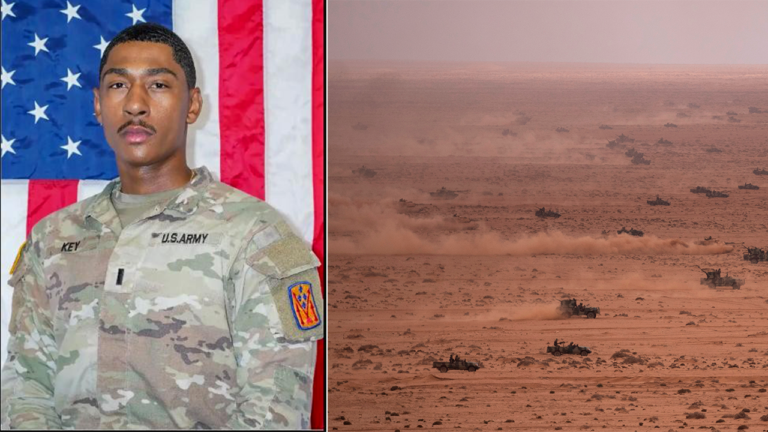
NEWYou can now listen to Fox News articles!
The remains of a U.S. Army officer who went missing during military exercises in Morocco were recovered from the Atlantic Ocean, while the search continues for a second missing soldier, according to military officials.
The remains of 1st Lt. Kendrick Lamont Key Jr., 27, of Richmond, Virginia, were recovered Saturday, U.S. Army Europe and Africa announced Sunday. Key, a 14A Air Defense Artillery officer, was one of two U.S. soldiers who reportedly fell from a cliff during an off-duty recreational hike near the Cap Draa Training Area on May 2.
A Moroccan military search team found Key in the water along the shoreline at about 8:55 a.m. local time Saturday, roughly one mile from where both soldiers reportedly entered the ocean, the Army said.
“Today, we mourn the loss of 1st Lt. Kendrick Key, whose remains were recovered in Morocco,” Brig. Gen Curtis King, commanding general of the 10th Army Air and Missile Defense Command, said in a statement. “Our hearts are with his Family, friends, teammates, and all who knew and served alongside him. The 10th Army Air and Missile Defense Command Family is grieving, and we will continue to support one another and 1st Lt. Key’s Family as we honor his life and service.”
LONG-LOST SOLDIER’S GRAVE DISCOVERED AT REMOTE US NATIONAL PARK AFTER 150 YEARS
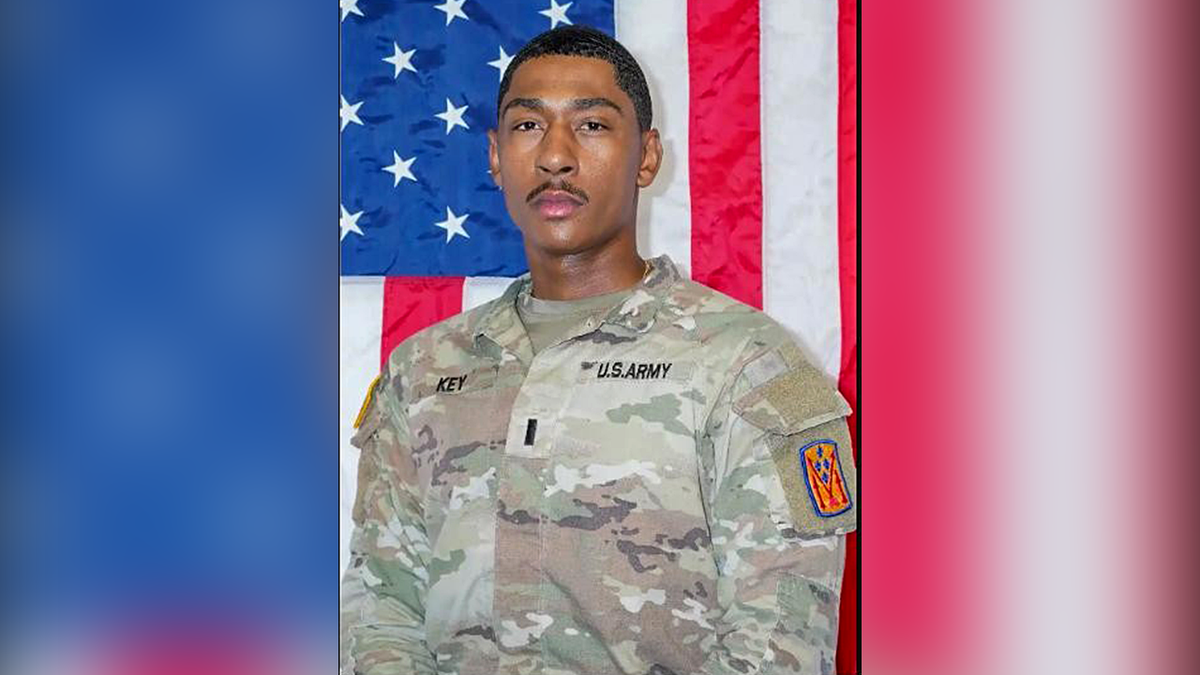
The remains of 1st Lt. Kendrick Lamont Key Jr. were recovered. (U.S. Army Europe and Africa)
Key and the second soldier were reported missing on May 2 after participating in African Lion, an annual multinational military exercise hosted across Morocco, Tunisia, Ghana and Senegal.
The two were reported missing around 9 p.m. near the Cap Draa Training Area outside Tan-Tan, a terrain featuring mountains, desert and semi-desert plains, the Moroccan military said.
The disappearance of the two soldiers led to a search-and-rescue mission involving more than 600 personnel from the U.S., Morocco and other military partners. Ships, helicopters and drones were deployed as part of this operation.
Search efforts will continue for the second missing soldier.
PENTAGON HONORS AMERICAN TROOPS KILLED IN OPERATION EPIC FURY: ‘NEVER BE FORGOTTEN’
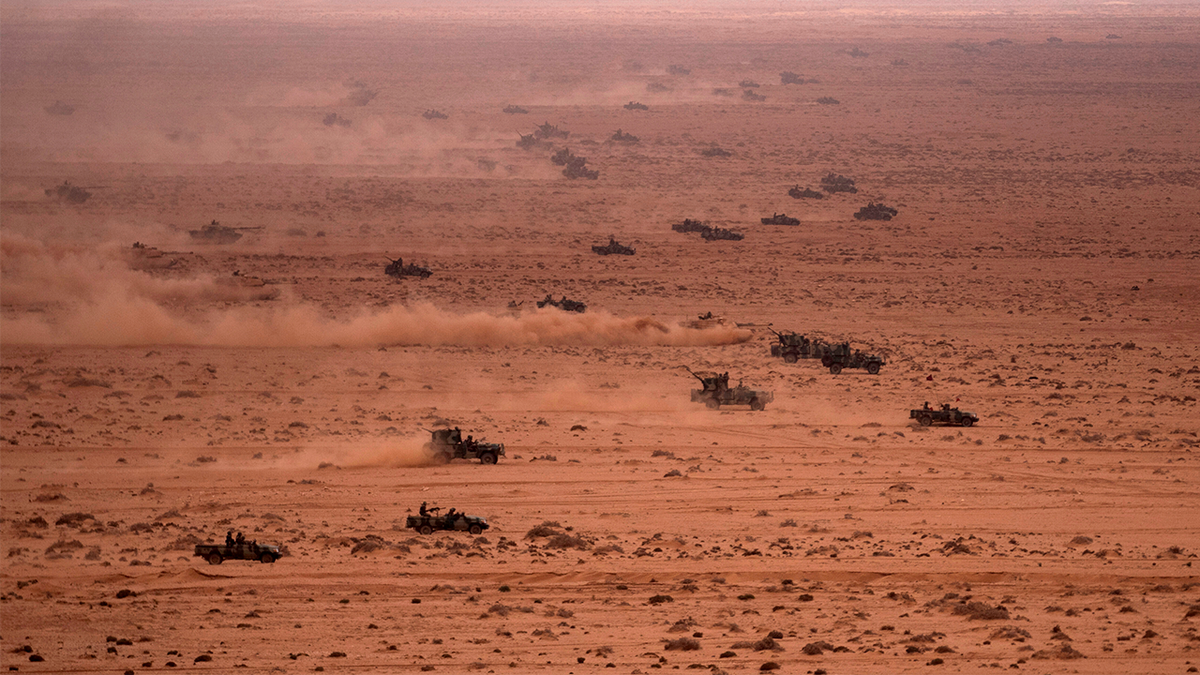
The two soldiers were reported missing after participating in African Lion, an annual multinational military exercise held in Morocco. (AP Photo/Mosa’ab Elshamy)
A U.S. contingent remained in Morocco after the military exercises ended on Friday to provide command and control and to support the ongoing search and rescue mission.
Key was assigned to Charlie Battery, 5th Battalion, 4th Air Defense Artillery Regiment, 10th Army Air and Missile Defense Command, according to the Army.
His decorations include the Army Achievement Medal and Army Service Ribbon.
He entered military service in 2023 as an officer candidate and earned his commission through Officer Candidate School the following year as an Air Defense Artillery officer. He later completed the Basic Officer Leader Course at Fort Sill, Oklahoma.
Key is survived by his parents, his sister and his brother-in-law.
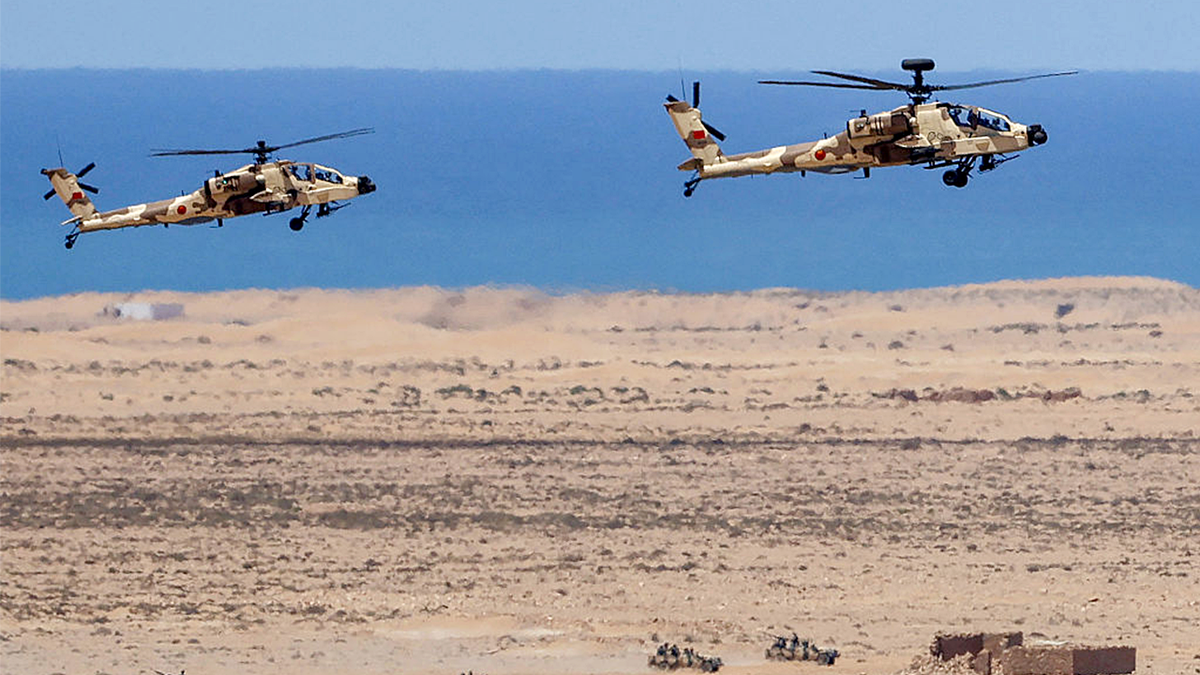
Search efforts will continue for the second missing soldier. (Abdel Majid BZIOUAT / AFP via Getty Images)
CLICK HERE TO DOWNLOAD THE FOX NEWS APP
African Lion 26 is a U.S.-led exercise that began in April across Morocco, Tunisia, Ghana and Senegal, with more than 5,600 civilian and military personnel from more than 40 nations.
For more than 20 years, it has been the largest U.S. joint military exercise in Africa.
In 2012, two U.S. Marines were killed, and two others injured during an MV-22 Osprey crash near Cap Draa while participating in Exercise African Lion.
The Associated Press contributed to this report.
Reference #18.4a200117.1778479562.120016bb
https://errors.edgesuite.net/18.4a200117.1778479562.120016bb
