One of Australia’s most famous gangsters will walk free after prosecutors on Friday said they would drop a planned retrial on drug trafficking charges.
Tony Mokbel – one of the key figures in Melbourne’s years-long gangland war – was jailed for 30 years in 2012 after pleading guilty to masterminding an elaborate drug syndicate.
His lawyers argued his drug convictions were tainted because his high-profile lawyer at the time, Nicola Gobbo, was feeding information to police while supposedly defending her clients.
Mokbel, 60, spent about 18 years behind bars but was released on bail last April after a court ruled he had a strong chance of overturning the criminal convictions.
A court subsequently acquitted him of one charge and ordered a possible retrial over allegations he tried to import a commercial quantity of MDMA in 2005.
On Friday, prosecutors in the state of Victoria said they had decided not to pursue the retrial.
“This decision was reached after careful consideration of all aspects of the matter relevant to the prospects of conviction and the public interest in a retrial,” the Victoria Office of Public Prosecutions said in a statement.
Prosecutors said they took into account Mokbel’s age and health as well as time already spent behind bars.
“It feels really nice, and life goes on,” the ageing mobster told local media outside a Melbourne courthouse.
He said he was keen to go abroad, something he had dreamed about while in prison.
“It’d be great to get on a nice plane,” he said.
Violence linked to Mokbel’s group, known as the Company, claimed dozens of lives and was later immortalised in the hugely popular Australian TV series Underbelly.
Gobbo, also referred to as Lawyer X and Informer 3838, claims that more than 300 people were arrested and charged based on the information she provided.
A 2020 royal commission found Gobbo’s double life during a period of intense gang bloodletting in Australia’s second-biggest city were “fundamental and appalling breaches” of her obligations as counsel to her clients.
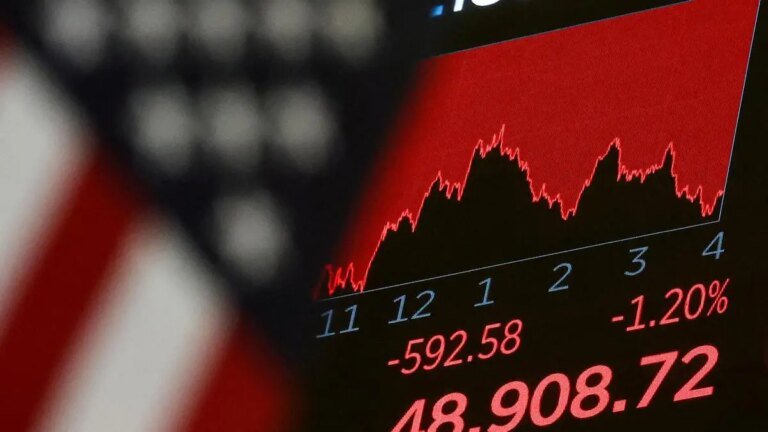
A screen displays the Dow Jones Industrial Average and other trading numbers following the closing bell at the New York Stock Exchange (NYSE) in New York City, US, February 5, 2026. | Photo Credit: Reuters/Brendan McDermid
Wall Street ended sharply lower on Thursday, with the Nasdaq dragged to its lowest since November by losses in Microsoft, Amazon and other tech heavyweights after Alphabet said it could double capital spending on AI in the race to dominate the emerging technology.
Shares of Alphabet fell 0.55% after the Google parent said it plans as much as $185 billion in capex in 2026. Together, it and its Big Tech rivals are expected to collectively shell out more than $500 billion on AI this year.
Adding to recent losses, Microsoft dropped 5%, Palantir lost 6.8% and Oracle fell 7%.
Amazon lost 4.4% during regular trading and then tumbled another 10% after the closing bell, joining its Big Tech peers in projecting massive capital expenditures in 2026. It was the latest sign that tech companies will not hit the brakes anytime soon on hefty AI investments.
Shares of chipmaker Nvidia, which stands to benefit from increased industry spending on AI, declined 1.4%.
Investors in recent months have grown more wary of heavy spending on AI, awaiting stronger signs that investments are actually boosting revenue and profits.
“This is the first time we’ve seen the large-cap tech companies — the Microsofts and the Alphabets and the Amazons — go through a really large capex cycle … and we’re seeing this volatility about whether this investment will translate, ultimately, into results,” said Tom Hainlin, an investment strategist at US Bank Wealth Management in Minneapolis.
Investors this week have also worried that rapidly improving AI tools could eat into demand for traditional software, squeezing profit margins across the sector. Software and data services stocks added to recent losses, with ServiceNow down 7.6% and Salesforce losing almost 5%.
The S&P 500 software and services index fell 4.6%, down for a seventh straight session.
“The AI trade which was the accelerant last year is perhaps the extinguisher this year with people realizing that AI is going to help certain kinds of companies but it is also going to hurt, particularly software, for example,” said Melissa Brown, SimCorp’s managing director of investment decision research.
Qualcomm slid 8.5% after forecasting second-quarter revenue and profit below estimates.
The CBOE volatility index, Wall Street’s “fear gauge,” briefly hit the highest in over two months.
As traders dialed back exposure to pricey AI stocks, the market’s rotation into relatively cheaper stocks gained steam in recent days.
The S&P 500 value index dipped 0.9%, but remained in positive territory for the week. The S&P 500 growth index was down more than 4% for the week.
The S&P 500 declined 1.23% to end the session at 6,798.40 points. The Nasdaq declined 1.59% to 22,540.59 points, while the Dow Jones Industrial Average declined 1.20% to 48,908.72 points.
Nine of the 11 S&P 500 sector indexes declined, led lower by materials, down 2.75%, followed by a 2.59% loss in consumer discretionary.
Snap topped fourth-quarter revenue estimates, but its shares declined more than 13%.
Estee Lauder shares fell 19% as the Clinique owner forecast annual results below estimates. Fashion company Tapestry rose 10% after raising its annual profit forecast, while Hershey climbed 9% on a better-than-expected annual profit forecast.
The number of Americans filing new applications for unemployment increased more than expected for the week ended January 31, while job openings dropped to the lowest level in more than five years in December.
Declining stocks outnumbered rising ones within the S&P 500 by a 1.8-to-one ratio.
The S&P 500 posted 44 new highs and 10 new lows; the Nasdaq recorded 113 new highs and 425 new lows.
Jennifer Garner revealed that she once bit off a chunk of a co-star’s ear while filming a brutal fight scene.
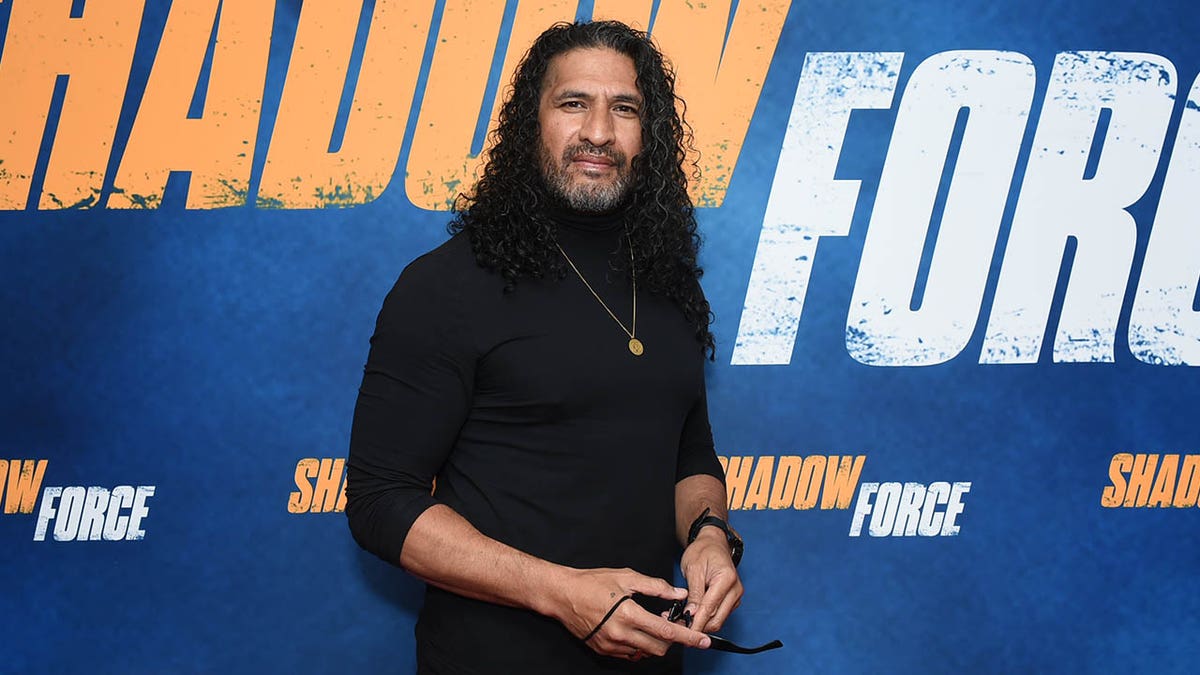
While discussing the second season of her show “The Last Thing He Told Me,” during a panel conversation at the Apple TV Press Day, the 53-year-old actress recalled that the incident occurred while she was working with actor and stunt performer Sala Baker on the set of the 2007 movie “The Kingdom.” According to the Hollywood Reporter, Garner explained that she and Baker had recently reunited for another fight scene in “The Last Thing He Told Me” and shared the story of their first violent on-set encounter.
“Can I just say that the performer, Sal, the last time I fought him was in ‘The Kingdom,’” Garner said. “Pete Berg, who was the director, told him to try to kill me. We did not have a lot of choreography, and he told me to do anything I could to survive. He did, and I did, and I ended up scrambling onto his back. I bit his ear, and we have a picture of him missing a chunk of ear, because we were not kidding.”
Jennifer Garner revealed that she once bit off her co-star Sala Baker’s ear “like Mike Tyson” while filming a movie fight scene. (Michael Buckner/Variety via Getty Images)
“The Kingdom” is a political action thriller about an FBI team sent to Saudi Arabia to investigate a deadly terrorist attack. In the film, Garner played Janet Mayes, a forensic specialist and member of the FBI team, while Baker was credited in the role of a kidnapper. The movie also starred Jamie Foxx, Chris Cooper and Jason Bateman.
Garner said that she and Baker didn’t dial down the intensity at all while reteaming for their fight scene in “The Last Thing He Told Me.”
“We went for it in a way that the crew — this was maybe our first or second day of shooting — were like, ‘Can you be careful with her?'” Garner recalled. “I was like, ‘No, no, no, no, he’s not going to be careful. I’m not going to be careful. Just back out of the way. I have a score to settle here.’ And Sal was with us the entire season. So prepare yourselves.”
The actress and Baker reunited for the Apple TV show “The Last Thing He Told Me.”(Vivien Killilea/Getty Images for Lionsgate)
Based on Laura Dave’s best-selling book, “The Last Thing He Told Me” is an Apple TV mystery-thriller series that premiered in 2023. The first season follows Hannah Hall (Garner) whose seemingly ordinary life is upended when her husband Owen Michaels (Nikolaj Coster-Waldau) suddenly disappears, leaving behind only a cryptic note telling her to “protect her,” referring to his daughter Bailey (Angourie Rice). Hannah and Bailey, who share a strained relationship, then embark on a mission to uncover the truth about Owen’s disappearance.
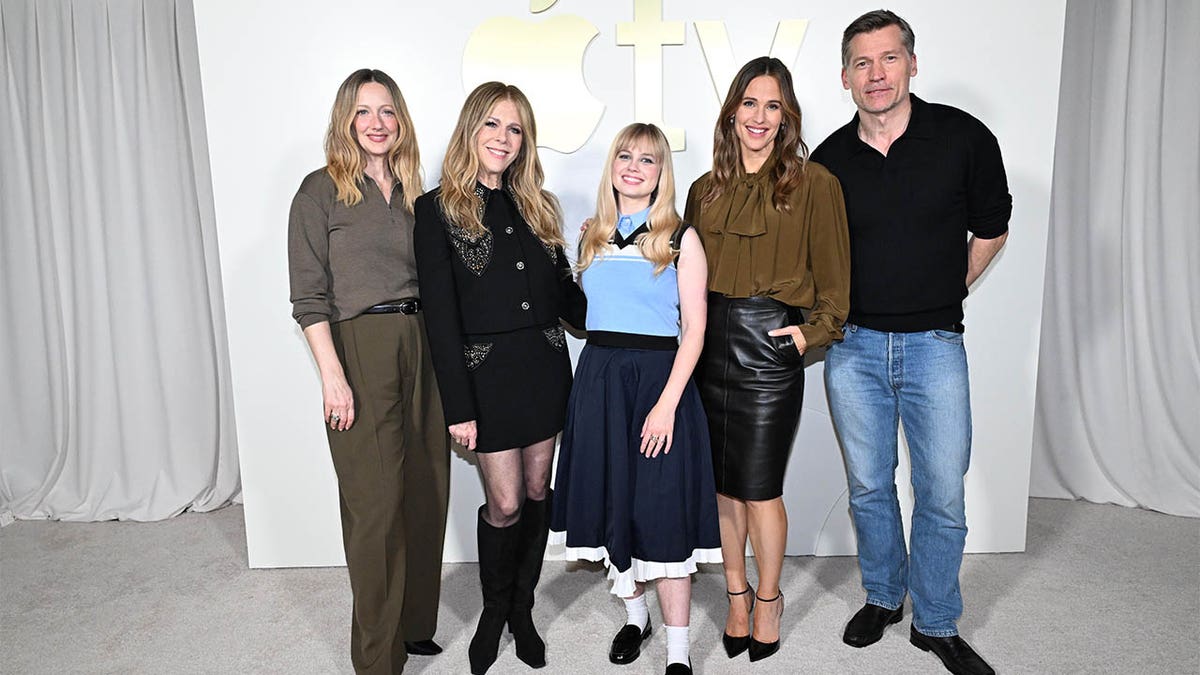
In addition to Garner, Coster-Waldau and Rice returned for the second season, while new cast members include Rita Wilson and Judy Greer, all of whom took part in the panel discussion. After Garner shared the story of her first encounter with Baker, Coster-Waldau was caught off-guard and halted the conversation.
“Can we just go over that again? You bit a piece of his ear off?” Coster-Waldau asked Garner.
“Like Mike Tyson,” the “Alias” alum joked, referencing the infamous 1997 boxing incident in which Tyson bit his opponent Evander Holyfield’s ear, tearing off a piece of it.
Garner is pictured with her co-stars Judy Greer, Rita Wilson, Angourie Rice, and Nikolaj Coster-Waldau and author/executive producer Laura Dave at the Apple TV Press Day.(Dan Steinberg/Apple TV via Getty Images)
Coster-Waldau then called out the audience’s reaction to Garner’s anecdote, asking, “Why are you all looking as if this is a great thing? What is wrong with you people?”
“Don’t make me mad. I seem nice. I’ve warned you before,” Garner told Coster-Waldau with a smile before adding. “Oh my god, no, I love you.”
Later in the panel discussion, Garner, who also serves as an executive producer of “The Last Thing He Told Me,” teased what viewers can expect from the second season, after the first ended on a major cliffhanger.
Garner stars and executive produces “The Last Thing He Told Me.”(Getty Images)
“Have you guys heard of this term competency porn?” she asked. “Like just we’re so hungry for grown-ups to be competent and smart and have integrity and do what they’re supposed to do….that we really fall for shows like [HBO medical drama] ‘The Pitt,’ where Noah Wyle is just so in charge, and all those nurses are incredible.”
“In this case, Hannah does that for me,” she continued. “She has prepared everything for every eventuality, all to keep Bailey safe. And so, watching as the penny drops and Hannah really realizes the kind of danger they’re in, watching those actions fall into place, and watching her take one step after the other and include Bailey in this grand escape is, to me, really, really gratifying.”
Ashley Hume is an entertainment writer for Fox News Digital. Story tips can be sent to ashley.hume@fox.com and on Twitter: @ashleyhume
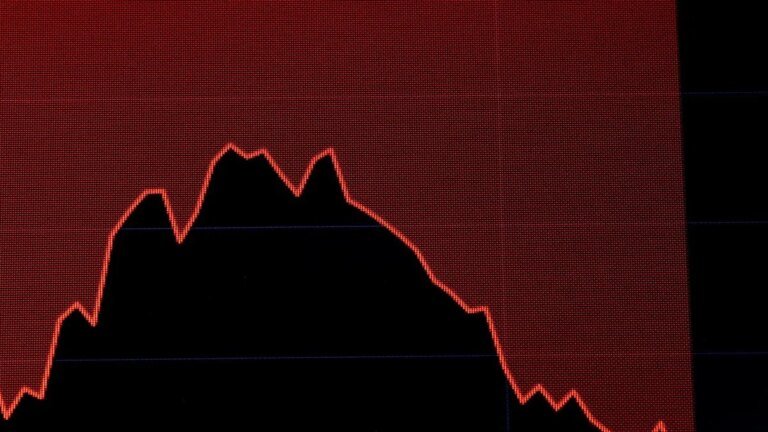
A screen displays a chart tracking the Dow Jones Industrial Average at the New York Stock Exchange (NYSE) in New York City, US, February 5, 2026. The S&P 500 software and services index has lost about $1 trillion in market value since late January, falling well below key technical levels. | Photo Credit: Reuters/Brendan McDermid
Shares of US software and data services companies extended their tumble for a seventh straight session on Thursday as investors worried that fast-advancing artificial intelligence tools could upend the sector. The S&P 500 software and services index dropped 4.6%, having shed about $1 trillion in market value since January 28, in a selloff dubbed “software-mageddon.”
Some of the big tech names hurt most by the rout included ServiceNow, which fell 7.6%, Salesforce, which slipped 4.7%, and Microsoft, which sank 5%.
“I would classify this as a sell-everything mindset at this point,” said Dave Harrison Smith, chief investment officer and head of technology investing at asset management firm Bailard.
Canada-based Thomson Reuters, which suffered a record one-day plunge earlier this week after investors raised concerns that a new plug-in from Anthropic’s Claude could disrupt its legal business, fell 5.6% despite raising its dividend and reporting fourth-quarter results largely in line with estimates.
The company, which owns the Westlaw legal database and the Reuters news agency, said it was seeing tangible benefits from AI investments.
“The uncertainty around the eventual impact of AI means near-term earnings results will be important signals of business resilience, but in many cases insufficient to disprove the long-term downside risk,” said Ben Snider, Goldman Sachs’ chief US equity strategist.
That uncertainty has also kept dip buyers at bay.
“There has not been dip-buying … but we are reaching a watershed moment,” said Nick Giorgi, chief equity strategist at Alpine Macro.
On Thursday, the S&P 500 software and services index traded about 21% below its 200-day moving average, the farthest the index has fallen below that key technical level since June 2022.
“We’re talking about multi-decade washouts right now … generally, it actually tends to be a pretty good entry point,” Giorgi said.
Bailard’s Smith said the selloff likely created opportunities for stock pickers but warned against expecting a quick rebound.
“Calling the bottom during a crash in sentiment like this is very, very challenging,” he said.
ROTATION OUT OF TECH INTENSIFIES
The software selloff has come alongside a broader rotation out of technology and into value-oriented sectors such as consumer staples, energy and industrials, which were laggards in the bull market that began in October 2022.
“We’re seeing people de-risk from technology in a general way, and we’ve been seeing that since the beginning of the year,” said Andrew Wells, chief investment officer at SanJac Alpha in Houston.
Reflecting the bearish mood, short interest on mid- to large-cap software companies has been rising over the past three months, according to data analytics company Ortex, with cybersecurity and SaaS (Software as a Service) firms seeing the biggest jump in such bearish bets.
Goldman Sachs data showed a sharp recent decline in hedge funds’ exposure to software companies, although the funds remained net long on the industry.
“After years of tech-driven market leadership, the balance of power is shifting as investors rotate toward traditional ‘old economy’ sectors,” Angelo Kourkafas, senior global investment strategist at Edward Jones, said in a note.
UNWINDING OF LEVERAGED POSITIONS ADDS TO PRESSURE
The selloff also spread to sectors exposed to software companies, such as asset management firms, on concerns they extended loans through private credit. Alternative asset manager Blue Owl, which was on track for its 11th straight session of declines, said on a post-earnings call its total exposure to the software sector accounts for 8% of its assets under management.
The performance of overseas tech stocks was mixed. Shares of London Stock Exchange Group ended 5.8% higher, while data analytics firms RELX rose 2.9% and Netherlands-based Wolters Kluwer gained 2%.
In contrast, India’s software exporters index, which houses names such as HCL Technologies and Wipro, slipped 0.7%, a day after plunging 6% in its worst session in nearly six years.
VOLATILITY SPREADS ACROSS MARKETS
Market volatility has shot up across equities, commodities and digital assets in recent weeks, which market participants attribute to leveraged investors being forced to rapidly unwind positions.
Wall Street’s most watched gauge of investor anxiety, the Cboe Volatility Index, rose 3.13 points to finish at 21.77, its highest close since November 21.
Precious metals gold and silver resumed their slide on Thursday after a historic rout earlier this week, and bitcoin fell 13% to $62,890.
“This is a lot of relative bets out there going wrong, and then there’s some kind of reset going on in the market internals, but time will tell,” John Hardy, Saxo’s global head of macro strategy, said on a podcast.
Slashing tax breaks for property investors might not put much of a dent in house prices, but that’s not to say it can’t make a meaningful difference to home ownership rates over the coming years.
Reading through the submissions to Greens-led Senate committee on the capital gains tax discount and talking to economists delivers a series of convincing arguments for why the Albanese government might be on a winner if it finally finds the courage to prosecute this reform.
For decades there has been a powerful constituency of so-called “aspirational Australians” who want to keep generous tax breaks to help smooth their way to the dream of property wealth, and so have rejected any attempt to curb concessions like the 50% capital gains tax discount and negative gearing.
Once political poison, it’s an idea whose time may have finally come.
There is a raw and deepening anger about housing affordability.
It’s apparent there is a profound inequity that needs to be addressed when it comes to tax breaks for investors.
The wealthiest fifth of Australians receive nearly 90% of the benefit of the CGT discount, while the top 10% of earners receive more than 80% of the benefit.
The top 1% of income earners, who are on more than $362,900 a year, will get nearly 60% of the benefit from the CGT in this financial year, according to a newly released analysis from the Parliamentary Budget Office.
The benefits are also heavily skewed towards older Australians.
That means scaling back the CGT discount will deliver a much-needed rebalancing in the tax system, says Brendan Coates, the director of the Grattan Institute’s housing and economic security program.
Economists overwhelmingly agree that 50% is too generous and should be reduced, or even abolished for a return to the pre-1999 regime where capital gains were simply adjusted for inflation.
Reducing the capital gains discount would “give this nation a less biased tax system”, says Chris Richardson, an independent economist.
Greg Kaplan, Matthew Maltman and Matt Nolan at the e61 Institute agree that the current concessions for capital gains has to change as it “overcompensates high-income earners and undercompensates low-income earners”.
“This is not just inequitable, but distorts the way Australian’s work, save, invest, and finance their investments – generating broader productivity costs and reducing the ability for the tax system to raise necessary revenue,” they write.
But would it make a big difference to house prices?
Economists don’t think it would.
Various research papers suggest scaling back property tax breaks for investors would lower home values by between 1% and 4%.
That’s certainly better than nothing for those who feel they are locked out of the housing market.
But it’s small beer considering property values rose by 10% last year alone.
There is, however, more to the story.
It may sound counterintuitive, but Coates points to research that estimates abolishing negative gearing and halving the CGT discount for landlords could boost home ownership rates by three percentage points and go a long way to reversing a decades-long trend.
That’s because renters would find themselves less likely to be outbid by investors, who at the margin are less likely to put their money in the property market.
Hugh Hartigan, a former head of research at Housing Australia, agrees that discussion about the impact of taxes on overall housing affordability is “blown out of proportion”.
“You’re not going to see a big impact on prices and affordability, but you probably are going to change the composition of the housing market,” he says.
“You don’t have a material impact on the level of demand [for housing as a result of reducing investor tax breaks]; you change that composition of demand.”
In other words: “You’ll likely have less investors and probably more home owners.”
That’s something most of us can get behind, and underlines the potential for CGT reform as a tool for shifting the balance back towards homes as shelter, rather than as an investment.
Still, economists say a change to the CGT system shouldn’t just be seen through the lens of the property market.
“The main case for this reform is that it helps fix the budget bottom line and reduces the inequity of the budget,” Coates says.
How much it boost the commonwealth’s bottom line depends hugely on how deep they cut into the CGT discount, and, in the short term, whether they make it retrospective.
Coates estimates halving the CGT discount and applying it to all new and existing investments would save a hefty $6.5bn in this financial year.
If housing affordability is the overriding issue, then that money could be used to boost commonwealth rent assistance, or fund more social housing, he says.
Alternatively, it could be used to lower personal income tax or pay down debt. Both would improve the intergenerational fairness of the budget.
But Hartigan reckons any changes should be grandfathered to respect the fact that people have made investment decisions based on the rules as they were.
If that were the approach, as it was back in 2019, then the reform would be lucky to generate $1bn over the next five years, if earlier PBO costings are any guide.
Whatever step Labor choose to take when it comes to reforming the CGT discount, it would be in the right direction.
Patrick Commins is Guardian Australia’s economics correspondent
Northern towns could be in line for a funding boost after complaints from MPs that a new system for allocating cash to councils favours London.
Ministers have been holding talks with northwest MPs about making tweaks to the fair funding formula – which some MPs claim left them “absolutely shafted”.
The formula is aimed at giving areas with the highest need the most money from central government.
Northern towns were initially expected to be the big winners. However ministers have used a measure of deprivation that heavily factors in housing costs, which northwest MPs say weights the formula in favour of London.
“It’s completely skew-whiffed the figures …. we’ve been absolutely shafted”, one northern MP told Sky News.
London and the southeast have the highest housing costs in the country and London councils had argued this should be factored into how the money is allocated.
However, northern MPs argue deprivation in their areas is driven by other significant factors including low incomes and lack of opportunity.
Spotify
This content is provided by Spotify, which may be using cookies and other technologies.
To show you this content, we need your permission to use cookies.
You can use the buttons below to amend your preferences to enable Spotify cookies or to allow those cookies just once.
You can change your settings at any time via the Privacy Options.
Unfortunately we have been unable to verify if you have consented to Spotify cookies.
To view this content you can use the button below to allow Spotify cookies for this session only.
One MP said while they were sympathetic to London’s housing crisis, London “also has better state schools, transport links, job opportunities and cultural opportunities we just don’t have”.
Another said this wasn’t about the north-south divide but about “social justice”.
They said poverty in their town had increased by “horrendous” levels, adding: “It’s there to be seen but it’s being ignored. The formula is anything but fair.”
The provisional settlement announced in December means all authorities in the Liverpool City Region (LCR) are getting less than the national average, as well as nearby areas like Blackpool, Wigan and Warrington.
These areas were expecting to be among the biggest winners, based on modelling from the summer seen by Sky News. However, the government said in November that it would update its measure of deprivation to better consider housing costs.
The government has used the English Indices of Deprivation 2025, which they say offers an “accurate and robust” measure of relative deprivation.
Analysis by SIGOMA, which represents areas outside London, found the change caused a shift towards the capital with outer London areas seeing the highest increases. Places like Newham and Brent are now getting millions more than expected while Blackpool and Knowsley are getting millions less.
Reform UK threat
The formula is the first overhaul of government finance in a decade and means money allocated across England will rise from £83.2bn in 2026/27 to £90.3bn in 2028/29, with most areas seeing an increase overall.
Northern towns have generally fared better than rural areas and parts of inner London.
However, MPs who spoke to Sky News said their areas need visible and significant investment if they are to fend off the challenge from Reform UK. One said while this deal is better than under the Conservatives, it “barely touches the sides” if they are to reverse a decade of cuts and stop the electorate “rolling the dice” on Nigel Farage’s party.
The provisional settlement still needs to be finalised, before being put to a vote in the House of Commons. Ministers will want to avoid even a small rebellion given the febrile mood within the Parliamentary Labour Party (PLP) currently.
‘I don’t think Starmer’s got a very long future,’ says veteran Labour MP
Steve Reed, the cabinet minister for housing and communities, is said to have held “constructive talks” with those lobbying for change. Steve Rotheram, the Metro Mayor for the Liverpool region, is among the senior figures to have raised the issue.
One suggestion is the government could increase the Recovery Grant, a £600m pot launched last year to give immediate financial support to councils hit hardest by a decade of funding cuts.
The grant – based on the previous measure of deprivation – will continue to be allocated as part of the fair funding settlement and there have been calls for it to increase by £400m per year to offset perceived losses from the fair funding formula.
The grant comes with a guarantee that upper-tier authorities in receipt of it will get a year-on-year increase across the multi-settlement period, starting with 5%. This guarantee could also increase.
Those involved in the talks have been told to expect good news, multiple sources said, though nothing has been confirmed.
A government spokesperson said: “We are repairing local government after years of decline and will shortly set out our consultation response confirming the final Local Government Finance Settlement for 2026-27.”
Since its inception, name, image and likeness (NIL) deals have completely transformed not just how college sports operate, but also professional sports.
Collegiate players, knowing they can stay in school for another year and make substantial money, do not have to turn professional in order to make money. Former NFL agent Ben Dogra cited Oregon quarterback Dante Moore returning to college instead of declaring for the NFL Draft as something that might not have happened in a pre-NIL era.
“I think it still remains to be seen because it’s still relatively new, but I think you’re seeing based on what happened with the quarterback at Oregon, Moore staying in school. I would never have anticipated a player that would go possibly top 10 in the draft, let alone the top five, would actually stay in school with the amount of money that he’s willing to risk,” Dogra told Fox News Digital in a recent interview.
Oregon Ducks quarterback Dante Moore (5) looks to pass against the Indiana Hoosiers in the first half of the Chick-fil-A Peach Bowl, a College Football Playoff semifinal, at Mercedes-Benz Stadium in Atlanta, Georgia, on Jan. 9, 2026.(Brett Davis/Imagn Images)
Moore was being projected in some mock drafts to go as high as No. 2 overall to the New York Jets before deciding to return. Dogra wasn’t sure how big the NIL deal that Moore signed to stay with Oregon was, but thought it influenced his decision.
“I know it’s an individual decision, but with NIL and when you look at Oregon and you see one of their biggest donors in (Phil) Knight of Nike, I don’t know what was promised or what was done, but I think it was significant enough (to have) allowed the young man to think, wait a minute, I don’t want to go out, the way he did, throwing a pick six and they think they have a chance to win a national championship,” Dogra said.
Dogra said he expected players projected in the third and fourth rounds, maybe the second round, to return to school but not someone who was projected to go as high as Moore was. He said that some players would make more money returning to school than declaring for the NFL Draft if they were projected to be a mid-round pick.
“And some players want to stay in college,” Dogra said. “Because they’re making more money than if they’re drafted. Right. I mean, that’s the vast majority because there’s only 32 first-round picks, whether you like it or not. That’s it. And then you’ve got 32 second-round picks. That’s where the money is. Once you start getting in the third round, that’s a functional starter. Could be a very good player. But those are (where) you’re filling out your roster and you’re hoping to steal those players in the third and fourth round.”
Oregon Ducks quarterback Dante Moore (5) passes for a 20-yard touchdown in the second quarter during the College Football Playoff first-round game against James Madison at Autzen Stadium in Eugene, Oregon, on Dec. 20, 2025.(Brian Murphy/Icon Sportswire via Getty Images)
Dogra cited current Miami Dolphins quarterback Quinn Ewers as someone who opted to go to the NFL Draft instead of transferring out of Texas and extending his college career.
“The test cases aren’t out there, but Quinn Ewers is a pretty prime example. All-American. He had to move on from Texas because the commitment was to Arch Manning and instead of going to another school, which I think they reported that he was going to make like $7 million in NIL, he elected to go to the draft. He won’t make $7 million where he was drafted.”
Ewers was drafted in the seventh round of the 2025 NFL Draft and signed a four-year, $4.3 million contract. Not only will Ewers make less, Dogra said, he could be out of the NFL sooner because of when he was drafted.
“In four years, he might be out of the league because you don’t get the same amount of chances as a late-round pick as you do as a first-round pick. First-round picks, they give you every opportunity to succeed because the general manager is going to let you be on that team for three years or he’s getting fired, right?” Dogra said.
Texas quarterback Quinn Ewers (3) passes against Ohio State during the first half of the Cotton Bowl College Football Playoff semifinal game in Arlington, Texas, Jan. 10, 2025.(AP Photo/Gareth Patterson)
Dogra said that not only will NIL affect who stays and goes in college football, but even when agents reach out to players now. In the pre-NIL era, college athletes weren’t allowed to sign agents until after their final college game.
Dogra said that while that rule remains in place, there is a different dynamic in the agent-player interaction.
“Now it’s a different dynamic. Although that rule remains in place with NIL, you’re seeing that agents and marketing agents are getting these players a lot faster than you ever anticipated. It’s almost like hockey. So, now you’re going after these players in high school. So, if you go after them in high school, how are you going to disseminate that information on how good that player is going to translate five, six years from now? So, it’s really Russian roulette,” Dogra said.
With contacts between players and agents being earlier in their career than they’ve ever been, Dogra said that agents have to weigh different options in how they want to cultivate the relationship.
Miami Dolphins quarterback Quinn Ewers (14) looks to hand the ball off to a teammate against the New England Patriots during the first quarter at Gillette Stadium in Foxborough, Massachusetts, on Jan. 4, 2026.(David Butler II/Imagn Images)
“It’s the Wild Wild west as I say because if you go early and you cultivate that relationship, you could get stale and old. And if that happens, you’re not going to sign the player. That’s happening. But on the flip hand, if you develop that relationship early and that player pans out and you build that credibility, now you’re going to be in the driver’s seat for when they’re eligible and it’s going to be really hard for other people to break down that door. So, it can go either way. But it’s a lot more work. It’s a lot more uncertain,” Dogra said.
“That’s going to be very dangerous and dicey for agents. It looks good. But a lot of those agents are going to lose players because recruiting is sales. That’s all it is. And if you if you undersell, and overperform, you’re going to keep the player. But (the) tendency in recruiting is very simple. You oversell and underproduce because you’ll move on to next year’s guy. And with this transfer portal, you just don’t know. There’s no continuity anymore.”
Dogra represented Adrian Peterson, Patrick Willis, Mario Williams and Richard Sherman in his career.
Ravie LakshmananJan 28, 2026Vulnerability / Open Source
A critical sandbox escape vulnerability has been disclosed in the popular vm2 Node.js library that, if successfully exploited, could allow attackers to run arbitrary code on the underlying operating system.
The vulnerability, tracked as CVE-2026-22709, carries a CVSS score of 9.8 out of 10.0 on the CVSS scoring system.
“In vm2 for version 3.10.0, Promise.prototype.then Promise.prototype.catch callback sanitization can be bypassed,” vm2 maintainer Patrik Simek said. “This allows attackers to escape the sandbox and run arbitrary code.”
vm2 is a Node.js library used to run untrusted code within a secure sandboxed environment by intercepting and proxying JavaScript objects to prevent sandboxed code from accessing the host environment.
The newly discovered flaw stems from the library’s improper sanitization of Promise handlers, which creates an escape vector that results in the execution of arbitrary code outside the sandbox boundaries.
“The critical insight is that async functions in JavaScript return `globalPromise` objects, not `localPromise` objects. Since `globalPromise.prototype.then` and `globalPromise.prototype.catch` are not properly sanitized (unlike `localPromise`),” Endor Labs researchers Peyton Kennedy and Cris Staicu said.
The discovery of CVE-2023-37903 in July 2023 also led Simek to announce that the project was being discontinued. However, these references have since been removed from the latest README file available on its GitHub repository after the project was resurrected late last year. The Security page has also been updated as of October 2025 to mention that vm2 3.x versions are being actively maintained.
However, vm2’s maintainer has also acknowledged that new bypasses will likely be discovered in the future, urging users to make sure that they keep the library up to date and consider other robust alternatives, such as isolated-vm, for stronger isolation guarantees.
“Instead of relying on the problematic vm model, the successor to vm2, isolated-vm relies on V8’s native Isolate interface, which offers a more solid foundation, but even then, the maintainers of vm2 stress the importance of isolation and actually recommend Docker with logical separation between components,” Semgrep said.
In light of the criticality of the flaw, users are recommended to update to the most recent version (3.10.3), which comes with fixes for additional sandbox escapes.
An amnesty law that would provide clemency to political prisoners in Venezuela has passed an initial vote unanimously in the National Assembly, stirring hopes among the country’s opposition.
On Thursday, members of both the governing socialist party and the opposition delivered speeches in favour of the new legislation, known as the Amnesty Law for Democratic Coexistence.
Recommended Stories
list of 3 itemsend of list
“The path of this law is going to be full of obstacles, full of bitter moments,” said Jorge Rodriguez, the head of the National Assembly.
But he added that it would be necessary to “swallow hard” in order to help the country move forward.
“We ask for forgiveness, and we also have to forgive,” Rodriguez said.
But critics nevertheless pointed out that the text of the bill has yet to be made public, and it offers no clemency for individuals accused of serious crimes, including drug trafficking, murder, corruption or human rights violations.
Instead, media reports about the legislation indicate that it focuses on charges often levelled against protesters and opposition leaders.
Venezuela’s National Assembly President Jorge Rodriguez holds a picture of late Venezuelan President Hugo Chavez as he speaks on February 5 [Leonardo Fernandez Viloria/Reuters]
What does the bill say?
The bill would grant amnesty to individuals accused of crimes like treason, terrorism, rebellion, resisting authorities, instigation of illegal activities, and spreading hate, if those crimes were committed in the context of political activism or protest.
Opposition leaders like Maria Corina Machado would also see bans on their candidacy for public office lifted.
In addition, the legislation specifies certain events that would qualify for amnesty, including the demonstrations that unfolded in 2007, 2014, 2017, 2019 and 2024.
That period stretches from the presidency of the late President Hugo Chavez, founder of the “chavismo” movement, through the presidency of his handpicked successor, Nicolas Maduro.
Both Chavez and Maduro were accused of the violent suppression of dissent, through arbitrary arrest, torture and extrajudicial killings.
But on January 3, the administration of United States President Donald Trump launched a military operation in Venezuela to abduct Maduro and his wife, Cilia Flores. They have since been transported to New York City, where they await trial on charges related to drug trafficking.
While members of Venezuela’s opposition have cheered the military operation as a long overdue move, experts have argued that the US likely violated international law as well as Venezuela’s sovereignty in removing Maduro from power.
Nicolas Maduro Guerra, son of ousted president Nicolas Maduro, walks by portraits depicting late Venezuelan President Hugo Chavez and independence hero Simon Bolivar on February 5 [Leonardo Fernandez Viloria/Reuters]
Weighing Maduro’s legacy
Images of Chavez were a common sight during Thursday’s debate at the National Assembly, which has been dominated since 2017 by members of the chavismo movement.
That year, Venezuela’s top court dissolved the opposition-led National Assembly and briefly absorbed its powers, before re-establishing a legislature stacked with Maduro supporters.
In 2018 and again in 2024, Maduro claimed victory in contested elections that critics say were marred by fraud.
In the July 2024 vote, for instance, the government refused to release voter tallies, as was previously standard practice. The opposition, however, obtained copies of nearly 80 percent of the tallies, which contradicted the government’s claims that Maduro had won a third six-year term.
After Maduro’s abduction last month, the remnants of his government remained in power.
Within days, his vice president — Delcy Rodriguez, the sister of the National Assembly leader — was sworn in as interim president.
She used her inaugural speech to denounce the “kidnapping of two heroes who are being held hostage: President Nicolás Maduro and First Lady Cilia Flores”.
Rodriguez has nevertheless cooperated with US demands, including by supporting a bill to open Venezuela’s nationalised oil industry to foreign investment.
On the floor of the National Assembly on Thursday, her brother Jorge raised a photo of Chavez holding a crucifix while he spoke. Maduro’s son, National Assembly member Nicolas Maduro Guerra, also presented remarks.
“Venezuela cannot endure any more acts of revenge,” Maduro Guerra said as he appealed for “reconciliation”.
Venezuela’s opposition reacts
Still, opposition members in the National Assembly expressed optimism about the bill.
National Assembly representative Tomas Guanipa, for instance, called it the start of a “new, historic chapter” in Venezuelan history, one where political dissidents would no longer be “afraid to speak their minds for fear of being imprisoned”.
Nearly 7.9 million Venezuelans have left the country in recent decades, fleeing political persecution and economic instability.
But there have been lingering concerns about the human rights situation in Venezuela in the weeks following Maduro’s abduction — and whether it is safe to return home.
President Rodriguez has pledged to release political detainees and close the infamous prison El Helicoide, where reports of torture have emerged. But some experts say the number of people released does not match the number the government has reported.
The human rights group Foro Penal, for instance, has documented 383 releases since January 8.
That figure, however, is lower than the 900 political prisoners the government has claimed to have released. Foro Penal estimates 680 political prisoners remain in detention.
Opposition figures also allege that the government continues to intimidate and harass those who voice sympathy for Maduro’s removal and other opinions that run contrary to the chavismo movement.
Still, the head of Foro Penal, Alfredo Romero, applauded the initial passage of the amnesty law as a step forward.
“Amnesty is the framework that will ensure… that the past does not serve to halt or derail transition processes,” Romero told the news agency AFP.
A second vote is expected to be held on Tuesday next week.
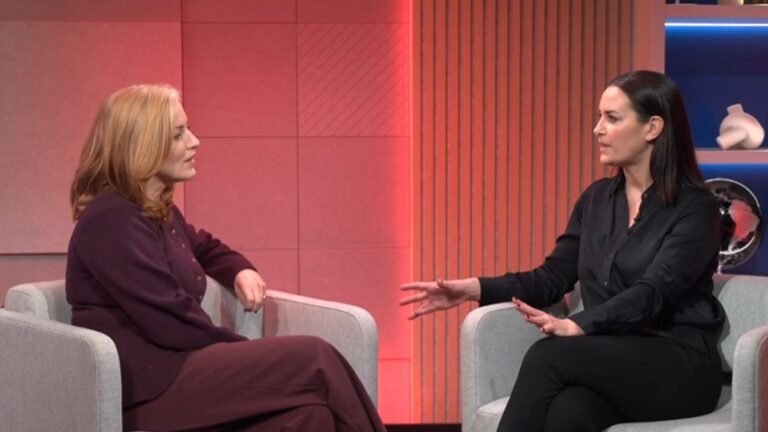
Broadcaster Kirsty Gallacher has called for more police on the streets and greater action on violence against women and girls after she was attacked last year.
Gallacher said she was assaulted by a man as she walked to her car after work in central London – but he has never been found.
“He turned around and kicked me – really kicked me – like he would kick a football,” she told the UK Tonight with Sarah-Jane Mee.
The former Sky Sports presenter said violence against females had almost become acceptable and was treated as “one of those things”.
“That’s why that’s why women don’t report these crimes because also not enough is being done about it,” she said.
Gallacher said police were “fantastically supportive” at the time and she felt “we’re going to get this guy” – especially as the CCTV was said to be clear – but the attacker appears to have evaded justice.
The 50-year-old presenter said she’d been shocked by how few police were around at the time of the assault.
More on The Uk Tonight With Sarah-jane Mee
“My biggest sadness or anger was there was not enough of a police presence. And we’re in central London and I was looking everywhere, like I almost wanted to shout, ‘please help me!'”, said Gallacher.
“I would love a bigger police presence on the streets [to make women feel safe],” she added.
“And also I would like the police to take it seriously when women go ‘I’ve just been assaulted’ – even the most minor of assaults.”
In full: Thursday’s UK Tonight
A Met Police spokesperson told Sky News it was “committed to tackling all forms of violence against women and girls”.
“Officers spoke with the victim in this case on several occasions to share updates as the investigation progressed,” they added.
“Our last contact with them was at the end of December when they were informed the investigation had been filed, but would be reopened if the suspect was identified. The suspect’s image remains in circulation across the Met.
“The investigation is closed at this time but will be reviewed if new information comes to light.”
Tinnitus after tumour
Gallacher also spoke to Sky News about living with tinnitus, a condition where a person hears sounds such as ringing and buzzing that don’t come from an outside source.
She told Sarah-Jane Mee she had “a low level buzzing and it’s just always there” and on some days, depending on what’s going on, “it can be really loud”.
“It can be quite low where it’s manageable,” she said. “So it really is about navigating day by day – and some days it can drive you a bit mad.”
Image:Tinnitus affects one in seven UK adults. Pic: iStock
Gallacher developed the condition after having a benign tumour in her ear – which has left her almost deaf on one side – and now works as an ambassador for the charity Tinnitus UK.
Tinnitus affects one in seven UK adults and varies in intensity and the sounds people hear.
“It can be caused by, for example, stress, anxiety,” Gallacher explained. “It can be through loud music, having spent years in a band, lots of musicians have tinnitus.”
Gallacher said she wanted to raise awareness because “it can devastate lives” of those who suffer from it badly and “some people can’t cope”.
“It’s really very sad and very emotional when you hear some stories,” she added.