German authorities have shut down a relaunch version of the criminal marketplace ‘Crimenetwork’ that generated more than 3.6 million euros, and arrested its operator.
Crimenetwork was the largest online cybercrime marketplace in Germany, operating since 2012 and with 100,000 registered users. The platform enabled the sale of illegal services, substances, and stolen data.
In late 2024, the Public Prosecutor’s Office in Frankfurt am Main, the Central Office for Combating Cybercrime (ZIT), and the Federal Criminal Police Office (BKA) dismantled the operation by seizing the platform and arresting one of its administrators.
Just a few days later, a new version of the Crimenetwork emerged on a new infrastructure administered by a new operator.
Earlier this week, a 35-year-old German man suspected of administering the new Crimenetwork was arrested at his residence in Mallorca, Spain, by a special unit of the Spanish National Police under a European arrest warrant.
“The suspect is accused of having built and administered a completely new technical infrastructure only a few days after the shutdown of the previous version of Crimenetwork and the arrest of its former administrator in December 2024, also naming it Crimenetwork,” the BKA said in a press release.
The rebooted version of the cybercrime platform offered a similar range of illicit goods and services, and quickly amassed 22,000 users and over 100 vendors.
In terms of revenue, evidence gathered during the police action suggests that the new version of Crimenetwork had generated at least €3.6 million ($4.2 milion) in revenue.
The police also seized approximately €194,000 ($228,000) in allegedly illicit assets and obtained substantial amounts of user and transaction data to facilitate further investigation.
“The reboot of Crimenetwork has failed, and another administrator will have to answer before a German court,” stated Carsten Meywirth, Director at the Federal Criminal Police in Germany.
“Together with our national and international partners, we consistently enforce the law even in the darknet. Cybercrime does not pay.”
The following banner was placed on the seized online portal, informing visitors of the action.
Seizure banner Source: BKA
The arrested administrator now faces charges under Section 127 of the German Criminal Code and Sections 29a and 30a of the German Narcotics Act, both potentially punishable by prison time.
In March, the operator of the original Crimenetwork marketplace was sentenced to seven years and 10 months in prison and ordered to forfeit more than €10 million in criminal proceeds. However, the ruling is not yet final.
AI chained four zero-days into one exploit that bypassed both renderer and OS sandboxes. A wave of new exploits is coming.
At the Autonomous Validation Summit (May 12 & 14), see how autonomous, context-rich validation finds what’s exploitable, proves controls hold, and closes the remediation loop.
Ex-MotoGP world champion is now only a single point behind Aprilia teammate Marco Bezzecchi in the riders’ standings.
Published On 10 May 202610 May 2026
Jorge Martin charged from seventh on the grid to win the French Grand Prix on Sunday, claiming his first MotoGP victory in 588 days, while moving within striking distance of his Aprilia teammate Marco Bezzecchi in the championship battle.
The Spaniard, who endured a forgettable 2025 season plagued by crashes and injuries, overtook race leader Bezzecchi with three laps remaining to secure his first win since winning the 2024 title.
Recommended Stories
list of 4 itemsend of list
“It’s unbelievable. I still can’t say it enough times, because I’m so, so grateful to all the fans,” an emotional Martin said.
“But for sure I have to remember my family, my team, my girlfriend, my dog – all the people that were with me all this time. I don’t have words!”
The victory moved Martin to within one point of championship leader Bezzecchi after five rounds.
Ogura makes history for Japan
Ai Ogura completed the podium in third for Aprilia’s satellite team, Trackhouse, giving the Italian manufacturer its first-ever podium sweep, while he became the first Japanese rider on the podium in 14 years.
“What can I say, it just feels amazing… It was not an easy race, but good race pace and I’m super happy,” Ogura said.
Ducati had another Sunday to forget, with reigning champion Marc Marquez missing the race after fracturing his foot in Saturday’s sprint crash, while teammate and polesitter Francesco Bagnaia crashed while in second place.
Bagnaia had a poor start, allowing Bezzecchi to take the lead while home favourite Fabio Quartararo moved up to second.
Martin, unlike his lightning start in Saturday’s sprint where he jumped from eighth to first in two turns, could not make up places initially in heavy traffic.
But the dynamics shifted dramatically when Bagnaia, who had worked his way up to challenge for the lead, crashed at turn three on lap 16 while under pressure – his third Sunday retirement in five rounds this season.
Martin, right, challenges Aprilia Racing teammate Marco Bezzecchi for the lead on lap 25 of the French MotoGP race at Le Mans, May 10, 2026 [Loic Venance/AFP]
Martin hunts down Bezzecchi
Martin seized the opportunity, moving past KTM’s Pedro Acosta to second and then methodically hunting down Bezzecchi.
Despite trailing by nearly three seconds at one point, Martin chipped away at the gap as the sun emerged from the clouds at an overcast Le Mans.
Acosta’s hopes of a third podium finish disappeared with four laps remaining when the late-race specialist Ogura slipped past the KTM rider, setting up Aprilia’s historic sweep.
Aprilia boss Massimo Rivola could barely watch as the two factory riders battled for the lead.
With the duo separated by a point after five rounds, he was not worried about any tension between them in the garage, saying: “They are smart people, they are fighters. As long as they respect each other, I’m fine.”
As Martin took the chequered flag, he celebrated his breakthrough victory with his trademark windscreen smash before mimicking France forward Kylian Mbappe’s goal celebration, crossing his arms across his chest.
“I’m still thinking about last year in Le Mans here, when Jorge wanted to leave (Aprilia) and I said, ‘I think you can win with us.’ So winning in Le Mans is quite special for me,” Rivola added.
In a final twist, Acosta was denied fourth place at the death when VR46 Racing’s Fabio Di Giannantonio made a late lunge to steal the position with two corners remaining.
Martin celebrates as he crosses the finish line to win the French MotoGP [Loic Venance/AFP]
EXCLUSIVE: Wang Chunyan held a photograph toward the camera, her hands trembling slightly as she pointed to each of the 21 smiling faces: a husband and wife, a university lecturer, a young engineer, friends she met in prison.
Some died in detention, she said. Others after years of abuse. Others disappeared into China’s vast security system and never returned the same. “More than 25 of my friends have died in this persecution. I only have photos of 21 of them,” Chunyan said, her voice breaking.
For more than two decades, the 70-year-old Falun Gong practitioner said, the Chinese Communist Party (CCP) systematically dismantled her life, stripping away the business she had built, the home she once shared with her family and, eventually, seven years of her life in prison.
But the hardest thing for her, is that she believes it took her husband too. “My beloved husband died due to the persecution,” Chunyan claimed during an exclusive interview with Fox News Digital.
Falun Gong practitioner Wang Chunyan holds photographs of friends she says died during the Chinese Communist Party’s crackdown on the spiritual movement during an interview with Fox News Digital.(Fox News)
Her account comes as President Donald Trump prepares to travel to China next week for meetings with Chinese leader Xi Jinping, with trade, security and regional tensions expected to dominate the agenda. Yet behind the geopolitical rivalry lies another conflict: Beijing’s decades-long campaign against religious and spiritual groups the Communist Party views as threats to its authority.
Former U.S. Ambassador-at-Large for International Religious Freedom Sam Brownback believes Wang’s story reflects a much broader struggle unfolding inside China. “Either the world changes China or China will change the world,” Brownback told Fox News Digital.
Brownback recently chronicled Chunyan’s story and the experiences of other survivors in his book China’s War on Faith, arguing that personal testimony can often reveal the reality of persecution more powerfully than statistics alone. “Stories are more powerful than data,” he said.
Photograph shown by Falun Gong practitioner Wang Chunyan during a Zoom interview with Fox News Digital depict friends and fellow practitioners she says were persecuted during the Chinese Communist Party’s crackdown on the spiritual movement.(Fox News Digital)
The book examines what Brownback describes as an increasingly sophisticated system of surveillance and repression targeting Christians, Uyghur Muslims, Tibetan Buddhists and Falun Gong practitioners. He argues the Chinese Communist Party views independent faith communities as a direct threat to its authority.
“They fear religious freedom more than anything else. More than our aircraft carriers, more than our nuclear weapons, more than anything else because they think it is the biggest threat to the regime.”
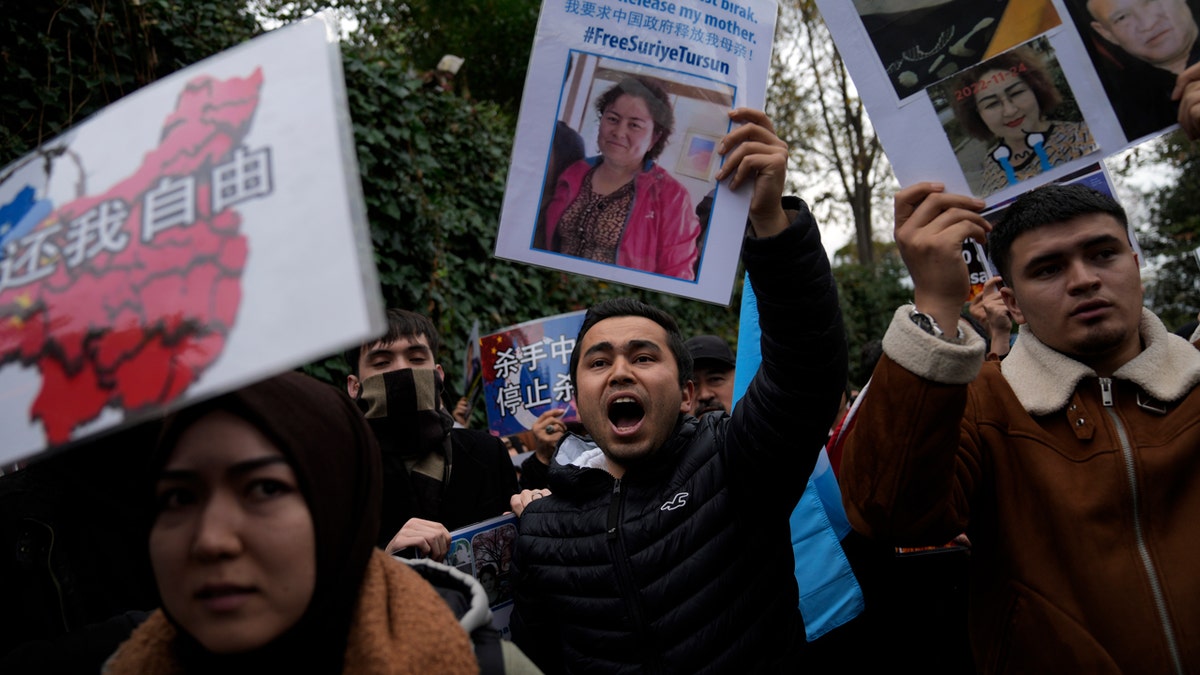
Protesters chant slogans and hold posters of victims during a demonstration against China’s crackdown on Uyghurs in front of the Chinese consulate in Istanbul, Turkey, on Nov. 30, 2022.(Khalil Hamra/AP)
Chunyan story started in the late 1990s, when she suffered from severe insomnia, sometimes sleeping only two or three hours a night. Then her older sister introduced her to Falun Gong, also known as Falun Dafa, a spiritual practice ,she says, is centered on meditation exercises and teachings rooted in “truthfulness, compassion and tolerance.”
The movement spread rapidly across China during the 1990s, attracting tens of millions of followers before Beijing banned it in 1999, portraying it as a threat to Communist Party control.
Chunyan says Falun Gong helped improve her “physical condition.” She said, “My business was booming. My family was happy. My life was perfect.”
Chunyan became convinced the practice had saved her life. She owned a successful company selling chemical production equipment and had become wealthy by Chinese standards, but after the crackdown began she felt compelled to publicly defend Falun Gong against what she believed were government lies.
She bought a printing press and began distributing leaflets. Soon afterward, she said, surveillance followed everywhere.
“The buildings where I worked were under constant surveillance,” Chunyan recalled. “I left to escape and was afraid to come home.”
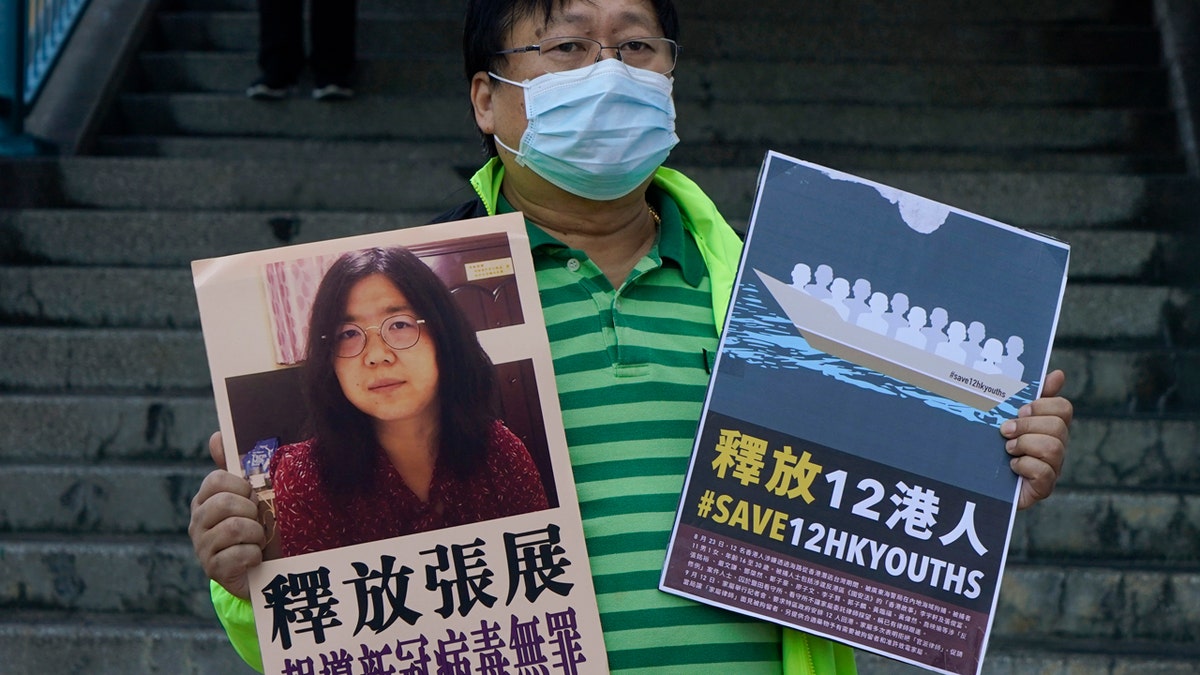
A pro-democracy activist holds placards with a picture of Chinese citizen journalist Zhang Zhan outside the Chinese central government’s liaison office in Hong Kong on Dec. 28, 2020. Zhang was released from prison after serving four years for charges related to reporting on the COVID-19 outbreak in Wuhan, according to a video statement she released Tuesday, May 21, 2024.(Kin Cheung/AP)
For years, she lived in hiding, using prepaid calling cards and public telephones to secretly arrange meetings with her husband, Yu Yefu, in restaurants, coffee shops and hotels across the city. The two tried, briefly, to maintain some sense of normalcy.
Yu himself never practiced Falun Gong, but police repeatedly pressured him to reveal where his wife was hiding. He never did. Then, in 2002, Wang stopped hearing from him.
When she finally returned home, she found him unconscious. Doctors could not save him. “He protected me,” she said in tears.
He was 49 years old when he died. Their daughter was still in college.
The devastation spread through the family afterward, Chunyan said. Her mother-in-law stopped eating and later became paralyzed. Her father-in-law died from grief. Her sisters were also imprisoned and tortured.
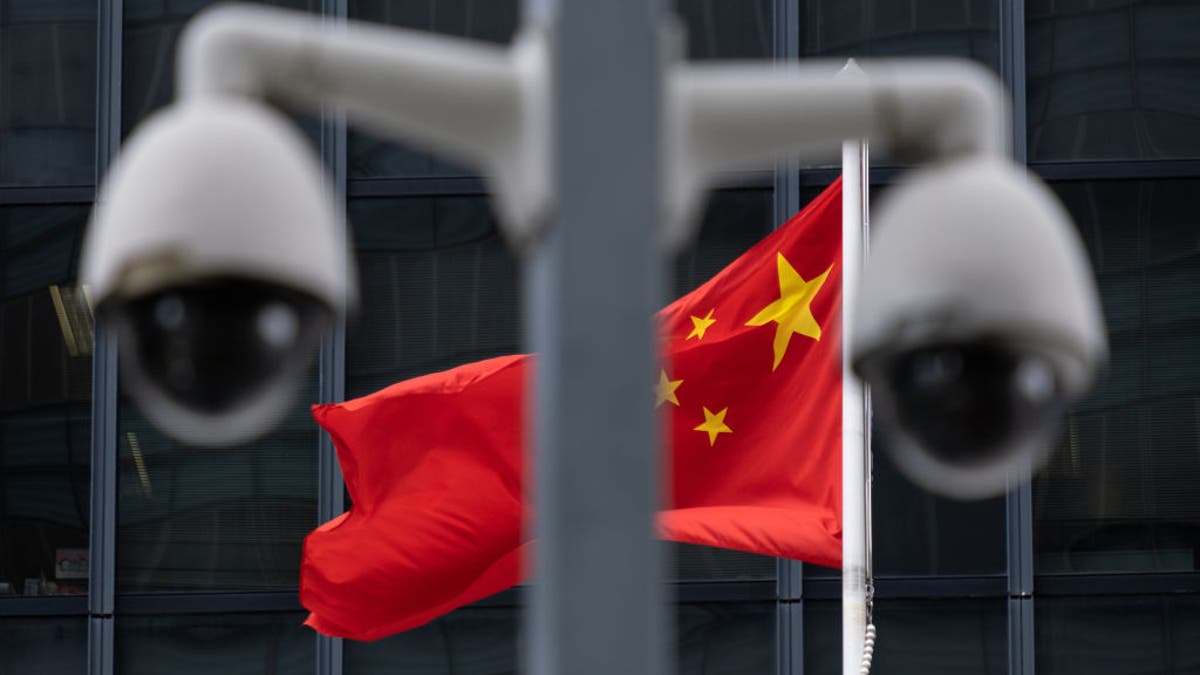
The flag of China is flown behind a pair of surveillance cameras outside the Central Government Offices in Hong Kong, China, on Tuesday, July 7, 2020. Hong Kong leader Carrie Lam defended national security legislation imposed on the city by China last week, hours after her government asserted broad new police powers, including warrant-less searches, online surveillance and property seizures. (Roy Liu/Bloomberg via Getty Images)
She described years of forced labor, sleep deprivation and physical abuse. At one point, she said, the torture became so severe that she fainted three times in a single day.
One memory still haunts her most. Shortly before her release from prison, Wang said authorities conducted unexplained blood tests and medical examinations. At the time, fellow inmates told her the government was simply checking on Falun Gong prisoners before release. Only later, after learning about allegations of forced organ harvesting involving detained Falun Gong practitioners, did she begin to fear why the testing may have happened. “I was horrified,” Chunyan said.
Falun Gong practitioner Wang Chunyan recounting the death of her husband, whom she says was persecuted by Chinese authorities for refusing to reveal her whereabouts.(Fox News)
Today, Chunyan lives in the United States, having left China in 2013 and eventually making her way through Thailand before arriving in America in 2015.
Yet decades later, the losses remain immediate to her.
“There are millions of families in China like ours,” Chunyan wants the world to know, “Persecuted by the CCP.”
In a statement to Fox News Digital, Chinese Embassy spokesperson Liu Pengyu rejected the allegations and defended Beijing’s actions against Falun Gong. “The aforementioned remarks are nothing but malicious fabrications and sensational lies,” Liu said. “Falun Gong is a cult organization that is anti-humanity, anti-science and anti-society. It is hostile toward religion, endangers the public, and serves as a malignant tumor within society.” Liu argued that “the Chinese government outlawed the Falun Gong cult in accordance with the law, thereby safeguarding the fundamental human rights and freedoms of the vast majority of the Chinese people.”
Efrat Lachter is a foreign correspondent for Fox News Digital covering international affairs and the United Nations. Follow her on X @efratlachter. Stories can be sent to efrat.lachter@fox.com.
Israeli strikes have killed at least 39 people, wiping out entire families, in a single day of attacks across Lebanon during a so-called ‘ceasefire.’ Here are some of their stories.
For one night in Hollywood, Jane Seymour left some viewers shaken.
The former Bond girl and “Dr. Quinn: Medicine Woman” star recently told Women’s World how she was going for a glam moment at the Oscars in 1981, but it backfired.
“I’ve always had long hair, and it used to be so long I could sit on it, but I can’t believe that I ever frizzed my hair out!” the star told the outlet.
Jane Seymour is seen here with Richard Pryor at the 53rd Academy Awards on March 31, 1981.(ABC Photo Archives/Disney General Entertainment Content via Getty Images)
“…My hairdresser decided to do the big hair, and a critic said that I looked like ‘50 pounds of mildewed mattress stuffing,’” the 75-year-old actress recalled. “I’ve never forgotten that.”
But not everyone was shaking their heads. Seymour said that after the Oscars, Ralph Lauren contacted her team and asked who did her hair.
From left: Comedian Richard Pryor, film editor Thelma Schoonmaker and actress Jane Seymour attend the 53rd Annual Academy Awards at the Dorothy Chandler Pavilion in Los Angeles on March 31, 1981. Schoonmaker won the best film editing award for “Raging Bull.”(UPI/Bettmann Archive/Getty Images)
“I didn’t want to throw my hairdresser under the bus, so at first I said I did it myself, but they were actually hoping they could copy the look for their new fashion show,” she said. “I gave them my hairdresser’s contact, and that started a trend, sadly.”
WATCH: JANE SEYMOUR SAYS SHE’S ‘IN MY PRIME RIGHT NOW’ AT 74
Seymour may not be reviving big ’80s hair anytime soon, but she’s not afraid of a throwback.
“I like to shop in my own closet,” she shared. “I was going to toss all my clothes with big shoulder pads, but I ended up keeping them because everything comes back. I always say not to throw anything away.”
“I’ve recently been on the red carpet wearing things that I first wore 20 or 30 years ago, and they’re all back in style now,” Seymour shared. “I look at what’s in style and see how I can put a look together with clothes I already have. It’s like my sport.”
Jane Seymour and her then-husband David Flynn are seen attending the 53rd Annual Academy Awards Governor’s Ball at the Beverly Hilton Hotel in Beverly Hills.(Ron Galella/Ron Galella Collection/Getty Images)
Seymour previously told Fox News Digital she has maintained the same size since age 17.
“I am now the size I was when I was 17 and a ballet dancer,” she said.
Jane Seymour plays the clairvoyant Solitaire alongside Roger Moore as James Bond in the 1973 film “Live and Let Die,” directed by Guy Hamilton.(Keystone/Getty Images)
“I try to stay around the same weight, but without going crazy about it. I have gotten bigger [over the years], but I never gained more than 10 pounds. I was smaller when I was in [1988’s] ‘War and Remembrance’ and when I was playing Wallis Simpson, where I had to be crazy thin, which is not a healthy weight for me. It makes my immune system weak.”
“I almost never have breakfast,” said Seymour. “I will have liquids and my vitamins. I’ve got this vitamin combination that has collagen. I’ll have that in the morning and either black tea, coffee or water. And then at lunchtime, I’ll have a fabulous meal, whatever I want, pretty much. I tend to like salmon, shrimp and grilled vegetables. And I love Italian food. I might have a little eggplant Parmesan; it’s a favorite of mine. Maybe some lean chicken.”
Seymour noted that the one thing she “almost never” eats is steak, but she does make exceptions.
Actress Jane Seymour appears on the set of “Live And Let Die.”(Sunset Boulevard/Corbis)
“Once in a while, I’ll have a little bit of filet steak, maybe a couple of slices. I’m not against it. But I feel better usually when eating fish and lots of vegetables. I grow a lot of my food in my garden, a lot of it in pots, actually. It keeps the bugs out. I have lettuce, arugula, artichokes, avocados, blueberries and strawberries. Also, lots of different types of kale. I love eating fresh vegetables. When I grill my vegetables, I add a little bit of olive oil and sometimes a sprinkle of salt.”
Jane Seymour stands on the deck of her home overlooking the Pacific Ocean with items picked from her garden in Malibu, California.(Paul Harris/Getty Images)
Like anyone else, Seymour has her guilty pleasures. She loves anything that’s “crunchy and salty.” To satisfy her cravings, she’ll eat “a crispy sweet potato.”
“I feel like I’m eating a bag of chips, but it’s actually sweet potato,” said Seymour. “I also like to take raw pumpkin seeds, put a little bit of Tamari Lite [gluten-free soy sauce that has less sodium], put them in a non-stick pan, and toast them. I like to toss them around in the pan until they swell and pop. Pistachio nuts are also a favorite go-to snack. So mostly, I make sure to eat my nutrients and vitamins in my food if I can.”
Jane Seymour focuses on a rigorous skincare and nutritional routine to maintain the “vehicle” she was given, she said.(Emma Mcintyre/Getty Images)
The actress also revealed that it’s important for her to stay active daily. However, she listens to her body about what it needs each day.
Jane Seymour attends the Filming Italy 2025 photocall at Forte Village Resort in Santa Margherita di Pula, Italy, on June 19, 2025.(Daniele Venturelli/Getty Images)
“I work with a lady… it’s almost like physiotherapy, but it’s a workout. I do Gyrotonics and some Pilates — a lot of floor work, believe it or not, even though I’m on a bench. But everything I do, anyone else can do at home, in a hotel room, their living room, their garden — anywhere where you can put a yoga mat down. I do Pilates legwork, which is like doing some of my ballet. I can use my own weight or a ballet bar.”
“I’m also a believer in light weights,” she shared. “I’ll have an eight-pound or a five-pound weight in each hand. I’ll do arm work while I’m doing my legs. And the beauty of Pilates, Gyrotonics or even ballet is that it’s all about being able to do it properly. It’s not something where you rush in and jump around and can easily get injured.”
Jane Seymour told Fox News Digital she “almost never” eats steak.(Jason Mendez/Getty Images for AMC Networks/Acorn TV)
“I’m very careful about doing the right technique,” she said. “If I can’t do too much, if I can’t stretch too much that day, that’s fine. I just do as much as my body is comfortable doing because I don’t want to injure myself. I had back surgery a long time ago. That’s a nemesis for me. So I listen to my body.”
Jane Seymour told Fox News Digital it’s important to keep moving, no matter your age.(Joe Scarnici/Getty Images for American Cinematheque)
Seymour said she likes workouts that can be done anywhere, rather than heading to the gym. Pilates, in particular, has been essential to her for maintaining a strong core.
“If you have core strength, you are less likely to have back injuries or back problems,” she said. “You are also more likely to look better up close. You’ll be able to stand more properly. The core is everything. And looking back at my ballet training, that was all about the core.”
Jane Seymour and Joe Lando are seen here as Dr. Michaela “Mike'” Quinn and Byron Sully for the made-for-TV movie “Dr. Quinn, Medicine Woman: The Movie” in 1999.(Spike Nannarello/CBS Photo Archive/Getty Images)
Today, Seymour said she’s grateful to get up and move each day.
On the set, it’s common to see Jane Seymour stretching in between scenes.(Don Arnold/WireImage)
“I think a lot of women suffer from being invisible,” she said. “You were married, you had the job, and you had kids. But now, who am I? What’s my purpose? Where do I belong in this world? But you can be a full-blooded human being at any age. It’s a choice you make for yourself.”
Stephanie Nolasco covers entertainment at Foxnews.com.
In modern datacenters, storage can live anywhere — local to the machine, remotely accessed over the network, and/or shared between systems.
The next generation of servers will treat system memory in much the same way. Systems will still have some local DDR5, but the bulk of it will be remotely accessed from what some have taken to calling the memory godbox.
The ongoing DRAM shortage has created a perfect storm for the proliferation of the appliances, which not only allow for memory to be pooled, but also data stored in that memory to be shared by multiple machines simultaneously. In effect, memory becomes a fungible resource.
More importantly, your next round of servers will probably support the tech, if they don’t already.
CXL finally has its moment to shine
The technology at the heart of these memory godboxes isn’t new. Compute Express Link (CXL) has been slowly gaining traction since its introduction seven years ago.
As a quick refresher, CXL defines a common, cache-coherent interface for connecting CPUs, memory, accelerators, and other peripherals.
The technology comes in a couple of different flavors: CXL.mem, CXL.cache, and CXL.io, which, as a whole, have implications for disaggregated compute. Imagine a rack with a CPU node, GPU node, memory node, and storage node, which can talk to one another completely independently. That’s the core idea behind CXL.
CXL piggybacks off the PCIe standard, which means in theory it should be broadly compatible, but, up to this point, it’s primarily been used with memory devices.
The 1.0 spec opened the door to memory expansion modules, which allow you to add more memory by slotting them into a CXL-compatible PCIe slot. To the operating system — assuming you’re running Linux that is — the extra memory is largely transparent, showing up as if it were attached to another CPU socket, just one without any additional compute.
The 2.0 spec, which showed up in 2020, added basic support for switching, which meant memory could be pooled and then allocated to any number of connected systems.
AMD and Intel’s current crop of Epycs and Xeons already support these appliances. But while the memory can be partitioned and reallocated to different machines as needed, two machines can’t work on the same data simultaneously.
Unless you were memory-constrained, the added complexity of CXL 2.0 didn’t offer much benefit over simply using higher capacity DIMMs in the first place.
At least, not until memory prices went through the roof.
Where things really get interesting is when the 3.0 spec arrives in AMD and Intel’s next-generation of Epycs and Xeons. In fact, from what we understand, Amazon’s Graviton5 CPUs we looked at in December already support the spec.
CXL 3.0 introduces two key capabilities that make it particularly interesting for memory appliances. The first is support for larger topologies: Multiple CXL switches can be stitched together into a fabric. The second is support for memory sharing: Rather than partitioning memory into slices only accessible to one machine at a time, memory can be shared between machines.
In theory this could allow two machines running the same set of workloads to use the memory closer to that of one. It’s a bit like deduplication for memory. In fact, we already do this in virtualized environments like KVM, but it now works across machines.
There are security and performance implications to all of this. Thankfully in CXL 3.1 and later, the consortium introduced confidential computing capabilities into the spec, allowing for isolation where necessary.
On the performance end of things, CXL 3.0 moves to PCIe 6.0 as a baseline, which provides 16 GB/s of bidirectional bandwidth per lane. Assuming 64 lanes of CXL per CPU, that works out to an additional 512 GB/s of bandwidth. So memory bandwidth shouldn’t be too much of an issue for most applications. Latency, on the other hand, is a different story.
CXL-attached memory is going to add some latency. However, as we’ve previously discussed, the latency isn’t as bad as you’re probably thinking — on the order of a NUMA hop, or about 170 to 250 nanoseconds of round trip latency. Obviously, the farther the memory appliance is from the host CPU, the worse the latency is going to be.
Late last year, the CXL consortium ratified the 4.0 spec, which among other things doubles the bandwidth from 16 GB/s per lane to 32 GB/s by re-basing on PCIe 7.0. However, it’ll be a while before we see appliances based on the spec.
Where’s my memory godbox?
There are several companies developing hardware for these kinds of networked memory appliances.
Panmnesia’s CXL 3.2-compatible PanSwitch is one of the most sophisticated examples. The switch features 256 lanes of connectivity for CXL memory modules, devices, or CPUs to connect, pool, or share resources.
If you’re okay with memory pooling and don’t need the niceties of CXL 3.0, then there are already several memory appliances available that are compatible with the latest generation of Xeon 6 and Epyc Turin processors.
Liqid’s composable memory platform, for example, can provide a pool of up to 100 TB of DDR5 to as many as 32 hosts. Meanwhile, UnifabriX Max systems provide CXL 1.1 or 2.0 connectivity to 16 or more systems with support for CXL 3.2 already in the works.
We suspect that as more CXL 3.0 compatible CPUs and GPUs hit the market, more of these memory godboxes will appear.
AI eats everything
Don’t get too excited. While network attached memory has the potential to reduce an enterprise’s infrastructure spend, those same qualities make it attractive for the very thing driving the memory shortage in the first place.
AI adoption has driven demand for DRAM off the charts. In addition to the HBM used by GPUs, DDR5 is being used for key value cache offload during inference.
These KV caches store model state and can chew significant amounts of memory — often more than the model itself — in multi-tenant serving scenarios.
Rather than discard these caches and recompile them when the model state is restored, it’s more efficient to offload them to system memory and eventually flash storage.
The problem with using flash storage is that it has a finite write endurance. After a while it wears out. Instead, CXL memory vendors are positioning the tech as a more resilient alternative.
That’s bad news for enterprises looking to these memory godboxes for salvation from the RAMpocalypse. ®
Sixteen-year-old Mohammed Eyad Azzam says he was a “pampered” child before an Israeli air attack in Gaza killed his immediate family, leaving him as the sole provider for his elderly grandmother.
Mohammed was at home on the morning of October 11, 2024, with his parents and siblings in the Jabalia refugee camp, northern Gaza, when without warning an Israeli warplane struck, bringing his family’s multistorey building down on top of them.
“I was sitting safely with my parents and my two older brothers … I was buried under the rubble for about 10 minutes,” Mohammed told Al Jazeera. “It was pure suffering.”
Mohammed’s grandmother managed to dig him out of the wreckage of the home, and the next thing he remembers is waking up in his neighbour’s house on a ventilator. “I survived by a miracle,” he said.
Relentless Israeli bombing meant Mohammed was unable to give his parents and two brothers a proper funeral at a cemetery, so instead he buried his parents and siblings in a small, makeshift plot of land.
Overnight, the teenager was thrust into adulthood, and he now lives amid the thousands of displaced in northern Gaza’s Shati refugee camp, spending his days lighting fires and carrying heavy water containers for his grandmother.
“My life flipped from happiness to grief. I used to be pampered, but now I am responsible for everything,” he said.
Amid all the challenges, Mohammed has found one escape from his daily turmoil: football.
A psychological lifeline
Before the war, Mohammed was a promising player for the Khadamat Jabalia football club. However, following Israel’s genocidal war on Gaza, the club no longer functioned, pitches were destroyed, and many of his former teammates were killed.
Mohammed Eyad Azzam dribbles a football through a displacement camp. The sport has become his only escape after losing his family [Screengrab/Al Jazeera]
Yet, against all odds, the Palestinian Football Association (PFA) recently organised a tournament for players born in 2009 at one of the last remaining patches of land in Gaza suitable for hosting a football match.
For Mohammed, lacing up his boots is one of the few ways he can fend off the despair of life without his parents and siblings, but the pitch still brings back haunting memories of what he lost before Israel began its genocidal war on Gaza in October 2023.
“It removes the boredom and releases our negative energy,” he explained.
“Most of my teammates have their brothers and fathers there to motivate and encourage them. I have no one to cheer for me now, I miss them so much – as much as the sea and its fish.”
Decimation of Palestinian sports
Mohammed’s heartbreak is emblematic of Israel’s systematic destruction of sports infrastructure in Gaza, according to Mustafa Siyam, head of the media department at the Palestinian Football Association in the enclave’s southern provinces.
“Mohammed is one of tens of thousands of talented children who have lost their families, their clubs, their academies, and their education,” Siyam told Al Jazeera.
The Israeli offensive has destroyed or damaged 265 sports facilities across the Gaza Strip [Screengrab/Al Jazeera]
The statistics are staggering. According to the PFA, the Israeli offensive has killed 1,113 people affiliated with the sports sector, including more than 560 football players, coaches and administrators.
Additionally, 265 sports facilities have been destroyed or damaged over the past two-and-a-half years, while all 56 football clubs in Gaza – from Beit Hanoon in the north to Rafah in the south – have been severely affected.
Mohammed’s club, Khadamat Jabalia, was also destroyed, and the space was temporarily turned into a detention and interrogation centre by Israeli forces during the invasion of Gaza.
Deadly commutes to the pitch
With main stadiums either bombed into ruins or converted into shelters for displaced families, the PFA is now organising youth tournaments on just three small pitches that remain – Palestine Stadium in Gaza City, Khadamat Nuseirat and Ittihad Shabab Deir al-Balah – but getting to these games is still a life-threatening ordeal for young footballers.
Mohammed ties his shoelaces before a match. Players now have to walk several kilometres through rubble to reach the few remaining pitches [Screengrab/Al Jazeera]
“We walk 3-4km through tents and rubble to reach the pitch,” Mohammed said. “It drains you psychologically before you even step onto the field.”
Siyam acknowledges the grave risks youngsters face when heading to their local pitch, but says their fortitude and love for the sport mean football will endure in Gaza.
“The security situation remains extremely dangerous. A player walking from his tent to the pitch is exposed to the risk of sudden air strikes, but the determination of the players and the association pushes us to resume activities,” he said. “It sends a message to the world that Palestinian youth are capable of rising from the rubble.”
‘Double standards’
While the football community in Gaza is struggling to survive, Palestinian sports officials have expressed deep frustration with the international community, particularly the governing body of the sport, FIFA, over a lack of support or solidarity.
Siyam highlighted glaring double standards when FIFA moved swiftly to suspend Russia and ban its clubs following Moscow’s 2022 invasion of Ukraine, but took no action against Israel.
“When it comes to Palestine, unfortunately, there are no decisions; FIFA’s position is very weak,” he said.
Despite the targeted killing of prominent athletes, such as national team player Suleiman Obaid, and Israeli settlement clubs competing on occupied Palestinian land, FIFA has failed to impose any sanctions on the Israeli Football Association.
With a lack of action from FIFA, the PFA is now seeking justice via international sports tribunals.
Honouring a dream
While the PFA waits for a permanent ceasefire to rebuild Gaza’s battered sporting infrastructure and for Israel to open the enclave’s borders to allow local talent to join Palestine’s national teams, young players such as Mohammed are clinging to the game to keep their loved ones’ memories alive.
Despite the destruction and trauma, Mohammed remains determined to fulfil his late parents’ dream of him becoming a professional footballer [Screengrab/Al Jazeera]
“I could never have imagined reaching a point where I am entirely alone,” Mohammed added, saying that stepping onto the dirt pitch helps keep his father’s legacy alive.
“My dream now is to become a famous, professional football player,” the 16-year-old said softly. “Because that was my dream, and it was the dream of my mother and my father, may God have mercy on them. My dad is the one who registered me in the club, and my mom was the one who always cheered me on.”
American officials have announced the discovery of the wreck of the Coast Guard cutter Tampa — a ship whose sinking was the deadliest U.S. naval combat loss of World War I.
In an April 29 news release, the Coast Guard said the vessel was found roughly 50 miles off the coast of Cornwall, the southwestern tip of the United Kingdom.
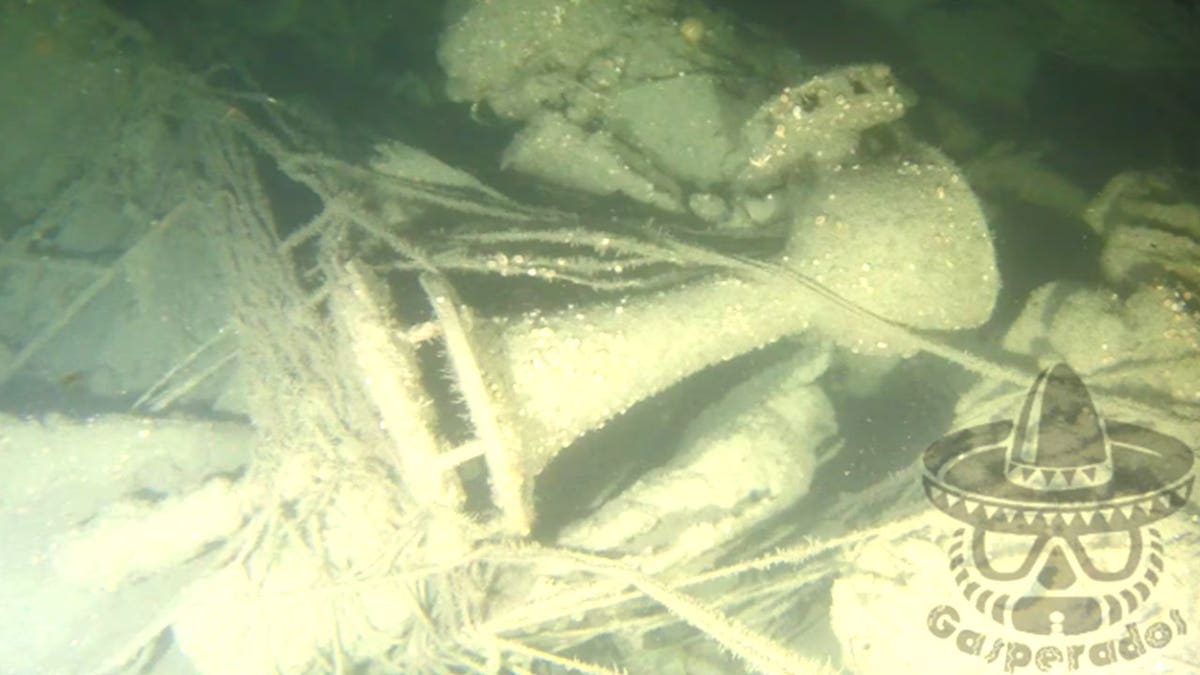
A British technical diving team called Gasperados found the wreck — which was at a depth “exceeding 300 feet,” officials said.
In 1918, the ship was torpedoed by a German submarine and sank within three minutes.
All 131 people aboard died, including 111 Coast Guardsmen, 16 British Navy personnel and civilians, and four U.S. Navy personnel.
The U.S. Coast Guard confirmed that the long-lost cutter Tampa has been found more than a century after its World War I sinking.(Gasperados Dive Team; U.S. Coast Guard)
“When the Tampa was lost with all hands in 1918, it left an enduring grief in our service,” Kevin Lunday, commandant of the Coast Guard, said in a statement.
“Locating the wreck connects us to their sacrifice and reminds us that devotion to duty endures. We will always remember them. We are proud to carry their spirit forward in defense of the United States.”
Officials said the discovery was three years in the making.
The Coast Guard Historian’s Office was contacted by Gasperados divers about locating the wreck in 2023, and the two worked together to confirm the site.
“There are countless wreck sites in that region to complicate the search process.”
“Over the past three years, the all-volunteer team conducted an extensive search for the wreckage,” the release noted.
Looking ahead, the Coast Guard is planning further underwater research at the site.
Multiple clues pointed to Tampa’s final resting place, said William Thiesen, a Coast Guard Atlantic Area historian.
Thiesen told Fox News Digital that, at the time, contemporaries recorded key clues about the sinking — including a U-boat commander’s reported position, accounts from Tampa’s convoy hearing an explosion and an aircraft spotting debris and logging coordinates.
The wreck lies in deep waters off Cornwall, where search crews faced difficult conditions for years.(Gasperados Dive Team)
“The problem was many of the bearings and locations noted had to be cross-referenced with wrecks on the sea floor,” the historian said.
“Until the Gasperados volunteered for the mission to find Tampa three years ago, the task seemed impossible.”
Thiesen added that the dive team dealt with low water visibility and poor weather conditions, as well as “very deep water.”
“To bring closure for the service and the families of Tampa’s lost crew is the greatest gift one can give.”
“There are countless wreck sites in that region to complicate the search process,” he said.
“Before finding the current site, the Gasperados located other wrecks believed to be Tampa that proved to be fishing vessels or other sunken wrecks. These obstacles seemed insurmountable, but the group pushed on for over three years.”
Researchers confirmed the wreck using detailed historical records — and Thiesen said the site is being treated “with the utmost respect for those who made the ultimate sacrifice for this country and our allies.”
He added, “The Gasperados, who located the site, adhere to the strictest standards of respect for the wreck site and the losses it represents.”
The Coast Guard said that locating the Tampa helps honor the sacrifice of the 131 people who died aboard the ship.(U.S. Coast Guard)
“Any plans for the future will also be carried out with the utmost respect for the site and its integrity.”
He went on, “To bring closure for the service and the families of Tampa’s lost crew is the greatest gift one can give. … The Gasperados dive team has done a great service not only for the Coast Guard, but to the nation — and we’re very grateful.”
Access Denied
You don’t have permission to access “http://hindi.news18.com/cricket/ipl-2026-urvil-patel-storm-blew-rishabh-pant-lsg-became-1st-team-eliminated-from-playoffs-csk-win-match-10463197.html” on this server.
Fifa World Cup matches set to be held across the United States face heightened terrorism risks, with experts warning that vulnerabilities are being amplified by the US-Israel conflict with Iran and a depletion of counter-terrorism expertise within federal law enforcement.
The biggest threat stems from homegrown violent extremists, often lone actors that may have become radicalized online by extreme political views or jihadists such as the Islamic State (Isis), said four counter-terror experts interviewed.
“We need to protect not only each venue, but all the other links in the chain that get to the point of the game,” said Javed Ali, associate professor at the University of Michigan, who previously served in the FBI, Department of Homeland Security, and as national security council senior director for counter-terrorism. “There are just so many games. There’s only so many resources to deploy to try to buy down risk against a number of different threats.”
In March, the FBI held a large residential training exercise on domestic threats, bringing together agents from across the country who work in domestic terrorism ahead of major national security events such as the World Cup.
When FBI agents at the meeting discussed the scale and complexity of securing the tournament, they were “alarmed, because there’s a lot that needs to be dealt with”, said one member of federal law enforcement in attendance, who spoke on the condition of anonymity. “It will be hard to control, given the environment and the number of locations of matches and watch parties across the United States. There is a very real possibility that something bad will happen.”
Although the US is experienced in securing large-scale stadium events such as the NFL Super Bowl, experts say the sheer number of World Cup matches will require an unprecedented level of coordination, vigilance and stamina.
The tournament will be about six weeks long, with 104 matches in the US, Canada and Mexico. The US will host 78 matches, in Atlanta, Boston, Dallas, Houston, Kansas City, Los Angeles, Miami, Philadelphia, the San Francisco Bay Area, Seattle and East Rutherford, New Jersey, which is about 10 miles from Manhattan.
A view of Lincoln Financial Field in Philadelphia, Pennsylvania. The stadium will be known as Philadelphia Stadium for the World Cup games. Photograph: Emilee Chinn/Getty Images
The Department of Homeland Security has announced that only the final – which will be at MetLife Stadium in East Rutherford – will be designated as a ‘national special security event’ (NSSE).
The designation triggers a centralized federal operation led by the United States Secret Service, with intelligence from the FBI and emergency coordination by the Federal Emergency Management Agency (Fema). It includes hardened security perimeters, magnetometer screening, temporary flight restrictions enforced by the Federal Aviation Administration, counter-drone systems and continuous counter-terrorism monitoring across federal, state and local agencies.
The other matches will be designated a special event assessment rating (SEAR) 1 or 2, which are the two highest risk rankings for events and also require the deployment of federal law enforcement.
Fema has allocated $625m to support security and emergency preparedness for the World Cup. While all stadiums hosting matches are considered “hard targets” due to extensive security measures, counter-terrorism experts say the greater concern lies with “soft targets” – including hotels, transportation hubs and fan gatherings across the country.
“Planning to protect the Fifa World Cup 2026 has been going on for many months and the FBI continues to work closely with our federal, state, and local law enforcement partners. The games are taking place around the country and require the work of many partners to ensure the safety of those in the stadiums, as well as the surrounding communities,” an FBI spokesperson said in a statement to the Guardian.
A spokesperson for the Department of Homeland Security said: “DHS is working around the clock with our federal, state, and local law enforcement partners to identify and mitigate potential threats to World Cup matches, fan fests, and to a travel sector that will see a dramatic increase in traffic. DHS is cognizant of lone wolves and small cells inspired to commit violence, as the DHS Office of Intelligence and Analysis is working closely with state, local, tribal, territorial, and private sector partners to keep them apprised of the latest and most relevant threat information available.”
Lone actors and ‘soft targets’ heighten risk
All 11 host cities will host official Fifa fan festivals, with large-screen broadcasts, concerts and live entertainment running throughout the tournament. Thousands of additional watch parties at bars and venues across the host countries will extend crowds well beyond stadiums and official sites.
“We’re still going to have densely populated crowds waiting outside of stadiums. There will be the vulnerability of drones, which are ubiquitous, easily mastered by individuals or non-state groups, including terrorist groups,” said Colin Clarke, director of research at the Soufan Group, an intelligence and security consulting firm based in New York City.
Experts say the challenge is not only protecting potential targets, but ensuring coordination across the agencies responsible for securing them.
“What I’ve seen is that we have lapses in our security when different agencies, such as Homeland Security, FBI, and our regional local police officers, fail to communicate with each other,” said Tracy Walder, aformer CIA and FBI special agent who was working at the CIA in 2001 during the 9/11 attacks. “That’s probably our biggest problem.”
People sit outside SoFi Stadium as Los Angeles prepares for the 2026 World Cup. Photograph: Daniel Cole/Reuters
The 2024 assassination attempt against Donald Trump on the campaign trail in Butler, Pennsylvania, and the 6 January 2021 fatal siege on the Capitol in Washington DC were examples of these types of communications breakdowns, she said.
The World Cup is especially vulnerable because of the current conflict with Iran, which has historically been linked to attempted attacks on US targets, said the experts interviewed.
The potential for an Iran v United States match in Texas on 3 July on the eve of Independence Day, coupled with the expected heavy presence of the Saudi royal family, who have booked out an entire hotel in Houston for the tournament, raises additional concerns, said the federal law enforcement source. Saudi Arabia and Iran are longstanding regional rivals with a history of deep geopolitical and sectarian tensions.
“You have the Saudi royal family in close proximity to where Iran and the United States would be playing, it’s like adding gas on the fires,” said the source.
Yet, concerns over so-called “sleeper cells” – foreign terrorists that are embedded in the country and stay dormant for a period of time before launching an attack – may be overblown, some experts said.
“The Iranians just don’t have the people here to pull off an attack,” said Ali. “If people who are actually trained or formally associated or linked to Iran’s Quds Force were here and wanted to conduct these attacks, why haven’t they tapped into those networks?”
In the past, Iran-backed terror plotters have needed to co-opt the criminal underworld here in United States and contract these attacks out to intermediaries such as professional criminals, Ali said.
Murder-for-hire plots, such as the 2022 assassination attempt on former national security adviser, John Bolton, which was attributed to an Iranian man who is allegedly a member of the Islamic Revolutionary Guard Corps (IRGC), are examples of this tactic. The IRGC has also orchestrated several assassination attempts against the New York-based Iranian dissident, Masih Alinejad. One foiled plot in 2022 involved two members of a Russian mob who were hired to murder her in her Brooklyn home. In January, another convicted murderer from Brooklyn was sentenced to 15 years in jail for a failed plot to murder Alinejad in exchange for $100,000.
These types of attacks are becoming more common since the outbreak of the US-Israeli war on Iran in late February. In the past few months, British authorities have uncovered a series of Iran-linked plots in London in which operatives allegedly used criminal intermediaries, who are often recruited online, to carry out attempted attacks and assassinations against dissidents and political targets.
“Luckily, a lot of those are very amateurish, because they aren’t trained operatives. They may not even be regime supporters,” said Clarke.
Experts warn that homegrown extremists acting alone pose one of the most immediate and difficult-to-detect threats.
“Right now we’re living in a heightened threat environment,” Walder said. “You can’t kill an idea. You can take out leadership, but they’re just going to replace themselves. The idea isn’t ever going to die … We’re just a few steps away from the next big attack.”
Recent attacks underscore the threat. In April, a lone gunman targeted the White House correspondents’ dinner. On 1 January 2025, a man drove a pickup truck into a crowd on Bourbon Street in New Orleans, then opened fire, killing 14 people and injuring dozens more; an Isis flag was later found in the vehicle. In March, an attacker with a prior Isis-support conviction opened fire on a Reserve Officers’ Training Corps (ROTC) class at Old Dominion University, killing one instructor and injuring two cadets before being subdued.
Agents draw their guns after loud bangs were heard during the White House correspondents’ dinner at the Washington Hilton. Photograph: Mandel Ngan/AFP/Getty Images
“I don’t think this administration is taking counter-terrorism seriously enough. Resources have been shifted to other portfolios,” said Clarke. “The authorities let an Isis guy just roam free, acquire a firearm and then try to kill ROTC students. But they have ICE agents in Home Depot parking lots trying to pick up [undocumented] landscapers. The priorities are a bit mixed up here.”
New threats and intelligence gaps
Alongside human threats, security officials are increasingly focused on emerging technological vulnerabilities. While the skies above the stadiums will be no-fly zones, other mass gatherings could be vulnerable to drone attacks, said experts interviewed.
“We’ve also seen terrorist groups over the years express interest in using drones, and talking about this on message boards,” said Clarke. “I think it’s only a matter of time before we experience a terrorist attack on US soil with the drone involved.”
“In the past, it’s always been about protecting the venue or the people there,” said Javid. “And now what the [Washington] Hilton [correspondents’ dinner] attack shows there’s like a whole supply chain that has to be looked at as well.”
Walder worked on counter-terrorism programmes focused on biological and chemical terrorist weapons during her time at the CIA, and believes the authorities have an understanding of those types of threats, she says. To her, some of the most concerning types of threats would be cyber or technological, “simply behind because we just don’t have the manpower that like Russia or China has”, she said.
“We are in a very different place, technology wise, than we were in 2001, and so it takes less people to inflict maximum damage,” she said.
In February, US counter-terrorism efforts were dealt a further setback with the firing of a Washington-based FBI counterintelligence unit, CI-12, which tracked foreign spies and terrorism threats on the US. They were ousted in retaliation for their involvement in the investigation of Trump’s alleged retention of classified documents at his Mar-a-Lago estate, according to reports.
“Many folks have lost their jobs, and some for reasons that aren’t exactly clear, which don’t seem to be performance based,” said Ali.
Ali warned that maintaining a clear intelligence picture across agencies monitoring Iran-related activity was essential to detecting early signs of potential threats.
“My hope is that these decisions that are being made are not contributing to the inability of the FBI that to execute its national security missions,” said Ali. “Because that makes the country less safe.”
An FBI spokesperson said, “While the FBI does not comment on specific personnel numbers or decisions, FBI agents and staff are dedicated professionals working around the clock to defend the homeland and crush violent crime. The FBI continuously assesses and realigns our resources to ensure the safety of the American people, and we surge resources based on national security needs.”





























![A Gaza Teen's Football Dream After Losing His Family [Screengrab/Al Jazeera]](https://www.aljazeera.com/wp-content/uploads/2026/05/Screenshot-2026-05-10-at-11.41.39-AM-1778402940.png?w=770&resize=770%2C575&quality=80)
![A Gaza Teen's Football Dream After Losing His Family [Screengrab/Al Jazeera]](https://www.aljazeera.com/wp-content/uploads/2026/05/Screenshot-2026-05-10-at-11.42.57-AM-1778402949.png?w=770&resize=770%2C553&quality=80)
![A Gaza Teen's Football Dream After Losing His Family [Screengrab/Al Jazeera]](https://www.aljazeera.com/wp-content/uploads/2026/05/Screenshot-2026-05-10-at-11.42.12-AM-1778402945.png?w=770&resize=770%2C591&quality=80)
![A Gaza Teen's Football Dream After Losing His Family [Screengrab/Al Jazeera]](https://www.aljazeera.com/wp-content/uploads/2026/05/Screenshot-2026-05-10-at-11.42.02-AM-1778402942.png?w=770&resize=770%2C574&quality=80)