‘The worst kind of predator’: New Orleans pastor found guilty of sexually molesting two teen boys | New Orleans

0

A suburban New Orleans religious pastor has been convicted of sexually molesting two minors in what is the third instance of a man called “the worst kind of predator” being found guilty of abusing teen boys.

Terry Reed, 66, cited biblical verses and scripture to “manipulate, normalize and justify his sexual behavior” with the two victims at the center of the newest case against him, according to a statement from Louisiana state prosecutors.

One of those victims began visiting and then moved into Reed’s home at age 16 in August 2021, after the boy’s relationship with his mother became strained. Reed then abused that teenager on multiple occasions before the victim reported him to authorities, leading to his arrest in 2023.

At that point, the second victim came forward to report that he, too, had repeatedly endured sexual abuse by Reed after moving into the pastor’s home in May 2011 at age 16.

Prosecutors in Louisiana’s Jefferson parish – which is the state’s word for county – subsequently charged Reed with two counts each of third-degree rape and molestation of a juvenile. The jury in front of whom Reed was tried deliberated for less than an hour on 6 May to find him guilty as charged.

That verdict against Reed came nearly 20 years after he pleaded guilty in 1997 to a separate charge of indecent behavior with a juvenile. He had also pleaded guilty in 2017 to molestation of a juvenile, telling the victim in that case that “to fight off demons” he had to submit to certain acts, the office of the Jefferson parish district attorney, Paul Connick, said in its 7 May statement.

Reed received probation in both of the previous cases. He was ministering out of his home in the Jefferson community of Terrytown when he was arrested in connection with the case that culminated in his most recent conviction.

According to prosecutors, at the time of his 2023 arrest, Reed “readily admitted” that he was a sex offender. Nonetheless, he asserted at one point that medical ailments left him unable to perform sexually – and that he had been celibate for a decade.

Then he maintained that whatever sex he engaged in with his accusers occurred when they had reached Louisiana’s age of legal consent, which is 17.

Prosecutor James Wascom told jurors seated for Reed’s trial that the pastor had demonstrated a pattern of “preying on these very, very troubled boys who don’t have a father figure in their lives”.

Wascom’s co-counsel, Eric Cusimano, said Reed “held himself out to be a saint” in the eyes of victims as well as his congregation, including some who testified on his behalf. Yet in reality “he is the worst kind of predator … that we can have”, Cusimano said in court, according to Connick’s office.

Reed’s sentencing is tentatively scheduled for 18 June in front of Jefferson state judge Raymond Steib. He could face up to 25 years in prison for the third-degree rape convictions. For the convictions of molestation of a juvenile, Reed could be sentenced to between five and 40 years in prison.

Another chapter in Reed’s past that did not come up in court involved the deaths of two boys – ages 12 and 13 – in a hot tub at his home in 2002. Authorities later determined that the children had been electrocuted, though they said they were unable to classify whether the deaths had been a homicide, suicide, accidental or natural, according to a contemporary news media report.

The US has grappled for decades with sexually abusive religious leaders in various denominations.

One of the latest high-profile cases was that of former Christian missionary Daniel Savala, who pleaded guilty on Thursday in Texas to charges that he sexually abused two boys and was sentenced to 30 years in prison without the possibility of parole.

Another such case was that of former Catholic priest Robert Mendez Esquivel, who in late April was sentenced in Idaho to a maximum of 15 years in prison after pleading guilty to sexual battery of a minor.


Source link
Access Denied

0

Access Denied You don’t have permission to access “http://hindi.news18.com/cricket/who-is-azan-awais-shows-batting-class-in-debut-test-close-first-century-in-his-test-career-pakistan-vs-bangladesh-1st-test-debutant-ws-n-10460500.html” on this server.

Reference #18.6e560e17.1778331524.8834c66

https://errors.edgesuite.net/18.6e560e17.1778331524.8834c66

Displaced Lebanese children keep learning amid displacement | Israel attacks Lebanon

0

NewsFeed

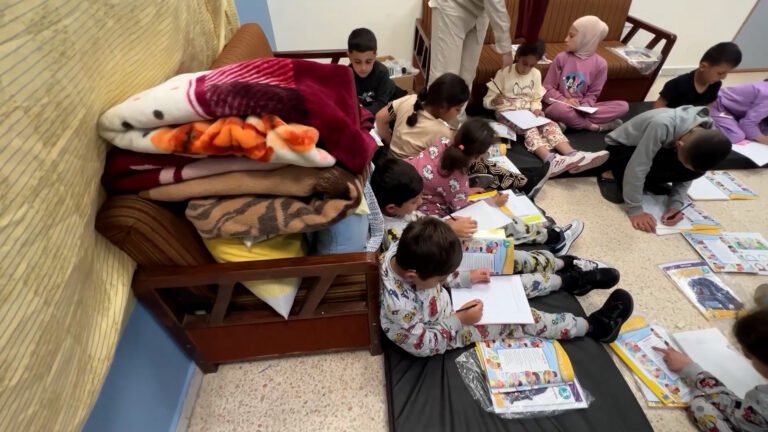
A school in Sidon is now home to displaced families from southern Lebanon, but classes are still running. More than 1.5 million people remain displaced despite a ceasefire, with the UN citing insecurity and lack of basic services as key barriers to return. Israel has ordered residents of around 80 towns in the south not to go back home.


Source link

Budgam News: Beaten with sticks and stones, dog brutally killed in Kashmir, horrifying video goes viral

0

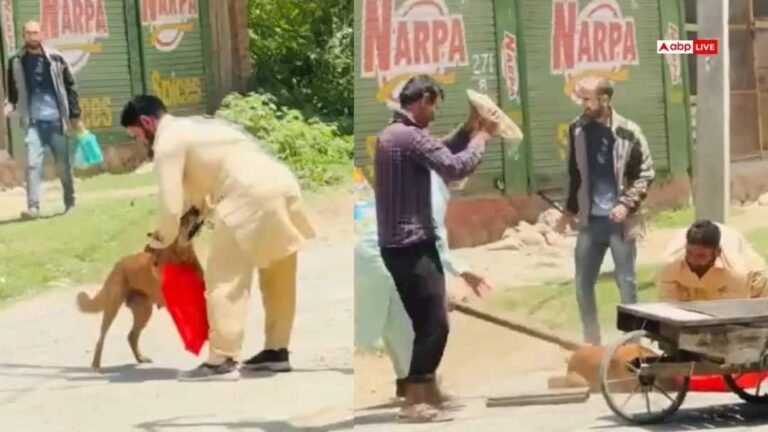
A heart-wrenching video has surfaced from Budgam district of Jammu and Kashmir, which can send shivers down anyone’s spine. Here in Magam Beerwah area, some people crossed all limits of cruelty and brutally killed a voiceless stray dog ​​by beating it with heavy stones and wooden sticks. The video of this brutality has spread like wildfire on social media, seeing which there is immense anger among the netizens.

According to the information received, this horrifying incident happened when this stray dog ​​had allegedly attacked some pedestrians and bit them. After this, the people present there got so enraged that they took the law into their own hands. In the viral video, it can be clearly seen how the mob kept attacking the voiceless animal with sticks and heavy stones until it died.

Chargesheet filed in the case of attack on Farooq Abdullah, 7 member SIT was formed to investigate

Big police action on viral video

After this brutal video surfaced on social media, there was anger among the people and common users including animal lovers demanded strictest punishment against the accused. Taking cognizance of the seriousness of the matter and the uproar created online, Jammu and Kashmir (J&K) Police immediately came into action. The police has started action in this area.

FIR registered under Animal Cruelty Act

Giving official information, Jammu and Kashmir Police said that FIR number 57/26 has been registered against unknown accused at Magam Police Station under the ‘Prevention of Cruelty to Animals Act’. The police are thoroughly investigating all the facts related to the incident and the accused are being identified on the basis of the video.

Officials have appealed to the general public not to spread any kind of misleading or unverified information on social media and let the law take its course.

Bandipora News: 3 young sons drowned in Jhelum in the blink of an eye in Bandipora, village angry over delay of SDRF

Access Denied

0

Access Denied You don’t have permission to access “http://hindi.news18.com/news/ajab-gajab/viral-know-about-world-only-person-who-is-troubled-by-not-dying-six-times-survived-death-and-came-back-alive-again-bizaree-news-10460485.html” on this server.

Reference #18.4a200117.1778328041.ceb1d53

https://errors.edgesuite.net/18.4a200117.1778328041.ceb1d53

‘Largely slop’: Trump’s new counterterrorism strategy is scant on substance but heavy on enemies | Trump administration

0

When Donald Trump’s counter-terrorism “czar”, Sebastian Gorka, introduced the Trump administration’s long-awaited counter-terrorism strategy on a call with journalists on Wednesday, he also reportedly described critics of the administration’s war in Iran as “testicularly challenged”.

The at-times bizarre 16-page memo Gorka authored is only slightly more subtle – taking rhetorically charged swings at the president’s enemies, the Biden administration, transgender people and some Islamist groups, while offering little clarity about the threat posed by political violence domestically or abroad or any specific plans to address it.

“President Trump has affected a complete revision of how we defeat threats to America predicated on national sovereignty and civilizational confidence and the objective of destroying the groups who would kill Americans or hurt our interests as a free nation,” the document claims. “This applies to cartels, Jihadists, left-wing violent extremists, state actors and state sponsors, or any future terror threat.”

Political and security analysts slammed the memo as “largely slop”, “utterly unhinged” and an “exercise in gaslighting, partisanship and obsequiousness”.

“It’s the opposite of ‘speak softly and carry a big stick’. It’s more like ‘yell loudly to conceal your small stick’,” Colin Clarke, director of the Soufan Center, a security thinktank, wrote in a series of blistering posts about the document. “And it’s transparent to our allies and adversaries.”

The memo is largely scant on substance and does not lay out a roadmap for carrying out its prescriptions. It identifies what it labels “three major types of terror groups” as priorities: “narcoterrorists and transnational gangs”, “legacy Islamist terrorists”, and “violent left-wing extremists, including anarchists and anti-fascists”. It makes no mention of far-right or white supremacist ideology, which has consistently been behind incidents of domestic political violence, but singles out “radically pro-transgender” and “anti-American” ideology for “neutralization”. It claims immigration has turned Europe into an “incubator of terror threats” and called on European allies to “halt its willful decline”. And it accuses past administrations of having “weaponized” the intelligence community, pledging to keep the intelligence apparatus from being used as a political tool “against innocent Americans” even as it outlines a plan that appears to do exactly that.

With regard to groups on the left it broadly dubs “violent secular political groups”, the document vows: “We will use all the tools constitutionally available to us to map them at home, identify their membership, map their ties to international organizations like Antifa, and use law enforcement tools to cripple them operationally before they can maim or kill the innocent.”

Critics described the document, which makes half a dozen references to the Biden administration’s supposed failures, as both “completely Trumpian” and an “alarming” escalation in rhetoric. They particularly warned about the expanded use of a terrorism framework as pretext to deny the basic civil and political rights of targeted individuals.

Nadia Ben-Youssef, advocacy director of the Center for Constitutional Rights, noted that the strategy openly embraces state violence and political repression, and normalizes extraordinary measures like illegal military strikes, renditions, deployment of the military and immigration enforcement agents, and digital surveillance.

“The document follows in the Trumpian tradition and that of the broader rightwing movement by explicitly articulating an extremist worldview, and openly promoting policy and a vengeful executive unbounded by law,” she said. “It overtly dehumanizes communities, and lauds executive action that has violated the constitution and international law.”

The strategy collapses a swath of disfavored communities and the broader political left “into ‘terrorists posing an existential threat to the US’”, Ben-Youssef added. “[It] can only be understood as a political project to criminalize dissent, demonize migrants, target Muslim communities, and label transgender people and their allies as acceptable targets of marginalization, repression and violence.”

It should come as little surprise that such an extraordinary document should come from Gorka, a far-right commentator whose selection as senior director for counter-terrorism drew ridicule and consternation even from within the ranks of the right.

For all that is unprecedented about the administration, however, Ben-Youssef and others argued that Trump is only expanding upon a flawed and dangerous counter-terrorism apparatus the administration has inherited from previous ones.

“The document unfortunately builds off of decades-long elements of US counter-terrorism policy,” said Chip Gibbons, policy director at the civil liberties group Defending Rights & Dissent. “A lot of people are very shocked by the language about leftwing extremists, anarchist extremists. And it is very shocking. But that language is not new.”

Trump may be unique in his willingness to crush democracy and dissent, Gibbons added. “But he’s doing so using tools that were handed to him and were created and sharpened over the last couple of decades.”


Source link

Jodhpur News: ‘First fraud then compromise’ will not work, High Court strict on cyber crime, refuses to cancel FIR

0

In Jodhpur, a gang that was scaring people by pretending to be police and CBI officers on phone, showing the fear of ‘digital arrest’ and then getting money transferred has been arrested. Now the court has also shown a very strict stance on the rapidly increasing cyber crimes in Rajasthan.

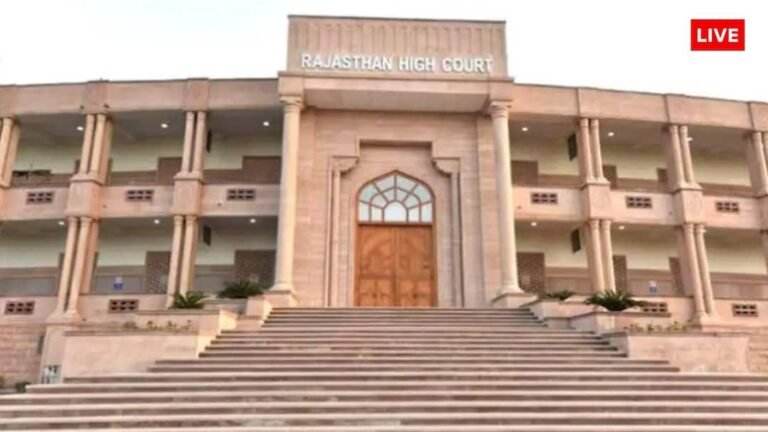
Rajasthan High Court has clearly said that crimes like cyber fraud are not just a personal dispute between two people, which can later be compromised and the matter can be closed. The court remarked that such crimes affect the entire society and the digital system, hence the FIR cannot be canceled merely on the basis of agreement.

‘A settlement has been reached, close the case’

Actually, the matter is related to a cyber fraud case registered in the cyber police station of Jodhpur. It is alleged that some people, pretending to be police and CBI officers, threatened a person named Surendra Bhandari and got him to transfer money.

Later a settlement was reached between the accused and the complainant. After this, the five accused filed a petition in the High Court saying that now the complainant does not want to pursue the case further, hence the FIR should be cancelled. But the court did not agree with this argument.

Jaipur News: Youths beat up dairy operator, police arrested 2 accused

‘Digital fraud is not just a personal dispute’- Court

A single bench of Justice Baljinder Singh said that cyber crimes have become a very serious threat in today’s time. If in such cases, action is taken only on the basis of agreement, then efforts to stop cyber crime will be weakened. The court acknowledged that the effect of digital fraud is not limited to just one person. This weakens the trust of common people on online banking, digital payments and electronic systems.

Similar fraud in the name of ‘digital arrest’

It came to light in the case that the accused used to call people through phone and electronic means. They used to pretend to be officers of the police or investigation agency and say that a serious case was registered against them. Then the money was transferred under threat of arrest or legal action. These days, similar frauds in the name of ‘digital arrest’ are increasing rapidly across the country. Cyber ​​criminals are even using video calls, fake IDs and fake notices.

Case registered against the accused under these sections

A case has been registered against the accused under sections 384, 419, 420 and 120-B of the Indian Penal Code along with sections 66-C and 66-D of the Information Technology Act, 2000. The names of five people from Jodhpur and Bhilwara have come to light in the case, which include Mohammad Rahil Belim, Mohammad Yasin, Zeeshan Shaikh, Rashid alias Rashid Alam and Yunus Khan alias Lucky alias Hacker.

Usually, in personal disputes, the High Court cancels the FIR after settlement. But this decision has clearly indicated that the court is considering cyber fraud as a ‘crime against society’.
This means that now the path of ‘first cheat, then settle the matter by compromise’ will not be easy.

Kota police also arrested three criminals

Let us tell you that the cases of digital arrest are continuously increasing across the country including Rajasthan, whereas just a few days ago, Kota Police has arrested three cyber criminals from Jodhpur. People were cheated of crores of rupees. According to the information received from the sources, it has come to light that many big people may be involved in the whole cyber fraud, who make people victims of their fraud through cyber fraud. People may be connected even to foreign countries.

Rajasthan News: Bhajanlal government strict on maternal deaths, many doctors and nurses of Kota Medical College suspended

Sports reporter says NBA players privately backed Trump after her support


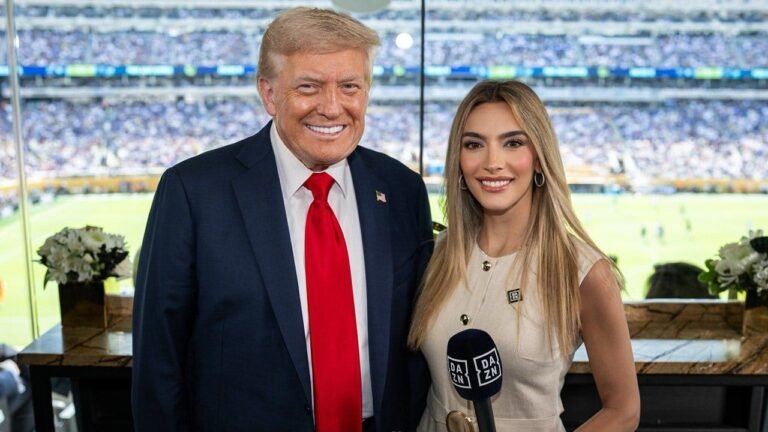
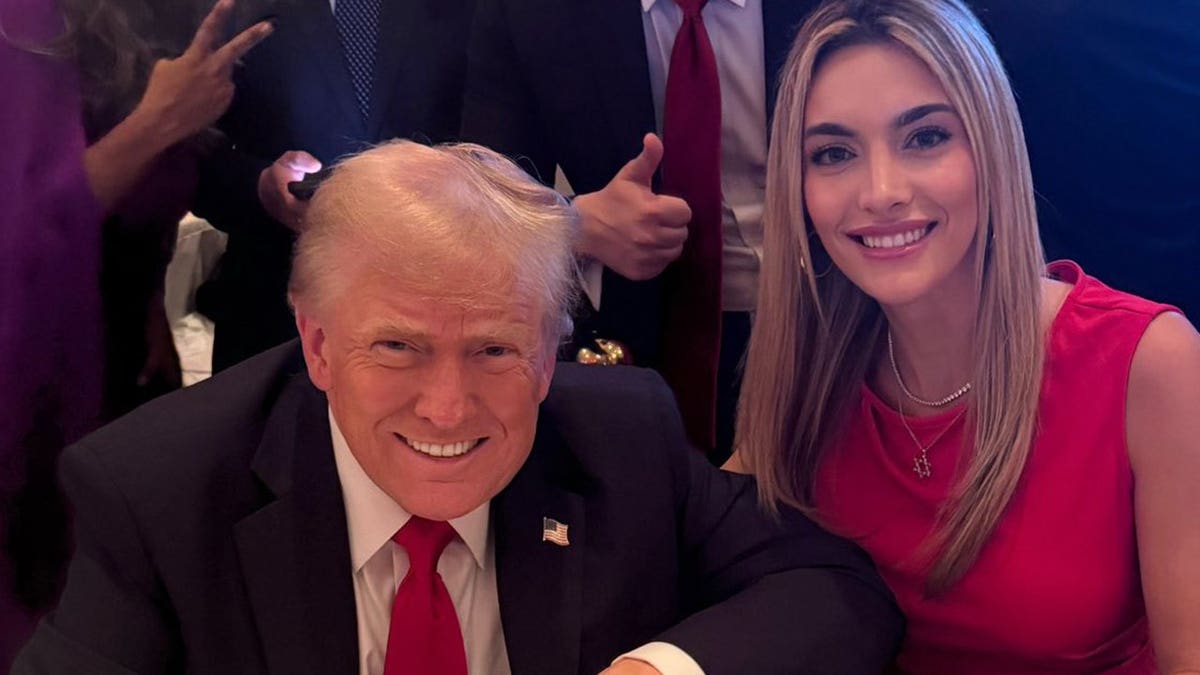
When Emily Austin came out as a supporter of President Donald Trump, she faced backlash but also received a lot of messages saying they agreed with her stance, including from NBA players.

Sports reporter and conservative influencer Emily Austin spoke with Fox News Digital about her journey and why she felt compelled to speak out about her values and be a voice for what she described as the “under-represented.”

The host of “The Emily Austin Show” said that political commentary came “by accident.”

Austin has millions of followers across all social media platforms, with her Instagram account @emily.austin being her largest with over 2.6 million followers.

Before her career, Austin was a pre-med student at Hofstra University.  In 2020, she switched her major to journalism and found herself frustrated during the coronavirus pandemic.

SAVANNAH CHRISLEY SAYS SHE ‘LOST SOME DEALS’ OVER TRUMP SUPPORT, CONSERVATIVE BELIEFS

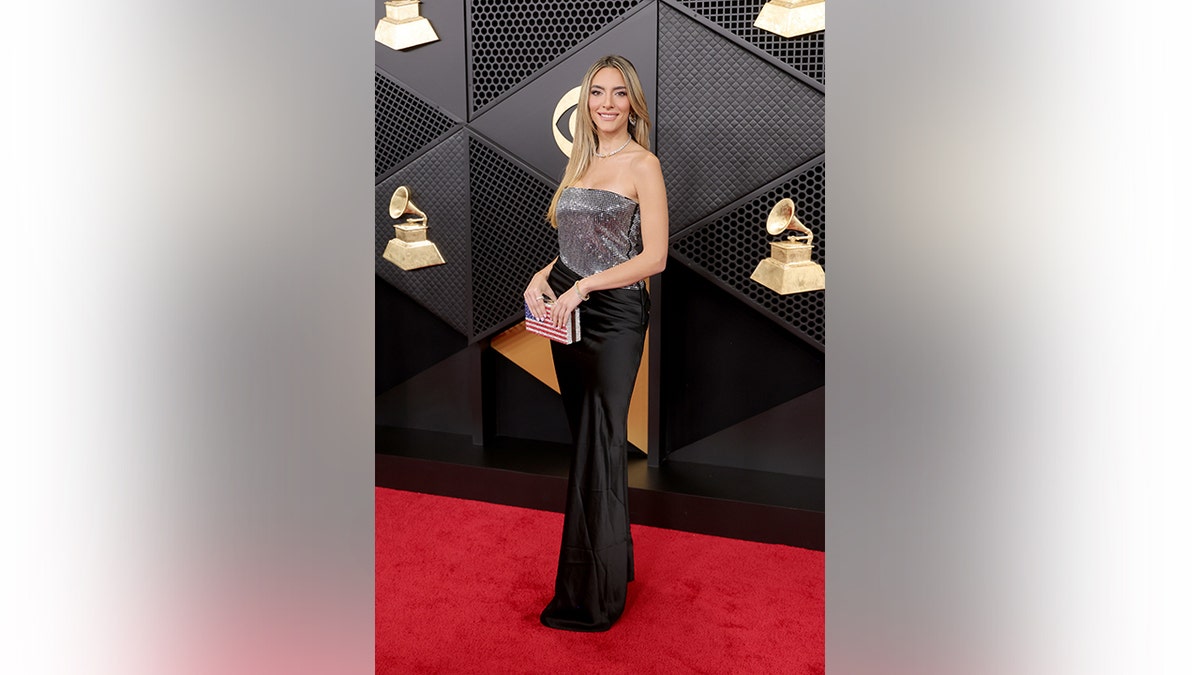
Emily Austin standing on the red carpet at the 68th Grammy Awards in Los Angeles

Emily Austin attends the 68th Grammy Awards at Crypto.com Arena in Los Angeles on Feb. 1, 2026. (Brianna Bryson/WireImage)

Austin often heard “my body, my choice” at school, a slogan she said she was on board with, but realized this wasn’t the case when it came to coronavirus vaccine mandates.

“I was like, ‘Oh my God, this is really hypocritical,'” Austin told Fox News Digital. “That was like one example of a lot of things in college that really opened up my eyes to the hypocrisy of politics, at least on the left side.”

Austin found herself “repulsed” from liberal ideology during her time at Hofstra, including identity politics and victimization, which she believes Generation Z has “fallen into.”

FORMER ‘REAL HOUSEWIFE’ SAYS BRAVO CANCELED HER FOR BEING CONSERVATIVE

However, Austin said when she began to pursue journalism, she had to initially choose between sports and politics and ended up picking sports.

“I chose sports and told myself like, ‘Eww, who wants to do politics? You know, that’s for, like, old boring people,'” she said.

During the 2020 election, Austin dove into politics more and found herself more aligned with President Trump after previously having little interest.

Austin shared that during her second year of college, seeing Joe Biden polling higher than Trump left her concerned. She even posted a “very dramatic” Instagram story threatening to leave the country if Biden was elected.

This led to her receiving a message from a Women for Trump organizer, prompting her to look more into what Trump stood for.

Emily Austin and President Trump

Emily Austin is a sports reporter and supporter of President Trump. (X: @Emilyaustin)

ROBERT GRIFFIN III WANTS END TO TRUMP-SUPPORTER HATRED: ‘NOT HOW YOU UNITE PEOPLE’

Then, Austin publicly came out as a Trump supporter.

“I just remember I came out and was like, ‘Hey guys, vote for Trump’ and oh my goodness, it was just a wave of backlash and hate,” she said.

Even her agent advised Austin to delete her post and stick to sports following her public support for Trump. She described the aftermath as a “nightmare.”

However, Austin said she was more motivated to keep sharing her opinions, even in the midst of backlash.

I was receiving messages from NBA players, like, ‘Hey I’m voting for Trump too’ or, like, ‘Wow you’re brave for saying that, like I could never,'” she said.

In addition, her classmates also sent her messages saying they were voting for Trump, too.

Austin came to the realization that Trump supporters were underrepresented.

I was just like, why are we so underrepresented? That’s not democracy. People are entitled to their opinion and nobody should be shunned for it. So I felt obliged to start making content about the side that wasn’t being shared,” she said.

AMERICAN-BORN TEAM ISRAEL OLYMPIAN PRAISES TRUMP’S FIGHT VS ANTISEMITISM, BUT WON’T PLAY FOR TEAM USA

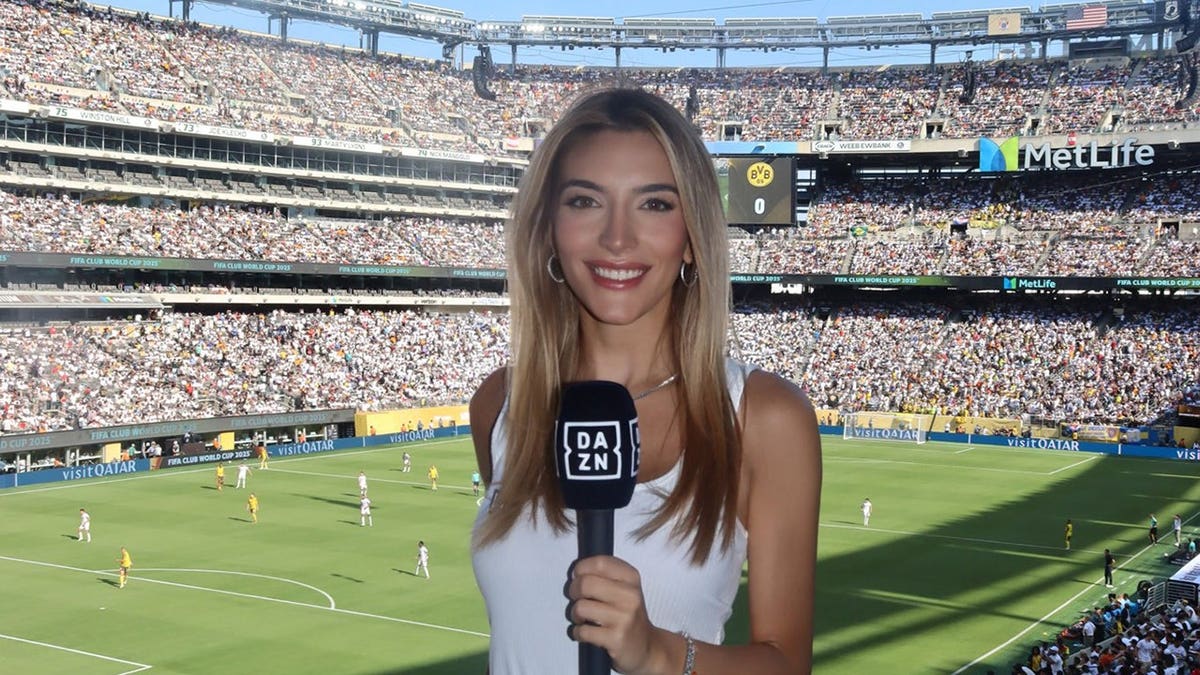
Reporter Emily Austin

Emily Austin at the FIFA Club World Cup 2025 (X: @Emilyaustin)

Now Austin continues to cover sports, which she said she loves and is passionate about.

In addition, Austin said covering sports keeps her out of an echo chamber. She told Fox News Digital that “it keeps me meeting new people and hearing new perspectives and seeing new places.”

CLICK HERE TO DOWNLOAD THE FOX NEWS APP

Austin, who is “proudly Jewish,” embraces her platform to share about Israel and Judaism.

“Most of my followers are not Jews,” she said. “So I feel like God gave me another mission. I have many missions, but this is certainly one of them.”


Source link

‘We’re going backwards’: Five civil rights activists slam the supreme court’s gutting of Voting Rights Act | US news

0

The supreme court’s recent decision to gut the Voting Rights Act is an affront to everyone who marched, bled and died to make that law possible, civil rights activists said.

“When we look at the supreme court’s action against the Voting Rights Act, it’s really a kneecap – a way to discriminate, to silence voters who fought so hard for this right,” said Sheyann Webb-Christburg, who, at eight years old, marched with civil rights leaders in Selma, Alabama, in 1965.

The Louisiana v Callais ruling eviscerated the provision of the law that prevented racial discrimination in voting practices and gave minority voters the opportunity to elect candidates of their choice. Just eight days after the decision, the Republican-led Tennessee legislature passed new redistricting maps, eliminating the state’s one Democratic, Black-majority congressional district. Other southern states, like Mississippi, are expected to follow suit.

But the struggle for voter enfranchisement is as old as the US itself. When the country was founded, voting was limited to white male landowners. After the American civil war, Black American men were granted the right to vote under the 15th amendment – and they did so in droves, electing Black senators and representatives to serve in Congress. White southern Democrats responded with violence, fraud, poll taxes and literacy tests that gutted Black political power and erased Black congressional representation for generations.

But Black Americans continued organizing and fighting for voting rights through strategic litigation, mass organizing and protests. The fight was not an easy one. Pillars of the civil rights movement, such as Medgar Evers, Martin Luther King Jr and Vernon Dahmer, were assassinated for their efforts. Others, like Fannie Lou Hamer, Amelia Boynton and John Lewis, were assaulted. Throughout the south, voting rights activists, prominent or not, were murdered, kidnapped and otherwise beaten; their homes were firebombed and their families harassed.

A turning point came in 1965, when hundreds of activists were brutalized by state troopers on the Edmund Pettus Bridge in Selma, as they marched to demand equal voting rights. Remembered as “Bloody Sunday,” that assault on peaceful protesters was broadcast nationally, galvanizing public pressure that led to the passage of the Voting Rights Act (VRA) just five months later. The VRA outlawed literacy tests and poll taxes, fundamentally transforming Black political participation across the country.

In the wake of the recent supreme court decision gutting the VRA, the Guardian spoke with those who participated in the civil rights movement about the fight for voting rights and what the setback means for Black voters.

‘It’s an assault on the struggle of the civil rights movement’


  1. Sheyann Webb-Christburg

    70, a civil rights activist known as the “smallest freedom fighter”, who was eight years old when she crossed the Edmund Pettus Bridge on Bloody Sunday.

    Sheyann Webb-Christburg, known as the “smallest freedom fighter” of the 1960s civil rights movement, remains an active voice for civil rights today. Photograph: Matt Odom/The Guardian

    I remember the first time I truly understood what freedom meant. I was just a little girl – eight years old – living right next door to Brown Chapel church in Selma, Alabama. One day, I saw all these men getting out of cars and making their way toward the church, and I didn’t know who any of them were. Then someone introduced us to Dr [Martin Luther] King [Jr]. He immediately started talking to us, asking us normal questions that adults ask children. When they were about to go in the back for a prayer meeting, the man who introduced us said we’d have to stay behind – but Dr King suddenly said no. He took us by our hands and said, “Let them stand,” and he brought us into that room, pulled up chairs and sat right in front of us, continuing to have conversations with us. That was special. I was just filled with excitement.

    But my parents told me to stay away from that church. I didn’t quite understand it then, but later I would come to understand they were afraid – afraid of the Ku Klux Klan, afraid of losing their jobs. But as a child, I had already come to understand that I was fighting for them. And so I was disobedient. I would slip out of my backdoor constantly to go to meetings, to march alongside freedom fighters, and there were times when I even skipped school.  That seed was planted right there in Selma.

    On 7 March 1965 – Bloody Sunday – I remember vividly participating as the youngest little eight-year-old on that march. I wasn’t gonna let nobody turn me around. Once we had reached the Edmund Pettus Bridge, and I looked down, I saw hundreds of policemen with teargas masks, state troopers on horses, the dogs, the billy clubs. I remember the leaders of that march – the late congressman John Lewis and Hosea Williams. They were asked to turn the marches around. However, they refused. And after they refused, racism unleashed its brutality upon the marchers. Teargas had begun to burst in the air. People were being beaten down to the ground, as if they weren’t human beings. I remember the horses and the dogs trampling over people, pushing their way into the crowd. My God. I remember that teargas burning my eyes.

    As I was trying to make my way back home to the George Washington Carver projects, I’ll never forget the late Hosea Williams picking me up. My little legs were still galloping in his arms, and I turned to him, devastated, and I said in my own childish words: “Put me down, because you are not running fast enough.” 

    The Bloody Sunday march was an effort for African Americans to gain their right to vote. Much blood, sweat and tears were shed in an effort for people to gain that right. And today, when we look at the supreme court’s action against the Voting Rights Act, it’s really a kneecap – a way to discriminate, to silence voters who fought so hard for this right. To put a special effort of voter suppression, at this time, in 2026 – that saddens me. I think this is not only illegal and unconstitutional, but I think it’s an assault on the struggle of the civil rights movement.

    We cannot turn around. We’ve come too far. This supreme court decision should be a wake-up call for us to become more cognizant – more woke – on the reality of what is happening. We need to stay out here. We need to place much more emphasis on training and voter education, not just at election time, but throughout. We have not come this far to go back.

    From the very beginning, I understood in a very significant way the importance of becoming registered voters. I saw many times where Black folks, if they knew we were coming to talk to them about registering, they would slam their doors. They were afraid. So many of them were afraid. And that only made me more determined. Because I knew that even though I wasn’t old enough to vote myself, I could still be out there encouraging others. That’s what gave me a much clearer understanding, as a child, of how important it was for our people to exercise that right.

‘Racism is still the root of the structure’


  1. Constance Slaughter-Harvey

    79, the first Black female graduate of the University of Mississippi Law School, the only female founder of the National Black Law Students Association and the first Black female judge in Mississippi.

    Among many other achievements, Constance Slaughter-Harvey was the first Black female judge in Mississippi. Photograph: Rogelio V Solis/AP

    At six years old, I knew that there were certain things that African Americans couldn’t do. And that made me more determined to do them – and I felt that way about the ballot. 

    I met Medgar Evers [the NAACP’s first field secretary in Mississippi] in 1963, and he, along with my father, encouraged me to be actively involved in securing the right to vote for everybody. Medgar was good-looking. He spoke the right language. He was not afraid. He was very articulate. He had a swagger. And then he was murdered in front of his children, so that added more fuel to the fire in my heart.

    The mindset for this country tells us, as African Americans, that we must fight to keep whatever semblance of freedom that we have. The only way you can do that is to vote. Medgar said, once you register, you threaten the system with your vote. I’ve adopted that. The white power structure, they know that if you vote, it’s over – and that’s what happened. We managed to bring about change.

    We always thought that we could outgrow racism and that racists would die out. But racism is still the root of the structure. I tell people: “We do well surviving, but we have to prevail.” Survival is not sufficient. Our children must reach their full potential, because we’ve invested too much in this society not to demand that.

    I’ll be 80 this year. I’m not about to get out and march any more, but at the same time, I’m not ever going to be content with being second class. I may not be able to beat you physically fighting, but I know one thing: if we get into a fight, you won’t come out looking like you looked before you went in. And you may knock me on the ground, but now your hair will be messed up. Your clothes may be torn up, because it’s not going to be an easy fight. That’s what these young people have to believe.

‘We’re going backwards’


  1. Benny Tucker

    86, a Selma foot soldier and Martin Luther King Jr’s bodyguard.

    The Rev Benny Tucker, who served as a bodyguard to Dr Martin Luther King Jr, became one of Selma’s most unsung figures in the fight for justice. Photograph: Matt Odom/The Guardian

    I went through a lot of things that never made me comfortable in the city of Selma. We couldn’t eat in the restaurant unless we went through the back door. There were white and Black water fountains. The drug stores and movies were all segregated. If you would try to go in to eat at a restaurant, they’d close the door and tell us we had to get it from the side. It was a horrible time growing up. So we decided that we would start protesting.

    By then, a leader at the university, who was 33, started talking with us and we got comfortable with being non-violent. Because we knew someone was going to get killed and we knew some of us would get killed. That was a chance we had to take.

    On Bloody Sunday, we were fighting for the right to vote. There were about 100 people who risked their lives trying to vote here in Dallas county in the city of Selma. If you tried to go in there to vote, they’d make you take a test: how many jelly beans in the jar? How many marble bars? How many rocks? How many pieces of rice in the bowl? Then they would tell you you didn’t pass or that you were disqualified. 

    Before we got to the Edmund Pettus Bridge that day, the movement had already started. After [activist] Jimmie Lee Jackson was killed by a state trooper [for organizing a peaceful voting rights march], we decided to leave Marion, [Mississippi], where he was killed, and carry his body to Montgomery and put it on the state capitol. 

    We had no idea that the state troopers would stop us. Jim Clark, at that time, was the sheriff. He wore a big button on his shoulder that said “never” to integration and Black voter registration. He had formed a posse of a bunch of uneducated men, including the Ku Klux Klan, who were carrying sticks and billy clubs and riding horses. As they got over the bridge, they blocked us off and told us to turn around and go back. We said we were going to Montgomery, and we didn’t leave. They started shooting teargas. They were taking their horses and running us over and beating us with billy clubs. I was hit upside the head. With all that teargas, we were blind. I was able to run and make it back to Brown Chapel church. 

    [This was broadcast on TV], but they didn’t care. Those white people didn’t care about that. They were after Governor Wallace’s instructions: segregation, now and forever. 

    I didn’t think we needed a Voting Rights Act. I always felt that way in my heart. I was MLK’s body guard here in Selma, and I told him that and he told me, “Tucker, yes, we do.” My mind was telling me this day was coming. All I said was, “Dr King, we don’t need a Voting Rights Act because someone is going to come along and change it. What we need is a president strong enough to enforce the law.” 

    So here we are at the turning point now. Now, we have to keep marching and let our voices be heard. We’re going backwards. There’s no leadership. All of the famous people I walked with are now gone. I’m about the oldest one of them left, at 86 years old. We look to the supreme court to be the law of the land, but there are no laws of the land. The supreme court is turning its back on all American citizens. But we have to have faith. We need to get on that bus and go to Washington, march again. What’s happening now has happened before, and they made it through. 

‘Don’t be discouraged, even though this is a discouraging time’


  1. Flonzie Brown-Wright

    83, the first Black woman elected official in Mississippi post-Reconstruction, who helped register thousands of voters in the state.

    Flonzie Brown-Wright, a longtime Mississippi civil rights activist. Photograph: Rogelio V Solis/AP

    When a Black person went to register to vote, they were given, including myself, a 21-item questionnaire. When you got to item number 17, you had to go to the registrar’s desk, reach in a cigar box, pull out a folded section of the Mississippi constitution and interpret that section to his satisfaction. He may or may not have known if your answer was correct or not. But what he had was power: the power to either allow you to register or deny you. If he denied you, the law said you could not come back within 30 days to try again. We didn’t have a word for that at that time, but that was clear voter suppression. 

    When I was born, my daddy didn’t have the right to vote. My mother didn’t have the right to vote. My grandfather couldn’t read because he couldn’t go to school.  Our people, our grandparents and foreparents and ancestors, took us as far as they could go. They knew they would never see the day that they could vote freely, that they could register, that they could become elected officials. But they had high hopes for us that they laid a footprint, a pathway for us to be able to do those things. We have to do the same thing. I’ve been in this struggle for 63 years. Every day, if there’s an opportunity to share encouragement, to share validation, I’m going to do that.

    I wanted to help, but I did not see myself as a leader. I did not see myself as one in the forefront, but my community did. When Mrs Annie Devine [who was active in the Mississippi civil rights movement] asked me to run for office, it was quite a surprise to me. I knew that there was a lot of work that needed to be done.

    This is not to put a feather in my cap, but my election [to election commissioner in Canton, Mississippi] changed the narrative of Blacks being elected. Representative Robert Clark had been elected to a statewide position in 1967, being the first African American male to occupy an office. My election the next year allowed me to be the first African American female to be elected in the state in the biracial town of Canton. The next year, Charles Evers, Medgar Evers’ brother, became the mayor of Fayette, Mississippi. People began to see how important the vote was. We were having voting registration campaigns and going to the courthouse and having days where we didn’t shop with the white merchants. And so we had a whole scenario of collaborative efforts just to try to get the right to vote. The Voting Rights Act was passed in 1965, and years after that, there were still concerted efforts to keep registering. Today in Mississippi, we have more Black elected officials than any other state in the country. We changed the narrative.

    Our ancestors fought with nothing. They had no education, no internet, no cell phones. They had no means, but they still fought. Harriet [Tubman] led the underground railroad. Sojourner Truth was the first Black woman to sue her plantation owner and win a lawsuit. Her baby son, Peter, was still a slave on his plantation. When she filed that lawsuit to bring Peter home, she won it, but she wouldn’t have won had she not tried. 

    Now, here we are today: business people, lawyers, doctors, different people in all kinds of professions. So I tell young people, don’t be discouraged, even though this is a discouraging time. At the end of the day, it’s the vote that counts. It is registered voters who decide what level of education people are going to be given. It’s registered voters who decide where red lights are going to be placed to keep kids safely crossing the street. If you don’t have a voice in that, then you have to take the crumbs that’s left over. The journey of 1,000 miles begins with one step – your one vote. And it does matter.

‘We’ve got to put our shoulders to the plow and work harder and smarter’


  1. Doris Crenshaw

    83, started organizing for voting rights at age 12, with Rosa Parks.

    Doris Crenshaw organized with Rosa Park as a youth. Photograph: Olivia Bowdoin/AP

    I was born in Montgomery, Alabama, and when I was 12 years old, Mrs Rosa Parks asked my grandmother if I could become a part of the NAACP’s youth council. I travelled the state with Mrs Parks, who was collecting information about different ways Black people were being attacked in Alabama. We went house to house, asking people to go down to register to vote. We talked to them about voter suppression and about education, and we attended workshops on the type of obstacles people faced, like stupid jelly bean questions to discourage them from registering. Mrs Parks herself was registered after three attempts; on her fourth, they let her through – but her husband was never registered. Ever. 

    By 1965, I was a college student in Atlanta. I came back to Montgomery to participate in the last leg of the [Selma] march. We celebrated the Voting Rights Act when it was passed that year. It put another fire in us, and we were encouraging people everywhere to register and to vote. That same year, I became a deputy registrar in Atlanta. I’ve been registering people to vote and working on voter turnout for more than 70 years.

    But I’ll tell you the truth. When they gutted section 2 of the Voting Rights Act, I was expecting it. They’ve been working on getting rid of it almost since the bill was passed. It feels like we’ve got to put our shoulders to the plow and work harder and smarter. We’ve got to register people to vote like we never registered to vote before. We’ve got to put a fire in the hearts of people who are registered but do not vote. We’ve got to encourage white people and Black people and people of all colors to turn out. 

    The young people today want to be engaged. We have to go back into the churches and all organizations and schools. We just have to provide a platform and a space for them. We just got to stay lifted up.


Source link

Noida Police solved the mystery of double murder, caught the accused who drank alcohol while sitting on dead bodies.

0

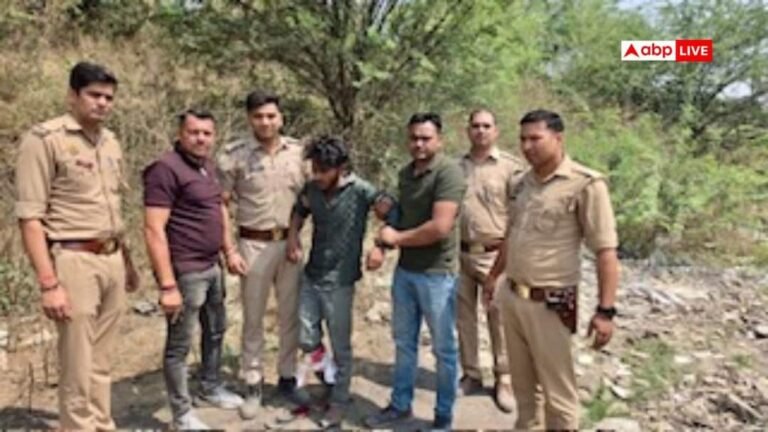
Greater Noida The police has solved the mystery of double murder that took place in the Knowledge Park area in just a few hours. The accused, who brutally murdered two laborers in an under-construction hostel, has been arrested by the police in an injured condition after he was shot in the leg after an encounter. The police have recovered a blood-stained shovel, an illegal pistol and live cartridge used in the murder from the possession of the accused.

After the encounter this morning between the Knowledge Park police and the miscreants, the police have arrested Abhishek, the main accused in the double murder. During the encounter, the accused fired at the police, in which a policeman narrowly escaped. In retaliation, the police shot the accused in the leg, after which he was caught.

Cabinet expansion may take place in UP tomorrow, these 6 ministers will take oath, names revealed

Shocking revelation made during police interrogation

What has been revealed in the police interrogation is very shocking. Abhishek was having a liquor party with his fellow laborers, Indra and Shripal, in the under-construction hostel complex. During this time, the dispute that started over a trivial matter turned into a bloody game.

Abhishek, in a fit of rage, killed a laborer by attacking him with a shovel. When he felt that the other companion could become a witness, he killed him too. The scene after the murder was even more horrifying. According to the police, after killing both of them, the accused Abhishek did not run away from there, but kept sitting between the two dead bodies and drinking alcohol for about four hours.

The accused confessed to the crime

The police officer says that the accused has confessed to his crime. On his information, a blood stained shovel, an illegal pistol and live cartridge used in the murder have been recovered. The accused committed this heinous crime under the influence of alcohol and mutual dispute. At present the accused has been sent to the hospital for treatment where he is undergoing treatment.

CM Yogi gave a special gift to Subhendu Adhikari as soon as he became the Chief Minister of Bengal, watch video