US judge blocks Trump administration’s effort to deport Rumeysa Ozturk | Israel-Palestine conflict News

0

Lawyers say immigration judge found that the Department of Homeland Security failed to prove the Tufts student should be removed from the US.

A judge in the United States has blocked the deportation of Rumeysa Ozturk, a Turkish Tufts University student who was arrested last year as part of a crackdown on pro-Palestinian activists, according to her lawyers.

Ozturk’s lawyers detailed the decision in a letter filed at the 2nd US Circuit Court of Appeals on Monday.

Recommended Stories

list of 4 itemsend of list

They said the immigration judge concluded on January 29 that the US Department of Homeland Security had not met its burden of proving she was removable and terminated the proceedings against her.

Ozturk, a PhD student studying children’s relationship to social media, was arrested last March while walking down a street as the administration of US President Donald Trump began targeting foreign-born students and activists involved in pro-Palestinian advocacy.

Video showed masked agents handcuffing her and putting her into an unmarked vehicle.

The sole basis authorities provided for revoking her visa was an editorial she co-authored in Tufts’ student newspaper a year earlier, criticising her university’s response to Israel’s genocidal war on Gaza.

A petition to release her was first filed in federal court in Boston, where Tufts is located, and then moved to the city of Burlington in Vermont. In May of last year, a federal judge ordered her immediate release after finding she raised a substantial claim that her detention constituted unlawful retaliation in violation of her free speech rights.

Ozturk, who spent 45 days in a detention centre in southern Louisiana, has been back on the Tufts campus since.

The federal government appealed her release to the 2nd US Circuit Court of Appeals.

The January 29 decision, however, ends those proceedings for now.

Ozturk said it was heartening to know that some justice can prevail.

“Today, I breathe a sigh of relief knowing that despite the justice system’s flaws, my case may give hope to those who have also been wronged by the US government,” she said in a statement released by her lawyers.

Ozturk’s immigration lawyer, Mahsa Khanbabai, said the decision was issued by Immigration Judge Roopal Patel in Boston.

Patel’s decision is not itself public, and the Trump administration could challenge it ‌before the Board of Immigration Appeals, which is part of the US Department of Justice.

Khanbabai hailed Patel’s decision, while slamming what she called the Trump administration’s weaponisation of the US immigration system to target “valued members of our society”.

“It has manipulated immigration laws to silence people who advocate for Palestinian human rights and the ongoing humanitarian crisis in Gaza,” she said. “With this ruling, Judge Patel has delivered justice for Rumeysa; now, I hope that other immigration judges will follow her lead and decline to rubber-stamp the president’s cruel deportation agenda.”

The Department of Homeland Security, which oversees US Immigration and Customs Enforcement, said in a statement that Judge Patel’s decision reflected “judicial activism”.

Homeland Security Secretary Kristi Noem “has made it clear that anyone who thinks they can ‌come to America and hide behind the First Amendment to advocate for anti-American and anti-Semitic violence and terrorism – think again”.

The video of Ozturk’s arrest in the Boston suburb of Somerville was widely shared, turning her case into one of the highest-profile instances of the effort by Trump’s administration to deport non-citizen students with pro-Palestinian views.

Separately, a federal judge in Boston last month ruled that Noem and Secretary of State Marco Rubio had adopted an unlawful policy of detaining and deporting scholars like Ozturk that chilled the free speech of non-citizen academics at universities.

The Justice Department on Monday moved to appeal that decision.


Source link

Manipur: Violence flares up again in Manipur, 30 houses set on fire; Government closed internet for five days – Manipur Ukhrul Fresh Violence House Torched Shot Fired Internet Service Suspended

0

Violence has erupted in Ukhrul, Manipur. During the violence many houses were set on fire and bullets were also fired. The violence erupted over an alleged attack on a member of the Tangkhul Naga community of Ukhrul. During the violence, about 30 vacant houses were set on fire and bullets were also fired. Considering the situation, the government has decided to shut down the internet for five days.
Trending Videos


Officials said the violence broke out in Liton Sarekhong village of Ukhrul, where attackers set several houses on fire. The attackers also fired in the air. Fearing violence, many villagers left their homes and went to safer places in the neighboring district of Kangpokpi. Kuki militants have been blamed for the attack.

Why did the violence erupt?
  • This violence started on Saturday night. Then seven-eight people attacked a person from Tangkhul Naga community in Liton village.
  • However, the aggrieved party and the village head resolved the matter with mutual consent. A meeting was to be held on this on Sunday, but that meeting could not take place.
  • People from nearby Sikibung village attacked the house of the head of Liton Sarekhong. According to reports, firing was also done near the police station.
  • There was heavy stone pelting between two groups on Sunday night, after which the administration imposed restrictions. After this, houses of Tangkhul Naga community were set on fire at midnight on Monday.
  • Kuki militants have been accused of this. After this, some houses of Kuki community were also burnt.
  • Locals fleeing their homes expressed anger at the security forces over their alleged failure to stop the firing in the area.
Read this also- Khemchand is the new CM of the state: Will the picture of Manipur change with the restoration of the government?

Titan shares rise ahead of Q3 results, trading near 52-week high

0

Titan Company Ltd shares were trading at ₹4,280.35, up 0.53 per cent on Tuesday afternoon ahead of the company’s third quarter results scheduled for later today. The stock touched an intraday high of ₹4,329.60, marking a new 52-week peak, while the day’s low stood at ₹4,239.60.

The jewellery-to-watches conglomerate’s shares have shown strong momentum across timeframes, gaining 5.2 per cent over the past week and 28.63 per cent over the last year. Year-to-date, the stock has advanced 5.7 per cent, significantly outperforming the Nifty 50’s 0.71 per cent decline during the same period.

Market analysts expect Titan to report a net profit of around ₹15.5 billion for Q3FY26, compared to ₹12 billion in the year-ago quarter. The company’s Q2FY26 performance was robust, with consolidated revenue growing 21 per cent year-on-year to ₹16,407 crore and profit after tax surging 59 per cent to ₹1,120 crore.

Trading activity remained active with 10.41 lakh shares changing hands, translating to a traded value of ₹446.60 crore by midday. The stock’s deliverable quantity stood at 50.43 per cent of total traded volume, indicating genuine investor interest rather than speculative trading.

Titan’s market capitalization stood at ₹3,79,972 crore, with the stock trading at a price-to-earnings ratio of 91.57, reflecting premium valuations in anticipation of continued growth momentum.

Published on February 10, 2026

Markets hold gains through mid-session, Eternal surges over 6%

0

Domestic equity benchmarks extended Tuesday’s opening rally into the afternoon session, with the Sensex trading at 84,390.37, up 324.62 points or 0.39 per cent from its previous close of 84,065.75, while the Nifty 50 rose 99.60 points or 0.39 per cent to 25,966.90 against Monday’s close of 25,867.30 as of 12.45 pm.

The Sensex opened at 84,210, while the Nifty began the session at 25,922.65, building on Monday’s momentum driven by continued foreign institutional investor buying and firm global cues. This marks the second consecutive session of gains, with sentiment anchored by the India-US interim trade deal and improving foreign fund flows.

Market breadth remained positive on the BSE, with 2,655 stocks advancing against 1,385 declines and 179 unchanged among 4,219 stocks traded. As many as 107 stocks hit 52-week highs, while 45 touched 52-week lows. A total of 168 stocks were locked in upper circuit, compared to 123 in lower circuit.

Eternal led the gainers on the Nifty 50, surging 6.15 per cent to ₹306.60, followed by Tata Steel, which climbed 2.72 per cent to ₹207.50. Bajaj Auto added 2.40 per cent to ₹9,820, while Mahindra & Mahindra rose 2.10 per cent to ₹3,685.30. Maruti Suzuki gained 1.99 per cent to ₹15,276.

On the losing side, Bajaj Finance declined 1.52 per cent to ₹968.20, while Shriram Finance fell 1.34 per cent to ₹1,048.50. Dr Reddy’s Laboratories dropped 1.25 per cent to ₹1,259.60, Asian Paints shed 0.93 per cent to ₹2,394.80, and HCL Technologies slipped 0.85 per cent to ₹1,588.40.

Broader indices outperformed, with the Nifty Midcap 100 rising 0.44 per cent to 60,714.70 and the Nifty Smallcap 100 gaining 0.49 per cent to 17,469.20. Banking stocks showed modest gains, with Nifty Bank up 0.11 per cent at 60,747.75 and Nifty Financial Services advancing 0.18 per cent to 28,204.25. The Nifty Next 50 edged up 0.11 per cent to 69,804.70.

Foreign institutional investors remained net buyers for the second consecutive session, purchasing shares worth approximately ₹2,255 crore on Monday, while domestic institutional investors stayed largely neutral. US markets closed higher overnight, led by technology stocks and a fresh all-time high on the Dow Jones, providing supportive global cues.

Published on February 10, 2026

Hinkley Point C plan could save 90% of fish being sucked into pipes, study finds | Hinkley Point C

0

Scientists have found that plans to use a “fish disco” to deter migratory marine life from the nearby Hinkley Point C nuclear reactor could help save 90% of fish from the power plant’s water intake pipes – but the solution is set to cost its developer £700m.

EDF Energy, which is building the Hinkley Point C nuclear plant in Somerset, said research it commissioned from scientists at Swansea University had found that using an acoustic deterrent system helped to ward off the “vast majority” of fish it tagged for the experiment.

The costly system, informally referred to as a “fish disco”, is designed to use more than 300 underwater speakers to emit sound pulses to repel fish from the water intake pipes, which will suck in water from the River Severn to help cool Hinkley’s reactors.

EDF said it expected to spend about £700m on the solution, or 1.5% of the total cost of building the £46bn project, which would give Britain’s first new nuclear power plant in a generation “more fish protection than any other power station in the world”.

Hinkley Point C will extract water from the River Severn to cool down its nuclear reactors. Photograph: robertharding/Alamy

This should help to save about 44 tonnes of fish a year – equivalent to the annual catch of a small fishing vessel. The company declined to speculate on the total cost per fish saved over the 25-year life of the reactor’s subsidy contract.

EDF has argued against the requirement to fit an acoustic deterrent in the past, instead suggesting that it could construct salt marshes to help protect marine life.

Under EDF’s subsidy contract it will earn a set return for the electricity generated by Hinkley, meaning it will need to absorb the extra cost of the fish disco rather than add it on to household bills.

The system is expected to include special mouths fitted to the intake pipes to slow the water suction and allow fish to escape from as close as 2 metres away, and a fish recovery system which returns fish sucked into the pipes.

The scientists found that only one of its tagged twaite shad fish came within 30 metres of the test intake pipes when the speakers were turned on, compared with the 14 seen in the same area without the system turned on.

In good news for the salmon population, the research found that those migrating to the Atlantic generally use the main channel of the Severn, which is well away from Hinkley Point C’s water intake pipes. In two years, only two tagged salmon were detected within 1km of the intakes, the scientists said.

Dr David Clarke, a fisheries scientist and marine ecologist at Swansea University, said: “These early results are very encouraging with the system clearly working. Our results show that a large majority of the tagged shad avoid an area extending some 60 metres from the intake heads protected by the acoustic fish deterrent system.”

Chris Fayers, the head of environment at Hinkley Point C, said: “Because the system works even better than we had hoped, it means we can meet all of our planning obligations and should not need to create 900 acres of salt marsh as environmental compensation. And it’s good news for a power station that will generate the reliable, low carbon electricity that the country needs.”

The results of the research will be submitted for regulatory consideration and approval by the Marine Management Organisation later this year.


Source link

Rafale Fighter Jet: 114 Rafale deal will be approved this week, good news before Macron comes to India, Munir will get a big blow

0

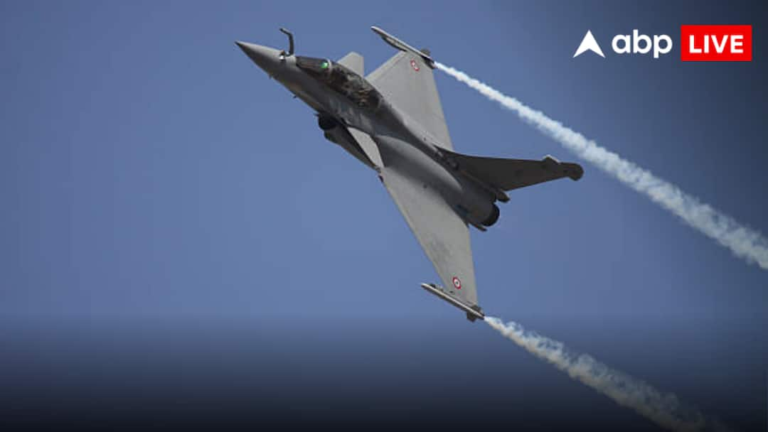
114 for Indian Air Force rafale A big deal to buy fighter aircraft may get approval from the Defense Ministry this week. This decision can be taken just before the visit of French President Emmanuel Macron to Delhi. If this deal is passed, it will prove to be the biggest deal in the history of India, the total cost of which is estimated to be around Rs 3.25 lakh crore.

This deal is being done under the Multi Role Fighter Aircraft Plan of the Indian Air Force and its purpose is to strengthen the decreasing squadron number of the Air Force. Through this deal, India will not only acquire state-of-the-art fighter aircraft, but the capacity to manufacture fighter jets in the country will also increase manifold.

Make in India will get a big boost

In the report of NDTV, it has been said that this deal will be done this week. The most important condition of this deal is that about 100 Rafale fighter planes will be manufactured in India only. Under this, France will transfer high level fighter jet technology to India and a long-term strategic partnership will be formed between the two countries. From this ‘Make in India’‘The program will get great strength and India will take a big step towards self-reliance in the field of defense production.

After the deal, India will become the largest operator of Rafale outside France. Rafale is a twin engine multi-role fighter jet, which is counted among the deadliest fighter planes in the world. It is considered adept in both air superiority and precision strike.

Rafale is already present in the Indian Air Force

India has already included 36 Rafale fighter jets in its fleet. The Air Force received the last ‘C’ variant of Rafale in December 2024. Apart from this, India has also purchased 26 Rafale Marine i.e. ‘M’ versions for the Navy, whose deal is worth about Rs 63 thousand crores.

This naval deal also includes four twin-seat trainer aircraft, maintenance and logistics support, as well as training of pilots and technical staff. According to reports, the delivery of these aircraft is expected to be completed by 2030. Rafale Marine aircraft will be deployed on INS Vikrant and INS Vikramaditya aircraft carriers.

Rafale’s strength shown in Operation Sindoor

Rafale fighter aircraft of the Indian Air Force have already proved their strength in real war-like situations. in may 2025 Pahalgam Rafale aircraft were deployed during Operation Sindoor, conducted after the terrorist attack. Apart from this, Rafale was also strategically deployed in Ladakh region. operation vermilion There has been talk of using SCALP cruise missile with Rafale aircraft. This air launched missile is capable of targeting strong targets at a distance of more than 250 kilometers with great accuracy.

Why are Rafale’s weapons and technology special?

The Rafale fighter jet is equipped with long-range Meteor air-to-air missile, Hammer Stand Off Strike Weapon and Spectra Advanced Electronic Warfare System. Along with this, it is equipped with state-of-the-art radar and targeting systems, which make it very effective for modern warfare.

Gold rates slip again; check rates in Chennai, Ahmedabad, Mumbai, Kolkata, Bengaluru, Delhi

0

FILE PHOTO: Gold bullion is displayed at Hatton Garden Metals precious metal dealers in London, Britain

FILE PHOTO: Gold bullion is displayed at Hatton Garden Metals precious metal dealers in London, Britain | Photo Credit: Neil Hall

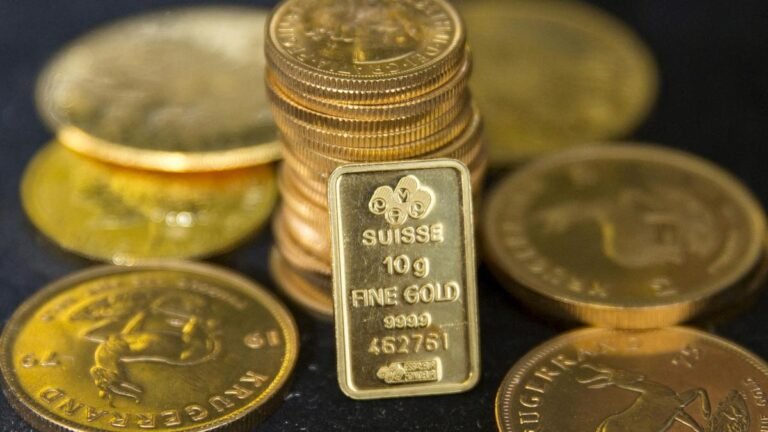
Gold prices in India saw a decrease in all key cities. The price for 8 grams of 24-carat gold also dropped in all cities compared with the previous session. Below is a detailed breakdown of gold prices in key cities.

Gold rates in India:

Gold prices in India today were ₹14,525 for 1 gram of 22-carat gold (down by ₹850) and ₹1,16,200 for 8 grams of 22-carat gold (down by ₹680).

Gold Rate in Mumbai:

22 Carat: gold price in mumbai today were ₹14,525 for 1 gram of 22-carat gold (down by ₹850) and ₹1,16,200 for 8 grams of 22-carat gold (down by ₹680).

24 Carat: gold price in mumbai as reported today were ₹15,251 for 1 gram of 24-carat gold (down by ₹90) and ₹1,22,008 for 8 grams of 24-carat gold (down by ₹720).

Gold Rate in Chennai:

22 Carat: gold price in chennai today were ₹14,580 for 1 gram of 24-carat gold (down by ₹70) and ₹1,16,640 for 8 grams of 24-carat gold (down by ₹560).

24 Carat: gold price in chennai today were ₹15,309 for 1 gram of 24-carat gold (down by ₹74) and ₹1,22,472 for 8 grams of 24-carat gold (down by ₹592).

Gold Rate in Hyderabad:

22 Carat: gold price in Hyderabad today were ₹14,580 for 1 gram of 24-carat gold (down by ₹70) and ₹1,16,640 for 8 grams of 24-carat gold (down by ₹560).

24 Carat: gold price in Hyderabad today were ₹15,309 for 1 gram of 24-carat gold (down by ₹74) and ₹1,22,472 for 8 grams of 24-carat gold (down by ₹592).

Gold Rate in Delhi:

22 Carat: gold price in delhi today were ₹14,575 for 1 gram of 22-carat gold (down by ₹85) and ₹1,16,600 for 8 grams of 22-carat gold (down by ₹680).

The gold price in delhi today were ₹15,304 for 1 gram of 24-carat gold (down by ₹89) and ₹1,22,432 for 8 grams of 24-carat gold (down by ₹712).

Gold Rate in Ahmedabad:

22 Carat: gold price in Ahmedabad today were ₹14,579 for 1 gram of 22-carat gold (down by ₹85) and ₹1,16,632 for 8 grams of 22-carat gold (down by ₹680).

24 Carat: gold price in Ahmedabad today were ₹15,308 for 1 gram of 24-carat gold (down by ₹89) and ₹1,22,464 for 8 grams of 24-carat gold (down by ₹712).

Gold Rate in Bengaluru:

22 Carat: gold price in Bengaluru today were ₹14,585 for 1 gram of 22-carat gold (down by ₹85) and ₹1,16,680 for 8 grams of 22-carat gold (down by ₹680).

24 Carat: gold price in Bengaluru today were ₹15,314 for 1 gram of 24-carat gold (down by ₹90) and ₹1,22,512 for 8 grams of 24-carat gold (down by ₹720).

Gold Rate in Kolkata:

22 Carat: gold prices in kolkataa today were ₹14,625 for 1 gram of 22-carat gold (down by ₹85) and ₹1,17,000 for 8 grams of 22-carat gold (down by ₹680).

24 Carat: gold price in Kolkata today were ₹15,356 for 1 gram of 24-carat gold (down by ₹90) and ₹1,22,848 for 8 grams of 24-carat gold (down by ₹720).

Gold Rates Courtesy: bankbazaar.com

Published on February 10, 2026

Gold, silver ETF inflow pips equity MF schemes

0

For the first time ever, the inflows into precious metals — gold and silver — exchange traded funds have overtaken that of all equity schemes which were beaten down by mark-to-market losses.

The inflows into gold and silver ETFs hit a high of ₹24,040 crore (₹11,647 crore) and ₹9,463 crore (₹3,962 crore) as investors used the fall in precious metal prices to pump in more money. Passive assets under management were up 6 per cent to ₹R15.41 lakh crore (₹14.57 lakh crore), according to the Association of Mutual Funds in India data released on Tuesday.

On the other hand, inflows into equity schemes were down at ₹24,029 crore last month against ₹28,054 crore logged in December. Overall, equity AUM was down two per cent to ₹34.86 lakh crore (₹35.72 lakh crore) largely due to mark-to-market loss amid extreme volatility.

Venkat Chalasani, CEO, AMFI said the demand for investing in gold will remain strong as long as the high US debt persists and central banks continue to buy the yellow metal.

Silver prices were driven by industrial demand and prices are firming up due to short supply in the market, he said.

Equity markets were volatile due to uncertainty over the US trade deal and bellwether equity indices were beaten down due to sharp pull out by foreign portfolio investors, he added.

Published on February 10, 2026

Workday CEO steps down amid layoffs and market jitters • The Register

0

Carl Eschenbach has stepped down as Workday CEO and been replaced by co-founder and executive Aneel Bhusri following a round of job cuts and share price volatility.

In a statement [PDF] to investors, the company said Eschenbach is set to get an aggregate lump sum cash payment of $3.6 million, including cash severance benefits.

Workday provides enterprise HR and finance software as a service. Like many SaaS vendors, its value has been hard hit over the last week as investors consider the impact of AI on the market. Over the last year, its share price has fallen by around 40 percent.

Eschenbach was appointed CEO in January 2024, succeeding Bhusri’s first tenure in the role. In February 2025, Workday announced it was cutting 8.5 percent of its personnel – equivalent to around 1,750 positions – under a restructuring scheme because of AI investment.

The company later said it would rehire different roles and skills, intending to “ultimately have the same amount of people working,” CFO Zane Rowe told investors in June last year.

In September, activist investors took a $2 billion stake in Workday. At the time, Eschenbach cast doubt on the company’s rehiring plans. “We don’t need more headcount to drive the business forward,” he told investors.

Last week, the company said it was laying off about 2 percent of its staff in a bid to align its people with its “highest priorities,” hitting margins for the quarter and the year.

In a prepared statement, Mark Hawkins, Workday vice chair and lead independent director, said Eschenbach had stepped in at “a pivotal time” and helped Workday “mature into a more global, disciplined organization.”

Bhusri said: “I’m deeply grateful to Carl for leading Workday through an important chapter – scaling the company, building on our foundation, and positioning us well for what’s ahead. We’re now entering one of the most pivotal moments in our history. AI is a bigger transformation than SaaS – and it will define the next generation of market leaders. I’m energized to return as CEO, working alongside our presidents Gerrit Kazmaier and Rob Enslin, and I’m excited about the opportunity in front of us.”

Eschenbach’s youthful exploits in college wrestling earned him hall-of-fame status. Perhaps investor sentiment proved to be an opponent too difficult to pin down. ®


Source link