How does the cutoff of Starlink terminals affect Russia’s moves in Ukraine? | Russia-Ukraine war News

0

Kyiv, Ukraine – A heavy Russian Geran drone struck a fast-moving train in northern Ukraine on January 27, killing five, wounding two and starting a fire that disfigured the railway carriage.

Such an attack was impossible back in 2022, when Russia started dispatching roaring swarms of Shaheds, the Geran-2’s Iranian prototypes.

Recommended Stories

list of 4 itemsend of list

Ukrainian servicemen ridiculed them for their slow speed and low effectiveness – and shot them down with their assault rifles and machineguns.

But the Geran kamikaze drones have undergone countless modifications, becoming faster and deadlier – and some were equipped with Starlink satellite internet terminals.

The terminals made them immune to Ukrainian jamming and even allowed their Russian operators to navigate their movement in real time.

Western sanctions prohibit the import of the notebook-sized terminals operated by Elon Musk’s SpaceX company to Russia.

But Moscow has allegedly smuggled thousands of them via ex-Soviet republics and the Middle East, notably Dubai, using falsified documents and activation in nations where the use of Starlink is legal, according to Russian war correspondents and media reports.


Russian forces were able to counter the use of Starlink by Ukrainian forces as the terminals linked to SpaceX’s satellite armada orbiting the Earth allowed faster communication and data exchange, as well as greater precision.

In early February, SpaceX blocked the use of every Starlink geolocated on Ukrainian territory, including the ones used by Ukrainian forces.

Only after a verification and inclusion into “white lists” that are updated every 24 hours can they be back online.

But any terminal will be shut down if moving faster than 90km/h (56mph) to prevent drone attacks.

“Looks like the steps we took to stop the unauthorized use of Starlink by Russia have worked,” Musk wrote on X on February 1.

The step is ascribed to Ukraine’s new defence minister, Mykhailo Fedorov, a 35-year-old who had served as the minister of digital transformation. He introduced dozens of innovations that simplified bureaucracy and business, according to a four-star general.

“Fedorov managed to sort it out with Musk – somehow, because we couldn’t do it earlier,” Lieutenant General Ihor Romanenko, a former deputy head of Ukrainian armed forces, told Al Jazeera.

He said the shut-off “significantly lowered” the effectiveness of Russia’s drone attacks and disrupted the communication of small groups of Russian soldiers trying to infiltrate Ukrainian positions.

The effect was so devastating that it made Russian forces “howl” with despair, said Andriy Pronin, one of the pioneers of military drone use in Ukraine.

“They’re like blind kittens now,” he told Al Jazeera.

Russian servicemen in places like the contested eastern town of Kupiansk are now “deprived of any way of getting in touch with mainland”, one of them complained on Telegram on February 4.

Other servicemen and war correspondents decried the shortsightedness of Russian generals who built communications around Starlink and did not create an alternative based on Russian technologies and devices.

However, the shutdown affected Ukrainian users of Starlink that were not supplied to the Defence Ministry but were procured by civilians and charities.

“The communications were down for two days until we figured out the white list procedure,” Kyrylo, a serviceman in the northern Kharkiv region, told Al Jazeera. He withheld his last name in accordance with the wartime protocol.

The effect, however, is short-term and is unlikely to turn the tables in the conflict that is about to enter another year.

“It’s not a panacea, it’s not like we’re winning the war,” Pronin said. “It will be hard [for Russians], but they will restore their communications.”

According to Romanenko, “it’ll take them several weeks to switch to older” communication devices such as radio, wi-fi, fibre optic or mobile phone internet.


Source link
Saudi Arabia has nuclear bomb! The statement of former Iranian commander created a stir

0

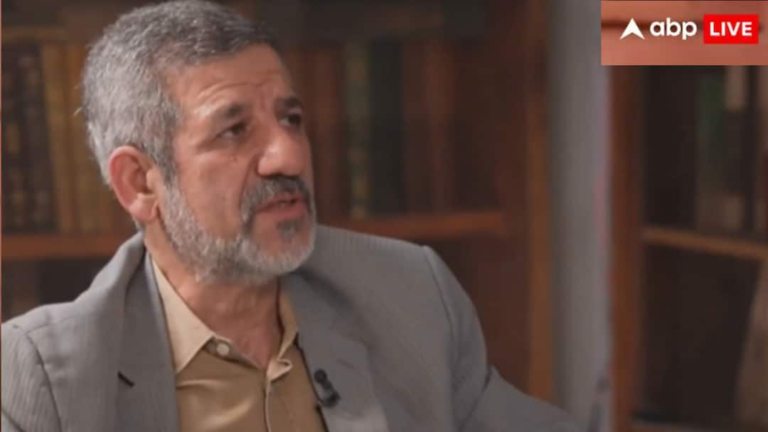
Former commander of Iran has created a stir by giving a sensational statement. Former top official of Iran’s Islamic Revolutionary Guard (IRGC) Hussein Kanani Moghadam has claimed that Saudi Arabia has a nuclear bomb, not only this he also said that America and Israel also know this.

Kanani Moghadam said, Saudi Arabia shows the world that it is a non-nuclear weapon country, but the truth is the opposite. It is a nuclear country. Apart from Iran, America and Israel also know this. The former IRGC commander has made this claim while giving an interview to a channel.

He visited Saudi Arabia, Israel and America Also claimed to have discussed this matter between them. In return for approving nuclear weapons, America also puts a condition on it to recognize Israel.”

Green Party leader Kanani says that the historical agreement (Abraham Accord) with Israel and many Arab countries also contains information about Saudi Arabia’s nuclear power. The US’s proposed agreement to give Saudi Arabia informal access to nuclear weapons depends on it signing the Abraham Accords.

Green Party politician and former IRGC commander Kanani quoted Iranian Intelligence as saying that under the Abraham Accords, it was decided that Saudi Arabia would be given exemption for nuclear weapons, in return Israel and America agreed to give it exemption, but later the talks did not progress further.

saudi arabia Although Pakistan may not officially possess nuclear weapons, it has shown its desire for it on many occasions. Saudi Arabia also has an agreement with nuclear powered country Pakistan, in which an attack on one country will be considered an attack on another country.

The American Vice President has also said in a recent interview with Megyn Kelly that if Iran makes a nuclear bomb, then the very next day Saudi Arabia will also become a nuclear weapon rich country.

Firing in shopping center parking lot of Canada, 37 year old Indian killed, used to work in IT sector

0

Canada News: Sad news has come out from Toronto city of Canada, which has spread panic among the people. A 37-year-old Indian-Canadian man was killed when unidentified assailants opened fire in the parking lot of a busy shopping center in the city. According to the statement issued by Toronto Police, the deceased has been identified as Chandan Kumar Raja Nandakumar, who was a resident of Brampton. Chandan Kumar originally belonged to the Karnataka state of India and was an IT specialist by profession.

According to police, the incident happened around 3:31 a.m. Saturday in the parking lot of the Woodbine Shopping Center located at Rexdale Boulevard and Highway 27. When officers reached the spot after receiving information about the firing, they found Chandan Kumar seriously injured. He was immediately taken to the hospital, but he died during treatment.

Bullet marks on the windshield of SUV, police engaged in investigation

Police Inspector Errol Watson said that this did not appear to be a sudden incident, but it was a targeted attack. In the pictures obtained from the incident site, bullet marks are clearly visible on the front glass and driver’s side window of a white SUV.

Suspected attackers fled from the spot

After committing the crime, the suspected attackers fled from the spot in their car. This is the third incident of murder in Toronto this year. Police are investigating how many suspects were involved in the attack and how many rounds were fired. At present the real reasons for the firing have not been known.

Also read –

Punjab: ‘Operation Prahar-2’ created panic among criminals, 72-hour mega campaign started under the leadership of CM Mann

Punjab: AAP protest in case of Harbhajan ETO comment, Congress leader Pratap Singh Bajwa summoned

‘Evil deeds’: Hong Kong leader praises lengthy jail sentence for Jimmy Lai | Politics News

0

US, UK officials call for Jimmy Lai’s release on ‘humanitarian’ grounds due to his age and health.

Hong Kong’s Chief Executive John Lee has praised the sentencing of pro-democracy media tycoon Jimmy Lai to 20 years in prison, saying he had committed “numerous heinous crimes, and his evil deeds were beyond measure”.

Lee’s condemnation on Tuesday of the former Apple Daily newspaper owner came as officials in the United States, the United Kingdom and several other countries, as well as the United Nations, said the jailing of Lai was “unjust” and that the 78-year-old should be freed on humanitarian grounds.

Recommended Stories

list of 4 itemsend of list

“This verdict needs to be promptly quashed as incompatible with international law,” UN Human Rights Commissioner Volker Turk said.

The Hong Kong chief executive said Lai’s newspaper had “poisoned” Hong Kong citizens and encouraged them to break the law and become radical and violent, during months of antigovernment demonstrations in 2019.

“The severe sentence of 20 years’ imprisonment imposed on him manifests that the rule of law is upheld and justice is done, and also brings great relief to all,” Lee said.

Lai was sentenced on Monday alongside eight other defendants, including six former Apple Daily employees, who received prison terms ranging from six years and three months to 10 years.

His sentence was the harshest yet to be handed down in Hong Kong since Beijing imposed national security legislation on the semi-autonomous city in 2020.

US Secretary of State Marco Rubio described the sentence as an “unjust and tragic conclusion” to Lai’s case.

“It shows the world that Beijing will go to extraordinary lengths to silence those who advocate fundamental freedoms in Hong Kong,” he said in a statement shared on X.

Rubio and UK Foreign Secretary Yvette Cooper called for Hong Kong to release Lai, a dual UK and Hong Kong citizen, on humanitarian grounds.

“For the 78-year-old, this is tantamount to a life sentence. I remain deeply concerned for Mr Lai’s health, and I again call on the Hong Kong authorities to end his appalling ordeal and release him on humanitarian grounds, so that he may be reunited with his family,” Cooper said.

‘Anti-China agitators’

Lai was found guilty in December of two counts of colluding with foreign forces – a national security charge – and one count of sedition for supporting the protests and allegedly lobbying the US to sanction Hong Kong leaders following a crackdown on the protests.

Before his arrest, Lai was known as a longtime critic of China’s Communist Party and a strong supporter of Hong Kong’s pro-democracy movement.

His son Sebastian told the BBC this week that a 20-year prison term was tantamount to a “death sentence” given his father’s age and deteriorating health.

“I do hope the government does more in freeing my father,” he said, referring to the British government.

UK opposition leaders, including Conservative Party Shadow Foreign Secretary Priti Patel, have criticised Prime Minister Keir Starmer for not doing enough to help Lai during his trip to Beijing in January.

“The Prime Minister Keir Starmer and the Labour Government should be ashamed of themselves for not securing the release of Jimmy,” Patel wrote on X.

Patel also described Starmer as “spineless” for simultaneously approving China’s controversial plan to build a mega embassy and alleged “spy hub” in central London.

Despite the global criticism, China has maintained that national security laws are necessary to “safeguard” Hong Kong. China’s powerful State Council referred to Lai’s trial in a new report released on Tuesday about Hong Kong’s national security situation.

The report said “anti-China agitators” – like Lai – “who sought to destabilise Hong Kong have been convicted and put in jail in accordance with the law”.


Source link

Fractal Analytics, Aye Finance IPOs see tepid day 2 response

0

The initial public offerings of Fractal Analytics and Aye Finance continued to draw muted investor interest on the second day of bidding, with both issues subscribed only about 0.14 times and 0.15 times, respectively, by 2.27 pm on February 10, 2026.

Fractal Analytics’ ₹2,834-crore offer was subscribed 0.14 times, with qualified institutional buyers yet to place bids, non-institutional investors subscribing 0.13 times, retail investors 0.55 times and the employee portion 0.19 times.

Aye Finance’s ₹1,010-crore IPO also saw an overall subscription of 0.15 times, led mainly by retail participation at 0.43 times, while QIBs subscribed 0.13 times and NIIs just 0.01 times.

Fractal Analytics, an artificial intelligence solutions provider, will close its issue on February 11 and is slated to debut on the stock exchanges on February 16. Ahead of the public issue, the company raised ₹1,248.26 crore from anchor investors. The IPO is priced in the band of ₹857 to ₹900 per share, which values ​​the company at close to ₹15,500 crore at the upper end.

The company has downsized its public issue from the originally proposed ₹4,900 crore to about ₹2,833.9 crore. The revised structure includes a fresh issue worth up to ₹1,023.5 crore and an offer for sale of ₹1,810.4 crore. Shareholders offloading stock through the OFS include Quinag Bidco Ltd, TPG Fett Holdings Pte. Ltd, Satya Kumari Remala Rao, Venkateswara Remala and GLM Family Trust. Proceeds from the fresh issue are earmarked for investments in subsidiary Fractal USA, repayment or pre-payment of borrowings, purchase of laptops, expansion of office infrastructure in India, research and development, sales and marketing initiatives under Fractal Alpha, acquisitions, and general corporate purposes. Market participants are watching the final-day demand closely to gauge institutional appetite for large-ticket technology listings amid a selective primary-market environment.

Aye Finance’s IPO will also close on February 11, with listing scheduled on the BSE and NSE on February 16. The non-banking financial company garnered ₹454.5 crore from anchor investors last week. Shares are being offered in a price band of ₹122 to Rs 129, implying a valuation of ₹3,184 crore at the top end.

The offer consists of a fresh issue of equity shares aggregating up to ₹710 crore and an offer for sale of up to ₹300 crore by existing shareholders. Funds raised through the fresh issue will be used to bolster the company’s capital base to support future growth in its loan book and business expansion. Classified as a middle-layer NBFC, Aye Finance focuses on lending to micro and small enterprises, a segment that remains underserved by traditional banks. Expectations around the issue hinge on whether institutional participation improves before closure, as investors weigh growth prospects in the MSE lending space against broader market conditions.

Published on February 10, 2026

Pappu Yadav News: Pappu Yadav got bail from MP-MLA court, he was arrested three days ago, when will he be released?

0

Purnia MP Pappu Yadav got bail from MAP-MLA court on Tuesday (February 10, 2026). He has been granted bail in the case of renting and occupying a house fraudulently. The landlord had filed a case in Gardnibagh police station. An arrest was made in this case three days ago. Now it remains to be seen when he will be released. If he is not released from jail this evening after the entire process, it may be possible by tomorrow.

Cisco unveils 102.4T Silicon One G300 switch chip • The Register

0

As AI training and inference clusters grow larger, they require bigger, higher-bandwidth networks to feed them. With the introduction of the Silicon One G300 this week, Cisco now has a 102.4 Tbps monster to challenge Broadcom’s Tomahawk 6 and Nvidia Spectrum-X Ethernet Photonics.

Much like those chips, the G300 packs 512 ultra-fast 200 Gbps serializers/deserializers (SerDes). The massive radix — that means loads of ports — means Cisco can now support deployments of up to 128,000 GPUs using just 750 switches, where 2,500 were needed previously. Alternatively, those SerDes can be aggregated to support port speeds of up to 1.6 Tbps.

None of this is unique to Cisco, however. That’s just how bandwidth scales. Those same figures apply to Broadcom and Nvidia’s 102.4 Tbps silicon just as they do to anyone else’s. 

Managing AI congestion

According to Cisco fellow and SVP Rakesh Chopra, what really sets the G300 apart from the competition is its collective networking engine, which features a fully shared packet buffer and a path-based load balancer to mitigate congestion, improve link utilization and latency, and reduce time to completion. 

“There’s no sort of segmentation of packet buffers, allowing packets to come in [and] be absorbed irrespective of the port. That means that you can ride through bursts better in AI workflows or front-end workloads,” he said.

The load-balancing agent “monitors the flows coming through the G300. It monitors congestion points and it communicates with all the other G300s in the network and builds sort of a global collective map of what is happening across the entire AI cluster,” he added.

This kind of congestion management isn’t new by any means. Both Broadcom and Nvidia have implemented similar technologies in their own switches and NICs for this reason.

However, Cisco claims its implementation achieves a 33 percent better link utilization, which can cut training times by up to 28 percent compared to packet-spraying-based approaches. 

And while Chopra doesn’t say which vendor it’s comparing the G300 to, we’ll note both Broadcom and Nvidia’s implementations rely on packet spraying. As usual, we recommend taking any vendor-supplied performance claim with a grain of salt. While there aren’t that many 102.4 Tbps switches out there, there are countless ways to build networks using them, and some topologies may benefit from one vendor’s tech more than another.

P4 programmability

Cisco’s collective networking engine is only one piece of the puzzle. The other, claims Chopra, is the chip’s P4 programmability.

“It means that we can take our device, we can reprogram it to add new functionality, new capabilities, and deploy the same equipment in multiple different roles,” Chopra said, adding that this is particularly valuable for extending the useful life of the switches. As new features are introduced, they can often be added via a software update rather than requiring new hardware.

If any of this sounds familiar, that’s because Cisco isn’t the only AI networking vendor leaning into P4. AMD’s Pensando NICs, like the Polara 400, also make use of the programming language. This actually came in handy for AMD as it allowed the chip designer to start shipping Ultra Ethernet compatible NICs before the spec had actually been finalized, since any changes to the spec could be implemented later via a software update.

As with past Silicon One switch chips, the G300 will compete directly with Broadcom in the merchant silicon arena in addition to powering Cisco’s own networking appliances.

In particular, Cisco says the part will be available as part of its N9000 and Cisco 8000 product lines, both of which will come equipped with 64 1.6 Tbps OSFP cages.

1.6 Tbps optics have arrived, but still no CPO from Cisco

To support these appliances, Cisco is also rolling out new 1.6 Tbps pluggable optics, which can be broken out on the other end into up to eight 200 Gbps connections.

Alongside the ultrafast links, Cisco is introducing 800 Gbps linear pluggable optics (LPO), which ditch the onboard digital signal processor (DSP) and retimer in order to cut power consumption. This is possible because signal processing is handled entirely in the G300.

While pluggables don’t consume that much power – usually 10-20 watts – a 50 percent reduction is still significant when you consider just how many pluggables may be deployed across a datacenter.

Cisco wouldn’t tell us how much power its new LPO transceiver consumes, but did say that when combined with the N9000 or Cisco 8000 systems, customers can expect to see a roughly 30 percent reduction in switch power.

While Cisco is making gains on pluggables, it’s not quite ready to follow Nvidia and Broadcom and take the plunge on copackaged optics (CPO) just yet.

The technology involves moving the optics from the pluggable module into the switch package, reducing power consumption and, in theory, improving the reliability of the network.

“We’re not making any public announcements about CPO at this time,” Chopra said, noting that Cisco has previously demoed the tech on its G100 silicon. “We certainly have the technology, we’re looking for business alignment to sort of productize it.”

Cisco expands availability of multi-datacenter routing silicon

Alongside the new optics, Cisco also announced broader availability for its Silicon One P200 routing silicon.

We took a closer look at the chip last fall, but in a nutshell, the 51.2 Tbps chip is designed to connect AI training clusters over distances of up to 1,000 kilometers.

Alongside the previously announced Cisco 8223 router, Switchzilla says the part is now available in its N9000 line and as a 28.8 Tbps line card.

Cisco’s G300 chips, systems, and optics are slated to begin shipping later this year, just in time for Nvidia and AMD’s next-gen rack systems. ®


Source link

UN spokesman pressed on ‘de facto annexation’ of occupied West Bank | Genocide

0

NewsFeed

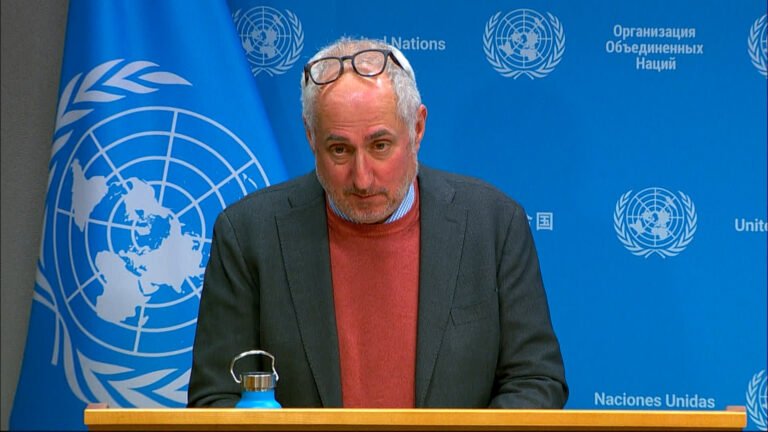
As Israel faces mounting criticism over new measures to tighten its control of the occupied West Bank, Al Jazeera’s Gabriel Elizondo asked the UN Secretary-General’s spokesman what he plans to do to deter Israel.


Source link

Embassy Developments shares fall 4% despite 240% jump in quarterly pre-sales

0

Embassy Developments Limited shares declined 3.97 per cent to ₹64.75 on the NSE on Tuesday afternoon, despite the company reporting a sharp 240 per cent quarter-on-quarter growth in pre-sales for Q3 FY26.

The stock opened at ₹65.32 and touched a low of ₹64.25 during the session, with selling pressure dominating as 71 per cent of the day’s trading volume came from sellers. The shares have been under the Additional Surveillance Measure (ASM) framework with 100 per cent margin requirement following the company’s admission into insolvency proceedings in December.

The company announced on February 9 that pre-sales reached ₹1,392 crore in Q3 FY26, up from ₹409 crore in Q2 FY26. New bookings stood at 1.19 million square feet, marking a 193 per cent QoQ increase. Collections for the quarter stood at ₹414 crore, reflecting 15 per cent QoQ growth.

Embassy Developments launched two residential projects—Embassy Greenshore and Embassy Eden in North Bengaluru—along with Embassy East Business Park Phase I during the quarter. Embassy Greenshore achieved pre-sales of ₹804 crore against its ₹1,600 crore gross development value.

The company maintains a debt-to-equity ratio of 0.36x with gross institutional debt of ₹3,700 crore and cash equivalents of ₹670 crore as of December 31, 2025.

However, investor sentiment remains cautious due to ongoing insolvency proceedings related to a 2011 corporate guarantee for Sinnar Thermal Power Limited. The company has obtained a stay from NCLAT, with final arguments scheduled for February 19. Managing Director Aditya Virwani stated the matter has no impact on day-to-day operations.

The stock has fallen 55 per cent over the past year and trades 56.6 per cent below its 52-week high of ₹149.35.

Published on February 10, 2026

In Ukraine, deaths from hypothermia rise as Russia attacks energy system | Russia-Ukraine war News

0

Kyiv, Ukraine – No one was hurt when the first Russian drone hit Taira Sluisarenko’s apartment building in eastern Kyiv on the night after her 16th birthday.

“I was sitting on the bathroom floor and right away felt [the explosion] shook us more than usual,” shattering windows and outer walls of apartments several storeys above hers, she told Al Jazeera about the January 9 attack.

Recommended Stories

list of 4 itemsend of list

“I began reconsidering my decision not to move to Poland,” where her aunt, cousin and sister live, she said. “But I felt no fear.”

Russian forces used a double-tap tactic of sending a second drone to the same location. Thirty minutes later, a blast outside the building killed Serhiy Smolyak, a 56-year-old emergency medic, and wounded his colleagues.

Russia launched 242 drones and 36 missiles that night, including an Oreshnik ballistic missile that Russian President Vladimir Putin calls “meteor-like”. It flies at 13,000 kilometres per hour (8,077 miles per hour) and cannot be intercepted by advanced Western air defence systems.

The assault killed four people and wounded dozens overall and destroyed energy infrastructure.

Dozens of similar attacks since 2022 have deprived millions of people throughout Ukraine of heat, power and running water as winter temperatures have dropped far below minus 10 degrees Celsius (14 degrees Fahrenheit), covering roads and the Dnipro, Europe’s fifth largest river, with thick ice.

Taira Sluisarenko's apartment building in eastern Kyiv hit by Russian drone attack on January 9-1770638137
Taira Sluisarenko’s apartment building in eastern Kyiv, after it was hit by Russian drone attack on January 9 [Mansur Mirovalev/Al Jazeera]

Sluisarenko’s apartment building is new and advanced with insulated walls and solar panels that help power water pumping in the central heating system.

Its residents are affluent enough to pitch in for a huge, gas-guzzling generator that keeps the elevators running.

But all of that still was not enough to keep the apartments warm, and since the attack, Sluisarenko has been sleeping under two warm blankets with tights and four pairs of socks on.

Yet, she’s surviving.

‘White deaths’

At least 10 “white deaths” from hypothermia have been reported by emergency and health officials this year in two Ukrainian regions – Ternopil and Rivne, where infrastructure is far less damaged than in Kyiv or eastern and southern regions that are closer to Russia.

The pre-war population of Ternopil and Rivne was 2.1 million, or about 5 percent of Ukraine’s pre-war population of 42 million.

There are no overall statistics of “white deaths” for all of Ukraine because officials summarise such deaths only after the winter.

But a rough extrapolation – considering that about 6 million people have fled Ukraine since 2022 and almost 6 million live in Russia-occupied regions – suggests that the number of “white deaths” may be close to 200.

Descriptions of “white deaths” are gruesome with no names and few details.

A 41-year-old man died of “general hypothermia of the body” on Sunday in the town of Ostroh in Rivne, said the State Emergency Service of Ukraine.

It and the Ministry of Health did not immediately respond to Al Jazeera’s requests for comment.

A United Nations official warned that children are especially vulnerable to the cold, as has been seen in Gaza.

“Newborns and infants lose body heat rapidly and are at heightened risk of hypothermia and respiratory illness, conditions that can quickly become life-threatening without adequate warmth and medical care,” Munir Mammadzade, UNICEF country representative in Ukraine, said in a statement on January 16.

Russia’s campaign to freeze Ukraine into submission has intensified this winter, triggering many more health problems.

At least 18 deaths from carbon monoxide caused by indoor burning of wood and coal have been recently reported along with hundreds of cases of frostbite and thousands of instances of pneumonia and acute colds.

Cardiovascular diseases have skyrocketed along with worsening mental health as millions lie awake at night in frozen apartments hearing the buzzing of drones, whooshing of missiles and heavy thuds of air defences above them.

‘We do everything to keep people warm’

The struggle for warmth is a 24/7 ordeal.

“Without power, we’re like in a coffin,” Yelena Hodarenko, who struggles to survive in the northern Kyiv district of Troeshchina, told Al Jazeera as she showed a thin crust of ice on her kitchen floor next to the outer wall.

Her 12-storey apartment building has had no central heating since mid-January after ice burst the pipes. The power supply resumes for one to two hours a day, always unexpectedly, and after getting stuck in the elevator three times, Hodarenko prefers to take the stairs to her apartment on the eighth floor.

She fumbles her way in icy darkness past graffiti-covered concrete walls with a faint cellphone torchlight, greeting neighbours scurrying up and down the stairs.

A medic warming up a cauldron with plov to be distributed free of charge to residents of northern Kyiv-1770638130
A medic warms up a cauldron with food to be distributed free of charge to residents of northern Kyiv [Mansur Mirovalev/Al Jazeera]

Her biggest worry is her pallid-faced husband, Mikyailo, bedridden after three surgeries. Every time the power is back on, she rushes to heat up water and pour it in plastic bottles that keep his feet warm under five blankets.

Her neighbourhood looks postapocalyptically deserted after many residents left for their relatives’ and friends’ countryside houses that rely on firewood and coal for warmth.

They followed the call of Kyiv’s mayor.

On January 22, Vitali Klitschko said 600,000 people had already left the city of 3 million and urged others who have “options” to stay in the countryside to leave too.

“I’m telling you honestly, the situation is complicated and now may not be the most complicated time,” he said at the time.

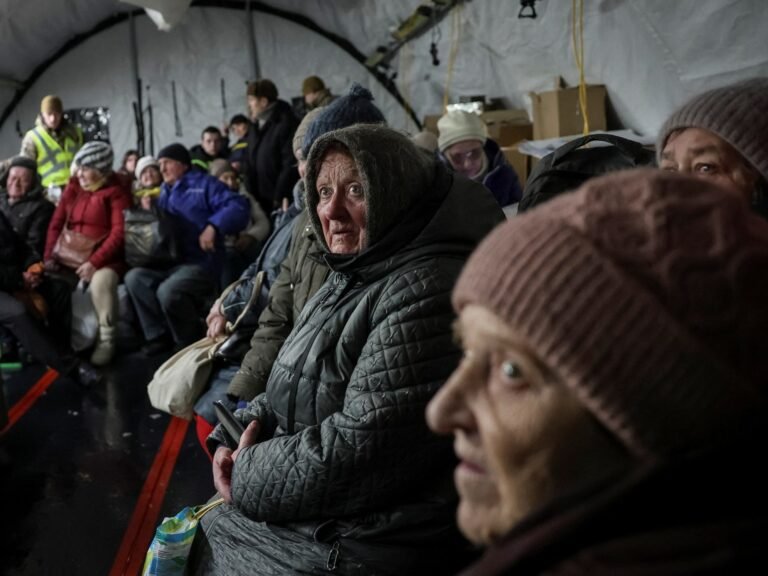
Some military units have sent their medics and rescue teams to pitch army tents with simple wood stoves where dozens of civilians sleep on bunk beds.

“We do everything to keep people warm,” Tymofei, a military medic with the 2nd Special Medical Battalion told Al Jazeera, withholding his last name in accordance with wartime regulations.

His colleagues were warming up a giant cauldron of plov, a hearty Central Asian dish of rice, meat and carrots, to be distributed free of charge.


Source link