The Operational Gaps That Break Incident Response


Having an incident response retainer, or even a pre-approved external incident response firm, is not the same as being ready for an incident. A retainer means someone will answer the phone. Operational readiness determines whether that team can do meaningful work the moment they do. 

That distinction matters far more than many organizations realize. In the first hours of a security incident, attackers are not waiting for your identity team to provision emergency accounts, for legal to decide whether an outside firm can access sensitive systems, or for someone to figure out who owns the EDR console. Every delay gives the attacker more uninterrupted time in your environment. Every hour lost to logistics increases the likelihood of deeper compromise, broader impact, and more expensive recovery. 

The same is true internally. An organization may have an incident response plan, a capable security team, and a list of escalation contacts, yet still be unprepared to respond under pressure. Readiness is not measured by what exists on paper. It is measured by how quickly responders, internal or external, can gain visibility, understand what the attacker has already touched, and make informed decisions. 

On Day Zero, responders are not asking for unlimited control. They are asking for visibility first and authority second. Without visibility, containment decisions are made blindly, timelines cannot be reconstructed, and the true scope of the compromise remains unknown while the response team debates access and approvals. 

This guide outlines what responders need on Day Zero, where organizations most often fall short, and how to ensure your internal team and external IR partner can begin effective work immediately when an incident is declared. 

What determines response speed 

Whether the first responders are internal security staff, an external retainer firm, or both working in parallel, they need access to the same core systems. Internal teams may already have some of that access. External responders usually do not unless it has been prepared in advance. 

Not all access is equally urgent. Identity comes first, because identity reveals the blast radius. It shows how the attacker got in, which credentials are compromised, how privilege may have changed, and where the attacker is likely to move next. Cloud, endpoint, and logging access are all critical, but without identity visibility, responders are building a timeline on guesswork. 

Identity and authentication access 

Modern attacks run on identity. Stolen credentials, abused tokens, misconfigured privileges, and compromised sessions are now central to how attackers gain persistence and move laterally. If responders cannot see identity activity, they cannot explain the initial compromise, trace privilege escalation, or identify which accounts are already unsafe to trust. 

For external IR firms, identity access is often the first major bottleneck. Organizations delay access while teams debate permissions, search for the right administrator, or attempt to create accounts during the incident itself. During that delay, responders are effectively blind to the attacker’s movement. 

On Day Zero, responders need read and investigative access to the identity provider, directory services, SSO platforms, and federation layers. They need visibility into authentication logs, MFA events, token issuance, session activity, privileged accounts, service accounts, and recent permission changes. They also need a defined path for urgent actions such as credential resets, token invalidation, or temporary restrictions on privileged users. 

Cloud and SaaS access 

In cloud environments, attacker activity often looks normal unless responders can see it in context. It may appear as API calls, configuration changes, new role assignments, service account abuse, or use of legitimate automation. Without immediate access, critical evidence may disappear before it is reviewed. 

On Day Zero, responders need read access to relevant cloud accounts, subscriptions, and SaaS platforms. They need visibility into audit logs, control plane activity, IAM and RBAC configurations, compute workloads, storage access patterns, serverless functions, service accounts, and secrets management. Delays in cloud access are especially damaging because some telemetry is ephemeral. If it is not captured quickly, it may be gone permanently. 

Endpoint and EDR access 

Endpoint telemetry often provides the clearest picture of attacker behavior, especially in the early stages of an investigation. Process execution, command-line activity, credential dumping, persistence mechanisms, and lateral movement frequently show up first in the EDR. 

Without direct access, responders are forced to rely on screenshots, summaries, or findings relayed through internal teams who are already under pressure. That is not a serious investigation. It is a game of telephone during a crisis. 

On Day Zero, responders need investigator-level access to EDR tools, visibility into process and network activity, the ability to query historical telemetry across hosts, and the authority to isolate systems or initiate containment when needed. If those permissions are not ready in advance, valuable time is lost, and the risk of misunderstanding grows. 

Logging and monitoring access 

Logs are how responders reconstruct the full story of an attack, not just what happened after detection, but what happened before it. Too often, organizations discover that their retention periods are designed for compliance or cost efficiency rather than investigation. 

Fourteen days of retention is common. Ninety days should be the minimum baseline. If an attacker has been active for six weeks before detection, a 14-day window means the initial access event, early reconnaissance, and much of the lateral movement may already be gone. 

Responders need access to centralized SIEM or log aggregation tools, firewall and IDS/IPS logs, VPN and remote access logs, email security logs, cloud and SaaS audit trails across all relevant tenants. If those logs are incomplete, siloed, or overwritten, responders are forced to make high-stakes decisions with partial evidence. 

Access must be real, not theoretical 

Access is only useful if it can be activated immediately. If access depends on a chain of approvals, manual setup, or first-time configuration, it will fail when the pressure is highest. 

Operational readiness means required accounts already exist across identity, cloud, EDR, and logging systems. MFA enrollment must already be completed. Permissions must already be approved and mapped to responder roles. The team responsible for enabling access must know exactly how to do it and must have practiced the procedure before. 

On Day Zero, access should function like a switch: predefined, controlled, and fast to activate. Anything else is a delay, and in incident response, delay always benefits the attacker. 

Communication under breach conditions 

Access problems receive the most attention in readiness discussions, but communication failures are just as damaging. Even with perfect technical visibility, an incident response breaks down quickly if teams cannot coordinate, make decisions, and share sensitive information securely. 

Assume normal channels may be compromised 

During an active breach, organizations should assume that email, chat platforms, and internal collaboration tools may no longer be private. If the attacker has access to those systems, then discussions about containment, investigative findings, and next steps may also be visible. 

That applies to internal conversations and communication with an external IR firm. Sharing credentials, containment plans, or investigative conclusions over a compromised channel can give the attacker visibility into your response in real time. 

Establish out-of-band communication 

Every organization needs an out-of-band communication method that is separate from corporate identity, production email, and the internal network. This could be a dedicated secure messaging platform, a preconfigured encrypted group, or a structured phone-based process. The specific tool matters less than the requirements. 

The channel must be independent of the compromised environment. It must include internal responders and external retainer contacts. It must support secure sharing of sensitive information. Most importantly, it must be tested. A communication channel that has never been used is not a response plan. It is an experiment being conducted in the middle of a crisis. 

Designate an incident manager 

Every response needs a single point of coordination. This is not necessarily the most senior person in the room. It is the person with the clearest operational ownership and the authority to keep the response aligned. 

The incident manager coordinates activity across security, IT, legal, leadership, and external responders. They control information flow, maintain a consistent picture of scope and status, and serve as the primary interface to the IR firm. Without that role, organizations drift into fragmented communication, conflicting instructions, and slow decision-making. 

Define stakeholder notification paths 

Who gets notified, when, and by whom should never become a live debate during an incident. Notification tiers need to be defined in advance. Internal escalation thresholds, executive updates, legal and regulatory decision-making, customer communications, and external messaging all need clear ownership. 

Organizations should also define exactly what information is shared with the IR firm on initial contact, who acts as the consistent liaison, and how updates are handled. Poor communication is not just inconvenient. It measurably slows containment and increases damage. 

Building a pre-approved IR access policy 

A pre-approved incident response access policy exists to eliminate decision-making overhead at the worst possible moment. When an incident is declared, the question of who can access what should already be answered. 

What the policy should define 

The most common failure in IR access policies is vagueness. A statement such as “responders will be granted appropriate access upon incident declaration” is not an operational policy. It is a placeholder that guarantees confusion later. 

An effective policy should clearly define who can declare an incident and trigger emergency procedures. This should not require a full executive chain. A CISO, security leader, or designated on-call authority should be empowered to make that call. 

It should define who can approve temporary access for external responders without reopening procurement, legal review, or vendor onboarding. Those controls matter, but they are not built for incident timelines unless pre-cleared. 

It should specify the scope of access by responder role, such as IR investigator or IR lead, rather than negotiating permissions during a live event. It should also define time-boxed access, with a clear review and revocation cadence, and designate who is responsible for removing access once the incident stabilizes. 

Finally, it should require post-incident cleanup, access validation, and governance review. Governance should catch up after stabilization, not slow down the first hours of investigation. 

Pre-created accounts and tested workflows 

Policy is only as good as the workflows behind it. If the accounts do not exist, the permissions have not been validated, or the identity team has never enabled them under realistic conditions, then the organization does not have a capability. It has documentation. 

Dormant IR accounts should be created in advance across the identity provider, EDR, SIEM, and cloud tenants. They should be disabled by default, with a documented and tested enable procedure. MFA enrollment should already be complete. Hardware tokens or secure authentication workflows should be assigned before an incident occurs. 

Role assignments should also be pre-approved. Enabling emergency access should be a single action, not the beginning of a conversation. 

Background checks and legal friction 

Background checks are a common friction point, especially in regulated sectors. The issue is not whether checks are appropriate. It is when they are enforced. 

If background checks are first raised during an active incident, the organization has already failed the readiness test. Reputable IR firms handle vetting, certifications, and internal controls during onboarding. Those conversations belong in the retainer setup phase, not in the first hours of a breach. 

The same is true of legal approval. If legal needs to decide in real time whether external responders can access production systems or regulated data, the response will slow immediately. Those decisions should be resolved before the incident. 

A practical Day Zero readiness checklist 

Organizations can test readiness by asking simple, operational questions. 

Can a dormant IR account be enabled and used to pull authentication logs within 30 minutes? 

Is a scoped read-only cloud role already defined, and are audit logs enabled across all relevant tenants? 

Does the EDR platform have an investigator role that an external responder can use immediately, with access to at least 30 days of historical telemetry? 

Can an external responder query the SIEM directly, and does retention cover at least 90 days across identity, endpoint, network, and cloud sources? 

Who can authorize host isolation, VPN shutdown, credential rotation, or account suspension, and has that authority been exercised in an exercise? 

If any of these questions produce hesitation, uncertainty, or the phrase “we’ll figure it out during an incident,” then that area is not ready. 

For organizations with an IR retainer, additional questions matter. Are dormant accounts already created for retainer responders? Is MFA preconfigured? Are legal approvals complete? Does the IR firm have current contact information for the incident manager, CISO, and identity lead? Is there an established out-of-band channel that includes the IR firm? Has the full activation workflow been tested in a tabletop exercise from initial call through working access? 

If several of these answers are no, the retainer is a contract, not an operational capability. 

What organizations commonly overlook 

Even mature organizations with strong security tooling and formal plans routinely discover important gaps only after a real incident begins. 

Backups are a common example. Many organizations know backup jobs are completing, but have not verified that backups are isolated from the environment that an attacker has already compromised. If the same credentials, networks, or service accounts can reach backup infrastructure, attackers may be able to destroy recovery options before deploying ransomware. A backup that has never been restored, and never been tested for isolation, is still an assumption. 

Containment authority is another frequent gap. Teams may know whether a system should be isolated or credentials should be rotated, but no one has explicit authority to disrupt operations. As the decision moves through leadership, legal, finance, or business operations, the attacker remains active. Prepared organizations decide in advance which systems can be shut down immediately, who can authorize those actions, and how emergency decisions will be escalated when necessary. 

Short or fragmented logging retention is also common. Logs may exist but only for seven to fourteen days, or they may be scattered across tools and teams with no centralized access. In those cases, the organization can often see what is happening now but not how it started. 

Untested response plans are equally dangerous. Many plans look complete in a binder and fail in practice because people do not know their roles, approvals take too long, and critical steps have never been exercised. Testing does not need to be elaborate. It needs to be realistic, cross-functional, and honest about what breaks. 

Finally, many organizations lack a current asset inventory or network map. Systems are deployed outside formal processes, cloud resources are spun up without central registration, and ownership is unclear. Responders cannot investigate what they do not know exists. Untracked assets are not just documentation gaps. They are blind spots that attackers actively exploit. 

A readiness exercise you can run now 

Most of the recommendations in this guide can be tested this week with the people and systems already in place. 

Start with access. Create dormant IR accounts and measure how long it takes to enable them. Attempt to pull 90 days of authentication logs. Ask your EDR administrator to create or validate an external investigator role. Confirm cloud audit logging is enabled across all relevant tenants and that a scoped read-only role can be activated immediately. 

Then test the response itself. Run a tabletop exercise in which the IR firm has just been called in. Measure how long it takes before they can access identity logs, endpoint telemetry, and cloud audit trails. Test whether the incident manager can be reached and whether the out-of-band channel can be established quickly. Run a containment decision through the approval chain and time it. 

Whatever fails in that exercise will fail the same way during a real incident. The difference is that during a real breach, the attacker is operating inside that gap while the organization is still figuring it out. 

Conclusion 

Readiness is not a policy document, a signed retainer, or a successful audit. It is the result of practical decisions made before an incident begins: access provisioned, authority clarified, communication paths tested, and operational gaps closed before an attacker can exploit them. 

The organizations that contain incidents quickly are rarely the ones with the most impressive slide decks. They are the ones who did the unglamorous work in advance. They created the accounts, tested the workflows, validated the logs, practiced the decisions, and ensured that when the call came in, the response could begin immediately. 

That is the real meaning of Day Zero readiness: not just having help available but being prepared to use it the moment it matters most. 

Found this article interesting? This article is a contributed piece from one of our valued partners. Follow us on Google News, Twitter and LinkedIn to read more exclusive content we post.


Source link

UK voters head to the polls in local elections | Politics News

0

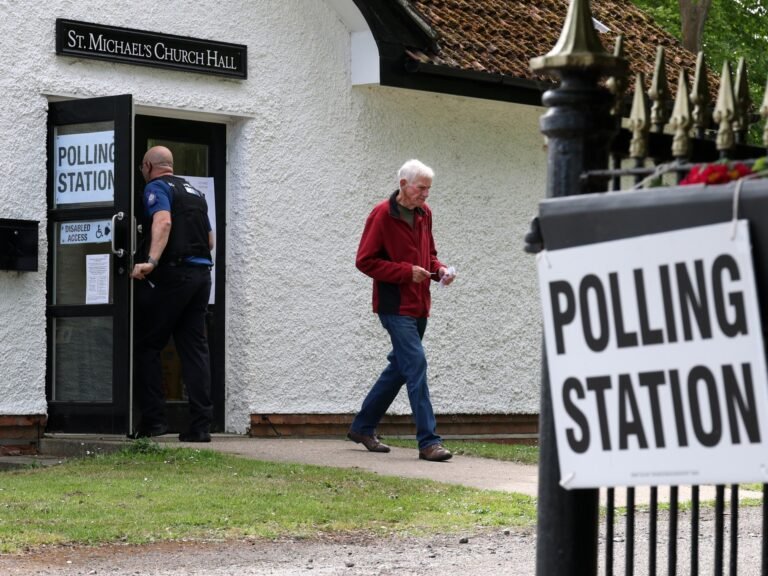
Voters in England, Scotland and Wales are casting their ballots in local elections.

Millions of people across the United Kingdom are heading to the polls in what is shaping up to be the most significant electoral test for Prime Minister Keir Starmer’s embattled government since it rose to power in a landslide victory in 2024.

Voters in England, Scotland and Wales are casting their ballots in local elections where far-right and left-wing parties are projected to make gains, dealing a heavy blow to the governing Labour Party.

Recommended Stories

list of 4 itemsend of list

The elections will determine the composition of some 5,000 local council seats, a number of mayoral positions across England, as well as seats in the Scottish and Welsh devolved parliaments.

Polls opened at 7am (06:00 GMT) and will close at 10pm (21:00 GMT). Results are expected overnight, with some likely on Friday.

Under the first-past-the-post system (FPTP) used particularly in England, a candidate needs only more votes than their rivals, not a majority, to win.

The prime minister cast his vote earlier in the day alongside his wife, Victoria Starmer, at Westminster Chapel.

UK Prime Minister Keir Starmer speaks during a meeting.
UK Prime Minister Keir Starmer has faced increasing pressure over his leadership of the Labour Party [File: Hannah McKay/Reuters]

Starmer’s popularity has plunged since he took office, with his government struggling to deliver economic growth, as households face a cost-of-living crisis in part caused by rising energy prices tied to the wars in Ukraine and the Middle East.

He has also been embroiled in a scandal over Peter Mandelson, who was fired as United States ambassador over his links to the late sex offender Jeffrey Epstein.

Opinion polls have suggested growing support for Greens Party leader Zack Polanski, a self-described “eco-populist”, and Nigel Farage, cofounder of right-wing Reform UK.

Over the weekend, Starmer wrote on the online platform Substack: “The answer to this moment, to the world we face today, is not passive government. Nor is it the populists who look out at the world and offer only easy answers that would make us weaker, or bankrupt.”

Analysts say this election could signal an end to the traditional two-party dominance of the electoral system, which has seen power oscillate between Labour and the Conservative Party.


Source link

Fox News Lifestyle Newsletter: May 1-7, 2026


NEWYou can now listen to Fox News articles!

→ Experts crack the case on which everyday nut delivers the biggest health boost.

→ A celebrity chef spotlights a restaurant shift as guests leave meals unfinished and rethink how they dine out.

→ Chefs call out four everyday cooking habits they say could be sabotaging meals without you realizing it.

Person holding a glass bowl of mixed nuts and dried fruit, picking up a walnut piece as a healthy snack.

Nutrition pros sort through five popular nuts, but one rises above the rest. (iStock)

The hot plate

→ Rising prices hit the drive-thru as fans sound off on a McDonald’s burger “deal” that they say isn’t what it seems.

→ A popular fast-food menu item is back and sparking mixed reactions among loyal customers.

→ Americans are swapping cereal for soup at breakfast — and experts say the trend may make sense.

Woman holding a bowl of soup in a kitchen, eyes closed taking in smell.

Nutritionists say warm, savory meals may be easier to digest in the morning than cold foods. (iStock)

CLICK HERE TO SIGN UP FOR OUR LIFESTYLE NEWSLETTER

Quick bites

→ Across the country, outrageous milkshakes are turning heads — and tempting taste buds — in a big way.

→ Steve Doocy begins his road trip “For All America” with a stop at a heartland diner famous for its breakfast dish.

LIKE WHAT YOU’RE READING? CLICK HERE FOR MORE FOOD AND DRINK NEWS

Quote of the week

“Young consumers are moving away from traditional brands because they don’t trust them unconditionally.”

→ The author of “Gen Z 360” says younger Americans are favoring snacks with simpler ingredients and more nutritional benefits.


Source link

German tourist awarded €1,000 after losing out on sunloungers at Greek hotel | Germany

0

A German holidaymaker has won a payout of almost €1,000 after being unable to find a sunlounger for himself and his family because other guests had got there first.

The man, whose identity is not known, holidayed on the island of Kos, in Greece, with his family in 2024. He said that, despite waking up at the crack of dawn every morning to carry out a 20-minute search, he had not been able to lay claim to a lounger.

The man, who had paid more than €7,000 to take his wife and two children on the holiday, was given a partial refund by the hotel after he complained. But Hanover district court ruled last month that the family of four was entitled to the larger sum of €986.70, and held that the tour operator in Germany was responsible.

The court ruling was an unusual intervention in the so-called towel wars – or handtuchkriege – which many consider to be as integral a part of European package holidays as all-you-can-eat buffets and sunburn.

Giving evidence in the case, the man told the court that neither the hotel nor the tour operator did anything to ensure that the resort’s own rules on “towel blocking” were abided by. Despite his requests to staff, guests who did this were not confronted or advised against doing so, he said.

The man said he had risen early every morning – a phenomenon known as the “dawn dash” – (in German sometimes referred to as the morgendlicher liegestuhl sprint) – to try to seize the desired spots. But, he said, he was never successful and his children were forced to lie on the concrete.

The court said that even though holidaymakers had to accept they would not always get a lounger, the onus was on the tour operator, communicating with the hotel, to ensure there was a system in place to allow a “reasonable” relationship between the numbers of sun beds and holidaymakers.

The judge said the ruling was made “based on individual circumstances”.

The legal news website Legal Tribune Online said the fact that the tour operator in Germany had been found liable for the situation in Greece was due to strict laws about package travel. The hotel was legally considered a service provider and therefore seen an agent of the tour operator, it said.

While no law covers the rules around reserving loungers with a towel, a general etiquette exists and is often spelled out on signs by individual resorts or pools. Reservations are considered unacceptable.

Often, hotels say they will remove towels after 30 to 60 minutes of non-use. However, the vagueness frequently leads to poolside conflicts between tourists.

The Hanover judge said it was generally agreed that holidaymakers should not be required to take matters into their own hands by, for example, removing other people’s towels. According to the judge in the case, the tour operator is obliged to prevent such conflicts.


Source link

Escorts Kubota posts 30% jump in Q4 profit, declares ₹51 total dividend for FY26


Escorts Kubota, on Thursday, reported a 29.6 per cent year-on-year rise in standalone net profit from continuing operations to ₹324.8 crore for the quarter ended March 31, 2026, driven by strong tractor sales and margin expansion.

Revenue from continuing operations stood at ₹2,950.7 crore, up 21.4 per cent from ₹2,430.3 crore in the same quarter last year. EBITDA grew 31.8 per cent to ₹386.0 crore, with margins expanding 103 basis points to 13.1 per cent. Profit before tax, before exceptional items, came in at ₹433.8 crore, up 21.1 per cent.

volume recovery

The tractor segment led the volume recovery, with sales rising 21.1 per cent to 32,257 units in Q4. For the full year, tractor volumes grew 15.7 per cent to 1,33,670 units, with segment revenue up 15.8 per cent to ₹9,779.6 crore and EBIT margins improving 190 basis points to 12.6 per cent. Construction equipment volumes rose 9.2 per cent to 1,877 units in Q4, though full-year volumes declined 10.6 per cent to 5,794 units. Construction equipment EBIT margins for Q4 improved sharply to 12.7 per cent (9.1 per cent).

For FY26, standalone revenue from continuing operations grew 12.6 per cent to ₹11,472.8 crore. Net profit from continuing operations rose 24.4 per cent to ₹1,380.9 crore, with earnings per share at ₹125.52.

A significant boost to the full-year numbers came from the divestment of the Railway business, which was completed during FY26. The transaction yielded ₹1,601.7 crore net of costs, pushing standalone net profit including discontinued operations to ₹2,408.6 crore, nearly double the previous year’s ₹1,250.9 crore.

The board recommended a final dividend of ₹33 per share. Combined with the special dividend of ₹18 per share already paid earlier in the year, the total payout for FY26 stands at ₹51 per share, an 82.1 per cent increase over the prior year.

Published on May 7, 2026

Bryson DeChambeau details the two complicated hurdles in his way of a potential PGA Tour return


Bryson DeChambeau could be seeking a pathway back to the PGA Tour sooner rather than later. He certainly won’t be alone in that journey; many players on LIV Golf’s roster could be looking to do the same, but the circumstances around DeChambeau’s next move are complicated.

As the Saudi Public Investment Fund (PIF) has announced that it is pulling the plug on funding LIV beyond the 2026 season, the circuit’s future is nothing but a giant question mark. LIV Golf could cease to exist in a handful of months, or it could be a dulled-down version of what it is today, and there may not really be an in between.

A natural next step for DeChambeau would be to return to the PGA Tour. That step would undoubtedly include hurdles in the shape of many different repercussions built by the Tour, but ones that would be easier to leap for DeChambeau as he’s reportedly earned well over $100 million during his time with LIV.

bryson dechambeau liv golf

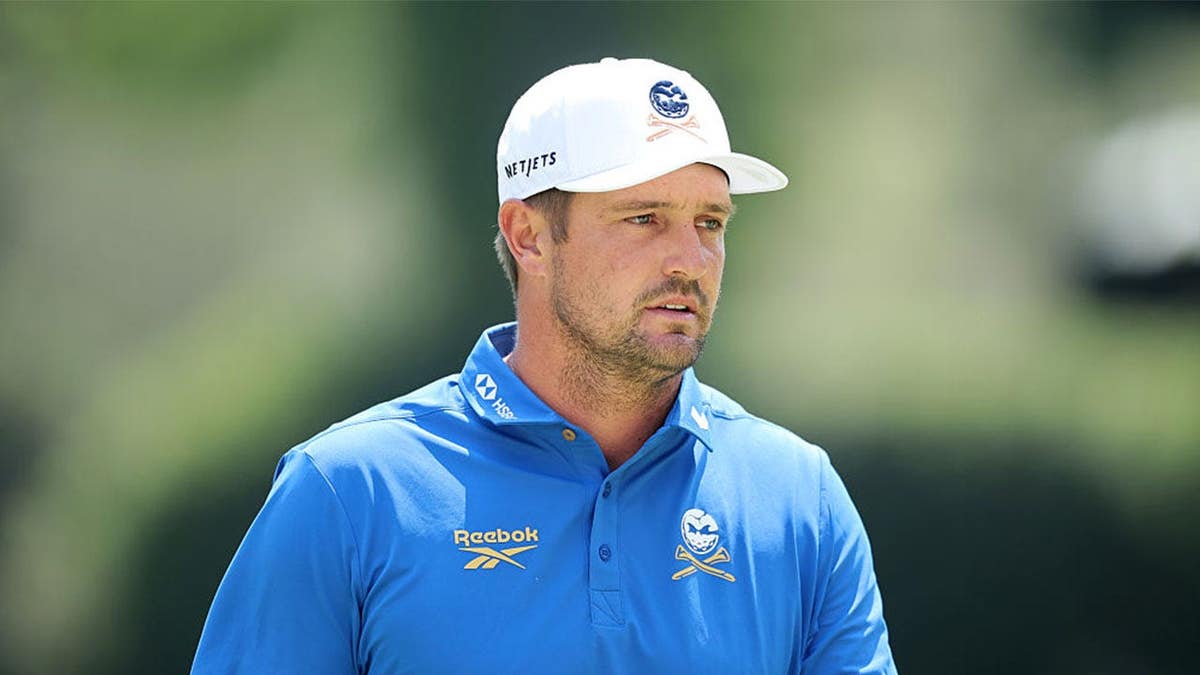
Bryson DeChambeau of Crushers GC looks on from second green during day one of LIV Golf Mexico City at Club de Golf Chapultepec on April 16, 2026 in Mexico City. (Photo by Hector Vivas/Getty Images) (Hector Vivas/Getty Images)

DeChambeau, as he so often does, is looking at the hypothetical situation through a different lens. He’s solely concerned about growing his YouTube and social media following, while also trying to build back relationships with the players who stood by the Tour’s side throughout golf’s civil war.

“If I was to film a video during the week of one of their events with a content creator or a celebrity, that would be in violation to my knowledge,” DeChambeau told Skratch ahead of LIV Virginia this week. “It’s their policy, they didn’t let me do it when I was on there. I asked various times.”

bryson dechambeau at augusta national

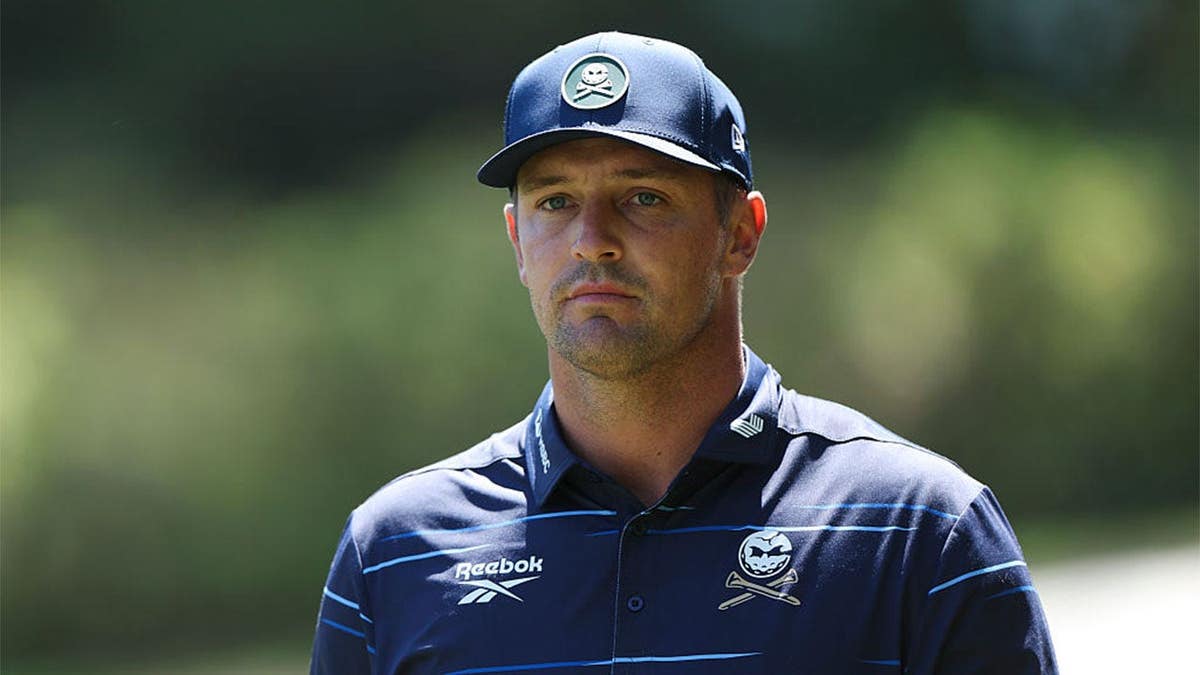
Bryson DeChambeau of the United States looks on while playing the 13th hole during the first round of the 2026 Masters Tournament at Augusta National Golf Club on April 09, 2026 in Augusta, Georgia. (Photo by Andrew Redington/Getty Images) (Andrew Redington/Getty Images)

JON RAHM REACHES AGREEMENT WITH DP WORLD TOUR, TRIGGERING MAJOR SPECULATION ABOUT A LIV GOLF EXIT

The policy DeChembeau is referring to is the PGA Tour’s social media policy, which is something very important to the two-time U.S. Open champion, who earlier in the week explained that he would be perfectly content in focusing on YouTube and playing in major championships if LIV shuts its doors and a return to the Tour becomes murky.

“If you look at it, it’s affiliate marketing, so me being able to create content on that golf course that week at that event should only bring value to the tournament, and that’s what I care about most, entertaining like I’ve always said from day one,” DeChambeau continued.

While the media side of things will play a huge role in DeChambeau’s next career move, it’s not the only obstacle he’s personally staring at regarding a potential return to the PGA Tour. He also wants to be accepted back.

“It’s really about if the membership wants me back and if they just want me back. That’s what it’s about,” DeChambeau said. “I don’t even think it’s [PGA Tour CEO] Brian Rolapp or anybody like one of the top executives, it’s really if the players want me back and if not, then I understand that.”

It’s understandable for DeChambeau to want to be on at least some sort of stable footing with a portion of Tour players before a potential jump back into the fold. It’s also understandable for that being an impossibility.

ZERO BS. JUST DAKICH. TAKE THE DON’T @ ME PODCAST ON THE ROAD. DOWNLOAD NOW!

Bryson DeChambeau reacting on second green at LIV Golf Mexico City

Bryson DeChambeau reacts on the second green during day one of LIV Golf Mexico City at Club de Golf Chapultepec in Mexico City on April 16, 2026. (Hector Vivas/Getty Images)

CLICK HERE TO DOWNLOAD THE FOX NEWS APP

DeChambeau not only defected to LIV for an obscene amount of money, which put a bad taste in the mouths of many players, but he was also part of a lawsuit against the Tour following his departure to LIV in 2022. The lawsuit alleged that the PGA Tour used ‘monopoloy power’ to suspend players who left for LIV Golf.

Again, it’s all entirely complicated and will probably continue down the same path as more details about the potential return of players as we get further into the 2026 calendar year.


Source link

Access Denied

0

Access Denied You don’t have permission to access “http://hindi.news18.com/news/ajab-gajab/viral-indian-nurs-working-in-american-hospital-reveals-high-salary-due-to-demand-jobs-viral-video-10453702.html” on this server.

Reference #18.490dde17.1778157501.226bf204

https://errors.edgesuite.net/18.490dde17.1778157501.226bf204

FBI locates alleged Rhode Island swatter in Hungary


Cyber-Crime

20-year-old fessed up after investigators found video of crime in progress

Hungarian cops have arrested a 20-year-old man in Nógrád County over an alleged swatting call that sent armed officers to a US residence nearly two years ago.

Hungary’s National Bureau of Investigation (NNI) said the call was made to police in Tiverton, Rhode Island, on April 24, 2024, claiming a man had killed his family and was going to shoot his dog and himself.

The call prompted an armed response to the exact address given over the phone. However, the police realized the report was false and pertained to a fictional person after they arrived.

Swatting is sometimes dismissed as a prank, especially by those who do it. Common targets of these dangerous hoaxes are people who broadcast themselves on livestreaming platforms, although US government officials have also been targeted in the past.

People call in fake threats, along similar lines to the one described in the case involving the Hungarian national, and watch the events that unfold in real time via the unsuspecting victim’s livestream.

According to the NNI’s account, the FBI had been hunting the man for two years, and made a breakthrough after infiltrating the alleged swatter’s Discord server, where they found a recording of him livestreaming the swatting call.

From that recording, the FBI suspected the man to be Hungarian, despite police describing him as a native English speaker. Investigators then began international cooperation in March 2026.

The FBI and NNI jointly identified the alleged swatter “through digital traces,” according to a Wednesday statement.

The man admitted to the offense after police detained him last week, and the investigation remains ongoing as authorities try to determine whether he was working with anyone else.

The NNI did not mention whether the US is looking to extradite the man, but the Justice Department historically has previously pursued domestic charges in overseas swatting cases.  ®


Source link

Man arrested on suspicion of handling Morgan McSweeney’s stolen phone | UK news

0

Police investigating the theft of a phone belonging to Keir Starmer’s former chief of staff Morgan McSweeney have arrested a man.

The man, who was arrested on Wednesday in Peckham, south London, is suspected of receiving the phone after it was stolen, the Metropolitan police said on Thursday.

The government-issued iPhone, which was stolen shortly before 22.30pm on 20 October last year, has not been recovered.

Concerns have been raised that the theft could result in important messages about Peter Mandelson’s appointment as ambassador to the US being lost.

The whereabouts of McSweeney’s messages with Mandelson has been under intense scrutiny since it was reported that the work device was stolen shortly after Mandelson was sacked as US ambassador.

It was revealed in March that McSweeney did not disclose that he was Starmer’s chief of staff when he reported the theft of his phone. The Met released a transcript of the call, a highly unorthodox move, saying it wanted to correct misreporting of the incident.

The Guardian understands that not all of McSweeney’s correspondence has been lost and that the Cabinet Office holds a number of text and email exchanges between him and Mandelson.

A Met spokesperson said on Thursday: “Officers investigating the theft of a mobile phone in Belgrave Road, Pimlico, on 20 October 2025 have arrested a 28-year-old man on suspicion of handling stolen goods.

“The arrest took place on Wednesday 29 April at an address in Peckham. The man was taken into police custody and later bailed. He is suspected of receiving the phone after it was stolen and then selling it on. He is not suspected of any involvement in the original theft. The phone has not been recovered.”

McSweeney, who left the No 10 role in February, told police when he reported the theft minutes after it happened that it was a government phone. He said the iPhone had a tracker on it, according to the transcript of the emergency call. But he did not explain the sensitivity of the phone’s contents, records of the call suggest.


Source link

Chief Justice Roberts says Supreme Court is not making policy decisions


NEWYou can now listen to Fox News articles!

Political critics of Supreme Court decisions fundamentally do not understand the role of the institution, according to Chief Justice John Roberts.

It is to interpret the law, not make it, he told a judicial conference in Hershey, Pennsylvania.

“I think, at a very basic level, people think we’re making policy decisions, we’re saying we think this is how things should be, as opposed to what the law provides,” Roberts said Wednesday night. “I think they view us as purely political actors, which I don’t think is an accurate understanding of what we do.”

The decision reviewing the unconstitutionality of race-based gerrymandering under the Voting Rights Act has resurfaced rebukes of the political ideology of the Court. Three conservative justices, Neil Gorsuch, Brett Kavanaugh and Amy Coney Barrett, were placed on the bench by President Donald Trump during his first term, giving Republican-nominated justices a 6-3 majority.

BARRETT SAYS JUSTICES ‘WEAR BLACK, NOT RED OR BLUE’ IN RESPONSE TO PARTISAN CRITICS IN FOX NEWS INTERVIEW

Chief Supreme Court Justice John Roberts attending President Donald Trump's remarks at U.S. Capitol

((Win McNamee/Getty Images))

Justices, however, are making decisions based on the law and contextual readings of the Constitution, not their personal policy preferences, Roberts stressed to the conference of judges and lawyers from the 3rd U.S. Circuit in Pennsylvania.

“I think considered criticism is a very good thing,” Roberts said. “You hope it’s intelligent criticism, but it doesn’t have to be. It’s a free country and I certainly don’t object to it, and I don’t think my colleagues do either.”

FOX NEWS POLL: APPROVAL OF SCOTUS AT 5-YEAR HIGH, REBOUNDING FROM RECORD LOW IN 2024

The Supreme Court has also expanded gun rights and overturned the constitutional right to abortion in recent years. Public confidence in the Supreme Court was at a low of 40% after the 2022 Dobbs v. Jackson Women’s Health Organization abortion ruling, showing the politics of rulings determines perception as the words of the Constitution remain unchanged.

The rulings are “based on our best effort to figure out what the Constitution means and how it applies” to the existing law, Roberts said.

SUPREME COURT’S 2026 RULINGS COULD DEFINE AMERICA FOR DECADES TO COME

Protesters waving transgender pride flags outside the Supreme Court in Washington

Protesters wave transgender pride flags outside the Supreme Court in Washington as it hears arguments on Jan. 13, 2026, over state laws barring transgender girls and women from school athletic teams. (Julia Demaree Nikhinson/AP)

“We’re not simply part of the political process, and there’s a reason for that, and I’m not sure people grasp that as much as is appropriate,” Roberts said, stressing that “one thing we have to do is make decisions that are unpopular.”

“On the other hand,” Roberts said, “there is a point where it changes from criticism of the opinion to criticism of the judge and it can lead to some very serious problems.”

JUSTICE NEIL GORSUCH BREAKS SILENCE ON VIOLENT THREATS AGAINST JUDICIARY, SUPREME COURT LEAKS

Heated political rhetoric, potentially fueled by violent protest groups, can endanger judges.

In June 2022, an armed suspect was caught outside Kavanaugh’s home. Nicholas John Roske pleaded guilty and was sentenced to 97 months in prison and lifetime supervised release after admitting to the attempted assassination.

“There’s a lot of hostility that’s publicized about judicial decisions and which judge wrote those decisions,” Roberts warned. “I think we have to be a little more careful and make sure people, to the extent you can, are more careful about that.”

TRUMP REVEALS HE HAS MULTI-PICK SCOTUS PLAN READY AS RETIREMENT SPECULATION HEATS UP

Judges bowing to the pressures of political ideology from the American public would have devastating effects, according to Roberts.

“If you do it cavalierly, overrule precedent just because you think it’s wrong, then the whole system begins to suffer,” he said.

CLICK HERE TO DOWNLOAD THE FOX NEWS APP

The advanced ages of Thomas and Alito have raised questions of whether they might consider retirement either before the midterms — which could change Congress’ ability to get through another conservative justice nominee under Trump — or before 2028, where a flip of the White House and/or Congress could shift the court back away from a conservative majority.

The Associated Press contributed to this report.


Source link