Two boys, aged 12 and 13, stabbed at a London school are in a stable condition, police say.
Officers are continuing to question a 13-year-old boy arrested on suspicion of attempted murder and counter-terror police are involved.
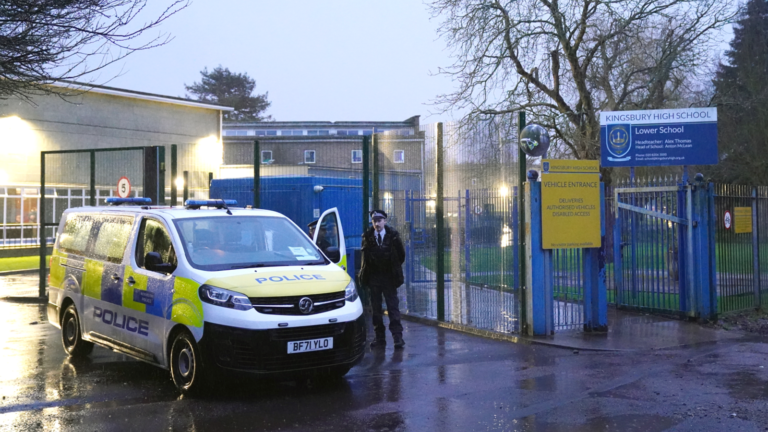
The attack happened at Kingsbury High School in Brent, northwest London, on Tuesday.
Detective Chief Superintendent Helen Flanagan said the boys’ injuries were “serious” but “thankfully not life-threatening” and they remain in hospital in a stable condition.
“Our thoughts remain with them and their loved ones at this incredibly difficult time. Specialist officers are providing their families with support,” she added.
Tuesday: Anti-terror police probe school stabbings
Police and ambulance crews were called at around 12.40pm and the suspect, who had a weapon, was detained just after 6pm following a search.
Detective Chief Superintendent Luke Williams said on Tuesday that the stabbing had not yet been declared a terror incident and police were “keeping an open mind” about the motivation behind the attack.
In a letter to parents, the school’s head teacher said it was a “deeply traumatic event for the whole school community”. Home Secretary Shabana Mahmood described the attack as “shocking”.
Vice President JD Vance warned Iran that there is “another option on the table” if the regime does not make a nuclear deal with the U.S.
Vance made the statement while speaking to reporters before boarding Air Force Two on Tuesday. A reporter referenced President Donald Trump‘s musings about potentially deploying a second aircraft carrier strike group to the Middle East.
“How confident are you in going the diplomatic route? Do you think that is still going to be successful or are we leaning more towards a military strike?” the reporter asked.
“The president has told his entire senior team that we should be trying to cut a deal that ensures the Iranians don’t have nuclear weapons,” Vance responded.
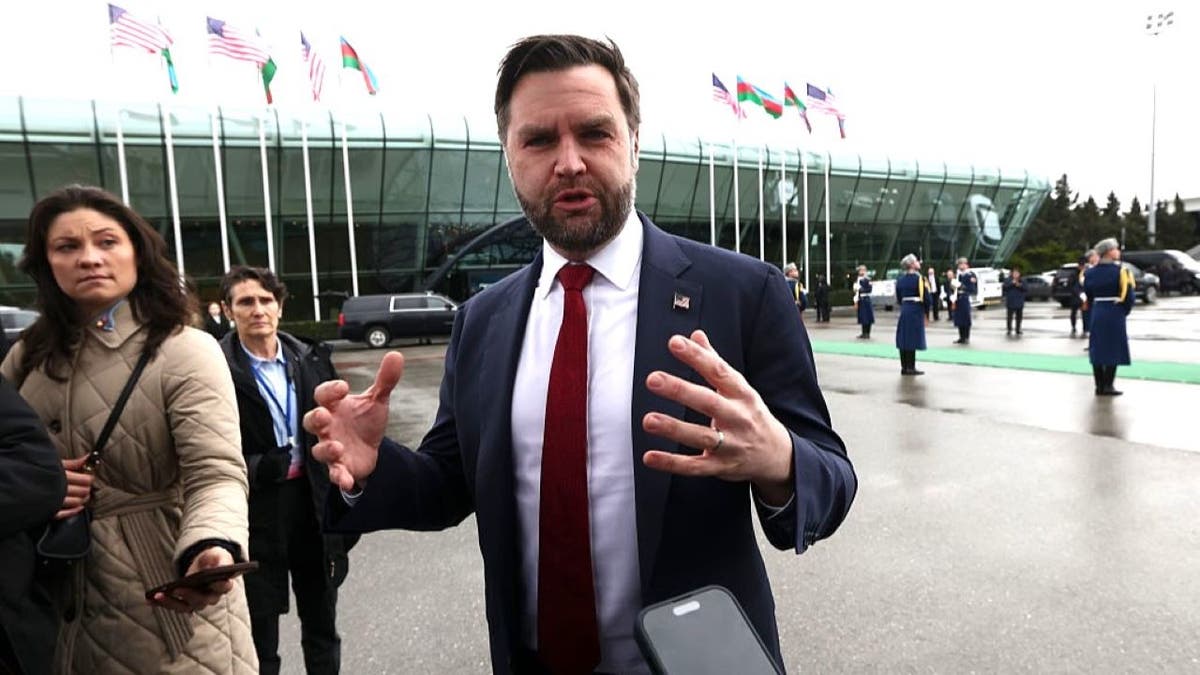
Vice President JD Vance talks to the media before boarding Air Force Two for a return to Washington, D.C. on February 11, 2026, in Baku, Azerbaijan.(Photo by Kevin Lamarque-Pool/Getty Images)
“But if we can’t cut that deal, then there’s another option on the table. So I think the president is going to continue to preserve his options. He’s going to have a lot of options because we have the most powerful military in the world. But until the president tells us to stop, we’re going to engage in these conversations and try to reach a good outcome through negotiation,” he continued.
Vance went on to downplay pushes for regime change in Iran, saying a removal of Ayatollah Ali Khamenei‘s regime would be up to “the Iranian people.”
He said the Trump administration’s only focus is preventing the current Iranian regime from obtaining a nuclear weapon.
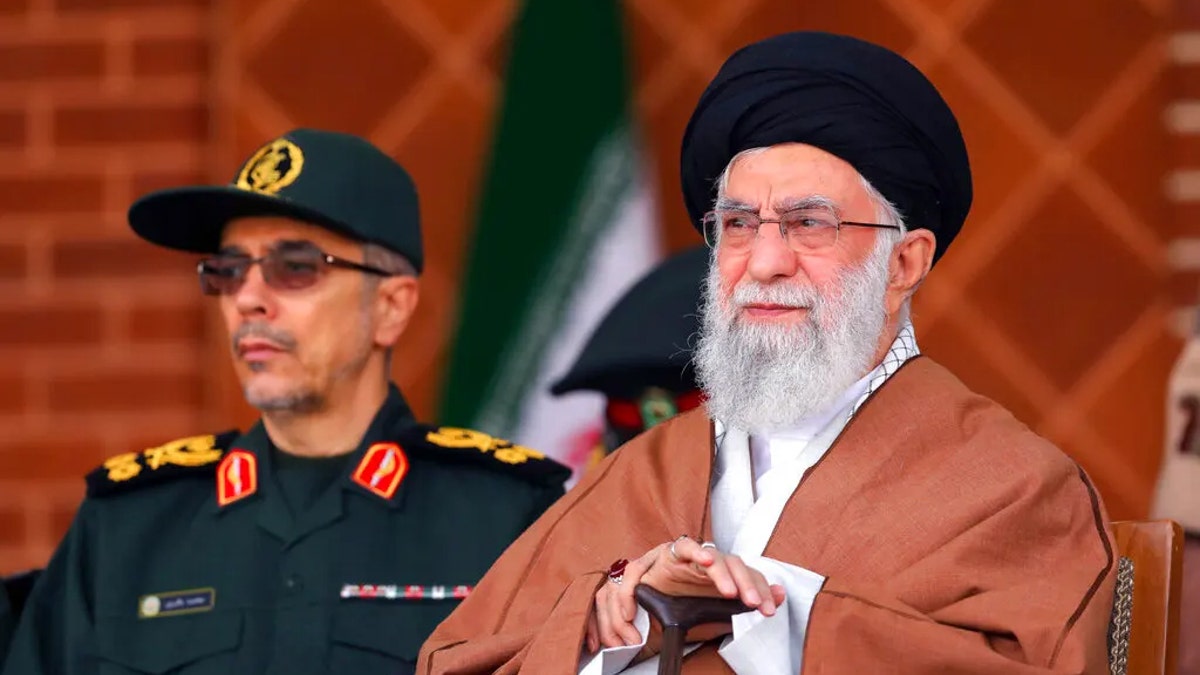
Iranian Supreme Leader Ayatollah Ali Khamenei is pictured sitting next to a senior military official in Iran.(Getty Images)
Vance’s comments come a day before Israeli Prime Minister Benjamin Netanyahu is set to meet with Trump at the White House on Wednesday, with Iran expected to take center stage in the meeting.
In a phone interview with Axios, the president said Tehran “very much wants to reach a deal,” but warned, “Either we make a deal, or we’ll have to do something very tough — like last time.”
Netanyahu, speaking before departing Israel for Washington, said he intends to present Israel’s position.
“I will present to the president our concept regarding the principles of the negotiations — the essential principles that are important not only to Israel but to anyone who wants peace and security in the Middle East,” he told reporters.
President Donald Trump has warned Tehran that it must agree to a nuclear deal.(Fabrice Coffrini/AFP via Getty Images)
U.S. and Iranian officials resumed talks in Oman this week for the first time since last summer’s 12-day war. The United States continues to maintain a significant military presence in the Gulf, a posture widely viewed as both deterrence and for holding leverage in negotiations with Tehran.
Anders Hagstrom is a reporter with Fox News Digital covering national politics and major breaking news events. Send tips to Anders.Hagstrom@Fox.com, or on X: @Hagstrom_Anders.
Microsoft’s Raymond Chen has revealed an unexpected use for the company’s lawyers: securing permission from the cast of Happy Days so a Weezer music video could ship on the Windows 95 CD.
The video in question was to demonstrate the multimedia capabilities of Microsoft’s successor to the Windows 3.x era. As well as all that 32-bit goodness, the operating system could play back a small, grainy video, and Microsoft included some music videos to emphasize the point.
One was Edie Brickell’s “Good Times” and another was “Buddy Holly” from Weezer’s debut album. Both tracks were recent, and Chen recalled the steps Microsoft had to take to get the latter in front of Windows 95 customers.
The band later said the initial disquiet they felt about their music appearing on Windows 95 was offset by the exposure from the operating system’s huge sales.
However, that only accounted for the audio. The video, which took place in a recreation of the Happy Days television show, was a different matter. Happy Days was set in the late 1950s and early 1960s and broadcast during the 1970s and 1980s.
This presented Microsoft’s lawyers with a problem. Since clips from the show had been spliced into the video, Microsoft had to get permission from the actors featured. Chen didn’t recall if the lawyer in question had to talk to the actors directly, “but I can imagine it being an interesting experience trying to find Henry Winkler’s telephone number (or his agent’s telephone number) with a chance of talking to The Fonz himself.”
Happy Days was responsible for the phrase “jumping the shark,” from an episode in which the Fonzie character, on waterskis, jumped over a shark. It was subsequently used to describe a show or concept that has run out of ideas and resorts to increasingly implausible plot devices.
In other news, Microsoft has continued to load its product lines with AI features, and its flagship operating system, Windows (which has suffered a terrible start to the year with multiple out-of-band fixes), is set to become an agentic OS. ®
A United States congressman has revealed the names of six men in the Jeffrey Epstein files whose identities were blacked out when the records were released to the public, including American billionaire Leslie Wexner, who appears to have been labelled a coconspirator by the FBI in 2019.
Speaking in the House of Representatives on Tuesday, Democratic Representative Ro Khanna said he was naming the men after spending two hours reviewing the unredacted documents with Republican Congressman Thomas Massie during a viewing facilitated by the US Department of Justice.
“If we found six men that they were hiding in two hours, imagine how many men they are covering up for in those 3 million files,” Khanna said.
Since the bipartisan duo pushed through the Epstein Files Transparency Act, which was signed into law by President Donald Trump in November, the US government has released millions of pages of documents, including emails and photographs, relating to the criminal prosecution of the late sex offender Epstein and his socialite girlfriend Ghislaine Maxwell.
The inclusion of a name in the files does not imply wrongdoing by that person. However, the Justice Department’s handling of the release of the files – which advocacy groups and Epstein’s accusers said are far too heavily redacted – has come under fire.
So who are the six men named by Khanna? And why are names blacked out in the Epstein files at all?
From right, US Representatives Ro Khanna and Thomas Massie speak to the media after viewing unredacted Jeffrey Epstein files at the Department of Justice in Washington, DC, on February 9, 2026 [Kent Nishimura/Reuters]
What did Ro Khanna tell the US Congress?
Speaking from the House floor on Tuesday, Khanna asked: “Why did it take Thomas Massie and me going to the Justice Department to get these six men’s identities to become public?”
Referring to last year’s law that mandated the release of the files, Khanna said: “The Epstein Transparency Act requires them to unredact those FBI files, and yet the Justice Department said to me and to Congressman Massie, ‘We just uploaded whatever the FBI sent us.’”
“That means the survivor statement to the FBI naming rich and powerful men who went to Epstein’s island, who went to his ranch, who went to his home and raped and abused underage girls or saw underage girls being paraded – they were all hidden,” the congressman said. “They were all redacted. It’s a little bit of a farce.”
The Justice Department began allowing members of Congress to view the unredacted files on Monday at its headquarters in Washington, DC. They may see the files on computers and may not bring any electronic devices with them. They are permitted only to take notes and may not make any electronic copies.
The Justice Department is believed to be in possession of nearly 6 million pages of documents collected by investigative agencies in relation to Epstein.
Although all of these were supposed to have been released within 30 days of the Epstein Files Transparency Act being signed into law on November 19, so far 3.5 million have been.
The files referenced by Khanna and Massie do not appear to implicate the six men in any specific crimes.
However, Khanna said the redactions of their names was a failure of the Justice Department. The California lawmaker accused the government of shielding their names “for no apparent reason”.
Since Khanna’s speech to Congress, the Justice Department has partially unredacted some of the files he and Massie have pointed to.
What do we know about the six named men?
Khanna identified one of the men in the files he reviewed as Wexner, the billionaire retail tycoon and former owner of Victoria’s Secret.
Wexner had a lengthy friendship with Epstein, whom he hired to handle his investments for many years.
While the relationship between Wexner and Epstein was already known, Khanna revealed that the FBI had also considered Wexner a coconspirator with Epstein at some point during its investigation. No criminal charges were ever brought against the billionaire in connection with Epstein’s crimes.
On Tuesday after Khanna’s speech, the Justice Department unredacted parts of an internal document dated August 15, 2019, from the FBI’s Criminal Investigative Division, which included a reference to Wexner as a coconspirator. That file can now be seen unredacted on the Justice Department’s website for the Epstein files.
Another of the men named by Khanna was Sultan Ahmed bin Sulayem, one of Dubai’s most powerful and well-connected people. The chairman and chief executive officer of the logistics giant DP World exchanged messages with Epstein for years before and after Epstein pleaded guilty in 2008 to soliciting a minor for prostitution.
The friendly exchanges between the two include discussions about deals and also mention bin Sulayem visiting Epstein’s private island while sharing contacts in business and politics. The two men also shared salacious comments about women.
The removals of the redactions also confirmed that bin Sulayem’s email address was used in a correspondence with Epstein in which Epstein remarked, “I loved the torture video.”
Khanna named four other men: Salvatore Nuara, Zurab Mikeladze, Leonic Leonov and Nicola Caputo. However, Al Jazeera could not independently verify their identities or affiliations.
A department spokesperson quoted by the US-based broadcaster CBS News said the lesser-known four of the six names mentioned by Khanna “are only included in this one document out of all the files. Wexner is referenced nearly 200 times in the files, and Sultan bin Sulayem appears over 4,700 times.”
Some of the Epstein files released to the public were heavily redacted [Mandel Ngan/AFP]
How has the Justice Department responded?
Todd Blanche, deputy attorney general at the Department of Justice, said some of the redacted names mentioned by Khanna and Massie did appear unredacted in other documents in the Epstein files.
In a post on X relating to email correspondence between Epstein and bin Sulayem, Blanche wrote: “You know it’s an email address that was redacted. The law requires redactions for personally identifiable information, including if in an email address. And you know that Sultan’s name is available unredacted in the files.”
Blanche also referred to another email exchange in which bin Sulayem’s name can be seen but his email is blacked out.
“Be honest, and stop grandstanding,” Blanche added in a comment aimed at Massie.
However, the Epstein Files Transparency Act permits such redactions only when the information would identify a victim.
In a post on X, Massie said he had viewed a list of 20 names that appears in the documents, 18 of which had been redacted. Only the names of Epstein and Maxwell appeared.
The deputy attorney general responded by saying the list “has numerous victim names” and the department had “unredacted all non-victim names”.
But Massie pointed out: “Four of the 18 redacted names on this document are men born before 1970.”
There is no information about what the purpose of the list mentioned by Massie was. In the now-updated document, only two names were redacted when Al Jazeera reviewed it on Wednesday.
What does the law state about redactions?
The Epstein Files Transparency Act mandates that no record from the files should be redacted just because it might result in embarrassment or reputational harm to any government official or national, foreign or public figure.
Redactions of information are permitted in the following circumstances: if it contains personally identifiable information of victims, depicts or contains child sexual abuse material, jeopardises an active federal investigation, and depicts or contains images of death or physical abuse.
The act also allows redactions when the document contains information that has been specifically authorised to be kept secret in the interests of national security or foreign policy by an executive order.
The act further says all redactions must be accompanied by a written justification published in the Federal Register and submitted to Congress.
US Attorney General Pam Bondi looks on while US President Donald Trump speaks in the Oval Office of the White House [File: Jonathan Ernst/Reuters]
Who decides what is redacted in the Epstein files?
Under US law, a statute like the Epstein Files Transparency Act designates the attorney general – currently Pam Bondi – as responsible for executing it.
In the case of the Epstein files, the law requires Bondi, who heads the Justice Department, to make all unclassified records, documents, communications and investigative materials in the possession of the department, including the FBI and US Attorney’s Offices, publicly available in a searchable and downloadable format.
The attorney general then delegates these tasks to her department and relevant agencies while officials conduct a page-by-page review.
Some emails and other documents may include details about Epstein’s victims, but these must be redacted to ensure victims’ privacy and security.
But US media reported that many of the files the department received from the FBI had already been redacted.
“And guess what? The FBI sent scrubbed files,” Khanna said.
Have victims’ identities been revealed in the Epstein files?
The Justice Department has been facing increasing pressure over its handling of redactions in the Epstein documents.
Not only has it been accused of shielding the identities of those exchanging emails and other messages with Epstein but also of failing to redact victims’ identities.
On February 2, the Justice Department said it had removed several thousand documents and media items from its Epstein files website after lawyers representing Epstein’s accusers complained to a New York judge that the lives of nearly 100 victims had been “turned upside down” by sloppy redactions during the release of the records.
The published material included nude photos showing the faces of potential victims who appeared young, although it was unclear if they were under-age, as well as names and email addresses, including information that was either completely unredacted or not fully obscured.
The department has blamed this on “technical or human error” and said that, given the enormous task to vet millions of documents, “the teams may have inadvertently redacted individuals or left those unredacted who should have been.”
Attorney Jay Clayton said the department has now “revised its protocols for addressing flagging documents”, adding that the documents are being re-evaluated before reposting, “ideally within 24 to 36 hours”.
A motorist who tried to drive home immediately after leaving court with a driving ban has been handed a suspended jail sentence, police have said.
Richard Brooks, 54, of Church Street, Guisborough, North Yorkshire, had first appeared at Newton Aycliffe Magistrates’ Court, County Durham, on Monday.
He was handed a six-month ban after he was caught using his mobile phone while driving in Barnard Castle last year, Durham Constabulary said.
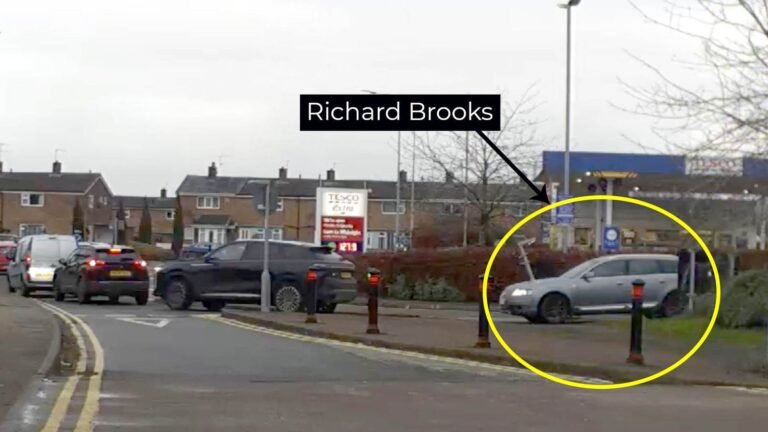
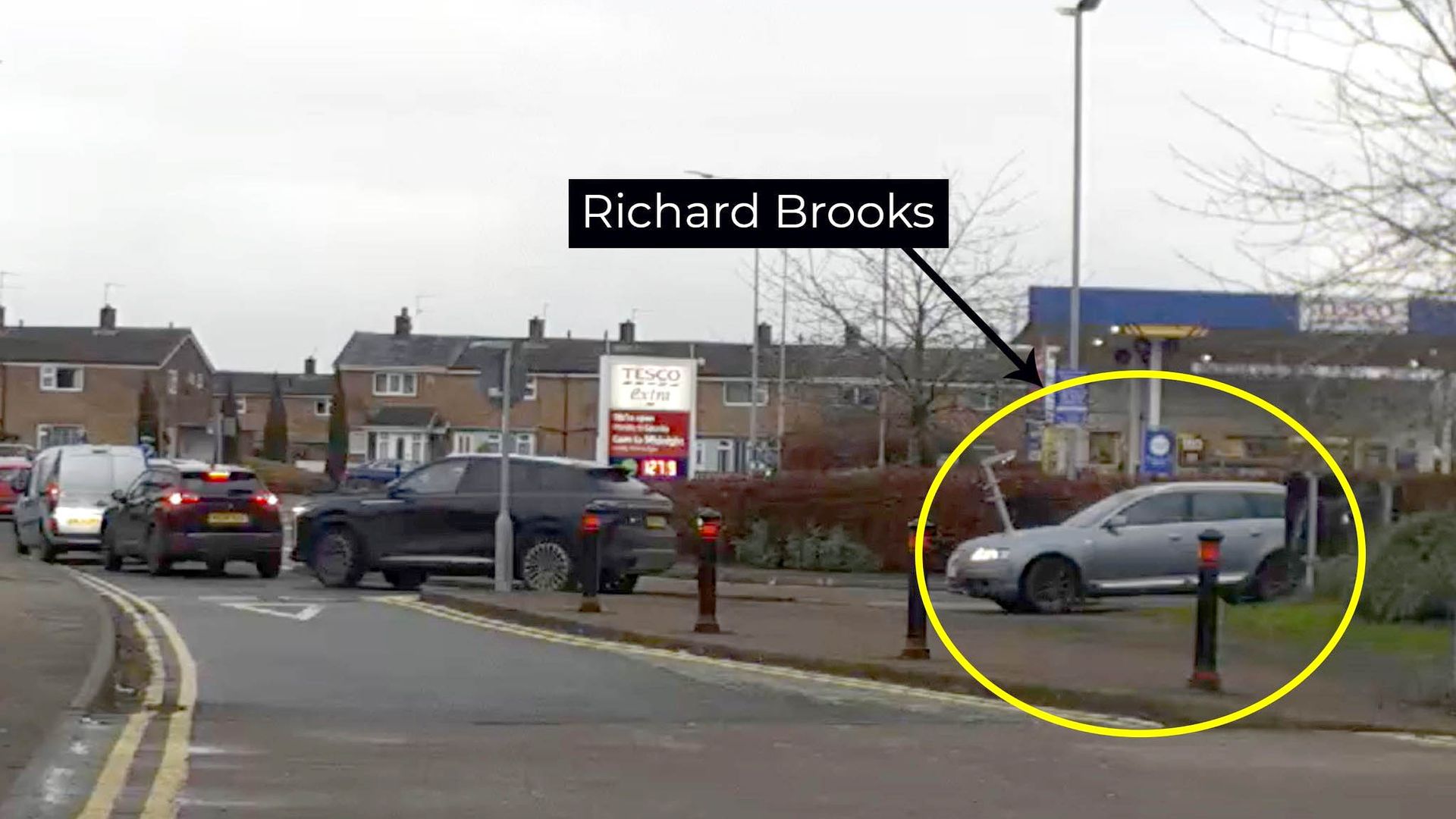
But after the court hearing traffic officers saw him get into his car at a nearby Tesco store and drive away.
The force said when he saw the officers in their marked police vehicle, he tried to turn around and head back into the car park.
Officers arrested him, charged him with driving while disqualified and without insurance and seized his car.
The force said that after a night in the cells, Brooks was returned to the same court.
His ban was increased to 18 months and he was given a 12-week jail sentence, suspended for a year.
The defendant must also complete 150 hours of community service and pay a fine.
After the case, Sergeant Chris Milburn, said: “This is a reminder to everyone that if you’re banned from driving, then that ban starts immediately.
“Should you then leave court and get into your car to drive home, it is highly likely that we will stop you, and you will be facing a much harsher punishment – as Brooks has now found out.”
Ukrainian President Volodymyr Zelenskyy is reportedly planning to announce a presidential election and a referendum on a potential peace deal to end the war with Russia, with the declaration expected on Feb. 24, the fourth anniversary of Moscow’s full-scale invasion.
The Financial Times, citing Ukrainian and European officials involved in the planning, reported on Wednesday that both a presidential vote, in which Zelenskyy would seek re-election, and a nationwide referendum could be held by May 15.
The outlet said Kyiv could risk losing proposed U.S. security guarantees if it does not hold both votes by that date.
The Financial Times noted that although earlier U.S.-imposed deadlines have come and gone, American officials are this time applying heavier pressure on Ukraine as the November midterm elections loom.
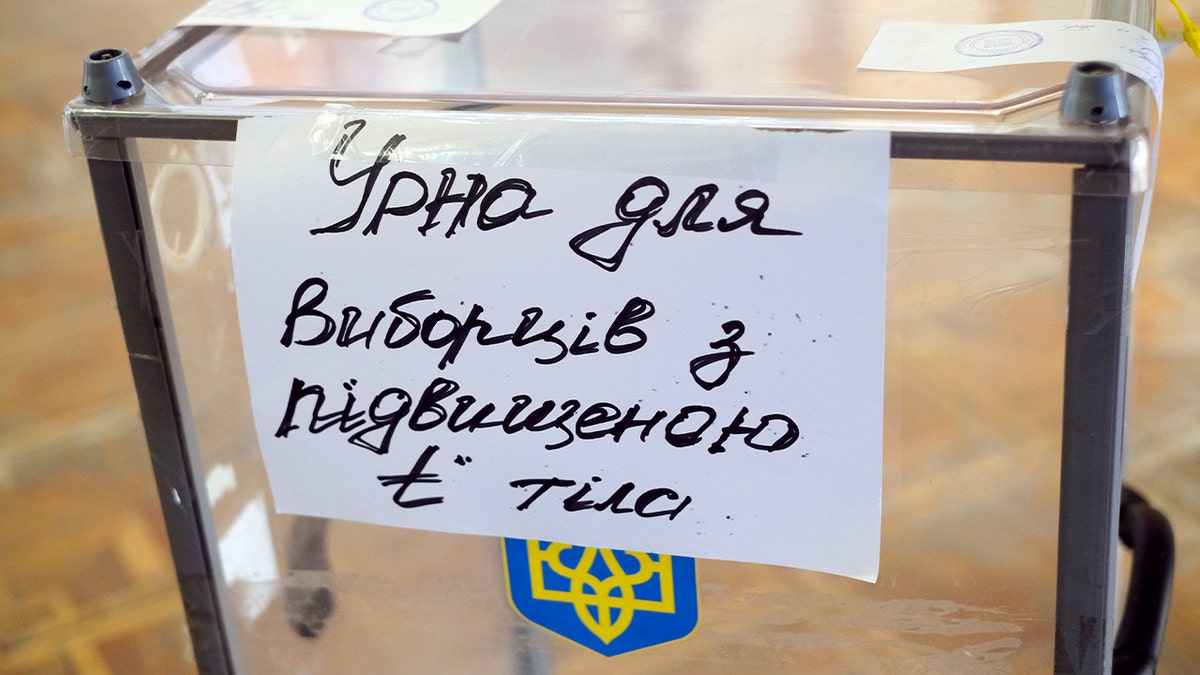
A note marks a ballot box for voters with high temperatures at a polling station during the 2020 Ukrainian local elections in Rubizhne, Luhansk Region, eastern Ukraine, on Oct. 25, 2020, amid the coronavirus pandemic.(Kovalyov Oleksiy/Ukrinform/Future Publishing via Getty Images)
It added that the timeline could also be complicated by the wide gap between Moscow and Kyiv on key territorial issues, including control of the Donbas region and the Zaporizhzhia nuclear power plant, as well as the need for parliament to amend legislation because martial law currently bars national elections during wartime.
Zelenskyy previously stressed that the timing and format of any elections are matters solely for Ukraine and its citizens, rejecting any suggestion that the Kremlin could dictate the process.
In several lengthy posts on X in December, he argued that two key factors would determine whether voting is possible: security and legislation.
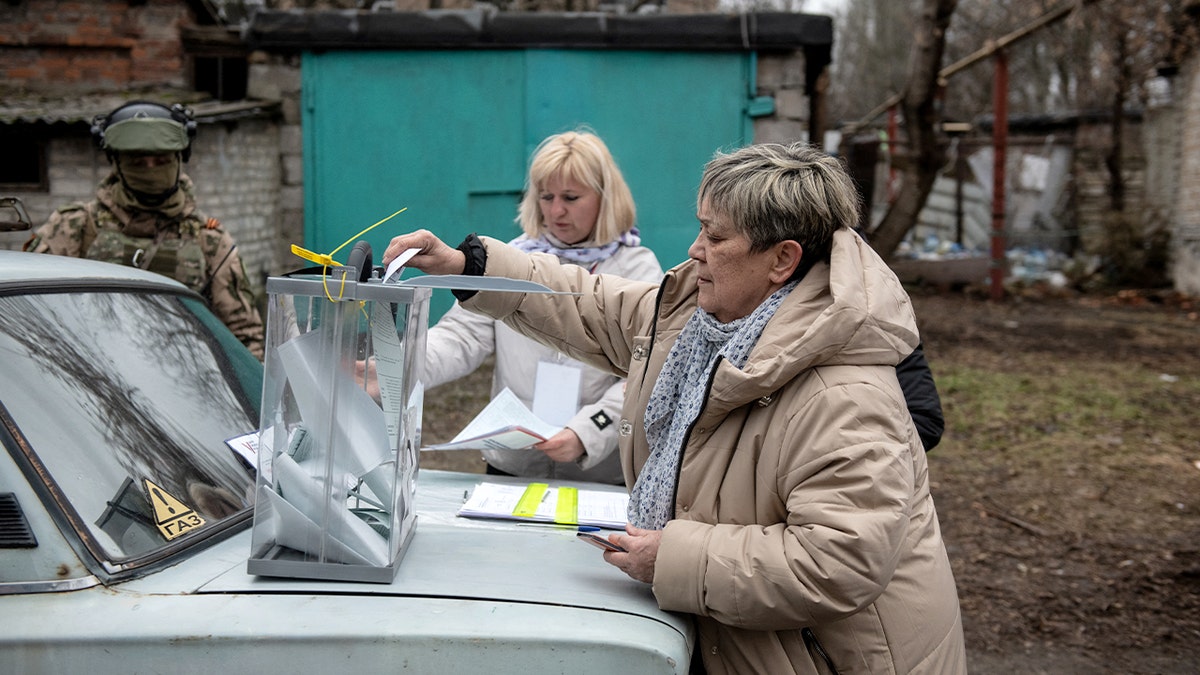
A woman casts her ballot at a mobile polling station during early voting in Russia’s presidential election in Donetsk, Russian-occupied Ukraine, on March 14, 2024.(Stringer/AFP via Getty Images)
Zelenskyy said voting can only take place on Ukrainian-controlled territory and must ensure the participation of soldiers defending the country. Elections cannot be held in Russian-occupied areas, he explained, because of concerns over how they would be conducted.
He also suggested that a ceasefire, at least for the duration of an election or referendum, may be necessary to guarantee secure conditions, including protected airspace and the presence of international observers.
The reported deadline from the Trump administration comes after The Associated Press reported that Washington is aiming for the war to end by June.
Ukrainian servicemen vote at a polling station during Ukraine’s parliamentary elections in Velyki Mosty, Lviv Oblast, on July 21, 2019.(Mykola Tys/Global Images Ukraine via Getty Images)
Trilateral talks between the United States, Russia and Ukraine were held in Abu Dhabi in early February, where the sides met twice but emerged with only a limited breakthrough — agreeing to a 314-person prisoner exchange, the first such swap in five months.
U.S. special envoy Steve Witkoff said Washington and Moscow agreed to reestablish a military-to-military dialogue, calling the channel “crucial to achieving and maintaining peace.”
He said trilateral discussions would continue in the coming weeks after the delegations report back to their respective capitals.
Republicans in Congress are moving ahead with two pieces of legislation this week that would dramatically reshape the nation’s election laws.
Together, the SAVE America Act and MEGA Act would shift key voter certification powers to the executive branch, require stricter proof of citizenship for voter registration, and allow states to more easily access federal immigration databases to track and remove “potential” or “suspected” noncitizens from voter rolls.
The SAVE America Act passed through the Rules Committee late Tuesday on a 9-4 partisan split, teeing up a full house vote on the bill. The bill would require voters to use a passport, birth certificate or REAL ID to register to vote and requires voters to prove their identity and citizenship in person.
Changes to the committee bill include a new section requiring states to send lists of all eligible voters to the Department of Homeland Security’s Systemic Alien Verification for Entitlements database and placing the Commissioner of the Social Security Administration at the head of a federal voter citizenship certification process.
Rep. Bryan Steil, R-Wis., said a manager’s amendment filed overnight would also exempt overseas military voters and their families from in-person identification requirements and make the law effective immediately.
Additionally on Tuesday, the House Committee on Administration held a hearing on another bill, the MEGA Act, also sponsored by Steil. That bill would discount all mail-in ballots received after the close of polls on Election Day, require the Attorney General to certify election funding for states, and authorize the AG to sue states that don’t comply with federal election requirements.
It would also allow private individuals to sue any election official “who registers an applicant to vote in an election for Federal office who fails to present documentary proof of United States citizenship.”
The data tells a different story
Steil cast counting ballots past Election Day as untrustworthy, comparing it to playing a corrupt card game.
“Imagine if you went to a casino and played cards and you’re playing with the dealer, and at the very end…the dealer says ‘You know what, I’m not going to flip over my cards for three or four days,’ ” he said. “You could be playing with the pope and you wouldn’t have a lot of confidence in exactly what is taking place.”
But the delays in counting ballots in three states in the 2020 election – Pennsylvania, Wisconsin and Michigan – had a clear explanation: state laws prevented election officials from processing mail-in ballots until Election Day or the day before, forcing them to prioritize in-person votes first before moving to mail-in ballots – which ended up leaning heavily Democratic.
New research from the Center for Election Integrity and Research released this week found that many claims of suspected noncitizen voting are wildly inflated when investigated. Executive director David Becker said the data gives “a very good sense of the depth of the problem” around noncitizen voting, which he called “infinitesimally rare.”
“President Trump’s own Department of Homeland Security has checked more than 49 million voter records, and they themselves admit that 99.98% of those records represented confirmed citizens,” Becker said in a statement. “In several states that are politically aligned with President Trump, the number of alleged noncitizen voters has precipitously dropped when subjected to scrutiny.”
Congressional Democrats unanimously opposed the bills, arguing they would disenfranchise legal voters in an effort to address a problem that post-election audits show is exceedingly rare.
Rep. Julie Johnson, D-Texas, said Congress must respect “the fundamental constitutional right of every citizen to cast a ballot.” That obligation would affect citizens without birth certificates or passports married women who have changed their names, and voters with limited access to election offices where they must provide citizenship in person.
“The problem with this bill is you’re putting all these administrative burdens in place to keep citizens from voting,” she said, adding later that “it is unamerican, unconstitutional, and just dead ass wrong.”
A decade of finger pointing
It’s not clear what authorities or figures Steil was citing to justify the bill. For instance, approximately 98 percent of voters already cast their ballot on voting machines with a paper backup record.
Further, election experts don’t say winners must be declared on Election Day. Many argue the opposite: that calling races too early—or refusing to count ballots legally postmarked on Election Day but take days to arrive-—can disenfranchise legitimate voters.
The MEGA Act has support from GOP-controlled states. Wyoming Secretary of State Chuck Gray told lawmakers Tuesday it would impose “baseline common sense standards” for elections nationwide. Gray also said he stood “in complete support of” President Trump’s March 2025 executive order on elections—though major sections of that order have since been struck down by courts for being unconstitutional.
After the 2016 election, Republicans resisted national election administration laws, arguing states should control election administration.
Now, they face similar arguments about their legislative package.
Rep. Jim McGovern, D-Mass., said it was “preposterous that the same Republicans who spent their entire careers demanding that states – not the federal government, states – should run their elections are now suddenly begging for federal intervention.”
Karen Brinson Bell, who led North Carolina’s State Board of Elections until last year, warned that the bill’s rigid photo ID mandates would override current systems even in most states—even those that already have voter ID laws. She also said the requirements would impose a one-size-fits-all approach on election systems that have diverse, locally driven needs.
“The needs of communities in Wyoming differ from those in Michigan and North Carolina,” Brinson Bell said. “Decentralized election administration is a feature, not a bug, of our democratic system.”
The brazen attack on the international airport and nearby military airbase in Niamey, Niger’s capital, came overnight between January 28 and 29.
Balls of orange fire flew across the sky as the Nigerien army attempted to respond while residents ducked for cover and whispered prayers, as shown in videos on social media. ISIL (ISIS) in Sahel Province, or ISSP – a Niger-based outfit earlier known as the ISIL affiliate in the Greater Sahara or ISGS – has since claimed responsibility and says it killed several soldiers, although the Nigerien army disputes this.
Recommended Stories
list of 3 itemsend of list
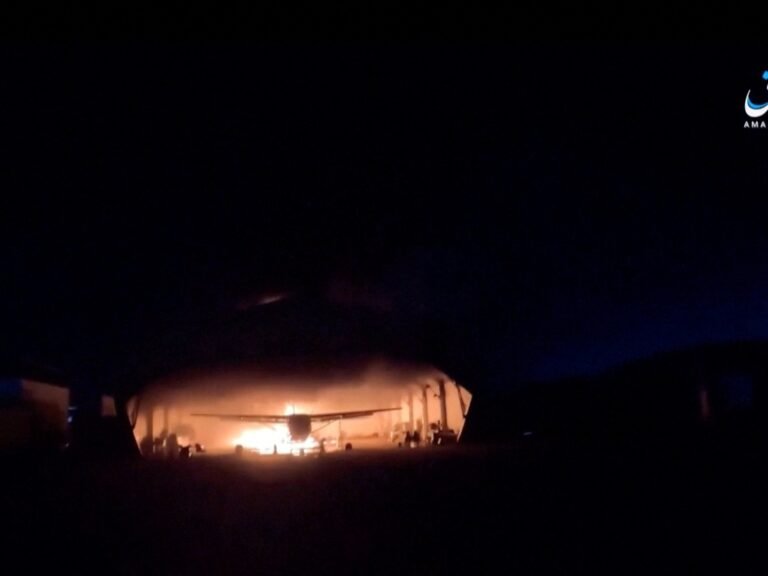
Analysts say the daring attack shows ISSP’s growing confidence at a time when the swarm of armed groups operating across the troubled Sahel region in Western Africa is expanding its areas of operation with advanced technology. Many of its fighters had breached military drone hangars using RPGs and mortars, and managed to damage several aircraft and one civilian aeroplane, according to videos from the group.
“This is unprecedented,” Heni Nsaibia, a senior analyst at the conflict monitoring think tank, ACLED, told Al Jazeera, noting that ISSP usually limits offences to rural areas and uses rudimentary weapons like AK-47s.
“They are refining their attacks and becoming more experienced in guerrilla warfare. To be able to infiltrate and penetrate the capital speaks to itself that they have tactical strength and boldness,” he said.
Although officially unconfirmed, conflict trackers suggest that ISSP may have deployed a drone in the assault, in what would mirror a region-wide trend that analysts say marks a dangerous escalation in the Sahel crisis. ISIL affiliates have used explosives-laden drones in rural attacks in Nigeria, but never in Niger.
“We have videos showing there was nocturnal gunfire from the Nigerien air defence,” Nsaibia added. “It’s possible they detected drones [from ISIL] used for surveillance, but it’s only a hypothesis.”
Military-ruled Niger has seen a rise in armed attacks since July 2023, when the army seized power and expelled hundreds of French and US troops that previously provided air and combat support.
Neighbouring Mali and Burkina Faso, which are also governed by the military, are also facing similar violence as several armed groups lay claim to swaths of territory across their porous borders. The groups aim to control territory without Western influence, and according to an extreme interpretation of Islamic law.
All three countries have pivoted from French troops to the Russian government-controlled Africa Corps, a paramilitary group whose effectiveness has been mixed. In a statement following the Niamey attack, the Nigerien and Russian governments said Africa Corps fighters helped “repel” the assault and that 20 of the attackers were killed, with four soldiers wounded.
A satellite image shows Niamey international airport and military bases after gunfire and explosions in Niger, January 29, 2026 [Handout/Vantor via Reuters]
Drone use surges across the Sahel
Military drone attacks by the Nigerien forces and other parties to the conflict are common, but the armed groups themselves are increasingly repurposing easy-to-buy, easy-to-smuggle Chinese-made commercial drones for strikes by attaching improvised explosive devices (IEDs), grenades, or small mortar shells to them.
It is a “low-cost, high-impact” capability that provides the groups with real-time intelligence, minimises their need to risk fighters as suicide bombers, and makes it harder for militaries to detect and counter them, Rida Lyammouri, a senior fellow at the Morocco-based Policy Center for the New South (PCNS), said.
The most prolific drone user is the al Qaeda-linked Jama’at Nusrat al-Islam wal-Muslimin (JNIM), which is primarily based in Mali and Burkina Faso. The group has cells in Niger, Togo, and on the Benin-Nigeria border.
JNIM first used a drone in 2023, but without a significant impact. However, the group has since rapidly integrated the technology into battlefield operations, often pairing drone attacks with ground assaults in a two-pronged approach. Between 2023 and 2025, ACLED recorded JNIM using drones at least 89 times, with 69 incidents being for attacks. At least five other events saw JNIM drones crash or be intercepted.
“What’s alarming is how quickly they’ve developed this knowledge,” Lyammouri said.
The real risk, he added, lies beyond the group’s ability to use drones as a weapon.
“The drones used are very small, and they don’t carry an important amount of explosives, so the damages a lot of times are not as significant. But what is important is how they use drones to collect information and gather intelligence,” he said.
JNIM relies on the DJI M30T model, a high-end drone with an in-built camera ideal for night-time surveillance. The cheaper DJI Mavic, which costs between $500 and $700, is also part of the fleet.
Drones are likely helping the group monitor fuel trucks attempting to break its blockade on the Malian capital of Bamako, experts say. Since September, JNIM has sealed off highways used by fuel tankers importing oil from neighbouring Senegal and the Ivory Coast, causing periods of fuel shortages across Mali.
Similarly, the separatist Azawad Liberation Front (FLA), which is fighting for an independent state in northern Mali, released videos last February showing its fighters controlling a first-person view (FPV) drone – advanced models that help pilots have a “cockpit” viewing experience via special goggles. The FLA conducted 28 drone attacks between 2024 and 2025, according to ACLED. It used an FPV to down a Malian military helicopter in the northern Tessalit region in July 2024, according to the conflict reporting website, Military Africa.
ISIL affiliates are meanwhile using drones to a much lesser extent.
The Nigeria-based ISIL affiliate in West Africa Province (ISWAP) has deployed armed drones 10 times between 2024 and 2026, according to ACLED. In January, the group targeted Nigerian forces raiding one of its hideouts in northern Borno State with multiple armed drones.
The new shift is being accelerated by offline artificial intelligence (AI) tools that can help drones avoid traditional detection and jamming methods, Lyammouri said. They are also using these tools to generate training material, AI-generated images and press releases, he added. The open-source MISTRAL, a ChatGPT rival that is useful for everything from offline searches to content generation, is one such tool.
The shift to drone use by armed groups is global. ACLED in 2025 reported that 469 armed groups – including rebel groups, militias, gangs, and transnational cartels around the world – deployed a drone at least once in the past five years, up from only 10 groups using the technology in 2020.
Cooperation at a time of tensions
The likely next stage for drone use by armed groups could be AI-enabled “drone swarms” that could launch large-scale remote attacks on government positions featuring several drones at a time, analysts note.
For the groups, there is plenty of incentive to evolve quickly. Each group is willing to lay claim to its territory, and attacks like the one on Niamey not only aim to undermine the Nigerien government but also to signal to rival groups like JNIM not to intrude on that area, Nsaibia said.
Countries in the region will need to work together to jointly fight the groups’ new strategies, especially as they expand geographically and share technologies, Lyammouri warned.
Their “tactics are spreading and require a coordinated response”, he said, one that will necessitate bringing together drone warfare experts, AI researchers, and regional military planners to simulate the recorded drone warfare scenarios, like JNIM’s drone-assisted ground assaults and intelligence-gathering patterns.
That is tricky, however, amid regional tensions and a fragmented security response.
Following the 2023 coup in Niger, relations with neighbouring Nigeria became strained. Soon after, the two called off formal defence cooperation following threats by Abuja to lead the regional Economic Community of West African States (ECOWAS) bloc into a military intervention to restore civilian rule.
Wider tensions between ECOWAS and the military governments in Niger, Mali, and Burkina Faso escalated last year and led to the three exiting to form their own union, the Alliance of Sahel States.
However, this week, Nigerien and Nigerian security officials met in Abuja to discuss stronger border security to hamper smuggling routes that the armed groups use to transport weapons.
A collective regional solution is the only one that may succeed, experts agree.
Barring strong counters, important urban centres like Niamey, usually deemed safe, are going to be more “at risk in the medium to long term”, Nsaibia said.
A video is going viral of a congressional candidate in North Carolina admitting she is truly a “progressive” even though she is running as a Republican.
“Are you trying to trick people?” Katie Barr, who is running in North Carolina’s 14th Congressional District, was asked on a podcast called “The Hometown Holler.”
“If you go on the campaign website, above the fold as they call it, is like, ‘I’m not a real Republican.’ Like, I am telling people the truth. I knock on a door and say, ‘I am running in the Republican primary, but I am not a Republican, I am a progressive,’” Barr responded. “I can’t claim a Democrat anymore.”
She added that her goal is not “to pull a fast one,” claiming she is just “being dead honest with people about what I would do if I win.”
Progressive candidate for the U.S. House in North Carolina, Kate Barr, was pressed on why she is running in the Republican primary during a viral podcast appearance.(Kate Barr Can Win/Getty Images)
On Nov. 6, Barr filed paperwork to challenge incumbent Rep. Tim Moore, R-N.C., to represent the state’s 14th Congressional District.
Barr states on her website’s home page that she is running as a Republican because it’s “the only way to kick these corrupt cowards out of office.” She claims that Republicans have “rigged the maps” to ensure they will come out victors “every time.”
“The general election has already been decided. So – the primary is the only competition for this job,” Barr’s website explains.
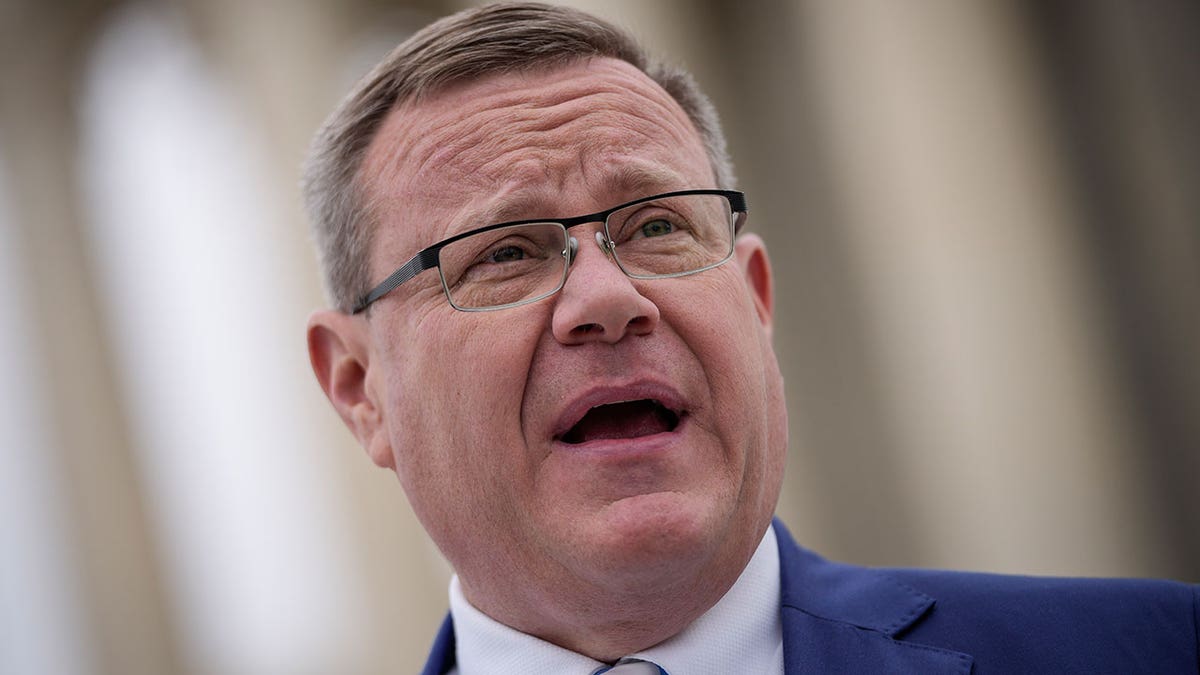
Rep. Tim Moore, R-N.C., is being challenged by a progressive candidate running as a Republican in the district’s GOP primary.(Getty Images)
Barr reiterated that she has been “honest” about who she is and how she plans to govern “from the start” in a statement to Fox News Digital.
“Tim Moore is terrible for the voters of district 14,” Barr continued. “He’s getting rich off of his position while voters struggle. And Tim rigged this district to make sure he’d stay in office despite it all. That’s wrong. I’m running so voters have a real choice.”
While Barr has faced criticism online over her maneuver, with critics calling the move cheating and describing it as shameful, at least one conservative critic doesn’t think it is as big of a deal as some are making it out to be.
A man fills out a ballot at a voting booth on May 17, 2022 in Mt. Gilead, North Carolina.(Getty Images)
“I hate to burst the outrage bubble, but she’s not making a big secret out of this. It’s her whole schtick, and it’s front and center on her campaign website,” said Second Amendment activist Cam Edwards, on X, in response to the viral video of Barr.
A case that will shock the society has come to light in Vasai area adjacent to Mumbai. Here a 12 year old minor girl was lured, intimidated with the help of false identity and then an attempt was made to sexually exploit her. A shocking incident came to light in this case when it was revealed that the accused boy was not Rakesh Yadav but Abdul Rehman Shah. After this, Hindu organizations and the boy’s friends camped at the police station.
The girl’s father gave this information
According to the statement of the father, the accused youth first introduced himself as Rakesh Yadav and won the trust of the girl with this name. After establishing trust, he forcibly kissed the girl for the first time at a secluded place. The innocent girl, under fear and mental pressure, did not tell this to anyone and remained silent.
Investigation revealed that after about a week, accused Abdul Rehman Shah took the minor girl to a deserted area of Tungareshwar. It is alleged that he was trying to sexually exploit the girl there, when some volunteers present at the spot noticed him.
Volunteers intervened on the matter
Realizing the seriousness of the situation, the volunteers immediately intervened, stopped the accused and started interrogation. During this, the young man first told his name as Rakesh Yadav, but after strict interrogation he admitted that his real name is Abdul Rehman Shah.
Hindu organizations informed the police and due to the vigilance of the police, the honor of the innocent was saved. After this the girl was safely handed over to her parents. The police took the accused into custody, registered a case under serious sections and arrested him.
The accused’s friends put pressure on the victim
Another shocking twist in the case came when after the arrest of the accused, some of his Muslim friends started putting constant pressure on the victim. Threats were given to withdraw the complaint and the girl had to face mental and sexual harassment. On the complaint of the victim, the police have registered a new FIR against these associates also. The police is investigating the role of all the people involved in the entire case.