Europe’s AI translation industry told it risks reputation by partnering with US firms | AI (artificial intelligence)

0

AI companies in Europe risk losing their world-leading status in the field of machine translation, industry figures have said, after the decision by one of the continent’s leading startups to partner with Amazon’s cloud computing division provoked alarm.

While businesses in the EU have generally lagged behind the US and China in AI adoption, a small group of European companies have cornered the global market for high-quality machine translations for professional use.

The biggest success story is Cologne-headquartered DeepL, an online translator that regularly outperforms Google Translate in accuracy assessments. Used by governments, courts and half of the Fortune 500 list of highest-earning US companies, last year it was reported to have recorded revenues of $185.2m. Last month DeepL launched a live voice-to-voice translation service, reminiscent of the babel fish device envisaged in Douglas Adams’ 1981 novel The Hitchhiker’s Guide to the Galaxy.

Shortly before the announcement, however, DeepL informed its paying subscribers that it would “no longer process data exclusively on our own servers” and was entering a partnership with Amazon Web Services (AWS), which provides vital infrastructure for much of the internet.

The move prompted concern among users and observers of the sector in Europe, who say it will boost Silicon Valley’s monopoly over digital infrastructure just as the actions of the Trump administration prompt alarm over tech companies’ independence.

“I was not pleased,” said Jörg Weishaupt, the chief executive and founder of Malogica Group, a software business headquartered in Madeira, Portugal. He had been a longtime business customer impressed with DeepL’s performance, but he has decided to cancel his subscription.

His main concern, he said, was that he no longer felt comfortable uploading contracts or company strategy papers to DeepL’s site. “These are confidential documents, and I want to know where they end up.”

DeepL said AWS would not have access to its paying customers’ data, either for viewing its content or training Amazon’s algorithms, and said the partnership was vital to scale up its offering internationally.

A spokesperson said: “DeepL remains the data processor. We have added AWS as a sub-processor to our services providing the necessary infrastructure for global scale. AWS will not control or access customer data in any usable form. Customer data is encrypted in transit and at rest, and we do not use customer data from paid services to train our AI models.”

Weishaupt, however, pointed to the US 2001 Patriot Act and the 2018 Cloud Act, which allow the US government to request information from cloud providers. Last July, a Microsoft director of legal affairs said under oath at a hearing in France that the company “cannot guarantee” data sovereignty to customers in the EU should the Trump administration demand access to customer information held on its servers.

Businesses in the EU have generally lagged behind the US and China in AI adoption, but a small group of European companies have cornered the global market for high-quality machine translations for professional use. Illustration: Yuichiro Chino/Getty Images

Since the Cloud Act, US companies have rushed to create technical solutions to assure non-US clients that their data is safe. DeepL says concerned customers can choose a data residency option that guarantees their data will not leave Europe. But some question whether such reassurances can be relied upon.

Weishaupt said: “There’s a big movement towards sovereignty in Europe at the moment. It may have been caused by the current geopolitical situation, but it won’t go away. We are all trying to get out of the lock-in with the Americans.”

The Trump administration has repeatedly clashed with the EU over European attempts to regulate big tech companies, and in her 2025 state of the union address the European Commission’s president, Ursula von der Leyen, said that “to take control over the technologies […] that will fuel our economies” could amount to “Europe’s independence moment”.

In such a climate, any collaboration between European AI translators and US cloud providers is likely to draw some criticism, including from within the sector.

Marco Trombetti, the co-founder and chief executive of Translated, said it would be a ‘disaster’ for his company to relocate to the US. Photograph: AP

Marco Trombetti, the co-founder and chief executive of Translated, a Rome-based company and DeepL competitor, said: “Europe needs to be absolutely independent in terms of infrastructure. Digital infrastructure is the road network of today. We cannot pay a toll when we want to do business. If you pay that toll for every transaction, that will simply increase the toll and not allow you to go on that highway. And that’s literally a big, big error.”

He also said it runs counter to businesses’ own long-term interests. While as much as 80% of his company’s revenue today comes from Silicon Valley, with clients including Airbnb, Uber and Starlink, Trombetti said he had not relocated to the US.

“It would be a disaster. AI translation companies have thrived in Europe because we operate in a multi-lingual market that has made us acutely aware of the problem we are trying to overcome. From Europe, you can easily cover 200 languages within a two-hour timezone window.”

Relying on American infrastructure, he said, would risk European companies giving up their competitive advantage. In January, the US Department of Commerce introduced rules that mean American companies will get priority access to US-made chips, particularly advanced graphics processing units (GPUs), when demand exceeds production.

“The playing field will become increasingly uneven,” said Trombetti. “US companies having priority access to chips creates a strong incentive to relocate to the United States. It works in the short term, but the more they restrict the rest of the world, the more they motivate China and the EU to build alternatives.”

Building a European digital road network, however, poses a significant challenge. Leevi Saari, a Finnish researcher at the University of Amsterdam and AI Now Institute, said: “As DeepL wants to scale up its services, it needs more capacity, and what Amazon offers would have looked very tempting.”

In a global AI boom, building datacentres has become increasingly expensive and the rate at which hardware chips lose their value has increased, meaning that in spite of AWS outages in 2025, few European companies have switched to local clouds. As machine translation companies switch to live text and voice-to-voice translation, the main technical issue they are trying to address is datacentre latency, Saari said.

Datacentre latency refers to the time it takes for data to travel from point A to point B, which is usually measured in milliseconds. AWS achieves low latency by having established a network of datacentres around the world and by laying its own network of subsea fibre-optic cables.

“Currently, the gravitational forces of the AI industry are such that startups will end up being pulled towards the US,” said Saari. “How can Europe create its own AI gravity well? That’s the trillion euro question.”


Source link

How the digital-age media help fuel a climate of anger and violence


NEWYou can now listen to Fox News articles!

The media are part of the problem.

What problem? Well, there’s a long list. Take your pick.

In the pre-digital era, I used to say that cable news encouraged inflammatory rhetoric by lawmakers because so many of them wanted to break through the static and get their sound bite on the air.

Things are a thousand times more complicated now with the rise of podcasts, group chats, Snapchat, TikTok, X, Facebook, Instagram, Threads, YouTube and Substack. But the principle remains the same. How, amid this deafening noise, do you get heard?

TUNING OUT: WHY MANY AMERICANS ARE SICK OF THE NEWS – ESPECIALLY TRUMP NEWS

Person looking at their phone.

Media generates an angry atmosphere – and social media exacerbates it. (Anna Barclay/Getty Images)

It’s a much angrier atmosphere now, and some attribute that to President Donald Trump. But he didn’t create this environment, he just exploited it, with constant attacks on journalists, political opponents and a retribution campaign against his enemies. He is also on the receiving end of a decade of denunciations depicting him as a Nazi, fascist, dictator, danger to democracy and not a very nice person.

Another major shift is that there are so many more journalistic stars now, from legacy media to online influencers, to the point that some lawmakers have quit (or been retired) to become network and cable contributors, even anchors.

That’s why this essay in the Atlantic, by Michael Scherer, is so revealing.

WHY META AND GOOGLE ARE LOSING COURT BATTLES FOR DAMAGING KIDS BY TRYING TO GET THEM ADDICTED

Scherer, who previously reported for Time and the Washington Post, says he feels “complicit” in the new world of endless attacks. He wrote this after attending the White House Correspondents’ Association Dinner that erupted in gunfire in the third assassination attempt against President Trump – and unleashed a torrent of comments from idiots who claimed the assault was somehow “staged,” though we watched it unfold on live television. 

He listed a spate of political murders, from Charlie Kirk to the CEO of United Healthcare, and sees the cycle of political violence getting worse.

Scherer once co-authored an article about Trump comparing himself to Napoleon, Alexander the Great and Julius Caesar, with no hint of political violence, that triggered a wave of obscenity-filled attacks against the president. 

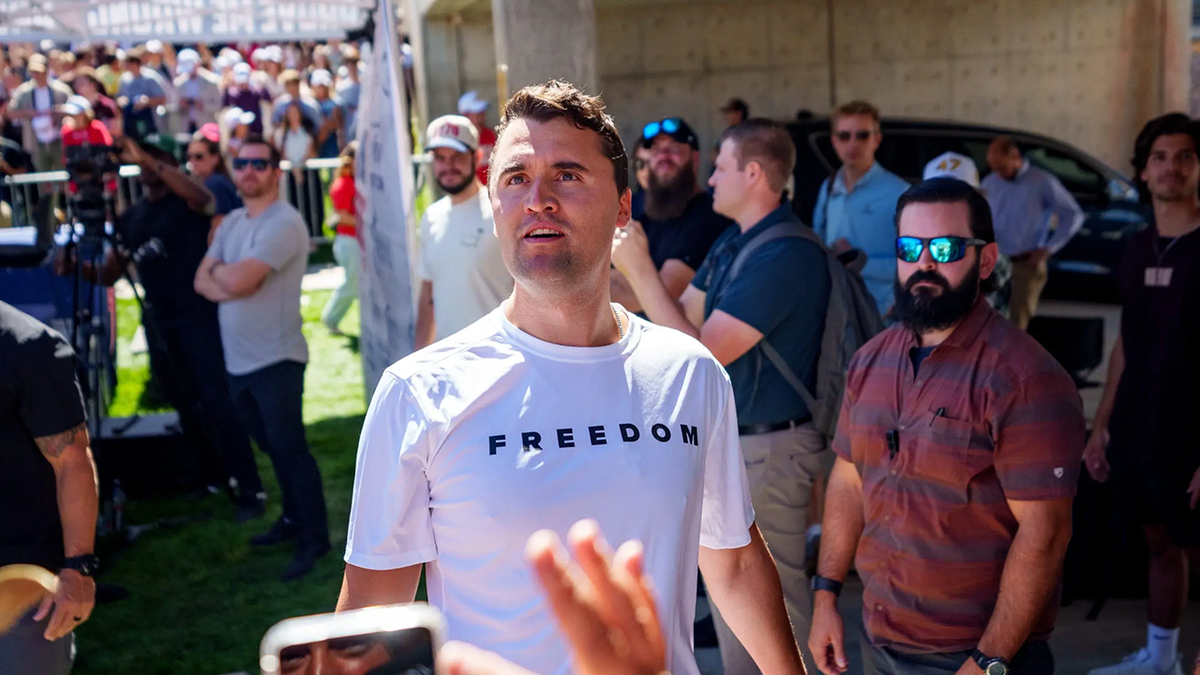
Charlie Kirk in a white T-shirt emblazoned with the word "Freedom" at UVU shortly before his assassination

Michael Scherer’s essay in The Atlantic listed a number of assassinations, including that of Charlie Kirk. (Trent Nelson/The Salt Lake Tribune/Getty Images)

Here’s the formula: “The more a story taps an emotional vein—usually outrage or grievance—the more traffic it will tend to attract from social media. I am in the business of writing long and complicated stories full of nuance. Yet I am at the mercy of platforms that want to turn my words into cortisol and endorphins, often for people who will never click the link to read what I wrote. Regardless of my intentions, my work can fuel the false division I despise.”

And aren’t most journalists guilty of this to some degree, whether it’s squeezing a short line onto the platform previously known as Twitter, or slapping a tendentious headline on a podcast? That’s part of the escalation. 

Meanwhile, Kash Patel’s lawsuit may be taking a troubling turn.

MS NOW reported yesterday that there is concern among FBI agents that the bureau has “launched a criminal leak investigation” aimed at the Atlantic journalist who wrote the offending piece, Sarah Fitzpatrick. 

That would be strange, because the story contained no classified information. It was a negative portrayal of his conduct in office and alleged drinking habits. This would, if accurate, mean that Patel was in charge of the alleged probe while pursuing a $250-million suit against the magazine.

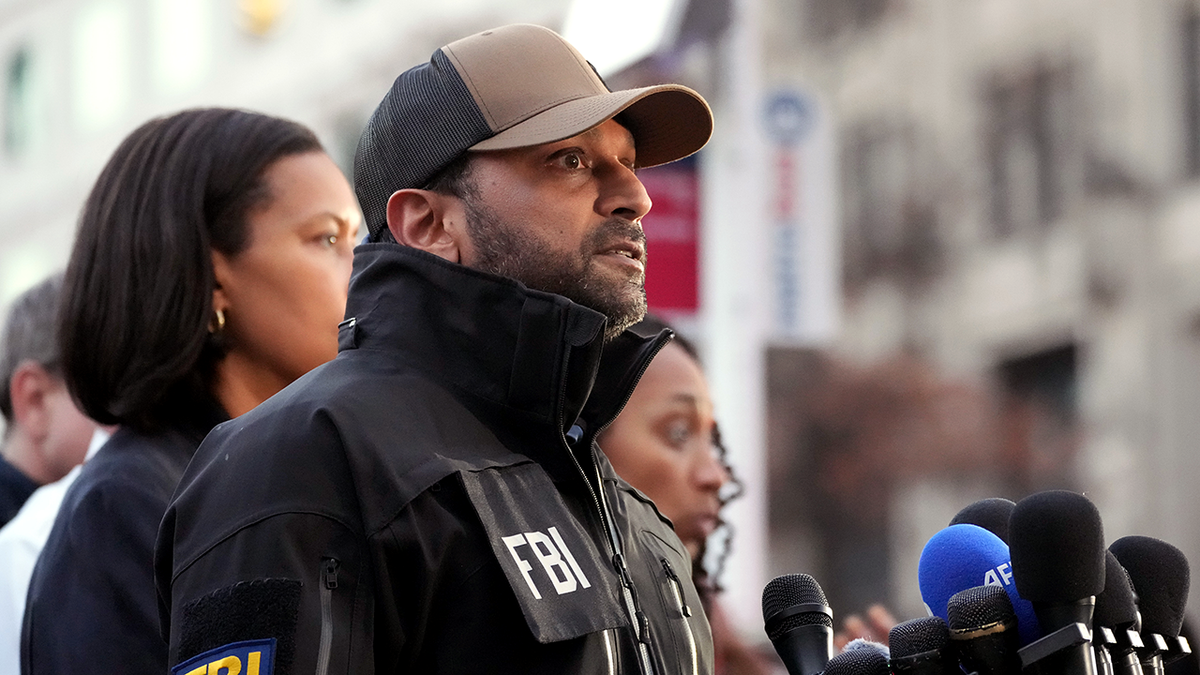
Kash Patel speaks in DC

FBI Director Kash Patel’s lawsuit may be taking a troubling turn. (Andrew Leyden/Getty Images)

A bureau spokesman denied the story, saying: “This is completely false. No such investigation like this exists and the reporter you mention is not being investigated at all.” 

SUBSCRIBE TO HOWIE’S MEDIA BUZZMETER PODCAST, A RIFF ON THE DAY’S HOTTEST STORIES

“If confirmed to be true,” said Editor-in-Chief Jeffrey Goldberg, “this would represent an outrageous attack on the free press and the First Amendment itself. We will defend the Atlantic and its staff vigorously; we will not be intimidated by illegitimate investigations or other acts of politically motivated retaliation.”

CLICK HERE TO DOWNLOAD THE FOX NEWS APP

Take the denial for what it’s worth. But keep in mind that in January, the FBI, armed with a search warrant, entered the home of Washington Post reporter Hannah Natanson, seized her iPhone and other devices, as part of a leak investigation and still hasn’t returned them – though they include such personal information as her wedding plans. Natanson just won a Pulitzer. 


Source link

Teesta Project: China’s entry into Bangladesh’s Teesta Project, India eyes growing Dhaka-Beijing partnership – China’s Entry Into Bangladesh’s Teesta Project, India Eyes Growing Dhaka-Beijing Partnership

0

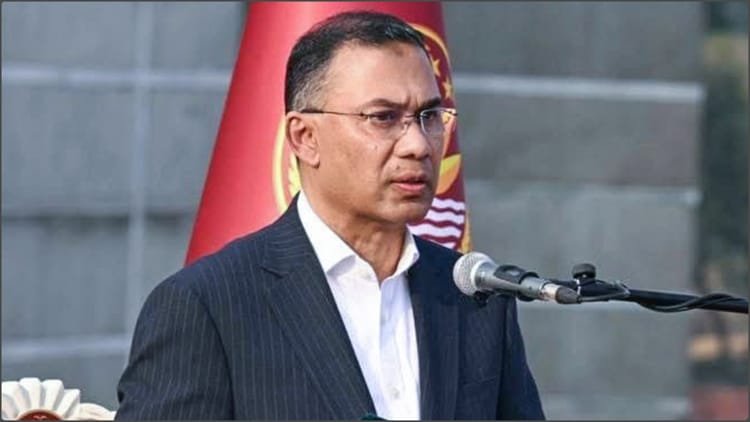
The new government of Bangladesh has formally sought China’s support for the Teesta River Project. This step may affect the relations between India and Bangladesh. The Teesta River Comprehensive Management and Restoration Project (TRCMRP) was discussed in the meeting between Bangladesh Foreign Minister Khalilur Rahman and China’s Foreign Minister Wang Yi in Beijing on Wednesday. This information was given by Bangladesh’s government news agency BSS.

Why is Teesta River important?

Teesta River originates in the Eastern Himalayas and enters Bangladesh passing through Sikkim and West Bengal. This river is considered to be the main source of irrigation and livelihood of millions of people in Bangladesh. At the meeting, Wang Yi expressed China’s support for the new Bangladesh government, saying China is ready to integrate Belt and Road cooperation with Bangladesh’s development strategies and enhance cooperation in traditional areas such as economy, infrastructure and people-to-people contacts. He said that China will also encourage its companies to invest in Bangladesh.

What explanation did China give?

In a statement issued by the Chinese Foreign Ministry, it was said that China’s relations with Bangladesh and other countries of South Asia are not being targeted at any third party, nor should they be affected by any third party.

This is the first visit of Foreign Minister Khalilur Rehman to China after the new government led by Tariq Rehman came to power. He reached China on May 5 and is scheduled to return on Thursday. Earlier last month he had also visited India. His visit to India was closely watched by Beijing as relations between Dhaka and New Delhi had seen strain over Bangladesh’s move closer to China and Pakistan during the Mohammad Yunus-led interim administration following the fall of the Sheikh Hasina government.

China’s interest in Teesta project

China has been showing interest in the Teesta project for a long time. The project is located near India’s sensitive Siliguri Corridor, which connects the northeastern states to the country’s mainland. It is against this backdrop that India has offered technical and conservation assistance for the Teesta Basin in 2024 to strengthen cooperation with Dhaka on trans-border river management.

Water sharing issue between India and Bangladesh

Water sharing has always been an important issue between India and Bangladesh. The India-Bangladesh Ganga Water Agreement signed in 1996 regarding sharing of the Ganga river’s dry season water is set to expire this year unless it is renewed.

Meanwhile, China has continuously increased its economic and diplomatic presence in Bangladesh in recent years. According to Bangladeshi media reports, China is Bangladesh’s fourth largest lender after Japan, the World Bank and the Asian Development Bank. Since 1975, China has given a loan of 7.5 billion dollars to Bangladesh.

During the meeting, the two countries agreed to advance the China-Bangladesh Comprehensive Strategic Cooperative Partnership by enhancing coordination between their development strategies. Bangladesh reiterated its support for the One China policy, saying Taiwan is an integral part of China and it opposes any form of Taiwan independence. At the same time, China reiterated its support for the sovereignty, independence and territorial integrity of Bangladesh.


Up: Secret cameras installed in the gym, videos of many women from big houses found from the trainer’s phone; Story of Bareilly Incident – Female Doctor Assaulted Ultimate Fitness Gym Operating In Building Owned By Brother Of Elected Representative

0

Female Doctor Assaulted Ultimate Fitness Gym operating in building owned by brother of elected representative

gym trainer – Photo: Amar Ujala Graphics

Expansion

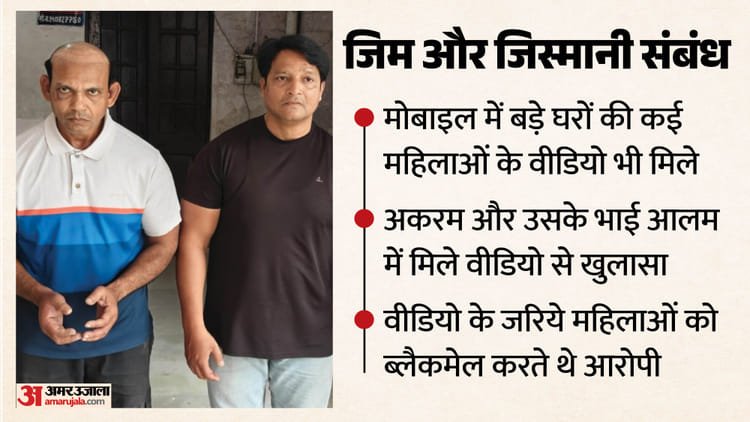
The Ultimate Fitness Gym located in Civil Lines, Bareilly, where women were being sexually exploited by intoxicating them in pre-workout drink, is operated in the building of a public representative’s brother. Things have become clear in the investigation, but those responsible are not ready to say anything.


The brother of the public representative has taken this commercial building on rent after getting it constructed. Here, videos of many women from big houses have also been found from the mobile phones of accused gym operator Akram and his brother Alam.

CarTrade Tech shares surge 15% after record FY26 results; PAT up 68% to ₹244 crore


CarTrade Tech now holds ₹1,244 crore in cash reserves and carries zero debt.

CarTrade Tech now holds ₹1,244 crore in cash reserves and carries zero debt.

Shares of Car Trade Tech jumped over 15 per cent on Thursday to ₹2,081 on the NSEtouching an intraday high of ₹2,115, after the auto-classifieds platform reported its best-ever annual financial results for the year ended March 31, 2026.

The Mumbai-based company posted a Profit After Tax (PAT) of ₹243.51 crore for FY26, up 68 per cent from ₹145.27 crore in the previous year. Revenue from operations rose 22 per cent year-on-year to ₹869.77 crore, while EBITDA more than doubled — growing 70 per cent to ₹257 crore — with margins expanding to 33 per cent from 24 per cent a year ago.

For the fourth quarter alone, the company reported revenue of ₹220.75 crore, up 17 per cent year-on-year, EBITDA of ₹71.65 crore — a 55 per cent jump — and PAT of ₹70.85 crore, up 54 per cent.

All three business segments reported double-digit growth in Q4. The Consumer Group, which includes CarWale, BikeWale and CarTrade platforms, grew revenue 25 per cent and EBITDA 72 per cent year-on-year, with margins reaching 39 per cent. The Remarketing segment, anchored by Shriram Automall, grew revenue 22 per cent and EBITDA 56 per cent. OLX India, the used-goods classifieds business, reported 16 per cent revenue growth and 34 per cent EBITDA growth.

Operationally, the company said it attracted approximately 76 million average monthly unique visitors in Q4, with 95 percent arriving through organic traffic. Its flagship platforms — CarWale, BikeWale and OLX India — each recorded over 150 million annual unique users. The remarketing arm processed an annualized run-rate of 1.7 million auction listings.

The company now holds ₹1,244 crore in cash reserves and carries zero debt. Over three years from FY23 to FY26, the company reported revenue CAGR of 29 per cent, EBITDA CAGR of 98 per cent and PAT CAGR of 82 per cent.

Chairman and Founder Vinay Sanghi said the company’s focus going forward would be on building AI-led products and technology platforms.

At ₹2,081, CarTrade Tech trades at a trailing P/E of approximately 39.6x, with total market capitalization at roughly ₹9,974 crore.

Published on May 7, 2026

Emami bets ₹321 crore on personalized beauty with Vedix, SkinKraft acquisition


Emami Limited announced Thursday it has signed a definitive agreement to acquire a 60 per cent stake in Hyderabad-based IncNut Digital Pvt. Ltd., the parent company of personalized beauty brands Vedix and SkinKraft, for ₹321 crore. The deal includes performance-linked adjustments over 24 months, with Emami committing to acquire the remaining stake in two further tranches over the next four and a half years at valuations tied to future performance.

IncNut, founded in 2011, built its business on data-driven diagnostics and customized formulations. Vedix applies Ayurvedic principles alongside data analytics to deliver personalized haircare, while SkinKraft takes a dermatology-led approach to skincare and haircare. Both brands operate direct-to-consumer platforms and have built subscription-based customer bases with high repeat purchase rates.

For Emami, the acquisition adds science-led, personalized offerings to a BPC portfolio that already includes The Man Company and Brillare, alongside its legacy brands such as Navratna, BoroPlus, and Kesh King.

Vice Chairman and MD Harsha Vardhan Agarwal said the deal addresses a gap in the market where few players offer genuinely personalized, outcome-driven solutions, and that consumer demand is increasingly moving in that direction both in India and internationally.

Emami’s stock was trading at ₹456.35 on the NSE on Thursday, up 0.92 per cent on the day, though the scrip remains down roughly 28 per cent over the past year and has underperformed the Nifty FMCG index across most timeframes. The company carries a total market capitalization of approximately ₹19,920 crore.

IncNut founder and CEO Chaitanya Nallan said the partnership would help accelerate innovation and expand the brands’ reach, describing it as a turning point for the company.

Published on May 7, 2026

New gasfield approved near Twelve Apostles puts climate and ‘pristine’ ocean in jeopardy, environmentalists warn | Victoria

0

A new gas drilling project approved for Victoria’s Otway basin will make “the path to a safe climate harder” and put a “pristine ocean environment” at risk, environment groups have warned.

The federal and Victorian governments on Thursday announced they had greenlit the production licence for Amplitude Energy’s Annie gasfield project in the Otway basin, which expects to start producing gas by 2028.

The project is located about 9km off the shores of Peterborough and Port Campbell, on the Great Ocean Road, about 12km west of the Twelve Apostles, a popular tourist attraction.

The state’s energy and resources minister, Lily D’Ambrosio, said the project had the potential to provide up to 65 petajoules of gas – or more than a third of Victoria’s annual gas use.

She said while demand for the fossil fuel is “decreasing as people move towards electrification”, the gasfield would ensure there was “enough gas in the system for those industries that can’t electrify”.

It is the second major gas project Labor has approved this term and follows the 2022 election where then premier Daniel Andrews campaigned heavily on reviving the State Electricity Commission to accelerate the renewable energy transition and achieve a target of 95% renewable energy by 2035.

Greenpeace Australia Pacific’s head of climate and energy, Joe Rafalowicz, said the Otway project “risks our pristine ocean environment and climate”, while Environment Victoria’s climate campaign manager, Joy Toose said it would “only set back progress on the clean energy transition under way” in the state.

“Projected emissions from existing and planned fossil fuel developments have already used up the carbon budget to limit global heating to 2C,” Toose said.

“Every new gasfield approved makes the path to a safe climate harder and more expensive”.

Alison Reeve, energy and climate program director at the Grattan Institute, said shifting away from gas made sense, but that there was “also an industrial base in Victoria that will have a harder job moving away from gas”.

Victoria is Australia’s largest user of gas, which is used heavily in the manufacturing sector and for heat generation in industrial processes.

The Australian Energy Market Operator in March pushed back its peak-day gas shortfall forecast a year to 2029, citing new infrastructure, increased supply and reduced consumption had helped to bolster supplies.

Thursday’s announcement comes as the Victorian Coalition said that if elected in November it would pause and review all major transmission line projects – which connect renewable energy to the grid – as well as the state’s renewable energy zones – six areas identified as ideal for hosting projects.

The opposition’s pause would include both the VNI West, a proposed 240km transmission line linking Victoria to New South Wales, and the Western Renewables Link it will eventually connect to, which links Bulgana in western Victoria to Sydenham in Melbourne’s north-west.

Nationals leader Danny O’Brien told reporters on Thursday VNI west had “completely lost social licence”, thanks in part to “draconian laws” passed by the government last year to allow government agency VicGrid and its contractors access to private land – without a landholder’s consent.

Instead, the opposition are proposing creating “urban solar parks” to encourage solar and battery installations on commercial and industrial rooftops in greater Melbourne.

“There are thousands of hectares of roof space on warehouses, factories, buildings in urban areas where we can be putting up solar farms with battery power and using the energy closer to where it’s stored. That also reduces the need for additional transmission lines,” O’Brien said.

But Reeve said increasing rooftop solar wasn’t a viable replacement for building transmission lines and that adding solar to commercial buildings and warehouses was often impractical because “a lot of the time those buildings were not engineered to have a lot of weight on the roof”.

“A system that is resilient has a mix of everything – you have wind, you have large-scale solar, you have small-scale solar, you have batteries, you have pumped hydro, you have a little bit of gas as well,” she said. “The thing that hooks all of those things together is transmission.”

Building new transmission lines from renewable energy sources – the cheapest electricity generation alternative to ageing coal-fired power stations – were critical “so that electricity can get to where the users actually are,” Reeve said.

Toose criticised the opposition’s plan, saying it would “strangle Victoria’s renewable energy industry and drive up power bills for every household and business in the state”.

Victorian Greens leader Ellen Sandell, commenting on both Labor’s new gas field and the Coalition’s transmission lines plan, accused the major parties of choosing “their fossil fuel corporation mates over the future of Victorian people and our environment”.


Source link

Up: ‘I was scared, I thought the daughter would be alive’, new twist in the case of living with daughter’s body – Meerut Crime News Father Arrested For Living With Daughter Body For Months Up News In Hindi

0

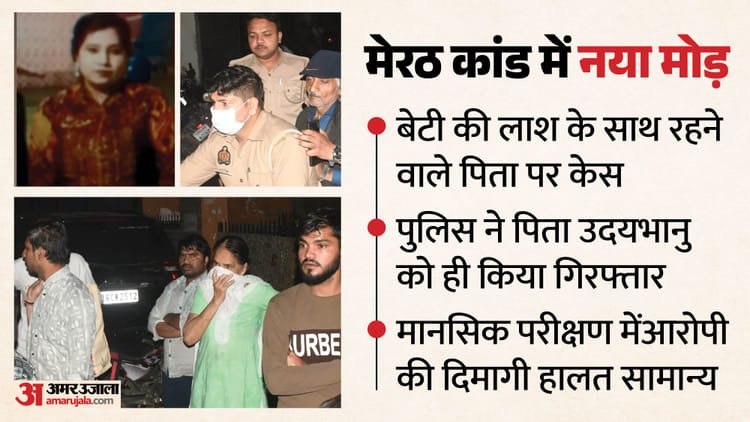
Meerut Crime News: After the death of Priyanka Vishwas (33) in her house in Teli Mohalla, Meerut, an FIR was registered on Wednesday against her father Udaybhanu Vishwas (76), who was living with her body. The police had got Udaybhanu mentally examined in the medical college.

On Wednesday, the psychiatry department team discharged him and reported to the police that his mental condition was normal. The police arrested the accused after registering an FIR 25 days after the body was found.

Meerut Crime News Father Arrested for Living With Daughter Body for Months UP News in Hindi

Police arrested father after girl’s skeleton was found in the house – Photo: Samvad News Agency

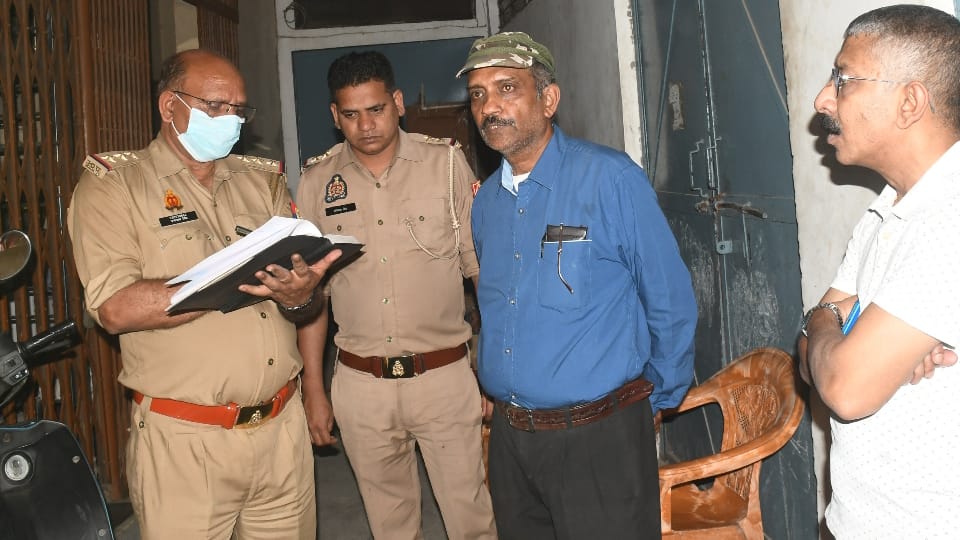
The body (skeleton) of his daughter was recovered on the night of April 10 from the house of Udaybhanu Vishwas, a retired clerk from the Secondary Education Council, located in Teli Mohalla of Sadar Bazar police station area. When the investigation was done, a shocking revelation was made.

Meerut Crime News Father Arrested for Living With Daughter Body for Months UP News in Hindi

Police reached the spot after the girl’s skeleton was found in the house – Photo: Samvad News Agency

Udaybhanu told that his daughter Priyanka was suffering from jaundice. He had shown Shakeel the exorcist of his daughter several times. Priyanka died four-five months ago. Due to the accused not being able to give correct information, the date of Priyanka’s death has not been clear yet.

Meerut Crime News Father Arrested for Living With Daughter Body for Months UP News in Hindi

Police reached the spot after the girl’s skeleton was found in the house – Photo: Samvad News Agency

Udaybhanu stayed with his daughter’s body for five days and then went to Haridwar. After staying in Haridwar for a few days, Udaybhanu came to Meerut and again stayed in the house with the dead body of his daughter. After this he again went to Haridwar on 5th December. Meanwhile, the family members living in the neighborhood saw him leaving. Even after this, Udaybhanu came to Meerut and stayed with the dead body of his daughter.

Meerut Crime News Father Arrested for Living With Daughter Body for Months UP News in Hindi

Father in police custody – Photo: Samvad News Agency

FIR lodged under bailable sections
Police have registered an FIR in this case under sections 239 and 271 of BNS. Under Section 239, action is taken against concealing any incident or crime and not giving information to the police. Section 271 deals with spreading disease dangerous to life (infectious disease). Police say that if the dead body remained in the house for several months, the disease could have spread. In both the crimes, there is a provision of imprisonment up to 6 months and a fine of Rs 5,000 each.

Access Denied

0

Access Denied You don’t have permission to access “http://hindi.news18.com/news/ajab-gajab/viral-7-year-old-boy-fishing-net-catches-giant-crocodile-instead-of-fish-viral-river-horror-video-10453041.html” on this server.

Reference #18.490dde17.1778137774.221588bd

https://errors.edgesuite.net/18.490dde17.1778137774.221588bd

Anthropic comes for the midmarket software spend


SaaS

Backed by private equity and banking giants, it will build custom AI systems for business bottlenecks

There’s gold in midmarket IT spend, and Anthropic – backed by private equity and banking heavyweights and tapping its Claude Partner Network – is coming for it.

Anthropic and a group of investors are launching a standalone AI-native enterprise services firm for mid-sized companies to build custom Claude-powered systems for core business operations, with the new outfit set to join its Claude Partner Network.

“Companies from community banks to mid-sized manufacturers and regional health systems stand to gain from AI, but lack the in-house resources to build and run frontier deployments,” Anthropic said in a press release.

To give them the expertise, the AI model maker said its Applied AI engineers will work alongside the new firm’s engineers to understand customers’ operations, identify where Claude can help, and build custom systems.

Anthropic did not reply to an email requesting comment.

“There are some really strong reasons to focus on the midmarket,” Shari Lava, IDC’s group vice president of AI, data, and automation, told The Register. “First of all, there is just the sheer number of midmarket companies … Second, midmarket companies tend to act more nimbly – they have to in order to compete effectively. They also tend to have more streamlined decision-making, greater cooperation in the executive ranks, and less risk aversion, all while often having less technical debt.”

Lava agreed with Anthropic that they also tend to lack the in-house skills to tackle large AI projects, and they don’t get much attention from large, enterprise-focused vendors, meaning they are a greenfield for Anthropic.

“While most work with multiple hyperscalers and SaaS companies, most of the projects have little support from the vendor directly, meaning partners are key to any deal,” she told The Register. “Midmarket offers faster sales cycles and higher willingness to pay for custom integration than fragmented SMBs, while being less locked into big vendor ecosystems than enterprises.”

Gary McConnell, CEO of VirtuIT, a national solution provider that is focused on midmarket customers, said Anthropic is presenting partners with a “huge opportunity” to win services business by addressing the under-adoption of AI among those customers in that middle tier.

“Ultimately, I think it’s a huge opportunity,” he said. “The idea of that is not to do more with less, it’s to do more with more. So when you see these models get plugged in and they’re able to generate more data, and that data being generated needs to be backed up, and the backup pools grow, and the storage grows, and it needs to sit on either a local or cloud compute. There are just so many consultative elements that the opportunity of AI brings to the equation.”

McConnell said VirtuIT is exploring partnership deals with several AI companies, including Anthropic. He said the largest pool of customers for Anthropic’s services is likely going to come from its financial backers.

To fund the standalone services company, Anthropic has partnered with Blackstone, Hellman & Friedman, and Goldman Sachs. McConnell sees this as a way for Anthropic to quickly get early wins under its belt.

“They have the portfolio companies that fall under these large conglomerates that generate sales pipeline for them,” he said. “If you’re a portfolio company owned by Goldman Sachs, you will not be running on OpenAI’s platform. It’s as simple as that.”

Anthropic’s willingness to build bespoke software for customers seems to fuel the SaaS-pocalypse narrative that has developed around AI tools’ displacement of large legacy IT platforms. While Lava said this deal could push around some small to mid-size SaaS vendors if it is well executed, it may complement the larger SaaS providers by introducing agentic workflows to the midmarket.

“I think it could put pressure on SaaS players, and even other legacy applications outside of cloud. Especially for app providers outside of core enterprise apps like ERP or CRM in the short term,” she said. “It’s risky to move core apps, but there are many other applications in mid-size companies, many of which a company starts to outgrow quickly in midmarket, such as expense apps, PM tools, marketing apps, etc.”

McConnell said there is an appetite inside the midmarket for novel approaches to software management that Anthropic can exploit.

“I think over time, they’re going to be able to continue to show business value for organizations and say, ‘Hey, you don’t need this legacy CRM, that hasn’t been touched in the manufacturing industry in 30 years. We can build this for you pretty cheaply, with tools you’re already using,'” McConnell said. ®


Source link