There are many reasons why covering Donald Trump is the journalistic challenge of a lifetime.
His temperament. His velocity. His volume. The sheer fact that he can generate three news cycles before most reporters have finished their first cup of coffee.
But there is one explanation that is often overlooked, and it may be the most important of all: Donald Trump understands the business of news better than any modern president — better, in many cases, than the people who work in it.
Trump did not grow up in politically friendly territory. Things were different for him before he entered the campaign world as a Republican. As a businessman and then a reality TV star, Trump luxuriated in dishy and usually aggrandizing gossip items, including in the august columns of New York Post legend Cindy Adams. His friendly, bantering relations with the press helped turn him into a larger-than-life figure.
But that all changed when he joined the political fray. Like George W. Bush before him, Trump learned how the press really works in a hostile environment. He was never granted automatic goodwill. He was rarely given the benefit of the doubt. He had to study the system, test it, provoke it, and sometimes fight it just to survive.
So he learned.
And he learned well.
Trump treat the media it as a rival, a foil, a stage and a punching bag. He studies it like a brilliant Ph.D. student. He probes it like a boxer testing defenses.
Other recent presidents — Democrats Bill Clinton, Barack Obama and Joe Biden — operated in a media climate that, while not always gentle, was structurally sympathetic. They were criticized, yes. But they were also understood. Interpreted generously. Given time. Granted patience. Their mistakes were often softened by context and explanation.
Trump never had that luxury.
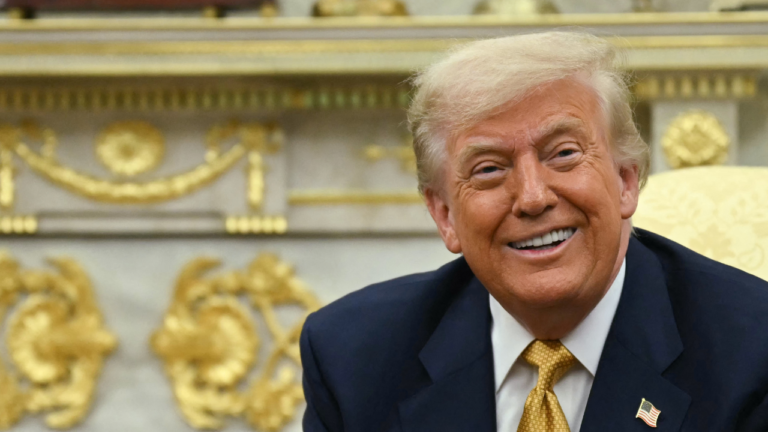
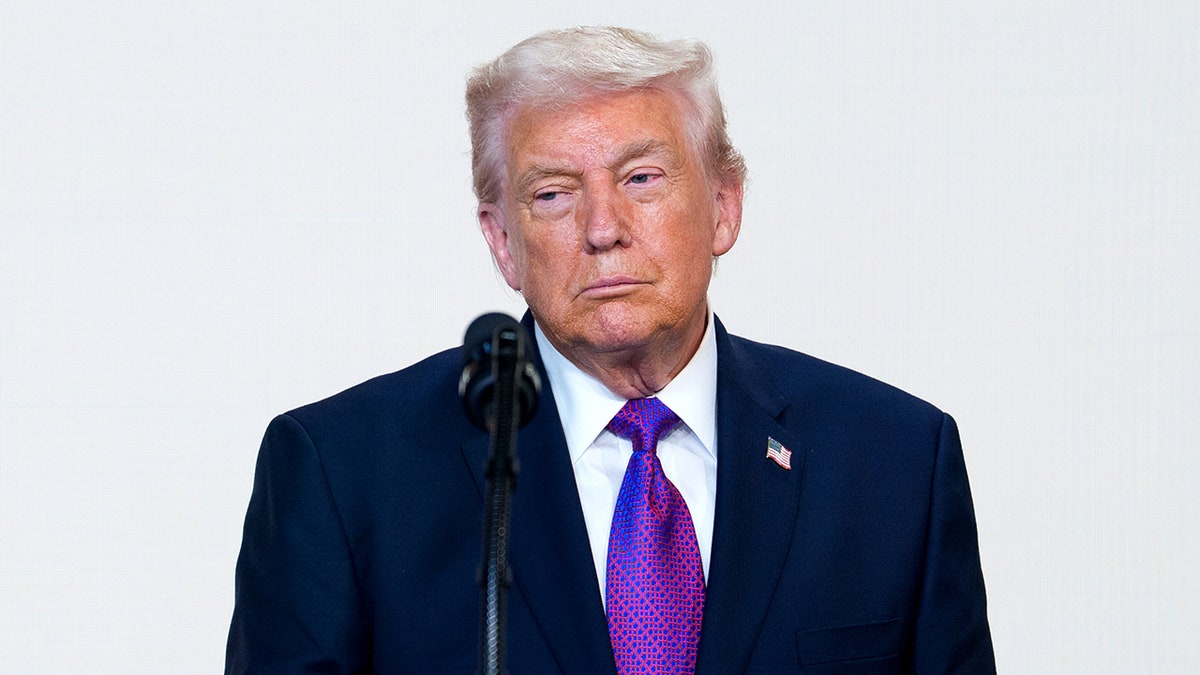
President Donald Trump knows exactly where the media is fragile and vulnerable.(Andrew Harnick/Getty Images)
So long before he descended the escalator in 2015 — long before rallies, red hats and chants — he was paying attention. Watching. Noticing patterns. Studying how stories were framed. Who was treated as “serious.” Who was treated as “dangerous.” Which narratives stuck. Which faded. Which sins were forgiven. Which were never forgotten.
He saw, first, a cultural bias — not necessarily in every article or every reporter, but in the air newsrooms breathe. In assumptions about what is normal and what is radical. In who is presumed reasonable and who is presumed reckless. Conservatives, he concluded, were playing uphill — and tens of millions of Americans knew it. It made them angry.
He saw, second, elitism: newsrooms clustered in a handful of coastal cities; journalists with similar educations, similar friends and similar politics. The press spoke endlessly about “ordinary Americans” while growing more distant from them every year. It struggled to grasp why illegal immigration worried so many families or why trade deals felt like personal losses in factory towns.
He saw, third, a broken business model: newspapers and networks that missed the digital revolution; revenues shrinking; newsrooms shrinking; panic setting in. A few outlets found lifelines. Most did not. Layoffs became routine. Survival became uncertain.
And from these three problems flowed the fourth: collapsing trust.
When audiences see bias, distance and desperation, confidence erodes. And once credibility is gone, it is almost impossible to restore.
His criticism put news organizations on the defensive. They closed ranks. They hardened. They became more ideological, more insular, more brittle. Every attack convinced them they must be doing something right. Often, it meant the opposite.
Trump, meanwhile, turned his feud with the press into a permanent political weapon.
Before him, Republicans sometimes complained about coverage. But Trump transformed grievance into theater. He did not merely dispute stories. He made the media itself a character in his drama — the villain, always lurking, always scheming.
With humor. With ridicule. With exaggeration. With showmanship.
Behind the scenes, Trump and his advisers learned the incentives of modern journalism. They know which outlets crave clicks. Which reporters thrive on conflict. Which controversies spread fastest. Which phrases become headlines. Which outrages travel farthest.
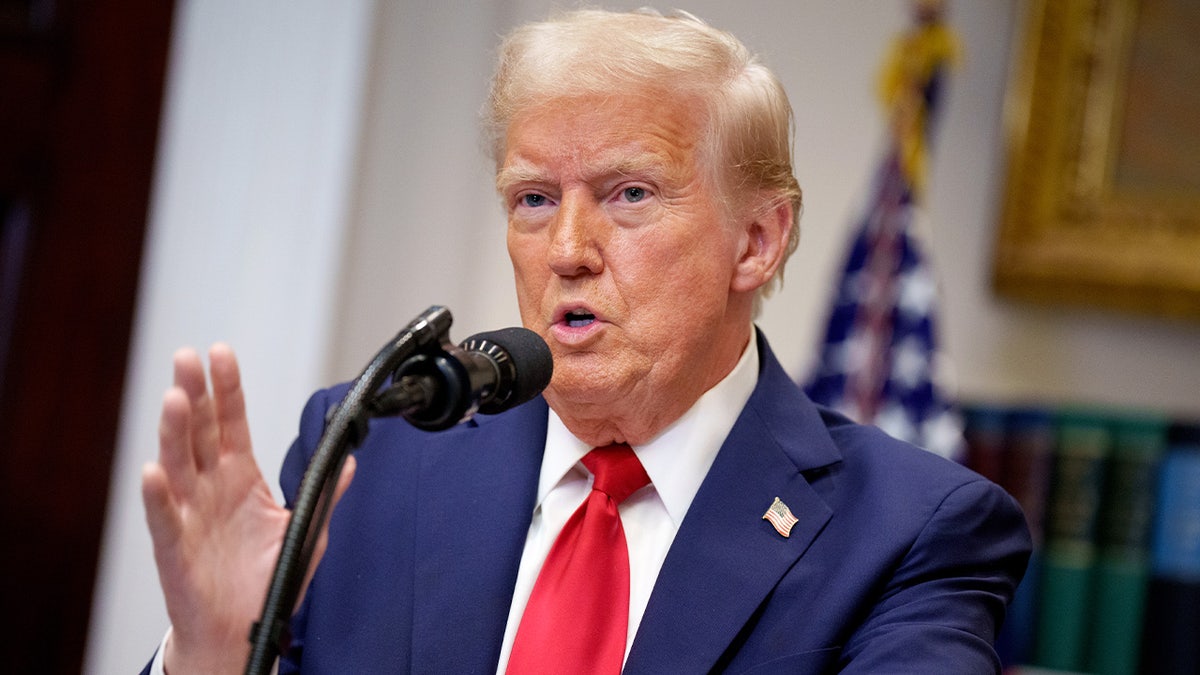
President Donald Trump speaks with reporters before departing from the White House in Washington, D.C., on February 6, 2026. (ANDREW CABALLERO-REYNOLDS / AFP via Getty Images)
They understand the machinery.
They know how to trigger it. How to flood it. How to redirect it. How to exhaust it.
Knowledge, in politics, is power. And Trump’s knowledge of the media has given him power — over the press and over his own movement.
He plays the system as it exists, not as journalists wish it were.
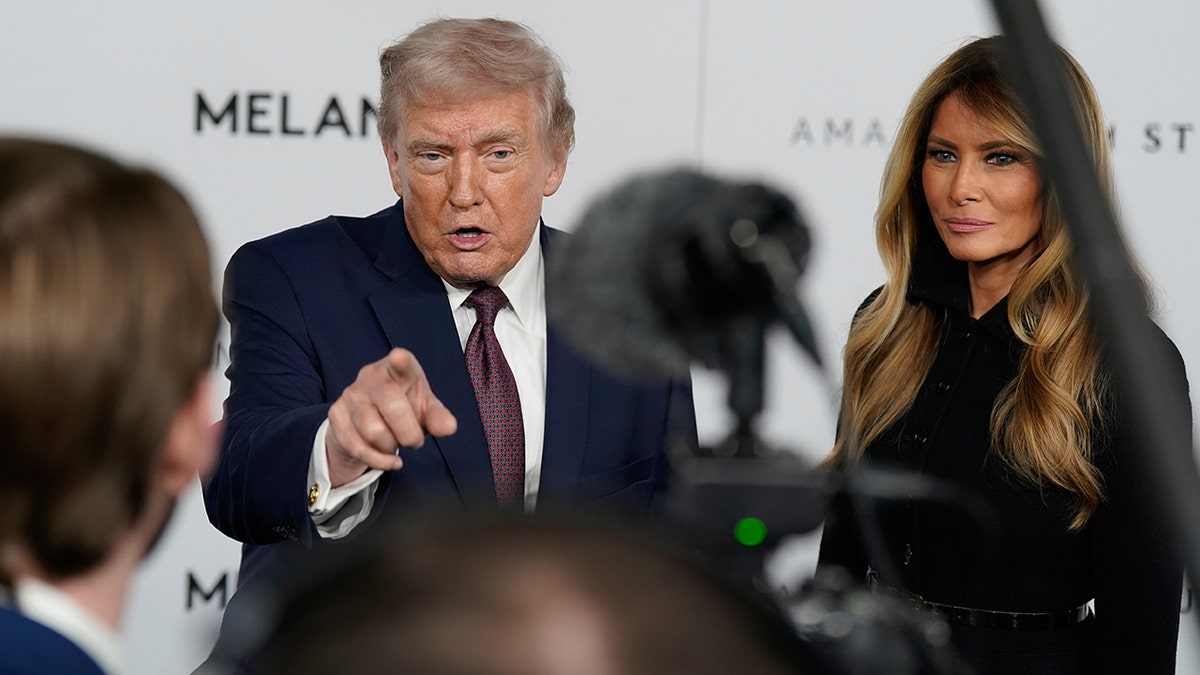
President Donald Trump and first lady Melania Trump arrive for the premiere of “Melania” at The John F. Kennedy Memorial Center For The Performing Arts, Thursday, Jan. 29, 2026, in Washington. (AP Photo/Jose Luis Magana)(AP Photo/Jose Luis Magana)
He understands that modern news is part information, part entertainment, part combat sport. He understands that narratives matter more than footnotes. That emotion beats nuance. That speed beats reflection.
So he moves fast. He moves loud. He moves relentlessly.
For reporters and news organizations, this is the real challenge:
Not simply covering what Trump says and does — but covering someone who understands their industry’s financial, cultural and psychological vulnerabilities and presses on them constantly.
Every weakness becomes leverage. Every habit becomes a pressure point.
Trump is not just running against and competing against Democrats.
He is running against and competing against the media.
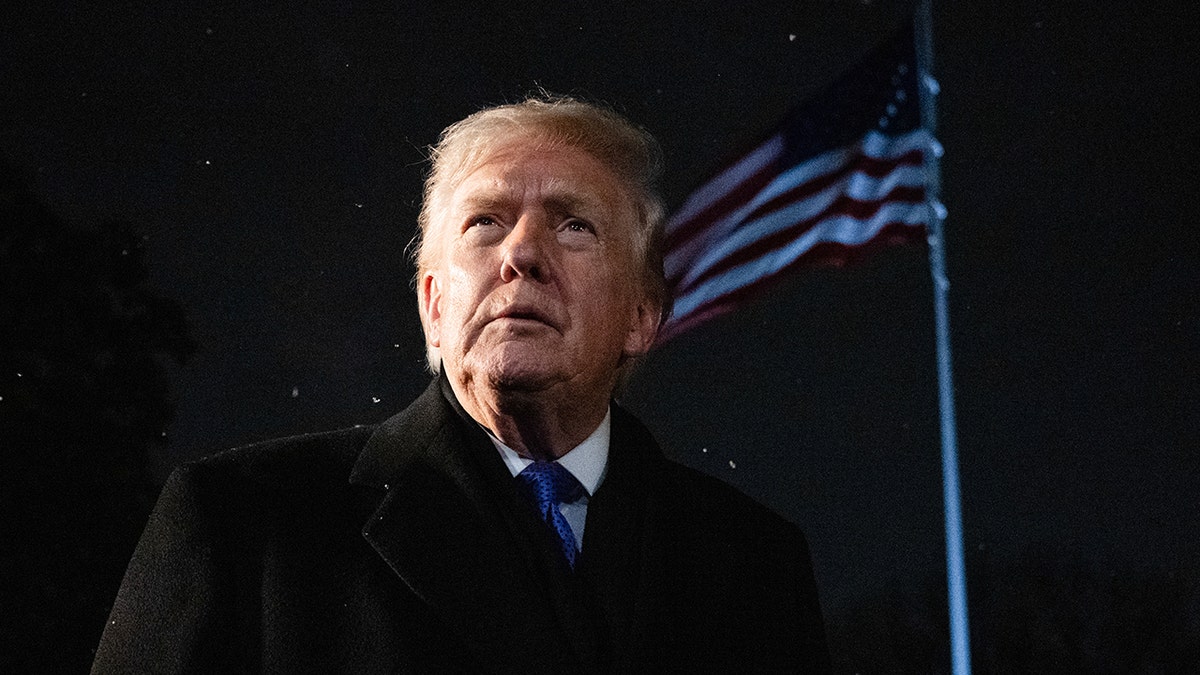
President Donald Trump during an announcement in the South Court Auditorium of the Eisenhower Executive Office Building at the White House in Washington, D.C., on Thursday, Feb. 5, 2026. (Aaron Schwartz/CNP/Bloomberg via Getty Images)
He treats it as a rival, a foil, a stage and a punching bag. He studies it like a brilliant Ph.D. student. He probes it like a boxer testing defenses.
Better than any president in modern history — perhaps better than almost anyone in public life today — Donald Trump understands how the news business really works.
And he knows how to use that understanding to his advantage.
Shares in trucking and logistics companies have plunged as the sector became the latest to be targeted by investors fearful that new artificial intelligence tools could slash demand.
A new tool launched by Algorhythm, a former maker of in-car karaoke systems turned AI company with a market capitalisation of just $6m (£4.4m), sparked a sell-off on Thursday that made the logistics industry the latest victim of AI jitters that have already rocked listed companies operating in the software and real estate sectors.
The announcement about the performance capability of Algorhythm’s SemiCab platform, which it claimed was helping customers scale freight volumes by 300% to 400% without having to increase headcount, sparked an almost 30% surge in the company’s share price on Thursday.
However, the impact of the announcement sent the Russell 3000 Trucking Index – which tracks shares in the US trucking sector – down 6.6% on Thursday, with CH Robinson Worldwide plunging 15% by the close of trading, having been down as much as 24%.
The fall across the sector – Landstar System dropped 16%, RXO 20.5% and JB Hunt Transportation Services and XPO both about 5% – was the worst since Donald Trump’s tariff trade war in April last year.
“The level of paranoia is category 5,” said Joseph Shaposhnik, a portfolio manager at Rainwater Equity. “It’s not something that we’ve seen in quite a long period of time.”
Algorhythm Holding’s chief executive expressed incredulity that his company could spark an artificial intelligence “scare trade” reaction of such scale.
“Never in my wildest dreams would I ever have imagined a day like today,” said Gary Atkinson, whose company was considered a “penny stock” in terms of stock market scale. “It’s almost like David versus Goliath.”
Listed drug distribution stocks were also caught up in the sell-off, with McKesson Corp and Cardinal Health falling about 4%.
In Europe, the logistics business DHL Group fell 4.9%, DSV A/S fell 11% and Kuehne+Nagel International AG plunged 13% in late trading on Thursday.
“[There is an] emerging debate around open-source automation agents such as Molt Bot that offer increased potential to automate routine back-office tasks and help equalise the technology playing field for smaller operators,” said Daniel Moore, an analyst at Baird.
Algorhythm was previously focused on developing in-car karaoke systems but sold its Singing Machine business to Stingray for $4.5m in 2025 before pivoting to its AI freight platform.
In London, shares in RELX (formerly Reed Elsevier) rose 5% in early trading, clawing back some of the steep declines suffered by European publishing and legal software companies last week, which were triggered by Anthropic revealing new capabilities of its chatbot Claude.
“We can see a broad AI fear trade taking place and it’s touching all corners except those that are immune to disruptions – materials, energy, staples,” said Neil Wilson, an investor strategist at Saxo UK. “This AI fear trade has been the main narrative of the last few sessions as a whole host of industries and subsectors have been caught up in selling as investors think companies will be exposed to significant AI disruption.”
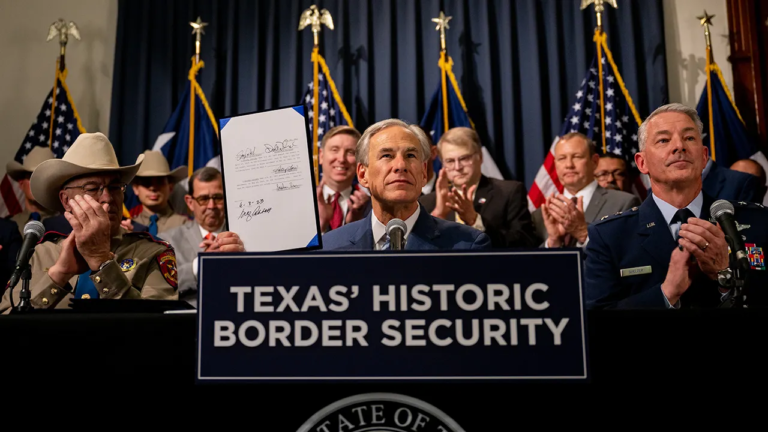
EXCLUSIVE: Texas Republican Gov. Greg Abbott called out the “hypocrisy” of the Democratic Party advocating for states’ rights in Minnesota after he was widely lambasted, and even sued, for his efforts to enforce the border during the Biden administration.
Abbott remarked that “hypocrisy is the word choice that really applies to them, because, suddenly, these Minnesota states, they want to insist on states’ rights,” during an interview with Fox News Digital.
In 2021, Abbott launched “Operation Lone Star,” which deployed state troopers and the Texas National Guard to the border and funded barrier construction to deter illegal crossings. He was sued by the administration that same year. Abbott said that Texas’ struggle with the Biden administration is fundamentally different from the controversy in Minnesota and other sanctuary states.
“Texas insisted on states’ rights, but actually, what we were doing in Texas during the Biden administration, we were very simply trying to enforce the federal immigration laws that Joe Biden was refusing to enforce,” he explained. “What we see in Minnesota, however, is total chaos, total anarchy, because what they are doing is not trying to enforce the law; they’re trying to interfere with the enforcement of the law.”
Texas Gov. Greg Abbott visiting the border with the National Guard in Eagle Pass, Texas.(Raquel Natalicchio/Houston Chronicle via Getty Images)
“My job as governor was to make sure we used every tool to secure the border, and it worked,” he explained. “Joe Biden required Texas to take matters into our own hands because of the lack of safety that he instilled in the country. Look at the millions of people who’ve crossed the border illegally. Look at the criminals, the rapists and murderers who came into Houston, Texas, that Joe Biden allowed in.”
“We are a nation that was built upon the rule of law, and the rule of law has to be enforced. When it is enforced, it leads to safer communities,” he added.
The result, according to Abbott, was an over 85 percent decrease in illegal immigration in the state and a simultaneous over 40 percent decrease in fentanyl deaths.
Now, Abbott is running for re-election on a platform that he says will double down on making Texas a top destination for people seeking not only economic opportunity, but also “the opportunity of freedom to live their own life.”
One of the core issues Abbott is running on is a plan to slash property taxes in Texas during the next legislative session. Abbott has proposed a five-step overhaul of the Texas property tax system that includes limiting local government spending growth to population growth or inflation, requiring two-thirds voter approval for local property tax increases, allowing voters to trigger rollback elections with a 15 percent petition threshold, capping homestead appraisal growth at 3 percent and expanding that cap to all properties, requiring appraisals only once every five years, and pursuing a constitutional amendment to let voters eliminate school district property taxes for homeowners.
While many Democrats, such as U.S. Senate candidate Rep. Jasmine Crockett, D-Texas, have predicted the Lone Star State is on the edge of turning blue, Abbott believes the GOP is well-positioned to win come November.
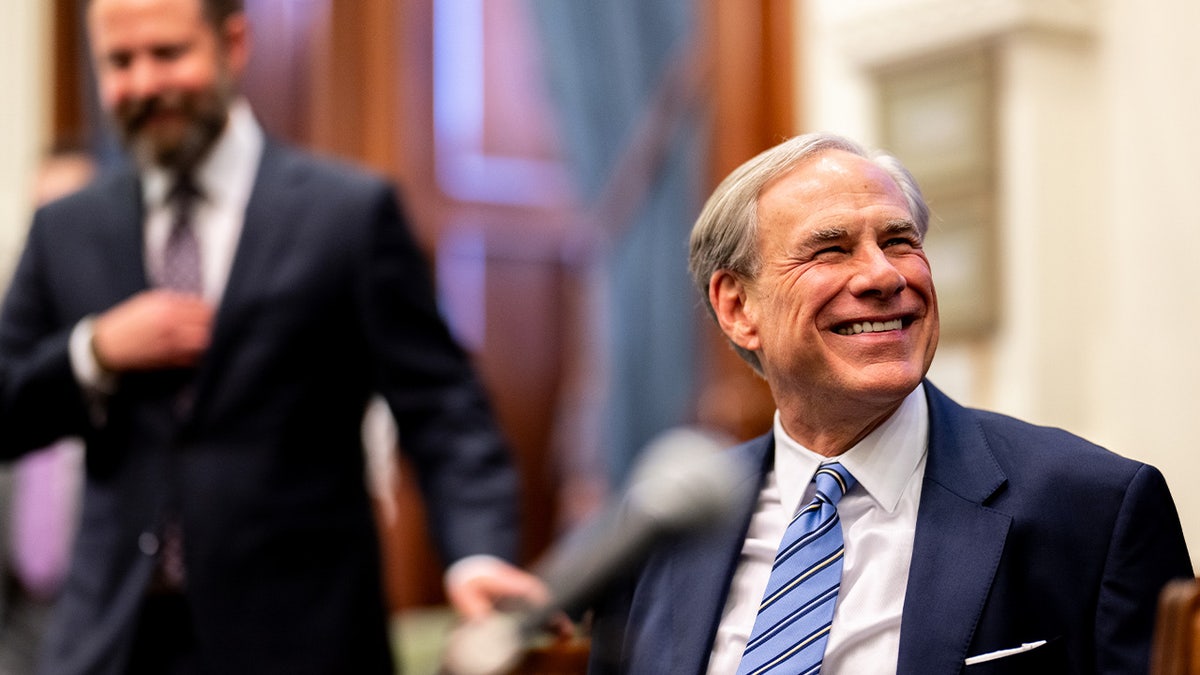
Gov. Greg Abbott laughs upon arrival during a bill signing in the State Capitol on April 23, 2025 in Austin, Texas(Brandon Bell/Getty Images))
“As long as Republicans remain engaged, as long as we’re able to get out our vote, we’re going to win these elections and win them with ease, but also, very importantly, when we show the contrast between Republicans and Democrats,” he said. “We just had a forum here talking about cutting property taxes. Democrats are against cutting property taxes in Texas, Democrats are in favor of defunding the police, whereas Republicans believe in law and order and law enforcement. Democrats stood for these crazy open border policies, where Republicans fight to close the border, enforce immigration laws, and don’t let people in illegally.”
Abbott shared that he intends to go on the offensive this election, even challenging Democrats in areas that have long been written off as blue strongholds, such as Harris County, in which the City of Houston sits.
“I take every election seriously. I take nothing for granted,” he said. “We constantly battle against the Democrats in this state that believe in defunding the police. We fought a battle and won one here in Houston, Texas, where we had socialist judges letting murderers out of jail on low bond, only to go back out and murder somebody else. We passed laws cracking down on that here in Texas.”
Gov. Abbott attributed Texas’ success to its adherence to economic and personal freedoms.(iStock)
“Texas is the state that’s most on fire in the entire United States of America,” Abbott went on. “I [have] met people who moved from New York and other states because they wanted to get out of the chaos and communism in those states and come to a state that truly believes in capitalism, but also opportunity of all sorts.”
“So, what our goal is to make sure we continue to pass policies that keep Texas attractive,” he concluded. “It’s a constant battle against the socialists, whether they’re in Minneapolis or Houston, Texas, or Austin, Texas, but righteousness and the rule of law will always prevail.”
Peter Pinedo is a politics writer for Fox News Digital.
Ex-cabinet secretary condemns PM’s treatment of Wormald as ‘shabby’ and says he must ‘get a grip’ on ‘disastrous’ aides
Good morning. Keir Starmer is heading off to the Munich Security Conference today, where he will no doubt be glad to be able to put UK domestic politics behind him for a bit. Patrick Wintour has a good article here about what is on the agenda.
But, as Starmer gets ready to leave, he is still facing criticism over his decision to defenestrate the cabinet secretary, Chris Wormald. Here is our overnight story by Rowena Mason and Pippar Crerar.
It is not unusual for prime ministers to want to change people at the top of the civil service, and to replace them with individuals with whom they can establish a better working relationship. But there is no precedent for a PM ousting a cabinet secretary they personally appointed just over a year previously.
Gus O’Donnell, who was cabinet secretary for six years under Tony Blair, Gordon Brown and David Cameron, was on the Today programme this morning and he said that the treatment of Wormald had been “shabby”. He said:
Where it shabby is the fact that we’ve got to this place and that they have briefed anonymously against the cabinet secretary, saying it’s not working.
They’ve been doing this for a long time. This is a process that this government, I’m afraid, [it’s] one of their biggest failings. You’ve seen it right from the start with Sue Gray, briefings against her, all the rest of it. This is the fundamental problem.
O’Donnell blamed the PM’s special advisers (or spads, as they are called) for the negative briefings. And he criticised Starmer for failing to stop this.
Really good spads are really useful. I’ve worked with Ed Balls, Alastair Campbell, Jonathan Powell. If they’re good, they understand their subject, they can make the the relationship between ministers and civil servants work a lot better.
Bad special advisers turn out to be second rate PR people. [They] can be disastrous. You saw in the run up to the budget; it was a complete omnishambles from a comms point of view, whatever you think about the economics of it.
So that’s where the prime minister must take responsibility and get a grip.
Here is the agenda for the day.
10am: The high court delivers its judgment on a claim that the Home Office’s decision to proscribe Palestine Action was unlawful.
Morning: Ed Davey, the Lib Dem leader, is on a visit in Scotland.
Noon: Zack Polanski, the Green party leader, attends the Attitude 101 awards celebrating trailblazers in the LGBTQ+ community.
Afternoon: Keir Starmer arrives at the Munich Security Conference.
And Kemi Badenoch is in Llandudno, where she is speaking at the Welsh Conservative conference.
If you want to contact me, please post a message below the line when comments are open (between 10am and 3pm), or message me on social media. I can’t read all the messages BTL, but if you put “Andrew” in a message aimed at me, I am more likely to see it because I search for posts containing that word.
If you want to flag something up urgently, it is best to use social media. You can reach me on Bluesky at @andrewsparrowgdn.bsky.social. The Guardian has given up posting from its official accounts on X, but individual Guardian journalists are there, I still have my account, and if you message me there at @AndrewSparrow, I will see it and respond if necessary.
I find it very helpful when readers point out mistakes, even minor typos. No error is too small to correct. And I find your questions very interesting too. I can’t promise to reply to them all, but I will try to reply to as many as I can, either BTL or sometimes in the blog.
Key events
High court to rule on lawfulness of Home Office’s decision to proscribe Palestine Action
At the high court we are about to get the judgment in the case arguing that the government’s decision to proscribe Palestine Action was unlawful. Taz Ali is covering this on a separate live blog.
O’Donnell suggests Antonia Romeo would be ‘excellent’ candidate to be next cabinet secretary
In his Today interview Gus O’Donnell was also asked about the claim by Simon McDonald, the former permanent secretary at the Foreign Office, that Antonia Romeo should not be appointed as the next cabinet secretary without more “due diligence”. McDonald made this claim in an interview on Wednesday, in a reference to a complaint about Romeo from when she worked for the Foreign Office in 2017.
O’Donnell said that he could not comment on individual candidates because he was on the panel that shortlisted candidates when Wormald was appointed. Romeo was one of the four candidates on the shortlist. O’Donnell said that the four people shortlisted were “all excellent candidates, in my view”.
O’Donnell said he did not know what process would be used to select a cabinet secretary this time. But, asked if he thought that the selection process would have to be started again from scratch, with the appointment of a new selection panel, O’Donnell indicated that he did not think that would be necessary.
Antonia Romeo (right), permanent secretary at the Home Office, with Shabana Mahmood, the home secretary, at a Home Office event last year. Photograph: Andy Taylor/Home Office
Former cabinet secretary Gus O’Donnell defends No 10’s use of ministerial direction to approve Wormald’s pay-off
In a story in the Times today Oliver Wright and Steven Swinford say that “government officials refused to sign off on Sir Keir Starmer’s decision to sack Britain’s most senior civil servant because it would cost the taxpayer a quarter of a million pounds that could not be justified”. They report:
In an unprecedented move, senior civil servants told Starmer that ministers would have to issue a formal “direction” to officials to make the redundancy payment to the Sir Chris Wormald, the cabinet secretary, because there were no clear and compelling reasons why he should be sacked.
On the Today programme, it was put to Gus O’Donnell, the former cabinet secretary (see 9.15am) that this was a sign of the fact that civil servants did not approve of the decision to get rid of Wormald. O’Donnell did not accept that.
He said the PM has “every right” to replace the cabinet secretary. That is allowed under the cabinet manual, he said.
And he said that Wormald’s pay-off – reportedly worth around £260,000 – would be decided by the HR department.
But, he said, the official deciding the level of the pay-off would be someone who actually reported to Wormald – creating a conflict of interest. That is why the decision would have to be taken by the PM, requiring a ministerial direction.
Reform UK’s Kent council faces ‘extreme risk’ after passing first budget
Reform UK’s showcase council in Kent faces “extreme risk” and “instability”, opposition politicians have warned, after it passed its first budget. Ben Quinn has the story.
Ex-cabinet secretary condemns PM’s treatment of Wormald as ‘shabby’ and says he must ‘get a grip’ on ‘disastrous’ aides
Good morning. Keir Starmer is heading off to the Munich Security Conference today, where he will no doubt be glad to be able to put UK domestic politics behind him for a bit. Patrick Wintour has a good article here about what is on the agenda.
But, as Starmer gets ready to leave, he is still facing criticism over his decision to defenestrate the cabinet secretary, Chris Wormald. Here is our overnight story by Rowena Mason and Pippar Crerar.
It is not unusual for prime ministers to want to change people at the top of the civil service, and to replace them with individuals with whom they can establish a better working relationship. But there is no precedent for a PM ousting a cabinet secretary they personally appointed just over a year previously.
Gus O’Donnell, who was cabinet secretary for six years under Tony Blair, Gordon Brown and David Cameron, was on the Today programme this morning and he said that the treatment of Wormald had been “shabby”. He said:
Where it shabby is the fact that we’ve got to this place and that they have briefed anonymously against the cabinet secretary, saying it’s not working.
They’ve been doing this for a long time. This is a process that this government, I’m afraid, [it’s] one of their biggest failings. You’ve seen it right from the start with Sue Gray, briefings against her, all the rest of it. This is the fundamental problem.
O’Donnell blamed the PM’s special advisers (or spads, as they are called) for the negative briefings. And he criticised Starmer for failing to stop this.
Really good spads are really useful. I’ve worked with Ed Balls, Alastair Campbell, Jonathan Powell. If they’re good, they understand their subject, they can make the the relationship between ministers and civil servants work a lot better.
Bad special advisers turn out to be second rate PR people. [They] can be disastrous. You saw in the run up to the budget; it was a complete omnishambles from a comms point of view, whatever you think about the economics of it.
So that’s where the prime minister must take responsibility and get a grip.
Here is the agenda for the day.
10am: The high court delivers its judgment on a claim that the Home Office’s decision to proscribe Palestine Action was unlawful.
Morning: Ed Davey, the Lib Dem leader, is on a visit in Scotland.
Noon: Zack Polanski, the Green party leader, attends the Attitude 101 awards celebrating trailblazers in the LGBTQ+ community.
Afternoon: Keir Starmer arrives at the Munich Security Conference.
And Kemi Badenoch is in Llandudno, where she is speaking at the Welsh Conservative conference.
If you want to contact me, please post a message below the line when comments are open (between 10am and 3pm), or message me on social media. I can’t read all the messages BTL, but if you put “Andrew” in a message aimed at me, I am more likely to see it because I search for posts containing that word.
If you want to flag something up urgently, it is best to use social media. You can reach me on Bluesky at @andrewsparrowgdn.bsky.social. The Guardian has given up posting from its official accounts on X, but individual Guardian journalists are there, I still have my account, and if you message me there at @AndrewSparrow, I will see it and respond if necessary.
I find it very helpful when readers point out mistakes, even minor typos. No error is too small to correct. And I find your questions very interesting too. I can’t promise to reply to them all, but I will try to reply to as many as I can, either BTL or sometimes in the blog.
Palestine Action’s co-founder has won a legal challenge over the group’s ban as a terrorist organisation on two grounds.
Huda Ammori launched the legal action after then-home secretary Yvette Cooper’s decision to proscribe the group, which came into force on 5 July last year.
The law change put Palestine Action on the same legal footing as the likes of ISIS and al Qaeda, making membership of, or support for, the group a crime punishable by up to 14 years in prison.
Even wearing a T-shirt, or carrying a sign, with the group’s name on it can attract a maximum six-month sentence.
At a three-day High Court hearing, Ms Ammori’s lawyers argued the ban was unprecedented and compared Palestine Action to the suffragettes.
The Home Office defended the case, saying the ban “strikes a fair balance between interference with the rights of the individuals affected and the interests of the community”.
The Defend Our Juries campaign group, which organises protests against the ban, said a total of 2,787 have been arrested across the UK since it came into force.
During the hearing, Raza Husain KC, representing Ms Ammori, said “priests, teachers, pensioners, retired British Army officers” and an “81-year-old former magistrate” were among them.
The Irish writer said she may not be able to publish any new books in the UK after she was warned she risked committing a terror offence after saying she would donate earnings to support Palestine Action.
Sir James Eadie KC, representing the Home Office, told the court the ban had not stopped people protesting against Israel’s actions in Gaza or in support of Palestinians.
But he said: “While it has at all times been open to supporters of Palestine Action to protest against its proscription without breaking the law, certain individuals have instead repeatedly sought to flout Palestine Action’s proscription.”
This breaking news story is being updated and more details will be published shortly.
For nearly two decades, families posed for photos beside his towering sandcastles, couples got engaged in front of them, and holiday visitors returned year after year to see what he would build next.
Now, the man affectionately known as “The Sandcastle Man” is no longer building on the stretch of Southern California beach where he became a Coronado fixture.
Hotel del Coronado confirmed to Fox News Digital that it and sand artist Bill Pavlacka “have parted ways” effective Feb. 5, ending his nearly 20-year run crafting elaborate sculptures on Coronado Beach outside the historic resort.
“We can confirm that Hotel del Coronado and The Sandcastle Man have parted ways effective February 5. We wish The Sandcastle Man continued success,” a hotel spokesperson said in a statement provided to Fox News Digital.
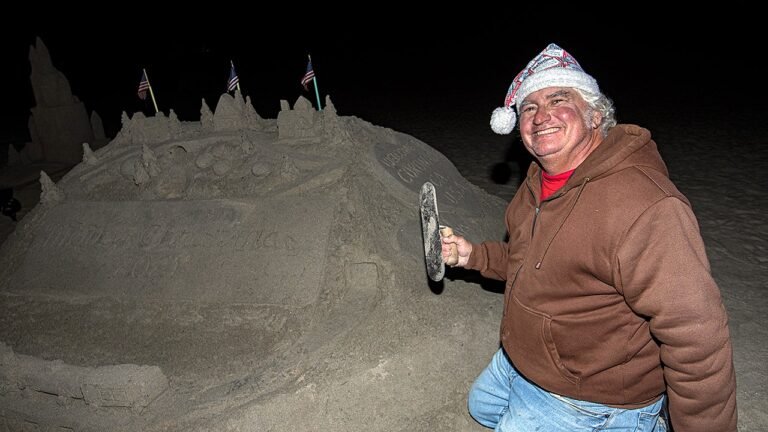
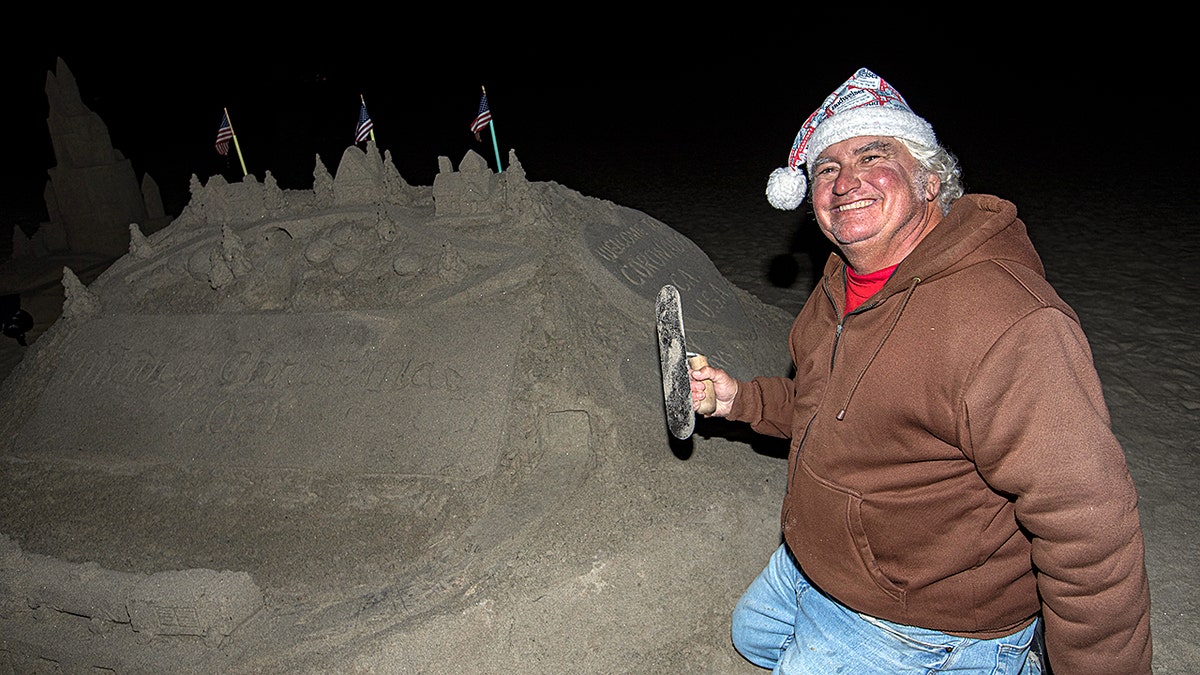
Bill Pavlacka, known as “The Sandcastle Man,” poses beside one of his sand sculptures on Coronado Beach in California. The longtime beach fixture recently parted ways with the Hotel del Coronado after nearly two decades building on the resort’s beachfront.(Daniel Knighton/Getty Images)
The hotel did not provide any additional details about the decision.
Pavlacka’s sand creations, ranging from whimsical holiday displays to custom wedding proposals, anniversary tributes and birthday messages have long-drawn crowds along the iconic shoreline adjacent to San Diego.
The circumstances surrounding his departure were detailed in a letter and interview quotes reported by The San Diego Union-Tribune, as well as in statements Pavlacka shared on social media.
The Union-Tribune reported that Pavlacka was formally notified in a letter from the hotel’s human resources director that he was no longer permitted to operate on hotel property. According to the newspaper, the letter said that in recent months a new incident had come to light “involving consumption of alcohol, resulting in a negative guest experience.”
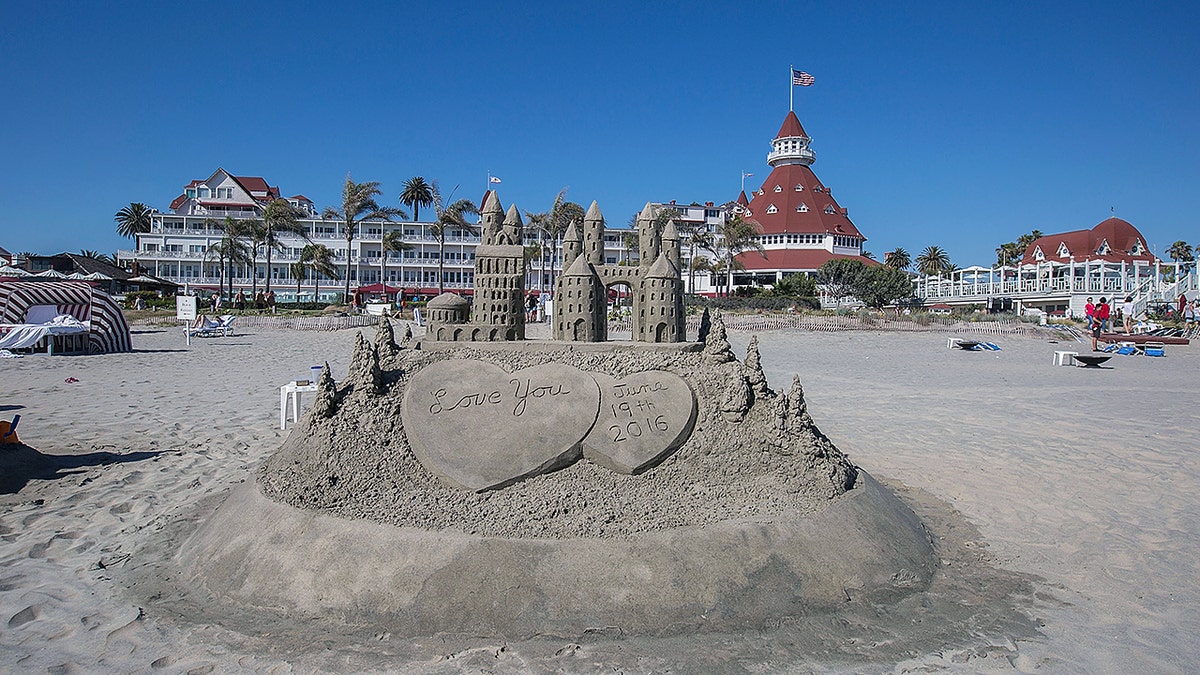
A sandcastle sculpture created by Bill Pavlacka sits on Coronado Beach in Southern California with the Hotel del Coronado in the background. Pavlacka has built proposal displays, holiday scenes and custom creations along the beachfront for nearly 20 years.(Daniel Knighton/Getty Images)
Pavlacka denied that allegation in an interview with the Union-Tribune.
“There was no alcohol. I don’t drink alcohol out there,” he said. “I asked the hotel guy who complained, ‘Did you see me drinking?’ He said, ‘We’re not going to go there.’ If they want me out of there, that’s OK. I’m not going to fight and argue with them.”
The Union-Tribune also reported the letter stated Pavlacka was “no longer permitted to operate ‘The Sandcastle Man’ or any other business on the premises of the Hotel del Coronado… explicitly including the Hotel’s beach.”
The newspaper further reported that the hotel owns portions of the beachfront and, citing the California Coastal Commission, has the right to control that property so long as public access is not denied.
Pavlacka told the Union-Tribune he believes the decision may have been influenced by messages he sometimes carved into his sculptures. The newspaper reported the hotel letter said that as a condition of operating on the hotel’s beach property, Pavlacka’s sandcastle content was to be “neutral” and “free of political or controversial messages.”
Pavlacka said he had incorporated phrases such as “I believe in freedom of speech” and “I love democracy,” along with a quote attributed to Mark Twain: “Get your facts first, then you can distort them as you please.”
He said the messages were interpreted as political.
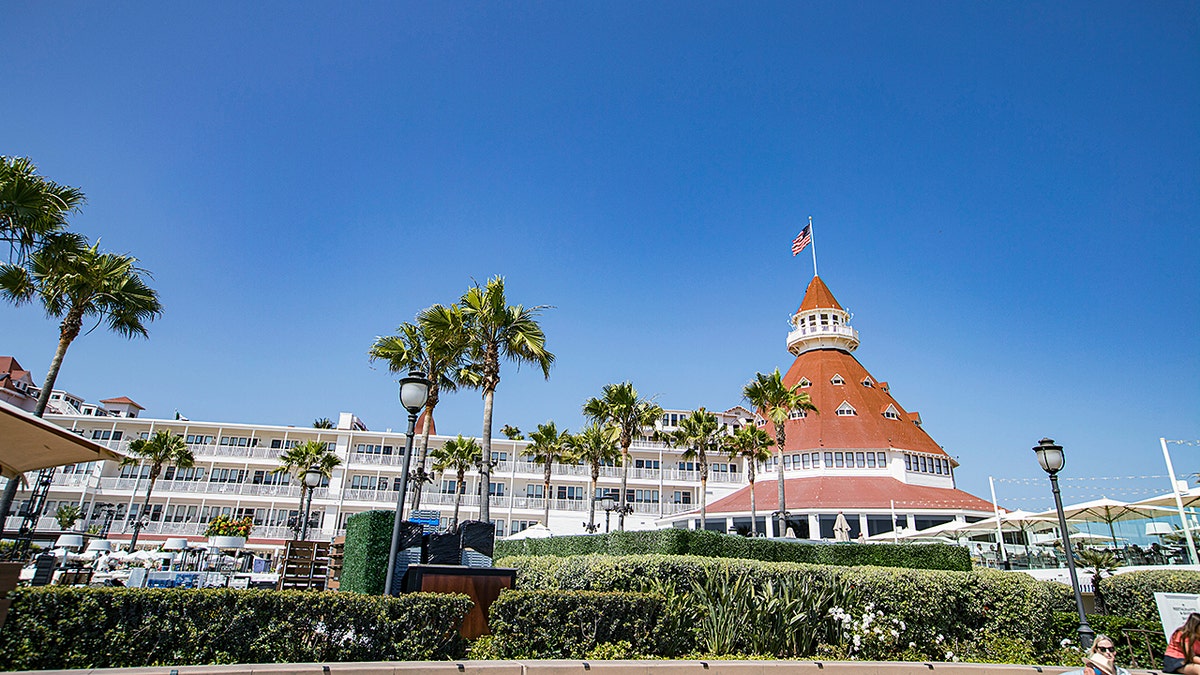
The historic Hotel del Coronado is seen in Coronado, Calif. The beachfront resort confirmed it has “parted ways” with longtime sand sculpture artist Bill Pavlacka, known locally as “The Sandcastle Man.”(Daniel Knighton/Getty Images)
“The hotel always says I do not work for them, but they kicked me off the property,” he told the Union-Tribune. “But I have tremendous support in San Diego and almost all the feedback I’ve gotten is positive. So I can’t understand why all of a sudden things changed.”
Local supporters echoed that sentiment.
“Bill is hardworking and quiet and never have we ever seen him drinking,” Kimberly Weed told the Coronado Times. “This is a huge loss for the people of San Diego, and everyone loves ‘The Sandcastle Man.’ Bring him back and appreciate the joy it brings people from all over the world.”
Ken Fitzgerald told the outlet, “There is nothing controversial, much less offensive, about a quote from one of America’s greatest authors about the importance of truth and objective reality in our nation’s civic life.”
“After nearly two decades, Hotel del Coronado and I have parted ways. Building sandcastles in front of the hotel, and meeting guests from all over the world, has meant everything to me,” he wrote.
“While I’m saddened this chapter has ended, I’m excited for greater creative freedom ahead,” he added, directing supporters to find him “just north of the main lifeguard tower on Coronado Beach.”
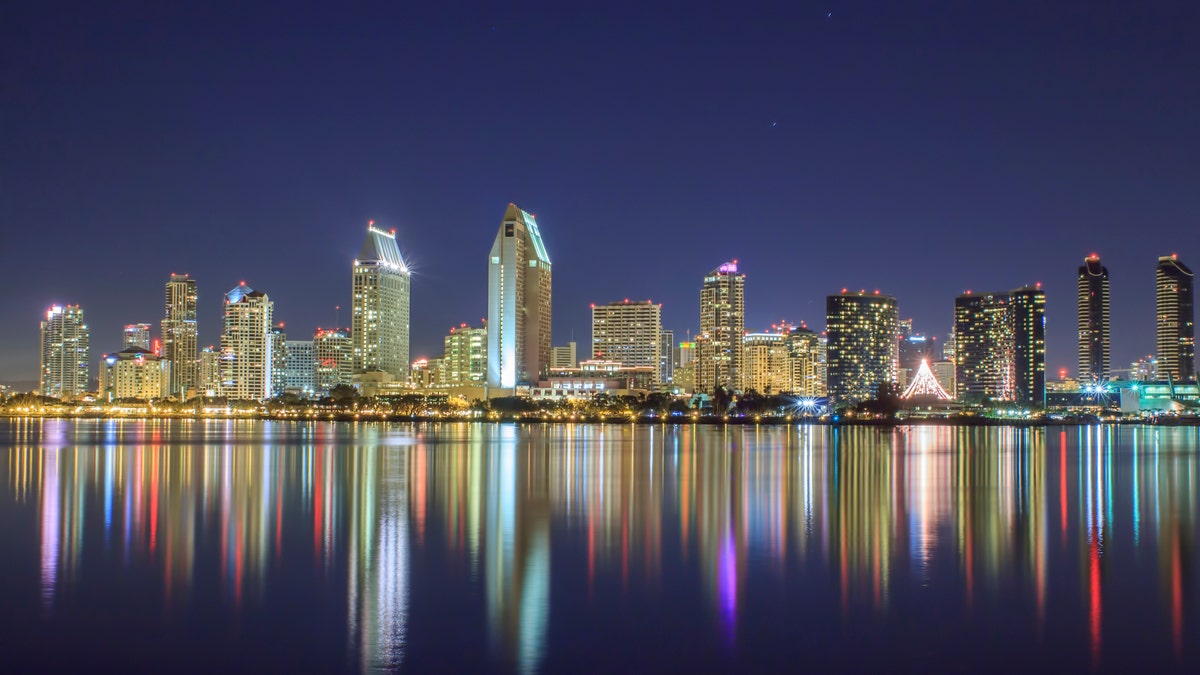
The San Diego skyline from Centennial Park in Coronado, Calif.(Christopher A. Jones via Getty Images)
In his interview with the Union-Tribune, Pavlacka said he plans to continue building sandcastles elsewhere.
“I won’t give up, I’ll still build sandcastles. It may not be here, it will be somewhere,” he said.
Pavlacka also publishes a price list on “The Sandcastle Man” website.
The page states: “Sandcastles and lessons on Hotel Del Coronado property must be pre-approved by the hotel.” It adds that prices are subject to change based on design complexity and may include add-ons such as music, lights, rose petals and travel fees.
Pavlacka is currently seeking donations per his most recent Facebook post.
Fox News Digital has reached out to Pavlacka for additional comment.
Jasmine Baehr is a Breaking News Writer for Fox News Digital, where she covers politics, the military, faith and culture.
Threat actors have started to exploit a recently disclosed critical security flaw impacting BeyondTrust Remote Support (RS) and Privileged Remote Access (PRA) products, according to watchTowr.
“Overnight we observed first in-the-wild exploitation of BeyondTrust across our global sensors,” Ryan Dewhurst, head of threat intelligence at watchTowr, said in a post on X. “Attackers are abusing get_portal_info to extract the x-ns-company value before establishing a WebSocket channel.”
The vulnerability in question is CVE-2026-1731 (CVS score: 9.9), which could allow an unauthenticated attacker to achieve remote code execution by sending specially crafted requests.
BeyondTrust noted last week that successful exploitation of the shortcoming could allow an unauthenticated remote attacker to execute operating system commands in the context of the site user, resulting in unauthorized access, data exfiltration, and service disruption.
It has been patched in the following versions –
Remote Support – Patch BT26-02-RS, 25.3.2 and later
Privileged Remote Access – Patch BT26-02-PRA, 25.1.1 and later
The use of CVE-2026-1731 demonstrates how quickly threat actors can weaponize new vulnerabilities, significantly shrinking the window for defenders to patch critical systems.
CISA Adds 4 Flaws to KEV Catalog
The development comes as the U.S. Cybersecurity and Infrastructure Security Agency (CISA) added four vulnerabilities to its Known Exploited Vulnerabilities (KEV) catalog, citing evidence of active exploitation. The list of vulnerabilities is as follows –
CVE-2026-20700 (CVSS score: 7.8) – An improper restriction of operations within the bounds of a memory buffer vulnerability in Apple iOS, macOS, tvOS, watchOS, and visionOS that could allow an attacker with memory write capability to execute arbitrary code.
CVE-2025-15556 (CVSS score: 7.7) – A download of code without an integrity check vulnerability in Notepad++ that could allow an attacker to intercept or redirect update traffic to download and execute an attacker-controlled installer and lead to arbitrary code execution with the privileges of the user.
CVE-2025-40536 (CVSS score: 8.1) – A security control bypass vulnerability in SolarWinds Web Help Desk that could allow an unauthenticated attacker to gain access to certain restricted functionality.
CVE-2024-43468 (CVSS score: 9.8) – An SQL injection vulnerability in Microsoft Configuration Manager that could allow an unauthenticated attacker to execute commands on the server and/or underlying database by sending specially crafted requests.
It’s worth noting that CVE-2024-43468 was patched by Microsoft in October 2024 as part of its Patch Tuesday updates. It’s currently unclear how this vulnerability is being exploited in real-world attacks. Nor is there any information about the identity of the threat actors exploiting the flaw and the scale of such efforts.
The addition of CVE-2024-43468 to the KEV catalog follows a recent report from Microsoft about a multi‑stage intrusion that involved the threat actors exploiting internet‑exposed SolarWinds Web Help Desk (WHD) instances to obtain initial access and move laterally across the organization’s network to other high-value assets.
However, the Windows maker said it’s not evident if the attacks exploited CVE-2025-40551, CVE-2025-40536, or CVE-2025-26399, since attacks occurred in December 2025 and on machines vulnerable to both the old and new sets of vulnerabilities.
As for CVE-2026-20700, Apple acknowledged that the shortcoming may have been exploited in an extremely sophisticated attack against specific targeted individuals on versions of iOS before iOS 26, raising the possibility that it was leveraged to deliver commercial spyware. It was fixed by the tech giant earlier this week.
Lastly, the exploitation of CVE-2025-15556 has been attributed by Rapid7 to a China-linked state-sponsored threat actor called Lotus Blossom (aka Billbug, Bronze Elgin, G0030, Lotus Panda, Raspberry Typhoon, Spring Dragon, and Thrip). It’s known to be active since at least 2009.
The targeted attacks have been found to deliver a previously undocumented backdoor called Chrysalis. While the supply chain attack was fully plugged on December 2, 2025, the compromise of the Notepad++ update pipeline is estimated to have spanned nearly five months between June and October 2025.
The DomainTools Investigations (DTI) team described the incident as precise and a “quiet, methodical intrusion” that points to a covert intelligence-gathering mission designed to keep operational noise as low as possible. It also characterized the threat actor as having a penchant for long dwell times and multi-year campaigns.
An important aspect of the campaign is that the Notepad++ source code was left intact, instead relying on trojanized installers to deliver the malicious payloads. This, in turn, allowed the attackers to bypass source-code reviews and integrity checks, effectively enabling them to stay undetected for extended periods, DTI added.
“From their foothold inside the update infrastructure, the attackers did not indiscriminately push malicious code to the global Notepad++ user base,” it said. “Instead, they exercised restraint, selectively diverting update traffic for a narrow set of targets, organizations, and individuals whose positions, access, or technical roles made them strategically valuable.”
“By abusing a legitimate update mechanism relied upon specifically by developers and administrators, they transformed routine maintenance into a covert entry point for high-value access. The campaign reflects continuity in purpose, a sustained focus on regional strategic intelligence, executed with more sophisticated, more subtle, and harder-to-detect methods than in prior iterations.”
In light of active exploitation of these vulnerabilities, Federal Civilian Executive Branch (FCEB) agencies have until February 15, 2026, to address CVE-2025-40536, and till March 5, 2026, to fix the remaining three.
Jamie Dimon, the longtime chief of JP Morgan Chase, America’s biggest bank, was under oath. The occasion was a May 2023 deposition related to several lawsuits filed against his bank over its history of involvement with the sex trafficker Jeffrey Epstein.
The question put to Dimon was straightforward: “When did you first learn that Jeffrey Epstein was a customer of JPMorgan?”
His answer seemed clear: “I don’t recall knowing anything about Jeffrey Epstein until the stories broke sometime in 2019” – meaning the stories about Epstein’s arrest by federal authorities in the summer of 2019 and his death a month later in a Manhattan jail cell.
Clear, but believable? This exchange can be found in the US justice department’s Epstein files, with the digital “Epstein library”, as it’s called, tabulating 204 “results” (separate documents, though some duplicative) for Dimon, at current count, and 9,404 for his bank.
Epstein was a client of JP Morgan Chase for 15 years, from 1998 to 2013, for the last eight of which Dimon was the bank’s CEO, the position he still holds. And Epstein was not just any client, but a prized one of JPMorgan’s private bank for ultra-wealthy customers. A JP Morgan report, belatedly filed with the treasury department, flagged about 4,700 Epstein-related “suspicious activity” transactions totaling $1.1bn, including payments to women from post-Soviet countries. Through Dimon’s bank, Epstein wired hundreds of millions of dollars to Russian banks.
Not only that, a top former JP Morgan executive, Jes Staley, undermined Dimon’s sworn testimony – claiming to have communicated with Dimon on Epstein years before the 2019 arrest. And a current senior bank executive, Mary Erdoes, often said to be on Dimon’s shortlist of candidates to succeed him as CEO, was also actively involved with the Epstein account and was aware, as documents show, of Epstein’s court-affirmed status as a high-risk sex offender.
And back in 2010, two years after Epstein pleaded guilty in Florida to soliciting sex from girls as young as 14, an aide to Epstein asked him in an email whether snacks or a meal should be prepared “for your evening appointments” with Staley, Dimon and Lord Peter Mandelson, at that time business secretary in Britain’s Labour government. Mandelson apparently aimed to get Dimon to “mildly threaten” Britain’s then chancellor, Alistair Darling, to force a retreat on a proposed supertax on banker bonuses.
It is no stretch to call Jamie Dimon a legend: the Voice of Wall Street and its Senior Statesman, easily the most recognized name in American and perhaps even global banking. “Jamie” – the given name is enough to garner a knowing nod in financial, political and media circles – acquired his legendhood in the 2008-2009 financial crisis, when he worked closely with Washington to stave off a total collapse of the banking system. He was the Last Man Standing, in the title of the financial journalist Duff McDonald’s laudatory biography, published in 2009. The book’s final sentence says it all: “At a time when true Wall Street leaders seem in desperately short supply, Jamie Dimon has emerged as a moral and managerial compass for both his industry and the country itself.”
Jamie Dimon testifies during a Senate hearing in September 2022. Photograph: Drew Angerer/Getty Images
Yet even legends are flesh-and-blood people who can screw up, to use the blunt language Dimon himself is known for. It’s time, then, to reconsider this icon. One month shy of 70, Dimon is in his Last Act, no more than a few years, he says, from stepping down from his reign as CEO, now in its 21st year. But this final stretch of his career is shaping up as a bumpy one, as Dimon tries to navigate an array of acute challenges that relate more to America’s turbulent political environment – the raging anti-elite populism of both right and left – than to the demands he faces as the manager of an enormous company active in just about every corner of the financial universe. With Donald Trump himself now demanding that prosecutors investigate Epstein’s ties to Dimon’s bank, Dimon’s once-sterling legacy stands at risk of being tarnished.
“There’s got to be more accountability from the top on down,” the Democratic senator Ron Wyden, the powerful ranking member of the Senate finance committee, told me. “Epstein was not an anonymous customer with a few thousand bucks in his checking account, he was a high-value, high-profile client of white-glove private banks, and a known criminal. It’s simply not good enough for leaders at those banks to say they never had an inkling that something was off.”
Dimon has warm personal ties with some figures in Congress. Ro Khanna, the House Democrat from California, recalled meeting with Dimon, at the banker’s office in New York, to ask for support for the city’s south Asian cab drivers – Khanna is the son of immigrants from India – in a bitter dispute with Uber. “I found him empathetic and willing to help,” Khanna told me. But when I asked the congressman, a leader of the drive to compel the justice department to release the Epstein files, whether he was inclined to believe Dimon on not being aware of Epstein until 2019, he demurred. “I will follow the evidence wherever it leads,” he said.
“I think what happened to these women is atrocious, and I’m horrified at the amount of human trafficking that takes place,” Dimon said in his 2023 deposition. “And I wouldn’t mind personally apologizing to them,” he added, for whatever role his bank could have played to report Epstein’s banking activities to the authorities quicker.
After poring over Dimon’s deposition, I did feel somewhat jarred on listening to Dimon, three years earlier, on the Coffee with the Greats podcast of Miles Fisher. In the deposition, asked whether he read the New York Post, for which the Epstein saga was prime tabloid fare, Dimon replied: “I don’t really read the New York Post.” But on the podcast, he said, “I read quickly the Daily News” at the start of every day and then “quickly the New York Postbecause everyone reads the New York Post”.
Simply appearing in the Epstein files does not establish guilt. Individuals may be swept up by a stray reference, an email correspondence or an associate’s empty boast.
But Dimon’s professed ignorance of Epstein’s activities as a JPMorgan Chase client is all the more remarkable given his reputation for vacuuming up every stray bit of information in any organization he is leading. “He will go several layers down,” his longtime friend Hans Morris, who worked alongside Dimon decades ago at the Smith Barney brokerage, told me. “He likes to know the facts. And whoever did the work does the talking.” Morris, it should be noted, was speaking in general terms, not in response to a particular question on Epstein.
Meanwhile, Trump, a tireless stoker of populist flames, ever in search of retribution, is making things personal with Dimon. On 22 January, he sued Dimon, as well as JPMorgan Chase, in state court in Florida, seeking $5bn in civil damages for terminating him as a client after the riot at the US Capitol building on 6 January 2021. Trump alleges that he and family members were put on a “blacklist” as a “result of political discrimination”. That would be one grievance. Maybe, also, Trump hasn’t forgotten the time, back in 2018, in his first term, when Dimon ranted against him, incautiously declaring: “I’m as tough as he is, I’m smarter than he is.” In 2024, Dimon’s wife canvassed door-to-door for Kamala Harris.
Donald Trump shakes hands Dimon in February 2017. Photograph: Kevin Lamarque/Reuters
The lawsuit, which the bank says “has no merit”, follows attempts by Dimon to keep things peaceful in Trump’s second turn in office, the occasional barb notwithstanding, as in the banker’s criticism at Davos this year of the heavy-handed tactics of US Immigration and Customers Enforcement Officers. “I don’t like what I’m seeing, with five grown men beating up little women,” he said. The two have met amicably in the White House to discuss matters like interest rates. Dimon “is not trying to piss off anyone”, a source close to the bank said.
The effort to reach a pragmatic understanding with as difficult a figure as Trump is vintage Dimon. He is, at bottom, an accommodator, his remarkable run a testament to the principle that the race is not to the swift but to the adaptable. “If I was the government, I’d close it down,” he said of cryptocurrencies in 2023. But in a partnership between his bank and Coinbase announced last year, Chase credit card holders will be able to use their cards to buy on Coinbase not only bitcoin but also even nonsense meme tokens like Dogecoin – and they also will be able to redeem their Chase Ultimate Reward points for the USDC stablecoin.
Throughout his career, Dimon has shown a remarkable ability for “threading the needle” between his personal feelings on a matter and the needs of his bank’s customers, Mike Mayo, the veteran banking industry analyst, now at Wells Fargo Securities, told me. “Jamie Dimon can be a bully,” Mayo said, noting an incident when Dimon berated him for, in Dimon’s mind, a bad call on a stock. But he also said that Dimon will sometimes call him, out of the blue, to patch things up. In any event, as not only the CEO of the bank but also the longtime chairman of its board, Dimon does things his own way at the bank, Mayo said, unquestioned by the other directors. “No one is keeping tabs on Jamie Dimon,” the analyst told me.
In the end, Dimon may be judged by the “last act” of his Last Act – the handoff to a successor. Because JPMorgan Chase has become synonymous with his name and leadership, this won’t be an easy feat, no matter whom he chooses. “I don’t think it’s the case that JPMorgan Chase is going to do well after Jamie Dimon,” Simon Johnson, the Nobel prize-winning MIT economist and sharp critic of banking concentration in the US, told me.
Jamie Dimon sitting in a tall building, undated. Photograph: Michael L Abramson/Getty Images
A caricaturist’s drawing would highlight the nose and the ears, both of which are prominent. There’s that gravelly voice in which his upbringing in New York City’s borough of Queens can be detected, and his penchant for speaking in short, punchy sentences, sometimes with profanity (all of which, including the Queens part, can also be said of Trump). Never mind about bankers’ pinstripes: he’s often seen without a tie and in denim. “He is very approachable,” Thomas Hoenig, a former president of the Federal Reserve Bank of Kansas City and a former vice-chair of the FDIC, told me.
For my own efforts to gain face time with Dimon, I began with a congenial 30-minute phone call with Joe Evangelisti, the bank’s head of media relations and a diligent guardian of access to his longtime boss. We exchanged the names of our respective dogs and agreed to try to meet in New York. So we did, several months later, at his office, after I sent Dimon, care of Evangelista, an eight-page list of questions, including Epstein-related ones. Knowing of Dimon’s fondness for reading history, I handed Evangelista a copy of my 2017 book, Madness Rules the Hour, on 1860 America on the verge of civil war. “Madness yesterday – and today?” I wrote in my inscription. Evangelista promised to give the book to his boss, but I never got the chance to interview Dimon.
Evangelista did, however, answer on the record some of my questions addressed to Dimon. As for Epstein: “We wish we never worked with him and we didn’t help him commit his heinous crimes,” he said. As for anything new divulged by the Epstein files: “Our CEO never dealt with Epstein or met him, and the files back that up.” With regard, specifically, to the email from Epstein’s assistant, suggesting that Dimon had an evening appointment with Epstein, Evangelista said: “That information was incorrect. Our CEO was never invited to that meeting or dinner.” On whether Dimon retained confidence in Mary Erdoes, whose name records 272 “results” in the justice department’s Epstein library – and whose name still appears to be on JP Morgan’s watchers’ shortlist of successors, Evangelista said: “Mary is one of the most respected executives in finance today and is deeply valued by our CEO, her colleagues and clients. Dimon has never announced a ‘shortlist’ of successors.”
On JP Morgan’s embrace of cryptocurrencies: “Jamie’s been clear that our customers have the right to buy the assets of their choice,” Evangelista told me. As for the claim the board is not keeping tabs on Dimon: “Not true. The board is completely independent, with Jamie as the only insider.”
If you want to know what Dimon thinks directly from the banker’s mouth, it helps, no doubt, to have personal connections. “My mother is friendly with Dimon’s parents,” Roger Lowenstein, the bestselling author, disclosed in “Jamie Dimon: America’s Least-Hated Banker”, his 2010 profile of Dimon for the New York Times, which drew on a months-long entrée into Dimon’s “inner sanctum”. “Dimon sees himself as a patriotic citizen who helped his country in a time of crisis,” Lowenstein writes at the top of the piece, adding at the end: “It has been a while, of course, since a banker dared to speak of his trade as a public service.”
Dimon cultivates his not-just-a-banker image by offering, in his annual Letter to Shareholders, wide-ranging assessments of the global political and economic situation, his Olympian pronouncements retailed by the cliquish New York financial press. After one such letter went out in spring 2024, he sat for a videotaped interview with Emma Tucker, editor in chief of the Wall Street Journal. Referring to his musings on the need for “revitalizing our global architecture”, as in a “reimagined Bretton Woods”, Tucker told him that this was the “kind of big thinking you don’t often hear from world leaders”.
He received similarly gauzy treatment from Lesley Stahl in her profile, last January, for CBS News’Sunday Morning. Treating Dimon as an all-purpose American oracle, she asked him to account for the loss of popular faith in national institutions like our courts. Asked to explain his longstanding skepticism towards bitcoin, he replied: “It’s used heavily by sex traffickers, money launderers.” Sex traffickers? Here was a cue for Stahl to follow up by observing that Dimon’s bank catered to Epstein’s financial needs. Who needs bitcoin if you’ve got an in with JPMorgan Chase? Nope. The Valentine continued to the end without a single tough question on any aspect of Dimon’s stewardship of his bank – and the same for the extended, 40-minute interview Sunday Morning put online.
Big-time global banking, it can be noted, is less “public service” than a perpetual battle for dominance between turf-obsessed rhinos. Dimon is served well by his strategic patience. As he took over as JP Morgan Chase’s CEO, at the start of 2006, a boom in the US housing market was cresting, with large financial institutions of all types loaded up with securitized subprime mortgages and other exotic products. Dimon notably acted with restraint compared with Wall Street peers like Bear Stearns and Lehman Brothers in not permitting the investment side of his bank to gorge on securities that, in the end, proved highly toxic. In March, 2008, he worked with the Fed and Treasury to acquire Bear Stearns, which was, shockingly, at risk of bankruptcy. “All hail Jamie Dimon!” Barron’s wrote, saluting “The Deal – Rhymes with Steal – of a Lifetime”.
The “steal” was that the US Federal Reserve, not Dimon’s bank, purchased some $30bn worth of Bear Stearns’ most toxic assets. JPMorgan Chase, like a number of other big banks, eventually received a multibillion-dollar capital infusion – a federal government lifeline – as part of Washington’s Troubled Asset Relief Program, known as Tarp.
JPMorgan Chase repaid the $25bn it received in Tarp assistance “in full and with dividends to US taxpayers”, as Dimon said at the time. Still, Tarp and the handling of the financial crisis gave birth to the rightwing, populist Tea Party movement, as many Americans wondered why a bank like Dimon’s got rescued while their retirement plans did not, and the Tea Party morphed into Maga.
The left was angry, too. In 2011, in the heat of the Occupy Wall Street protests, protesters surrounded a Seattle hotel in which Dimon was giving a speech, their aim to flush him outside and administer a “citizen’s arrest”. Police in riot gear dispersed the crowd with pepper spray. But in his speech inside the Sheraton, the banker offered sympathy for the protesters. “They’re right,” he said. “In general, these big institutions of America let them down.”
Demonstrators from the Occupy Seattle movement protest outside the Sheraton hotel where Dimon in November 2011. Photograph: Stuart Isset/Bloomberg via Getty Images
Seventeen years after the crisis, the numbers attest to Dimon’s success at, not merely steering his bank through the treacherous waters of that time, but using the crisis to inaugurate an era of accelerated growth. Size definitely matters in banking. JPMorgan Chase, with a network of about 5,000 branches extending to every state of the continental US, has an industry-leading market share of about 16% of the total deposits in US banks, up from about 10% before he became CEO. Domestic assets alone are on the order of $3tn. Worldwide, more than 300,000 employees toil under Dimon, compared to a headcount of about 170,000 when he took charge as CEO. About 10,000 of them work at the bank’s new global headquarters at 270 Park Ave, a freshly constructed sixty-story Manhattan skyscraper, designed by Foster + Partners with the close involvement of Dimon – a glass-and-steel monument to his towering stature.
Dimon prides himself on his bank’s bigness, its “fortress balance sheet”, as he likes to say, as proof of its strength. He also vigorously contests the idea that JPMorgan Chase, in banking parlance, is “too big to fail” – that is, so big that if it ever is at risk of foundering, Washington will bail it out with taxpayer money. “The term ‘too big to fail’ must be excised from our vocabulary,” he once wrote in an op-ed for The Washington Post.
But this is wishful thinking. There is a virtual consensus among financial experts that “too big to fail” remains alive and well – despite legislation enacted by Congress in the wake of the financial crisis to snuff the market’s belief in this guarantee. And JPMorgan Chase, as the biggest of the biggest, is viewed as the epitome of a “too big to fail” bank. “Too big to fail is a fact. It is present. It is real and it will be retained as far as I can see forward,” Hoenig, the former Fed and FDIC official, told me.
As a result, “moral hazard”, another pet phrase in the banking world, also remains. That means an enormous bank like JPMorgan Chase might be induced to take more risks with its capital on the bet that Washington, no matter what, won’t let the bank go down. That might apply, say, to the risks that Dimon is now taking with his bank’s activities in the private credit market. Or to the perils of big banks like his, as primary dealers, buying ever larger amounts of US treasuries to meet the federal government’s insatiable need to finance its mounting debt. Should investors come to question the credit-worthiness of the government, the value of the Treasuries held by Dimon’s bank could plummet.
How worried is Dimon about a next financial crisis? “We are always on the watch and preparing,” bank spokesman Evangelista told me.
In the meantime, Washington has the expectation that Dimon, as Wall Street’s crisis-tested banker, is on 24/7 call to help out as needed, as he did once again in 2023, with his bank’s rescue of the foundering First Republic Bank. He embraces this savior role, a throwback to John Pierpont Morgan, the namesake for Dimon’s bank, and why wouldn’t he? With a 1994 anti-banking concentration law enacted by Congress still peskily on the books, banks that hold 10% or more of total US deposits, as his does, are not permitted to grow by acquiring other banks – except in the case of swallowing failed banks.
“I feel like we’re guardians of the financial system,” he told Stahl on CBS’ Sunday Morning. That’s one way to look at it. Another is that, better than any of his peers, he has cannily figured out how to make the financial system work to his bank’s advantage. “His role is a reflection of the pathologies of the system,” economist Johnson told me, while offering a tip of the cap: “Mr Dimon is a brilliant player of the power game around finance.”
JPMorgan Chase & Co celebrates the grand opening of its new megatower at 270 Park Avenue in Midtown Manhattan in October 2025. Photograph: Victor J. Blue/Bloomberg/Getty
It might be wondered whether Dimon missed his calling in making banking his sole profession on graduating from Harvard Business School in 1982. After Barack Obama’s re-election to a second term, in 2012, Warren Buffett touted Dimon for treasury secretary. “If we did run into problems in markets, I think he’d actually be the best person you could have in the job,” the financier told the television host Charlie Rose.
Perhaps, should a Democrat win the White House in 2028, there’s still time: having survived throat cancer as well as a life-threatening heart condition, Dimon surely has the stamina for the job. But his nomination would be sure to revive awkward questions about his bank’s dealings with Epstein – and what he knew of them. The likelihood, as he has said, is that he will stay on as chairman of the board for a time after handing the reins to a successor as CEO.
After reading his Letters to Shareholders over the years and listening to hours of him in varied interview settings, I came to believe that Dimon genuinely thought that what was good for JPMorgan Chase was good for America. And the other way around, too, per the famous 1950s declaration of Charles Wilson as the head of the nation’s biggest manufacturer of automobiles: “For years I thought what was good for the country was good for General Motors, and vice versa.”
But here’s the real bottom line: he beat the market. On the last trading day of December 2005, just before Dimon took over as CEO, JPM shares closed at 39.69. On the fourth Friday of this January, they closed 7.5 times higher, at 297.72, compared with 5.5 times higher over this same time span for the S&P 500 index fund.The bank recorded profits of $57bn last year. According to a calculation done by The New York Times,Dimon himself pulled in $770m in 2025 counting salary as well as bonuses, stock grants and other sources of compensation. His spokesman, however, contests that figure. “This number is nonsensical – it seems to be combining paper gains on restricted stock options and 20+ years of equity, more than half of which he purchased on his own,” Evangelista told me. “If you’re talking about what he was awarded in 2025, it would be about $39m.”
Dimon is on his fourth president as his bank’s CEO, and he could be in that chair long enough to welcome a fifth, after the 2028 election. Once known as Obama’s “favorite banker”, he won’t win that accolade from Trump, even though the ever pragmatic banker has repositioned his bank to match the Trumpian vibe, not only by giving way for his bank to embrace crypto but also by toning down the bank’s commitment to diversity, equity and inclusion, known as DEI.
Dimon in Buenos Aires, Argentina, in October 2025. Photograph: Tomas Cuesta/Bloomberg via Getty Images
After the murder of George Floyd in 2020 Dimon said: “The black community has been left behind for a long time and a lot of it was structural: jobs, education, stuff like that.” He even took a knee at a local bank branch, seemingly in support of the protests that followed Floyd’s death. But now that Trump and his allies have cowed US businesses into dropping the diversity, equity and inclusion initiatives that blossomed after Floyd, Dimon is sending a different message to his workforce. “I was never a firm believer in bias training,” he told staff last year, according to Bloomberg.
The only issue on which Dimon has consistently pushed back on Trump is on the need for an independent Fed. And on that matter, Dimon is simply joining a large chorus: virtually everyone on Wall Street, along with the economics profession and prominent Republicans, not just Democrats, has resisted Trump’s typically nasty bid to undermine Jerome Powell to get the Fed chair to lower interest rates. On the much more controversial issue of tariffs, he notes that they could cause inflation but, but folks should just “get over it”, as he said last year as Trump was retaking office.
“Get over it” also seems to be his message, implicitly, to those who dwell on his bank’s deep ties to Epstein. Whatever he personally knew about his bank’s involvement with the sex trafficker, he set the tone and the standards for his senior executives, who cultivated Epstein’s lucrative business for years. “Jamie” didn’t act as a “moral compass” – and this wasn’t banking as a “public service”.
Paul Starobin is the former Moscow bureau chief of Business Week and the author of four nonfiction books. paul.starobin@gmail.com
Access Denied
You don’t have permission to access “http://hindi.gadgets360.com/mobiles/poco-x8-pro-max-to-soon-launch-may-get-mediatek-dimension-9500s-chipset-xiaomi-vivo-oneplus-news-10998681” on this server.
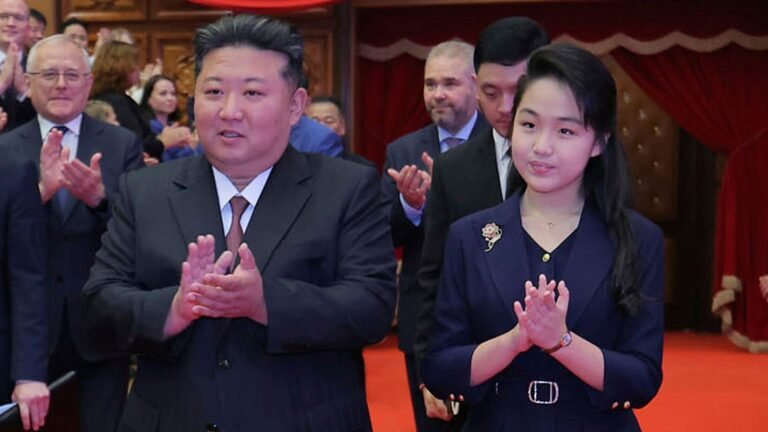
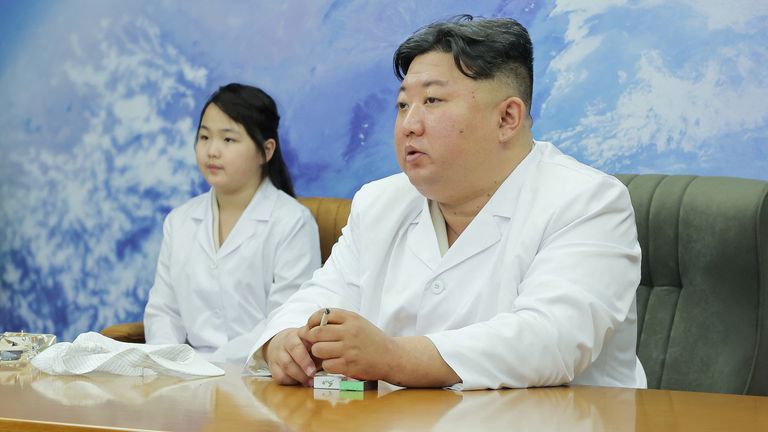
North Korean leader Kim Jong Un is appearing to take steps to name his daughter as his official successor.
South Korea’s National Intelligence Service (NIS) said it believes Kim Ju Ae, who is thought to be around 13 years old, is already providing input on policy matters, suggesting she may be being touted as a future leader.
The teenager has been increasingly visible over the last year, attending missile launches alongside her father and, in 2025, at China’s “Victory Day” parade, which marked her international debut.
The NIS said it will now look to see whether she attends the upcoming Workers’ Party Congress and how she is presented at the party’s biggest political conference, including whether she receives an official title.
“In the past, the NIS described Ju Ae as being ‘in study as successor’ but today the expression used was that she ‘was in the stage of being internally appointed successor’,” South Korean lawmaker Lee Seong-kweun told reporters following a closed-door briefing on 12 February.
If she does become leader, it would extend the family dynasty to a fourth generation.
Image:Kim Jong Un with his daughter in June last year. Pic: AP
Who is Kim Ju Ae?
Apart from her age and name, not much else is known about Kim Ju Ae, and even those details are unconfirmed.
While North Korean state media has never published her name, it does refer to her as Kim Jong Un’s “most beloved” or “respected” child.
South Korean media has previously speculated that she is the leader’s second of three children, and that the first child is a son. However, analysts have questioned the credibility of the reports.
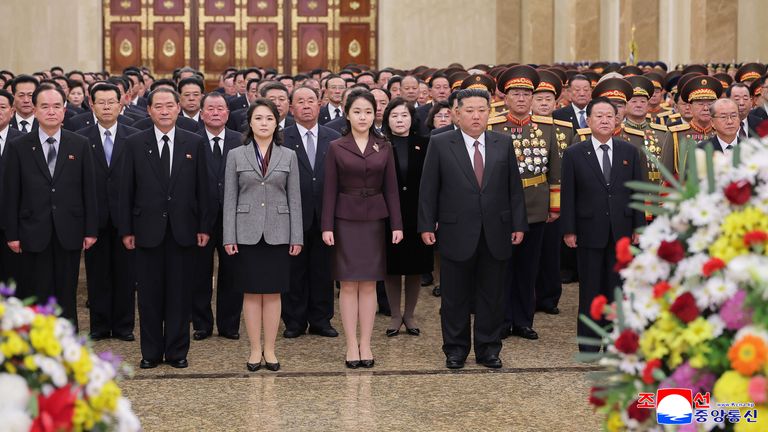
Image:Kim Ju Ae (centre) with her father Kim Jong Un and mother Ri Sol Ju. Pic: AP
North Korea, which is one of the world’s most secretive nations, has not confirmed whether Ju Ae has any siblings.
It is thought she is the child whom US basketball star Dennis Rodman called Mr Kim’s baby daughter after his trip to the capital Pyongyang in 2013.
Image:Father and daughter are pictured inspecting North Korea’s first military reconnaissance satellite in May 2023. Pic: Reuters
Surprise reveal
Ju Ae made her first public appearance in November 2022, when she watched a long-range missile test launch with her father.
It came as a huge surprise to foreign experts as neither Kim Jong Un nor his father Kim Jong Il were mentioned in North Korean state media before they became adults.
Following her sixth public appearance in 2023, a North Korea analyst told Sky News there was a “theme” emerging.
Image:Kim Jong Un and his daughter in January 2024. Pic: Reuters
Jean H Lee, who set up the Associated Press news agency’s first bureau in North Korea, said the events she has been attending tend to involve “weapons and missiles”.
“When you look at these pictures she’s front and centre. She is there. It’s like this tableau of father, mother, daughter. And I think what people noticed, of course, first and foremost was, ‘oh my gosh, he’s presenting his daughter’. What does that mean?”, she told the Sky News Daily podcast.
Her carefully crafted appearances have since included missile tests, military parades, and the launch of a naval destroyer in April 2024.
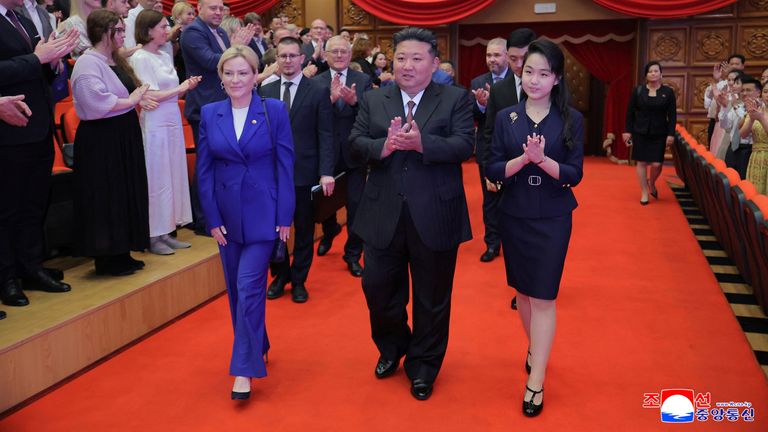
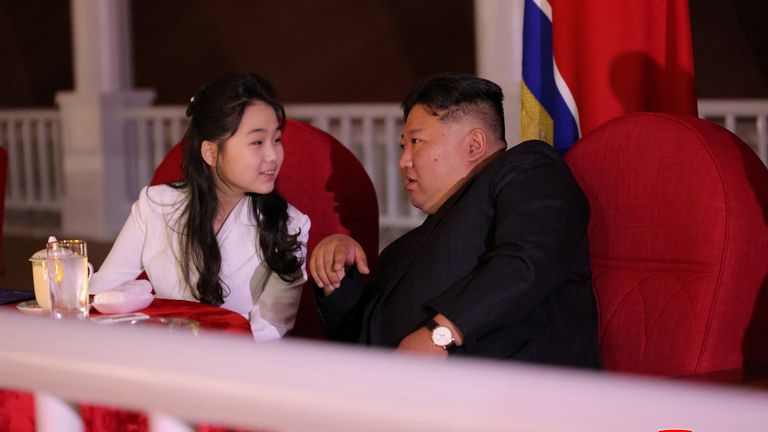
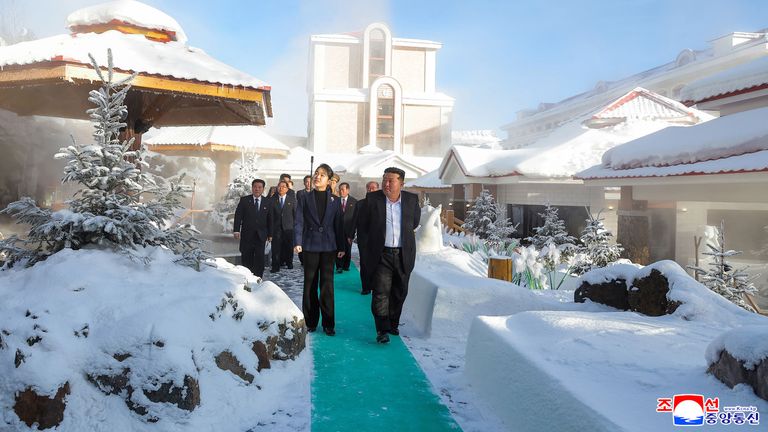
She also accompanied her father to the official opening of the Wonsan holiday resort on the country’s east coast, a concert, and a visit to the Russian culture minister, Olga Lyubimova.
Image:Russian Culture Minister Olga Lyubimova walks with Kim Jong Un and his daughter. Pic: Reuters
How likely is she to succeed her father?
Mr Kim likely believes his daughter has the capacity and resolve to succeed him as leader, according to an analyst at the private Sejong Institute in South Korea.
“By accompanying her father on major events, it’s like she’s learning kingship and building a human network at a tender age,” Cheong Seong-Chang said.
However, South Korea’s intelligence service has a patchy record when it comes to confirming developments in its neighbouring country.
Image:The pair in June 2025. Pic: Reuters
Dr Edward Howell, a lecturer in international relations at the University of Oxford, added that it needs to be remembered Mr Kim is only 43.
He said in the event of Mr Kim’s death in the immediate future, power would likely go to the leader’s sister Kim Yo Jong.
North Korean state media has never officially confirmed or commented on the succession plan.
In the past, the NIS and other South Korean government officials have cited North Korea’s male-dominated power structure. Since its foundation in 1948, North Korea has been ruled by successive male members of the Kim family.
Dr Howell said crucial for the survival of the Kim dynasty is the “Baekdu bloodline” which ensures that any leader is a Kim, regardless of gender.
“Whatever pairs of chromosomes you might have, that doesn’t play a big roll compared to being a Kim, a member of the bloodline.”
Image:Pic: AP
Analyst Jean H Lee, told Sky’s Daily podcast in 2023 that Ju Ae’s appearances are a “cultivation of the Kim family, monarchy and dynasty”.
She said: “I’m sure there is in some part a strategy of trying to portray themselves, kind of like the Royal Family in the United Kingdom.”