As the House crushed Republican resistance to a Trump-backed funding package to end the latest partial government shutdown, lawmakers in the upper chamber weren’t confident that Congress could avoid being in the same position in the coming weeks.
President Donald Trump and Senate Minority Leader Chuck Schumer, D-N.Y., brokered the deal to end the shutdown last week. That funding truce included a move to sideline the controversial Department of Homeland Security (DHS) funding bill in favor of a short-term extension to keep the agency open.
The House’s passage of the package, which funds 11 out of 12 government agencies under Congress’ purview, sets the stage for tense negotiations between the White House and Senate Democrats over reforms to DHS.
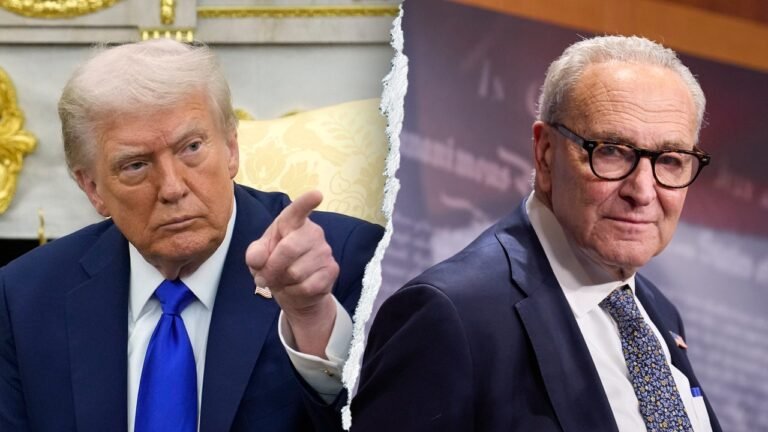
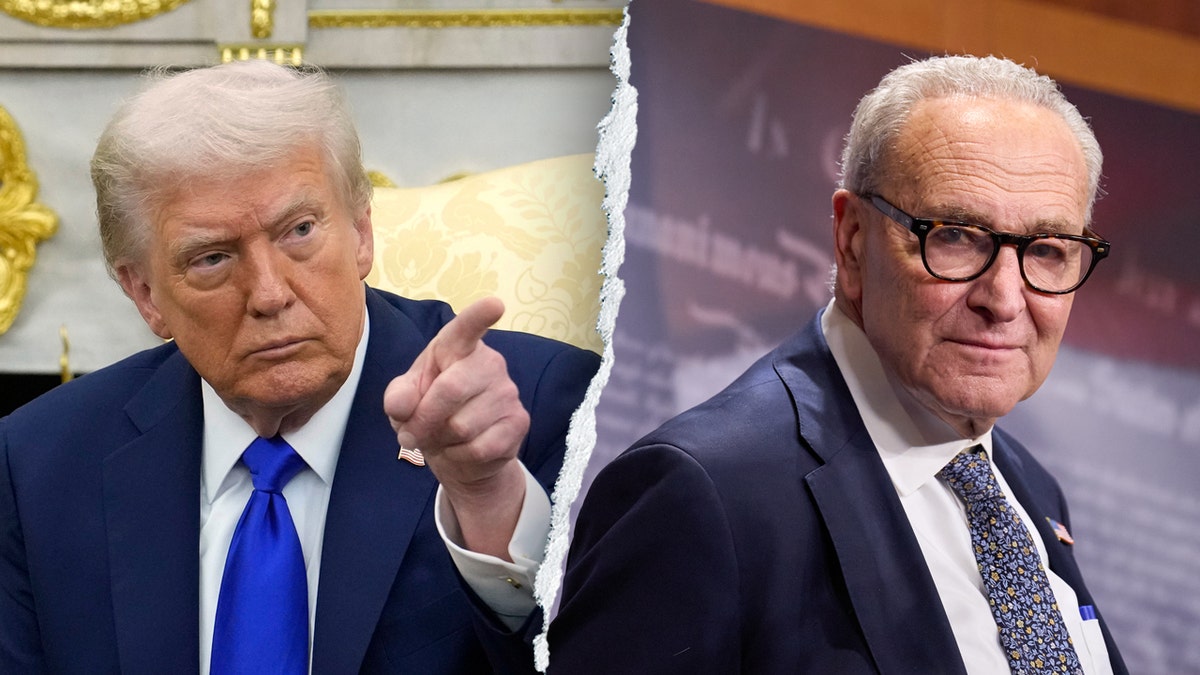
President Donald Trump and Senate Minority Leader Chuck Schumer brokered the deal to end the shutdown last week.(Adrian Wyld/The Canadian Press/AP; Jacquelyn Martin/AP)
But several Senate Republicans are questioning whether two weeks, which had shrunk to just nine days as of Wednesday, would be enough time to avert another partial shutdown — this time only for DHS.
“I think it’s gonna be very difficult to get the funding bill done for DHS in two weeks,” Sen. Rick Scott, R-Fla., told Fox News Digital.
Scott was one of a handful of Republicans in the upper chamber that rejected the compromise plan and the underlying original package because of bloated spending on earmarks and concerns that Senate Democrats would effectively try to kneecap Immigration and Customs Enforcement (ICE) operations across the country.
“We’re going to be in a worse spot,” Scott said. “I mean… all their earmarks got done, and then now they’re going to want to, you know, they want to [get] busy de-fanging and defunding ICE.”
Congressional Democrats wanted to relitigate the bipartisan DHS bill after the fatal shooting of Alex Pretti during an immigration enforcement operation in Minneapolis. The demand forced Trump to intervene and thrust the government into a partial shutdown on Friday.
While the funding deal made it across his desk, it won’t get Congress out of the jam it’s in, given the short amount of time lawmakers have to negotiate the bill, which is consistently the most difficult spending bill to pass year in and year out.
Senate Majority Leader John Thune, R-S.D., noted that once negotiations began, Congress had a “very short timeframe in which to do this, which I am against.”
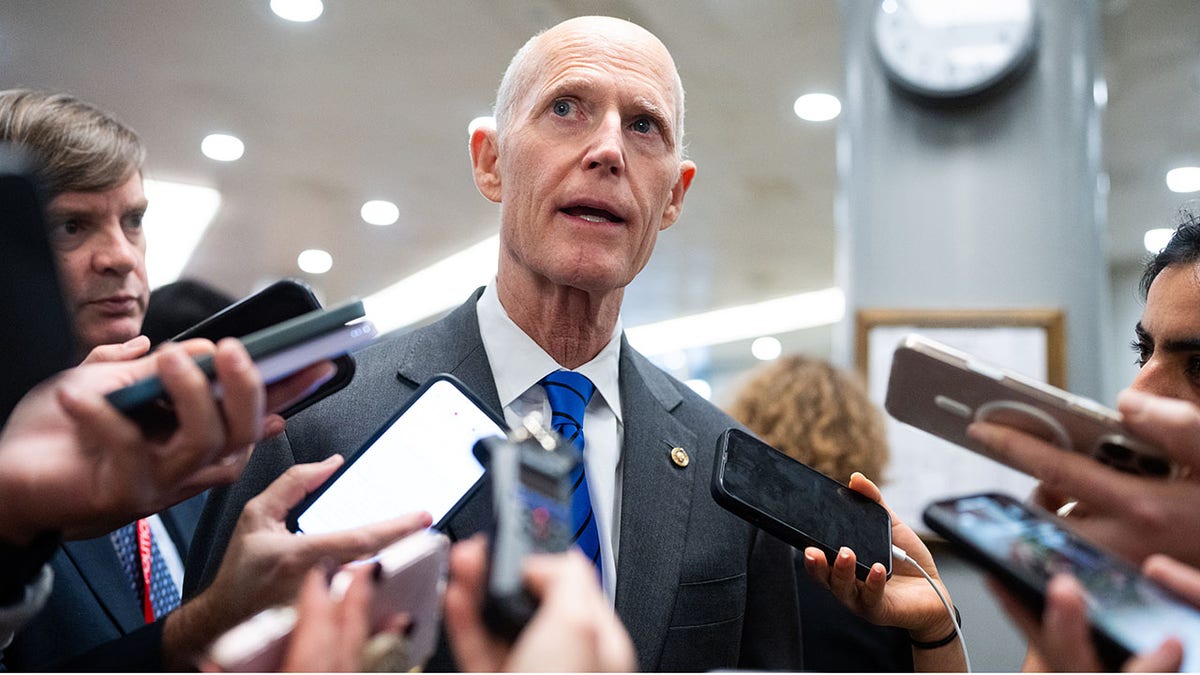
Sen. Rick Scott demanded that his House Republican colleagues reject the Senate-passed funding package unless it included DHS spending and voter ID legislation.(Bill Clark/CQ Roll Call, Inc. via Getty Images)
“But the Democrats insisted on, you know, a two-week window, which, again, I don’t understand the rationale for that,” Thune said. “Anybody who knows this place knows that’s an impossibility.”
Some Senate Democrats did not want to weigh in on a hypothetical scenario just days away, but Sen. Mark Kelly, D-Ariz., contended that because of the events in Minnesota, “there should be some motivation across the aisle to do something on, you know, all these issues.”
“I mean, I think [DHS Secretary] Kristi Noem should be fired, leadership needs to be changed at ICE, their budget needs to be the right size,” Kelly said. “We got to get them looking like normal police officers.”
Senate Appropriations Chair Susan Collins, R-Maine, struck a more positive tone.
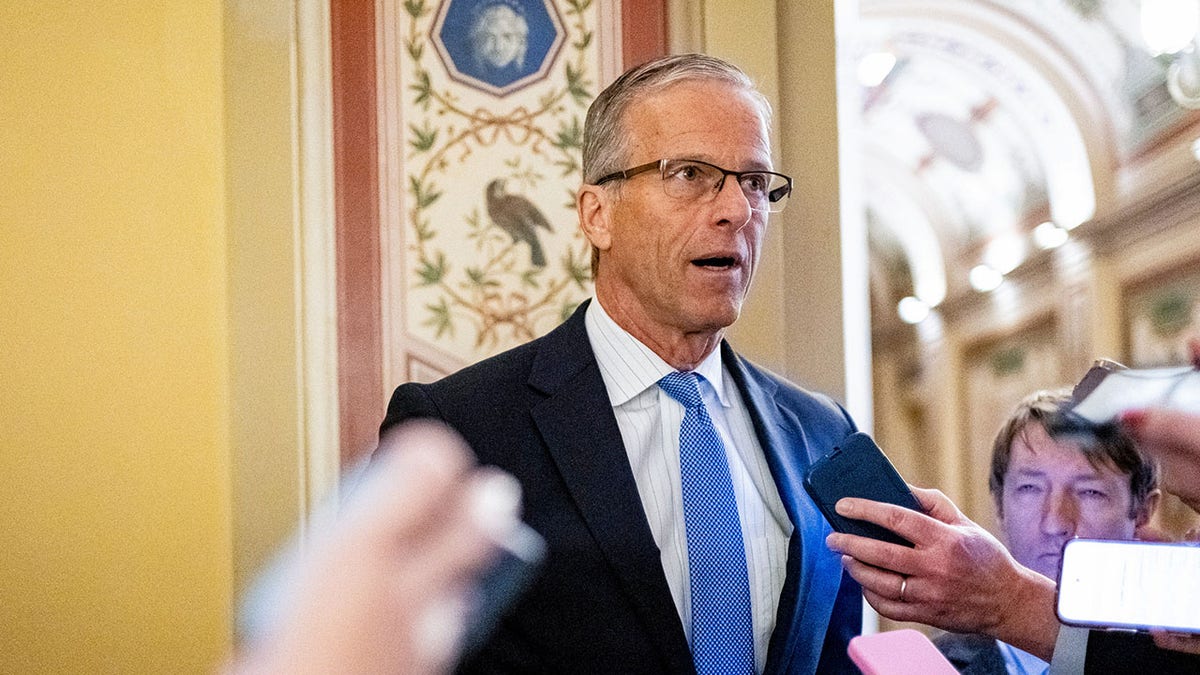
Senate Majority Leader John Thune thought that ICE agents being forced to wear bodycams would act as a sweetener for Democrats.(Graeme Sloan/Bloomberg via Getty Images)
She told Fox News Digital that Congress would be in a much better position, considering that lawmakers will have passed 11 out of the 12 bills needed to fund the federal government.
“We’ll now start the negotiations on DHS, and I hope we’ll be successful, but I don’t see how you can compare where we are today,” Collins said.
Thune believed that Noem’s announcement that ICE agents in Minneapolis would begin wearing body-worn cameras could act as a sweetener for Democrats. There is already $20 million baked into the current bipartisan DHS funding bill for body cameras.
Schumer rejected that olive branch from Noem, arguing that it didn’t come nearly close enough to the portfolio of reforms Democrats wanted for the agency. And he reaffirmed that Senate Democrats wanted actual legislative action on DHS reforms, not an executive order.
“We know how whimsical Donald Trump is,” Schumer said. “He’ll say one thing one day and retract it the next. Same with Secretary Noem.”
“So, we don’t trust some executive order, some pronouncement from some Cabinet secretary. We need it enshrined into law.”
When asked if lawmakers would need to turn to another short-term funding patch, Schumer argued that “if Leader Thune negotiates in good faith, we can get it done. We expect to present to the Republicans a very serious, detailed proposal very shortly.”
But Thune has said for several days that it would be the White House in the driver’s seat, and ultimately it would be Trump who could broker a new deal.
“But at some points, obviously it has to be the White House engaged in the conversation with the Senate Democrats, and that’s how that thing’s gonna land,” Thune said.
Alex Miller is a writer for Fox News Digital covering the U.S. Senate.
Tom Homan cites increased cooperation with local authorities but promises enforcement operations will continue.
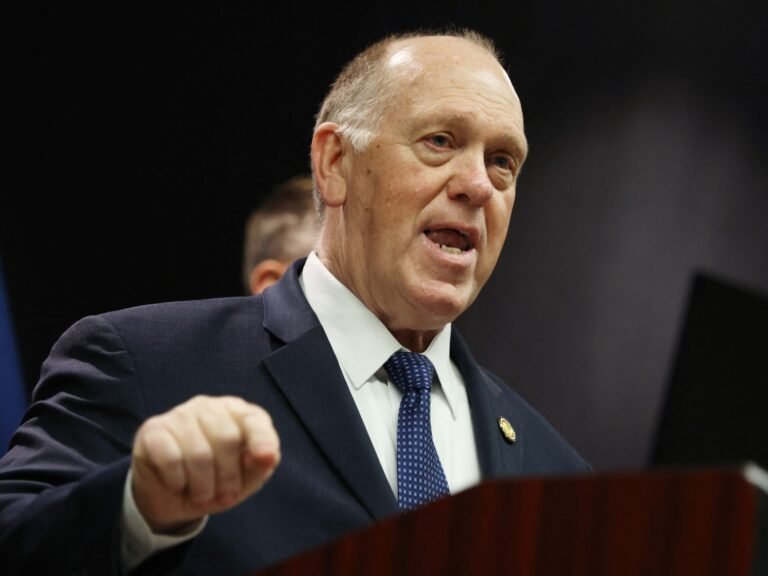
United States border security chief Tom Homan has announced that the administration of President Donald Trump will “draw down” 700 immigration enforcement personnel from Minnesota while promising to continue operations in the northern state.
The update on Wednesday was the latest indication of the Trump administration pivoting on its enforcement surge in the state following the killing of two US citizens by immigration agents in Minneapolis in January.
Recommended Stories
list of 3 itemsend of list
Homan, who is officially called Trump’s “border czar”, said the decision came amid new cooperation agreements with local authorities, particularly related to detaining individuals at county jails. Details of those agreements were not immediately available.
About 3,000 immigration enforcement agents are currently believed to be in Minnesota as part of Trump’s enforcement operations.
“Given this increase in unprecedented collaboration, and as a result of the need for less law enforcement officers to do this work in a safer environment, I have announced, effective immediately, we will draw down 700 people effective today – 700 law enforcement personnel,” Homan said.
The announcement comes after Homan was sent to Minnesota at the end of January in response to widespread protests over immigration enforcement and the killing of Renee Nicole Good on January 7 by an Immigration and Customs Enforcement (ICE) agent and Alex Pretti on January 24 by a US Customs and Border Protection (CBP) officer, both in Minneapolis.
Homan said reforms made since his arrival have included consolidating ICE and CBP under a single chain of command.
He said Trump “fully intends to achieve mass deportations during this administration, and immigration enforcement actions will continue every day throughout this country”.
Immigration rights observers have said the administration’s mass deportation approach has seen agents use increasingly “dragnet” tactics to meet large detention quotas, including randomly stopping individuals and asking for their papers. The administration has increasingly detained undocumented individuals with no criminal records, even US citizens and people who have legal status to live in the US.
Homan said agents would prioritise who they considered to be “public safety threats” but added, “Just because you prioritise public safety threats, don’t mean we forget about everybody else. We will continue to enforce the immigration laws in this country.”
The “drawdown”, he added, would not apply to what he described as “personnel providing security for our officers”.
“We will not draw down on personnel providing security and responding to hostile incidents until we see a change,” he said.
Critics have accused immigration enforcement officers, who do not receive the same level of crowd control training as most local police forces, of using excessive violence in responding to protesters and individuals legally monitoring their actions.
Trump administration officials have regularly blamed unrest on “agitators”. They accused both Good and Pretti of threatening officers before their killings although video evidence of the exchanges has contradicted that characterisation.
Last week, the administration announced it was opening a federal civil rights investigation into the killing of Pretti, who was fatally shot while he was pinned to the ground by immigration agents. That came moments after an agent removed a gun from Pretti’s body, which the 37-year-old had not drawn and was legally carrying.
Federal authorities have not opened a civil rights investigation into the killing of Good, who they have maintained sought to run over an ICE agent before she was fatally shot. Video evidence appeared to show Good trying to turn away from the agent.
On Friday, thousands of people took to the streets of Minneapolis and other US cities amid calls for a federal strike in protest against the Trump administration’s deportation drive.
Minnesota Attorney General Keith Ellison and other state and local officials have also challenged the immigration enforcement surge in the state, arguing that the Department of Homeland Security, which oversees ICE and the CBP, has been violating constitutional protections.
A federal judge last week said she will not halt the operations as a lawsuit progresses in court. Department of Justice lawyers have dismissed the suit as “legally frivolous”.
A man has gone on trial accused of the shotgun murder of a retired groundsman.
Prosecutors allege ex-head gamekeeper David Campbell, 77, gunned down Brian Low, 65, on a remote track near Aberfeldy, Perthshire, in February 2024.
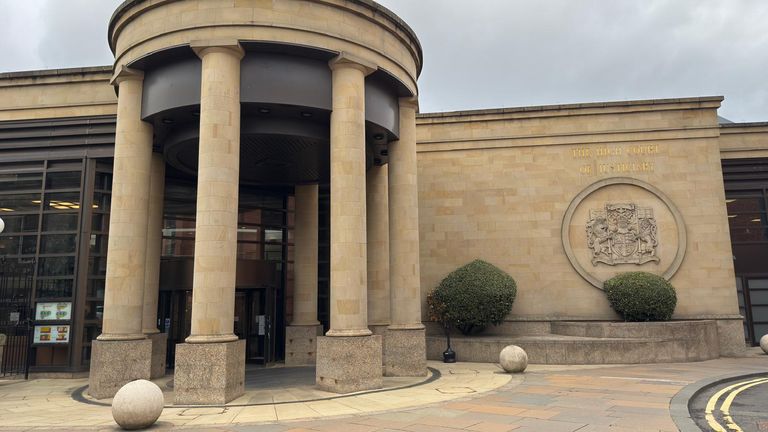
Campbell is on trial at the High Court in Glasgow. He has pleaded not guilty to eight charges, and has lodged a special defence of alibi in connection with the murder accusation – claiming he was at home at the time of the alleged shooting.
The alleged murder is said to have taken place at Leafy Lane, near to the Pitilie track.
Mr Low was pronounced dead at 9am on 17 February 2024 by a paramedic.
Image:A general view of the area where Brian Low’s body was discovered. Pic: PA
Six days later, on 23 February 2024, a post-mortem examination revealed the cause of death to be gunshot wounds to the neck and chest.
Jurors heard how Campbell worked as the head gamekeeper at Edradynate Estate in Perthshire between May 1984 and February 2018.
Mr Low worked at the same estate as a groundsman between August 2000 and February 2023.
Campbell is accused of previously showing “malice and ill-will” towards Mr Low, and is alleged to have discharged a shotgun at him, leaving him so severely hurt that he died at the scene.
Prosecutors allege he earlier disabled CCTV cameras at Tigh Na Caorann in Aberfeldy’s Crieff Road in an attempt to conceal his whereabouts.
He is further accused of attempting to defeat the ends of justice between 16 February and 24 May 2024 by disposing of the alleged murder weapon and gun bag, disposing of a Walther Rotex RM8 airgun, having replacement tyres fitted on an electric bike reportedly used during the shooting and dumping a box, a cartridge bag and bicycle tyres at Aberfeldy Recycling Centre or elsewhere.
Image:David Campbell is on trial at the High Court in Glasgow
Campbell additionally faces five separate breach of the peace charges spanning between July 1995 and September 2012.
He is said to have acted in a disorderly manner, putting four men and two women in a “state of fear and alarm”.
This includes claims that he threatened to shoot three of the men, as well as one of the women and her family.
One of the complainers, retired police officer Alan Stewart, told the court that he became acquainted with Campbell due to the accused’s work as a gamekeeper, and his own role in investigating wildlife crime.
Mr Stewart, who went on to become a civilian wildlife crime coordinator following his time in the force, accepted Advocate Depute Greg Farrell’s submission that there was “tension” between the pair due to their jobs.
At Scone Palace’s game fair in the summer of 1995, Mr Stewart claimed he was off-duty when he passed Campbell at the outdoor event.
The accused was said to have stated: “It’s great what vermin you see when you haven’t got a gun.”
Mr Stewart added: “It wasn’t said as a joke. It was said with venom.”
He said that he was used to getting “threats” due to his line of work so it “didn’t bother” him as much, but upset his wife and granddaughter.
During questioning from defence lawyer Tony Lenehan KC, Mr Stewart agreed that Campbell would not have been the only gamekeeper in the region not “on his Christmas card list”.
Campbell is further accused of possessing a Walther Rotex RM8 airgun between May 2017 and February 2024 without the relevant certificate, and discharging it on various occasions.
Cracker Barrel employees must pay for their own alcohol when traveling for work — and should dine out at the Tennessee-based restaurant chain whenever possible, according to an internal message to staff.
“Employees are expected to dine at a Cracker Barrel store for all or the majority of meals while traveling, whenever practical based on location and schedule,” said the message from Cracker Barrel management, as first reported by The Wall Street Journal.
Cracker Barrel is also reportedly cutting off its traveling workers from booze, restricting alcohol purchases from being expensed.
“Exceptions for special occasions must be pre-approved,” said the message, also according to the Journal.
However, the policy for employees to dine at Cracker Barrel as much as possible is not new, the company told Fox News Digital. Nor is it the only place that employees may eat when on the road, as previously reported, the company said.
Cracker Barrel no longer allows employees to expense alcohol when traveling for work.(iStock)
The change was to further limit reimbursement of alcoholic beverages under the policy, the company said.
Cracker Barrel added beer and wine to its menu in 2021.
The policy tweak comes after Cracker Barrel faced scrutiny last year over a botched logo redesign and cosmetic changes to its restaurants that were met with public backlash.
Cracker Barrel added alcohol to its menu back in 2021.(iStock)
Many longtime customers claimed that the restaurant’s food has deteriorated over the years as favorites disappeared from the menu and kitchen shortcuts replaced earlier practices.
During an investor call in December, Cracker Barrel CEO Julie Masino said first-quarter results “were below our expectations amid unique and ongoing headwinds” and that “recovery will take time.”
The company reported that sales were down 5.7% in the first quarter of fiscal year 2026, which ended in October, compared to the same period of the previous fiscal year.
The Hamburger Steak is among the returning classic Cracker Barrel menu items.(Cracker Barrel)
Cracker Barrel announced last month that it was bringing back some classic menu items – Hamburger Steak and Eggs in the Basket – to win back customers.
“Although our recovery will take time, our teams are more committed than ever, and we are confident that we will regain momentum,” Masino told investors in December.
Peter Burke is a lifestyle editor with Fox News Digital. He covers various lifestyle topics, with an emphasis on food and drink.
On the first birthday of the grandson, a gift worth crores came from the maternal grandmother’s house, the in-laws became completely rich!
In earlier times, a substantial dowry was given in the name of gifts by the bride’s side during marriages. At many places it was announced what all had been given by the bride’s side. But now the times have advanced. Now even on the grandson’s birthday, good gifts have started coming from his maternal grandparents. An example of this was shared on social media in which an maternal uncle read out the list of gifts sent by his maternal side on the first birthday of his nephew. This included many precious things ranging from gold and silver, land, clothes. People were shocked after hearing the list. This new trend has created an uproar on social media.
To add News18 as your favorite news source on Google click here Do it.
The U.S. Cybersecurity and Infrastructure Security Agency (CISA) ordered government agencies to patch their systems against a five-year-old GitLab vulnerability that is actively being exploited in attacks.
GitLab patched this server-side request forgery (SSRF) flaw (tracked as CVE-2021-39935) in December 2021, saying it could allow unauthenticated attackers with no privileges to access the CI Lint API, which is used to simulate pipelines and validate CI/CD configurations.
“When user registration is limited, external users that aren’t developers shouldn’t have access to the CI Lint API,” the company said at the time.
“An issue has been discovered in GitLab CE/EE affecting all versions starting from 10.5 before 14.3.6, all versions starting from 14.4 before 14.4.4, all versions starting from 14.5 before 14.5.2. Unauthorized external users could perform Server Side Requests via the CI Lint API.”
On Tuesday, CISA added the flaw to its list of vulnerabilities exploited in the wild and ordered Federal Civilian Executive Branch (FCEB) agencies to patch their systems within three weeks, by February 24, 2026, as mandated by Binding Operational Directive (BOD) 22-01.
While BOD 22-01 targets only federal agencies, CISA has urged all organizations, including those in the private sector, to prioritize securing their devices against ongoing CVE-2021-39935 attacks.
“These types of vulnerabilities are frequent attack vectors for malicious cyber actors and pose significant risks to the federal enterprise,” CISA warned. “Apply mitigations per vendor instructions, follow applicable BOD 22-01 guidance for cloud services, or discontinue use of the product if mitigations are unavailable.”
Shodan is currently tracking over 49,000 devices with a GitLab fingerprint exposed online, the vast majority of which are from China, and nearly 27,000 are using the default port 443.
GitLab says its DevSecOps platform has more than 30 million registered users and is used by over 50% of Fortune 100 organizations, including high-profile companies such as Nvidia, Airbus, Goldman Sachs, T-Mobile, and Lockheed Martin.
Modern IT infrastructure moves faster than manual workflows can handle.
In this new Tines guide, learn how your team can reduce hidden manual delays, improve reliability through automated response, and build and scale intelligent workflows on top of tools you already use.
New Delhi, India – When US President Donald Trump announced a trade deal with India on Monday this week, he declared that New Delhi would pivot away from Russian energy as part of the agreement.
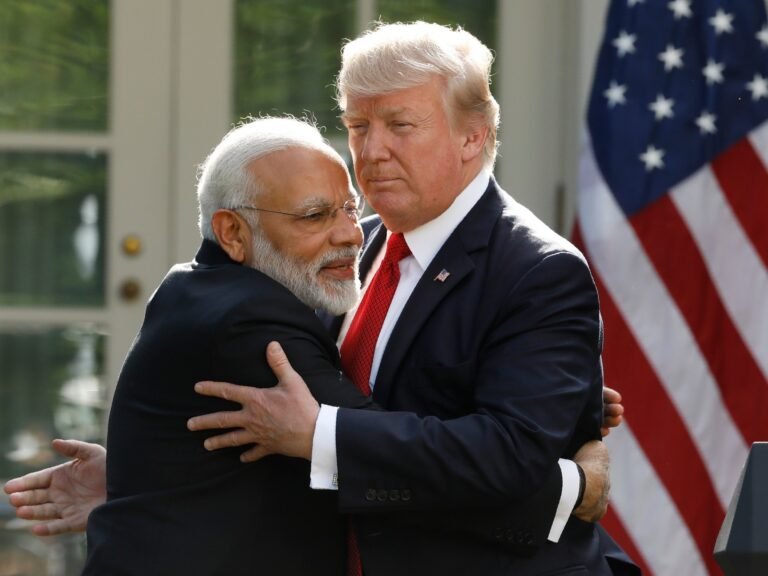
Indian Prime Minister Narendra Modi, Trump said, had promised to stop buying Russian oil, and instead buy crude from the United States and from Venezuela, whose president, Nicolas Maduro, was abducted by US special forces in early January. Since then, the US has effectively taken control of Venezuela’s mammoth oil industry.
In return, Trump dialled down trade tariffs on Indian goods from an overall 50 percent to just 18 percent. Half of that 50 percent tariff was levied last year as punishment for India buying Russian oil, which the White House maintains is financing Russian President Vladimir Putin’s war in Ukraine.
But since Monday, India has not publicly confirmed that it has committed to either ceasing its purchase of Russian oil or embracing Venezuelan crude, analysts note. Dmitry Peskov, a Kremlin spokesperson, told reporters on Tuesday that Russia had received no indication of this from India, either.
And switching from Russian to Venezuelan oil will be far from straightforward. A cocktail of other factors – shocks to the energy market, costs, geography, and the characteristics of different kinds of oil – will complicate New Delhi’s decisions about its sourcing of oil, they say.
So, can India really dump Russian oil? And can Venezuelan crude replace it?
US President Donald Trump speaks during a news conference on Saturday, January 3, 2026 at his Mar-a-Lago estate in Palm Beach, Florida, the US as Secretary of State Marco Rubio listens [Alex Brandon/AP]
What is Trump’s plan?
Trump has been pressuring India to stop buying Russian oil for months. After Russia invaded Ukraine in 2022, the US and European Union placed an oil price cap on Russian crude in a bid to limit Russia’s ability to finance the war.
As a result, other countries including India began buying large quantities of cheap Russian oil. India, which before the war sourced only 2.5 percent of its oil from Russia, became the second-largest consumer of Russian oil after China. It currently sources around 30 percent of its oil from Russia.
Last year, Trump doubled trade tariffs on Indian goods from 25 percent to 50 percent as punishment for this. Later in the year, Trump also imposed sanctions on Russia’s two biggest oil companies – and threatened secondary sanctions against countries and entities that trade with these firms.
Since the abduction of Maduro by US forces in early January, Trump has effectively taken over the Venezuelan oil sector, controlling sales cash flows.
Venezuela also has the largest proven oil reserves in the world, estimated at 303 billion barrels, more than five times larger than those of the US, the world’s largest oil producer.
But while getting India to buy Venezuelan oil makes sense from the US’s perspective, analysts say this could be operationally messy.
A man sits by railway tracks as a freight train transports petrol wagons in Ajmer, India, on August 27, 2025. US tariffs of 50 percent took effect on August 27 on many Indian products, doubling an existing duty as US President Donald Trump sought to punish New Delhi for buying Russian oil [File: Himanshu Sharma/AFP]
How much oil does India import from Russia?
India currently imports nearly 1.1 million barrels per day (bpd) of Russian crude, according to analytics company Kpler. Under Trump’s mounting pressure, that is lower than the average 1.21 million bpd in December 2025 and more than 2 million bpd in mid-2025.
One barrel is equivalent to 159 litres (42 gallons) of crude oil. Once refined, a barrel typically produces about 73 litres (19 gallons) of petrol for a car. Oil is also refined to produce a wide variety of products, from jet fuel to household items including plastics and even lotions.
Russian President Vladimir Putin, left, and Indian Prime Minister Narendra Modi greet each other before a meeting in New Delhi, India, on December 6, 2021 [File: Manish Swarup/AP]
Under increasing pressure from Trump, last August, Indian officials called out the “hypocrisy” of the US and EU pressuring New Delhi to back off from Russian crude.
“In fact, India began importing from Russia because traditional supplies were diverted to Europe after the outbreak of the conflict,” Randhir Jaiswal, India’s Foreign Ministry spokesperson, said then. He added that India’s decision to import Russian oil was “meant to ensure predictable and affordable energy costs to the Indian consumer”.
Despite this, Indian refiners, currently the second-largest group of buyers of Russian oil after China, are reportedly winding up their purchases after clearing current scheduled orders.
Major refiners like Hindustan Petroleum Corporation Ltd (HPCL), Mangalore Refinery and Petrochemicals Ltd (MRPL), and HPCL-Mittal Energy Ltd (HMEL) halted purchasing from Russia following the US sanctions against Russian oil producers last year.
Other players like Indian Oil Corporation (IOC), Bharat Petroleum Corporation, and Reliance Industries will soon stop their purchases.
A man pushes his cart as he walks past Bharat Petroleum’s storage tankers in Mumbai, India, December 8, 2022 [File: Punit Paranjpe/AFP]
What happens if India suddenly stops buying Russian oil?
Even if India wanted to stop importing Russian oil altogether, analysts argue it would be extremely costly to do so.
In September last year, India’s oil and petroleum minister, Hardeep Singh Puri, told reporters that it would also sharply push up energy prices and fuel inflation. “The world will face serious consequences if the supplies are disrupted. The world can’t afford to keep Russia off the oil market,” Puri said.
Analysts tend to agree. “A complete cessation of Indian purchases of Russian oil would be a major disruption. An immediate halt would spike global prices and threaten India’s economic growth,” said George Voloshin, an independent energy analyst based in Paris.
Russian oil would likely be diverted more heavily towards China and into “shadow” fleets of tankers that deliver sanctioned oil secretly by flying false flags and switching off location equipment, Voloshin told Al Jazeera. “Mainstream tanker demand would shift toward the Atlantic Basin, most likely increasing global freight rates as a result,” he noted.
Sumit Pokharna, vice president at Kotak Securities, noted that Indian refineries have reported robust margins in the last two years, majorly benefitting from the discounted Russian crude.
“If they move to higher-costing, like the US or Venezuela, then raw material cost would increase, and that would squeeze their margins,” he told Al Jazeera. “If it goes beyond control, they may have to pass the excess onto consumers.”
A pumpjack for oil is pictured at the Campo Elias neighbourhood in Cabimas, south of Lake Maracaibo, Zulia state, Venezuela, on January 31, 2026 [File: Maryorin Mendez/AFP]
Can India stop buying Russian oil altogether?
It may not be able to. One of India’s two private refiners, Nayara Energy, is majority-Russian-owned and under heavy Western sanctions. The Russian energy firm Rosneft holds a 49.13 percent stake in the company, which operates a 400,000-barrel-per-day refinery in India’s Gujarat, PM Modi’s home state.
Nayara is the second-largest importer of Russian crude, buying about 471,000 barrels per day in January this year, accounting for nearly 40 percent of Russian supplies to India.
Its plant has relied solely on Russian crude since European Union sanctions were imposed on the company last July.
Nayara is not planning to load Russian oil in April as it shuts its refinery for more than a month for maintenance from April 10, according to Reuters.
Pokharna said the future of Nayara hangs in the balance, with the US unlikely to grant India an overt exemption for the Russia-backed company to import crude.
Can India switch to Venezuelan oil?
India has been a major consumer of Venezuelan oil in the past. At its peak, in 2019, India imported $7.2bn of oil, accounting for just under 7 percent of total imports. That stopped after the US slapped sanctions on Venezuelan oil, but some officials of the government-owned Oil and Natural Gas Corporation are still stationed in the Latin American country.
Now, major Indian refiners have said they are open to receiving Venezuelan oil again, but only if it is a viable option.
For one thing, Venezuela is roughly twice as far from India as Russia and five times further than the Middle East, meaning much higher freight costs.
Venezuelan oil is more expensive as well. “Russian Urals [a medium-heavy crude blend] has been trading at a wide-ranging discount of about $10-20 per barrel to Brent, while Venezuelan Merey currently offers a smaller discount of around $5-8 per barrel,” Voloshin told Al Jazeera.
“Importing from Venezuela and forgoing the Russian discount would be a costly affair for India,” said Pokharna. “From transportation cost to forgoing discounts, it could cost India $6-8 more per barrel – and that is a huge increase in the importing bill.”
Overall, a complete pivot away from Russia could raise India’s import bill by $9bn to $11bn – an amount roughly equal to India’s federal health budget – per year, according to Kpler.
“Venezuelan crude must be discounted by at least $10 to $12 per barrel to be competitive,” argued Voloshin. “This deeper discount is necessary to offset the much higher freight costs, increased insurance premiums for the longer Atlantic voyage, and the somewhat higher operational expenses required to process Venezuela’s extra-heavy high-sulfur crude.”
Without deeper discounts, the longer journey and complex handling make Venezuelan oil more expensive on a delivered basis, he added.
Another major issue is that many Indian refiners simply do not have the facilities to process very heavy Venezuelan oil.
Venezuelan crude is a heavy, sour oil, thick and viscous like molasses, with a high sulphur content requiring complex, specialised refineries to process it into fuel. Only a small number of Indian refineries are equipped to handle it.
“[Venezuelan oil’s heaviness] makes it an option only for complex refineries, leaving out older and smaller refineries,” Pokharna told Al Jazeera. “The shift is operationally difficult and would require blending with more expensive light crudes.”
Then there is the question of availability. Today, Venezuela produces barely a million barrels per day when pushed to its limit. Even if all production was sent to India, it would not match the total Russian oil import.
Where else could India buy oil?
India’s Minister Puri has said that New Delhi is looking to diversify sourcing options from nearly 40 countries.
As India has reduced Russian imports, it has increased them from Middle Eastern nations and other countries in the Organization of the Petroleum Exporting Countries (OPEC). Now, while Russia accounts for nearly 27 percent share in India’s oil imports, OPEC nations, led by Iraq and Saudi Arabia, contribute 53 percent.
Reeling from Trump’s trade war, India has also increased purchases of US oil. American crude imports to India rose by 92 percent from April to November in 2025 to nearly 13 million tons, compared to 7.1 million in the same period in 2024.
However, India would be competing for these supplies with the European Union, which has pledged to spend $750bn by 2028 on US energy and nuclear products.
Meanwhile, for Venezuela to return to higher production, Caracas needs political stability, changes in foreign investment and oil laws, and to clear debts. That will take time, experts say.
Customers refuel their vehicles at a Nayara Energy Limited fuel station, the Russian oil major Rosneft’s majority-owned Indian refiner, in Bengaluru, India on December 12, 2025 [File: Idrees Mohammed/AFP]
Peter Mandelson is being investigated by police over allegations of misconduct in a public office following the latest release of Epstein files.
Emails released by the US Justice Department appear to show conversations between the ex-cabinet minister and the paedophile financier about political matters.
Ella Marriott, a commander in the Metropolitan Police, said it had received “a number of reports into alleged misconduct in public office including a referral from the UK government”.
She said the Met will “continue to assess all relevant information brought to our attention as part of this investigation“.
He has previously expressed regret about his past ties to Epstein, and in a recent interview with The Times described Epstein as “muck that you can’t get off your shoe” and referred to a “handful of misguided historical emails, which I deeply regret sending”.
Image:Lord Peter Mandelson and Jeffrey Epstein on a yacht. Pic: US Department of Justice
What is misconduct in a public office?
Misconduct in a public office refers to “serious wilful abuse or neglect” of powers relating to the role in public office, according to the Crown Prosecution Service.
Joshua Rozenberg, a legal commentator, told Sky News that it is an “unusual” offence “because it’s one created by the judges, laid down by the courts over many years”.
“For that reason, there isn’t actually a maximum penalty at all. It’s life imprisonment because parliament has never actually set a maximum.”
Could Mandelson end up in court over Epstein emails?
Due to the “complicated” nature of the offence, Mr Rozenberg said the government is trying to replace it with a new law, the Public Office (Accountability) Bill, which is currently going through parliament.
Part of the bill covers misconduct in public office, stating that a person commits an offence if they use “their office to obtain a benefit, whether for themselves or somebody else, or to cause somebody else to suffer a detriment”.
Image:An image Lord Mandelson released in the Epstein files. Pic: US Department of Justice
What we know about the allegations
The Cabinet Office said on 3 February that it had passed material to the police after an initial review of the newly released documents found they contained “likely market-sensitive information” and official handling safeguards had been “compromised”.
Emails released in the Epstein files from 2009 appear to show that Lord Mandelson shared sensitive information on at least four occasions.
At the time he was business secretary in Gordon Brown’s government, which was dealing with the 2008 financial crash and its aftermath.
Emails appear to show that Lord Mandelson told Epstein he was “trying hard” to change government policy on bankers’ bonuses, and gave him advance notice of a €500bn EU bank bailout the day before it was announced.
The peer also appeared to write to Epstein in June 2009 about an “interesting note that’s gone to the PM”, forwarding an assessment by Mr Brown’s adviser Nick Butler of potential policy measures including an “asset sales plan”.
In a cabinet meeting on 3 February, Prime Minister Sir Keir Starmer told ministers that Lord Mandelson had “let the country down”.
He said the alleged passing on of highly sensitive government business was disgraceful, adding that he was not reassured that all the information had yet emerged.
Sky News has approached representatives for Lord Mandelson for comment on the claims he leaked sensitive information.
Epstein’s links to Mandelson & others
Could Mandelson end up in court?
If convicted of an offence, Lord Mandelson could potentially face jail time.
However, Mr Rozenberg said the police investigation will need to be concluded before any further action is decided.
He said the investigation appears to be moving “very quickly” but the Met is likely now focusing on “what evidence they can find, whether they can substantiate the emails, whether they are something that Lord Mandelson doesn’t deny having sent or received, whether there’s other evidence and what explanation he has, if he has an explanation, for what may have happened 20 years ago”.
Again, Lord Mandelson has not commented on the claims.
For weeks, President Donald Trump has promised the Iranian people that “help is on the way” while positioning a massive U.S. naval armada within striking distance of Iran’s coast. But as the White House pivots toward a diplomatic summit in Istanbul Friday, analysts warn the president may face a growing credibility test if threats are not followed by action.
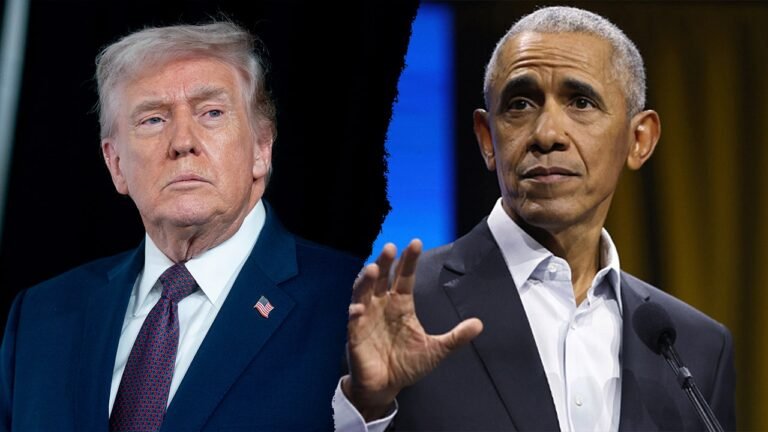
By threatening “speed and fury” against a regime accused of killing thousands of protesters, Trump has drawn a red line — one that analysts say echoes President Barack Obama’s 2013 warning over Syria’s use of chemical weapons. Obama ultimately chose diplomacy over military strikes, a decision critics said weakened U.S. credibility and emboldened adversaries, while supporters argued it avoided a broader war and succeeded in removing large portions of Syria’s chemical arsenal. Trump now faces a similar debate as he weighs whether to enforce his own warnings against Iran.
Trump’s envoys have been set to meet Friday in Istanbul with Iranian officials to press for an end to Iran’s nuclear enrichment program, curbs on ballistic missiles and a halt to support for proxy groups such as Hamas and Hezbollah — terms Tehran, Iran, has shown little public sign of accepting. Trump has also demanded an end to the regime’s violent crackdown on protesters.
But signs of strain are already emerging around the talks.
Iran is now seeking a change in venue to Friday’s meeting — wanting it to be held in Oman, according to a source familiar with the request — raising questions about whether the summit will proceed as scheduled or produce substantive progress.
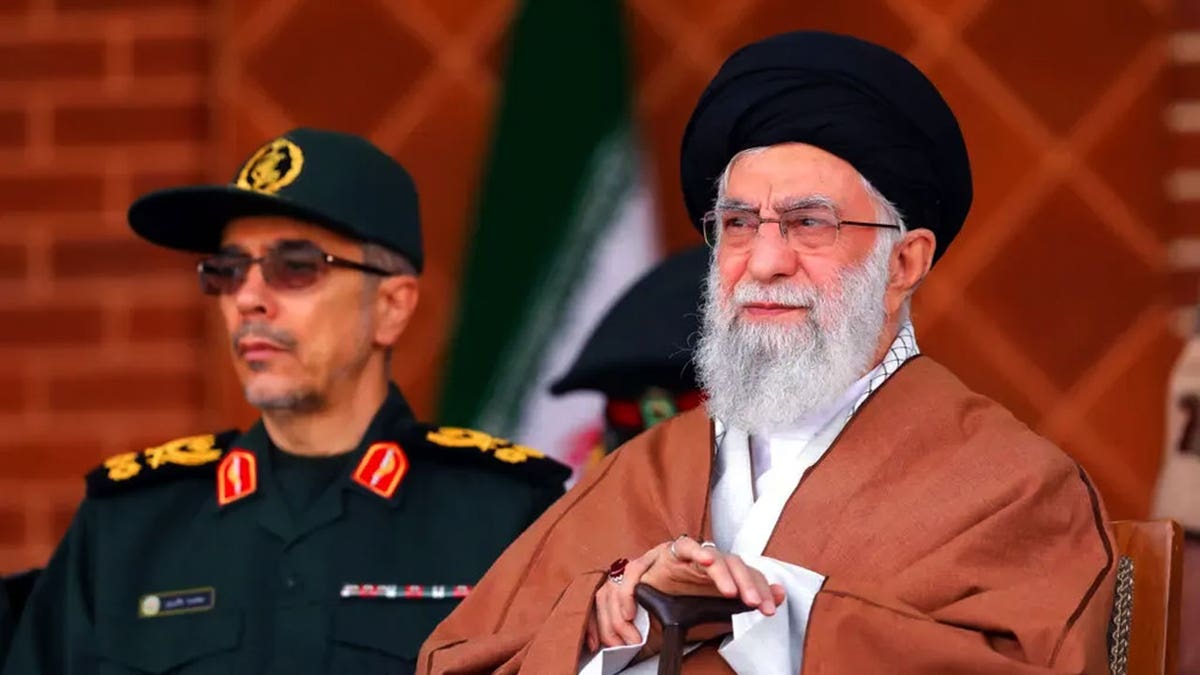
Iran’s Supreme Leader Ayatollah Ali Khamenei is pictured sitting next to senior military official in Iran.(Getty Images)
Tensions on the ground have continued to rise even as diplomacy is pursued. This week, U.S. Central Command said American forces shot down an Iranian drone after it aggressively approached the USS Abraham Lincoln while the aircraft carrier was operating in international waters in the Arabian Sea. U.S. Central Command (CENTCOM) said the drone ignored de-escalatory measures before an F-35C fighter jet downed it in self-defense.
No U.S. personnel were injured.
Hours later, Iranian naval forces harassed a U.S.-flagged, U.S.-crewed commercial tanker transiting the Strait of Hormuz, according to CENTCOM. Iranian gunboats and a surveillance drone repeatedly threatened to board the vessel before the guided-missile destroyer USS McFaul intervened and escorted the tanker to safety.
CENTCOM warned that continued Iranian harassment in international waters increases the risk of miscalculation and regional destabilization.
Despite weeks of delay, foreign policy analysts say the pause does not mean military action has been taken off the table.
“If you just look at force movements and the president’s past statements of policy, you would have to bet on the likelihood that military action remains something that is coming,” Rich Goldberg, a former Trump National Security Council official now at the Foundation for Defense of Democracies, told Fox News Digital.
“I don’t think the window is closed,” said Michael Makovsky, president of the Jewish Institute for National Security of America. “If the president doesn’t do something militarily, it would damage his credibility.”
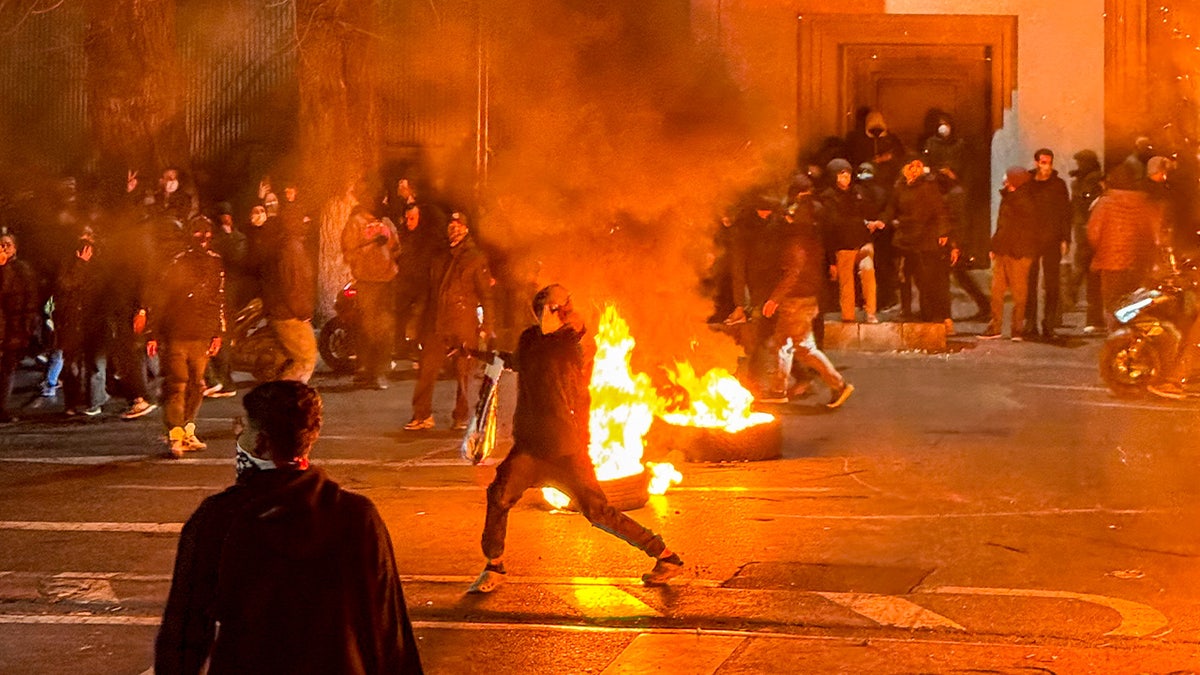
Iranians gather while blocking a street during a protest in Tehran, Iran, Jan. 9, 2026. (MAHSA / Middle East Images / AFP via Getty Images)
The standoff is reviving comparisons to President Barack Obama’s 2013 decision not to carry out military strikes in Syria after warning that the use of chemical weapons would cross a U.S. “red line” — a moment that became a touchstone in debates over American deterrence. Critics of Obama argued the move signaled weakness and emboldened adversaries, while supporters said diplomacy avoided a broader war and succeeded in removing large portions of Syria’s chemical arsenal.
The Syria episode remains a touchstone in Washington’s red-line debates. Critics argued Obama’s decision not to strike emboldened adversaries, while supporters said diplomacy prevented war — a divide resurfacing as Trump weighs his next move.
“They have challenged the president now to try to turn him into Obama in 2013 in Syria, rather than Donald Trump in 2025 in Iran,” Goldberg said.
Fox News Digital has reached out to Obama’s office for comment.
Trump has publicly encouraged Iranian protesters to continue their demonstrations, telling them in early January to “KEEP PROTESTING” and promising that “HELP IS ON ITS WAY.”
U.S. officials, however, have previously said the pause reflects caution rather than retreat, pointing to concerns about retaliation against American forces and uncertainty over who would lead Iran if the regime were significantly weakened. Trump himself raised those questions in January, publicly casting doubt on whether any opposition figure could realistically govern after decades in exile.
“As for the president, he remains committed to always pursuing diplomacy first,” White House press secretary Karoline Leavitt said Tuesday. “But in order for diplomacy to work of course it takes two to tango, you need a willing partner to engage.”
“The president has always a range of options on the table, and that includes the use of military force,” she added.
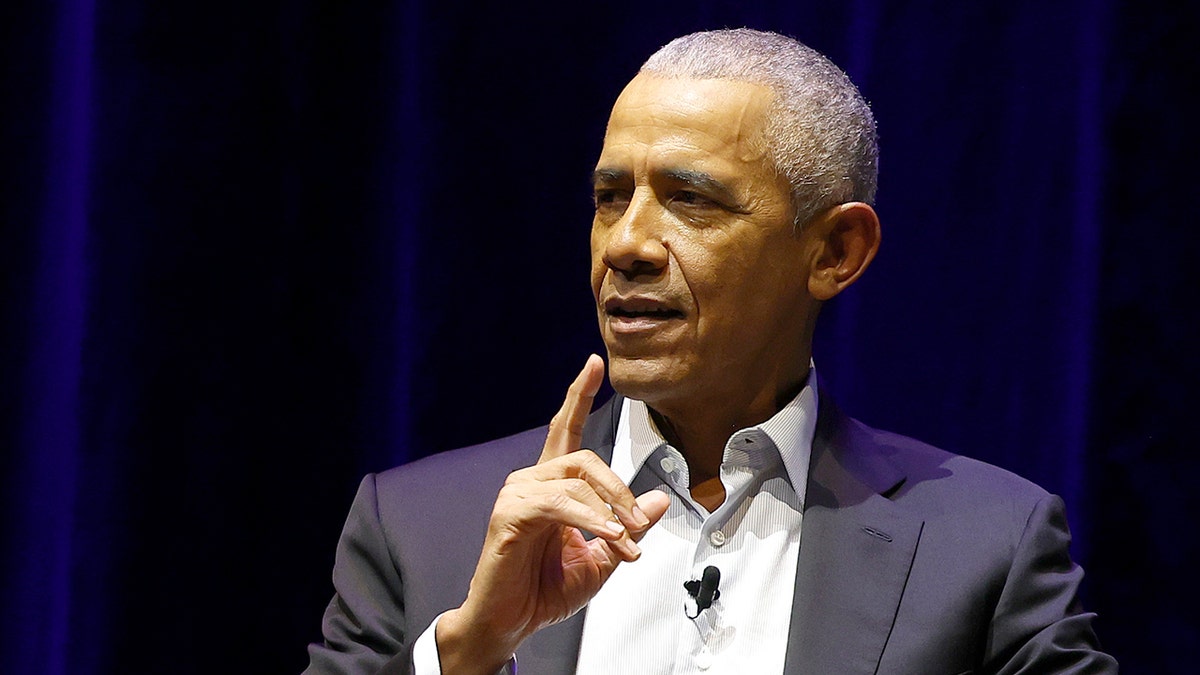
The standoff is reviving comparisons to President Obama’s 2013 decision not to carry out military strikes in Syria after warning that the use of chemical weapons would cross a U.S. “red line” — a moment that became a touchstone in debates over American deterrence.(Kevin Dietsch/Getty Images)
Some analysts reject the premise that the administration has meaningfully slowed its military posture.
“I don’t think they’ve paused action,” said Gregg Roman, executive director of the Middle East Forum. “The more assets that the president deploys to the theater gives the U.S. more maneuvering room, rather than less.”
Roman pointed to continued U.S. force movements into the region, arguing the buildup signals preparation rather than restraint.
Threat actors affiliated with China have been attributed to a fresh set of cyber espionage campaigns targeting government and law enforcement agencies across Southeast Asia throughout 2025.
Check Point Research is tracking the previously undocumented activity cluster under the moniker Amaranth-Dragon, which it said shares links to the APT 41 ecosystem. Targeted countries include Cambodia, Thailand, Laos, Indonesia, Singapore, and the Philippines.
“Many of the campaigns were timed to coincide with sensitive local political developments, official government decisions, or regional security events,” the cybersecurity company said in a report shared with The Hacker News. “By anchoring malicious activity in familiar, timely contexts, the attackers significantly increased the likelihood that targets would engage with the content.”
The Israeli firm added that the attacks were “narrowly focused” and “tightly scoped,” indicating efforts on the part of the threat actors to establish long-term persistence for geopolitical intelligence collection.
The most notable aspect of threat actors’ tradecraft is the high degree of stealth, with the campaigns “highly controlled” and the attack infrastructure configured such that it can interact only with victims in specific target countries in an attempt to minimize exposure.
Attack chains mounted by the adversary have been found to abuse CVE-2025-8088, a now-patched security flaw impacting RARLAB WinRAR that allows for arbitrary code execution when specially crafted archives are opened by targets. The exploitation of the vulnerability was observed about eight days after its public disclosure in August.
“”The group distributed a malicious RAR file that exploits the CVE-2025-8088 vulnerability, allowing the execution of arbitrary code and maintaining persistence on the compromised machine,” Check Point researchers noted. “The speed and confidence with which this vulnerability was operationalized underscores the group’s technical maturity and preparedness.”
Although the exact initial access vector remains unknown at this stage, the highly targeted nature of the campaigns, coupled with the use of tailored lures related to political, economic, or military developments in the region, suggests the use of spear-phishing emails to distribute the archive files hosted on well-known cloud platforms like Dropbox to lower suspicion and bypass traditional perimeter defenses.
The archive contains several files, including a malicious DLL named Amaranth Loader that’s launched by means of DLL side-loading, another long-preferred tactic among Chinese threat actors. The loader shares similarities with tools such as DodgeBox, DUSTPAN (aka StealthVector), and DUSTTRAP, which have been previously identified as used by the APt41 hacking crew.
Once executed, the loader is designed to contact an external server to retrieve an encryption key, which is then used to decrypt an encrypted payload retrieved from a different URL and execute it directly in memory. The final payload deployed as part of the attack is the open-source command-and-control (C2 or C&C) framework known as Havoc.
In contrast, early iterations of the campaign detected in March 2025 made use of ZIP files containing Windows shortcuts (LNK) and batch (BAT) to decrypt and execute the Amaranth Loader using DLL side-loading. A similar attack sequence was also identified in a late October 2025 campaign using lures related to the Philippines Coast Guard.
In another campaign targeting Indonesia in early September 2025, the threat actors opted to distribute a password-protected RAR archive from Dropbox so as to deliver a fully functional remote access trojan (RAT) codenamed TGAmaranth RAT instead of Amaranth Loader that leverages a hard-coded Telegram bot for C2.
Besides implementing anti-debugging and anti-antivirus techniques to resist analysis and detection, the RAT supports the following commands –
/start, to send a list of running processes from the infected machine to the bot
/screenshot, to capture and upload a screenshot
/shell, to execute a specified command on the infected machine and exfiltrate the output
/download, to download a specified file from the infected machine
/upload, to upload a file to the infected machine
What’s more, the C2 infrastructure is secured by Cloudflare and is configured to accept traffic only from IP addresses within the specific country or countries targeted in each operation. The activity also exemplifies how sophisticated threat actors weaponize legitimate, trusted infrastructure to execute targeted attacks while remaining operational clandestinely.
Amaranth-Dragon’s links to APT41 stem from overlaps in malware arsenal, alluding to a possible connection or shared resources between the two clusters. It’s worth noting that Chinese threat actors are known for sharing tools, techniques, and infrastructure.
“In addition, the development style, such as creating new threads within export functions to execute malicious code, closely mirrors established APT41 practices,” Check Point said.
“Compilation timestamps, campaign timing, and infrastructure management all point to a disciplined, well-resourced team operating in the UTC+8 (China Standard Time) zone. Taken together, these technical and operational overlaps strongly suggest that Amaranth-Dragon is closely linked to, or part of, the APT41 ecosystem, continuing established patterns of targeting and tool development in the region.”
Mustang Panda Delivers PlugX Variant in New Campaign
The disclosure comes as Tel Aviv-based cybersecurity company Dream Research Labs detailed a campaign orchestrated by another Chinese nation-state group tracked as Mustang Panda that has targeted officials involved in diplomacy, elections, and international coordination across multiple regions between December 2025 and mid-January 2026. The activity has been assigned the name PlugX Diplomacy.
“Rather than exploiting software vulnerabilities, the operation relied on impersonation and trust,” the company said. “Victims were lured into opening files that appeared to be U.S.-linked diplomatic summaries or policy documents. Opening the file alone was sufficient to trigger the compromise.”
The documents pave the way for the deployment of a customized variant of PlugX, a long-standing malware put to use by the hacking group to covertly harvest data and enable persistent access to compromised hosts. The variant, called DOPLUGS, has been detected in the wild since at least late December 2022.
The attack chains are fairly consistent in that malicious ZIP attachments centred around official meetings, elections, and international forums act as a catalyst for detonating a multi-state process. Present within the compressed file is a single LNK file that, when launched, triggers the execution of a PowerShell command that extracts and drops a TAR archive.
“The embedded PowerShell logic recursively searches for the ZIP archive, reads it as raw bytes, and extracts a payload beginning at a fixed byte offset,” Dream explained. “The carved data is written to disk using an obfuscated invocation of the WriteAllBytes method. The extracted data is treated as a TAR archive and unpacked using the native tar.exe utility, demonstrating consistent use of living-off-the-land binaries (LOLBins) throughout the infection chain.”
The TAR archive contains three files –
A legitimate signed executable associated with AOMEI Backupper is vulnerable to DLL search-order hijacking (“RemoveBackupper.exe”)
An encrypted file that contains the PlugX payload (“backupper.dat”)
A malicious DLL that’s sideloaded using the executable (“comn.dll”) to load PlugX
The execution of the legitimate executable displays a decoy PDF document to the user to give the impression to the victim that nothing is amiss, when, in the background, DOPLUGS is installed on the host.
“The correlation between actual diplomatic events and the timing of detected lures suggests that analogous campaigns are likely to persist as geopolitical developments unfold,” Dream concluded.
“Entities operating in diplomatic, governmental, and policy-oriented sectors should consequently regard malicious LNK distribution methods and DLL search-order hijacking via legitimate executables as persistent, high-priority threats rather than isolated or fleeting tactics.”