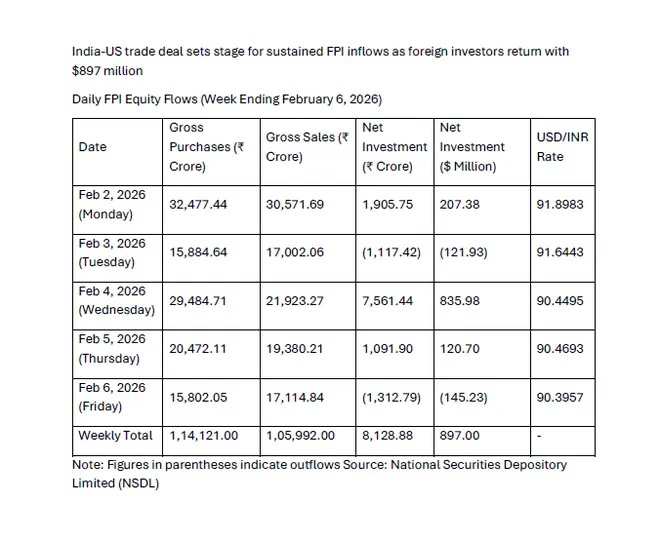
The India-US trade deal is expected to trigger sustained foreign portfolio inflows into Indian markets as overseas investors regain confidence in the country’s growth trajectory, with the week ending February 6, 2026 marking a decisive shift as FPIs turned net buyers after weeks of relentless selling.
Foreign portfolio investors (FPIs) invested a net $897 million into Indian stocks during the week, according to data from the National Securities Depository Limited (NSDL), signaling a potential reversal in sentiment that could gather momentum as bilateral trade relations strengthen and currency stability returns.
“This has the potential to trigger more FII inflows into India. However, a lot will depend on how the AI trade pans out,” said Dr VK Vijayakumar, Chief Investment Strategist at Geojit Investments Limited, highlighting the forward-looking factors that could shape foreign investor appetite.
The weekly inflow comprised net equity purchases of $897.15 million, while debt instruments saw net outflows of $0.13 million. In February through the 6th, FIIs were net equity buyers to the tune of ₹2,645 crore, marking a sharp turnaround from January’s heavy outflows.
“It is a positive direction and indication for the market sentiment, for the foreign portfolio investors are concerned while investing in India,” said Kranthi Bathini, Director-Equity Strategy at WealthMills Securities. “The rising of bilateral trade relationship will help the market sentiment. In turn, that will help the portfolio managers to look back India.”
The week witnessed sharp volatility in daily flows. Monday, February 2, recorded the strongest single-day inflow of $587.21 million, driven by optimism around bilateral trade negotiations. However, Tuesday saw a reversal with net outflows of $54.23 million as markets digested the Union Budget’s proposal to increase Securities Transaction Tax on derivatives trading.
Wednesday, February 4, marked a strong comeback with FPIs pumping in $744.27 million, the week’s second-highest inflow, as US President Donald Trump announced an immediate reduction in reciprocal tariffs on Indian goods from 25 per cent to 18 per cent.
“The week ending 6th February was eventful for stock markets. The Union Budget, the India-EU trade deal and the much awaited India-US trade deal happened in this week and these events had major impact on the market,” said Vijayakumar. “The market reacted negatively to the hike in STT on F&O trades but smartly recovered on news of the US-India trade deal.”
Thursday maintained positive momentum with inflows of $436.35 million, though Friday witnessed marginal net outflows of $3.40 million as profit-booking emerged at higher levels.
Bathini emphasized the competitive advantage India secured through the agreement. “Among all the trade deals US has done till date, India has got the better deal at 18 per cent,” he said. “The current trade deal will help the Indian exporters to get a better favorable rates.”
The rupee’s appreciation from a record low of 91.72 to 90.30 against the dollar during the week also played a crucial role in attracting foreign funds. “An important factor that changed the market sentiment was the appreciation in rupee from a record low of 91.72 to 90.30 to the dollar,” Vijayakumar observed. “INR is expected to stabilize and gradually appreciate to below 90 to the dollar by end March 2026.”
“Whatever be the last six months, the uncertainty that hovered around India and US trade is concerned. There is a lot of uncertainty, a lot of volatility, unpredictability. Now, that has gone,” Bathini said, explaining how the deal removes a key overhang on investor sentiment.
However, Sudeep Shah, Head-Technical and Derivatives Research at SBI Securities, cautioned that the reversal’s sustainability remains uncertain. “While FIIs have turned net buyers this week and the INR has posted its best weekly close in nearly three years, it is still premature to assume that the reversal will sustain,” Shah said. “A major portion of the FII inflow came from a single large buying session after the India–US trade deal announcement, rather than a steady flow trend.”
Himanshu Srivastava, Principal, Manager Research at Morningstar Investment Research India, noted the broader context. “Through the week, foreign portfolio investors (FPIs) turned net buyers in Indian equities, bringing a welcome reversal to the sustained selling trend witnessed through January,” Srivastava said. “Sentiment was supported by easing global uncertainties, stability in domestic interest rate expectations, and optimism around India–US trade and policy developments.”
“For markets to build a stronger uptrend, consistent FII cash buying and visible short covering will be crucial going forward,” Shah emphasized, noting that elevated FII index futures shorts have not seen expected unwinding despite positive triggers.
In the derivatives segment, FPIs remained active with substantial trading across index and stock options. On February 6, index options saw buying of $4,060.85 billion against selling of $4,103.56 billion, while stock futures recorded purchases worth $209.95 billion.
The Nifty 50 index swung within a massive 1,662-point range during the week, marking its widest weekly movement since June 2024, reflecting the heightened volatility amid evolving FPI sentiment and policy developments.
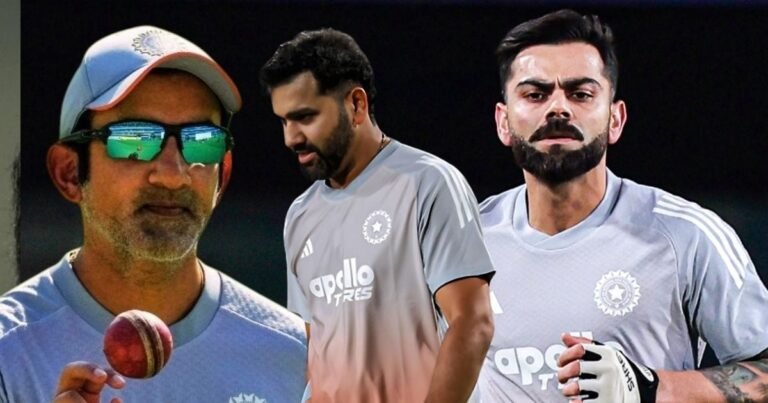
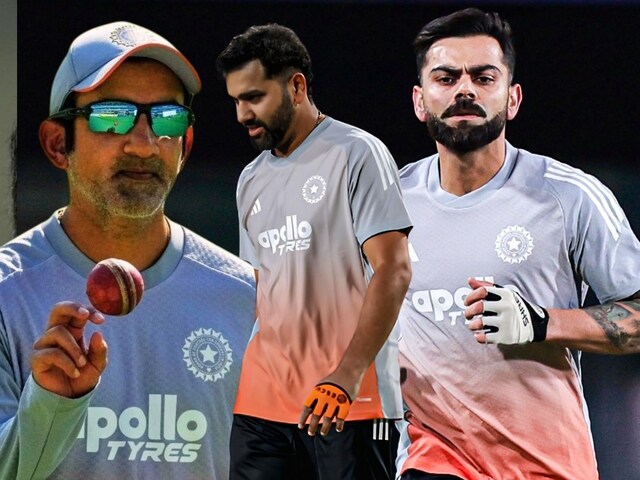
There are many reports about Virat Kohli and Rohit Sharma retiring from Test cricket. BCCI Secretary Devjit Saikia has made it clear regarding this that both are veteran players. No one can force him to retire from any format.
BCCI Secretary gave statement regarding Rohit Sharma and Virat Kohli
New Delhi. BCCI Secretary Devjit Saikia has put an end to all the ongoing speculations regarding former Indian cricket team captain Rohit Sharma and Virat Kohli. He answered all the questions which were going on among the fans for a long time. After winning the T20 World Cup 2024, Rohit and Virat retired from this format. After this it was decided to leave Test cricket also. Now both play for India only in ODIs. The ODI future of these two continues to be discussed.
BCCI Secretary had appeared in a podcast of TV Today. When asked if Gautam Gambhir wanted to drop Kohli from the team, Saikia replied sternly, “There may be such a perception, but Virat Kohli is always in the team. Gautam Gambhir is also in the team. We look at the results. Have you ever seen Virat Kohli out of the team?”
‘No one can force Kohli’
The BCCI Secretary also clarified that Virat Kohli was not forced to retire from Tests. He said that no one can force a big player like Kohli to take any decision. “No one can force a player of Virat Kohli’s stature to change or take any decision. He is at that level. He is not an ordinary player, he is a legend of Indian cricket. Unless he himself wants to, no one can force him to take any decision. The board will not interfere in the career of any player,” Saikia said.
After the retirement of Virat and Rohit Sharma from Test, there was speculation about their ODI career. It was claimed in many reports that both of them may say goodbye to international cricket after the last series against Australia. However, both the senior players silenced their critics by performing brilliantly with the bat.
“Many people also write nonsense. We cannot comment on nonsense. We do not see any such things. These things never came up in any meeting,” Saikia said when asked what he thought about Gambhir not wanting Kohli and Rohit in the ODI team.
Active in sports journalism for more than 15 years. Worked in cricket website of Etv Bharat, ZEE News. Was the sports head of Dainik Jagran website. Covered the Olympics, Commonwealth, Cricket and Football World Cups. October…read more
Riyadh condemns RSF’s ‘criminal’ attacks in Kordofan, blames foreign fighters and weapons for fuelling Sudan’s three-year conflict.
Published On 8 Feb 20268 Feb 2026
Share
Saudi Arabia has reaffirmed its support for Sudan’s territorial unity and integrity, denouncing “criminal attacks” by the paramilitary Rapid Support Forces (RSF) in North and South Kordofan states that have killed dozens of people, including women and children.
In a statement on Saturday, the Saudi Ministry of Foreign Affairs condemned “foreign interference” by “some parties” in Sudan, including the “continued influx of illegal weapons, mercenaries and foreign fighters” for the continuation of the nearly three-year-old war.
Recommended Stories
list of 4 itemsend of list
The statement did not specify the parties, though.
It came a day after the Sudan Doctors Network, a humanitarian group, said a drone attack by the RSF on a vehicle transporting displaced families in North Kordofan killed at least 24 people, including eight children.
The attack followed a series of drone raids on humanitarian aid convoys and fuel trucks across North Kordofan, including an assault on a World Food Programme convoy on Friday that killed at least one person.
Fighting between the RSF and Sudan’s army has intensified across Kordofan in recent months following the fall of el-Fasher to the paramilitary group in October. The nearly three-year-long conflict has killed an estimated 40,000 people and pushed more than 21 million — almost half of Sudan’s population — into acute food shortages.
The Saudi Ministry of Foreign Affairs said on Saturday the deadly RSF attacks “are completely unjustifiable and constitute flagrant violations of all humanitarian norms and relevant international agreements”.
The ministry demanded that “RSF immediately cease these violations and adhere to its moral and humanitarian obligation to ensure the delivery of relief aid to those in need in accordance with international humanitarian law” and a ceasefire deal agreed by the warring parties in Jeddah in 2023.
It added that “some parties” were fuelling the conflict by sending in weapons and fighters, despite “these parties’ claim of supporting a political solution” in Sudan.
The statement comes amid allegations by the Sudanese government that the United Arab Emirates has been arming and funding the RSF. Sudan filed a case against the UAE at the International Court of Justice last year, accusing it of “complicity in genocide” committed by the RSF against the Masalit community in West Darfur state.
The UAE has denied the allegations.
Separately, Saudi Arabia has also accused the UAE of backing the separatist Southern Transitional Council (STC) in Yemen. The STC, initially part of the Saudi-backed internationally recognised government of Yemen, launched a major offensive last December in the country’s Hadramout and al-Mahra provinces, seeking to establish a separate state.
The offensive resulted in a split in Yemen’s internationally-backed government, and prompted Saudi Arabia to launch deadly raids targeting the STC.
The UAE pulled out its troops from Yemen following the Saudi allegation, saying it supports Saudi Arabia’s security.
Saudi Arabia and the UAE were members of the Arab military coalition, formed to confront the Houthis, who took full control of the Yemeni capital, Sanaa, in 2015.
Will Lewis acknowledges ‘difficult decisions’ made during his rocky, two-year tenure.
Published On 8 Feb 20268 Feb 2026
Share
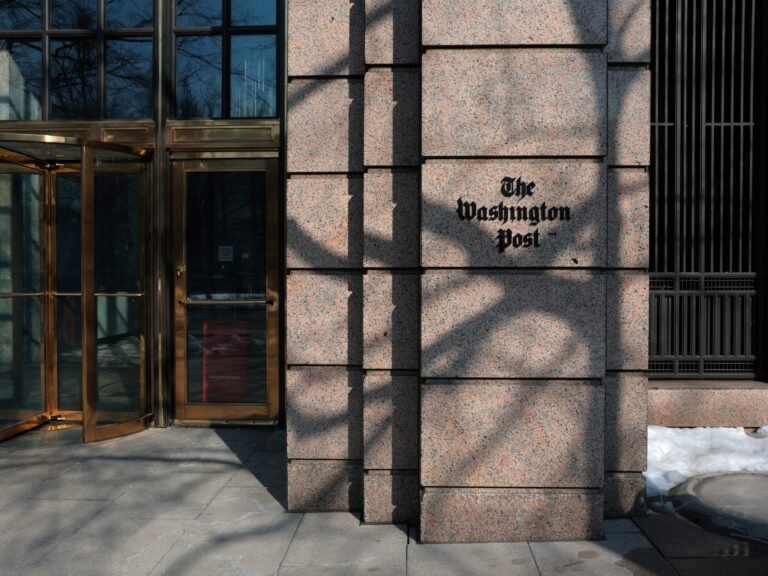
The Washington Post’s CEO has announced he is quitting the job, days after the newspaper slashed a third of its staff.
CEO and publisher Will Lewis shared the decision in a message to employees on Saturday, which was later posted on X by the paper’s White House bureau chief.
Recommended Stories
list of 4 itemsend of list
“After two years of transformation at the Washington Post, now is the right time for me to step aside,” said Lewis.
The Post, owned by billionaire Jeff Bezos, said chief financial officer Jeff D’Onofrio will take over the role immediately.
Lewis’s two-year tenure at the influential US newspaper was marked by turmoil, including multiple rounds of layoffs and questions over editorial independence. Those concerns intensified after the publication announced it would not make a 2024 presidential endorsement, a move critics said was aimed at placating then-candidate Donald Trump.
The Post lost hundreds of thousands of subscribers and some $100m in 2024 revenue in the wake of that decision.
Lewis also drew scrutiny in 2024 over an attempt to bring on his former colleague, British journalist Robert Winnett, as top editor, after reports alleged some of his past reporting relied on fraudulently obtained records. Winnett eventually did not take the role.
Lewis was absent from a staff meeting last week in which employees were told they would be notified by email whether they had lost their jobs. Hundreds of journalists were among those made redundant, including the paper’s entire Middle East roster and its Kyiv, Ukraine-based correspondent.
In his note to staff, Lewis said “difficult decisions” had been taken during his leadership to secure the paper’s long-term sustainability.
‘Destruction of great American journalism’
The Washington Post Guild, the union representing staff members, called Lewis’s exit long overdue.
“His legacy will be the attempted destruction of a great American journalism institution,” the Guild said in a statement. “But it’s not too late to save The Post. Jeff Bezos must immediately rescind these layoffs or sell the paper to someone willing to invest in its future.”
Bezos made no mention of Lewis in a statement announcing D’Onofrio as publisher, saying new leadership is positioned to lead the paper into “an exciting and thriving next chapter”.
“The Post has an essential journalistic mission and an extraordinary opportunity,” Bezos said. “Each and every day our readers give us a roadmap to success. The data tells us what is valuable and where to focus.”
OpenClaw (formerly Moltbot and Clawdbot) has announced that it’s partnering with Google-owned VirusTotal to scan skills that are being uploaded to ClawHub, its skill marketplace, as part of broader efforts to bolster the security of the agentic ecosystem.
“All skills published to ClawHub are now scanned using VirusTotal’s threat intelligence, including their new Code Insight capability,” OpenClaw’s founder Peter Steinberger, along with Jamieson O’Reilly and Bernardo Quintero said. “This provides an additional layer of security for the OpenClaw community.”
The process essentially entails creating a unique SHA-256 hash for every skill and cross checking it against VirusTotal’s database for a match. If it’s not found, the skill bundle is uploaded to the malware scanning tool for further analysis using VirusTotal Code Insight.
Skills that have a “benign” Code Insight verdict are automatically approved by ClawHub, while those marked suspicious are flagged with a warning. Any skill that’s deemed malicious is blocked from download. OpenClaw also said all active skills are re-scanned on a daily basis to detect scenarios where a previously clean skill becomes malicious.
That said, OpenClaw maintainers also cautioned that VirusTotal scanning is “not a silver bullet” and that there is a possibility that some malicious skills that use a cleverly concealed prompt injection payload may slip through the cracks.
In addition to the VirusTotal partnership, the platform is expected to publish a comprehensive threat model, public security roadmap, formal security reporting process, as well as details about the security audit of its entire codebase.
The development comes in the aftermath of reports that found hundreds of malicious skills on ClawHub, prompting OpenClaw to add a reporting option that allows signed-in users to flag a suspicious skill. Multiple analyses have uncovered that these skills masquerade as legitimate tools, but, under the hood, they harbor malicious functionality to exfiltrate data, inject backdoors for remote access, or install stealer malware.
“AI agents with system access can become covert data-leak channels that bypass traditional data loss prevention, proxies, and endpoint monitoring,” Cisco noted last week. “Second, models can also become an execution orchestrator, wherein the prompt itself becomes the instruction and is difficult to catch using traditional security tooling.”
The recent viral popularity of OpenClaw, the open-source agentic artificial intelligence (AI) assistant, and Moltbook, an adjacent social network where autonomous AI agents built atop OpenClaw interact with each other in a Reddit-style platform, has raised security concerns.
While OpenClaw functions as an automation engine to trigger workflows, interact with online services, and operate across devices, the entrenched access given to skills, coupled with the fact that they can process data from untrusted sources, can open the door to risks like malware and prompt injection.
In other words, the integrations, while convenient, significantly broaden the attack surface and expand the set of untrusted inputs the agent consumes, turning it into an “agentic trojan horse” for data exfiltration and other malicious actions. Backslash Security has described OpenClaw as an “AI With Hands.”
“Unlike traditional software that does exactly what code tells it to do, AI agents interpret natural language and make decisions about actions,” OpenClaw noted. “They blur the boundary between user intent and machine execution. They can be manipulated through language itself.”
OpenClaw also acknowledged that the power wielded by skills – which are used to extend the capabilities of an AI agent, such as controlling smart home devices to managing finances – can be abused by bad actors, who can leverage the agent’s access to tools and data to exfiltrate sensitive information, execute unauthorized commands, send messages on the victim’s behalf, and even download and run additional payloads without their knowledge or consent.
What’s more, with OpenClaw being increasingly deployed on employee endpoints without formal IT or security approval, the elevated privileges of these agents can further enable shell access, data movement, and network connectivity outside standard security controls, creating a new class of Shadow AI risk for enterprises.
“OpenClaw and tools like it will show up in your organization whether you approve them or not,” Astrix Security researcher Tomer Yahalom said. “Employees will install them because they’re genuinely useful. The only question is whether you’ll know about it.”
Some of the glaring security issues that have come to the fore in recent days are below –
A now-fixed issue identified in earlier versions that could cause proxied traffic to be misclassified as local, bypassing authentication for some internet-exposed instances.
“OpenClaw stores credentials in cleartext, uses insecure coding patterns including direct eval with user input, and has no privacy policy or clear accountability,” OX Security’s Moshe Siman Tov Bustan and Nir Zadok said. “Common uninstall methods leave sensitive data behind – and fully revoking access is far harder than most users realize.”
A zero-click attack that abuses OpenClaw’s integrations to plant a backdoor on a victim’s endpoint for persistent control when a seemingly harmless document is processed by the AI agent, resulting in the execution of an indirect prompt injection payload that allows it to respond to messages from an attacker-controlled Telegram bot.
An indirect prompt injection embedded in a web page, which, when parsed as part of an innocuous prompt asking the large language model (LLM) to summarize the page’s contents, causes OpenClaw to append an attacker-controlled set of instructions to the ~/.openclaw/workspace/HEARTBEAT.md file and silently await further commands from an external server.
A security analysis of 3,984 skills on the ClawHub marketplace has found that 283 skills, about 7.1% of the entire registry, contain critical security flaws that expose sensitive credentials in plaintext through the LLM’s context window and output logs.
A report from Bitdefender has revealed that malicious skills are often cloned and re-published at scale using small name variations, and that payloads are staged through paste services such as glot.io and public GitHub repositories.
OpenClaw’s gateway binds to 0.0.0.0:18789 by default, exposing the full API to any network interface. Per data from Censys, there are over 30,000 exposed instances accessible over the internet as of February 8, 2026, although most require a token value in order to view and interact with them.
In a hypothetical attack scenario, a prompt injection payload embedded within a specifically crafted WhatsApp message can be used to exfiltrate “.env” and “creds.json” files, which store credentials, API keys, and session tokens for connected messaging platforms from an exposed OpenClaw instance.
An misconfigured Supabase database belonging to Moltbook that was left exposed in client-side JavaScript, making secret API keys of every agent registered on the site freely accessible, and allowing full read and write access to platform data. According to Wiz, the exposure included 1.5 million API authentication tokens, 35,000 email addresses, and private messages between agents.
Threat actors have been found exploiting Moltbook’s platform mechanics to amplify reach and funnel other agents toward malicious threads that contain prompt injections to manipulate their behavior and extract sensitive data or steal cryptocurrency.
“Moltbook may have inadvertently also created a laboratory in which agents, which can be high-value targets, are constantly processing and engaging with untrusted data, and in which guardrails aren’t set into the platform – all by design,” Zenity Labs said.
“The first, and perhaps most egregious, issue is that OpenClaw relies on the configured language model for many security-critical decisions,” HiddenLayer researchers Conor McCauley, Kasimir Schulz, Ryan Tracey, and Jason Martin noted. “Unless the user proactively enables OpenClaw’s Docker-based tool sandboxing feature, full system-wide access remains the default.”
Among other architectural and design problems identified by the AI security company are OpenClaw’s failure to filter out untrusted content containing control sequences, ineffective guardrails against indirect prompt injections, modifiable memories and system prompts that persist into future chat sessions, plaintext storage of API keys and session tokens, and no explicit user approval before executing tool calls.
In a report published last week, Persmiso Security argued that the security of the OpenClaw ecosystem is much more crucial than app stores and browser extension marketplaces owing to the agents’ extensive access to user data.
“AI agents get credentials to your entire digital life,” security researcher Ian Ahl pointed out. “And unlike browser extensions that run in a sandbox with some level of isolation, these agents operate with the full privileges you grant them.”
“The skills marketplace compounds this. When you install a malicious browser extension, you’re compromising one system. When you install a malicious agent skill, you’re potentially compromising every system that agent has credentials for.”
The long list of security issues associated with OpenClaw has prompted China’s Ministry of Industry and Information Technology to issue an alert about misconfigured instances, urging users to implement protections to secure against cyber attacks and data breaches, Reuters reported.
“When agent platforms go viral faster than security practices mature, misconfiguration becomes the primary attack surface,” Ensar Seker, CISO at SOCRadar, told The Hacker News via email. “The risk isn’t the agent itself; it’s exposing autonomous tooling to public networks without hardened identity, access control, and execution boundaries.”
“What’s notable here is that the Chinese regulator is explicitly calling out configuration risk rather than banning the technology. That aligns with what defenders already know: agent frameworks amplify both productivity and blast radius. A single exposed endpoint or overly permissive plugin can turn an AI agent into an unintentional automation layer for attackers.”
The government’s failure to respond to calls for a compensation scheme for women harmed by pelvic mesh has been described as “morally unacceptable” by campaigners.
Thousands of women were left with life-changing complications after receiving transvaginal mesh implants, with some unable to walk or work again.
Saturday marks two years since plans for financial redress for women harmed by pelvic mesh implants were set out by England’s patient safety commissioner, Dr Henrietta Hughes.
The government recently admitted that there was still no timetable to provide compensation for victims affected by pelvic mesh and valproate. Hughes has now pledged to take the matter directly to the prime minister.
Campaigners have said the lack of government action is worsening the mental health of people affected by the scandals.
Kath Sansom, the founder of the advocacy group Sling the Mesh, said: “As every week, month, year passes, women are getting more frustrated, upset. You can’t put their pain on hold. A lot of them have had to give up work or reduce their hours. They’re struggling to make ends meet. We have some members, they’ve had to sell their homes and move in with elderly parents, marriages broken down …
“We see those women at three in the morning trying to put up a post saying, ‘I don’t want to be here any more’ … I’m so angry that these women have their lives ruined and no one is taking accountability by giving them compensation … it’s morally unacceptable.”
For years pelvic mesh was regarded as the gold standard fix for stress incontinence and prolapse in women, conditions that can occur after childbirth or as women approach menopause. “None of us were warned about the risks. We were all told it was a gold standard surgery,” said Sansom.
Surgery to remove mesh can cause serious complications, including organ injury, heavy bleeding, serious infection, and leg and lung clots, with surgeons having compared the procedure to removing chewing gum from hair.
The Hughes report was commissioned directly in response to the First Do No Harm review led by Julia Cumberlege, which outlined nine recommendations for delivering justice to women harmed by pelvic mesh, the epilepsy drug sodium valproate and the hormone pregnancy test Primodos.
The Labour MP Sharon Hodgson, whose mother experienced debilitating pain and constant infections after a pelvic mesh implant, described the government inaction as “insulting”.
“No government response to the Hughes report after two long years since its publication is insulting to the thousands of mesh- and valproate-harmed women and children. This is more than just a response to a report; this is about restorative justice.”
Hodgson, who chairs the First Do No Harm all party parliamentary group, added: “All of these women and the families, they were all gaslit. They were all told it was all in their heads: ‘There’s nothing wrong with you.’ And the women who would have children damaged by valproate, again, they [doctors] went: ‘Oh, this drug’s safe.’ So they’ve had years of being gaslit.
“This compensation would say loud and clear that this was not all in your head. It was not your fault. And what happened was wrong.”
Hughes said: “These are not abstract policy questions; they are about real people whose lives have been fundamentally changed by systemic failures in healthcare. Every month of delay compounds the injustice these patients have already endured.
“I will be approaching No 10 directly to secure the commitment to action that has been missing for two years.”
A Department of Health and Social Care spokesperson said:“We recognise the significant impact that sodium valproate and pelvic mesh have had on people and their families.
“This is a complex issue and our priority is to ensure any response is fair, balanced and sensitive to those affected. We are carefully considering the recommendations within the Hughes report, in collaboration with relevant departments, and we aim to provide an update in due course.”
The email landed in Lizzie Johnson’s in-tray in Ukraine just before 4pm local time. It came at a tough time for the reporter: Russia had been repeatedly striking the country’s power grid, and just days before she had been forced to work out of her car without heat, power or running water, writing in pencil because pen ink freezes too readily.
“Difficult news,” was the subject line. The body text said: “Your position is eliminated as part of today’s organizational changes,” explaining that it was necessary to get rid of her to meet the “evolving needs of our business”.
Johnson’s response may go down in the annals of American media history. “I was just laid off by The Washington Post in the middle of a warzone,” she wrote on X. “I have no words.”
The Washington Post’s Ukraine correspondent may have been rendered speechless over Wednesday’s move by Jeff Bezos, the Amazon billionaire and Post owner, to cut more than 300 jobs – almost a third of the paper’s workforce. The bloodletting, which has raised renewed fears about the resilience of America’s democracy to withstand Donald Trump’s attacks, swept away the paper’s entire sports department, much of its culture and local staff and all of its journalists in such arid news zones as Ukraine and the Middle East.
Others, though, managed to find their tongues. “It’s a bad day,” said Don Graham, son of the Post’s legendary Watergate-era owner Katharine Graham, breaking the silence he has maintained since selling the paper to Bezos for $250m in 2013.
“I am crushed,” was the lament of Bob Woodward, one-half of the paper’s double act with Carl Bernstein that exposed Watergate.
“This ranks among the darkest days in the history of one of the world’s greatest news organizations,” said Marty Baron, the Post’s lionised former editor in chief. Not one to mince his words, Baron castigated Bezos for his “sickening efforts to curry favor with President Trump”, saying it left an especially “ugly stain” on the paper’s standing.
Several hundred people rallied in front of the Post’s offices on Thursday, voicing support for their laid-off colleagues. “It’s disappointing on an immense scale. They don’t seem to give a damn about this institution and the people that make it run,” said Patrick Nielsen, an engineer at the paper.
Howls of dismay were also uttered by prominent Post alumni in interviews with the Guardian. Robert McCartney, a 39-year veteran of the Post until he retired five years ago, said it was a “tragedy and an outrage”.
Like many Post insiders, McCartney has been astonished by the stark contrast between Bezos’s handling of the newspaper during Donald Trump’s first term in office and his conduct now in Trump 2.0.
McCartney was a senior journalist on the paper during Bezos’s initial eight years of ownership, through Trump’s first presidency. Back then, he, like many others, was grateful for Bezos’s tutelage.
“We saw him as a savior. He pumped money into the Post, didn’t meddle in the newsroom and stood up to Trump,” he said.
Fast-forward to 2026, and a very different Bezos has emerged. In 2017, soon after Trump’s first inauguration, the Post introduced its new strapline: “Democracy dies in darkness.”
That wording still runs proudly beneath the masthead. At the end of a week like this one, though, America looks a notable shade darker.
Marcus Brauchli, the Post’s executive editor until 2012 who now runs investment firm North Base Media, said that this was a terrible moment to be hammering one of the country’s great custodians of public accountability: “These are historic times, given the cyclone bearing down on the world order and American system of government. This is when journalism matters most. I mean, laying off reporters in Ukraine, now.”
It is not as though Bezos needs the money. He is the fourth-richest person on the planet, according to Forbes, with a $245bn fortune.
As Peter Baker, the chief White House correspondent for the New York Times, pointed out, Bezos could cover five years of the Post’s $100m annual losses by dipping into his earnings from a single week.
The optics of Wednesday’s train wreck of an announcement were also diabolical: the job of facing the distraught staff on Zoom was delegated to the Post’s hapless current executive editor, Matt Murray.
Bezos was nowhere to be seen. Yet there he was, earlier in the week, beaming broadly as he welcomed Trump’s defense secretary, Pete Hegseth, to the Florida headquarters of his space company, Blue Origin.
Nor did Will Lewis, Bezos’s consigliere as publisher of the Post, have the courage to present himself as the guillotine came down. A day after he had presided over the evisceration of the paper’s sports department, he was spotted attending the red carpet at an NFL Super Bowl event in San Francisco.
On Saturday night, however, Lewis abruptly resigned, acknowledging “difficult decisions” as he praised Bezos’s leadership of the paper.
The lay-offs came just five days after the launch of the first lady documentary, Melania, bankrolled by Amazon Prime Video. Bezos sank $75m into that pile of “gilded trash” yet, unlike the Post, seems unfazed by the film’s paltry return on investment.
“What Bezos did for Melania while gutting his own newspaper,” wrote the historian Simon Schama, will come to be seen “as the most glaring symptom of cultural collapse in a democracy hanging on to truth by the barest of threads”.
This fateful juncture has been looming for a while. The first warning signs came in October 2024, when Bezos yanked the Post’s planned endorsement of Trump’s Democratic rival Kamala Harris just 11 days before the presidential election.
A wave of public revulsion ensued, leading to the cancellation of at least 250,000 Post subscriptions.
Soon after, the billionaire unilaterally imposed new strictures on the paper’s opinion content. He introduced what he called his “two pillars”: “personal liberties and free markets.”
That drove many of the paper’s top commentators rushing for the exit, among them the economics columnist Eduardo Porter, who now writes for the Guardian. “This layering of dogma undermined critical thinking,” Porter recalled. “It turned the Post into something more akin to a church, with tight constraints on thought.”
This week’s day of the long knives has left many people desperately seeking explanations. There were clearly business motives at play: you don’t get to be a gazillionaire like Bezos without caring about profit lines, and the Post has been battered in recent years by harsh industry headwinds.
But there are other, more sinister, interpretations. McCartney thinks back to 2019 when Amazon lost a $10bn Pentagon cloud-computing contract during Trump’s first term.
Amazon complained in a lawsuit that this was a blatant act of retaliation by Trump, punishing Bezos for the Washington Post’s piercing coverage of his administration. Could it be that the bruising experience led Bezos to change tack, concluding that shining a light in defense of American democracy came at too high a price for the jewels in his business empire, Amazon and Blue Origin?
“It’s very likely that the desire to appease Trump, to placate him, is playing a role in these decisions,” McCartney said.
That’s a chilling thought for such a beacon of accountability journalism as the Washington Post. And it is set against the already parlous state of US media.
Since 2000, some 3,500 newspapers have closed shop, abandoning one in four Americans who now live in news deserts with no local newspaper. The most recent casualty was the Pittsburgh Post-Gazette, which will publish its final edition in May. It was founded in 1786, three years before George Washington donned the mantle of first president.
While many papers have been folding, others have fallen into the hands of a new breed of super-wealthy tech and venture capitalist owners who, like Bezos, see journalism as an asset to monetize: the Los Angeles Times was acquired in 2018 by a biotech billionaire, Patrick Soon-Shiong.
Like Bezos, Soon-Shiong has displayed symptoms of Trump Appeasement Syndrome. He too refused to allow his paper to endorse Harris days before the 2024 election.
Historic newspapers brought low, news deserts proliferating: this is fertile ground on which misinformation and the Maga pestilence can grow. Trump has cultivated it relentlessly to his advantage.
Long hostile towards what he calls the “fake news media”, Trump has taken his vendetta against truth-seekers to a new level. He has stripped public media channels NPR and PBS of more than $1bn in federal funding, launched full-frontal attacks on individual journalists and outlets exposing his corruption and lies and sustained a bullying campaign against corporate owners designed to browbeat them into subservience.
CBS News is the consummate example. Trump leaned on Paramount, which owned the news network, with a $10bn lawsuit over a 60 Minutes pre-election interview with Harris. Paramount settled for $16m, even though the suit was widely ridiculed as spurious.
Front of Paramount’s mind, no doubt, was its upcoming merger with Skydance Media that required federal – ie Trump’s – approval.
Following the merger, David Ellison became CEO of Paramount Skydance. He is son of the billionaire Oracle co-founder Larry Ellison, who is a close friend and adviser of Trump’s.
The younger Ellison went ahead and appointed the anti-woke commentator Bari Weiss as editor in chief of CBS News, sending shockwaves through the storied network’s dazed and demoralised staff. Weiss, who came to the job with no TV industry experience, has swiftly confirmed their fears.
She pulled a 60 Minutes segment on the notorious Cecot mega-prison in El Salvador to which the Trump administration had been deporting immigrants. Among her early hires as CBS News contributors are a Trump loyalist and former US marine, a prominent vaccine skeptic buddy of the health secretary Robert F Kennedy Jr, and fellow anti-woke firebrand Niall Ferguson.
The cumulative malaise that is descending over US media leaves the country’s democratic institutions vulnerable to attack. It can’t be exclusively blamed for Trump’s excesses.
There are plenty of other willing accomplices and capitulators, including universities like Columbia, corporate law firms and the gung-ho conservative activists who now control the supreme court.
But from Trump’s perspective, a media on its knees surely helps. The results are present everywhere you look.
Trump is unleashed, unchained. He feels so comfortable in his regal skin that he can berate a respected female CNN reporter questioning him on the Epstein files for never smiling.
He can peddle unashamedly in racism, posting a video depicting the first Black president and his first lady as monkeys.
He can send a masked paramilitary into the streets of Minneapolis, resulting in Americans getting killed for exercising their first amendment rights. And when the polls for November’s midterm elections look challenging for him, he can prepare for another blitzkreig on the very foundations of American democracy: the ballot box.
There’s a paradox in all this. Many of the democratic norms that Trump is obliterating – take for example his destruction of the norm of Department of Justice independence in his persecution of his political opponents – were laid down in the 1970s in the wake of the Watergate scandal.
That’s the same Watergate scandal that was brought into the light by that pair of courageous reporters at a newspaper called the Washington Post.
Inflation data, trading activity of foreign investors and global trends would dictate sentiment in the stock market this week, according to analysts.
Besides, geopolitical developments and Q3 earnings will also guide market movement during the week.
“This week features several important domestic and global triggers. In India, investors will closely track retail inflation data due on February 12 and foreign exchange reserves data on February 13, for insights into price trends and external sector stability.
“The earnings calendar stays active, with key results expected from Titan Company and Mahindra & Mahindra, which may drive stock-specific action. Globally, participants will monitor a heavy US data calendar and performance of the Nasdaq Composite following its recent decline,” Ajit Mishra, SVP, Research, Religare Broking Ltd, said.
Geopolitical developments and their impact on commodity markets will also be closely watched, Mishra added.
India and the US on Saturday announced they have reached a framework for an interim trade agreement under which both sides will reduce import duties on a number of goods to boost two-way trade.
While the US will reduce tariffs on Indian goods to 18 per cent from the present 50 per cent, India will eliminate or cut down import duties on all US industrial goods and a wide range of American food and agricultural products, including dried distillers’ grains, red sorghum for animal feed, tree nuts, fresh and processed fruit, soybean oil, wine and spirits.
“With the Union Budget 2026 and the RBI’s monetary policy decisions now largely digested, Indian equity markets have entered a consolidation phase, shifting investor focus toward implementation, capex execution and the pace of actual spending.
“Overall sentiment remains cautiously optimistic, with markets expected to stay event-driven in the near term, tracking global cues, capital flows and geopolitical developments in the Middle-East,” Ponmudi R, CEO – Enrich Money, an online trading and wealth tech firm, said.
Last week, the BSE The benchmark jumped 2,857.46 points, or 3.53 per cent, and the Nifty surged 868.25 points, or 3.49 per cent.
The first round of Iran-US talks in Muscat produced no breakthrough. The next few weeks will determine whether they laid foundations or merely bought time before escalation.
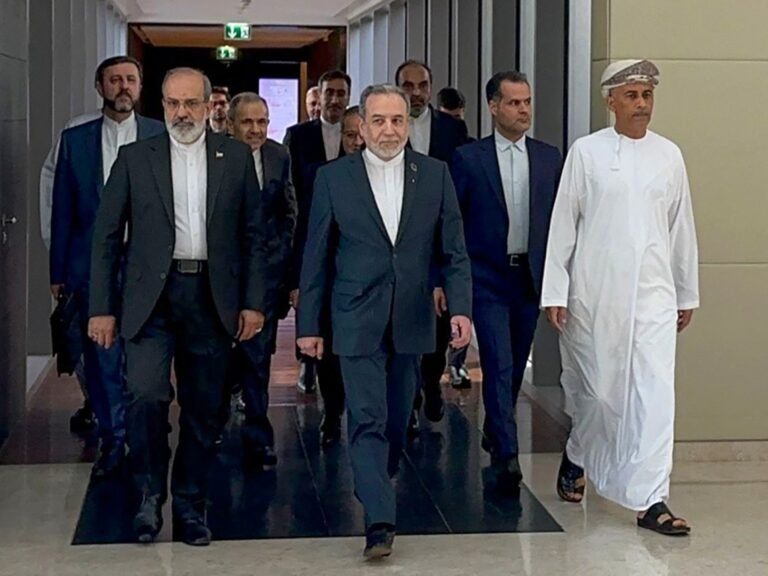
When Iranian and American negotiators concluded several hours of talks in Muscat on February 6, publicly, neither side signalled any shift from its opening position. Iran insisted the discussions focus exclusively on the nuclear file. The United States arrived seeking a comprehensive framework that would also cover ballistic missiles, regional armed groups, and more broadly, issues Washington has raised publicly, including human rights concerns. Neither prevailed. Both agreed to meet again.
On the surface, this looks like a non-event. It was not.
The Muscat round was the first high-level diplomatic engagement between the two countries since the joint US-Israeli strikes on Iranian nuclear facilities in June 2025, an escalation that Iran later said killed more than 1,000 people and involved strikes on three nuclear sites. That the two sides returned to the same palace near Muscat’s airport where previous rounds were held in 2025, and agreed to return again is significant.
But continuation is not progress. The distance between what happened in Muscat and what a deal requires remains vast.
Diplomacy conducted under military escort
The most striking feature of the Muscat round was not what was said, but who sat in the room. The American delegation was led by Special Envoy Steve Witkoff and Jared Kushner, President Trump’s son-in-law. It also included, for the first time, Admiral Brad Cooper, the commander of US Central Command, in full dress uniform.
His presence at the negotiating table was not incidental. It was a signal. The USS Abraham Lincoln carrier strike group was operating in the Arabian Sea as the talks unfolded, and days earlier, US forces had shot down an Iranian drone that approached the carrier.
An Iranian diplomatic source told the Reuters news agency that Cooper’s presence “endangered” the talks. Another, quoted by Al-Araby TV, warned that “negotiations taking place under threat” could impose strategic costs rather than advance them. For Tehran, the message was unmistakable: This was diplomacy conducted in the shadow of force, not as an alternative to it.
Washington, for its part, sees this as leverage. President Trump, speaking on board Air Force One after the talks, described them as “very good” and said Iran wants a deal “very badly”, adding: “They know the consequences if they don’t. They don’t make a deal; the consequences are very steep.”
This is diplomacy framed as an ultimatum. It may create urgency. It is unlikely to create trust, and trust is what this process most desperately needs.
The structural problem
The US withdrew from the 2015 Joint Comprehensive Plan of Action (JCPOA) in 2018, despite international verification that Iran was meeting its obligations. That decision shattered Iranian confidence in the durability of US commitments. Tehran’s subsequent incremental breaches of the agreement, steadily increasing enrichment levels from 2019 onwards, weakened its credibility, in turn.
This mutual distrust is not a negotiating obstacle that can be resolved with creative diplomacy alone. It is the defining condition under which any agreement must be built. The US has the capacity to impose enormous economic and military costs on Iran. But power does not automatically produce compliance. For commitments to hold, Iran must believe concessions will bring relief rather than new demands. That belief has been badly damaged.
Consider the sequence of events surrounding the Muscat round itself. Hours after the talks concluded, the US State Department announced new sanctions targeting 14 shadow fleet vessels involved in transporting Iranian petroleum, alongside penalties on 15 entities and two individuals. The Treasury Department framed the action as part of the administration’s “maximum pressure” campaign. Whether preplanned or timed for effect, the message was clear: Washington intends to negotiate and squeeze simultaneously.
For Tehran, which has consistently demanded that sanctions relief be the starting point for progress, this sequencing confirms precisely the pattern it fears. Iranian Foreign Minister Abbas Araghchi identified this dynamic explicitly, telling Iranian state television that “the mistrust that has developed is a serious challenge facing the negotiations.”
What actually happened in Muscat
Beneath the competing narratives, the outlines of the substantive discussion have begun to emerge. Iran reportedly rejected a US demand for “zero enrichment”, a maximalist position it was never going to accept in a first meeting. The two sides instead discussed the dilution of Iran’s existing uranium stockpile, a more technical and potentially more productive avenue.
Meanwhile, Al Jazeera reported that diplomats from Egypt, Turkiye and Qatar had separately offered Iran a framework proposal: Halt enrichment for three years, transfer highly enriched uranium out of the country, and pledge not to initiate the use of ballistic missiles. Russia had reportedly signalled willingness to receive the uranium. Tehran has signalled both the enrichment halt and uranium transfer would be nonstarters.
Perhaps the most important development was the least visible. According to Axios, Witkoff and Kushner met directly with Araghchi during the talks, breaking from the strictly indirect format that Iran had demanded for most of last year’s rounds of negotiations. Iran had previously insisted on communicating with the US only through Omani intermediaries. Crossing that barrier, even partially, suggests both sides recognise the limits of indirect talks once bargaining becomes technical.
Oman’s framing was arguably the most honest assessment of the day. Foreign Minister Badr al-Busaidi described the talks as aimed at establishing “appropriate conditions for the resumption of diplomatic and technical negotiations”.
What the next few weeks will decide
Trump said a second round of talks would take place soon. Both sides indicated to Axios that further meetings were expected within days. The compressed timeline is notable. During last year’s rounds, weeks separated each session. The pace suggests Washington believes the diplomatic window is narrowing, and Tehran is at least willing to test that claim.
Several tests will show whether urgency produces substance or merely speed.
First, the scope question. The fundamental dispute over what the talks are about remains unresolved. Iran won the first procedural battle: The venue moved from Turkiye to Oman, regional observers were excluded, and Araghchi claims only nuclear issues were discussed. Secretary of State Marco Rubio said before the talks that the agenda needed to include “all those issues”. If the second round begins with the same fight over scope, it will signal that even the basics remain unsettled.
Second, Iran’s enrichment posture. Before the June 2025 war, Iran had been enriching uranium to 60 percent purity, a short technical step from weapons-grade. Tehran has said enrichment stopped following the strikes. But Iran has also conditioned International Atomic Energy Agency inspections of the bombed sites on new inspection arrangements, raising concerns among non-proliferation experts. Conversely, reports of enrichment resumption or acceleration would likely end the diplomatic track.
Third, the military environment. The US naval build-up in the Arabian Sea is not decorative. The drone shootdown near the Abraham Lincoln and Iran’s attempted interception of a US-flagged vessel in the Strait of Hormuz in the days before the talks show how quickly signalling can slide into miscalculation. Whether the carrier group is reinforced, maintained or gradually drawn down in the coming weeks will reveal more about Washington’s assessment of diplomacy than any press statement.
Fourth, the sanctions rhythm. The same-day announcement of shadow fleet sanctions establishes a pattern. If Washington continues to layer new economic penalties between rounds of talks, Tehran will treat it as evidence that diplomacy is performance rather than process.
Fifth, backchannel activity. The most consequential diplomacy over the next few weeks may not occur in formal settings. Oman, Qatar, Egypt and Turkiye have been working behind the scenes to sustain dialogue. If those intermediary contacts remain active, space for de-escalation persists. If they fall silent, the margin for error narrows.
A managed deadlock is not a strategy
The most probable short-term outcome remains neither breakthrough nor war, but a managed deadlock in which both sides maintain maximal public positions while avoiding steps that would make future talks impossible. In practice, this is a pause sustained by caution rather than a settlement anchored in confidence.
For the broader region, the distinction matters urgently. Gulf states have no interest in becoming staging grounds for escalation. Public statements across the region have consistently emphasised de-escalation, restraint and conflict avoidance. But regional actors can facilitate, host and encourage; they cannot impose terms on either Washington or Tehran.
The Muscat talks did not fail. Neither did they succeed. They established that a channel exists, that both sides are willing to use it, and that direct contact between senior officials is possible.
But a channel is not a plan. The absence of war is not the presence of a deal. The period between Muscat and whatever comes next is a window in which miscalculation remains close to the surface, sustained only by the assumption that both sides are reading each other’s signals correctly.
The next round of talks will not produce an agreement. But it may show whether the two sides are building a floor beneath the standoff or simply postponing the moment when that floor gives way.
The views expressed in this article are the author’s own and do not necessarily reflect Al Jazeera’s editorial stance.