Wednesday night during Super Bowl week marked a show of local talent.
The Toyota Glow-Up Classic, a glow-in-the-dark flag football game featuring Bay Area high school girls, took place on the same field where the Pro Bowl was played inside San Francisco’s Moscone Center.
San Francisco 49ers quarterback Brock Purdy is obviously a fan favorite, and he got to be even more so by serving as a coach for the game.
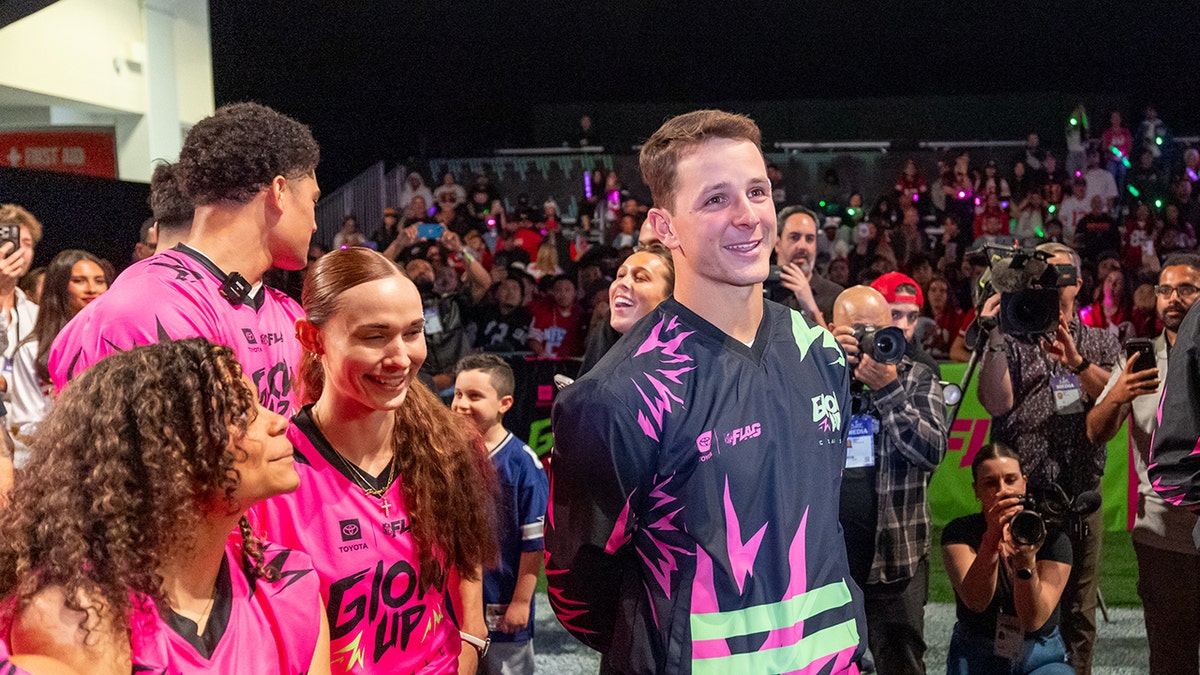
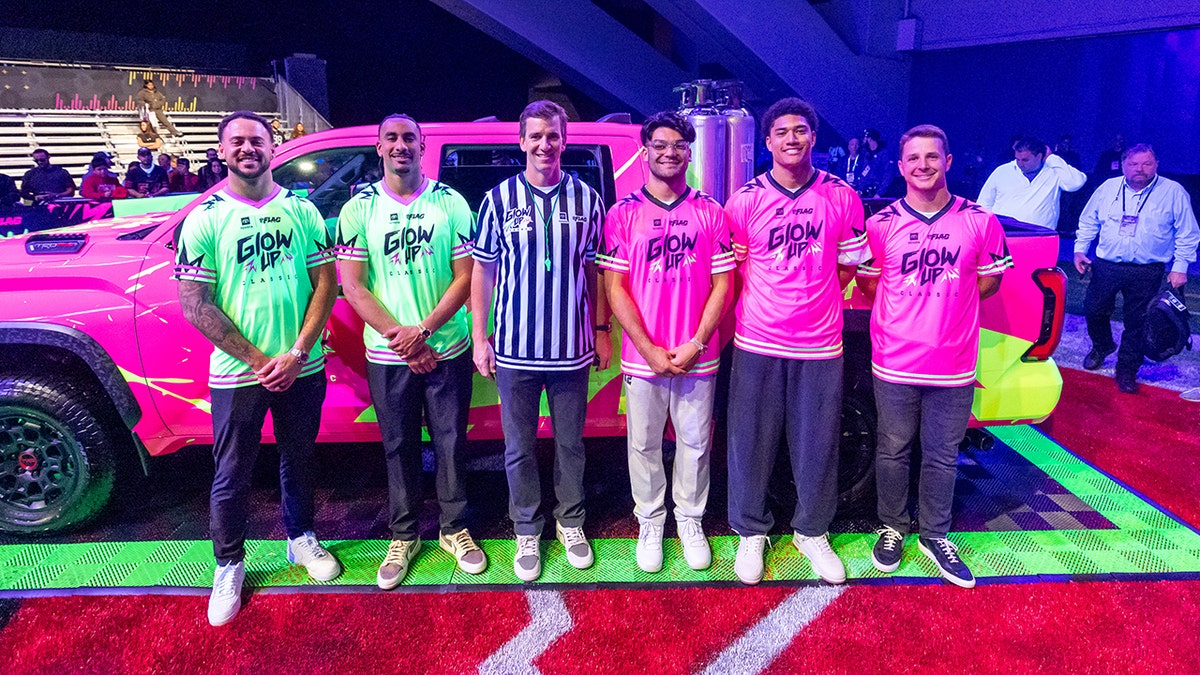
Toyota Glow-Up Classic, a glow-in-the-dark flag football exhibition at the Super Bowl Experience on Wednesday, Feb. 4, 2026, in San Francisco. Toyota is providing each participating youth player a grant that can be used for their flag football future.(Jeff Lewis/AP Content Services for Toyota Motor North America)
“It was awesome to have the ability to coach up some high school girls and watch them compete, and for Toyota to put on such a cool event, I thought it was just an amazing thing,” Purdy told Fox News Digital after the game. “That’s where the Pro Bowl was played. So for us to be able to go out there and those girls have fun, score touchdowns, jump in like a Tundra. It was a fun night”
Eli Manning, along with Kylie Kelce, served as an official, and despite his best efforts, he was not perfect, according to Purdy.
Toyota Glow-Up Classic, a glow-in-the-dark flag football exhibition at the Super Bowl Experience on Wednesday, Feb. 4, 2026, in San Francisco. Toyota is providing each participating youth player a grant that can be used for their flag football future. (Jeff Lewis/AP Content Services for Toyota Motor North America)
“They did a great job. I mean, Eli threw a couple flags where I was like, ‘Dude, come on.’ Like we had a big play. Eli threw a flag, called it back. So I wish I had a challenge flag to be able to throw out there, but he did a good job,” Purdy joked.
Division rival Puka Nacua was also a coach, but Purdy said the two were able to put aside their differences for at least a couple of hours.
San Francisco 49ers quarterback Brock Purdy coaches female Bay Area youth flag football players during the Toyota Glow-Up Classic, a glow-in-the-dark flag football exhibition at the Super Bowl Experience on Wednesday, Feb. 4, 2026, in San Francisco. (Jeff Lewis/AP Content Services for Toyota Motor North America)
“We were chilling. I mean, we both had a good time,” Purdy said. “Puka is a competitor. Love his game and everything, but to be able to go out there and coach up some girls and have fun with it. It was pretty sweet.”
The first rule of AI-generated job loss is you don’t talk about AI-generated job loss … if you’re the company that caused it. Higgsfield.ai, a startup offering AI video creation tools, recently generated outrage when it claimed it had caused artists to hit the unemployment line.
The artists using its services – well aware of AI’s impact on the creative market and perhaps discomfitted by their complicity for using these tools – were not amused and the ensuing backlash on social media led to the post’s removal.
“Seems like Higgsfield found out today that there are lines they just shouldn’t cross in their marketing,” wrote Aharon Rabinowitz, CEO of Motion Management, in a social media post. “Celebrating the end of artists’ careers (even when their motion design tools are not actually good enough to render anyone unemployed) is just super dumb and shortsighted.”
The company’s marketing claims and the services it actually provides have been a matter of contention for several months. Onlinecritics have accused the company of:
Bait and switch marketing tactics, with promises of unlimited access to services like Google’s Nano Banana Pro that were followed by account bans.
Undisclosed review astroturfing to counter negative posts on various online platforms.
As one online critic put it, “Higgsfield AI: A Company Built on Rage Bait Content, Stolen Likenesses, and Sexual Exploitation.” Another has accused Higgsfield of commissioning customers to create marketing material using unlicensed intellectual property, to shift liability for potential infringement claims.
Higgsfield did not respond to requests for comment. A message to the company’s email address for the press, cited in prior fundraising news, bounced. A message to the company’s support email address said our inquiry had been forwarded to a human agent, but no one has followed up.
The Register also asked Menlo Ventures, one of the companies funding Higgsfield, to comment. A spokesperson for the VC firm did not comment as asked but provided a media contact who has yet to respond.
Ian Hudson, a UK-based software tester and video maker, spoke to The Register in a phone interview about the backlash against Higgsfield.
“The problem seems to be that really they aren’t providing much of a service themselves and it appears that a lot of the website really is just a wrapper for other services,” Hudson explained. “So it’s doing API calls off to Google for Nano Banana and it’s using a service called Kling for the video.”
Hudson said that he became aware of the service in January because of the company’s intensive marketing efforts. Higgsfield, he said, has been making promises about unlimited usage of services like Google Nano Banana and Kling.
“But there’s no explanation so you don’t really know what’s going on,” he said. “Either something’s unlimited or it’s not, but it turns out it’s not unlimited. Really you’re not getting anything unlimited, you’re getting a quick trial of it. And then it turns out that’s got terms and conditions [that say] if you do a lot of use of it, we’ll ban you.”
Hudson said Higgsfield puts user prompts in a queue that gets delayed for an arbitrary amount of time before being routed to the underlying third-party AI service.
“So it appears to be unlimited, but then it’s not because it’s throttling things for so long to get a result back that you get a fraction of what you could get if you went to, say, Google Gemini directly,” he explained. “So it’s not really a service that is fit for purpose.”
Hudson also criticized the company for its approach to marketing, which he said involved making controversial posts to generate attention and drama, and then deleting the posts to hide the evidence.
And he took issue with the limitations imposed on refunds. Higgsfield, he said, refuses to give refunds if you’ve used their services.
“So essentially nobody can get a refund because the only way you can get a refund is if you don’t touch the bleeding thing and work out if it actually works,” he said, “which as you can appreciate, that’s just fundamentally unfair. And this is where the credit card companies are falling down because the credit card companies say, ‘oh well we’ve looked at terms and conditions and they’re adhering to terms and conditions.'”
These sorts of complaints are rife on social media and in the company’s Discord channel. A post on Thursday states, “…it is evident that your marketing is deceptive and your service is non-functional.”
The post goes on to complain about service unavailability, unacceptable latency (4-10 hours of wait time for a five-minute video), censorship errors, and false marketing.
Hudson took issue with the company’s engagement-bait marketing strategy.
“A lot of people go ‘isn’t it awesome that they’re doing that!'” he said. “No it’s not. It’s childish and it’s unprofessional. But what they’ve done in the last few days, it said something like, ‘Our product’s so great we’ve been able to sack off twenty creators.’ Something along those lines. And because their entire community is creators, a lot of them got upset.”
Robert Scoble, an internet influencer since before that was really a term, claimed in a social media post that he spoke with an individual behind the Higgsfield influencer network last week.
“This guy is trying to capture attention in a world where none of us have any,” he mused.
To quote Oscar Wilde in The Picture of Dorian Gray, “There is only one thing in the world worse than being talked about, and that is not being talked about.”
Bankruptcy, moral or financial, is pretty bad too. ®
Handmade crafts are disappearing under mass production. What is lost when everything is made fast, cheap, and at scale?
As globalisation reshapes how goods are made and consumed, traditional crafts are increasingly under threat. We explore what is being lost as handmade skills struggle to survive in a fast, profit-driven global economy. From sustainability to cultural identity, the discussion asks whether handmade work still has value and if it can survive in a world built for speed and scale.
Presenter: Stefanie Dekker
Guests: Somesh Singh – Steering Committee member, World Crafts Council International Fadi Kattan – Chef & author Sabah Arbilli – Calligraphy artist
The Trump administration is moving to deport a five-year-old boy who was detained by Immigration and Customs Enforcement (ICE) agents in Minnesota last month.
Homeland Security, which oversees immigration enforcement, confirmed on Friday that it would seek to deport Liam Conejo Ramos, but denied a claim by a lawyer for the boy that it was seeking expedited removal.
The move was “extraordinary” and possibly “retaliatory”, his lawyer Danielle Molliver told New York Times.
“These are regular removal proceedings,” Homeland Security spokesperson Tricia McLaughlin said. “This is standard procedure and there is nothing retaliatory about enforcing the nation’s immigration laws.”
Image:Liam Conejo Ramos was detained by ICE agents in January. Pic: Columbia Heights Public Schools
The boy and his father, Adrian Alexander Conejo Arias, were taken into custody by ICE agents on the driveway of their family home on 20 January. The pair was then flown more than 1,000 miles from their home in Minneapolis to a facility in Texas.
Nearly two weeks later, they were released following a judge’s order and returned to Minnesota.
The judge was critical of Mr Trump’s immigration crackdown saying that “the case has its genesis in the ill-conceived and incompetently-implemented government pursuit of daily deportation quotas, apparently even if it requires traumatising children”.
The five-year-old, who was born in Ecuador, and Mr Conejo Arias came to the US legally as asylum applicants.
The Trump administration defended the move to detain them, with Homeland Security accusing Mr Conejo Arias of being in the US illegally, without providing details.
Mr Conejo Arias said his son “hasn’t been the same since all this happened”.
A photo of child, wearing a bunny hat and Spider-Man backpack as he was surrounded by ICE agents, went viral and caused outrage among protesters and the wider public.
Their detention came between the high-profile killings of Minneapolis residents Renee Nicole Good and Alex Pretti, both 37 and US citizens.
Former ESPN broadcaster Sage Steele said Friday the issue with Bad Bunny performing at the Super Bowl LX halftime has nothing to do with him being from Puerto Rico.
Steele said on the “Faulkner Focus” with Harris Faulkner that her problem was that Bad Bunny had led “with hate” since he was announced as the music headliner for the game.
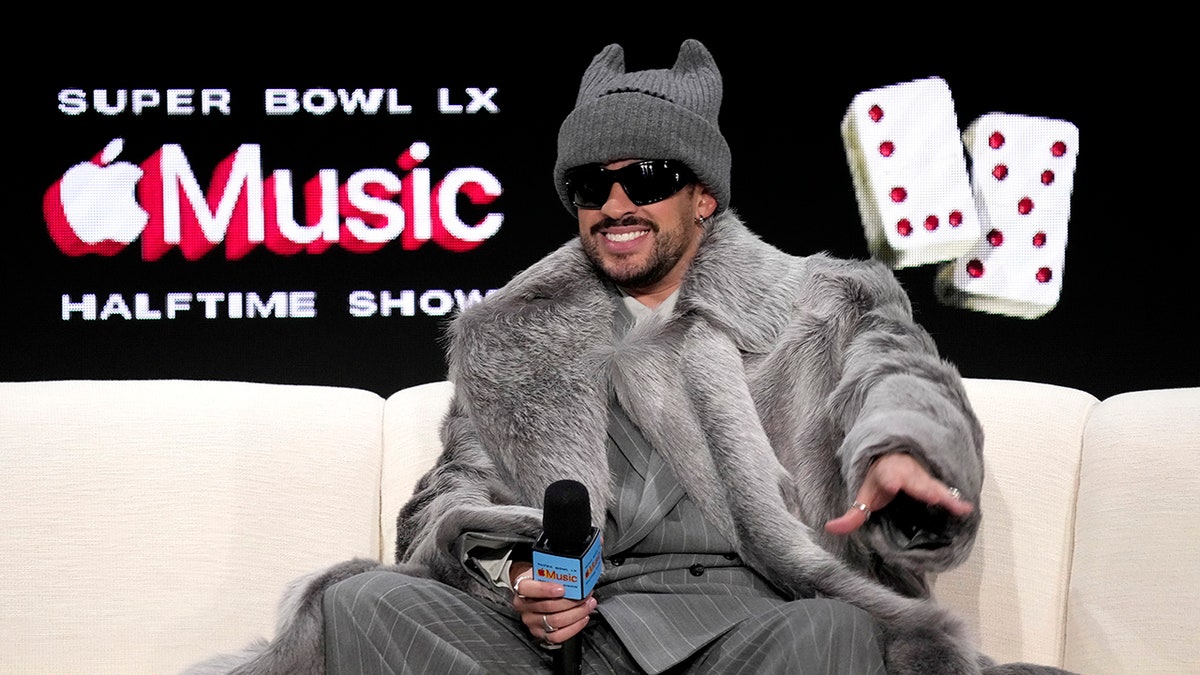
Bad Bunny speaks on stage at the Super Bowl LX Pregame & Apple Music Super Bowl LX Halftime Show Press Conference at Moscone Center West on Feb. 5, 2026 in San Francisco, California.(Jeff Kravitz/FilmMagic)
“I want to point this one thing out as well,” Steele said. “This isn’t about someone who is not American, and Bad Bunny is, but it isn’t about that. U2, they’re from Ireland, they gave an amazing performance right after 9/11 20-something years ago. This is about, as an artist, you lead with hate, and that is what Bad Bunny has done from day one.
“When he says, ‘I’m not going to speak your language, you have four months to learn it,’ are you kidding me? It would never be acceptable in their country. So that’s the disturbing (thing). Not that he’s from Puerto Rico. That he says he hates us, he’s not going to take our money, but now he’s doing it.”
Bad Bunny made the crack about American fans needing to learn how to speak English before his performance. He tried to pull back from the remark on Thursday during his interview with Apple Music ahead of the show.
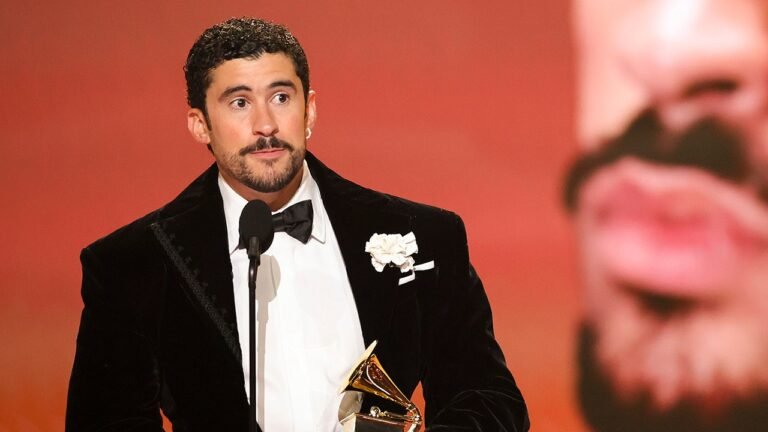
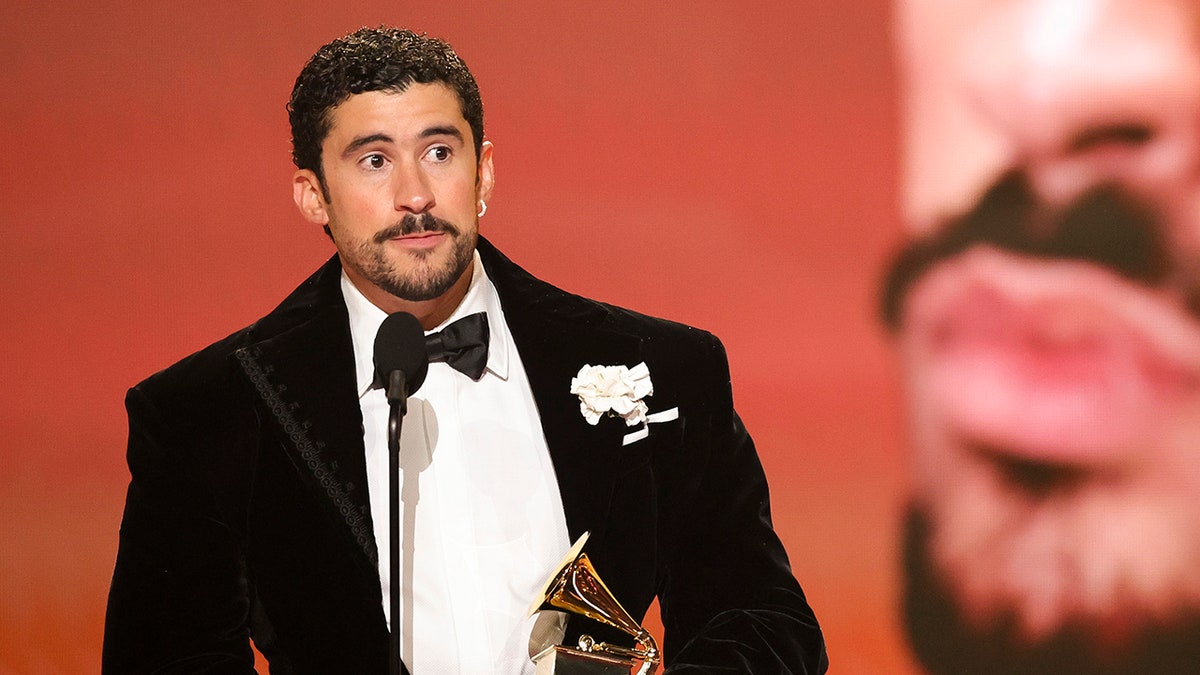
Bad Bunny receives the award for Album of the Year at The 68th Annual Grammy Awards, broadcasting live Sunday, Feb. 1, 2026 on the CBS Television Network, and streaming live and on demand on Paramount+.(Stewart Cook/CBS via Getty Images)
Steele praised Turning Point USA for offering fans an alternative halftime show for those who may not like Bad Bunny’s music or politics. She added that she knows why the NFL is going with Bad Bunny from a business perspective.
“I love there’s an alternative,” Steele said. “That’s what America is all about and I give TPUSA a lot of credit for doing so. I think it was needed more than ever. However, I believe more people will probably go ahead and watch the Super Bowl halftime show with Bad Bunny if for no other reason, because a lot of times people hate watch just to see how bad he is going to be. Unfortunately, he made it very clear. He’s like, I’m not speaking in English. I’m singing in Spanish. You have four months to learn the language.’ And I think that’s the part, along with the hate and talk about ICE, etc., that disturbs so many people.
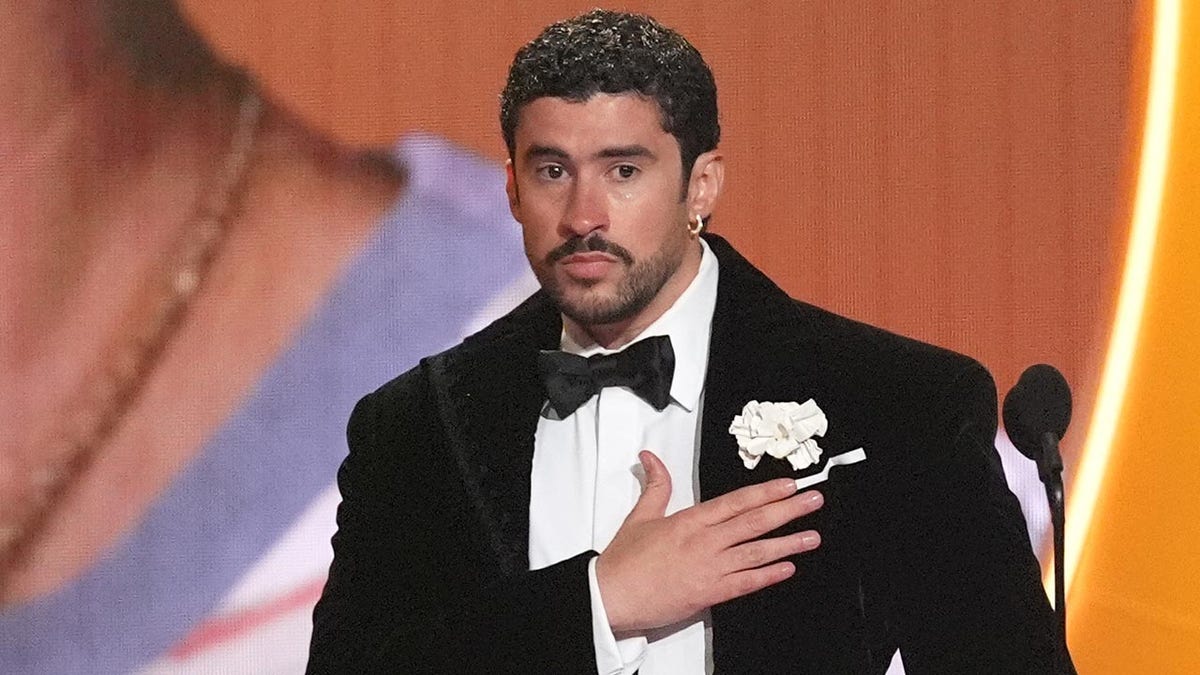
Bad Bunny accepts the award for Album of the Year for Debí Tirar Más Fotos at the 68th annual Grammy Awards in Los Angeles, California, on Feb. 1, 2026.(AP Photo/Chris Pizzello)
“However, what we have to remember is that this is a business decision. Two years ago, there were only two other NFL games played in other countries. Last season, three, and in 2025, five games. All the commissioner cares about right now is growing the game and they want to be in more countries. They don’t care what the players that were interviewed are saying, or what the fans are saying. This is about the business of the NFL and making it more global.”
For two decades, global energy demand was static and efficiency gains, economic shifts, and renewable growth created an illusion of control.
The narrative was one of managed transition — a straight line from fossil fuels to a cleaner, perhaps simpler, energy system.
Recommended Stories
list of 4 itemsend of list
Energy companies believe that narrative is over.
Addition, not substitution
It’s unusual to see that many security personnel lining the road to Qatar’s convention centre. Enter LNG 2026, and the vast conference centre in Doha is hosting the people who shape the global energy system. Seated on the same stage were Saad Sherida al-Kaabi of QatarEnergy, Wael Sawan of Shell, Darren Woods of ExxonMobil, Patrick Pouyanne of TotalEnergies, and Ryan Lance of ConocoPhillips — leaders of companies that collectively sit at the centre of global energy supply.
Their estimation: The era of demand is here, and the age of gas is accelerating, not fading.
Everything from artificial intelligence, data centres, electrification and population growth are all pulling the energy system to a new scale. The executives say that demand is rising faster than grids, infrastructure, and policy frameworks can adapt.
From oil to energy
Perhaps that is why the industry is changing how it describes itself. These companies no longer frame their future narrowly like “international oil companies” or oil producers. They now talk about being “international energy companies” – a deliberate shift reflecting a broader ambition: to manage molecules, systems, and supply chains in a world with increasing energy demands.
This undated file photo shows a Qatari liquid natural gas (LNG) tanker ship being loaded up with LNG at Raslaffans Sea Port, northern Qatar [File: AP]
Executives outlined projections that underline how deeply the market is changing. Global LNG demand, currently about 400 million tonnes a year, is expected to reach 600 million tonnes by 2030 and approach 800 million tonnes by 2050, according to the energy executives, and LNG is growing at more than 3 percent annually, making it the fastest-growing fuel among non-renewables, according to their data.
Building for a bigger world
The confidence in Doha was backed by construction on a vast scale. QatarEnergy, under Saad al-Kaabi, is expanding LNG production and assembling a fleet expected to reach about 200 LNG carriers, one of the largest shipping expansions in energy history.
In the United States, ExxonMobil and QatarEnergy are partnering on a new 18 million MMBtu LNG facility, part of a wider North American build-out. Canadian LNG is entering the market, while new supply is emerging from Africa and South America.
These are substantial investments.
As al-Kaabi put it during the discussion: “The world cannot live without energy. People need to be prosperous, and nearly a billion people still do not have basic electricity. We cannot deprive them of growth.”
It is a framing shared across the panel. This is no longer a conversation about replacement, as one executive summed it up, “we are in a world of energy addition, not energy substitution.”
Europe and energy security
The Russia–Ukraine war remains a defining reference point. Europe’s sudden loss of Russian pipeline gas forced a dramatic pivot to LNG. Imports jumped from roughly 50 million tonnes a year to approximately 120 million tonnes, transforming Europe into a major LNG market almost overnight.
What began as crisis management has reshaped global gas flows. LNG delivered flexibility, security, and scale, and for investors, that restored confidence that LNG infrastructure could be strategic.
As new supply comes online, executives expect prices to ease. When that happens, Asian demand, currently constrained by cost, is expected to rebound sharply. Several Asian economies are also shifting from exporters to net importers as domestic reserves decline.
Oil’s quiet re-entry
Two years ago, oil was widely predicted to disappear from the energy mix by 2030. That narrative, too, has faded.
Oil demand has proven resilient, and even gas-focused producers are expanding oil portfolios. Qatar is actively seeking new oil opportunities and remains one of the world’s largest holders of exploration blocks.
A petroleum refinery of Qatar Petroleum stands near Umm Sa’id, Qatar. Qatar is ranked 16th in countries with the biggest oil reserves and 3rd in natural gas reserves [File: Sean Gallup/Getty Images]
The shift is pragmatic. The industry is no longer debating whether oil and gas will be needed, but how they can be supplied at the lowest possible cost and emissions intensity. Several executives noted that many former oil sceptics have quietly reversed course.
AI and the end of low demand
The most urgent driver of change is not geopolitics — it is artificial intelligence.
For nearly 20 years, global energy demand was relatively stable. That period has ended. AI-driven data centres are consuming electricity at a scale planners failed to anticipate. Individual facilities can require thousands of megawatts of constant power, running 24 hours a day, with no tolerance for interruption.
Executives described this moment as a decisive break with the past. After decades of flat demand, the system has entered what they call hyper-scaling mode.
This demand, they say, is inflexible. Data centres cannot wait for weather conditions. They require power that is reliable, dispatchable, and immediate.
When renewables need backup
No one on stage dismissed renewables. Shell’s Wael Sawan and TotalEnergies’ Patrick Pouyanne both stressed their central role in the future mix. But they were clear about limitations.
The executives viewed wind and solar as intermittent and argued that grids built for predictable generation are under growing stress. Recent blackouts and near-misses in highly renewable systems have exposed the consequences of imbalance.
“When the wind isn’t blowing and the sun isn’t shining,” one executive noted, “gas fills the gap.”
Gas turbines remain essential for grid stability. Nuclear takes decades to scale. Batteries are improving but remain limited. Hydrogen is promising, but not yet deployable at the pace required.
Gas, the industry argues, is the only option that can be built fast enough to meet the contemporary surge in demand.
AI: The friction points
But behind the power-hungry AI-driven confidence are real snag lines. Building energy infrastructure has become slower and more complex.
The executives pointed to permitting delays that stretch projects more than a decade. Water and grid connections are major bottlenecks. Skilled labour is in short supply. Community resistance is growing, driven by cost concerns and environmental pressure.
Executives were openly critical of policy frameworks they see as detached from operational reality. Overlapping and conflicting regulations, they argued, raise costs and delay supply.
“The market dictates what can be delivered,” one leader said, warning that governments risk choking the arteries of energy flow.
Sustainability, emissions and the social contract
The industry acknowledges that its future depends on emissions performance. Methane leakage, efficiency, manufacturing footprints, and transport emissions remain under scrutiny. Gas offers immediate reductions where it replaces coal – about 40 percent in power generation and 20 percent in marine fuels. Carbon capture and sequestration is increasingly integrated into new projects.
ExxonMobil’s Darren Woods emphasised the company’s push to be seen as a technology player — working on hydrogen, carbon capture, and new uses for hydrocarbons beyond combustion. They describe this approach as responsible energy addition.
Yet the tension remains. The current demand surge has pushed environmental scrutiny to the background, but executives know that window is temporary. The sustainability of gas in this new role is under intense scrutiny.
While it burns cleaner than coal, its emissions of CO2 and methane, along with the transport footprint of LNG, remain central to the climate debate. Industry leaders acknowledge that gas must evolve to maintain its social licence. The CEO of QatarEnergy emphasised delivering energy “in the most environmentally responsible manner”.
There is awareness that the current surge in demand has sidelined environmental concerns, but these questions will resurface forcefully once the immediate capacity crisis abates. The gas industry risks a fate similar to coal if it fails to accelerate its decarbonisation efforts through carbon capture, utilisation, and storage (CCUS), and the integration of low-carbon gases, such as hydrogen.
Inclusive not mutually exclusive
The dynamic with renewables and emerging technologies adds another layer of complexity. Executives recognise that, for many regions, building new infrastructure, renewables are the cheapest and easiest option.
The role of gas, therefore, is evolving from a baseload provider to a “complementary load-following role,” essential for balancing grids increasingly saturated with variable wind and solar power.
The advancement of battery storage technology also looms as a potential competitor for this grid-balancing role. The future energy mix is envisioned as abundant, accessible, reliable, and clean, but the path is uncertain.
Investments in hydrogen and ammonia are continuing, though with fluctuating levels of hype, indicating a sector in search of the next breakthrough.
The human connection
Strip away politics and technology, and the core driver is human. Roughly five billion people still consume far less energy than developed economies. To paraphrase QatarEnergy’s al-Kaabi: Prosperity requires power.
Removing energy poverty means adding supply – reliable, affordable supply – at unprecedented scale. That is the context in which the energy company executives are positioning gas: not as a bridge, but as a stabiliser. Energy producers are betting that global demand – supercharged by AI and economic ambition – will outpace the ability of renewables alone to carry the load.
They are building for a world that they say cannot afford shortages, blackouts, or theoretical purity. Gas, they believe, is not a bridge, but the foundation to weather the storm of demand.
And its future will be defined by a simple metric: Can the system deliver abundant, accessible, reliable, and progressively cleaner energy?
Norway’s crown princess Mette-Marit has apologised for her friendship with Jeffrey Epstein after the latest release of files about the late convicted sex offender.
Crown Princess Mette-Marit said on Friday that she “must take responsibility for not having investigated Epstein’s background more thoroughly, and for not realising sooner what kind of person he was”.
She added: “I showed poor judgment and regret having had any contact with Epstein at all. It is simply embarrassing.”
“I also apologise for the situation that I have put the royal family in, especially the King and Queen,” Crown Princess Mette-Marit said.
Image:Crown Princess Mette-Marit in 2024. Pic: Reuters
Her statement comes after the latest tranche of files concerning Epstein revealed that she had extensive email contact with him after he was found guilty of child sex crimes in 2008.
The documents show that Crown Princess Mette-Marit used one of Epstein’s properties in Palm Beach, Florida, in 2013.
Epstein files: What the latest pictures show
Appearing in the Epstein files release does not imply any wrongdoing.
Crown Princess Mette-Marit said in 2019 that she regretted having had contact with Epstein.
The files emerged as Norway‘s royal family came under scrutiny as Crown Princess Mette-Marit’s son, Marius Borg Hoiby, went on trial for rape and domestic violence offences.
Epstein died in prison in 2019 while awaiting trial on sex trafficking charges. His death was ruled as suicide.
South Carolina health officials are warning of “irreversible” neurological damage in children as measles-related hospitalizations climb in the state.
Of the 876 confirmed cases in the state’s upstate outbreak, at least 19 patients have been admitted with serious complications.
“Some of these complications include measles encephalitis, or inflammation of the brain, in children and pneumonia,” state epidemiologist Linda Bell said in a Feb. 4 briefing.
Bell emphasized that the complication is particularly dangerous for young patients.
“Any time you have inflammation of the brain … there can be long-term consequences, things like developmental delays and impacts on the neurologic system that can be irreversible,” the expert warned.
Some of the more serious measles-related complications include measles encephalitis, or inflammation of the brain, in children, as well as pneumonia.(iStock)
While the state does not systematically track every medical complication, pneumonia is the leading cause of measles-related death among young children, affecting approximately one in every 20 infected minors, according to CDC data.
A total of 147 students are quarantined across 10 K-12 schools, Bell noted.
The outbreak also poses a risk to expectant mothers. Because the MMR (measles, mumps and rubella) vaccine cannot be administered during pregnancy, several exposed women recently required emergency treatment with immune globulin to provide “passive immunity.”
Bell noted that this is critical to “protect them against the high risk of complications during pregnancy and to protect their newborn babies.”
The measles virus is notoriously contagious, capable of lingering in the air for up to two hours after an infected person has left a room, experts say.
Pneumonia is the leading cause of death from measles in young children, affecting approximately one in every 20 infected minors.(iStock)
South Carolina saw a historic surge in vaccinations in January. In particular, Spartanburg County saw a 162% increase in MMR vaccinations compared to the previous year.
“I’m hoping that what we can attribute [the vaccine surge] to is a wider recognition of the threat of this disease circulating in our communities and the desire for people to be protected against the complications,” Bell said in the briefing.
A new case in the Pee Dee region suggests the virus may be spreading beyond the initial upstate clusters through “unrecognized community transmission.”(Paul Bersebach/MediaNews Group/Orange County Register via Getty Images)
Health officials continue to urge the public to seek vaccinations, especially as a new case in the Pee Dee region suggests the virus may be spreading beyond the initial upstate clusters through “unrecognized community transmission.”
As far as the encephalitis and pneumonia fears, “these are complications we hope to prevent,” Bell added.
“Increasing vaccination coverage protects those who cannot be vaccinated, like young infants, pregnant women and those with weakened immune systems.”
Khloe Quill is a lifestyle production assistant with Fox News Digital. She and the lifestyle team cover a range of story topics including food and drink, travel, and health.
A large number of voters have still not appeared for the hearing of claims and objections related to the voter list under the Special Intensive Revision (SIR) process in West Bengal. More than 50 thousand ‘unmapped’ voters and more than 3.5 lakh ‘logical discrepancy’ voters in the state have not appeared for the hearing. Names of such voters may be removed from the final voter list.
According to sources close to the office of the Chief Electoral Officer (CEO), West Bengal, a total of 31,68,426 voters in the ‘unmapped’ category were called for hearing. Of these, a little more than 50 thousand, i.e. about 1.57 percent voters did not appear despite repeated notices being sent. The Electoral Registration Officers (EROs) have considered them eligible to be removed from the final list.
Election Commission made this big claim
Similarly, in ‘logical discrepancy’ cases, a total of 94,49,132 voters were identified and called for hearing. So far, more than 3.5 lakh voters in this category, i.e. about 3.70 percent, have not turned up for the hearing. The Election Commission has expressed confidence that the hearing of most of the cases will be completed within the stipulated time.
Sources said that before any voter’s name is finally removed, a personal notice will be sent to him, in which the reasons for the proposal to remove the name will be explained. ‘Unmapped’ voters are those whose names do not appear in the voter list of 2002 nor could they establish their connection through their relatives. Whereas ‘Logical Discrepancy’ are those cases in which abnormalities were found in the family details while gathering information about the relatives.
February 7 is the last date for the hearing process.
The last date to complete the hearing process has been fixed for February 7, while the final voter list is to be published on February 14. According to an official of the CEO office, out of the 294 assembly seats in the state, the hearing has not been completed yet on only about 15 seats. If needed, additional time of two days can be given selectively in these areas.
other videos
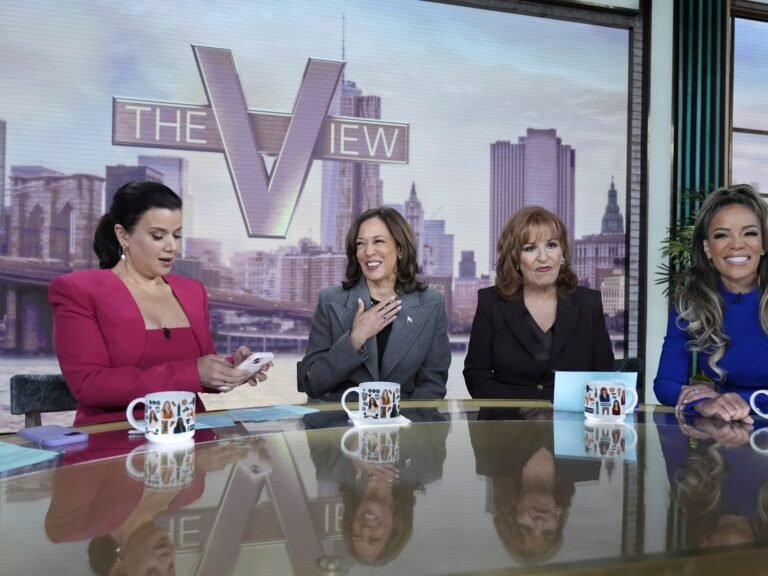
San Francisco, United States – In a November 2024 appearance on ABC’s popular daytime show, The View, host Sunny Hostin asked Kamala Harris, then the Democratic candidate for president, if she would do anything differently from the president, Joe Biden. Harris said, “There is not a thing that comes to mind.”
In this moment, analysts said, Harris had tied herself inextricably with the economic hardships voters faced during the Biden administration and its other failings. Harris lost the election and returned to the show a year later to say, “I realise now that I didn’t fully appreciate how much of an issue it was.” In her book 107 Days, Harris likened her statement to pulling the pin on a hand grenade.
Recommended Stories
list of 4 itemsend of list
While Harris’s appearance may not have helped her electoral prospects, Donald Trump, then the Republican presidential nominee, did not appear on The View before the 2024 election or in his previous two elections.
Daytime and late-night shows are usually required by a United States Communications Act rule that political candidates be given equal access to airtime, but The View may possibly have been an exemption because it could be seen as a “bona fide news show”, and those are exempt from that requirement.
But in the last year, The View, Saturday Night Live, Jimmy Kimmel Live and other shows have been in the Federal Communications Commission’s eye for not providing equal access and possibly providing partisan coverage. But critics say the FCC’s attempts to rein in such shows could amount to curtailing of speech. That, along with increasing corporate consolidation of media ownership, could make it vulnerable to regulatory intervention and a backsliding in media freedom, as has been seen in countries such as Hungary and Russia.
The FCC put out a public notice in late January saying concerns had been raised that the interview portions of all daytime and late-night shows were exempt from the equal opportunities requirement. “This is not the case,” the FCC’s notice said, encouraging stations “to obtain formal assurance” that they are exempt from giving equal access.
But such processes could be “a tool for harassment and intimidation”, said Harold Field, senior vice president at Public Knowledge, a left-leaning think tank based in Washington, DC.
With the notice and the petitioning process hanging, broadcasters may rethink “which perspectives to air and which ones not to”, said Seth Stern, chief of advocacy at the Freedom of Press Foundation.
Gigi Sohn, a lawyer who has previously worked in the FCC, said, “I like the spirit of the notice,” referring to the principle of providing lesser-known candidates equal access to airtime, “but the impact could be censorship. I am concerned about how it will be applied.”
‘It costs money to stand up for principle’
The FCC notice stems from the Communications Act of 1934, which said, since the three broadcasters were being provided public airwaves, if a station provides space to one political candidate, it would have to provide equal opportunity to all other candidates for that office. Broadcasters would have to keep a public file on any free time given to a candidate so that other candidates could review this and claim their equal free time, too.
When John Kennedy appeared on the Tonight Show in 1959, the FCC had ruled that equal time was to be given to other candidates. In 2006, by the time Arnold Schwarznegger appeared on the Tonight Show while running for California governor, more talk shows had filled the airwaves and blurred the line between news and entertainment. The FCC had ruled that The Tonight Show was exempt from the equal time rule as a bona fide news interview.
The FCC notice from January said that the industry has taken this to mean that all daytime and late-night shows are exempt because they are bona fide news shows, but they are not.
“To state the obvious, Jimmy Kimmel Live is not Meet The Press. Not by a long shot. Not even close,” Daniel Suhr, president of the Center for American Rights, a right-leaning think tank based in Chicago, wrote in a blog post for the Yale Regulatory Journal.
FCC chair Brendan Carr had also tweeted that such shows had claimed exemptions “even when motivated by partisan political purposes”. Right-wing analysts quoted a study saying The View had only two conservative guests in 2025, while it had 128 liberal guests. A media representative of The View did not respond to Al Jazeera’s request for comment.
But others worry that the notice is part of a broader effort to curtail satire, comedy and comment.
“This, to me, is the most shocking element of what this administration has been able to do, is to say that views, satire and humour are censored,” said Margot Susca, assistant professor of journalism at American University in Washington, DC.
Putting out such notices could push the broadcasters’ parent organisations to limit their content, analysts say, citing instances of how the Paramount Skydance merger was approved only after it settled a lawsuit over Harris’s interview on 60 Minutes.
“For-profit corporations are not known for their bravery,” said Public Knowledge’s Field. “They may keep their heads down and views in check.”
Berkeley’s Davis said that “it costs money to stand up for principle,” and that the administration’s “understanding of the financial needs of media corporations is unprecedented.”
Large corporations often have mergers pending or licence issues, said Sohn, “so departments can extract a pound of flesh when there isn’t even an issue.”
The notice may also be “intended to drive a wedge between broadcasters and affiliates”, argued Sohn. “It could be that Disney asks Kimmel not to have political candidates, or the affiliate may preempt the show since the burden also falls on stations.”
Sohn had been nominated by Biden for the FCC, but withdrew her nomination after a protracted and fraught confirmation process.
Last fall, when Kimmel made comments about Charlie Kirk’s killer, FCC commissioner Carr said affiliates could preempt, or drop the show, which Nextstar and Sinclair, the two biggest owners of television stations, did. Even after a public outrage reinstated Kimmel’s show, the two did not bring back Kimmel’s show for days.
“Public outrage is the best tonic,” Sohn said, referring to the outcry that led ABC to bring back Kimmel. “But there are so many outrages.”
‘Control the narrative’
While broadcasters’ licences for free airwaves come with a public service responsibility, the FCC notice said daytime and late-night shows have been partisan.
But others, such as Berkeley’s Davis, say notices like this serve to “control the narrative, not inform the public”.
“The executive branch getting so powerful and increasing concentration of media ownership in corporate hands have created two forms of power that have colluded in ways that undermine media independence,” he told Al Jazeera.
It is a pattern American University’s Susca said she saw in other countries with sliding democratic standards and has written about in her forthcoming book Media Plutocracy, to be published by the University of Massachusetts Press.
“Hungary was the most glaring example where media ownership was concentrated in the hands of wealthy people who were aligned with President Orban,” she said. “This led to media restrictions and has meant that media independence was gone and any accountability on journalism disappeared in 15 years of Orban.”
Stern of the Freedom of Press Foundation said that, while there are comparisons with developments in Russia and Hungary, where media acquisitions have been steered towards favourable owners leading to a slide in media independence, these aren’t the only such cases.
“There are many precedents. Some of what we are seeing is old, and some new, but the value of these comparisons is limited because Trump is a unique figure in a unique time”.
More conservative analysts have accused the media of having a liberal bias that they have battled to correct. For instance, when Harris appeared in a 90-second Saturday Night Live last year and made jokes such as the US public “wants to end the dramala”, Suhr’s Center for American Rights filed a complaint for equal time. NBC then filed a public file offering equal time to Trump, who made a 90-second speech asking voters to vote for him.
The Center for American Rights did not respond to a request for comment by Al Jazeera.
While these battles are being fought over broadcasters’ right to air, Berkeley’s Davis pointed out that “this is a time for convergence. I watch Kimmel on YouTube,” where viewers could see the show, even when Nextstar and Sinclair did not air it, and the Communication Act rules do not apply.
Viewers, of all political views, are increasingly turning to social media for their news, opinions and humour, data shows.
“I like more speech, not less. Limiting it could be a concerning impact of this,” Sohn said.