EU says TikTok faces large fine over “addictive design”

0

TikTok

The European Commission said today that TikTok is facing a fine because its addictive features, including infinite scroll, autoplay, push notifications, and personalized recommendation systems, are breaching the EU’s Digital Services Act (DSA).

According to preliminary findings, TikTok has failed to adequately assess how these features could harm users’ physical and mental well-being, including minors and vulnerable adults.

The commission found that TikTok fuels the users’ urge to keep scrolling and shifts their brains into “autopilot mode” by constantly rewarding users with new content, potentially reducing self-control and leading to compulsive behavior.

Wiz

TikTok has also disregarded important indicators of compulsive use, including the time minors spend on the app at night and how frequently users open it, the commission added.

If the findings are confirmed, the violations could trigger a fine of up to 6% of TikTok’s global annual turnover. To avoid being fined for violating the EU’s digital regulations, the commission said TikTok needs to change its core service design by implementing screen time breaks, adapting its recommendation system, and disabling key addictive features.

“Social media addiction can have detrimental effects on the developing minds of children and teens, said EU tech commissioner Henna Virkkunen on Friday.

“The Digital Services Act makes platforms responsible for the effects they can have on their users. In Europe, we enforce our legislation to protect our children and our citizens online.”

The commission added that while TikTok has some mitigation measures, such as parental controls and screen-time management tools, these are likely ineffective because they are easy to dismiss and require parents to enable them manually.

In November, French prosecutors opened a criminal investigation into TikTok, accusing it of failing to safeguard the mental health of children.

The Irish Data Protection Commission (DPC) fined TikTok €530 million (over $601 million) in May 2025 for illegally transferring the personal data of users in the European Economic Area (EEA) to China, in violation of the EU’s GDPR data protection regulations.

Two years earlier, the Irish watchdog slapped TikTok with a €345 million ($368 million) fine for violating children’s privacy by processing their data and employing “dark patterns” during registration and video posting.

Modern IT infrastructure moves faster than manual workflows can handle.

In this new Tines guide, learn how your team can reduce hidden manual delays, improve reliability through automated response, and build and scale intelligent workflows on top of tools you already use.


Source link

Iraq’s Shia bloc divided over tactics after US rejects al-Maliki for PM | Politics News

0

Najaf, Iraq – Leaders of Iraq’s Coordination Framework – the Shia political coalition that came out on top in November’s parliamentary elections – are adamant that Nouri al-Maliki will be their candidate for the Iraqi premiership, even after threats from United States President Donald Trump.

Trump warned in late January that if al-Maliki, who previously served as Iraq’s prime minister between 2006 and 2014, returned to the role, then the US would cut off aid to Iraq.

Recommended Stories

list of 3 itemsend of list

“If we are not there to help, Iraq has ZERO chance of success, prosperity or freedom,” the US president wrote in a post on his Truth Social website.

Trump, and the US administration, view al-Maliki as part of Iran’s direct network of influence in Iraq, and fear that his return would undermine American efforts to weaken Iran’s power in its western neighbour, including limiting the reach of Iran-backed armed groups.

But, even with pressure ramping up, it appears that a majority of the Coordination Framework’s most influential actors are not willing to give up on al-Maliki, and are determined to find a way to push his candidacy forward.

Coordination Framework divided

The Coordination Framework (CF) is a coalition of Shia political parties established in 2021. It represents the biggest Shia bloc in the Iraqi parliament.

The loose nature of the coalition that makes up the CF means that opinions on al-Maliki’s candidacy are varied, with some opposing it, others willing to bend to Trump’s will and switch their backing, and still others who are adamant that they will push forward.

And it seems as though the majority are in the latter camp.

The CF issued a statement on Saturday reiterating its support for al-Maliki. “Choosing the prime minister is an exclusively Iraqi constitutional matter … free from foreign interference,” the statement added.

The statement reflects the position of various pro-Maliki forces in the CF, including former deputy parliament speaker Mohsen al-Mandalawi; the Badr Organization, led by Hadi al-Amir; and the Islamic Supreme Council, led by cleric Humam Hamoudi.

Current Prime Minister Mohammed Shia al-Sudani, whose party received the most votes in the elections but who did not receive the CF nomination despite his membership within it, is also officially supportive of al-Maliki’s nomination, even if he has not abandoned the possibility of continuing as prime minister himself.

Several of these factions did well in last year’s parliamentary elections, including al-Maliki’s own State of Law Coalition, as well as Badr and al-Sudani’s Reconstruction and Development Coalition.

But, with support from Kurdish and Sunni parties, the Shia al-Maliki sceptics have enough seats, and enough of a voice, to block the nomination if they desire to do so.

These include important Shia figures such as Qais al-Khazali, the leader of the Asaib Ahl al-Haq group; Ammar al-Hakim, the leader of the National State Forces alliance; and former Prime Minister Haider al-Abadi.

Al-Hakim, whose parliamentary bloc has 18 seats, warned that there would be “incoming economic repercussions” if al-Maliki was chosen, and added that “public interest must be prioritised over private interests”.

Meanwhile, the Victory Alliance, led by al-Abadi, issued a statement calling for “[the prioritisation of] the people’s vital interests given the exceptional circumstances Iraq and the region are experiencing”. Al-Abadi’s group has no seats in parliament, but retains an important voice within the CF.

Both statements contain a tacit acknowledgment of Iraq’s inability to withstand US pressure and the need for an alternative candidate suited to the current reality.

Other roadblocks

The CF, therefore, still has an uphill battle to confirm al-Maliki as prime minister. Outside of the Shia political groups, there is also opposition to al-Maliki, a divisive figure remembered negatively by many Iraqis, particularly Sunnis.

And there are also divisions within the non-Shia groups that are also slowing down the nomination process.

Under the Iraqi Constitution, parliament must first elect a president for Iraq, who then mandates the nominee of the largest parliamentary bloc to form the government. According to Iraq’s post-2003 “muhasasa” system of dividing political offices by sect and ethnicity, the prime minister must be a Shia, the president a Kurd, and the parliamentary speaker a Sunni.

To date, the main Kurdish factions – the Kurdistan Democratic Party (KDP) led by Masoud Barzani and the Patriotic Union of Kurdistan (PUK) led by Bafel Talabani – have failed to agree on a consensus candidate for the presidency.

The CF is attempting to broker an agreement between the Kurds. Recent efforts included a delegation led by al-Sudani meeting with both parties, and a personal visit by al-Maliki to Barzani. But these initiatives have not yet succeeded, and without a political agreement on the presidency, the process of designating a prime minister cannot proceed.

And even if the Kurds reach an agreement and don’t stand in the way of al-Maliki, the CF must persuade a long list of the former prime minister’s opponents.

Among them is Mohammed al-Halbousi, former speaker of parliament and leader of the Takadum Party, who issued a statement prior to the US veto implicitly rejecting al-Maliki’s candidacy.

Collectively, the anti-al-Maliki groups could gather roughly a third of the seats in parliament, enough to prevent a presidential election session due to a lack of quorum.

To avoid that scenario, the CF would have to either reset internal negotiations regarding the next prime minister, or nominate al-Sudani for a second term.

Al-Sudani’s party issued a statement on January 28 calling for “positive relationships with the United States” – a move interpreted as an indirect pitch for his renewal, leveraging his proven track record of managing relations with Washington during his tenure.

US leverage

The US may no longer be the occupying power in Iraq, but it still has enormous economic leverage over the country.

The revenue from Iraq’s main export – oil – is routed through the US Federal Reserve Bank in New York.

Trump may decide not to renew a presidential executive order, issued originally by President George W Bush in the wake of the Iraq War, that grants legal protection for the oil revenue funds and prevents them from being frozen by Iraq’s creditors. The order had been expected to be renewed as a formality upon its expiration in May.

If the US president decides against renewal, creditors will seek to claim their funds, and New York courts may issue rulings to freeze the Iraqi assets. This would disrupt the transfer of funds necessary to pay public salaries and sustain the economy for months or even years. In practical terms, the Iraqi economy would grind to a halt.

That therefore explains why the pro-al-Maliki bloc in the CF is attempting to persuade the US to change its position, rather than simply ignore Trump.

A high-ranking source in the CF’s State of Law coalition, who wished to remain anonymous in order to speak freely on the topic, told Al Jazeera there are “ongoing attempts to convince the US administration to lift the veto on al-Maliki”.

Aqeel al-Fatlawi, the State of Law spokesperson, also said he was hopeful that the US “will change its stance in the coming period”.

While blaming regional states, including Turkiye and Syria, for the US position towards him, al-Maliki himself has sought to soften his positions.

Syria has been one of the main points of difference between al-Maliki and the US, which has backed Syria’s President Ahmed al-Sharaa, even as the former Iraqi prime minister has denounced him for his past membership of al-Qaeda.

In a televised interview on Tuesday, al-Maliki used al-Sharaa’s full name, rather than the Syrian leader’s nom de guerre of “al-Jolani”, an attempt to emphasise that he was willing to move on from the past. Al-Maliki also attempted to soften his stance towards the Syrian government, directing his criticism towards the former regime of ousted President Bashar al-Assad and its role in supporting “terrorism” in Iraq.

Whether these attempts will go far enough to placate the US remains to be seen.

Reports indicate that US Special Envoy to Iraq Mark Savaya may have been removed from his position, although there is no official confirmation. His replacement would likely be Tom Barrack, currently the US ambassador to Turkiye and special envoy to Syria.

The CF favours Savaya, who has proven to be more supportive of using a more gradual approach in reducing the power of Iraq’s Shia militias, versus Barrack, who is viewed by the CF more negatively for his role in weakening Hezbollah in Lebanon and his support for Syria’s al-Sharaa.

An official announcement of a change could indicate where Trump’s thoughts are in the critical next few weeks – and whether the president will choose to not renew the US guarantee to protect Iraq’s oil revenue in May.




Source link

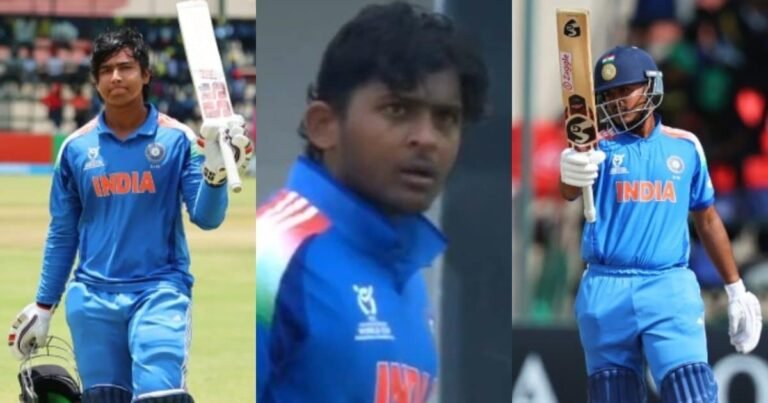
Heroes of victory… 8 unknown faces, who won India the Under-19 World Cup for the sixth time, note down their names.

0

Last Updated:

8 hero india win 6th t20 world cup title: India created history by winning the Under 19 World Cup for the seventh time. Team India won the trophy by defeating England in the final. Under the captaincy of Ayush Mhatre, the Indian team remained invincible and won the title. 7 players played an important role in this historic victory of India. While Vaibhav Suryavanshi made a splash in batting, Henil Patel excelled in bowling.

The Indian cricket team, captained by Ayush Mhatre, created history by winning the Under-19 World Cup. India won the World Cup for a record sixth time. Chasing the target of 412 runs set by India, the England team could score only 311 runs and lost the final by 100 runs. Vaibhav Suryavanshi had the biggest contribution in Team India’s title victory. Who performed brilliantly in the entire tournament.

Vaibhav Suryavanshi played a record inning of 175 runs against England in the Under 19 World Cup final. He hit 15 sixes and 15 fours in 80 balls. On the basis of Vaibhav’s big innings, India was successful in scoring 411 runs for 9 wickets. 14 year old Vaibhav scored 439 runs in 7 matches of the Under-19 World Cup, which included one century and three half-centuries. He became the second highest run scorer in the tournament. Vaibhav hit 41 fours and 30 sixes in the tournament. Suryavanshi was the biggest hero of India’s title victory.

Captain Ayush Mhatre scored 53 runs in 51 balls in the final which included 7 fours and two sixes. Mhatre led the team from the front throughout the tournament. Mhatre scored 214 runs in 7 matches in this World Cup, which included three half-centuries. Right-handed batsman Ayush hit 20 fours and 14 sixes in this tournament.

Add News18 as
Preferred Source on Google

Vihaan Malhotra played an important role in the Indian team in the middle order. Vihaan scored 240 runs in 7 matches. His highest personal score was 109 runs not out. Vihaan scored a century in this tournament while hitting 17 fours in the entire tournament. Vihaan handled the Indian innings beautifully in the middle order. Vihaan scored 30 runs in the final.

Wicketkeeper batsman Abhigyan Kundu made an important contribution in India winning the Under-19 World Cup. After his brilliant performance as a keeper behind the wicket, he also performed brilliantly as a batsman. Kundu scored 239 runs in 7 matches in this World Cup, of which 80 runs was his highest score. He has two half-centuries in his name.

Aarooj George, who scored a century in the important semi-final against Afghanistan, also played an important role in making the team champion. George scored 170 runs in five matches of the tournament, in which his best score was 115 runs. He has a century in his name. In the form of George, India has got an excellent batsman who is a future star. George scored nine runs in the final.

Fast bowler Henil Patel excelled in bowling. Patel played 7 matches in this tournament and took 11 wickets. He was the highest wicket taker bowler for India. His best bowling was five wickets for 16 runs. Patel bowled with an economy of 4.44.

RS Ambrish took 11 wickets while Khilan Patel took 9 wickets. Both the bowlers contributed significantly to India’s victory in this World Cup. Whenever Team India needed a wicket, both the bowlers completed the job very well. Ambareesh took 3 wickets in the final. All these stars of Team India are future superstars who can be seen playing for Team India in the future.

homesports

Note down the names, 8 unknown faces, who won the Under 19 World Cup for India

North Korea ‘executes schoolchildren for watching Squid Game’ | World News

0

People in North Korea, including schoolchildren, are being executed for watching Squid Game and other foreign media, according to new testimony.

Citizens also face being killed for listening to K-pop, a South Korean music genre that includes bands like BTS.

Interviewees have described a climate of fear in which the South’s culture is treated as a serious crime.

The less well-off are more likely to suffer the harshest punishments, while wealthier North Koreans are able to pay corrupt officials to dodge prosecution, it is claimed.

The testimonies were revealed by Amnesty International after conducting 25 in-depth interviews with escapees who have fled the secretive state run by Kim Jong-un‘s regime.

The escapees said watching globally popular South Korean dramas, such as Squid Game, Crash Landing on You, and Descendants of the Sun, can lead to the most extreme consequences, including death.

‘Multiple executions’

One interviewee said they heard from an escapee with family links how people, including high school students, had been executed for watching Squid Game in Yanggang Province, which is close to the Chinese border.

Another execution for distributing the South Korean show was previously documented by Radio Free Asia in neighbouring North Hamgyong Province in 2021.

“Taken together, these reports from different provinces suggest multiple executions related to the shows,” Amnesty said in a statement.

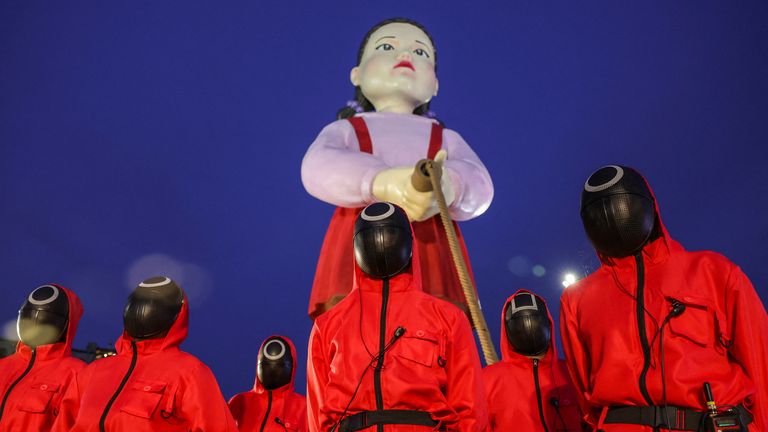
Squid Game guards with the Young-hee doll from the show, at a promotional event in Bangkok, Thailand. Pic: Reuters
Image: Squid Game guards with the Young-hee doll from the show, at a promotional event in Bangkok, Thailand. Pic: Reuters

Interviewees also described the perils of listening to foreign music, particularly K-pop from South Korea, with the popular band BTS named in their testimony.

In 2021, The Korea Times reported that a group of teenagers were caught and investigated for listening to the group in South Pyongan Province, which neighbours the capital, Pyongyang.

‘Homes sold to avoid re-education camps’

Choi Suvin, who fled North Korea in 2019, said people would sell their own homes to avoid punishment.

“People are caught for the same act, but punishment depends entirely on money,” the 39-year-old said.

“People without money sell their houses to gather $5,000 or $10,000 to pay to get out of the re-education camps.”

This inequality was further evidenced by the case of Kim Joonsik, who was caught three times watching South Korean dramas, but avoided punishment because his family had connections.

The 28-year-old, who left the country in 2019, said: “Usually when high school students are caught, if their family has money, they just get warnings.

“I didn’t receive legal punishment because we had connections.”

He contrasted his fate with that of three of his sister’s school friends.

In the late 2010s, the girls were condemned to years-long sentences in North Korea’s labour camps because their families could not afford bribes.

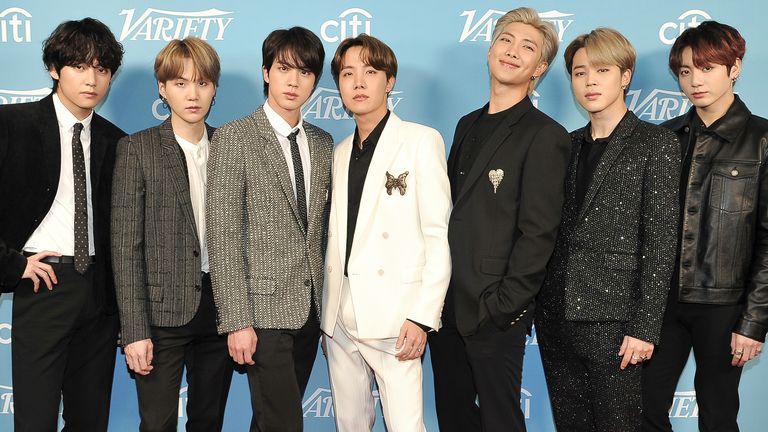
South Korean pop band, BTS. Pic: AP
Image: South Korean pop band, BTS. Pic: AP

‘Executions to brainwash’

People, including schoolchildren, were made to attend public executions as part of their “ideological education”, the interviewees said.

Ms Choi described seeing someone executed for allegedly distributing foreign media in 2017 or 2018, in Sinuiju, near the Chinese border.

“Authorities told everyone to go, and tens of thousands of people from Sinuiju city gathered to watch,” she said.

“They execute people to brainwash and educate us.”

Kim Eunju, 40, said: “When we were 16, 17, in middle school, they took us to executions and showed us everything.

“People were executed for watching or distributing South Korean media. It’s ideological education: if you watch, this happens to you too.”

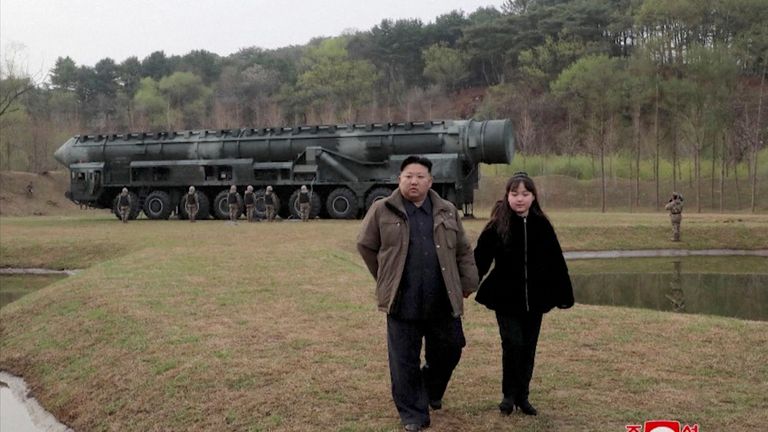
Kim Jong-un and his daughter, Kim Ju-ae, attend a missile launch in 2023. Pic: Reuters
Image: Kim Jong-un and his daughter, Kim Ju-ae, attend a missile launch in 2023. Pic: Reuters

‘Ideological cage’

Sarah Brooks, deputy regional director at Amnesty, said: “These testimonies show how North Korea is enforcing dystopian laws that mean watching a South Korean TV show can cost you your life – unless you can afford to pay.

“The authorities criminalise access to information in violation of international law, then allow officials to profit off those fearing punishment.

“This is repression layered with corruption, and it most devastates those without wealth or connections.”

She added: “This government’s fear of information has effectively placed the entire population in an ideological cage, suffocating their access to the views and thoughts of other human beings.

“People who strive to learn more about the world outside North Korea, or seek simple entertainment from overseas, face the harshest of punishments.

“This completely arbitrary system, built on fear and corruption, violates fundamental principles of justice and internationally recognised human rights. It must be dismantled.”

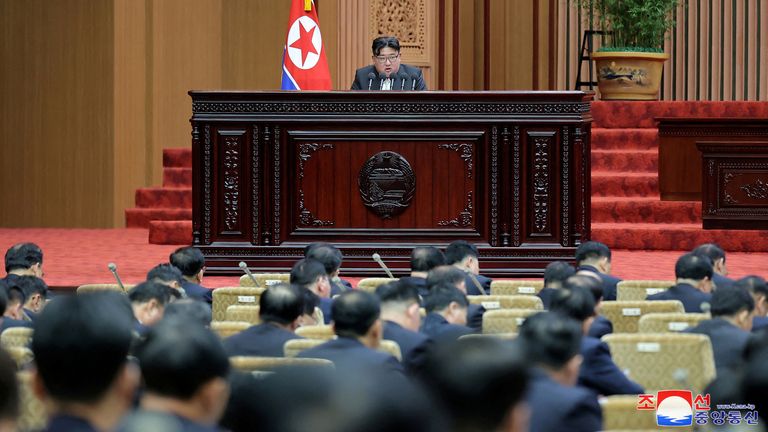
Kim Jong-un addresses the North Korea Supreme People's Assembly, Pyongyang's version of parliament. Pic: Reuters
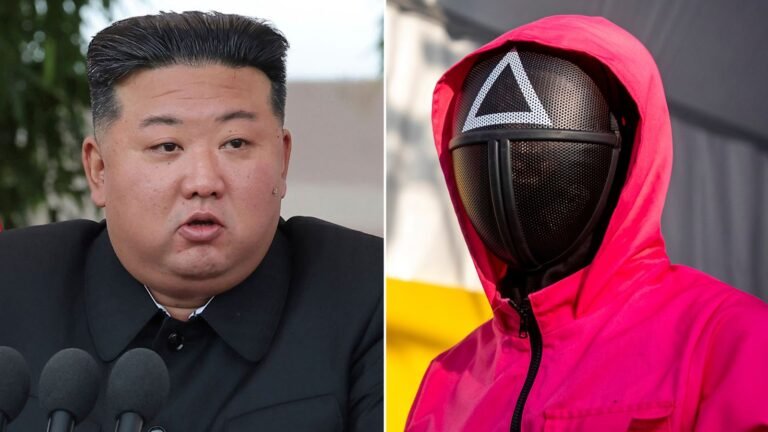
Image: Kim Jong-un addresses the North Korea Supreme People’s Assembly, Pyongyang’s version of parliament. Pic: Reuters

Under North Korea’s 2020 Anti-Reactionary Thought and Culture Act, South Korean content is “branded rotten ideology that paralyses the people’s revolutionary sense”.

Those caught consuming such media face between five and 15 years of forced labour under the act, with heavier sentences – including death – for distributing it or organising group viewings.

Fifteen interviewees described how a specialised police unit dubbed the “109 Group” would hunt for foreign media, conducting spot checks on people’s homes, and street searches of mobile phones and bags, all without a warrant.

One defector recalled members of the unit warning: “We don’t want to punish you harshly, but we need to bribe our bosses to save our own lives.”

Read more:
K-pop stars BTS reveal comeback tour
Kim Jong-un dismisses deputy in rare public rebuke

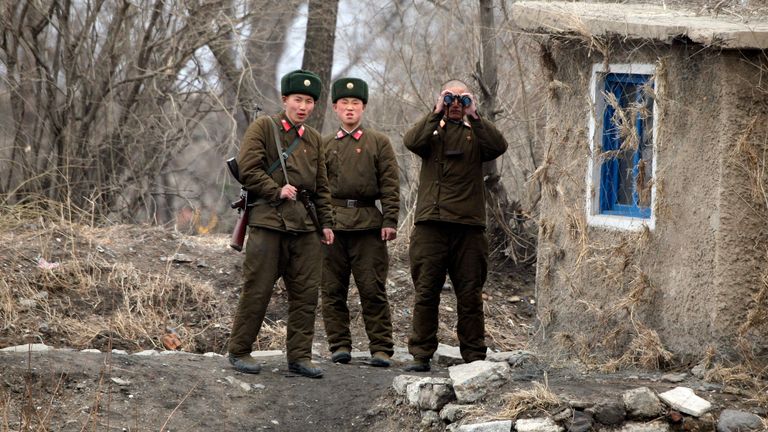
North Korean soldiers guard the border near Sinuiju in 2010. Pic: Reuters
Image: North Korean soldiers guard the border near Sinuiju in 2010. Pic: Reuters

Security agents ‘watch it secretly’

Nonetheless, consumption of foreign media is widespread in North Korea, the escapees said.

They described how dramas, films and music were smuggled in from China on USB drives, which are then plugged into notebook computers.

One interviewee said: “Workers watch it openly, party officials watch it proudly, security agents watch it secretly, and police watch it safely.

“Everyone knows everyone watches, including those who do the crackdowns.”

Most of those interviewed were aged between 15 and 25 years old when they escaped.

The most recent departure had fled in June 2020, with 11 more having left between 2019 and 2020.

Escapes have been rare since 2020, when COVID-19 border closures sealed the country off from the outside world.


Source link

NYC Health Department launches ‘Global Oppression’ research group: report

0

NEWYou can now listen to Fox News articles!

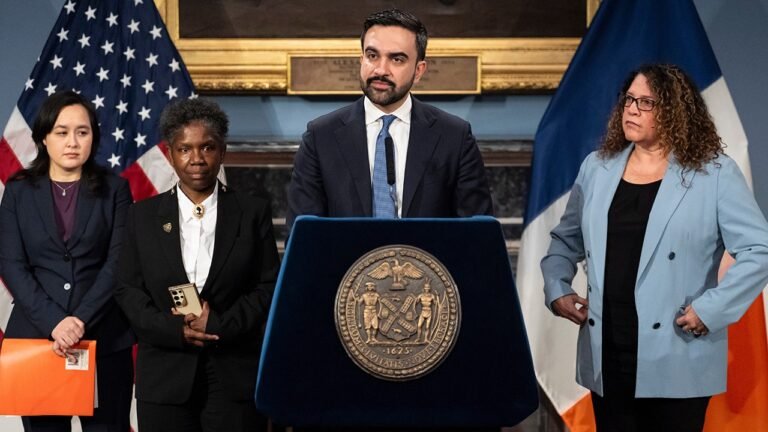
Members of New York City Mayor Zohran Mamdani‘s Department of Health reportedly held their first “Global Oppression and Public Health Working Group” meeting on Tuesday, according to The New York Post.

Members of the group met for a more than hourlong presentation at the department’s headquarters to discuss the group’s purpose, referencing what they called the “genocide” in Gaza as an example of global oppression.

“We really developed in response to the ongoing genocide in Palestine,” the presenter said in audio obtained by The New York Post.

The presenter continued, “And the working group aims to address the growing interests among the health department staff to learn about current and ongoing global oppression in its many forms and how it influences the advancement of health equity.”

WASHINGTON POST EDITORIAL SAYS MAMDANI’S TEAM IS A MIX OF ‘NORMAL BUREAUCRATS’ AND ‘LEFT-WING ZEALOTS’

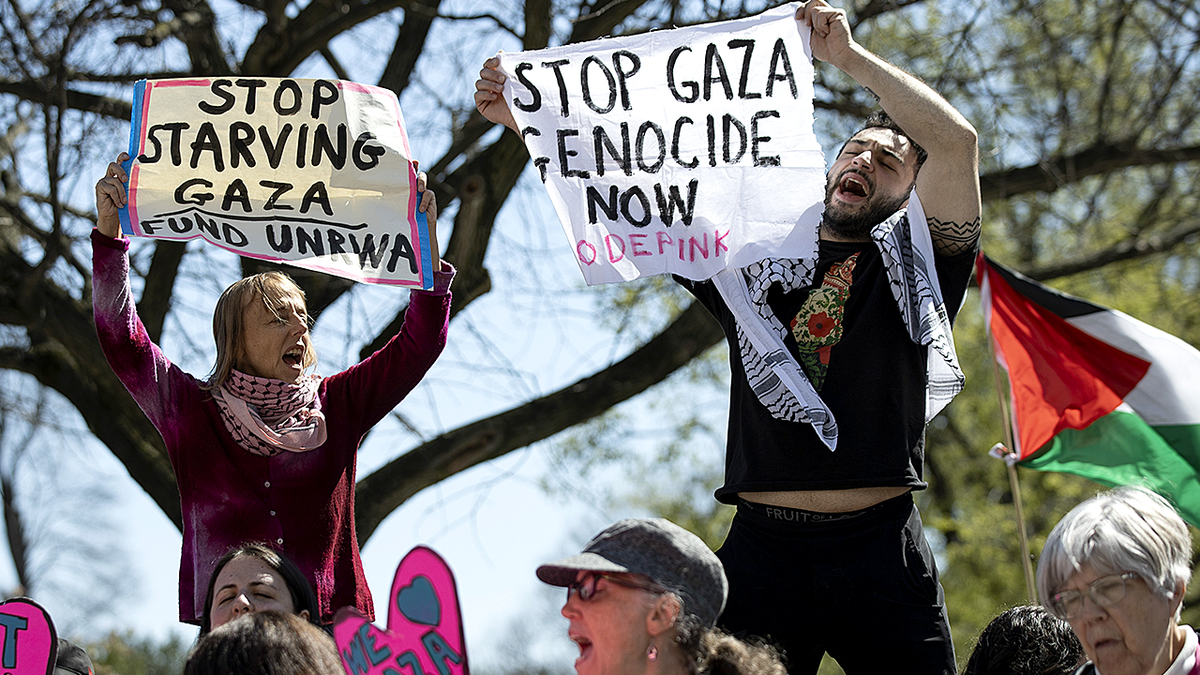
Code Pink anti-Israel protesters holding signs.

The “Global Oppression and Public Health Working Group” reportedly cited the “genocide” in Gaza as a factor in its mission. (Mostafa Bassim/Anadolu via Getty Images)

The New York Post also reported that the mission of the group was to study the impact of global oppression on “the health and well-being of priority communities in NYC vis-a-vis trauma, violence and discrimination” as well as “supporting colleagues negatively impacted” by it.

The news came days after Mamdani announced Dr. Alister Martin as commissioner of the New York City Department of Health and Mental Hygiene. Prior to his new position, Martin was the founder of Vot-ER, a political organization that aimed to provide voter registration in healthcare settings.

The New York City Department of Health and City Hall did not immediately respond to a request for comment from Fox News Digital. 

ZOHRAN MAMDANI DINGED IN NEW YORK TIMES REPORT FOR ‘PROBLEM’ OF NOT HAVING BLACK DEPUTY MAYORS

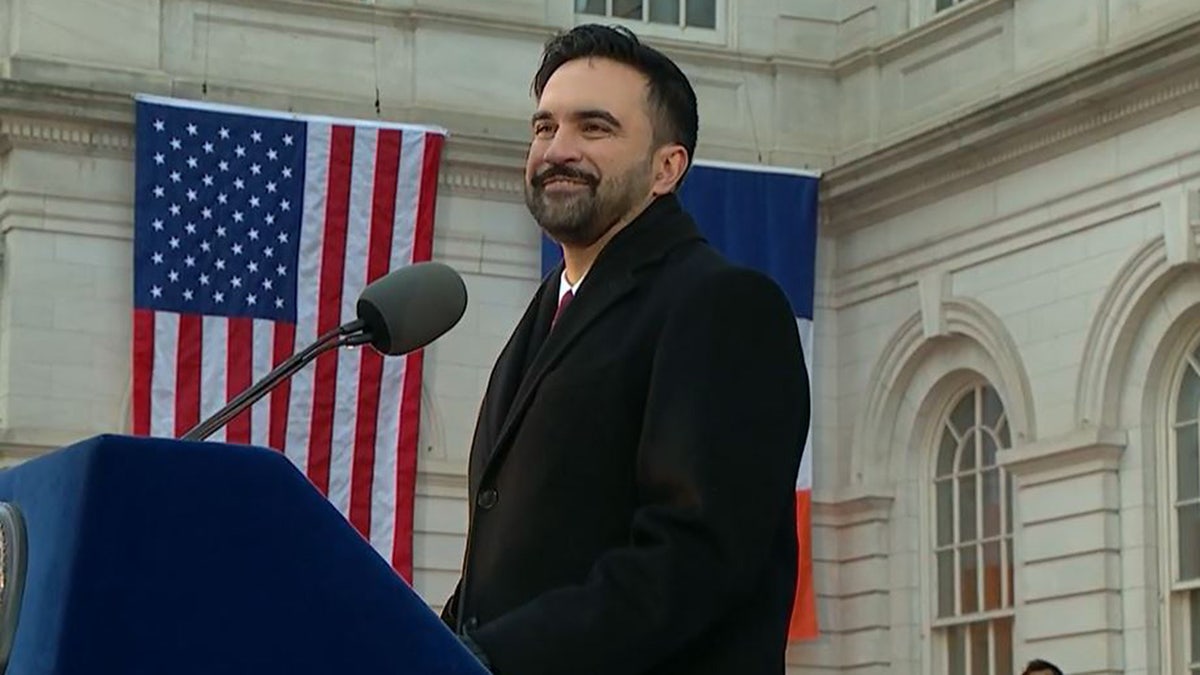
NYC Mayor Zohran Mamdani delivers his inauguration address, Thursday, Jan. 1, 2026, outside City Hall.

New York City Mayor Zohran Mamdani delivers his inaugural address Thursday, Jan. 1, 2026, outside City Hall. (Fox News/Pool)

The Anti-Defamation League (ADL) reported in December that more than 80 individuals — about 20% of Mamdani’s appointees at the time — had ties to anti-Zionist organizations or movements.

One of Mamdani’s transition aides, Hassaan Chaudhary, previously referred to Israel as “barbaric” and used the term “Jew” as a slur, according to the ADL.

ADL CHIEF WARNS NYC MAYOR-ELECT ZOHRAN MAMDANI POSES A ‘CLEAR AND PRESENT DANGER’ TO JEWISH COMMUNITY

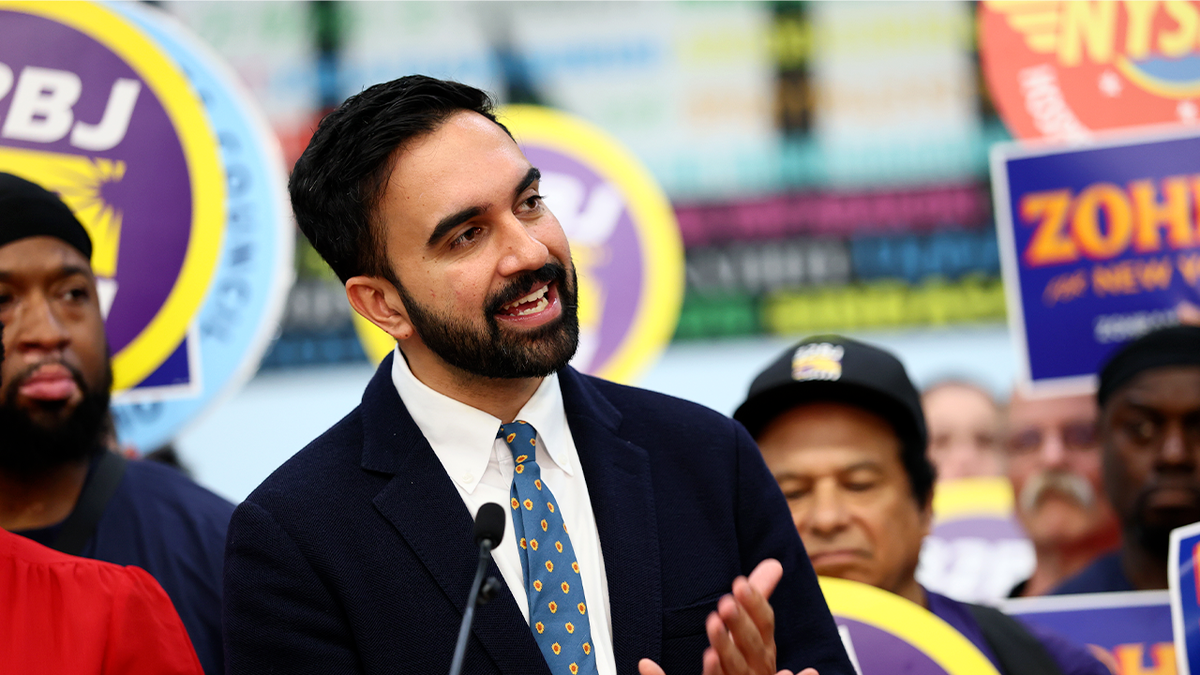
Mayor Mamdani speaks during press conference

New York City Mayor Zohran Mamdani’s appointees have come under scrutiny for alleged anti-Zionist ties. (Michael M. Santiago/Getty Images)

CLICK HERE TO DOWNLOAD THE FOX NEWS APP

Several other appointees were also cited for statements that appear to support or justify violence against Israel and the Oct. 7 attacks.

Fox News’ Bonny Chu contributed to this report.


Source link

Markets end firm in volatile Budget week; IT stocks lose ₹2.4 lakh crore

0

Indian equity markets staged a sharp recovery this week after sliding on Budget day due to the STT shock and an AI-driven sell-off in IT stocks. Sentiment improved following the announcement of a long-awaited trade deal with the US, helping the Sensex and Nifty rise nearly 1.6% and 1.5%,

Indian equity markets staged a sharp recovery this week after sliding on Budget day due to the STT shock and an AI-driven sell-off in IT stocks. Sentiment improved following the announcement of a long-awaited trade deal with the US, helping the Sensex and Nifty rise nearly 1.6% and 1.5%,

Domestic markets witnessed a rollercoaster ride this week, recovering from a sharp slide on Budget day (on the STT shock) and an AI-induced sell-off in IT stocks. The long-awaited trade deal with the US turned out to be a game-changer the day later, and the BSE Sensex and the Nifty gained nearly 1.6 per cent and 1.5 per cent, respectively, for the week.

IT stocks were pummeled, losing about ₹2.4 lakh crore in market cap this week, with the BSE IT index falling 6.2 per cent.

Morgan Stanley view

“Indian stocks enjoy a rare combination of inexpensive relative valuations, poor trailing performance, strong policy stimulus and a consequent growth upcycle, an undervalued currency, weak foreign positioning and potentially a new buyback cycle,” said Morgan Stanley, expecting the BSE Sensex to hit 95,000 (base case scenario) by December-end, which is around a 14 per cent rise from the current level.

On Friday, after opening lower, both the Nifty and Sensex closed in the green. The benchmarks were also supported by broader indices. While the Nifty 50 rose 0.2 per cent to 25,693.70, the BSE Sensex gained 0.32 per cent to 83,580.40.

macro comforts

The falling intensity of oil in GDP and rising share of exports in GDP, especially services, and fiscal consolidation imply a lower saving imbalance, Morgan Stanley said, adding that this will allow structurally lower real rates. “At the same time, lower inflation volatility as a result of both supply-side and policy changes (flexibility inflation targeting) means that volatility in interest rates and growth rates is likely falling in coming years. High growth with low volatility and falling interest rates and low beta = higher P/E. This also supports the shift in household balance sheets toward equity,” the global investment advisory firm added.

RBI pause

Meanwhile, the Reserve Bank of India kept the key repo rate unchanged, as widely expected. However, it acknowledged that external headwinds have intensified since the December 2025 meeting.

FPI buying

Foreign portfolio investors have turned buyers. After selling about ₹36,000 crore, they then bought ₹8,129 crore worth in February.

Complementing these gains, almost all sectoral indices logged weekly increases, while the broader small-caps and mid-caps rose 1.23 per cent and 1.6 per cent, respectively.

Post-Budget trend

A historical analysis of the past three decades indicates that, following the Budget, Nifty has delivered an average return of around 10% over the subsequent three months. This reinforces a constructive medium-term outlook, according to a note from ICICI Securities.

Analysts expect the market to remain broadly range-bound in the near term.

“Overall, markets may remain range-bound in the near term, with stock-specific action on the back of earnings outcomes and lingering global uncertainties. Attention will shift to upcoming US economic data and commentary from Federal Reserve officials for further cues on the global macro environment and interest-rate trajectory,” said Siddhartha Khemka, Head of Research, Wealth Management, Motilal Oswal Financial Services.

Published on February 6, 2026

20 year old story of Shia massacre in Pakistan, when 777 Muslims became victims of terrorist attacks.

0

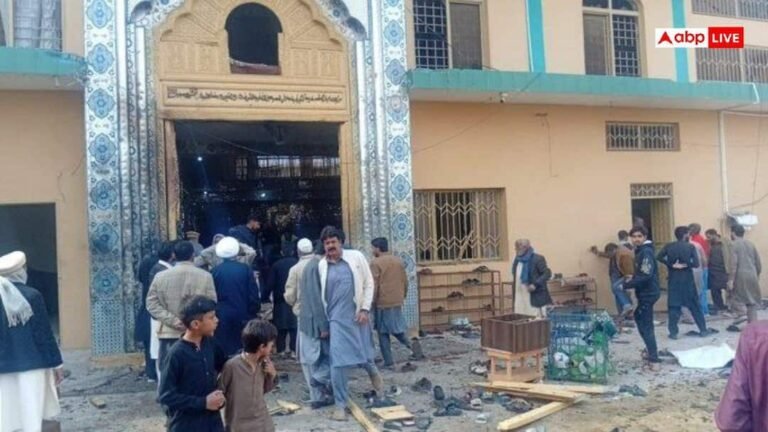
On Friday (6 February 2026), a suicide blast took place in the Shia Mosque Qaiser Khadijatul Kubra located in Tarlai Kalan area in Pakistan’s capital Islamabad. This is the 22nd episode of terrorist attacks on Shia community in Pakistan in the last 20 years. 50 people died and at least 169 people were injured in this attack. Since 2009, 777 people of Shia community have lost their lives due to terrorism in Pakistan. The current incident has once again brought to light the truth that communal terrorism against the Shia community in Pakistan has neither ended nor is it a sudden incident, but it is a persistent problem that has been going on for decades.

Explosion near the entry gate of the mosque in Islamabad

The targeting of Shia worshipers on the outskirts of Islamabad, considered the safest and most heavily monitored area of ​​Pakistan, exposes the country’s deep failure. According to officials, the blast occurred near the entry gate of the mosque when a large number of people were gathering for Friday prayers. This is the same pattern which has been seen many times in the past during terrorist attacks in Pakistan when terrorists attack a religious place to kill as many people as possible.

20 year old story of Shia genocide in Pakistan

In the last twenty years, suicide blasts, target killings and mass killings have been taking place in Shia mosques, Imambaras, processions, hospitals, buses and public places in different parts of Pakistan. Historically also, Shia community has not been safe anywhere in Balochistan, Khyber Pakhtunkhwa, Punjab, Karachi and now Islamabad and Hazara Shias, pilgrims, Maulvis and common worshipers have continuously become victims of this violence. This sequence proves that this is not a security lapse, but the result of long-standing immunity given to communal terrorist organizations.

Many people died in the 2009-10 suicide attack.

The first major case of attack on the Shia community in Pakistan in the 21st century came to light in 2009 itself, when on 5 February 2009, 32 people died in a suicide blast in the Shia mosque in Dera Ghazi Khan. After this, on February 20, there was an attack during the funeral of Shia leader Sher Zaman, in which 30 people were killed and 157 were injured. Then in April 2010, there was an attack on the Shia Mosque of Chakwal in which 22 people lost their lives. Not only this, in September 2010, several blasts were carried out targeting a Shia procession in Lahore, in which 30 civilians were killed and in the same year, there was a suicide attack on a Shia-run hospital in Hangu, in which 16 people died.

How many Shia Muslims died in Quetta and Rahim Yar Khan?

After this, Hazara Shias and religious processions became the center of attacks in 2011 and 2012, where first, 11 Hazara Shias were killed in a blast outside the mosque in Quetta on the day of Eid-ul-Fitr in August 2011, and then in 2012, there was the target killing of Pasban-e-Jafariya leader Askari Raza. 18 people were killed in a bomb blast at a Chehlum procession in Rahim Yar Khan, and 18 civilians were killed in an attack on a bus carrying Shia passengers in Kohistan. Also, in the same year, 20 Shia Muslims were mass murdered in Mansehra.

2013 proved to be the most dreadful year of communal violence, when on January 10, 115 people died and more than 270 were injured in twin blasts in Quetta. A few weeks later, there was a suicide attack on a Shia mosque in Hangu, in which 19 people were killed, and then on 16 February, a suicide attack on Hazara Shias in Quetta, in which 91 people died. On March 3, 63 people were killed in a blast outside a Shia mosque in Karachi. These attacks showed that communal terrorist networks are spread throughout Pakistan.

Suicide attack in Karachi-Peshawar

Even after this the bloodshed did not stop. In January 2015, 61 worshipers died in a blast in Shikarpur Shia mosque. In February 2015, 19 people were killed in an attack on a Shia mosque in Peshawar. In May 2015, 46 people were killed in an attack on a bus carrying Shia passengers in Karachi, and in March 2017, 24 people were killed and 70 injured in a bomb blast in Parachinar.

The situation has not changed even in recent years. First, in March 2022, there was a suicide attack in the Shia Mosque of Peshawar, in which 63 people lost their lives. This was followed by the attack on the Zhob Army base in July 2023, which led to communal tension and Sunni-Shia clashes in the area, which showed that terrorist violence is still fueling social divisions, and in March 2025, a terrorist attack on the Pir Rakhel Shah shrine in Jhal Magsi killed 35 Shia pilgrims.

Communal terror spread throughout Pakistan

After this, the attack in Islamabad on 6 February 2026 is proof that communal terrorism in Pakistan has now completely reached the capital of Pakistan. This attack completely demolishes the claim that such violence is limited only to border or unstable areas. These repeated incidents make it clear that Pakistan’s Shia community is still being systematically targeted and instead of being protected, they are slowly forgotten after every attack, while the fundamentalist ideologies and networks responsible for these massacres are still present in Pakistan’s security structure.

Gold, silver edge higher on US jobs report, hopes of Fed rate cut

0

On MCX, gold April futures were quoted at ₹1,53,955, up ₹1,885 over Thursday

On MCX, gold April futures were quoted at ₹1,53,955, up ₹1,885 over Thursday | Photo Credit: Reuters

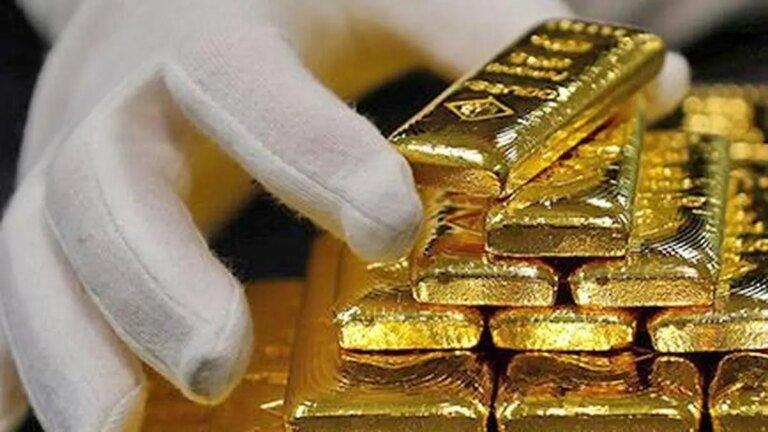
Gold went past $4,900 an ounce, and silver briefly went past $75 an ounce on Friday evening, even as the Chicago Mercantile Exchange (CME) Group increased the initial margin for COMEX silver and gold.

Silver prices in the Chinese market dropped below $100 an ounce for the first time this year, though it continued to enjoy a premium of over $10 an ounce. The precious metal complex was buoyed by a rise in the US employment numbers, signaling a possible cut in the Fed rates.

Below 20,000 yuan in China

At 1940 hours, gold was up nearly three per cent at $4,922 an ounce compared with Thursday. On COMEX, gold April ruled at $4,944.61 an ounce. In the Mumbai spot market, gold ended the week a tad lower at ₹1,52,078 per 10 gm (₹1,52,502 on Thursday). On MCX, gold April futures were quoted at ₹1,53,955, up ₹1,885 over Thursday.

Silver briefly topped $75 but dropped to $74.81 an ounce. On COMEX, silver March futures ruled at $74.56. In the Mumbai spot market, silver ended below ₹2.5 lakh a kg at ₹2,44,929 (₹2,54,339). On MCX, gold was up marginally at ₹2,43,239 a kg.

On the Shanghai Futures Exchange, silver March futures dropped below 20,000 yuan to 19,999 a kg ($89.66 an ounce), still holding its premium over COMEX rates.

Strong CME intervention

Hareesh V, Head of Commodity Research, Geojit Investments Limited, said monitoring the dollar and upcoming Fed signals are crucial, while investors could keep positions balanced to navigate heightened volatility.

Meanwhile, CME increased the initial margin for the sixth time in a little over a month. The margin for silver 5000 futures has been raised to 18 per cent from 15 per cent, while for gold it has been increased to 9 per cent from 8 per cent.

Traders said CME’s intervention in the market has been strong during the current situation in the silver market.

Published on February 6, 2026

CISA Orders Removal of Unsupported Edge Devices to Reduce Federal Network Risk

0

Ravie LakshmananFeb 06, 2026Federal Security / Infrastructure Security

The U.S. Cybersecurity and Infrastructure Security Agency (CISA) has ordered Federal Civilian Executive Branch (FCEB) agencies to strengthen asset lifecycle management for edge network devices and remove those that no longer receive security updates from original equipment manufacturers (OEMs) over the next 12 to 18 months.

The agency said the move is to drive down technical debt and minimize the risk of compromise, as state-sponsored threat actors turn such devices as a preferred access pathway for breaking into target networks.

Edge devices is an umbrella term that encompasses load balancers, firewalls, routers, switches, wireless access points, network security appliances, Internet of Things (IoT) edge devices, software-defined networks, and other physical or virtual networking components that route network traffic and hold privileged access.

“Persistent cyber threat actors are increasingly exploiting unsupported edge devices — hardware and software that no longer receive vendor updates to firmware or other security patches,” CISA said. “Positioned at the network perimeter, these devices are especially vulnerable to persistent cyber threat actors exploiting a new or known vulnerability.”

To assist FCEB agencies in this regard, CISA said it has developed an end-of-support edge device list that acts as a preliminary repository with information about devices that have already reached end-of-support or are expected to lose support. This list will include the product name, version number, and end-of-support date.

The newly issued Binding Operational Directive 26-02, Mitigating Risk From End-of-Support Edge Devices, requires FCEB agencies to undertake the following actions –

  • Update each vendor-supported-edge device running end-of-support software to a vendor-supported software version (With immediate effect)
  • Catalog all devices to identify those that are end-of-support and report to CISA (Within three months)
  • Decommission all edge devices that  are end-of-support and listed in the edge device list from agency networks and replace them with vendor-supported devices that can receive security updates (Within 12 months)
  • Decommission all other identified edge devices from agency networks and replace with vendor-supported devices that can receive security updates (Within 18 months)
  • Establish a lifecycle management process to enable continuous discovery of all edge devices and maintain an inventory of those that are/will reach  end-of-support (Within 24 months)

“Unsupported devices pose a serious risk to federal systems and should never remain on enterprise networks,” said CISA Acting Director Madhu Gottumukkala. “By proactively managing asset lifecycles and removing end-of-support technology, we can collectively strengthen resilience and protect the global digital ecosystem.”


Source link

Canada, France to open consulates in Greenland amid ongoing US threats | News

0

Move comes as US President Donald Trump insists on securing the semi-autonomous island belonging to Denmark, citing security concerns.

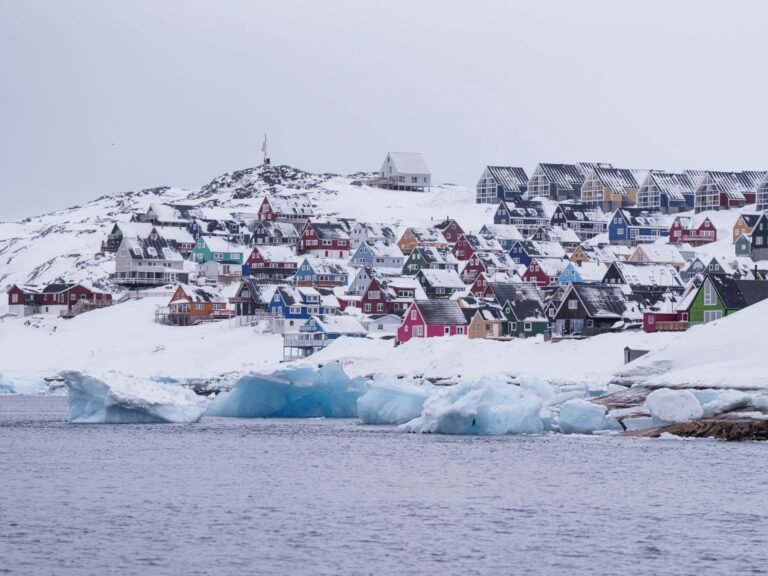
Canada and France will open diplomatic consulates in Greenland in a strong show of support for NATO ally Denmark and in the wake of US efforts to secure control of the Arctic island.

Canadian Foreign Minister Anita Anand travelled to Nuuk on Friday to open the consulate, which officials say could enhance cooperation on climate change and Inuit rights.

Recommended Stories

list of 3 itemsend of list

She was accompanied by Canada’s Indigenous governor general, Mary Simon.

France’s Ministry for Europe and Foreign Affairs said Jean-Noel Poirier also would take up his duties as consul general, making it the first European Union country to establish a consulate general in Greenland.

Poirier will be “tasked with working to deepen existing cooperation projects with Greenland in the cultural, scientific, and economic fields, while also strengthening political ties with the local authorities,” the ministry said.

“The first item on the agenda will be to listen to Greenlanders, to hear them, to let them explain in detail their position, and from our side to confirm to them our support, as much as they and the Danish side want,” Poirier told the AFP news agency.

Canada, which Trump has called upon to give up its sovereignty and become the 51st state of the US, pledged to open a consulate in Greenland in 2024, before Trump’s recent talk of a takeover, and the formal inauguration was delayed from November because of bad weather.

Since returning to the White House last year, Trump has insisted that Washington needs to control the strategic, mineral-rich Arctic island for security reasons.

Trump last month backed off threats to seize Greenland after saying he had struck a “framework” deal with NATO chief Mark Rutte to ensure greater US influence.

A US-Denmark-Greenland working group has been established to discuss Washington’s security concerns in the Arctic, but details have not been made public.

Iceland opened a consulate in Nuuk in 2013, while the United States, which had a consulate in the Greenlandic capital from 1940 to 1953, reopened its mission in 2020.


Source link